

Performance Evaluation of Fixed-Point DFOS Cables for Structural Monitoring of Reinforced Concrete Elements

 ,
,  ,
,  , and
, and
Abstract
1. Introduction
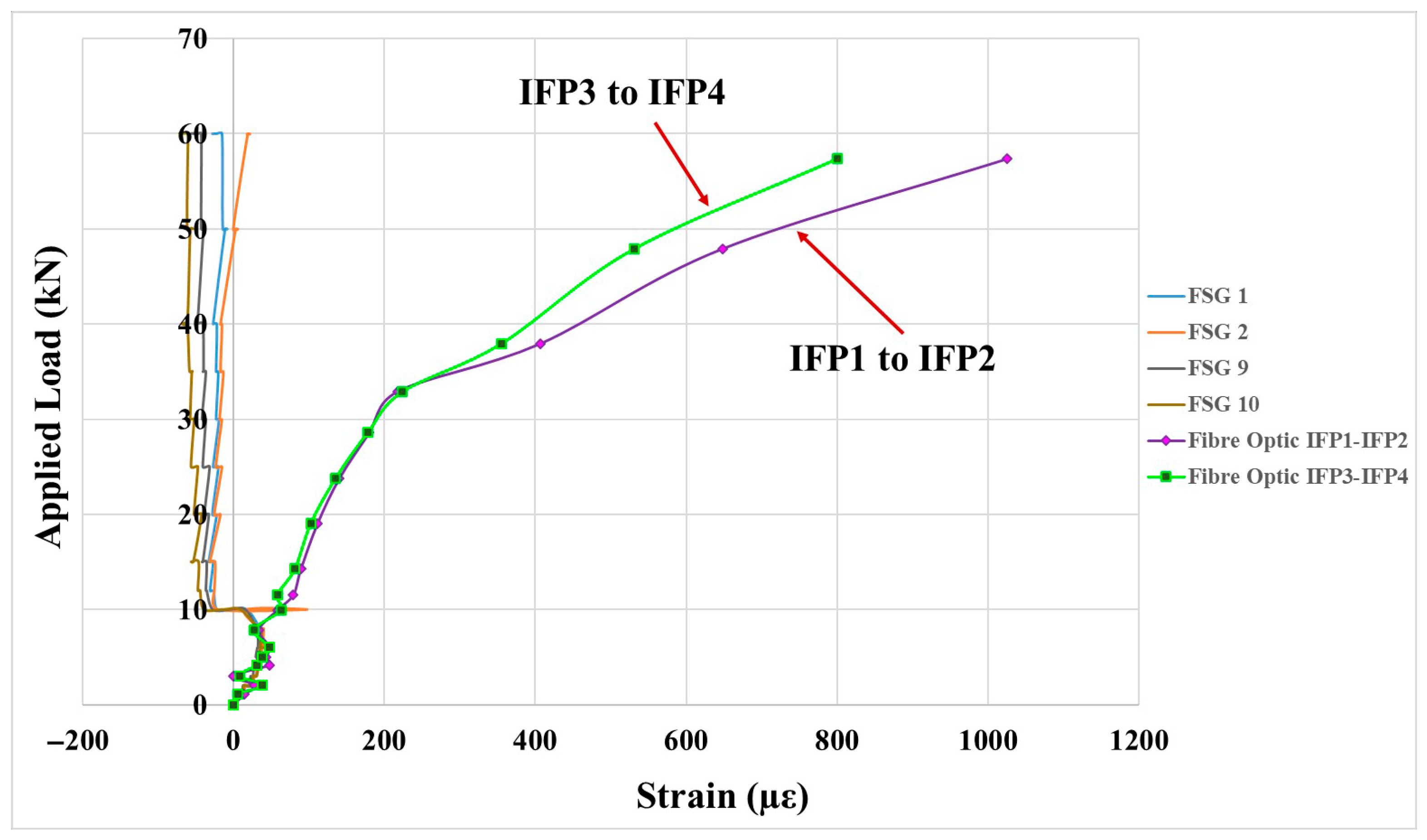
- It quantitatively compares the resulting distributed and long-gauge DFOS strains with conventional foil and vibrating-wire strain gauges, thereby clarifying the practical advantages and limitations of the fixed-point architecture for SHM of RC elements.
2. Materials and Methods
2.1. Materials
2.2. Cable Installation, Test Setup, and Procedures
2.2.1. Specimen Preparation and DFOS Installation
- (1)
- Mechanical properties of concrete and reinforcement
- (2)
- Instrumentation and loading equipment
2.2.2. Four-Point Bending and Data Acquisition
2.2.3. Temperature Compensation, Crack Mapping, and Quality Control
- Strain sensitivity: = 0.048 ± 0.002 MHz/µε;
- Temperature sensitivity: = 1.02 ± 0.03 MHz/°C.
- Absence of optical discontinuities or step losses;
- Repeatability of unloaded DFOS baselines within several tens of microstrain;
- Consistency in sign and magnitude between DFOS long-gauge averages and co-located FSG/VWSG readings under low-to-moderate loads.
3. Results
3.1. Optical Baselines and Repeatability
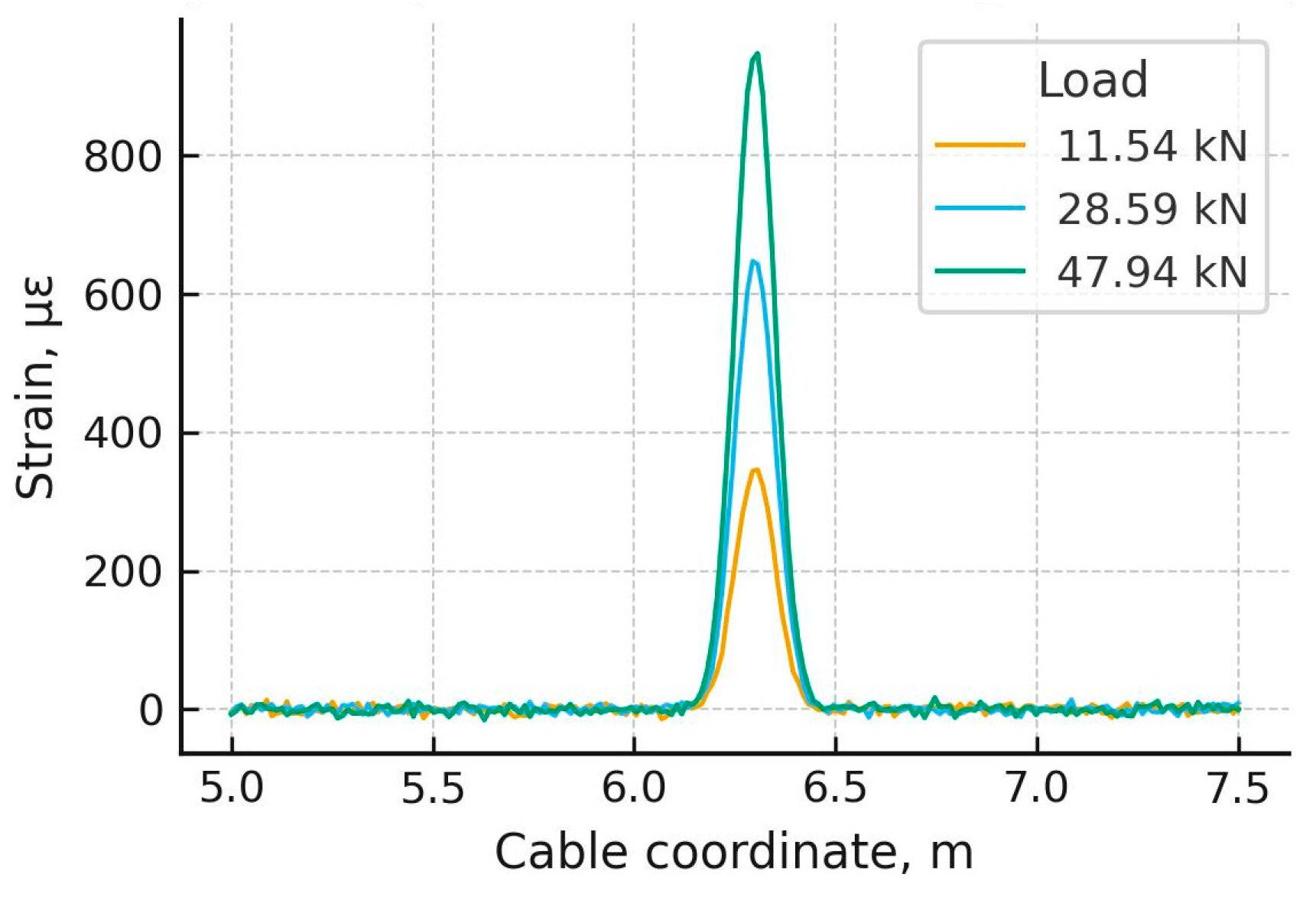
3.2. Distributed Strain Evolution and Crack Signatures
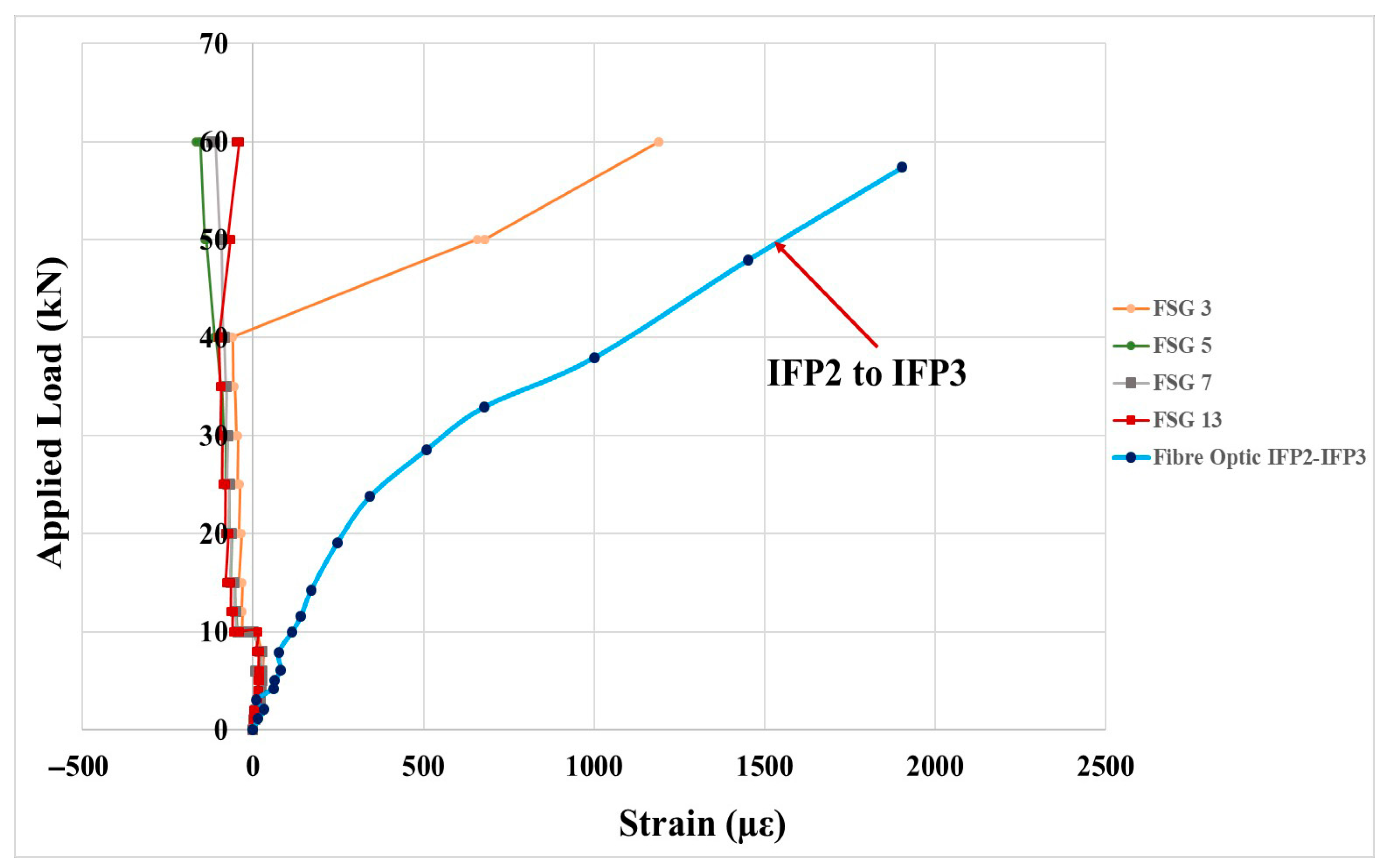
3.3. Long-Gauge Averaging Between Fixities
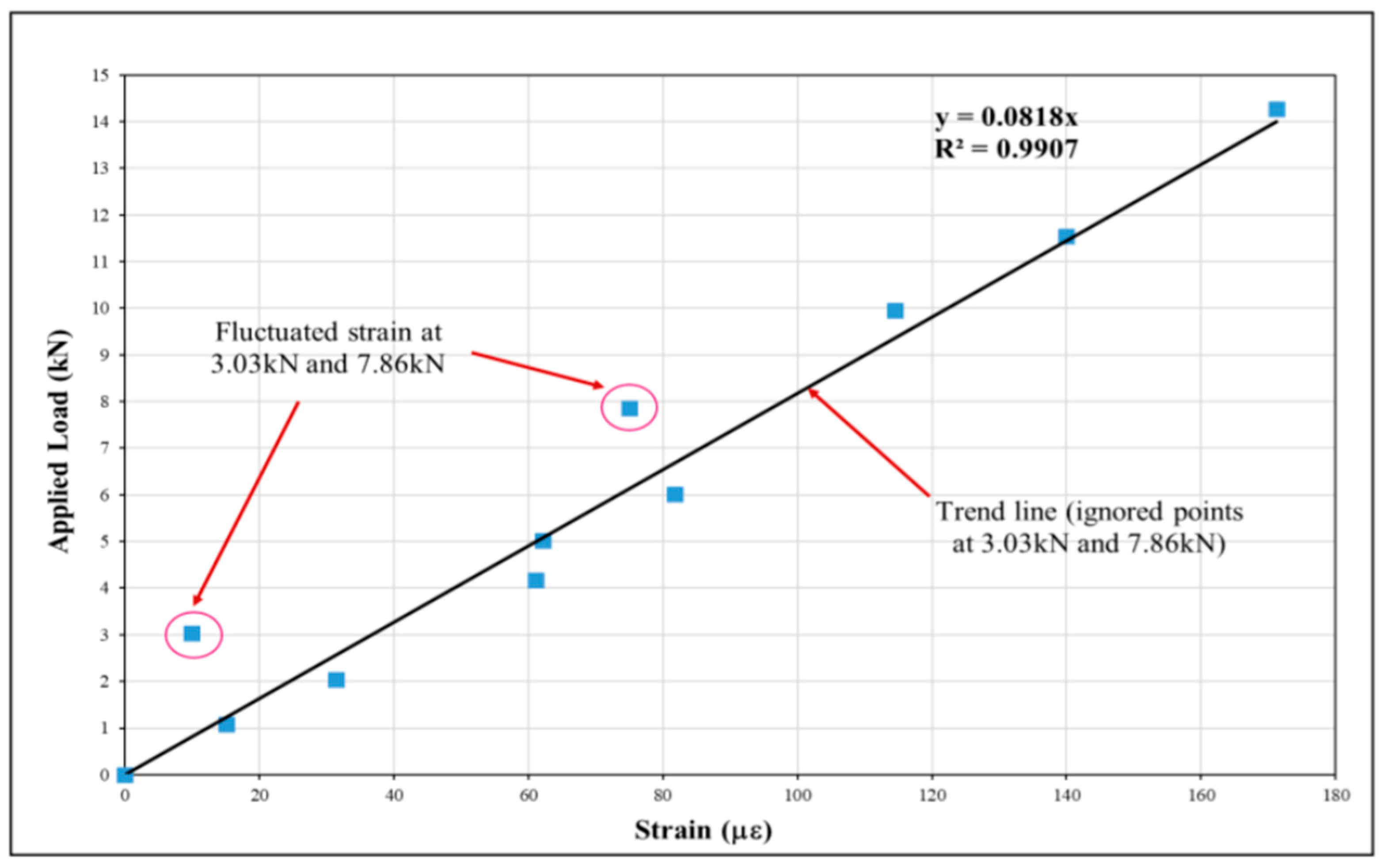
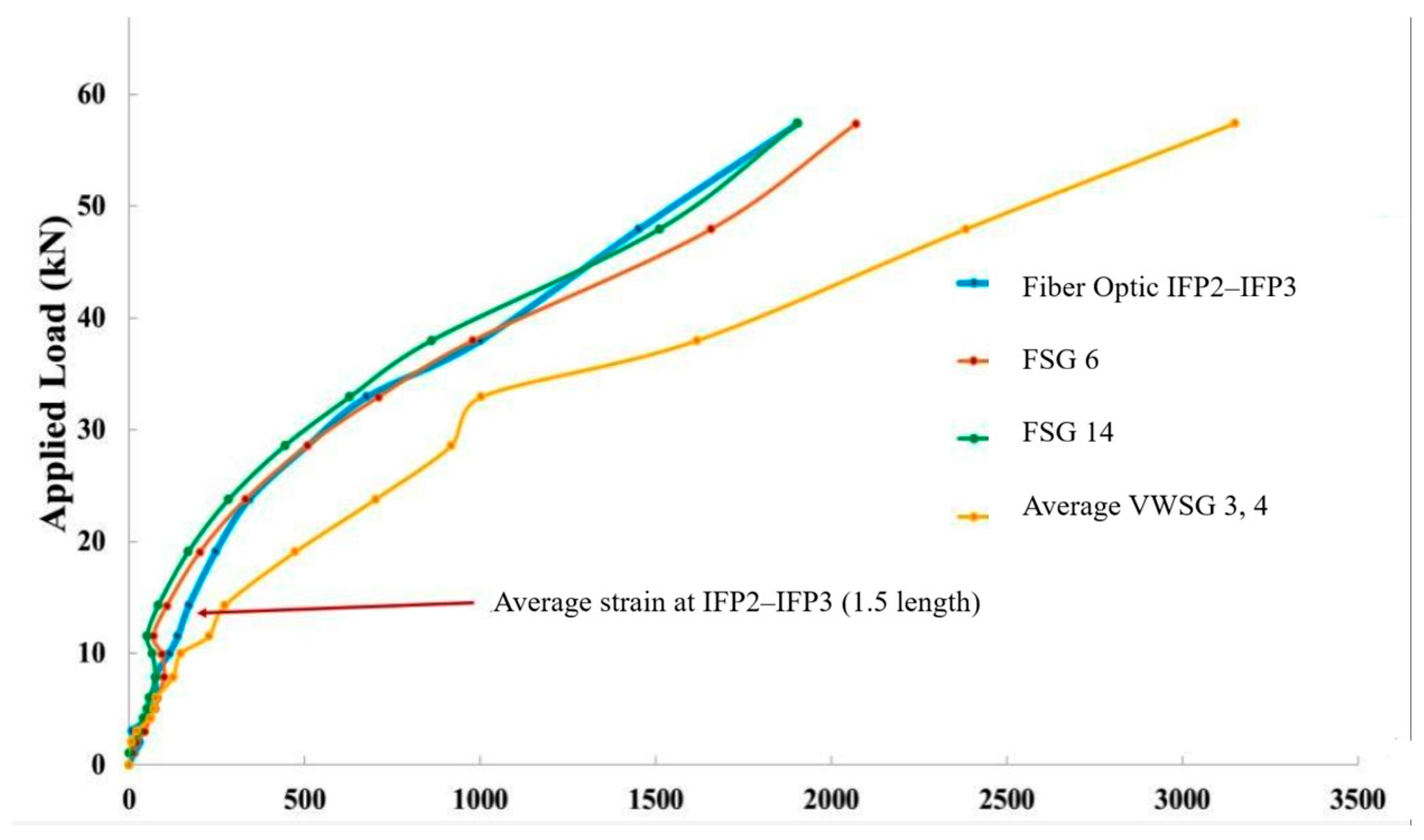
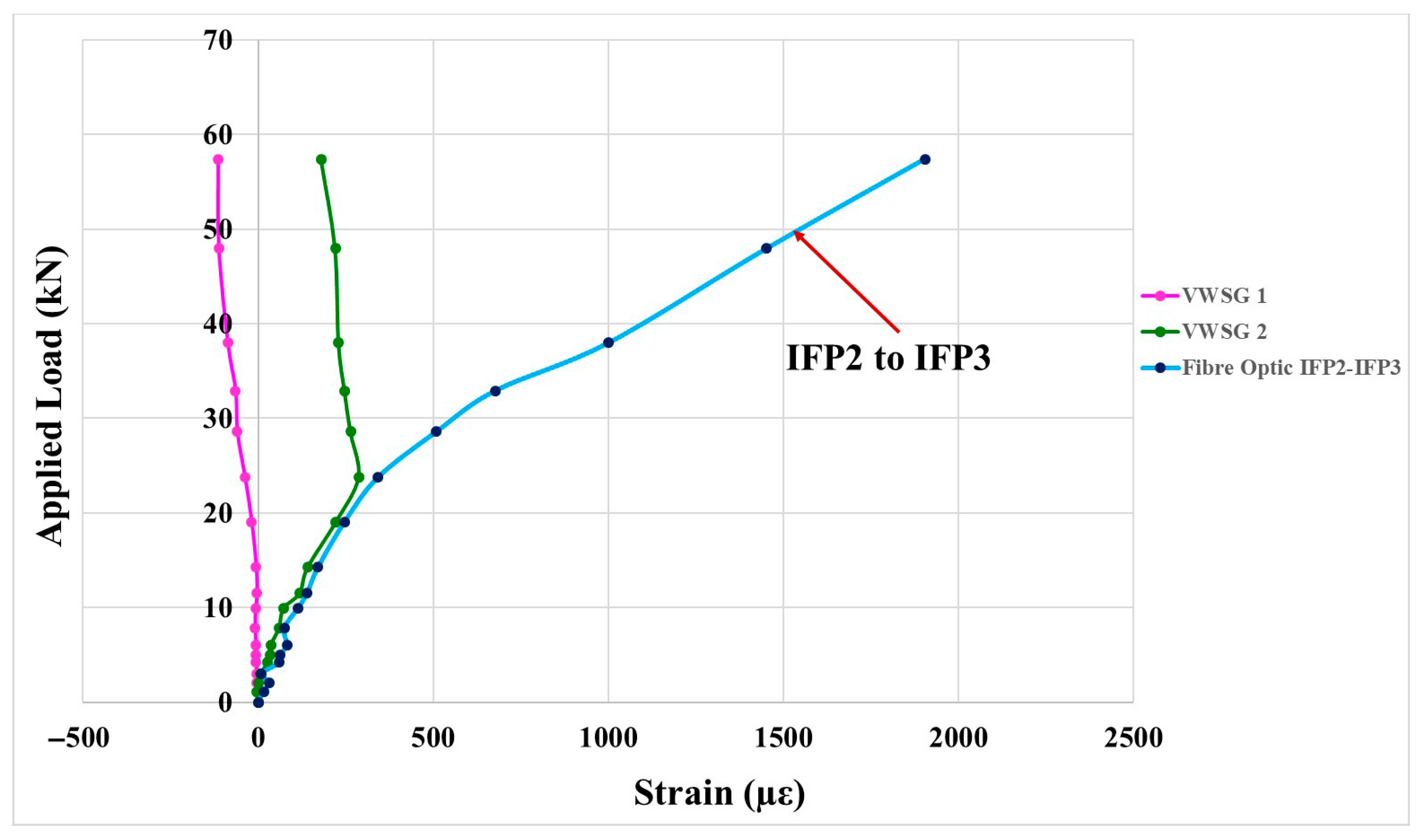
3.4. Comparison with Discrete Gauges
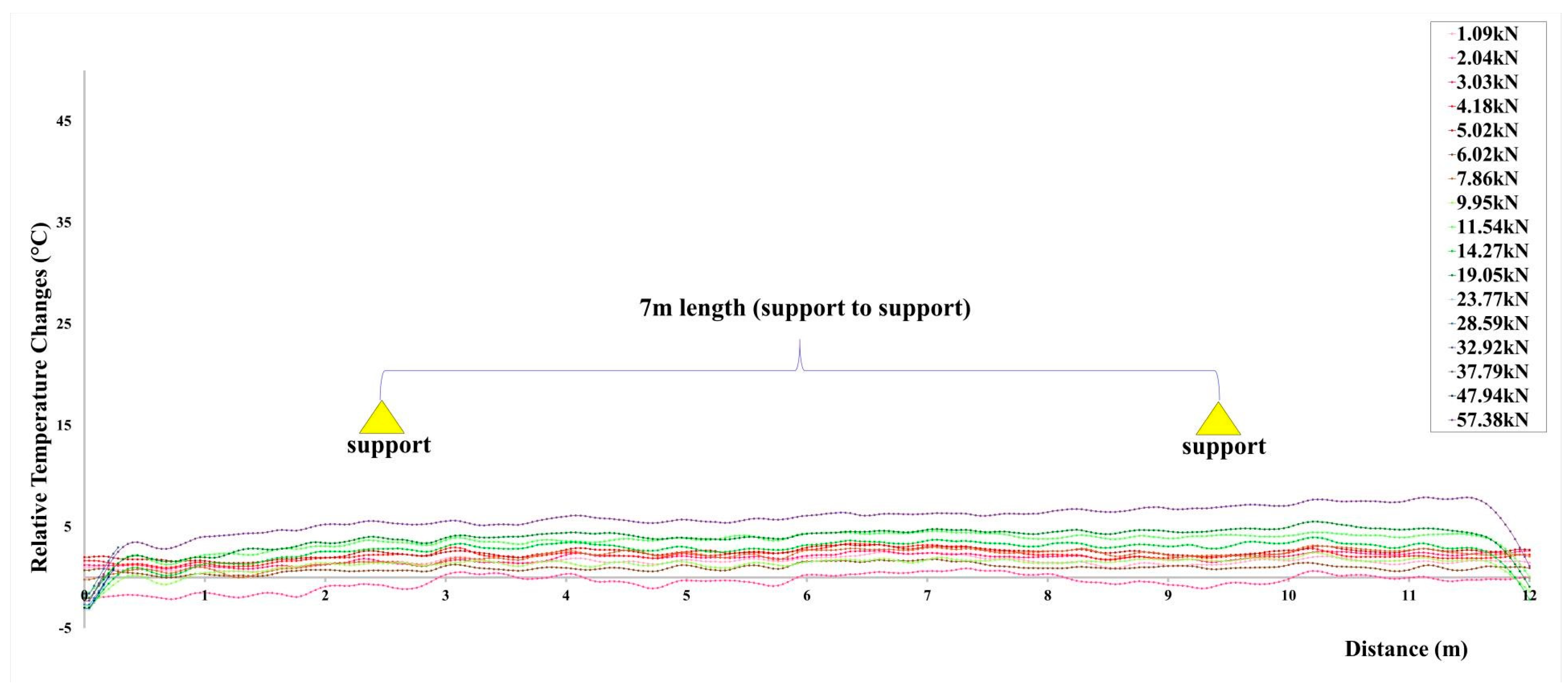
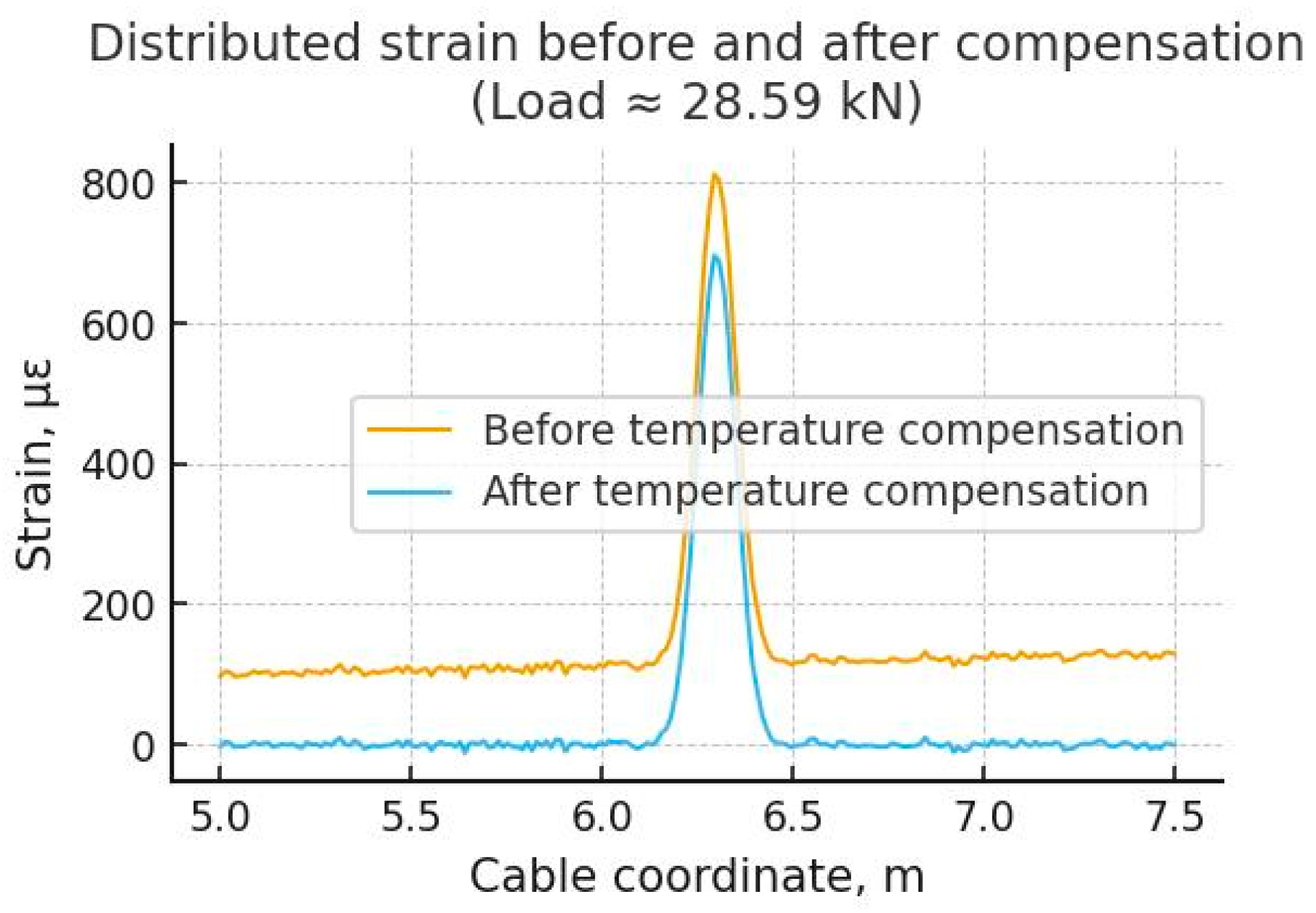
3.5. Temperature Behavior and Compensation
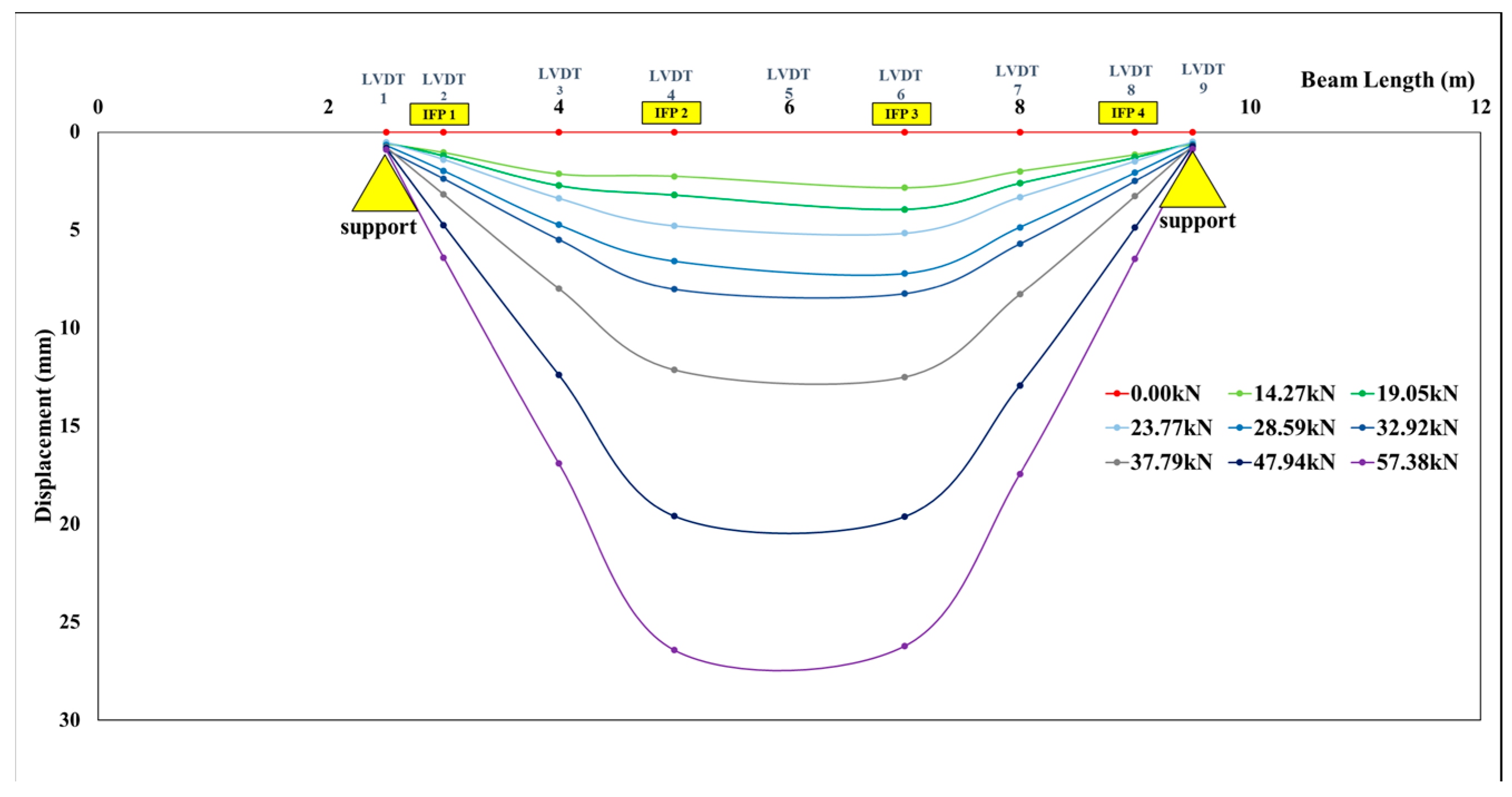
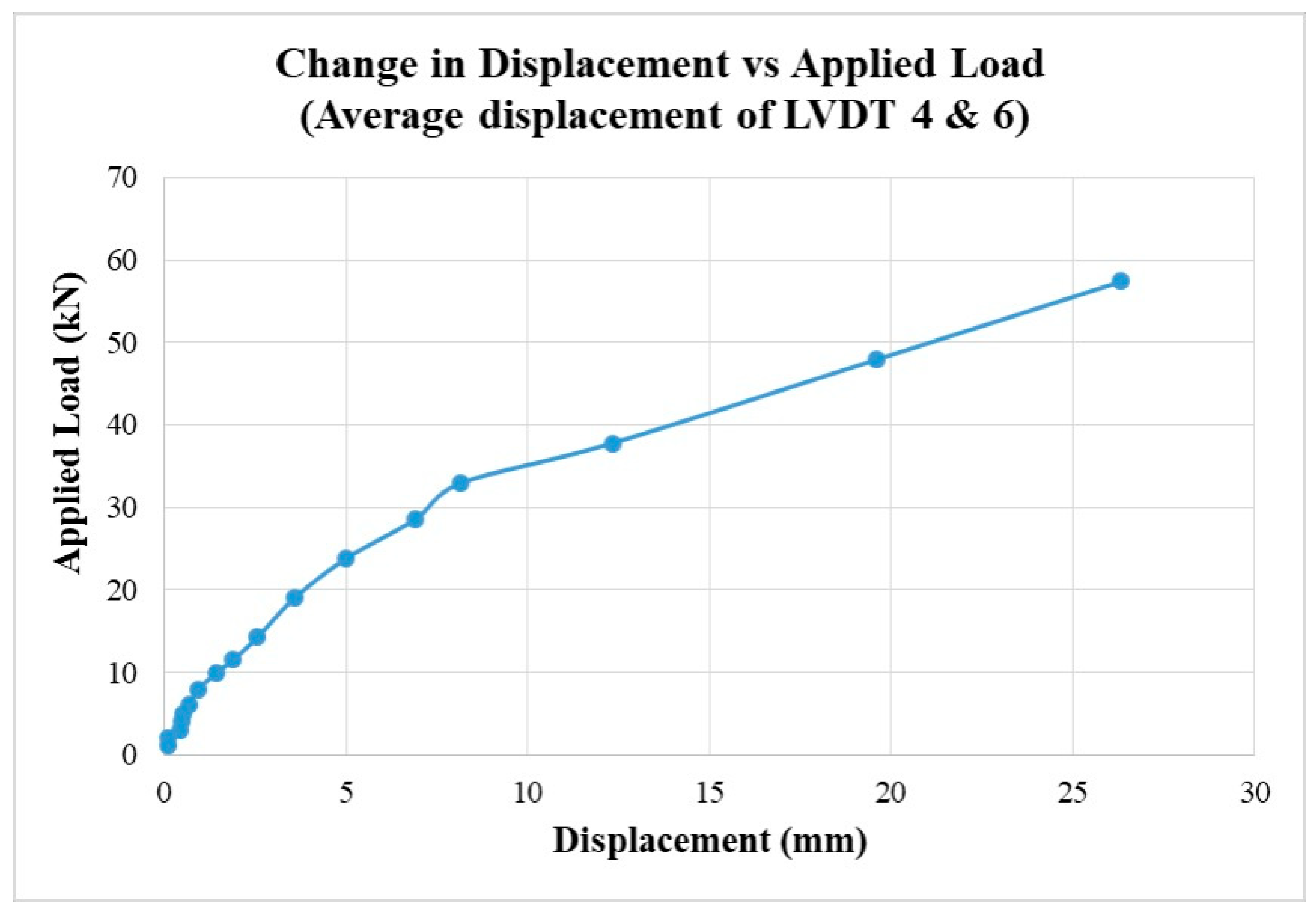
3.6. Global Deformation from LVDTs
4. Discussion
5. Conclusions
- Dense distributed sensing that enables localization of strain “hot zones”;
- Stable section-level strain averages suitable for serviceability and differential-settlement evaluation;
Author Contributions
Funding
Data Availability Statement
Acknowledgments
Conflicts of Interest
References
- Bao, X.; Chen, L. Recent Progress in Distributed Fiber Optic Sensors. Sensors 2012, 12, 8601–8639. [Google Scholar] [CrossRef] [PubMed]
- Motil, A.; Bergman, A.; Tur, M. State of the Art of Brillouin Fiber-Optic Distributed Sensing. Opt. Laser Technol. 2016, 78, 81–103. [Google Scholar] [CrossRef]
- Palmieri, L.; Schenato, L. Rayleigh-Based Distributed Optical Fiber Sensing. Sensors 2022, 22, 6811. [Google Scholar] [CrossRef] [PubMed]
- Barrias, A.; Casas, J.R.; Villalba, S. A Review of Distributed Optical Fiber Sensors for Civil Engineering Applications. Sensors 2016, 16, 748. [Google Scholar] [CrossRef] [PubMed]
- Berrocal, C.G.; Fernandez, I.; Rempling, R. Crack Monitoring in Reinforced Concrete Beams by Distributed Optical Fiber Sensors. Struct. Infrastruct. Eng. 2021, 17, 102–122. [Google Scholar] [CrossRef]
- Liu, T.; Huang, H.; Yang, Y. Crack Detection of Reinforced Concrete Member Using Rayleigh-Based Distributed Optic Fiber Strain Sensing System. Adv. Civ. Eng. 2020, 2020, 8312487. [Google Scholar] [CrossRef]
- Brault, A.; Hoult, N.A. Monitoring Reinforced Concrete Serviceability Performance Using Fiber-Optic Sensors. ACI Struct. J. 2019, 116, 57–70. [Google Scholar] [CrossRef]
- Buranbayeva, A.; Zhussupbekov, A.; Sarsembayeva, A.; Omarov, A. Evaluation of the Structural Health Monitoring Results of the Applied Fiber Optics in the Pile-Raft Foundations of a High-Rise Building. Appl. Sci. 2022, 12, 11728. [Google Scholar] [CrossRef]
- Regier, R.; Hoult, N.A. Distributed Strain Behavior of a Reinforced Concrete Bridge: Case Study. J. Bridge Eng. 2014, 19, 05014007. [Google Scholar] [CrossRef]
- Hénault, J.M.; Quiertant, M.; Delepine-Lesoille, S.; Salin, J.; Moreau, G.; Taillade, F.; Benzarti, K. Quantitative Strain Measurement and Crack Detection in RC Structures Using a Truly Distributed Fiber Optic Sensing System. Constr. Build. Mater. 2012, 37, 916–923. [Google Scholar] [CrossRef]
- Monsberger, C.M.; Lienhart, W. Distributed Fiber Optic Shape Sensing of Concrete Structures. Sensors 2021, 21, 6098. [Google Scholar] [CrossRef] [PubMed]
- Hénault, J.M.; Quiertant, M.; Salin, J.; Moreau, G.; Taillade, F.; Delepine-Lesoille, S.; Benzarti, K. Analysis of the Strain Transfer Mechanism Between a Truly Distributed Optical Fiber Sensor and the Embedding Medium. In Proceedings of the 9th International Conference on NDE in Relation to Structural Integrity for Nuclear and Pressurized Components, Seattle, WA, USA, 22–24 May 2012; Available online: https://www.ndt.net/?id=14790 (accessed on 15 October 2025).
- Butler, L.J.; Gibbons, N.; He, P.; Middleton, C.; Elshafie, M.Z.E.B. Evaluating the Early-Age Behaviour of Prestressed Concrete Beams Using Distributed and Discrete Fiber Optic Sensors. Constr. Build. Mater. 2016, 126, 894–912. [Google Scholar] [CrossRef]
- Webb, G.T.; Vardanega, P.J.; Hoult, N.A.; Fidler, P.R.A.; Bennett, P.J.; Middleton, C.R. Analysis of Fiber-Optic Strain-Monitoring Data from a Prestressed Concrete Bridge. J. Bridge Eng. 2017, 22, 05017002. [Google Scholar] [CrossRef]
- Billon, A.; Hénault, J.M.; Quiertant, M.; Taillade, F.; Khadour, A.; Martin, R.P.; Benzarti, K. Qualification of a Distributed Optical Fiber Sensor Bonded to the Surface of a Concrete Structure: A Methodology to Obtain Quantitative Strain Measurements. Smart Mater. Struct. 2015, 24, 115001. [Google Scholar] [CrossRef]
- Barrias, A.; Casas, J.R.; Villalba, S. Distributed Optical Fiber Sensors in Concrete Structures: Performance of Bonding Adhesives and Influence of Spatial Resolution. Struct. Control. Health Monit. 2019, 26, e2310. [Google Scholar] [CrossRef]
- Bassil, A.; Chapeleau, X.; Leduc, D.; Abraham, O. Concrete Crack Monitoring Using a Novel Strain-Transfer Model for Distributed Fiber Optics Sensors. Sensors 2020, 20, 2220. [Google Scholar] [CrossRef] [PubMed]
- Fernandez, I.; Berrocal, C.G.; Rempling, R. Long-Term Performance of Distributed Optical Fiber Sensors Embedded in Reinforced Concrete Beams Under Sustained Deflection and Cyclic Loading. Sensors 2021, 21, 6338. [Google Scholar] [CrossRef] [PubMed]
- Glišić, B.; Inaudi, D. Fiber Optic Methods for Structural Health Monitoring; Wiley: Chichester, UK, 2007. [Google Scholar] [CrossRef]
- Inaudi, D.; Glisic, B. Long-Gage Sensor Topologies for Structural Monitoring. In Proceedings of the Fib Congress, Osaka, Japan, 13–19 October 2002. [Google Scholar]
- IEC 61757-1-2:2023; Fiber Optic Sensors—Part 1–2: Strain Measurement—Distributed Sensing Based on Brillouin Scattering. International Electrotechnical Commission: Geneva, Switzerland, 2023. Available online: https://webstore.iec.ch/en/publication/30634 (accessed on 15 October 2025).
- ASTM C881/C881M-20; Standard Specification for Epoxy-Resin-Base Bonding Systems for Concrete. ASTM International: West Conshohocken, PA, USA, 2020. Available online: https://www.astm.org/c0881_c0881m-20.html (accessed on 14 October 2025).
- IEC 60794-3; Optical Fiber Cables—Part 3: Outdoor Cables. International Electrotechnical Commission: Geneva, Switzerland, 2020. Available online: https://webstore.iec.ch/publication/66627 (accessed on 14 October 2025).
- IEC 60794-1-111:2023; Optical Fiber Cables—Part 1–111: Generic Specification—Basic Optical Cable Test Procedures—Bending Around a Mandrel. International Electrotechnical Commission: Geneva, Switzerland, 2023. Available online: https://webstore.iec.ch/en/publication/77493 (accessed on 15 October 2025).
- Recommendation ITU-T G.652; Characteristics of a Single-Mode Optical Fiber and Cable. International Telecommunication Union: Geneva, Switzerland, 2016. Available online: https://www.itu.int/rec/T-REC-G.652 (accessed on 14 October 2025).
- IAEA. Guidebook on Non-Destructive Testing of Concrete Structures; Training Course Series No. 17; International Atomic Energy Agency: Vienna, Austria, 2002; Available online: https://www-pub.iaea.org/MTCD/Publications/PDF/TCS-17_web.pdf (accessed on 15 October 2025).
- ACI 374.2R-13; Guide for Testing Reinforced Concrete Structural Elements Under Slowly Applied Simulated Seismic Loads. ACI Committee 374; Preview; American Concrete Institute: Farmington Hills, MI, USA, 2013. Available online: https://www.concrete.org/Portals/0/Files/PDF/Previews/3742R-13_PREVIEW.pdf (accessed on 15 October 2025).
- EN 1992-1-1:2004; Eurocode 2—Design of Concrete Structures—Part 1–1: General Rules and Rules for Buildings. European Committee for Standardization: Brussels, Belgium, 2004. Available online: https://www.phd.eng.br/wp-content/uploads/2015/12/en.1992.1.1.2004.pdf (accessed on 15 October 2025).
- ACI 224R-01; Control of Cracking in Concrete Structures. ACI Committee 224. Reapproved; American Concrete Institute: Farmington Hills, MI, USA, 2001.
- ASTM C78/C78M-22; Standard Test Method for Flexural Strength of Concrete (Using Simple Beam with Third-Point Loading). ASTM International: West Conshohocken, PA, USA, 2022. Available online: https://www.astm.org/c0078_c0078m-22.html (accessed on 15 October 2025).



| Instrument | Model/Standard | Key Technical Specifications | Purpose in Experiment |
|---|---|---|---|
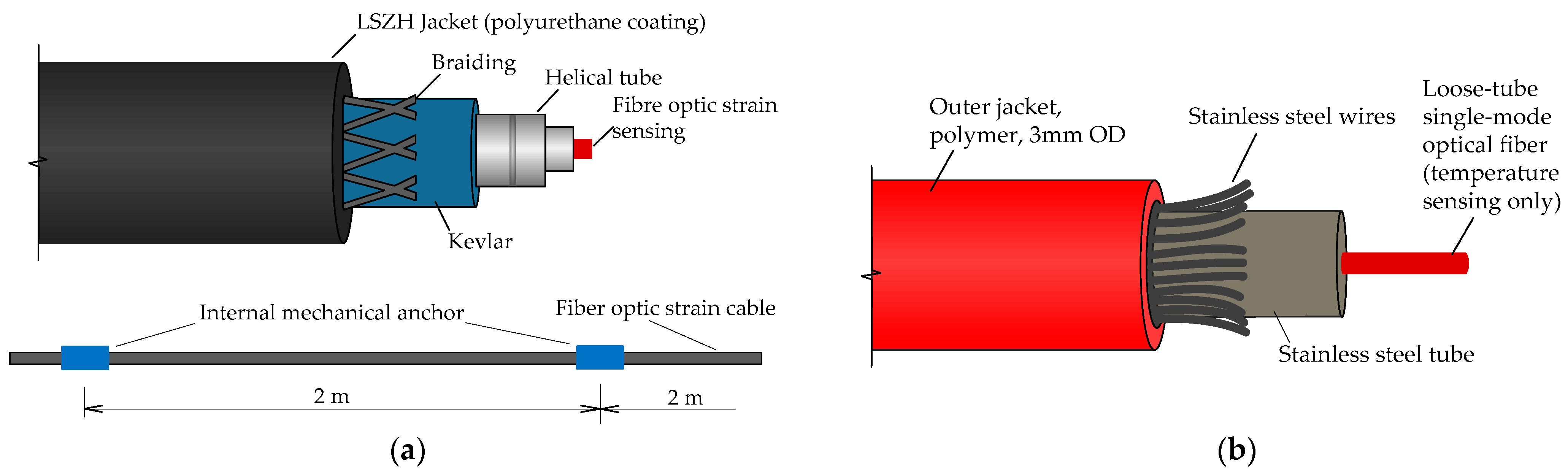
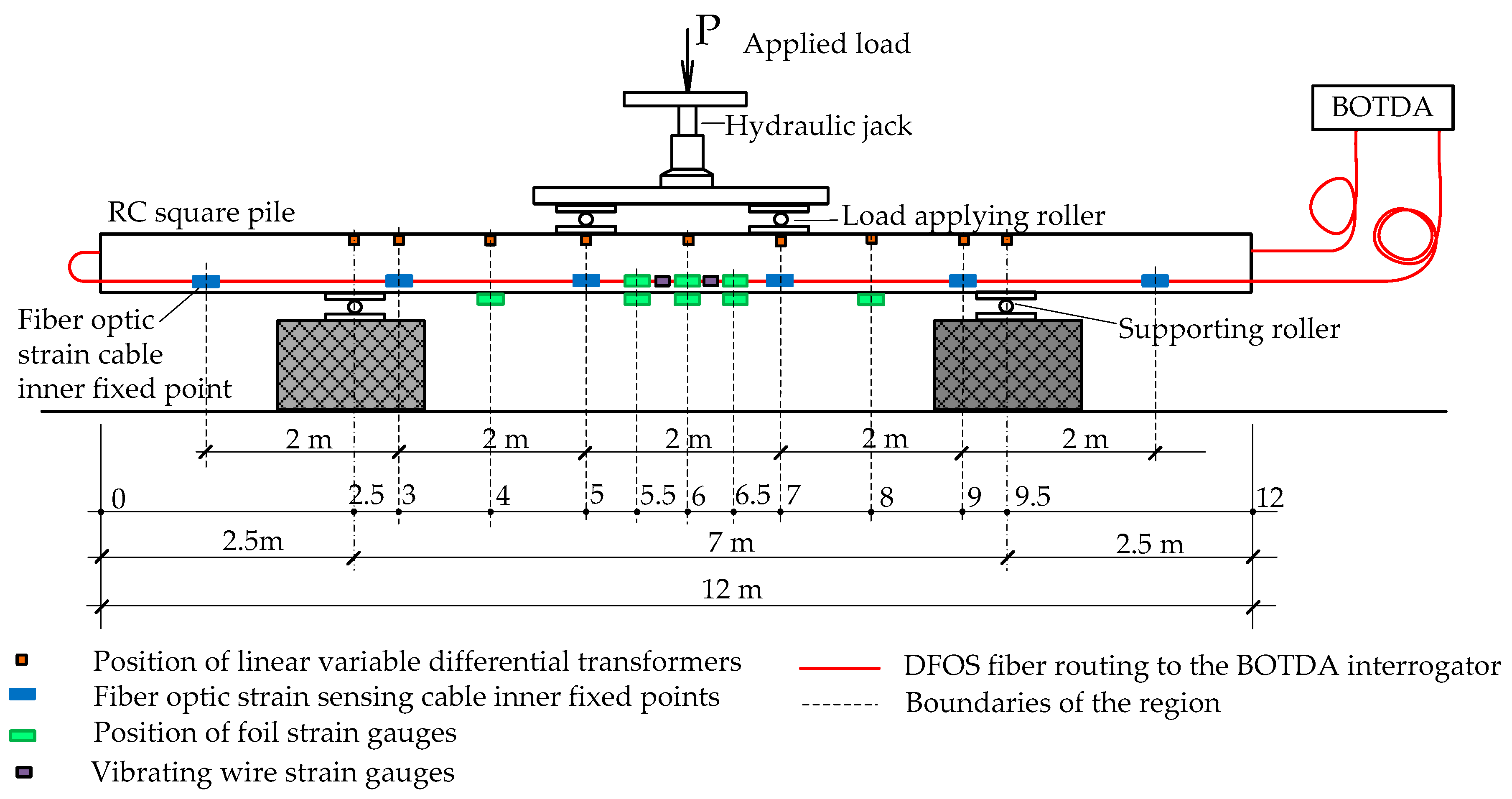
| Inner Fixed-Point DFOS cable | NZS-DSS-C08LS | ITU-T G.652b single-mode core; 7 mm outer diameter; internal mechanical anchors at 2.0 m intervals; strain range ±15,000 µε; minimum static bend radius 10D; six helically wound steel strength wires; polyurethane/PE environmental jacket | Distributed strain measurement and long-gauge section-level strain evaluation |
| Temperature fiber (parallel cable) | SM loose-tube, 3 mm OD | Stainless-steel helical protection tube; Kevlar reinforcement; single-mode optical core | Temperature compensation for Brillouin DFOS measurements |
| Brillouin interrogator | Neubrex NBX-7020 series (Brillouin Optical Time-Domain Analyzer) | Spatial sampling interval 5 ns (≈0.5 m); fixed pump–probe configuration; constant averaging cycles; Brillouin frequency-shift measurement for strain/temperature | Acquisition of distributed strain and temperature profiles |
| Foil strain gauges (FSG) | Kyowa KFG-5-120-C1-11 (bonded surface gauges) | Installed in tensile zone; gauge factor and resistance per manufacturer; measurement range within elastic cracking regime | Point strain measurements for cross-validation with DFOS long-gauge averages |
| Vibrating-wire strain gauges (VWSG) | Geokon 4200 series (embedded concrete sensors) | Measurement range reaching ~3200 µε; frequency-to-strain conversion per calibration | Independent validation of large-magnitude strains and comparison with DFOS robustness through cracking |
| LVDTs | HBM WA-T series (linear variable differential transformers) | Nine units placed along the beam; stroke and precision per manufacturer specifications | Measurement of deflected shape and load–deflection response |
| OTDR unit | EXFO FTB-1 OTDR | Fiber continuity verification; splice/attenuation detection before and after embedding | Integrity check of DFOS cable and connectors |
| Bonding adhesive | Two-component epoxy (Sika-215 or ASTM C881 Type I/II, Grade 2–3, Class C) | Structural epoxy; controlled bond line thickness; compatible with concrete substrates | Installation of DFOS cable in surface groove; strain-transfer interface |
| Applied Load (kN) | Remarks |
|---|---|
| 1.09; 2.04; 3.03; 4.18; 5.02; 6.02; 7.86; 11.54 | Hairline cracks width (<0.05 mm) data |
| 14.27; 19.05 | Max crack width: 0.05 mm |
| 23.77 | Max crack width: 0.15 mm |
| 28.59 | Max crack width: 0.20 mm |
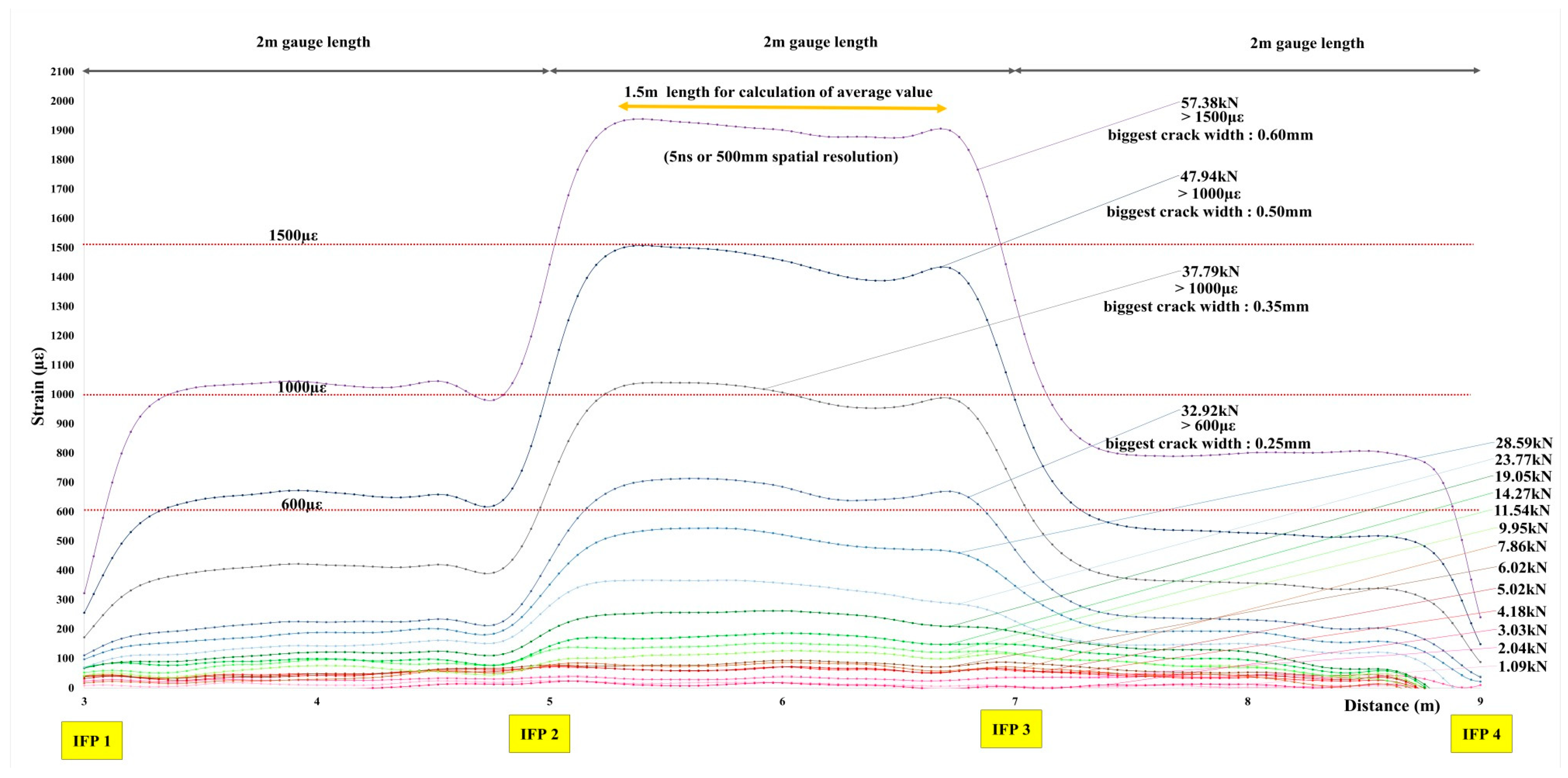
| 32.92 | Max crack width: 0.25 mm > 600 με |
| 37.79 | 0.3 mm crack width occurred > 1000 με |
| 47.94 | Max crack width: 0.5 mm > 1000 με |
| 57.38 | Max crack width: 0.6 mm > 1500 με (Maximum 1939 με) |
| Load Level (kN) | Crack Status | Maximum Crack Width | Crack Zone Relative to IFPs | Number of Visible Cracks | Notes |
|---|---|---|---|---|---|
| 1.09 | First hairline cracks | <0.05 mm | Near IFP3 (~6.0–6.5 m) | 2 | Width too small to measure |
| 2.04 | Hairline cracks | <0.05 mm | Near IFP3 | 2–3 | No new cracks compared to 1.09 kN |
| 3.03 | Hairline cracks | <0.05 mm | Near IFP3 (~6.8 m) | 3 | One new hairline crack appeared |
| 4.18–5.02 | Initial propagation | <0.05 mm | IFP2–IFP3 | 3–4 | Cracks remain hairline |
| 6.02 | Continued propagation | <0.05 mm | IFP2–IFP3 (~5.8 m) | 4–5 | Slight extension of earlier cracks |
| 7.86 | Increasing density of cracks | <0.05 mm | IFP2–IFP3 | 5–6 | No measurable opening |
| 9.95 | Multiple hairline cracks | <0.05 mm | IFP2–IFP3 | 6–7 | One new hairline crack near IFP2 |
| 11.54 | Cluster formation begins | <0.05 mm | IFP2–IFP3 | 8–10 | Several new cracks across constant-moment region |
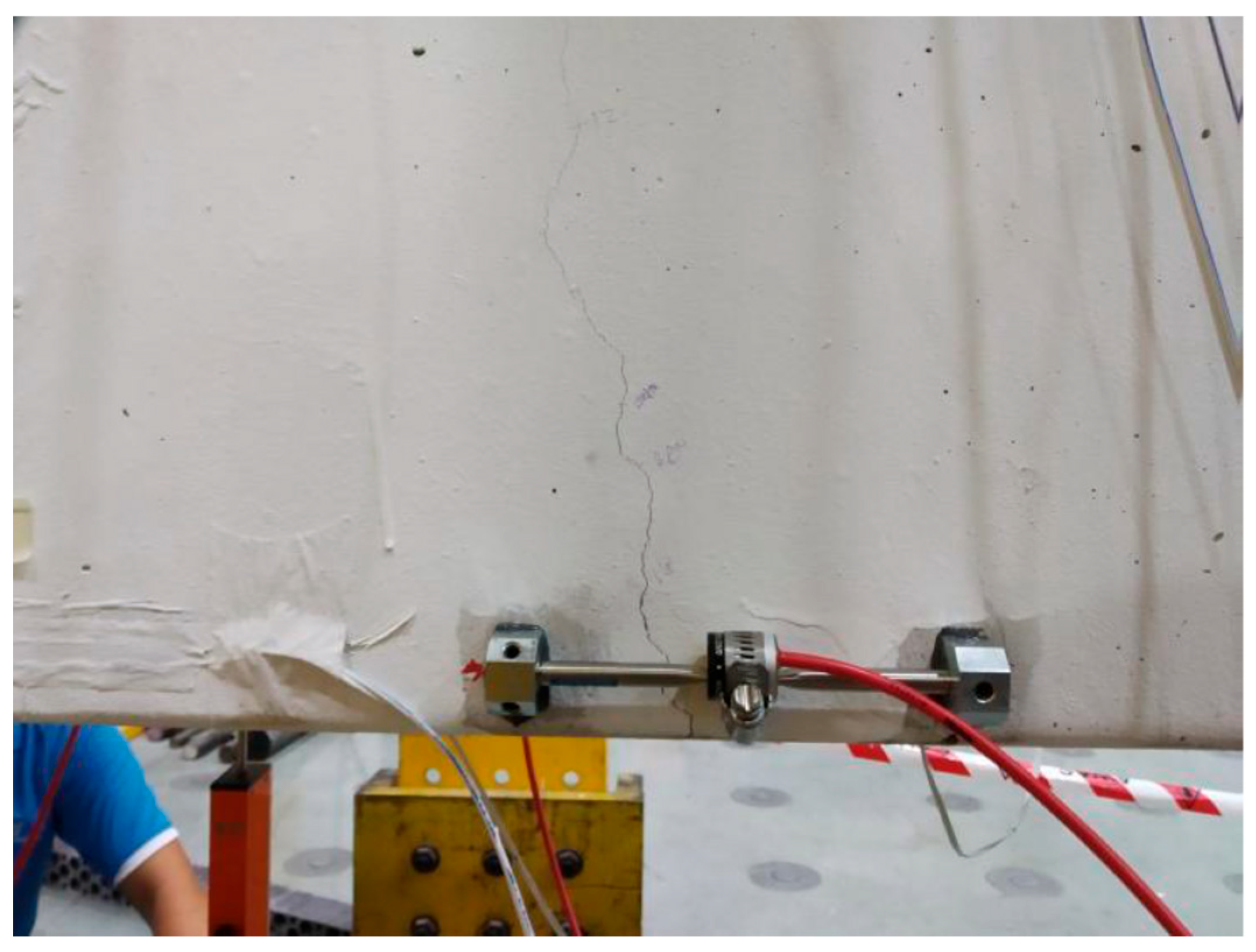
| 14.27 | First measurable crack | 0.05 mm | Centered at IFP3 | 10+ | First measurable crack width 0.05 mm |
| 19.05 | Stable crack extension | 0.05 mm | IFP2–IFP3 | 10+ | Same max width as at 14.27 kN |
| 23.77 | Early widening | 0.15 mm | IFP2–mid between IFP2–IFP3 | 12+ | Several cracks measurable between 0.05–0.15 mm |
| 28.59 | Further widening | 0.20 mm | IFP2–IFP3 | 15+ | More cracks measurable: 0.05–0.20 mm |
| 32.92 | Significant widening | 0.25 mm | IFP2–IFP3 | 15+ | Peak strain zone matches DFOS peaks up to 0.25 mm |
| 37.79 | Major crack development | 0.40 mm | IFP2–IFP3 | 20+ | Broad cluster of cracks, first ~0.40 mm |
| 47.94 | Advanced widening | 0.50 mm | IFP2–IFP3 | 20+ | Multiple cracks between 0.10–0.50 mm |
| 57.38 | Maximum measured stage | 0.60 mm | IFP2–IFP3 | 20+ | Largest crack width 0.60 mm, dense crack network |
| Actual Applied Load (kN) | T Under Snow (°C) | Foil Strain Gauge (με) | |
|---|---|---|---|
| IFP2-IFP3 (1.5 m Length) | FSG 6 | FSG 14 | |
| 0.00 | 0 | 0 | 0 |
| 2.04 | 31 | 21 | 12 |
| 5.02 | 62 | 73 | 51 |
| 11.54 | 140 | 70 | 52 |
| 19.05 | 247 | 201 | 168 |
| 28.59 | 509 | 508 | 445 |
| 37.79 | 1001 | 979 | 862 |
| 47.94 | 1452 | 1658 | 1512 |
| 57.38 | 1904 | 2071 | 1906 |
| Actual Applied Load (kN) | Vibrating Wire Strain Measurements (με) | ||
|---|---|---|---|
| VWSG 3 | VWSG 4 | Average | |
| 0.00 | 0 | 0 | 0 |
| 2.04 | 6 | 6 | 6 |
| 5.02 | 78 | 65 | 72 |
| 11.54 | 247 | 209 | 228 |
| 19.05 | 495 | 452 | 474 |
| 28.59 | 938 | 899 | 919 |
| 37.79 | 1618 | 1619 | 1619 |
| 47.94 | 2345 | 2421 | 2383 |
| 57.38 | 3055 | 3243 | 3149 |
Disclaimer/Publisher’s Note: The statements, opinions and data contained in all publications are solely those of the individual author(s) and contributor(s) and not of MDPI and/or the editor(s). MDPI and/or the editor(s) disclaim responsibility for any injury to people or property resulting from any ideas, methods, instructions or products referred to in the content. |
© 2025 by the authors. Licensee MDPI, Basel, Switzerland. This article is an open access article distributed under the terms and conditions of the Creative Commons Attribution (CC BY) license (https://creativecommons.org/licenses/by/4.0/).
Share and Cite
Buranbayeva, A.; Sarsembayeva, A.; Tee, B.P.; Zhumadilov, I.; Orazbekova, G. Performance Evaluation of Fixed-Point DFOS Cables for Structural Monitoring of Reinforced Concrete Elements. Infrastructures 2025, 10, 349. https://doi.org/10.3390/infrastructures10120349
Buranbayeva A, Sarsembayeva A, Tee BP, Zhumadilov I, Orazbekova G. Performance Evaluation of Fixed-Point DFOS Cables for Structural Monitoring of Reinforced Concrete Elements. Infrastructures. 2025; 10(12):349. https://doi.org/10.3390/infrastructures10120349
Chicago/Turabian StyleBuranbayeva, Aigerim, Assel Sarsembayeva, Bun Pin Tee, Iliyas Zhumadilov, and Gulizat Orazbekova. 2025. "Performance Evaluation of Fixed-Point DFOS Cables for Structural Monitoring of Reinforced Concrete Elements" Infrastructures 10, no. 12: 349. https://doi.org/10.3390/infrastructures10120349
APA StyleBuranbayeva, A., Sarsembayeva, A., Tee, B. P., Zhumadilov, I., & Orazbekova, G. (2025). Performance Evaluation of Fixed-Point DFOS Cables for Structural Monitoring of Reinforced Concrete Elements. Infrastructures, 10(12), 349. https://doi.org/10.3390/infrastructures10120349