Article

Barriers and Enablers in Implementing the Vision Zero Approach to Road Safety: A Case Study of Haryana, India, with Lessons from Sweden


1
School of Computing, Engineering and the Built Environment, Edinburgh Napier University, 10 Colinton Road, Edinburgh EH10 5DT, UK
2
School of Rural and Surveying Engineering, Aristotle University of Thessaloniki, 54124 Thessaloniki, Greece
*
Author to whom correspondence should be addressed.
Infrastructures 2025, 10(12), 329; https://doi.org/10.3390/infrastructures10120329
Submission received: 1 October 2025 / Revised: 6 November 2025 / Accepted: 18 November 2025 / Published: 1 December 2025
(This article belongs to the Special Issue Sustainable Road Design and Traffic Management)

Abstract

Empirical studies on barriers and enablers to implementing Vision Zero remain limited, especially in low- and middle-income countries (LMICs), limiting broader adoption. India exemplifies this gap: while some cities and states have adopted Vision Zero, national uptake has been slow. The purpose of this study is to investigate barriers and enablers in the Indian state of Haryana. Using a qualitative approach, we conducted semi-structured interviews with 16 Vision Zero experts selected through purposive and snowball sampling. Data was analyzed using inductive content analysis following Graneheim and Lundman’s approach. The findings revealed five categories and 21 sub-categories of barriers and four categories with 13 sub-categories of enablers. Cultural and institutional barriers were most prominent, including poor road safety culture, staff shortages, limited technical expertise and weak research capacity. Operational, financial and political barriers were less frequently discussed but included complex management processes, delayed funding and lack of political will in certain states. Key enablers included strong political support, long-term vision, ambitious road safety targets, and continuous monitoring and evaluation. Identifying these factors can strengthen the implementation capacity in LMICs and guide policymakers in overcoming challenges and leveraging enablers to advance Vision Zero.

1. Introduction

Global road traffic fatalities remain alarmingly high, with an estimated 1.19 million deaths recorded in 2021 [1], representing a 5% reduction from the 1.25 million deaths estimated in 2010 [1]. A range of global efforts have contributed to this decline, including the United Nations’ first Decade of Action for Road Safety (2011–2020), which aimed to halve road deaths by 2020. While the overall target of reducing road deaths was not achieved, several countries made progress by placing road safety on their global health and development agenda. According to the Global Status Report on Road Safety 2023, most of these successes occurred in high-income countries (HICs), with only a few LMICs reaching comparable reductions. Notably, the report highlights that some of the greatest gains were made in contexts where the Safe System approach to road safety was most widely applied [1]. Building on the lessons of the first Decade of Action, the United Nations (UN) launched a second Decade of Action for Road Safety (2021–2030), with a renewed global target of reducing road traffic deaths and injuries by at least 50% by 2030. The accompanying Global Plan, developed by the World Health Organization (WHO) and UN Regional Commissions, positions the Safe System approach as the strategy for achieving this goal [2].
The International Transport Forum (ITF) defines the safe system approach as a “forgiving” strategy that accounts for human error [3]. It recognizes that human mistakes are inevitable and must be anticipated in the design and operation of transport systems. The strategy is built on four guiding principles:
  • Human fallibility—People will make mistakes that can lead to road crashes.
  • Biomechanical limits—The human body has limited tolerance to crash forces before serious harm occurs.
  • Shared responsibility—Road safety is a collective responsibility between system designers and road users.
  • System resilience—All parts of the system must be strengthened to multiply protective effects; if one part fails, others should compensate.
These principles guide the design and operation of the road transport system and are visually represented in a five-circle Safe System framework. At the center are vulnerable and fallible road users, pedestrians, cyclists, motorists and passengers, whose safety must be prioritized. This reflects the first principle: humans will make mistakes. The second circle shows the interaction between roads and roadsides, speed, and vehicles, emphasizing how design and technology can guide safe behavior and reduce crash severity. The third circle illustrates how these components are managed to prevent crash forces from exceeding human tolerance limits. For example, vehicle speed is limited to 30 km/h in areas with high pedestrian activity to ensure survivable outcomes, while intelligent speed assistance and collision avoidance systems enhance driver responses and occupant protection. This embodies the second principle of biomechanical limits.
The fourth circle covers post-crash medical care, highlighting the importance of timely emergency response and treatment in determining health outcomes. Together, the second and fourth circles represent the third principle: strengthening all system components to ensure protection even when one fails. The fifth circle reflects the fourth principle of shared responsibility, emphasizing the role of both system designers and road users and the need for data to inform practice.
Transitioning to a Safe System requires the application of measures across five strategic pillars:
  • Pillar 1: Road Safety Management—Establishes multi-sectoral partnerships and lead agencies to coordinate national strategies, targets, and data systems.
  • Pillar 2: Safer Roads and Mobility—Enhances the inherent safety of road networks, especially for vulnerable users, through infrastructure design and assessment.
  • Pillar 3: Safer Vehicles—Promotes the adoption of advanced safety technologies via global standards, consumer information, and incentives.
  • Pillar 4: Safer Road Users—Supports behavior-change programs through enforcement, education, and public awareness campaigns.
  • Pillar 5: Post-Crash Response—Strengthens emergency medical systems to improve treatment and rehabilitation outcomes for crash victims [3,4,5].
The concept of a safe system approach originated in Sweden and the Netherlands in the 1990s [3,4]. Netherlands developed the Sustainable Safety vision, while Sweden launched the Vision Zero approach to road safety in 1995, making it a law in 1997 [6]. As the name suggests, Vision Zero is a long-term goal to eliminate fatalities and serious injuries from road traffic crashes. It is based on the ethical imperative that no loss of life is acceptable within the road transport system [4,7,8]. Vision Zero marks a departure from traditional approaches that placed blame on road users, instead advancing a model of shared responsibility where the ultimate accountability lies with system designers [7].
The vision is built on four foundational principles:
  • Human fallibility—People will make errors that can lead to road crashes.
  • Biomechanical limits—The human body has limited tolerance to crash forces before serious harm occurs.
  • Shared responsibility—Road safety is a collective responsibility, but ultimate accountability lies with system designers.
  • Ethical imperative—No loss of life is acceptable within the road transport system.
These principles guide the design of transport systems in two critical ways: first, by anticipating human error and ensuring that such errors do not result in death or serious injury and second, by designing roads, vehicles, and services so that the kinetic energy transferred during a crash remains within survivable limits. Speed management becomes a central focus in this context, as speed is directly and proportionally related to the severity of injury. For instance, pedestrians struck at speeds between 15 and 20 mph are significantly more likely to survive than those struck at speeds exceeding 30 mph [7,8]. Accordingly, Vision Zero promotes safe speeds tailored to the environment, achieved through separation and integration measures such as tunnels, bridges, crash barriers and dedicated lanes for vulnerable road users. A comparison of the Vision Zero and Safe System approaches to road safety is provided in Table 1.
Sweden has experienced a steady decline in road traffic fatalities since the adoption of Vision Zero in 1997. Between 1990 and 2015, the country recorded a 66% reduction in road fatalities and a 22% decrease in traffic injuries [9]. These improvements were attributed to targeted interventions, including median barriers that reduced fatalities by up to 80% and urban street designs capped at 30 km/h that yielded similar results [7]. Similarly, Weijermars and Wegman assessed the Netherlands’ Sustainable Safety vision and reported a 32–34% reduction in road deaths in 2007 compared to expected figures [10]. This decline was attributed to coordinated measures such as road categorization, traffic calming and targeted enforcement [10]. While a correlation between declining road traffic fatalities and Vision Zero adoption has been documented in these studies, attributing this trend solely to the approach remains complex. Recent evidence from Norway suggests that although a definitive causal link between Safe System adoption and road safety outcomes remains methodologically elusive, empirical patterns are consistent with theoretical expectations and make a causal interpretation increasingly plausible [11].
The success of Vision Zero in Sweden inspired national and municipal road safety strategies across HICs such as the United Kingdom’s (UK) Tomorrow’s Roads: Safer for Everyone (2000–2010), London’s Safe Streets for London initiative, New Zealand’s Australasian Safe System, and the Towards Zero Deaths (TZD) programs in New York and San Francisco [8,12]. More recently, Vision Zero principles have begun to inform strategies in LMIC contexts, including Bogota in Colombia, Mexico City, Sao Paulo and Fortaleza in Brazil, and Haryana State in India. Haryana was the first Indian state to formally adopt the Vision Zero approach, launching its program in 2017. The initial phase targeted the 10 most vulnerable districts. The project was implemented in partnership with the World Resources Institute (WRI) India, Honda India Foundation and National Association of Software and Service Companies (NASSCOM) Foundation and emphasized evidence-based action through black spot identification, crash data analysis, and coordinated multi-agency engagement. Within the first year of implementation 4160 km of road had been inspected, 760 crash investigations conducted and 78 blackspots audited. These efforts led to a 26% reduction in traffic fatalities, prompting the expansion of the program to all 22 districts in Phase II [13]. Despite its impact, the initiative faced several challenges [14].

1.1. Previous Studies on Vision Zero Implementation

Previous studies on Vision Zero implementation highlight that cultural attitudes, political will, strong collaboration, strict enforcement and sustainable investment in road safety research is required for success of Vision Zero approach.

1.1.1. Cultural Perceptions

In both high- and low-income contexts, cultural attitudes toward road safety shape public acceptance of Vision Zero. Tingvall observed that safety is often viewed as a constraint on mobility, while Whitelegg and Haq reported mixed reactions among UK stakeholders [6,15]. While focus group participants were generally supportive, survey respondents expressed skepticism about the feasibility of achieving zero fatalities. In LMICs, cultural barriers are often more deeply embedded. Khorasani-Zavreh et al. and Safarpour et al. identified a poor traffic safety culture in Iran, while Heydari et al. noted a widespread belief in fate or destiny as a determinant of crash outcomes, undermining proactive safety behavior [4,16,17].

1.1.2. Political Commitment and Strategic Vision

Political will is consistently identified as a critical aspect for successful Vision Zero implementation. Johnston emphasized “commitment” as one of the four Cs essential for progress, alongside constituency, cooperation, and coordination [18]. The European Transport Safety Council (ETSC), the Support for European Road Safety Performance Indicators (SUPREME) project and ITF similarly highlighted the importance of strategic vision, legislative frameworks and long-term planning in effective implementation [3,19,20]. In LMICs, however, political prioritization is often lacking. Tetali et al., Perez-Nunez et al. and the Overseas Development Institute (ODI) all found that road safety was deprioritized in national agendas [21,22,23]. The World Bank found that Brazil lacked road safety targets and a crash database, reflecting weak focus on results. Without political leadership and strategic alignment, Vision Zero risks remaining aspirational [24].

1.1.3. Multi-Sectoral Collaboration

Effective implementation of Vision Zero depends on engaging actors across government, civil society and the private sector [3]. Tingvall cautions against placing road safety responsibility solely on one agency, advocating instead for whole-of-society engagement [15]. ETSC reinforces this by emphasizing the importance of involving both public and private sectors in policy design, implementation, and monitoring [19].

1.1.4. Governance

To support such collaboration, robust governance structures are critical. SUPREME and Yannis et al. recommend establishing dedicated road safety authorities to coordinate stakeholder efforts and clarify institutional roles [20,25]. In LMICs, this remains a critical gap. Multiple studies including those by Khorasani-Zavreh et al., the Independent Evaluation Group and Hyder and Vecino-Ortiz identified the absence of a lead agency as a recurring barrier [16,26,27].

1.1.5. Resource Availability

To fulfill their mandate, the road safety authorities require adequate and sustainable resources. However, the implementation of the Vision Zero approach is often hindered by limited financial and human resources. Gaffron found that British local authorities struggled with a lack of funding, staff, and time factors, directly impacting their ability to implement walking and cycling initiatives [28]. Similarly, Yannis et al. identified the absence of dedicated budgets and sustainable funding mechanisms as a major barrier across Southeast European regions [25]. The challenge is more acute in LMICs. Insufficient financial resources are cited across most studies such as Turner and Smith and WRI [29,30]. The World Bank and Perez-Nunez et al. emphasized the lack of sustained investment in road safety strategies while Heydari et al. highlighted inadequate human resources [17,22,24].

1.1.6. Institutional Capacity

Beyond funding, institutional capacity plays a critical role in Vision Zero implementation. Yannis et al. emphasized the need for ongoing education and training in road safety, ensuring that personnel across sectors are equipped with the knowledge and skills to implement, evaluate and adapt Vision Zero interventions effectively [25]. ITF further emphasized the importance of knowledge transfer and capacity building. In LMICs, capacity gaps are broader and more systemic. For instance, Tetali et al. and Khanal and Sarkar pointed to the absence of road safety education in schools [21,31].

1.1.7. Enforcement and Policy Adherence

Enforcement remains a challenge across various contexts. Wegman et al. identified poor adherence to drink-driving and speed policies in HICs and advocated for integrated approaches that combine road design, enforcement, public awareness and intelligent transport systems (ITS) [32]. In LMICs, enforcement gaps are often compounded by limited equipment, weak legal frameworks and low public compliance. Mojarro et al. found that officers in Cuernavaca, Mexico were trained but lacked tools to enforce speed limits [33]. Tetali et al. and Khorasani-Zavreh et al. reported low enforcement of traffic laws in India and Iran, respectively. Without robust enforcement mechanisms and public buy-in, Vision Zero’s technical measures may fail to translate into behavioral change [16,21].

1.1.8. Road Safety Research

A shift toward evidence-based planning is essential for Vision Zero’s credibility and effectiveness. Tingvall criticized the reliance on anecdotal reasoning in policy development, calling for interventions grounded in empirical evidence [15]. ETSC reinforced this by outlining a comprehensive checklist of best practices, including accident data collection, performance indicators, and monitoring and evaluation. In LMICs, however, data gaps are pervasive [19]. Heydari et al. and Hyder and Vecino-Ortiz highlighted under-reporting of crashes and lack of reliable data systems [17,27]. The World Bank found that Brazil lacked a national crash database, while Perez-Nunez et al. noted limited investment in research [22,24]. Goel et al. reported a significant evidence gap in road safety intervention research between HICs and LMICs. Their systematic mapping revealed that 96% of studies on road safety interventions, including those on speed management, are conducted in HICs, while only 1.4% originate from lower-middle and low-income contexts [34]. Existing studies recommend that LMICs consider speed management strategies. The PIARC Working Group 3.1.1 and Erdelean et al. identified excessive speed as one of the most critical causation factors in road traffic injuries and fatalities and advocated for a suite of speed management measures, including Intelligent Speed Adaptation (ISA) systems [35,36]. Godthelp and colleagues further argued that emerging vehicle technologies like ISA deserve greater attention as tools for safely regulating vehicle speeds. Nonetheless, without robust data, monitoring and evaluation, Vision Zero strategies cannot be effectively tailored or assessed [37].
While existing studies offer valuable insights into barriers to Vision Zero implementation in LMICs, the overall body of literature in this area remains limited. Within what does exist, empirical research is scarce. Among the sources reviewed, only two case studies [4,23] employ primary qualitative methods to investigate implementation challenges. The remaining studies rely on desk reviews.
There is a dearth of research specifically examining enablers of implementation in LMICs. Much of the existing literature originates from HICs. While these practices have worked in a HIC environment, they do not necessarily translate to improvements in road safety in LMICs due to differences in economic and socio-cultural conditions [12,17,26,30]. For instance, interventions targeting road user behavior are strongly influenced by cultural conditions and norms. Priority issues also vary between HICs and LMICs. For instance, most of the research based on HICs, focus on drivers, yet the victims of road accidents in LMICs are vulnerable road users [38]. So, while most of these practices are transferable to an LMIC setting, scholars emphasize that they must be carefully considered before adoption [12].
This study addresses critical gaps in the Vision Zero implementation literature by providing an empirically grounded examination of barriers and enablers within the Indian context. It draws on primary qualitative data from a diverse sample of stakeholders engaged in implementation efforts across India. Furthermore, by identifying enabling factors, the study responds to a longstanding omission in LMIC-focused research, where enablers are often underexplored or extrapolated from high-income country (HIC) experiences. The study findings offer an in-depth understanding of the cultural, institutional, operational, financial and political factors influencing Vision Zero implementation. Examining both barriers and enablers enables road safety stakeholders to anticipate implementation challenges and informs the design of more effective and context-responsive road safety strategies.
The paper is organized into five main sections. The introduction highlights the research problem and the importance of examining barriers and enablers to Vision Zero implementation. The materials and methods section present the conceptual framework guiding the study, details the study design, data collection and analysis procedures, and addresses trustworthiness. The results are structured into two parts: barriers and enablers of implementation, and a conceptual analysis of these factors under the nine key components of the framework. The discussion interprets these results in relation to the existing literature, and the conclusion summarizes the key contributions.

2. Materials and Methods

2.1. Conceptual Framework

The development of the conceptual framework guided the researcher in identifying the critical concepts relevant to Vision Zero implementation and their interrelationships. It enabled a conceptual analysis of barriers and enablers across the concepts and supported comparative analysis between Haryana (India) and Sweden. The framework was developed through a synthesis of the literature on policy implementation and road safety policy management, including the top-down and bottom-up implementation theories, the 5C protocol of policy implementation and the policy triangle framework [39,40,41,42]. Ten core concepts were identified: objectives and targets, resources, policy components, implementers and key stakeholders, implementation process, institutional capacity, coordination, outcomes, monitoring and evaluation and external environment. These concepts and their relationships are illustrated in Figure 1.
Guidelines developed under each criterion of conceptual framework are mentioned below:
  • Objectives and Targets: It is essential to have long-term vision and to set ambitious, measurable, and achievable road safety targets in vision zero approach.
  • Resources: Sufficient resources need to be available for implementing vision zero approach. Both financial and human resources need to be adequate.
  • Policy Components: Vision zero policy needs to be based on four guiding principles such as adaptation of traffic system to vulnerabilities of road users; road system should be designed considering the human body tolerance limit; speed limit should be determined according to technical standards of roads and vehicles and should not exceed human body tolerance limit; shared responsibility among road system designers and road users, whereas the ultimate responsibility is upon designers of the system. Furthermore, policy components should incorporate five core components of vision zero such as safe roads, safe vehicles, safe speed, safe road users and post-crash response.
  • Implementers and key stakeholders: Commitment and continuous support of implementers and key stakeholders will drive the success of vision zero.
  • Implementation process: Well organized implementation process is key. Clearly defined roles and responsibilities are required for vision zero implementation.
  • Institutional capacity: Effective institutional management processes to improve operational and management capacity of road safety institutions and implementing organizations.
  • Coordination: Lead agency is required to coordinate key actors involved in the vision zero implementation process.
  • Outcomes: Vision zero implementation should result in tangible improvements in road safety, such as reduced traffic fatalities, safer road infrastructure and increased public adherence to traffic rules.
  • Monitoring and Evaluation: Monitoring activities such as regular review meetings should be established and evaluations conducted to support continuous improvement of the vision zero implementation process.
  • External Environment: Impact of political, social, and economic environment needs to be supportive and managed appropriately for successful implementation.

2.2. Study Design

This study is underpinned by an interpretivist research philosophy, which assumes that social reality—in this case, the barriers and enablers in implementing the Vision Zero approach—is shaped by the perceptions, experiences and interactions of stakeholders such as policymakers and road safety experts [43]. The researcher approached the inquiry with the aim of understanding how these actors interpret Vision Zero implementation within their respective environments. Guided by this philosophical stance, the study adopted an embedded multiple-case study design as described by Yin [44], enabling a deep, context-sensitive exploration of two contrasting cases: India and Sweden.
These two cases were purposefully selected to reflect different social-economic environments and stages of vision zero implementation. India, a low- and middle-income country (LMIC), was selected due to its high burden of road traffic fatalities and transitional phase characterized by rapid motorization, economic and population growth. India recorded 153,972 road traffic deaths in 2021, translating to a fatality rate of 15.4 per 100,000 population [1]. This alarming figure reflects the scale of India’s road safety crisis, yet the regulatory frameworks have not kept pace with the severity of the issue. According to the WHO Global Status Report on Road Safety (2023), India’s legislation on urban speed limits for passenger cars and motorcycles is rated as weak or non-existent and its drink-driving laws are classified as moderate [1]. These gaps in legal infrastructure undermine the effectiveness of safety interventions. Within India, Haryana was selected as the embedded unit of analysis using an extreme-case logic. It was the first state to formally launch and implement the Vision Zero approach in 2016, and it carried a significant road safety burden. According to 2015 data from WRI-India (2016), Haryana was among the ten states with the highest road traffic fatality rates, recording 19.9 deaths per 100,000 population, accounting for 3.3% of traffic fatalities nationwide [13]. This elevated risk profile, combined with Haryana’s policy innovation and early adoption of Vision Zero, made it a strategically appropriate site for examining both the barriers and enablers of implementation in an LMIC context.
While Gujarat and Kerala had not formally launched Vision Zero, both states had adopted key elements of the approach. Gujarat’s Vision 2030 initiative aimed to reduce road fatalities by 50% by 2030 and was led by the Gujarat Road Safety Authority (GRSA). It involved multi-sectoral coordination across police, health, and education departments, and included measures such as infrastructure upgrades, black spot correction, and targeted financial allocations [45]. Kerala pioneered India’s first Safe Corridor Demonstration Project under the Mission Zero Accidents initiative, led by the Kerala Public Works Department. This initiative emphasized protection of vulnerable road users, traffic calming measures, signage upgrades, and institutional strengthening [46]. The Kerala Road Safety Authority, established in 2007, continues to coordinate funding and programmatic efforts across departments.
Sweden, a high-income country (HIC), was selected as the pioneer of Vision Zero and a global reference point for systemic road safety reform. The implementation of Vision Zero in Sweden has been associated with substantial improvements in traffic safety. Between 1990 and 2015, the country recorded a 66% reduction in road fatalities and a 22% decrease in traffic injuries [9]. By 2016, Sweden achieved the world’s lowest road traffic fatality rate of approximately 2.9 deaths per 100,000 population [5]. This sustained reduction in traffic fatalities made it a valuable case for identifying factors affecting the implementation and best practices. While direct comparisons between the two countries are limited by differences in infrastructure, population density and cultural contexts, the circumstances allowing for implementation in Sweden were investigated to discover any that may be applicable in India.
Data were collected through semi-structured interviews with key stakeholders involved in Vision Zero-related activities in each country. Participants were selected through purposive and snowball sampling, based on their experience in vision zero development, implementation, training or documentation. Inductive content analysis guided the interpretation of interview data.

2.3. Data Collection

Data was collected by conducting semi structured interviews with government officials who were directly involved with the vision zero approach and its implementation, academic experts specializing in road safety and the vision zero approach and independent researchers who have contributed to road safety and implementation of the vision zero approach. Semi-structured interviews are well suited to interpretivist study, as they allow participants to express their experiences and perspectives in their own terms [47]. In Sweden, participants were identified from an internet search and selected through purposive sampling based on their involvement in the development, implementation or documentation of Vision Zero. These included government officials from the Swedish Transport Administration, academics and independent researchers from national universities such as Chalmers University of Technology. Initial participants were sent emails to introduce and explain the aim and purpose of the study and to suggest the mode of interviewing: face-to-face or via Skype. The initial participants were asked to propose potential participants. Seven participants agreed to participate in a face-to-face interview: 2 academic researchers, 3 government officials and 2 independent researchers. Table 2 shows the participant list, their profession and roles.
In India, participants were identified and selected based on their knowledge and experience in implementing the Vision Zero project. Independent researchers who had been involved in the Haryana vision zero implementation and had written articles and research reports were selected from the WRI-India website. Academics who had expertise in road safety, had been involved with road safety training, and had extensive knowledge of the safe system approach were selected to give an independent view. Government officials were selected based on their role and responsibility in implementing vision zero. Participants in India who had chaired the implementation meeting of vision zero and who had access to full information on the implementation of vision zero were selected. Snowball sampling was also applied, whereby the initial participants were asked for leads. Nine participants agreed to participate in a face-to-face interview: 5 Independent researchers, 2 Academic and independent researchers, and 2 Government officials. Table 3 shows the participant list, their profession, role and the rationale for selection.
A total of 16 participants agreed to participate in the face-to-face interview, comprising 7 from Sweden and 9 from India. The sample size of 16 experts was deemed appropriate as the researcher’s aim was to explore the subjective realities of Vision Zero implementation in depth, rather than to generalize findings to a broader population. Moreover, existing research suggests that thematic saturation in qualitative studies is often achieved within the first 12 interviews [48]. The participants were informed about the purpose of the study and given the opportunity to ask questions. The informed consent form was read aloud, and individuals were given the freedom to sign voluntarily. Each participant was reminded that they could withdraw from the interview process at any time without consequence. The average duration of the interviews was 55 min and were recorded.
While purposive and snowball sampling allowed us to engage stakeholders with substantial experience in Vision Zero implementation, this also meant that several participants had a direct role in developing, managing, or promoting the program. Such proximity may carry vested interests and could introduce a degree of positive bias in reporting implementation processes and outcomes. To mitigate this risk, we sought diversity in professional roles, including independent researchers and academics not formally affiliated with program management, and we triangulated interview data with findings from the systematic literature and document review. Nevertheless, the potential influence of professional or institutional alignment with Vision Zero should be considered when interpreting the results, particularly in relation to perceived enablers and reported impacts.

2.4. Data Analysis

The inductive content analysis was chosen for this study as it was found to be aligned with the goals of qualitative case study research, which aimed to develop a deep, context-sensitive understanding of the factors influencing Vision Zero implementation in India and Sweden. To guide this process, the researcher adopted the approach of Graneheim & Lundman, which is widely used in qualitative policy research. This method enabled researchers to identify barriers and enablers specific to each case, as experienced and interpreted by participants, without imposing predefined categories [49]. As a result, the findings provided a richer understanding of context-specific factors shaping the outcomes and contributed to expanding knowledge on implementing the vision zero approach [50,51,52].
This inductive process followed five steps: (1) data preparation, (2) familiarization with the interview transcripts, (3) identification of data sections relevant to the research questions, (4) assignment of descriptive codes to those sections and (5) grouping of codes into sub-categories and overarching categories. In the first step, transcripts were reconciled with the original audio recordings to ensure accuracy before being imported into NVivo. Researchers then read each transcript in its entirety, capturing initial impressions in analytic memos. These insights informed the development of preliminary codes, which were applied to relevant data sections. The coded data were then reviewed. Some codes were retained as initially named, while others were refined or renamed to better reflect the underlying data. This iterative process ensured that the coding reflected participant’s voices and contributed to developing a deep understanding of the case. Codes relating to the same topic were grouped into sub-categories, which were then clustered into broader categories. In the final step, these categories and the sub-categories were discussed in detail to contribute to the overall understanding of the barriers and enablers of the vision zero implementation in India.
Theoretical saturation was assessed concurrently with coding and category development. As transcripts were analyzed, the emergence of new codes and categories was closely monitored. Saturation was considered reached when subsequent transcripts yielded no novel insights and when existing categories were consistently reinforced across interviews. This point was observed after coding approximately 85% of the dataset, at which stage the remaining transcripts served to confirm rather than expand the established structure. This approach aligns with qualitative standards for theoretical saturation, where saturation is defined as the point at which no new information or themes are observed in the data [53]. To assess the reliability of coding, we conducted an inter-coder agreement check using Krippendorff’s alpha. A random subset comprising 25% of the interview transcripts was independently coded by a second researcher who was blind to the original coding decisions. Both coders used the same coding manual, which included definitions, inclusion criteria, and decision rules for each node. The resulting Krippendorff’s α score was 0.76, indicating substantial agreement across coders and suggesting a reliable level of consistency in interpretation [54].

2.5. Trustworthiness

Interview transcripts were shared with participants to confirm that their views were accurately captured. After the initial analysis, participants were invited to review the emergent themes and confirm the accuracy of interpretations. This ensured that the findings remained grounded in their lived experiences and established credibility. Data collected from systematic searches and semi-structured interviews were fact checked. The study provided detailed descriptions of participants’ experiences supported by direct quotations from the semi-structured interviews. This approach was used to help readers assess whether the findings may apply to similar settings [55,56]. An audit trail of all research procedures, including problem formulation, case study protocol, participant selection, field notes, interview transcripts, and peer reviews, was maintained to ensure that other researchers can follow the procedures.
The researcher’s prior exposure to transport policy and traffic safety through academic training provided valuable insight into the factors that influence the implementation of road safety policies. However, it also introduced the potential for confirmatory bias. To mitigate this, the researcher engaged in reflexive journaling to examine how personal experiences and assumptions might shape interpretation. Field notes were used to document moments when the data challenged these assumptions, such as when participants described Vision Zero as “unrealistic,” contrary to the researcher’s expectation that it would be viewed as a necessary and globally endorsed approach to road safety.
A supervisor was actively involved throughout the research process, ensuring that proper procedures were followed. Interview transcripts were shared with some participants to confirm that their views were accurately captured and after initial analysis, the participants were invited to review emergent ideas and offer feedback. These strategies collectively ensured that the findings were shaped by the data rather than the researcher’s prior experiences or assumptions.

2.6. Ethical Considerations

Ethical approval for this study was obtained from the Institutional Review Board following submission of a detailed research proposal outlining the study objectives, design, data collection protocols, participant protections, including informed consent, confidentiality, and voluntary participation, and data management procedures. Subsequent permissions were secured from relevant gatekeepers and participants through formal introductory letters describing the study’s purpose, time commitments and intended outcomes.

3. Results

The data collected from key informants were analyzed and organized into two core categories: implementation barriers and enablers. These categories provide a comprehensive understanding of the factors influencing the adoption and success of Vision Zero in India, and are examined through both inductive and conceptual lenses. First, an inductive content analysis that identified cross-cutting domains: cultural, institutional, operational, financial and political, which shaped implementation dynamics. Across the nine Indian participant files, a total of 241 references were coded under implementation barriers, distributed as follows: cultural (66), institutional (82), operational (53), financial (26), and political (14). For implementation enablers, 148 references were coded: institutional (33), operational (89), financial (14), and political (12). The full set of coded references is presented in Table A1 and Table A2 (Appendix A and Appendix B). This was followed by a conceptual analysis that was conducted using the ten components of the study’s framework to compare barriers and enablers between Haryana (India) and Sweden. The following sections present the results of both analyses in turn.

3.1. Barriers to Vision Zero Implementation Process in India

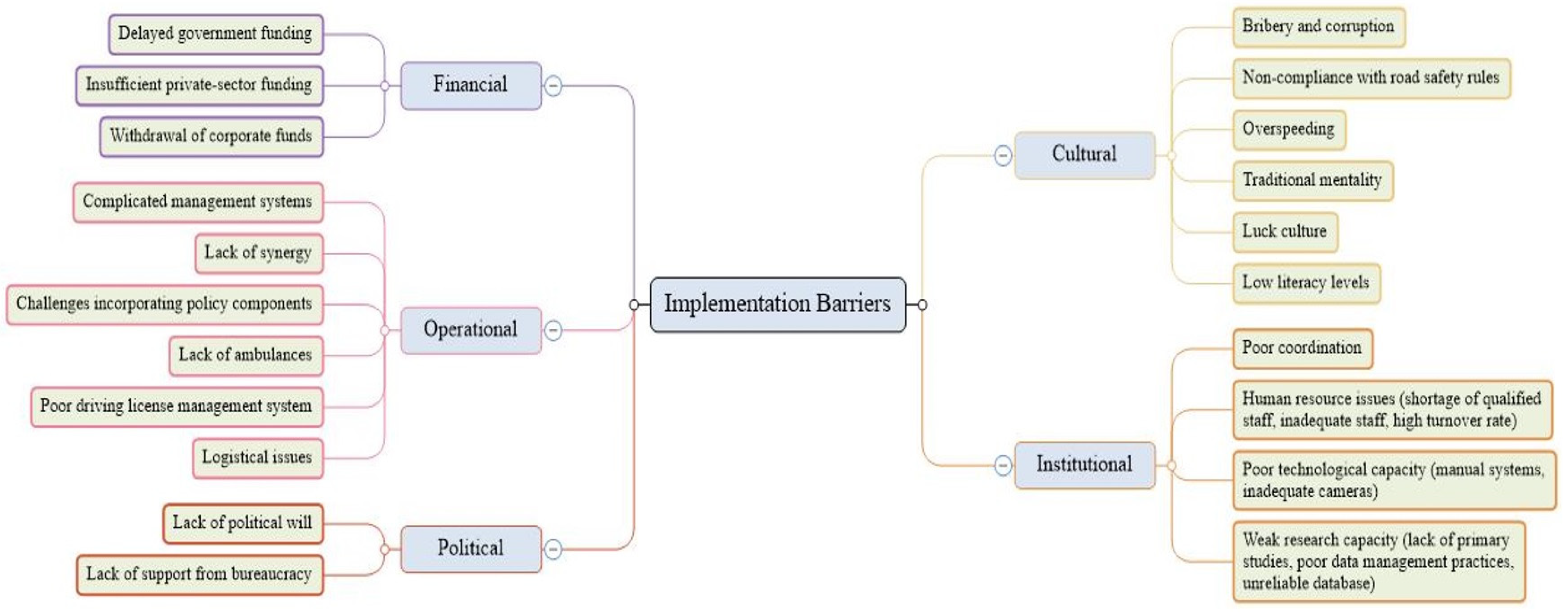
The iterative coding of interview transcripts led to the identification of 21 recurring barriers to Vision Zero implementation in India. These barriers were then thematically clustered into five overarching categories—cultural, institutional, operational, financial and political—based on patterns of similarity. For instance, prevailing attitudes toward road safety and resistance to behavioral change were categorized as cultural barriers, while staff shortages and limited technical expertise were grouped under institutional factors. Figure 2 illustrates these categories and sub-categories.

3.1.1. Cultural Barriers

Several cultural barriers that hinder the effective implementation of road safety initiatives in India were identified. These included corruption, non-compliance, low literacy levels, and the luck culture. Corrupt practices were described as pervasive by the participants across enforcement agencies, with routine bribery enabling road users to bypass licensing procedures and safety regulations. This undermined institutional credibility and weakened the enforcement of road safety norms.
Opposition to speed management from both private and public sector actors was cited by the participants as a major concern. This resistance impeded the adoption of safe speed. Low literacy levels among the general population posed significant challenges to public awareness campaigns and the dissemination of Vision Zero principles. This limited community engagement and the uptake of safety practices.
Victim-blaming mindset among professionals led to a focus on educating road users and while overlooking the critical role that systemic and infrastructural design played in preventing accidents. A cultural belief in luck as a determinant of road safety outcomes was observed among some authorities. The participants explained that this belief discouraged proactive intervention and weakened the perceived necessity of preventive measures.

3.1.2. Institutional Barriers

Institutional challenges significantly undermined the effectiveness of Vision Zero implementation in India. Participants described fragmented coordination, human resource limitations, inadequate technological infrastructure, and weak research capacity.
The participants explained that a lack of collaboration between key road safety institutions, such as police departments, and health authorities was a recurring concern. Inconsistent data-sharing practices and siloed operations hindered comprehensive crash investigations and the development of integrated safety strategies. Road safety agencies faced persistent staffing challenges, including a shortage of qualified personnel and high turnover rates. The absence of specialized degree courses in road safety contributed to limited professional capacity.
Enforcement and surveillance systems were constrained by limited access to speed cameras and an overreliance on manual processes. These technological deficits weakened the ability to monitor compliance and respond effectively to violations.
The participants mentioned that poorly maintained accident records and incomplete crash data compromised the reliability of road safety databases. This lack of robust evidence impeded data-driven decision-making and affected the quality of action plans.

3.1.3. Political Barriers

Lack of political will and insufficient support from bureaucracy emerged as critical impediments to the implementation and scaling of Vision Zero in India.
According to the participants, some state governments demonstrated reluctance to allocate adequate funding for road safety initiatives. This constrained the expansion of Vision Zero measures.
Bureaucratic resistance to change stemming from a preference for maintaining the status quo, with some officials asserting that they already understood both the problems and the solutions.

3.1.4. Operational Barriers

The participants identified several key operational issues that hindered progress towards vision zero goals including complicated management systems, lack of synergy among agencies, challenges incorporating policy components, poor driving license management, logistical issues due to poor internet connectivity and a lack of ambulances.
Complex and bureaucratic proposal approval procedures, particularly within engineering departments, delayed the execution of infrastructure improvements.
Poor communication and lack of synergy between departments led to disjointed efforts. Misunderstandings across institutions complicated the integration of policy components and undermine the coherence of road safety strategies. Widespread irregularities in license issuance, including the absence of daily caps and the ability to obtain licenses without proper training undermined road user competence and contributed to unsafe driving behavior. Poor internet access and the inaccessibility of remote locations impeded the timely execution of road safety measures. These logistical constraints were particularly acute in rural and peri-urban areas.
The lack of well-equipped ambulances and inadequate emergency care infrastructure compromised post-crash survival rates. Participants described ambulances as poorly maintained and unequipped to provide life-saving support during transit.

3.1.5. Financial Barriers

The participants identified financial constraints such as delayed government funding, limited private-sector contributions, and the withdrawal of corporate support during the COVID-19 pandemic that posed significant challenges to the implementation of Vision Zero strategies. Although government allocations for road safety were described as relatively high, the procurement and disbursement processes were often slow and cumbersome. These delays impeded the timely rollout of infrastructure projects, enforcement mechanisms, and public awareness campaigns.
Private-sector funding was more reliably timed but remained insufficient to meet the scale of Vision Zero ambitions. While some corporate entities contributed to road safety efforts, the overall financial commitment from the private sector was minimal.

3.2. Enablers of Vision Zero Implementation Process in India

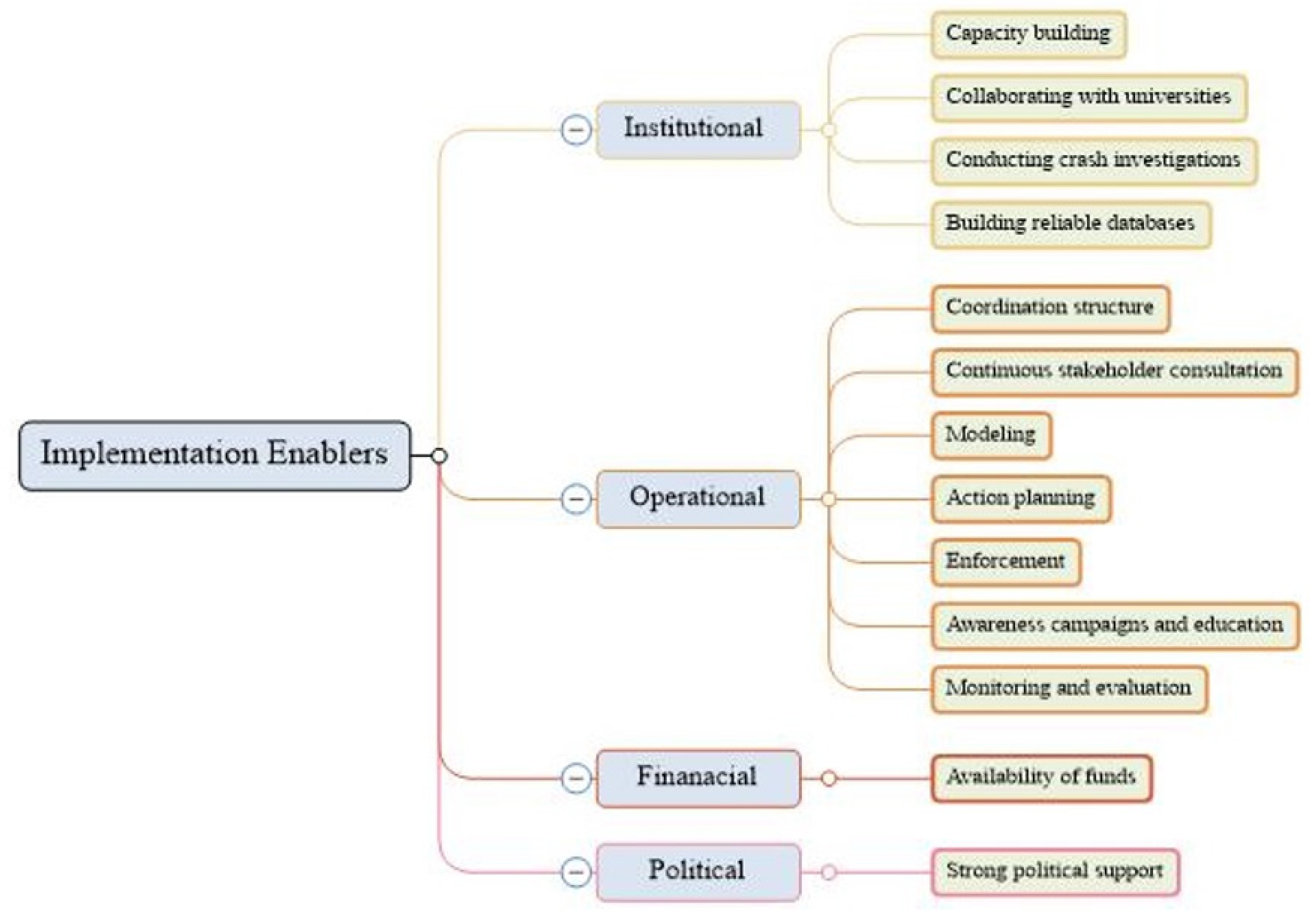
The inductive content analysis of participant interviews generated 13 recurring factors enabling the implementation of the Vision Zero process in India. These were clustered into four overarching categories—institutional, operational, financial, and political—based on similarities. Figure 3 illustrates these categories and sub-categories.

3.2.1. Institutional Enablers

The participants identified several institutional strategies that enhanced the capacity to implement Vision Zero in India. These included workforce development, academic collaboration, data infrastructure, and research-driven decision-making. To address the shortage of road safety professionals, candidates were strategically recruited from related disciplines such as civil engineering, architecture and urban planning. The recruitment was an adaptive measure that leveraged existing technical expertise. Once recruited, candidates were provided with a comprehensive training program that included an induction into the overall Vision Zero program, theoretical instruction on its guiding principles, a specific on-the-ground overview of each district and targeted technical modules. This training enhanced their knowledge and equipped them with the practical skills necessary for effective performance during the implementation phase.
In collaboration with universities, India initiated the development of specialized road safety courses to build a sustainable pipeline of qualified professionals. These partnerships also supported research efforts and fostered a culture of evidence-based practice within road safety institutions. To strengthen research capacity, the traffic police and road safety associates adopted geolocation and mapping technologies for crash investigations, enabling precise identification of black spots and contributing to targeted interventions. Crash investigations were structured as iterative learning processes, with findings translated into actionable recommendations for infrastructure and enforcement improvements. Data from these investigations supported the development of centralized databases for monitoring and evaluation and informed the design of responsive, data-driven safety measures.

3.2.2. Operational Enablers

A range of operational mechanisms that facilitated the implementation of Vision Zero in India were identified by the participants, including a coordinated, inclusive and collaborative approach to road safety governance. India established a hierarchical coordination framework with clearly defined roles and responsibilities. The APEX committee, comprising representatives from state government and the private sector, provided strategic oversight, while the transport department served as the lead agency for road safety initiatives.
Stakeholders were consulted throughout all phases of implementation, fostering broad-based buy-in and commitment. This participatory approach ensured that road safety measures were contextually relevant and supported by key actors, including government officials, police departments and civil society organizations. Action plans were co-developed by state and district officials, with each district’s unique crash profile informing the design of tailored interventions. This localized planning approach enhanced responsiveness and contributed to a 5% decline in road traffic fatalities in the first 10 districts of implementation, while non-implementation districts saw a corresponding increase, prompting statewide scale-up.
Police departments played a central role in enforcing traffic regulations, monitoring high-risk zones, and ensuring compliance. Initially road safety rules were met with public resistance, however, strict enforcement, including increased penalties, led to observable shifts in road user behavior and generated revenue that supported program sustainability. Their proactive engagement extended beyond enforcement to include collaboration on public education and awareness campaigns. Road safety workshops and annual campaigns, such as Road Safety Week, were organized in partnership with police, NGOs and government agencies, using posters and banners to promote safe driving practices and cultivate a culture of safety.
Regular review meetings, such as monthly head-of-department sessions, enabled continuous monitoring of progress. District heads submitted detailed reports on outcomes and proposed adjustments and districts were ranked based on performance. This structured feedback loop fostered accountability and ensured that implementation remained adaptive and data-informed.

3.2.3. Financial Enablers

Participants noted that financial resources were available from both the state government and corporate partners such as NASSCOM, Nagarro and Honda Two-Wheelers. These funds supported a range of operational and programmatic needs, including staff salaries and the implementation of road safety measures. Notably, state government funding was directed toward core implementation activities, while private sector contributions were used to support technical staffing and capacity-building efforts. Several private partners channeled their financial support through the Raahgiri Foundation, which served as a key intermediary in managing and deploying resources for Vision Zero activities.

3.2.4. Political Enablers

Participants explained that the Vision Zero approach received strong political support from the outset and throughout its implementation in Haryana. This support was operationalized through high-level endorsement, sustained funding and bureaucratic alignment. The Chief Minister’s backing and the state government’s active involvement were instrumental in launching and maintaining the project. Decision-makers viewed Vision Zero as a politically attractive initiative, one that aligned with public safety goals and offered visible, measurable outcomes. This political appeal facilitated early adoption and helped secure cross-sectoral buy-in. The participants emphasized that this top-to-bottom support enabled the project to run uninterrupted for two and a half years, reinforcing the importance of political will in sustaining complex, multi-stakeholder interventions.

3.3. Analysis of Barriers and Enablers in India and Sweden

Following the identification of barriers and enablers of the Vision Zero approach in each case study, analysis was conducted to examine the similarities and differences.
This provided insights into how different context-specific factors impact the successful implementation of the Vision Zero approach and highlighted best practices that can inform policymakers and stakeholders in low- and middle-income countries.

3.3.1. Analysis of Implementation Barriers

The categories and sub-categories of implementation barriers identified in the case studies were systematically compared to highlight the similarities and contrasts and provide a deeper understanding of the factors influencing the implementation of the Vision Zero approach in different contexts. The node structure from NVivo, organized with rows for barrier categories and sub-categories and column indicating the number of participants who referenced each item (files column), was exported into a table format. Three additional columns were added to the table: one each for India and Sweden, and a third for notes. For each sub-category, a check mark (✓) was assigned to a country where multiple participants from that context consistently identified the issue during interviews. A cross (✕) was assigned when the issue was either absent or not recurring across responses. Additional information is provided in the ‘Notes’ column. This approach reflects thematic consistency across interviews in each country. The results of this analysis are summarized in Table 4.

3.3.2. Analysis of Implementation Enablers in Haryana (India) and Sweden

The categories and sub-categories of implementation enablers identified in the case studies were systematically compared to highlight the key facilitators that contributed to the success of the Vision Zero approach in different contexts. As in the previous section, a check mark (✓) was assigned to a country where multiple participants from that context consistently identified the enabling factor during interviews. A cross (✕) was assigned when the factor was either absent or not recurring across responses. Additional information is provided in the ‘Notes’ column. The results of this comparison are illustrated in Table 5.

3.4. Conceptual Analysis of the Barriers and Enablers Under the Components of Conceptual Framework in Haryana (India) and Sweden

A conceptual analysis was carried out to identify the barriers and enablers across the components relevant to Vision Zero implementation and to compare these factors between Haryana (India) and Sweden. This comparative analysis helped to highlight cross-cutting factors and context-specific elements. The following section presents a detailed discussion of these similarities and differences, organized according to the components of the conceptual framework.

3.4.1. Conceptual Analysis of Barriers

Comparative analysis was carried out to determine how the barriers under the nine components of the conceptual framework compared between Sweden and Haryana (India). The key findings are highlighted in Table 6.
1.
Objectives and targets; clearly defined policy objectives and achievable road safety targets are essential for effective implementation.
Both cases experienced similar barriers related to long-term objectives and unrealistic targets. In India, the participants emphasized the need for short-term targets to achieve quick wins and motivate implementers to work towards achieving long-term objectives.
In Sweden, some professionals questioned the possibility of achieving zero deaths and viewed the approach as overly ambitious and costly. Interview participant 10 suggested that states should start with fundamental road safety principles and small-scale projects.
2.
Resources; a successful implementation process requires dedicated and sustainable financial resources and a highly qualified workforce.
The participants in India perceived funding as insufficient and unsustainable. The private sector funding was very low and subject to external disruptions such as the COVID-19 pandemic which led car manufacturers to withdraw their funding. This led to a temporary halt in the implementation process.
The initiative struggled to find skilled personnel because local universities did not offer degree-level courses on road safety. Limited career prospects further contributed to high staff turnover. This interfered with the continuity of the process.
3.
Policy components; vision zero should incorporate five core components of vision zero such as safer roads, safer vehicles, safer speed, safer road users and post-crash response.
Haryana vision zero experienced several challenges in incorporating the five components. The road infrastructure was unsafe as urban roads lacked designated spaces for vulnerable road users. The roads going through the city were very wide. While this was seen as a solution to congestion, it encouraged speeding. The road users were opposed to speed limits, and the emergency care services were under resourced with poorly maintained ambulances and a lack of essential facilities.
While educational programs and campaigns were held, the participants pointed out that the effectiveness of the campaigns and education programs was affected by low literacy rates and resistance to change.
4.
Implementers and key stakeholders; commitment and continuous support of the various implementers and key stakeholders influence vision zero’s success.
Resistance among the traditional road safety professionals hindered progress as they placed blame on the road user and focused on behavior-based road safety programs rather than the systematic approach. The public and private sectors opposed the idea of reducing speed. Measures to enforce speed limits such as penalties were not effective because, as interview participant 9 pointed out, road users only complied when the police were around. Additionally, the bureaucrats felt they already understood the road safety issues and the solutions.
Some of the law enforcers were non-committal. For instance, the people responsible for checking traffic violations were reluctant to issue penalties.
5.
Implementation process; a well-organized implementation process is key.
The implementation process suffered from complicated management approval processes, poor management of driving licenses and fragmentation of departments. The engineering department, for instance, made the process so lengthy that you had to write back and forth to them about any small project.
Fragmentation of departments prevented incorporation of safe infrastructure, safe vehicles, and safe road users. Lastly, issuance of licenses was not regulated, and road users could acquire licenses without having the proper training and practical experience.
6.
Institutional capacity; effective institutional management processes are critical for enhancing operational efficiency.
The lack of crash investigation and a research framework in India prevented evidence-based decision-making. Road safety authorities relied on perception-based assessments owing to a luck culture. This led to underreporting, incomplete and unreliable road accident data. The fragmentation and lack of coordination between the police and health authorities led to data inconsistencies while reliance on manual systems, an understaffed police department, poorly distributed speed cameras and a lack of commitment from law enforcers undermined enforcement efforts.
7.
Coordination; a lead agency is required to coordinate with key departments involved in implementation.
Poor coordination among the departments involved in Haryana’s vision zero implementation, particularly between the police and health departments, led to data inconsistencies and planning challenges. However, some participants highlighted collaborative efforts towards collecting data and developing a reliable database.
8.
Monitoring and evaluation; a robust monitoring and evaluation system is essential for continuous improvement of the implementation process.
At the start of the vision zero initiative in India, policymakers relied heavily on data from high-income countries as the baseline figures were inaccurate and inconsistent. The official estimates differed significantly from independent reports. During the implementation process, the data collected and recorded in the databases were incomplete and inaccurate.
9.
External environment; the impact of political, social, and economic environment needs to be managed appropriately for successful implementation.
The national road safety culture and professional culture were an impediment to effective implementation. Traditional road safety professionals were opposed to the systematic approach, and the road users were not committed to road safety rules, such as wearing seat belts and speed limits. Interview participant 11 reported that a culture of bribery and corruption promoted traffic violations like obtaining a driving license without proper training.
The private-sector funds were not sustainable as they were highly subject to external conditions. The corporates, for instance, withdrew funding to deal with the COVID-19 pandemic-related financial crisis. Lastly, the lack of political will in Punjab affected the efforts to expand the vision zero.

3.4.2. Conceptual Analysis of the Enablers

Conceptual analysis was carried out to determine how the enablers under the nine components of the conceptual framework compared between Sweden and Haryana. The similarities and differences between the components have been discussed in Table 7 below.
1.
Objectives and targets; clearly defined policy objectives and achievable road safety targets are essential for effective implementation.
Key political leaders in India recognized the urgent need to address road safety and began prioritizing the road safety agenda. In this way, they embraced a systematic approach aimed at mitigating the adverse effects of rapid economic growth, urbanization and motorization on traffic safety. Various tools, including report cards, dynamic charts, and district road safety performance ranking were developed to track progress towards the achievement of vision zero objectives.
2.
Resources; a successful implementation process requires dedicated and sustainable financial resources and a highly qualified workforce.
Haryana vision zero received funding from corporates and state government sources, which were used to meet programmatic needs like paying staff salaries and implementing infrastructure improvements. Despite the shortage of qualified personnel, candidates were screened from related technical courses such as civil engineers and trained in vision zero principles to enhance their skills.
3.
Policy components; Vision zero should incorporate five core components of vision zero such as safer roads, safer vehicles, safer speed, safer road users and post-crash response.
A multi-pronged approach was adopted to incorporate the five components. Strict police enforcement enhanced road user compliance with traffic rules and regulations. Complementing these efforts, the implementation partners, working in partnership with law enforcement, conducted educational programs and awareness campaigns. Additionally, in-depth studies of road design were undertaken to identify and address structural issues contributing to unsafe conditions.
4.
Implementers and key stakeholders; commitment and continuous support of the various implementers and key stakeholders influence vision zero’s success.
The Haryana vision zero project benefited from strong backing by both government agencies and private sector partners, who provided approval and funding support. These collaborative efforts were complemented by proactive police involvement in enforcing traffic regulations, monitoring high-risk zones and leading road safety awareness initiatives. Further, the state government organized conferences, workshops and an annual Road Safety Week to engage the public, while media outlets played a role in amplifying these efforts and promoting safer road behaviors.
5.
Implementation process; a well-organized implementation process is key.
A well-organized implementation process contributed to the success of the Haryana vision zero project. Political commitment was established early through the endorsement of the initiative by the Chief Minister, a critical step that galvanized support from other state departments. Building on this top-level mandate, implementers maintained continuous consultation with senior bureaucrats at both the state and district levels, ensuring coordinated decision-making and institutional support. The project was initially modeled in 10 districts to assess feasibility and inform its expansion across the remaining 13 districts. Additionally, research played a critical role in informing road design improvements. Road safety associates in each district conducted site visits to high-risk locations, analyzed crash factors, and proposed corrective measures.
6.
Institutional capacity; effective institutional management processes are critical for enhancing operational efficiency.
Institutional capacity was improved through collaborations with universities to create training courses in road safety and develop skilled professionals. Additionally, training opportunities were provided to build capacity and enhance performance.
Considerable efforts were made to build reliable databases by leveraging technology to map high-risk locations. The police inspectors started using geolocation features to map crash sites and blackspots. This drastically improved the accuracy of data and supported the development of effective plans to rectify black spots.
7.
Coordination; a lead agency is required to coordinate with key departments involved in implementation.
Haryana vision zero project had a well-defined hierarchical coordination structure with clearly defined roles and responsibilities. The APEX committee, with representatives from the six major partners, took the oversight role. The state government was represented through the transport department and police with the transport department serving as the lead agency responsible for developing road safety projects. WRI was responsible for building capacity, as well as reviewing and approving reports on infrastructure improvement. Raahgiri Foundation managed operations and human resources. Nagarro and Honda two-wheeler contributed funding, while the police were responsible for enforcing road safety rules and regulations.
The road safety associates oversaw all district-level road safety activities, including visiting crash sites and performing scientific analysis of the crash factors, developing accident analysis reports, making recommendations on how to avoid similar accidents, improving road safety, and submitting WRI-approved reports to the relevant department in the district.
8.
Monitoring and evaluation; a robust monitoring and evaluation system is essential for continuous improvement of the implementation process.
Continuous monitoring and evaluation of road safety interventions and timely review meetings provided crucial data for evidence-based decision-making and successful implementation of the project.
9.
External environment; impact of political, social, and economic environment needs to be managed appropriately for successful implementation.
The vision zero implementation in India received excellent political support. The approval and launching by the chief minister inspired other state departments to support the project. The government also provided financial resources to fund engineering and enforcement projects. The legal framework was very supportive, and participants did not face any legal issues.

4. Discussion

This study contributes to an important and underexplored area on road safety in LMICs by offering an in-depth examination of the barriers and enablers that affect the implementation of vision zero initiatives. While previous research has demonstrated the effectiveness of such approaches, few have interrogated the contextual factors that influence their success or failure. By addressing this gap, the study provides valuable insights that can inform the design of context-sensitive implementation frameworks. The findings were organized into five categories: cultural, institutional, operational, financial and political.
Cultural factors shaped road safety implementation in both Sweden and India, though their relative influence varied across contexts. In India, participants described challenges such as inconsistent adherence to traffic rules, overspeeding, informal practices like bribery and limited public understanding of road safety principles. These perceptions align with existing literature that characterizes road safety culture in many LMICs as underdeveloped [16,17]. However, rather than attributing these issues solely to “culture,” our findings suggest that such behaviors are closely linked to structural constraints, including enforcement capacity and limited curriculum integration [31].
Leadership emerged as a key influence on institutional norms [1]. In Sweden, national leaders were seen to model compliance with road safety rules, reinforcing a broader culture of accountability and respect for human life. In contrast, participants in India noted that weak institutional leadership and fragmented stakeholder engagement hindered the internalization of the safety culture. Many traditional road safety professionals continued to emphasize individual responsibility over systemic reform, reflecting a limited understanding of the theory of change underpinning Vision Zero. This resistance contributed to delays in reallocating resources from user education to infrastructure and enforcement-based interventions.
Institutional factors played a pivotal role in shaping the implementation of Vision Zero in India, with participants highlighting both persistent barriers and adaptive strategies. At the outset, the initiative faced significant human resource challenges, including a shortage of qualified staff, inadequate staffing levels and high turnover rates. Road safety was not widely perceived as a progressive profession, nor was it taught in most institutions of higher learning, contributing to a limited pool of trained professionals and undermining long-term workforce stability [17,28].
To address these constraints, India adopted a series of institutional enablers that enhanced implementation capacity. Candidates were strategically recruited from related disciplines such as civil engineering, architecture, and urban planning, an adaptive measure that leveraged existing technical expertise. Once recruited, staff underwent comprehensive training that included induction into the Vision Zero program, theoretical instruction on its guiding principles, district-specific operational briefings and targeted technical modules. This approach improved staff readiness and helped mitigate the effects of high turnover. In the long term, the project collaborated with universities to develop specialized road safety courses, aiming to build a sustainable pipeline of qualified professionals.
Initially, a lack of demand for research, partly shaped by a prevailing “luck” culture that viewed crashes as random misfortunes, limited early investment in data systems and analytical capacity. Crash investigation data was poorly recorded and incomplete, resulting in inaccurate and inconsistent datasets that undermined the reliability of road safety databases. This finding aligns with previous literature identifying the lack of quality and reliable data as a key barrier to implementing the Safe System approach in LMICs [1,17,23].
To address these challenges, India undertook several measures to strengthen its research capacity. Academic partnerships supported research efforts and helped foster a culture of evidence-based practice within road safety institutions. In parallel, traffic police and road safety associates adopted geolocation and mapping technologies for crash investigations, enabling the precise identification of black spots and the design of targeted interventions. These investigations were structured as iterative learning processes, with findings translated into actionable recommendations for infrastructure and enforcement improvements. Over time, data from these investigations contributed to the development of more accurate and centralized databases, which in turn informed responsive, data-driven safety measures. This progression reflects earlier research asserting that robust research capacity is essential for quantifying the economic burden of traffic collisions and identifying effective road safety strategies [17,57]. Operational factors significantly influenced the implementation of Vision Zero. India adopted a range of mechanisms to strengthen delivery. A hierarchical coordination framework was established with clearly defined roles and responsibilities. The APEX committee, comprising representatives from the state government and private sector, provided strategic oversight, while the transport department served as the lead agency for road safety initiatives. This structure enabled more coherent governance and facilitated cross-sectoral collaboration. Stakeholder consultation was embedded throughout all phases of implementation, fostering broad-based buy-in and ensuring that road safety measures were contextually relevant. Action plans were co-developed by state and district officials, with each district’s unique crash profile informing the design of tailored interventions. Monitoring and evaluation data showed that Vision Zero led to a 5% decline in road traffic fatalities across the first 10 pilot districts. In contrast, non-implementation districts experienced a corresponding increase in fatalities, prompting a statewide scale-up of the program. These early gains were supported by high implementation intensity, including 760 crash investigations, 4160 km of road inspections, 78 blackspot audits, 87 district road safety meetings, and 295 zero-tolerance drives [13]. These outputs and outcomes suggest a favorable return on investment. This aligns with the marginal-cost logic used in Sweden, where systemic interventions were justified based on their ability to prevent fatalities at reasonable incremental cost [58]. However, not all pilot interventions yielded positive results. In Gurugram, for example, black-spot remediation efforts, including the installation of speed bumps and signage along NH48, failed to reduce crash rates. Despite being flagged during crash audits, key recommendations were not fully implemented, and the district recorded a 16% rise in fatalities [13]. This outcome underscores the limitations of technical fixes when not supported by enforcement, public awareness, and behavioral change. It also highlights the importance of continuous monitoring, stakeholder accountability, and adaptive implementation to ensure that interventions translate into measurable safety gains.
Enforcement and education were central to efforts aimed at transforming road user behavior and promoting safe speeds. However, enforcement was hampered by an understaffed police department and limited technological infrastructure. The scarcity of speed cameras and reliance on manual processes made it difficult to monitor compliance and enforce traffic regulations effectively. These challenges mirror those observed in Sweden, where police sector reforms led to downsizing and weakened enforcement capacity.
In response, Indian police departments played a central role in enforcing traffic regulations, monitoring high-risk zones and ensuring compliance. Although initial enforcement efforts were met with public resistance, the introduction of stricter penalties, particularly following the enactment of the Motor Vehicles Amendment Act (MVAA) in 2019, led to observable shifts in road user behavior and generated revenue that supported program sustainability. The MVAA expanded India’s road safety legislation beyond registration and penalties to include systemic reforms aligned with the five pillars of road safety management. Key provisions included stiffer penalties for speeding and drunk driving, reforms in driver licensing and training, accountability mechanisms for road builders and vehicle manufacturers, and the establishment of a national Road Safety Board to act as a lead agency [14]. Importantly, enforcement was complemented by public education and awareness campaigns. Road safety workshops and annual events, such as Road Safety Week, were organized in partnership with police, NGOs and government agencies. These initiatives used posters, banners and community engagement to promote safe driving practices and cultivate a culture of safety.
Sweden gradually transitioned from manual to technology-based enforcement, scaling up the use of speed cameras to compensate for reduced personnel. It also prioritized road engineering solutions such as two-plus-one roads, roundabouts and speed-calming elements to reduce crash severity. India struggled to implement similar infrastructure improvements. Many highways and arterial roads were poorly designed, lacking dedicated spaces for vulnerable road users and featuring wide lanes that encouraged speeding. This is consistent with studies from other LMICs, which highlight inadequate infrastructure and weak vehicle safety standards as major barriers to Safe System implementation [21,26,59].
Financial resources in India were mobilized from both the state government and corporate partners such as NASSCOM, Nagarro, and Honda Two-Wheelers. These funds supported a range of operational and programmatic needs, including staff salaries and the implementation of road safety measures. Notably, state government funding was directed toward core implementation activities, while private sector contributions were used to support technical staffing and capacity-building efforts. Several corporate partners channeled their financial support through the Raahgiri Foundation, which served as a key intermediary in managing and deploying resources for Vision Zero activities. While funding was available, it was often inadequate and lacked long-term stability, an issue echoed in the broader literature, which identifies insufficient and unsustainable financing as a key barrier to road safety implementation in LMICs [23,27,29].
Political commitment is widely recognized as a critical factor influencing the implementation of Vision Zero in LMICs [15,60]. However, support from national governments does not always translate into action at the state or local level. This variation was evident in India, where the implementation of Vision Zero differed markedly between states.
In Haryana, the initiative benefited from strong political support from the outset and throughout its implementation. This support was operationalized through high-level endorsement, sustained funding, and bureaucratic alignment. The Chief Minister’s backing and the state government’s active involvement were instrumental in launching and maintaining the project. Decision-makers viewed Vision Zero as a politically attractive initiative, one that aligned with public safety goals and offered visible, measurable outcomes. This political appeal facilitated early adoption and helped secure cross-sectoral buy-in. Participants emphasized that this top-to-bottom support enabled the project to run uninterrupted for two and a half years, reinforcing the importance of political will in sustaining complex, multi-stakeholder interventions.
In contrast, the government in Punjab was unwilling to allocate financial resources to support Vision Zero implementation, despite national-level endorsement. This lack of political commitment stalled progress and limited the program’s reach. The divergent experiences of Haryana and Punjab underscore the need for aligned political support across all levels of government to ensure the successful implementation and scaling of road safety initiatives. A closer examination of implementation barriers and enablers across Haryana and Sweden revealed both shared and context-specific factors. To clarify which Vision Zero practices are structurally transferable and which are shaped by local conditions, Table 8 maps the most-similar–most-different components across both settings.
While the preceding table highlights the barriers that constrained Vision Zero implementation, Table 9 shifts focus to the enabling conditions, both shared and context-specific, that supported progress in each setting.
This study’s qualitative case study approach enabled a rich exploration of barriers and enablers in vision zero implementation within an LMIC context. A key strength of this study lies in its purposive sampling of participants with direct involvement in the development, implementation and documentation of Vision Zero. This method enabled rich, contextually grounded accounts of the factors that affected its implementation process. However, the prioritization of individuals with direct experience may have naturally included many participants supportive of the approach. Such proximity raises valid concerns about potential vested interests and the introduction of positive bias. To mitigate this risk, we sought diversity in professional roles, including independent researchers and academics who could offer more neutral perspectives. Several participants also described skepticism from colleagues; particularly among road engineers, economists and traditional safety professionals, who questioned the feasibility and cost-effectiveness of Vision Zero.
To advance the implementation of Vision Zero in LMICs, future research should broaden geographic scope, diversify stakeholder representation, explore sustainable funding models and examine the integration of emerging technologies. The primary objective of this research was to identify the barriers and enablers of implementing the Vision Zero approach to road safety in LMICs. However, the inclusion of just one case in South Asia limited the generalizability of the results to LMICs. Thus, future research should consider additional cases across other continents, such as Brazil and Mexico in Latin America. In addition, the participant pool excluded key road safety stakeholders such as police officers, road engineers, civil society actors, urban planners, and car industry representatives. A wider range of stakeholders would help in capturing diverse perspectives and multi-sectoral challenges. Future research would benefit from incorporating a broader range of voices, including critical and community-based perspectives, to deepen understanding, explore contested areas of policy and practice and strengthen the applicability of Vision Zero across varied contexts. Comparative research across other LMICs may also reveal contextual factors that influence the scalability of Vision Zero in low-resource settings.
While this study employed a qualitative approach to generate context-sensitive insights into Vision Zero implementation, future research would benefit from coupling qualitative findings with quantitative techniques, such as surveys, to deepen understanding of the barriers and enablers identified through interviews. For instance, opposition from professional associations and public resistance emerged as key barriers; a survey could help quantify the prevalence and intensity of these attitudes across a broader population. A mixed-methods approach would also enable triangulation, enhance generalizability, and provide a stronger empirical base for policy recommendations. Given that financial constraint was one of the key barriers to the implementation process, future research should focus on identifying alternative funding mechanisms and sustainable funding models to ensure continuity in Vision Zero implementation, particularly during economic crisis or political shifts. Emerging technologies, such as self-driving technology and digital enforcement systems, present a fascinating new dimension to road safety. As these innovations continue to evolve, future research could explore how autonomous vehicles, automated enforcement mechanisms and intelligent transportation systems interacts with vision zero components. These efforts would contribute to a more comprehensive understanding of the vision zero implementation in LMICs and help tailor interventions to local conditions.

5. Conclusions

Scaling the Vision Zero approach to the national level in India, and across other LMICs, requires a deliberate focus on transforming road safety culture and strengthening institutional capacity. Certain cultural elements from HICs can support this transformation, such as electing committed leadership that models compliance to road safety rules and regulations, thus fostering adherence to the rules. Furthermore, aligning education programs and awareness campaigns with the national literacy levels can ensure engagement, buy-in and commitment.
Institutional capacity is critical, yet India faced shortages of skilled personnel, limited technological infrastructure, and a weak research culture. Haryana’s collaboration with private sector partners and intermediary organizations like the Raahgiri Foundation helped mobilize technical expertise and financial support. Retention strategies such as competitive pay, ongoing training, and professional growth opportunities are essential to sustaining a qualified workforce. Investment in technologies like Intelligent Speed Assistance (ISA) and speed cameras is essential to reduce reliance on manual enforcement, but engineering improvements require substantial and sustained funding. Long-term financing strategies, including cost–benefit analysis and data-driven planning, are key to optimizing limited resources.
Vision zero success depends on inclusive stakeholder coordination, stakeholder management, a clear implementation structure, and robust monitoring and evaluation frameworks. Political leadership plays a critical role in securing cross-sector buy-in and resource allocation. Lessons from the Haryana case illustrate how political endorsement at the highest level—as demonstrated by the Chief Minister’s support—helped secure sustained funding and bureaucratic alignment, enabling uninterrupted implementation over two and a half years. However, national endorsement alone does not ensure state-level adoption. Mobilizing political support through advocacy, political champions, and strategic convenings such as seminars and workshops can strengthen commitment and guide effective implementation across all governance levels.

Author Contributions

Conceptualization, M.U.B., W.S. and G.F.; methodology, M.U.B., W.S. and G.F.; validation, M.U.B., W.S. and G.F.; formal analysis, M.U.B.; investigation, M.U.B.; data curation, M.U.B.; writing—original draft preparation, M.U.B.; writing—review and editing, M.U.B., W.S. and G.F.; visualization, M.U.B., W.S. and G.F.; supervision, W.S. and G.F. All authors have read and agreed to the published version of the manuscript. The authors have reviewed and edited the output and take full responsibility for the content of this publication.

Funding

This research received no external funding.

Data Availability Statement

The data presented in this study are available upon request from the corresponding author.

Conflicts of Interest

The authors declare no conflicts of interest.

Abbreviations

The following abbreviations are used in this manuscript:
LMICsLow- and middle-income countries
HICsHigh-income countries
WHOWorld Health Organization
UNUnited Nations
ITFInternational Transport Forum
UKUnited Kingdom
TZDTowards Zero Deaths
WRI-IndiaWorld Resources Institute India
NASSCOMNational Association of Software and Service Companies
ETSCEuropean Transport Safety Council
SUPREMESupport for European Road Safety Performance Indicators
ODIOverseas Development Institute
IEGIndependent Evaluation Group
ITSIntelligent transport systems
GRSAGujarat Road Safety Authority
MVAAMotor Vehicles Amendment Act

Appendix A

Table A1. Reference counts for the barriers to the vision zero implementation processes in India.
Categories and SubcategoriesFilesReferences
Implementation barriers9241
 Cultural966
  Professional opposition89
  Poor road safety culture941
   Culture of bribery and corruption913
   Culture of not following road safety rules89
   Culture of over speeding910
   Victim blaming culture89
  Low literacy rates88
  Resistance to change88
 Institutional982
  Human resource issues926
   Lack of skilled HRs88
   Inadequate staffing811
   High staff turnover77
  Weak research capacity833
   Lack of research studies815
   Unreliable databases89
  Poor data management system79
   Poor technological capacity714
   Inadequate speed cameras77
   Manual systems77
  Lack of coordination89
 Operational853
  Challenges incorporating vision zero components830
   Strong opposition to safe speed77
   Road crashes are not investigated88
   Unsafe road infrastructure78
   Poor enforcement77
  Lack of ambulances77
  Poor and complicated management processes88
  Logistical issues78
 Financial826
  Unsustainable private-sector funding810
  Delayed allocation of government funds77
  Inadequate funds89
 Political714
  Lack of political will77
  Lack of support from the bureaucracy77

Appendix B

Table A2. Reference counts for the enablers of the vision zero implementation processes in India.
Categories and SubcategoriesFilesReferences
 Implementation enablers9148
 Institutional833
  Human resources78
   Capacity building58
  Research studies89
  Building reliable database68
  Collaborations48
 Operational989
  Incorporation of vision zero components726
   Enforcement812
   Awareness creation914
  Continuous consultation511
  Action planning713
  Modeling911
  Networked coordination810
  Regular review meetings818
 Financial614
  Availability of funds614
 Political712
  Strong political support from the beginning and during implementation712

References

  1. World Health Organization (WHO). Global Status Report on Road Safety 2023; World Health Organization: Geneva, Switzerland, 2023. [Google Scholar]
  2. World Health Organization (WHO); United Nations Regional Commissions. Global Plan for the Decade of Action for Road Safety 2021–2030; World Health Organization: Geneva, Switzerland, 2021. [Google Scholar]
  3. International Transport Forum (ITF). The Safe System Approach in Action; OECD Publishing: Paris, France, 2022. [Google Scholar]
  4. Safarpour, H.; Khorasani-Zavareh, D.; Soori, H.; Ghomian, Z.; Bagheri-Lankarani, K.; Mohammadi, R. The Challenges of vision zero Implementation in Iran: A Qualitative Study. Front. Future Transp. 2022, 3, 884930. [Google Scholar] [CrossRef]
  5. Khan, M.N.; Das, S. Advancing traffic safety through the Safe System approach: A systematic review. Accid. Anal. Prev. 2024, 199, 107518. [Google Scholar] [CrossRef]
  6. Whitelegg, J.; Haq, G. Vision Zero: Adopting a Target of Zero for Road Traffic Fatalities and Serious Injuries; Stockholm Environment Institute: Stockholm, Sweden, 2006. [Google Scholar]
  7. Johansson, R. Vision zero—Implementing a policy for traffic safety. Safety Sci. 2009, 47, 826–831. [Google Scholar] [CrossRef]
  8. Mendoza, A.; Wybourn, C.; Mendoza, M.; Cruz, M.; Juillard, C.; Dicker, R. The Worldwide Approach to vision zero: Implementing Road Safety Strategies to Eliminate Traffic-Related Fatalities. Curr. Trauma Rep. 2017, 3, 104–110. [Google Scholar] [CrossRef]
  9. OECD/ITF. Road Safety Annual Report; OECD Publishing: Paris, France, 2016. [Google Scholar]
  10. Weijermars, W.; Wegman, F. Ten years of Sustainable Safety in the Netherlands: An assessment. Transp. Res. Rec. 2011, 2213, 1–8. [Google Scholar]
  11. Elvik, R.; Nævestad, T.O. Does empirical evidence support the effectiveness of the Safe System approach to road safety management? Accid. Anal. Prev. 2023, 191, 107227. [Google Scholar] [CrossRef]
  12. Shoukrallah, R. Road Safety in Five Leading Countries; ACT Department of Territory and Municipal Services: Canberra, Australia, 2008. [Google Scholar]
  13. WRI India. Haryana Vision Zero; WRI India: Haryana, India, 2016. [Google Scholar]
  14. Gururaj, G.; Gautham, M. Advancing Road Safety in India—Implementation is the Key; National Institute of Mental Health & Neuro Sciences: Bengaluru, India, 2017. [Google Scholar]
  15. Tingvall, C. Europe and Its Road Safety Vision—How Far to Zero? European Transport Safety Council. 2005. Available online: https://archive.etsc.eu/documents/7th_Lecture_vision_zero.pdf (accessed on 20 October 2023).
  16. Khorasani-Zavreh, D.; Mohammadi, R.; Khankeh, H.; Laflamme, L.; Bikmoradi, A.; Haglund, B. The requirements and challenges in preventing of road traffic injury in Iran: A qualitative study. BMC Public Health 2009, 9, 486. [Google Scholar] [CrossRef]
  17. Heydari, S.; Hickford, A.; Mcllroy, R.; Turner, J.; Bachani, A. Road Safety in Low-Income Countries: State of Knowledge and Future Directions. Sustainability 2019, 11, 6249. [Google Scholar] [CrossRef]
  18. Johnston, I. Beyond ‘best practice’ road safety thinking and systems management—A case for culture change research. Safety Sci. 2010, 48, 1175–1181. [Google Scholar]
  19. ETSC. A Methodological Approach to National Road Safety Policies: Evaluation of Road Safety Policies in the SEC Belt Countries; European Transport Safety Council: Brussels, Belgium, 2006. [Google Scholar]
  20. SUPREME. Best Practices in Road Safety: Handbook for Measures at the Country Level; European Commission, Directorate-General for Transport and Energy: Brussels, Belgium, 2007. [Google Scholar]
  21. Tetali, S.; Josyula, L.; Gupta, S. Qualitative study to explore stakeholder perceptions related to road safety in Hyderabad, India. Injury 2013, 44, 17–23. [Google Scholar] [CrossRef]
  22. Perez-Nunez, R.; Híjar, M.; Alfredo, C.; Hidalgo-Solórzano, E. Road traffic injuries in Mexico: Evidences to strengthen the Mexican road safety strategy. Rep. Public Health 2014, 30, 911–925. [Google Scholar]
  23. ODI/WRI. Securing Safe Roads; ODI: London, UK, 2018. [Google Scholar]
  24. World Bank. Federative Republic of Brazil: National Road Safety Capacity Review; World Bank: Washington, DC, USA, 2015. [Google Scholar]
  25. Yannis, G.; Vasiljevic, J.; Milotti, A. Significance of the ROSEE Project—Road Safety in South East European Regions. In Proceedings of the 8th International Conference on Road Safety in the Local Community, Valjevo, Serbia, 18–20 April 2013. [Google Scholar]
  26. IEG/World Bank. Making Roads Safer: Learning from the World Bank’s Experience; World Bank Publications: Washington, DC, USA, 2014. [Google Scholar]
  27. Hyder, A.; Vecino-Ortiz, A. BRICS: Opportunities to improve road safety. Bull. World Health Organ. 2014, 92, 423–428. [Google Scholar] [CrossRef] [PubMed]
  28. Gaffron, P. The implementation of walking and cycling policies in British local authorities. Transp. Policy 2003, 10, 235–244. [Google Scholar] [CrossRef]
  29. Turner, B. Implementing the safe system approach to road safety: Some examples of infrastructure-related approaches. In Proceedings of the 16th International Conference Road Safety on Four Continents, Beijing, China, 15–17 May 2013. [Google Scholar]
  30. WRI. Sustainable & Safe: A Vision and Guidance for Zero Road Deaths; WRI.org: Washington, DC, USA, 2018. [Google Scholar]
  31. Khanal, M.; Sarkar, P. Road Safety in Developing Countries. J. Civ. Environ. Eng. 2014, 2, 1–8. [Google Scholar] [CrossRef]
  32. Wegman, F.; Eksler, V.; Hayes, S.; Lynam, D.; Morsink, P.; Oppe, S. SUNflower+6. A Comparative Study of the Development of Road Safety in the SUNflower+6 Countries: Final Report; SWOV: Leidschendam, The Netherlands, 2005. [Google Scholar]
  33. Mojarro, F.; Solorzano, E.; Monreal, M. Challenges that hinder the application of the road safety regulation: A local law enforcement (LLE) officer’s perspective in Mexico. Inj. Prev. 2018, 24 (Suppl. 2), A65.2–A65. [Google Scholar] [CrossRef]
  34. Goel, R.; Afroz, S.; Khayesi, M.; Peden, M.; Híjar, M.; Odero, W.; Jha, A.; John, D.; Saran, A.; White, H.; et al. Effectiveness of road safety interventions: An evidence and gap map. Campbell Syst. Rev. 2024, 20, e1367. [Google Scholar] [CrossRef]
  35. PIARC Technical Committee 3. 1.1. Road Safety Manual: A Guide for Practitioners, 2nd ed.; World Road Association (PIARC): Paris, France, 2023. [Google Scholar]
  36. Erdelean, I.; Schaub, A.; Yannis, G.; Roussou, J. Road safety in low- and middle-income countries: Analysis and recommendations. In Proceedings of the Transport Research Arena (TRA) 2024 Conference, Dublin, Ireland, 15–18 April 2024; Springer: Cham, Switzerland, 2025. [Google Scholar]
  37. Godthelp, H.; Ksentini, A. Specific road safety issues in low- and middle-income countries (LMICs): An overview and some illustrative examples. Traffic Saf. Res. 2023, 8, 26323. [Google Scholar] [CrossRef]
  38. Perel, P.; Ker, K.; Ivers, R.; Blackhall, K. Road safety in low- and middle-income countries: A neglected research area. Inj. Prev. 2007, 13, 227. [Google Scholar] [CrossRef] [PubMed]
  39. Walt, G.; Gilson, L. Reforming the health sector in developing countries: The central role of policy analysis. Health Policy Plan. 1994, 9, 353–370. [Google Scholar] [CrossRef]
  40. Lipsky, M. Street-Level Bureaucracy: Dilemmas of the Individual in Public Services, 2nd ed.; Russell Sage Foundation: New York, NY, USA, 2010. [Google Scholar]
  41. Birkland, T.A. An Introduction to the Policy Process: Theories, Concepts, and Models of Public Policy Making, 3rd ed.; Routledge: New York, NY, USA, 2015. [Google Scholar]
  42. Brynard, P.A.; de Coning, C. Policy implementation. In Improving Public Policy: From Theory to Practice, 2nd ed.; Cloete, F., Wissink, H., de Coning, C., Eds.; Van Schaik Publishers: Pretoria, South Africa, 2006; pp. 179–191. [Google Scholar]
  43. Saunders, M.N.K.; Lewis, P.; Thornhill, A. Research Methods for Business Students, 9th ed.; Pearson Education: Harlow, UK, 2023. [Google Scholar]
  44. Yin, R.K. Case Study Research: Design and Methods, 4th ed.; Sage Publications: Thousand Oaks, CA, USA, 2009. [Google Scholar]
  45. Urban Voices. Gujarat’s Vision 2030: Reimagining Road Safety for a Safer Tomorrow. Available online: https://urbanvoices.in/gujarats-vision-2030-reimagining-road-safety-for-a-safer-tomorrow/ (accessed on 4 November 2025).
  46. Kerala Public Works Department. Safe Corridor Demonstration Project under Mission Zero Accidents. Kerala State Transport Project Website. Available online: https://multimedia.3m.com/mws/media/1656977O/case-study-on-indias-first-safe-corridor-project-in-kerala.pdf (accessed on 4 November 2025).
  47. Farquhar, J.D. Case Study Research for Business; SAGE Publications: London, UK, 2012. [Google Scholar]
  48. Guest, G.; Bunce, A.; Johnson, L. How many interviews are enough? An experiment with data saturation and variability. Field Methods 2006, 18, 59–82. [Google Scholar]
  49. Graneheim, U.H.; Lundman, B. Qualitative Content Analysis in Nursing Research: Concepts, Procedures and Measures to Achieve Trustworthiness. Nurse Educ. Today 2004, 24, 105–112. [Google Scholar] [CrossRef]
  50. Hsieh, H.F.; Shannon, S.E. Three approaches to qualitative content analysis. Qual. Health Res. 2005, 15, 1277–1288. [Google Scholar] [PubMed]
  51. Grbich, C. Qualitative Data Analysis: An Introduction, 2nd ed.; SAGE Publications: Thousand Oaks, CA, USA, 2013; pp. 120–150. [Google Scholar]
  52. Pope, C.; Ziebland, S.; Mays, N. Qualitative research in health care. Analysing qualitative data. BMJ 2000, 320, 114–116. [Google Scholar] [CrossRef]
  53. Guest, G.; Namey, E.; Chen, M. A simple method to assess and report thematic saturation in qualitative research. PLoS ONE 2020, 15, e0232076. [Google Scholar]
  54. Krippendorff, K. Reliability in content analysis: Some common misconceptions and recommendations. Hum. Commun. Res. 2004, 30, 411–433. [Google Scholar] [CrossRef]
  55. Guba, E.; Lincoln, Y. Competing paradigms in qualitative research. In Handbook of Qualitative Research, 1st ed.; Norman, K.D., Yvonna, S.L., Eds.; SAGE Publications: Thousand Oaks, CA, USA, 1994; pp. 105–117. [Google Scholar]
  56. Bryman, A. Social Research Methods, 5th ed.; Oxford University Press: London, UK, 2012; pp. 134–156. [Google Scholar]
  57. World Bank. The High Toll of Road Traffic Injuries: Unacceptable and Preventable; World Bank: Washington, DC, USA, 2017. [Google Scholar]
  58. Tingvall, C. Vision Zero: Setting a global agenda. In The Vision Zero Handbook: Theory, Technology and Management for a Zero Casualty Policy; Edvardsson Björnberg, K., Hansson, S.O., Belin, M.-Å., Tingvall, C., Eds.; Springer International Publishing: Cham, Switzerland, 2019; pp. 3–12. [Google Scholar]
  59. UNECE. Road Safety for All: The UN Sustainable Development Goals; UNECE: Geneva, Switzerland, 2019. [Google Scholar]
  60. Greenhalgh, T.; Wherton, J.; Papoutsi, C.; Lynch, J.; Hughes, G.; A’Court, C.; Hinder, S.; Fahy, N.; Procter, R.; Shaw, S. Beyond Adoption: A New Framework for Theorizing and Evaluating Nonadoption, Abandonment, and Challenges to the Scale-Up, Scale-Up, Spread, and Sustainability of Health and Care Technologies. J. Med. Internet Res. 2017, 19, 367. [Google Scholar] [CrossRef]
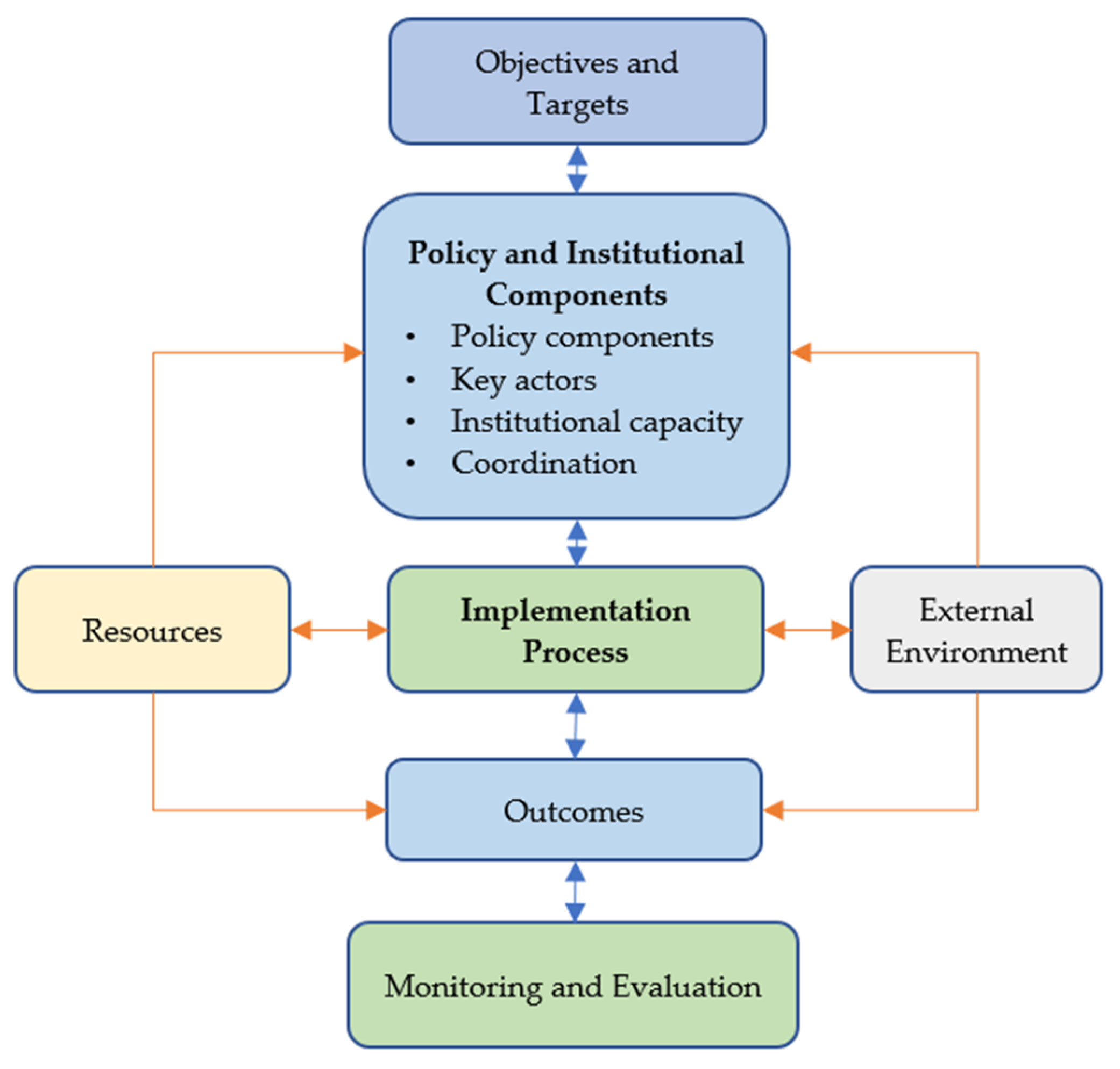
Figure 1. Conceptual Framework (red arrows indicate barriers that disrupt implementation efforts; blue arrows represent enabling conditions that facilitate progress). Sources: [35,36,37,38].
Infrastructures 10 00329 g001
Figure 2. Implementation barriers.
Infrastructures 10 00329 g002
Figure 3. Implementation enablers.
Infrastructures 10 00329 g003
Table 1. Comparison of Vision Zero and Safe System approach to road safety. Sources: [4,5,7,8].
DimensionVision Zero ApproachSafe System Approach
Objectives and TargetsEliminate fatalities and serious injuries; long-term zero-death vision anchored in the ethical imperative that no death or serious injury is acceptable on road transport system and ambitious road safety target.Minimize fatal and serious injuries; build a forgiving system to accommodate human error.
Inputs (Principles and Policy Components)Foundational principles: human fallibility, biomechanical limits, shared responsibility, ethical imperative.Foundational principles: human fallibility, biomechanical limits, shared responsibility, system resilience.
Implemented through formal government commitments: laws, city-level mandates, strategic plans.Technical guidelines: structured around the five-pillar framework: road safety management, safer roads and mobility, safer vehicles, safer road users and post-crash response.
Responsibility (Actors)Responsibility is shared but ultimate accountability lies with system designers and political leadership.Responsibility is shared between road users and system designers.
Implementation ResourcesPublic investment in speed management: separation and integration infrastructure measures including tunnels, barriers, and dedicated lanes, vehicle safety, behavior change and post-crash response.Coordinated resources across five pillars: roads, vehicles, users, speed, and post-crash care.
OutcomesReduced fatalities and serious injuries; cultural shift toward moral accountability and safe mobility.System-wide reduction in crash severity; improved survivability; institutionalized safety culture.
Table 2. Sweden participants list.
CategoryRole and Organization TypeThe Rationale for Participant Selection
IP1Independent researcher and academicProfessor in a major Swedish University and consultant One of the main architects of Vision Zero and Former Director of road safety in public administration. Introduced vision zero in Sweden and was involved in the development of vision zero since the beginning.
IP2Government officialSenior Policy Advisor at Transport Administration Safe system expert. He has seen vision zero established and flourished in Sweden since the beginning. Experience of 26 years with vision zero.
IP3Government official and academicSenior Advisor at Transport Administration Safe system expert. Written numerous research reports and articles on vision zero. Involved in the development of vision zero since the beginning.
IP4Government official and academicAcademic and Director at the Transport Administration Involved with the development of vision zero since the beginning. Written numerous research reports and articles on vision zero.
IP5Independent researcherAcademic role at a major Swedish UniversityAn active researcher in the safe system approach in Sweden.
IP6Academic and independent researcherProfessor at a major Swedish UniversityA researcher in the safe system approach. Written numerous research reports and articles on the vision zero approach.
IP7Government officialSenior Policy Advisor at Transport Administration Safe system expert. Over 20 years of experience with vision zero policy.
Table 3. India participants list.
CategoryRole and Organization TypeThe Rationale for Participant Selection
IP8Independent researcherDirector role on urban transport in a major research organizationOverall responsibility of road safety section. Organized training for Road safety associates of Haryana vision zero. Involved in all meetings of Haryana vision zero. Written articles about Haryana vision zero.
IP9Independent researcherManagerial role on city sustainability in major research organization Currently working on the Indian state of Haryana—vision zero program
IP10Independent researcherProject Associate in a major research organization Currently working on Road safety projects in India
IP11Independent researcherManagerial role in a major research organization Working on Road safety
IP12Independent researcher—GlobalLeadership role in a major research organizationRoad safety expert and written articles and published reports on vision zero. Works on global strategy for addressing road safety issues.
IP13Academic and independent researcherProfessor at a major Indian University.Expert in the safe system approach. Over 18 years of experience working closely with state governments to support road safety policies
IP14Academic and independent researcherProfessor at a major Indian University.Safe system expert. Experience in capacity building on road safety.
IP15Government officialSenior Policy Advisor Involved in the development of Haryana Vision Zero. Written numerous research reports and articles on vision zero.
IP16Government officialSenior Policy Advisor Safe system expert. Written research articles and reports on the vision zero approach.
Table 4. Analysis of implementation barriers in Haryana (India) and Sweden.
CategoriesSub-CategoriesHaryanaSwedenNotes
CulturalBribery and corruptionIndia’s road safety enforcement was weakened due to corruption and bribery. This allowed violations such as unregulated licensing.
Non-compliance with road safety rulesRoad users in India frequently disregarded road safety rules and regulations. In contrast, Sweden had a strong culture of compliance that contributed to the successful implementation of their road safety measures.
OverspeedingBoth India and Sweden experienced resistance to the proposed speed limits. Overspeeding in India was prevalent due to the weak enforcement mechanisms. While there was generally a strong compliance to road safety rules in Sweden, some road users resisted the speed regulations.
Traditional mentalityIn both cases, professionals resisted the systematic approach to road safety. Traditional road safety professionals focused on behavioral-based strategies. Additionally, road engineers, system designers, economists, and cost-to-benefit analysts in Sweden opposed the systematic approach.
Luck cultureIn India, road authorities attributed road accidents to luck, rather than preventable factors. In contrast, Sweden relied on data to develop and implement evidence-based road safety measures.
Low literacy ratesLow literacy rates in India prevented the public from understanding the vision zero concept. In contrast, good education and high literacy rates ensured that the public in Sweden easily understood the vision zero concept.
InstitutionalPoor coordinationPoor coordination between road safety institutions such as the police and hospitals in India led to fragmented data and compromised the accuracy of the road safety database. In contrast, Sweden maintained strong inter-agency coordination and communication, ensuring accurate data reporting.
Human resource issuesIndia faced a shortage of qualified staff and a high turnover rate. In contrast, Sweden had a competent workforce that could effectively implement the vision zero initiatives.
Poor technological capacityBoth India and Sweden experienced challenges with technology. Initially, the number of speed cameras was inadequate to effectively enforce safe speeds. The number of speed cameras were gradually increased in Sweden while India continued to struggle with manual issuance of penalties.
Weak research capacityIndia failed to conduct case studies on road crashes, had poor data management practices and unreliable databases. In contrast, Sweden had structured research strategies that ensured data-driven road safety measures.
PoliticalLack of political will and political interferenceExpansion of the vision zero approach in India was hampered by the unwillingness of the government in Punjab to fund the initiative. In Sweden, politicians often interfered in technical decision-making including setting speed limits. Additionally, shifting political priorities affected the continuity of project implementation.
OperationalComplicated management processesIn India, long and complicated approval processes delayed the implementation of road safety measures. In contrast, Sweden did not experience such challenges.
Lack of synergyIn India, a lack of communication between different departments resulted in disjointed efforts. This fragmentation complicated the implementation process. In contrast, the relevant departments in Sweden coordinated effectively to achieve road safety goals.
Challenges incorporating vision zero componentsIndia experienced significant difficulties incorporating vision zero components due to cultural and institutional factors. The prevalent culture of overspeeding hindered the implementation of speed limits, the understaffed police department struggled to enforce road safety rules and roads lacked dedicated spaces for vulnerable road users. Sweden, successfully integrated all vision zero components.
Lack of ambulancesIn India, emergency response services were severely affected by inadequate and poorly maintained ambulances whereas Sweden had a well-developed emergency service that improved outcomes.
Poor driving license management systemIndia’s unregulated driving license management system allowed road users to obtain and operate licenses without proper training. In contrast, Sweden did not report such issues.
Logistical issuesIn India, implementers faced logistical challenges, including poor internet access and the difficulty of reaching remote locations. In contrast, Sweden did not face similar issues.
FinancialFinancial resource issuesBoth India and Sweden experienced challenges with financial resources. In India, funding was often inadequate, unsustainable and not always allocated at the right time. The funds were also subject to external environmental factors, making them unreliable. In Sweden, shifting government priorities affected the consistency of financial allocation for road safety initiatives.
Table 5. Analysis of the implementation enablers in Haryana (India) and Sweden.
CategoriesSub-CategoriesHaryanaSwedenNotes
CulturalSafety cultureSweden had a strong culture of following road safety rules and regulations. This culture was promoted by leaders modeling safe behavior. Sweden also had professional culture of discussing new things and giving value to human life. In contrast, India struggled with widespread non-compliance with road safety rules.
High literacy rateIn Sweden, good education and high literacy rates facilitated public understanding and subsequently buy-in and commitment to the vision zero initiative. In contrast, the low literacy rates in India making promotion of road safety and policy implementation challenging.
Acceptance to change The public acceptance, support, and commitment in Sweden allowed for smooth implementation of safer road measures. In contrast, the widespread resistance faced in India slowed down the implementation process and enforcement efforts.
Institutional Human resourcesSweden had access to road safety experts right from the start and high retention rates. This led to a successful implementation process, continuity and stability of their road safety initiatives. In contrast, India suffered from a shortage of skilled personnel and high turnover rates. These hindered the effective implementation of road safety measures.
Strong research capacitySweden’s in-depth crash investigations, and a reliable database supported the development of evidence-based road safety measures. In contrast, India had a weak research capacity, which limited the quality of data for informed decision-making in road safety.
Strong technological capacitySweden coordinated with the car industry to collect data from car technologies like event recorders, seatbelt reminders, and electronic stability control. This data helped develop effective road safety interventions. India, on the other hand, gradually embraced the use of technology to enhance data collection.
CollaborationsBoth cases collaborated with universities and research institutions to strengthen their road safety research capacity.
OperationalCoordination StructureSweden adopted a networked coordination approach where each stakeholder contributed towards the achievement of the broader goal. SRA, the lead agency, provided oversight. On the other hand, India utilized a hierarchical structure with different levels of decision-making and clearly defined roles and responsibilities
Continuous stakeholder consultationBoth cases engaged top government officials and stakeholders throughout the implementation process. India structured its consultation through the national workshop and presentation to top officials and involvement in developing action plans.
In Sweden, the vision zero proposal was prepared by the ministry of transport in consultation with key stakeholders. It was then presented to parliament, and the outcome was parliament approval. All relevant stakeholders were consulted on developing potential interventions to road safety challenges.
ModelingIndia modeled the implementation process at the state and district level. This helped to produce data to inform the expansion process. The vision zero project was first modelled in 10 districts within Haryana before being scaled up to all the 23 districts and to other states.
Action planning In both cases, action plans were developed to ground the implementation process on the core components and principles. The action plans consisted of the vision zero components, objectives, quantified KPIs, and quantified targets.
EnforcementEnforcement was a key component of road safety strategies in both cases. Sweden began with manual enforcement and gradually transitioned to technological enforcement by installing speed cameras. However, enforcement was not considered a long-term sustainable solution, and engineering became the major focus of vision zero. Similarly, law enforcement officers in India were proactive and effective in enforcing road traffic rules, monitoring high-risk areas, and ensuring compliance with safety regulations.
Awareness creation and education Both cases placed significant emphasis on creating awareness and developing education programs to promote safer road user behavior. Sweden implemented educational campaigns and public awareness programs to ensure that road users understood the importance of road safety and their roles in achieving vision zero. Similarly, India invested in zero-tolerance day, media buzz and roadside events.
MonitoringBoth cases held monthly and quarterly meetings to track implementation progress. Performance was measured by comparing indicators against previous meetings. Reports were published, and feedback was provided to the concerned departments to ensure continuous improvement.
FinancialAvailability of fundsBoth cases received funding from government and the private sector to facilitate the implementation of road safety projects and hire the right people. Sweden received additional funds from NGOs
Cost-to benefit analysisSweden conducted cost-to-benefit analysis to identify and allocate funds to cost efficient projects ensuring effective use of resources. India lacked a clear funding allocation framework.
PoliticalStrong political supportThe vision zero approach received strong political support in both cases. In Sweden, top political leaders took the lead role in promoting vision zero. In India, decision-makers were willing to implement vision zero because it as a politically attractive idea. The government supported the initiative by launching the project and allocating funding.
Table 6. Conceptual analysis of the barriers under the nine components of conceptual framework in Haryana (India) and Sweden.
Conceptual Framework ComponentsBarriers in Haryana (India)Barriers in Sweden
Objectives and targetsUnrealistic, complex and costly targets
Long-term process
Unrealistic objectives
Long-term process
ResourcesInadequate funding
Unsustainable funding
Delayed allocation of funds
Lack of skilled human resources
Inadequate staffing
High staff turnover
Lack of ambulances
Lack of a dedicated budget
Unsustainable funding
Lack of a dedicated team
Delay in the allocation of funds
Policy componentsUnsafe road infrastructure
Non-compliant road user’s behavior
Vehicle safety yet to be incorporated
Non-compliant road user behavior
Implementers and key stakeholdersLack of support from the bureaucracy
Lack of support from engineering dept.
Lack of political will in Punjab
Lack of motivation and commitment
Resistance to change by stakeholders
 Victim-blaming mindset
 Resistance to speed limits
Lack of road safety awareness
Professional conflict
 Lack of support from the engineering dept.
 Political parties had different ideas
 Opposition from economists
 Opposition from Behaviorists
 Opposition from research institutions
Resistance to change
 Victim-blaming mindset
 Opposition to safe speed
Weak institutionalization by STA
Implementation processComplicated management approval process
Poor driving license management
Complex administrative procedures
Professional opposition
Police withdrew their activities
Losing momentum
Institutional capacityWeak research capacity
 Lack of road safety research
 Unreliable databases
 Road crashes are not investigated
 Accidents are not researched
 Underreporting of accidents
 Incomplete data entries
 Ineffective coordination system
 Poor technological capacity
 Inadequate speed cameras
 Manual issuing of penalties
Wastage of resources during the restructuring
Coordination Poor coordination between government agenciesLack of commitment resulting in internal conflict
Monitoring and evaluationIneffective evaluation due to lack of data and researchNegative feedback upset some stakeholders
External environmentResistance to change
Poor road safety culture
 Culture of not following road safety rules
 Culture of over speeding
 Culture of bribery and corruption
 Victim blaming culture
Low literacy rates
Treating road accidents as a matter of luck
Political interference
Changing political priorities
Resistance to change
 Professional resistance
 Opposition from some members of the public
 Opposition from middle-aged men
Table 7. Analysis of the enablers under the nine components of conceptual framework in Haryana (India) and Sweden.
Conceptual Framework ComponentsEnablers in Haryana (India)Enablers in Sweden
Objectives and targetsRelevant and aligned with the road safety needs in India
Measurable through report cards, dynamic charts, and performance ranking
Taking small steps
Relevant to road safety management needs in Sweden
Quantifiable targets
ResourcesAvailability of state and private sector funds
Availability of related skills (civil engineering, architecture, and urban planning)
Availability of funds from govt., private sector and NGOs
Cost-to-benefit analysis
Availability of highly qualified staff
Employee retention
Policy componentsPromoting safe behavior through awareness and enforcement
Conducting crash investigations
Safe-infrastructure; two-plus one roads, roundabouts, speed bumps etc.
Safe speed
Safe vehicles
Promoting safe behavior through awareness and enforcement
Conducting crash investigations
Implementers and key stakeholdersApproval from the chief minister
Government funding
Own funding by WRI
Support by the private sector
Enforcing road safety rules by Police
Raising awareness through conferences and workshops
Political support
 Support from politicians
 Support from the local government
 Support from the national govt.
Gradual support from the car industry
Shared responsibility
Support from the media
Enforcing road safety rules by Police
Raising awareness
Implementation processContinuous consultation with the bureaucracy
Modeling
Evidence-based expansion
Government approval
Crash investigations
Continuous consultation
Parliament approval
Constituting a team of experts
Developing an action plan
 Objectives
 Key performance indicators
 Targets
 Core components
Team effort
Institutional capacityCollaboration with universities
Geo-location databases
Crash investigations
Building road safety databases
Capacity building
Strong research capacity
 In-depth research studies
 Conducting crash investigations
 A reliable road safety database
Collaboration with research institutions
Highly educated human resources
Coordination Hierarchical coordination
Liaising with hospitals for injury data
Lead agency managed implementation process
Networked coordination
All the stakeholders were involved
Management by objectives
Monitoring and evaluationContinuous monitoring and evaluation of road safety interventions
Timely review meetings
Keeping track of progress
Improvement of strategies
Timely problem solving
Informing future plans
External environmentExcellent political support from the local Govt
Leadership by the Chief Minister of Haryana
Promoting vision zero to Govt. agencies
No legal issues
Excellent political support
Politically attractive idea
Safety culture
Culture of following road safety rules
Culture of giving value to human life
 Culture of discussing new ideas
 High literacy rate
 Supportive legal environment
Table 8. Barriers to Implementation: Most-Similar–Most-Different Comparison.
ComponentMost-Similar (Transferable Barriers)Most-Different (Context-Specific Barriers)
Objectives and TargetsUnrealistic or overly ambitious targets; long-term nature of objectivesHaryana’s targets were perceived as complex and costly
ResourcesUnsustainable funding; delays in allocation; lack of dedicated budgetHaryana faced acute shortages in skilled staff, ambulances, and high turnover; Sweden had access to highly qualified staff
Policy ComponentsNon-compliant road user behaviorHaryana lacked safe infrastructure and vehicle safety integration; Sweden had already addressed these areas systemically
Implementers and StakeholdersResistance to change; victim-blaming mindset; lack of support from engineering departmentsHaryana faced bureaucratic inertia and low awareness; Sweden saw opposition from economists, researchers, and political factions
Implementation ProcessProfessional opposition; loss of momentumHaryana struggled with license management and administrative complexity; Sweden’s police withdrew from activities midstream
Institutional CapacityCoordination challengesHaryana had unreliable crash data and poor tech capacity; Sweden faced restructuring inefficiencies but had stronger data systems
CoordinationInter-agency friction and lack of alignmentHaryana’s coordination gaps were inter-agency (hospital-police); Sweden’s were intra-agency (internal conflict within departments)
Monitoring and EvaluationStakeholder sensitivity to negative feedbackHaryana lacked baseline data and research systems; Sweden had data but faced political discomfort with evaluation outcomes
External EnvironmentResistance to change; cultural attitudes that hinder safety reformsHaryana’s barriers included low literacy, corruption, and fatalism; Sweden’s included political interference and demographic opposition
Table 9. Enablers to Implementation: Most-Similar–Most-Different Comparison.
ComponentMost-Similar (Transferable Enablers)Most-Different (Context-Specific Enablers)
Objectives and TargetsRelevance to national road safety needs; measurable and performance-linked targetsHaryana used dynamic charts and report cards; Sweden emphasized incrementalism and long-term quantifiable goals
ResourcesAvailability of public and private sector funding; presence of technical expertiseSweden had cost–benefit analysis, high staff retention, and NGO support; Haryana faced skill gaps and turnover risks
Policy ComponentsPromotion of safe behavior through awareness and enforcement; crash investigationsSweden had systemic integration of safe infrastructure, vehicles, and speed
Implementers and StakeholdersPolice enforcement and public awareness campaigns; multi-sectoral support emerging over timeSweden had political buy-in across levels and media support; Haryana relied on state leadership and WRI’s catalytic role
Implementation ProcessContinuous consultation and evidence-based expansion; crash investigations as feedback loopsSweden’s process was formalized via parliamentary approval and expert teams; Haryana’s was more adaptive and bureaucratically negotiated
Institutional CapacityCollaboration with universities and research institutions; crash data collectionSweden had stronger research depth and reliable databases; Haryana used geo-location audits and was building capacity
CoordinationMulti-stakeholder involvement and liaison with health sectorSweden had a lead agency and networked coordination; Haryana used hierarchical structures
Monitoring and EvaluationContinuous tracking and timely reviewsSweden had a well-developed monitoring system with quantifiable targets
External EnvironmentStrong political support and legal claritySweden benefited from a safety culture and high literacy
Disclaimer/Publisher’s Note: The statements, opinions and data contained in all publications are solely those of the individual author(s) and contributor(s) and not of MDPI and/or the editor(s). MDPI and/or the editor(s) disclaim responsibility for any injury to people or property resulting from any ideas, methods, instructions or products referred to in the content.