
Systematic Review

Technological Trends in Lean Construction for Engineering Design Improvement and Productivity in Civil Engineering Projects: A Systematic Literature Review


by
Luis Mayo-Alvarez
*,
Jorge Córdova-Maraví
,
Diego García-Gómez
and
Iván Paredes-Julca
Escuela de Posgrado, Universidad Tecnológica del Perú, Lima 15076, Peru
*
Author to whom correspondence should be addressed.
Designs 2026, 10(2), 40; https://doi.org/10.3390/designs10020040
Submission received: 14 February 2026 / Revised: 13 March 2026 / Accepted: 24 March 2026 / Published: 1 April 2026

Abstract

Lean Construction has become a key strategy for improving productivity, reducing waste, and increasing efficiency in civil engineering projects. In parallel, advances in digital technologies have transformed the way engineering design and project planning processes are conceived and managed. However, there remains a limited systematic understanding of how emerging technologies support engineering design practices and influence the implementation and performance of Lean Construction in diverse civil engineering scenarios. This study presents a systematic literature review of 70 peer-reviewed articles published between 2019 and 2025, following the PRISMA 2020 guidelines. The selected studies were examined using a structured classification framework consisting of three analytical categories: Technologies and Tools, Construction Methods and Sustainability, and Production Philosophies and Management. From an engineering design perspective, this framework allows the identification of technological trends, design-support tools, and management strategies that influence the planning, modeling, and optimization of construction processes. The results show that digital technologies, such as Building Information Modeling (BIM), automation systems, Artificial Intelligence, and Industry 4.0 tools, play a significant role in supporting engineering design activities by improving project visualization, coordination, and decision-making during the design and planning stages. These technologies contribute to more integrated design processes aligned with Lean Construction principles. At the same time, the analysis reveals that the adoption of Lean Construction technologies varies depending on project characteristics, levels of digital maturity, and regional industry conditions. The main barriers identified in the literature include interoperability limitations, insufficient workforce training, and organizational resistance to technological change. Overall, the review provides a structured synthesis of recent research trends and highlights the technological and managerial factors that influence the successful integration of Lean Construction with engineering design practices in civil engineering. The findings contribute to bridging the gap between technological innovation, design methodologies, and Lean Construction implementation, offering insights for both researchers and practitioners seeking to improve efficiency, sustainability, and design performance in construction projects.

1. Introduction

The construction industry faces constant challenges, such as cost overruns, low quality, and safety issues. In response, efficient construction emerges as an alternative to optimize resources and improve results [1]. Within this context, the civil engineering industry is constantly exploring methods to optimize its processes and boost productivity while ensuring sustainability. There is a clear need to identify and analyze technological trends that have demonstrated a tangible impact. This issue can be summarized in the following general research question: What technological trends in the application of Lean Construction have contributed to improved processes and productivity in civil engineering projects? More specifically, we are interested in understanding the evolution of these technological trends and their impact over time.
The pandemic between 2020 and 2021, and the resulting logistical bottlenecks, increased costs and delays, revealing the fragility of construction supply chains and inadequate digitalization of construction sites. In response, many companies began adopting Lean Construction principles (waste elimination, flow improvement) and, alongside them, digital technologies (BIM, sensors, drones, prefabrication) that allow them to recover schedules and contain costs. Current literature indicates an increase in research on automated planning and tools that support lean practices. However, despite growing academic interest and technological solutions, practical obstacles to Lean deployment persist: insufficient training, a resistant culture, contractual models that do not reward collaboration, and software interoperability restrictions [2].
This integration is critical because, while the Lean Construction framework provides the principles to mitigate such inefficiencies, its conventional application often suffers from a lack of real-time data and traceability essential for high-performance projects. Consequently, the adoption of digital solutions emerges not merely as an add-on but as the essential catalyst to operationalize Lean principles, enabling the automated identification of non-value-adding activities and ensuring productivity in complex engineering environments.
In this scenario, authors such as Garcés and Peña [3] and Uusitalo et al. [4] agree that the Lean Construction philosophy has consolidated itself as a transformative approach, oriented towards the eradication of waste and the generation of value at each stage of the life cycle of a project. Simultaneously, rapid technological evolution has provided innovative tools and solutions to enhance the principles of Lean Construction. Garcés and Peña [3] highlight that the convergence of these two fields, Lean Construction and emerging technological trends, represents an area of growing interest for both academic research and professional practice, given its potential to revolutionize the management and execution of civil engineering projects.
When discussing trends, it is necessary to mention IoT and technological architectures as one of the relevant standards that improve management in construction. Uusitalo et al. [4] point out and agree that these technologies contribute to collecting construction data, evaluating equipment performance, and automating activity schedules, thus having a direct impact on operational efficiency and reducing unproductive time.
In this same context, another noteworthy innovation is the use of digital simulations and virtual environments applied to Lean. These studies demonstrate that simulation models help predict conflicts, optimize workflows, and improve the continuous flow of activities. These advancements have made it possible not only to validate Lean strategies but also to dynamically adapt them to different construction scenarios. Similarly, a variety of studies have explored the use of Blockchain applications and data-driven collaborative environments as an emerging industry trend [5,6,7], proposing the implementation of decentralized technologies to ensure a reliable and immutable record of project information [8,9,10,11]. This technological approach contributes to strengthening trust among stakeholders and improving contractual coordination, all of which are fundamental elements within the principles of Lean philosophy [12]. Although several prior systematic reviews have explored the impact of specific technologies or the theoretical benefits of Lean in isolation, a critical gap remains in the synthesis of how these digital tools converge to solve specific operational bottlenecks. Current literature often remains fragmented, focusing on individual tools without providing a taxonomic integration that links technological maturity with measurable productivity outcomes in the post-pandemic landscape (2019–2025). Furthermore, while the theoretical potential of Industry 4.0 is widely discussed, there is a lack of systematic evidence regarding which specific innovations have successfully transitioned from experimental phases to empirical process improvement in diverse civil engineering contexts. This study contributes to filling this gap by providing an updated, structured classification that moves beyond a mere descriptive list of tools. By analyzing the synergy between digital enablers, management philosophies, and sustainability, this review offers a roadmap to understand not just what technologies are available but how their integrated application effectively mitigates the persistent challenges of low productivity and resource waste in the modern construction era [13].
The primary objective of this systematic review is to identify and analyze the technological trends in the application of Lean Construction that contribute to process improvement and productivity in civil engineering projects. To achieve this, the study is structured around three specific objectives: (a) to examine the technologies and tools (such as BIM, Blockchain, and AI) used to optimize project planning and execution; (b) to evaluate the impact of construction methods and sustainability on operational efficiency; and (c) to analyze the production philosophies and management frameworks that support continuous improvement and value generation. By addressing these dimensions, this research seeks to provide a comprehensive understanding of how digital innovation and Lean principles converge to transform modern construction practices.

2. Materials and Methods

2.1. Systematic Review Design and PRISMA Protocol

This study was conducted as a systematic literature review following the Preferred Reporting Items for Systematic Reviews and Meta-Analyses (PRISMA 2020) guidelines. The research aims to collect, evaluate, and synthesize scientific evidence regarding the application of Lean Construction and its technological integration in infrastructure and building projects. The procedures were designed to ensure transparency, methodological rigor, and reproducibility.
The PRISMA checklist and flow diagram are provided to ensure transparency, methodological rigor, and reproducibility throughout the study selection process. The review protocol was not registered in any prospective database, such as PROSPERO, or any other review registry.

2.2. Search Strategy and Identification

The search was conducted between 2019 and 2025 across the Scopus database. The search string was constructed using Boolean operators to combine key concepts such as “Lean Construction”, “BIM”, and “Process Improvement”. The final string applied was:
(TITLE-ABS-KEY(“lean construction”) OR TITLE-ABS-KEY(“process improvement”) OR TITLE-ABS-KEY(“digital twin”) OR TITLE-ABS-KEY(“automation”) OR TITLE-ABS-KEY(“AI in construction”) OR TITLE-ABS-KEY(“Industry 4.0”) OR TITLE-ABS-KEY(“mejora de procesos”)) AND PUBYEAR > 2018 AND PUBYEAR < 2026 AND (LIMIT-TO(DOCTYPE, “ar”)) AND (LIMIT-TO(LANGUAGE, “English”) OR LIMIT-TO(LANGUAGE, “Spanish”))

2.3. Inclusion and Exclusion Criteria

To ensure thematic alignment and methodological quality, specific criteria were applied (Table 1). These include search filters (FB) for automated exclusion and thematic relevance criteria (RT) for manual screening.
The scope of this review focuses on the application of Lean Construction and emerging technologies within the broader field of civil engineering. For analytical clarity, the reviewed studies were interpreted according to their predominant application context. In particular, the literature mainly addresses three major civil engineering domains: (a) building construction and real estate development, where technologies such as Building Information Modeling (BIM), digital collaboration platforms, and integrated project delivery systems are commonly implemented; (b) infrastructure projects, including transportation systems, roads, and bridges, where digital technologies are applied to support planning, coordination, and lifecycle management; and (c) industrialized and modular construction systems, which involve prefabrication, off-site manufacturing, automation, and robotics aimed at improving production efficiency. This classification allows a more contextualized interpretation of technological trends and avoids generalizing the application of Lean Construction technologies across heterogeneous civil engineering scenarios.

2.4. Study Selection Process

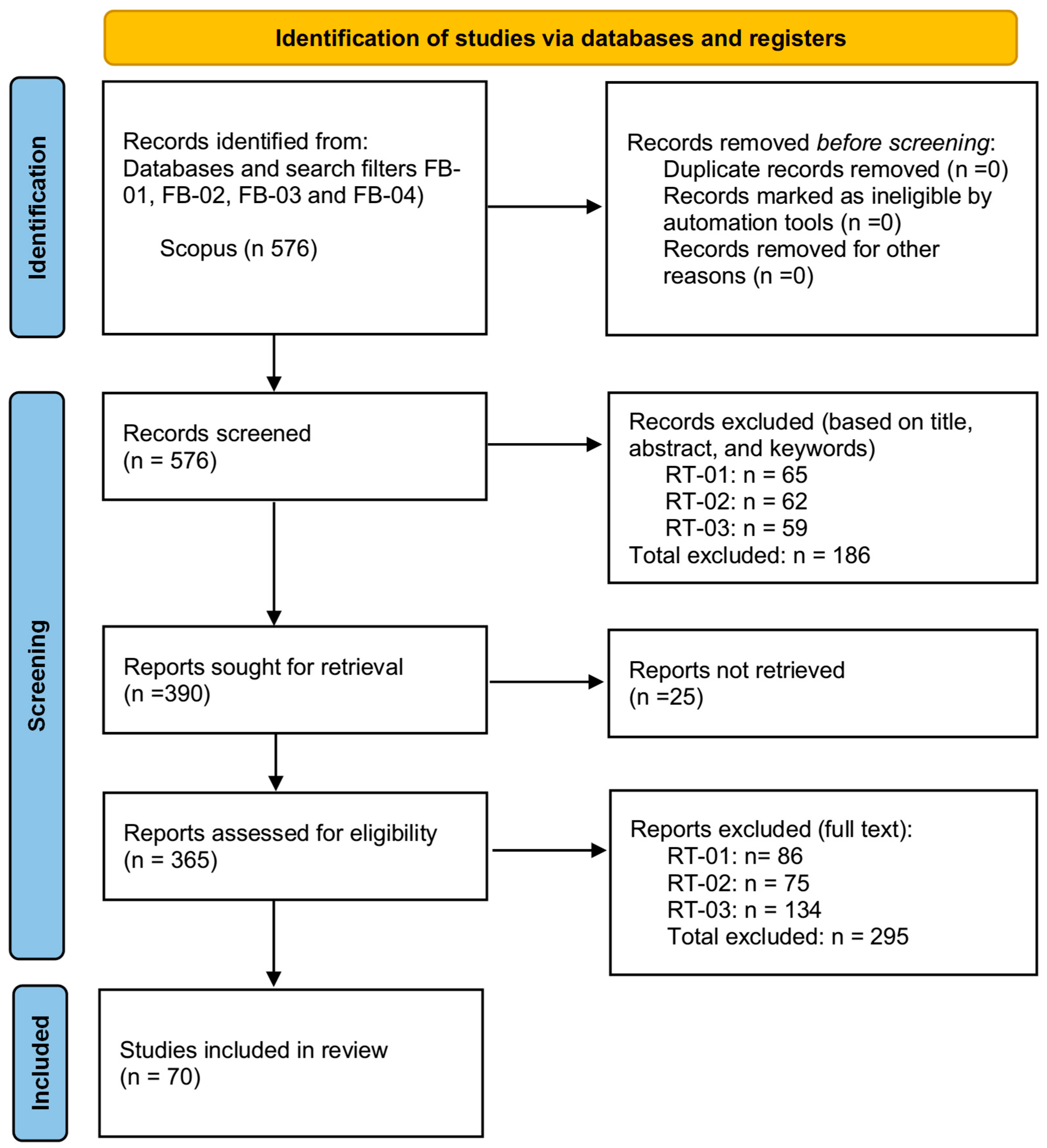
The study selection process was carried out following the three main phases established in the PRISMA 2020 protocol: identification, screening, and inclusion (Figure 1). In the identification phase, 576 records were initially retrieved from the Scopus database, applying the automated search filters FB-01 to FB-04. During this stage, no duplicate records or articles flagged by automated tools were detected or removed, and all findings proceeded to the next stage (n = 0).
In the screening phase, the 576 records were evaluated by reviewing their titles, abstracts, and keywords, resulting in the exclusion of 186 records. The reasons for this initial exclusion were a lack of thematic relevance (RT-01: n = 65), inadequate methodological approaches (RT-02: n = 62), and ineligible document types (RT-03: n = 59). Of the resulting 390 reports, it was not possible to retrieve the full text of 25 documents, leaving 365 reports for eligibility assessment. In this stage of detailed analysis, an additional 295 articles were excluded for not meeting criteria RT-01 (n = 86), RT-02 (n = 75), and RT-03 (n = 134).
Finally, in the inclusion phase, after rigorously applying all levels of filtering and quality criteria, a total of 70 studies satisfactorily met the established requirements. These articles were definitively selected to form the basis of the systematic review, allowing for the qualitative synthesis and subsequent bibliometric analysis of the collected evidence.

2.5. Study Selection and Screening Reliability

The reliability of the study selection process was assessed through independent screening by two of the co-authors, strictly applying the predefined inclusion and exclusion criteria. Table 2 presents the inter-reviewer agreement matrix prior to consensus. Of the 576 records evaluated in the screening phase, both reviewers agreed to include 88 studies (Cell A) and to exclude 446 (Cell D), representing a high level of initial agreement. Discrepancies were recorded in 42 cases, where Reviewer 1 included studies excluded by Reviewer 2 ($B = 23$) or vice versa ($C = 19$). From this matrix, Cohen’s Kappa coefficient was calculated, yielding a value of $k = 0.76$, which indicates “substantial agreement” according to international methodological standards. These discrepancies were subsequently resolved through consensus meetings, ensuring consistency in the final eligibility decisions and minimizing selection bias. This analysis confirms the robustness and reproducibility of the process based on the PRISMA protocol.

2.6. Analytical Categories

To facilitate the synthesis of evidence and structure the analysis of the 70 included articles, three main taxonomic categories were defined to group current trends in the technical literature. To ensure transparency in the qualitative synthesis process, a thematic coding procedure based on an inductive approach was applied, allowing the analytical categories to emerge from recurring patterns identified in the literature rather than from predefined classifications. Each article was initially reviewed to determine its primary research focus, methodological approach, and the main technologies or management practices addressed. During this stage, descriptive codes were assigned to key concepts related to digital technologies in construction management, sustainable construction practices, resource optimization strategies, and production management approaches within Lean Construction contexts. These codes were subsequently compared and grouped through an iterative process of thematic clustering, which resulted in the three analytical categories adopted in this study: (a) Philosophies and Production Management, (b) Technologies and Tools, and (c) Construction Methods and Sustainability. This qualitative synthesis enabled the identification of dominant research trends and patterns in the application of digital tools and sustainability strategies within the Lean Construction literature.
The first category, the Philosophies and Production Management category, encompasses studies that establish conceptual and operational frameworks for managing production systems in construction. This classification includes approaches related to resource allocation, organizational structures, and decision-making models based on continuous improvement and value creation. Through these three dimensions, the review allows for a comprehensive examination of how technological innovations intertwine with strategic management to transform the industry under the principles of Lean Construction
The second category, Technologies and Tools, groups research focused on software solutions and advanced digital technologies, such as Building Information Modeling (BIM) and Blockchain. These studies focus predominantly on the automation and optimization of planning and control processes during project execution, highlighting the role of digitalization in operational efficiency.
Finally, Construction Methods and Sustainability, comprises works that address environmentally responsible construction practices and the efficient use of natural resources. This dimension integrates research on industrialized construction, including prefabricated and modular systems, as well as green building concepts that seek to improve the sector’s flexibility and environmental performance. The focus here is on how Lean methodology contributes to waste reduction and sustainable development in construction environments.
It is important to note that the proposed classification does not represent rigid or mutually exclusive boundaries between research domains. Several technologies widely used in Lean Construction research, particularly Building Information Modeling (BIM), operate as integrative platforms that support production management, collaborative planning, and decision-making processes. Therefore, the articles were categorized according to their primary research objective and analytical emphasis, even though some technologies may simultaneously contribute to production management practices, digital tools, and sustainability strategies.

3. Results

Table 3 presents the bibliometric distribution of the 70 selected articles, categorized by year and continent of origin. Geographically, Europe represents the primary hub of scientific production with 30 publications (42.9%), followed by the Americas with 20 articles (28.6%). Together, these two regions account for over 70% of the total sample. Contributions from Africa (14.3%), Asia (11.4%), and Oceania (2.9%) supplement the global landscape, showing a more fragmented but emergent participation.
Regarding temporal trends, the volume of research remained relatively stable between 2019 and 2021, before experiencing significant growth. The highest peaks of activity occurred in 2022 and 2024, each contributing 18.6% (n = 13) of the total records. Notably, while the first years of the study period showed zero production in regions like Oceania, the data from 2024 and 2025 indicates a geographic expansion, with all continents recording activity in the final year of the analysis. This suggests that while research remains consolidated in European and American institutions, there is a progressive internationalization of the topic.
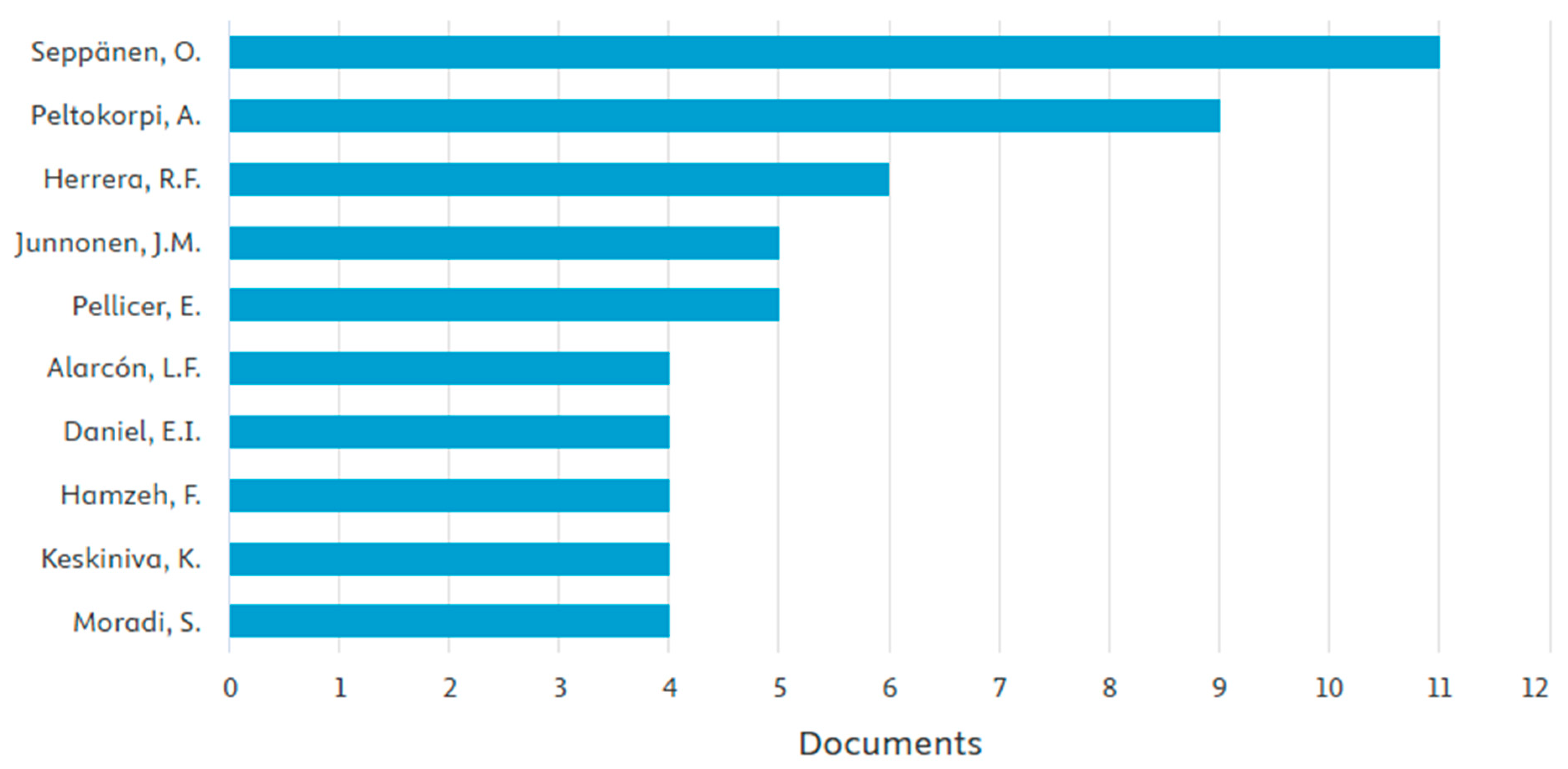
Figure 2 shows that Seppänen, O. is the most prolific author, contributing to 11 documents, followed by Peltokorpi, A. with 8 and Herrera, R.F. with 6. Other authors, such as Junnonen, J.M., Pellicer, E., Alarcón, L.F., Daniel, E.I., Hamzeh, F., Keskiniva, K., and Moradi, S., have a moderate presence, with 4 documents each. This indicates that Seppänen and Peltokorpi are the most prominent and active researchers in the field, contributing significantly to academic output compared to the others.
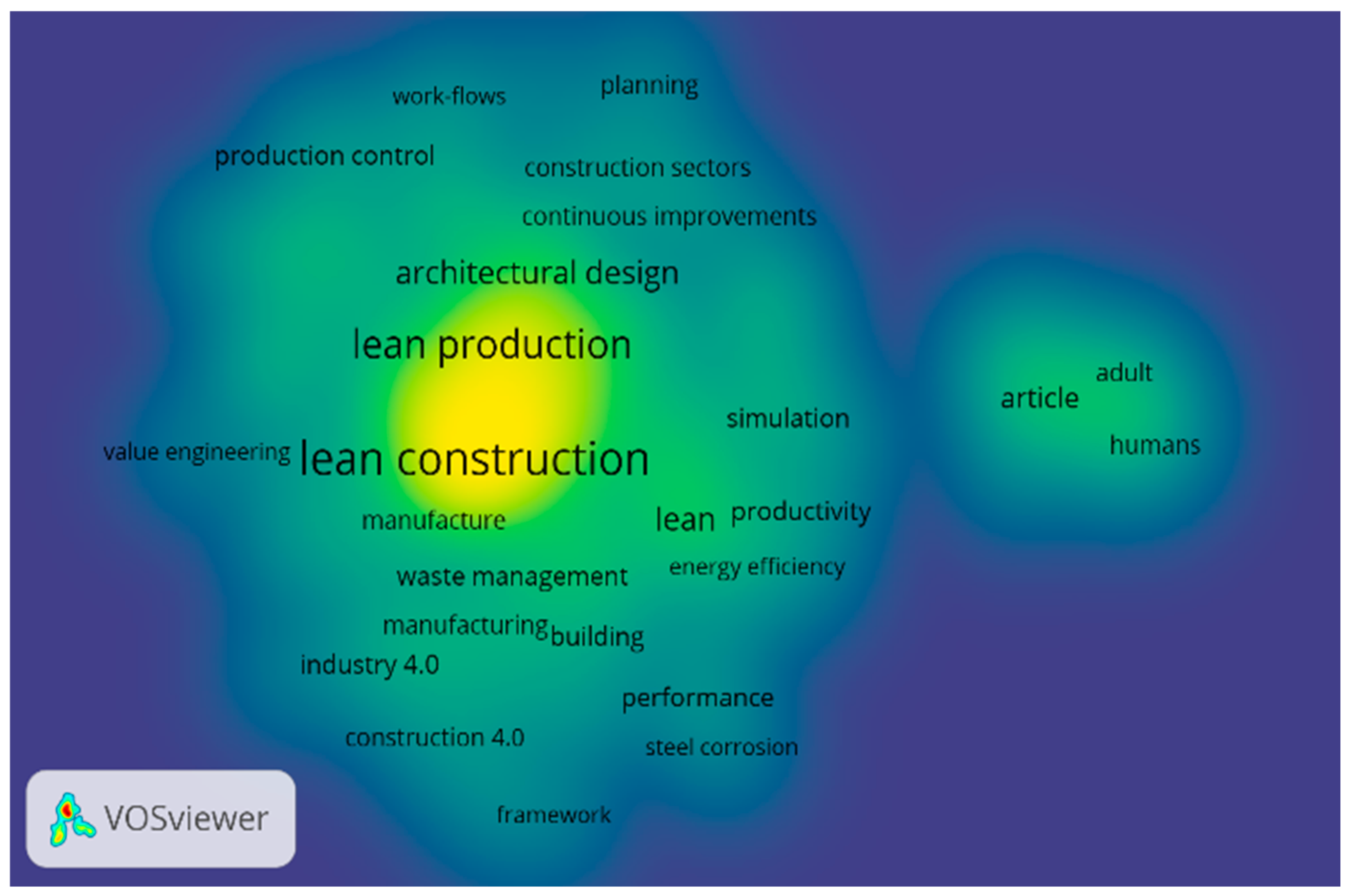
The word frequency visualization presented in Figure 3 (Heat Map of Words Obtained in Preliminary Review) was used as an exploratory bibliometric tool to identify the most recurrent concepts within the selected body of literature. The analysis reveals that the most prominent and central terms are “lean construction” and “lean production,” indicating that these concepts constitute the core thematic focus of the reviewed studies. Surrounding these central terms are related keywords such as “manufacturing,” “waste management,” “building,” “Industry 4.0,” and “construction sectors,” which reflect research areas associated with efficiency improvement, production management, and technological integration in construction processes.
The visualization also illustrates how Lean Construction is conceptually connected with broader industrial and technological paradigms. In particular, the presence of terms such as Industry 4.0 and manufacturing suggests an increasing alignment between construction management practices and advanced production systems, emphasizing the relevance of digitalization, automation, and process optimization within the sector. In contrast, some terms, such as “article,” “adult,” and “humans” appear more isolated in the visualization, indicating a weaker thematic relationship with the central research topics and reflecting indexing or generic descriptors rather than specific research themes.
It is important to note that this visualization serves primarily as a descriptive and exploratory representation of keyword frequency within the dataset. The heat map does not aim to establish causal relationships or detailed thematic structures among the studies. Instead, its purpose is to provide an initial overview of the dominant concepts present in the literature and to support the identification of key research trends related to Lean Construction and emerging technologies.
A deeper interpretation of thematic relationships, technological trends, and research directions is subsequently developed through the qualitative and thematic analysis presented in Table 3 and Table 4, where the reviewed studies are systematically classified into three analytical dimensions: Technologies and Tools, Construction Methods and Sustainability, and Production Philosophies and Management. This structured analysis allows for a more comprehensive examination of the role of digital technologies, construction methodologies, and management approaches in the evolution of Lean Construction within civil engineering projects.
The thematic distribution of the 70 selected articles is presented in Table 4, organized into three main categories and twelve subcategories. Regarding group representation, the Philosophies and Production Management category has the largest number of publications with 36 articles, representing 51.4% of the total sample. This is followed by the Technologies and Tools category, which constitutes 31.4% (n = 22) of the analyzed corpus. Within this latter group, the BIM and Blockchain subcategory has the highest individual frequency with 12 articles (17.1%), establishing itself as the technological axis with the greatest presence in the reviewed literature. Other digital tools identified include Industry 4.0 (7.1%), Artificial Intelligence (4.3%), and Big Data (2.9%).
In relation to the methodological core of the dominant category, the Operations and Process Management and Lean Applications in Construction subcategories each have an identical incidence of 10 articles, representing 14.3% of the total, respectively. Likewise, a significant presence of research focused on the Integration of Lean with other disciplines (10.0%) and on Fundamentals and general concepts (8.6%) is observed. Conversely, the Lean Barriers subcategory shows a lower frequency with only 2 entries (2.9%), while the study of specific algorithms, such as Lean-Bubble Sort, represents 1.4% of the sample.
Finally, the Construction Methods and Sustainability category comprises 17.1% of the scientific output (n = 12), reflected in the Sustainability subcategory, with 7 publications (10.0%), and the Industrialized Construction subcategory, with 5 articles (7.1%). The consolidated data show that, while operational and philosophical management remains the main focus of the publications, there is a significant technical concentration on Building Information Modeling (BIM) and digital traceability (Blockchain) as the main technological catalysts during the study period.
Table 5 presents the details of the 70 included studies, allowing for the identification of the main research orientations within each thematic category. This table summarizes the specific objectives addressed by the studies in each thematic area, providing a clearer view of the predominant analytical approaches in the literature.
In the Philosophies and Production Management category, the research focuses primarily on improving operational performance, optimizing processes, and implementing Lean principles in construction projects. Additionally, some studies develop conceptual frameworks for understanding Lean philosophy, analyze its integration with other management approaches, and examine the organizational and operational barriers that may limit its adoption in the sector.
Meanwhile, the Technologies and Tools category includes research that analyzes the role of digital technologies as enablers of Lean principles. A significant portion of the studies focuses on integrating Building Information Modeling (BIM) with Lean approaches to improve coordination, information management, and decision-making in projects. Furthermore, some studies incorporate emerging technologies, such as intelligent systems, Artificial Intelligence, and Big Data analytics, demonstrating a growing trend toward the digitalization of construction processes.
Finally, the Construction Methods and Sustainability category brings together studies focused on analyzing the application of Lean principles in sustainability strategies and industrialized construction methods. These investigations examine how Lean practices can contribute to improving the environmental performance of projects, optimizing resource use, and strengthening productivity through approaches such as prefabrication and off-site construction.
Overall, the results show that research in Lean Construction is structured around three main lines: optimizing the management of construction processes, incorporating digital technologies to improve planning and decision-making, and integrating sustainable and industrialized strategies. Based on this synthesis, Section 4 delves deeper into the analysis of the studies and their main contributions within each thematic category.

4. Discussion

The combined analysis of Table 4 and Table 5 allows for a more critical interpretation of the prevailing trends in the Lean Construction literature. Beyond simple thematic classification, the results show that recent research is structured around three main axes: the conceptual and operational development of the Lean philosophy, the incorporation of digital technologies as enablers of Lean management, and the integration of Lean principles with approaches to sustainability and industrialized construction.
The analysis also reveals that the application of Lean Construction technologies varies depending on the specific civil engineering context. Studies related to building construction projects frequently emphasize the integration of BIM, digital information management, and collaborative planning tools to improve coordination among project stakeholders. In contrast, research focused on infrastructure projects, such as transportation systems and large-scale civil works, tends to highlight technologies that support planning optimization, lifecycle management, and data-driven decision-making. Finally, studies associated with industrialized construction and prefabrication emphasize automation, robotics, and off-site manufacturing processes aimed at increasing productivity and reducing operational waste. This differentiation highlights that the technological adoption of Lean Construction is not homogeneous across civil engineering domains but rather depends on the operational characteristics and production systems of each project type.
The literature provides evidence that the integration of specific technologies leads to direct productivity gains. Building Information Modeling (BIM) has demonstrated a significant reduction in rework by identifying over 90% of design conflicts before the construction phase [2,4,60]. Similarly, the adoption of the Internet of Things (IoT) and sensors facilitates real-time monitoring of resource flows, reducing unproductive waiting times by providing instant feedback on material locations and equipment status [4,46]. Furthermore, Artificial Intelligence (AI) and Big Data analytics contribute to an increase in the Percent Plan Complete (PPC) metric by identifying variability patterns that human planners might overlook [9,56,57].

4.1. Measurable Productivity Outcomes Through Technology

The literature provides evidence that the integration of specific technologies leads to direct productivity gains. Building Information Modeling (BIM) is no longer just a visualization tool; its application in Lean contexts has demonstrated a significant reduction in rework by identifying over 90% of design conflicts before the construction phase [2,4,60]. Similarly, the adoption of the Internet of Things (IoT) and sensors facilitates real-time monitoring of resource flows, reducing unproductive waiting times by providing instant feedback on material locations and equipment status [4,46].
Furthermore, Artificial Intelligence (AI) and Big Data analytics are being utilized to transform predictive maintenance and automated scheduling. These tools contribute to an increase in the Percent Plan Complete (PPC) metric by identifying variability patterns that human planners might overlook [9,56,57]. The use of Blockchain has also emerged as a critical driver for transparency and trust, effectively reducing administrative lead times and payment disputes through immutable digital records [2,12,60].

4.2. Philosophies and Production Management

The Philosophies and Production Management category reflects the core concept of Lean Construction research, where most studies focus on improving production management and operational efficiency in construction projects. Within the Operations and Process Management subcategory, research centers on analyzing tools and strategies designed to optimize workflows, improve planning, and strengthen production control mechanisms [1,6,18,19,22,27,29,33,36,40]. These studies agree that inefficiencies in activity coordination, process variability, and a lack of integration among project stakeholders are some of the main challenges affecting productive performance in construction.
Meanwhile, the Lean Applications in Construction subcategory shows a growing interest in evaluating the practical implementation of Lean principles in real-world projects [3,16,21,26,28,32,34,35,39,41,43]. The results of these studies suggest that adopting Lean tools can significantly contribute to improving productivity and reducing waste. However, they also show that the benefits depend largely on the level of organizational maturity, the commitment of the stakeholders involved, and the ability to adapt Lean principles to the specific characteristics of each project.
In parallel, several studies focus on developing conceptual frameworks and analytical models that seek to strengthen the theoretical understanding of Lean philosophy in the construction context [13,14,17,20,31,38]. Although these contributions have allowed for the consolidation of a more robust conceptual base, a certain fragmentation in the theoretical approaches used is also observed, suggesting the need to move towards integrative frameworks that more coherently articulate Lean principles with the particularities of the sector.
Likewise, some studies analyze the integration of Lean with other management approaches, broadening its scope to include interdisciplinary perspectives related to continuous improvement, design, and supply chain management [8,15,23,24,37,42,44]. This trend reflects an evolution of Lean Construction toward hybrid approaches that seek to address the increasing complexity of contemporary projects. However, the literature also indicates that the effective integration of these approaches requires significant organizational changes and greater alignment between strategic objectives and operational practices.
Finally, the subcategory Barriers and Implementation Challenges highlights that the adoption of Lean Construction continues to face significant obstacles in practice [25,30]. Among the most recurring barriers are resistance to organizational change, a lack of specialized training, and institutional limitations that hinder the systematic implementation of Lean practices. These findings suggest that the success of Lean initiatives depends not only on the availability of methodological tools but also on cultural, organizational, and governance factors.

4.3. Technologies and Tools

The Technologies and Tools category reflects one of the most significant transformations in recent research: the growing convergence between Lean Construction and digital technologies. In particular, the BIM and Digital Integration subcategory encompasses a broad range of studies analyzing the integration of Building Information Modeling (BIM) with Lean approaches [2,4,12,45,46,47,48,50,52,53,58,60]. These works highlight that combining BIM and Lean improves information transparency, facilitates interdisciplinary coordination, and optimizes construction process planning.
However, while the literature acknowledges the potential of this integration, it also points out that its effective implementation still faces significant challenges. These include a lack of interoperability between digital platforms, limitations in training work teams, and the need to adapt organizational processes to fully leverage the capabilities of digital tools.
Additionally, some studies explore the role of emerging technologies associated with the digitalization of the sector, including applications linked to automation, intelligent systems, and Industry 4.0 principles [49,51,55,59,61]. These studies suggest that the incorporation of advanced technologies can contribute to improving productive efficiency and the integration of construction processes. However, the degree of actual implementation of these technologies is still limited compared to their theoretical potential.
On the other hand, a group of studies analyzes the use of Artificial Intelligence and data analysis techniques to support decision-making in construction projects [9,54,57], as well as the potential of Big Data analysis to strengthen organizational management and project performance monitoring [10,56]. Although these approaches show promising results, the literature suggests that their practical application is still in an emerging phase, which opens up significant opportunities for future research.
Taken together, the studies in this category demonstrate that digital technologies are acquiring an increasingly central role in the evolution of Lean Construction. However, they also reveal that the integration between technology and Lean management still requires progress in terms of standardization, interoperability, and the development of organizational capabilities.
Beyond the general benefits reported in the literature (such as efficiency improvement and process optimization), the reviewed studies reveal that the successful implementation of digital technologies in Lean Construction depends on several contextual conditions. First, organizational readiness and digital maturity play a critical role, as the integration of BIM, Artificial Intelligence, and Industry 4.0 tools requires interoperable information systems, trained personnel, and collaborative project environments. Second, several studies implicitly highlight the importance of cost–benefit considerations, since the adoption of advanced digital technologies involves significant initial investments in software, infrastructure, and training, while the productivity benefits tend to materialize in the medium and long term. Third, technological adoption patterns vary significantly across regions and project contexts. In technologically advanced construction markets, research tends to focus on digital integration and automation capabilities, whereas studies conducted in emerging economies frequently emphasize implementation barriers, institutional constraints, and organizational capacity development. These findings suggest that the diffusion of Lean Construction technologies is strongly influenced by the maturity of the construction ecosystem, the availability of digital infrastructure, and the managerial capabilities of project organizations.
In addition to the technological opportunities discussed above, the literature consistently highlights several structural barriers that affect the effective implementation of Lean Construction technologies. These barriers can be broadly categorized into organizational, technological, and strategic dimensions. Organizational barriers include cultural resistance to process changes and limited workforce training in digital tools, which frequently hinder the adoption of new collaborative workflows. Technological barriers are mainly associated with interoperability challenges between digital platforms, such as the integration of BIM environments with other project management and data analytics systems. Strategic barriers are related to the digital maturity of construction firms, including the availability of standardized data structures, digital infrastructure, and long-term innovation strategies. Several studies indicate that organizations with higher levels of digital maturity are more capable of integrating Lean principles with emerging technologies, as they possess stronger data governance mechanisms and more advanced collaborative environments. These findings suggest that the successful implementation of Lean Construction technologies requires not only the adoption of digital tools but also the development of organizational capabilities, interoperability standards, and structured digital transformation strategies within construction projects.
Despite the technological potential, the transition to a digital-lean paradigm faces entrenched barriers. Cultural resistance remains the primary obstacle; many organizations maintain a “siloed” mindset that contradicts the collaborative nature of Lean principles [25,30]. This is compounded by contractual models that do not reward shared risks or collaborative savings, such as traditional design-bid-build schemes, which often penalize transparency.
Technologically, the lack of software interoperability creates “data islands,” where information generated in BIM cannot flow seamlessly into production control or supply chain systems [12,50]. This friction significantly diminishes the return on investment for digital tools. Moreover, the high initial cost of infrastructure and specialized training often deters Small and Medium Enterprises (SMEs), creating a digital divide within the industry [2,4,30].

4.4. Sustainability and Industrialized Construction

This category reflects a growing trend toward incorporating Lean principles into strategies aimed at improving the sustainability and efficiency of construction methods. Within the Sustainability subcategory, studies analyze how Lean practices contribute to reducing waste, optimizing resource use, and improving environmental performance [7,11,63,65,68,69,70]. These works highlight that the Lean philosophy shares fundamental principles with sustainability approaches, particularly regarding waste minimization and improved resource efficiency.
However, some studies indicate that the integration of Lean and sustainability still faces conceptual and methodological limitations. In particular, it is observed that many studies address these approaches in parallel, without developing integrated frameworks for the systematic evaluation of their environmental, economic, and social impacts.
The Industrialized Construction subcategory includes research focused on methods such as prefabrication and off-site production [62,64,66,67]. These approaches seek to transfer industrial production principles to the construction sector to improve productivity, reduce process variability, and increase product quality.
The convergence of Lean with Industrialized Construction offers a measurable path toward sustainability. By moving production off-site, firms have reported a reduction in material waste of up to 40% [62,64]. This “Lean-Green” synergy proves that environmental performance is inherently linked to operational efficiency, where the elimination of waste (Muda) directly translates into a lower carbon footprint for civil engineering projects [7,70].
The studies analyzed suggest that combining Lean Construction with industrialized methods generates significant benefits in efficiency and process control. However, they also indicate that implementation requires structural changes in supply chain organization, contracting models, and stakeholder coordination. In summary, the results demonstrate a progressive convergence toward more efficient, sustainable, and technologically integrated production models.
Overall, the critical analysis shows that the industry is moving toward a Lean-Digital-Green ecosystem, where digitalization and sustainability are no longer optional add-ons but essential components of high-performance Lean management.

4.5. Practical Implications for the Industry

For successful implementation, the industry must move beyond tool adoption toward a comprehensive organizational transformation:
  • Training and Competency: Companies should prioritize “Lean-Digital” literacy, ensuring that workers are not only trained in software use but also in the collaborative logic of continuous improvement.
  • Collaborative Procurement: Transitioning toward Integrated Project Delivery (IPD) or relational contracts is essential to align the financial incentives of all stakeholders with the project’s lean goals [48].
  • Standardization of Data: Developing industry-wide standards for data exchange is vital to overcome interoperability barriers, allowing for a truly integrated digital twin of the construction process.

5. Conclusions

The systematic analysis of the 70 studies included in this study confirms that Lean Construction continues to solidify its position as one of the most relevant approaches for improving management and productivity in construction projects. The reviewed literature shows that research in this field is primarily structured around three complementary dimensions: production management based on Lean principles, the incorporation of digital technologies, and integration with sustainability approaches and industrialized construction methods.
First, the results show that production management philosophies constitute the central focus of the research, representing more than half of the analyzed studies. In this regard, the research focuses mainly on optimizing operational processes, strengthening production planning and control, and the practical application of Lean tools in construction projects. These studies demonstrate that approaches such as operations management, workflow control, and the application of Lean methodologies contribute significantly to improving the efficiency of construction processes and reducing waste. However, organizational, cultural, and methodological barriers are also identified that continue to limit the systematic adoption of these practices in different contexts.
Secondly, the review confirms the growing importance of digital technologies as enablers of Lean principles. Within this dimension, the integration of Building Information Modeling (BIM) with Lean management approaches stands out as the most representative technological approach in the recent literature. The studies analyzed highlight that the use of digital models improves interdisciplinary coordination, optimizes information management, and supports decision-making in the various phases of the project lifecycle. Furthermore, the literature demonstrates a progressive expansion into other emerging technologies, such as those associated with Industry 4.0, Artificial Intelligence, and Big Data analytics, which offer new opportunities to improve planning, automate processes, and strengthen data-driven management in the construction industry.
Thirdly, the category related to construction methods and sustainability shows that Lean principles are being progressively incorporated into strategies aimed at improving the sector’s environmental performance and productive efficiency. In particular, several studies highlight that waste reduction, resource optimization, and improved organization of production processes generate synergies between Lean Construction and the Sustainable Development Goals. Additionally, the literature also emphasizes the potential of industrialized construction methods, such as prefabrication and off-site production, to improve productivity, reduce process variability, and increase quality in construction projects.
Despite the identified progress, this review concludes that the transition toward a digital-lean paradigm requires moving beyond conceptualization toward practical enforcement. For industry practitioners, it is recommended to adopt Integrated Project Delivery (IPD) frameworks and conduct ‘Digital Maturity’ audits to align financial incentives and organizational culture with technological tools. For policymakers, the implementation of Lean-BIM mandates in public procurement and the standardization of data exchange protocols are essential to reduce entry barriers for Small and Medium Enterprises (SMEs) and eliminate current ‘data islands.
To bridge current knowledge gaps, future research must prioritize four specific directions: (1) Longitudinal studies to evaluate the real-world return on investment (ROI) of Lean-Digital integration over extended life-cycles; (2) Cross-country comparative analysis to identify institutional factors affecting technology diffusion in emerging vs. developed economies; (3) SME-specific frameworks tailored to the financial constraints of small-scale contractors; and (4) Technical interoperability research focused on open-source API connectors between BIM and production control boards. By addressing these specific areas, the construction industry can transition from isolated pilot projects to a resilient, integrated, and sustainable production ecosystem.

Author Contributions

Conceptualization, J.C.-M., D.G.-G. and I.P.-J.; methodology, L.M.-A., J.C.-M., D.G.-G. and I.P.-J.; formal analysis, L.M.-A., J.C.-M., D.G.-G. and I.P.-J.; investigation, L.M.-A., J.C.-M., D.G.-G. and I.P.-J.; data curation, L.M.-A., J.C.-M., D.G.-G. and I.P.-J.; writing—original draft preparation, J.C.-M., D.G.-G. and I.P.-J.; writing—review and editing, L.M.-A. All authors have read and agreed to the published version of the manuscript.

Funding

This research received no external funding.

Data Availability Statement

The data presented in this study are available on request from the corresponding author due to privacy concerns.

Acknowledgments

During the preparation of this manuscript, the author(s) used ChatGPT 5.3 for language editing, improving clarity and readability, and assisting with the organization of the text. The author(s) have reviewed and edited the output and take full responsibility for the content of this publication.

Conflicts of Interest

The authors declare no conflicts of interest.

Abbreviations

The following abbreviations are used in this manuscript:
BIMBuilding Information Modeling
IoTInternet of Things
PRISMAPreferred Reporting Items for Systematic Reviews and Meta-Analyses
TFVTransformation Flow Value
AIArtificial Intelligence
SDGs Sustainable Development Goals
IOMIndustrial Operation Model
DfMADesign for Manufacturing
DfDDesign for Development

References

  1. Maru, A.; Jekale, W.; Asteray, B. Investigating the impact of lean construction principles on contractors’ project performance in Ethiopia using PLS-SEM. J. Proj. Manag. 2024, 9, 227–238. [Google Scholar] [CrossRef] [Scilit]
  2. Pishdad, P.; Onungwa, I. Analysis of 5D BIM for cost estimation, cost control, and payments. J. Inf. Technol. Constr. 2024, 29, 525–548. [Google Scholar] [CrossRef] [Scilit]
  3. Garcés, G.; Peña, C. A review on lean construction for construction project management. Rev. Ing. Constr. 2023, 38, 43–60. [Google Scholar] [CrossRef] [Scilit]
  4. Uusitalo, P.; Seppänen, O.; Lappalainen, E.; Peltokorpi, A.; Olivieri, H. Applying level of detail in a BIM-based project: An overall process for lean design management. Buildings 2019, 9, 109. [Google Scholar] [CrossRef] [Scilit]
  5. Faghfouri, A.; Germain, D.; Fortin, G. Design optimization of concrete gravity dam subjected to near-field earthquake based on novel lean-bubble sort approach. KSCE J. Civ. Eng. 2024, 28, 4293–4308. [Google Scholar] [CrossRef] [Scilit]
  6. Al, M.; Schwerha, D.; Son, S.; Sullivan, G.; Ricks, M. Exploring the use of lean construction in unusual work conditions: Iraq 2005–2017. Lean Constr. J. 2024, 108–129. [Google Scholar] [CrossRef] [Scilit]
  7. Boukherroub, T.; Nganmi Tchakoutio, A.; Drapeau, N. Using lean in deconstruction projects for maximising the reuse of materials: A Canadian case study. Sustainability 2024, 16, 1816. [Google Scholar] [CrossRef] [Scilit]
  8. Ezzat, A.; Mohamed, S. A lean management framework for achieving sustainability through reducing risks during the design process. Afr. J. Eng. Res. 2023, 11, 17–30. [Google Scholar] [CrossRef] [Scilit]
  9. Babanas, H.; Courcelles, B. Enhancing lime dosage determination for lean clay soil improvement: Significance of plasticity limit and interpretation approach. Geotechnics 2025, 5, 9. [Google Scholar] [CrossRef] [Scilit]
  10. Fayyaz, A.; Liu, C.G.; Xu, Y.; Khan, F.; Ahmed, S. Untangling the Cumulative impact of Big Data analytics, green lean six sigma and sustainable supply chain management on the economic performance of manufacturing organizations. Prod. Plan. Control 2025, 36, 1137–1154. [Google Scholar] [CrossRef] [Scilit]
  11. Subhi, A. Advancing Middle East construction sustainability: A framework for addressing logistics challenges through solutions and critical success factors. Sustainability 2025, 17, 533. [Google Scholar] [CrossRef] [Scilit]
  12. Likita, A.; Babaeian, M.; Vishnupriya, V.; Bamidele, J.; Vilasini, N. Lean and BIM implementation barriers in New Zealand construction practice. Buildings 2022, 12, 1645. [Google Scholar] [CrossRef] [Scilit]
  13. Moradi, S.; Sormunen, P. Implementing lean construction: A literature study of barriers, enablers, and implications. Buildings 2023, 13, 556. [Google Scholar] [CrossRef] [Scilit]
  14. Meng, X. Lean management in the context of construction supply chains. Int. J. Prod. Res. 2019, 57, 3784–3798. [Google Scholar] [CrossRef] [Scilit]
  15. Costa, F.; Denis, A.; Fregola, A.; Picchi, F.; Portioli, A. Understanding relative importance of barriers to improving the customer–supplier relationship within construction supply chains using DEMATEL technique. J. Manag. Eng. 2019, 35, 04019002. [Google Scholar] [CrossRef] [Scilit]
  16. Chakwizira, J. Low-income housing backlogs and deficits ‘blues’ in South Africa: What solutions can a lean construction approach proffer? J. Settl. Spat. Plan. 2019, 10, 71–78. [Google Scholar] [CrossRef] [Scilit]
  17. Christensen, R.; Greenhalgh, S.; Thomassen, A. When a business case is not enough: Motivation to work with lean. In Proceedings of the 27th Annual Conference of the International Group for Lean Construction, Dublin, Ireland, 3–5 July 2019; pp. 275–286. [Google Scholar]
  18. Lehtovaara, J.; Seppänen, O.; Peltokorpi, A. Improving the learning of design management operations by exploiting production’s feedback: Design science approach. In Proceedings of the 27th Annual Conference of the International Group for Lean Construction, Dublin, Ireland, 3–5 July 2019; pp. 64–75. [Google Scholar] [CrossRef] [Scilit]
  19. Khanzadi, M.; Shahbazi, M.; Arashpour, M.; Ghosh, S. Lean design management using a gamified system. Sci. Iran. 2019, 26, 15–25. [Google Scholar] [CrossRef] [Scilit]
  20. Mirapalhete, P.; Baptista, S. Maturity models to evaluate lean construction in Brazilian projects. Braz. J. Oper. Prod. Manag. 2020, 17, 1–20. [Google Scholar] [CrossRef] [Scilit]
  21. Issa, U.; Alqurashi, M. A model for evaluating causes of wastes and lean implementation in construction projects. J. Civ. Eng. Manag. 2020, 26, 331–342. [Google Scholar] [CrossRef] [Scilit]
  22. Nkeonyeasua, W.; Emmanuel, C. Lean construction as a panacea for poor construction projects performance. J. Eng. Technol. Ind. Appl. 2020, 6, 61–72. [Google Scholar] [CrossRef] [Scilit]
  23. Sukdeo, N.; Ramdass, K.; Petja, G. Application of 7S methodology: A systematic approach in a bucket manufacturing organisation. S. Afr. J. Ind. Eng. 2020, 31, 178–193. [Google Scholar] [CrossRef] [Scilit]
  24. Mellado, F.; Lou, E. Building information modelling, lean and sustainability: An integration framework to promote performance improvements in the construction industry. Sustain. Cities Soc. 2020, 61, 102355. [Google Scholar] [CrossRef] [Scilit]
  25. Balkhy, W.; Sweis, R.; Lafhaj, Z. Barriers to adopting lean construction in the construction industry—The case of Jordan. Buildings 2021, 11, 222. [Google Scholar] [CrossRef] [Scilit]
  26. Syafrimaini, E.; Eddy, A. Implementation of lean six sigma method in high-rise residential building projects. Civ. Eng. Archit. 2021, 9, 1228–1236. [Google Scholar] [CrossRef] [Scilit]
  27. Zhao, J.; Zheng, Y.; Seppänen, O.; Tetik, M.; Peltokorpi, A. Using real-time tracking of materials and labor for kit-based logistics management in construction. Front. Built Environ. 2021, 7, 713976. [Google Scholar] [CrossRef] [Scilit]
  28. Hoyos, M.; Botero, L. Implementación del sistema del último planificador en el sector constructor colombiano. Rev. Chil. Ing. 2021, 29, 601–621. [Google Scholar] [CrossRef] [Scilit]
  29. Power, W.; Sinnott, D.; Mullin, A. Improving commissioning and qualification delivery using Last Planner System®. Lean Constr. J. 2021, 36–52. [Google Scholar] [CrossRef] [Scilit]
  30. Huaman, C.; Erazo, A.; Herrera, R. Barriers to adopting lean construction in small and medium-sized enterprises—The case of Peru. Buildings 2022, 12, 1637. [Google Scholar] [CrossRef] [Scilit]
  31. Wu, H.; Lin, X.; Li, X.; Zhang, B.; Zhengdao, C.; Duan, H. A data-driven approach to trace the development of lean construction in building projects: Topic shift and main paths. Buildings 2022, 12, 616. [Google Scholar] [CrossRef] [Scilit]
  32. Gravit, M.; Ikhiyanov, N.; Radaev, A.; Shabunina, D. Implementation of elements of the concept of lean construction in the fire protection of steel structures at oil and gas facilities. Buildings 2022, 12, 2016. [Google Scholar] [CrossRef] [Scilit]
  33. Lehtovaara, J.; Seppänen, O.; Peltokorpi, A.; Lappalainen, E.; Uusitalo, P. Combining decentralized decision-making and takt production in construction planning and control to increase production flow. Front. Built Environ. 2022, 8, 893790. [Google Scholar] [CrossRef] [Scilit]
  34. Lindhard, S.; Neve, H.; Terje, B.; Eggert, D.; Wandahl, S. Ranking and comparing key factors causing time overruns in on-site construction. Int. J. Constr. Manag. 2022, 22, 2724–2730. [Google Scholar] [CrossRef] [Scilit]
  35. Malvik, T. Putting the collaborative style of a successful football team in a lean construction context. Lean Constr. J. 2022, 142–155. [Google Scholar] [CrossRef] [Scilit]
  36. Neve, H.; Wandahl, S.; Lindhard, S.; Teizer, J.; Lerche, J. Learning to see value-adding and non-value-adding work time in renovation production systems. Prod. Plan. Control 2022, 33, 790–802. [Google Scholar] [CrossRef] [Scilit]
  37. Emre, A.; Kübra, H. Investigation of lean production knowledge among employees in building inspection organizations. Sustainability 2022, 14, 15142. [Google Scholar] [CrossRef] [Scilit]
  38. Annunen, P.; Haapasalo, H. Industrial operation model for the construction industry. Int. J. Constr. Manag. 2023, 23, 2736–2745. [Google Scholar] [CrossRef] [Scilit]
  39. Romo, R.; Alejo, A.; Orozco, F. Statistical analysis of lean construction barriers to optimize its implementation using PLS-SEM and PCA. Buildings 2024, 14, 486. [Google Scholar] [CrossRef] [Scilit]
  40. Maryclara, N.; Uwadiegwu, G.; Charles, B.; Muhammad, M. Evaluation of lean construction practices for improving construction project delivery: Case study of Bushenyi District, Uganda. Cogent Eng. 2024, 11, 2365902. [Google Scholar] [CrossRef] [Scilit]
  41. Kumar, A.; Zou, Y.; Chen, L.; Adel, M.; González, V. Moving toward lean construction through automation of planning and control in Last Planner System. Dev. Built Environ. 2024, 18, 100419. [Google Scholar] [CrossRef] [Scilit]
  42. Gomkale, S.; Dorshetwar, K.S.; Kumar, J.; Ramchandra, J.R.; Mardikar, M.; Chopra, P.G. Visual design frameworks for creative quality management: Integrating Lean Six Sigma in contemporary design industries. ShodhKosh J. Vis. Perform. Arts 2025, 6, 555–563. [Google Scholar] [CrossRef] [Scilit]
  43. Saad, D.A.; Habib, M.; Abou-Zeid, A. Investigating the application of one piece flow from lean manufacturing in the construction delivery of mass housing projects. Sci. Rep. 2025, 15, 34110. [Google Scholar] [CrossRef] [Scilit]
  44. AbdelHaffez, A.G.; Issa, U.H.; Abdel-Hafez, A.A.; Assaf, K.A. A model for mitigating causes of waste effect using lean management techniques in green building projects. Buildings 2025, 15, 3538. [Google Scholar] [CrossRef] [Scilit]
  45. Latorre, A.; Sanz, C.; Sánchez, B. Aplicación de un modelo Lean-BIM para la mejora de la productividad en redacción de proyectos de edificación. Inf. Constr. 2019, 71, e556. [Google Scholar] [CrossRef] [Scilit]
  46. Soman, R.; Molina, M.; Whyte, J. Linked-data based constraint-checking (LDCC) to support look-ahead planning in construction. Autom. Constr. 2020, 120, 103369. [Google Scholar] [CrossRef] [Scilit]
  47. Zhang, J.; Li, H.; Golizadeh, H.; Zhao, C.; Lyu, S.; Jin, R. Reliability evaluation index for the integrated supply chain utilising BIM and lean approaches. Eng. Constr. Archit. Manag. 2020, 27, 997–1038. [Google Scholar] [CrossRef] [Scilit]
  48. Khanna, M.; Elghaish, F.; McIlwaine, S.; Brooks, T. Feasibility of implementing IPD approach for infrastructure projects in developing countries. J. Inf. Technol. Constr. 2021, 26, 902–921. [Google Scholar] [CrossRef] [Scilit]
  49. Xiao, Y.; Zeng, Z. A construction method of intelligent manufacturing system under Industry 4.0 model. Sci. Program. 2021, 2021, 4775237. [Google Scholar] [CrossRef] [Scilit]
  50. Daniotti, B.; Masera, G.; Bolognesi, C.M.; Lupica Spagnolo, S.; Pavan, A.; Iannaccone, G.; Signorini, M.; Ciuffreda, S.; Mirarchi, C.; Lucky, M.; et al. The development of a BIM-based interoperable toolkit for efficient renovation in buildings: From BIM to digital twin. Buildings 2022, 12, 231. [Google Scholar] [CrossRef] [Scilit]
  51. Marinelli, M. Human–robot collaboration and lean waste elimination: Conceptual analogies and practical synergies in industrialized construction. Buildings 2022, 12, 2057. [Google Scholar] [CrossRef] [Scilit]
  52. Díaz Schery, C.A.; Vignon, Y.R.; Caiado, R.G.G.; Santos, R.S.; Congro, M.; Thadeu Corseuil, E.; Roehl, D. BIM critical factors and benefits for public sector: From a systematic review to an empirical fuzzy multicriteria approach. Braz. J. Oper. Prod. Manag. 2023, 20, 1837. [Google Scholar] [CrossRef] [Scilit]
  53. Falcão, T.F.; Marques, M.; Gomes, M. Proposal of an artefact in the design of BIM systematizing lean concepts and tools through neural networks. Buildings 2023, 13, 1020. [Google Scholar] [CrossRef] [Scilit]
  54. Dong, Z.; Shi, K. Multiobjective optimization method for the diversion scheme of lean concrete overtopped cofferdam under multiconstraint conditions. Geofluids 2023, 2023, 6447565. [Google Scholar] [CrossRef] [Scilit]
  55. Siriwardhana, S.; Moehler, R. Enabling productivity goals through Construction 4.0 skills: Theories, debates, and definitions. J. Clean. Prod. 2023, 425, 139011. [Google Scholar] [CrossRef] [Scilit]
  56. Konrad, K.; Sommer, M.; Shareef, I. Crate consolidation and standardization using lean manufacturing systems. Manuf. Lett. 2023, 35, 1264–1275. [Google Scholar] [CrossRef] [Scilit]
  57. Santos, S.; Aguilera, P.; Piña, C. Digital horizons in construction: A comprehensive system for excellence in project management. Buildings 2024, 14, 2228. [Google Scholar] [CrossRef] [Scilit]
  58. Li, K.; Gan, V.; Li, M.; Gao, M.; Tiong, R.; Yang, Y. Automated generative design and prefabrication of precast buildings using integrated BIM and graph convolutional neural network. Dev. Built Environ. 2024, 18, 100418. [Google Scholar] [CrossRef] [Scilit]
  59. Minh, N.; Anh, N.; Duy, T.; Ngoc, T. Challenges of BIM technology and lean theory in the construction industry in Vietnam. Eng. Technol. Appl. Sci. Res. 2024, 14, 17548–17554. [Google Scholar] [CrossRef] [Scilit]
  60. El Mounla, K.; Beladjine, D.; Beddiar, K. Integrating BIM with lean principles for enhanced decision-making: Optimizing insulation material selection in sustainable construction project. Energy Inform. 2025, 8, 61. [Google Scholar] [CrossRef] [Scilit]
  61. Alnajjar, O.; Atencio, E.; Turmo, J. Real-world validation of a construction lifecycle optimization framework integrating lean construction, BIM, and emerging technologies in Saudi Arabia. Buildings 2025, 15, 2946. [Google Scholar] [CrossRef] [Scilit]
  62. Duncheva, T.; Bradley, F. Multifaceted productivity comparison of off-site timber manufacturing strategies in mainland Europe and the United Kingdom. J. Constr. Eng. Manag. 2019, 145, 04019043. [Google Scholar] [CrossRef] [Scilit]
  63. Watkins, J.; Sunjka, B. Combining green building and lean construction to achieve more sustainable development in South Africa. S. Afr. J. Ind. Eng. 2020, 31, 133–143. [Google Scholar] [CrossRef] [Scilit]
  64. Rosarius, A.; García, B. On-site factories to support lean principles and industrialized construction. Organ. Technol. Manag. Constr. 2021, 13, 2353–2366. [Google Scholar] [CrossRef] [Scilit]
  65. Tuz, A.; Sertyeşilışık, B. Modelling a new marketing strategy in the real estate market: Lean and green mass marketing mix tools. Period. Polytech. Soc. Manag. Sci. 2022, 30, 186–200. [Google Scholar] [CrossRef] [Scilit]
  66. Feldmann, F. Towards lean automation in construction—Exploring barriers to implementing automation in prefabrication. Sustainability 2022, 14, 12944. [Google Scholar] [CrossRef] [Scilit]
  67. Meire, C.; Linhares, P.; Hermo, V. Método para la dirección de obra de viviendas modulares pasivas. Inf. Constr. 2023, 75, e520. [Google Scholar] [CrossRef] [Scilit]
  68. Saieg, P.; Dominguez, E.; Travassos, C.; Mattos, D. Evaluating construction projects’ alternatives using lean construction and sustainability principles in an information model framework. Sustainability 2023, 15, 16517. [Google Scholar] [CrossRef] [Scilit]
  69. Yang, F.; Cao, T.; Zhang, T.; Hu, J.; Wang, X.; Ding, Z.; Wu, Z. An implementation framework for on-site shield spoil utilization—A case study of a metro project. Sustainability 2023, 15, 9304. [Google Scholar] [CrossRef] [Scilit]
  70. Hasan, S.; Işık, Z.; Demirdöğen, G. Evaluating the contribution of lean construction to achieving sustainable development goals. Sustainability 2024, 16, 3502. [Google Scholar] [CrossRef] [Scilit]
Figure 1. PRISMA diagram of studies included in the systematic review.
Designs 10 00040 g001
Figure 2. Distribution of the largest number of authors present.
Designs 10 00040 g002
Figure 3. Heat map of the words obtained in preliminary review.
Designs 10 00040 g003
Table 1. Inclusion and exclusion criteria applied in the systematic review.
TypeCriterionCodeInclusion CriteriaExclusion Criteria
Search FilterYear of publicationFB-01Articles published between 2019 and 2025Articles published before 2019 or after 2025
LanguageFB-02Publications in Spanish or EnglishPublications in other languages
Document typeFB-03Peer-reviewed scientific articles (Journals)Theses, book chapters, conference proceedings, reviews, editorials
Access to the documentFB-04Documents available in full text (Open access)Documents without access to the full text
Thematic Relevance: EligibleThematic areaRT-01Academic articles that apply Lean Construction in infrastructure or building projectsAcademic articles that do not apply Lean Construction in infrastructure or building projects
Methodological approachRT-02Studies that incorporate technological trends in the construction industryStudies that do not incorporate technological trends in the construction industry
Type of studyRT-03Empirical studies, systematic reviews, or case studiesTheoretical essays without empirical evidence or practical application
Table 2. Inter-reviewer Agreement Matrix for Study Selection Prior to Consensus.
Revisor 2:
Include
Revisor 2:
Exclude
Total
Revisor 1: IncludeA = 88B = 23111
Revisor 1: ExcludeC = 19D = 446465
Total107469576
Table 3. Distribution of selected articles according to year and continent of publication.
Year of
Publication
ContinentTotal%
AsiaAmericaEuropeAfricaOceania
201913410912.9%
202002420811.4%
202102420811.4%
2022247001318.6%
2023154101115.7%
2024235211318.6%
202521221811.4%
Total8203010270100.0%
%11.4%28.6%42.9%14.3%2.9%100%
Table 4. Categories and subcategories of technologies applied in Lean Construction.
CategoryNumber of ArticlesPercentage (%)SubcategoryNumber of ArticlesPercentage (%)
Philosophies and production management3651.4%Operations and Process Management1014.3%
Lean applications in construction1014.3%
Fundamentals and general concepts68.6%
Integration of Lean with other disciplines710.0%
Lean Barriers22.9%
Lean-Bubble Sort Algorithm11.4%
Technologies and tools2231.4%BIM and Blockchain1217.1%
Industry 4.057.1%
Artificial Intelligence34.3%
Big Data22.9%
Construction methods and sustainability1217.1%Sustainability710.0%
Industrialized construction57.1%
Total70100%Total70100%
Table 5. Overview of included studies and research objectives.
Ref.Author/YearArticleStudy ObjectiveCategorySubcategory
[1]Maru et al., 2024Investigating the impact of lean construction principles on contractors’ project performance in Ethiopia using PLS-SEMAnalyze the optimization of operational processes in construction projects using Lean principles.Philosophies and Production ManagementOperations and Process Management
[2]Pishdad & Onungwa, 2024Analysis of 5D BIM for cost estimation, cost control, and paymentsExplore the integration of BIM to improve the planning and management of construction projects.Technologies and ToolsBIM and Blockchain
[3]Garcés & Peña, 2023A review on lean construction for construction project managementEvaluate the application of Lean Construction to improve efficiency in construction projects.Philosophies and Production ManagementLean Applications in Construction
[4]Uusitalo et al., 2019Applying level of detail in a BIM-based project: An overall process for lean design managementExamine the use of BIM models to optimize coordination and information management in projects.Technologies and ToolsBIM and Blockchain
[5]Faghfouri et al., 2024Design optimization of concrete gravity dam subjected to near-field earthquake based on novel lean-bubble sort ap-proachTo propose a Lean-based algorithm to improve decision-making in production processes.Philosophies and Production ManagementLean-Bubble Sort Algorithm
[6]Al et al., 2024Exploring the use of lean construction in unusual work conditionsInvestigate the improvement of operational process management in construction projects.Philosophies and Production ManagementOperations and Process Management
[7]Boukherroub et al., 2024Using lean in deconstruction projects for maximising the reuse of materials: A Canadian case studyAnalyze sustainability strategies in the management of construction projects.Construction Methods and SustainabilitySustainability
[8]Ezzat & Mohamed, 2023A lean management framework for achieving sustainability through reducing risks during the design processExamine the integration of Lean with other management methodologies in construction.Philosophies and Production ManagementIntegration of Lean with other disciplines
[9]Babanas & Courcelles, 2025Enhancing lime dosage determination for lean clay soil improvement: Significance of plasticity limit and interpretation approachEvaluate the use of Artificial Intelligence to improve decision-making in construction.Technologies and ToolsArtificial Intelligence
[10]Fayyaz et al., 2025Untangling the cumulative impact of Big Data analytics, green lean six sigma and sustainable supply chain management on the economic performance of manufacturing organizationsAnalyze the cumulative impact of Big Data analytics, the Green Lean Six Sigma approach, and sustainable supply chain management on the economic performance of manufacturing organizations.Technologies and ToolsBig Data
[11]Subhi, 2025Advancing Middle East construction sustainability: A framework for addressing logistics challenges through solutions and critical success factorsAnalyze sustainable practices applied to construction projects.Construction Methods and SustainabilitySustainability
[12]Likita et al., 2022Lean and BIM implementation barriers in New Zealand construction practiceEvaluate the application of BIM to improve project coordination and control.Technologies and ToolsBIM and Blockchain
[13]Moradi & Sormunen, 2023Implementing lean construction: A literature study of barriers, enablers, and implicationsDevelop a conceptual framework to understand the principles of Lean Construction.Philosophies and Production ManagementFundamentals and General Concepts
[14]Meng, 2019Lean management in the context of construction supply chainsAnalyze the theoretical foundations of Lean philosophy applied to construction.Philosophies and Production ManagementFundamentals and General Concepts
[15]Costa et al., 2019Understanding relative importance of barriers to improving the customer–supplier relationship within construction supply chains using DEMATELExplore the integration of Lean with project management approaches.Philosophies and Production ManagementIntegration of Lean with other disciplines
[16]Chakwizira, 2019Low-income housing backlogs and deficits ‘blues’ in South Africa: What solutions can a lean construction approach proffer?Analyze the practical application of Lean Construction in real projects.Philosophies and Production ManagementLean Applications in Construction
[17]Christensen et al., 2019When a business case is not enough: Motivation to work with leanExplore fundamental production management concepts applied to construction.Philosophies and Production ManagementFundamentals and General Concepts
[18]Lehtovaara et al., 2019Improving the learning of design management operations by exploiting production’s feedback: Design science approachExamine the management of production processes in construction projects.Philosophies and Production ManagementOperations and Process Management
[19]Khanzadi et al., 2019Lean design management using a gamified systemAnalyze strategies to improve planning and process control in projects.Philosophies and Production ManagementOperations and Process Management
[20]Mirapalhete & Baptista, 2020Maturity models to evaluate lean construction in Brazilian projectsDevelop a conceptual perspective on Lean Construction.Philosophies and Production ManagementFundamentals and General Concepts
[21]Issa & Alqurashi, 2020A model for evaluating causes of wastes and lean implementation in construction projectsExamine the implementation of Lean to improve project performance.Philosophies and Production ManagementLean Applications in Construction
[22]Nkeonyeasua & Emmanuel, 2020Lean construction as a panacea for poor construction projects performanceAnalyze process improvement strategies in construction projects.Philosophies and Production ManagementOperations and Process Management
[23]Sukdeo et al., 2020Application of 7S methodology: A systematic approach in a bucket manufacturing organizationExamine the integration of Lean with other management methodologies.Philosophies and Production ManagementIntegration of Lean with other disciplines
[24]Mellado & Lou, 2020Building information modelling, lean and sustainability: An integration framework to promote performance improvements in the construction industryAnalyze the integration of Lean with project management tools.Philosophies and Production ManagementIntegration of Lean with other disciplines
[25]Balkhy et al., 2021Barriers to adopting lean construction in the construction industry—The case of JordanIdentify barriers to the implementation of Lean Construction.Philosophies and Production ManagementLean Barriers
[26]Syafrimaini & Eddy, 2021Implementation of lean six sigma method in high-rise residential building projectsEvaluate the application of Lean in construction projects.Philosophies and Production ManagementLean Applications in Construction
[27]Zhao et al., 2021Using real-time tracking of materials and labor for kit-based logistics management in constructionAnalyze process management in construction projects.Philosophies and Production ManagementOperations and Process Management
[28]Hoyos & Botero, 2021Implementación del sistema del último planificador en el sector constructor colombianoExamine Lean strategies to improve project efficiency.Philosophies and Production ManagementLean Applications in Construction
[29]Power et al., 2021Improving commissioning and qualification delivery using Last Planner System®Analyze process optimization in construction projects.Philosophies and Production ManagementOperations and Process Management
[30]Huaman et al., 2022Barriers to adopting lean construction in small and medium-sized enterprises—The case of PeruIdentify barriers to the implementation of Lean in projects.Philosophies and Production ManagementLean Barriers
[31]Wu et al., 2022A data-driven approach to trace the development of lean construction in building projects: Topic shift and main pathsDevelop a conceptual framework for Lean Construction.Philosophies and Production ManagementFundamentals and General Concepts
[32]Gravit et al., 2022Implementation of elements of the concept of lean construction in the fire protection of steel structures at oil and gas facilities. Buildings 2022, 12, 2016Evaluate the application of Lean to improve project efficiency.Philosophies and Production ManagementLean Applications in Construction
[33]Lehtovaara et al., 2022Combining decentralized decision-making and takt production in construction planning and control to increase production flowAnalyze process management in construction projects.Philosophies and Production ManagementOperations and Process Management
[34]Lindhard et al., 2022Ranking and comparing key factors causing time-overruns in on-site constructionExamine Lean applications in construction projects.Philosophies and Production ManagementLean Applications in Construction
[35]Malvik, 2022Putting the collaborative style of a successful football team in a lean construction contextAnalyze Lean strategies to optimize construction processes.Philosophies and Production ManagementLean Applications in Construction
[36]Neve et al., 2022Learning to see value-adding and non-value-adding work time in renovation production systemsExamine operations management in construction projects.Philosophies and Production ManagementOperations and Process Management
[37]Emre & Kübra, 2022Investigation of lean production knowledge among employees in building inspection organizationsExplore the integration of Lean with other methodologies.Philosophies and Production ManagementIntegration of Lean with other disciplines
[38]Annunen & Haapasalo, 2023Industrial operation model for the construction industryAnalyze fundamental concepts of Lean Construction.Philosophies and Production ManagementFundamentals and General Concepts
[39]Romo et al., 2024Statistical analysis of lean construction barriers to optimize its implementation using PLS-SEM and PCAExamine the implementation of Lean in projects.Philosophies and Production ManagementLean Applications in Construction
[40]Maryclara et al., 2024Evaluation of lean construction practices for improving construction project delivery: Case study of Bushenyi District, UgandaAnalyze the management of operational processes in projects.Philosophies and Production ManagementOperations and Process Management
[41]Kumar et al., 2024Moving toward lean construction through automation of planning and control in Last Planner SystemEvaluate the application of Lean to improve project efficiency.Philosophies and Production ManagementLean Applications in Construction
[42]Gomkale et al., 2025Visual Design Frameworks Creative Quality Management: Integrating Lean Six Sigma in Contemporary Design IndustriesExplore the integration of Lean Six Sigma into design processes.Philosophies and Production ManagementIntegration of Lean with other disciplines
[43]Saad et al., 2025Investigating the Application of One Piece Flow from Lean Manufacturing in the Construction Delivery of Mass Housing ProjectsExamine the application of one-piece flow in housing projects.Philosophies and Production ManagementLean Applications in Construction
[44]AbdelHaffez et al., 2025A Model for Mitigating Causes of Waste Effect Using Lean Management Techniques in Green Building ProjectsTo propose a model for reducing waste through Lean in sustainable projects.Philosophies and Production ManagementIntegration of Lean with other disciplines
[45]Latorre et al., 2019Aplicación de un modelo Lean-BIM para la mejora de la productividad en redacción de proyectos de edificaciónExamine the application of BIM to improve collaboration in construction projects.Technologies and ToolsBIM and Blockchain
[46]Soman et al., 2020Linked-data based constraint-checking (LDCC) to support look-ahead planning in constructionEvaluate the integration of BIM to improve the management of construction projects.Technologies and ToolsBIM and Blockchain
[47]Zhang et al., 2020Reliability evaluation index for the integrated supply chain utilizing BIM and lean approachesExplore the application of BIM to optimize information management in projects.Technologies and ToolsBIM and Blockchain
[48]Khanna et al., 2021Feasibility of implementing IPD approach for infrastructure projects in developing countriesExplore the use of BIM in project management.Technologies and ToolsBIM and Blockchain
[49]Xiao & Zeng, 2021A construction method of intelligent manufacturing system under Industry 4.0 modelExplore the implementation of Industry 4.0 technologies in construction.Technologies and ToolsIndustry 4.0
[50]Daniotti et al., 2022The development of a BIM-based interoperable toolkit for efficient renovation in buildings: From BIM to digital twinExamine the application of BIM for project lifecycle management.Technologies and ToolsBIM and Blockchain
[51]Marinelli, 2022Human–robot collaboration and lean waste elimination: Conceptual analogies and practical synergies in industrialized constructionExplore the use of Industry 4.0 technologies in construction.Technologies and ToolsIndustry 4.0
[52]Díaz et al., 2023BIM critical factors and benefits for public sector: From a systematic review to an empirical fuzzy multicriteria approachExamine the application of BIM for project management.Technologies and ToolsBIM and Blockchain
[53]Falcão et al., 2023Proposal of an artefact in the design of BIM systematizing lean concepts and tools through neural networksAnalyze the integration of BIM with management processes.Technologies and ToolsBIM and Blockchain
[54]Dong & Shi, 2023Multiobjective optimization method for the diversion scheme of lean concrete overtopped cofferdam under multi-constraint conditionsEvaluate the use of Artificial Intelligence to optimize processes.Technologies and ToolsArtificial Intelligence
[55]Siriwardhana & Moehler, 2023Enabling productivity goals through construction 4.0 skills: Theories, debates, definitionsExplore Industry 4.0 applications in construction.Technologies and ToolsIndustry 4.0
[56]Konrad et al., 2023Crate consolidation and standardization using lean manufacturing systemsAnalyze the use of Big Data in project management.Technologies and ToolsBig Data
[57]Santos et al., 2024Digital horizons in construction: A comprehensive system for excellence in project managementExplore applications of Artificial Intelligence in construction.Technologies and ToolsArtificial Intelligence
[58]Li et al., 2024Automated generative design and prefabrication of precast buildings using integrated BIM and graph convolutional neural networkExamine the integration of BIM in construction projects.Technologies and ToolsBIM and Blockchain
[59]Minh et al., 2024Challenges of BIM technology and lean theory in the construction industry in VietnamAnalyze Industry 4.0 applications in construction.Technologies and ToolsIndustry 4.0
[60]El Mounla et al., 2025Integrating BIM with Lean Principles for Enhanced Decision-Making: Optimizing Insulation Material Selection in Sustainable Construction ProjectAnalyze the integration of BIM and Lean to optimize decisions in construction.Technologies and ToolsBIM and Blockchain
[61]Alnajjar et al., 2025Real-World Validation of a Construction Lifecycle Optimization Framework Integrating Lean Construction, BIM, and Emerging Technologies in Saudi ArabiaValidate a project lifecycle optimization framework by integrating Lean and emerging technologies.Technologies and ToolsIndustry 4.0
[62]Duncheva & Bradley, 2019Multifaceted productivity comparison of off-site timber manufacturing strategies in mainland Europe and the United KingdomEvaluate the benefits of industrialized construction on project efficiency.Construction Methods and SustainabilityIndustrialized Construction
[63]Watkins & Sunjka, 2020Combining green building and lean construction to achieve more sustainable development in South AfricaEvaluate sustainable practices in construction projects.Construction Methods and SustainabilitySustainability
[64]Rosarius & García, 2021On-site factories to support lean principles and industrialized constructionEvaluate the application of industrialized construction in projects.Construction Methods and SustainabilityIndustrialized Construction
[65]Tuz & Sertyeşilışık, 2022Modelling a new marketing strategy in the real estate market: Lean and green mass marketing mix toolsEvaluate sustainability strategies in construction projects.Construction Methods and SustainabilitySustainability
[66]Feldmann, 2022Towards lean automation in construction—Exploring barriers to implementing automation in prefabrication. Analyze the implementation of industrialized construction.Construction Methods and SustainabilityIndustrialized Construction
[67]Meire et al., 2023Método para la dirección de obra de viviendas modulares pasivasExamine the impact of industrialized construction.Construction Methods and SustainabilityIndustrialized Construction
[68]Saieg et al., 2023Evaluating construction projects’ alternatives using lean construction and sustainability principles in an information model frameworkEvaluate sustainable strategies in construction projects.Construction Methods and SustainabilitySustainability
[69]Yang et al., 2023An implementation framework for on-site shield spoil utilization—A case study of a metro projectAnalyze sustainable practices applied to construction.Construction Methods and SustainabilitySustainability
[70]Hasan et al., 2024Evaluating the contribution of lean construction to achieving sustainable development goalsEvaluate sustainable strategies in construction projects.Construction Methods and SustainabilitySustainability
Disclaimer/Publisher’s Note: The statements, opinions and data contained in all publications are solely those of the individual author(s) and contributor(s) and not of MDPI and/or the editor(s). MDPI and/or the editor(s) disclaim responsibility for any injury to people or property resulting from any ideas, methods, instructions or products referred to in the content.