Communication

Depth Partitioning and Diel Movement of Two Large Carcharhinid Sharks in Extremely Shallow Waters


1
Leon Charney School of Marine Sciences, University of Haifa, Haifa 3498838, Israel
2
Sharks in Israel, NGO for the Conservation of Sharks and Rays, Kibbutz Amir 1214000, Israel
3
Morris Kahn Marine Research Station, University of Haifa, Haifa 3498838, Israel
*
Author to whom correspondence should be addressed.
Fishes 2023, 8(2), 85; https://doi.org/10.3390/fishes8020085
Submission received: 20 September 2022 / Revised: 25 January 2023 / Accepted: 28 January 2023 / Published: 31 January 2023
(This article belongs to the Special Issue Insights into Conservation Biology of Elasmobranchs)

Abstract

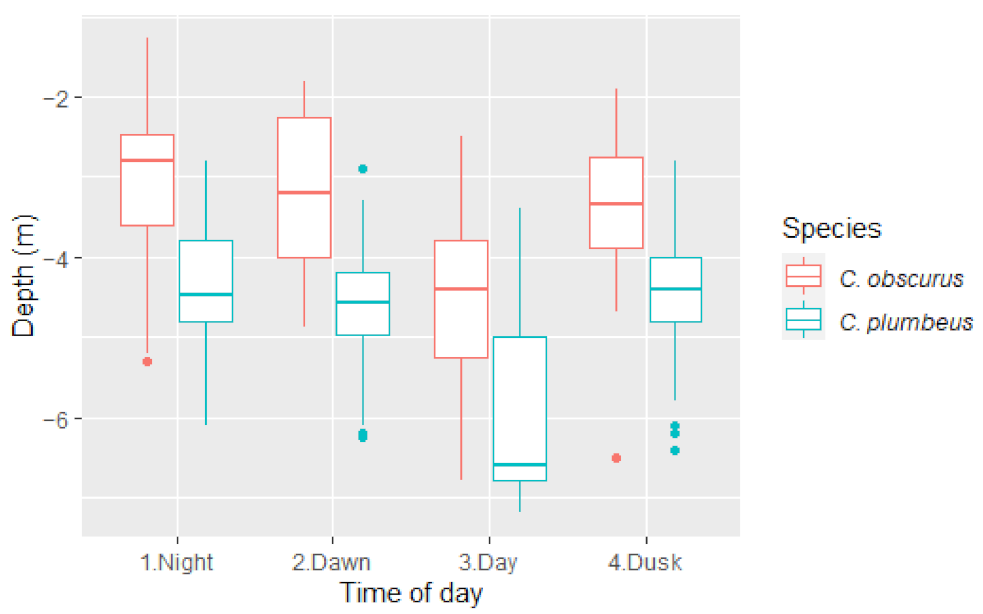
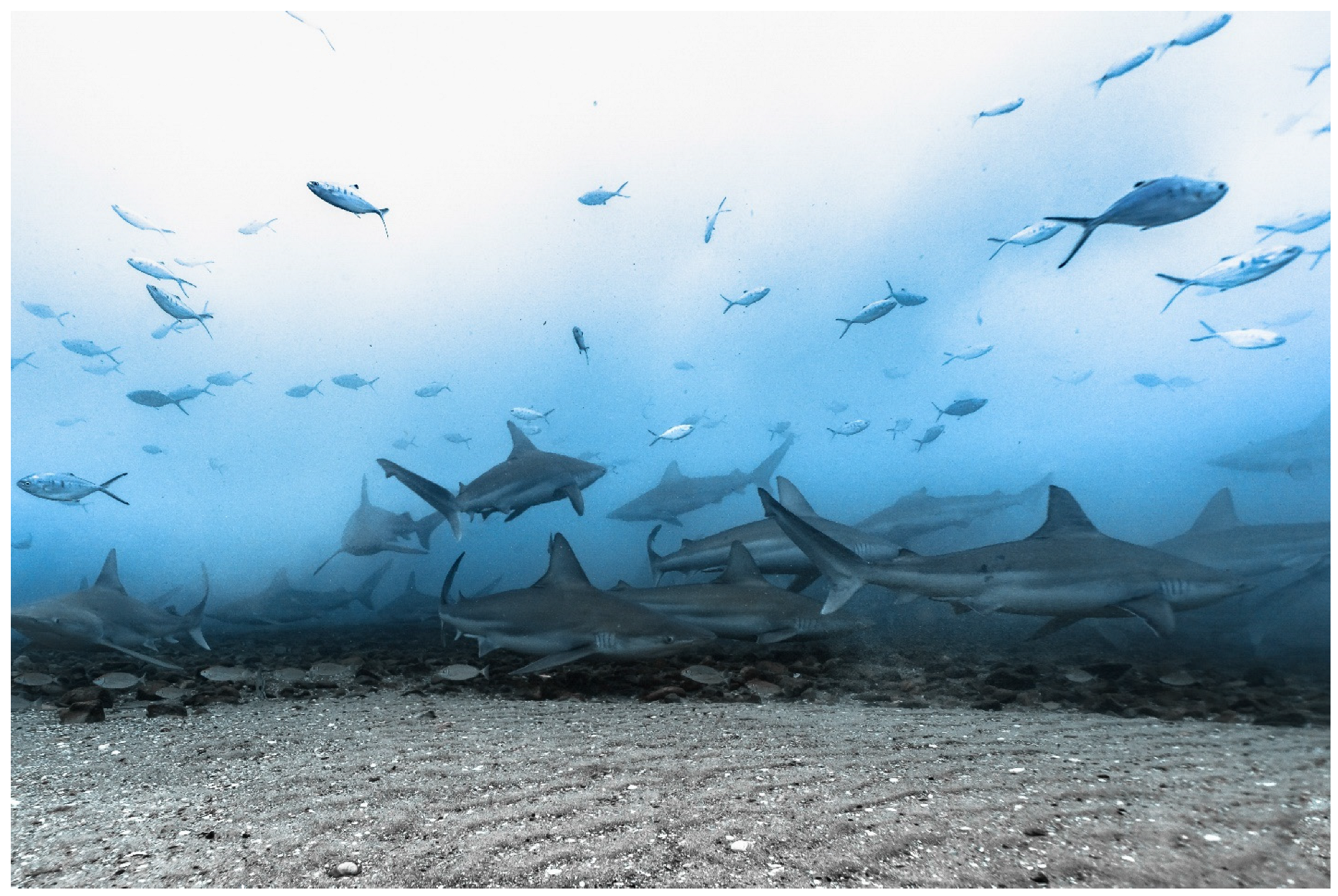
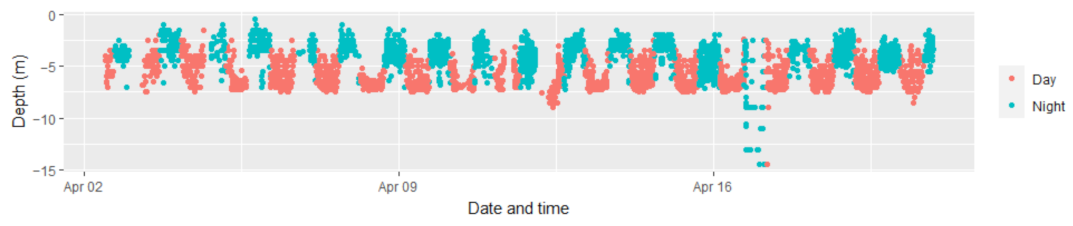
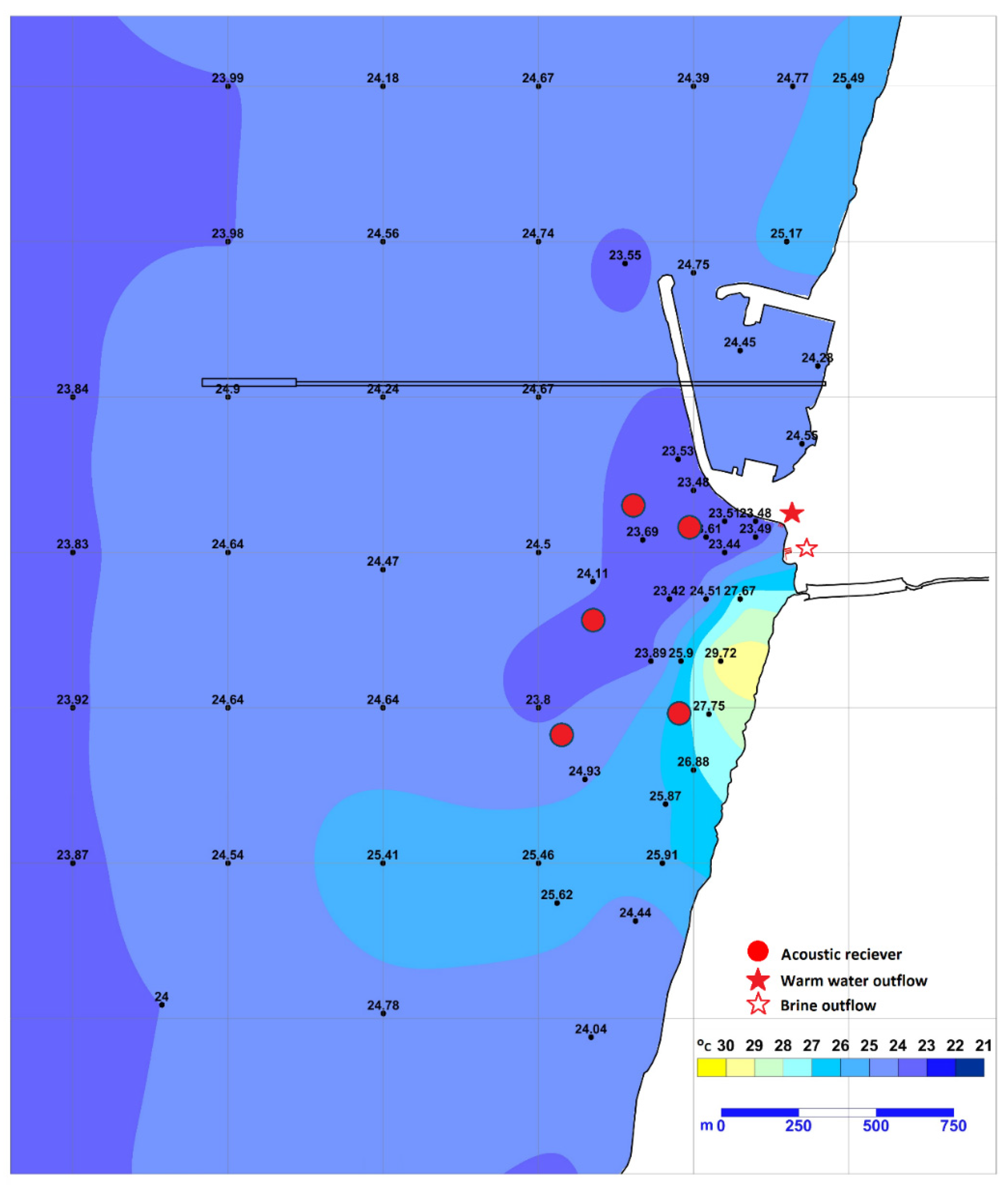
Two species of carcharhinid sharks aggregate every winter at the warm water effluent of a coastal power plant on the Israeli Mediterranean coast. The two species (Carcharhinus obscurus and Carcharhinus plumbeus) cooccur in a highly confined area for several months every year and are highly associated with the area in and around the hot water effluent. Niche partitioning has recently been suggested as a mechanism that enables the coexistence of similar shark species by resource partitioning, spatial partitioning, and temporal partitioning. In this study, we used acoustic telemetry to study the individual diel movement and activity patterns within this enclosed area and examined the differences between the two species sharing it. Although this location only reaches a maximum depth of 7.5 m, we found both species perform a diel vertical movement, rising closer to the surface at night and moving deeper during daytime. Furthermore, the two shark species swam at different depths both day and night, with C. obscurus swimming in the upper column, about 2 m shallower than C. plumbeus. The very small scale of movement, which nearly equals the sharks’ body length, suggests movement patterns might be conserved at the species level. Moreover, spatiotemporal differences between the two species may reflect a mean of interspecific partitioning that occurs even in a highly confined and shallow habitat.
Keywords: partitioning; spatial patterns; predators; selacii; elasmobranch; habitat selection; Carcharhinus obscurus; Carcharhinus plumbeus; competition; behavioural plasticity partitioning; spatial patterns; predators; selacii; elasmobranch; habitat selection; Carcharhinus obscurus; Carcharhinus plumbeus; competition; behavioural plasticity