Article

Effects of Dietary Macleaya cordata Extract on Growth Performance, Antioxidant Capacity, Immunity, and Stress Resistance in Juvenile Red Claw Crayfish (Cherax quadricarinatus)

1
College of Biology and Agriculture, Jiamusi University, Jiamusi 154007, China
2
Hainan Provincial Key Laboratory for Functional Components Research and Utilization of Marine Bio-Resources, Institute of Tropical Biosciences and Biotechnology, Chinese Academy of Tropical Agricultural Sciences, Haikou 571101, China
*
Authors to whom correspondence should be addressed.
These authors contributed equally to this work.
Fishes 2026, 11(8), 432; https://doi.org/10.3390/fishes11080432
Submission received: 26 June 2026 / Revised: 18 July 2026 / Accepted: 21 July 2026 / Published: 23 July 2026
(This article belongs to the Special Issue Feed Additives in Fish and Shellfish Farming)

Abstract

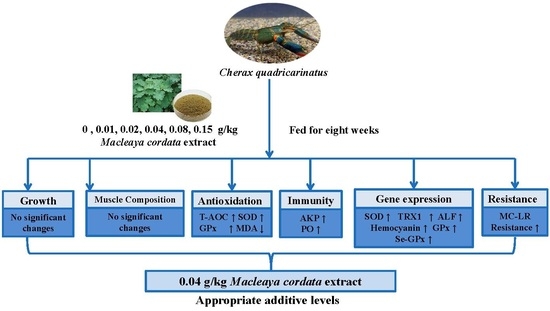
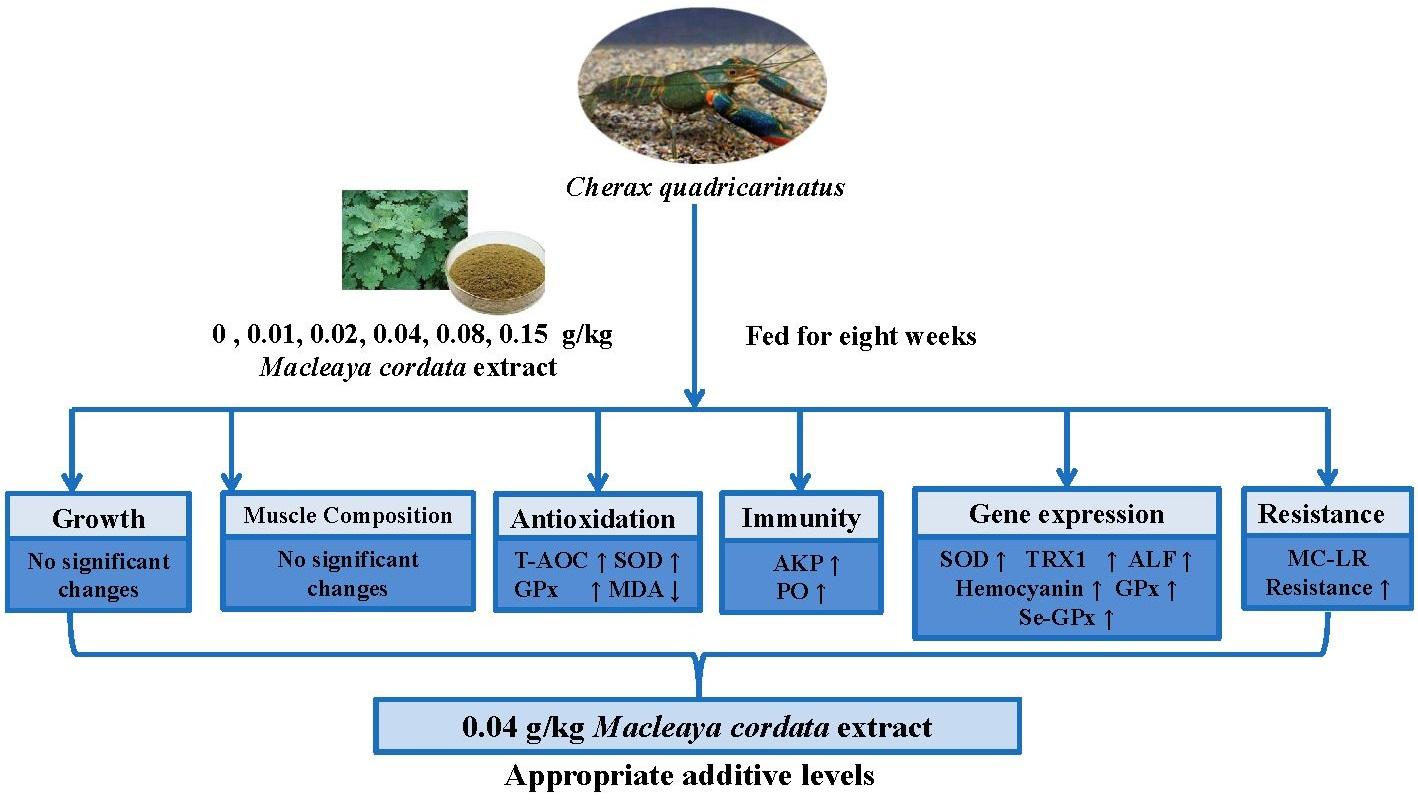
High-density, intensive aquaculture has led to the deterioration of the aquatic environment, which compromises the survival, immune function and disease resistance of aquatic animals. This study investigated the effects of dietary supplementation with different levels of Macleaya cordata extract (MCE) on growth performance, muscle composition, antioxidant capacity, immune function, and stress resistance in red claw crayfish (Cherax quadricarinatus). Juvenile crayfish with an initial body weight of 0.22 ± 0.02 g were fed diets supplemented with 0 (Diet 1, Control), 0.01 (Diet 2), 0.02 (Diet 3), 0.04 (Diet 4), 0.08 (Diet 5), and 0.15 (Diet 6) g/kg MCE for eight weeks. Results showed that dietary MCE supplementation had no significant effect on the growth performance or muscle composition of crayfish. Conversely, supplementation with 0.02–0.04 g/kg MCE significantly increased the activities of superoxide dismutase (SOD), glutathione peroxidase (GPx), phenoloxidase (PO), and the total antioxidant capacity (T-AOC) in the hepatopancreas and plasma, while significantly reducing malondialdehyde (MDA) levels. Specifically, supplementation with 0.04 g/kg MCE significantly upregulated the hepatopancreatic mRNA expression levels of SOD, hemocyanin, GPx, and selenium-dependent glutathione peroxidase (Se-GPx). Furthermore, the challenge test demonstrated that supplementation with 0.04 g/kg MCE significantly improved crayfish survival under microcystin-LR (MC-LR) stress. Overall, supplementation with 0.04 g/kg MCE significantly improved the antioxidant capacity, immunity, and stress resistance of crayfish, suggesting its potential as an environmentally friendly immunostimulatory feed additive to protect against MC-LR stress in crayfish.
Key Contribution: Dietary MCE has no significant effects on growth performance and muscle composition in juvenile red claw crayfish. Diets with MCE stimulate antioxidant and immune responses in juvenile red claw crayfish. Dietary MCE improves stress resistance of crayfish under MC-LR stress.

Graphical Abstract

1. Introduction

With the rapid growth of the global human population, demand for seafood has surged, leading to the continued expansion of aquaculture in both scale and industry [1,2,3]. However, advancement of high-density, intensive aquaculture has led to the deterioration of water quality and the aquatic environment [4,5]. This deterioration directly compromises the immune function and disease resistance of aquatic animals, reduces survival rates and growth performance, and ultimately increases susceptibility to disease outbreaks [6,7]. To enhance the resilience of aquatic animals under suboptimal water conditions, farmers frequently apply substantial quantities of chemical agents and antibiotics [8,9,10]. However, the excessive use of drugs has multiple adverse effects, including drug residues, immune imbalances in aquatic animals, microbial resistance, immunosuppression, and environmental contamination [11,12,13]. Consequently, there is an increasing demand for safer antibiotic and immune-boosting alternatives in aquaculture.
Plant extracts are rich in bioactive compounds, including alkaloids, terpenes, tannins, saponins, glycosides, steroids, and essential oils, and can enhance stress resistance in aquaculture animals [14]. Various active ingredients in plant extracts have shown excellent application results in aquatic animals, and developing these extracts as alternatives to antibiotics is a priority. For example, dietary supplementation with artichoke (Cynara scolymus) leaf extract can enhance the tolerance of Nile Tilapia (Oreochromis niloticus) to fluoride stress [15]. Similarly, dietary supplementation with oak (Quercus castaneifolia) leaf extract improved the tolerance of common carp (Cyprinus carpio) to overcrowding [16]. Plant extracts have also accelerated the growth of cultured organisms, improving feed intake, enhancing vitality and immune response, promoting gonadal maturation, with added aphrodisiac and antipathogenic effects [17]. Supplementation with compound plant extracts of Solanum ferox combined with either Boesenbergia pandurata or Zingiber zerumbet markedly improved the growth performance, molting rate, and survival of pond-reared Scylla serrata [18]. Pandanus leaf extract could also upregulate the expression of immune-related genes (Hsp70, proPO, and crustin) in shrimp (Litopenaeus vannamei), improving survival rates after infection with Vibrio parahaemolyticus [19]. In addition, dietary supplementation with Annona squamosa leaf extract enhanced the antioxidant capacity of Nile tilapia (Oreochromis niloticus) [20].
Macleaya cordata is a medicinal plant rich in isoquinoline alkaloids, with sanguinarine and chelerythrine as its major bioactive constituents, along with protopine and allocryptopine [21,22,23,24]. Macleaya cordata extract (MCE) is anti-inflammatory, antibacterial, insecticidal, and has antitumor effects [25,26,27], and the application of MCE as a feed additive in livestock and poultry production has been extensively investigated [28,29]. The dietary inclusion of MCE improved egg quality, enhanced antioxidant capacity and immune activity, and regulated reproductive hormone secretion in Xuefeng black-bone chickens [30]. In addition, dietary supplementation with MCE reduced diarrhea incidence and enhanced intestinal barrier function in growing piglets [31]. Recent studies have also demonstrated the efficacy of MCE in aquatic animals, where dietary supplementation with 50–100 mg/kg MCE could improve growth performance, serum biochemical parameters, intestinal morphology, and antioxidant capacity in juvenile American eels (Anguilla rostrata) [32]. Dietary MCE supplementation also improved haemocyte-related immune responses and the activities of superoxide dismutase (SOD) and phenoloxidase (PO), enhancing resistance against Vibrio parahaemolyticus and alleviating visceral pathological damage in Litopenaeus vannamei [33]. Therefore, MCE holds great potential for boosting the immune and antioxidant capacities of aquatic animals.
The red claw crayfish (Cherax quadricarinatus), native to Australia and New Guinea, is one of the largest freshwater decapod crustaceans [34,35]. As a food source, it exhibits several advantages, including tender and palatable meat, high edible yield, tolerance to long-distance transportation, a short farming cycle, and the ability to be marketed live [36,37,38]. Despite the profitability of crayfish farming, the industry still faces challenges associated with water quality stress under intensive farming systems [39,40,41], while research on feed additives that mitigate stress in crayfish remains limited. Therefore, this study aimed to evaluate the effects of MCE on the growth performance, muscle composition, antioxidant capacity, immunity, and stress resistance of juvenile red claw crayfish. The findings provide a theoretical basis for the development of plant-derived immunostimulants and the implementation of environmentally friendly strategies to mitigate environmental stress in intensive crayfish aquaculture.

2. Materials and Methods

2.1. Experimental Diets

The formulation and composition of the experimental diets are presented in Table 1. The experiment consisted of six groups: a control group and five experimental groups supplemented with 0.01 (Diet 2), 0.02 (Diet 3), 0.04 (Diet 4), 0.08 (Diet 5), and 0.15 (Diet 6) g/kg MCE (Sanguinarine ≥ 1.50%, Chelerythrine ≥ 0.75%; Hunan Micolta Bioresource Inc., Changsha, China), respectively. All ingredients were finely ground and passed through an 80-mesh sieve, then mixed with oil until homogeneous. Distilled water was then added to each diet mixture, followed by thorough mixing and extrusion into pellets with a diameter of 1.5 mm using a pelletizer. The prepared diets were finally air-dried and stored at −20 °C until use.

2.2. Animal and Experimental Design

Juvenile crayfish were obtained from a commercial aquaculture farm in Wenchang, Hainan, China, and transported to the Wenchang Experimental Base of the Chinese Academy of Tropical Agricultural Sciences for the feeding trial. Before the experiment, crayfish were acclimated in a recirculating aquaculture system for two weeks and fed a basal diet. After 24 h of starvation, crayfish (initial body weight: 0.22 ± 0.02 g) were randomly assigned to rearing tanks (500 L) with three replicates per group, and 40 crayfish in each replicate. To reduce cannibalism, 40 PVC pipes were placed in each tank to serve as shelter. During the eight-week experimental period, feeding was conducted twice daily (08:00 and 18:00) to apparent satiation, and mortality was recorded. Throughout the experiment, the water temperature was maintained at 23–26 °C, the pH at 7.2–8.0, and the ammonia nitrogen below 0.05 mg/L.

2.3. Sample Collection

At the end of the feeding trial, following a 24 h fasting period, all the crayfish were collected from each tank, their numbers recorded, and their body weight and body length were measured for growth performance analysis. Hemolymph samples were collected from the base of the third pereiopod using a 2.5 mL syringe preloaded with an equal volume of anticoagulant solution (26.3 g/L NaCl, 18.0 g/L glucose, 6.3 g/L citric acid, 6.7 g/L sodium citrate, and 2.9 g/L EDTA). The hemolymph samples were centrifuged at 3000 rpm for 10 min at 4 °C, after which the supernatant was separated and stored at −80 °C for subsequent analyses. Hepatopancreas samples were rapidly dissected, immediately frozen in liquid nitrogen, and stored at −80 °C for further analysis. Dorsal muscle samples were also collected and stored at −20 °C for muscle nutritional composition determination.

2.4. Growth Performance

Growth performance indices were calculated using the following equations [42]:
(1)
Weight gain rate (WGR, %) = 100 × (Final body weight − Initial body weight)/Initial body weight;
(2)
Specific growth rate (SGR, %·day−1) = 100 × (ln Final body weight − ln Initial body weight)/Number of rearing days;
(3)
Survival rate (SR, %) = 100 × (Final number/Initial number).

2.5. Composition Analysis

The crude protein, crude lipid, moisture, and ash contents of the diets and muscle samples were determined according to standard methods of the AOAC (1995) [43]. Moisture content was determined by drying samples in an oven at 105 °C until a constant weight was achieved. A semi-automatic Kjeldahl apparatus (Kjeltec™ 8400, Foss, Hillerød, Denmark) determined the crude protein content following acid digestion, while the crude lipid content was measured using a Soxhlet extraction system (SZF-06A, Hongji, Shanghai, China). Ash content was determined by incineration in a muffle furnace (SX2-2.5-10, Yiheng, Shanghai, China) at 550 °C for 12 h.

2.6. Antioxidant and Immune Index Assays

The total antioxidant capacity (T-AOC), superoxide dismutase (SOD), catalase (CAT), glutathione peroxidase (GPx), glutathione S-transferase (GST), acid phosphatase (ACP), and alkaline phosphatase (AKP), glutathione (GSH) and malondialdehyde (MDA) were determined using assay kits (Nanjing Jiancheng Bioengineering Institute, Nanjing, China) following to the manufacturer’s instructions. Finally, PO was measured using a double-antibody sandwich enzyme-linked immunosorbent assay (ELISA) kit (Dongguan Enzyme-linked Biotechnology Co., Ltd., Dongguan, China).

2.7. RNA Extraction and cDNA Synthesis

Hepatopancreas samples from three crayfish per tank were pooled for total RNA extraction using TRIzol reagent (Thermo Fisher Scientific, Waltham, MA, USA). The RNA concentration was measured with a NanoDrop One spectrophotometer (NanoDrop Technologies, Wilmington, DE, USA), and RNA integrity was evaluated by 1% agarose gel electrophoresis. Subsequently, the total RNA was reverse transcribed into complementary DNA (cDNA) using the PrimeScript RT reagent kit with gDNA Eraser (Takara, Kusatsu, Japan) according to the manufacturer’s instructions. The resulting cDNA was stored at −20 °C for quantitative real-time PCR (qRT-PCR) analysis.

2.8. Quantitative Real-Time PCR (qRT-PCR)

Based on the transcriptome data generated previously [44,45], specific primers (Table 2) were designed using Primer Premier V5 and synthesized by BGI Biotech Co., Ltd. (Shenzhen, China). The qRT-PCR was performed using 2 × SYBR® Green qPCR Mix (Takara, Japan) on a Stratagene Mx3005P real-time PCR system (Agilent Technologies, Santa Clara, CA, USA). The thermal cycling conditions were as follows: initial denaturation at 94 °C for 3 min, followed by 40 cycles of 94 °C for 15 s, 58 °C for 15 s, and 72 °C for 20 s. Relative gene expression levels were calculated using the 2−ΔΔCt method [46].

2.9. Microcystin-LR (MC-LR) Challenge

Following sample collection, 10 crayfish were randomly selected from each culture tank for the MC-LR stress challenge. The challenge dose (108 μg/kg BW) was selected based on previous data [47]. All selected crayfish were injected intramuscularly with MC-LR and returned to their original tanks. The cumulative mortality was monitored and recorded over 48 h, and the survival rate of each dietary group was calculated.

2.10. Data Analysis

All data are expressed as mean ± standard deviation (SD). Statistical analyses were performed in SPSS 18.0 (SPSS Inc., Chicago, IL, USA). Significant differences among groups were determined by one-way analysis of variance (ANOVA) followed by Tukey’s test, and differences were considered statistically significant at p < 0.05.

3. Results

3.1. Growth Performance

The effects of dietary MCE supplementation on the growth performance of crayfish are shown in Table 3. Compared with the control group, dietary MCE supplementation had no significant effects on WGR, SGR, or SR (p > 0.05).

3.2. Muscle Composition

Dietary MCE supplementation had no significant effects on the crude protein, crude lipid, moisture, or ash content in the muscle of crayfish (p > 0.05) (Table 4).

3.3. Antioxidant and Immune Parameters of the Hepatopancreas and Hemolymph

Compared with the control group, dietary supplementation with 0.02–0.04 g/kg MCE significantly increased hepatopancreatic T-AOC and significantly reduced MDA levels (p < 0.05). Hepatopancreatic SOD activity was significantly increased in the 0.04 g/kg MCE group (p < 0.05), whereas AKP activity was significantly increased in the 0.02 g/kg MCE group (p < 0.05). In addition, dietary supplementation with 0.01–0.04 g/kg MCE significantly increased hepatopancreatic PO content (p < 0.05). However, no significant changes were observed in CAT or ACP activities among any of the dietary treatments (p > 0.05). All these results are presented in Table 5.
The effects of dietary MCE supplementation on the antioxidant and immune parameters of crayfish hemolymph are presented in Table 6. Compared with the control group, dietary supplementation with 0.02–0.04 g/kg MCE significantly increased hemolymph T-AOC and PO activities (p < 0.05). The 0.04 g/kg MCE group also exhibited significantly higher hemolymph SOD and AKP activities, accompanied by lower MDA levels, compared to the control group (p < 0.05). However, dietary MCE supplementation had no significant effects on hemolymph CAT or ACP activities (p > 0.05).

3.4. Glutathione Metabolism

Compared with the control group, dietary supplementation with 0.02–0.08 g/kg MCE significantly increased GPx activity in both the hepatopancreas and hemolymph (p < 0.05). However, no significant effects of dietary MCE supplementation were observed on GST activity or GSH levels in either the hepatopancreas or hemolymph (p > 0.05) (Table 7).

3.5. Gene Expression

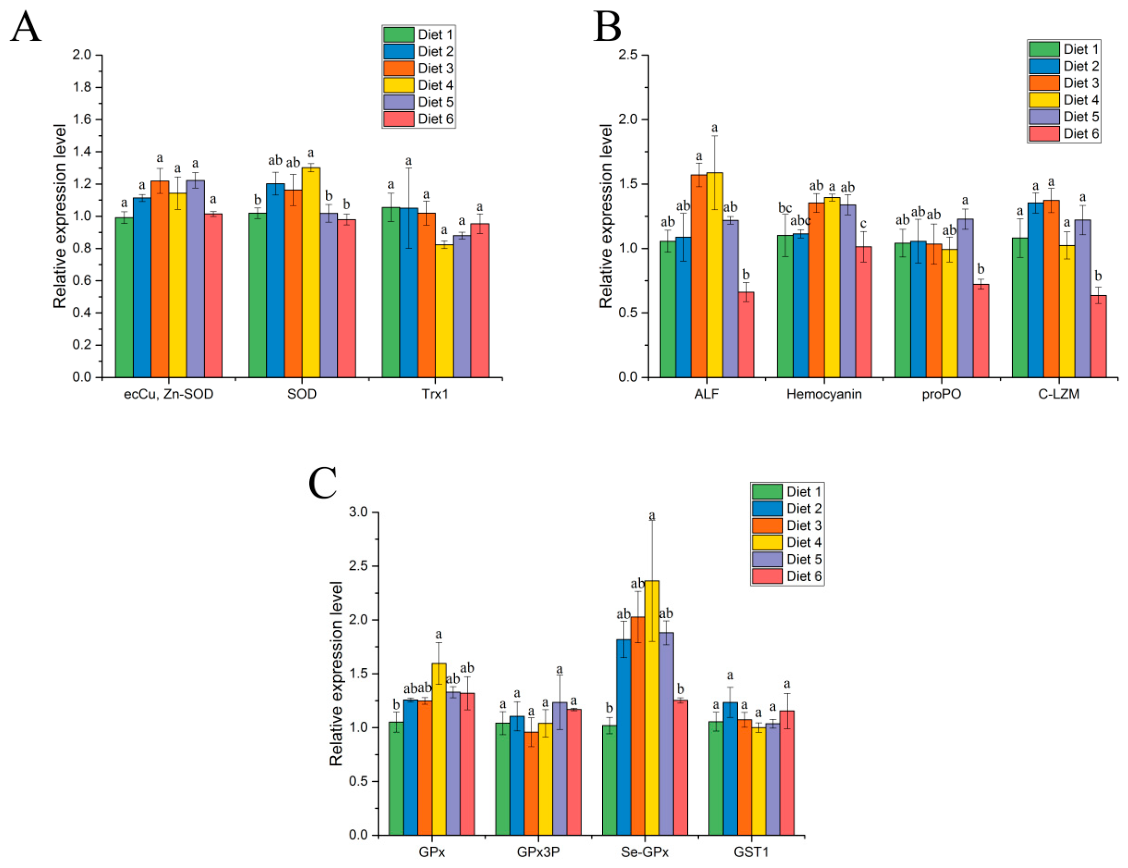
Figure 1 shows the effects of dietary MCE supplementation on the expression of antioxidant (Figure 1A), immune (Figure 1B), and glutathione metabolism (Figure 1C) -related genes in the hepatopancreas. The expression of SOD was significantly up-regulated in the 0.04 g/kg group (p < 0.05), compared with the control group. However, dietary MCE supplementation had no significant effects on the expression levels of ecCu, Zn-SOD, or Trx1 (p > 0.05). Hemocyanin mRNA expression was significantly increased in the 0.04 g/kg group (p < 0.05), whereas C-LZM mRNA expression was significantly decreased in the 0.15 g/kg group (p < 0.05). No significant differences were observed in the mRNA expression levels of ALF or proPO in any of the dietary groups (p > 0.05). The expressions of GPx and Se-GPx were significantly elevated in the 0.04 g/kg group (p < 0.05), but there were no significant changes in the expression of GPx3P or GST1 in any of the groups (p > 0.05).

3.6. Challenge Test

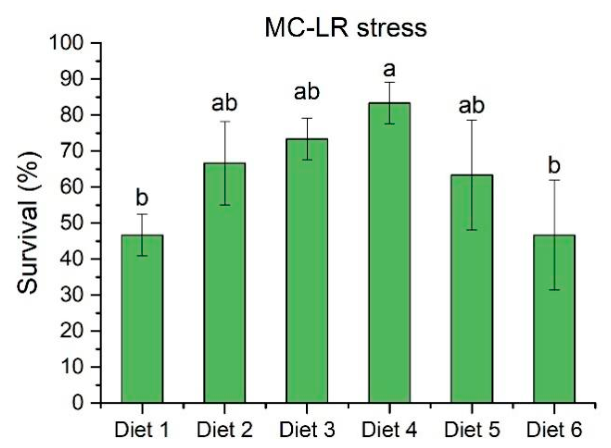
Dietary supplementation with 0.04 g/kg MCE significantly increased the SR of crayfish compared with the control group (p < 0.05), as shown in Figure 2.

4. Discussion

Numerous plant-derived extracts have been reported to enhance the growth performance of crustaceans, including Forsythia suspensa extract in Penaeus monodon [48], banana peel extract in Macrobrachium rosenbergii [49], and Psidium guajava leaf powder in Penaeus monodon [50]. Here, results demonstrated that dietary MCE supplementation did not significantly affect the growth performance of red claw crayfish, which contrasts with the findings of a previous study on fish [51], but aligns with the results of Zhang et al., who showed that dietary supplementation with MCE did not significantly improve WGR and SGR in Marsupenaeus japonicus [52]. This may be due to the biological properties of the major active constituents of MCE, the isoquinoline alkaloids sanguinarine and chelerythrine. These possess antibacterial, detoxifying, and anti-inflammatory activities [53,54,55], suggesting that the primary mechanism of MCE may be physiological regulation and health promotion, rather than growth stimulation.
In the current study, dietary MCE supplementation did not significantly affect muscle composition in crayfish. Haitham et al. also showed that dietary supplementation with Ashwagandha (Withania somnifera) extracts did not significantly alter the moisture, crude protein, or lipid contents of Litopenaeus vannamei [56]. This suggests that dietary supplementation with appropriate levels of plant-derived bioactive compounds has limited effects on proximate body composition, while reported benefits are more likely associated with physiological regulation, antioxidant defense, and health maintenance rather than nutrient deposition. The application of MCE in animal production has primarily focused on its antibacterial and anti-inflammatory properties, and information on its effects on growth performance and body composition in aquatic animals remains limited. Therefore, additional research is needed to clarify the mechanisms by which MCE influences nutrient utilization, growth regulation, and body composition in aquatic species.
Antioxidant enzymes are important indicators of health and oxidative stress responses in aquatic animals [57,58]. Both SOD and CAT are key enzymes in the antioxidant defense system, while T-AOC reflects the overall antioxidant capacity, and MDA content serves as an indicator of lipid peroxidation and cellular damage [59,60]. Glutathione peroxidase (GPx) scavenges reactive oxygen species using glutathione (GSH) as a substrate, whereas glutathione S-transferase (GST) participates in the detoxification of harmful compounds [61,62]. Previous studies have shown that MCE can enhance the activities of antioxidant enzymes and reduce lipid peroxidation in farmed animals [63,64]. In the present study, dietary MCE supplementation increased SOD and GPx activities and T-AOC levels, while decreasing MDA content in both the hepatopancreas and plasma of C. quadricarinatus. Similarly, dietary paprika extract significantly increased CAT and SOD activities in Litopenaeus vannamei [65], while dietary supplementation with Scutellaria baicalensis polysaccharides enhanced the antioxidant capacity of Macrobrachium rosenbergii, thereby improving the prawn’s resistance to oxidative stress [66]. Also, Pavarist et al. (2019) reported that dietary MCE increased the SOD activities in Litopenaeus vannamei [33]. In this study, dietary MCE significantly up-regulated SOD, GPx, and Se-GPx expression levels in the hepatopancreas, which was consistent with the enzyme activity results. Overall, these findings indicate that dietary MCE enhances antioxidant capacity and mitigates oxidative stress in C. quadricarinatus.
In crustaceans, acid phosphatase (ACP), alkaline phosphatase (AKP), and phenoloxidase (PO) are widely recognized as important indicators of innate immune function [67]. Specifically, AKP is involved in nutrient metabolism and disease resistance, whereas ACP functions as a lysosomal marker enzyme that participates in immune responses [68,69]. Phenoloxidase is a key component of the prophenoloxidase activation system and plays a central role in pathogen recognition and defense reactions in crustaceans [70]. Previous studies have demonstrated that plant-derived bioactive compounds, including polysaccharides, flavonoids, and alkaloids, can enhance the immune response of aquatic animals by modulating immune-related enzyme activities. Dietary supplementation with Mallotus japonicus bark extract enhanced the innate immune response of Heterotilapia buttikoferi, as evidenced by increased lysozyme activity, serum bactericidal activity, phagocytic activity, respiratory burst activity, and serum protein levels [71]. Puerarin supplementation also significantly increased ACP and AKP activities in Litopenaeus vannamei under ammonia stress [72]. In the present study, dietary MCE supplementation increased AKP activity and PO levels in both the hepatopancreas and plasma of C. quadricarinatus, suggesting an enhanced innate immune response. This is supported by a previous study, which showed that MCE can enhance immune responses in Litopenaeus vannamei [33].
Immune factors play an important role in the non-specific immune response of crustaceans [73,74]. Antimicrobial peptides, including ALF, LZM, and hemocyanin, serve as key immune effectors in crustaceans, while the proPO-activating system is critical for immune recognition in invertebrates. Non-self molecules can activate the proPO cascade, releasing proPO, which is subsequently converted into active PO by serine proteases [75,76,77]. The hepatopancreas is a multifunctional organ that plays a central role in both metabolism and immunity, and its antioxidant status and stress response are closely linked to overall host immune function [78]. In the present study, MCE significantly induced the expression of ALF and hemocyanin in the hepatopancreas of crayfish. It is known that MCE can influence immune function by regulating immune factors such as TNF, NF-κB, and MyD88 [79], where MCE reduced the expression of cryptdin-4 and cryptdin-5 in mice [64]. Similar plant-derived immunoregulatory effects have been reported in crustaceans; for example, dietary supplementation with Echinacea purpurea enhanced antioxidant capacity, lysozyme activity, hemocyte parameters, and immune-related gene expression in Litopenaeus vannamei [80]. Likewise, mint (Mentha piperita L.) leaf extract increased lysozyme and superoxide dismutase activities in Penaeus semisulcatus, suggesting modulation of innate immune responses [81]. These findings suggest that plant-derived bioactive compounds can broadly influence crustacean immune function, although the regulatory pathways and response patterns may vary specifically.
Cyanobacterial blooms have become a major environmental concern in aquaculture, as the MC-LR they produce can induce oxidative stress, immunotoxicity, tissue damage, and mortality in aquatic organisms [82,83,84]. In the present study, the effect of dietary supplementation with MCE on the survival of crayfish under MC-LR challenge was evaluated. Previous studies have confirmed that plant-derived extracts can enhance immune defenses and improve the survival of aquatic animals under pathogenic or environmental stress [85,86]. For instance, dietary supplementation with 1 g/kg dandelion extract increased the survival of golden pompano (Trachinotus ovatus) following a Vibrio harveyi challenge [87], whereas Forsythia suspensa extract (0.01–0.02%) enhanced the resistance to and improved survival of black tiger shrimp (Penaeus monodon) following Vibrio parahaemolyticus infection [48]. Similarly, Wongsasak et al. reported that probiotics improved the survival of Pacific white shrimp (Litopenaeus vannamei) under ammonia-nitrogen stress [88]. Here, dietary supplementation with 0.04 g/kg MCE significantly increased the survival rate of crayfish exposed to MC-LR stress, suggesting that MCE can enhance crayfish tolerance to MC-LR by boosting their antioxidant capacity and immune function. Although the precise mechanisms underlying the protective effects of MCE in crayfish remain to be elucidated, its antioxidant and immunostimulatory properties likely contribute to the improved resilience under environmental stress. Further studies are warranted to clarify the molecular and physiological pathways through which MCE mitigates MC-LR toxicity in crustaceans.


5. Conclusions

This study evaluated the effects of dietary supplementation with varying concentrations of MCE on the growth performance, muscle composition, antioxidant capacity, immune functions, and stress resistance of C. quadricarinatus. The results showed that dietary MCE supplementation had no significant impact on growth performance or muscle composition, but that the addition of 0.04 g/kg MCE improved antioxidant capacity and immune enzyme activities in both the hepatopancreas and plasma. It also significantly increased the expression of antioxidant and immune-related genes in the hepatopancreas and significantly improved the survival rate of crayfish under MC-LR stress. This suggests that, for C. quadricarinatus, supplementation with 0.04 g/kg MCE diets is optimal and should be considered for practical application and production performance enhancement under stress.

Author Contributions

F.-L.J.: Methodology, Writing—Original Draft, Data Curation, Software, Visualization, Investigation. Y.-P.L.: Methodology, Writing—Original Draft, Data Curation, Software, Visualization, Investigation. Z.-L.Z.: Methodology, Data Curation, Software, Validation, Investigation. X.-X.Z.: Methodology, Software, Validation, Investigation. P.-H.Z.: Methodology, Software, Validation. J.-T.L.: Data Curation, Software, Investigation. Y.-H.L.: Data Curation, Software. D.M.: Conceptualization, Methodology, Writing—Reviewing and Editing, Supervision. J.-A.X.: Conceptualization, Methodology, Writing—Reviewing and Editing, Funding Acquisition, Supervision. All authors have read and agreed to the published version of the manuscript.

Funding

This research was supported by the Hainan Provincial Natural Science Foundation of China (No. 323QN267), the Chinese Academy of Tropical Agricultural Sciences for Science and Technology Innovation Team of National Tropical Agricultural Science Center (No. CATASCXTD202416 and 1630052025016), and the Central Public-interest Scientific Institution Basal Research Fund for Chinese Academy of Tropical Agricultural Sciences (No. 1630052025008).

Institutional Review Board Statement

The procedures and protocols for this study have been ethically reviewed and approved by the Institute of Tropical Biosciences and Biotechnology, Chinese Academy of Tropical Agricultural Sciences, and granted an Aquaculture Research Permit (approval code: ITBB20210401, approval date: 1 April 2021).

Informed Consent Statement

Not applicable.

Data Availability Statement

The data supporting the findings of this study are included within the article. Further inquiries can be directed to the corresponding authors.

Conflicts of Interest

The authors declare no conflicts of interest.

References

  1. Cottier-Cook, E. The Progressive Management Pathway for Aquaculture Biosecurity: Guidelines for Application; FAO Fisheries and Aquaculture Technical Paper No. 689; FAO Globefish: Rome, Italy, 2023. [Google Scholar]
  2. Hassan, H.U.; Ali, A.; Al Sulivany, B.S.A.; Bilal, M.; Kanwal, R.; Raza, M.A.; Arslan, A.; Ijaz, M.Z.; Kabir, M.; Khan, M.R.; et al. Investigation of the effects of phytogenic dietary additives on growth performance, nutrient utilization, economic efficiency and health of Pangasius hypophthalmus: Implications for sustainable aquaculture development. Sci. Rep. 2025, 15, 22661. [Google Scholar] [CrossRef] [Scilit]
  3. Dawood, M.A.O. Nutritional immunity of fish intestines: Important insights for sustainable aquaculture. Rev. Aquac. 2021, 13, 642–663. [Google Scholar] [CrossRef] [Scilit]
  4. Tovar, A.; Moreno, C.; Mánuel-Vez, M.P.; García-Vargas, M. Environmental impacts of intensive aquaculture in marine waters. Water Res. 2000, 34, 334–342. [Google Scholar] [CrossRef] [Scilit]
  5. Su, X.; Sutarlie, L.; Loh, X.J. Sensors, biosensors, and analytical technologies for aquaculture water quality. Research 2020, 2020, 8272705. [Google Scholar] [CrossRef] [Scilit] [PubMed]
  6. Boyd, C.E. Chapter 6—General relationship between water quality and aquaculture performance in ponds. In Fish Diseases; Jeney, G., Ed.; Academic Press: Cambridge, MA, USA, 2017; pp. 147–166. [Google Scholar]
  7. Zhang, K.; Ye, Z.; Qi, M.; Cai, W.; Saraiva, J.L.; Wen, Y.; Liu, G.; Zhu, Z.; Zhu, S.; Zhao, J. Water quality impact on fish behavior: A review from an aquaculture perspective. Rev. Aquac. 2025, 17, e12985. [Google Scholar] [CrossRef] [Scilit]
  8. Kawsar, M.A.; Alam, M.T.; Pandit, D.; Rahman, M.M.; Mia, M.; Talukdar, A.; Sumon, T.A. Status of disease prevalence, drugs and antibiotics usage in pond-based aquaculture at Narsingdi district, Bangladesh: A major public health concern and strategic appraisal for mitigation. Heliyon 2022, 8, e09060. [Google Scholar] [CrossRef] [Scilit] [PubMed]
  9. Ma, X.; Zhu, F.; Jin, Q. Antibiotics and chemical disease-control agents reduce innate disease resistance in crayfish. Fish. Shellfish Immunol. 2019, 86, 169–178. [Google Scholar] [CrossRef] [Scilit] [PubMed]
  10. Yasin, I.S.M.; Mohamad, A.; Azzam-Sayuti, M. Chapter 7—Control of fish diseases using antibiotics and other antimicrobial agents. In Recent Advances in Aquaculture Microbial Technology; Mathew, J., Jose, M.S., Radhakrishnan, E.K., Kumar, A., Eds.; Academic Press: Cambridge, MA, USA, 2023; pp. 127–152. [Google Scholar]
  11. Liu, L.; Wu, W.; Zhang, J.; Lv, P.; Xu, L.; Yan, Y. Progress of research on the toxicology of antibiotic pollution in aquatic organisms. Acta Ecol. Sin. 2018, 38, 36–41. [Google Scholar] [CrossRef] [Scilit]
  12. Felis, E.; Kalka, J.; Sochacki, A.; Kowalska, K.; Bajkacz, S.; Harnisz, M.; Korzeniewska, E. Antimicrobial pharmaceuticals in the aquatic environment—Occurrence and environmental implications. Eur. J. Pharmacol. 2020, 866, 172813. [Google Scholar] [CrossRef] [Scilit] [PubMed]
  13. Zhang, Q.; Yang, H.; Teame, T.; Ran, C.; Yang, Y.; Yao, Y.; Ding, Q.; Liu, S.; Li, S.; Zhang, Z.; et al. Immune disorders induced by improper use of dietary immunostimulants in aquatic animals: Research progress and prospective solutions by targeting gut microbiota. Rev. Aquac. 2024, 16, 608–621. [Google Scholar] [CrossRef] [Scilit]
  14. Chakraborty, S.B.; Hancz, C. Application of phytochemicals as immunostimulant, antipathogenic and antistress agents in finfish culture. Rev. Aquac. 2011, 3, 103–119. [Google Scholar] [CrossRef] [Scilit]
  15. El-Houseiny, W.; Basher, A.W.; Mahmoud, Y.K.; Bayoumi, Y.; Abdel-Warith, A.-W.A.; Younis, E.M.; Davies, S.J.; Arisha, A.H.; Abd-Elhakim, Y.M.; Assayed, M.E.M. Mitigation of sodium fluoride-induced growth inhibition, immunosuppression, hepatorenal damage, and dysregulation of oxidative stress, apoptosis, and inflammation-related genes by dietary artichoke (Cynara scolymus) leaf extract in Oreochromis niloticus. Comp. Biochem. Physiol. B Biochem. Mol. Biol. 2025, 277, 111068. [Google Scholar] [CrossRef] [Scilit] [PubMed]
  16. Paray, B.A.; Hoseini, S.M.; Hoseinifar, S.H.; Van Doan, H. Effects of dietary oak (Quercus castaneifolia) leaf extract on growth, antioxidant, and immune characteristics and responses to crowding stress in common carp (Cyprinus carpio). Aquaculture 2020, 524, 735276. [Google Scholar] [CrossRef] [Scilit]
  17. Citarasu, T. Herbal biomedicines: A new opportunity for aquaculture industry. Aquac. Int. 2010, 18, 403–414. [Google Scholar] [CrossRef] [Scilit]
  18. Hardi, E.H.; Julpano, A.; Rahmawati, W.; Saptiani, G.; Reynalta, R.; Paramitha, E.; Sasmita Julyantoro, P.G.; Koniyo, Y.; Nugroho, R.A. Efficacy of plant extracts in enhancing growth and molting of crab (Scylla serrata) in a traditional pond system. Egypt. J. Aquat. Res. 2025, 51, 270–277. [Google Scholar] [CrossRef] [Scilit]
  19. Anirudhan, A.; Iryani, M.T.M.; Andriani, Y.; Sorgeloos, P.; Tan, M.P.; Wong, L.L.; Mok, W.J.; Ming, W.; Yantao, L.; Lau, C.C.; et al. The effects of Pandanus tectorius leaf extract on the resistance of White-leg shrimp Penaeus vannamei towards pathogenic Vibrio parahaemolyticus. Fish. Shellfish Immunol. Rep. 2023, 4, 100101. [Google Scholar] [CrossRef] [Scilit] [PubMed]
  20. Almarri, S.H.; Khalil, A.A.; Mansour, A.T.; El-Houseiny, W. Antioxidant, Immunostimulant, and Growth-Promoting Effects of Dietary Annona squamosa Leaf Extract on Nile Tilapia, Oreochromis niloticus, and Its Tolerance to Thermal Stress and Aeromonas sobria Infection. Animals 2023, 13, 746. [Google Scholar] [CrossRef] [Scilit] [PubMed]
  21. Huang, P.; Cheng, P.; Sun, M.; Liu, X.; Qing, Z.; Liu, Y.; Yang, Z.; Liu, H.; Li, C.; Zeng, J. Systemic review of Macleaya cordata: Genetics, biosynthesis of active ingredients and functions. Med. Plant Biol. 2024, 3, e020. [Google Scholar] [CrossRef] [Scilit]
  22. Qing, Z.; Yan, F.; Huang, P.; Zeng, J. Establishing the metabolic network of isoquinoline alkaloids from the Macleaya genus. Phytochemistry 2021, 185, 112696. [Google Scholar] [CrossRef] [Scilit] [PubMed]
  23. Qing, Z.-X.; Cheng, P.; Liu, X.-B.; Liu, Y.-S.; Zeng, J.-G. Systematic identification of alkaloids in Macleaya microcarpa fruits by liquid chromatography tandem mass spectrometry combined with the isoquinoline alkaloids biosynthetic pathway. J. Pharm. Biomed. Anal. 2015, 103, 26–34. [Google Scholar] [CrossRef] [Scilit] [PubMed]
  24. Lin, L.; Liu, Y.-C.; Huang, J.-L.; Liu, X.-B.; Qing, Z.-X.; Zeng, J.-G.; Liu, Z.-Y. Medicinal plants of the genus Macleaya (Macleaya cordata, Macleaya microcarpa): A review of their phytochemistry, pharmacology, and toxicology. Phytother. Res. 2018, 32, 19–48. [Google Scholar] [CrossRef] [Scilit] [PubMed]
  25. Kosina, P.; Gregorova, J.; Gruz, J.; Vacek, J.; Kolar, M.; Vogel, M.; Roos, W.; Naumann, K.; Simanek, V.; Ulrichova, J. Phytochemical and antimicrobial characterization of Macleaya cordata herb. Fitoterapia 2010, 81, 1006–1012. [Google Scholar] [CrossRef] [Scilit] [PubMed]
  26. Lei, Q.; Liu, H.; Peng, Y.; Xiao, P. In silico target fishing and pharmacological profiling for the isoquinoline alkaloids of Macleaya cordata (Bo Luo Hui). Chin. Med. 2015, 10, 37. [Google Scholar] [CrossRef] [Scilit] [PubMed]
  27. Ouyang, L.; Su, X.; He, D.; Chen, Y.; Ma, M.; Xie, Q.; Yao, S. A study on separation and extraction of four main alkaloids in Macleaya cordata (Willd) R. Br. with strip dispersion hybrid liquid membrane. J. Sep. Sci. 2010, 33, 2026–2034. [Google Scholar] [CrossRef] [Scilit] [PubMed]
  28. Wan, H.; Yin, F.; Chen, G.; Yao, Y.; Zi, Q.; Zhou, Y.; Yan, L.; Li, P.; Huang, J.; He, N.; et al. Combined effects of Macleaya cordata extract and antimicrobial peptides on reproductive performance and oviduct microbiota in Xuefeng black-bone chickens. Ital. J. Anim. Sci. 2025, 24, 508–520. [Google Scholar] [CrossRef] [Scilit]
  29. Ni, H.; Martínez, Y.; Guan, G.; Rodríguez, R.; Más, D.; Peng, H.; Valdivié Navarro, M.; Liu, G. Analysis of the Impact of Isoquinoline Alkaloids, Derived from Macleaya cordata extract, on the development and innate immune response in swine and poultry. Biomed. Res. Int. 2016, 2016, 1352146. [Google Scholar] [CrossRef] [Scilit] [PubMed]
  30. Guo, S.; Lei, J.; Liu, L.; Qu, X.; Li, P.; Liu, X.; Guo, Y.; Gao, Q.; Lan, F.; Xiao, B.; et al. Effects of Macleaya cordata extract on laying performance, egg quality, and serum indices in Xuefeng black-bone chicken. Poult. Sci. 2021, 100, 101031. [Google Scholar] [CrossRef] [Scilit] [PubMed]
  31. Liu, G.; Guan, G.; Fang, J.; Martínez, Y.; Chen, S.; Bin, P.; Duraipandiyan, V.; Gong, T.; Tossou, M.C.B.; Al-Dhabi, N.A.; et al. Macleaya cordata extract decreased diarrhea score and enhanced intestinal barrier function in growing piglets. Biomed. Res. Int. 2016, 2016, 1069585. [Google Scholar] [CrossRef] [Scilit] [PubMed]
  32. Chen, R.; Huang, L.; Zhai, S. Effects of Macleaya cordata extract on growth performance, serum biochemical parameters, and intestinal health of juvenile american eel (Anguilla rostrata). Fishes 2022, 7, 229. [Google Scholar] [CrossRef] [Scilit]
  33. Bussabong, P.; Rairat, T.; Chuchird, N.; Keetanon, A.; Phansawat, P.; Cherdkeattipol, K.; Pichitkul, P.; Kraitavin, W. Effects of isoquinoline alkaloids from Macleaya cordata on growth performance, survival, immune response, and resistance to Vibrio parahaemolyticus infection of Pacific white shrimp (Litopenaeus vannamei). PLoS ONE 2021, 16, e0251343. [Google Scholar] [CrossRef] [Scilit] [PubMed]
  34. Liang, R.; Shao, Q.; Ruan, Y.; Wang, M.; Cui, J.; Xia, J.; Zhu, Y.; Liu, Z.; Lin, Z.; Xu, H.; et al. Toxicological impacts of paddy field pesticides on red claw crayfish (Cherax quadricarinatus) and implications for integrated rice-crayfish farming. Aquac. Rep. 2026, 48, 103532. [Google Scholar] [CrossRef] [Scilit]
  35. Saoud, I.P.; Ghanawi, J.; Thompson, K.R.; Webster, C.D. A Review of the Culture and Diseases of Redclaw Crayfish Cherax quadricarinatus (Von Martens, 1868). J. World Aquac. Soc. 2013, 44, 1–29. [Google Scholar] [CrossRef] [Scilit]
  36. Li, X.; Jiang, Z.; Chen, Z.; Yang, C.; Han, F.; Xu, C.; Li, E. Dietary sterol sources modulate growth, lipid metabolism, and the initiation of ovarian development in precocious female Redclaw crayfish (Cherax quadricarinatus). Aquaculture 2026, 616, 743731. [Google Scholar] [CrossRef] [Scilit]
  37. Haubrock, P.J.; Oficialdegui, F.J.; Zeng, Y.; Patoka, J.; Yeo, D.C.J.; Kouba, A. The redclaw crayfish: A prominent aquaculture species with invasive potential in tropical and subtropical biodiversity hotspots. Rev. Aquac. 2021, 13, 1488–1530. [Google Scholar] [CrossRef] [Scilit]
  38. Ahyong, S.T.; Yeo, D.C.J. Feral populations of the Australian Red-Claw crayfish (Cherax quadricarinatus von Martens) in water supply catchments of Singapore. Biol. Invasions 2007, 9, 943–946. [Google Scholar] [CrossRef] [Scilit]
  39. Dvoretsky, A.G.; Dvoretsky, V.G. Farming of Indigenous Crayfish in Russia: A mini-review of recent studies. Animals 2025, 15, 223. [Google Scholar] [CrossRef] [Scilit] [PubMed]
  40. Yue, G.H.; Lou, B.; Xu, Z. Status of red swamp crayfish aquaculture and genetic improvement in China. Rev. Aquac. 2025, 17, e70085. [Google Scholar] [CrossRef] [Scilit]
  41. Chen, B.; Xu, X.; Chen, Y.; Xie, H.; Zhang, T.; Mao, X. Red swamp crayfish (Procambarus clarkii) as a growing food source: Opportunities and challenges in comprehensive research and utilization. Foods 2024, 13, 3780. [Google Scholar] [CrossRef] [Scilit] [PubMed]
  42. Fawzy, S.; Wang, W.; Wu, M.; Yi, G.; Huang, X. Effects of dietary different canthaxanthin levels on growth performance, antioxidant capacity, biochemical and immune-physiological parameters of white shrimp (Litopenaeus Vannamei). Aquaculture 2022, 556, 738276. [Google Scholar] [CrossRef] [Scilit]
  43. Horwitz, W. (Ed.) Official Methods of Analysis of AOAC International, 16th ed.; AOAC International: Arlington, VA, USA, 1995. [Google Scholar] [CrossRef] [Scilit]
  44. Wu, D.-L.; Liu, Z.-Q.; Huang, Y.-H.; Lv, W.-W.; Chen, M.-H.; Li, Y.-M.; Zhao, Y.-L. Effects of cold acclimation on the survival, feeding rate, and non-specific immune responses of the freshwater red claw crayfish (Cherax quadricarinatus). Aquac. Int. 2018, 26, 557–567. [Google Scholar] [CrossRef] [Scilit]
  45. Wu, D.; Huang, Y.; Chen, Q.; Jiang, Q.; Li, Y.; Zhao, Y. Effects and transcriptional responses in the hepatopancreas of red claw crayfish Cherax quadricarinatus under cold stress. J. Therm. Biol. 2019, 85, 102404. [Google Scholar] [CrossRef] [Scilit] [PubMed]
  46. Livak, K.J.; Schmittgen, T.D. Analysis of relative gene expression data using real-time quantitative PCR and the 2−ΔΔCT method. Methods 2001, 25, 402–408. [Google Scholar] [CrossRef] [Scilit] [PubMed]
  47. Lu, Y.-P.; Zheng, P.-H.; Zhang, Z.-L.; Li, J.-T.; Li, J.-J.; Li, T.; Wang, X.; Xu, J.-R.; Wang, D.-M.; Xian, J.-A.; et al. Effects of dietary Radix bupleuri root extract on the growth, muscle composition, histology, immune responses and microcystin-LR stress resistance of juvenile red claw crayfish (Cherax quadricarinatus). Aquac. Rep. 2023, 33, 101822. [Google Scholar] [CrossRef] [Scilit]
  48. Xie, J.-J.; Chen, X.; Guo, T.-Y.; Xie, S.-W.; Fang, H.-H.; Liu, Z.-L.; Zhang, Y.-M.; Tian, L.-X.; Liu, Y.-J.; Niu, J. Dietary values of Forsythia suspensa extract in Penaeus monodon under normal rearing and Vibrio parahaemolyticus 3HP (VP3HP) challenge conditions: Effect on growth, intestinal barrier function, immune response and immune related gene expression. Fish. Shellfish Immunol. 2018, 75, 316–326. [Google Scholar] [CrossRef] [Scilit] [PubMed]
  49. Rattanavichai, W.; Cheng, W. Dietary supplement of banana (Musa acuminata) peels hot-water extract to enhance the growth, anti-hypothermal stress, immunity and disease resistance of the giant freshwater prawn, Macrobrachium rosenbergii. Fish. Shellfish Immunol. 2015, 43, 415–426. [Google Scholar] [CrossRef] [Scilit] [PubMed]
  50. Yin, X.-L.; Li, Z.-J.; Yang, K.; Lin, H.-Z.; Guo, Z.-X. Effect of guava leaves on growth and the non-specific immune response of Penaeus monodon. Fish. Shellfish Immunol. 2014, 40, 190–196. [Google Scholar] [CrossRef] [Scilit] [PubMed]
  51. Xu, W.; Zhu, R.; Huan, D.; Li, X.; Leng, X. Effects of Macleaya cordata extract supplementation in low-protein, low-fishmeal diets on growth, hematology, intestinal histology, and microbiota in largemouth bass (Micropterus salmoides). Aqucult. Rep. 2025, 40, 102618. [Google Scholar] [CrossRef] [Scilit]
  52. Zhang, X.; Chen, Z.; Fan, H.; Yin, Y.; Feng, X.; Guo, X.; Jiao, L. Dietary Macleaya cordata extract supplementation reduced high-fat–induced damage of antioxidant capacity and immune function, and alleviated the disorder of glycolipid metabolism in Marsupenaeus japonicus. Aquacult. Int. 2024, 32, 7429–7445. [Google Scholar] [CrossRef] [Scilit]
  53. Huang, H.; Yao, J.; Liu, K.; Yang, W.; Wang, G.; Shi, C.; Jiang, Y.; Wang, J.; Kang, Y.; Wang, D.; et al. Sanguinarine has anthelmintic activity against the enteral and parenteral phases of trichinella infection in experimentally infected mice. Acta Trop. 2020, 201, 105226. [Google Scholar] [CrossRef] [Scilit] [PubMed]
  54. Petruczynik, A.; Plech, T.; Tuzimski, T.; Misiurek, J.; Kaproń, B.; Misiurek, D.; Szultka-Młyńska, M.; Buszewski, B.; Waksmundzka-Hajnos, M. Determination of Selected Isoquinoline Alkaloids from Mahonia aquifolia; Meconopsis cambrica; Corydalis lutea; Dicentra spectabilis; Fumaria officinalis; Macleaya cordata Extracts by HPLC-DAD and Comparison of Their Cytotoxic Activity. Toxins 2019, 11, 575. [Google Scholar] [CrossRef] [Scilit] [PubMed]
  55. Shao, J.; Song, N.; Li, Q.; Liu, Y.; Zhang, X.; Chen, J. The cloning, recombinant expression and antimicrobial activities of defensins from a folk toxic plant Macleaya cordata leaf. Toxicon 2019, 158, S83. [Google Scholar] [CrossRef] [Scilit]
  56. Abo-Al-Ela, H.G.; Siddique, M.; Sharawy, Z.Z.; Tahoun, A.-A. Growth and immune effects of standardized Ashwagandha extract in whiteleg shrimp, Litopenaeus vannamei, post-larvae. Aquaculture 2026, 617, 743758. [Google Scholar] [CrossRef] [Scilit]
  57. Di Giulio, R.T.; Washburn, P.C.; Wenning, R.J.; Winston, G.W.; Jewell, C.S. Biochemical responses in aquatic animals: A review of determinants of oxidative stress. Environ. Toxicol. Chem. 1989, 8, 1103–1123. [Google Scholar] [CrossRef]
  58. Song, C.; Sun, C.; Liu, B.; Xu, P. Oxidative Stress in Aquatic Organisms. Antioxidants 2023, 12, 1223. [Google Scholar] [CrossRef] [Scilit] [PubMed]
  59. Cheng, C.-H.; Yang, F.-F.; Ling, R.-Z.; Liao, S.-A.; Miao, Y.-T.; Ye, C.-X.; Wang, A.-L. Effects of ammonia exposure on apoptosis, oxidative stress and immune response in pufferfish (Takifugu obscurus). Aquat. Toxicol. 2015, 164, 61–71. [Google Scholar] [CrossRef] [Scilit] [PubMed]
  60. Tan, X.; Lin, H.; Huang, Z.; Zhou, C.; Wang, A.; Qi, C.; Zhao, S. Effects of dietary leucine on growth performance, feed utilization, non-specific immune responses and gut morphology of juvenile golden pompano Trachinotus ovatus. Aquaculture 2016, 465, 100–107. [Google Scholar] [CrossRef] [Scilit]
  61. Ren, Q.; Sun, R.-R.; Zhao, X.-F.; Wang, J.-X. A selenium-dependent glutathione peroxidase (Se-GPx) and two glutathione S-transferases (GSTs) from Chinese shrimp (Fenneropenaeus chinensis). Comp. Biochem. Physiol. C Toxicol. Pharmacol. 2009, 149, 613–623. [Google Scholar] [CrossRef] [Scilit] [PubMed]
  62. Averill-Bates, D.A. Chapter Five—The antioxidant glutathione. In Vitamins and Hormones; Litwack, G., Ed.; Academic Press: Cambridge, MA, USA, 2023; Volume 121, pp. 109–141. [Google Scholar]
  63. Faehnrich, B.; Pastor, A.; Heide, C.; Kröger, S.; Zentek, J. Effects of isoquinoline alkaloids from Macleaya cordata on physiological, immunological and inflammatory parameters in healthy beagles. J. Anim. Physiol. Anim. Nutr. 2019, 103, 661–667. [Google Scholar] [CrossRef] [Scilit] [PubMed]
  64. Guan, G.; Ding, S.; Yin, Y.; Duraipandiyan, V.; Al-Dhabi, N.A.; Liu, G. Macleaya cordata extract alleviated oxidative stress and altered innate immune response in mice challenged with enterotoxigenic Escherichia coli. Sci. China Life Sci. 2019, 62, 1019–1027. [Google Scholar] [CrossRef] [Scilit] [PubMed]
  65. Erfanifar, E.; Khoei, Z.A.; Abolfathi, M.; Erfanifar, E.; Tamadoni Jahromi, S.; Taee, H.M.; Pourmozaffar, S. Effect of paprika extracts on growth performance, haemolymph chemistry, intestinal microbiota and antioxidant enzyme activities of white-leg shrimp (Litopenaeus vannamei). J. Anim. Physiol. Anim. Nutr. 2024, 108, 854–867. [Google Scholar] [CrossRef] [Scilit] [PubMed]
  66. Sun, L.; Lin, F.; Sun, B.; Qin, Z.; Chen, K.; Zhao, L.; Li, J.; Zhang, Y.; Lin, L. Scutellaria polysaccharide mediates the immunity and antioxidant capacity of giant freshwater prawn (Macrobrachium rosenbergii). Dev. Comp. Immunol. 2023, 143, 104678. [Google Scholar] [CrossRef] [Scilit] [PubMed]
  67. Tian, J.; Yang, Y.; Du, X.; Xu, W.; Zhu, B.; Huang, Y.; Ye, Y.; Zhao, Y.; Li, Y. Effects of dietary soluble β-1,3-glucan on the growth performance, antioxidant status, and immune response of the river prawn (Macrobrachium nipponense). Fish. Shellfish Immunol. 2023, 138, 108848. [Google Scholar] [CrossRef] [Scilit] [PubMed]
  68. Lallès, J.-P. Intestinal alkaline phosphatase in the gastrointestinal tract of fish: Biology, ontogeny, and environmental and nutritional modulation. Rev. Aquac. 2020, 12, 555–581. [Google Scholar] [CrossRef] [Scilit]
  69. Gao, T.-H.; Han, M.-M.; Zhou, H.; Zhu, C.-X.; Yang, Y.; Zuraini, Z.; Guo, Y.-X.; Jiang, Q.-C. Effects of berberine hydrochloride on immune response in the crab Charybdis japonica. BMC Genom. 2022, 23, 578. [Google Scholar] [CrossRef] [Scilit] [PubMed]
  70. Liu, F.; Qu, Y.-K.; Geng, C.; Wang, A.-M.; Zhang, J.-H.; Chen, K.-J.; Liu, B.; Tian, H.-Y.; Yang, W.-P.; Yu, Y.-B. Effects of hesperidin on the growth performance, antioxidant capacity, immune responses and disease resistance of red swamp crayfish (Procambarus clarkii). Fish. Shellfish Immunol. 2020, 99, 154–166. [Google Scholar] [CrossRef] [Scilit] [PubMed]
  71. Appiah, E.K.; Fatsi, P.S.K.; Magna, E.K.; Saito, H.; Omura, M.; Kawai, K. Immunomodulatory Effects of Mallotus japonicus Extract on Innate Immune Responses in HeteroTilapia buttikoferi Infected with Aeromonas hydrophila. Microbe 2024, 3, 100088. [Google Scholar] [CrossRef] [Scilit]
  72. Chang, Y.-L.; Qi, L.; Guan, C.-L.; He, Y.-Y.; Lu, W.-X.; Zhong, G.-F. Effects of puerarin on growth performance, digestive ability, immune response, and resistance to ammonia stress in Pacific white shrimp (Litopenaeus vannamei) in low-salinity water. Fish. Shellfish Immunol. 2025, 165, 110552. [Google Scholar] [CrossRef] [Scilit] [PubMed]
  73. Destoumieux-Garzón, D.; Saulnier, D.; Garnier, J.; Jouffrey, C.; Bulet, P.; Bachère, E. Crustacean immunity: Antifungal peptides are generated from the C-terminus of shrimp hemocyanin in response to microbial challenge. J. Biol. Chem. 2001, 276, 47070–47077. [Google Scholar] [CrossRef] [Scilit] [PubMed]
  74. Ren, Q.; Zhang, Z.; Li, X.-c.; Jie, D.; Hui, K.-M.; Zhang, C.-Y.; Wang, W. Three different anti-lipopolysaccharide factors identified from giant freshwater prawn, Macrobrachium rosenbergii. Fish. Shellfish Immunol. 2012, 33, 766–774. [Google Scholar] [CrossRef] [Scilit] [PubMed]
  75. Jayanthi, S.; Vaseeharan, B.; Ishwarya, R.; Karthikeyan, S.; Govindarajan, M.; Alharbi, N.S.; Kadaikunnan, S.; Khaled, J.M.; Vágvölgyi, C. Identification, characterization and immune response of prophenoloxidase from the blue swimmer crab Portunus pelagicus and its antibiofilm activity. Int. J. Biol. Macromol. 2018, 113, 996–1007. [Google Scholar] [CrossRef] [Scilit] [PubMed]
  76. Liu, Y.-T.; Chang, C.-I.; Hseu, J.-R.; Liu, K.-F.; Tsai, J.-M. Immune responses of prophenoloxidase and cytosolic manganese superoxide dismutase in the freshwater crayfish Cherax quadricarinatus against a virus and bacterium. Mol. Immunol. 2013, 56, 72–80. [Google Scholar] [CrossRef] [Scilit] [PubMed]
  77. Wang, D.-L.; Zuo, D.; Wang, L.-M.; Sun, T.; Wang, Q.; Zhao, Y.-L. Effects of white spot syndrome virus infection on immuno-enzyme activities and ultrastructure in gills of Cherax quadricarinatus. Fish. Shellfish Immunol. 2012, 32, 645–650. [Google Scholar] [CrossRef] [Scilit] [PubMed]
  78. Rőszer, T. The invertebrate midintestinal gland (“hepatopancreas”) is an evolutionary forerunner in the integration of immunity and metabolism. Cell Tissue Res. 2014, 358, 685–695. [Google Scholar] [CrossRef] [Scilit] [PubMed]
  79. Yang, C.; Cheng, Y.; Li, X.; Li, H.; Yan, Q.; He, Z.; Tan, Z. Effects of dietary Macleaya cordata extract inclusion on transcriptomes and inflammatory response in the lower gut of early weaned goats. Anim. Feed Sci. Technol. 2021, 272, 114792. [Google Scholar] [CrossRef] [Scilit]
  80. Raoofi, M.; Akbarzadeh, A.; Noori, A.; Niroomand, M.; Abdoli, L. Effect of the dietary coneflower (Echinacea purpurea) powder on growth, survival, immune-antioxidant system, and resistance to environmental stresses in Pacific white shrimp Litopenaeus vannamei. Aquac. Rep. 2026, 48, 103622. [Google Scholar] [CrossRef] [Scilit]
  81. Sirpoor, G.; Noori, A.; Hoseinifar, S.H.; Paolucci, M. Effects of mint (Mentha piperita L.) leaf extract on growth performance, immune and antioxidant responses in green Tiger shrimp (Penaeus semisulcatus). Comp. Biochem. Physiol. B Biochem. Mol. Biol. 2025, 280, 111139. [Google Scholar] [CrossRef] [Scilit] [PubMed]
  82. Lu, Y.-P.; Zhang, X.-X.; Zheng, P.-H.; Li, J.-T.; Li, J.-J.; Li, T.; Wang, X.; Wang, D.-M.; Xian, J.-A.; Zhang, Z.-L.; et al. Effects of microcystin-LR on behavior, histopathology, oxidative stress, non-specific immunity and gene expression of red claw crayfish (Cherax quadricarinatus). Aquac. Rep. 2023, 33, 101805. [Google Scholar] [CrossRef] [Scilit]
  83. de la Cruz, A.A.; Hiskia, A.; Kaloudis, T.; Chernoff, N.; Hill, D.; Antoniou, M.G.; He, X.; Loftin, K.; O’Shea, K.; Zhao, C.; et al. A review on cylindrospermopsin: The global occurrence, detection, toxicity and degradation of a potent cyanotoxin. Environ. Sci. Process. Impacts 2013, 15, 1979–2003. [Google Scholar] [CrossRef] [Scilit] [PubMed]
  84. Falfushynska, H.; Kasianchuk, N.; Siemens, E.; Henao, E.; Rzymski, P. A Review of Common Cyanotoxins and Their Effects on Fish. Toxics 2023, 11, 118. [Google Scholar] [CrossRef] [Scilit] [PubMed]
  85. Dhayanithi, N.B.; Ajith Kumar, T.T.; Arockiaraj, J.; Balasundaram, C.; Harikrishnan, R. Dietary supplementation of Avicennia marina extract on immune protection and disease resistance in Amphiprion sebae against Vibrio alginolyticus. Fish. Shellfish Immunol. 2015, 45, 52–58. [Google Scholar] [CrossRef] [Scilit] [PubMed]
  86. Harikrishnan, R.; Kim, J.-S.; Kim, M.-C.; Balasundaram, C.; Heo, M.-S. Lactuca indica extract as feed additive enhances immunological parameters and disease resistance in Epinephelus bruneus to Streptococcus iniae. Aquaculture 2011, 318, 43–47. [Google Scholar] [CrossRef] [Scilit]
  87. Tan, X.; Sun, Z.; Liu, Q.; Ye, H.; Zou, C.; Ye, C.; Wang, A.; Lin, H. Effects of dietary Ginkgo biloba leaf extract on growth performance, plasma biochemical parameters, fish composition, immune responses, liver histology, and immune and apoptosis-related genes expression of hybrid grouper (Epinephelus lanceolatus♂ × Epinephelus fuscoguttatus♀) fed high lipid diets. Fish. Shellfish Immunol. 2018, 72, 399–409. [Google Scholar] [CrossRef] [Scilit] [PubMed]
  88. Wongsasak, U.; Chaijamrus, S.; Kumkhong, S.; Boonanuntanasarn, S. Effects of dietary supplementation with β-glucan and synbiotics on immune gene expression and immune parameters under ammonia stress in Pacific white shrimp (Litopenaeus vannamei). Aquaculture 2015, 436, 179–187. [Google Scholar] [CrossRef] [Scilit]
Figure 1. Effects of dietary MCE on antioxidant, immunity, and glutathione-related gene expression levels in the hepatopancreas of C. quadricarinatus. (A) Antioxidant-related genes; (B) Immune-related genes; (C) Glutathione-related genes. Different letters above the error line indicate significant differences (p < 0.05).
Fishes 11 00432 g001
Figure 2. Survival rate of C. quadricarinatus fed on diets containing different levels of MCE under microcystin stress. Different letters on the error bars indicate significant differences (p < 0.05).
Fishes 11 00432 g002
Table 1. Ingredients and proximate composition of crayfish experimental diets (g/kg).
IngredientsDiet 1Diet 2Diet 3Diet 4Diet 5Diet 6
0.000.010.020.040.080.15
Fish meal130.00130.00130.00130.00130.00130.00
Soybean meal210.00210.00210.00210.00210.00210.00
Blood meal20.0020.0020.0020.0020.0020.00
Peanut meal180.00180.00180.00180.00180.00180.00
Flour220.00220.00220.00220.00220.00220.00
Corn starch70.0070.0070.0070.0070.0070.00
Soybean oil40.0040.0040.0040.0040.0040.00
Fibrin64.0063.9963.9863.9663.9263.85
Sodium chloride1.001.001.001.001.001.00
Monocalcium phosphate15.0015.0015.0015.0015.0015.00
Shell powder10.0010.0010.0010.0010.0010.00
Vitamin premix 110.0010.0010.0010.0010.0010.00
Mineral premix 210.0010.0010.0010.0010.0010.00
Sodium alginate20.0020.0020.0020.0020.0020.00
Macleaya cordata extract0.000.010.020.040.080.15
Nutrient levels (%)
Crude protein30.6829.9430.8430.3830.4330.66
Crude lipid7.437.117.307.607.357.58
Moisture8.448.638.338.178.238.36
1 Vitamin premix provided by Hainan Zhengqiang Co., Haikou, China. Vitamin premix provides the following (mg kg1 diet): vitamin A 9000000 IU, vitamin D3 1000000 IU, vitamin E 18000 IU, vitamin K3 2000 mg, vitamin 2000 mg, vitamin B2 5000 mg, vitamin B6 5000 mg, vitamin B12 20 mg, vitamin C 8000 mg, calcium pantothenate 7000 mg, nicotinic acid 18,000 mg, folic acid 300 mg, biotin 45 g. 2 Mineral premix provides the following (mg kg−1 diet): CuSO4·5H2O 2 g, ZnSO4·H2O 25 g, MnSO4·H2O 15 g, FeSO4·H2O 25 g, KI 0.04 g, CoSO4·7H2O 0.1 g, Na2SeO3 0.02 g.
Table 2. Primers used in this study.
PrimersSequence (5′–3′)
ecCu, Zn-SOD FTGTGGCGGCTCTGTGCT
ecCu, Zn-SOD RCCGACGATGGTGATTTCTCC
SOD FCAAAATTCCCTTGCCAGCAC
SOD RCCTGGTTCCAGCTTGATGTT
Trx1 FCATTAGCGCCAGAGAAGGAC
Trx1 RATGTAGCCATGGAACACCAG
ALF FACAGAGCAACGCACAGATTACA
ALF RTCCAGCCAGGGCAATACAT
Hemocyanin FACATAGCAAGGACTGGCAAAC
Hemocyanin RTGACCTCGTAAAGTGGTGGAA
proPO FGCTTCACTAAGTCCCAACGCT
proPO RTCCCATCACTCCAATCTCCTC
C-LZM FGCAACAGGAACGGTAGCAAG
C-LZM RGCCACCCAAGCGGAATAT
GPx FCAAGGTGGTGTTGGTGGTCA
GPx RTCAAAGAAGGTCATCAGAGGCT
GPx3P FCTAATCGGTAGGAATGGCAAGC
GPx3P RCGCCTGGGTCTATGGGAAC
Se-GPx FCGTCAGAGGGAAAGGGAAGT
Se-GPx RGAGAATGCCACTGAGTCGGA
GST1 FACCGTAGGATTGCGTTGCT
GST1 RGGAAAAGTCTGATTGGTTGCC
β-actin FATCACTGCTCTGGCTCCTGCTACC
β-actin RCGGACTCGTCGTACTCCTCCTTGG
ecCu, Zn-SOD: extracellular copper/zinc superoxide dismutase; SOD: superoxide dismutase; Trx1: thioredoxin 1; ALF: antilipolysacchride factor; Hemocyanin: hemocyanin; proPO: prophenoloxidase; C-LZM: C-type lysozyme; GPx: glutathione peroxidase; GPx3P: glutathione peroxidase 3 precursor; Se-GPx: selenium-dependent glutathione peroxidase; GST1: glutathione S transferase D1.
Table 3. Effects of MCE on the growth performance of C. quadricarinatus.
Diets (g/kg)Diet 1Diet 2Diet 3Diet 4Diet 5Diet 6p-Value
00.010.020.040.080.15
WGR, %1104.75 ± 94.99 a1170.12 ± 36.92 a1067.52 ± 218.05 a1220.24 ± 67.15 a1191.96 ± 165.66 a1053.51 ± 241.07 a0.715
SGR, %4.44 ± 0.14 a4.54 ± 0.05 a4.37 ± 0.32 a4.61 ± 0.09 a4.56 ± 0.24 a4.34 ± 0.37 a0.667
SR, %85.00 ± 4.33 a91.67 ± 5.77 a86.67 ± 8.78 a76.67 ± 1.44 a74.17 ± 5.20 a80.83 ± 10.10 a0.058
WGR: Weight gain rate, SGR: specific growth rate, SR: survival rate. Means in the same row with different superscripts are significantly different (p < 0.05).
Table 4. Effects of dietary MCE supplementation on muscle proximate composition of C. quadricarinatus.
Diets g/kgDiet 1Diet 2Diet 3Diet 4Diet 5Diet 6p-Value
00.010.020.040.080.15
Moisture77.98 ± 0.38 a78.42 ± 0.31 a78.39 ± 0.73 a78.16 ± 0.52 a78.16 ± 0.80 a78.17 ± 0.34 a0.925
Crude protein81.25 ± 0.51 a81.69 ± 0.79 a81.92 ± 1.02 a81.65 ± 0.61 a80.41 ± 0.63 a80.83 ± 0.25 a0.124
Crude lipid2.08 ± 0.19 a1.84 ± 0.24 a1.93 ± 0.41 a1.75 ± 0.12 a1.79 ± 0.24 a1.80 ± 0.21 a0.635
Ash6.51 ± 0.25 a6.27 ± 0.31 a6.73 ± 0.07 a6.75 ± 0.13 a6.70 ± 0.14 a6.69 ± 0.18 a0.077
Means in the same row with different superscripts are significantly different (p < 0.05).
Table 5. Effects of dietary supplementation with MCE on antioxidant and immune abilities in hepatopancreas of C. quadricarinatus.
Diets g/kgDiet 1Diet 2Diet 3Diet 4Diet 5Diet 6p-Value
00.010.020.040.080.15
T-AOC (mmol/g)0.13 ± 0.01 c0.15 ± 0.01 c0.19 ± 0.01 ab0.21 ± 0.02 a0.16 ± 0.01 bc0.14 ± 0.02 c0.000
SOD activity (U/mgprot)17.82 ± 1.69 b21.84 ± 3.11 ab19.74 ± 2.05 b25.95 ± 1.78 a21.26 ± 2.27 ab17.79 ± 2.28 b0.007
CAT activity (U/mgprot)19.42 ± 1.68 a22.24 ± 4.25 a19.49 ± 2.80 a21.95 ± 3.26 a19.66 ± 4.85 a24.43 ± 1.00 a0.384
MDA content (nmol/mgprot)2.55 ± 0.19 a2.36 ± 0.44 ab1.61 ± 0.07 bc1.24 ± 0.07 c2.03 ± 0.37 ab2.14 ± 0.30 ab0.001
ACP activity (U/gprot)109.02 ± 8.92 a117.27 ± 7.12 a126.75 ± 9.08 a120.59 ± 8.39 a124.21 ± 10.12 a114.53 ± 7.88 a0.208
AKP activity (U/gprot)49.03 ± 4.58 b60.27 ± 3.28 ab63.89 ± 3.37 a59.43 ± 6.40 ab56.54 ± 5.15 ab56.82 ± 2.60 ab0.026
PO content (ng/L)66.84 ± 2.63 b78.25 ± 3.95 a80.38 ± 1.99 a78.75 ± 3.61 a74.99 ± 5.10 ab67.59 ± 4.62 b0.003
Means in the same row with different superscripts are significantly different (p < 0.05).
Table 6. Effects of dietary MCE supplementation on the antioxidant and immune abilities of the plasma of C. quadricarinatus.
Diets g/kgDiet 1Diet 2Diet 3Diet 4Diet 5Diet 6p-Value
00.010.020.040.080.15
T-AOC (mM)0.44 ± 0.01 b0.47 ± 0.03 ab0.52 ± 0.04 a0.54 ± 0.03 a0.47 ± 0.01 ab0.49 ± 0.03 ab0.017
SOD activity (U/mL)111.14 ± 5.83 b112.14 ± 6.59 b123.43 ± 4.94 ab127.86 ± 4.95 a117.43 ± 4.54 ab114.14 ± 1.73 b0.008
CAT activity (U/mL)8.13 ± 0.55 a7.12 ± 1.29 a8.05 ± 0.78 a9.23 ± 1.50 a6.18 ± 1.61 a9.07 ± 1.52 a0.090
MDA content (nmol/mL)5.42 ± 0.86 ab4.98 ± 1.08 ab3.64 ± 0.62 ab3.47 ± 0.71 b5.51 ± 0.41 ab5.60 ± 0.71 a0.011
ACP activity (U/100 mL)7.04 ± 1.30 a8.32 ± 0.18 a7.04 ± 2.50 a9.06 ± 2.26 a9.36 ± 1.74 a8.21 ± 0.55 a0.436
AKP activity (U/100 mL)14.11 ± 0.71 b16.44 ± 0.66 ab19.20 ± 2.16 ab19.54 ± 1.35 a18.88 ± 3.70 ab14.58 ± 1.15 ab0.013
PO content (ng/L)7.19 ± 1.92 b10.57 ± 0.37 ab11.65 ± 1.08 a13.19 ± 2.54 a10.03 ± 1.60 ab9.65 ± 0.69 ab0.010
Means in the same row with different superscripts are significantly different (p < 0.05).
Table 7. Effects of dietary supplementation with MCE on the glutathione metabolism of C. quadricarinatus.
Diets g/kgDiet 1Diet 2Diet 3Diet 4Diet 5Diet 6p-Value
00.010.020.040.080.15
HepatopancreasGPx activity (U/mgprot)31.84 ± 2.08 c33.17 ± 3.19 bc39.79 ± 3.11 ab41.19 ± 2.39 a42.16 ± 3.45 a31.80 ± 1.47 c0.001
GST activity (U/mgprot)26.23 ± 3.75 a25.60 ± 3.60 a25.40 ± 6.05 a24.39 ± 2.59 a23.85. ± 2.49 a24.54 ± 2.41 a0.968
GSH content (μmol/gprot)25.17 ± 1.95 a26.64 ± 4.17 a25.80 ± 5.29 a32.46 ± 3.76 a28.24 ± 4.39 a31.99 ± 2.91 a0.157
HemolymphGPx activity (U/mL)243.50 ± 6.24 c260.00 ± 14.80 bc297.50 ± 14.63 a309.50 ± 11.46 a283.50 ± 13.01 ab242.50 ± 14.72 c0.000
GST activity (U/mL)16.94 ± 0.79 a17.36 ± 1.97 a19.79 ± 2.18 a18.06 ± 1.94 a19.31 ± 1.62 a18.96 ± 1.46 a0.328
GSH content (μmol/L)16.84 ± 3.08 a18.52 ± 2.10 a15.82 ± 3.25 a16.16 ± 2.54 a21.89 ± 2.54 a18.18 ± 3.50 a0.193
Means in the same row with different superscripts are significantly different (p < 0.05).
Disclaimer/Publisher’s Note: The statements, opinions and data contained in all publications are solely those of the individual author(s) and contributor(s) and not of MDPI and/or the editor(s). MDPI and/or the editor(s) disclaim responsibility for any injury to people or property resulting from any ideas, methods, instructions or products referred to in the content.