
Article

Biotic vs. Abiotic Substrate: Habitat Choice in Three Baltic Fish Species

Faculty of Oceanography and Geography, University of Gdańsk, Al. M. Piłsudskiego 46, 81-378 Gdynia, Poland
*
Author to whom correspondence should be addressed.
Fishes 2026, 11(7), 404; https://doi.org/10.3390/fishes11070404
Submission received: 27 April 2026 / Revised: 30 June 2026 / Accepted: 2 July 2026 / Published: 7 July 2026

Abstract

The study aimed to determine the habitat preferences of the round goby (Neogobius melanostomus), European flounder (Platichthys flesus), and three-spined stickleback (Gasterosteus aculeatus). Two types of substrate were included in the experiment—biotic and abiotic. The abiotic substrate contained no living organisms but had a physical structure very similar to the biotic substrate. Observations were conducted in day and night cycles, repeated twice. Observation of each fish lasted 150 min. The time spent on each substrate and the number of substrate changes by each individual were determined. Based on the results obtained in this study, a preference for the biotic substrate during the day was observed in all three fish species. At night, only the European flounder showed a clear preference for the abiotic substrate. The round goby was more active at night, changing substrate twice as often as during the day. Individuals of this species also showed greater activity, i.e., additional behaviors. The number of substrate changes by the European flounder and the three-spined stickleback did not depend on light conditions. Sticklebacks exhibited high locomotor activity both during the day and at night, changing substrate significantly more often than the other species. None of the analyzed species completely avoided the abiotic substrate, suggesting that fish-habitat restoration through artificial structures may be viable.
Key Contribution: The behavior of fish in relation to the abiotic substrate is of particular importance, given the high level of human impact on the marine environment and the introduction of new engineered structures into it. Based on our study for the three investigated species (round goby, European flounder, and three-spined stickleback), the presence of living organisms forming the habitat is more important during the day than the physical structure of the habitat itself, as an indicator of prey availability.

1. Introduction

Fish behavior is highly diverse and linked to the habitat in which a given species occurs. Behavioral patterns are responses to external stimuli and physiological processes that have become established in all species over many years of evolution [1]. Fish populations are characterized by specific modes of movement, foraging, and reproduction. Some fish species form large schools to avoid predators (e.g., Clupea harengus) or to increase foraging efficiency (e.g., Thunnus thynnus), whereas other species live in small groups or alone and seek partners only during the spawning period [2]. Predators living in isolation often forage while remaining motionless, frequently camouflaging themselves in their surroundings to ambush their prey (e.g., family Muraenidae). Sebastes rosaceus uses its bright, vivid body coloration as a recognition signal for both individuals of the same species and other species [2]. Crenicichla menezesi chases away other fish and also isolates smaller and weaker individuals from the rest of the group [3]. Some fish species are additionally “armed”—Gasterosteus aculeatus has spines on its body that it can erect, whereas in Pterois volitans these spines are even equipped with venom [4,5].
There are a number of studies on habitat suitability models that correlate frequency of occurrence or abundance indices with relevant environmental data in both marine and freshwater environments [6,7]. The structure of freshwater fish communities is primarily driven by food availability and differences in physical habitat conditions, and maintaining a diverse, heterogeneous stream environment is essential for sustaining biodiversity [7,8]. Specific habitat characteristics, such as depth, average and demersal velocities, average substrate size, and percent cover, may be potential limiting factors for stream fishes [9]. In estuarine habitats, depth, salinity, water temperature, and substratum/cover traits are important for fish use [6].
The study involved three experiments that were conducted using test organisms belonging to three ecomorphologically different fish species (Neogobius melanostomus, Platichthys flesus, and Gasterosteus aculeatus) and two substrate variants—biotic vs. abiotic. These three fish species are common components of the Baltic Sea coastal food webs and function as consumers of benthic macroinvertebrates, whereas the non-indigenous round goby additionally acts as a strong ecosystem modifier through its impacts on benthic invertebrate communities and trophic interactions [10,11,12].
The round goby (N. melanostomus) was first observed in Polish waters in 1990. The population of this species gradually increased, and it quickly colonized the hard and sandy substrates of the Gulf of Gdańsk. The main ballast route by which this species was introduced from the Ponto-Caspian region to the Baltic Sea was likely a regular shipping lane with heavy traffic [13,14], but small boats and vertical seawalls may have also contributed [15]. This bottom-dwelling fish is found not only on rocky and sandy bottoms, but also on bottoms with dense vegetation and on blue mussel (Mytilus trossulus) beds. Other characteristic habitats of this species include hydrotechnical structures like breakwaters, ports, and piers. This fish preys mainly on mollusks (including M. trossulus) and other invertebrates (polychaetes, oligochaetes, amphipods, and large bivalves). It may also feed on smaller fish or their eggs [16]. A characteristic behavior of the round goby is hopping and burying itself in the substrate [17].
The European flounder (P. flesus) burrows into sandy sediment and is capable of lying on the bottom or swimming just above it [18]. This demersal fish preys on small benthic organisms—mollusks, crustaceans, smaller fish, and annelids [19,20]. It usually feeds in shallow waters and migrates to deep waters to spawn [21].
Anadromous three-spined stickleback (G. aculeatus) inhabits shallow coastal zones rich in vegetation, as well as the pelagic zone [22]. Adult fish migrate from the open sea to the coast in spring to breed, effectively linking coastal and offshore processes. Males build nests, which they defend against other individuals. The abundance of juvenile sticklebacks during the recruitment period (summer) is influenced by the cumulative cover of rooted vegetation, whereas the abundance of adults is mainly affected by cumulative spring vegetation cover of all plant species and wave exposure [23]. G. aculeatus lives for ~3 years and dies shortly after the spawning period. This species may form schools and feed on insect larvae, small crustaceans, and fish eggs and small fry [4,24].
The prevailing evidence strongly supports the notion that the presence of living organisms associated with the physical substrate does affect fish habitat selection. In many ecosystems, fishes select not only “structure”, but also biologically active habitat states created by habitat-forming or substrate-colonizing organisms. The most obvious and extensively documented examples come from live coral communities on coral reefs, macroalgal and kelp habitats, seagrass systems with epiphytes, and biologically matured artificial reefs [25,26,27,28]. No such studies have been conducted on the ecosystems of the Baltic Sea. The current ecological consensus is that fish habitat selection is governed by the interaction between the physical architecture of the habitat and its biotic composition, rather than by substrate geometry alone.
The objective of the study is to determine whether, in the habitat selection process of round goby, European flounder, and three-spined stickleback occurring in the Gulf of Gdańsk, the physical structure of the seabed is more important than the presence of living organisms forming that structure.
The main rationale for this study is that habitat selection—and substrate preference in particular—is a key driver of fish distribution, survival, and interspecific interactions, yet it is often context-dependent, e.g., changing between day and night [29,30]. By comparing biotic versus abiotic substrates, the study sought to determine whether fish respond solely to physical structure or to biological cues, such as prey availability, biofilms, or shelter-associated organisms.
Living organisms constitute a source of food for these benthivorous species, but most importantly, filter the water and provide them with shelter to improve their survival [31,32]. However, the presence of living organisms on the substrate can affect these species differently, as they occupy different ecological niches. Comparing how fishes use substrates with and without living organisms is not just a descriptive study; it addresses some of the most fundamental questions in ecology: what actually defines habitat quality, and how biological processes shape ecosystems beyond their physical structure.

2. Materials and Methods

2.1. Fish Collection and Laboratory Conditions

The fish were collected in the Gulf of Gdańsk. Specimens of N. melanostomus (36 individuals) were caught on 21 September 2024, using a beach seine in the Błądzikowo area. Specimens of P. flesus (32 individuals) were caught in the littoral zone in Gdynia on 9 May 2025 and 16 May 2025, also using a beach seine. Sticklebacks (50 individuals) were caught in the Rozewie area using a pelagic trawl from the deck of the research vessel R/V Oceanograf on 24 April 2025, and using a hand net in Gdynia between 1 and 9 June 2025.
After capture, the fish were placed in the laboratory in temporary tanks with conditions similar to those prevailing in the natural environment in late summer—water temperature 17 °C and salinity 7 PSU. In addition, the tanks were equipped with filters and aerators to maintain water clarity and an adequate concentration of dissolved oxygen. The tanks prepared for gobies were equipped with shelters made of PVC and ceramic tiles, where the fish could easily hide [33,34]. The bottoms of the temporary aquaria prepared for flounders and sticklebacks were covered with sand. Live capture and housing conditions of wild fish were in accordance with the guidelines by ASIH, AFS and AIFRB [35].
Permission for fish catches was obtained from the Ministry of Agriculture and Rural Development of the Republic of Poland (permission codes: 1/2024 and 4/2025). The animal study protocol and animal welfare protocol were approved by the Local Ethics Committee for Animal Experimentation in Bydgoszcz, Poland (protocol code: 12/2024, date of approval: 16 April 2024).

2.2. Total Length of Fish

The total length (TL) of fish used in the experiments ranged from 30 to 105 mm. The mean total length of the round goby, European flounder, and three-spined stickleback was 73 mm, 69 mm, and 50 mm, respectively (Table 1).

2.3. Experimental Setup Design

The experiments were carried out from 19 October 2024 to 21 June 2025 inclusive. At least seven days elapsed between the capture of the fish and the start of the experiment to allow the organisms to acclimate. Each experiment consisted of two cycles—daytime vs. nighttime—each of which was repeated twice. In total, two daytime and two nighttime replicates were conducted for each species. The fish were alternately transferred between the experimental tank and two temporary tanks to ensure that no individual was observed twice. In the temporary tanks, the fish were fed before and after each replicate to ensure that hunger did not affect their behavior during the experiment, and to prevent contamination of the experimental tanks with additional organic matter. Before each experiment, the fish spent at least 30 min in the experimental tanks to acclimate. The purpose of acclimation to laboratory conditions was to reduce the stress associated with transferring the fish from the temporary aquaria, thereby avoiding any impact on the experimental results.
Thirty-two individuals of each fish species were used in the experiment—16 individuals per cycle. To ensure the fish could move freely within the experimental chambers, only individuals with a maximum body length of 100 mm ± 5 mm were selected for the experiment. The criterion for selecting the smallest fish was a size that allowed them to be visible in the video footage, while preventing them from hiding between the substrate trays placed in the chambers. The minimum number of fish was used, ensuring independent replication to avoid pseudoreplication [36].
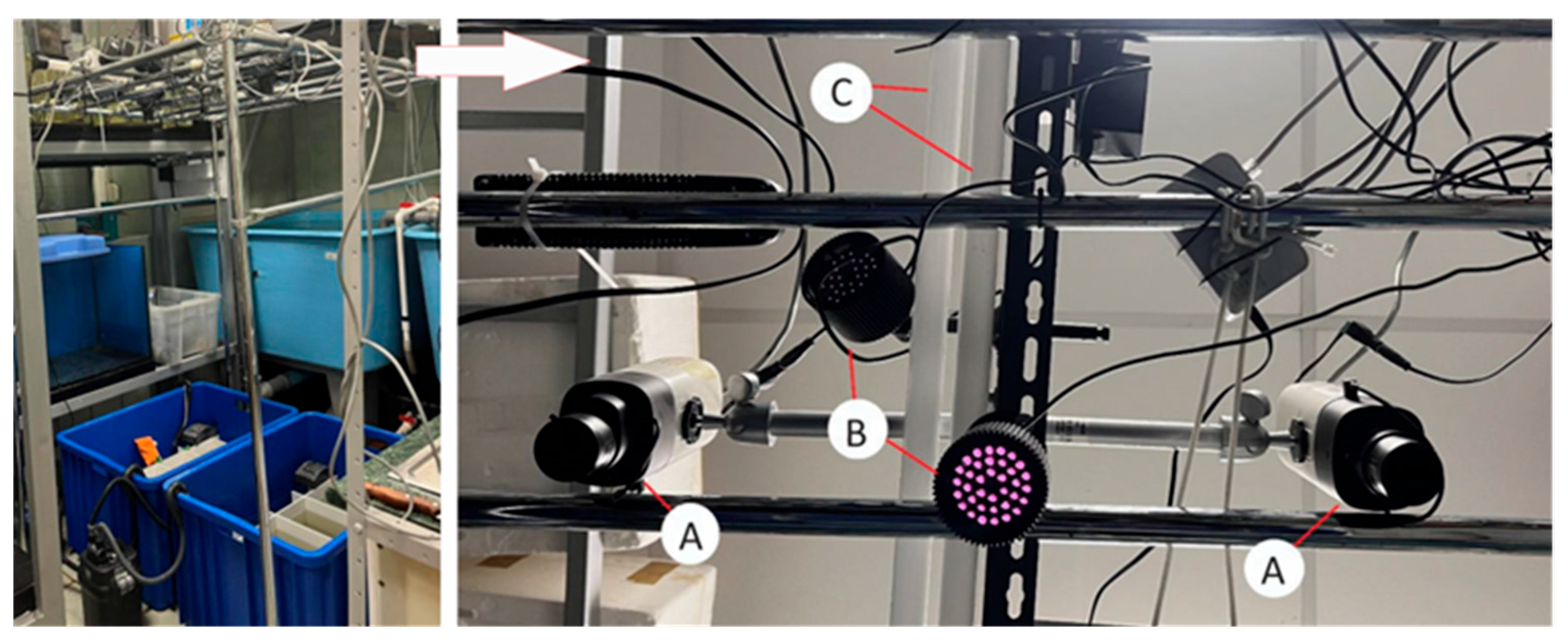
The experimental setup consisted of two tanks, each divided into four chambers, and a metal frame on which cameras, fluorescent lamps, and infrared emitters were mounted (Figure 1).
The experimental tanks were two plastic containers with bottom dimensions of 54 × 73.5 cm. Two PVC partitions were added to divide the containers into four chambers with bottom dimensions of 31 × 15.5 cm. Each chamber was labeled with a number from 1 to 8. The tanks were filled with water with a salinity of 7 PSU and a constant temperature of 17 °C to a depth of ~15 cm above the bottom. One fish was placed in each chamber prior to the experiment. Each chamber contained two trays with bottom dimensions of 15 × 15 cm and a depth of 2 cm. The trays were filled with two types of substrate—biotic and abiotic—depending on the fish species being tested at the time. The chambers were additionally weighted with diving ballast to prevent the partitions from being displaced under water pressure. Each tank was equipped with an external Fluval 106 filter.
In addition to a constant temperature (17 °C), a constant light cycle of 16L:8D was maintained in the laboratory. A timer automatically turned on and off two fluorescent lamps (photon flux density = 3 μmolm−2 s−1) positioned above the experimental tanks. Two Samsung SNB-6004P network cameras (Samsung Electronics Poland, Warsaw) were used to record the video material, providing high-resolution image capture (2 MP, 60 fps). To enable observation of the tanks during night cycles, two infrared emitters IR LAB LIR-IC88 (IR LAB Poland, Warsaw) with a wavelength of λ = 850 nm and a range of to 180 m were also mounted on the frame (Figure 1).

2.4. Habitat Simulation

The biotic substrate was defined as a substrate containing living organisms. The abiotic substrate contained no living organic matter, but it was very similar to the biotic substrate in physical structure.
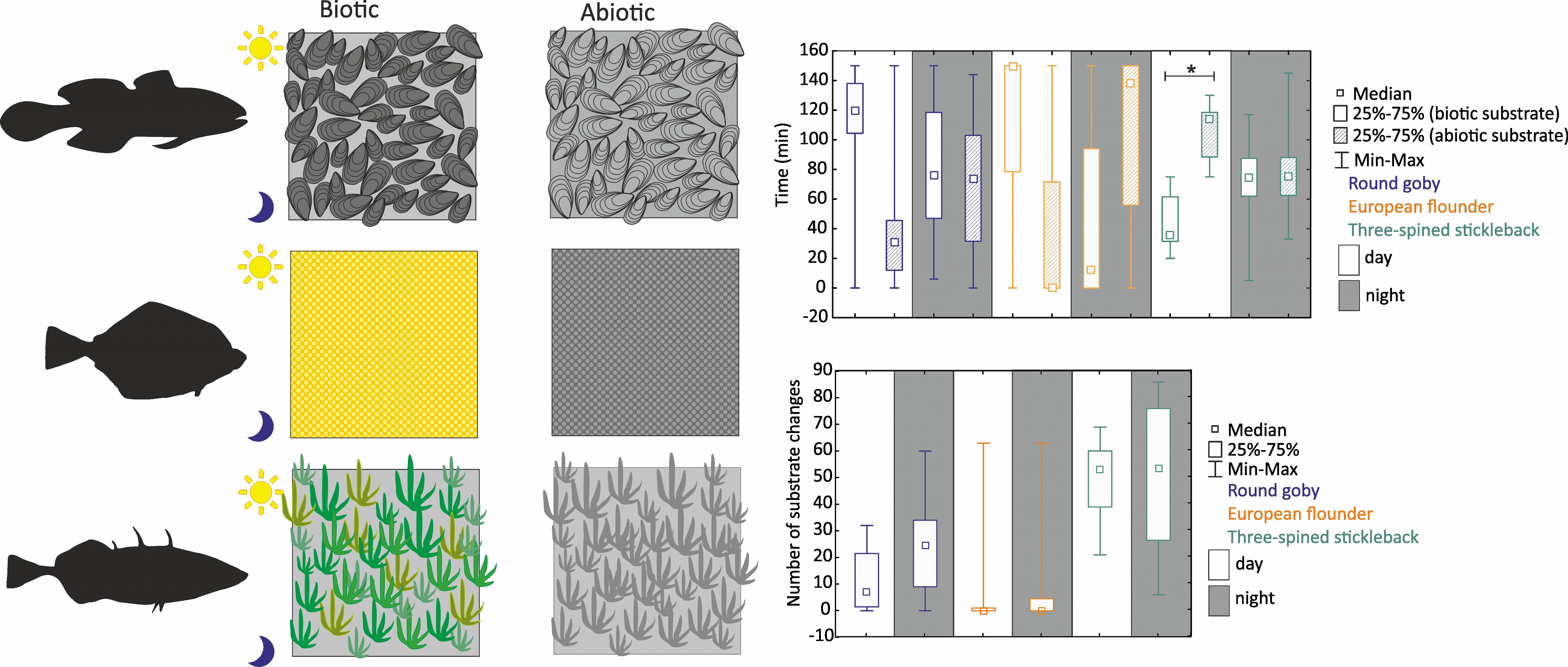
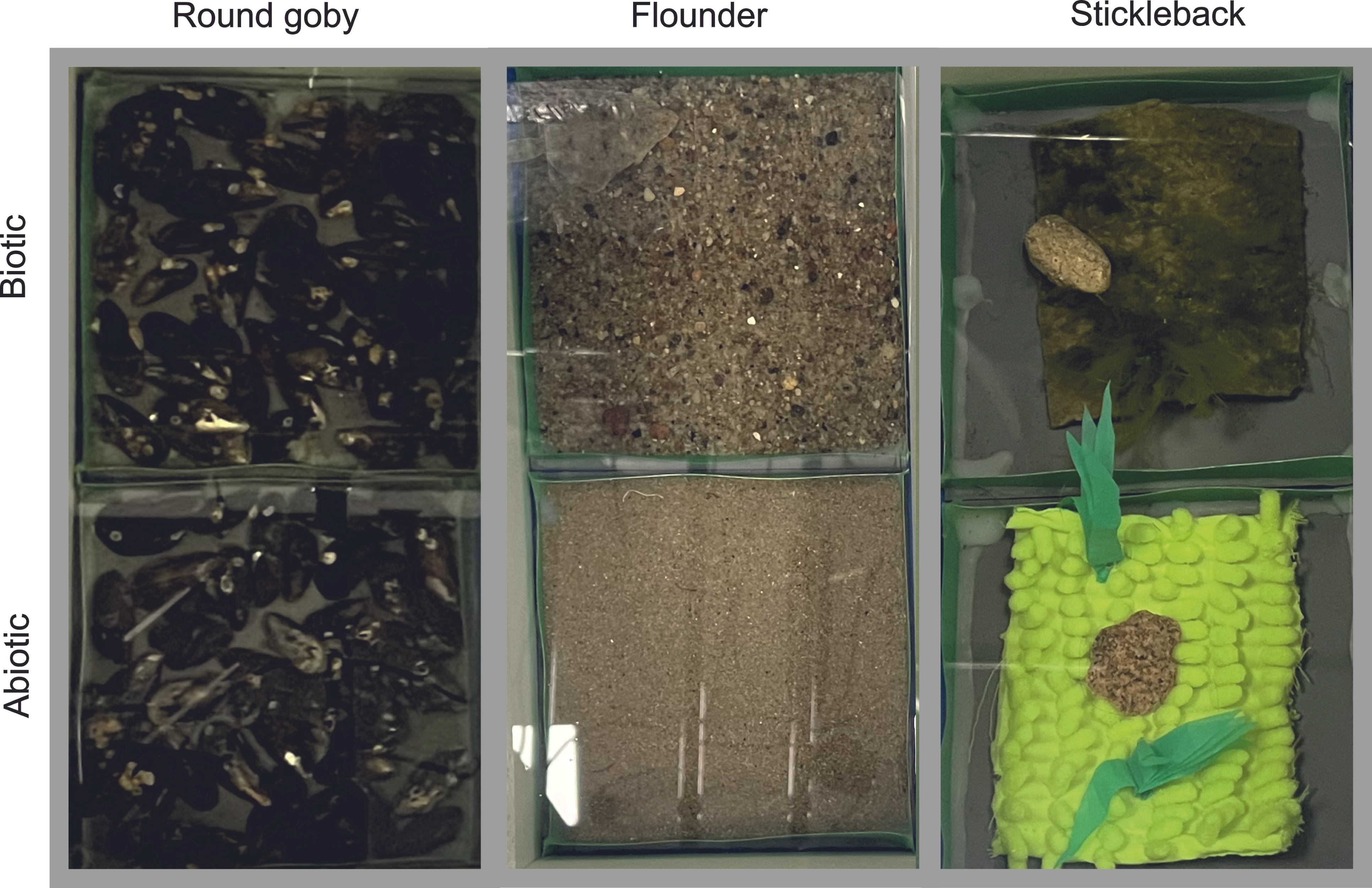
For the round goby (N. melanostomus), the biotic substrate consisted of a total of 504 live Mytilus trossulus mussels with shell lengths ranging from 10 mm to 51 mm (mean = 32 mm), whereas the abiotic substrate consisted of a total of 397 empty M. trossulus shells ranging from 15 mm to 44 mm (mean = 28 mm), filled with small pebbles and glued with hot glue. Filling the shells with pebbles prevented them from floating in the water. Both live mussels and shells were evenly distributed in the trays.
For the flounder (P. flesus), a sandy substrate was used. The sand was collected in the eulittoral zone near Redłowo Beach (Gdynia). One day before the experiment, live sandy substrate containing benthic organisms and organic matter was collected. It was stored in a tank containing aerated water with the same parameters as that in the experimental tank (temperature 17 °C, salinity 7 PSU) until the start of the experiment. To obtain the abiotic substrate, the same type of sediment was first sieved and then baked in an oven heated to 250 °C for 30 min. The treatment eliminated living organisms but did not remove organic matter [37].
For the three-spined stickleback (G. aculeatus), the substrate consisted of green algae covering a mat found submerged near the shore or an imitation of the algae. The biotic substrate consisted of Cladophora sp. and Ulva sp. collected in June 2025 at the seaside boulevard in Gdynia. The mat was cut into eight square pieces with a side length of ~15 cm. The abiotic substrate consisted of strips of fabric and foil resembling macrophytes in shape and color. The strips of fabric had sides similar in length to those used for the biotic substrate (~15 cm). In each chamber, one stone was placed on both the biotic and abiotic substrates to prevent the material from floating (Figure 2).
During each experiment, the biotic and abiotic substrates were always located on the same side of the experimental chambers. This minimized errors during data analysis, as the video material was recorded in greyscale.
Between experiments with each species, the tanks were thoroughly cleaned and the water was replaced. The water filter was also cleaned to prevent organic debris from entering the clean tank.

2.5. Video Documentation

Observation of each fish during a single cycle (day or night) lasted 150 min. A total of 2400 min of video footage was recorded per species per cycle (twice per day/night cycle × 8 chambers × 150 min). Each cycle was recorded at specific times of day. Video recordings used for the analysis were conducted from 8.00 a.m. to 10.30 a.m. (fish 1–8, daytime), from 11.00 a.m. to 1.30 p.m. (fish 9–16, daytime), from 9.30 p.m. to 12.00 a.m. (fish 1–8, nighttime), and from 1.00 a.m. to 2.30 a.m. (fish 9–16, nighttime).
The video recording schedule was created using Wisenet Webviewer 1.05 software (license-free video management software by Hanwha Vision). Five-minute AVI files were saved to SD memory cards installed in the cameras, and then transferred to a desktop computer’s hard drive and an external portable drive. Wisenet Webviewer software was also used to adjust the image focus (Figure 3).
Classification of the fish’s position relative to a specific substrate was based on the presence of the body or the anterior part of the body (i.e., the entire head with opercula and both pectoral fins) over one of the substrates. The location (substrate) of the fish in the experimental chambers was recorded by an observer at the 30-s mark of each minute of video footage during each cycle.

2.6. Statistical Analysis

The results of the video analysis were stored in MS Excel 365 (Version 2505 Build 16.0.18827.20102 64-bit), and the data were imported into Dell Statistica 13.1 for detailed statistical analysis.
The following response variables were used in the analysis: the amount of time spent on each substrate type, the percentage of time spent on each substrate type, and the number of times each fish changed substrate type during day and night for each species. The time spent on each substrate type during day and night was calculated both for individuals and in total, the latter being converted to percentages.
In addition, supplementary fish behaviors were noted, including surfacing, burrowing into the substrate, hopping, etc. These observations were not presented graphically.
Statistical tests were performed using Statistica 13.1 software. Basic statistics were used to verify the normality of the data distribution (Shapiro–Wilk test). Parametric and non-parametric tests were then used. When the data distribution was normal, the t-test was used for dependent and independent groups. To compare the results for individual species, dependent samples included variables like the time spent on two different substrates during the same light cycle, whereas independent samples included the number of substrate changes during day and night.
When the data distribution deviated from normality, the Wilcoxon test was used for dependent samples and the Mann–Whitney U test for independent samples. All tests were statistically significant at p < 0.05. The hypothesis was that there are significant differences in the amount of time spent on different (biotic/abiotic) substrates and in the number of substrate changes.
For variables with a normal data distribution (as assessed by the Shapiro–Wilk test), a two-way ANOVA was performed for each species to evaluate the effects of substrate type (biotic vs. abiotic), light conditions (day vs. night), and their interaction. The hypothesis was that there is an effect of substrate type and/or light conditions on the time spent on substrates. When the response variables did not meet the assumptions of parametric tests, the Kruskal–Wallis test was performed separately for substrate type and light conditions.
To present the differences in the time spent on biotic and abiotic substrates and in the number of substrate changes between the species, the median, 25% and 75% quartiles, and the minimum and maximum values were calculated.
In addition, a Principal Component Analysis (PCA) was performed and principal components explaining the variability of the data were determined. The PCA included four variables: time spent on the biotic substrate, time spent on the abiotic substrate, light (on/off), and number of substrate changes.

3. Results

3.1. Habitat Preferences of the Round Goby

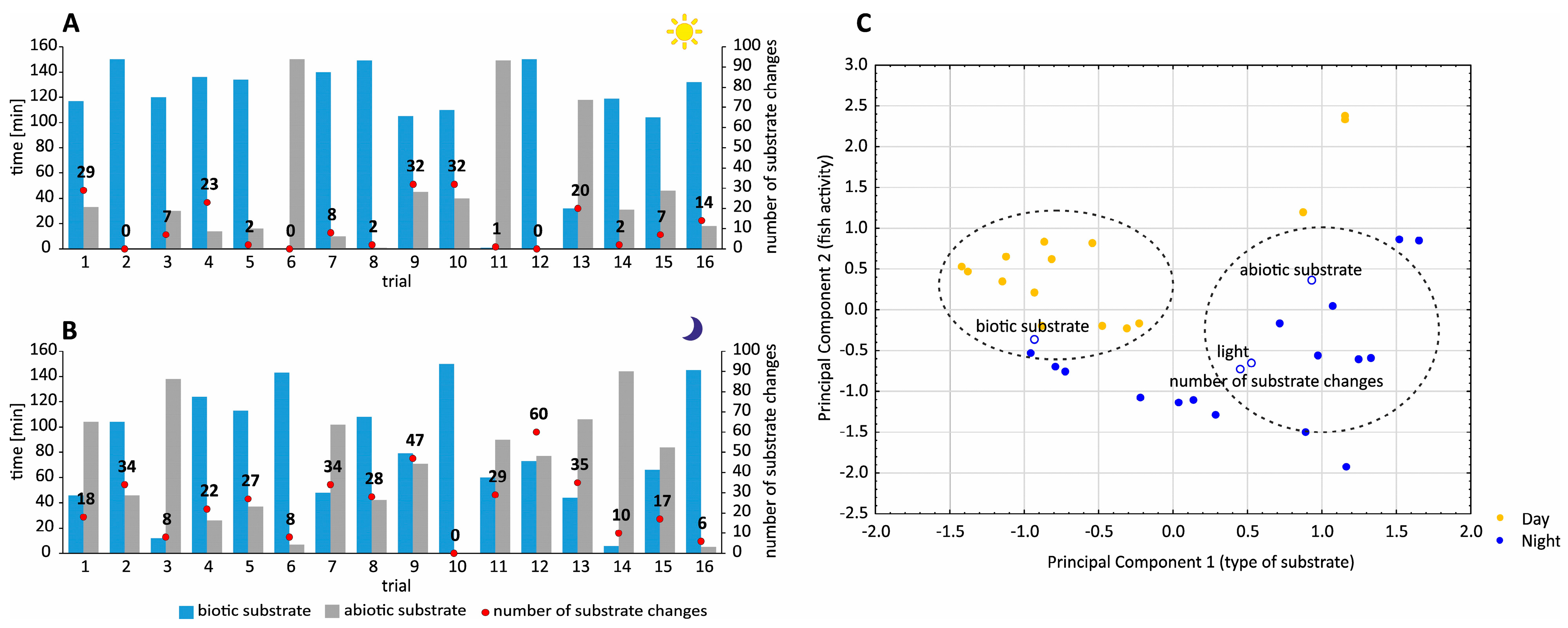
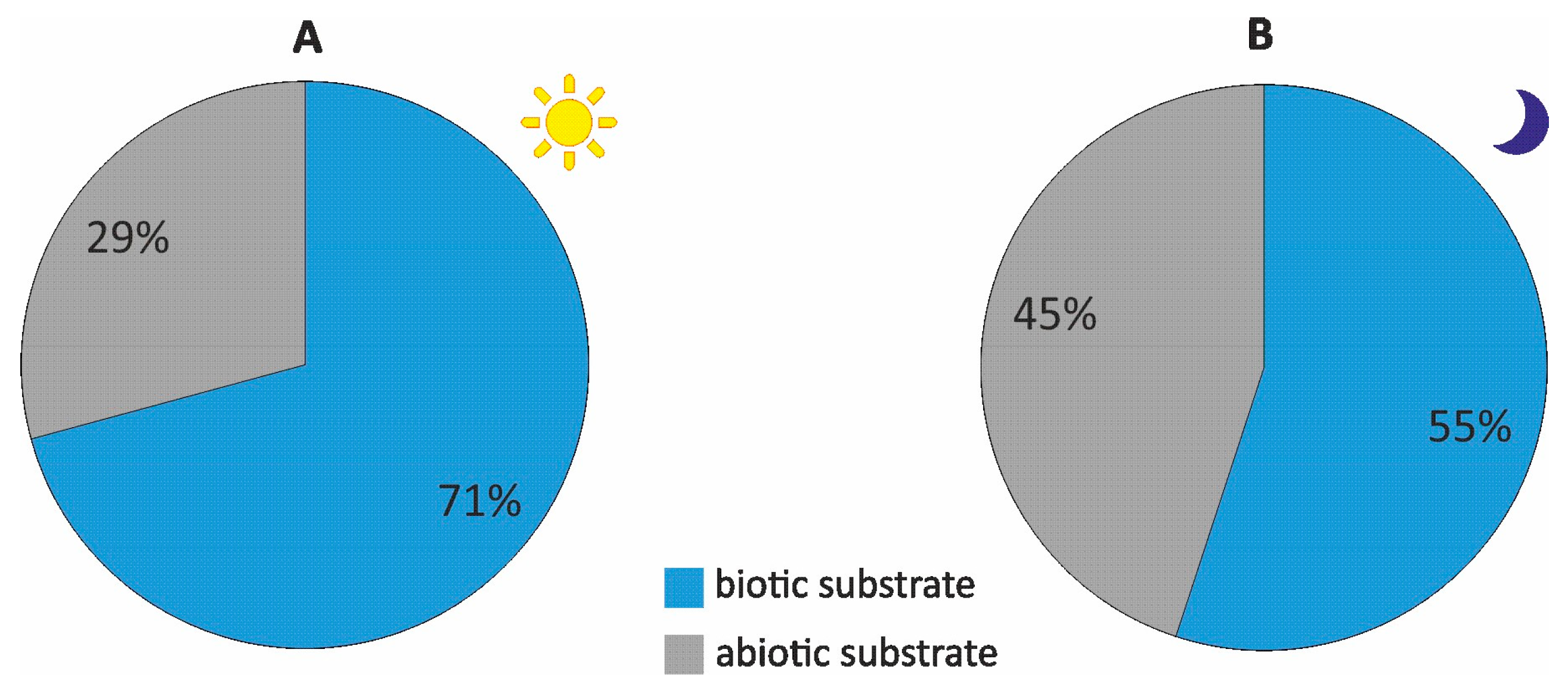
During the daytime, the fish spent over twice its time on the biotic than abiotic substrate (Figure 4A). Individuals of N. melanostomus changed substrate up to 32 times. In chambers 2, 6, and 12, the fish did not change substrate even once (Figure 5A).
During the nighttime, the fish spent somewhat less time on the biotic than abiotic substrate (Figure 4B). The fish changed substrate up to 60 times (chamber 12). Only in chamber 10 did the fish not change its position (Figure 5B).
Based on the Shapiro–Wilk normality test, the time spent on biotic and abiotic substrates during the day and the number of substrate changes during the day deviated from the normal distribution (p < 0.05), whereas time spent on biotic and abiotic substrates at night and the number of substrate changes at night followed a normal distribution (p > 0.05).
For the round goby, no statistically significant differences were observed in the time spent on different substrates during the day or night (Wilcoxon test, p > 0.05) or in the number of substrate changes (Mann–Whitney U test, p > 0.05).
PCA showed that the fish changed substrates more frequently at night than during the day. Diurnally, round gobies were more frequently found on the biotic substrate, whereas at night they were more often found on the abiotic substrate. However, the Kruskal–Wallis test showed no statistically significant effect of either light conditions (H(1, N = 64) = 0.0000, p = 1.000) or substrate type (H(1, N = 64) = 8.9717, p = 0.0027) on time spent on substrates. The principal components representing the data variability were interpreted as substrate type (PC 1) and fish activity (PC 2). PC 1 explained 56% of the data variability, and together with PC 2, they explained 86% (Figure 5C).
In addition, video analysis revealed other pelagic and benthic behaviors besides substrate changes, including, hopping, surfacing, moving mussels and shells, burrowing into biotic and abiotic substrates; moving along chamber walls.

3.2. Habitat Preferences of the European Flounder

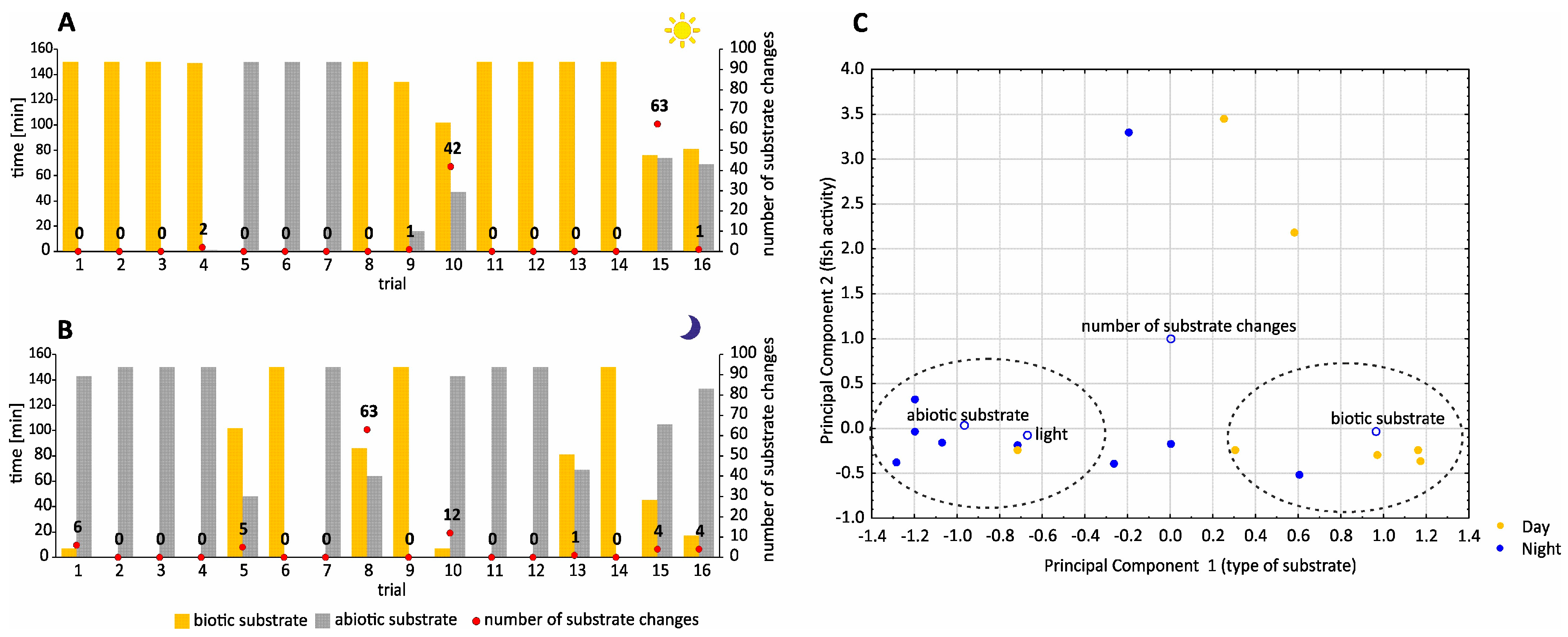
During the daytime, the fish spent over twice its time on the biotic than abiotic substrate (Figure 6A). Individuals of P. flesus changed substrate up to 64 times. In 11 of the 16 chambers, the fish did not change substrate at all (Figure 7A).
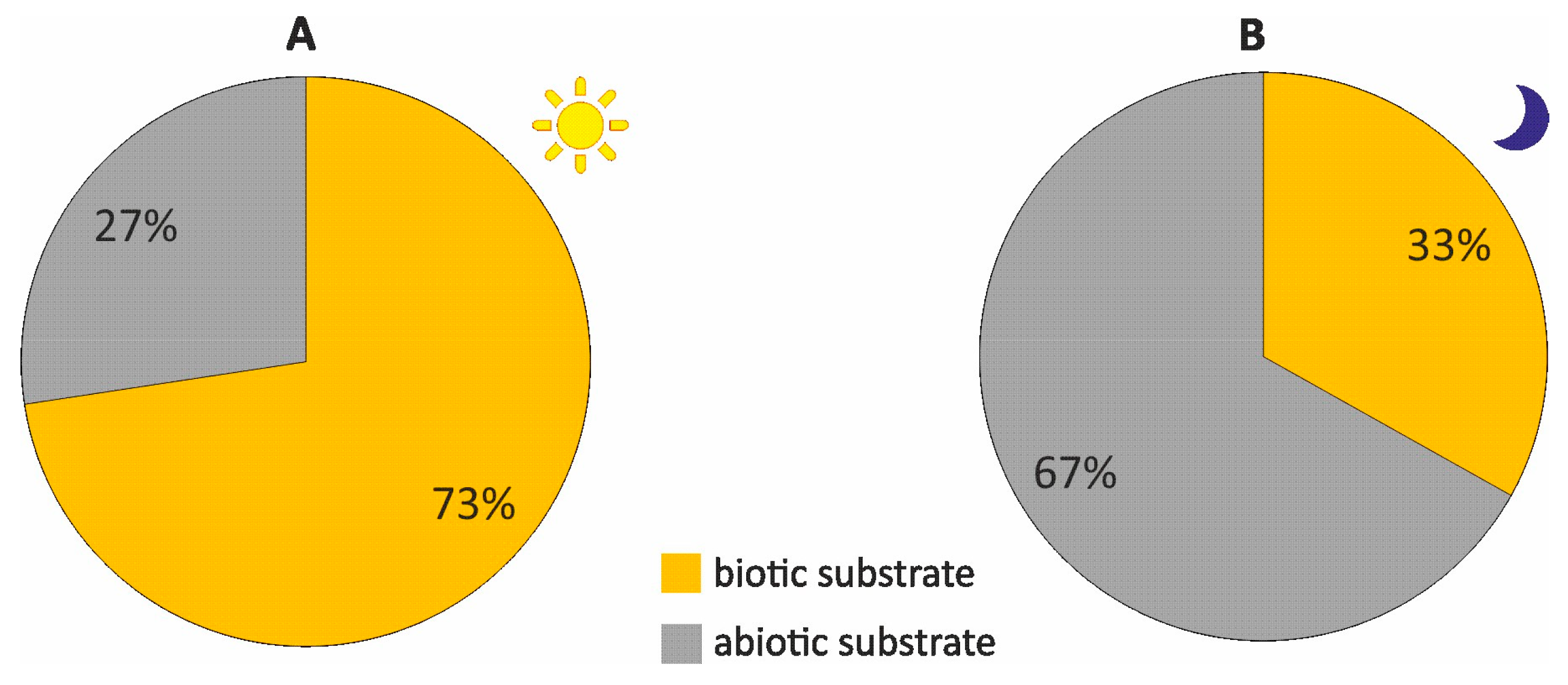
During the nighttime, the fish spent twice its time on the abiotic than biotic substrate (Figure 6B). They changed substrate up to 63 times (chamber 8, Figure 7B). In 9 of the 16 chambers, no substrate changes occurred (Figure 7B).
Based on the Shapiro–Wilk test, data such as time spent on biotic and abiotic substrates both during the day and night, as well as the number of substrate changes, deviated from a normal distribution (p < 0.05).
No statistically significant differences were observed in the amount of time flounders spent on different substrates (Wilcoxon test, p > 0.05) or in the number of substrate changes (Mann–Whitney U test, p > 0.05).
PCA showed that the number of substrate changes did not depend on the time of day. Diurnally, flounders stayed more often on the biotic substrate, whereas at night—on the abiotic substrate. The Kruskal–Wallis test revealed no significant effect of either light conditions (H(1, N = 64) = 0.000048, p = 0.9945) or substrate type (H(1, N = 64) = 0.4424, p = 0.5060) on time spent on substrates. PC 1 (substrate type) explained 58% of the variability, and together with PC 2 (fish activity)—83% (Figure 7C).
Additional pelagic and benthic behaviors observed included: surfacing, burrowing into biotic and abiotic substrates, moving along chamber walls.

3.3. Habitat Preferences of the Three-Spined Stickleback

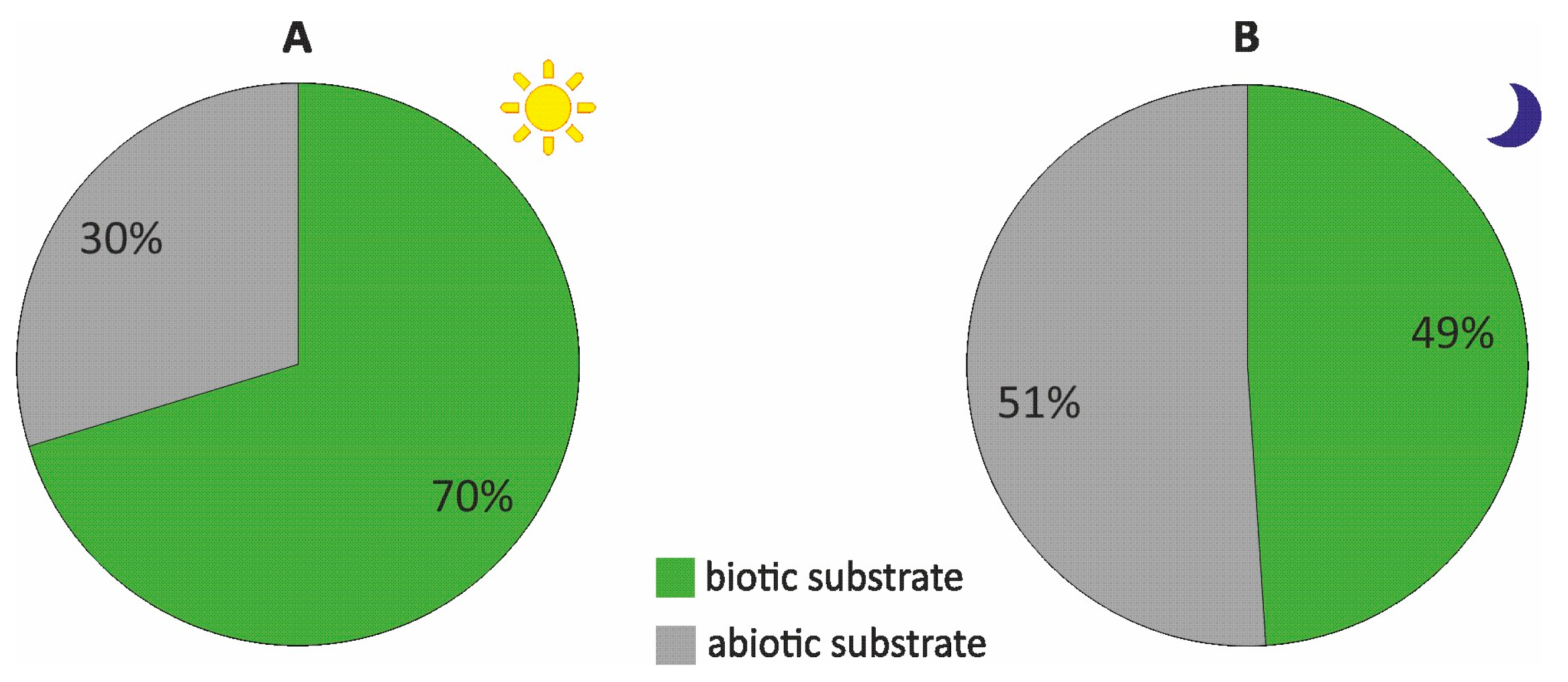
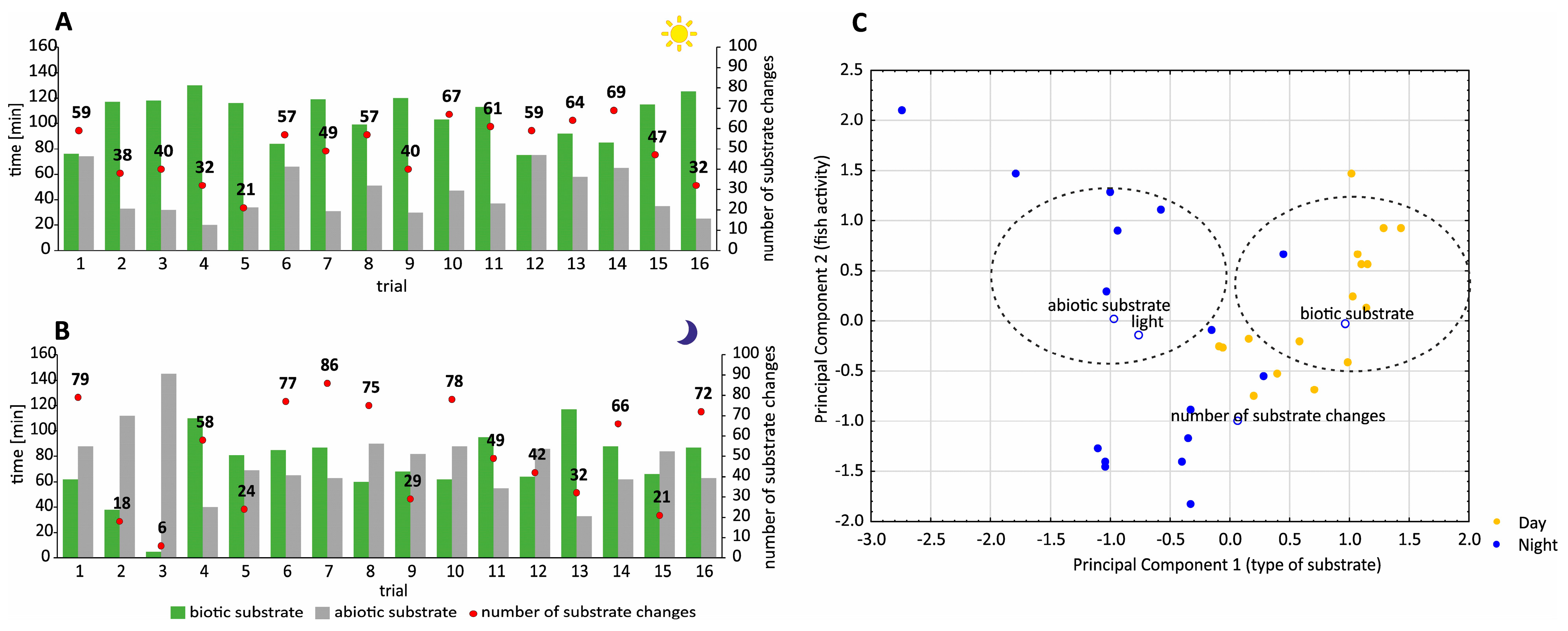
During the daytime, the fish spent over twice its time on the biotic than abiotic substrate (Figure 8A). Individuals of G. aculeatus changed substrate 21–69 times (Figure 9A).
During the nighttime, they spent slightly less time on the biotic than abiotic substrate (Figure 8B). At night, they changed substrate 6–86 times (Figure 9B). Each fish changed substrate at least once during both the day and night (Figure 9A,B).
The Shapiro–Wilk test showed that all measurements (time spent on biotic and abiotic substrates during the day and night, and the number of substrate changes) followed a normal distribution (p > 0.05).
Sticklebacks showed statistically significant differences in the time spent on biotic and abiotic substrates during the day (t-test, p < 0.05). No significant differences were found for nighttime or for the number of substrate changes (t-test, p > 0.05).
The results of the two-way ANOVA indicated a significant effect of substrate type and a significant interaction effect between light and substrate type on the time spent on substrates (Table 2). According to PCA, fish changed substrates more often at night than during the day. During the day, sticklebacks were more often found on the biotic substrate, whereas at night—on the abiotic substrate. PC 1 (substrate type) explained 62% of variability, and together with PC 2 (fish activity)—87% (Figure 9C).
In addition, surfacing pelagic behavior was observed.

3.4. Comparison of Habitat Preferences Between Species

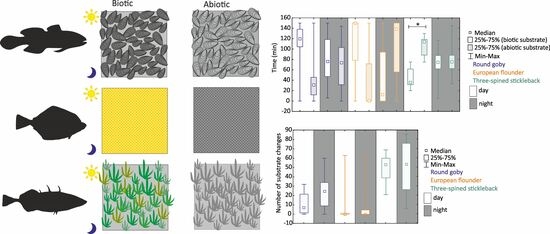
Round goby and flounder spent from 0 to 150 min on both substrate types during the day. Flounder also spent from 0 to 150 min on both substrates at night. At night, round gobies spent from 6 to 150 min on the biotic substrate and from 0 to 144 min on the abiotic substrate. For all species, the highest median values were observed during day on the biotic substrate and the lowest diurnally on the abiotic substrate (Table 3).
The minimum number of substrate changes for round goby and flounder was 0 during both day and night. The maximum values were 32 (day) and 60 (night) for round goby, and 63 for flounder in both cycles. The medians were 7 (day) and 24.5 (night) for round goby, and 0 for flounder during both cycles. Sticklebacks changed substrate from 21 to 69 times during the day and between 6 and 86 times at night, indicative of more movement. The daytime median was 53, and the nighttime median was 53.5 (Table 4).

4. Discussion

4.1. General Activity of Fish

In the natural environment, N. melanostomus and P. flesus spend most of their time near the bottom, whereas G. aculeatus is constantly swims in the water column [4,12,38]. During the day, all fish species preferred the biotic substrate, spending 70–73% of the total experimental time (2400 min) on it (Figure 4A, Figure 6A and Figure 8A). In this study, preference for substrate type at night was observed only in flounder, which spent 67% of the total experimental time on the abiotic substrate (Figure 6B). The differences in the time spent by round goby and flounder on the substrates were not statistically significant. For stickleback, these differences were statistically significant during the day, but not at night.
Some individuals of the round goby and flounder buried themselves in the substrate and remained there throughout the experiment. Sticklebacks, which are not able to do that, frequently changed substrates and did not remain above one substrate type for the entire experiment. Like other schooling fishes, they are expected to differ in habitat use from benthic fishes [9], including our other two study species.
The frequency of substrate changes by round goby was up to twice as high at night as during the day (Figure 5A,B and Table 4), whereas the number of substrate changes by flounder was the same during both periods (maximum number of changes = 63) (Figure 7A B and Table 4). Sticklebacks changed substrates most frequently of all species (up to 86 changes), both during the day and night (Figure 9A,B and Table 4).
Substrate type accounted for more than 50% of the data variability in all fish species (from 56% in round goby to 62% in stickleback). The second significant component affecting the data variability was fish activity unrelated to substrate changes. Such activities included swimming to the surface by all three species; hopping and moving mussels and shells by round goby, or burying into the sediment by flounder. Combined, these two principal components explained over 80% of the data variability in all fish species (Figure 5C, Figure 7C and Figure 9C). Based on the PCA, it can be concluded that all three fish species prefer the biotic substrate during the day. At night, these preferences are less obvious, particularly in the case of round goby and stickleback. This pattern reflects differences in feeding behavior.

4.2. Diurnal Activity of Fish

Fish can be divided into those that are active during the day, at night, at dawn, or at dusk. Fish active during the day are exposed to detection by predators, but it is easier for them to visually locate food, cover, and suitable spawning sites [39,40]. Night-active individuals, on the other hand, must cope with limited access to light, which has led them to develop appropriate sensory mechanisms of a non-visual nature [41].
N. melanostomus is characterized by the absence of a lateral line. Instead, it has a system of canals with neuromasts on its head that detect water movements [42]. Research by Johnson et al. [43] showed that round goby is significantly more active at night when it feeds, which was also observed in this study, despite the lack of food of appropriate size in the experimental chambers. The mussels used in the experiment were too large (shell length of live mussels 10–51 mm) for the gobies used in the experiments (body length 54–101 mm). It is possible that mussels’ siphons were nibbled, but this was not observed in the video footage. Behaviors like moving both live and artificial mussels from one place to another were recorded. N. melanostomus can move at night up to 14 m/h [44]. In our experiment, the large number of substrate changes at night also suggests increased swimming speed.
Stickleback has three forms—marine, estuarine, and freshwater [22]. Each has different environmental adaptations and characteristic behaviors. Research by Mussen and Peeke [45] show increased activity of a marine stickleback population at night. These fish are able to feed nocturnally on benthic invertebrates living on the seafloor or in vegetation. In this study, all individuals were fed before the experiment began, yet increased activity of fish during the night cycle compared to the day cycle was still noticeable. Sticklebacks were caught in the southern part of the Baltic Sea and the outer part of Puck Bay, where they can be classified as a marine population. At night, the lateral line, which is responsible for detecting stimuli associated with movements of surrounding water [40,46], enabled the fish to navigate in the experimental chambers.
In the Baltic Sea, the importance of vision for feeding generally decreases with increasing depth, turbidity, and low-light conditions, causing fish to rely more heavily on alternative senses, whereas fish in shallow, clearer habitats depend more strongly on visual prey detection [47,48,49].
Summers [19] observed that during the day, flounder from the sublittoral zone had stomachs with little food content, suggesting that this species feeds at dusk or at night. Spinner et al. [50] describe sediment-type preference depending on the age of flatfish. According to the authors, older individuals of P. flesus prefer coarser sandy sediments with larger grains. In this study, the biotic substrate was characterized by a varied fraction and heterogeneous color, which may have influenced flounder’s choice of this substrate during the day. However, neither the time spent on different substrates nor the substrate changes differed significantly. The biotic substrate provided the fish with better camouflage options compared to the abiotic substrate. At night, when the fish could not rely on vision, they chose the abiotic substrate most of the time, it was easier for them to bury into the sediment due to the uniform, smaller grain fraction. It should be noted, however, that juvenile flounder with body lengths of 46–105 mm were used in the experiment. Higher activity in juvenile fish is widely reported and is typically attributed to increased energetic demands associated with rapid growth, elevated mass-specific metabolic rates compared to adults, and reduced risk aversion consistent with the growth–mortality trade-off [51,52,53,54].
When describing the habitat preferences and behavior of fish, it is also worth noting the diel activity of benthic organisms. The increased nocturnal activity of round goby and flounder may provide them with an advantage in obtaining food compared to other benthivorous fish, as zoobenthos is more active and tends to migrate at night [55]. The nocturnal activity of both species shows that they are able to adapt to changing environmental conditions, which pose certain risks (like exposure to nocturnal predators) but also offer benefits [56,57]. In contrast, visual feeders like three-spined stickleback tend to feed diurnally [40].

4.3. Habitat Conditions and Fish Preferences

Human activity changes the physical structure of the seabed through trawling [58]. By disturbing the substrate, trawling changes the seafloor landscape and removes (or scares away) benthic organisms—including flounder and round goby, which, in addition to living on the seabed, feed on zoobenthos. However, due to the ban on fishing for cod Gadus morhua in the Baltic Sea, bottom trawls are currently not used [59].
The presence of vegetation is very important for stickleback, especially during the spawning season [22]. Studies on the stickleback from the western coast of the Baltic Sea confirm that a seabed cover consisting of benthic vegetation attracted adult stickleback in spring, whereas high wave exposure and the presence of rooted vegetation favored juvenile stickleback in summer [23]. G. aculeatus is a territorial fish whose males build nests from vegetation where eggs develop [4]. Feng et al. [60] conducted a study using an artificial spawning substrate in the Liangs Lake area, which suggests the effectiveness of abiotic substrates during the spawning season of fish, mainly Carassius auratus and Cyprinus carpio. The experiment in the Chinese lake shows that in a severely degraded environment, fish can survive and spawn on an abiotic substrate that is sufficiently similar in physical structure to a biotic substrate. The authors emphasize, however, that artificial habitats cannot fully replace their natural counterparts [61,62].
Two of our study species may use hydrotechnical structures as fish cover. Round goby effectively utilizes port structures, as with other demersal fin- and shellfishes [63,64]. N. melanostomus is often observed on quay walls and near piers, where it feeds and builds nests [15]. The phytophilic sticklebacks used in this study were caught in the M. Zaruski Marina Basin along the Beniowski Quay in Gdynia. This location features a yacht harbor, concrete piers, and slipways for launching boats. Despite strong human impact, this area is densely populated by sticklebacks. Hydrotechnical structures quickly become colonized by plant and animal organisms, creating favorable conditions for fish to both feed and reproduce. In some parts of the world, such artificial constructions (so-called artificial reefs) are intentionally sunk in coastal areas to enrich biodiversity [32,63,65,66]. In the Hudson River estuary of the northeastern USA, piers have substituted for lost vegetated habitats of striped bass (Morone saxatilis) [67], which tolerate such shade well [68]. The results of such papers may help improve design of artificial reef structures and habitat enhancement strategies in coastal ecosystems. The observed preference of all the studied species for biotic substrates during daytime suggests that biological colonization of artificial structures (e.g., development of algal and invertebrate communities) may be a key factor increasing habitat attractiveness [69]. At the same time, the fact that abiotic substrates are not completely avoided indicates that structural complexity alone can still provide functional habitat, particularly under night-time conditions, as observed for flounder.

5. Conclusions

Based on the experiments concerning the habitat preferences of round goby, European flounder, and three-spined stickleback from the Gulf of Gdańsk, we conclude that during the day, all three fish species preferred the biotic substrate. This means that diurnally, the presence of living organisms forming the habitat is more important to fish than the physical structure of the habitat, likely reflecting prey availability. At night, the flounder preferred the abiotic substrate, whereas preferences of the goby and stickleback were not clear. The goby was more active at night, changing substrate twice as often as during the day, when it was less active. Individuals of this species also exhibited more ancillary behaviors than the other species, evidence of habitat generalist behavior. The number of substrate changes in flounder and stickleback did not depend on the time of day. Sticklebacks showed high locomotor activity both during the day and night, changing substrate much more frequently compared to other species. None of the analyzed species completely avoided the abiotic substrate, suggesting the importance of hydrotechnical (e.g., pier) structures to replace lost fish cover for demersal and phytophilic species, in contrast to pelagically schooling forage fishes and immature salmonids [64,70]. Further research on fish habitat preferences is warranted, given the growing human impact on the marine environment and limited knowledge of fish behavioral changes in anthropogenically polluted environments. It may be best to avoid vertical walls that facilitate round goby invasion [15], in favor of a diversity of hole and crevice sizes as effective cover for various native fin- and shellfishes [31,69,71].

Author Contributions

Conceptualization, A.D. and M.S.; methodology, A.D.; validation, A.D. and A.H.; formal analysis, A.D. and A.H.; investigation, A.D. and A.H.; resources, M.S. and A.D.; data curation, A.H.; writing—original draft preparation, A.H. and A.D.; writing—review and editing, A.D.; visualization, A.D.; supervision, M.S. All authors have read and agreed to the published version of the manuscript.

Funding

This research received no external funding.

Institutional Review Board Statement

The animal study protocol was approved by the Local Ethics Committee For Animal Experimentation in Bydgoszcz, Poland (protocol code: 12/2024, date of approval: 16 April 2024).

Data Availability Statement

The original data presented in the study are openly available in Zenodo at the following DOI: https://zenodo.org/records/19707526 (accessed on 23 April 2026).

Conflicts of Interest

The authors declare no conflicts of interest.

References

  1. Coria-Avila, G.A.; Pfaus, J.G.; Orihuela, A.; Domínguez-Oliva, A.; José-Pérez, N.; Hernández, L.A.; Mota-Rojas, D. The neurobiology of behavior and its applicability for animal welfare: A review. Animals 2022, 12, 928. [Google Scholar] [CrossRef] [PubMed]
  2. Domenici, P.; Kapoor, B.G. (Eds.) Fish Locomotion: An Eco-Ethological Perspective; Science Publisher: Washington, DC, USA, 2010. [Google Scholar]
  3. Araújo, A.S.; Oliveira, J.C.; Barros, N.H.C.; Yamamoto, M.E.; Chellappa, S. Dinâmica do comportamento territorial de Crenicichla menezesi (Osteichthyes: Perciformes: Cichlidae). Biota Amaz. 2014, 4, 37–44. [Google Scholar] [CrossRef]
  4. Webster, M.M.; Atton, N.; Hart, P.J.B.; Ward, A.J.W. Habitat-specific morphological variation among threespine sticklebacks (Gasterosteus aculeatus) within a drainage basin. PLoS ONE 2011, 6, e21060. [Google Scholar] [CrossRef] [PubMed]
  5. Cornic, A. Poissons de L’Île Maurice; Éditions de l’Océan Indien: Rose Hill, Mauritius, 1987. [Google Scholar]
  6. Rubec, P.J.; Santi, C.E.; Ault, J.S.; Monaco, M.E. Development of modelling and mapping methods to predict spatial distributions and abundance of estuarine and coastal fish species life-stages in Florida. Aquac. Fish Fish. 2023, 3, 1–22. [Google Scholar] [CrossRef]
  7. Vadas, R.L., Jr.; Vadas, R.L.; Orth, D.J. Habitat use of fish communities in a Virginia stream system. Environ. Biol. Fishes 2000, 59, 253–269. [Google Scholar] [CrossRef]
  8. Vadas, R.L., Jr.; Hughes, R.M.; Bae, Y.J.; Baek, M.J.; Bello Gonzáles, O.C.; Callisto, M.; Carvalho, D.R.; Chen, K.; Ferreira, M.T.; Fierro, P.; et al. Assemblage-based biomonitoring of freshwater ecosystem health via multimetric indices: A critical review and suggestions for improving their applicability. Water Biol. Secur. 2022, 1, 100054. [Google Scholar] [CrossRef]
  9. Vadas, R.L., Jr.; Orth, D.J. Formulation of habitat suitability models for stream fish guilds: Do the standard methods work? Trans. Am. Fish. Soc. 2001, 130, 217–235. [Google Scholar] [CrossRef]
  10. Van Deurs, M.; Moran, N.P.; Schreiber Plet-Hansen, K.; Dinesen, G.E.; Azour, F.; Carl, H.; Møller, P.R.; Behrens, J.W. Impacts of the invasive round goby (Neogobius melanostomus) on benthic invertebrate fauna: A case study from the Baltic Sea. NeoBiota 2021, 68, 19–30. [Google Scholar] [CrossRef]
  11. Sieben, K.; Ljunggren, L.; Bergström, U.; Eriksson, B.K. A meso-predator release of stickleback promotes recruitment of macroalgae in the Baltic Sea. J. Exp. Mar. Biol. Ecol. 2011, 397, 79–84. [Google Scholar] [CrossRef]
  12. Kornis, M.S.; Mercado-Silva, N.; Vander Zanden, M.J. Twenty years of invasion: A review of round goby Neogobius melanostomus biology, spread and ecological implications. J. Fish Biol. 2012, 80, 235–285. [Google Scholar] [CrossRef]
  13. Skóra, K.; Stolarski, J. New fish species in the Gulf of Gdańsk: Neogobius sp. [cf. Neogobius melanostomus (Pallas, 1811)]. Bull. Sea Fish. Inst. 1993, 1, 83. [Google Scholar]
  14. Sapota, M.R. The round goby (Neogobius melanostomus) in the Gulf of Gdańsk—A species introduction into the Baltic Sea. Hydrobiologia 2004, 514, 219–224. [Google Scholar] [CrossRef]
  15. Bussmann, K.; Burkhardt-Holm, P. Round gobies in the third dimension—Use of vertical walls as habitat enables vector contact in a bottom-dwelling invasive fish. Aquat. Invasions 2020, 15, 683–699. [Google Scholar] [CrossRef]
  16. Kottelat, M.; Freyhof, J. Handbook of European Freshwater Fishes; Publications Kottelat: Cornol, Switzerland, 2007. [Google Scholar]
  17. Marentette, J.R.; Gooderham, K.L.; McMaster, M.E.; Ng, T.; Parrott, J.L.; Wilson, J.Y.; Wood, C.M.; Balshine, S. Signatures of contamination in invasive round gobies (Neogobius melanostomus): A double strike for ecosystem health? Ecotoxicol. Environ. Saf. 2011, 73, 1755–1764. [Google Scholar] [CrossRef] [PubMed]
  18. Skerritt, D.J. A Review of the European Flounder Platichthys Flesus—Biology, Life History and Trends in Population; Newcastle University: Newcastle upon Tyne, UK, 2010. [Google Scholar]
  19. Summers, R.W. Life cycle and population ecology of the flounder Platichthys flesus (L.) in the Ythan Estuary, Scotland. J. Nat. Hist. 1979, 13. [Google Scholar] [CrossRef]
  20. Borg, J.P.G.; Westerbom, M.; Lehtonen, H. Sex-specific distribution and diet of Platichthys flesus at the end of spawning in the northern Baltic Sea. J. Fish Biol. 2014, 84, 937–951. [Google Scholar] [CrossRef] [PubMed]
  21. Momigliano, P.; Denys, G.P.J.; Jokinen, H.; Merilä, J. Platichthys solemdali sp. nov. (Actinopterygii, Pleuronectiformes): A new flounder species from the Baltic Sea. Front. Mar. Sci,. 2018, 5, 225. [Google Scholar] [CrossRef]
  22. Lee, D.S.; Gilbert, C.R.; Hocutt, C.H.; Jenkins, R.E.; McAllister, D.E.; Stauffer, J.R. Atlas of North American Freshwater Fishes; North Carolina State Museum of Natural History: Raleigh, NC, USA, 1980. [Google Scholar]
  23. Eklöf, J.S.; Sundblad, G.; Erlandsson, M.; Donadi, S.; Hansen, J.P.; Eriksson, B.K.; Bergström, U. A spatial regime shift from predator to prey dominance in a large coastal ecosystem. Commun. Biol. 2020, 3, 459. [Google Scholar] [CrossRef] [PubMed]
  24. Page, L.M.; Burr, B.M. A Field Guide to Freshwater Fishes of North America North of Mexico; Houghton Mifflin Company: Boston, MA, USA, 1991. [Google Scholar]
  25. Coker, D.J.; Wilson, S.K.; Pratchett, M.S. Importance of live coral habitat for reef fishes. Rev. Fish Biol. Fish. 2014, 24, 89–126. [Google Scholar] [CrossRef]
  26. Marsiglia, N.; Bosch-Belmar, M.; Mancuso, F.P.; Sarà, G. Epibionts and epiphytes in seagrass habitats: A global analysis of their ecological roles. Fishes 2025, 7, 62. [Google Scholar] [CrossRef]
  27. Bertocci, I.; Sousa-Pinto, I.; Duarte, P. Spatial variation of reef fishes and the relative influence of biotic and abiotic habitat traits. Helgol. Mar. Res. 2017, 71, 20. [Google Scholar] [CrossRef]
  28. Liu, Z.; Li, Y.; Wang, X. Advances in freshwater fish habitat suitability determination methods: A global perspective. Sustainability 2026, 18, 1272. [Google Scholar] [CrossRef]
  29. Hobson, E.S. Diurnal-nocturnal activity of some inshore fishes in the Gulf of California. Copeia 1965, 1965, 291–302. [Google Scholar] [CrossRef]
  30. Fraser, D.F.; Cerri, R.D. Experimental evaluation of predator–prey relationships in a patchy environment: Consequences for habitat use patterns in minnows. Ecology 1982, 63, 307–313. [Google Scholar] [CrossRef]
  31. Chapman, M.G.; Underwood, A.J. Evaluation of ecological engineering of “armoured” shorelines to improve their value as habitat. J. Exp. Mar. Biol. Ecol. 2011, 400, 302–313. [Google Scholar] [CrossRef]
  32. Iverson, E.S.; Bannerot, S.P. Artificial reefs under marina docks in southern Florida. N. Am. J. Fish. Manag. 1984, 4, 294–299. [Google Scholar] [CrossRef]
  33. Savino, J.F.; Stein, R.A. Predator–prey interaction between largemouth bass and bluegills as influenced by simulated, submersed vegetation. Trans. Am. Fish. Soc. 1982, 111, 255–266. [Google Scholar] [CrossRef]
  34. Sechnick, C.W.; Carline, R.F.; Stein, R.A.; Rankin, E.T. Habitat selection by smallmouth bass in response to physical characteristics of a simulated stream. Trans. Am. Fish. Soc. 1986, 115, 314–321. [Google Scholar] [CrossRef]
  35. American Society of Ichthyologists and Herpetologists (ASIH); American Fisheries Society (AFS); American Institute of Fisheries Research Biologists (AIFRB). Guidelines for Use of Fishes in Field Research. Fisheries 1988, 13, 16–23. [Google Scholar]
  36. Hurlbert, S.H. Pseudoreplication and the design of ecological field experiments. Ecol. Monogr. 1984, 54, 187–211. [Google Scholar] [CrossRef]
  37. Zihms, S.G.; Switzer, C.; Irvine, J.; Karstunen, M. Effects of high temperature processes on physical properties of silica sand. Eng. Geol. 2013, 164, 139–145. [Google Scholar] [CrossRef]
  38. Munroe, T.A. Platichthys flesus; The IUCN Red List of Threatened Species: Gland, Switzerland, 2010; p. e.T135717A4191586. Available online: https://www.iucnredlist.org/species/135717/4191586 (accessed on 29 June 2026).
  39. Casterlin, M.E.; Reynolds, W.W. Habitat selection by bluegill sunfish, Lepomis macrochirus. Hydrobiologia 1978, 59, 75–79. [Google Scholar] [CrossRef]
  40. Gatz, A.J., Jr. Ecological morphology of freshwater stream fishes. Tulane Stud. Zool. Bot. 1979, 21, 91–124. [Google Scholar]
  41. Helfman, G.S. Fish behaviour by day, night and twilight. In The Behaviour of Teleost Fishes; Pitcher, T.J., Ed.; Springer: Boston, MA, USA, 1986; pp. 366–389. [Google Scholar] [CrossRef]
  42. Rollo, A.; Higgs, D.M. Sound localization and auditory response capabilities in round goby (Neogobius melanostomus). J. Acoust. Soc. Am. 2005, 117, 2467. [Google Scholar] [CrossRef]
  43. Johnson, J.H.; McKenna, J.E., Jr.; Nack, C.C.; Chalupnicki, M.A. Diel diet composition and feeding activity of round goby in the nearshore region of Lake Ontario. J. Freshw. Ecol. 2008, 23, 607–612. [Google Scholar] [CrossRef]
  44. Tierney, K.B.; Kasurak, A.; Zieliński, B.S.; Higgs, D.M. Swimming performance and invasion potential of the round goby. Environ. Biol. Fishes 2011, 92, 491–502. [Google Scholar] [CrossRef]
  45. Mussen, T.D.; Peeke, H. Nocturnal feeding in the marine threespine stickleback (Gasterosteus aculeatus L.): Modulation by chemical stimulation. Behaviour 2001, 138, 857–871. [Google Scholar] [CrossRef]
  46. Mogdans, J. Physiology of the peripheral lateral line system. In The Senses: A Comprehensive Reference; Fritzsch, B., Ed.; Elsevier: Amsterdam, The Netherlands, 2020; pp. 143–162. [Google Scholar] [CrossRef]
  47. Utne-Palm, A.C. Visual feeding of fish in a turbid environment: Physical and behavioural aspects. Mar. Freshw. Behav. Physiol. 2002, 35, 111–128. [Google Scholar] [CrossRef]
  48. Collin, S.P.; Hart, N.S. Vision and photoentrainment in fishes: The effects of natural and anthropogenic perturbation. Integr. Zool. 2015, 10, 15–28. [Google Scholar] [CrossRef] [PubMed]
  49. Engström-Öst, J.; Mattila, J. Foraging, growth and habitat choice in turbid water: An experimental study with fish larvae in the Baltic Sea. Mar. Ecol. Prog. Ser. 2008, 359, 275–281. [Google Scholar] [CrossRef]
  50. Spinner, M.; Kortmann, M.; Traini, C.; Gorb, S.N. Key role of scale morphology in flatfishes (Pleuronectiformes) in the ability to keep sand. Sci. Rep. 2016, 6, 26308. [Google Scholar] [CrossRef] [PubMed]
  51. Stephens, D.W.; Krebs, J.R. Foraging Theory; Princeton University Press: Princeton, NJ, USA, 1986. [Google Scholar]
  52. Brown, J.H.; Gillooly, J.F.; Allen, A.P.; Savage, V.M.; West, G.B. Toward a metabolic theory of ecology. Ecology 2004, 85, 1771–1789. [Google Scholar] [CrossRef]
  53. Wootton, R.J. Ecology of Teleost Fishes, 2nd ed.; Kluwer Academic Publishers: Dordrecht, The Netherlands, 1998; p. 386 pp. [Google Scholar]
  54. Vasbinder, K.; Ainsworth, C. Early life history growth in fish reflects consumption–mortality tradeoffs. Fish. Res. 2020, 227, 105538. [Google Scholar] [CrossRef]
  55. Faubel, A. On the abundance and activity pattern of zoobenthos inhabiting a tropical reef area, Cebu, Philippines. Coral Reefs 1984, 3, 205–214. [Google Scholar] [CrossRef]
  56. Gilliam, J.F.; Fraser, D.F. Habitat selection under predation hazard: Test of a model with foraging minnows. Ecology 1987, 68, 1856–1862. [Google Scholar] [CrossRef] [PubMed]
  57. Railsback, S.F.; Harvey, B.C.; Hayse, J.W.; LaGory, K.E. Tests of theory for diel variation in salmonid feeding activity and habitat use. Ecology 2005, 86, 947–959. [Google Scholar] [CrossRef]
  58. Bunke, D.; Leipe, T.; Moros, M.; Morys, C.; Tauber, F.; Virtasalo, J.J.; Forster, S.; Arz, H.W. Natural and anthropogenic sediment mixing processes in the south-western Baltic Sea. Front. Mar. Sci. 2019, 6, 677. [Google Scholar] [CrossRef]
  59. Commission Regulation. Commission Regulation (EU) 2024/575 of 7 February 2024 Establishing a Fisheries Closure for Cod in NAFO Area 3M by Vessels Flying the Flag of a Member State of the European Union. 2024. Available online: https://eur-lex.europa.eu/legal-content/EN/TXT/?uri=CELEX%3A32024R0575&qid=1770567517905 (accessed on 29 June 2026).
  60. Feng, K.; Yuan, J.; Zhang, Y.; Qian, J.; Liu, J.; Li, Z.; Lek, S.; Wang, Q. Application of artificial spawning substrates to support lacustrine fish recruitment and fisheries enhancement in a Chinese Lake. Front. Ecol. Evol. 2023, 10, 1062612. [Google Scholar] [CrossRef]
  61. Kaplan, B.; Beegle-Krause, C.J.; McCay, F.; Copping, D.; Geerlofs, A. (Eds.) Updated Summary of Knowledge: Selected Areas of the Pacific Coast; U.S. Bureau of Ocean Energy Management, Regulation, and Enforcement (BOEMRE), Pacific OCS Region, Study 2010-014: Camarillo, CA, USA, 2010; p. 939 pp. [Google Scholar]
  62. Sound Water Stewards (SWS). Marine Species Identification: Use Our EZ-ID Guide to Identify Species. Available online: https://soundwaterstewards.org/education-center/marine-species-identification (accessed on 29 June 2026).
  63. Nelson, B.D.; Bortone, S.A. Feeding guilds among artificial-reef fishes in the northern Gulf of Mexico. Gulf Mex. Sci. 1996, 14, 66–80. [Google Scholar] [CrossRef]
  64. Heppell, S.A.; Heppell, S.S.; Arbuckle, N.S.; Gallagher, M.B. A cross-decadal change in the fish and crustacean community of lower Yaquina Bay, Oregon, USA. Fishes 2024, 9, 125. [Google Scholar] [CrossRef]
  65. Jones, S.T.; Asher, J.M.; Boland, R.C.; Kanenaka, B.K.; Weng, K.C. Fish biodiversity patterns of a mesophotic-to-subphotic artificial reef complex and comparisons with natural substrates. PLoS ONE 2020, 15, e0231668. [Google Scholar] [CrossRef] [PubMed]
  66. Chu, W.; Lu, S.; Zhao, Z.; Zhang, X.; Huang, Y. Hydrodynamic performance of cubic artificial reefs during deployment process based on Smoothed Particle Hydrodynamics. Fishes 2026, 11, 59. [Google Scholar] [CrossRef]
  67. Russell, D. Striper Wars: An American Fish Story; Island Press: Washington, DC, USA, 2005; p. 368. [Google Scholar]
  68. Able, K.W.; Grothues, T.M.; Kemp, I.M. Fine-scale distribution of pelagic fishes relative to a large urban pier. Mar. Ecol. Prog. Ser. 2013, 476, 185–198. [Google Scholar] [CrossRef]
  69. Wilhelmsson, D. Aspects of Offshore Renewable Energy and the Alterations of Marine Habitats. Ph.D. Thesis, Stockholm University, Stockholm, Sweden, 2009. [Google Scholar]
  70. Lambert, M.; Ojala-Barbour, R.; Vadas, R., Jr.; McIntyre, A.; Quinn, T. Do small overwater structures impact marine habitats and biota? Pac. Conserv. Biol. 2024, 30, PC22037. [Google Scholar] [CrossRef]
  71. Marshall, N.B. Ocean Life in Color; MacMillan: New York, NY, USA, 1971. [Google Scholar]
Figure 1. Experimental setup with two blue tanks with fish and a metal frame with two cameras (A), two infrared emitters (B), and two fluorescent lamps (C).
Fishes 11 00404 g001
Figure 2. Biotic and abiotic substrates for round goby, flounder and stickleback.
Fishes 11 00404 g002
Figure 3. Camera view of the experiments with (A) round goby, (B) flounder, and (C) stickleback registered in the Wisenet Webviewer.
Fishes 11 00404 g003
Figure 4. Proportion of time (N = 2400 min) spent by round goby on biotic and abiotic substrates during the day (A) and night (B).
Fishes 11 00404 g004
Figure 5. Differences in the time spent by round goby on biotic and abiotic substrates during the day and night: raw data—day (A); raw data—night (B); PCA (C).
Fishes 11 00404 g005
Figure 6. Proportion of time (N = 2400 min) spent by European flounder on biotic and abiotic substrates during the day (A) and night (B).
Fishes 11 00404 g006
Figure 7. Differences in the time spent by European flounder on biotic and abiotic substrates during the day and night: raw data—day (A); raw data—night (B); PCA (C).
Fishes 11 00404 g007
Figure 8. Proportion of time (n = 2400 min) spent by three-spined stickleback on biotic and abiotic substrates during the day (A) and night (B).
Fishes 11 00404 g008
Figure 9. Differences in the time spent by three-spined stickleback on biotic and abiotic substrates during the day and night: raw data—day (A); raw data—night (B); PCA (C).
Fishes 11 00404 g009
Table 1. Total length of fish used in the experiments.
Total Length (TL)
Day/NightTrial/ChamberRound Goby (mm)European Flounder (mm)Three-Spined Stickleback (mm)
day167.2498.1050.63
275.8062.6551.03
374.1180.9140.45
472.3478.3048.15
578.9661.5861.65
674.4859.8441.94
769.9569.5129.86 *
871.2060.7634.09
958.1580.4051.34
1078.5056.7244.38
1154.29 *54.9047.64
1267.7171.3040.45
1367.80105.32 **58.77
1495.6355.4050.24
1578.57103.2848.49
1666.8152.6953.83
night176.0992.8955.05
2100.0849.0347.40
361.0365.1345.99
4101.00 **59.1052.41
564.6165.6165.81 **
670.2457.2053.51
772.6672.5046.38
873.1462.1248.10
997.0557.1556.01
1083.6995.0249.59
1175.3561.2051.32
1267.4871.1157.15
1360.6342.6352.57
1462.1353.6162.78
1562.8446.21 *53.58
1666.2991.4249.60
mean73.3168.5550.01
* minimum, and ** maximum values.
Table 2. Two-way ANOVA examining the effects of light and substrate type on the amount of time the stickleback spent on different substrates.
SourcedfMSFpEffect Size
Light10.00.00001.00000.050000
Substrate type113,340.325.23710.00005 *0.998568
Light × Substrate type116,384.030.99530.000001 *0.999781
Error1528.6   
* p < 0.05; statistically significant effect.
Table 3. Summary statistics of time spent at biotic and abiotic substrates by fishes used in the experiment during day and night.
Biotic/DayAbiotic/DayBiotic/NightAbiotic/Night
 Round Goby
median119.530.57674
25–75%104.5–13812–45.547–118.531.5–103
min–max0–1500–1506–1500–144
 European Flounder
median149.50.512138
25–75%78.5–1500–71.50–9456–150
min–max0–1500–1500–1500–150
 Three-Spined Stickleback
median1143674.575.5
25–75%88.5–118.531.5–61.562–87.562.5–88
min–max75–13020–755–11733–145
Table 4. Summary statistics of number of substrate changes by fishes used in the experiment during day and night.
Round GobyEuropean FlounderThree-Spined Stickleback
DayNightDayNightDayNight
median724.5005353.5
25–75%1.5–21.59–340–10–4.539–6026.5–76
min–max0–320–600–630–6321–696–86
Disclaimer/Publisher’s Note: The statements, opinions and data contained in all publications are solely those of the individual author(s) and contributor(s) and not of MDPI and/or the editor(s). MDPI and/or the editor(s) disclaim responsibility for any injury to people or property resulting from any ideas, methods, instructions or products referred to in the content.