Article

Tissue Distribution and Depletion of Praziquantel and Its Main Metabolites in Grass Carp (Ctenopharyngodon idella) Following 24 h Bath Administration

1
Department of Animal Protection and Welfare and Veterinary Public Health, Faculty of Veterinary Hygiene and Ecology, University of Veterinary Sciences Brno, 612 42 Brno, Czech Republic
2
Department of Animal Breeding, Animal Nutrition and Biochemistry, Faculty of Veterinary Hygiene and Ecology, University of Veterinary Sciences Brno, 612 42 Brno, Czech Republic
*
Author to whom correspondence should be addressed.
Fishes 2026, 11(7), 403; https://doi.org/10.3390/fishes11070403

Submission received: 22 May 2026 / Revised: 2 July 2026 / Accepted: 6 July 2026 / Published: 7 July 2026
(This article belongs to the Section Welfare, Health and Disease)

Abstract

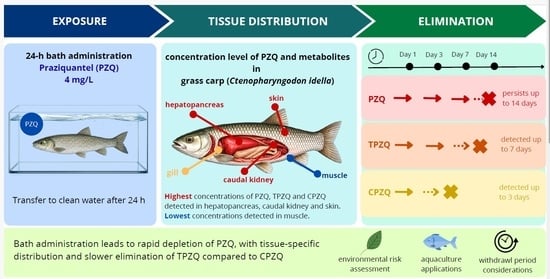
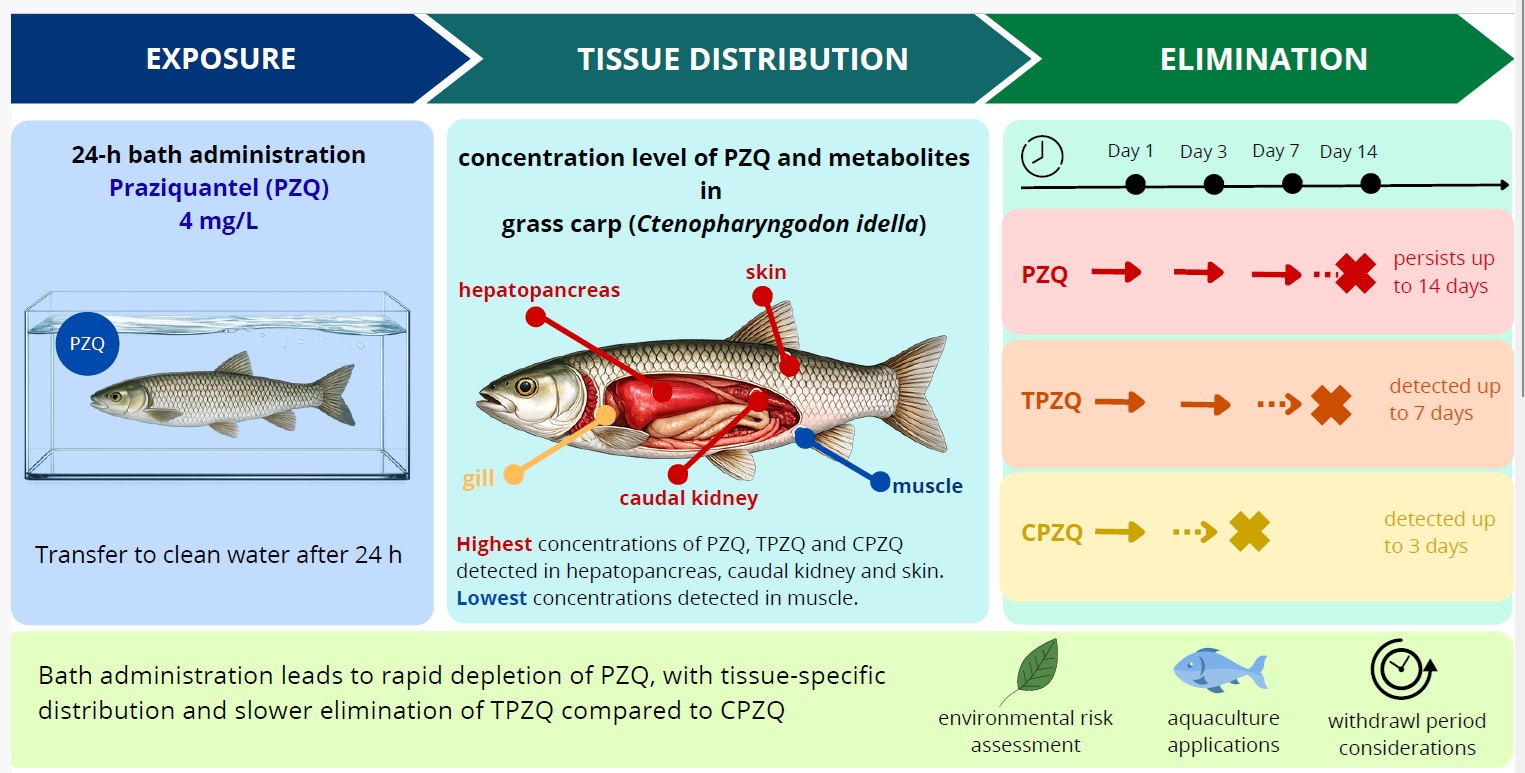
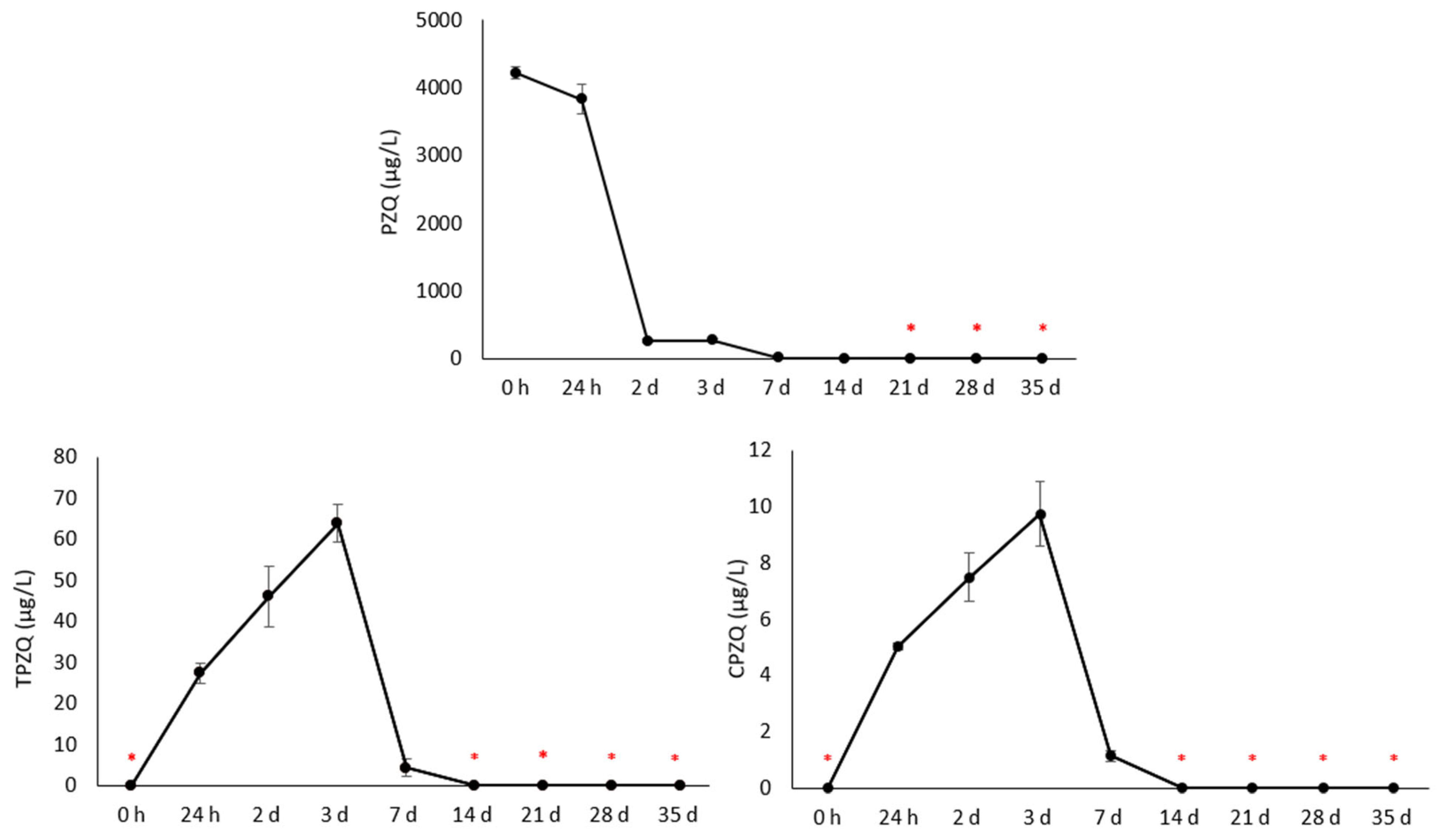
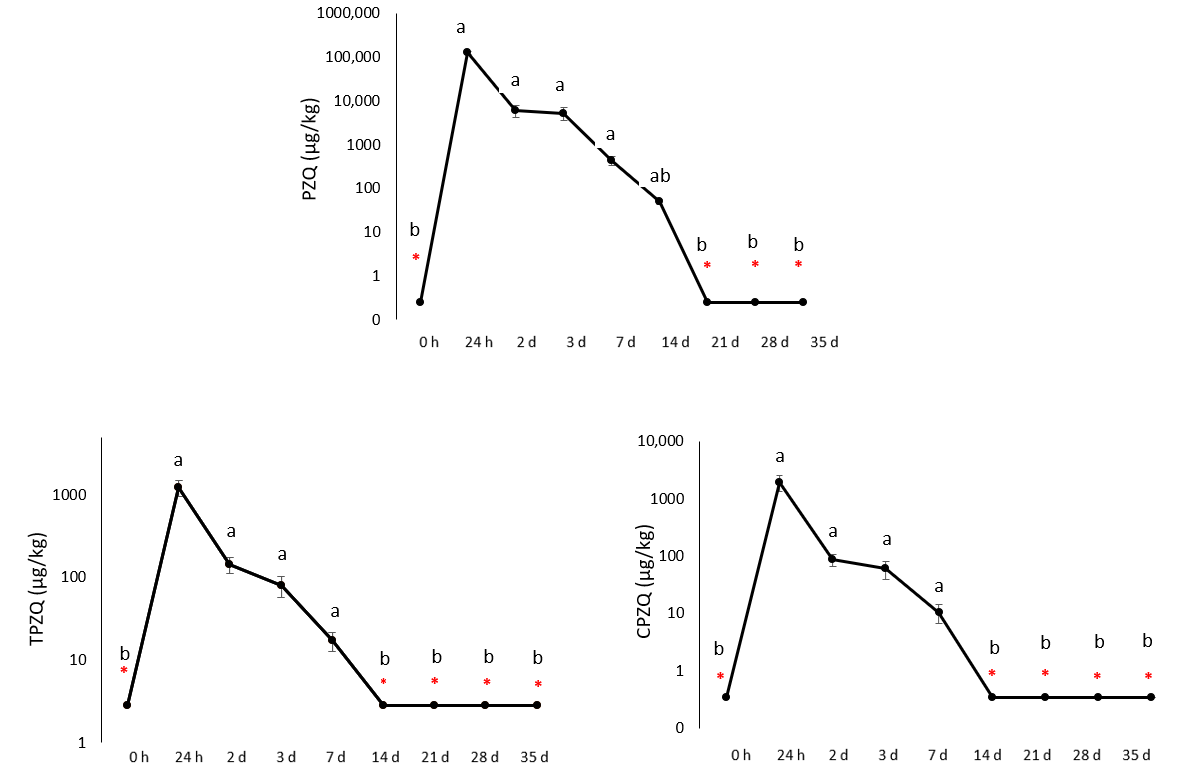
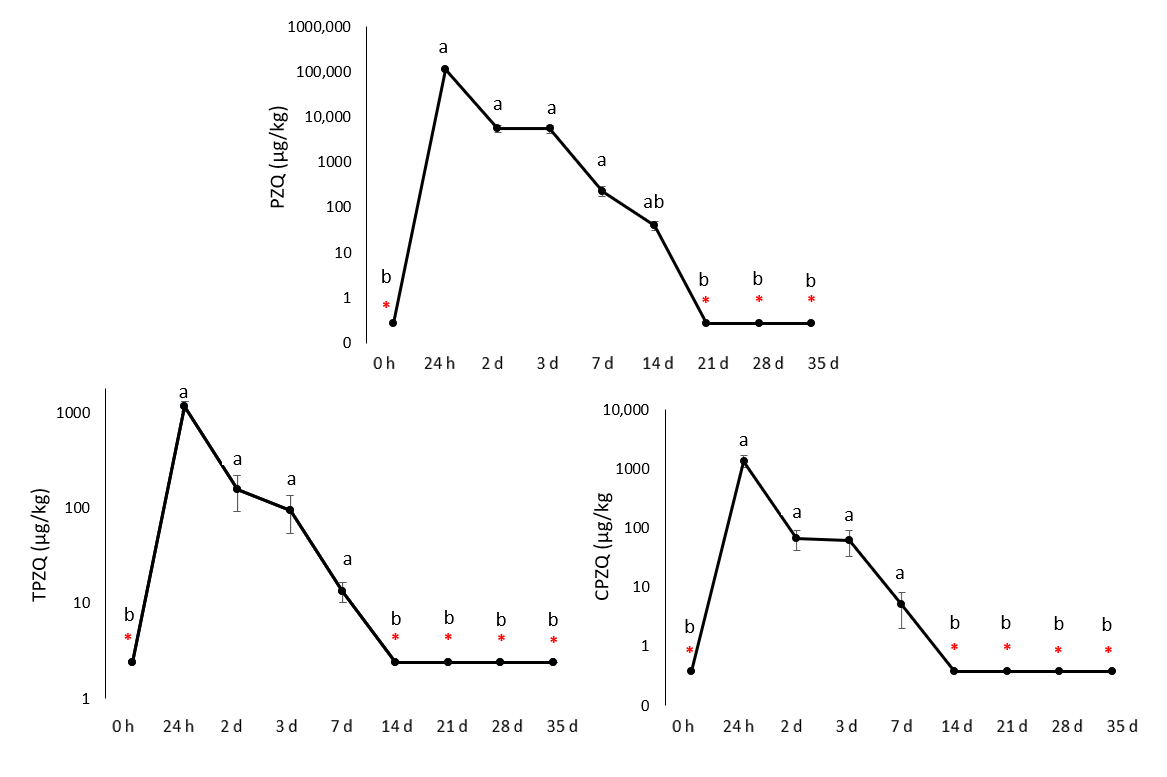
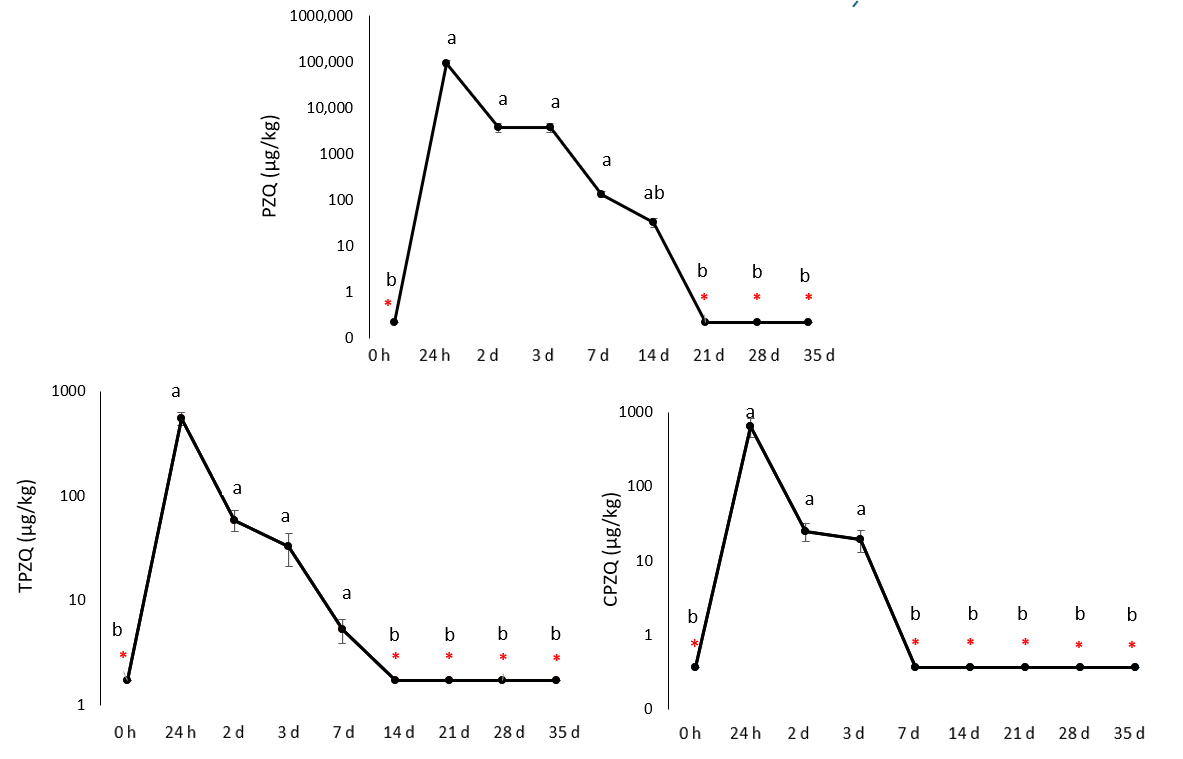
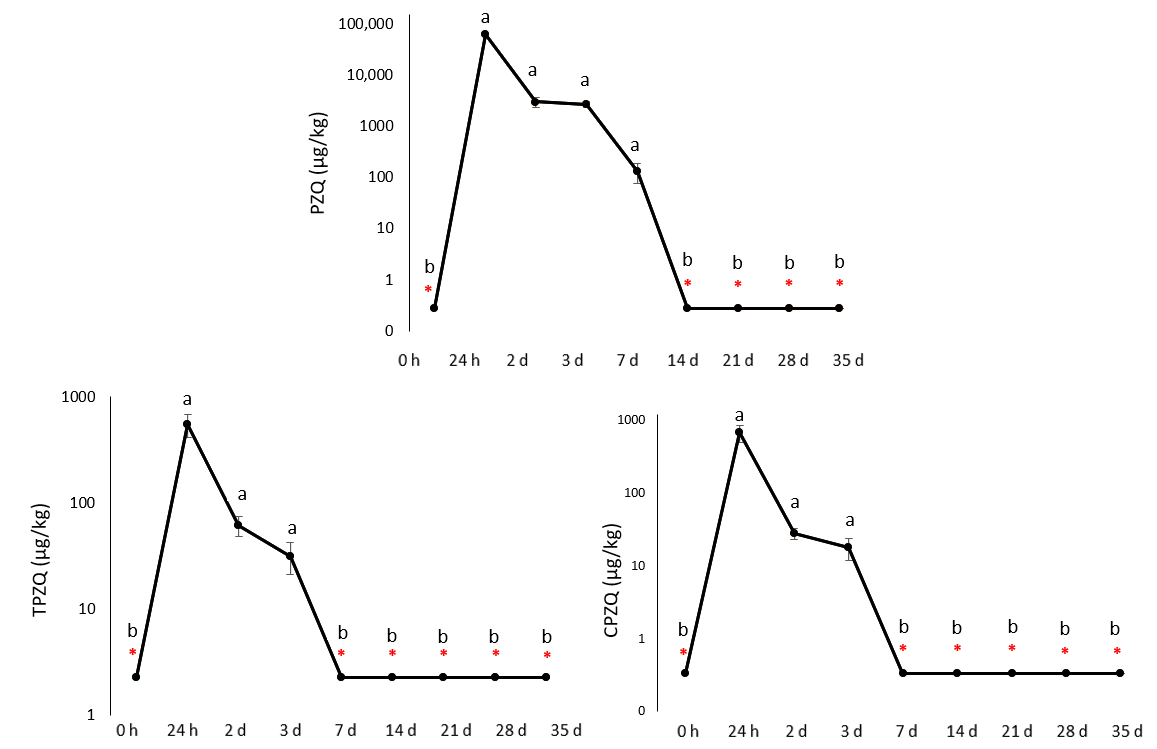
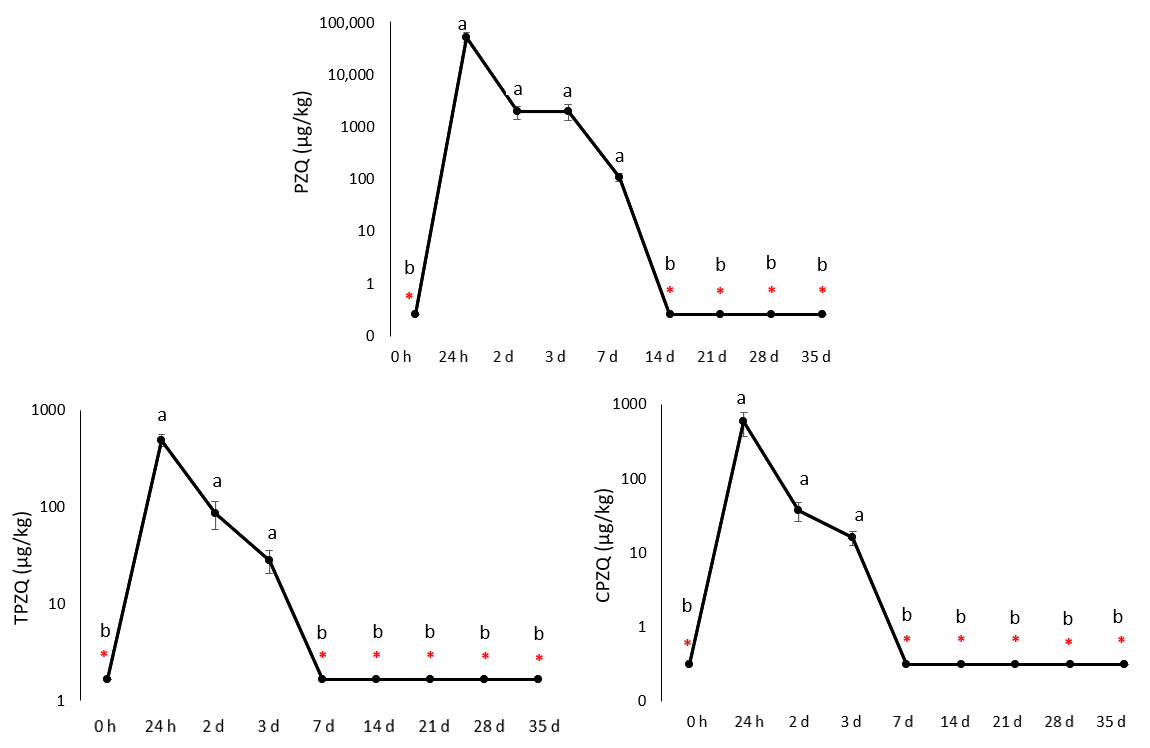
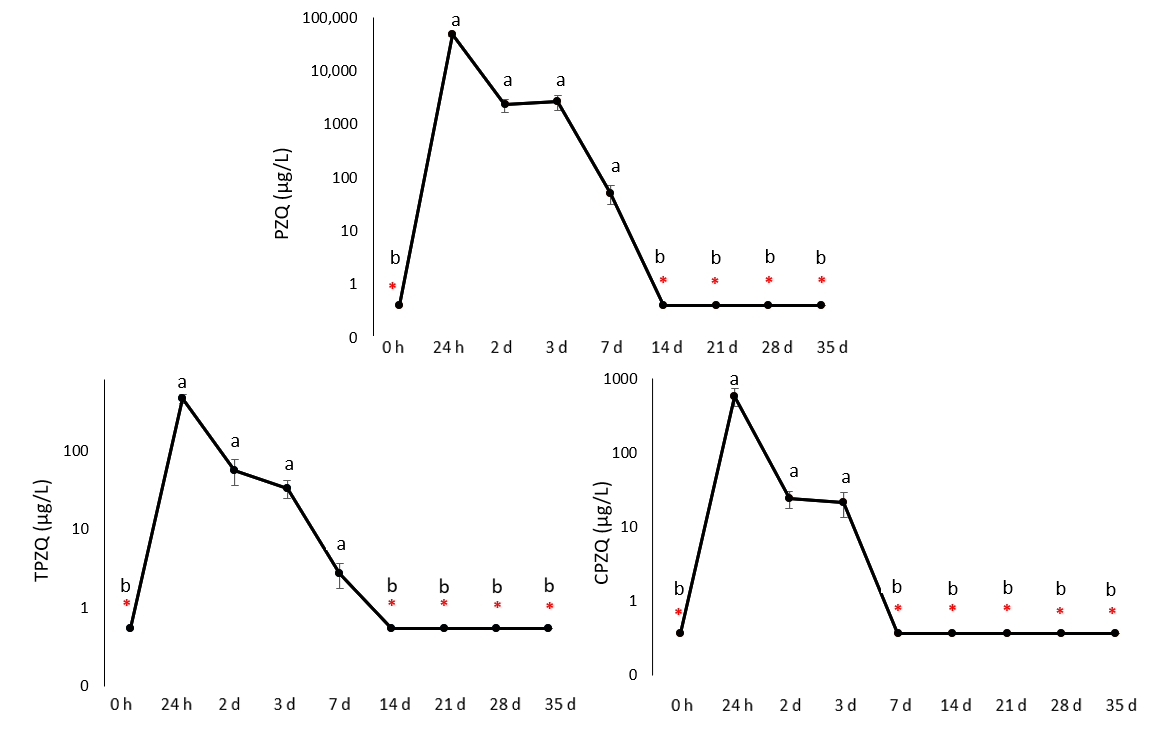
Praziquantel (PZQ) is a widely used antiparasitic drug in aquaculture; however, data on its environmental fate, tissue distribution, and metabolite kinetics in fish following bath treatment remain limited, particularly with respect to its metabolites. This study investigated the long-term elimination of PZQ and its two major metabolites, trans-4-hydroxypraziquantel (TPZQ) and cis-4-hydroxypraziquantel (CPZQ), in water and selected biological matrices of grass carp (Ctenopharyngodon idella) following a 24 h therapeutic bath with PZQ administered at 4 mg/L. Results showed a rapid decrease in PZQ in water after the transfer of fish to clean water, accompanied by a transient increase in its metabolites, with TPZQ as the predominant metabolite. PZQ tissue residues were highest in the hepatopancreas, caudal kidney, and skin, where the parent compound remained detectable up to day 14 of the experiment. Among the metabolites, higher concentrations of CPZQ were detected across all examined tissues; however, its elimination rate was faster than that of TPZQ. This difference was most pronounced in plasma and skin, where TPZQ remained detectable until day 7 of the experiment, whereas the cis-form was detected only up to day 3. Similar to the parent compound, the highest concentrations of both monitored metabolites were observed in the hepatopancreas and caudal kidney, where they remained detectable until day 7 of the experiment. These findings provide comprehensive insight into the distribution and elimination of PZQ in grass carp following 24 h bath administration and contribute valuable data that may support environmental risk assessment and future withdrawal-period evaluation in aquaculture.
Keywords: anthelmintic drug; cis-4-hydroxypraziquantel; trans-4-hydroxypraziquantel anthelmintic drug; cis-4-hydroxypraziquantel; trans-4-hydroxypraziquantel
Graphical Abstract