Article

Time-Series Transcriptomics of a Gill Cell Line (BTG) from Chinese Bahaba (Bahaba taipingensis) During ISKNV Infection (3–24 hpi)


1
College of Marine Life Sciences, Ocean University of China, Qingdao 266100, China
2
State Key Laboratory of Mariculture Biobreeding and Sustainable Goods, Yellow Sea Fisheries Research Institute, Chinese Academy of Fishery Sciences, Qingdao 266071, China
3
Shandong Freshwater Fisheries Research Institute, Jinan 250013, China
4
Guangdong Beluga Whale Marine Biotechnology Co., Ltd., Huizhou 516300, China
*
Author to whom correspondence should be addressed.
Fishes 2026, 11(6), 352; https://doi.org/10.3390/fishes11060352 (registering DOI)
Submission received: 20 April 2026 / Revised: 10 June 2026 / Accepted: 11 June 2026 / Published: 15 June 2026
(This article belongs to the Special Issue Genetic Foundations of Disease Resistance in Fishes)

Abstract

The Chinese bahaba (Bahaba taipingensis), an endangered marine fish, is highly vulnerable to infectious spleen and kidney necrosis virus (ISKNV). In this work, we developed a gill filament-derived cell line, designated BTG, to investigate how these cells respond to ISKNV over time, specifically from 3 to 24 h post-infection (hpi). BTG cells grew steadily, displayed a diploid chromosome number of 2n = 48, demonstrated high transfection efficiency, and were highly susceptible to viral infection. Characteristic cytopathic effects (CPEs) became noticeable as early as 6 hpi at 27 °C. RNA-seq profiling showed that the number of differentially expressed genes (DEGs) steadily increased with time. Standard enrichment analysis at individual time points (3, 6, 12, and 24 hpi) highlighted pathways mainly involved in DNA replication, cell cycle control, ribosome assembly, transcription and translation, mismatch repair, and cell adhesion. Temporal clustering analysis, however, revealed hidden patterns in immune gene expression. Genes that were consistently downregulated were enriched in immune-related pathways, including ECM–receptor interaction, cytokine–receptor signaling, PI3K–AKT, and Wnt signaling, indicating prolonged suppression of host defense mechanisms. In contrast, clusters of genes transiently upregulated during the first 6 h post-infection were associated with antiviral and innate immune pathways, such as NF-κB, JNK, IRF3, IRF7, caspases, JAK, MHC I, and lysosome-related functions, suggesting a rapid but short-lived antiviral response. Genes that were continuously upregulated were primarily involved in nucleic acid replication and protein synthesis, reflecting a gradual host cell reprogramming to support viral replication. Taken together, these findings reveal a temporal shift in BTG cells from an initial burst of immune activity to immune suppression, accompanied by enhanced viral replication. The BTG cell line thus represents a valuable in vitro model for dissecting ISKNV–host interactions and offers new perspectives on the molecular strategies employed by megalocytiviruses in B. taipingensis.
Key Contribution: This study established the first gill filament-derived cell line (BTG) from the endangered Chinese bahaba (Bahaba taipingensis) and combined it with time-resolved transcriptomic profiling of ISKNV infection, revealing a rapid yet transient antiviral response followed by sustained immune suppression and host cell reprogramming to facilitate viral replication.

1. Introduction

The Chinese bahaba (Bahaba taipingensis) is a nearshore marine fish species endemic to China, valued both ecologically and economically, particularly for its long-standing use in traditional Chinese medicine [1,2]. Unfortunately, its populations have dramatically declined due to overfishing, habitat degradation, and marine pollution [3]. To ensure the survival of this species, urgent conservation efforts—including habitat protection and the development of aquaculture—are necessary. Accordingly, research focused on the biology, disease prevention, and health management of B. taipingensis is critical for population restoration, biodiversity preservation, and the maintenance of healthy marine ecosystems.
Infectious spleen and kidney necrosis virus (ISKNV), a member of the genus Megalocytivirus, has drawn significant attention due to its broad host range and high lethality in both marine and freshwater fish [4]. Economically important species, including groupers, seabass, and mandarin fish, are susceptible to ISKNV, with outbreaks that often cause severe economic losses [5,6,7]. B. taipingensis in aquaculture exhibits high vulnerability to megalocytivirus infection, making it essential to unravel its molecular responses to ISKNV to guide effective disease-control strategies and optimize aquaculture management. Given the open nature of aquaculture systems and the practical limitations of fish vaccination, conventional preventive measures often prove insufficient [8]. Studying the molecular mechanisms of ISKNV infection using sensitive, stably passaged fish cell lines therefore provides a crucial foundation for understanding viral pathogenesis and developing novel intervention strategies.
Since the early 20th century, in vitro tissue culture has transformed research on animal cells, with cell lines now serving as indispensable tools across physiology, virology, pharmacology, toxicology, genetics, and oncology. The first fish cell line, RTG-2, established in 1962, enabled efficient amplification of infectious pancreatic necrosis virus (IPNV) [9], paving the way for advances in fish virology and cell line development. Over the years, numerous cell lines have been derived from species such as Epinephelus moara, Oplegnathus punctatus, Siniperca chuatsi, and Lateolabrax maculatus to facilitate the isolation and propagation of iridoviruses [10]. However, the susceptibility of these cell lines to different viral strains can vary considerably, and not all cell lines are suitable for applications such as transfection or antiviral screening. Moreover, findings obtained from these heterologous systems cannot be directly applied to Bahaba taipingensis. In the present study, the BTG cell line was established directly from B. taipingensis, providing a species-specific cellular background that more accurately reflects the natural infection process in this host. In addition, BTG cells showed high susceptibility to ISKNV infection and were amenable to transfection, making them a useful platform for studies on viral replication, host immune regulation, and antiviral screening.
Previous studies have shown that gill tissues are one of the major interfaces between fish and the aquatic environment and play important roles in immune defense [11,12]. Following pathogen exposure, gill cells undergo complex biochemical and genetic changes that activate immune and stress-response pathways [13]. Therefore, transcriptomic analysis of gill-derived cells can help reveal host–pathogen interactions and identify immune-related genes involved in antiviral responses. The gill filament-derived BTG cell line established in this study provides a new in vitro model for investigating ISKNV infection in B. taipingensis and may also facilitate future studies on megalocytivirus pathogenesis and disease control strategies.

2. Materials and Methods

2.1. Fish and Virus Strain

Chinese bahaba (Bahaba taipingensis) with an average body length of approximately 5 cm were obtained from Guangdong Bluegen Marine Biotechnology Co., Ltd. (Guangdong, China). All individuals appeared healthy, showing no abnormal behavior or visible lesions.
The SKIV-SD strain of ISKNV [14] was kindly provided by Sun Yat-sen University.

2.2. Reagents and Consumables

Leibovitz’s L-15 medium, dimethyl sulfoxide (DMSO), phosphate-buffered saline (PBS), 0.25% trypsin, penicillin–streptomycin–amphotericin B solution, and colchicine were purchased from Solarbio Life Sciences Co., Ltd. (Beijing, China). Basic fibroblast growth factor (bFGF), epidermal growth factor (EGF), and recombinant human leukemia inhibitory factor (LIF) were obtained from Beyotime Biotechnology Co., Ltd. (Shanghai, China). Beta-mercaptoethanol (2-Me) was purchased from VWR Life Science (Radnor, PA, USA) , and fetal bovine serum (FBS, GIBCO) was imported from Australia. Genomic DNA extraction kits were supplied by TianGen Biotech Co., Ltd. (Beijing, China). Cell culture flasks, plates, pipette tips, and centrifuge tubes (15 mL and 50 mL) were from Corning Incorporated (Corning, NY, USA) .

2.3. Configuration of Culture Medium and Cell Cryopreservation Solution

Primary and early-passaged cultures were maintained in Leibovitz’s L-15 medium supplemented with 10% FBS, 2% antibiotics, 398 μM 2-Me, and 5 ng/mL each of EGF, LIF, and bFGF under normal atmospheric conditions without CO2 supplementation. Vacuolation observed during later passages was alleviated by removing LIF, which was then omitted from subsequent cultures. For cryopreservation, a solution of 40% L-15 medium, 50% FBS, and 10% DMSO was used.

2.4. Primary Cell Culture

Gill filament cells were established using the tissue explant method. Donor fish were anesthetized with 100 mg/L MS-222 and surface-sterilized with 75% ethanol. Gill arches and filaments were excised, transferred to PBS, and filaments carefully separated from the arches. Samples were rinsed five times with PBS containing 500 U/mL penicillin, 500 μg/mL streptomycin, and 1.25 μg/mL amphotericin B.
Filaments were cut into 1–2 mm3 pieces, washed three additional times, and seeded into T25 flasks with 1–1.5 mL medium to cover the explants without dislodging them. Flasks were sealed with parafilm and incubated at 27 °C. After 48 h, 1 mL of fresh medium was added, and cultures were monitored daily. Once cells migrated from the explants, medium was increased to 3 mL and replaced every three days. Cells were passaged upon reaching confluence or ceasing to expand. The BTG cell line was routinely cultured and maintained at 27 °C.

2.5. Cell Subculture

Spent medium was removed, and the cells were rinsed with 3 mL PBS. Subsequently, 1 mL of 0.25% trypsin-EDTA was added and incubated for 30 s. Excess trypsin was then aspirated, leaving approximately 200–250 μL of residual solution for continued digestion. Once the cells became rounded and detached, 6 mL of complete medium was added, and the cell suspension was gently pipetted to obtain a homogeneous mixture. The suspension was then divided at a 1:1 ratio into two T25 flasks for continued culture.

2.6. Morphology and Molecular Characterization

Confluent cells were fixed with 4% paraformaldehyde for 10 min, washed twice with PBS, and stained with Wright–Giemsa for 30 min. Morphology was observed under an inverted microscope. The maternal origin was confirmed via mitochondrial cytochrome oxidase subunit 1 (co1) gene analysis [15,16]. DNA from 40th-passage cells was extracted and amplified by PCR. Products were analyzed by 1% agarose gel electrophoresis and sequenced by Ribo Biotech Co., Ltd. (Guangzhou, China).

2.7. Cryopreservation and Recovery

Cells were detached 48 h post-passage, centrifuged at 100× g for 5 min, and resuspended in freezing medium. Suspensions were transferred to cryovials, frozen at −80 °C overnight, and stored in liquid nitrogen. Recovery involved rapid thawing at 27 °C, centrifugation, resuspension in complete medium, and viability assessment by trypan blue exclusion. Cell viability (%) was calculated as:
Cell   viability   ( % ) = Number   of   viable   cells Total   number   of   cells × 100

2.8. Serum Optimization

Cells were seeded in 6-well plates at 2 × 10⁵ cells/well and allowed to attach for 6 h in 20% FBS medium. The medium was replaced with 5%, 10%, 15%, or 20% FBS, with three biological replicates each. Cells were counted every 24 h after trypsinization, and growth curves were generated.

2.9. Karyotype Detection

Cells were treated with 2 μg/mL colchicine for 6 h at 27 °C, trypsinized, and centrifuged at 200× g for 5 min. The pellet was resuspended in 0.075 μmol/L KCl for 50 min, followed by two rounds of fixation in prechilled Carnoy’s fixative. Cell suspensions were dropped onto prechilled slides, stained with 5% Giemsa, and metaphase chromosomes observed under a light microscope.

2.10. Cell Transfection Performance and Protein Expression

BTG cells were seeded at 1 × 10⁵/well in 6-well plates. For plasmid or siRNA transfection, reagents were prepared in serum- and antibiotic-free L-15 medium with Lipo8000, incubated for 20 min, added to cells, and evenly distributed. Transfection efficiency was evaluated 48 h later.

2.11. BTG Infected with SKIV-SD

2.11.1. Susceptibility to Viruses

BTG cells at 70% confluence were infected with SKIV-SD at a multiplicity of infection (MOI) of 1 for 3 h at 27 °C. The inoculum was then replaced with fresh L-15 medium supplemented with 5% FBS, and cytopathic effects (CPEs) were monitored twice daily. Images were captured upon CPE appearance. All experiments were performed with three biological replicates.

2.11.2. Transmission Electron Microscope Observation

CPE-confirmed cells were harvested, centrifuged, fixed with 2.5% glutaraldehyde overnight, rinsed, post-fixed with 1% osmium tetroxide, dehydrated, and embedded in epoxy resin. Semi-thin sections (~1 μm) were stained with 1% toluidine blue to select regions for ultrathin sectioning (70 nm). Sections were mounted on Formvar-coated copper grids, stained with uranyl acetate and lead citrate, and observed by TEM.

2.11.3. Transcriptome Analysis

Cells at 80–90% confluence were infected, and CPE-positive cells were harvested with TRIzol (Invitrogen). RNA quality was assessed using an Agilent 2100 Bioanalyzer and agarose gel electrophoresis. Poly(A) mRNA was enriched, fragmented, reverse-transcribed, purified, end-repaired, A-tailed, and ligated to Illumina adapters for library construction. Low-quality reads were removed using fastp (v0.18.0) [17]. De novo transcriptome assembly was performed using Trinity, and gene expression levels were normalized as reads per kilobase of transcript per million mapped reads (RPKM) [18,19]. Unigenes were annotated against the Nr, Swiss-Prot, KEGG, and COG/KOG databases using an E-value threshold of ≤1 × 10⁻⁵ [20,21,22,23]. Differentially expressed genes (DEGs) were identified using the criteria of |log2 fold change| ≥ 1 and false discovery rate (FDR) < 0.05. FDR values were adjusted using the Benjamini–Hochberg multiple testing correction method. Temporal expression trend analysis was performed using Short Time-series Expression Miner (STEM), with all DEGs identified across the infection time course (3, 6, 12, and 24 hpi) included in the analysis. Samples were arranged according to the chronological order of infection, and genes were clustered into predefined model expression profiles based on similarities in their temporal expression patterns. The analysis was conducted using the parameters “-pro 20” (maximum number of model profiles = 20) and “-ratio 1.0”. Genes were assigned to the model profile showing the highest correlation with their expression trajectory. Profiles showing statistically significant enrichment and biologically meaningful patterns, such as continuous upregulation or downregulation, were selected for further Gene Ontology (GO) and Kyoto Encyclopedia of Genes and Genomes (KEGG) enrichment analyses. Enrichment significance was evaluated using Fisher’s exact test, and pathways or GO terms with a corrected Q value ≤ 0.05 were considered significantly enriched.

3. Results

3.1. Primary Culture and Subculture of Cells

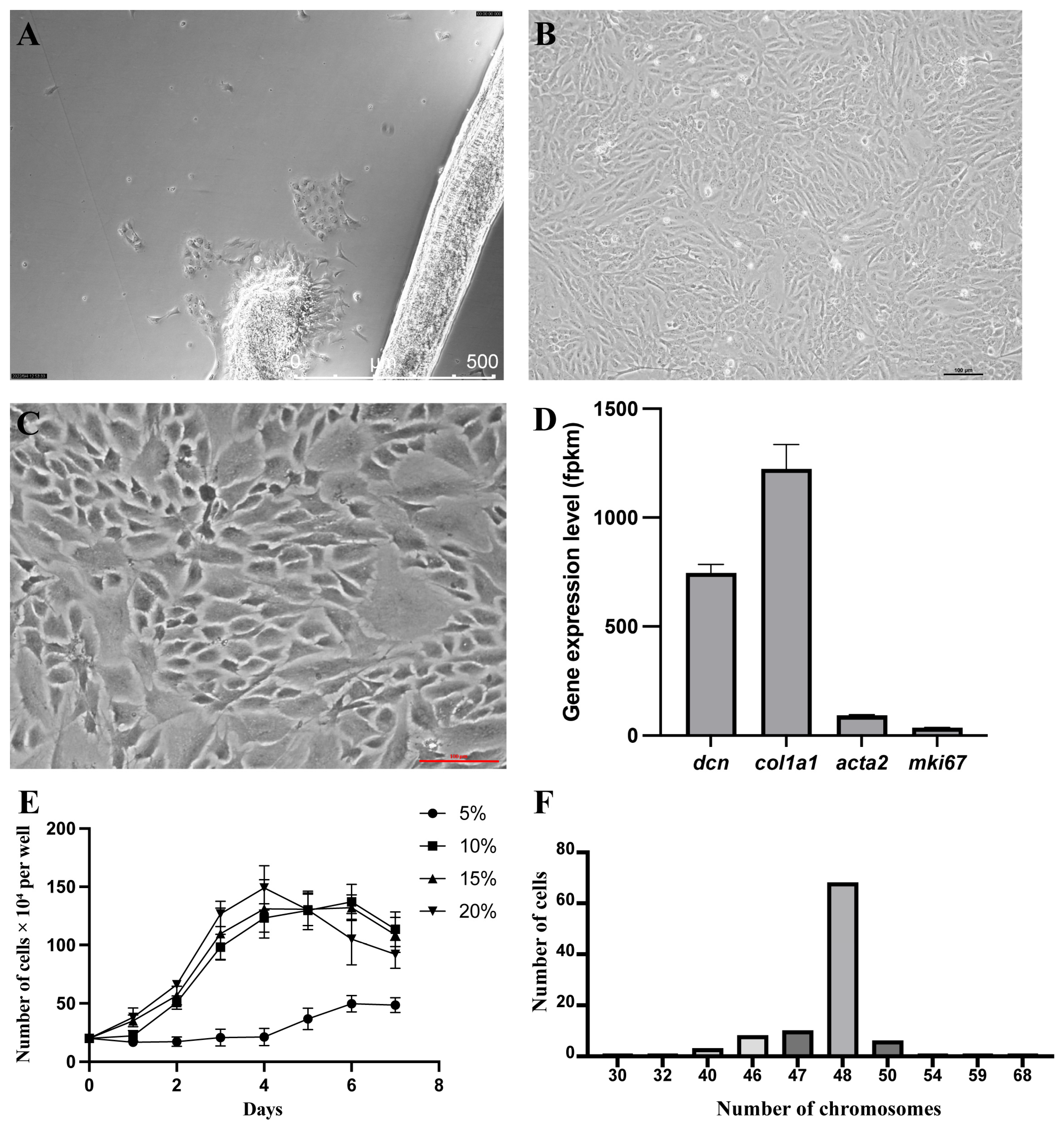
Cell outgrowth from BTG was first observed at approximately 48 h post-inoculation, when a small number of cells began migrating from the tissue fragments (Figure 1A). Over the following two weeks, these cells proliferated steadily and eventually formed a confluent monolayer. At this stage, cells were detached by trypsinization and passaged.
After subculture, the cells—designated BTG—exhibited strong adherence and consistent growth. Upon reaching confluence, they formed a dense monolayer predominantly composed of fibroblast-like cells (Figure 1B), indicating successful establishment of a stable cell line.

3.2. Cell Morphology and Cell Line Source Identification

Wright–Giemsa staining revealed that BTG cells displayed a typical fibroblast-like morphology, characterized by elongated cell bodies and multiple cytoplasmic projections (Figure 1C). Consistent with this phenotype, fibroblast-associated marker genes, including dcn, col1a1, and acta2, as well as the proliferation marker mki67, were all expressed in BTG cells [24,25] (Figure 1D).
To confirm the origin of the cell line, mitochondrial co1 gene amplification was performed using passage-20 cells (Supplementary Table S1). A clear band of approximately 750 bp was detected by agarose gel electrophoresis (Supplementary Figure S1). Sequencing and subsequent BLAST analysis (using NCBI BLAST) showed over 99.8% identity with the B. taipingensis co1 sequence (GenBank ID: JX232404.1), verifying the species authenticity of the BTG cell line.

3.3. Cell Cryo-Resuscitation Assay

After ten months of storage in liquid nitrogen, passage-30 BTG cells were successfully revived. Trypan blue staining indicated a post-thaw viability exceeding 80%. The recovered cells adhered normally and retained their original morphology, suggesting that long-term cryopreservation had minimal impact on cell integrity. The BTG cell line has been deposited in the China General Microbiological Culture Collection Center (CGMCC; accession no. 46720).

3.4. Optimal Serum Concentration

BTG cells remained viable across a range of FBS concentrations (5–20%). However, cell proliferation was noticeably slower at 5% FBS. Increasing the serum concentration to above 10% significantly enhanced growth, with the highest proliferation rates observed between 10% and 20% FBS (Figure 1E).
Considering both cost efficiency and growth performance, 10% FBS was selected as the standard condition for routine culture. For experiments where rapid proliferation is not required, such as viral infection or transfection assays, the serum concentration can be reduced to 5% without compromising cell viability.

3.5. Chromosome Karyotype Analysis

Karyotype analysis was conducted using 100 metaphase spreads (Supplementary Figure S2). Chromosome numbers ranged from 30 to 68, with the majority of cells (68%) displaying 48 chromosomes (Figure 1F), indicating that the BTG cell line predominantly maintains a diploid karyotype.

3.6. Cell Transfection Performance and Protein Expression

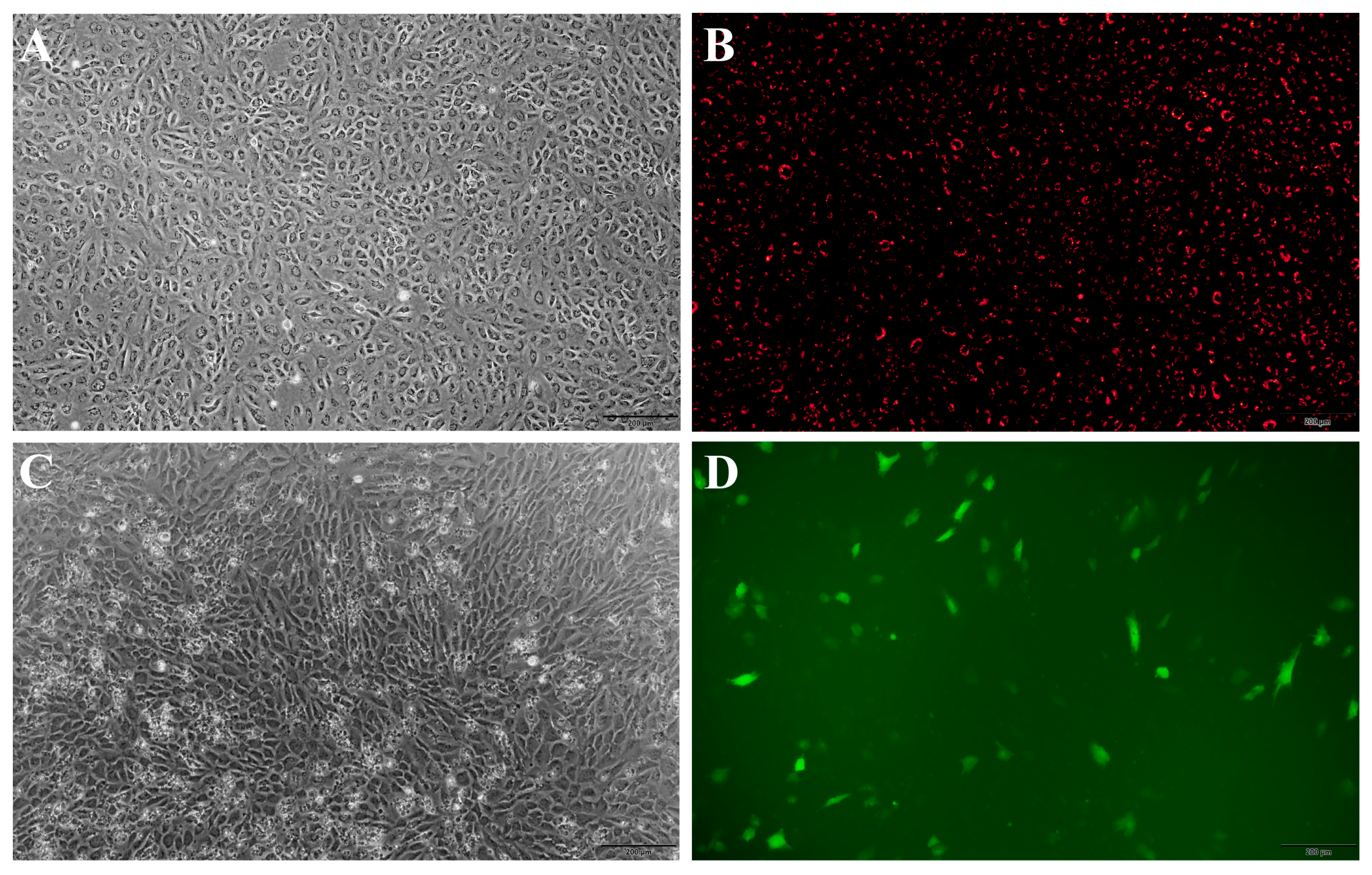
Transfection efficiency was evaluated using both siRNA and plasmid systems. At 24 h post-transfection, Cy3-labeled scrambled siRNA produced strong red fluorescence signals, indicating effective uptake by BTG cells (Figure 2A,B).
Similarly, cells transfected with the pEGFP-N3 plasmid exhibited clear green fluorescence at 48 h, demonstrating successful expression of the introduced gene (Figure 2C,D). These results confirm that BTG cells are amenable to both siRNA-mediated knockdown and plasmid-based gene expression.

3.7. Susceptibility of BTG to Virus Infection and Electron Microscope Observation

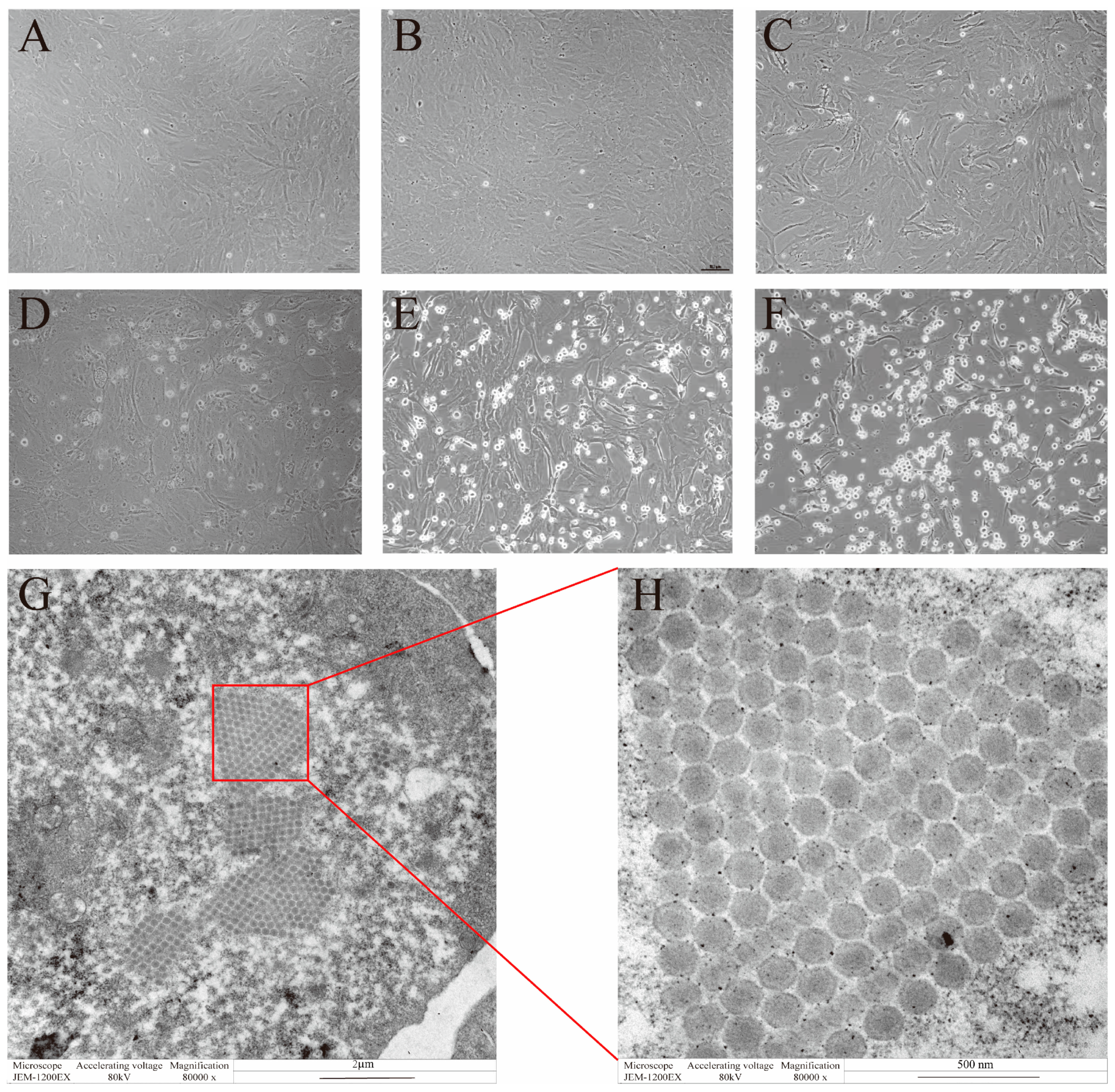
To evaluate viral susceptibility, BTG cells were infected with SKIV-SD at an MOI of 1, and cellular responses were monitored over time. At 3 h post-infection, cells appeared comparable to the uninfected control, with no obvious cytopathic effects (CPEs) (Figure 3A,B).
By 6 h, early signs of infection became evident, as some cells began to round up and swell (Figure 3C). This trend became more pronounced at 9 h, with a noticeable increase in swollen cells (Figure 3D). At 12 h post-infection, a large proportion of cells had rounded morphology, and cell boundaries became more distinct (Figure 3E). By 24 h, over 80% of the cells were detached and floating, indicating extensive CPE (Figure 3F).
Transmission electron microscopy further confirmed viral replication within BTG cells. Numerous viral particles, approximately 130 nm in diameter, were observed in the cytoplasm of infected cells (Figure 3G,H), providing direct ultrastructural evidence of successful infection.

3.8. Gene Expression Dynamics and Enrichment Analysis During SKIV-SD Infection in BTG Cells

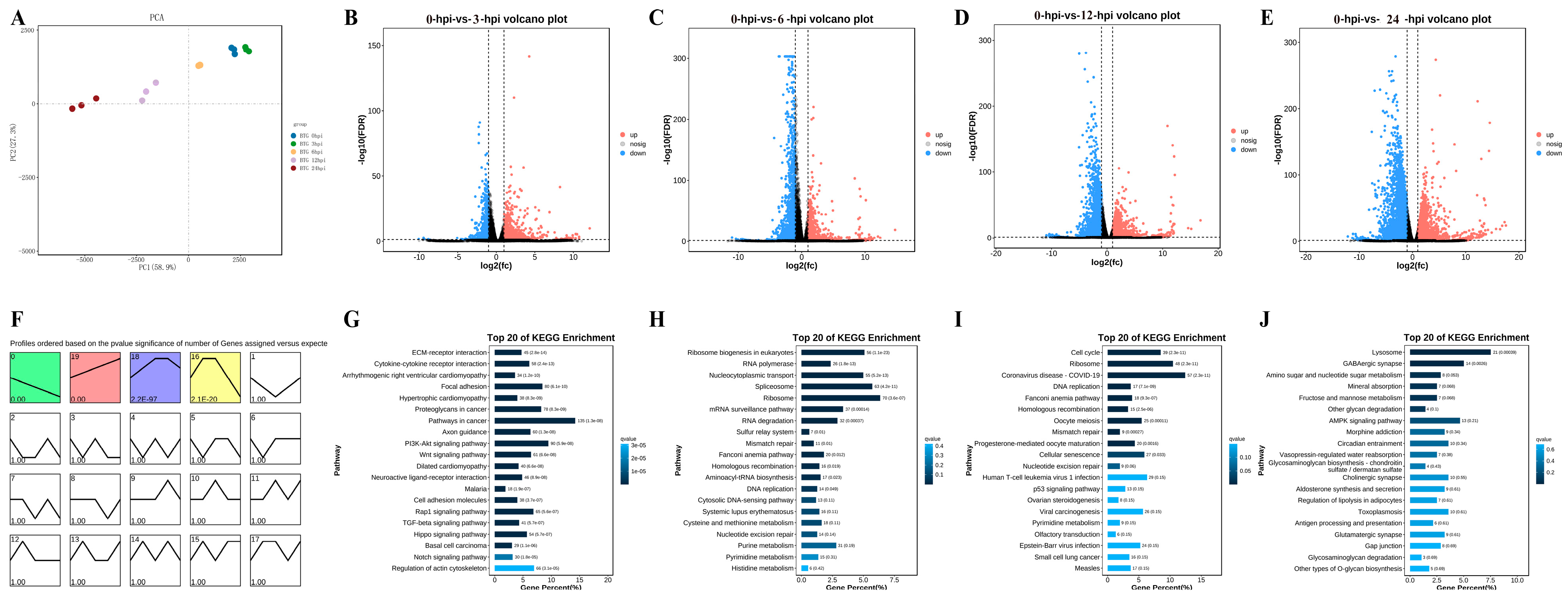
To characterize the transcriptional response of BTG cells to viral infection, cells were challenged with SKIV-SD at an MOI of 1, and samples were collected at 0, 3, 6, 12, and 24 h post-infection for RNA-seq analysis. After stringent quality filtering, high-confidence datasets were obtained. Key RNA-seq quality metrics, including sequencing depth per sample, Q20/Q30 percentages, and unique/multi-mapping rates, are summarized in Supplementary Tables S2 and S3. Principal component analysis (PCA) showed clear separation among time points, while biological replicates clustered closely, indicating strong reproducibility (Figure 4A).
To validate the transcriptomic data, ten differentially expressed genes were selected for qPCR analysis. The qPCR results showed a high degree of consistency with the RNA-seq data, confirming the reliability of the transcriptomic profiling (Supplementary Figure S3). GO and KEGG enrichment analyses were performed using the clusterProfiler package. Significantly enriched pathways and functional categories were identified using a threshold of adjusted p-value (p.adjust) < 0.05, with multiple hypothesis testing corrected using the Benjamini–Hochberg method.
Differential expression analysis revealed a progressive expansion of transcriptional changes as infection advanced. At 3 h post-infection, 1260 genes were upregulated and 651 were downregulated. This number increased markedly at later stages, reaching 1893/1831 (up/down) at 6 h, 3196/2602 at 12 h, and 4589/4178 at 24 h (Figure 4B–E), reflecting a time-dependent intensification of host–virus interactions.
To further resolve temporal patterns, clustering analysis grouped DEGs into distinct expression trajectories (Figure 4F). Four representative patterns were identified: genes showing sustained downregulation (cluster 0), continuous upregulation (cluster 19), transient early induction followed by gradual decline (cluster 18), and sharp early activation with rapid suppression (cluster 16).
Functionally, genes in the continuously downregulated cluster were significantly enriched in immune-related pathways, including ECM–receptor interaction, cytokine–receptor interaction, PI3K–AKT signaling, and Wnt signaling (Figure 4G). This pattern suggests a gradual but persistent suppression of host immune functions as infection progresses.
In contrast, continuously upregulated genes were predominantly associated with biosynthetic and replication-related processes, such as ribosome biogenesis, RNA polymerase activity, nucleocytoplasmic transport, and DNA replication (Figure 4H). The sustained activation of these pathways indicates a progressive reprogramming of host cells toward supporting viral replication.
Genes exhibiting transient upregulation (clusters 16 and 18) were mainly enriched in innate immune and antiviral response pathways, including NF-κB, JNK, IRF3, IRF7, caspase signaling, JAK pathways, MHC-I antigen presentation, and lysosome-associated processes (Figure 4I,J). These pathways were activated predominantly at early stages (0–6 h), consistent with an initial host defense response that was subsequently attenuated. Notably, no significant enrichment of viral receptor-related genes was detected, implying that early transcriptional responses were dominated by intracellular signaling cascades rather than receptor-mediated entry processes.
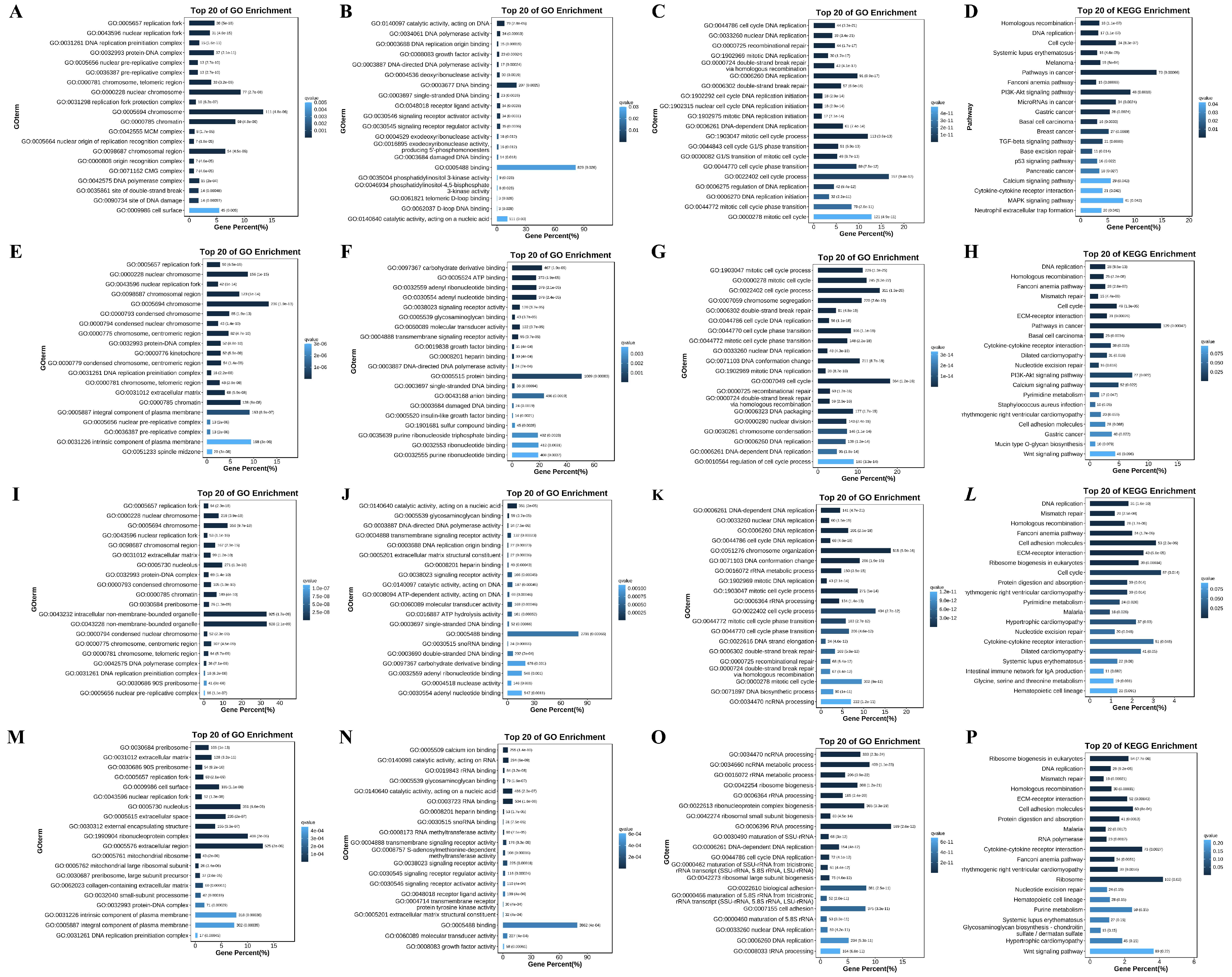
Time-resolved GO and KEGG enrichment analyses further illustrated the sequential engagement of biological processes during infection (Figure 5). At early stages (3 h), DEGs were already enriched in DNA replication and cell cycle pathways, suggesting rapid initiation of viral genome replication. As infection progressed (12–24 h), pathways related to protein synthesis, including ribosome biogenesis and translation, became increasingly prominent. Meanwhile, genes involved in cell adhesion were progressively downregulated, which correlated well with the observed cytopathic effects and the extensive cell detachment seen at 24 h post-infection.
Overall, these results delineate a clear temporal shift in BTG cells during SKIV-SD infection: an early but transient activation of antiviral responses is followed by sustained immune suppression and enhanced activation of cellular machinery that facilitates viral replication. This dynamic transition highlights the ability of the virus to progressively redirect host cellular processes to favor its own propagation.

4. Discussion

As a rare and endangered marine fish with substantial ecological and economic value, Bahaba taipingensis urgently requires reliable experimental systems to support biological and pathological investigations. The gill filament-derived BTG cell line established in this study provides a robust in vitro platform for virological and host–pathogen interaction studies. In recent decades, B. taipingensis populations have declined sharply due to overexploitation and environmental degradation. Meanwhile, infectious diseases, particularly those caused by iridoviruses, may represent an additional threat to both conservation efforts and aquaculture development [26,27].
Given that gill tissues represent a critical interface between fish and the aquatic environment, playing essential roles in respiration, osmoregulation, and immune defense, gill-derived cells may provide a relevant model for investigating pathogen invasion and early host responses [28,29]. The successful establishment, continuous passaging, and cryopreservation of BTG cells therefore provide a valuable experimental tool for both fundamental research and applied disease management in B. taipingensis.
BTG cells exhibited typical fibroblast-like morphology, chromosomal stability, and detectable transfection signals following nucleic acid delivery, supporting their potential applicability for preliminary genetic manipulation and functional studies. Notably, BTG cells showed high susceptibility to SKIV-SD infection, with a characteristic progression of cytopathic effects (CPEs) from initial cell rounding at 6 h post-infection to extensive detachment at 24 h. Transmission electron microscopy further confirmed the presence of abundant viral particles, including both enveloped and non-enveloped forms arranged in paracrystalline arrays, indicating efficient viral replication within these cells. These findings demonstrate that BTG cells represent a suitable host system for investigating ISKNV infection and virus–host interactions.
Time-resolved transcriptomic analysis revealed distinct dynamic patterns of host gene expression during infection. From 0 to 24 h post-infection, genes were broadly categorized into three major temporal trends: sustained downregulation, sustained upregulation, and transient early induction followed by subsequent suppression.
Genes exhibiting continuous downregulation were primarily enriched in immune-related pathways, including ECM–receptor interaction, cytokine–receptor interaction, PI3K–AKT signaling, and Wnt signaling. The gradual suppression of these pathways during infection may reflect alterations in host immune signaling associated with viral replication and adaptation [30].
Conversely, continuously upregulated genes were mainly involved in nucleic acid replication and protein biosynthesis, including ribosome biogenesis, RNA polymerase activity, nucleocytoplasmic transport, and DNA replication. This coordinated activation indicates that host cellular machinery is progressively reprogrammed to support viral genome replication and protein production [31,32].
Genes that were transiently upregulated during early infection (0–6 h) and subsequently downregulated at later stages were significantly enriched in innate immune and antiviral pathways, including NF-κB, JNK, IRF3, IRF7, and PI3K signaling. This pattern reflects a rapid but short-lived activation of host antiviral defenses following viral entry [33,34,35].
In addition, genes showing very early induction (0–3 h) followed by rapid suppression (6–24 h) were enriched in lysosome-related pathways, toxoplasmosis, and antigen processing and presentation. These pathways involved key regulators such as casp8, ap3, jak, mhc I, and aep, suggesting that apoptosis-related processes, intracellular degradation pathways, and antigen presentation responses may be transiently activated during the initial stage of infection [36,37,38,39]. Notably, the rapid suppression of casp8 following its early activation may reflect a potential viral mechanism for modulating host apoptosis. Several viruses have been reported to inhibit caspase-8 activity to delay premature host cell death, thereby creating a more favorable environment for viral replication. For example, Singapore grouper iridovirus (SGIV), a closely related megalocytivirus, encodes a TNFR-like protein (VP51) that suppresses caspase activation and enhances viral replication efficiency [40]. Therefore, the rapid decline in the expression of these immune- and apoptosis-related genes may indicate that host innate immune responses become progressively attenuated during viral infection.
Previous transcriptomic studies of ISKNV and related iridoviruses have mainly focused on single infection time points. These studies commonly identified pathways associated with apoptosis, interferon signaling, inflammatory responses, and cellular metabolism. In the present study, transient activation of antiviral pathways, including NF-κB, JNK, IRF3/7, and lysosome-related pathways, was also observed during the early stage of infection, which is consistent with previous reports. However, time-series analysis further showed that immune-related pathways gradually became suppressed as infection progressed, whereas pathways involved in DNA replication, ribosome biogenesis, and protein synthesis remained continuously upregulated. These findings suggest substantial temporal reprogramming of host cellular activities during viral replication. Compared with conventional pairwise differential expression analysis, dynamic temporal clustering may provide a more comprehensive framework for identifying coordinated gene expression patterns and characterizing the progression of virus–host interactions.
The establishment of the BTG cell line provides a valuable host-derived in vitro model for studying ISKNV infection in B. taipingensis. Although several fish cell lines have previously been used for iridovirus research, heterologous host systems may not fully reflect the virus–host interactions occurring in B. taipingensis. In contrast, BTG cells are directly derived from B. taipingensis, allowing viral infection and host responses to be examined in a species-specific cellular background. Although the transfection experiments conducted in this study were intended as a preliminary qualitative assessment rather than a quantitative optimization analysis, the successful intracellular delivery of Cy3-labeled siRNA and pEGFP-N3 plasmid suggests that BTG cells are amenable to exogenous nucleic acid introduction under the current experimental conditions. BTG cells may also provide a useful platform for investigating viral replication mechanisms, host immune regulation, antiviral screening, and functional genomics.
Importantly, the establishment of this cell line may also contribute to broader applications in aquaculture and conservation biology. BTG cells could potentially be applied in pathogen surveillance, viral isolation, antiviral compound evaluation, and vaccine-related studies for B. taipingensis. Moreover, as an endangered species with limited experimental resources, the availability of a species-specific cell model may help reduce dependence on live animals in future disease-related studies and facilitate the development of conservation-oriented aquaculture management strategies.
Overall, the temporal transcriptomic landscape identified in this study revealed a coordinated shift from early antiviral responses to subsequent immune attenuation and sustained activation of cellular biosynthetic pathways during ISKNV infection. These findings provide new insights into iridovirus–host interactions in B. taipingensis and establish a foundation for future mechanistic investigations.
Future studies should further investigate the viral and host factors involved in immune regulation, identify potential host receptors associated with viral entry, and explore the application of the BTG model in antiviral drug screening and vaccine development. Such efforts may contribute to improved disease prevention strategies in B. taipingensis aquaculture and support the conservation of this endangered marine fish species.

5. Conclusions

We established a novel gill filament-derived cell line, BTG, from the endangered Chinese bahaba (Bahaba taipingensis). BTG cells show stable fibroblast-like morphology, a diploid karyotype (2n = 48), high susceptibility to ISKNV infection, and efficient transfection, making them a valuable in vitro model for studying virus–host interactions. Time-series transcriptomic analysis revealed a dynamic response to ISKNV: early transient activation of antiviral pathways is followed by sustained immune suppression and upregulation of genes involved in nucleic acid replication and protein synthesis, indicating host cell reprogramming to support viral propagation. This temporal shift from initial host defense to viral exploitation highlights key mechanisms of ISKNV infection. The BTG cell line and its transcriptomic dataset provide a robust platform for future studies on iridovirus pathogenesis, antiviral screening, vaccine development, and the conservation and aquaculture management of B. taipingensis.

Supplementary Materials

The following supporting information can be downloaded at: https://www.mdpi.com/article/10.3390/fishes11060352/s1, Table S1: Primer names and sequences; Table S2: Summary of RNA-seq read quality statistics; Table S3: Summary of read mapping and assembly statistics. Figure S1: Identification of the CO1 gene by electrophoresis (M, DL2000); Figure S2: Metaphase chromosome spread of BTG cells; Figure S3: Validation of transcriptome data for the BTG cell line.

Author Contributions

C.G.: Writing—review & editing, Writing—original draft, Methodology, Formal analysis, Data curation. Z.G.: Methodology. F.F.: Formal analysis. X.L.: Formal analysis. L.W.: Data curation. N.W.: Writing—review & editing. Z.C.: Data curation. L.Y.: Data curation. K.Y.: Data curation. G.H.: Data curation. S.C.: Writing—review & editing, Conceptualization. All authors have read and agreed to the published version of the manuscript.

Funding

This work was supported by the National Key Research and Development Program of China (2024YFD2401403), Shandong Key R&D Program for Academician team (2023ZLYS02), 2025 Research on breeding technology of candidate species for Guangdong modern marine ranching (2025-MRB-00-001), National Marine Genetic Resource Center, and Central Public-interest Scientific Institute Basal Research Fund, CAFS (2023TD20).

Institutional Review Board Statement

The animal study protocol was approved by the Institute Animal Care and Use Committee, IACUC (protocol code: YSFRI-2025017; approval date: 10 March 2025).

Informed Consent Statement

Not applicable.

Data Availability Statement

The transcriptome sequencing data obtained in this study has been uploaded to the NCBI SRA repository (https://www.ncbi.nlm.nih.gov/bioproject/PRJNA1002640, accessed on 6 August 2023).

Conflicts of Interest

Author Lin Yan and Kuoqiu Yan was employed by the Guangdong Beluga Whale Marine Biotechnology company. The remaining authors declare that the research was conducted in the absence of any commercial or financial relationships that could be construed as a potential conflict of interest.

References

  1. Liu, M. Bahaba taipingensis. The IUCN Red List of Threatened Species 2020: e.T61334A130105307. 2020. Available online: https://www.iucnredlist.org/species/61334/130105307 (accessed on 20 March 2026).
  2. Gu, Y.-G.; Huang, H.-H.; Liang, Y.; Fang, Y.; Dai, M.; Ou, Y.-J.; Wang, L.-G.; Wang, X.-N. Micro-CT and SEM investigation of sound absorption structure and chambers in the otoliths of Giant Panda fish species—Chinese Bahaba (Bahaba taipingensis). Micron 2022, 161, 103342. [Google Scholar] [CrossRef]
  3. Sadovy, Y.; Cheung, W.J.F. Near extinction of a highly fecund fish: The one that nearly got away. Fisheries 2010, 4, 86–99. [Google Scholar] [CrossRef]
  4. Fusianto, C.K.; Becker, J.A.; Subramaniam, K.; Whittington, R.J.; Koda, S.A.; Waltzek, T.B.; Hick, P.M. Genotypic Characterization of Infectious Spleen and Kidney Necrosis Virus (ISKNV) in Southeast Asian Aquaculture. Transbound. Emerg. Dis. 2023, 2023, 6643006. [Google Scholar] [CrossRef] [PubMed]
  5. Song, W.J.; Qin, Q.W.; Qiu, J.; Huang, C.H.; Wang, F.; Hew, C.L. Functional genomics analysis of Singapore grouper iridovirus: Complete sequence determination and proteomic analysis. J. Virol. 2004, 78, 12576–12590. [Google Scholar] [CrossRef] [PubMed]
  6. Puneeth, T.; Baliga, P.; Girisha, S.; Shekar, M.; Nithin, M.; Suresh, T.; Kumar, B.N. Complete genome analysis of a red seabream iridovirus (RSIV) isolated from Asian seabass (Lates calcarifer) in India. Virus Res. 2021, 291, 198199. [Google Scholar] [CrossRef] [PubMed]
  7. He, J.G.; Deng, M.; Weng, S.P.; Li, Z.; Zhou, S.Y.; Long, Q.X.; Wang, X.Z.; Chan, S.M. Complete genome analysis of the mandarin fish infectious spleen and kidney necrosis iridovirus. Virology 2001, 291, 126–139. [Google Scholar] [CrossRef]
  8. Sommerset, I.; Krossøy, B.; Biering, E.; Frost, P. Vaccines for fish in aquaculture. Expert Rev. Vaccines 2005, 4, 89–101. [Google Scholar] [CrossRef]
  9. Wolf, K.; Quimby, M.C. Established Eurythermic Line of Fish Cells in vitro. Science 1962, 135, 1065–1066. [Google Scholar] [CrossRef]
  10. Mushtaq, M.W.; Bhat, I.A.; Rather, M.A.; Khan, I.A.; Bhat, R.A.H.; Iqbal, G. Beyond the petri dish: Fish cell lines pioneering advances in biotechnology, genetic engineering toxicity and disease solutions. Blue Biotechnol. 2025, 2, 1. [Google Scholar] [CrossRef]
  11. Li, R.; Liu, J.; Leung, C.T.; Lin, X.; Chan, T.F.; Tse, W.K.F.; Lai, K.P. Transcriptomic Analysis in Marine Medaka Gill Reveals That the Hypo-Osmotic Stress Could Alter the Immune Response via the IL17 Signaling Pathway. Int. J. Mol. Sci. 2022, 23, 12417. [Google Scholar] [CrossRef]
  12. Shi, M.; Hu, X.; Liu, R.; Yang, Y.; Lv, A. Characterization of gill transcriptome, SSR/SNP markers and expression analysis of lysozyme LysC gene from Carassius auratus upon Aeromonas hydrophila infection. Aquac. Fish. 2025, 10, 219–227. [Google Scholar] [CrossRef]
  13. Hu, X.; Bai, J.; Liu, R.; Lv, A. Comprehensive transcriptomics and proteomics analysis of Carassius auratus gills in response to Aeromonas hydrophila. Fish Shellfish. Immunol. Rep. 2023, 4, 100077. [Google Scholar] [CrossRef] [PubMed]
  14. Huang, X.; Wei, J.; Zheng, Q.; Zhang, Y.; Zhu, W.; Liu, J.; Hou, Y.; Qin, Q.; Huang, Y. Isolation, identification and genomic analysis of an ISKNV-type megalocytivirus from spotted knifejaw (Oplegnathus punctatus). Aquaculture 2021, 532, 736032. [Google Scholar] [CrossRef]
  15. Luo, A.; Zhang, A.; Ho, S.Y.; Xu, W.; Zhang, Y.; Shi, W.; Cameron, S.L.; Zhu, C. Potential efficacy of mitochondrial genes for animal DNA barcoding: A case study using eutherian mammals. BMC Genom. 2011, 12, 84. [Google Scholar] [CrossRef] [PubMed]
  16. Peng, J.-L.; Wang, X.; Wang, D.; He, S.-P. Application of DNA barcoding based on the mitochondrialco1 gene sequences in classification of culter(pisces:cyprinidae). Acta Hydrobiol. Sin. 2009, 33, 271–276. [Google Scholar] [CrossRef]
  17. Chen, S.; Zhou, Y.; Chen, Y.; Gu, J. Fastp: An ultra-fast all-in-one FASTQ preprocessor. Bioinformatics 2018, 34, i884–i890. [Google Scholar] [CrossRef]
  18. Mortazavi, A.; Williams, B.A.; McCue, K.; Schaeffer, L.; Wold, B. Mapping and quantifying mammalian transcriptomes by RNA-Seq. Nat. Methods 2008, 5, 621–628. [Google Scholar] [CrossRef]
  19. Grabherr, M.G.; Haas, B.J.; Yassour, M.; Levin, J.Z.; Thompson, D.A.; Amit, I.; Adiconis, X.; Fan, L.; Raychowdhury, R.; Zeng, Q.D.; et al. Full-length transcriptome assembly from RNA-Seq data without a reference genome. Nat. Biotechnol. 2011, 29, 644–652. [Google Scholar] [CrossRef]
  20. Altschul, S.F.; Gish, W.; Miller, W.; Myers, E.W.; Lipman, D.J. Basic local alignment search tool. J. Mol. Biol. 1990, 215, 403–410. [Google Scholar] [CrossRef]
  21. UniProt Consortium. UniProt: The universal protein knowledgebase. Nucleic Acids Res. 2017, 45, D158–D169. [Google Scholar] [CrossRef]
  22. Kanehisa, M.; Goto, S. KEGG: Kyoto encyclopedia of genes and genomes. Nucleic Acids Res. 2000, 28, 27–30. [Google Scholar] [CrossRef]
  23. Tatusov, R.L.; Koonin, E.V.; Lipman, D.J. A genomic perspective on protein families. Science 1997, 278, 631–637. [Google Scholar] [CrossRef]
  24. Boraldi, F.; Lofaro, F.D.; Bonacorsi, S.; Mazzilli, A.; Garcia-Fernandez, M.; Quaglino, D. The Role of Fibroblasts in Skin Homeostasis and Repair. Biomedicines 2024, 12, 1586. [Google Scholar] [CrossRef]
  25. Łuszczyński, K.; Soszyńska, M.; Komorowski, M.; Lewandowska, P.; Zdanowski, R.; Sobiepanek, A.; Brytan, M.; Malejczyk, J.; Lutyńska, A.; Ścieżyńska, A. Markers of Dermal Fibroblast Subpopulations for Viable Cell Isolation via Cell Sorting: A. Cells 2024, 13, 1206. [Google Scholar] [CrossRef]
  26. Subramaniam, K.; Shariff, M.; Omar, A.R.; Hair-Bejo, M. Megalocytivirus infection in fish. Rev. Aquac. 2012, 4, 221–233. [Google Scholar] [CrossRef]
  27. Kurita, J.; Nakajima, K. Megalocytiviruses. Viruses 2012, 4, 521–538. [Google Scholar] [CrossRef]
  28. Bjørgen, H.; Koppang, E.O.; Nowak, B.F. Gill Health in Fish Farmed in Recirculating Aquaculture Systems (RAS). J. Fish Dis. 2025, 48, e14057. [Google Scholar] [CrossRef] [PubMed]
  29. Wang, Z.; Nie, L.; Fei, C.; Chen, J. Establishment of Gill-Derived Primary Cell Cultures from Largemouth Bass (Micropterus salmoides) as an Alternative Platform for Studying Host–Virus Interactions. Fishes 2025, 10, 18. [Google Scholar] [CrossRef]
  30. Eser, T.M.; Baranov, O.; Huth, M.; Ahmed, M.I.M.; Deák, F.; Held, K.; Lin, L.; Pekayvaz, K.; Leunig, A.; Nicolai, L.; et al. Nucleocapsid-specific T cell responses associate with control of SARS-CoV-2 in the upper airways before seroconversion. Nat. Commun. 2023, 14, 2952. [Google Scholar] [CrossRef] [PubMed]
  31. Gervais, O.; Papadopoulou, A.; Gratacap, R.; Hillestad, B.; Tinch, A.E.; Martin, S.A.M.; Houston, R.D.; Robledo, D. Transcriptomic response to ISAV infection in the gills, head kidney and spleen of resistant and susceptible Atlantic salmon. BMC Genom. 2022, 23, 775. [Google Scholar] [CrossRef]
  32. Xu, Z.; Liao, J.; Zhang, D.; Liu, S.; Zhang, L.; Kang, S.; Xu, L.; Chen, H.; Peng, W.; Zhou, S.; et al. Isolation, Characterization, and Transcriptome Analysis of an ISKNV-Like Virus from Largemouth Bass. Viruses 2023, 15, 398. [Google Scholar] [CrossRef] [PubMed]
  33. Boudinot, P.; Langevin, C.; Secombes, C.J.; Levraud, J.-P. The Peculiar Characteristics of Fish Type I Interferons. Viruses 2016, 8, 298. [Google Scholar] [CrossRef]
  34. Zou, J.; Secombes, C.J. Teleost fish interferons and their role in immunity. Dev. Comp. Immunol. 2011, 35, 1376–1387. [Google Scholar] [CrossRef]
  35. Guo, M.; Wei, J.; Huang, X.; Zhou, Y.; Yan, Y.; Qin, Q. JNK1 Derived from Orange-Spotted Grouper, Epinephelus coioides, Involving in the Evasion and Infection of Singapore Grouper Iridovirus (SGIV). Front. Microbiol. 2016, 7, 121. [Google Scholar] [CrossRef]
  36. Samanta, M.; Giri, A.K.; Paichha, M.; Choudhary, P.; Saha, A. Caspase-8 in Labeo rohita is evolutionary conserved and is activated in Aeromonas hydrophila and Edwardsiella tarda infection and rhabdovirus vaccination. J. Basic Appl. Zoöl. 2020, 81, 15. [Google Scholar] [CrossRef]
  37. Reyes-Becerril, M.; Sanchez, V.; Delgado, K.; Guerra, K.; Velazquez, E.; Ascencio, F.; Angulo, C. Caspase -1, -3, -8 and antioxidant enzyme genes are key molecular effectors following Vibrio parahaemolyticus and Aeromonas veronii infection in fish leukocytes. Immunobiology 2018, 223, 562–576. [Google Scholar] [CrossRef]
  38. Smith, N.C.; Umasuthan, N.; Kumar, S.; Woldemariam, N.T.; Andreassen, R.; Christian, S.L.; Rise, M.L. Transcriptome Profiling of Atlantic Salmon Adherent Head Kidney Leukocytes Reveals That Macrophages Are Selectively Enriched During Culture. Front. Immunol. 2021, 12, 709910. [Google Scholar] [CrossRef] [PubMed]
  39. Johnstone, C.; Chaves-Pozo, E. Antigen Presentation and Autophagy in Teleost Adaptive Immunity. Int. J. Mol. Sci. 2022, 23, 4899. [Google Scholar] [CrossRef] [PubMed]
  40. Yu, Y.; Huang, Y.; Wei, S.; Li, P.; Zhou, L.; Ni, S.; Huang, X.; Qin, Q. A tumour necrosis factor receptor-like protein encoded by Singapore grouper iridovirus modulates cell proliferation, apoptosis and viral replication. J. Gen. Virol. 2016, 97, 756–766. [Google Scholar] [CrossRef]
Figure 1. Isolation, culture, and biological characterization of BTG cells. (A) Migration of primary cells from gill filament explants after 48 h of culture; Scale bar = 500 μm. (B) Passaged gill cells derived from Chinese bahaba (Bahaba taipingensis); Scale bar = 100 μm. (C) Wright–Giemsa staining of BTG cells; Scale bar = 100 μm. (D) Expression of fibroblast marker genes in BTG cells; (E) Growth of BTG cells under different serum concentrations; (F) Karyotype analysis of BTG cells.
Fishes 11 00352 g001
Figure 2. Transfection efficiency of BTG cells. (A,B) BTG cells transfected with Cy3-labeled scramble siRNA observed under light and fluorescence microscopy, respectively; (C,D) BTG cells transfected with pEGFP-N1 plasmid observed under light and fluorescence microscopy, respectively. Scale bar = 200 μm.
Fishes 11 00352 g002
Figure 3. Cytopathic effects (CPEs) and ultrastructural observation of BTG cells following SKIV-SD infection. (AF) Morphological changes in BTG cells at 0, 3, 6, 9, 12, and 24 h post-infection (hpi), respectively; (G,H) Transmission electron micrographs showing aggregation of SKIV-SD virions in infected BTG cells at different magnifications within the same field of view. Scale bars: (G) 2 μm; (H) 500 nm.
Fishes 11 00352 g003
Figure 4. Transcriptomic profiling of virus-infected BTG cells. (A) Principal component analysis (PCA) of transcriptomic datasets; (BE) Differentially expressed genes (DEGs) in BTG cells at 3, 6, 12, and 24 hpi, respectively; (F) Gene clusters exhibiting distinct temporal expression patterns from 3 to 24 hpi; (GJ) Top 20 KEGG pathways enriched in gene cluster 0 (G), cluster 19 (H), cluster 18 (I), and cluster 16 (J).
Fishes 11 00352 g004
Figure 5. GO and KEGG enrichment analysis of DEGs in BTG cells at different stages of viral infection. (AC) Top 20. enriched Gene Ontology (GO) terms in Cellular Component (CC), Molecular Function (MF), and Biological Process (BP) categories for DEGs at 3 hpi; (D) Top 20 enriched KEGG pathways at 3 hpi; (EG) Top 20 enriched GO-CC, GO-MF, and GO-BP terms for DEGs at 6 hpi; (H) Top 20 enriched KEGG pathways at 6 hpi; (IK) Top 20 enriched GO-CC, GO-MF, and GO-BP terms for DEGs at 12 hpi; (L) Top 20 enriched KEGG pathways at 12 hpi; (MO) Top 20 enriched GO-CC, GO-MF, and GO-BP terms for DEGs at 24 hpi; (P) Top 20 enriched KEGG pathways at 24 hpi.
Fishes 11 00352 g005
Disclaimer/Publisher’s Note: The statements, opinions and data contained in all publications are solely those of the individual author(s) and contributor(s) and not of MDPI and/or the editor(s). MDPI and/or the editor(s) disclaim responsibility for any injury to people or property resulting from any ideas, methods, instructions or products referred to in the content.