Article

Nutritional Programming in Yellow Catfish: Dietary Phaffia rhodozyma Effects on Growth Performance, Antioxidant Capacity, and Intestinal Health


1
Key Laboratory of Exploration and Utilization of Aquatic Genetic Resources by the Ministry of Education, Shanghai Ocean University, Shanghai 201306, China
2
Key Laboratory of Freshwater Aquatic Genetic Resources by the Ministry of Agriculture, Shanghai Ocean University, Shanghai 201306, China
3
Key Laboratory of Aquaculture and Ecology of Coastal Pool of Jiangsu Province, College of Economics, Yancheng Institute of Technology, Yancheng 224007, China
*
Author to whom correspondence should be addressed.
These authors contributed equally to this work.
Fishes 2026, 11(6), 348; https://doi.org/10.3390/fishes11060348
Submission received: 20 May 2026 / Revised: 5 June 2026 / Accepted: 9 June 2026 / Published: 11 June 2026
(This article belongs to the Section Nutrition and Feeding)

Abstract

The sustainable production of yellow catfish (Pelteobagrus fulvidraco) fry is critical for aquaculture, yet early developmental stages face high mortality and nutritional challenges. This study evaluated the effects of dietary supplementation with broken-cell wall P. rhodozyma on growth performance, organ development, enzyme activities, and gut microbiota composition in yellow catfish fry. Dietary supplementation with broken-cell wall P. rhodozyma significantly improved fry performance, increasing survival from 12% to 52%, promoting growth, enhancing intestinal and liver development, improving digestive enzyme activities, and modulating antioxidant-related physiological responses. It also elevated beneficial Muribaculum and reduced Streptococcus in the gut, promoting microbiota stability. These results demonstrate that P. rhodozyma supplementation not only improves early growth, organ maturation, stress resistance, and intestinal health but also effectively enhances overall fry health and development, thus supporting its use as a functional feed additive in aquaculture.
Key Contribution: This study demonstrates that dietary P. rhodozyma improves yellow catfish fry survival by optimizing both the structure and function of the gut microbial community. Specific enzyme activity patterns associated with high survival in yellow catfish fry may serve as useful physiological indicators of early-stage fry health.

1. Introduction

Aquaculture plays an increasingly vital role in global high-quality protein supply and economic benefit generation [1,2]. However, its development faces multiple challenges, including disease outbreaks and environmental stressors, which constrain the industry’s stability and long-term sustainability [3,4,5,6]. In addressing these challenges, fish intestinal health has emerged as a critical target owing to its dual role in immune defense and nutrient absorption. Precise nutritional interventions, particularly the strategic use of feed additives to modulate intestinal microbiota composition, have become key approaches for improving fish health and enhancing aquaculture efficiency [5,7,8].
Pelteobagrus fulvidraco, an important freshwater economic fish species with high adaptability and substantial aquaculture value, has seen continuous expansion in production scale. In 2024, the aquaculture production of yellow catfish in China reached 627,689 tons, placing it among the leading freshwater aquaculture species in the country and underscoring its considerable commercial value [9]. However, improving production outcomes, particularly in the early stages, depends heavily on the availability of high-quality fry, with the transition from fry to “inch-sized juveniles” being especially critical. During this phase, the onset of exogenous feeding and the establishment of initial intestinal microbiota directly influence fry survival rates, making this period a pivotal stage in yellow catfish fry production. This period is marked by the initiation of exogenous feeding and the establishment of initial intestinal microbiota, both of which directly influence fry survival [10]. As such, this developmental window not only determines early survival rates but also presents a strategic opportunity for nutritional programming—where targeted dietary interventions in early life can exert long-lasting effects on physiological development and enhance long-term resilience in aquaculture systems [11,12].
The establishment of intestinal microbiota during the early developmental stage of yellow catfish is closely associated with larval survival, making nutritional fortification and additive development for first feeding and early-life diets a key research focus [13,14,15]. Currently, several studies aim to enhance the physiological health of juvenile yellow catfish through precise nutritional interventions. For example, supplementation of dietary sodium butyrate has been shown to significantly improve weight gain rate, specific growth rate, and digestive enzyme activities and was associated with altered expression of nutrient retention-related genes in juveniles [15]. Meanwhile, supplementation with N-carbamylglutamate (NCG) effectively enhances ammonia nitrogen tolerance in juvenile fish and significantly improves hematological parameters and antioxidant defense system function [13]. The aforementioned studies collectively demonstrate that dietary modulation has significant potential for enhancing fish health.
Interestingly, in our earlier study on another important economic fish species, the Chinese hooksnout carp (Opsariichthys bidens), we found that stable colonization of Phaffia rhodozyma was successfully detected and identified in the intestines of significantly larger male individuals [16]. Subsequent aquaculture experiments demonstrated that dietary supplementation with P. rhodozyma extract not only effectively promoted weight gain in adult Chinese hooksnout carp but also significantly enhanced the survival rate and stress resistance of vulnerable fry [16]. This discovery suggests that P. rhodozyma may be a probiotic strain with broad application potential. Therefore, this study aims to extend the probiotic strategy, previously validated in Chinese hooksnout carp, to the production of high-quality yellow catfish fry; to evaluate the universality of P. rhodozyma as a feed additive in promoting early-life growth and health across fish species; and to preliminarily elucidate its underlying mechanisms, thereby providing new technical support and theoretical foundations for sustainable and healthy yellow catfish aquaculture.

2. Materials and Methods

2.1. Fish Breeding and Dietary Supplement Design

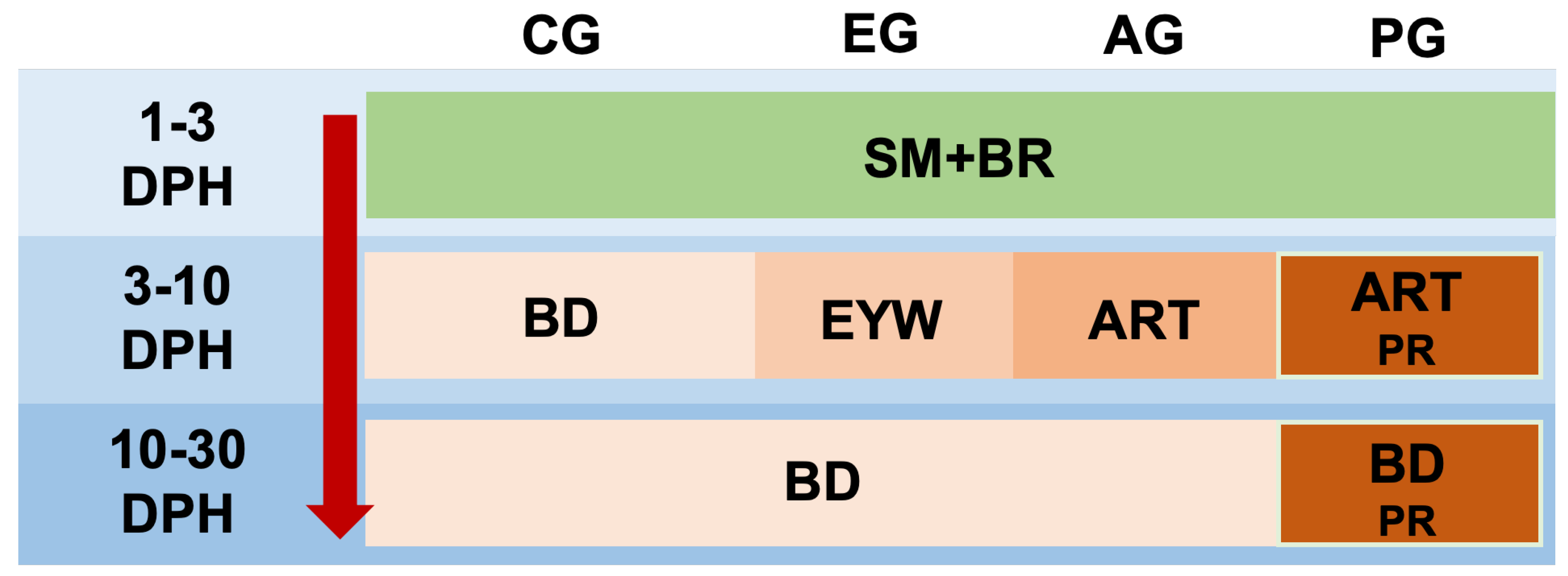
All yellow catfish fry were produced through artificial breeding [17]. Specifically, spawning was induced using a double-injection protocol. Female broodstock were first injected with luteinizing hormone-releasing hormone analogue (LHRH-A2, 16 μg/kg body weight, Ningbo Second Hormone Factory Co., Ltd., Zhejiang, China), followed by a second injection containing domperidone (DOM, 20 mg/kg body weight, Ningbo Second Hormone Factory Co., Ltd., Zhejiang, China) and human chorionic gonadotropin (HCG, 1500 IU/kg body weight, Ningbo Second Hormone Factory Co., Ltd., Zhejiang, China) after a 24 h interval. Fertilization was subsequently carried out using the semi-dry method. Under the incubation conditions used in this study (flow-through water system, 26 ± 1 °C), hatching was first observed approximately 50 h after fertilization. The yolk sac was largely absorbed approximately 1.5 days after hatching, although some variation among individuals was observed. Therefore, exogenous feeding was initiated 1 day after hatching using soybean milk and Brachionus rotifers to ensure adequate nutrition for all fry. After 1–3 days of acclimation and initial feeding, the hatched fry were randomly assigned to four groups (CG, EG, AG, PG), with 50 individuals per group, each consisting of three replicate tanks, and reared under a three-stage feeding regimen as illustrated in Figure 1. Feeding was conducted twice daily, in the morning and evening, over a total rearing period of 30 days (Figure 1). Due to the small size of the fry, feed intake could not be accurately determined as a percentage of biomass. Therefore, fry were fed to apparent satiation at each feeding event, and the feeding amount was adjusted according to feeding activity and residual feed in the tanks. Broken-cell wall P. rhodozyma was supplemented at 10 g/kg in the diet and 1 mg/L in brine shrimp enrichment. The basic starter feed used in this study was sourced from Tongwei Company (Sichuan, China) (Table S1).

2.2. Preparation of Broken-Cell Wall P. rhodozyma and Dietary Supplementation

The Phaffia rhodozyma strain (bio-69760) was provided by Xiamen Junhecheng Biotechnology Co., Ltd. (Fujian, China). P. rhodozyma was inoculated into 10 mL of YM liquid medium and cultured at 20 °C and 180 rpm for 48 h to obtain the seed liquid. Then, the seed liquid was transferred to 1 L of fresh YM liquid medium at a volume ratio of 1:10 and cultured under the same conditions for 96 h. After the fermentation was completed, the mixture was centrifuged at 8000 rpm for 10 min. The precipitate was washed twice with 1× PBS buffer and the cells were collected. A total of 400 mL of 3 mol/L hydrochloric acid was added to the cells, with the volume ratio of acid to the initial medium being 2.5:1. The mixture was heated for 4 min, cooled to room temperature, and then centrifuged at 8000 rpm for 10 min. The precipitate was collected and freeze-dried to obtain the broken-cell wall P. rhodozyma. The broken-cell yeast was dissolved in 95% ethanol, evenly sprayed onto the starter feed of yellow catfish, and then air-dried to prepare the compound feed containing broken-cell P. rhodozyma. Additionally, Artemia eggs were hatched in 20‰ salinity for 18 h and then co-incubated with the broken-cell P. rhodozyma for 12 h to obtain the live biological feed of P. rhodozyma with Artemia as the biological carrier.

2.3. Assessment of the Growth Performance of P. fulvidraco Fry

At the end of the 30-day treatment, the final survival count (Number final, Nf) of yellow catfish fry in each group was recorded, and the survival rate (SR) was calculated based on the initial stocking number (Number initial, Ni). All experimental fish were fasted for 48 h prior to sampling. The remaining fry from each group were anesthetized with MS-222 (100 mg/L, Shanghai Reagent Corp., Shanghai, China), after which total length (TL, measured as the distance from the tip of the snout to the end of the caudal fin using a digital caliper) was determined using a ruler (accuracy: 0.1 cm), and body weight (BW) was measured using an electronic balance (accuracy: 0.01 g). Body weight was assessed using the group-weighing method. At the end of the experiment, all fry from each replicate tank were collectively weighed to determine the total biomass. The mean individual body weight was then calculated by dividing the total biomass by the number of surviving fish in each replicate tank. Survival rate (SR) = (Nf/Ni) × 100%.

2.4. Histological Analysis Method for the Liver and Intestine of P. fulvidraco Fry

Histological analysis of the liver and intestine of yellow catfish fry was performed using a conventional paraffin sectioning protocol. In brief, tissue samples were fixed in 4% paraformaldehyde (PFA; Sangon Biotech, Shanghai, China, A500684-0500) solution for 16 h, followed by graded dehydration in 70%, 90%, 95%, and 100% ethanol, clearing in xylene, and infiltration with paraffin prior to embedding in paraffin blocks. Sections were cut at 5 μm thickness using a microtome and mounted on glass slides. After drying at 42 °C, the sections were dewaxed in xylene and rehydrated through a descending ethanol series (100%, 90%, 70%) before rinsing in deionized water. Hematoxylin and eosin (H&E; Sangon Biotech, Shanghai, China, E607318-0200) staining was then carried out according to standard procedures.

2.5. Methods for the Detection of Enzyme Activities

For the determination of hepatic immune enzyme activities, liver samples from yellow catfish stored at −80 °C were thawed and homogenized in 0.85× PBS at a 1:9 (w/v) ratio to prepare tissue homogenates for enzyme activity assays. Assays were performed according to the manufacturer’s instructions using the following commercial kits: lysozyme (LZM) activity assay kit (Nanjing Jiancheng Bioengineering Institute, Jiangsu, China, A050-1-1) and alkaline phosphatase (ALP) assay kit (Nanjing Jiancheng Bioengineering Institute, A059-1-1). For the measurement of intestinal digestive and antioxidant enzyme activities, a similar procedure was applied. Intestinal tissues were homogenized in 0.85× PBS (1:9, w/v) to prepare the corresponding homogenates. Digestive enzymes were assayed using the lipase (LIP) activity assay kit (Nanjing Jiancheng Bioengineering Institute, A054-2-1) and alpha-amylase (AMY) assay kit (Nanjing Jiancheng Bioengineering Institute, C016-1-1), while antioxidant enzyme activities were determined using the superoxide dismutase (SOD) assay kit (Nanjing Jiancheng Bioengineering Institute, A001-3-1) and glutathione (GPx) assay kit (Nanjing Jiancheng Bioengineering Institute, A005-1-1).

2.6. Bacterial 16S Ribosomal RNA Gene Sequencing

Intestinal tissues from each group of yellow catfish fry were dissected and immediately stored at −80 °C. For intestinal microbiota analysis, total genomic DNA was extracted from each sample. The 16S rRNA gene regions of the gut microbial community were amplified using primers 343F (5′-TACGGRAGGCAGCAG-3′) and 798R (5′-AGGGTATCTAATCCT-3′), followed by sequencing on the Illumina NovaSeq 6000 platform (Illumina Inc., San Diego, CA, USA).

2.7. Statistical Analysis

Statistical analyses were performed using SPSS 27.0. Data normality and homogeneity of variance were assessed using the Shapiro–Wilk test and Levene’s test, respectively. For normally distributed data with homogeneous variances, differences among treatment groups were analyzed using one-way analysis of variance (ANOVA), followed by Tukey’s honestly significant difference (HSD) post hoc test for multiple pairwise comparisons among all groups. Data are presented as mean ± standard deviation (SD). Statistical significance was set at p < 0.05.

3. Results

3.1. Dietary P. rhodozyma Improves Growth Performance

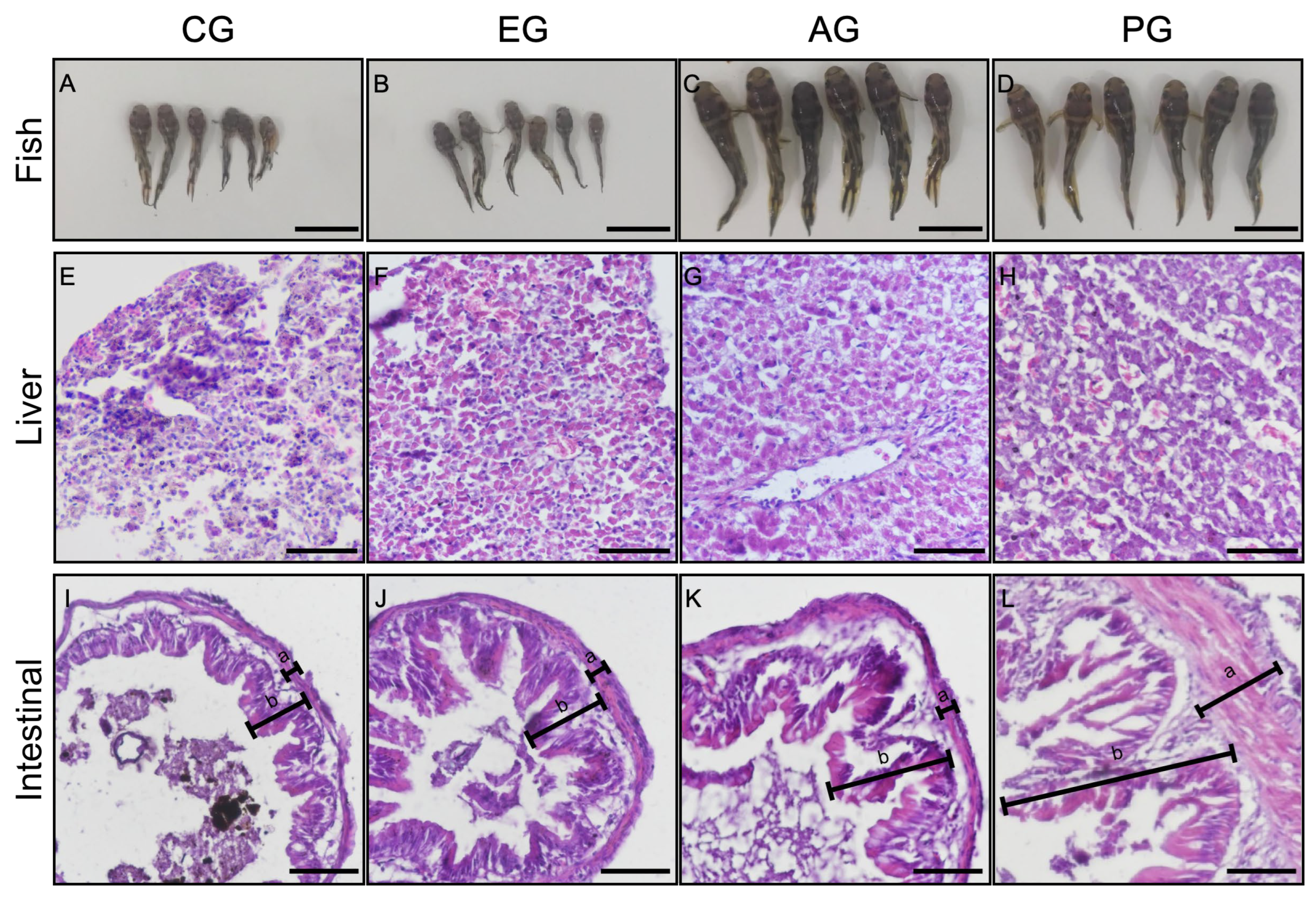
After the feeding trial, the survival rates and growth performance of each group were statistically evaluated, with results presented in Table 1. Both the CG and EG groups were initially fed starter diets; however, due to insufficient high-quality nutritional intake during the initiation phase, their survival rate reached only 12%. Specifically, the CG (initiated on rotifers) exhibited an average total length of 1.5 cm and an average weight of 0.05 g, while the EG group (supplemented with egg yolk) showed comparable measurements, with an average total length of 1.5 cm and an average weight of 0.05 g. The AG group underwent a short-term Artemia transition before being shifted to conventional feed, achieving a survival rate of 48%, a total length range of 2.0–2.5 cm, and an average weight of 0.2 g. In contrast, the PG group, which received broken-cell wall P. rhodozyma in the diet, demonstrated a higher survival rate of 52%, a total length range of 2.3–2.5 cm, and an average weight of 0.21 g. Growth performance across groups is further illustrated in Figure 2. These findings indicate that dietary supplementation with crushed P. rhodozyma significantly enhances both the survival rate and growth performance of yellow catfish fry.

3.2. Effects of Dietary P. rhodozyma on Liver and Intestinal Structure

Histological results showed that the livers of the CG and EG groups were in a relatively primitive and incompletely developed state due to retarded development (Figure 2E,F). However, after the transition to feeding with Artemia (AG and PG groups), the individual development of yellow catfish fry was more mature (Figure 2C,D), with a significant increase in liver tissue volume and more complete liver structure development (Figure 2G,H). In the intestinal tissue, the addition of broken-cell wall P. rhodozyma significantly promoted the elongation of intestinal villi and increased the thickness of the intestinal wall (Figure 2L).

3.3. Effects of Dietary P. rhodozyma on Digestive and Antioxidant Enzyme Activities

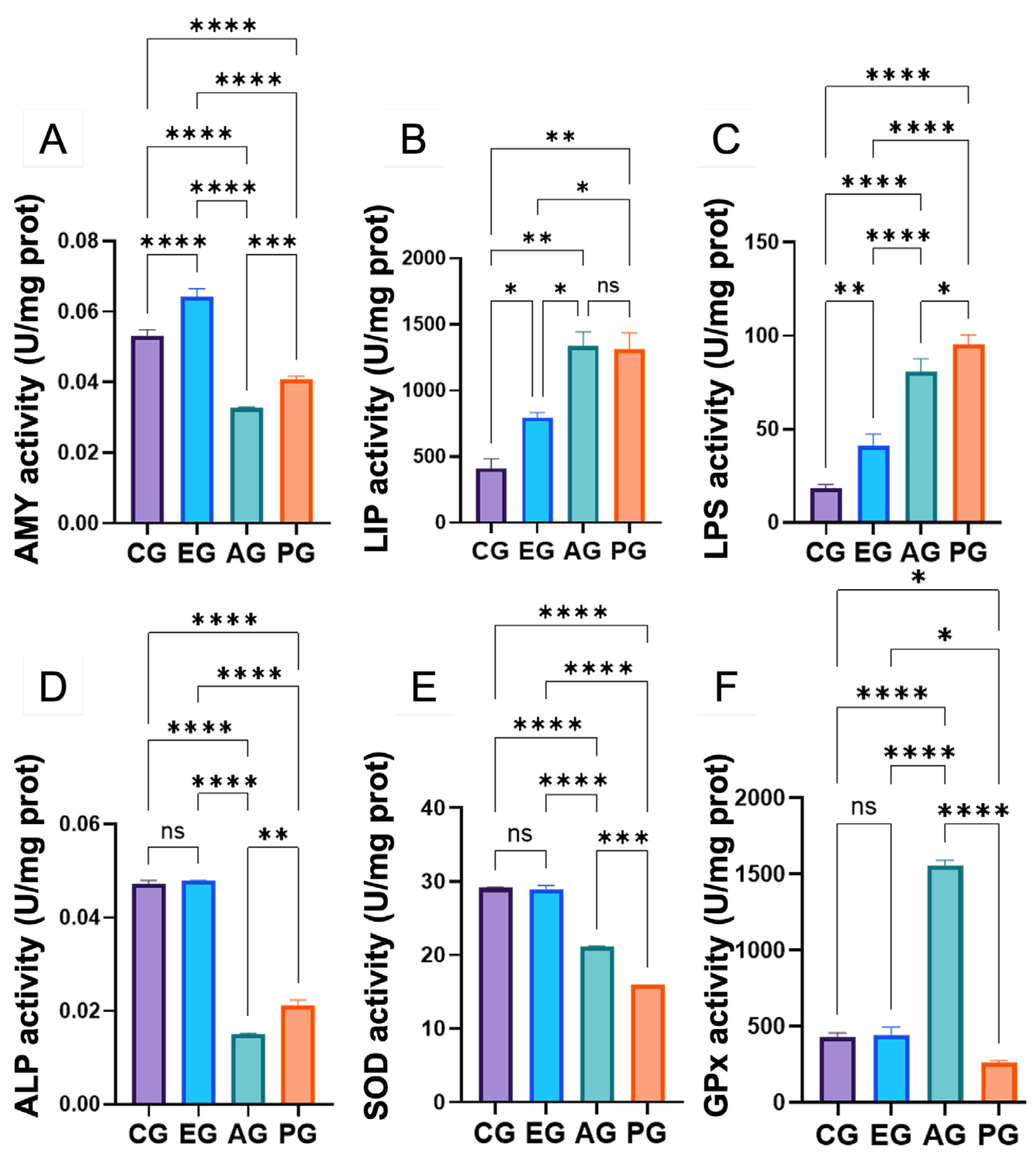
Dietary treatments significantly affected the activities of digestive and antioxidant enzymes in yellow catfish fry (Figure 3). Amylase (AMY) activity varied among dietary groups, with higher activities observed in the egg yolk and Artemia groups compared with the control and Phaffia groups (Figure 3A). Lysozyme (LZM) activity was markedly elevated in the Artemia and Phaffia groups relative to the control and egg yolk groups (Figure 3B). A similar increasing trend was observed for lipase (LIP) activity, with significantly higher levels detected in the Artemia and Phaffia groups (Figure 3C). Alkaline phosphatase (ALP) activity showed an opposite pattern, with reduced activity in the Artemia and Phaffia groups compared with the control and egg yolk groups (Figure 3D). For antioxidant enzymes, superoxide dismutase (SOD) activity decreased progressively in fry fed Artemia and Phaffia diets (Figure 3E), whereas glutathione peroxidase (GPx) activity was substantially increased in the Artemia group and remained comparatively lower in the other dietary treatments (Figure 3F).

3.4. Dietary P. rhodozyma Reshapes Gut Microbial Community Structure and Diversity

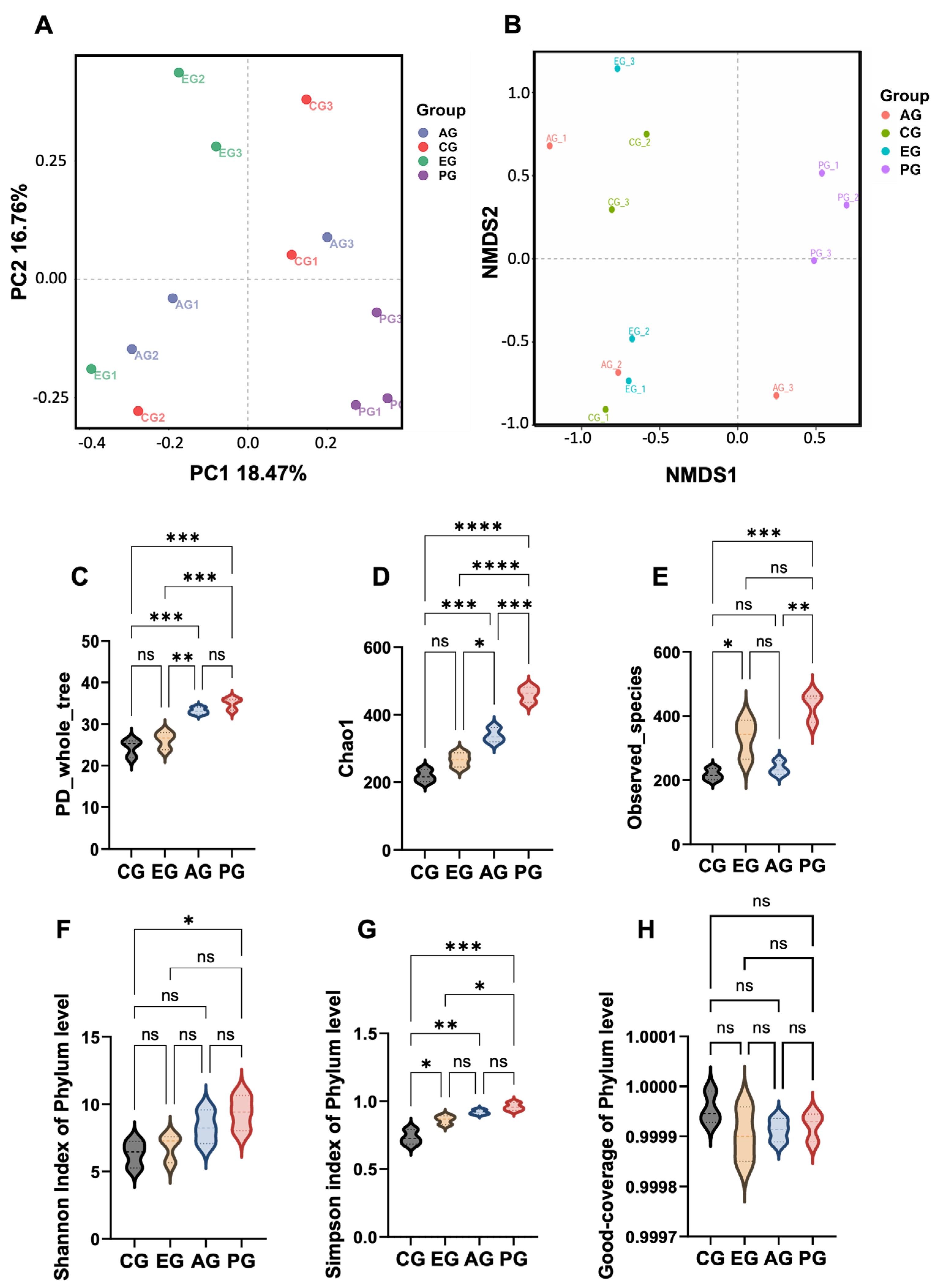
Ordination analyses revealed clear differences in microbial community structure among dietary groups (Figure 4). In the PC1-PC2 ordination (PC1: 18.47%; PC2: 16.76%), samples clustered according to treatment, indicating group-dependent compositional shifts. This pattern was corroborated by NMDS ordination, where replicates from the same group tended to cluster and were separated from other dietary groups, supporting consistent differences in community dissimilarity across treatments (Figure 4A,B). Alpha-diversity violin plots further demonstrated diet-associated changes in within-sample diversity. Across multiple alpha-diversity metrics, groups differed in both central tendency and dispersion, suggesting that dietary treatments altered richness/diversity distributions rather than producing uniform shifts across all individuals (Figure 4C–H).

3.5. Dietary P. rhodozyma Alters Gut Microbial Community Composition and Predicted Functional Profiles

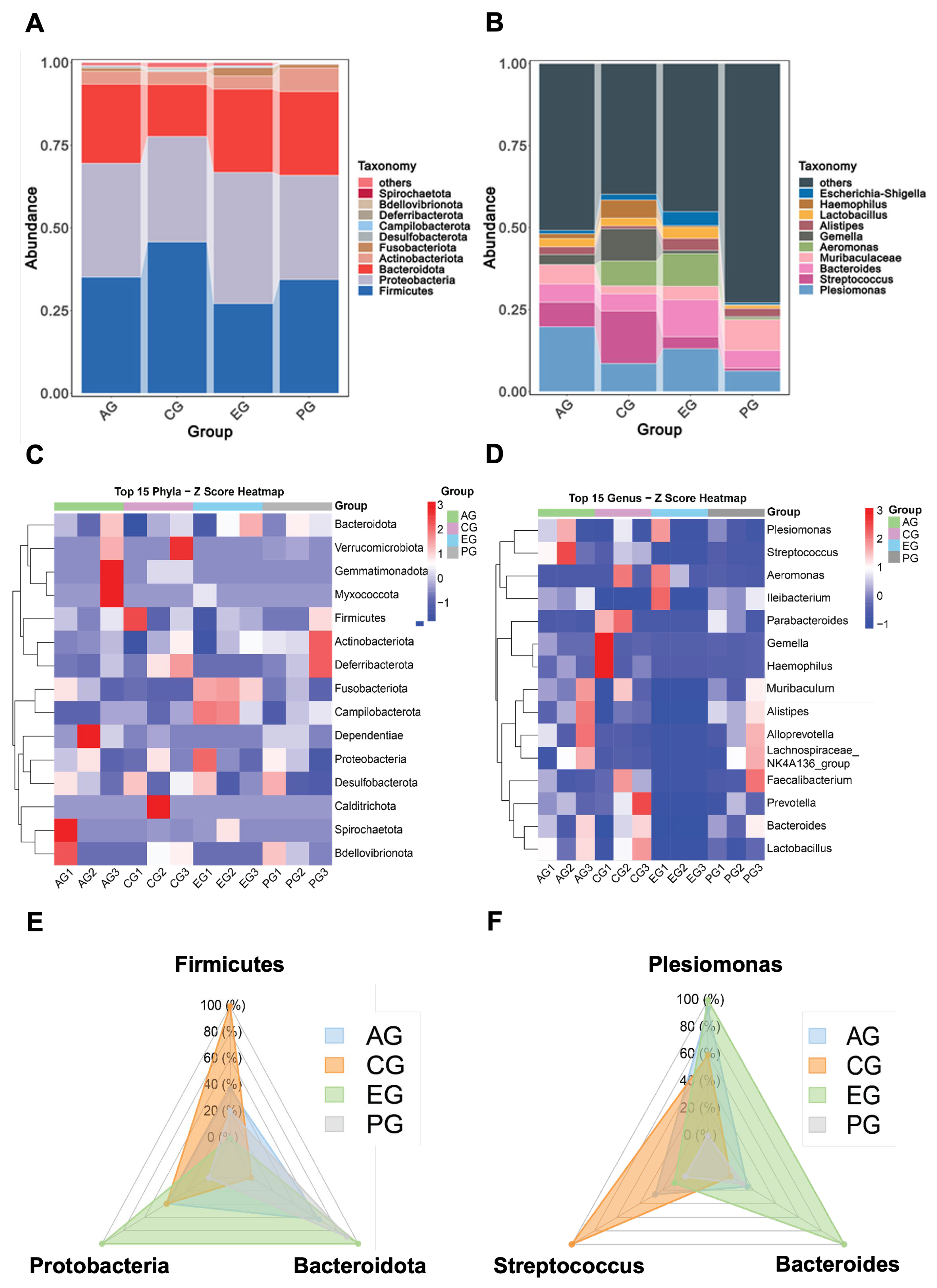
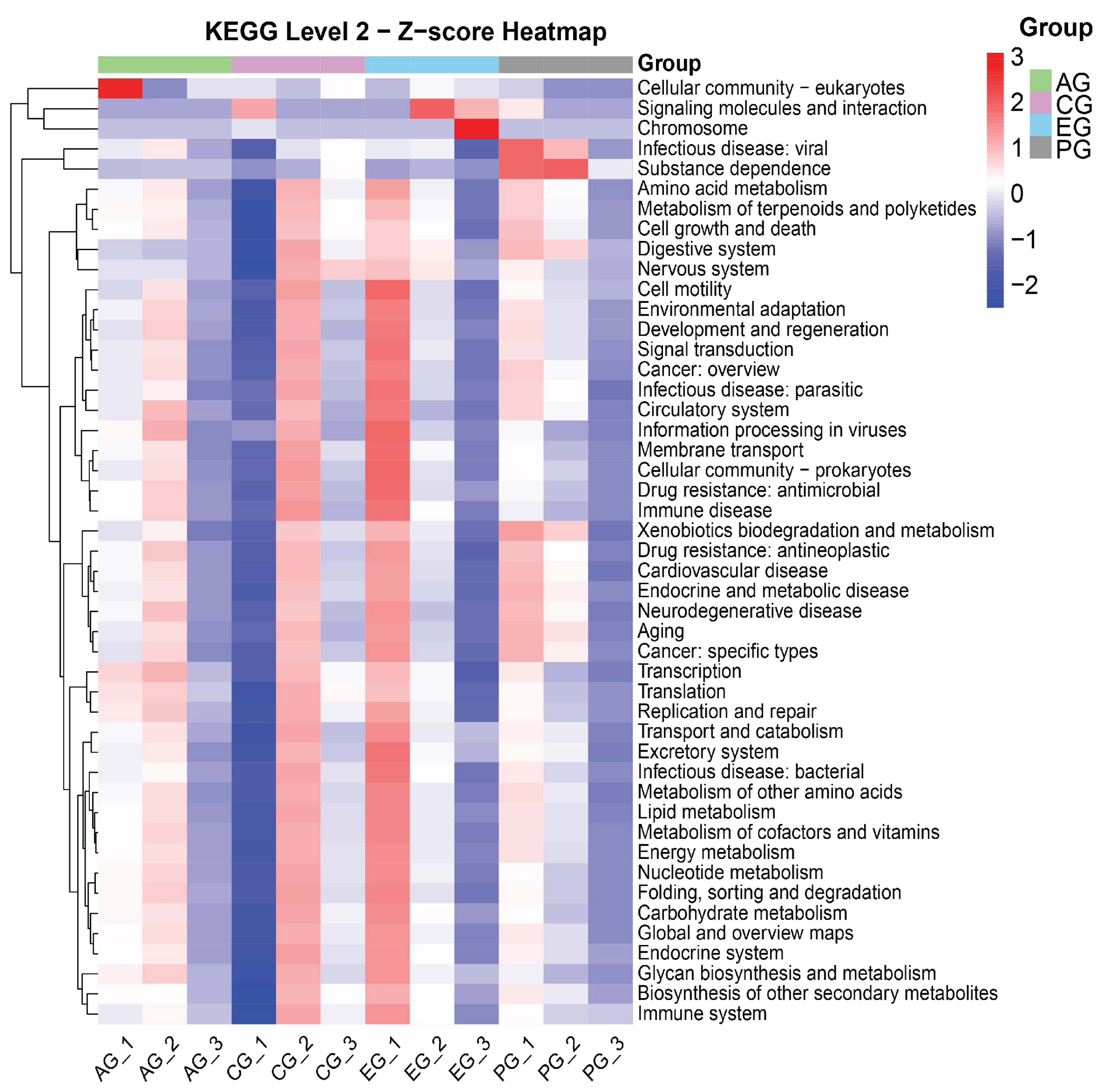
Gut microbial composition differed markedly among dietary groups at both the phylum and genus levels (Figure 5). At the phylum level, Firmicutes, Bacteroidota, and Proteobacteria dominated across all groups; however, their relative abundances varied among treatments. Notably, the relative proportions of Firmicutes and Bacteroidota showed distinct shifts across the CG, EG, AG, and PG groups, indicating diet-associated restructuring of the microbial community. At the genus level, clear differences in dominant taxa were observed among dietary treatments. The relative abundances of genera such as Muribaculum, Streptococcus, Bacteroides, Aeromonas, and Plesiomonas varied substantially across groups, reflecting treatment-specific microbial signatures (Figure 5A,B). Heatmap analysis of the top 15 phyla and genera further highlighted clustering patterns consistent with dietary grouping, demonstrating distinct microbial profiles among treatments (Figure 5C,D). Radar plot visualization revealed pronounced differences in the proportional representation of key microbial taxa among groups, emphasizing shifts in community structure rather than uniform changes across all taxa (Figure 5E,F). In addition, functional prediction based on KEGG level 2 pathways showed diet-dependent variation in predicted microbial functions. Differences were observed in pathways related to metabolism, genetic information processing, environmental adaptation, and immune-related functions, indicating that dietary treatments influenced not only microbial composition but also the predicted functional potential of the gut microbiota (Figure 6).

3.6. Correlation Between Survival Rate and Enzymatic Activities in Yellow Catfish Fry

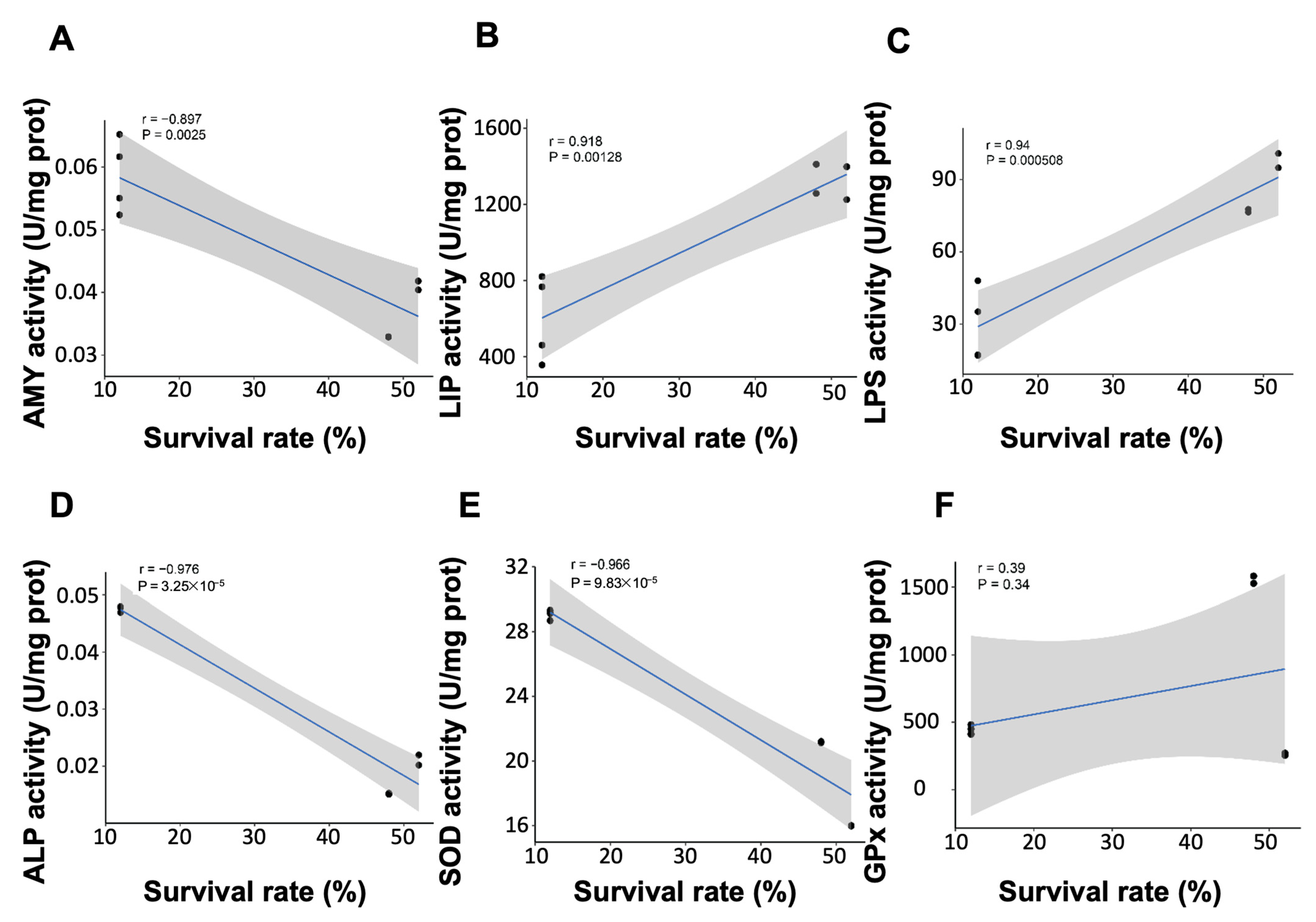
Correlation analysis revealed significant associations between larval survival rate and multiple enzymatic activities (Figure 7). Survival rate was significantly negatively correlated with amylase (AMY) activity, with AMY activity decreasing as survival rate increased. In contrast, survival rate showed significant positive correlations with lysozyme (LZM) and lipase (LIP) activities, suggesting that higher survival was associated with increased immune-related and lipid-digestive enzyme activities (Figure 7A–C).
Alkaline phosphatase (ALP) and superoxide dismutase (SOD) activities exhibited significant negative correlations with survival rate, indicating reduced enzyme activity at higher survival levels. Glutathione peroxidase (GPx) activity displayed a positive trend with survival rate, although the association was comparatively weaker (Figure 7D–F).

4. Discussion

Pigment-producing fungi, such as P. rhodozyma, have been widely utilized in aquaculture for promoting fish growth, enhancing overall health status, and improving pigmentation [18]. This study systematically assessed the effects of broken-cell wall P. rhodozyma as a dietary supplement on growth performance, organ development, stress resistance, and intestinal microbiota composition in P. fulvidraco fry. Results demonstrated that supplementation with broken-cell wall P. rhodozyma during the initiation feeding and early developmental stages significantly improved larval survival and growth rates, facilitated structural development and functional maturation of hepatic and intestinal tissues, increased the activities of digestive and antioxidant enzymes, and effectively modulated the intestinal microbial community structure.
Driven by the trend of intensification in aquaculture, feed additives have emerged as a prominent strategy for precise nutritional intervention, attracting significant research attention [5]. However, current research remains predominantly focused on post-larval development, with an emphasis on the long-term effects of dietary supplementation on growth performance and stress resistance in farmed species [13,14,19,20]. As the concept of “nutritional programming” continues to evolve, evidence indicates that nutritional interventions during early life stages not only significantly enhance survival rates in the seedling phase but also contribute to the establishment of a durable physiological regulatory framework [11,12], thereby promoting sustained health and developmental resilience throughout the aquaculture production cycle. This study demonstrates that the survival rate in groups fed exclusively on commercial feed (CG and EG) was extremely low, whereas the inclusion of Artemia (AG and PG groups) significantly improved both survival rates and growth performance metrics. These results confirm that during the rapid developmental phase of fish fry, the nutritional profile of commercial basal diets is insufficient to support optimal growth, while Artemia provide more comprehensive nutritional support. However, short-term Artemia supplementation alone fails to meet the sustained nutritional demands required for long-term healthy rearing. Supplementing with P. rhodozyma (PG group) further enhanced survival rates and markedly improved individual growth uniformity. This outcome aligns with our previous observations in other economically important fish species, Chinese hooksnout carp, suggesting that P. rhodozyma, as a probiotic-like additive, may exert broad-spectrum health-promoting effects during the early life stages of diverse fish species [16].
The probiotic effects of P. rhodozyma are likely attributable to its high content of bioactive compounds and may be associated with astaxanthin and other bioactive compounds. Extensive research has demonstrated that astaxanthin possesses potent antioxidant properties [21,22,23], enhances cellular vitality [24], and promotes metabolic activity. In this study, fry in the P. rhodozyma-supplemented group (PG) exhibited significantly longer intestinal villi and thicker intestinal wall structures. Concurrently, intestinal lipase activity was markedly elevated, while oxidative stress levels were substantially reduced. These findings indicate that P. rhodozyma supplementation effectively alleviates intestinal oxidative damage and promotes both structural differentiation and functional maturation of the intestinal tissue. As a key site for nutrient absorption and a critical immune barrier [8], the enhanced structure and function of the intestine contribute to the healthy development of other organs [5]. For example, the decrease in hepatic alkaline phosphatase (ALP) activity in the PG group relative to the AG group may suggest a normalization of liver metabolic status induced by dietary supplementation with broken-cell wall P. rhodozyma.
Beyond the absolute changes in enzyme activities, the correlation analysis between survival rate and enzymatic profiles provided further mechanistic insights (Figure 7). The significant positive correlations of survival with lysozyme and lipase activities reinforce the critical role of enhanced immune defense and lipid digestion in larval viability. Conversely, the negative correlations with amylase, alkaline phosphatase, and superoxide dismutase activities suggest that superior survival is associated with a reduced demand for certain constitutive metabolic and stress-response enzymes. This pattern may indicate that P. rhodozyma supplementation promotes a more efficient and less stressed physiological state, thereby diverting energy from stress compensation toward growth and development. Thus, these enzyme activity patterns may have potential value as physiological indicators for assessing larval health and survival in yellow catfish aquaculture.
In addition, dietary supplementation with P. rhodozyma significantly modulated the intestinal microbial community structure in P. fulvidraco fry. Modulation of the gut microbiota through functional feed ingredients represents an effective strategy for enhancing host health [12,25,26]. In this study, supplementation with P. rhodozyma significantly increased the relative abundance of Muribaculum, a potentially beneficial bacterial taxon, while simultaneously suppressing the proliferation of Streptococcus, a genus associated with potential pathogenicity. The intestinal microbiota composition among individuals in the P. rhodozyma supplementation group exhibited greater consistency, indicating its role in promoting a more stable and healthier initial gut microecology. Complementing the structural shifts, the predicted functional profile of the gut microbiota was also significantly altered by dietary P. rhodozyma. The yeast-supplemented group showed distinct enrichment in pathways related to metabolism and environmental adaptation. This suggests that P. rhodozyma not only modulates microbial community composition but also potentially steers its collective metabolic activity toward enhanced nutrient processing and stress resilience, which may synergistically contribute to the observed improvements in host growth and physiological health.
Overall, P. rhodozyma represents a promising feed additive for yellow catfish larval aquaculture. Its benefits are likely mediated through a dual pathway: direct provision of astaxanthin and other bioactives that reduce oxidative stress and enhance cell vitality, and indirect modulation of the gut microbiota towards a community that supports more efficient nutrient metabolism and a stable intestinal environment. This synergistic action promotes robust early development, offering a sustainable strategy to improve fry quality and production resilience. It should be noted that the present study was designed to evaluate a practical nutritional intervention strategy under hatchery conditions rather than to isolate the single-factor effects of P. rhodozyma. Because commercial fry production commonly involves the combined use of live feeds and formulated diets during early development, the feeding protocols adopted here more closely reflect real-world aquaculture practices. Therefore, the observed benefits of P. rhodozyma supplementation may provide valuable guidance for its practical application in yellow catfish fry production.

5. Conclusions

This study demonstrates that dietary supplementation with broken-cell wall P. rhodozyma significantly improves the survival, growth performance, and physiological health of yellow catfish fry during the critical early developmental stage. The yeast enhanced structural integrity and functional maturation of the liver and intestine, promoted digestive and antioxidant enzyme activities, and modulated the gut microbiota toward a more beneficial and stable community. The observed increases in beneficial bacteria (Muribaculum) and reductions in potential pathogens (Streptococcus) underscore the probiotic potential of P. rhodozyma. These effects are likely mediated by its rich astaxanthin content and other bioactive compounds, which support redox balance, nutrient absorption, and immune function. Overall, P. rhodozyma represents a promising feed additive for improving larval quality and resilience in yellow catfish aquaculture, offering a sustainable strategy to enhance fry production and health management.

Supplementary Materials

The following supporting information can be downloaded at: https://www.mdpi.com/article/10.3390/fishes11060348/s1, Table S1: Commercial feed nutritional composition.

Author Contributions

S.L.: Writing—Original Draft, Conceptualization. Methodology, Y.W.: Methodology, Formal Analysis. T.L.: Investigation, Methodology. M.J.: Writing—Review and Editing. H.X.: Investigation, Methodology, Validation. Q.Z.: Formal analysis. A.W.: Supervision. M.L.: Supervision, Writing—Review and Editing, Resources, Validation. All authors have read and agreed to the published version of the manuscript.

Funding

This research was supported by the National Key R&D Program of China (2022YFD2400901).

Institutional Review Board Statement

The animal procedures were strictly compliance with the regulations outlined in the Statute of Experimental Animal Ethics Committee of Shanghai Ocean University Approval Code: SHOU-2023-031 Approval Date: 1 September 2023.

Informed Consent Statement

Not applicable.

Data Availability Statement

Data will be made available upon request.

Acknowledgments

The authors sincerely thank Xiamen Junhecheng Biotechnology Co., Ltd. for providing the Phaffia rhodozyma strain (bio-69760).

Conflicts of Interest

The authors declare no conflicts of interest.

References

  1. van Riel, A.-J.; Nederlof, M.A.J.; Chary, K.; Wiegertjes, G.F.; de Boer, I.J.M. Feed-Food Competition in Global Aquaculture: Current Trends and Prospects. Rev. Aquac. 2023, 15, 1142–1158. [Google Scholar] [CrossRef]
  2. Ashraf Rather, M.; Ahmad, I.; Shah, A.; Ahmad Hajam, Y.; Amin, A.; Khursheed, S.; Ahmad, I.; Rasool, S. Exploring Opportunities of Artificial Intelligence in Aquaculture to Meet Increasing Food Demand. Food Chem. X 2024, 22, 101309. [Google Scholar] [CrossRef]
  3. Garlock, T.M.; Asche, F.; Anderson, J.L.; Eggert, H.; Anderson, T.M.; Che, B.; Chávez, C.A.; Chu, J.; Chukwuone, N.; Dey, M.M.; et al. Environmental, Economic, and Social Sustainability in Aquaculture: The Aquaculture Performance Indicators. Nat. Commun. 2024, 15, 5274. [Google Scholar] [CrossRef] [PubMed]
  4. El-Saadony, M.T.; Alagawany, M.; Patra, A.K.; Kar, I.; Tiwari, R.; Dawood, M.A.O.; Dhama, K.; Abdel-Latif, H.M.R. The Functionality of Probiotics in Aquaculture: An Overview. Fish Shellfish Immunol. 2021, 117, 36–52. [Google Scholar] [CrossRef] [PubMed]
  5. Abdul Kari, Z. Nutritional Immunomodulation in Aquaculture: Functional Nutrients, Stress Resilience, and Sustainable Health Strategies. Aquac. Int. 2025, 33, 441. [Google Scholar] [CrossRef]
  6. Mondal, H.; Thomas, J. A Review on the Recent Advances and Application of Vaccines against Fish Pathogens in Aquaculture. Aquac. Int. 2022, 30, 1971–2000. [Google Scholar] [CrossRef]
  7. Xavier, R.; Severino, R.; Silva, S.M. Signatures of Dysbiosis in Fish Microbiomes in the Context of Aquaculture. Rev. Aquac. 2024, 16, 706–731. [Google Scholar] [CrossRef]
  8. Medina-Félix, D.; Garibay-Valdez, E.; Vargas-Albores, F.; Martínez-Porchas, M. Fish Disease and Intestinal Microbiota: A Close and Indivisible Relationship. Rev. Aquac. 2023, 15, 820–839. [Google Scholar] [CrossRef]
  9. Ministry of Agriculture and Rural Affairs of the People’s Republic of China Fisheries Administration; National Aquatic Technology Extension Station. China Society of Fisheries 2025 China Fishery Statistical Yearbook, 1st ed.; China Agriculture Press: Beijing, China, 2025.
  10. Hamre, K.; Yúfera, M.; Rønnestad, I.; Boglione, C.; Conceição, L.E.C.; Izquierdo, M. Fish Larval Nutrition and Feed Formulation: Knowledge Gaps and Bottlenecks for Advances in Larval Rearing. Rev. Aquac. 2013, 5, S26–S58. [Google Scholar] [CrossRef]
  11. Deck, C.A.; Salger, S.A.; Reynolds, H.M.; Tada, M.D.; Severance, M.E.; Ferket, P.; Egna, H.S.; Fatema, M.K.; Haque, S.M.; Borski, R.J. Nutritional Programming in Nile Tilapia (Oreochromis niloticus): Effect of Low Dietary Protein on Growth and the Intestinal Microbiome and Transcriptome. PLoS ONE 2023, 18, e0292431. [Google Scholar] [CrossRef]
  12. Rimoldi, S.; Quiroz, K.F.; Kalemi, V.; McMillan, S.; Stubhaug, I.; Martinez-Rubio, L.; Betancor, M.B.; Terova, G. Interactions between Nutritional Programming, Genotype, and Gut Microbiota in Atlantic salmon: Long-Term Effects on Gut Microbiota, Fish Growth and Feed Efficiency. Aquaculture 2025, 596, 741813. [Google Scholar] [CrossRef]
  13. Feng, D.; Yang, Z.; Li, M. Dietary N-Carbamylglutamate Supplementation Improves Ammonia Tolerance of Juvenile Yellow Catfish Pelteobagrus fulvidraco. Front. Physiol. 2023, 14, 1191468. [Google Scholar] [CrossRef]
  14. Zhao, H.; Hou, D.; Li, P.; Li, M.; Chen, B.; Zhu, X.; Cao, J. The Effects of Dietary Tributyrin on Growth, Intestinal Health, Inflammatory Response and Antioxidant Status in Juvenile Yellow Catfish (Pelteobagrus fulvidraco). Aquac. Rep. 2022, 27, 101370. [Google Scholar] [CrossRef]
  15. Zhao, H.; Wang, G.; Wang, H.; Mo, W.; Huang, Y.; Cao, J.; Li, P. Effects of Dietary Sodium Butyrate on Growth, Digestive Enzymes, Body Composition and Nutrient Retention-Related Gene Expression of Juvenile Yellow Catfish (Pelteobagrus fulvidraco). Anim. Nutr. 2021, 7, 539–547. [Google Scholar] [CrossRef]
  16. Li, M.; Bu, W.; Yin, Z.; Jawad, M.; Xue, L.; Zeng, G.; Wu, M.; Lu, Z.; Qiu, J.; Li, M. Astaxanthin from Phaffia rhodozyma Screened by Metagenome Sequencing Improves the Growth Performance, Intestinal Health, and Immunity of Juvenile Opsariichthys bidens. Aquac. Rep. 2025, 43, 102960. [Google Scholar] [CrossRef]
  17. Xu, H.; Lin, W.; Ma, X.; Jawad, M.; Wu, M.; Qiu, J.; Li, M. A Timecourse Analysis of Gonadal Histology and Transcriptome during the Sexual Development of Yellow Catfish, Pelteobagrus fulvidraco. Comp. Biochem. Physiol. Part D Genom. Proteom. 2025, 56, 101576. [Google Scholar] [CrossRef]
  18. Zantioti, C.; Dimitroglou, A.; Mountzouris, K.C.; Miliou, H.; Malandrakis, E.E. Use of Pigmented Fungi as Additives in Aquaculture. Aquac. Int. 2025, 33, 162. [Google Scholar] [CrossRef]
  19. Xue, M.; Wu, Y.; Hong, Y.; Meng, Y.; Xu, C.; Jiang, N.; Li, Y.; Liu, W.; Fan, Y.; Zhou, Y. Effects of Dietary Bacillus Amyloliquefaciens on the Growth, Immune Responses, Intestinal Microbiota Composition and Disease Resistance of Yellow Catfish, Pelteobagrus fulvidraco. Front. Cell. Infect. Microbiol. 2022, 12, 1047351. [Google Scholar] [CrossRef] [PubMed]
  20. Chen, W.; Gao, S.; Chang, K.; Zhao, X.; Niu, B. Dietary Sodium Butyrate Supplementation Improves Fish Growth, Intestinal Microbiota Composition, and Liver Health in Largemouth Bass (Micropterus salmoides) Fed High-Fat Diets. Aquaculture 2023, 564, 739040. [Google Scholar] [CrossRef]
  21. Zhu, X.; Hao, R.; Zhang, J.; Tian, C.; Hong, Y.; Zhu, C.; Li, G. Dietary Astaxanthin Improves the Antioxidant Capacity, Immunity and Disease Resistance of Coral Trout (Plectropomus leopardus). Fish Shellfish Immunol. 2022, 122, 38–47. [Google Scholar] [CrossRef]
  22. Deng, Y.; Zhan, W.; Xie, S.; Peng, H.; Cao, H.; Tang, Z.; Tian, Y.; Zhu, T.; Sun, P.; Jin, M.; et al. Multi-Omics Analysis Revealed the Effects of Different Astaxanthin Sources on the Antioxidant Properties of Scylla Paramamosain. Food Chem. 2025, 478, 143470. [Google Scholar] [CrossRef] [PubMed]
  23. Chen, Q.; Huang, S.; Dai, J.; Wang, C.; Chen, S.; Qian, Y.; Gong, Y.; Han, T. Effects of Synthetic Astaxanthin on the Growth Performance, Pigmentation, Antioxidant Capacity, and Immune Response in Black Tiger Prawn (Penaeus Monodon). Aquac. Nutr. 2023, 2023, 6632067. [Google Scholar] [CrossRef]
  24. Mayor, J.; Cuesta, A.; Espinosa-Ruíz, C.; Esteban, M.Á. In Vitro Effects of Astaxanthin on Bacterial and Cell Viability, Cell Migration and Mitochondrial Activities in Four Fish Cell Lines. Aquac. Rep. 2023, 31, 101636. [Google Scholar] [CrossRef]
  25. Wang, W.; Liu, M.; Fawzy, S.; Xue, Y.; Wu, M.; Huang, X.; Yi, G.; Lin, Q. Effects of Dietary Phaffia rhodozyma Astaxanthin on Growth Performance, Carotenoid Analysis, Biochemical and Immune-Physiological Parameters, Intestinal Microbiota, and Disease Resistance in Penaeus monodon. Front. Microbiol. 2021, 12, 762689. [Google Scholar] [CrossRef] [PubMed]
  26. Naiel, M.A.E.; Abd El-hameed, S.A.A.; Arisha, A.H.; Negm, S.S. Gum Arabic-Enriched Diet Modulates Growth, Antioxidant Defenses, Innate Immune Response, Intestinal Microbiota and Immune Related Genes Expression in Tilapia Fish. Aquaculture 2022, 556, 738249. [Google Scholar] [CrossRef]
Figure 1. Treatment design for different experimental groups. The vertical axis represents the feeding schedule at different developmental stages of yellow catfish fry. The horizontal axis represents the four experimental groups. The diagram illustrates the specific feeding regimes applied to each treatment group throughout the experimental period. SM + BR: Soybean milk + Brachionus rotifers; BD: Basal diet; EYW: Egg Yolk Water; ART: Artemia; PR: Phaffia rhodozyma.
Fishes 11 00348 g001
Figure 2. Morphological characteristics of fish and histological analysis of the liver and intestine in different treatment groups. (A,E,I), Control group (CG), fed with commercial feed. (B,F,J), supplemented with egg yolk (EG). (C,G,K), Early fry transition nutritionally via Artemia feeding (AG). (D,H,L), Early fry transition nutritionally via Artemia feeding, supplemented with P. rhodozyma (PG). (a) intestinal muscular thickness, (b) intestinal villus length. Scale bar of (AD), 1 cm; Scale bar of (EL), 50 μm.
Fishes 11 00348 g002
Figure 3. Effects of different dietary treatments on digestive and antioxidant enzyme activities in P. fulvidraco fry. (AC) Amylase (AMY) activity, Lysozyme (LIP) activity, Lipase (LPS) activity and (DF) Alkaline phosphatase (ALP) activity, Superoxide dismutase (SOD) activity, and Glutathione peroxidase (GPx) activity. Fry were fed control (CG), egg yolk (EG), Artemia (AG), or Phaffia (PG) diets. Values are expressed as mean ± SD (n = 3 biological replicates). Asterisks (*) indicate significant differences among dietary treatments (one-way ANOVA followed by Tukey’s multiple comparison test). *: p < 0.05; **: p < 0.01; ***: p < 0.001, and ****: p < 0.0001; ns: not significant (p ≥ 0.05).
Fishes 11 00348 g003
Figure 4. Beta- and alpha-diversity analyses of gut microbial communities among dietary treatment groups in P. fulvidraco fry. (A) Ordination plot based on the first two axes (PC1 = 18.47%, PC2 = 16.76%), showing clustering patterns among groups. (B) NMDS ordination depicting dissimilarities in microbial community composition among dietary groups. (CH) Violin plots of alpha-diversity indices across groups, illustrating distributions of within-sample richness/diversity metrics. Groups include control (CG), egg yolk (EG), Artemia (AG), and Phaffia (PG). Points represent biological replicates. Violin widths indicate kernel density of the observed values. *: p < 0.05; **: p < 0.01; ***: p < 0.001; ****: p < 0.0001; ns: not significant (p ≥ 0.05).
Fishes 11 00348 g004
Figure 5. Gut microbial composition under different dietary treatments in P. fulvidraco fry. (A) Relative abundance of dominant bacterial phyla across dietary groups. (B) Relative abundance of dominant bacterial genera across dietary groups. (C) Heatmap of the top 15 bacterial phyla. (D) Heatmap of the top 15 bacterial genera. (E,F) Radar plots illustrating the proportional distribution of selected dominant bacterial taxa among dietary groups. Dietary groups include Artemia (AG), control (CG), egg yolk (EG), and Phaffia (PG). Relative abundance values represent mean proportions across biological replicates. Color intensity in heatmaps reflects standardized Z-scores, with red and blue indicating higher and lower relative abundances, respectively.
Fishes 11 00348 g005
Figure 6. Heatmap of predicted gut microbial functions at KEGG level 2. Dietary groups include Artemia (AG), control (CG), egg yolk (EG), and Phaffia (PG).
Fishes 11 00348 g006
Figure 7. Replicate-level association between survival rate and enzymatic activities in P. fulvidraco fry. (AC) Amylase (AMY), lysozyme (LZM), and lipase (LIP) activities; (DF) alkaline phosphatase (ALP), superoxide dismutase (SOD), and glutathione peroxidase (GPx) activities. Each point represents one independent biological replicate/tank, where survival rate was calculated separately for that replicate and paired with the corresponding enzymatic activity measurement. Solid lines indicate linear regression fits, and shaded areas represent 95% confidence intervals. Pearson correlation coefficients (r) and corresponding p values are shown within each panel.
Fishes 11 00348 g007
Table 1. Growth performance of P. fulvidraco.
CGEGAGPG
Survival Rate (%)12 a12 a48 b52 b
Total Length (cm)1.5 ± 0.5 a1.5 ± 0.5 a2.3 ± 0.3 b2.4 ± 0.1 b
Average Weight (g)0.05 a0.05 a0.20 b0.21 b
Notes: Values in the same column with different superscript alphabets indicate significant differences.
Disclaimer/Publisher’s Note: The statements, opinions and data contained in all publications are solely those of the individual author(s) and contributor(s) and not of MDPI and/or the editor(s). MDPI and/or the editor(s) disclaim responsibility for any injury to people or property resulting from any ideas, methods, instructions or products referred to in the content.