
Article

Multi-Class Marine Organism Detection Using Multi-Scale Attention-Enhanced YOLO11n
1
College of Information Science and Engineering, Shanxi Agricultural University, Jinzhong 030801, China
2
School of Computer Science and Engineering, University of New South Wales, Sydney 2052, NSW, Australia
*
Author to whom correspondence should be addressed.
Fishes 2026, 11(5), 301; https://doi.org/10.3390/fishes11050301

Submission received: 11 March 2026 / Revised: 11 May 2026 / Accepted: 15 May 2026 / Published: 19 May 2026
(This article belongs to the Special Issue Computer Vision Applications for Fisheries and Aquaculture)

Abstract

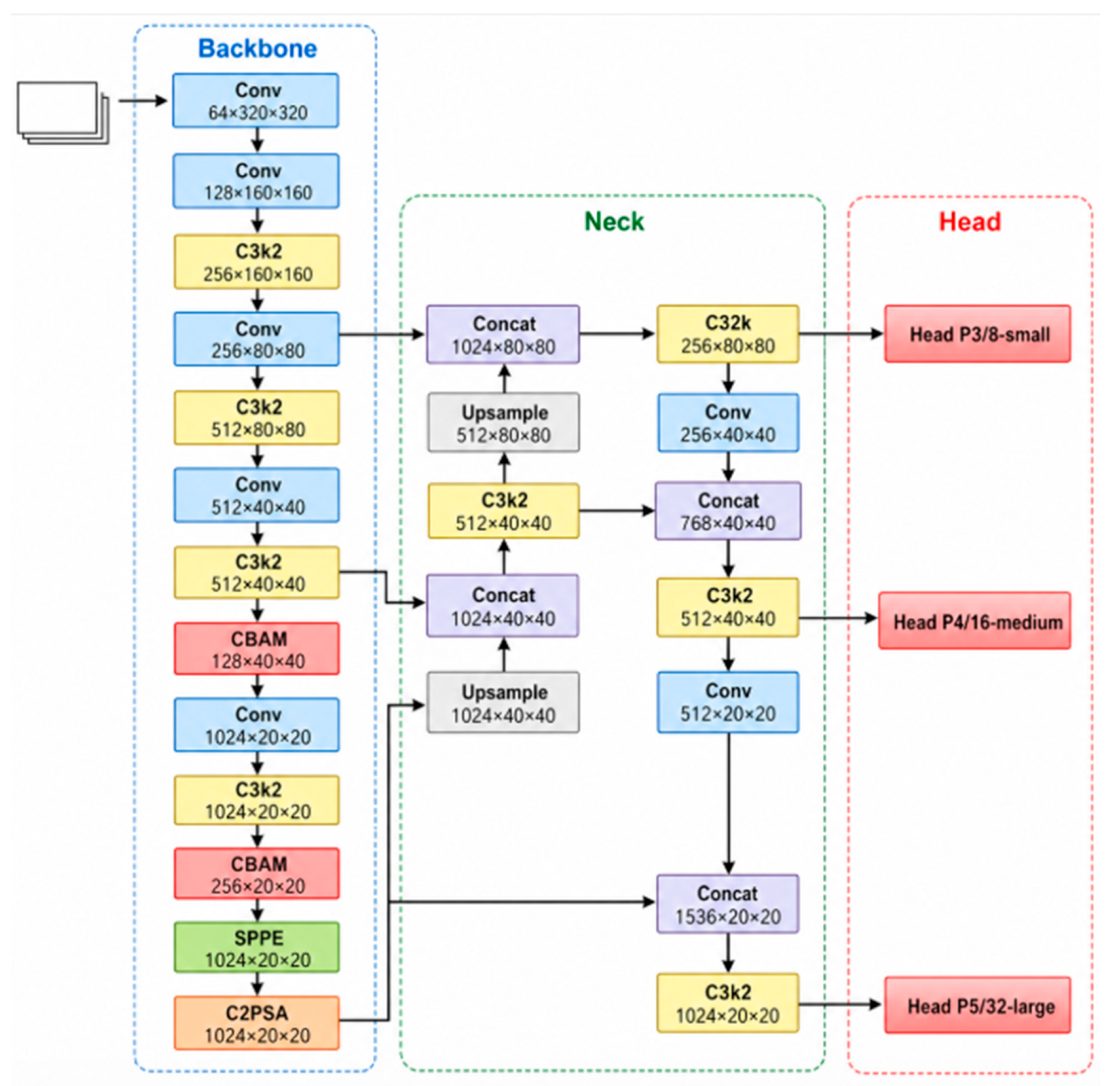
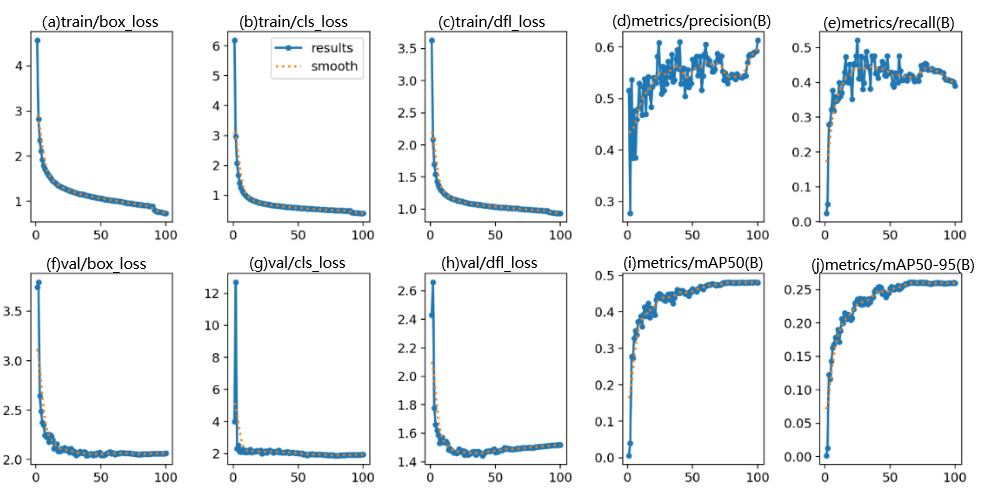
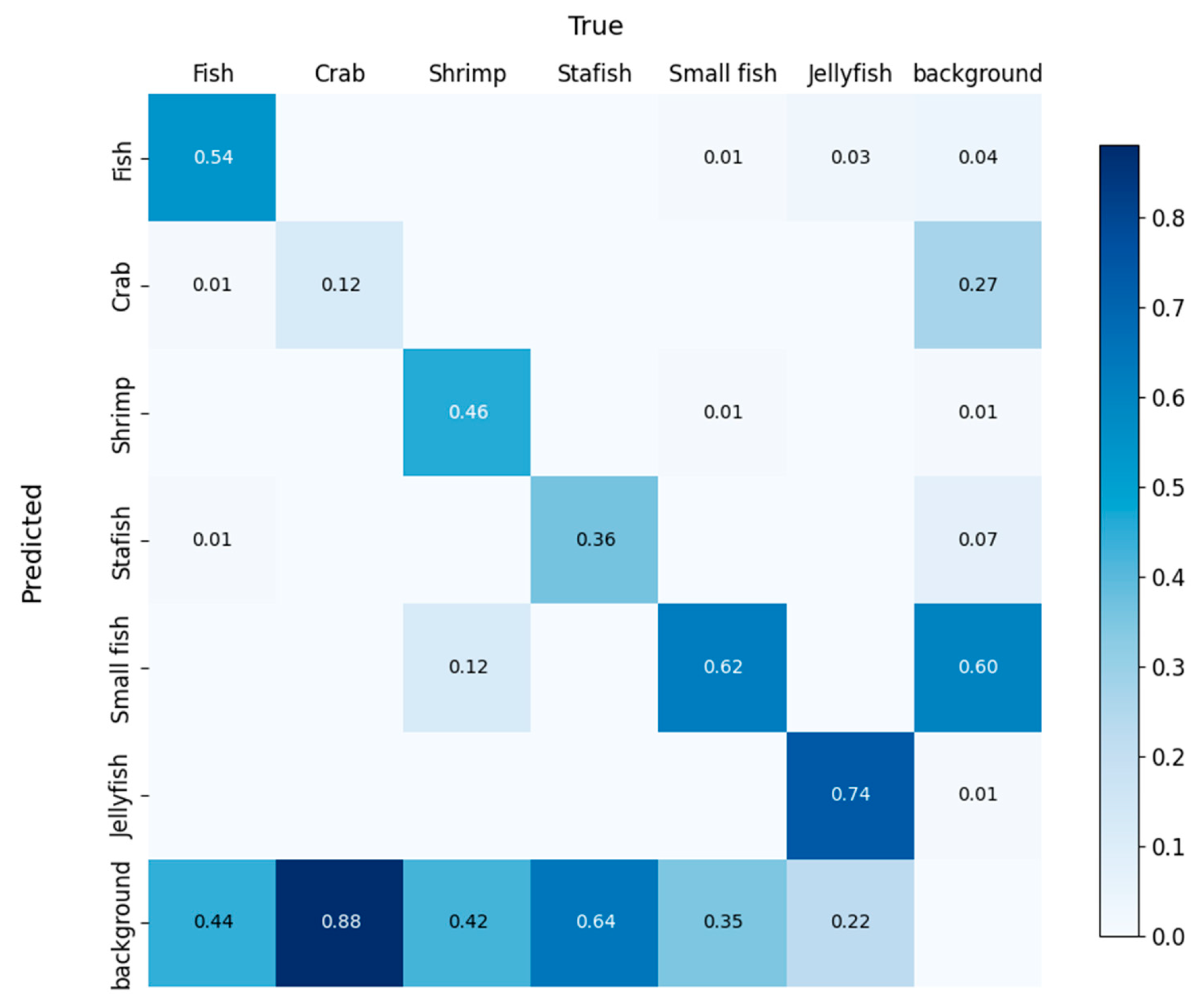
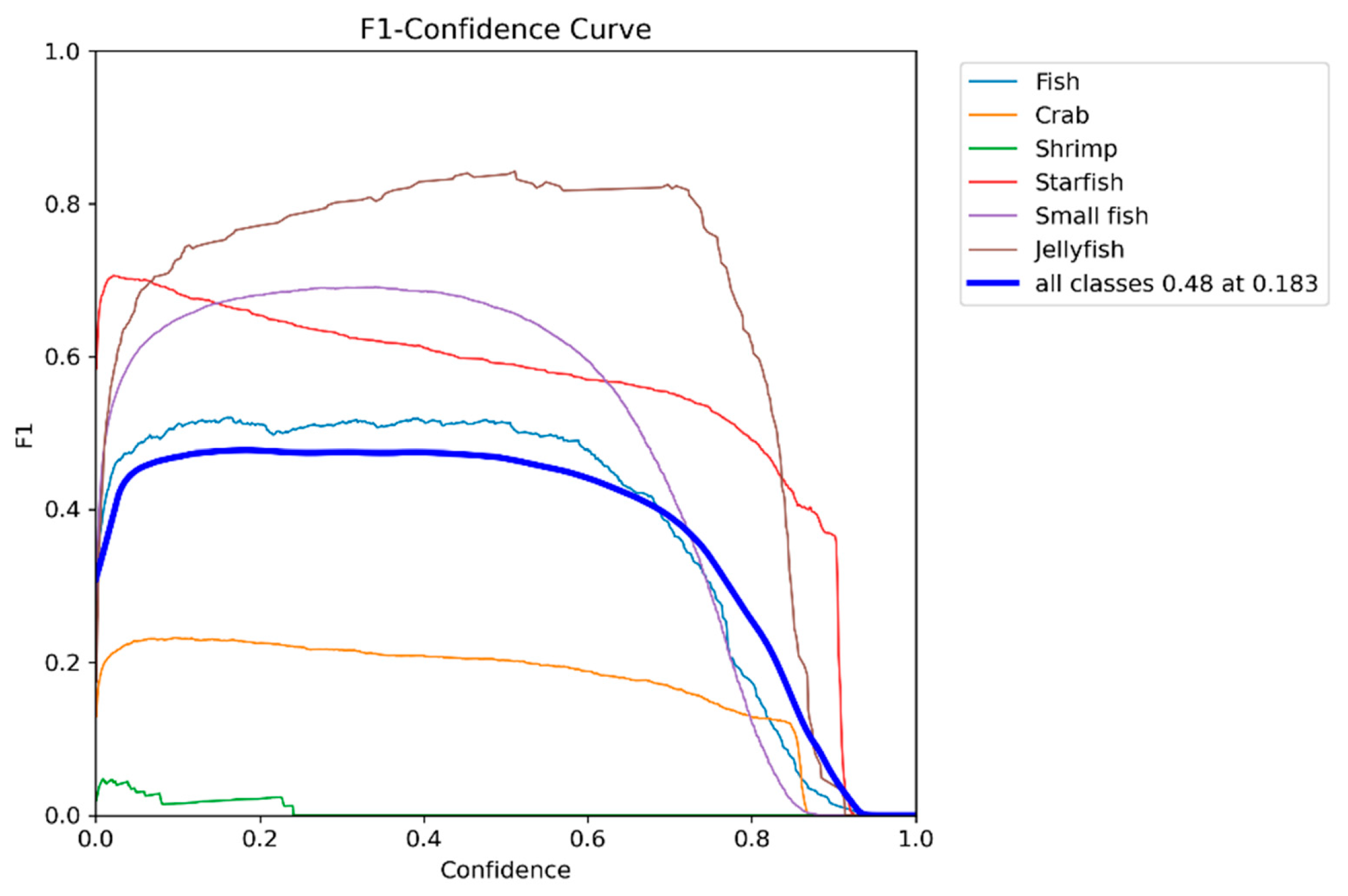
Monitoring marine organisms plays a vital role in biodiversity conservation, marine environmental management, and fisheries resource management. However, the underwater environment is often low-light and turbid, leading to indistinct target boundaries. Moreover, the wide variety of marine organisms—with significant differences in color, scale, texture, and morphology—can easily result in missed detections. To address these challenges, this paper proposes a multi-class marine organism detection method using multi-scale attention-enhanced You Only Look Once 11 nano (YOLO11n). The method incorporates the Convolutional Block Attention Module (CBAM) into the YOLO11n network, enabling the model to better focus on key feature regions while effectively suppressing background noise interference in complex marine environments. In addition, the model is trained using the Complete Intersection over Union (CIoU) loss function, which enhances bounding box regression accuracy, especially in handling targets of varying scales. The effectiveness of the proposed method is validated on the publicly available BrackishMOT dataset. The proposed model achieves an overall mAP@0.5 of 0.481, computed as the average AP across six organism categories. Category-wise results indicate stronger performance on visually distinguishable targets, such as Jellyfish, Starfish, and Small fish, with AP values of 0.808, 0.678, and 0.677, respectively. In contrast, performance remains limited for rare or visually ambiguous categories. These results suggest that the proposed method is effective for multi-class marine organism detection, particularly when discriminative visual features are present.
Keywords: marine organisms; attention mechanism; YOLO11n; cross-scale fusion; target detection marine organisms; attention mechanism; YOLO11n; cross-scale fusion; target detection