
Article

Feeding Ecology and Trophic Overlap of Sympatric Rajidae Species in the Eastern Ionian Sea (Central Mediterranean)
by
Archontia Chatzispyrou
1,2,*,
Konstantinos Charalampous
1,
Evgenia Lefkaditou
1,
Aikaterini Anastasopoulou
1 and
Constantin Koutsikopoulos
2
1
Institute of Marine Biological Resources and Inland Waters, Hellenic Centre for Marine Research, 46.7 km Athens Sounio Ave., 19013 Anavyssos, Greece
2
Department of Biology, University of Patras, 26504 Patras, Greece
*
Author to whom correspondence should be addressed.
Fishes 2026, 11(5), 277; https://doi.org/10.3390/fishes11050277
Submission received: 6 March 2026 / Revised: 2 May 2026 / Accepted: 4 May 2026 / Published: 9 May 2026
(This article belongs to the Special Issue Trophic Ecology of Freshwater and Marine Fish Species)

Abstract

The feeding ecology of sympatric elasmobranchs provides key insights into trophic interactions and species coexistence within demersal ecosystems. The current study examined the diet composition and trophic relationships of three skate species (Raja asterias, Raja clavata, and Raja miraletus) in the eastern Ionian Sea (central Mediterranean). Stomach content analysis was combined with quantitative dietary indices and multivariate statistical approaches, including NMDS, PERMANOVA, SIMPER, and Schoener’s overlap index. All skate species primarily consumed benthic crustaceans and demersal teleost fishes, although differences in prey contribution were detected among species. Raja clavata exhibited higher prey diversity, whereas R. asterias and R. miraletus showed stronger reliance on decapod crustaceans. Multivariate analyses revealed significant interspecific differences in diet composition with generally low-to-moderate trophic overlap among species. These findings suggest that sympatric Rajidae species exploit similar prey resources while maintaining partial trophic partitioning, possibly reducing direct niche overlap and facilitating ecological coexistence. This study contributes to the understanding of trophic structuring in Mediterranean skate assemblages and supports ecosystem-based approaches to demersal fisheries management.
Key Contribution: The current study provided the first comparative trophic analysis of three sympatric Rajidae species in the eastern Ionian Sea and demonstrated that, despite sharing major benthic prey resources, these skates exhibited partial trophic partitioning, which likely facilitates ecological coexistence within Mediterranean demersal ecosystems.

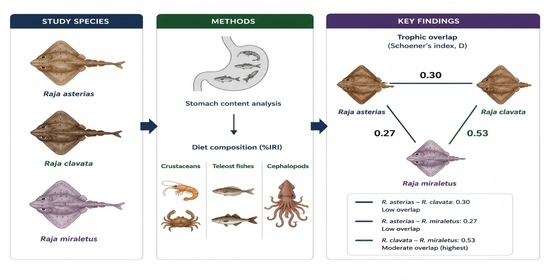
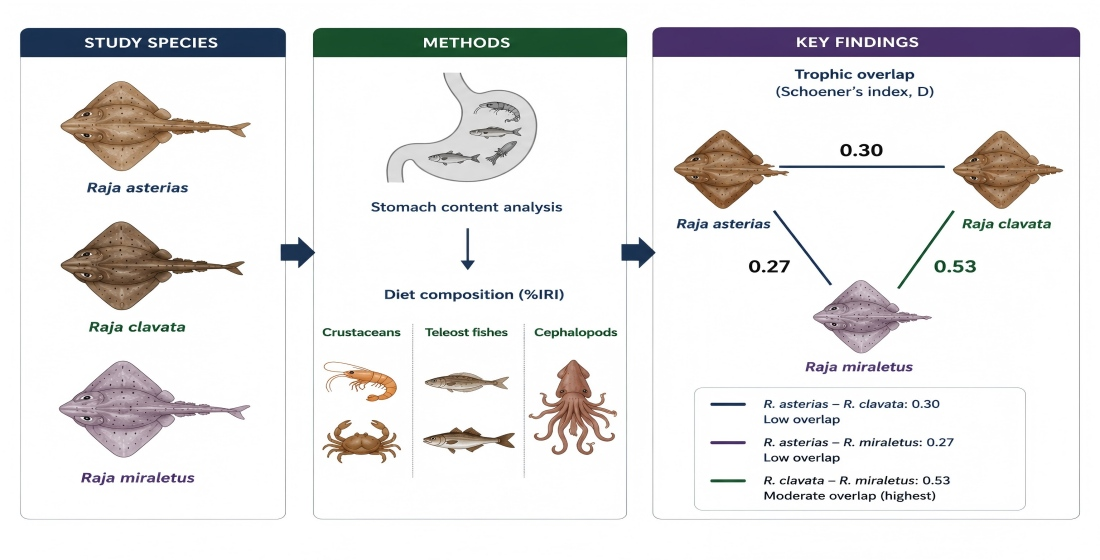
Graphical Abstract

1. Introduction

Feeding ecology is essential for understanding the functional role of elasmobranchs in marine ecosystems. As meso- and upper-level predators, skates regulate benthic and demersal communities and influence energy transfer within continental shelf food webs [1,2]. Elasmobranchs represent one of the most functionally diverse groups of marine predators, playing key roles in marine food webs and ecosystem functioning [3,4]. Despite this ecological importance, elasmobranchs are highly vulnerable to anthropogenic pressures [5]. Global assessments have revealed severe population declines in sharks and rays, with oceanic species experiencing reductions of over 70% in abundance since 1970, primarily driven by overfishing, thus leading to substantially increased extinction risk [6]. In the Northeast Atlantic and Mediterranean Sea, extinction risk has also increased markedly over recent decades, with a high proportion of species now classified as threatened [7].
Dietary composition in elasmobranchs reflects a complex interplay between morphology, life-history traits, habitat use and prey availability, while trophic niche breadth and prey selection often vary with body size and ontogeny [8]. At the community level, trophic studies provide insights into mechanisms of coexistence, as sympatric elasmobranch species frequently reduce competition through resource partitioning despite sharing similar ecological niches [2,9]. In this context, recent trait-based approaches highlight that ecological characteristics such as trophic niche breadth, habitat range and body size can strongly influence species vulnerability, with more specialized species generally exhibiting higher conservation concern [10].
Within the Mediterranean Sea, Rajidae constitute a prominent component of demersal fish assemblages on continental shelves [11]. Several studies across the western, central and Adriatic basins have shown that Mediterranean skates are primarily benthic feeders, with diets dominated by decapod crustaceans and small teleost fishes [12,13,14,15]. However, the relative importance of prey groups varies regionally. For example, Raja asterias typically exhibits crustacean-dominated diets with increasing fish consumption in larger individuals [12,16], whereas Raja miraletus shows strong dependence on decapod crustaceans across multiple Mediterranean regions, including the Adriatic and Gulf of Gabès [17,18]. In contrast, Raja clavata often displays a broader trophic spectrum, integrating teleosts, crustaceans and occasionally cephalopods, with ontogenetic and seasonal shifts reported in several sub-basins, including the Adriatic, Tyrrhenian and Aegean Seas [14,19,20,21].
Although these dietary studies have substantially advanced our understanding of Rajidae trophic ecology, most available information originates from the western Mediterranean, Adriatic, or southern central Mediterranean shelves. The eastern Ionian Sea, characterized by heterogeneous substrates, marked bathymetric gradients and active demersal fisheries, remains comparatively underexplored in terms of comparative trophic assessments of sympatric skate species. Given that environmental variability and prey availability strongly influence elasmobranch diet composition [3,22], regional investigations are necessary to determine whether Ionian populations conform to the broader Mediterranean trophic template or exhibit distinct ecological patterns.
Furthermore, understanding whether coexisting Rajidae species in the Ionian Sea exploit identical prey resources or partition them at finer ecological scales is critical for evaluating potential interspecific competition and functional redundancy within benthic predator guilds. Previous multispecies analyses have demonstrated that Mediterranean elasmobranch assemblages can exhibit significant dietary segregation even when major prey categories overlap [2,20]. However, such comparative trophic analyses remain scarce for the central-eastern Mediterranean.
Ontogenetic dietary shifts are common in elasmobranchs and can influence how different life stages respond to fishing pressure and environmental disturbance. In benthic skates, juveniles often rely predominantly on small benthic crustaceans, whereas larger individuals increasingly incorporate teleost fishes and other larger prey into their diets, reflecting changes in prey-handling capacity and foraging opportunities with growth [14,23]. Consequently, fishing-induced changes in prey communities and benthic habitat structure, particularly those associated with bottom-contact gears, may affect life stages differently, potentially altering trophic interactions within demersal ecosystems [24,25].
From an ecosystem-based perspective, assemblages of sympatric Rajidae may exhibit functional redundancy, as species often exploit broadly similar prey guilds while partitioning resources at finer ecological scales. Such trophic structuring can contribute to ecosystem functioning by supporting the role of elasmobranchs in energy transfer and trophic connectivity across benthic food webs [3,4] while variation in trophic strategies may influence species vulnerability and functional responses to environmental change [10]. Consequently, reductions in benthic biodiversity or prey diversity may erode this functional structure, narrow trophic niches, and increase overlap among mesopredators, potentially intensifying ecological interactions under conditions of prey limitation.
The present study (i) described and quantified the diet composition of R. asterias, R. clavata and R. miraletus in the eastern Ionian Sea using standardized stomach content analysis; (ii) estimated trophic niche breadth and feeding strategy for each species; (iii) assessed interspecific trophic differentiation and evaluated the degree of dietary overlap among the three sympatric skates; and (iv) compared the observed Ionian trophic patterns with those reported from other Mediterranean regions.
We hypothesized that, although the three species share major prey guilds (Crustacea and Teleostei), they exhibit partial trophic differentiation at finer ecological levels. Based on previous studies from other Mediterranean regions, R. miraletus is expected to show a stronger reliance on benthic crustaceans, R. clavata to display a broader trophic spectrum, and R. asterias to occupy an intermediate trophic position, resulting in partial resource partitioning.

2. Materials and Methods

2.1. Study Area and Sampling Design

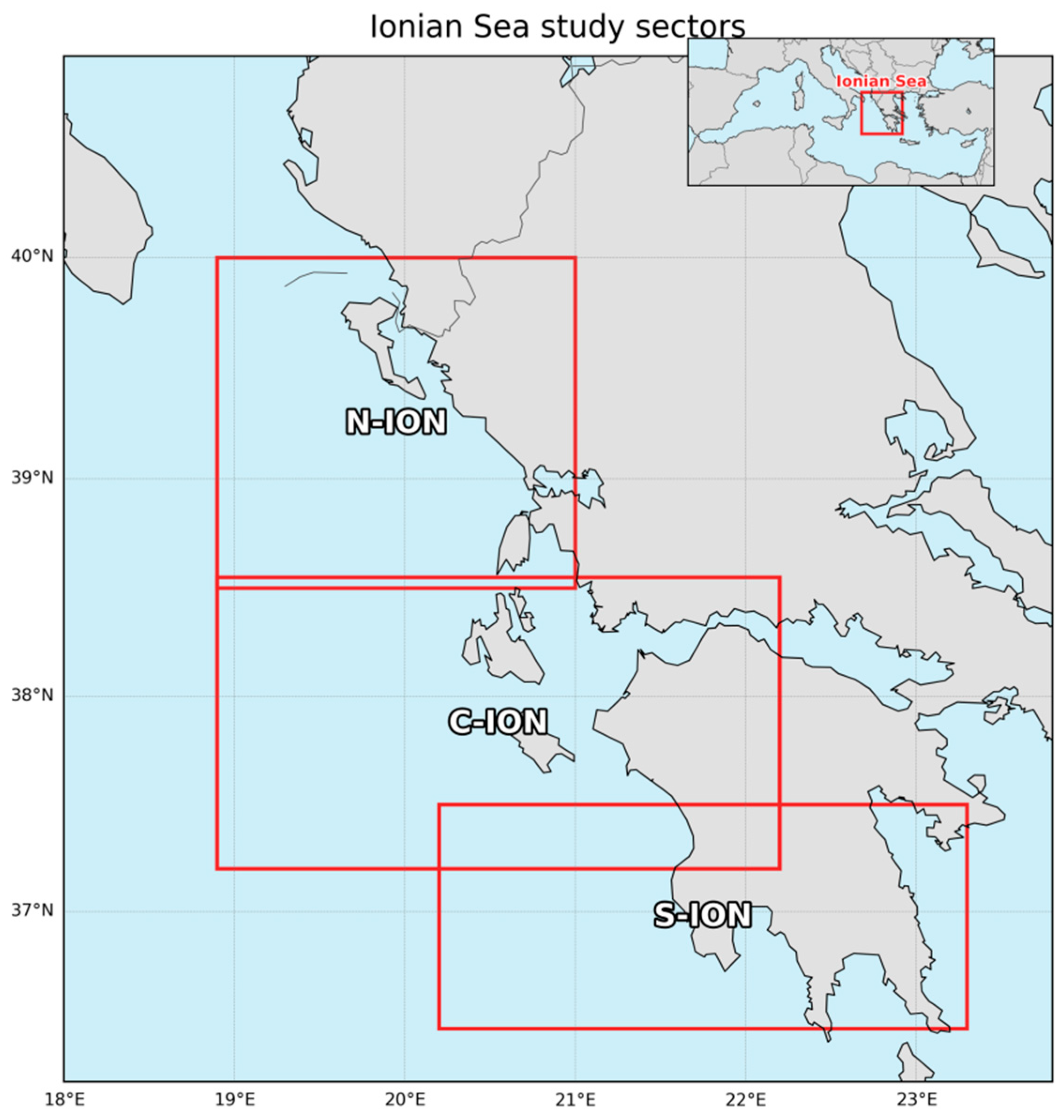
The eastern Ionian Sea (central Mediterranean) was subdivided into three geographic sectors for analytical purposes: northern Ionian, central Ionian, and southern Ionian (Figure 1). Dietary samples were collected mainly from the central Ionian sector, where the three Rajidae species co-occur spatially within continental shelf and upper slope habitats. This approach enabled interspecific trophic comparisons under comparable environmental conditions and minimized spatial variability in prey availability, as analyses were restricted to individuals collected from the same fishing operations.
Specimens were collected within the framework of the Mediterranean International Trawl Survey (MEDITS) between 2018 and 2023, following the standardized MEDITS protocol [26]. Bottom trawls were conducted for 30 min at approximately 2.5–3 knots across depths ranging from 10 to 800 m. To ensure adequate representation of shallow-water individuals, additional specimens of R. asterias were obtained in 2019 from coastal waters (<50 m depth) within the central Ionian sector using commercial gillnets.

2.2. Stomach Content Analysis

Immediately after capture, stomachs were removed and stored frozen at −18 °C until analysis. Prey items were identified to the lowest possible taxonomic level using FAO regional identification guides and taxonomic keys for Mediterranean marine fauna [27] and subsequently counted and weighed to the nearest 0.01 g wet mass. The digestion state of prey items was visually assessed using a five-level scale, ranging from 1 (fresh or easily identifiable prey) to 5 (highly digested remains), following standard approaches in elasmobranch diet studies [28]. Highly digested items that could not be identified to a lower taxonomic level were grouped into broader categories (e.g., fish remains, crustacean remains). Empty stomachs were recorded to calculate the Index of Vacuity (IV).

2.3. Quantitative Diet Indices

Diet composition was quantified using standard trophic indices [28,29]. The percentage by number (%N), percentage by mass (%W), and frequency of occurrence (%F) were calculated as follows:
%N = (number of individuals of prey i/total number of prey items) × 100,
%W = (wet mass of prey i/total wet mass of all prey items) × 100,
%F = (number of stomachs containing prey i/total number of non-empty stomachs) × 100.
As multiple prey categories may occur within a single stomach, %F values are not expected to sum to 100%. This definition of %F follows standard stomach content analysis methodology [28,29].
The Index of Vacuity (%IV) was calculated as:
%IV = (number of empty stomachs/total number of examined stomachs) × 100.
The Index of Relative Importance (IRI) was calculated as:
IRI = (%N + %W) × %F
The percentage Index of Relative Importance (%IRI) was calculated as:
%IRI = (IRI_i/ΣIRI) × 100
Diet diversity and trophic niche width were further assessed using standard ecological indices. The Shannon–Wiener diversity index (H′) was calculated as:
H′ = −∑ (p_i ln p_i), where p_i is the proportion of prey category i in the diet.
The Simpson diversity index (1 − D) was calculated as:
1 − D = 1 − ∑ (p_i2).
Levins’ niche breadth (B) was estimated as: B = 1/∑ (p_i2), and standardized Levins’ niche breadth (Ba) was calculated as: Ba = (B − 1)/(n − 1), where n is the total number of prey categories.
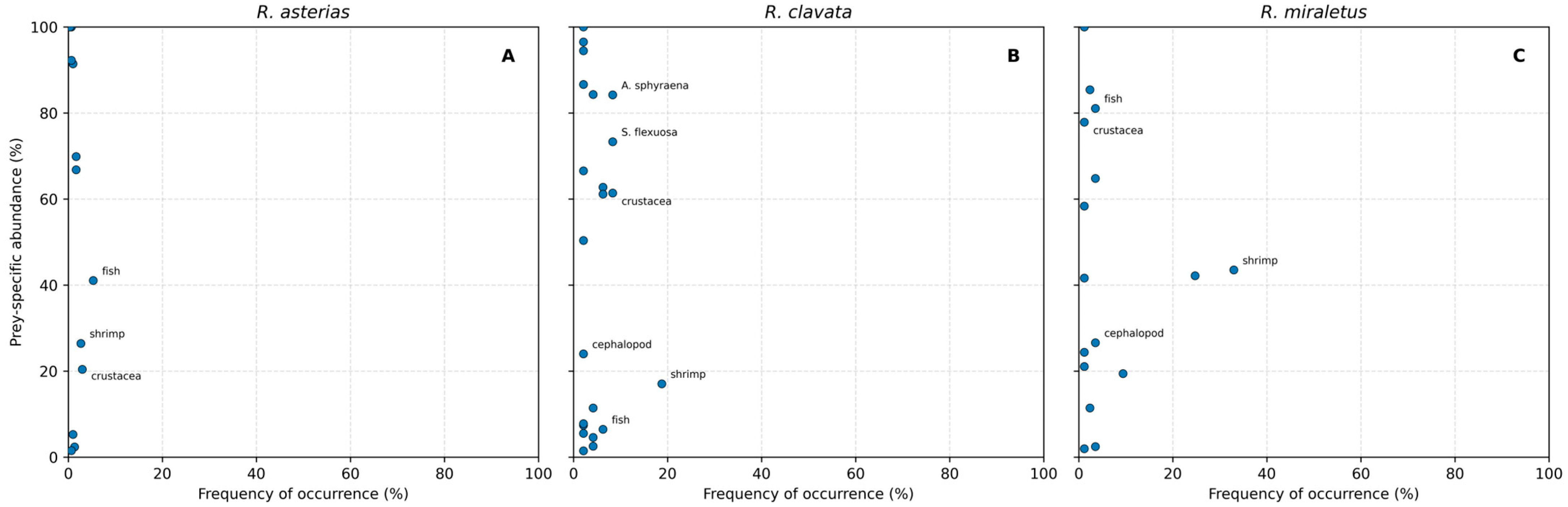
Feeding strategy was evaluated using the graphical method of Costello (1990) [30], as modified by Amundsen et al. (1996) [31]. This approach plots prey-specific abundance (Pi) against frequency of occurrence (%F) for each prey category. Prey-specific abundance (Pi) was calculated as:
Pi = (∑ Si/∑ Sti) × 100,
where Si is the abundance of prey i in stomachs where that prey occurs, and Sti is the total abundance of all prey items in those stomachs.
It should be noted that this prey-specific abundance (Pi), used in the Amundsen graphical analysis, differs from the proportional prey contribution (pi) used in dietary overlap calculations.
Dietary overlap among species was quantified using Schoener’s index (D) [32], calculated from proportional prey contributions based on %IRI values at the prey taxon level:
D = 1 − 0.5∑|pxipyi|
where pxi and pyi represent the proportional contribution of prey category i in the diets of species x and y, respectively. Values of D range from 0 (no overlap) to 1 (complete overlap), with values greater than 0.60 indicating high trophic overlap. The graphical distribution of prey items allows interpretation of feeding strategy by identifying dominant, rare, and occasional prey, as well as distinguishing between specialist and generalist feeding patterns.

2.4. Multivariate Analysis of Diet Composition

Dietary differences among the three Rajidae species (R. asterias, R. clavata and R. miraletus) were investigated using multivariate statistical approaches based on stomach content data. Highly digested items were pooled into ‘remains’ categories and treated as separate prey categories in multivariate analyses.
For the primary analysis, each examined stomach was considered an independent sampling unit. A stomach–prey category matrix was constructed to describe the occurrence of prey categories within individual stomachs. Data were transformed to presence–absence to minimize biases associated with differential digestion rates, fragmentation of prey remains, and uneven prey counts among samples, which are common limitations in elasmobranch diet studies, thereby allowing more robust comparisons of prey occurrence among individuals and species.
The same presence–absence matrix was consistently used for NMDS, PERMANOVA and SIMPER analyses. Bray–Curtis dissimilarities were calculated from this matrix and used for subsequent multivariate analyses.
Patterns of dietary similarity among individuals and species were explored using non-metric multidimensional scaling (NMDS) based on Bray–Curtis dissimilarities. A species-level NMDS ordination was constructed using mean diet composition per species, obtained by averaging prey occurrence across all stomachs belonging to each species. This analysis was used to illustrate overall trophic differences among species while minimizing within-species variability.
Differences in diet composition among species were statistically tested using permutational multivariate analysis of variance (PERMANOVA) based on Bray–Curtis dissimilarities (999 permutations).
Similarity Percentage (SIMPER) analysis was applied to identify prey categories contributing most to dietary dissimilarities among species.
Statistical analyses and visualizations were performed using Python v.3.11.2 (Python Software Foundation, Wilmington, DE, USA), including the libraries NumPy, pandas, SciPy, scikit-learn, and matplotlib. (version 3.x).

3. Results

3.1. Stomach Vacuity and Sample Overview

The Index of Vacuity (%IV) varied among species (Table 1). The lowest percentage of empty stomachs was recorded in R. asterias (11.1%), followed by R. miraletus (23.5%), whereas R. clavata exhibited the highest value (31.9%).

3.2. Diet Composition

Diet composition, expressed as %N, %W, %F and %IRI, revealed clear interspecific differences in prey utilization (Table 2).
Raja asterias
The diet of R. asterias was dominated by crustaceans, particularly decapods such as Aristaeomorpha foliacea (%IRI = 5.0) and unidentified shrimp remains (%IRI = 13.98). Fish remains (bones and vertebrae) also contributed substantially to dietary importance (%IRI up to 26.83), indicating frequent consumption of teleost prey. Mollusks and cephalopods were present but had low %IRI values (<1%), suggesting a minor contribution.
Raja clavata
Raja clavata exhibited a broader trophic spectrum. Teleost fishes were important contributors, particularly Argentina sphyraena (%IRI = 11.88) and Spicara flexuosa (%IRI = 9.1), while crustaceans such as crustacean remains (%IRI = 12.43) and Parapenaeus longirostris (%IRI = 3.18) were also present. Cephalopods showed relatively low %IRI values (<3%).
Raja miraletus
The diet of R. miraletus was mainly composed of crustaceans and small teleost fishes. Shrimp remains (%IRI = 13.98) and unidentified crabs (%IRI = 7.46) were among the most important prey categories. Fish remains (vertebrae and bones) also showed high %IRI values (up to 26.83 and 21.77, respectively). Cephalopods were present but contributed minimally.

3.3. Diet Diversity and Niche Breadth

Diet diversity indices differed among species (Table 3). Raja clavata exhibited the highest Shannon–Wiener diversity (H′ = 2.53) and species richness (S = 27), followed by R. miraletus (H′ = 2.09; S = 14) and R. asterias (H′ = 2.00; S = 15). Levins’ standardized niche breadth (Ba) values were similar among species (0.34–0.36).
Amundsen’s graphical analysis (Figure 2) indicated an intermediate feeding strategy for R. asterias and R. miraletus, characterized by the contribution of multiple prey categories. In contrast, R. clavata showed a tendency toward increased specialization, with certain prey categories contributing disproportionately to the diet.

3.4. Multivariate Patterns in Diet Composition

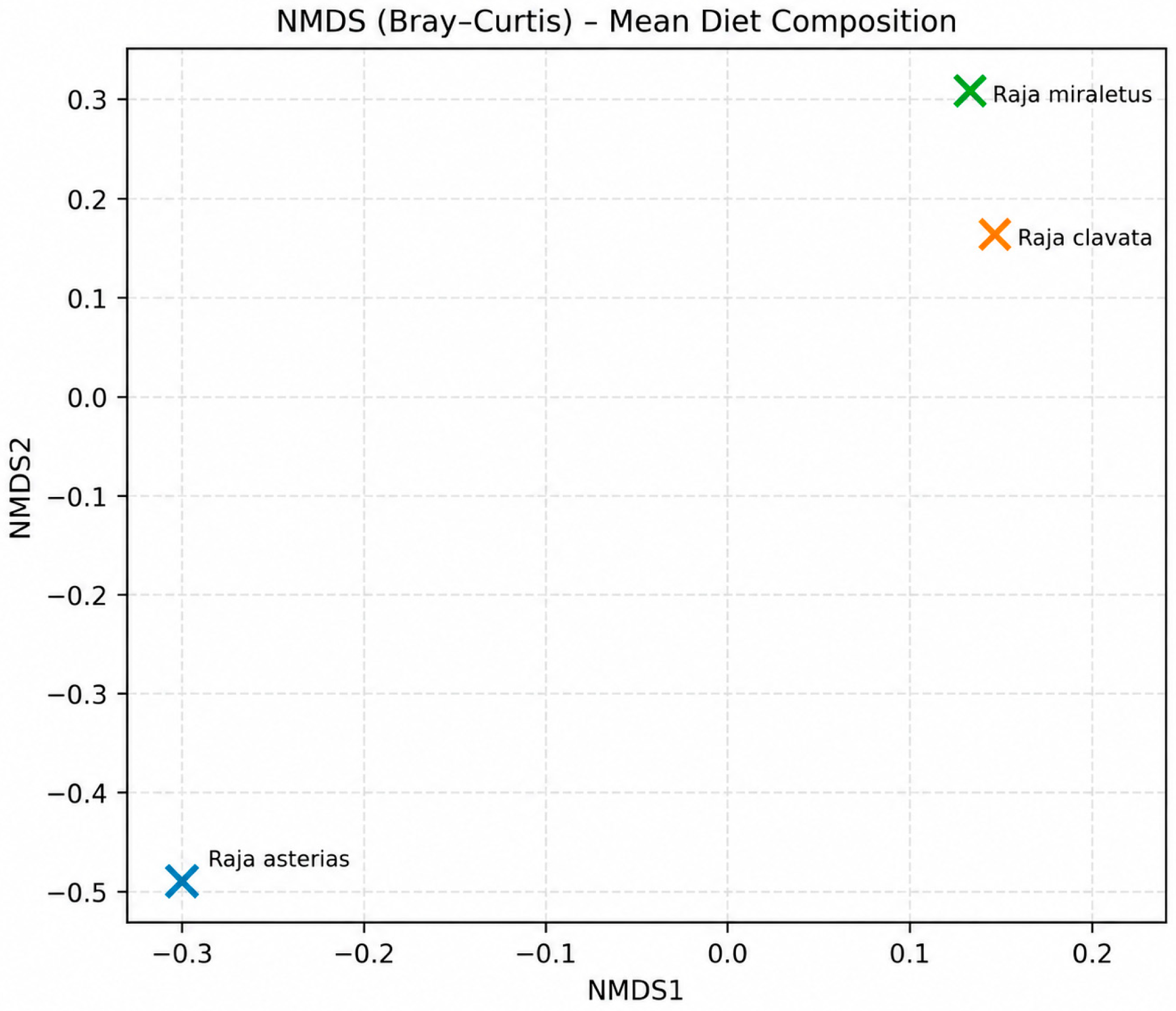
The NMDS ordination based on mean diet composition showed partial differentiation among R. asterias, R. clavata, and R. miraletus (Figure 3), although some overlap remained. R. asterias was positioned separately from the other two species, whereas R. clavata and R. miraletus were located closer in the ordination space.
The NMDS ordination patterns were interpreted cautiously due to the relatively high stress value (stress = 0.24), indicating a moderate representation of the data in reduced dimensional space, and the observed differences among species were supported by PERMANOVA results.
PERMANOVA indicated significant differences in diet composition among species (Bray–Curtis dissimilarities calculated from the stomach-level presence–absence matrix; 999 permutations; R2 = 0.206, pseudo-F = 12.97, p = 0.001). SIMPER analysis indicated that crustaceans and teleost fishes were the primary contributors to dietary dissimilarity among species. The highest contributions were associated with shrimp (17.2%), teleost fishes (including A. sphyraena and fish vertebrae; ~15.9% combined), crabs (6.9%), representing the main contributors. Schoener’s index values ranged from 0.27 to 0.53 (Table 4), with the highest overlap observed between R. clavata and R. miraletus (D = 0.53), a pattern consistent with the NMDS ordination, which showed these two species positioned closer in the multivariate space compared to R. asterias.

3.5. Sampling Adequacy

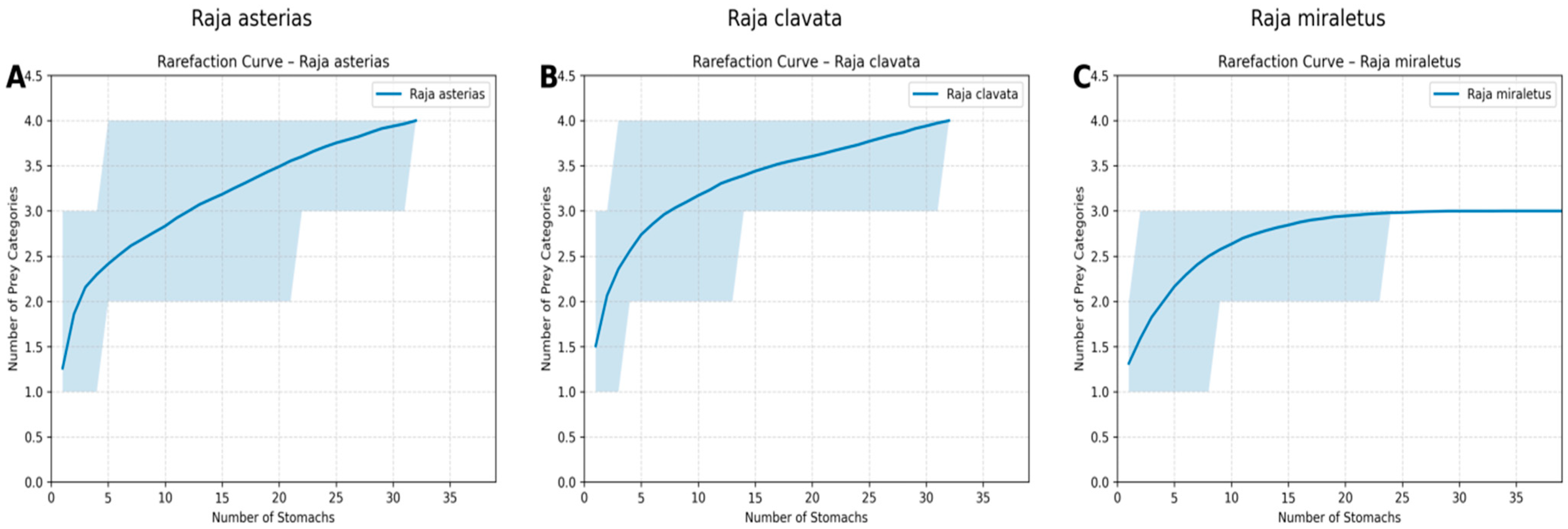
Rarefaction curves were based on non-empty stomachs (Figure 4). The curve for R. miraletus approached an asymptote, suggesting that the main prey categories were adequately represented. In contrast, the curves for R. asterias and R. clavata continued to show a slight upward trend, indicating that additional samples could reveal further rare prey categories.

4. Discussion

4.1. Interspecific Trophic Differentiation in the Eastern Ionian Sea

The present study demonstrated that the three sympatric skates (R. asterias, R. clavata and R. miraletus) in the eastern Ionian Sea share a broadly similar trophic spectrum, dominated by crustaceans and demersal teleost fishes. Multivariate analyses based on presence–absence data indicated substantial dietary overlap between R. clavata and R. miraletus, whereas R. asterias exhibited a more distinct diet, suggesting partial differentiation among species. However, differences in diet composition were supported by quantitative analyses (e.g., %IRI and SIMPER), which highlighted variation in the relative contribution of key prey groups, particularly decapod crustaceans and teleost fishes, among species.
Differences in the Index of Vacuity (%IV) provided additional insight into feeding activity patterns. The lower %IV recorded in R. asterias suggests more frequent feeding, whereas the higher proportion of empty stomachs in R. clavata may have indicated lower feeding intensity or less frequent feeding behavior. Raja miraletus exhibited intermediate values, reflecting a moderate feeding activity. Such variation may be related to differences in foraging behavior, prey availability, or habitat use among species, as well as temporal variability in feeding cycles, as commonly observed in elasmobranchs and Mediterranean Rajidae species [9,15,18].
Overall, the combination of differences in feeding activity, overlap in prey occurrence within stomach contents, and variation in the relative contribution of key prey categories supports the concept of resource partitioning among sympatric elasmobranchs, which has been widely documented in Mediterranean continental shelf ecosystems [2,20] and in skate assemblages worldwide [22,33]. Even among morphologically similar rajids, differences in prey preference, prey size, and habitat use can reduce niche overlap and facilitate coexistence [2].
Therefore, although the three species share the same broad prey guilds, partial partitioning likely occurs through differences in the dietary contribution of prey categories, prey-size selection, and microhabitat use under current environmental conditions. Since crustaceans and small fishes are important components of the diet of all species, competition intensity may increase under scenarios of prey scarcity or habitat compression.
It should be noted, however, that sampling was restricted to the central Ionian sector, where R. asterias and R. miraletus are most commonly encountered, and where individuals of all three species were collected under comparable environmental and fishing conditions. Although R. clavata is more widely distributed across the Ionian Sea and occurs over a broader bathymetric range, only individuals collected from the same sampling stations and depth range as the other two species were included in the present analysis. This approach was adopted to ensure direct comparability among species; however, it may not fully capture spatial variability in prey availability and habitat conditions across the broader Ionian basin. Consequently, these findings should be interpreted with caution when extrapolating beyond the study area.

4.2. Species-Specific Patterns in the Ionian Sea Within a Mediterranean Framework

Raja asterias
In the study area, R. asterias fed primarily on decapod crustaceans, with fish remains contributing significantly to dietary importance. It should be noted, however, that the contribution of fish remains may also reflect opportunistic feeding on fishery discards, as reported for demersal elasmobranchs in Mediterranean trawl-impacted ecosystems [20], although this cannot be confirmed from the available data. This trophic profile is consistent with findings from the Tyrrhenian Sea, where crustaceans dominate the diet and fish consumption increases with size [12]. Similar crustacean-dominated diets have been reported from the north-western Mediterranean [13] and Adriatic Sea populations, where ontogenetic shifts toward larger prey occur with growth [16]. Across Mediterranean regions, R. asterias consistently appears to be a benthic predator strongly associated with decapod assemblages, with regional variation primarily reflecting local prey availability rather than a shift in trophic strategy. The Ionian population aligns closely with this broader Mediterranean pattern.
Raja miraletus
The diet of R. miraletus in the eastern Ionian Sea was dominated by decapod crustaceans, particularly shrimps and crabs, supplemented by small teleost fishes. This is consistent with studies from the Adriatic [17], Gulf of Gabès [18], and Sardinian shelf [15], all of which describe the species as strongly decapod-oriented, with size-related increases in larger prey items.
In the Gulf of Gabès, R. miraletus exhibits a diet strongly dominated by crustaceans, with minor seasonal variation and clear ontogenetic shifts [18]. Similarly, decapod crustaceans were the main prey in the Ionian Sea; however, our results also indicate a consistent contribution of small teleost fishes, suggesting some regional variation in prey use that may reflect differences in prey availability and local habitat characteristics. Adriatic populations likewise show a strong dietary dependence on decapod crustaceans, with teleost fishes and cephalopods playing secondary roles [17]. Together, these findings suggest that the Ionian trophic pattern is broadly consistent with Mediterranean observations, reinforcing the characterization of R. miraletus as a benthic crustacean-oriented feeder with moderate trophic flexibility [22].
Raja clavata
Raja clavata collected in the eastern Ionian Sea exhibited the highest prey richness among the three species, with both teleost fishes and crustaceans contributing substantially to dietary composition. This broader prey spectrum supports its classification as a relatively flexible feeder. A similar trophic profile has been documented in the Gulf of Gabès [14], where R. clavata feeds mainly on teleosts, crustaceans, and cephalopods. Importantly, that study also identified ontogenetic differences, with smaller individuals relying more heavily on crustaceans, whereas larger specimens consumed increasing proportions of teleosts and cephalopods [14]. Seasonal variation was also reported, reinforcing the species’ trophic plasticity.
Comparable findings have been reported from the western Mediterranean [20], Adriatic Sea [14] and Aegean Sea populations [21], where crustaceans dominated but fish contributed significantly depending on size and habitat. Collectively, these studies indicate that R. clavata consistently behaves as a generalist mesopredator, capable of adjusting prey composition according to local prey fields. The Ionian population is consistent with the broader Mediterranean pattern of trophic flexibility rather than representing a distinct ecological strategy.

4.3. Trophic Overlap and Resource Partitioning Among Ionian Rajidae

When viewed in a Mediterranean context, the Ionian assemblage mirrors a broader regional pattern: Rajidae species often share high-level prey categories (e.g., Crustacea, Teleostei), yet segregate at finer ecological scales, resulting in partial trophic differentiation [2,20].
In the current study area, R. miraletus showed a marked reliance on crustacean prey, while R. asterias relied mainly on decapods with an appreciable contribution of teleost fishes. Conversely, R. clavata exploited fish and crustaceans more evenly and exhibited the highest prey richness, reflecting a comparatively broader trophic spectrum. Lower dietary overlap involving R. asterias suggests greater trophic differentiation, whereas the higher overlap between R. clavata and R. miraletus indicates greater similarity in resource use.
Moreover, the results indicate that sympatric Rajidae species exploit similar benthic–demersal prey resources, but differ in the relative contribution of key prey categories. Such differences may reflect variation in prey-size selection, microhabitat use, or bathymetric distribution, as reported for sympatric rajids in other Mediterranean shelf systems [2]. Although stomach content analysis does not allow direct quantification of interspecific competition [28], the observed combination of dietary overlap and differentiation is consistent with mechanisms that reduce niche overlap and facilitate ecological coexistence.

4.4. Synthesis

Overall, the feeding ecology of the three Rajidae species in the eastern Ionian Sea aligns with patterns described across the Mediterranean. The dominance of crustaceans in R. asterias and R. miraletus, together with the broader prey spectrum of R. clavata, is consistent with findings from the Tyrrhenian, Adriatic, Aegean, and central Mediterranean basins [2,12,17,20]. The eastern Ionian assemblage therefore reflects a Mediterranean trophic structure in which sympatric skates exploit similar benthic resources while differing in the relative importance of prey categories and feeding strategies. This structuring supports functional diversity within the benthic predator community.

4.5. Ecosystem-Based Fisheries Implications

The trophic patterns observed in the eastern Ionian Rajidae assemblage have important implications for ecosystem-based fisheries management (EBFM) in Mediterranean demersal systems. All three species function as benthic mesopredators, linking invertebrate and demersal fish pathways within continental shelf food webs. Their reliance on decapod crustaceans and small teleosts, many of which are either commercially exploited or sensitive to trawling disturbance, indicates a partial trophic overlap with target fisheries resources.
In heavily exploited Mediterranean shelves, bottom trawling modifies benthic community structure [24], alters prey availability, and may indirectly reshape elasmobranch trophic niches [20,34]. Because the three skate species exhibit differentiated but partially overlapping feeding strategies, fisheries-induced reductions in specific prey groups (e.g., penaeid shrimps or demersal fishes) could disproportionately affect one species over another, potentially disrupting the current balance of resource partitioning. Such shifts may increase interspecific competition under prey limitation scenarios.
More broadly, the dependence of these skates on benthic crustaceans and demersal teleost fishes suggests that fishing pressure on prey stocks and habitat degradation could have cascading effects on their trophic ecology. Given the importance of benthic habitats for both prey availability and foraging activity, changes in habitat quality may affect resource accessibility and feeding performance in these species [2,22].
From an ecosystem-based perspective, the functional redundancy among Rajidae species, which share broad prey guilds while partitioning resources at finer ecological scales, may confer a degree of trophic resilience [35]. Resource partitioning among sympatric species reduces interspecific competition and facilitates coexistence, even when major prey categories overlap [36]. However, sustained reductions in benthic biodiversity or prey diversity may erode this functional redundancy, narrowing trophic niche breadth and potentially increasing overlap among species under conditions of resource limitation. Therefore, incorporating species-specific trophic roles into demersal stock assessments and spatial management planning is essential. Protecting structurally complex benthic habitats and maintaining prey diversity will likely support the coexistence of sympatric Rajidae and preserve their regulatory role within Mediterranean benthic food webs.

5. Conclusions

The current study provides the first comparative trophic assessment of three sympatric Rajidae species (Raja asterias, Raja clavata, and Raja miraletus) in the eastern Ionian Sea. Although the three species exploit similar benthic prey guilds dominated by crustaceans and demersal teleost fishes, multivariate analyses revealed evidence of dietary differentiation, indicating partial trophic partitioning among species. These findings suggest that sympatric Rajidae achieve ecological coexistence through differences in prey contribution and trophic niche structure. Overall, the Ionian Rajidae assemblage is consistent with trophic patterns reported across the Mediterranean Sea. By clarifying trophic relationships among coexisting skates, this study contributes to a better understanding of the structure and functioning of Mediterranean demersal predator assemblages. Such information is relevant for ecosystem-based fisheries management, particularly in the context of maintaining prey diversity and benthic habitat integrity.

Author Contributions

Conceptualization, A.C. and C.K.; methodology, A.C. and A.A.; software, A.C. and K.C.; validation, E.L., A.C. and A.A.; formal analysis, A.C., K.C. and C.K.; investigation, A.C. and K.C.; resources, A.C., K.C. and E.L.; data curation, E.L., A.C. and A.A.; writing—original draft preparation, A.C.; writing—review and editing, A.C., K.C., A.A., E.L. and C.K.; supervision, C.K. All authors have read and agreed to the published version of the manuscript.

Funding

This research received no external funding.

Institutional Review Board Statement

Specimens analyzed in this study were collected within the framework of the Mediterranean International Trawl Survey (MEDITS) and the Greek National Fisheries Data Collection Programme (DCF), which operates under the European Union Data Collection Framework (EU Regulation 2017/1004). No animals were sacrificed specifically for the purposes of this research, as all specimens originated from scientific surveys or commercial fisheries catches. Therefore, according to current European and national regulations governing fisheries data collection programs, no specific institutional animal ethics approval was required.

Data Availability Statement

The data presented in this study are available on request from the corresponding author. The data are not publicly available due to relevant limitations imposed from the authority (Greek Ministry of Agricultural Development and Food) financing the Greek Fisheries Data Collection Framework.

Acknowledgments

This article is part of a doctoral thesis investigating the biology and ecology of skates and rays in the eastern Ionian Sea, carried out at the Hellenic Centre for Marine Research (National Data Collection Framework and Marine Strategy Framework Directive), in collaboration with the University of Patras, in Greece. The authors would like to thank the staff of the MEDITS program (National Data Collection Framework program) for the sample collection. We are also grateful to local fisherman, Ioannis Giovanos, from Preveza (eastern Ionian Sea), for his contribution to the sampling process.

Conflicts of Interest

The authors declare no conflicts of interest.

References

  1. Finotto, L.; Berto, D.; Rampazzo, F.; Raicevich, S.; Bonanomi, S.; Mazzoldi, C. Trophic partitioning among three mesopredatory shark species inhabiting the Northwestern Adriatic Sea. Diversity 2023, 15, 1163. [Google Scholar] [CrossRef]
  2. Mulas, A.; Bellodi, A.; Cannas, R.; Carbonara, P.; Cau, A.; Marongiu, M.F.; Pesci, P.; Porcu, C.; Follesa, M.C. Resource partitioning among sympatric elasmobranchs in the central-western Mediterranean continental shelf. Mar. Biol. 2019, 166, 153. [Google Scholar] [CrossRef]
  3. Heithaus, M.R.; Frid, A.; Wirsing, A.J.; Worm, B. Predicting ecological consequences of marine top predator declines. Trends Ecol. Evol. 2008, 23, 202–210. [Google Scholar] [CrossRef] [PubMed]
  4. Navarro, J.; Rastgoo, A.R.; Giménez, J. Unravelling the trophic ecology of poorly studied and threatened elasmobranchs inhabiting the Persian Gulf and Gulf of Oman. Mar. Biol. 2024, 171, 24. [Google Scholar] [CrossRef]
  5. Dulvy, N.K.; Simpfendorfer, C.A.; Davidson, L.N.; Fordham, S.V.; Bräutigam, A.; Sant, G.; Welch, D.J. Challenges and priorities in shark and ray conservation. Curr. Biol. 2017, 27, R565–R572. [Google Scholar] [CrossRef]
  6. Pacoureau, N.; Rigby, C.L.; Kyne, P.M.; Sherley, R.B.; Winker, H.; Carlson, J.K.; Fordham, S.V.; Barreto, R.; Fernando, D.; Francis, M.P.; et al. Half a century of global decline in oceanic sharks and rays. Nature 2021, 589, 567–571. [Google Scholar] [CrossRef] [PubMed]
  7. Walls, R.H.; Dulvy, N.K. Tracking the rising extinction risk of sharks and rays in the Northeast Atlantic Ocean and Mediterranean Sea. Sci. Rep. 2021, 11, 15397. [Google Scholar] [CrossRef] [PubMed]
  8. Barbini, S.A.; Sabadin, D.E.; Lucifora, L.O. Comparative analysis of feeding habits and dietary niche breadth in skates: The importance of body size, snout length, and depth. Rev. Fish Biol. Fish. 2018, 28, 625–636. [Google Scholar] [CrossRef]
  9. Valls, M.; Rueda, L.; Quetglas, A. Feeding strategies and resource partitioning among elasmobranchs and cephalopods in Mediterranean deep-sea ecosystems. Deep Sea Res. Part I Oceanogr. Res. Pap. 2017, 128, 28–41. [Google Scholar] [CrossRef]
  10. Barbini, S.A.; Lucifora, L.O.; Sabadin, D.E.; Figueroa, D.E. Ecological specialization is associated with high conservation concern in skates (Chondrichthyes, Rajiformes). Anim. Conserv. 2020, 23, 222–228. [Google Scholar] [CrossRef]
  11. Massutí, E.; Reñones, O. Demersal resource assemblages in the trawl fishing grounds off the Balearic Islands (western Mediterranean). Sci. Mar. 2005, 69, 167–181. [Google Scholar] [CrossRef]
  12. Romanelli, M.; Colasante, A.; Scacco, U.; Consalvo, I.; Grazia, F.M.; Vacchi, M. Commercial catches, reproduction and feeding habits of Raja asterias (Chondrichthyes: Rajidae) in a coastal area of the Tyrrhenian Sea (Italy, northern Mediterranean). Acta Adriat. 2007, 48, 57–71. [Google Scholar]
  13. Navarro, J.; Coll, M.; Preminger, M.; Palomera, I. Feeding ecology and trophic position of a Mediterranean endemic ray: Consistency between sexes, maturity stages and seasons. Environ. Biol. Fishes 2013, 96, 1315–1328. [Google Scholar] [CrossRef]
  14. Šantić, M.; Rađa, B.; Pallaoro, A. Diet and feeding strategy of thornback ray Raja clavata. J. Fish Biol. 2012, 81, 1070–1084. [Google Scholar] [CrossRef]
  15. Follesa, M.C.; Mulas, A.; Cabiddu, S.; Porcu, C.; Deiana, A.M.; Cau, A. Diet and feeding habits of two skate species, Raja brachyura and Raja miraletus (Chondrichthyes, Rajidae) in Sardinian waters (central-western Mediterranean). Ital. J. Zool. 2010, 77, 53–60. [Google Scholar] [CrossRef]
  16. Sviben, S.; Trkov, D.; Mavrič, B.; Kružić, P.; Lipej, L. Observations on the diet of the Starry skate, Raja asterias Delaroche, 1809 (Elasmobranchii: Rajidae) in the Adriatic Sea. Mediterr. Mar. Sci. 2019, 20, 577–584. [Google Scholar] [CrossRef]
  17. Šantić, M.; Rađa, B.; Pallaoro, A. Feeding habits of brown ray (Raja miraletus Linnaeus, 1758) from the eastern central Adriatic Sea. Mar. Biol. Res. 2013, 9, 301–308. [Google Scholar] [CrossRef]
  18. Kadri, H.; Marouani, S.; Bradai, M.N.; Bouaïn, A. Food habits of the brown ray Raja miraletus (Chondrichthyes: Rajidae) from the Gulf of Gabès (Tunisia). Mar. Biol. Res. 2014, 10, 426–434. [Google Scholar] [CrossRef]
  19. Kadri, H.; Marouani, S.; Bradai, M.N.; Bouaïn, A. Diet and feeding strategy of thornback ray, Raja clavata (Chondrichthyes: Rajidae) from the Gulf of Gabes (Tunisia—Central Mediterranean Sea). J. Mar. Biol. Assoc. U. K. 2014, 94, 1509–1516. [Google Scholar] [CrossRef]
  20. Valls, M.; Quetglas, A.; Ordines, F.; Moranta, J. Feeding ecology of demersal elasmobranchs from the shelf and slope off the Balearic Sea (western Mediterranean). Sci. Mar. 2011, 75, 633–639. [Google Scholar] [CrossRef]
  21. Gerontidou, P.; Batjakas, I. Stomach contents of thornback ray Raja clavata (Linnaeus, 1758) in the eastern and northeastern waters of Lesvos island, Greece. In Proceedings of the 9th Symposium on Oceanography & Fisheries, Patra, Greece, 13–16 May 2009; Volume ΙΙ, pp. 840–843. [Google Scholar]
  22. Ebert, D.A.; Bizzarro, J.J. Standardized diet compositions and trophic levels of skates (Chondrichthyes: Rajiformes: Rajoidei). Environ. Biol. Fishes 2007, 80, 221–237. [Google Scholar] [CrossRef]
  23. Gül, G.; Demirel, N. Ontogenetic shift in diet and trophic role of Raja clavata inferred by stable isotopes and stomach content analysis in the Sea of Marmara. J. Fish Biol. 2022, 101, 560–572. [Google Scholar] [CrossRef] [PubMed]
  24. Kaiser, M.J.; Clarke, K.R.; Hinz, H.; Austen, M.C.; Somerfield, P.J.; Karakassis, I. Global analysis of response and recovery of benthic biota to fishing. Mar. Ecol. Prog. Ser. 2006, 311, 1–14. [Google Scholar] [CrossRef]
  25. Hiddink, J.G.; Moranta, J.; Balestrini, S.; Sciberras, M.; Cendrier, M.; Bowyer, R.; Kaiser, M.J.; Sköld, M.; Jonsson, P.; Bastardie, F.; et al. Bottom trawling affects fish condition through changes in the ratio of prey availability to density of competitors. J. Appl. Ecol. 2016, 53, 1500–1510. [Google Scholar] [CrossRef]
  26. Bertrand, J.A.; de Sola, L.G.; Papaconstantinou, C.; Relini, G.; Souplet, A. The general specifications of the MEDITS surveys. Sci. Mar. 2002, 66, 9–17. [Google Scholar] [CrossRef]
  27. Fischer, W.; Bauchot, M.L.; Schneider, M. FAO species identification sheets for fishery purposes. In The Mediterranean and Black Sea (Fishing Area 37). Volume II: Vertebrates; FAO: Rome, Italy, 1987. [Google Scholar]
  28. Cortes, E. A critical review of methods of studying fish feeding based on analysis of stomach contents: Application to elasmobranch fishes. Can. J. Fish. Aquat. Sci. 1997, 54, 726–738. [Google Scholar] [CrossRef]
  29. Hyslop, E.J. Stomach contents analysis—A review of methods and their application. J. Fish Biol. 1980, 17, 411–429. [Google Scholar] [CrossRef]
  30. Costello, M.J. Predator Feeding Strategy and Prey Importance: A New Graphical Analysis; CABI: Wallingford, UK, 1990; Volume 36, pp. 261–263. [Google Scholar]
  31. Amundsen, P.A.; Gabler, H.M.; Staldvik, F.J. A new approach to graphical analysis of feeding strategy from stomach contents data—Modification of the Costello (1990) method. J. Fish Biol. 1996, 48, 607–614. [Google Scholar] [CrossRef]
  32. Schoener, T.W. Nonsynchronous spatial overlap of lizards in patchy habitats. Ecology 1970, 51, 408–418. [Google Scholar] [CrossRef]
  33. Ellis, J.R.; Pawson, M.G.; Shackley, S.E. The comparative feeding ecology of six species of shark and four species of ray (Elasmobranchii) in the north-east Atlantic. J. Mar. Biol. Assoc. U. K. 1996, 76, 89–106. [Google Scholar] [CrossRef]
  34. Coll, M.; Piroddi, C.; Albouy, C.; Ben Rais Lasram, F.; Cheung, W.W.; Christensen, V.; Karpouzi, V.S.; Guilhaumon, F.; Mouillot, D.; Paleczny, M.; et al. The Mediterranean Sea under siege: Spatial overlap between marine biodiversity, cumulative threats and marine reserves. Glob. Ecol. Biogeogr. 2012, 21, 465–480. [Google Scholar] [CrossRef]
  35. Walker, B.H. Biodiversity and ecological redundancy. Conserv. Biol. 1992, 6, 18–23. [Google Scholar] [CrossRef]
  36. Simpson, S.J.; Sims, D.W.; Trueman, C.N. Ontogenetic trends in resource partitioning and trophic geography of sympatric skates (Rajidae) inferred from stable isotope composition across eye lenses. Mar. Ecol. Prog. Ser. 2019, 624, 103–116. [Google Scholar] [CrossRef]
Figure 1. Map of the study area showing the subdivision of the Ionian Sea into northern (N-ION), central (C-ION), and southern (S-ION) sectors. The inset indicates the location of the Ionian Sea within the Mediterranean basin.
Fishes 11 00277 g001
Figure 2. Amundsen diagrams illustrating feeding strategy of (A) Raja asterias, (B) Raja clavata and (C) Raja miraletus, in the central sub-area of the Ionian Sea. Prey-specific abundance (Pi) is plotted against frequency of occurrence (%F). Only dominant prey categories are labeled for clarity. The distribution of prey reflects feeding strategy and trophic niche structure.
Fishes 11 00277 g002
Figure 3. NMDS ordination (Bray–Curtis) based on mean diet composition of R. asterias, R. clavata, and R. miraletus in the study area.
Fishes 11 00277 g003
Figure 4. Rarefaction curves showing prey category accumulation with increasing number of examined stomachs for (A) Raja asterias, (B) Raja clavata, and (C) Raja miraletus in the central Ionian Sea. Shaded areas represent 95% confidence intervals obtained through permutation procedures.
Fishes 11 00277 g004
Table 1. Number of examined stomachs, number of empty stomachs, and Index of Vacuity (%IV) for Raja asterias, Raja clavata, and Raja miraletus collected in the central Ionian Sea.
SpeciesN StomachsN Empty Stomachs%IV
Raja asterias36411.11
Raja clavata471531.91
Raja miraletus511223.53
Table 2. Diet composition of Raja asterias, Raja clavata, and Raja miraletus expressed as percentage by number (%N), percentage by weight (%W), frequency of occurrence (%F) and percentage Index of Relative Importance (%IRI) in the Ionian Sea. Dominant prey categories (%IRI ≥ 2%) are highlighted in bold to facilitate interpretation of key trophic patterns.
Raja clavataRaja miraletusRaja asterias
Prey Taxa%N%W%F%IRI%N%W%F%IRI%N%W%F%IRI
PLANTA
Algae0.00.00.00.00.00.00.00.07.30.512.53.2
MOLLUSCA
Mollusks1.7<0.13.10.20.00.00.00.03.60.26.30.8
Cephalopods
Alloteuthis media0.00.00.00.00.00.00.00.01.80.033.10.2
Loligo forbesii1.70.73.10.30.00.00.00.00.00.00.00.0
Illex coindetii3.55.46.32.20.00.00.00.00.00.00.00.0
Sepia spp.0.00.00.00.01.30.12.60.10.00.00.00.0
Sepiola spp.0.00.00.00.01.31.02.6<0.10.00.00.00.0
Cephalopod remains0.00.00.00.07.82.915.42.40.00.00.00.0
CRUSTACEA
Isopoda1.70.43.10.32.60.55.10.20.00.00.00.0
Euphausiids0.00.00.00.00.00.00.00.05.50.19.41.7
Shrimps
Parapenaeus longirostris5.23.49.43.21.35.52.60.31.85.83.10.8
Aristaeomorpha foliacea0.00.00.00.00.00.00.00.03.620.46.35.0
Plesionika spp.0.00.00.00.02.67.55.10.70.00.00.00.0
Squilla mantis3.50.96.31.10.00.00.00.00.00.00.00.0
Sergia spp.0.00.00.00.01.30.62.60.10.00.00.00.0
red shrimps0.00.00.00.01.37.72.60.30.00.00.00.0
shrimp remains1.70.33.10.30.00.00.00.07.326.312.514.00
Munidae3.57.16.32.60.00.00.00.00.00.00.00.0
unidentified crabs5.22.59.42.90.00.00.00.09.15.215.67.5
Crustacea remains12.12.221.912.410.44.820.54.412.75.521.913.3
ACTINOPTERYGII
Ophichthidae1.71.83.10.40.00.00.00.00.00.00.00.0
Ophisurus serpens1.70.73.10.30.00.00.00.00.00.00.00.0
Gobidae1.70.33.10.30.00.00.00.00.00.00.00.0
Gadidae
Gadiculus argenteus1.76.43.11.00.00.00.00.00.00.00.00.0
Centrachanthidae
Spicara flexuosa5.219.39.49.10.00.00.00.00.00.00.00.0
Argentinidae
Argentina sphyraena7.017.012.511.90.00.00.00.00.00.00.00.0
Alosidae
Sardina pilchardus1.76.13.11.02.614.85.11.30.00.00.00.0
Mullidae
Mullus barbatus0.00.00.00.00.00.00.00.01.817.83.12.0
Chlorophthalmidae
Chlorophthalmus agassizi1.710.73.11.50.00.00.00.00.00.00.00.0
fish remains (eyes, tissue)0.00.00.00.00.00.00.00.05.52.79.42.5
fish bones0.00.00.00.01.30.12.60.116.46.928.121.8
fish vertebra1.7<0.13.10.20.00.00.00.020.08.628.126.8
otoliths1.70.03.10.20.00.00.00.01.80.013.10.2
Unidentified3.50.56.31.00.00.00.00.00.00.00.00.0
N of examined specimens47 51 36
Table 3. Dietary diversity indices and trophic niche breadth estimates for the three Rajidae species based on stomach content analysis in the central Ionian Sea.
SpeciesShannon_HSimpson_1-DLevins_BLevins_Ba
Raja asterias2.000.846.080.36
Raja clavata2.530.899.460.34
Raja miraletus2.090.846.080.34
Table 4. Pairwise dietary overlap among Raja asterias, Raja clavata, and Raja miraletus estimated using Schoener’s index (D) based on mean diet composition in the central Ionian Sea.
Species PairSchoener D
R. asteriasR. clavata0.30
R. asteriasR. miraletus0.27
R. clavataR. miraletus0.53
Note: Values of Schoener’s index range from 0 (no overlap) to 1 (complete overlap); values > 0.60 indicate high dietary overlap.
Disclaimer/Publisher’s Note: The statements, opinions and data contained in all publications are solely those of the individual author(s) and contributor(s) and not of MDPI and/or the editor(s). MDPI and/or the editor(s) disclaim responsibility for any injury to people or property resulting from any ideas, methods, instructions or products referred to in the content.