Article

Effects of Dietary Arachidonic Acid Concentration on Growth, Fatty Acid Profile, and Inflammatory/Redox Status of Juvenile Clam Sinonovacula constricta

by
Yuxiang Zhu
1,2,*,
Yueyue Fu
1,2,
Kai Liao
3,
Yang Liu
3,
Yang Zhang
3 and
Jilin Xu
3,*
1
National Engineering Research Center of Marine Facilities Aquaculture, Zhejiang Ocean University, Zhoushan 316004, China
2
Pingyang Institute of Science and Technology Innovation, Wenzhou 325400, China
3
School of Marine Sciences, Ningbo University, Ningbo 315211, China
*
Authors to whom correspondence should be addressed.
Fishes 2026, 11(5), 262; https://doi.org/10.3390/fishes11050262

Submission received: 31 March 2026 / Revised: 22 April 2026 / Accepted: 23 April 2026 / Published: 27 April 2026
(This article belongs to the Section Aquatic Invertebrates)

Abstract

Dietary arachidonic acid (ARA) is essential for aquatic animal growth and health, but studies in bivalves are still limited. Here, microcapsule diets with increasing ARA concentrations (ARA1-6 groups: 0.35, 3.01, 5.25, 6.88, 8.69, and 10.27 mg g−1 dry matter) were prepared by spray drying, and clam Sinonovacula constricta juveniles were fed these diets for 14 days. Results showed that dietary ARA concentrations did not significantly affect clams’ survival, weight gain, and shell length gain rates. The clams in the ARA6 group had significantly higher crude lipid content than those in the other microcapsule groups. The ARA concentrations in the clams increased with higher dietary ARA, while n-3 polyunsaturated fatty acids (PUFAs) and eicosapentaenoic acid (EPA) concentrations decreased. The mRNA levels of cyclooxygenase 2 and 5-lipoxygenase type 2 were significantly higher in the ARA5 and ARA6 groups compared to the ARA1 group. The mRNA levels of 5-lipoxygenase type 3, toll-like receptor 4, and nuclear factor-kappa b p50 (nfκb p50) were significantly higher in the ARA6 group compared to the ARA1 group. As dietary ARA concentrations increased, the mRNA levels of glutamate–cysteine ligase catalytic subunit and glutathione S-transferase, along with malondialdehyde (MDA) content, increased in the clams. Additionally, the superoxide dismutase and catalase activities in the ARA5 and ARA6 groups were significantly higher than those in the ARA1 and ARA2 groups. Clam ARA content, acting as a central node, showed very strong positive correlations with MDA and cyclooxygenase 2, and very strong negative correlations with EPA and the n-3/n-6 PUFA ratio. Our results revealed that high dietary ARA, while not affecting growth, reduced the n-3/n-6 PUFA ratio and induced a response characterized by the upregulation of NF-κB and Nrf2 pathway genes in S. constricta.
Key Contribution: This study reveals that while high dietary arachidonic acid does not affect growth performance in Sinonovacula constricta, it significantly reduces the n-3/n-6 PUFA ratio and triggers a coordinated stress response via the upregulation of NF-κB and Nrf2 pathway genes, providing insights into the metabolic and immunological regulation of ARA in bivalves.

1. Introduction

Arachidonic acid (ARA), a type of n-6 polyunsaturated fatty acid (PUFA), plays a key role in the growth and development of aquatic animals [1]. Previous studies in the catfish Pelteobagrus fulvidraco, shrimp Macrobrachium nipponense, crab Scylla paramamosain, and abalone Haliotis discus hannai had demonstrated that the optimal dietary ARA content enhanced growth performance, while both excessive and insufficient ARA concentrations could result in reduced growth [2,3,4,5]. However, some studies indicated that dietary ARA concentrations had no significant effect on the growth of some aquatic animals, including sea cucumber Apostichopus japonicus, grass carp Ctenopharyngodon idellus, and gilthead seabream Sparus aurata [6,7,8]. For bivalve species, research on dietary ARA requirements is still insufficient. Limited studies showed that dietary ARA was significantly associated with the growth rates of scallop Placopecten magellanicus and oyster Crassostrea corteziensis [9,10]. But another study suggested that dietary ARA significantly boosted the immune system response and oocyte production in C. corteziensis, while showing no significant effects on growth [11]. In addition, even a deficiency of ARA did not restrict the growth of the clam Cerastoderma edule [12]. Thus, the effects of dietary ARA on the growth of different species of bivalves require further investigation.
ARA plays a crucial role in mediating the inflammatory response of organisms, and this regulatory effect is also relevant to bivalves, which possess a typical molluscan model immune system relying primarily on innate immunity (without adaptive immunity) and mediated mainly by hemocytes. Specifically, ARA is metabolized through the cyclooxygenase (COX) and lipoxygenase (LOX) pathways to produce various eicosanoids, including prostaglandins, thromboxanes, and leukotrienes [13]—these bioactive mediators serve as key signals for hemocyte activation and inflammatory signal transduction in bivalves, which is a core feature of their immune response. These eicosanoids can regulate multiple inflammatory pathways in bivalves, among which one of the most important is the nuclear factor kappa B (NF-κB) pathway [14]. Upon activation, NF-κB drives the expression of cytokines, chemokines, and COX2, amplifying the inflammatory response in bivalve hemocytes [15]. ARA and ARA-derived eicosanoids also affect the regulation of the redox balance in bivalves. They induce the production of reactive oxygen species (ROS), subsequently activating the nuclear factor erythroid 2-related factor 2 (Nrf2) pathway [16,17]—a pathway critical in regulating antioxidant responses and protecting bivalve cells from oxidative stress, which is closely linked to their immune defense capability [17]. Currently, relevant studies on ARA-mediated inflammatory and redox regulation have primarily focused on mammals; however, a few studies have identified the presence of the NF-κB and Nrf2 pathways in bivalve species, underscoring their crucial roles in bivalve inflammation, redox regulation, and innate immune defense [18,19]. Previous studies in bivalves have further confirmed that dietary supplementation of ARA increased ROS and prostaglandin levels in oyster Crassostrea gigas haemocytes [20,21], directly affecting hemocyte immune activities such as phagocytosis and encapsulation that are essential for the molluscan model immune system of bivalves. However, to date, no studies have demonstrated the specific effect of dietary ARA on the Nrf2 and NF-κB pathways in bivalve species, nor have they clarified the regulatory mechanism of dietary ARA on these core immune-related pathways. Therefore, further research is urgently needed to fully understand the impact of dietary ARA on inflammation, oxidative stress, and associated signalling pathways in bivalves.
The clam Sinonovacula constricta, a typical bivalve, is a nutritious seafood rich in PUFAs and is highly favoured by consumers for its delicious taste, contributing to its significant economic value [22]. The microcapsule diet is considered the most promising artificial feed for bivalves, capable of partially replacing microalgae as the feed for the clam S. constricta [23]. In addition, we determined the total lipid requirement of juvenile S. constricta at 11% and the DHA requirement at 6.42 mg g−1 dry matter using microcapsule diets [24,25]. Building on this foundation, the present study was designed with dual objectives. First, from an applied perspective, it aimed to assess whether dietary ARA enhances the development of juvenile S. constricta and to establish its optimal dietary inclusion level. Second, at a physiological level, it sought to elucidate the mechanisms underlying ARA action, with particular focus on its influence on fatty acid metabolism and its modulation of key inflammatory and antioxidant signaling pathways. In light of the established central roles of the NF-κB pathway and eicosanoid-synthesizing enzymes in inflammatory responses, as well as the Nrf2 pathway in redox regulation, we targeted and quantified the expression of key genes within these systems. To address these aims, microcapsule diets containing graded levels of ARA were formulated and fed to juvenile clams. A comprehensive evaluation was subsequently conducted, assessing effects on growth performance, fatty acid profile, and the expression of genes central to inflammatory and redox homeostasis.

2. Materials and Methods

2.1. Animal Ethics Statement

All animal experiments were conducted according to the Guide for the Care and Use of Laboratory Animals formulated by the Ministry of Science and Technology of China. The Ningbo University Laboratory Animal Centre (affiliated with the Zhejiang Laboratory Animal Common Service Platform) approved the study, license number NBU20220079.

2.2. Microcapsule Preparation

Based on our previous study, the oil addition amount in the formula was determined to be approximately 7.5% [24]. By adjusting the ratio of palm oil to ARA-rich oil in the formulation, we designed microcapsules (ARA1-6) with a gradient increase in ARA concentrations (Table 1).
All oils used in this study were purchased from Guancheng Biological Technology Co., Ltd. (Taiyuan, China), and their fatty acid profiles are shown in Appendix A, Table A1. The ARA1-6 diets were prepared using the spray-drying method, and for detailed preparation procedures and specifics, please refer to our previous study [25]. The core materials were mixed and ultrafine-ground to below 5 μm, then blended with sodium starch octenyl succinate and casein dissolved at 70–90 °C to form a 30% (w/w) solid solution; after high-shear emulsification, microcapsules were prepared by spray-drying at 120 °C inlet and 90 °C outlet temperature and stored dry. The crude lipid and protein content of the ARA1-6 were determined using the Soxhlet extraction method and the Kjeldahl method, respectively [26]. Fatty acid methyl esters were prepared by the methanol-acetyl chloride method according to a previous study [27]. The ARA concentrations in the ARA1-6 diets were as follows: 0.35, 3.01, 5.25, 6.88, 8.69, and 10.27 mg g−1 dry matter (Table 2).

2.3. Feeding Trial and Sampling

The feeding trial was conducted using a system of 35 L cylindrical tanks, arranged into seven experimental treatments with three replicate tanks per treatment (21 tanks in total). Clam juveniles were obtained from a commercial seedling farm in Xiapu, Fujian, China. Prior to the experiment, all clams were collected on a sieve, and surface moisture was gently removed with towels. For the trial, 21 subsamples of clams (each nominally 4 g) were then accurately weighed (analytical balance, accuracy: 0.1 mg) and allocated, one per tank, to the cultivation system. Separately, three additional 4 g samples were weighed to determine the initial baseline measurements of shell length and mean individual weight. Each sample weighed 0.2 g of clams, and the number of individuals was counted under a dissecting microscope. This process was repeated five times to calculate the initial mean wet weight. In addition, the shell length of at least 30 individuals from each sample was measured, and the average value was taken as the initial shell length. The obtained initial mean shell length of the clams was 2.31 ± 0.14 mm, and the mean weight was 1.22 ± 0.6 mg (SEM, n = 3). The cultivation required a 2 cm layer of tidal flat mud at the bottom of the tanks, which was sieved (80-mesh) and sun-sterilized. Those who could not burrow into the mud were replaced with healthy juveniles. The juveniles were acclimated to the new environment for 2 days, after which they were fed different diets, including ARA1-6 and mixed microalgae powder (MMP), composed of Phaeodactylum tricornutum and Tetraselmis sp. in a 1:1 ratio (Table 1). These microalgae powders were purchased from Guotou Biotechnology Investment Co., Ltd. (Beijing, China). The nutritional composition of MMP is shown in Table 2. During the cultivation period, the clams were maintained in a semi-static system with water exchange performed twice daily (08:00 and 20:00) at a rate of approximately 15 L per tank. Immediately after each water renewal, the experimental diets (ARA1-6 and MMP) were administered at a ratio of 0.4–0.8 g per 30 L of seawater. The water quality was rigorously controlled: salinity was maintained at approximately 15‰, temperature ranged between 20 and 28 °C, and dissolved oxygen was kept at adequate levels (>6 mg L−1) via continuous aeration 24 h per day. The seawater was sourced from Meishan Bay, pre-treated by sand filtration and sterilization before use. pH was monitored regularly and remained stable within 7.5–8.5 throughout the trial.
After 2 weeks of feeding, all clams were starved for one day, followed by measurements of their final shell length, final wet weight, and sampling. The mud was filtered using a 60-mesh sieve, and excess moisture was gently removed from the clams. For each replicate tank, a subsample of clams was placed in a culture dish. The shell length of 30 individuals from that subsample was measured under a microscope, and the average of these 30 measurements was calculated and recorded as the mean shell length for that specific replicate. Weighed 0.2–0.5 g of clams, counted the number of individuals, and repeated the process 5 times to calculate the final mean wet weight. Mortality rate was assessed simultaneously while measuring the final mean wet weight. Empty-shelled individuals were considered deceased. The number of deceased individuals was counted, and the mortality rate was calculated as the number of deaths divided by the total number of individuals in the sample. The survival rate was accordingly derived as 100% minus the mortality rate. Some clams were placed into RNase-free centrifuge tubes for total RNA extraction or redox indicator analysis. The remaining samples were stored in 10 mL sterile centrifuge tubes to study proximate composition and fatty acid profile.

2.4. Survival and Growth Performance

The survival rate, weight gain rate, and shell length gain rate of the clams were statistically analysed or calculated using the following formulas:
Survival rate (%) = 100% − (number of deaths/total number) × 100%;
Weight gain rate (µg day−1) = (final weight − initial weight)/days;
Shell length gain rate (µm day−1) = (final shell length − initial shell length)/days.
By analysing the linear fitting, we aimed to determine the relationship between weight gain rate and dietary ARA concentrations (mg g−1 dry matter).

2.5. Proximate Composition and Fatty Acid Profile

The clam sample, comprising both the shell and soft tissue, was used to assess its proximate composition. Moisture was removed through freeze-drying. The dried samples were ground into a fine powder and then used to determine the crude protein, crude lipid, and ash content. Crude protein content was determined using the Kjeldahl method [26]. Crude lipid content was measured using the chloroform–methanol method. Ash content was determined by thoroughly ashing the sample at 550 °C in a muffle furnace.
The preparation of fatty acids was carried out following the methods described in a previous study [25]. In brief, 20 mg of the sample was placed in 1 mL of n-hexane and 1.5 mL of formyl chloride and heated at 60 °C for fatty acid methylation. C19 decanoic acid was additionally added as the internal standard. After cooling, 2.5 mL of 6% K2CO3 and 1 mL of n-hexane were added to the mixture, which was then thoroughly homogenized. The mixture was centrifuged at 3000 rpm for 10 min, and the supernatant was filtered through an organic phase filter membrane before being analysed by gas chromatography–mass spectrometry. The specific operating conditions and parameters were as described in a previous study [28]. The content of each fatty acid was analysed and calculated using MassHunter Qualitative Analysis (B.07.00).

2.6. Quantitative Real-Time PCR (qPCR) Analysis

The quality and concentration of total RNA were assessed prior to reverse transcription. RNA integrity was verified via 1% agarose gel electrophoresis, and purity was determined using a NanoDrop™ One spectrophotometer (Thermo Fisher Scientific, Waltham, MA, USA) with absorbance ratios of A260/A280 between 1.8–2.0 and A260/A230 > 2.0 considered acceptable. Total RNA was extracted from clam tissues using TRIzol® reagent (Invitrogen, Carlsbad, CA, USA) following the manufacturer’s protocol. First-strand cDNA was then synthesized from 1 μg of total RNA using the Accurate Biology First-Strand cDNA Synthesis Kit (AG, Shanghai, China) according to the manufacturer’s instructions. qPCR was performed using TB Green Premix Ex Taq II (Takara, Kusatsu, Shiga, Japan) in a quantitative thermal cycler (Longgene, Hangzhou, Zhejiang, China). Eicosanoid synthesis-related genes included cox2, 5-lipoxygenase types 2 (5-lox-2), 5-lipoxygenase types 3 (5-lox-3), and 5-lipoxygenase types 4 (5-lox-4). NF-κB pathway-related genes included toll-like receptor 4 (tlr4), myeloid differentiation primary response protein 88 (myd88), inhibitor of κB kinase α (ikkα), and nfκb p50 subunit. Nrf2 pathway-related genes included kelch-like ECH-associated protein 1 (keap1), nrf2, glutamate–cysteine ligase catalytic subunit (gclc), glutathione S-transferase (gst), and NAD(P)H quinone dehydrogenase 1(nqo1). The primer sequences were designed concerning the complete genome sequence (http://www.ncbi.nlm.nih.gov/genome/14660, accessed on 10 August 2024) of S. constricta using NCBI Primer-BLAST (v2.5.0). The specific primers used for amplifying the reference gene (β-actin) and the target genes are shown in Table 3. For validation of the quantitative real-time PCR assays, a standard curve was generated for each target gene using a five-fold serial dilution of pooled cDNA. Primer amplification efficiency (E) was calculated from the slope of the standard curve according to the equation E = [10^(−1/slope) − 1] × 100%, and only primers with efficiencies between 90% and 110% were used (Table 3). Specificity of amplification was confirmed by analyzing the melt curve, which showed a single distinct peak for each primer pair. All reactions were performed in triplicate, and no-template controls (NTCs) were included in each run to rule out contamination or primer-dimer formation. The 2−ΔΔCT method was used to calculate the fold changes in the mRNA levels.

2.7. Enzyme Activity Assays

Approximately 100 mg of sample was homogenized on ice in 1.0 mL of the corresponding ice-cold extraction buffer (1 × PBS, pH 7.4) supplied with each kit. The homogenate was centrifuged at 12,000× g for 15 min at 4 °C, and the supernatant was collected for immediate analysis or stored at −80 °C. Total protein concentration was determined using the BCA assay with bovine serum albumin as the standard, and all oxidative stress parameters were normalized to the protein content. The redox indicators included the content of malondialdehyde (MDA) and glutathione (GSH), as well as the enzyme activities of catalase (CAT), superoxide dismutase (SOD), and glutathione peroxidase (GSH-Px). All indicators and protein quantification (BCA assay) were determined following the instructions provided by commercial assay kits (Grace, Suzhou, China).

2.8. Statistical Analysis

The results are presented as the mean ± standard error, n = 3. For each replicate tank, the shell length of 30 individuals was measured under a microscope, and the average of these 30 measurements was calculated and recorded as the mean shell length for that tank. For wet weight determination, approximately 0.2–0.5 g of clam tissue was weighed, the number of individuals was recorded, and this procedure was repeated 5 times to obtain the final mean wet weight per tank. The mean value from each tank was then used as one independent replicate for statistical analysis. The Kolmogorov–Smirnov test was applied to assess the normality of all data, and Levene’s test was used to evaluate the homogeneity of variances among treatments. Survival data (percentage) were subjected to arcsine square-root transformation prior to analysis. Other data that did not meet the assumptions of normality and homogeneity of variance were log10-transformed. One-way analysis of variance was performed to analyse the data, and Duncan’s test was used to identify significant differences among groups at p < 0.05 (SPSS 20.0). To further investigate the effects of dietary ARA concentrations on fatty acid profiles in S. constricta, the fatty acids, considered dependent variables, underwent principal component analysis (PCA) using the SIMCA software package (17.0).
To systematically evaluate the impact of different dietary ARA concentrations on the overall physiological status of the clam S. constricta and to uncover the intrinsic relationships among various indicators, we performed multivariate statistical analyses on the complete dataset from all samples. The key data used in the analyses included: MDA content; antioxidant enzyme activities (SOD, CAT, and GSH-Px); antioxidant small molecule content (GSH); relative expression levels of key genes (including inflammation pathway-related genes cox2, tlr4, nfκb p50, ikkα, myd88; lipoxygenase genes 5-lox2, 5-lox3, 5-lox4; and antioxidant pathway-related genes nrf2, keap1, gclc, gst, nqo1); and clam fatty acid composition (including ARA, EPA, DHA, ALA, and the n-3/n-6 PUFA ratio). All analyses were conducted using R software (v4.3.1), as detailed below:
PCA: Principal component analysis was performed on standardized data to explore the distribution and separation patterns of samples from different ARA treatment groups in a multidimensional physiological space. The results are presented as a biplot. Abundance Heatmap Analysis: Heatmaps were generated to visually represent the variation in content or expression abundance of key physiological indicators across all samples. Hierarchical clustering was applied to group both samples and variables. Spearman’s Rank Correlation Analysis: Given that some data might not follow a normal distribution, the non-parametric Spearman’s rank correlation analysis was employed to assess the strength and direction of associations between all pairs of variables. Correlation coefficients (ρ) and their significance (p-values < 0.05) were calculated.

3. Results

3.1. Survival and Growth Performance

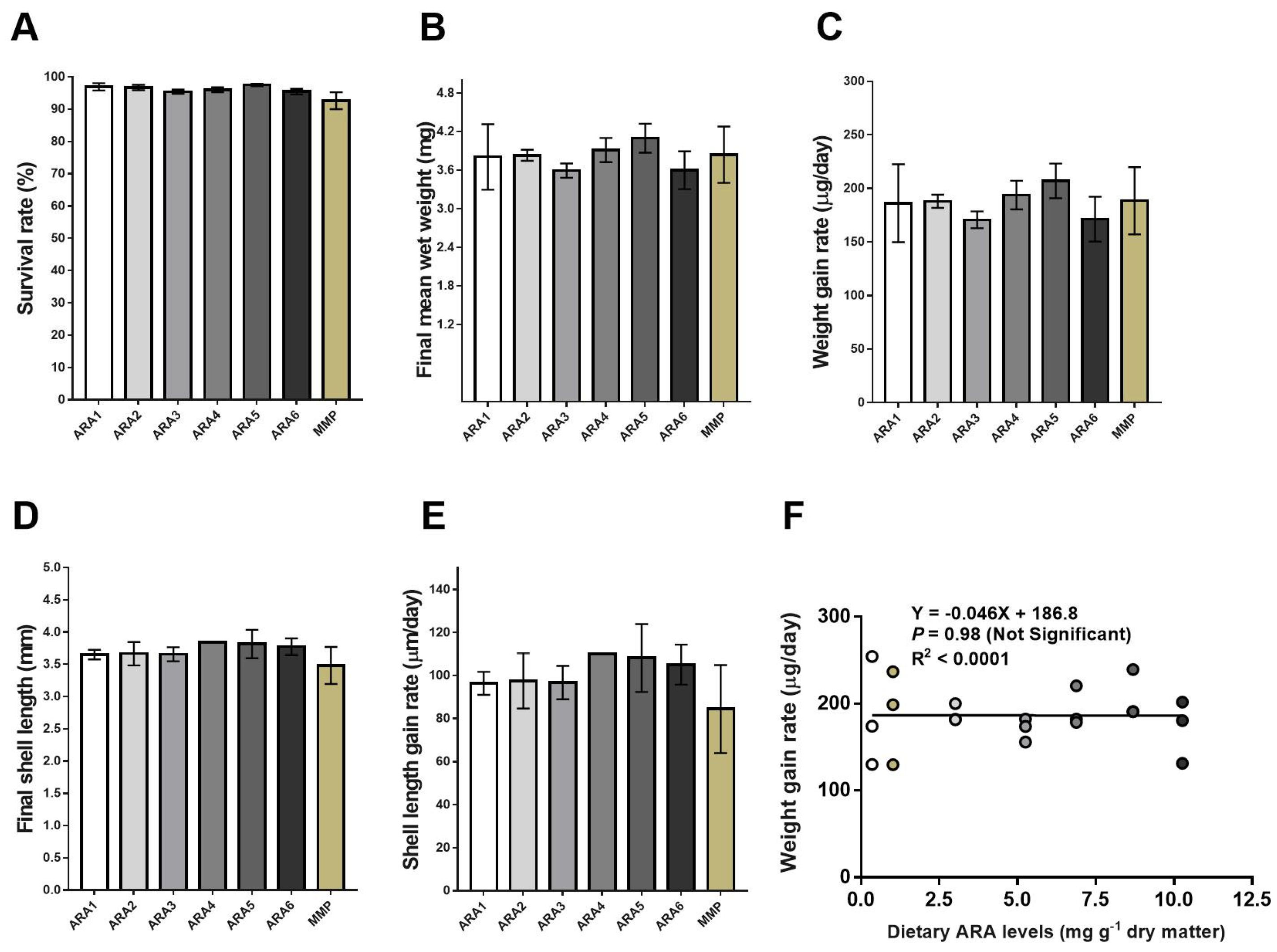
The survival rates of the clams showed no significant differences among all groups (p > 0.05; Figure 1A). The final mean weight, weight gain rates, final mean shell length, and shell length gain rates of the clams showed no significant differences among all groups (p > 0.05; Figure 1B–E). A linear model (Y = 0.06456X + 185.7) showed that different dietary ARA concentrations had no significant effect on the weight gain rates of clam juveniles (p = 0.98; Figure 1F). Linear regression analysis revealed that dietary ARA content had no significant linear effect on any of the measured performance indicators in clam juveniles, including survival rate, final mean weight, weight gain rate, final shell length, and shell length gain rate (all p > 0.05; see Appendix B, Table A2).

3.2. Proximate Composition and Fatty Acid Profile

The crude protein content of the clams showed no significant differences among the groups (p > 0.05; Table 4). The crude lipid content of clams in the MMP and ARA6 groups was significantly higher than that in the other groups (p < 0.05; Table 4). The ash content of clams in the MMP group was significantly lower compared to the ARA1 and ARA2 groups (p < 0.05; Table 4).
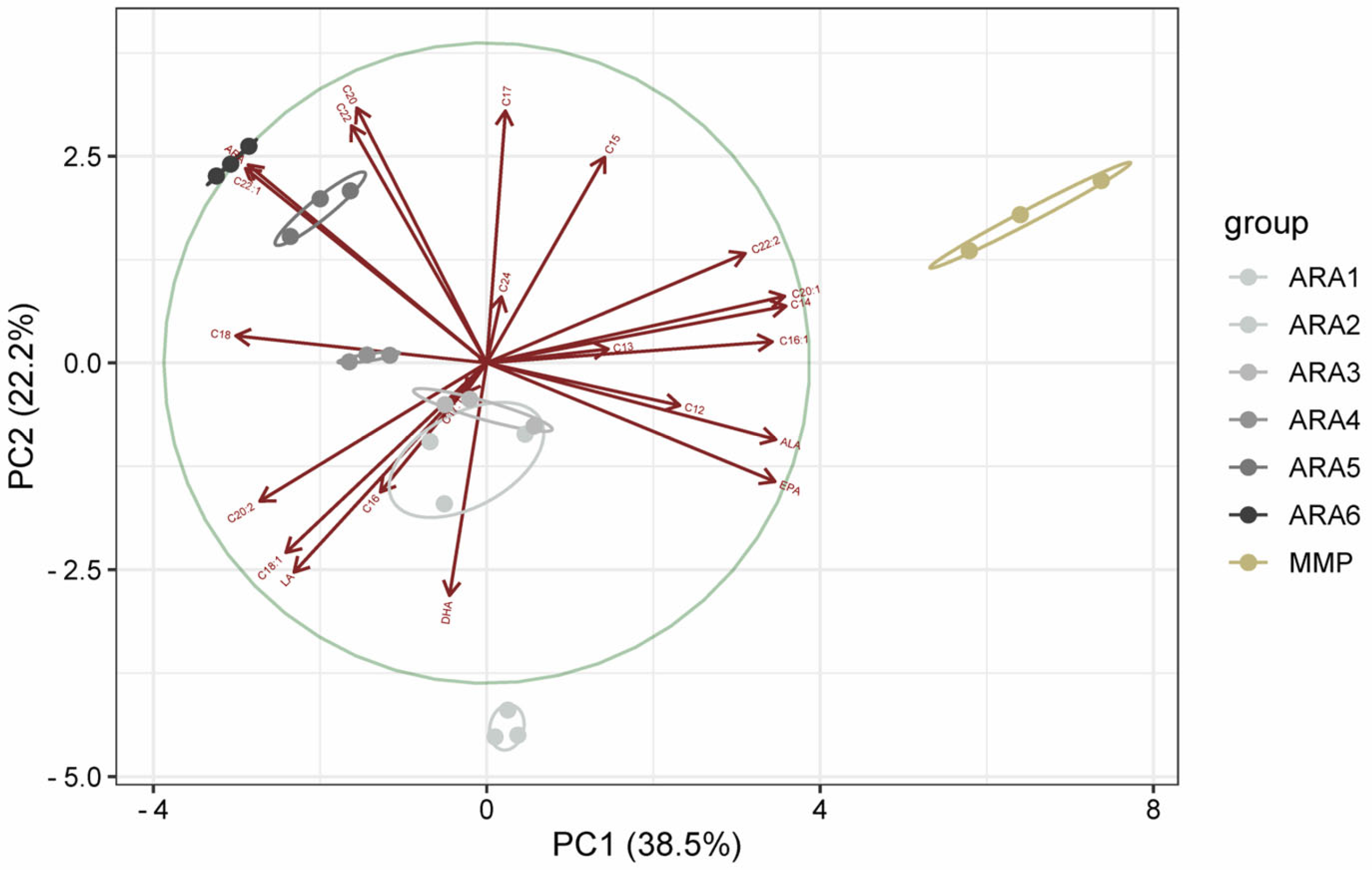
The PCA result of the fatty acids showed significant differences among most groups, except for the ARA2 and ARA3 groups (Figure 2). Notably, ARA was significantly correlated with C22:1n-9. In contrast, ARA showed a significant negative correlation with eicosapentaenoic acid (EPA) and α-linolenic acid (ALA) (Figure 2). Specifically, the ARA and C22:1n-9 levels in the clams increased gradually with higher dietary ARA (Table 4). The ALA levels of the clams in the ARA1 and ARA2 groups were significantly higher than those in the ARA3-6 groups, but significantly lower than those in the MMP group (p < 0.05; Table 4). The EPA levels in the clams decreased gradually with higher dietary ARA (Table 4). The DHA level of the clams in the ARA1 group was significantly higher than that in the other groups (p < 0.05; Table 4). Among the ARA1-6 groups, the n-3/n-6 PUFA ratio decreased from 0.57 to 0.23 (Table 4). Due to the lower total n-6 PUFA levels of the clams in the MMP group, the n-3/n-6 PUFAs ratio was the highest, at 1.41 (Table 4). The total SFA, MUFAs, and PUFAs levels in the clams in the MMP group were the lowest, followed by the ARA4 group, both of which were significantly lower than those in the ARA1, ARA5, and ARA6 groups (p < 0.05; Table 4).

3.3. Eicosanoid Synthesis and NF-κB Pathway-Related Gene Expression

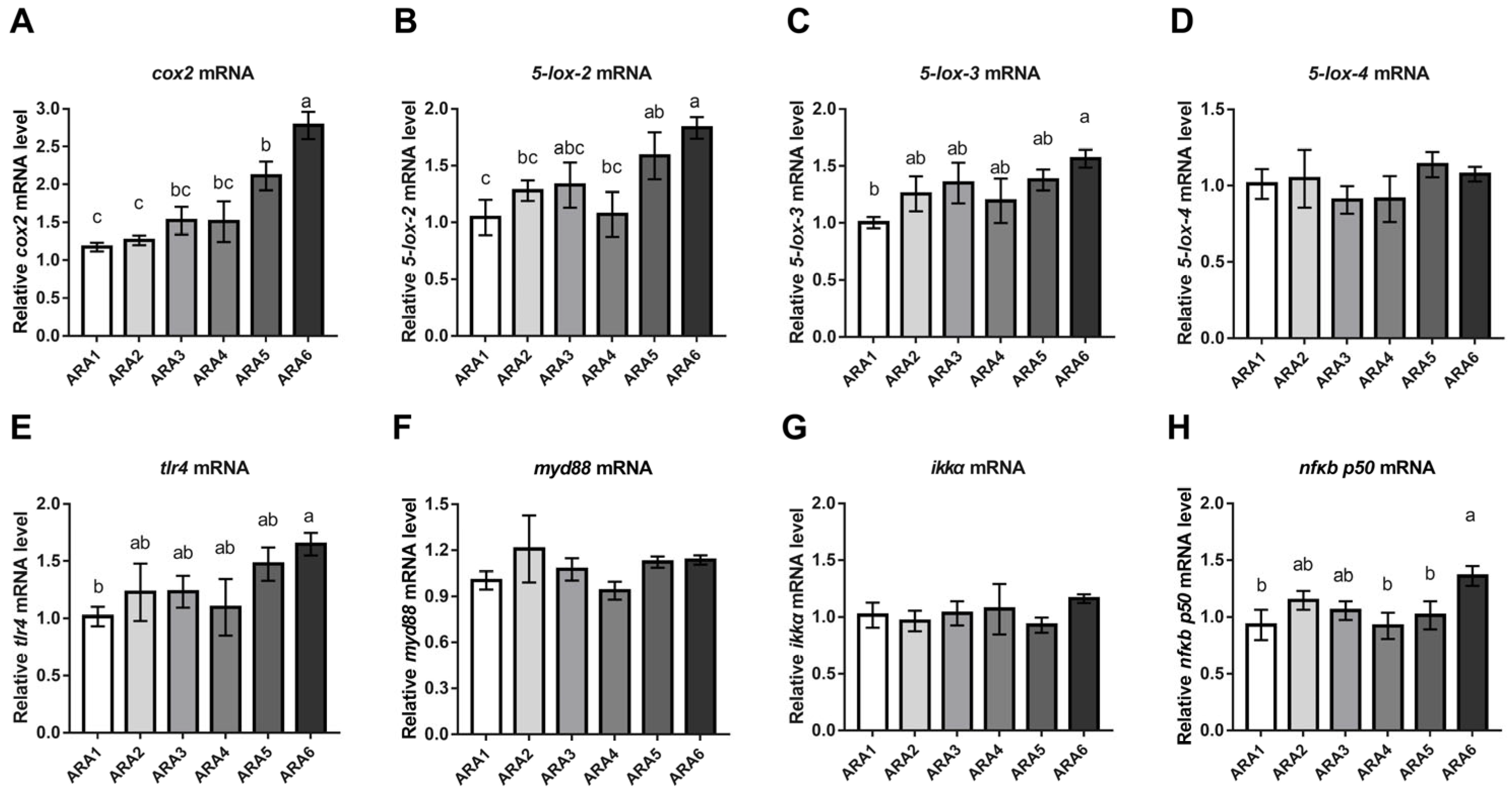
The mRNA levels of cox2 in the ARA6 and ARA5 groups were significantly higher than those in the ARA1 and ARA2 groups (p < 0.05; Figure 3A). The mRNA level of 5-lox-2 in the ARA6 group was significantly higher than that in the ARA1, ARA2, and ARA4 groups (p < 0.05; Figure 3B). The mRNA level of 5-lox-3 in the ARA6 group was significantly higher than that in the ARA1 group (p < 0.05; Figure 3C). The mRNA levels of tlr4 and nfκb p50 in the ARA6 group were significantly higher than those in the ARA1 group (p < 0.05; Figure 3H). There were no significant differences in the mRNA levels of 5-lox-4, ikkα, and myd88 among all groups (p > 0.05; Figure 3).

3.4. Nrf2 Pathway-Related Gene Expression

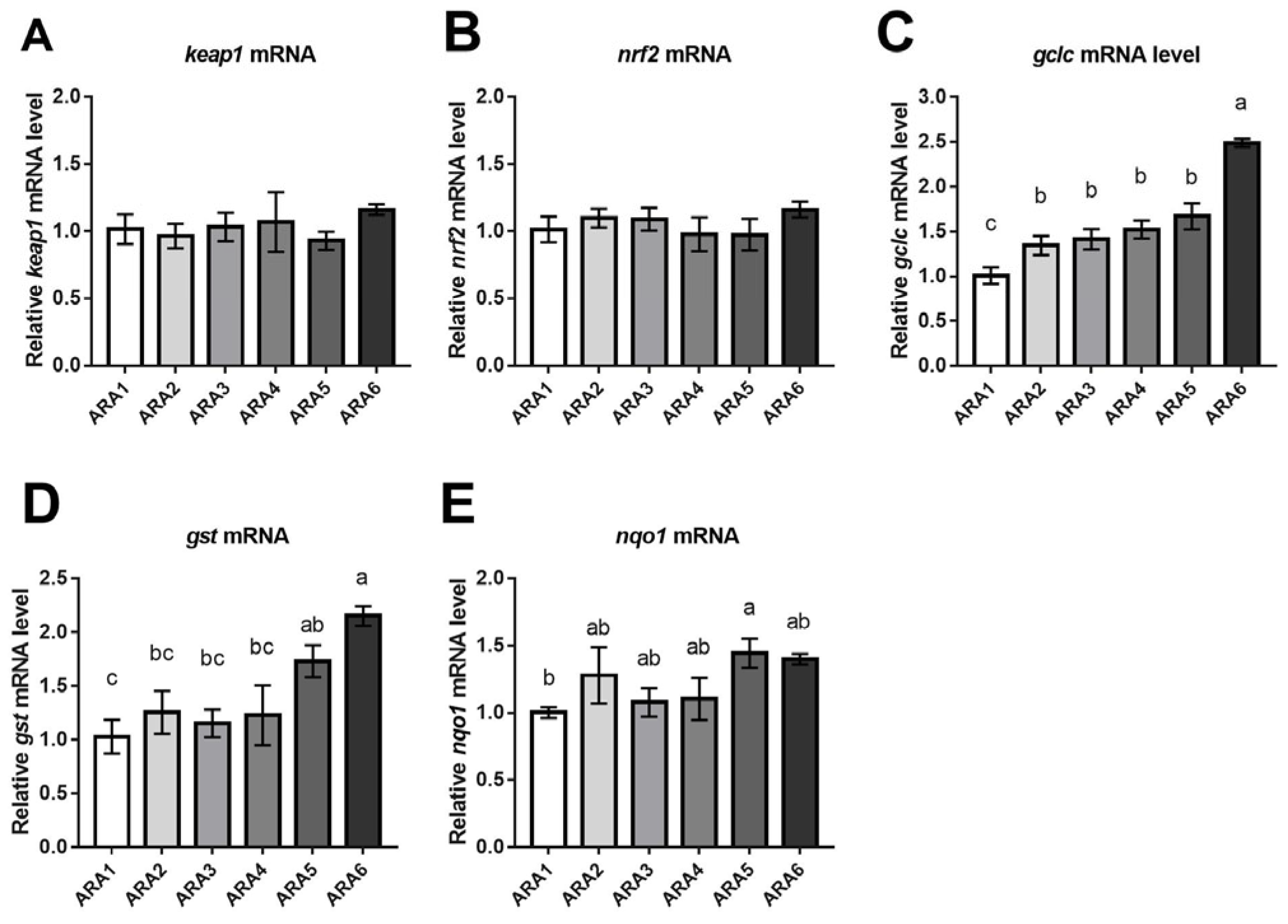
The mRNA level of gclc in the ARA6 group was the highest, significantly higher than that in the other groups (p < 0.05; Figure 4C). The mRNA level of gst in the ARA6 group was the highest, significantly higher than that in the ARA1-4 groups (p < 0.05; Figure 4D). The mRNA level of nqo1 in the ARA5 group was the highest, significantly higher than that in the ARA1 group (p < 0.05; Figure 4E). There were no significant differences in the mRNA levels of keap1 and nrf2 among all groups (p > 0.05; Figure 4).

3.5. Redox Indicator

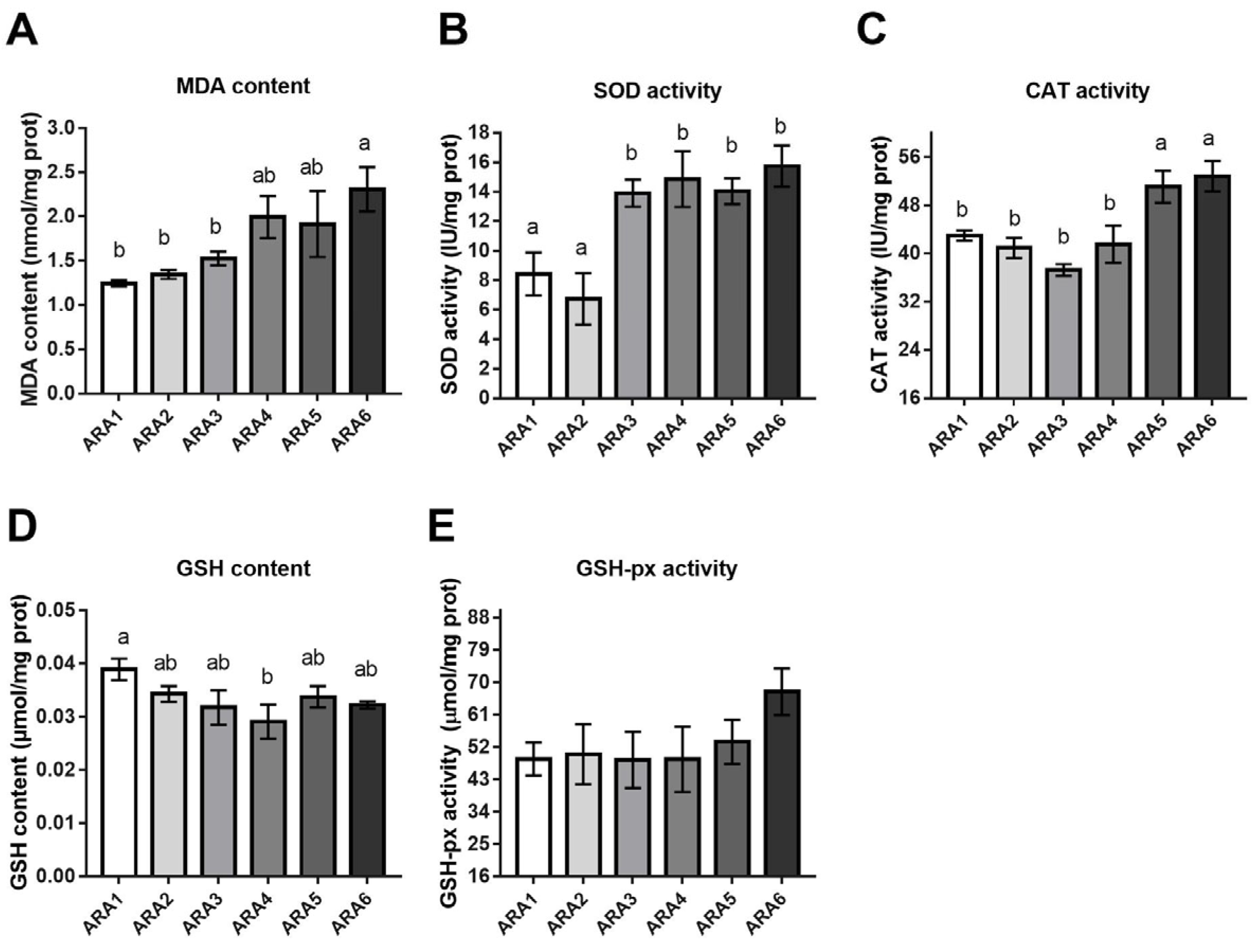
The MDA content in the ARA6 group was the highest, significantly higher than that in the ARA1, ARA2, and ARA3 groups (p < 0.05; Figure 5A). The SOD activities in the ARA1 and ARA2 groups were significantly lower than that in the ARA3-6 groups (p < 0.05; Figure 5B). The CAT activities in the ARA5 and ARA6 groups were significantly higher than that in the ARA1-4 groups (p < 0.05; Figure 5C). The GSH content in the ARA1 group was the highest, significantly higher than that in the ARA4 group (p < 0.05; Figure 5D). There were no significant differences in the GSH-px activity among all groups (p > 0.05; Figure 5E).

3.6. Multivariate Statistics Reveal an Integrated Physiological Response to ARA

To systematically elucidate the impact of high ARA diets on the overall physiological status of the clam S. constricta, we performed multivariate statistical analyses on key indicators.
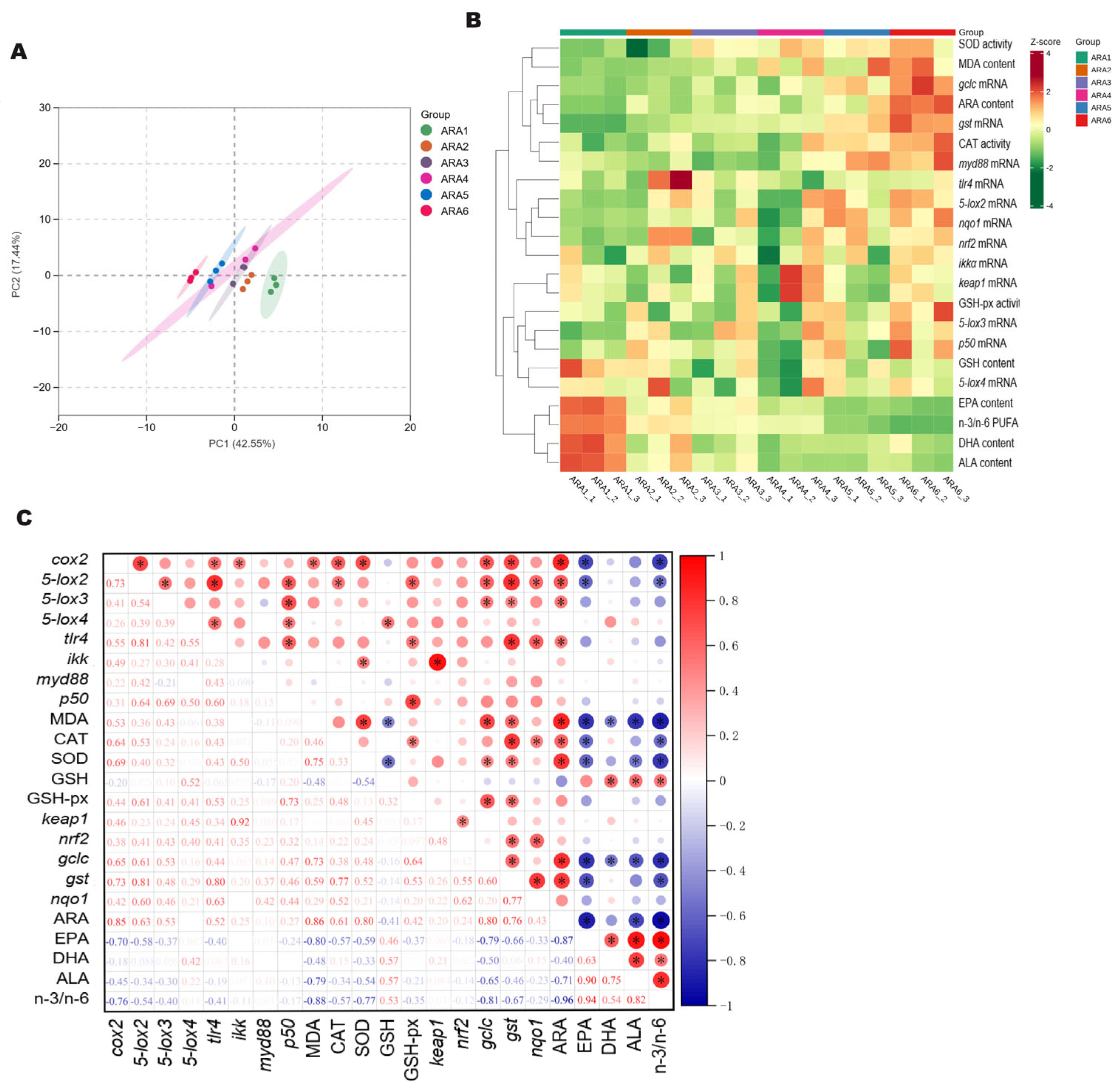
PCA indicated that the first two principal components (PC1 and PC2) cumulatively explained 60% of the total variance (Figure 6A). Samples exhibited a continuous distribution trend along the ARA gradient (from ARA1 to ARA6) in the PC1-PC2 plane, rather than forming strict clusters by treatment group. PC1 (42.55% contribution) was the key dimension distinguishing samples: its positive loading end was highly correlated with clam ARA content, pro-inflammatory genes (e.g., cox2), the oxidative damage marker (MDA), and antioxidant enzyme (SOD, CAT) activities; while its negative loading end was closely associated with tissue n-3 PUFAs (e.g., EPA) content and the n-3/n-6 PUFA ratio. This visually demonstrates that the PC1 axis represents a systemic shift from an “n-3 PUFA-dominant/low-stress” state to an “ARA-dominant/high inflammation-oxidative stress” state.
The abundance heatmap of key indicators (Figure 6B) visually corroborated these statistical relationships. As dietary ARA concentrations increased (from left to right), the overall abundance of clam ARA content, cox2, MDA, SOD, and CAT showed a consistent upward trend; conversely, EPA and the n-3/n-6 PUFA ratio showed a clear downward trend. Hierarchical clustering within the heatmap further grouped tissue ARA, inflammatory genes (cox2, tlr4), oxidative damage (MDA), and antioxidant enzymes (SOD, CAT) into one module, and n-3 series fatty acids (EPA, DHA) into another, negatively correlated module. This visually reinforces the two core biological processes: a positive feedback loop and competitive inhibition.
Spearman’s rank correlation analysis further quantified the intrinsic relationships among these indicators (Figure 6C). Clam ARA content, acting as a central node, showed very strong positive correlations with MDA (ρ = 0.86, p < 0.05) and cox2 (ρ = 0.85, p < 0.05), and very strong negative correlations with EPA (ρ = −0.87, p < 0.05) and the n-3/n-6 PUFA ratio (ρ = −0.96, p < 0.05). Notably, the oxidative damage marker MDA showed significant positive correlations with the activities of the key antioxidant enzyme SOD (ρ = 0.75, p < 0.05). Conversely, MDA exhibited strong negative correlations with EPA (ρ = −0.80, p < 0.05), ALA (ρ = −0.79, p < 0.05), and the n-3/n-6 PUFA ratio (ρ = −0.88, p < 0.05). The expression of the pro-inflammatory gene cox2 was not only strongly correlated with tissue ARA and MDA, but also showed positive correlations with SOD (ρ = 0.69, p < 0.05) and CAT (ρ = 0.64, p < 0.05) activities. It also exhibited significant negative correlations with EPA (ρ = −0.70, p < 0.05) and the n-3/n-6 PUFA ratio (ρ = −0.76, p < 0.05).

4. Discussion

4.1. Effects of Dietary ARA on the Growth, Crude Lipid Content, and Fatty Acid Profile of Juvenile Clam S. constricta

Using nutrition-controlled microcapsule feeds, this study demonstrated that dietary ARA concentrations (0.35–10.27 mg−1) had no significant effect on the growth of juvenile S. constricta. This range, which covers and exceeds the typical ARA content in natural microalgal diets (generally <10 mg g−1) allowed for a robust assessment of ARA requirements [27,29]. Our finding—that ARA was not growth-limiting—aligns with observations in several other aquatic species where dietary ARA also showed no significant growth-promoting effect, including the sea cucumber A. japonica, grass carp C. idellus, and larvae of various marine fish such as Senegalese sole, Atlantic cod, and others [7,8,30,31,32]. This is also consistent with reports that low-ARA microalgae diets did not limit growth in clams S. constricta and C. edule [12,33]. However, our result contrasts with studies reporting a positive correlation between dietary ARA and growth, such as in the oyster C. corteziensis fed ARA-rich Chaetoceros calcitrans [9], or those identifying specific optimal ARA requirements for species like the crab S. paramamosain and black sea bream A. schlegelii [5,34]. This discrepancy, as noted in broader reviews [35], underscores the species-specific complexity of ARA requirements in aquatic animals. Critically, the use of nutrition-controlled microcapsule feeds in the present study helped minimize confounding variations in other key nutrients (e.g., protein, EPA, DHA) that are inherent to studies using live microalgae of different species. This methodological approach provides clearer evidence that, for juvenile S. constricta under these conditions, growth is independent of dietary ARA across a wide concentration range. Whether this holds true for other life stages, particularly the planktonic larval stage, requires further investigation. From an industrial application perspective, microcapsules and microalgal powder can already replace approximately 50–75% of live microalgae as alternative feeds. However, their production costs are relatively high, especially considering the extensive intertidal flat and pond farming mode of S. constricta. In addition, microcapsules perform poorly in the planktonic larval stage, mainly because their physicochemical properties, such as water stability, are difficult to match with live microalgae. Therefore, we suggest that the current applicable scope of microcapsule diets is limited to the juvenile stage of razor clams, i.e., the size of clams used in the present study, where the culture period is short and the demand for microcapsules is low. Moreover, a more practical strategy is to use microcapsule feeds as short-term nutritional fortification before harvest, such as improving fatty acid composition, enhancing flavor quality, or increasing stress resistance, rather than for daily growth promotion.
The crude nutritional composition can reflect the nutritional metabolic status of aquatic animals. An appropriate level of ARA can inhibit abnormal lipid accumulation, but excessive ARA may exacerbate lipid accumulation in many aquatic animals [1,34]. In this study, the high-ARA diet (ARA6) significantly increased the crude lipid content in the clams. The possible reason is that the high-ARA diet disrupts metabolism, reducing lipid catabolism and increasing lipid synthesis in the clams. However, other diets did not significantly affect the crude lipid levels or growth in the clams, suggesting that the clams exhibit a relatively high tolerance to dietary ARA [36]. The factors affecting aquatic animals’ fatty acid profiles mainly include fatty acid intake, fatty acid oxidation, elongation, desaturation, competitive incorporation of fatty acids into membranes, and retroconversion [37]. The fatty acid profile in tissue was generally a reflection of the fatty acid composition of the diet [4]. In this study, ARA concentrations in the clams mirrored those in the diets. This was consistent with many previous studies in bivalves, where ARA supplementation significantly increased ARA concentrations in the tissues [9,11,21]. Interestingly, the content of n-3 PUFAs in the clams, especially EPA, decreased as dietary ARA increased. This result was similar to previous studies on seabream S. aurata and Acanthopagrus schlegelii [34,36]. This was likely caused by the competitive incorporation of fatty acids into membranes, where high ARA intake put EPA and other n-3 PUFAs at a disadvantage in phospholipid esterification, preventing their proper accumulation and retention. Our results provide strong evidence that ARA intake affects the fatty acid profiles of clams. Like fish, high ARA intake in the clam S. constricta led to increased ARA deposition and decreased n-3 PUFA deposition.

4.2. Effect of Dietary ARA on the Inflammatory/Redox Status of Juvenile Clam S. constricta

COX and LOX enzymes metabolize ARA into eicosanoids, regulating inflammation and immunity. LOX isoforms, including 5-LOX, 8-LOX, 12-LOX, and 15-LOX, catalyse the oxidation of fatty acids at different carbon positions [38]. We identified four lox genes in S. constricta, but due to the inability to distinguish the isoforms at this stage, they were named 5-lox-1 through 5-lox-4. In this study, the high-ARA diet significantly increased the clams’ cox2, 5-lox-2, and 5-lox-3 transcription. The results are consistent with previous studies in yellowtail Seriola dorsalis and seabream A. schlegelii [39,40]. The upregulation of eicosanoid synthase expression indicates a more active arachidonic acid metabolism pathway, which may produce more pro-inflammatory mediators, such as prostaglandins and leukotrienes. These mediators can activate various inflammatory pathways, with the NF-κB pathway being one of the most relevant [14]. In this study, we also assessed the transcription of NF-κB-related genes and found that a high-ARA diet significantly upregulated the mRNA levels of tlr4 and nfκb p50. The results are consistent with a previous study in sea cucumber A. japonicus [8]. The observed upregulation of inflammation-related genes indicates that a high-ARA diet leads to the activation of inflammatory pathways in juvenile clams. Chronic long-term inflammation is often accompanied by oxidative stress. The upregulation of inflammation-related genes may contribute to increased free radical production via the activation of downstream inflammatory processes; therefore, the clams may need enhanced antioxidant defences to neutralize these free radicals [41].
Nrf2 is a key regulator of the cellular response to oxidative stress. Under normal conditions, it is inactive in the cytoplasm, bound to KEAP1 [42]. When stress occurs, Nrf2 is released, enters the nucleus, and activates genes involved in antioxidant defense and detoxification, helping protect cells from damage [43]. Previous studies showed that the Nrf2 pathway in bivalves enhances antioxidant and detoxification defences under toxic substance exposure [44,45]. In this study, the detoxifying enzyme genes gclc, gst, and nqo1 were upregulated under the high-ARA diet. However, dietary ARA concentrations did not significantly affect the transcription of nrf2 and keap1 in the clams. No studies have reported the effects of dietary ARA concentrations on Nrf2 pathway-related genes in bivalves, and few studies have been conducted in other aquatic animals. Limited studies suggested that dietary ARA could increase nrf2 and keap1 transcription in abalone H. discus hannai [4]. The difference between the two results may be due to dietary ARA regulating the protein levels of KEAP1 and Nrf2 in the clams, rather than at the transcriptional level. The effect of dietary fatty acids on the Nrf2 pathway in bivalves requires further investigation.
MDA is a lipid peroxidation product, while GSH is an important antioxidant [46,47]. Their levels reflect the organism’s redox status to some extent. In this study, the high-ARA diets significantly increased the MDA levels in the clams, while GSH showed a decreasing trend. Previous studies also showed that the high-ARA diet increased MDA content and decreased GSH in seabream A. schlegelii [40]. CAT and SOD are key antioxidant enzymes. SOD catalyzes the dismutation of the superoxide anion into hydrogen peroxide, which is then decomposed by CAT into harmless water and oxygen, thereby working in concert to protect cells from oxidative damage. In this study, high-ARA diets significantly enhanced the activities of SOD and CAT in the clams. This aligns with findings in some species, such as javelin goby Synechogobius hasta and rice field eel Monopterus albus, where ARA supplementation also upregulated these antioxidant enzymes [48,49]. The observed increase in S. constricta suggests its redox system was actively compensatory, elevating antioxidant enzyme levels to counteract the pro-oxidant challenge posed by high ARA without immediate system disruption. Overall, the observed upregulation of inflammatory and oxidative stress pathways indicates a potential risk or suggests a state of physiological stress that could compromise health over a longer period.

5. Conclusions

In conclusion, this study determined that dietary ARA concentrations had no significant effect on the growth performance of juvenile clam S. constricta. However, dietary ARA concentrations significantly affected the fatty acid profiles of the clams, with high ARA intake leading to increased ARA concentrations, reduced EPA levels, and a lower n-3/n-6 PUFA ratio. Furthermore, the high-ARA diet increased the inflammatory and redox status of the clams. This upregulation of inflammatory and oxidative stress pathways indicates a potential risk, suggesting a state of physiological stress that could compromise health over a longer period.

Author Contributions

Y.Z. (Yuxiang Zhu): Methodology, Investigation, Writing—original draft, Y.F.: Resources, K.L.: Conceptualization, Supervision, Y.L.: Investigation, Y.Z. (Yang Zhang): Investigation, J.X.: Supervision, Project administration, Funding acquisition. All authors have read and agreed to the published version of the manuscript.

Funding

This work was supported by the National Key Research and Development Program of China (Grant numbers 2023YFD2402000), the Ningbo Science and Technology Research Projects (Grant numbers 2024Z276), and the Earmarked Fund for CARS-49.

Institutional Review Board Statement

The animal study protocol was approved by Animal Ethics Committee of Ningbo University (protocol code NBU20220079 and approval date 7 March 2022).

Informed Consent Statement

Not applicable.

Data Availability Statement

The raw data supporting the conclusions of this article will be made available by the authors on request.

Acknowledgments

During the preparation of this manuscript, the authors used Deepseek (V3.2) for the purposes of improving grammatical accuracy, optimizing sentence structure, adjusting wording, and enhancing the overall readability of the text. The authors have reviewed and edited the output and take full responsibility for the content of this publication. Additionally, the authors sincerely thank Rui Tuo and Qin Qin from Xianfeng Secondary Vocational and Technology School, Enshi, China, for their valuable provision of experimental materials and essential equipment support throughout this research.

Conflicts of Interest

The authors declare no conflicts of interest.

Abbreviations

The following abbreviations are used in this manuscript:
ARA Arachidonic acid
PUFAsPolyunsaturated fatty acids
n-3 PUFAn-3 polyunsaturated fatty acid
n-6 PUFAn-6 polyunsaturated fatty acid
EPAEicosapentaenoic acid
LALinoleic acid
ALAα-Linolenic acid
DHADocosahexaenoic acid
cox2cyclooxygenase 2
5-lox-25-lipoxygenase type 2
5-lox-35-lipoxygenase type 3
5-lox-45-lipoxygenase type 4
tlr4toll-like receptor 4
nfκbnuclear factor-kappa B
myd88myeloid differentiation primary response protein 88
ikkαIκB kinase α subunit
keap1kelch-like ECH-associated protein 1
nqo1NAD(P)H quinone dehydrogenase 1
MDAMalondialdehyde
SODSuperoxide dismutase
CATCatalase
GSHGlutathione
GSH-pxGlutathione peroxidase
gclcglutamate–cysteine ligase catalytic subunit
gstglutathione S-transferase
nrf2nuclear factor erythroid 2-related factor 2
ROSReactive oxygen species
SSOSStarch sodium octenyl succinate
qPCRQuantitative real-time PCR
NTCsNo-template controls
cDNAComplementary DNA
MMPMixed microalgae powder
PCAPrincipal component analysis

Appendix A

Table A1. The fatty acid composition (% total fatty acids) of different oils.
Fatty Acid Composition
(% Total Fatty Acid)
Lipid Substrates
EPA-Rich OilPalm OilARA-Rich OilSoybean Oil
C12:00.000.480.030.00
C14:00.341.970.360.30
C15:00.030.000.090.08
C16:01.9134.88.1614.36
C18:03.759.8311.7011.72
C20:00.620.442.371.44
C21:00.060.000.160.14
C22:00.130.005.151.63
C24:00.000.003.430.56
Total SFA7.0948.1932.0130.86
C16:10.700.440.490.31
C17:10.040.000.050.22
C18:1T6.6036.5619.0124.28
C18:1C2.620.000.180.35
C22:1n-90.810.001.500.00
Total MUFA10.7737.0021.2325.16
C18:2n-6T0.320.718.761.52
C18:2n-6C (LA)1.2014.10.2431.64
C20:3n-60.000.000.000.00
C18:3n-60.180.001.902.07
C20:4n-69.400.0029.290.00
C22:4n-60.170.000.490.00
C22:5n-61.390.000.000.00
Total n-6 PUFA12.6614.8140.6735.23
C18:3n-3 (ALA)0.000.003.748.75
C18:4n-30.000.000.000.00
C20:3n-30.560.002.340.00
C20:4n-33.920.000.000.00
C20:5n-3 (EPA)49.480.000.000.00
C22:5n-32.630.000.000.00
C22:6n-3 (DHA)12.880.000.000.00
Total n-3 PUFA69.480.008.758.75
Total PUFA82.1414.8143.9843.98

Appendix B

Table A2. Linear fitting of survival and growth indices against dietary ARA content. F: F-statistic; p: p-value; R2: R-squared.
EquationFpR2Significance
Survival rateY = 0.1181*X + 95.170.64660.43130.03291Not Significant
Final mean weightY = −0.0006202*X + 3.8140.00046170.98312.43 × 10−5Not Significant
Weight gain rateY = −0.046*X + 186.80.00046170.98312.43 × 10−5Not Significant
Final shell lengthY = 0.02574*X + 3.5662.530.12820.1175Not Significant
Shell length gain rateY = 1.839*X + 90.442.530.12820.1175Not Significant

References

  1. Xu, H.G.; Wang, C.; Zhang, Y.; Wei, Y.; Liang, M. Moderate levels of dietary arachidonic acid reduced lipid accumulation and tended to inhibit cell cycle progression in the liver of Japanese seabass Lateolabrax japonicus. Sci. Rep. 2018, 8, 10682. [Google Scholar] [CrossRef] [PubMed]
  2. Ding, Z.L.; Zhou, J.B.; Kong, Y.Q.; Zhang, Y.X.; Cao, F.; Luo, N.; Ye, J.Y. Dietary arachidonic acid promotes growth, improves immunity, and regulates the expression of immune-related signaling molecules in Macrobrachium nipponense (De Haan). Aquaculture 2018, 484, 112–119. [Google Scholar] [CrossRef]
  3. Ma, H.N.; Jin, M.; Zhu, T.T.; Li, C.C.; Lu, Y.; Yuan, Y.; Xiong, J.; Zhou, Q.C. Effect of dietary arachidonic acid levels on growth performance, fatty acid profiles and lipid metabolism of juvenile yellow catfish Pelteobagrus fulvidraco. Aquaculture 2018, 486, 31–41. [Google Scholar] [CrossRef]
  4. Lei, K.K.; Cui, Z.Y.; Liu, C.; Sahandi, J.; Rao, W.X.; Chen, P.; Mai, K.S.; Zhang, W.B. Dietary arachidonic acid affects the growth performance, fatty acid profile, immunity and resistance to heat stress in juvenile abalone Haliotis discus hannai Ino. Aquaculture 2023, 575, 739776. [Google Scholar] [CrossRef]
  5. Xie, S.C.; Deng, Y.; Tang, Z.; Tian, Y.Q.; Cao, H.Q.; Zhan, W.H.; Zhu, T.T.; Shen, Y.D.; Zhao, W.L.; Peng, H.Y.; et al. Dietary arachidonic acid supplementation promoted cholesterol utilization, lipid deposition and molting for Scylla paramamosain. Aquaculture 2024, 593, 741274. [Google Scholar] [CrossRef]
  6. Fountoulaki, E.; Alexis, M.N.; Nengas, I.; Venou, B. Effects of dietary arachidonic acid (20:4n-6), on growth, body composition, and tissue fatty acid profile of gilthead bream fingerlings (Sparus aurata L.). Aquaculture 2003, 225, 309–323. [Google Scholar] [CrossRef]
  7. Tian, J.J.; Ji, H.; Oku, H.; Zhou, J.S. Effects of dietary arachidonic acid (ARA) on lipid metabolism and health status of juvenile grass carp, Ctenopharyngodon idellus. Aquaculture 2014, 430, 57–65. [Google Scholar] [CrossRef]
  8. Qi, H.Q.; Liu, Y.; Jian, F.J.; Xing, X.; Wang, J.H.; Li, C. Effects of dietary arachidonic acid (ARA) on immunity, growth and fatty acids of Apostichopus japonicus. Fish. Shellfish. Immun. 2022, 127, 901–909. [Google Scholar] [CrossRef]
  9. Rivero-Rodríguez, S.; Beaumont, A.R.; Lora-Vilchis, M.C. The effect of microalgal diets on growth, biochemical composition, and fatty acid profile of Crassostrea corteziensis (Hertlein) juveniles. Aquaculture 2007, 263, 199–210. [Google Scholar] [CrossRef]
  10. Milke, L.M.; Bricelj, V.M.; Parrish, C.C. Biochemical characterization and nutritional value of three Pavlova spp. in unialgal and mixed diets with Chaetoceros muelleri for postlarval sea scallops, Placopecten magellanicus. Aquaculture 2008, 276, 130–142. [Google Scholar] [CrossRef]
  11. Hurtado, M.A.; Reza, M.; Ibarra, A.M.; Wille, M.; Sorgeloos, P.; Soudant, P.; Palacios, E. Arachidonic acid (20:4n-6) effect on reproduction, immunology, and prostaglandin E2 levels in Crassostrea corteziensis (Hertlein, 1951). Aquaculture 2009, 294, 300–305. [Google Scholar] [CrossRef]
  12. Batista, I.R.; Kamermans, P.; Verdege, M.C.J.; Smaal, A.C. Growth and fatty acid composition of juvenile Cerastoderma edule (L.) fed live microalgae diets with different fatty acid profiles. Aquacult. Nutr. 2014, 20, 132–142. [Google Scholar] [CrossRef]
  13. Yamaguchi, A.; Botta, E.; Holinstat, M. Eicosanoids in inflammation in the blood and the vessel. Front. Pharmacol. 2022, 13, 997403. [Google Scholar] [CrossRef] [PubMed]
  14. Ramakers, J.D.; Mensink, R.P.; Schaart, G.; Plat, J. Arachidonic acid but not eicosapentaenoic acid (EPA) and oleic acid activates NF-κB and elevates ICAM-1 expression in Caco-2 cells. Lipids 2007, 42, 687–698. [Google Scholar] [CrossRef]
  15. Surh, Y.J.; Chun, K.S.; Cha, H.H.; Han, S.S.; Keum, Y.S.; Park, K.K.; Lee, S.S. Molecular mechanisms underlying chemopreventive activities of anti-inflammatory phytochemicals: Down-regulation of COX-2 and iNOS through suppression of NF-κB activation. Mutat. Res.-Fund. Mol. Mech. 2001, 480, 243–268. [Google Scholar] [CrossRef]
  16. Cocco, T.; Di Paola, M.; Papa, S.; Lorusso, M. Arachidonic acid interaction with the mitochondrial electron transport chain promotes reactive oxygen species generation. Free Radic. Biol. Med. 1999, 27, 51–59. [Google Scholar] [CrossRef]
  17. Lin, C.C.; Yang, C.C.; Chen, Y.W.; Hsiao, L.D.; Yang, C.M. Arachidonic acid induces ARE/Nrf2-dependent Heme Oxygenase-1 transcription in rat brain astrocytes. Mol. Neurobiol. 2018, 55, 3328–3343. [Google Scholar] [CrossRef]
  18. Shuai, B.W.; Deng, T.Y.; Xie, L.P.; Zhang, R.Q. The regulatory effect of NF-KB signaling pathway on biomineralization and shell regeneration in pearl oyster, Pinctada fucata. Int. J. Biol. Macromol. 2023, 253, 126956. [Google Scholar] [CrossRef]
  19. Yuan, K.K.; Chen, Z.M.; Liu, Y.X.; Li, H.Y.; Yang, W.D. Possible role of docosahexaenoic acid in response to diarrhetic shellfish toxins in the mussel Perna viridis. Mar. Drugs 2023, 21, 155. [Google Scholar] [CrossRef]
  20. Delaporte, M.; Soudant, P.; Moal, J.; Giudicelli, E.; Lambert, C.; Seguineau, C.; Samain, J.F. Impact of 20:4n-6 supplementation on the fatty acid composition and hemocyte parameters of the Pacific oyster Crassostrea gigas. Lipids 2006, 41, 567–576. [Google Scholar] [CrossRef]
  21. Seguineau, C.; Racotta, I.S.; Palacios, E.; Delaporte, M.; Moal, J.; Soudant, P. The influence of dietary supplementation of arachidonic acid on prostaglandin production and oxidative stress in the Pacific oyster Crassostrea gigas. Comp. Biochem. Phys. A 2011, 160, 87–93. [Google Scholar] [CrossRef] [PubMed]
  22. Ran, Z.S.; Xu, J.L.; Liao, K.; Monroig, O.; Navarro, J.C.; Oboh, A.; Jin, M.; Zhou, Q.C.; Tocher, D.R.; Yan, X.J. Biosynthesis of long-chain polyunsaturated fatty acids in the razor clam Sinonovacula constricta: Characterization of four fatty acyl elongases and a novel desaturase capacity. BBA-Mol. Cell Biol. Lipids 2019, 1864, 1083–1090. [Google Scholar] [CrossRef] [PubMed]
  23. Zhu, Y.X.; Liao, K.; Tian, J.J.; Liu, Y.; Xu, J.L.; Liu, X.W.; Zhang, L.; Yan, X.J. Substitution of microalgae with microcapsule diet for two bivalve species, manila clam Ruditapes philippinarum and razor clam Sinonovacula constricta. Aquacult. Rep. 2022, 22, 100991. [Google Scholar] [CrossRef]
  24. Zhu, Y.X.; Liao, K.; Liu, Y.; Huang, H.L.; Ma, Y.H.; Chen, D.S.; Ma, B.; Xu, J.L. Effects of dietary carbohydrate/lipid ratios on growth, body composition, amylase activity, oxidative status, and mTOR/autophagy pathway in juvenile clam, Sinonovacula constricta. Aquaculture 2024, 578, 740119. [Google Scholar] [CrossRef]
  25. Zhu, Y.X.; Liao, K.; Liu, Y.; Huang, H.L.; Zhang, Y.; Chen, D.S.; Ma, B.; Xu, J.L. Effects of dietary docosahexaenoic acid (DHA) levels on growth performance, fatty acid profile, and NF-κB/Nrf2 pathway-related gene expression of razor clam Sinonovacula constricta. Aquacult. Nutr. 2024, 2024, 9107191. [Google Scholar] [CrossRef]
  26. AOAC. Official Methods of Analysis, 18th ed.; Association of Official Analytical Chemists: Arlington, VA, USA, 2006. [Google Scholar]
  27. Zhang, J.X.; Ran, Z.S.; Xie, H.X.; Kong, F.; Zhang, M.Q.; Zhou, Y.; Li, Y.R.; Liao, K.; Yan, X.J.; Xu, J.L. A systematic analysis and evaluation of nutritional composition of 23 strains of marine microalgae commonly used in aquaculture. Algal. Res. 2023, 72, 103122. [Google Scholar] [CrossRef]
  28. Wang, Y.Y.; Xu, S.M.; Cao, J.Y.; Wu, M.N.; Lin, J.H.; Zhou, C.X.; Zhang, L.; Zhou, H.B.; Li, Y.R.; Xu, J.L.; et al. Co-cultivation of Isochrysis galbana and Marinobacter sp. can enhance algal growth and docosahexaenoic acid production. Aquaculture 2022, 556, 738248. [Google Scholar] [CrossRef]
  29. Brown, M.R.; Jeffrey, S.W.; Volkman, J.K.; Dunstan, G.A. Nutritional properties of microalgae for mariculture. Aquaculture 1997, 151, 315–331. [Google Scholar] [CrossRef]
  30. Koven, W.; Barr, Y.; Lutzky, S.; Ben-Atia, I.; Weiss, R.; Harel, M.; Behrens, P.; Tandler, A. The effect of dietary arachidonic acid (20:4n-6) on growth, survival and resistance to handling stress in gilthead seabream (Sparus aurata) larvae. Aquaculture 2001, 193, 107–122. [Google Scholar] [CrossRef]
  31. Copeman, L.A.; Parrish, C.C.; Brown, J.A.; Harel, M. Effects of docosahexaenoic, eicosapentaenoic, and arachidonic acids on the early growth, survival, lipid composition and pigmentation of yellowtail flounder (Limanda ferruginea): A live food enrichment experiment. Aquaculture 2002, 210, 285–304. [Google Scholar] [CrossRef]
  32. Lund, I.; Steenfeldt, S.J.; Banta, G.; Hansen, B.W. The influence of dietary concentrations of arachidonic acid and eicosapentaenoic acid at various stages of larval ontogeny on eye migration, pigmentation and prostaglandin content of common sole larvae (Solea solea L.). Aquaculture 2008, 276, 143–153. [Google Scholar] [CrossRef]
  33. Kong, F.; Ran, Z.S.; Xie, H.X.; Tian, X.X.; Liao, K.; Xu, J.L. Effects of three microalgal diets varying in LC-PUFA composition on growth, Fad, and Elovl expressions, and fatty acid profiles in juvenile razor clam Sinonovacula constricta. Fishes 2023, 8, 484. [Google Scholar] [CrossRef]
  34. Bao, Y.G.; Shen, Y.D.; Zhao, W.L.; Yang, B.Q.; Zhao, X.Y.; Tao, S.S.; Sun, P.; Monroig, O.; Zhou, Q.C.; Jin, M. Evaluation of the optimum dietary arachidonic acid level and its essentiality for black seabream (Acanthopagrus schlegelii): Based on growth and lipid metabolism. Aquacult. Nutr. 2024, 29, 101506. [Google Scholar] [CrossRef] [PubMed]
  35. Xu, H.G.; Meng, X.X.; Wei, Y.L.; Ma, Q.; Liang, M.Q.; Turchini, G.M. Arachidonic acid matters. Rev. Aquacult. 2022, 14, 1912–1944. [Google Scholar] [CrossRef]
  36. Martins, D.A.; Cocha, F.; Martínez-Rodríguez, G.; Bell, G.; Morais, S.; Castanheira, F.; Bandarra, N.; Coutinho, J.; Yúfera, M.; Conceição, L.E. Teleost fish larvae adapt to dietary arachidonic acid supply through modulation of the expression of lipid metabolism and stress response genes. Br. J. Nutr. 2012, 108, 864–874. [Google Scholar] [CrossRef]
  37. Hossain, M.A.; Almatar, S.M.; James, C.M. Effects of varying dietary docosahexaenoic acid levels on growth, proximate composition and tissue fatty acid profile of juvenile silver pomfrets, Pampus argenteus (Euphrasen, 1788). Aquac. Res. 2012, 43, 1599–1610. [Google Scholar] [CrossRef]
  38. Schweiger, D.; Fürstenberger, G.; Krieg, P. Inducible expression of 15-lipoxygenase-2 and 8-lipoxygenase inhibits cell growth via common signaling pathways. J. Lipid. Res. 2007, 48, 553–564. [Google Scholar] [CrossRef]
  39. Araújo, B.C.; Skrzynska, A.K.; Marques, V.H.; Tinajero, A.; Del Rio-Zaragoza, O.B.; Viana, M.T.; Mata-Sotres, J.A. Dietary arachidonic acid (20:4n-6) levels and Its effect on growth performance, fatty acid profile, gene expression for lipid metabolism, and health status of Juvenile California yellowtail (Seriola dorsalis). Fishes 2022, 7, 185. [Google Scholar] [CrossRef]
  40. Bao, Y.G.; Shen, Y.D.; Wu, Z.X.; Tao, S.S.; Yang, B.Q.; Zhu, T.T.; Zhao, W.L.; Zhang, Y.Y.; Zhao, X.Y.; Jiao, L.F.; et al. High dietary arachidonic acid produces excess eicosanoids, and induces hepatic inflammatory responses, oxidative stress, and apoptosis in juvenile Acanthopagrus schlegelii. Aquacult. Rep. 2023, 29, 101506. [Google Scholar] [CrossRef]
  41. Okada, F. Inflammation and free radicals in tumor development and progression. Redox. Rep. 2002, 7(6), 357–368. [Google Scholar] [CrossRef] [PubMed]
  42. Bellezza, I.; Giambanco, I.; Minelli, A.; Donato, R. Nrf2-Keap1 signaling in oxidative and reductive stress. BBA-Mol. Cell Res. 2018, 1865, 721–733. [Google Scholar] [CrossRef] [PubMed]
  43. Tonelli, C.; Chio, I.I.C.; Tuveson, D.A. Transcriptional regulation by Nrf2. Antioxid. Redox. Sign. 2018, 29, 1727–1745. [Google Scholar] [CrossRef] [PubMed]
  44. Wang, H.D.; Pan, L.Q.; Xu, R.Y.; Si, L.J.; Zhang, X. The molecular mechanism of Nrf2-Keap1 signaling pathway in the antioxidant defense response induced by BaP in the scallop Chlamys farreri. Fish Shellfish Immun. 2019, 92, 489–499. [Google Scholar] [CrossRef] [PubMed]
  45. Qiu, L.M.; Chen, X.L.; Guo, B.Y.; Liao, Z.; Buttino, I.; Yan, X.J.; Qi, P.Z. Unraveling the protective role of Nrf2 in molluscs: Insights into mitochondrial and apoptosis pathways in the defense against Bap-induced oxidative stress. Aquat. Toxicol. 2023, 264, 106728. [Google Scholar] [CrossRef] [PubMed]
  46. Del Rio, D.; Stewart, A.J.; Pellegrini, N. A review of recent studies on malondialdehyde as toxic molecule and biological marker of oxidative stress. Nutr. Metab. Cardiovasc. Dis. 2005, 15, 316–328. [Google Scholar] [CrossRef] [PubMed]
  47. Averill-Bates, D.A. The antioxidant glutathione. Antioxidants 2023, 121, 109–141. [Google Scholar]
  48. Luo, Z.; Tan, Y.X.; Li, X.D.; Yan, G.J. Effect of dietary arachidonic acid levels on growth performance, hepatic fatty acid profile, intermediary metabolism and antioxidant responses for juvenile Synechogobius hasta. Aquacult. Nutr. 2011, 18, 340–348. [Google Scholar] [CrossRef]
  49. Yue, H.M.; Hu, P.; Deng, H.C.; Ruan, R.; Ye, H.; Zhang, C.; Li, C. Dietary arachidonic acid improves the growth performance, anti-oxidant capacity and ovary development of female rice field eel broodstocks (Monopterus albus). Anim. Nutr. 2025, 21, 341–350. [Google Scholar] [CrossRef] [PubMed]
Figure 1. Effects of microcapsule feeds with different ARA concentrations and mixed microalgae powder (MMP) diets on survival and growth performance of clam S. constricta. Bars are mean ± standard error, n = 3. No letters mean no significant differences (p > 0.05). (A) Survival rate (%); (B) Final mean weight (mg); (C) Weight gain rate (µg/day); (D) Final shell length (mm); (E) Shell length gain rate (µm/day); (F) Relationship between dietary ARA concentrations and weight gain rate.
Fishes 11 00262 g001
Figure 2. PCA score plots of fatty acid profile in clam S. constricta fed different diets (ARA1, ARA2, ARA3, ARA4, ARA5, ARA6, and MMP). The horizontal and vertical coordinates represent the first two principal components, respectively, with the percentages in parentheses indicating the proportion of variables explained by each principal component.
Fishes 11 00262 g002
Figure 3. Effects of dietary ARA concentrations on eicosanoid biosynthesis and NF-κB pathway-related gene expression in razor clam S. constricta. Bars are mean ± standard error, n = 3. Different letters show significant differences (p < 0.05). (A) cox2: cyclooxygenase 2; (B) 5-lox-2: 5-lipoxygenase type 2; (C) 5-lox-3: 5-lipoxygenase type 3; (D) 5-lox-4: 5-lipoxygenase type 4; (E) tlr4: toll-like receptor 4; (F) myd88: myeloid differentiation primary response protein 88; (G) ikkα: IκB kinase α subunit; (H) nfκb: nuclear factor-kappa b p50 subunit.
Fishes 11 00262 g003
Figure 4. Effects of dietary ARA concentrations on Nrf2 pathway-related gene expression in clam S. constricta. Bars are mean ± standard error, n = 3. Different letters show significant differences (p < 0.05). The genes analyzed were (A) keap1 (kelch-like ECH-associated protein 1), (B) nrf2 (nuclear factor erythroid 2-related factor 2), (C) gclc (glutamate–cysteine ligase catalytic subunit), (D) gst (glutathione S-transferase), and (E) nqo1 (NAD(P)H quinone dehydrogenase 1).
Fishes 11 00262 g004
Figure 5. Effects of dietary ARA concentrations on redox indicators in clam S. constricta. Bars are mean ± standard error, n = 3. Different letters show significant differences (p < 0.05). (A) Malondialdehyde (MDA) content; (B) Glutathione (GSH) content; (C) Catalase (CAT) activity; (D) Superoxide dismutase (SOD) activity; (E) Glutathione peroxidase (GSH-Px) activity.
Fishes 11 00262 g005
Figure 6. Multivariate analysis reveals an integrated physiological response to dietary ARA in S. constricta. The key data used in the analyses included: malondialdehyde (MDA) content; antioxidant enzyme activities (superoxide dismutase, SOD; catalase, CAT; glutathione peroxidase, GSH-Px); antioxidant small molecule content (glutathione, GSH); relative expression levels of key genes (including inflammation pathway-related genes cox2, tlr4, nfκb p50, ikkα, myd88; lipoxygenase genes 5-lox2, 5-lox3, 5-lox4; and antioxidant pathway-related genes nrf2, keap1, gclc, gst, nqo1); and clam fatty acid composition (including ARA, EPA, DHA, ALA, and the n-3/n-6 PUFA ratio). (A) Principal Component Analysis (PCA) biplot. The plot illustrates the distribution of individual clam samples in the multivariate space defined by the first two principal components (PC1 and PC2). (B) Heatmap of key indicator expression and content. (C) Key Spearman correlation results. A simplified visual matrix displays correlation coefficients (ρ) for the most significant relationships identified in the analysis (* p < 0.05).
Fishes 11 00262 g006
Table 1. Ingredients of the microcapsule diets with different ARA concentrations for juvenile razor clam S. constricta.
Ingredients (%)Diets
ARA1ARA2ARA3ARA4ARA5ARA6MMP
Defatted fish meal12.4012.4012.4012.4012.4012.400.00
Spirulina spp. powder5.005.005.005.005.005.000.00
Kelp powder25.0025.0025.0025.0025.0025.000.00
Zeolite3.003.003.003.003.003.000.00
Soybean lecithin0.500.500.500.500.500.500.00
Choline chloride1.001.001.001.001.001.000.00
Vitamin C1.501.501.501.501.501.500.00
Vitamin premix1.001.001.001.001.001.000.00
Mineral premix1.001.001.001.001.001.000.00
Amylopectin5.105.105.105.105.105.100.00
SSOS 112.3312.3312.3312.3312.3312.330.00
Casein24.6724.6724.6724.6724.6724.670.00
Palm oil3.002.401.801.200.600.000.00
ARA-rich oil0.000.601.201.802.403.000.00
EPA-rich oil1.001.001.001.001.001.000.00
Soybean oil3.503.503.503.503.503.500.00
Phaeodactylum tricornutum powder0.000.000.000.000.000.0050.00
Tetraselmis sp. powder0.000.000.000.000.000.0050.00
Total100.00100.00100.00100.00100.00100.00100.00
1 SSOS: Starch sodium octenyl succinate.
Table 2. Fatty acid compositions (mg g−1 dry matter) of the microcapsule with different ARA concentrations and mixed microalgae powder (MMP) diets for juvenile razor clam S. constricta.
Proximate Composition
(% Dry Matter)
Diets
ARA1ARA2ARA3ARA4ARA5ARA6MMP
Crude protein35.0434.6434.8235.3735.2635.1335.00
Crude lipid11.7111.5212.2011.5111.1712.809.70
Fatty acidsARA1ARA2ARA3ARA4ARA5ARA6MMP
12:00.000.000.000.000.000.000.04
14:01.421.261.181.121.101.008.22
15:00.000.000.000.000.000.000.47
16:016.3015.0813.9712.7412.1111.2030.52
17:00.170.160.170.180.170.183.87
18:07.547.557.547.477.557.800.80
20:00.480.500.530.540.590.660.11
22:00.460.600.720.901.130.460.26
Total SFAs26.2025.0223.9822.7722.4321.9645.83
16:10.820.760.730.760.780.714.81
17:10.000.000.000.000.000.000.83
18:1n-9T15.1213.8712.9512.0411.9011.491.61
18:1n-9C1.381.281.031.131.071.160.00
22:1n-90.100.190.240.300.360.460.03
Total MUFAs17.4216.1014.9514.2214.1113.829.14
18:2n-6 (LA)14.5414.1213.4812.8713.2012.814.34
20:4n-6 (ARA)0.353.015.256.888.6910.271.02
Total n-6 PUFAs15.7018.0219.6820.7723.0224.148.80
18:3n-3 (ALA)3.163.112.942.822.692.906.82
20:5n-3 (EPA)3.153.013.664.403.543.3813.92
22:6n-3 (DHA)2.783.253.333.632.882.590.58
Total n-3 PUFAs9.109.389.9410.859.108.8821.33
Total PUFAs24.8027.3929.6231.6232.1333.0230.12
Table 3. Gene-specific primers used for quantitative real-time PCR.
Target GenesPrimer Sequences (5′–3′)Efficiency %
β-actinF: CACTTCATGATGCTGTTGTATGTG100.00
R: GATTGTCAGAGACATCAAGGAGAAG
cox2F: AAGCAACGCCGTCATGAAAC94.20
R: TCTGGTTTGAACTCCGTCCG
nfκb p50F: GATACCTGATGGCGGTCCAG109.75
R: CAACCGCATACGGCTGATTG
IkkαF: GTTCGATGCCTGGTTCAGGA104.00
R: AAGAGTGCCCACGAAGGATG
tlr4F: ACCGGAAAACATTGCGTTCG100.01
R: GTCGCATTACCGTCACTGGA
myd88F: CGGGAGGATACGACGTTTGT104.45
R: CACGCCGAGCAACGTAAAAA
5-lox-2F: TCCAATATGGACGCCATCGG102.50
R: ACCACCGGCCATGTTGTATT
5-lox-3F: GAACGGATGCCAACATTCGG105.10
R: TCACAATACCACCGACTGCC
5-lox-4F: ACAAACATCGCACAGCTTGG97.35
R: CGGTACTTCGCCTCGGTATC
keap1F: TTCACTCGCAAAGTCGGTGA100.25
R: ACACTGCGGAGATTCGTGTT
nrf2F: GGCATCATAACTCCCTCCCC95.425
R: TGGAGAAGTGGGGACTGTCA
nqo1F: GGTGTTCCCTCTGTACTGGC97.75
R: CTCCGAATACGCCCCTGTTT
gclcF: CGTCTTCACGACAGCGGTAT100.02
R: TTCTACACGCCAGCCAATGT
gstF: GTCGTCTTAACTGGGGTGGG90.00
R: GGGTATTGCAGACCTCCGAC
Table 4. Body compositions (% of dry weight) and fatty acid compositions (mg g−1 dry matter) of juvenile razor clam fed with microcapsules containing different levels of ARA and mixed microalgae powder (MMP) diets. Each value represents the mean ± standard error, n = 3. Values with different superscript letters within each row are statistically significant (one-way ANOVA, Duncan’s test, p < 0.05).
Proximate CompositionDiets
ARA1ARA2ARA3ARA4ARA5ARA6MMP
Crude protein18.96 ± 0.3020.42 ± 0.5820.13 ± 1.3319.83 ± 0.5819.83 ± 1.1718.67 ± 0.5817.80 ± 0.77
Crude lipid6.49 ± 0.31 b7.15 ± 0.59 b7.36 ± 0.09 b7.15 ± 0.10 b7.29 ± 0.58 b8.69 ± 0.17 a9.15 ± 0.57 a
Ash56.13 ± 2.20 a55.00 ± 2.90 a48.75 ± 2.17 ab50.00 ± 0.10 ab47.50 ± 4.33 ab50.00 ± 0.16 ab40.03 ± 1.85 b
Fatty acidsARA1ARA2ARA3ARA4ARA5ARA6MMP
12:00.02 ± 0.00 ab0.03 ± 0.00 a0.02 ± 0.00 ab0.02 ± 0.00 b0.02 ± 0.00 ab0.02 ± 0.00 b0.03 ± 0.00 a
14:00.63 ± 0.00 bc0.59 ± 0.06 bc0.65 ± 0.03 b0.5 ± 0.02 c0.59 ± 0.02 bc0.54 ± 0.04 bc1.01 ± 0.08 a
16:010.37 ± 0.10 a8.96 ± 0.68 abc8.81 ± 0.24 abc7.55 ± 0.36 bc9.12 ± 0.47 ab9.27 ± 0.57 a7.37 ± 0.77 c
18:06.89 ± 0.04 bc6.7 ± 0.52 bc7.22 ± 0.19 bc6.14 ± 0.21 c7.66 ± 0.33 ab8.59 ± 0.47 a4.53 ± 0.41 d
20:00.11 ± 0.00 d0.14 ± 0.02 c0.13 ± 0.00 cd0.15 ± 0.00 c0.19 ± 0.01 b0.22 ± 0.00 a0.15 ± 0.01 c
22:00.02 ± 0.00 d0.04 ± 0.01 b0.03 ± 0.00 cd0.03 ± 0.00 b0.05 ± 0.00 a0.05 ± 0.00 a0.03 ± 0.00 bc
24:00.02 ± 0.000.02 ± 0.000.02 ± 0.000.06 ± 0.040.03 ± 0.000.03 ± 0.000.04 ± 0.00
Total SFAs18.55 ± 0.14 a17.03 ± 1.34 ab17.43 ± 0.48 ab14.94 ± 0.61 bc18.39 ± 0.82 a19.36 ± 1.12 a13.84 ± 1.34 c
16:1n-90.28 ± 0.01 b0.25 ± 0.02 bc0.22 ± 0.02 cd0.19 ± 0.02 d0.21 ± 0.02 cd0.23 ± 0.02 bcd0.43 ± 0.03 a
17:1n-100.10 ± 0.000.46 ± 0.390.13 ± 0.010.09 ± 0.010.12 ± 0.010.09 ± 0.010.09 ± 0.01
18:1n-93.21 ± 0.05 a2.42 ± 0.18 b2.18 ± 0.08 b1.78 ± 0.06 c2.34 ± 0.14 b2.4 ± 0.16 b0.83 ± 0.11 d
20:1n-110.36 ± 0.01 bc0.35 ± 0.03 bc0.39 ± 0.02 b0.28 ± 0.02 c0.33 ± 0.01 bc0.33 ± 0.03 bc0.62 ± 0.05 a
22:1n-90.31 ± 0.01 e0.58 ± 0.04 d0.77 ± 0.02 c0.78 ± 0.02 c1.13 ± 0.05 b1.43 ± 0.08 a0.28 ± 0.02 e
Total MUFAs4.26 ± 0.06 ab4.06 ± 0.39 ab3.7 ± 0.12 bc3.11 ± 0.12 c4.12 ± 0.21 ab4.48 ± 0.29 a2.24 ± 0.21 d
18:2n-6 (LA)3.80 ± 0.05 a2.66 ± 0.19 b2.09 ± 0.08 cd1.79 ± 0.07 d2.38 ± 0.2 bc2.49 ± 0.15 bc0.46 ± 0.05 e
20:2n-6 (EDA)2.65 ± 0.08 a2.36 ± 0.16 a2.43 ± 0.08 a1.97 ± 0.10 b2.40 ± 0.14 a2.39 ± 0.17 a1.20 ± 0.08 c
20:4n-6 (ARA)1.14 ± 0.02 e2.35 ± 0.19 d3.02 ± 0.07 c3.12 ± 0.1 c4.45 ± 0.21 b5.67 ± 0.34 a1.13 ± 0.09 e
22:2n-60.17 ± 0.01 cd0.19 ± 0.01 bc0.22 ± 0.01 b0.15 ± 0.01 d0.17 ± 0.01 cd0.19 ± 0.01 bc0.28 ± 0.01 a
Total n-6 PUFAs7.77 ± 0.15 c7.55 ± 0.56 c7.76 ± 0.23 c7.03 ± 0.26 c9.40 ± 0.55 b10.75 ± 0.68 a3.08 ± 0.22 d
18:3n-3 (ALA)0.59 ± 0.02 b0.43 ± 0.04 c0.38 ± 0.02 cd0.29 ± 0.01 d0.31 ± 0.02 d0.30 ± 0.02 d0.74 ± 0.07 a
20:5n-3 (EPA)2.11 ± 0.05 b1.51 ± 0.11 c1.46 ± 0.04 c1.22 ± 0.04 cd1.00 ± 0.03 d0.92 ± 0.03 d2.47 ± 0.21 a
22:6n-3 (DHA)1.75 ± 0.05 a1.4 ± 0.12 b1.25 ± 0.06 bc1.20 ± 0.04 bc1.26 ± 0.02 bc1.27 ± 0.08 bc1.13 ± 0.10 c
Total n-3 PUFAs4.44 ± 0.12 a3.34 ± 0.27 b3.09 ± 0.12 cd2.70 ± 0.10 d2.58 ± 0.07 d2.49 ± 0.13 d4.34 ± 0.38 a
n-3/n-6 PUFAs0.57 ± 0.00 b0.44 ± 0.01 c0.40 ± 0.00 d0.38 ± 0.00 d0.28 ± 0.01 e0.23 ± 0.00 f1.41 ± 0.02 a
Total PUFAs12.21 ± 0.27 ab10.89 ± 0.82 bc10.84 ± 0.35 bc9.73 ± 0.36 c11.98 ± 0.62 ab13.23 ± 0.81 a7.42 ± 0.61 d
Disclaimer/Publisher’s Note: The statements, opinions and data contained in all publications are solely those of the individual author(s) and contributor(s) and not of MDPI and/or the editor(s). MDPI and/or the editor(s) disclaim responsibility for any injury to people or property resulting from any ideas, methods, instructions or products referred to in the content.