Article

Effects of Fishmeal Substitution with House Cricket Meal (Acheta domesticus) on Productive Performance and Nutrient Metabolism of Blue Tilapia (Oreochromis aureus)


by
Aldo Fraijo-Valenzuela
1,
Joe Luis Arias-Moscoso
2,*,
Francisco Cadena-Cadena
2,
Barbara Aboites-Martínez
3,
Ramón Casillas-Hernández
4,
Libia Zulema Rodriguez-Anaya
5,
Pablo Gortáres-Moroyoqui
6 and
Jose Reyes Gonzalez-Galaviz
5,*
1
Programa de Doctorado en Ciencias Especialidad en Biotecnología, Instituto Tecnológico de Sonora, Ciudad Obregón 85000, Sonora, Mexico
2
Departamento de Ingenierías, Tecnológico Nacional de México, Instituto Tecnológico del Valle del Yaqui, Bácum 85276, Sonora, Mexico
3
Programa de Maestría en Ciencias Naturales, Instituto Tecnológico de Sonora, Ciudad Obregón 85000, Sonora, Mexico
4
Departamento de Ciencias Agronómicas y Veterinarias, Instituto Tecnológico de Sonora, 5 de Febrero 818 Sur, Colonia Centro, Ciudad Obregón 85000, Sonora, Mexico
5
Secretaría de Ciencia, Humanidades, Tecnología e Innovación-Instituto Tecnológico de Sonora, Ciudad Obregón 85000, Sonora, Mexico
6
Departamento de Biotecnología y Ciencias Alimentarias, Instituto Tecnológico de Sonora, 5 de Febrero 818 Sur, Colonia Centro, Ciudad Obregón 85000, Sonora, Mexico
*
Authors to whom correspondence should be addressed.
Fishes 2026, 11(5), 254; https://doi.org/10.3390/fishes11050254
Submission received: 28 March 2026 / Revised: 19 April 2026 / Accepted: 21 April 2026 / Published: 22 April 2026
(This article belongs to the Special Issue Effects of Dietary Ingredients on Fish Nutrition and Health)

Abstract

A 10-week feeding experiment was conducted to evaluate the effects of replacing fishmeal with cricket meal on the productive performance and transcriptional responses of genes related to nutrient metabolism and growth of blue tilapia (Oreochromis aureus). Five conventional tilapia feeds were formulated to replace fishmeal with cricket meal. Control diet (CD) was formulated with 20% fishmeal, and four diets gradually replaced fishmeal with cricket meal at 20, 40, 60, and 80% (D1–D4). A total of 200 fingerling tilapia (2.00 ± 0.09 g) were randomly distributed into 20 tanks (10 fish/tank), with four replicates per dietary treatment. The results showed that fish fed CD and D1 had higher growth performance values than those fed D2–D4. The feed conversion ratio (FCR) was significantly better in fish fed CD and D1 compared with fish fed D2–D4. The survival rate was similar for all treatments. The transcriptional response of genes related to nutrient digestion, absorption, and transport; lipid metabolism; and the somatotropic axis was marked downregulated in fish fed D2 and D4, whereas in fish fed D3, it exhibited a unique compensatory regulation across most pathways, likely sustained by its higher dietary lipid content. Although cricket meal did not prevent the metabolic effects associated with high soybean meal inclusion, survival remained high across all treatments. Cricket meal can replace up to 20% of the fishmeal in the feed for blue tilapia fingerlings, with soybean meal as the main protein source.
Key Contribution: This article highlights the use of alternative feed ingredients on productive performance and transcriptional response of genes related to nutrient metabolism and growth. It is the first report on tilapia gene expression using house cricket meal as a protein source.

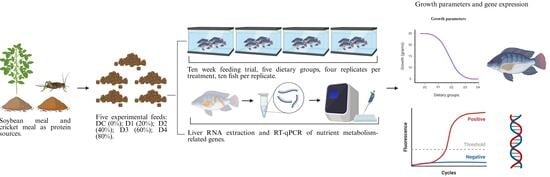
Graphical Abstract

1. Introduction

Aquaculture is fundamental to sustaining the global food supply, as 57% of its production is destined for human consumption [1,2]. Aquatic animal proteins contributed approximately 6% of total global protein intake in 2021 [2]. In this context, aquaculture supports food security by providing high-quality protein to a growing population. Among the widely cultured species is blue tilapia (Oreochromis aureus), valued for its few spines, high meat yield, and desirable taste [3]. However, the sector faces the ongoing challenge of identifying sustainable alternative protein sources for aquafeeds.
Fishmeal is traditionally considered the ideal protein source due to its balanced nutrient profile and high digestibility [4,5]. Nevertheless, its global price has increased substantially in recent years due to overexploitation of marine resources and climate change [2,6]. Feed costs represent 60–70% of total aquaculture production expenses [7], prompting the industry to seek alternative ingredients. Any substitute for fishmeal must provide adequate nutrition, be economically viable, and minimize environmental impact [8]. Several plant- and animal-derived alternatives have been proposed [9,10]. Tilapia, being an omnivorous fish with a eutrophic-phytophagous tendency and lower-trophic species, can assimilate feeds containing as little as 2% fishmeal [11]. For this reason, soybean meal has historically been a predominant protein ingredient in tilapia feeds, largely due to its stable supply and favorable cost profile [12]. However, high inclusion levels of soybean meal can reduce growth performance due to antinutritional factors that impair feed utilization, digestion, nutrient absorption, and intestinal integrity [13]. Additionally, the production of both fishmeal and soybean meal is increasingly recognized as environmentally unsustainable.
House cricket meal (Acheta domesticus) has emerged as a promising alternative ingredient due to its high nutritional quality and improved sustainability. It is rich in protein and essential amino acids, economically viable, and environmentally efficient, and its use in fish and shrimp aquaculture has been previously documented [14]. The nutritional composition of cricket meal is superior to soybean meal and comparable to fishmeal [14,15]. Protein content can reach up to 73%, depending on diet and processing conditions [16,17], with approximately 90% of the protein being digestible [18]. Crickets can be reared on low-value substrates, efficiently converting them into high-quality protein, supporting circular-economy approaches [19,20]. Furthermore, cricket production requires fewer inputs and generates fewer greenhouse gas emissions than conventional aquafeed ingredients [21,22,23]. Life cycle analyses (LCA) indicate that scaling up cricket production further reduces environmental impacts [24,25]. The safety of cricket meal as an aquafeed ingredient has been evaluated by the European Food Safety Authority (EFSA), and its use is permitted under EU Regulation 2017/893 [26].
In previous research, we evaluated the transcriptional response of immunity-related genes in blue tilapia fed house cricket meal [16]. However, the effects of cricket meal on the transcriptional response of nutrient metabolism- and growth-related genes have not yet been explored. Therefore, this study aimed to evaluate the effects of substituting fishmeal with house cricket meal on the productive performance and the transcriptional response of genes related to nutrient metabolism and growth of blue tilapia (O. aureus).

2. Materials and Methods

2.1. Test Ingredients and Preparation

House cricket farming and cricket meal processing were performed according to the methodology proposed by Cadena-Cadena et al. [27]. The crickets were reared, harvested, and dried at the Instituto Tecnológico del Valle del Yaqui (ITVY), Sonora, Mexico. The crickets were euthanized through freezing and later dried in a food dehydrator (NESCO American Harvest) for 24 h at 50–60 °C. After drying, the crickets were ground in a Hamilton Beach coffee grinder. The resulting cricket meal was passed twice through a 60-mesh sieve (FIICSA) and kept in a freezer at −20 °C until further use. The obtained meal was analyzed to determine its nutritional composition using the official procedures of the Association of Official Agricultural Chemists (AOAC) [28] for moisture, ash, crude protein, and lipid content. The moisture by oven drying the sample at 105 °C to constant weight; the ash by incinerating the samples at 550 °C in a furnace; the crude protein by micro-Kjeldahl method and using a k-factor of 6.25; and the crude lipid by Soxhlet extraction using hexane as solvent. The proximate composition of cricket meal is shown in Table 1.

2.2. Experimental Feed and Proximate Composition

According to nutritional requirements, five conventional tilapia feeds were formulated to replace fishmeal with cricket meal (Table 2). Soybean meal was used to achieve the desired crude protein content. A control diet (CD) was formulated with 20% fishmeal, and four experimental diets replaced fishmeal with cricket meal at 20, 40, 60, and 80% (D1–D4).
Proximate composition of the experimental feeds was determined using the official procedures of the Association of Official Agricultural Chemists (AOAC) [28], as previously described.

2.3. Fish, Feeding Trial, and Sample Collection

A randomized design was used with five dietary treatments and four replicates per treatment. Tilapia fingerlings were stocked in 20 circular 250 L tanks and allowed to acclimate to laboratory conditions for one week under a commercial feeding regimen. Ten fish (initial weight 2.00 ± 0.09 g) were placed in each tank. All tanks were continuously aerated. Fish were fed to apparent satiation using an initial ration of 10% of their biomass, provided in three daily meals (08:00, 13:00 and 16:00 h) over a 10-week period. Rations were adjusted each day depending on whether uneaten feed was observed. Fish were weighed every 15 days using a digital scale (Ohaus, CS series, Parsippany, NJ, USA). A 70% water exchange was performed weekly. Water quality parameters were monitored throughout the trial using a multiparameter analyzer (YSI, Yellow Springs, OH, USA). At the end of the feeding trial, the fish were fasted for 24 h and then weighed and counted. Then, three random fish from each replica were humanely euthanized by a lethal anesthetic dose using clove oil (0.5 mL clove oil per liter of water) for liver collection. Before the dissection, the fish were cleaned with a cotton ball soaked in 75% ethyl alcohol. Individual liver samples were washed with ice-cold phosphate-buffered saline, then collected in 1.5 mL tubes containing RNA later (Sigma-Aldrich, Poole, UK) to preserve RNA integrity and stored at −80 °C for RNA extraction.

2.4. Calculations for Productive Perfomance

The growth performance and feed utilization parameters were calculated as follows:
  • Final weight (FW) = (Σ final individual weight)/final number of fish
  • Weight gain (WG) = final weight − initial weight
  • Weekly weight gain (WWG) = (Final weight − Initial weight)/Number of weeks.
  • Final biomass (FB) = final weight × final number of fish
  • Specific growth rate (SGR) = 100 × (ln final weight − ln initial weight)/days of experiment.
  • Survival rate (SUR) = 100 × (final number of shrimps/initial number of fish)
  • Feed conversion ratio (FCR) = Feed intake/Final biomass.

2.5. Transcriptional Response of Genes Related to Nutrient Metabolism and Growth

Total RNA extraction and transcriptional response of genes related to nutrient metabolism and growth were performed according to the procedures described by Arevalo-Sainz et al. [29]. For each replicate tank, liver tissue previously collected from three tilapia fingerlings (Section 2.4) was homogenized and pooled to obtain approximately 50 mg of tissue per replicate. RNA concentration and purity were assessed with a NanoDrop 2000 spectrophotometer (Thermo Fisher Scientific, Wilmington, DE, USA), ensuring A260/A280 ratios of 1.8–2.2. Liver RNA samples were treated with RNase-free DNase (Promega®, Madison, WI, USA), and 1000 ng were used for cDNA synthesis (four replicates per treatment) according to the ImProm-II™ Reverse Transcription System protocol (Promega®) employing oligo(dT)20 primers (T4OLIGO, Irapuato, GTO, Mexico). The resulting cDNA was diluted to 80 µL with ultrapure water, and 5 µL was used as a template for quantitative real-time PCR.
The transcriptional responses were performed for genes associated with nutrient metabolism and growth [30], using β-actin as a housekeeping gene (Table 3). The qPCR reactions were set up in triplicate in a final volume of 15 µL following the GoTaq® Flexi DNA Polymerase (Promega®) protocol, containing 0.2 µM of each primer (T4OLIGO), 0.0125 µM EvaGreen® 20X (Biotium, Fremont, CA, USA), and 5 µL of cDNA. Amplification was conducted on a CFX Connect™ Real-Time PCR detection system (Bio-Rad, Hercules, CA, USA.) with an initial denaturation at 95 °C for 5 min, followed by 39 cycles of 95 °C for 15 s, 60 °C for 30 s, and 72 °C for 30 s. Melt-curve analysis (65–95 °C) was performed at a ramp rate of 0.5 °C s−1. Relative transcript abundance was calculated using the 2−ΔΔCT method.

2.6. Data Analysis

The growth performance and the transcriptional response data were analyzed using one-way ANOVA. When significant differences were detected, Tukey’s test was used for post hoc comparisons. Statistical analyses were performed using Statgraphics® Centurion XVI, with significance set at p < 0.05.

3. Results

3.1. Growth Performance

Fishmeal replacement with cricket meal significantly affected tilapia growth performance (Table 4). All growth parameters, except survival rate (SUR), decreased as cricket meal inclusion increased. However, the highest inclusion levels (D3 and D4) resulted in the highest survival rate (97.5%).

3.2. Transcriptional Response of Genes Related to Nutrient Metabolism and Growth

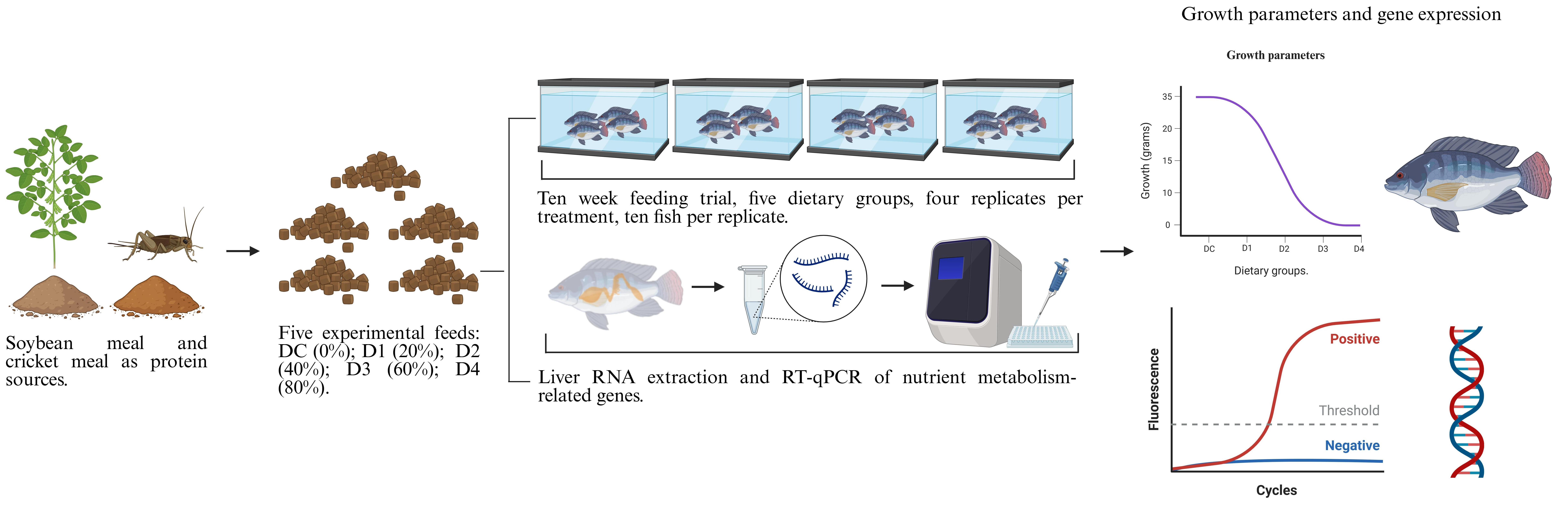
The transcriptional response of genes related to nutrient metabolism and fish growth in fish fed experimental diets (D1–D4) was compared with the CD. The transcriptional response of genes related to nutrient digestion, absorption, and transport is shown in Figure 1. Substituting fishmeal with cricket meal altered the regulation of these genes. The muc expression was significantly downregulated in fish fed D1, D2, and D4, whereas D3 induced a significant up-regulation. A similar pattern was observed for pept1. No differences in alp expression were detected between fish fed CD and D1; however, alp was significantly downregulated in fish fed D2 and significantly upregulated in fish fed D3 and D4. The expression of ctra was significantly downregulated in fish fed D2 and D4, upregulated in fish fed D1, and showed no differences between fish fed CD and D3. Expression of pla2 was strongly downregulated in fish fed D2 and fish fed D4. No differences were observed between fish fed CD and D3, while fish fed D1 showed significant down-regulation. Similarly, glut2 expression was strongly downregulated in fish fed D4 and significantly downregulated in fish fed D1 and D2, with no differences between fish CD and D3. The expression of ap was significantly upregulated in fish fed D1 and D3 and strongly downregulated in fish fed D2 and D4. p-amy expression was strongly downregulated in fish fed D1, D2, and D4, and significantly upregulated in D3.
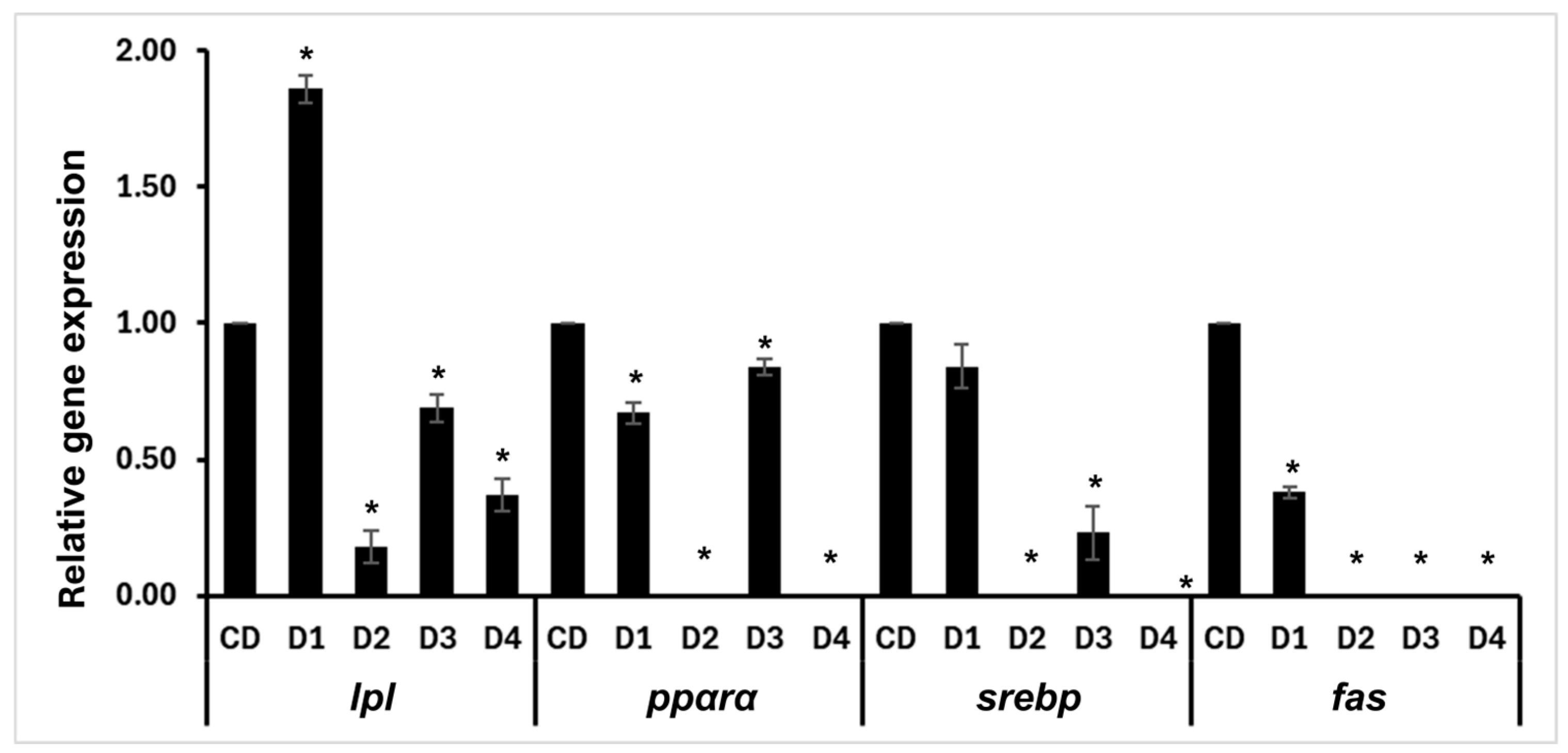
The transcriptional response of genes related to lipid metabolism is shown in Figure 2. The lpl expression was significantly upregulated in fish fed D1 and downregulated in fish fed D2, D3, and D4, with the lowest down-regulation observed in D2. The expression of pparα was significantly downregulated in all dietary treatments but strongly downregulated in fish fed D2 and D4. The expression of srebp showed a similar pattern than pparα but no significant differences between CD and D1. The expression of fas was significantly downregulated in all dietary treatments but strongly downregulated in fish fed D2, D3, and D4.
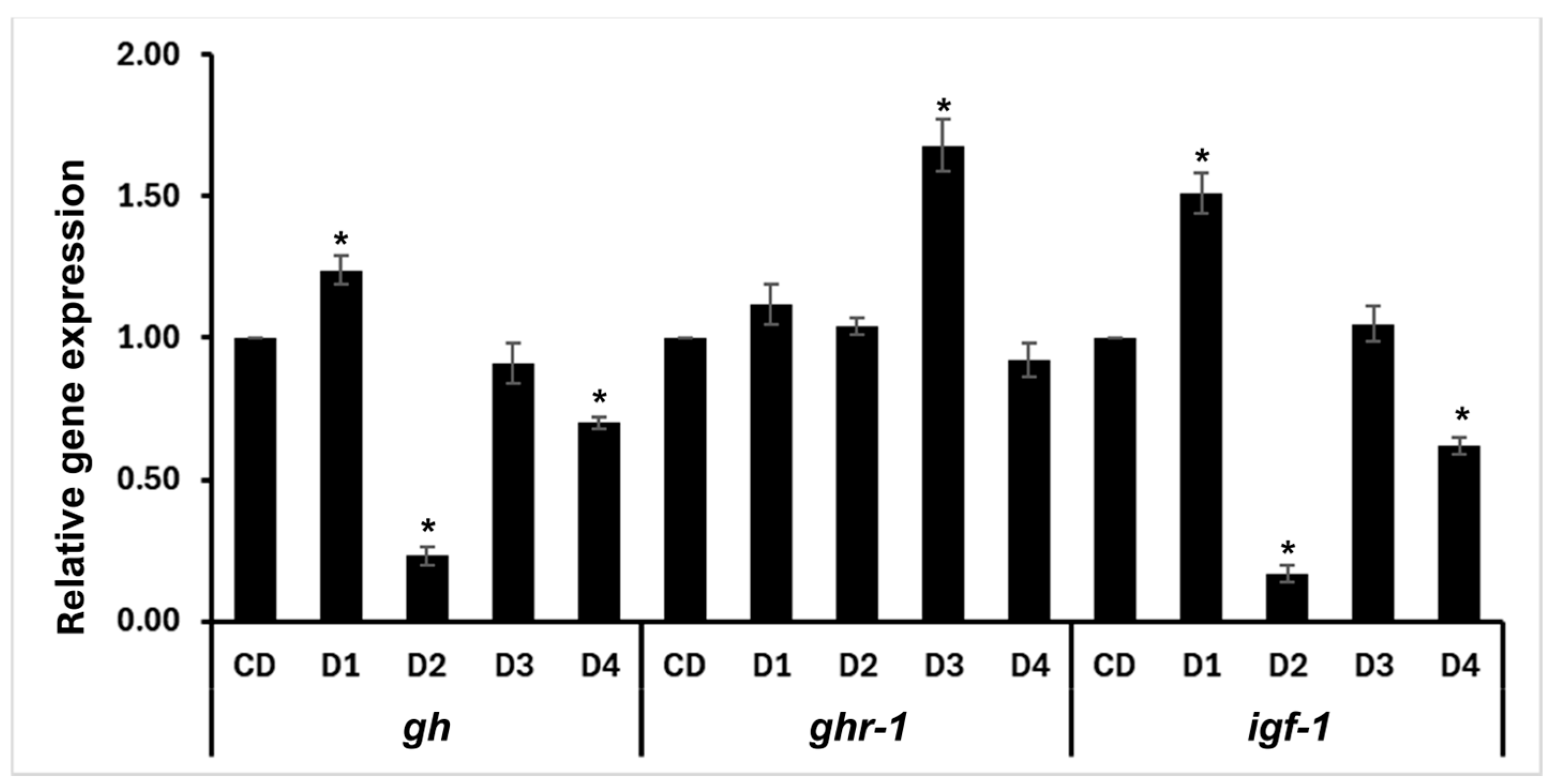
The transcriptional response of genes related to somatotropic axis is shown in Figure 3. The expression of gh was significantly upregulated in fish fed D1 and downregulated across the remaining treatments, with the lowest down-regulation in fish fed D2. The expression of ghr-1 was significantly upregulated in D3, with no differences among the other groups. The expression of igf-1 was significantly upregulated in D1 and downregulated in D2 and D4, with D2 showing the lowest down-regulation. No differences were observed between CD and D3.

4. Discussion

4.1. Growth Performance

High levels of substitution of fishmeal with house cricket (A. domesticus) meal have consistently been associated with reduced growth performance in tilapia [14,27,31]. Cadena-Cadena et al. [27] evaluated complete fishmeal replacement using wheat meal combined with two inclusion levels of cricket meal (20% and 35%) in O. niloticus. The diet containing 20% cricket meal significantly reduced final weight compared with a commercial feed, although survival remained 100%. Increasing cricket meal inclusion to 35% restored growth to commercial-feed levels, indicating that low cricket–wheat mixtures do not provide sufficient digestible protein when fishmeal is entirely removed, whereas higher cricket inclusion can partially compensate for this deficit.
Likewise, Lee et al. [31] fully replaced fishmeal with house cricket meal and rice bran in red hybrid tilapia (Oreochromis sp.) and observed reduced growth performance as plant and insect protein inclusion increased. However, survival rates remained high, with the highest values recorded at 90–100% cricket meal inclusion. Reduced growth in these studies could be attributed to amino acid deficiencies. Plant-based proteins such as rice bran, wheat meal, and soybean meal are deficient in essential amino acids and contain antinutritional factors [15,32,33], which limit nutrient utilization.
Though the protein content in all dietary treatments was below the nutritional requirements of tilapia fingerlings according to the NCR [34], there are contradictory reports regarding the required protein content for tilapia, ranging from 25 to 40% for fingerlings [35]. In this sense, the differences in productive performance and transcriptional response of genes related to nutrient metabolism and growth can be attributed to dietary lipid content, soybean meal inclusion, the presence of antinutritional factors in soybean meal, and chitin content in cricket meal. Moreover, when an essential nutrient such as lipid is insufficient, fish tend to increase feed intake as a compensatory mechanism to meet their metabolic needs [36]. Therefore, the elevated FCR could be more attributable to lipid content than protein content. Despite negative effects on growth, cricket meal consistently increases survival rates in fish [14,27,31]. In a previous study, we reported that transcriptional response of genes related to immunity of blue tilapia increased with the inclusion of house cricket meal, potentially due to its lipid content, as lipid levels correlate with immune gene expression [16]. The reduced growth observed in the present study could reflect an energetic trade-off, where resources are diverted from growth toward maintaining homeostasis and immune activation [37].
Other studies have shown that two-spotted cricket meal (Gryllus bimaculatus) can replace fishmeal in red hybrid tilapia diets up to 50% without compromising growth [38]. In species such as totoaba (Totoaba macdonaldi) and tropical gar (Atractosteus tropicus), A. domesticus meal can replace fishmeal up to 50% and 75%, respectively [39,40]. These differences could be related to amino acid deficiencies in cricket meal [41] and dietary chitin content. For example, two-spotted cricket meal (G. bimaculatus) can fully replace fishmeal in North African catfish (Clarias gariepinus) and striped snakehead (Channa striata), improving growth performance (FW, WG, SGR, FCR, and SUR) [42,43,44,45]. Species-specific digestive physiology and differences in chitin structure among cricket species could explain these contrasting results.
Dietary chitin has been shown to reduce growth performance in hybrid tilapia (O. niloticus × O. aureus) [46], likely by decreasing protein digestibility [47,48]. Although Nile tilapia (O. niloticus) can digest chitin and use it as a nutrient, its capacity is impaired at high chitin levels [49]. Low doses of chitin also possess immunomodulatory properties in aquatic organisms [50], acting as both a nutrient and an anti-nutrient, and could be a reason for increased fish immunity in our previous research [16]. Digestibility of cricket meal could be improved by reducing or removing chitin through biotechnological or chemical processing, or by using probiotics [14,51,52,53]. However, further feeding trials and research are required to determine the optimal inclusion level of cricket meal in aquafeeds for any aquatic species.

4.2. Transcriptional Response of Genes Related to Nutrient Metabolism and Growth

The replacement of fishmeal with cricket meal was expected to influence the transcriptional response of genes related to nutrient metabolism and growth of tilapia. However, the dietary lipid content and residual fishmeal content also significantly influenced metabolic regulation. Across all physiological levels evaluated, responses were primarily driven by dietary energy availability and the nutritional quality of fishmeal, rather than by fishmeal replacement alone.
Diets with moderate fishmeal reduction (D1) maintained growth performance comparable to the control, highlighting that a 20% substitution does not compromise nutrient utilization or metabolic regulation when sufficient high-quality protein and digestible energy remain available. However, higher replacement levels (D2–D4) generated a consistent pattern of reduced digestive capacity, impaired lipid metabolism, and attenuated somatotropic activity. These responses align with the combined effects of lower dietary lipid content [54,55,56], reduced fishmeal contribution to amino acid balance and digestibility [57,58,59], and increased inclusion of soybean meal, whose antinutritional factors and polyunsaturated fatty acids (PUFAs) are known to depress digestive enzyme activity, hepatic gene expression and growth in tilapia and other fish species [14,55,57,60,61,62,63,64,65,66]. The partial recovery observed in D3 suggests that moderate increases in dietary lipid content can buffer some of the negative effects of fishmeal reduction, although not sufficiently to restore performance to control levels.
The nutritional limitations of high-replacement diets could also involve amino acid imbalance, which can activate amino acid-sensing pathways such as the amino acid response (AAR) and reduce TOR signaling, consequently decreasing the expression of genes associated with glycolysis and lipogenesis and inducing liver metabolic disorders and metabolic inhibition [57,67,68,69]. Although not directly measured, the AAR mechanism is consistent with the strong downregulation of lipid-regulatory pathways observed in D2 and D4. It could contribute to reduced metabolic efficiency under low-fishmeal conditions. Additionally, the chitin content of cricket meal could reduce digestive efficiency, as chitin can reduce nutrient hydrolysis and absorption in fish and alter gene expression [46,47,48,70].
The GH–IGF1 axis, a central regulator of growth and nutrient metabolism [71,72], remained active in the control and D1 diets but was affected when fishmeal decreased and soybean meal increased. This pattern closely matched growth performance, indicating that endocrine regulation is sensitive to the combined effects of reduced dietary lipids, amino acid balance, and antinutritional load [73,74,75,76].
In general, the transcriptional response of genes related to physiological processes observed in this study demonstrates that tilapia tolerate moderate fishmeal replacement but exhibit impaired digestive, metabolic, and endocrine function when replacement becomes excessive. These findings underscore the importance of balancing energy density, amino acid supply, and antinutritional factors when formulating insect-based diets to ensure safe and functional performance of aquafeeds.
Collectively, the transcriptional patterns of muc, pept1, alp, ctra, pla2, glut2, ap, and p-amy across CD–D4 reveal a coordinated digestive response primarily shaped by amino acid balance and dietary lipid availability. The moderate up-regulation observed in D3 suggests that its higher lipid content could have provided sufficient energy to sustain compensatory activation of digestive and absorptive pathways. On the other hand, the marked down-regulation in D2 and D4 reflects a limited metabolic response under reduced nutrient availability. Although components such as chitin from cricket meal or antinutritional factors from soybean meal were not quantified in this study, their presence cannot be discarded. It could represent additional factors influencing nutrient accessibility at higher replacement levels [46,47,49,53,57,77]. Overall, these results indicate that digestive efficiency in tilapia fed cricket-based diets depends on the balance between fishmeal replacement level, dietary energy, and potential antinutritional constraints.
Lipid metabolism in tilapia fed cricket-based diets is strongly influenced by the interaction between fishmeal replacement level and dietary energy supply, as previously noted for nutrient-digestion genes. The partial activation of lpl, pparα, srebp, and fas in D1 and the recovery of some markers in D3 suggest that moderate energy availability could support limited compensatory responses. In contrast, the strong down-regulation observed in D2 and D4 reflects reduced lipogenic and lipid-regulatory capacity under lower dietary energy and amino acid imbalance. These patterns indicate that the transcriptional regulation of lipid metabolism follows the same energetic limitation observed for digestive genes, highlighting the central role of dietary energy in modulating metabolic responses to cricket-based diets.
The transcriptional patterns of gh, ghr-1, and igf-1 across CD–D4 indicate that the somatotropic axis responds primarily to differences in dietary energy supply. However, the high soybean meal inclusion used in experimental diets could also have contributed to reduced endocrine activity. Soybean meal contains antinutritional factors, and its recommended inclusion level for tilapia (O. niloticus × O. aureus) is below 300 g/kg [78]. In this study, levels ranged from 420 to 494 g/kg, which could have further constrained nutrient utilization and metabolic regulation. The partial activation of somatotropic genes in D1 and the recovery observed in D3 suggest that moderate lipid availability can support limited endocrine compensation. In contrast, the marked down-regulation in D2 and D4 reflects reduced capacity to sustain growth-related signaling and nutrient transport under lower dietary energy and potential antinutritional pressure. These transcriptional patterns are consistent with the observed growth performance: diets with higher fishmeal levels and adequate lipid availability (CD and D1) supported better growth and feed efficiency, whereas diets with greater fishmeal replacement and higher soybean meal inclusion (D2–D4) exhibited reduced growth. Therefore, these results indicate that both dietary energy and the remaining fishmeal content, along with soybean meal and cricket meal inclusion, modulate tilapia’s endocrine and growth responses.
In summary, our results show that excessive inclusion of soybean meal in aquafeed impaired the transcriptional response of genes related to nutrient metabolism and growth of blue tilapia, whereas inclusion of cricket meal was associated with higher survival and gene expression patterns indicative of compensatory nutrient uptake under dietary stress. These findings underscore the importance of balancing plant- and insect-based proteins to avoid metabolic stress in tilapia. Nevertheless, more biotechnological research focused on the digestibility and nutritional quality of cricket meal, including enzymatic and microbial processing strategies, is necessary further to enhance its suitability as a sustainable ingredient in aquafeeds [14].

5. Conclusions

The use of high levels of soybean meal in the diet negatively affected growth performance and nutrient metabolism in blue tilapia fingerlings. However, the inclusion of cricket meal attenuated some of these adverse effects, as reflected in the higher survival rates observed in fish fed the highest cricket meal levels. Therefore, cricket meal remains a promising alternative protein source, but its effective use depends on improving its digestibility and ensuring that formulated diets maintain adequate lipid availability and nutritional balance. Under these conditions, cricket meal could contribute to more sustainable aquafeeds by reducing soybean meal inclusion without compromising fish performance.

Author Contributions

Conceptualization, J.L.A.-M. and J.R.G.-G.; methodology, A.F.-V., B.A.-M., R.C.-H., L.Z.R.-A., F.C.-C. and P.G.-M.; validation, J.L.A.-M., J.R.G.-G. and R.C.-H.; investigation, A.F.-V., J.L.A.-M. and J.R.G.-G.; resources, J.L.A.-M. and J.R.G.-G.; data curation, J.L.A.-M., J.R.G.-G. and L.Z.R.-A.; writing—original draft preparation, A.F.-V., J.L.A.-M. and J.R.G.-G.; writing—review and editing, J.L.A.-M. and J.R.G.-G.; supervision, J.L.A.-M. and J.R.G.-G.; project administration, J.L.A.-M. and J.R.G.-G.; funding acquisition, J.L.A.-M. and J.R.G.-G. All authors have read and agreed to the published version of the manuscript.

Funding

This research was financed by SECIHTI through the Programa de Investigadoras e Investigadores por México (project no. 1037) and the Instituto Tecnológico de Sonora through the Programa de Fomento y Apoyo a Proyectos de Investigación (PROFAPI No. 2026_104).

Institutional Review Board Statement

The research in this manuscript has been conducted under Comité de Ética en la Investigación y Bienestar Animal del Instituto Tecnológico de Sonora (approval code: Dictamen No. 2024-02 and approval date: 4 March 2024).

Data Availability Statement

The original contributions presented in this study are included in the article. Further inquiries can be directed at the corresponding authors.

Acknowledgments

Generative AI tools were used only to assist with language editing, grammar refinement, and improvements in clarity and readability. The authors have reviewed and edited the output and take full responsibility for the content of this publication.

Conflicts of Interest

The authors declare no conflicts of interest.

References

  1. Betanzo-Torres, E.A.; Ballut-Dajud, G.; Aguilar-Cortés, G.; Delfín-Portela, E.; Carlos, L.; Herazo, S. Plants Used in Constructed Wetlands for Aquaculture: A Systematic Review. Sustainability 2025, 17, 6298. [Google Scholar] [CrossRef]
  2. FAO. The State of World Fisheries and Aquaculture 2024—Blue Transformation in Action; FAO: Rome, Italy, 2024; ISBN 9789251387634. [Google Scholar]
  3. Yuan, C.; Zhou, K.; Pan, X.; Lin, Y.; Qin, J.; Wang, D.; Chen, Z.; Du, X.; Huang, Y. Comparative Transcriptome Analysis Reveals Potential Regulatory Mechanisms in Response to Changes in Physiological Functions in Oreochromis Aureus under Salinity Stress. Aquac. Rep. 2025, 40, 102608. [Google Scholar] [CrossRef]
  4. Cho, J.H.; Kim, I.H. Fish Meal—Nutritive Value. J. Anim. Physiol. Anim. Nutr. 2011, 95, 685–692. [Google Scholar] [CrossRef] [PubMed]
  5. Macusi, E.D.; Cayacay, M.A.; Borazon, E.Q.; Sales, A.C.; Habib, A.; Fadli, N.; Santos, M.D. Protein Fishmeal Replacement in Aquaculture: A Systematic Review and Implications on Growth and Adoption Viability. Sustainability 2023, 15, 12500. [Google Scholar] [CrossRef]
  6. Tacon, A.G.J.; Metian, M. Global Overview on the Use of Fish Meal and Fish Oil in Industrially Compounded Aquafeeds: Trends and Future Prospects. Aquaculture 2008, 285, 146–158. [Google Scholar] [CrossRef]
  7. Lebria, A.; Ershad, H.; Mirmasoud, L.; Zabih, S.; Pajand, O. Evaluating Full—Fat Mealworm (Tenebrio molitor) Meal as a Fishmeal Alternative: Impacts on Growth, Physiology, and Enzyme Activity in Stellate Sturgeon (Acipenser stellatus). Aquac. Int. 2025, 33, 436. [Google Scholar] [CrossRef]
  8. Kankanamge, K.; Chamodi, D.; Vu, N.T.; Domingos, J.A. Cellular Solutions: Evaluating Single-Cell Proteins as Sustainable Feed Alternatives in Aquaculture. Biology 2025, 14, 764. [Google Scholar] [CrossRef] [PubMed]
  9. Bandara, T. Alternative Feed Ingredients in Aquaculture: Opportunities and Challenges. J. Entomol. Zool. Stud. 2018, 6, 3087–3094. [Google Scholar]
  10. Serra, V.; Pastorelli, G.; Tedesco, D.E.A.; Turin, L.; Guerrini, A. Alternative Protein Sources in Aquafeed: Current Scenario and Future Perspectives. Vet. Anim. Sci. 2024, 25, 100381. [Google Scholar] [CrossRef]
  11. Hua, K.; Cobcroft, J.M.; Cole, A.; Condon, K.; Jerry, D.R.; Mangott, A.; Praeger, C.; Vucko, M.J.; Zeng, C.; Zenger, K.; et al. The Future of Aquatic Protein: Implications for Protein Sources in Aquaculture Diets. One Earth 2019, 1, 316–329. [Google Scholar] [CrossRef]
  12. Gabriel, N.N.; Abasubong, K.P.; Erasmus, V.N.; Kamble, M.T. Sustainable Feed Ingredients and Additives for Aquaculture Farming: Perspectives from Africa and Asia; Springer: Singapore, 2024; ISBN 9789819742783. [Google Scholar]
  13. Hasan, I.; Rimoldi, S.; Saroglia, G.; Terova, G. Sustainable Fish Feeds with Insects and Probiotics Positively Affect Freshwater and Marine Fish Gut Microbiota. Animals 2023, 13, 1633. [Google Scholar] [CrossRef] [PubMed]
  14. Fraijo-Valenzuela, A.; Arias-Moscoso, J.L.; García-Pérez, O.D.; Rodriguez-Anaya, L.Z.; Gonzalez-Galaviz, J.R. The Biotechnological Potential of Crickets as a Sustainable Protein Source for Fishmeal Replacement in Aquafeed. BioTech 2024, 13, 51. [Google Scholar] [CrossRef] [PubMed]
  15. Hameed, A.; Majeed, W.; Naveed, M.; Ramzan, U.; Bordiga, M.; Hameed, M.; Ur Rehman, S.; Rana, N. Success of Aquaculture Industry with New Insights of Using Insects as Feed: A Review. Fishes 2022, 7, 395. [Google Scholar] [CrossRef]
  16. Fraijo-Valenzuela, A.; Aboites-Martínez, B.; Arias-Moscoso, J.L.; Casillas-Hernández, R.; Salazar-Anduro, J.T.; Rodriguez-Anaya, L.Z.; Gonzalez-Galaviz, J.R.; Fraijo-Valenzuela, A.; Aboites-Martínez, B.; Arias-Moscoso, J.L.; et al. Effect of Cricket Meal on Transcriptional Response of Immune-Related Genes in Blue Tilapia (Oreochromis aureus). In Proceedings of the 3rd International Electronic Conference on Animals, Online, 12–14 March 2025; MDPI: Basel, Switzerland, 2025; pp. 12–14. [Google Scholar]
  17. Lucas-González, R.; Fernández-López, J.; Pérez-Álvarez, J.A.; Viuda-Martos, M. Effect of Drying Processes in the Chemical, Physico-Chemical, Techno-Functional and Antioxidant Properties of Flours Obtained from House Cricket (Acheta domesticus). Eur. Food Res. Technol. 2019, 245, 1451–1458. [Google Scholar] [CrossRef]
  18. Pilco-Romero, G.; Chisaguano-Tonato, A.M.; Herrera-Fontana, M.E.; Chimbo-Gándara, L.F.; Sharifi-Rad, M.; Giampieri, F.; Battino, M.; Vernaza, M.G.; Álvarez-Suárez, J.M. House Cricket (Acheta domesticus): A Review Based on Its Nutritional Composition, Quality, and Potential Uses in the Food Industry. Trends Food Sci. Technol. 2023, 142, 104226. [Google Scholar] [CrossRef]
  19. Gasco, L.; Renna, M.; Oddon, S.B.; Far, A.R.; El Deen, S.N.; Veldkamp, T. Insect Meals in a Circular Economy and Applications in Monogastric Diets. Anim. Front. 2023, 13, 81–90. [Google Scholar] [CrossRef]
  20. Smetana, S. Circularity and Environmental Impact of Edible Insects. J. Insects Food Feed 2023, 9, 1111–1114. [Google Scholar] [CrossRef]
  21. Oonincx, D.G.A.B.; van Itterbeeck, J.; Heetkamp, M.J.W.; van den Brand, H.; van Loon, J.J.A.; van Huis, A. An Exploration on Greenhouse Gas and Ammonia Production by Insect Species Suitable for Animal or Human Consumption. PLoS ONE 2010, 5, e14445. [Google Scholar] [CrossRef]
  22. Siddiqui, S.A.; Osei-Owusu, J.; Yunusa, B.M.; Rahayu, T.; Fernando, I.; Shah, M.A.; Centoducati, G. Prospects of Edible Insects as Sustainable Protein for Food and Feed—A Review. J. Insects Food Feed 2023, 10, 191–217. [Google Scholar] [CrossRef]
  23. Mulazzani, L.; Madau, F.A.; Pulina, P.; Malorgio, G. Acceptance of Insect Meal in Aquaculture Feeding: A Stakeholder Analysis for the Italian Supply Chains of Trout and Seabass. J. World Aquac. Soc. 2021, 52, 378–394. [Google Scholar] [CrossRef]
  24. Halloran, A.; Hanboonsong, Y.; Roos, N.; Bruun, S. Life Cycle Assessment of Cricket Farming in North-Eastern Thailand. J. Clean. Prod. 2017, 156, 83–94. [Google Scholar] [CrossRef]
  25. Francis, A.; Dang, N.; Lewin Rukov, J.; Siegrist, A.; Green, A.; Kasthuri Arachchilage, N.S.; Olivas, E.H.; Brodkorb, A.; Smetana, S. Mass-Based and Nutritional Life Cycle Assessment (NLCA) of Crickets as Human Food. J. Insects Food Feed 2025, 11, 2375–2392. [Google Scholar] [CrossRef]
  26. Zhou, Y.; Wang, D.; Zhou, S.; Duan, H.; Guo, J.; Yan, W. Nutritional Composition, Health Benefits, and Application Value of Edible Insects: A Review. Foods 2022, 11, 3961. [Google Scholar] [CrossRef]
  27. Cadena-Cadena, F.; Cuevas-Acuña, D.A.; Frias, B.C.; Hernández, R.C.; Nuñez, J.C.G.; Martinez, B.A.; Arias-Moscoso, J.L. Replacement of Fishmeal by Common Cricket (Acheta domesticus) Meal in Diets for Juvenile Tilapia (Oreochromis niloticus). Isr. J. Aquac.-Bamidgeh 2023, 75, 1–12. [Google Scholar] [CrossRef]
  28. AOAC. Official Methods of Analysis of the Association of Analytical Chemists International, 18th ed.; AOAC: Arlington, VA, USA, 2005; ISBN 0935584773. [Google Scholar]
  29. Arevalo-Sainz, K.J.; Gonzalez-Galaviz, J.R.; Casillas-Hernández, R.; Fraijo-Valenzuela, A.; Gil-Núñez, J.C.; Rodriguez-Anaya, L.Z.; Lares-Villa, F.; Gortares-Moroyoqui, P.; Arias-Moscoso, J.L.; Bórquez-López, R.A. Methionine Sources and Bacillus Amyloliquefaciens CECT 5940 Effects on Growth, Body Composition, and Nutrient Metabolism of Penaeus Vannamei Fed Reduced Fishmeal Diets. Lat. Am. J. Aquat. Res. 2024, 52, 404–415. [Google Scholar] [CrossRef]
  30. Aanyu, M.; Betancor, M.B.; Monroig, O. Effects of Dietary Limonene and Thymol on the Growth and Nutritional Physiology of Nile Tilapia (Oreochromis niloticus). Aquaculture 2018, 488, 217–226. [Google Scholar] [CrossRef]
  31. Lee, S.W.; Tey, H.C.; Wendy, W.; Zahari, M.W.; Kelantan, M.; Tembak, J.P.; Chepa, P. The Effect of House Cricket (Acheta domesticus) Meal on Growth Performance of Red Hybrid Tilapia (Oreochromis sp.). Int. J. Aquat. Sci. 2017, 8, 78–82. [Google Scholar]
  32. Bhuiyan, R.R.; Bhuyan, S.; Anika, T.S. Determination of Proximate Composition of Fish Feed Ingredients Locally Available in Narsingdi Region, Bangladesh. Int. J. Fish. Aquat. Stud. 2016, 4, 695–699. [Google Scholar]
  33. Hussain, S.M.; Bano, A.A.; Ali, S.; Rizwan, M.; Adrees, M.; Zahoor, A.F.; Sarker, P.K.; Hussain, M.; Arsalan, M.Z.U.H.; Yong, J.W.H.; et al. Substitution of Fishmeal: Highlights of Potential Plant Protein Sources for Aquaculture Sustainability. Heliyon 2024, 10, e26573. [Google Scholar] [CrossRef]
  34. Jobling, M. National Research Council (NRC): Nutrient Requirements of Fish and Shrimp. Aquac. Int. 2012, 20, 601–602. [Google Scholar] [CrossRef]
  35. Meurer, F.; Novodworski, J.; Bombardelli, R.A. Protein Requirements in Nile Tilapia (Oreochromis niloticus) during Production and Reproduction Phases. Aquac. Fish. 2025, 10, 171–182. [Google Scholar] [CrossRef]
  36. Liu, T.; Dong, F.; Sun, Y.; Su, H.; Zheng, P.; Chen, Q.; Han, T.; Wang, J. Effect of Dietary Lipid Level on Growth Performance, Feed Utilization, and Body Composition of Juvenile Kelp Grouper Epinephelus moara. Fishes 2025, 10, 244. [Google Scholar] [CrossRef]
  37. Chen, Y.; Ellis, J.; Huyben, D. Examining the Dietary Effect of Insect Meals on the Innate Immune Response of Fish: A Meta-Analysis. Comp. Immunol. Rep. 2024, 7, 200169. [Google Scholar] [CrossRef]
  38. Hanan, M.Y.; Amatul-Samahah, M.A.; Jaapar, M.Z.; Mohamad, S.N. The Effects of Field Cricket (Gryllus bimaculatus) Meal Substitution on Growth Performance and Feed Utilization of Hybrid Red Tilapia (Oreochromis spp.). Appl. Food Res. 2022, 2, 100070. [Google Scholar] [CrossRef]
  39. Elyne, K.; Soriano, C.; Pablo, J.; Corvera, L. Effects of Fishmeal Replacement with Insect Meals (Hermetia illucens and Acheta domesticus) on Growth Performance, Digestibility, Digestive Enzyme Activity, and Fatty Acid Profile of Juvenile Totoaba Macdonaldi. Aquac. Int. 2025, 33, 519. [Google Scholar] [CrossRef]
  40. Cruz-Alvarado, F.J.D.L.; Concha Frías, B.; López-Cerino, M.G.; Álvarez-González, C.A.; Gaxiola-Cortés, G.; Arias-Moscoso, J.L.; Bautista-Ortega, J.; Hernández-García, S.; Palma-Cancino, D.J. Modulation of Gene Expression in the Digestive Tract of the Tropical Gar (Atractosteus tropicus) in Response to Cricket Meal (Acheta domesticus). Fishes 2025, 10, 469. [Google Scholar] [CrossRef]
  41. Tran, G.; Heuzé, V.; Makkar, H.P.S. Insects in Fish Diets. Anim. Front. 2015, 5, 37–44. [Google Scholar] [CrossRef]
  42. Taufek, N.M.; Muin, H.; Raji, A.A.; Md Yusof, H.; Alias, Z.; Razak, S.A. Potential of Field Crickets Meal (Gryllus bimaculatus) in the Diet of African Catfish (Clarias gariepinus). J. Appl. Anim. Res. 2018, 46, 541–546. [Google Scholar] [CrossRef]
  43. Taufek, N.M.; Aspani, F.; Muin, H.; Raji, A.A.; Razak, S.A.; Alias, Z. The Effect of Dietary Cricket Meal (Gryllus bimaculatus) on Growth Performance, Antioxidant Enzyme Activities, and Haematological Response of African Catfish (Clarias gariepinus). Fish Physiol. Biochem. 2016, 42, 1143–1155. [Google Scholar] [CrossRef]
  44. Prachom, N.; Suharman, I. The Use of Cricket (Gryllus bimaculatus) Meal as Protein Source for Snakehead Fish (Channa striata). IOP Conf. Ser. Earth Environ. Sci. 2022, 1118, 012020. [Google Scholar] [CrossRef]
  45. Prachom, N.; Yuangsoi, B.; Pumnuan, J.; Ashour, M.; Davies, S.J.; El-Haroun, E. Effects of Substituting the Two-Spotted Cricket (Gryllus bimaculatus) Meal for Fish Meal on Growth Performances and Digestibility of Striped Snakehead (Channa striata) Juveniles. Life 2023, 13, 594. [Google Scholar] [CrossRef] [PubMed]
  46. Shiau, S.Y.; Yu, Y.P. Dietary Supplementation of Chitin and Chitosan Depresses Growth in Tilapia, Oreochromis niloticus × O. aureus. Aquaculture 1999, 179, 439–446. [Google Scholar] [CrossRef]
  47. Mastoraki, M.; Panteli, N.; Kotzamanis, Y.P.; Gasco, L.; Antonopoulou, E.; Chatzifotis, S. Nutrient Digestibility of Diets Containing Five Different Insect Meals in Gilthead Sea Bream (Sparus aurata) and European Sea Bass (Dicentrarchus labrax). Anim. Feed Sci. Technol. 2022, 292, 115425. [Google Scholar] [CrossRef]
  48. Gasco, L.; Biasato, I.; Dabbou, S.; Schiavone, A.; Gai, F. Animals Fed Insect-Based Diets: State-of-the-Art on Digestibility, Performance and Product Quality. Animals 2019, 9, 170. [Google Scholar] [CrossRef]
  49. Eggink, K.M.; Pedersen, P.B.; Lund, I.; Dalsgaard, J. Chitin Digestibility and Intestinal Exochitinase Activity in Nile Tilapia and Rainbow Trout Fed Different Black Soldier Fly Larvae Meal Size Fractions. Aquac. Res. 2022, 53, 5536–5546. [Google Scholar] [CrossRef]
  50. Kamilya, D.; Khan, M.I.R. Chitin and Chitosan as Promising Immunostimulant for Aquaculture. In Handbook of Chitin and Chitosan; Elsevier: Amsterdam, The Netherlands, 2020; ISBN 9780128179666. [Google Scholar]
  51. Elserafy, S.S.; Abdel-Hameid, N.A.H.; Abdel-Salam, H.A.; Dakrouni, A.M. Effect of Shrimp Waste Extracted Chitin on Growth and Some Biochemical Parameters of the Nile Tilapia. Egypt. J. Aquat. Biol. Fish. 2021, 25, 313–329. [Google Scholar] [CrossRef]
  52. Jayanegara, A.; Sholikin, M.M.; Sabila, D.A.N.; Suharti, S.; Astuti, D.A. Lowering Chitin Content of Cricket (Gryllus assimilis) through Exoskeleton Removal and Chemical Extraction and Its Utilization as a Ruminant Feed in Vitro. Pak. J. Biol. Sci. 2017, 20, 523–529. [Google Scholar] [CrossRef]
  53. Hasan, I.; Gai, F.; Cirrincione, S.; Rimoldi, S.; Saroglia, G.; Terova, G. Chitinase and Insect Meal in Aquaculture Nutrition: A Comprehensive Overview of the Latest Achievements. Fishes 2023, 8, 607. [Google Scholar] [CrossRef]
  54. Han, C.Y.; Wen, X.B.; Zheng, Q.M.; Li, H.B. Effects of Dietary Lipid Levels on Lipid Deposition and Activities of Lipid Metabolic Enzymes in Hybrid Tilapia (Oreochromis niloticus × O. aureus). J. Anim. Physiol. Anim. Nutr. 2011, 95, 609–615. [Google Scholar] [CrossRef] [PubMed]
  55. Tian, J.; Wu, F.; Yang, C.G.; Jiang, M.; Liu, W.; Wen, H. Dietary Lipid Levels Impact Lipoprotein Lipase, Hormone-Sensitive Lipase, and Fatty Acid Synthetase Gene Expression in Three Tissues of Adult GIFT Strain of Nile Tilapia, Oreochromis niloticus. Fish Physiol. Biochem. 2015, 41, 1–18. [Google Scholar] [CrossRef] [PubMed]
  56. Vargas-Abúndez, A.J.; Randazzo, B.; Foddai, M.; Sanchini, L.; Truzzi, C.; Giorgini, E.; Gasco, L.; Olivotto, I. Insect Meal Based Diets for Clownfish: Biometric, Histological, Spectroscopic, Biochemical and Molecular Implications. Aquaculture 2019, 498, 1–11. [Google Scholar] [CrossRef]
  57. El-Sayed, A.F.M. Tilapia Culture; CABI: Oxfordshire, UK, 2006; ISBN 0851990142. [Google Scholar]
  58. Retcheski, M.C.; Maximowski, L.V.; Escorsin, K.J.S.; de Almeida Rosa Kurosaki, J.K.; Romão, S.; Bitencourt, T.B.; Parra, J.E.G.; Cazarolli, L.H. Yarrowia Lipolytica Biomass—A Potential Additive to Boost Metabolic and Physiological Responses of Nile Tilapia. Fish Physiol. Biochem. 2023, 49, 655–670. [Google Scholar] [CrossRef]
  59. Skiba-Cassy, S.; Geurden, I.; Panserat, S.; Seiliez, I. Dietary Methionine Imbalance Alters the Transcriptional Regulation of Genes Involved in Glucose, Lipid and Amino Acid Metabolism in the Liver of Rainbow Trout (Oncorhynchus mykiss). Aquaculture 2016, 454, 56–65. [Google Scholar] [CrossRef]
  60. Krishnan, H.B.; Jang, S.; Baxter, I.; Wiebold, W.J. Growing Location Has a Pronounced Effect on the Accumulation of Cancer Chemopreventive Agent Bowman-Birk Inhibitor in Soybean Seeds. Crop Sci. 2012, 52, 1786–1794. [Google Scholar] [CrossRef]
  61. Hulefeld, R.; Habte-Tsion, H.M.; Lalgudi, R.S.; McGraw, B.; Cain, R.; Allen, K.; Thompson, K.R.; Tidwell, J.H.; Kumar, V. Nutritional Evaluation of an Improved Soybean Meal as a Fishmeal Replacer in the Diet of Pacific White Shrimp, Litopenaeus Vannamei. Aquac. Res. 2018, 49, 1414–1422. [Google Scholar] [CrossRef]
  62. Mojbafan, M.; Afsartala, Z.; Amoli, M.M.; Mahmoudi, M.; Yaghmaei, P.; Larijani, B.; Ebrahim-Habibi, A. Liver Alpha-Amylase Gene Expression as an Early Obesity Biomarker. Pharmacol. Rep. 2017, 69, 229–234. [Google Scholar] [CrossRef]
  63. Wang, J.; Yan, X.; Lu, R.; Meng, X.; Nie, G. Peptide Transporter 1 (PepT1) in Fish: A Review. Aquac. Fish. 2017, 2, 193–206. [Google Scholar] [CrossRef]
  64. Gu, Z.; Mu, H.; Shen, H.; Deng, K.; Liu, D.; Yang, M.; Zhang, Y.; Zhang, W.; Mai, K. High Level of Dietary Soybean Oil Affects the Glucose and Lipid Metabolism in Large Yellow Croaker Larimichthys Crocea through the Insulin-Mediated PI3K/AKT Signaling Pathway. Comp. Biochem. Physiol. Part B Biochem. Mol. Biol. 2019, 231, 34–41. [Google Scholar] [CrossRef]
  65. Peng, K.; Chen, X.; Lu, H.; Zhao, J.; Chen, Y.; Li, C.; Li, H.; Huang, W. Effect of Dietary Soybean Meal on Growth Performance, Apparent Digestibility, Intestinal Digestive Enzyme Activity, and Muscle Growth-Related Gene Expression of Litopenaeus Vannamei. Front. Mar. Sci. 2022, 9, 945417. [Google Scholar] [CrossRef]
  66. Zheng, K.; Liang, M.; Yao, H.; Wang, J.; Chang, Q. Effect of Dietary Fish Protein Hydrolysate on Growth, Feed Utilization and IGF-I Levels of Japanese Flounder (Paralichthys olivaceus). Aquac. Nutr. 2012, 18, 297–303. [Google Scholar] [CrossRef]
  67. Xu, D.; He, G.; Mai, K.; Zhou, H.; Xu, W.; Song, F. Postprandial Nutrient-Sensing and Metabolic Responses after Partial Dietary Fishmeal Replacement by Soyabean Meal in Turbot (Scophthalmus maximus L.). Br. J. Nutr. 2016, 115, 379–388. [Google Scholar] [CrossRef]
  68. Méndez-Martínez, Y.; Vera-Veliz, A.R.; Cortés-Jacinto, E.; Cruz-Quintana, Y.; Botello-Leon, A.; Mendoza-Carranza, P.D.; Calvo, N.S. Growth Performance, Feed Utilisation, Digestive and Metabolic Enzyme Activity, and Liver Morphohistology in Hybrid Tilapia (Oreochromis mossambicus × Oreochromis niloticus) Juveniles Fed with the Inclusion of Chitosan in Their Diet. Fishes 2023, 8, 546. [Google Scholar] [CrossRef]
  69. Liang, H.; Ren, M.; Zhang, L.; Mi, H.; Yu, H.; Huang, D.; Gu, J.; Teng, T. Excessive Replacement of Fish Meal by Soy Protein Concentrate Resulted in Inhibition of Growth, Nutrient Metabolism, Antioxidant Capacity, Immune Capacity, and Intestinal Development in Juvenile Largemouth Bass (Micropterus salmoides). Antioxidants 2024, 13, 809. [Google Scholar] [CrossRef]
  70. Pascon, G.; Cardinaletti, G.; Daniso, E.; Bruni, L.; Messina, M.; Parisi, G.; Tulli, F. Effect of Dietary Chitin on Growth Performance, Nutrient Utilization, and Metabolic Response in Rainbow Trout (Oncorhynchus mykiss). Aquac. Rep. 2024, 37, 102244. [Google Scholar] [CrossRef]
  71. Triantaphyllopoulos, K.A.; Cartas, D.; Miliou, H. Factors Influencing GH and IGF-I Gene Expression on Growth in Teleost Fish: How Can Aquaculture Industry Benefit? Rev. Aquac. 2020, 12, 1637–1662. [Google Scholar] [CrossRef]
  72. Bertucci, J.I.; Blanco, A.M.; Sundarrajan, L.; Rajeswari, J.J.; Velasco, C.; Unniappan, S. Nutrient Regulation of Endocrine Factors Influencing Feeding and Growth in Fish. Front. Endocrinol. 2019, 10, 83. [Google Scholar] [CrossRef] [PubMed]
  73. Gong, Y.; Chen, W.; Han, D.; Zhu, X.; Yang, Y.; Jin, J.; Liu, H.; Xie, S. Effects of Food Restriction on Growth, Body Composition and Gene Expression Related in Regulation of Lipid Metabolism and Food Intake in Grass Carp. Aquaculture 2017, 469, 28–35. [Google Scholar] [CrossRef]
  74. Francis, G.; Makkar, H.P.S.; Becker, K. Antinutritional Factors Present in Plant-Derived Alternate Fish Feed Ingredients and Their Effects in Fish. Aquaculture 2001, 199, 197–227. [Google Scholar] [CrossRef]
  75. Xu, M.; Wang, T.; Wang, J.; Wan, W.; Wang, Z.; Guan, D.; Sun, H. An Evaluation of Mixed Plant Protein in the Diet of Yellow River Carp (Cyprinus carpio): Growth, Body Composition, Biochemical Parameters, and Growth Hormone/Insulin-like Growth Factor 1. Fish Physiol. Biochem. 2019, 45, 1331–1342. [Google Scholar] [CrossRef] [PubMed]
  76. Gómez-Requeni, P.; Mingarro, M.; Kirchner, S.; Calduch-Giner, J.A.; Médale, F.; Corraze, G.; Panserat, S.; Martin, S.A.M.; Houlihan, D.F.; Kaushik, S.J.; et al. Effects of Dietary Amino Acid Profile on Growth Performance, Key Metabolic Enzymes and Somatotropic Axis Responsiveness of Gilthead Sea Bream (Sparus aurata). Aquaculture 2003, 220, 749–767. [Google Scholar] [CrossRef]
  77. Chen, Q.; Wang, C.; Sun, Y.; Chen, Y.; Chen, S.; Han, T.; Wang, J. Excessive Substitution of Fish Meal with Fermented Soybean Meal Induces Oxidative Stress by Impairing Glutathione Metabolism in Largemouth Bass (Micropterus salmoides). Antioxidants 2023, 12, 2096. [Google Scholar] [CrossRef] [PubMed]
  78. Lin, S.; Luo, L. Effects of Different Levels of Soybean Meal Inclusion in Replacement for Fish Meal on Growth, Digestive Enzymes and Transaminase Activities in Practical Diets for Juvenile Tilapia, Oreochromis niloticus × O. aureus. Anim. Feed Sci. Technol. 2011, 168, 80–87. [Google Scholar] [CrossRef]
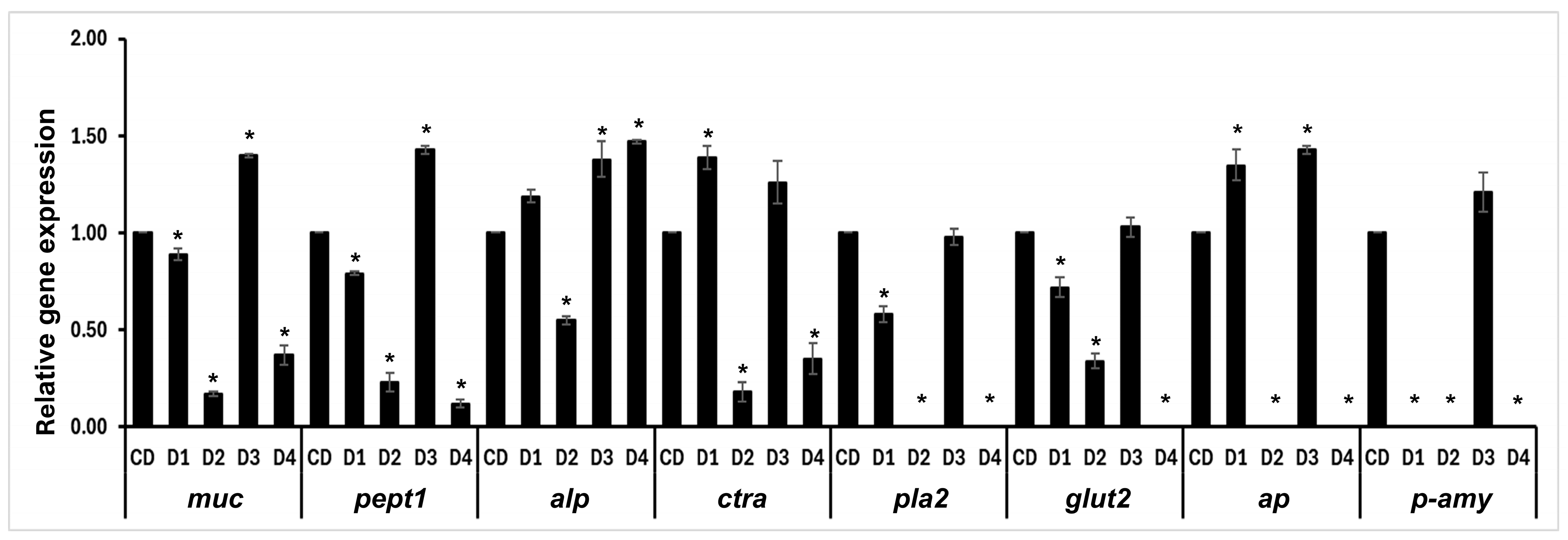
Figure 1. Transcriptional response of genes related to nutrient digestion, absorption and transport of tilapia fed experimental diets. CD, Control diet with 20% fishmeal; D1–D4, Fishmeal replaced with A. domesticus meal at 20%, 40%, 60%, and 80%. muc, mucin-like protein; pept1, oligo-peptide transporter 1; alp, alkaline phosphatase; ctra, chymotrypsinogen A-like; pla2, phospholipase A2; glut2, glucose transporter 2; ap, aminopeptidase N-like; p-amy, pancreatic alpha-amylase. Data are presented as mean ± standard error. Values with * are significantly different (p < 0.05).
Fishes 11 00254 g001
Figure 2. Transcriptional response of genes related to lipid metabolism of tilapia fed the experimental feed. CD, Control diet with 20% fishmeal; D1–D4, Fishmeal replaced with A. domesticus meal at 20%, 40%, 60%, and 80%. lpl, lipoprotein lipase; pparα, peroxisome proliferator activated receptor alpha; srebp, sterol regulatory element-binding protein; fas, fatty acid synthase. Data are presented as mean ± standard error. Values with * are significantly different (p < 0.05).
Fishes 11 00254 g002
Figure 3. Transcriptional response of genes related to somatotropic axis growth mediation of tilapia fed the experimental feed. CD, Control diet with 20% fishmeal; D1–D4, Fishmeal replaced with A. domesticus meal at 20%, 40%, 60%, and 80%. gh, growth hormone; ghr-1, growth hormone receptor 1; igf-1, insulin growth factor I. Data are presented as mean ± standard error. Values with * are significantly different (p < 0.05).
Fishes 11 00254 g003
Table 1. Proximate composition of house cricket meal.
Proximate Composition (Dry Basis %)
Dry matterAshCrude proteinCrude lipids
93.02 ± 0.128.17 ± 0.1554.44 ± 3.523.15 ± 0.46
Values are mean ± SEM of three replicates.
Table 2. Formulation and proximate composition of the experimental feed.
Experimental Feed
Ingredients (g kg−1)
CDD1D2D3D4
Fishmeal 12001601208040
Soybean meal 2420.69439457.50476494.40
Cricket meal04080120160
Wheat meal 3319.40301282.50264245.60
Fish oil 41919191919
Soy lecithin 53535353535
Pellet binder 633333
Antioxidant 711111
Vitamin premix 811111
Mineral premix 911111
Proximate composition (dry basis %)
Dry matter95.68 ± 0.30 d91.86 ± 0.27 a94.72 ± 0.25 c93.74 ± 0.32 b93.66 ± 0.06 b
Ash6.53 ± 0.25 a6.63 ± 0.30 a6.73 ± 0.80 a6.70 ± 0.26 a7.26 ± 0.20 a
Crude protein32.86 ± 1.68 a32.27 ± 2.69 a37.91 ± 1.01 b37.13 ± 0.30 b37.72 ± 1.8 b
Crude lipid4.40 ± 0.47 a2.97 ± 4.00 bc2.39 ± 1.50 c3.56 ± 2.99 b3.07 ± 3.22 bc
1,4: Alimar S.A. de C.V. (Cd. Obregón, Sonora, México); 2: COLPAC (Navojoa, Sonora, México); 6–9: ARY Agroindustrial S.A. de C.V. (Cd. Obregón, Sonora, México); 3: MUNSA Molinos S.A. de C.V. (Cd. Obregón, Sonora, México); 5: COLPAC (Navojoa, Sonora, México). Values are mean ± SEM of three replicates, and values in the same row with different letters are significantly different (p < 0.05)
Table 3. Primers sequences used for qPCR analysis of the transcriptional response of genes related to nutrient metabolism and growth in blue tilapia (O. aureus).
GenePrimer F (5′→3′)Primer R (5′←3′)Access Number
Nutrient digestion, absorption and transport
mucTGCCCAGGAGGTAGATATGCTACAGCATGAGCAGGAATGCXM_005466350.2
pept1CAAAGCACTGGTGAAGGTCCCACTGCGTCAAACATGGTGAXM_013271589
alpCTTGGAGATGGGATGGGTGTTTGGCCTTAACCCCGCATAGXM_005469634.2
ctraAGTGCCGAGAACATCCAGACGAAGTCTCGGCCACACAAACXM_003437588.3
pla2CTCCAAACTCAAAGTGGGCCCCGAGCATCACCTTTTCTCGXM_005451846
glut2TCTAAAGGGGCCGCATGATCGAAAGGTGCATCATGAGGGCFJ914656
apTTACCACTCCGAACCAGACCGAGTAGTTCCCTCCTGCCTCXM_005449270
p-amyTGGAGGCCCTGGTATCAAAGTCCTGTTCCACCACCAGATCXM_003448471.2
Lipid metabolism
lplTGCTAATGTGATTGTGGTGGACGCTGATTTTGTGGTTGGTAAGGNM_001279753.1
pparαCTGATAAAGCTTCGGGCTTCCACGCTCACACTTATCATACTCCAGCTNM_001290066.1
srebf1TGCAGCAGAGAGACTGTATCCGAACTGCCCTGAATGTGTTCAGACAXM_005457771.2
fasTGAAACTGAAGCCTTGTGTGCCTCCCTGTGAGCGGAGGTGATTAGU433188
Somato-tropic axis growth
ghTCGGTTGTGTGTTTGGGCGTCTCGTGCAGGTGCGTGACTCTGTTGAXM_003442542
ghr-1ATGGCTCTCTCGCCCTCCTCTAAATGTCGTGTGGTCCCAGTCAGTGANM_001279601
igf-1GTCTGTGGAGAGCGAGGCTTTCACGTGACCGCCTTGCANM_001279503
Muc, mucin-like protein; pept1, oligo-peptide transporter 1; alp, alkaline phosphatase; ctra, chymotrypsinogen A-like; pla2, phospholipase A2; glut2, glucose transporter 2; ap, aminopeptidase N-like; p-amy, pancreatic alpha-amylase; lpl, lipoprotein lipase; pparα, peroxisome proliferator-activated receptor alpha; srebf1, sterol regulatory element binding transcription factor 1; fas, fatty acid synthase; gh, growth hormone: ghr-1, growth hormone receptor I; igf-1, insulin growth factor I.
Table 4. Growth performance of blue tilapia (O. aureus) fed the experimental feeds after 10 weeks.
DietFW (g)WG (g)WWG (g/week)FB (g)SGR (%/day)SUR (%)FCR
CD35.44 a ± 8.6033.54 a ± 8.763.35 a ± 0.88302.48 a ± 79.676.28 a ± 0.5985 a ± 5.771.47 a ± 0.02
D133.87 a ± 7.9832.11 ab ± 7.833.21 ab ± 0.78301.80 a ± 96.786.13 ab ± 0.3487.50 a ± 9.571.49 a ± 0.07
D223.61 ab ± 3.0221.72 abc ± 2.892.17 abc ± 0.29211.83 ab ± 27.205.71 ab ± 0.2790 a ± 8.161.73 b ± 0.03
D320.92 b ± 4.6019.75 bc ± 4.591.93 bc ± 0.46203.53 ab ± 44.625.59 ab ± 0.3897.50 a ± 5.01.75 b ± 0.12
D416.37 b ± 2.3114.86 c ± 2.461.49 c ± 0.25158.85 b ± 14.975.26 b ± 0.5397.50 a ± 5.01.82 b ± 0.18
Values are mean ± SEM of three replicates, and values in the same row with different letters are significantly different (p < 0.05). FW, final weight; WG, weight gain; WWG, weekly weight gain; FB, final biomass; SGR, specific growth rate; SUR, survival rate; FCR, feed conversion ratio.
Disclaimer/Publisher’s Note: The statements, opinions and data contained in all publications are solely those of the individual author(s) and contributor(s) and not of MDPI and/or the editor(s). MDPI and/or the editor(s) disclaim responsibility for any injury to people or property resulting from any ideas, methods, instructions or products referred to in the content.