Article

Intestinal Accumulation of Polyester Microfibers Modulates HPG Axis Regulation and Oocyte Maturation in Zebrafish (Danio rerio)

1
Department of Marine Life Science, Jeju National University, 102 Jejudaehak-ro, Jeju-si 63243, Jeju Special Self-Governing Province, Republic of Korea
2
Department of Aquatic Life Medicine, Jeju National University, 102 Jejudaehak-ro, Jeju-si 63243, Jeju Special Self-Governing Province, Republic of Korea
*
Authors to whom correspondence should be addressed.
Fishes 2026, 11(3), 161; https://doi.org/10.3390/fishes11030161
Submission received: 3 February 2026 / Revised: 5 March 2026 / Accepted: 10 March 2026 / Published: 11 March 2026
(This article belongs to the Special Issue Impact of Plastic and Fiber Pollution on Aquatic Animals)

Abstract

Polyester microfibers (MF) are widespread in aquatic environments and increasingly recognized as an emerging factor affecting fish physiology. This study aimed to investigate the effects of intestinal accumulation of MF on gut tissue and cellular alterations, as well as on the HPG axis and oocyte maturation in adult female zebrafish. Adult female zebrafish were exposed to environmentally relevant concentrations of MF (1000 and 3000 particles/L) for 14 days to examine endocrine-regulated physiological and reproductive responses. For comparative reference, a bisphenol A (BPA) exposure group was included to contextualize endocrine-related responses. MF exposure resulted in intestinal accumulation. Gene expression analyses showed increased expression of vtg1 and esr2a, along with decreased expression of gnrh3, fshβ, lhβ, cyp17, and cyp19a1, indicating altered regulation of the HPG axis and steroidogenic pathways. Ovarian histology revealed alterations in oocyte development, especially at the higher MF concentration, indicating that MF can affect endocrine-regulated physiology and reproduction in fish. Together, these findings provide new evidence that intestinal accumulation of microfibers, along with associated histological and transcriptional alterations, elicits estrogen-responsive physiological patterns that influence HPG axis regulation and oocyte maturation in fish.
Key Contribution: This study demonstrates that environmentally relevant concentrations of polyester-based microfibers elicit estrogen-responsive endocrine modulation in female zebrafish. Microfiber exposure was associated with altered regulation of the hypothalamic–pituitary–gonadal (HPG) axis and steroidogenic pathways, producing gene expression profiles partially comparable to those induced by BPA, highlighting similarities in estrogen-responsive physiological outcomes rather than demonstrating a shared causal mechanism. In addition, intestinal accumulation of microfibers induced histological and cellular alterations in the intestine, providing new evidence that microfiber exposure affects the HPG axis and oocyte maturation in fish.

1. Introduction

Global plastic production has increased significantly over the past five decades [1]. The large-scale production and widespread use of plastics have resulted in the release of substantial amounts of plastic waste into the environment [2]. Once introduced into the terrestrial environment through human activities, plastic debris undergoes weathering and mechanical abrasion, leading to fragmentation into progressively smaller particles that are subsequently transported into aquatic ecosystems. In particular, fibrous microplastics originate predominantly from synthetic textile fibers used in clothing, which are released during routine domestic laundering through mechanical stress and abrasion. These shed fibers are discharged into household wastewater, pass through wastewater treatment plants where removal is often incomplete, and are consequently released into freshwater systems and eventually marine environments [3]. A fraction of these particles persists as microplastics [4]. Microplastics are defined as synthetic plastic particles with diameters of less than 5 mm that are insoluble in water [5].
Microplastics are commonly classified into several morphological categories, including fibers, foams, films, and pellets [6]. Among these, microplastic fibers (microfibers, MF) are the most frequently detected form in natural environments [7]. MFs predominantly originate from synthetic textile materials, and are characterized by a filamentous structure in which the length substantially exceeds the diameter. They are predominantly released into the environment during laundering processes, where mechanical friction and chemical interactions lead to continuous shedding of fibers from textiles [8]. This widespread and persistent generation highlights the importance of investigating their potential ecological and physiological impacts on aquatic organisms.
Recent studies have reported that MF are ingested by fish and subsequently translocated within their bodies, where they may undergo degradation and absorption processes, thereby inducing physiological abnormalities, including alterations in reproductive endocrinology and overall physiological regulation. Particularly, effects such as tissue damage, oxidative stress, endocrine modulation, and behavioral changes have been documented [9,10,11]. Such microplastic fibers have been shown to accumulate in the intestines of adult Japanese medaka (Oryzias latipes), where they affect reproductive processes, as evidenced by changes in spawning output following exposure to polypropylene microplastic fibers [12]. While previous studies in zebrafish have primarily focused on the physiological or reproductive effects of microfibers alone, the present study uniquely investigates both the physical accumulation of fibers and the potential chemical effects of incorporated plasticizers, providing a more comprehensive assessment of their impact on endocrine regulation. In addition, plasticizers incorporated during plastic manufacturing have been reported to influence endocrine regulation, as exposure of zebrafish embryos and larvae to acetyl tributyl citrate (ATBC), a widely used plasticizer, affected the gh/igf axis, neurodevelopment, and behavior, while in vitro studies showed that commonly used plasticizers such as phthalates and phenols modulate estrogen and thyroid hormone signaling [13,14]. Among MF, polyester-based fibers are the most widely produced synthetic fibers globally and constitute a major fraction of MFs detected in aquatic environments [15]. During polyester fiber manufacturing, various plastic additives are incorporated to enhance material properties, some of which have the potential to interact with endocrine-related pathways [16]. In this study, we aimed to distinguish between the direct physical effects of microplastic fibers as particulate matter and the chemical effects arising from incorporated plasticizers, in order to better understand their respective impacts on endocrine regulation in fish. In summary, these findings suggest that not only microplastic fibers themselves, but also plasticizers incorporated during polymer production, can influence endocrine-related processes in fish, although the relative contribution of each factor is not yet fully understood.
Bisphenol A (BPA), a well-characterized endocrine-active plasticizer, has been widely used as a reference for assessing estrogen-responsive endpoints in fish, including vitellogenin (vtg) induction and reproductive outcomes [17]. Using BPA as a comparative benchmark allows direct evaluation of whether endocrine-related responses elicited by MFs resemble those induced by plasticizer-derived compounds. Comparative analyses of MF- and BPA-induced responses in fish can thus clarify the extent to which MF-associated effects reflect established BPA-related endocrine modulation, while also revealing additional physiological responses that may extend beyond well-characterized endocrine pathways.
Building on these considerations, the present study focuses on polyester-based MF, the most widely used synthetic textile fibers, to evaluate the potential effects of their intestinal accumulation on the HPG axis and oocyte development in fish under environmentally relevant exposure conditions. By exposing zebrafish (Danio rerio) to MF, this study examines intestinal accumulation, associated tissue alterations, and endocrine-regulated physiological responses in comparison with those induced by BPA, a representative plasticizer. Through this comparative approach, the study aims to provide insight into the biological responses of fish to microplastic exposure in aquatic environments and to contribute to a more comprehensive understanding of the potential risks posed by polyester-based MFs to fish health and reproductive function.

2. Materials and Methods

2.1. Experimental Organisms and Preparation of Exposure Solutions

The experimental fish used in this study were zebrafish (Danio rerio) reared in laboratory recirculating aquarium systems. All tanks were treated as independent experimental units to ensure proper statistical independence.
Fish were acclimated for 6 weeks and maintained at a water temperature of 28.5 °C, and were fed twice daily with a commercial diet (Tetra Bits Complete, Tetra, Germany). At the end of the experiment, the mean total length and body weight of the fish were 33.92 ± 1.96 mm and 447.19 ± 93.14 mg, respectively. Based on age estimation calculations described by [18], adult fish older than approximately three months post-fertilization were selected for the experiment.
MFs were prepared using polyester fibers with sizes comparable to those reported in natural aquatic environments, specifically fibers with lengths of 500 μm or less [19]. To determine the average fiber length and the number of fibers per unit volume, MF samples were imaged using an optical microscope (DM500, Leica, Wetzlar, Germany), and measurements were conducted using Mosaic 2.4 software (Tucsen, Fuzhou, China). The results indicated that the mean length of the prepared MF was 339.58 ± 71.76 μm. Green-colored fibers were used to facilitate visual identification. The polymer composition of the fibers was confirmed as polyester by Fourier-transform infrared spectroscopy, with no detectable impurities. The produced MFs were rinsed with distilled water and air dried at room temperature (25 ± 1 °C) for 24 h. After drying, MFs were suspended in 50 mL of distilled water to prepare an MF stock solution with a final concentration of 814 ± 586 particles/mL.
The BPA stock solution was prepared by dissolving bisphenol A (≥99% purity, Sigma, Taufkirchen, Germany) in dimethyl sulfoxide (DMSO, ≥99% purity, Sigma, Germany) at a concentration of 13.9 M and stored at 4 °C. The BPA stock solution was prepared at a concentration of 0.876 mM. Additionally, DMSO was added to the exposure medium to achieve a final solvent concentration of 0.01% (v/v), which served as the solvent control.

2.2. MF and BPA Exposure Experiment

The exposure experiment was then conducted for 14 days under the same temperature conditions, during which fish were fed to satiation twice daily at consistent time points (n = 10 per group).
Water renewal was performed once daily, with complete replacement using freshly prepared exposure solutions at the same initial concentrations. Exposures were conducted in 2.5 L acrylic tanks, with 10 fish housed per tank for each experimental group.
The exposure concentrations were set as follows. The solvent control group received 20 μL of DMSO in the exposure medium, resulting in a final concentration of 0.01% (v/v). MF exposure concentrations were determined based on a previous study by [20], with the low-concentration group (MF-L) set at 1000 particles/L and the high-concentration group (MF-H) set at 3000 particles/L. For BPA exposure, a concentration of 0.01% v/v, 87.6 nM. This exposure concentration was selected based on the study by [21,22]. The high-concentration group (MF-H, 3000 particles/L) was intentionally included to evaluate potential dose-dependent effects and to ensure that any modulation of HPG axis regulation and oocyte maturation could be clearly detected, even though this level may exceed commonly reported environmental concentrations. The exposure experiment was then conducted for 14 days under the same temperature conditions. The MF exposure concentrations used in this study were chosen to induce endocrine-disrupting effects based on previously reported environmentally relevant levels, while the BPA exposure concentration was selected within the range reported to elicit endocrine disruption at low doses, corresponding to 0.01% v/v, 87.6 nM [23].
Sampling was performed after 14 days of MF and BPA exposure. Five exposure groups were established, and a total of 10 female zebrafish were collected from each group. At the end of the exposure period, fish were humanely euthanized in accordance with international ethical guidelines using an overdose of phenoxyethanol (0.05% v/v; Sigma-Aldrich, St. Louis, MO, USA), followed by rapid dissection to collect the brain, liver, intestine, and gonads. Samples intended for gene expression analysis were stored at −80 °C until analysis, tissues designated for histological examination were fixed in 8% formalin, and intestines for microfiber accumulation analysis were rinsed with Phosphate-buffered saline (PBS) and used immediately for observation. Gonadosomatic index (GSI), hepatosomatic index (HSI), and intestinosomatic index (ISI) were determined using the following formulas. The GSI was included in the heatmap analysis to visualize its relative association with gene expression patterns. In addition, GSI was independently presented alongside ovarian histological analyses to evaluate its relationship with oocyte developmental characteristics. The indices were calculated as follows: GSI = (gonad weight/body weight) × 100 [24], HSI = (liver weight/body weight) × 100 [24] and ISI = (intestine weight/body weight) × 100 [25].

2.3. Intestinal MF Accumulation and Histological Analysis

Intestinal tissues (n = 4 per group) were rinsed with PBS to remove residual contents, and microfiber accumulation within the intestine was observed using a stereo microscope (Leica Z16 APO with a 2.0× PlanApo objective, Leica Microsystems, Wetzlar, Germany).
For histological analysis, intestinal and gonadal tissues (n = 6 per group) were fixed in 8% formalin for 48 h, followed by stepwise dehydration through a graded ethanol series ranging from 70% to 100%. The dehydrated tissues were subsequently embedded in paraffin. Paraffin-embedded tissues were sectioned into serial slices with a thickness of 10 μm using a microtome (RM2125, Leica, Germany) to prepare histological slides.
The tissue sections were stained with Mayer’s hematoxylin (Dako, Santa Clara, CA, USA) and eosin (Sigma-Aldrich, USA) and observed under a stereomicroscope. Histological images were analyzed using Mosaic 2.4 software (Tucsen, Fuzhou, China). In intestinal tissues, hypertrophy and hyperplasia of goblet cells were evaluated by Purushothaman, K. et al., 2016 [26]. In gonadal tissues, oocyte developmental stages were assessed. Oocyte maturation was classified into five stages according to the criteria described by Mohamedien, D. et al., 2023 [27], and oocyte diameter measurements were conducted following the method described by Li, J. et al., 2020 [28] (Table 1).

2.4. Gene Expression Analysis

Gene expression changes induced by MF exposure were assessed using brain, liver, and gonadal tissues (n = 4 per group) collected from fish in each experimental group. For gene expression analysis, each biological sample was analyzed in technical triplicate, and the mean value was used for statistical evaluation.
Total RNA was extracted from each tissue using RNAiso Plus reagent (Takara, Kusatsu, Japan) in accordance with the manufacturer’s instructions. The purity and concentration of the extracted RNA were determined using a Multiskan GO microplate spectrophotometer (Thermo Fisher Scientific, Waltham, MA, USA), and only samples with a purity ratio (A260/A280) between 1.8 and 2.0 were used for further analysis. Complementary DNA was synthesized using the PrimeScript 1st Strand cDNA Synthesis Kit (Takara, Japan).
Reverse transcription was performed using the kit according to the manufacturer’s protocol. The synthesized cDNA was then used as a template for quantitative real-time polymerase chain reaction (qPCR) analysis. qPCR was performed using TOP™ SYBR Green qPCR PreMIX (Enzynomics, Daejeon, Republic of Korea) with an initial denaturation step at 95 °C for 10 min, followed by 45 cycles of denaturation at 95 °C for 10 s, annealing at 60 °C for 20 s, and extension at 72 °C for 20 s. After amplification, dissociation curve analysis was conducted at 95 °C for 15 s, 60 °C for 30 s, and 95 °C for 15 s to confirm the specificity of the PCR products. Gene expression levels were quantified using the ΔΔCt method, with 18S rRNA used as the reference gene.
A total of ten genes were analyzed to evaluate the effects of MF exposure on HPG axis regulation and oocyte maturation (Table 2). The yolk precursor protein gene vtg1 and the estrogen receptor gene Estrogen receptor α (esr1) were analyzed to assess estrogen-like activity. The brain genes Gonadotropin-releasing hormone 3 (gnrh3), Follicle-stimulating hormone β (fshβ), and Luteinizing hormone β (lhβ) were analyzed to assess alterations in steroid hormone-related gene expression along the hypothalamic–pituitary–gonadal (HPG) axis, and Estrogen receptor β 2 (esr2a) was analyzed to investigate negative feedback regulation of this axis in the brain. In the ovary, the cytochrome P450 family genes Cytochrome P450 family 17 (cyp17) and Cytochrome P450 family 19 subfamily A member 1 (cyp19a1), which are involved in steroid hormone biosynthesis, were analyzed. Additionally, hepatic expression of the aryl hydrocarbon receptor (ahr), a key mediator of responses to external substances, and steroidogenic factor 1 (sf-1), which regulates cytochrome P450 enzymes downstream of ahr, were evaluated.

2.5. Multivariate and Functional Analysis

Multivariate statistical and bioinformatic analyses were conducted to evaluate patterns and functional implications of the gene expression data. Principal component analysis (PCA) was performed to visualize overall differences in gene expression profiles among samples. PCA was conducted in Python 3.10 (Python Software Foundation, Wilmington, DE, USA) using the scikit-learn package, and results were visualized using the matplotlib and seaborn libraries (Python Software Foundation, USA). Gene correlation analysis was also conducted to explore relationships between individual gene expression levels. Pearson correlation coefficients were calculated for all gene pairs, and correlation plots were generated in which the magnitude of the correlation was represented by the size of the squares, and the direction (positive or negative) was indicated using a red–blue color scale. Correlation analyses and visualization were performed in R (version 4.5.1, R Core Team, Vienna, Austria) using the corrplot package.

2.6. Statistical Analysis

The number of biological replicates for each experiment is specified in the corresponding sections of the Methods. Data were first assessed for normality using the Shapiro–Wilk test. One-way analysis of variance (ANOVA) was performed using IBM SPSS Statistics 21.0 (IBM Corp., Armonk, NY, USA), followed by Duncan’s multiple range test for post hoc comparisons. Differences were considered statistically significant at p < 0.05.

3. Results

3.1. Intestinal MF Accumulation

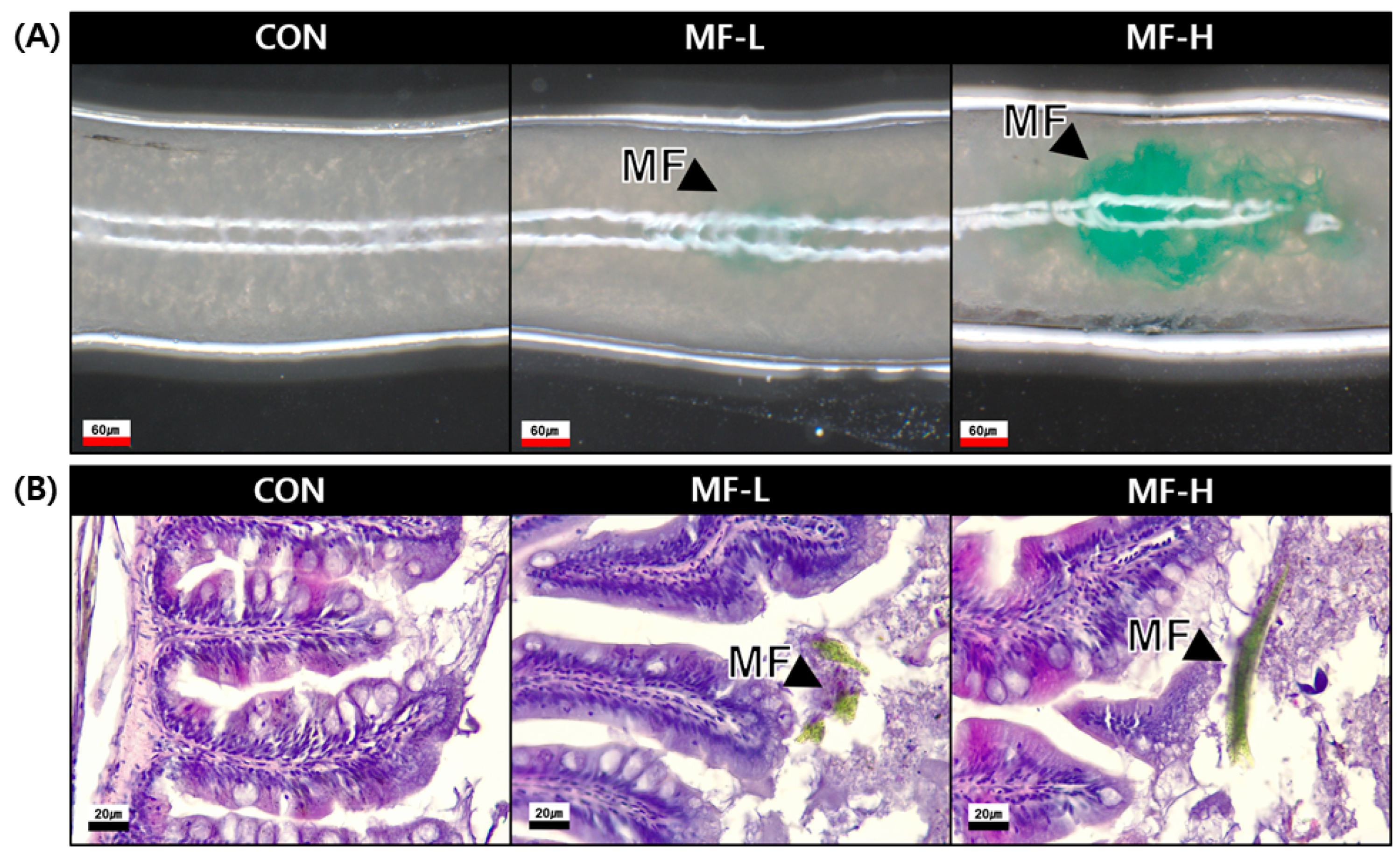
MF accumulation in the intestines of zebrafish following exposure is presented in Figure 1. Stereomicroscopic observations at the end of the exposure period revealed the presence of green-colored MFs in both the MF-L and MF-H groups (Figure 1A). Histological analysis further confirmed the presence of MF in the intestinal tissues of both exposure groups (Figure 1B).

3.2. Histological Analysis of the Intestine: Assessment of Goblet Cell Morphology

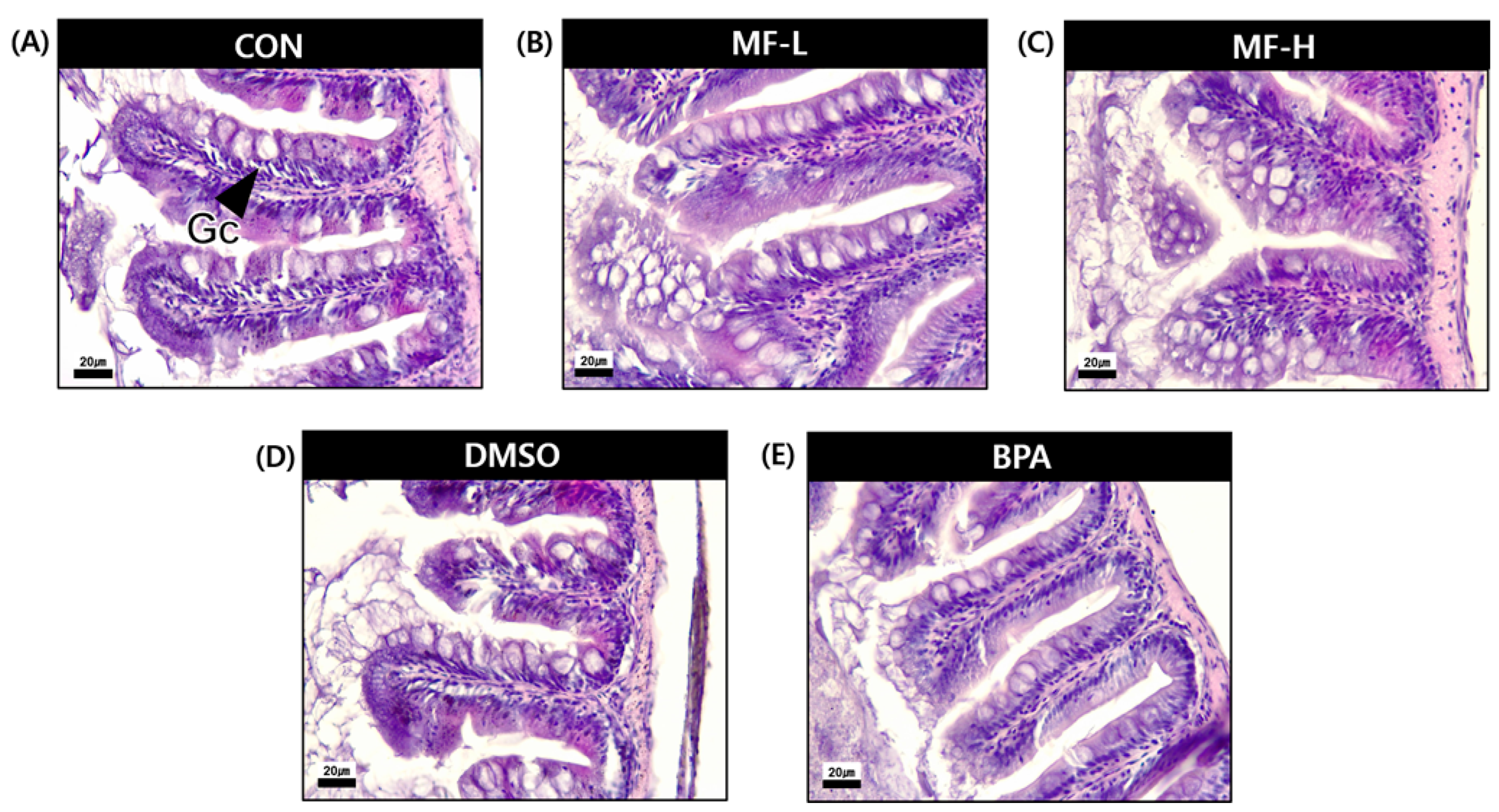
Histological observations of intestinal tissues are presented in Figure 2. Hypertrophy and hyperplasia of goblet cells were observed in both the MF-L and MF-H groups, whereas no significant histological alterations were detected in the DMSO or BPA groups compared to the control.
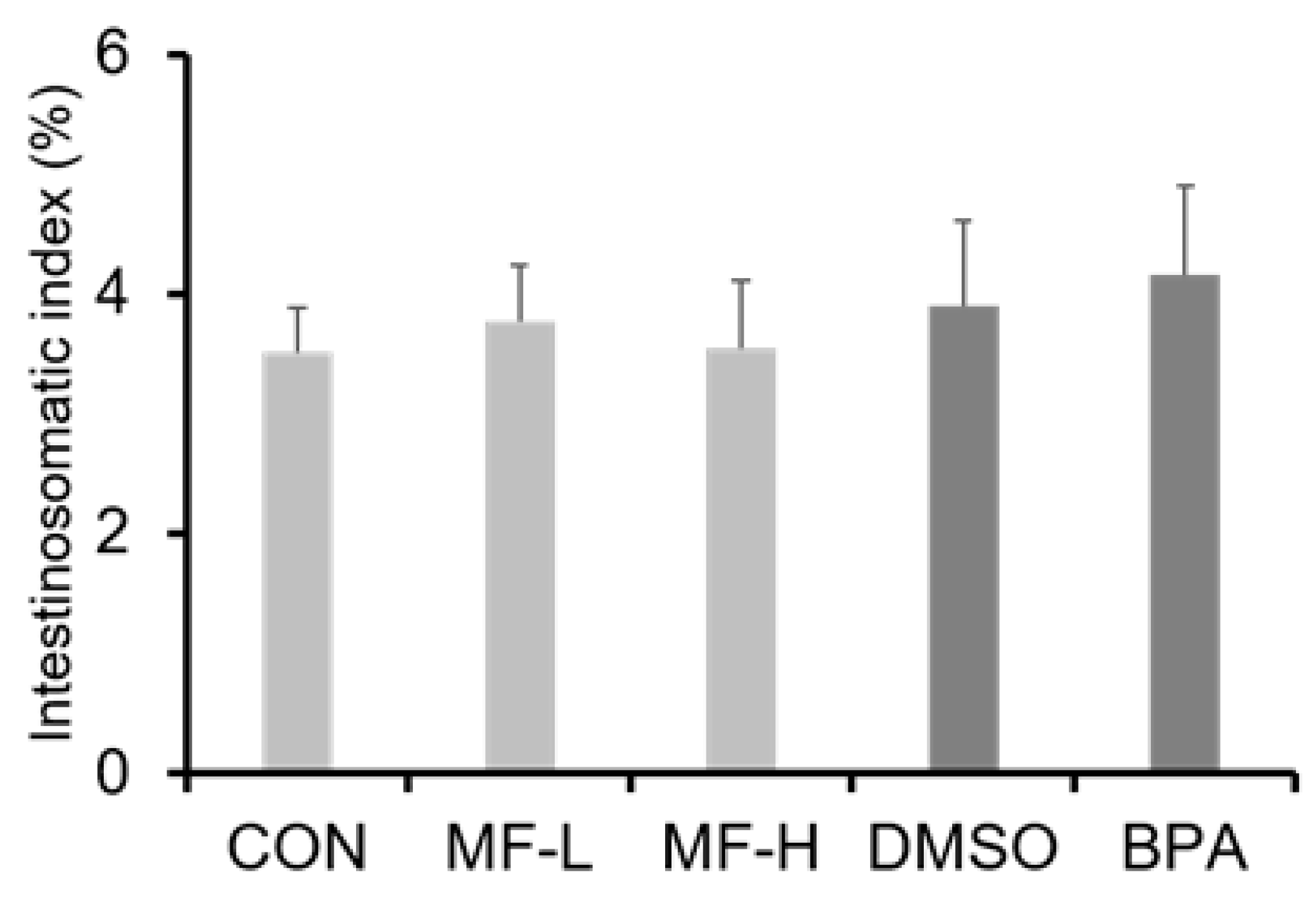
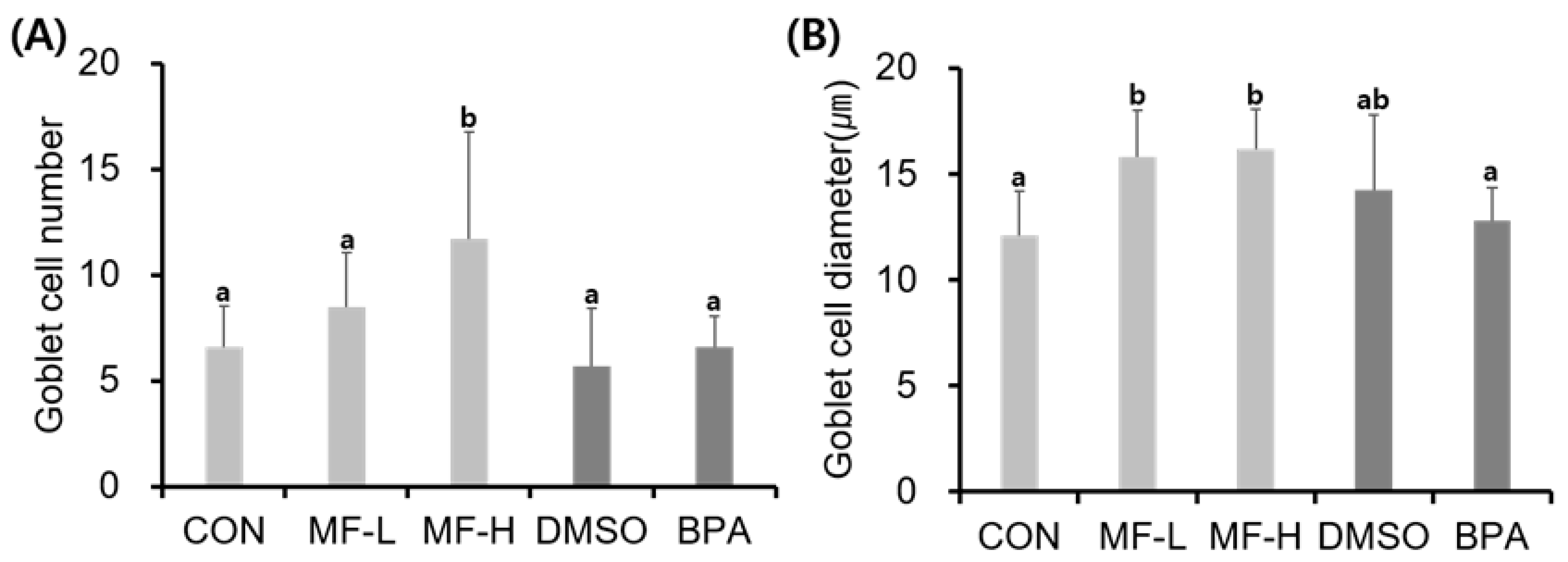
The intestinal weight index, average goblet cell number, and average goblet cell diameter following exposure are shown in Figure 3 and Figure 4. No significant differences in intestinal weight index were observed between the exposure groups and the control (Figure 3). However, the number of average goblet cells was significantly increased in the MF-H group (Figure 4A). Additionally, the average goblet cell diameter was significantly increased in both the MF-L and MF-H groups (Figure 4B), indicating a dose-dependent response to MF exposure.

3.3. Gene Expression and Physiological Indices (GSI, HSI) Analysis

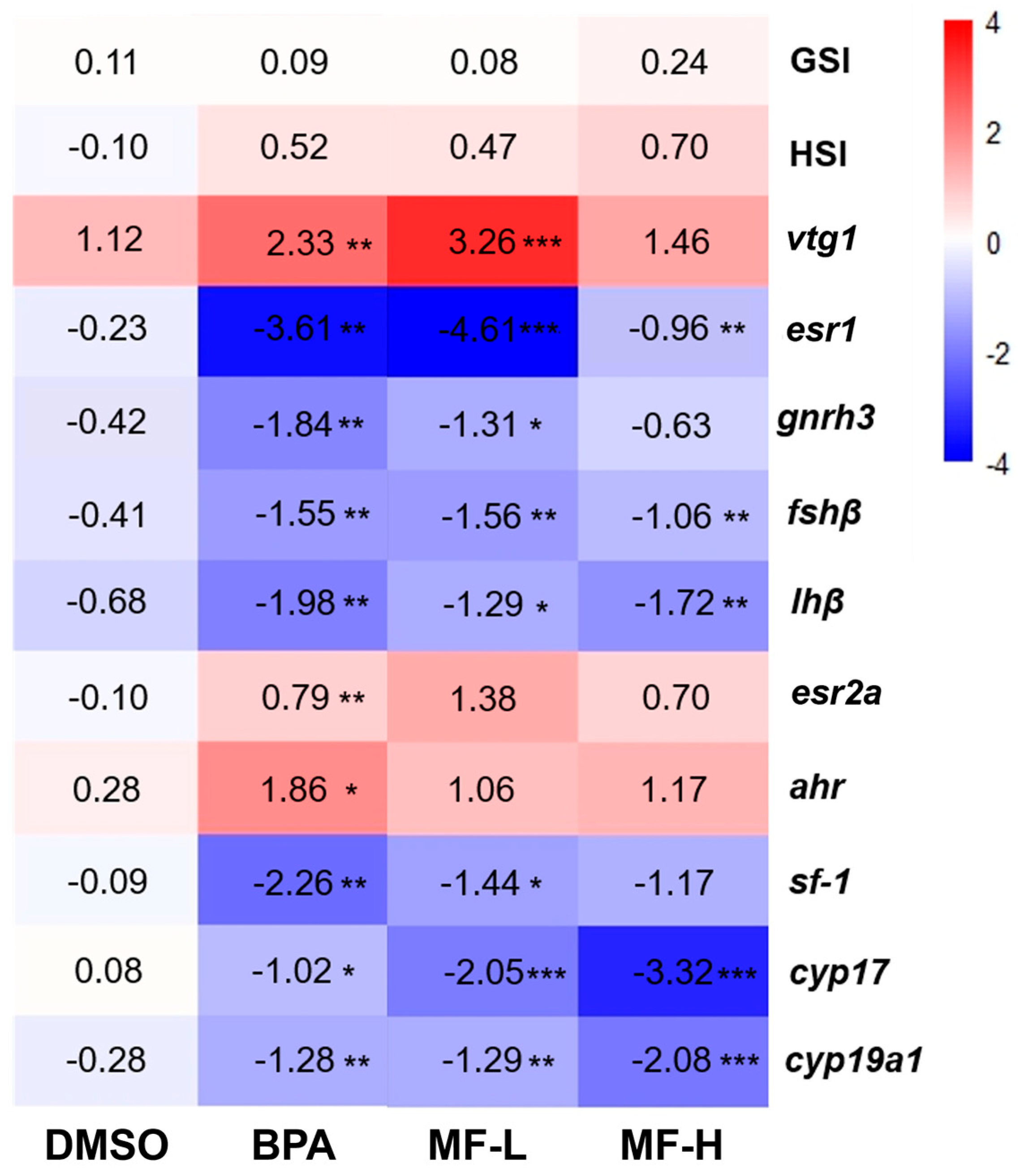
The results of qPCR analysis, along with the gonadosomatic index (GSI) and hepatosomatic index (HSI), are presented in Figure 5. No significant differences in GSI or HSI were observed in any of the exposure groups compared to the control. vtg1 expression was significantly upregulated in both the BPA and MF-L groups relative to the control. In contrast, the expression levels of esr1, fshβ, lhβ, cyp17, and cyp19a1 were significantly downregulated in all exposure groups. Additionally, gnrh3 expression was significantly decreased in the BPA and MF-L groups, whereas esr2a and ahr expression were significantly increased in the BPA group. The expression of sf-1 was also significantly reduced in both the BPA and MF-L groups. Although not all genes showed statistically significant differences, a generally consistent pattern of altered gene expression was observed across all exposure groups (Figure 5).

3.4. Gene Multivariate and Correlation Analysis

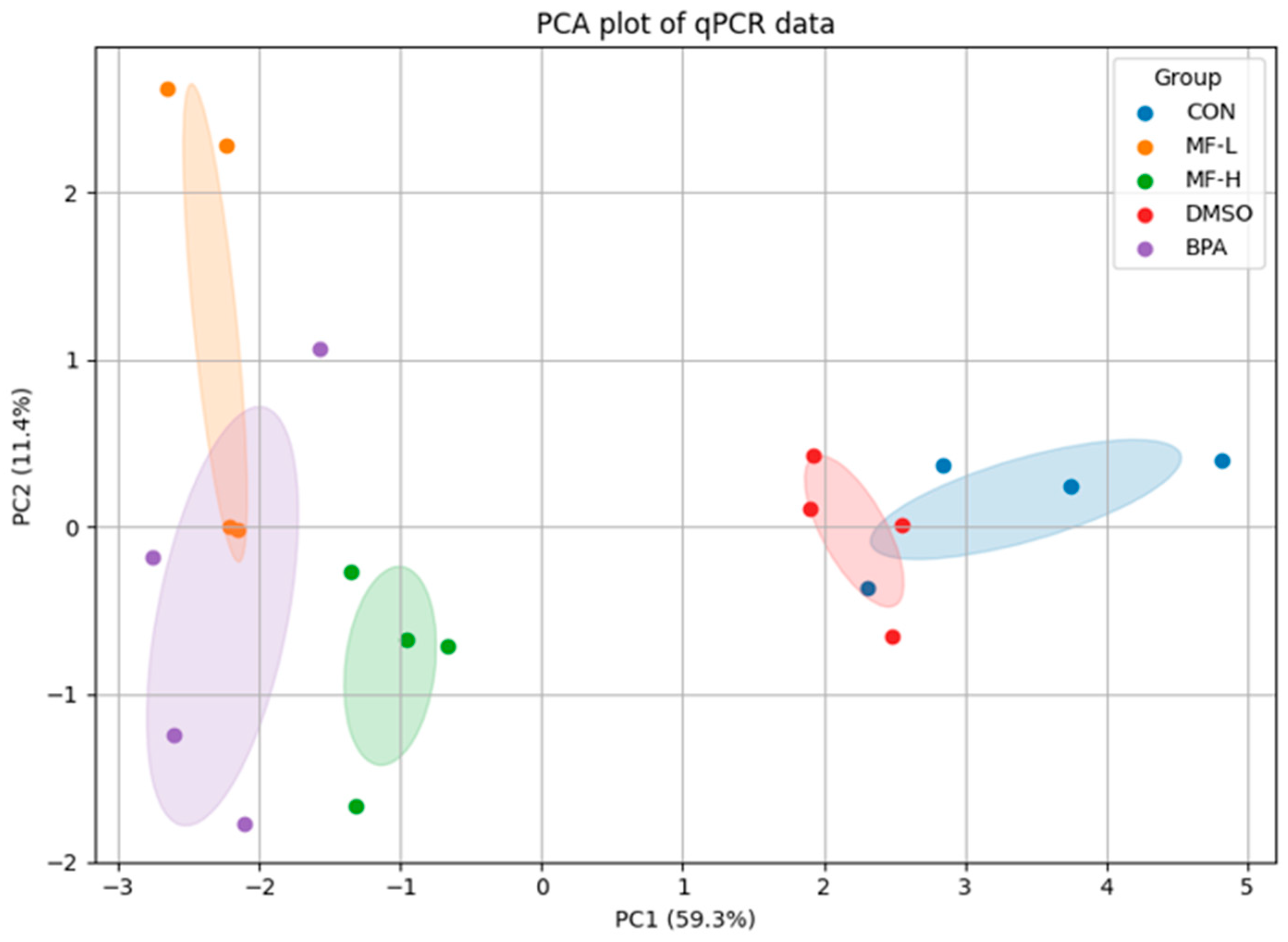
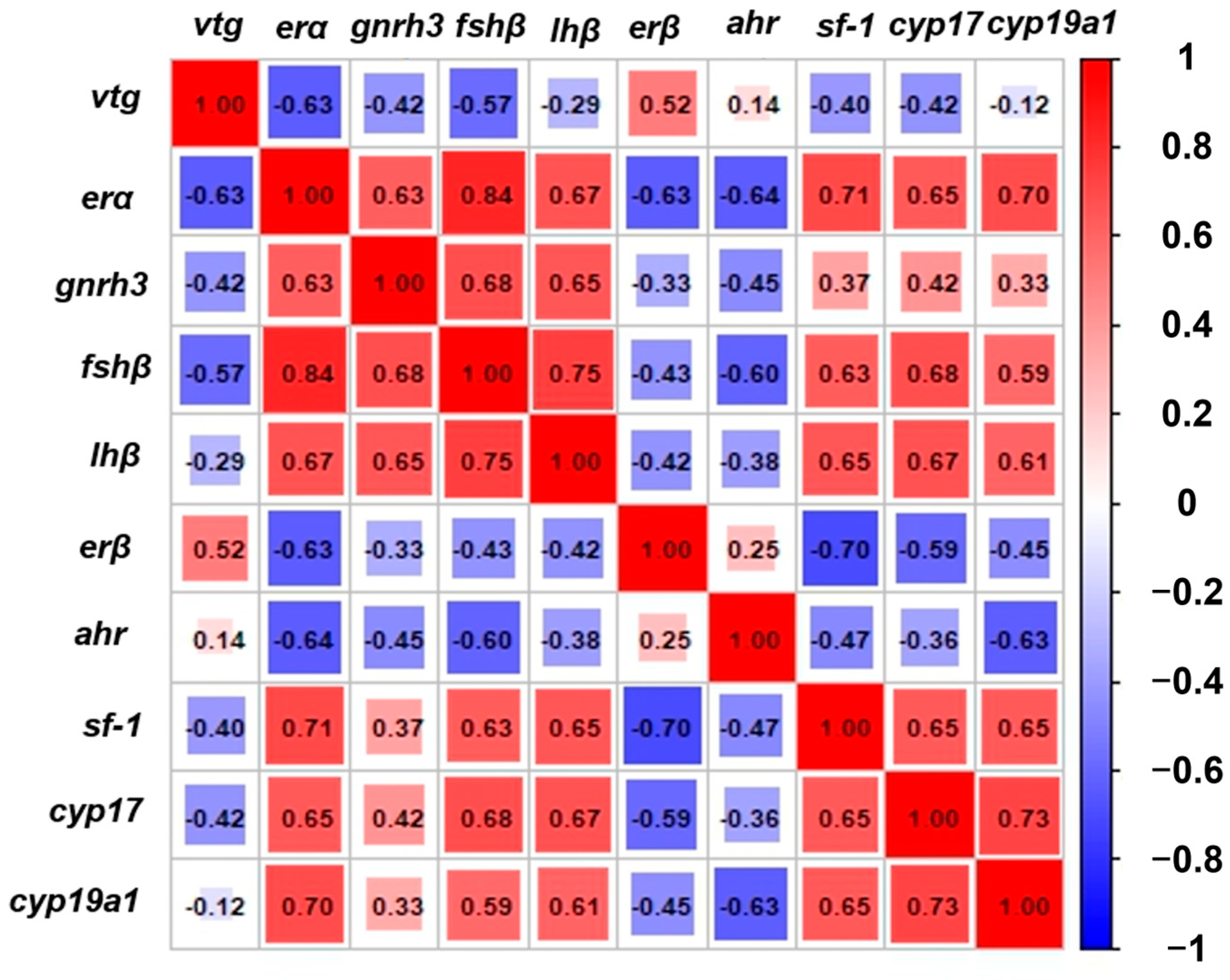
Principal component analysis (PCA) was performed to effectively represent structural characteristics and variance in gene expression patterns. The results showed clear separation between the control group and both the BPA and MF exposure groups (Figure 6). Notably, the BPA and MF exposure groups were positioned in close proximity in the PCA plot, indicating similar gene expression patterns. Gene correlation analysis was conducted to explore potential regulatory relationships and interactions among reproductive-related genes under different exposure conditions (Figure 7). Specifically, vtg1 expression was negatively correlated with esr1, fshβ, lhβ, sf-1, cyp17, and cyp19a1 expression, and positively correlated with esr2a and ahr expression.

3.5. Ovarian Maturation and Development

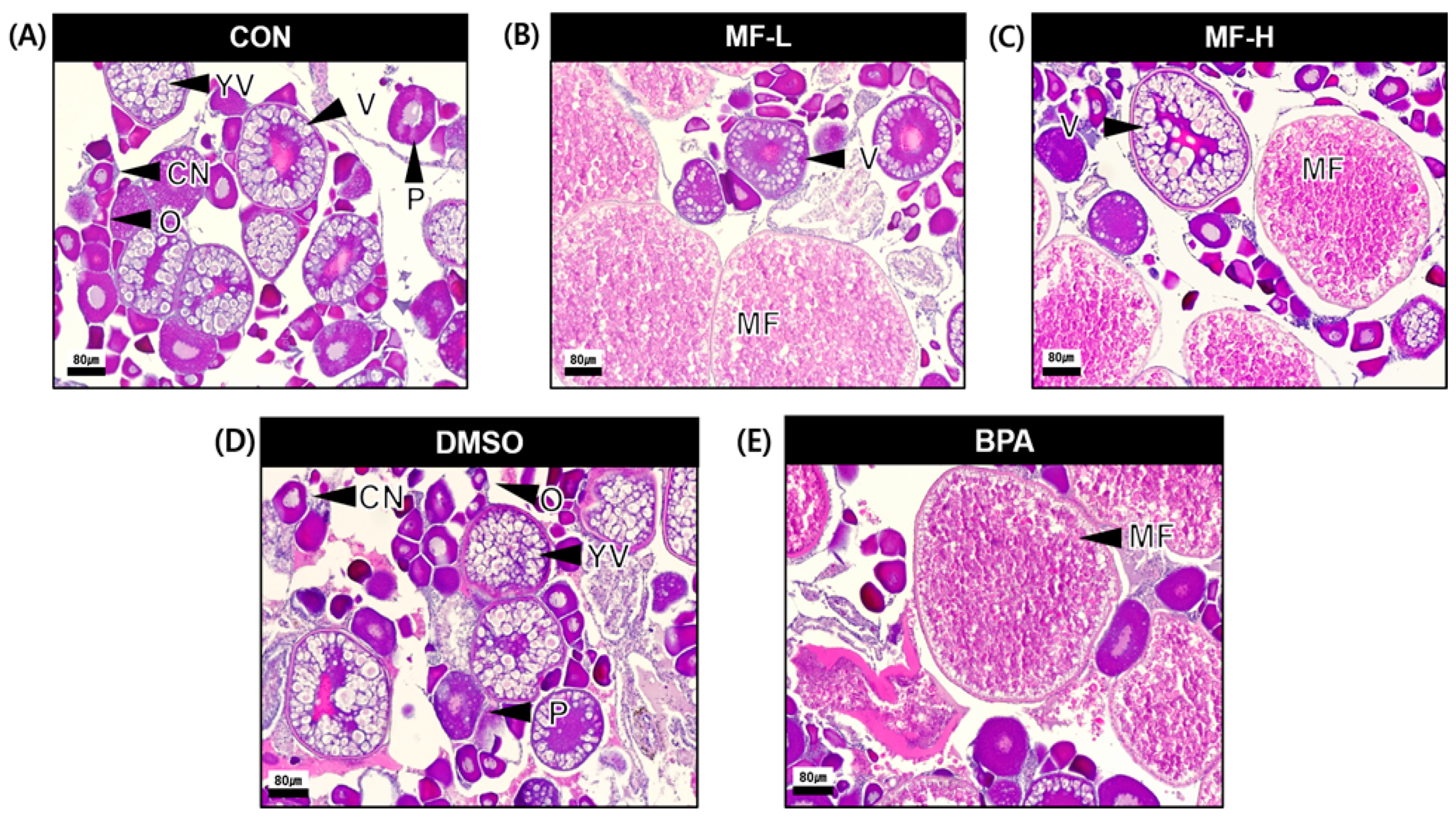
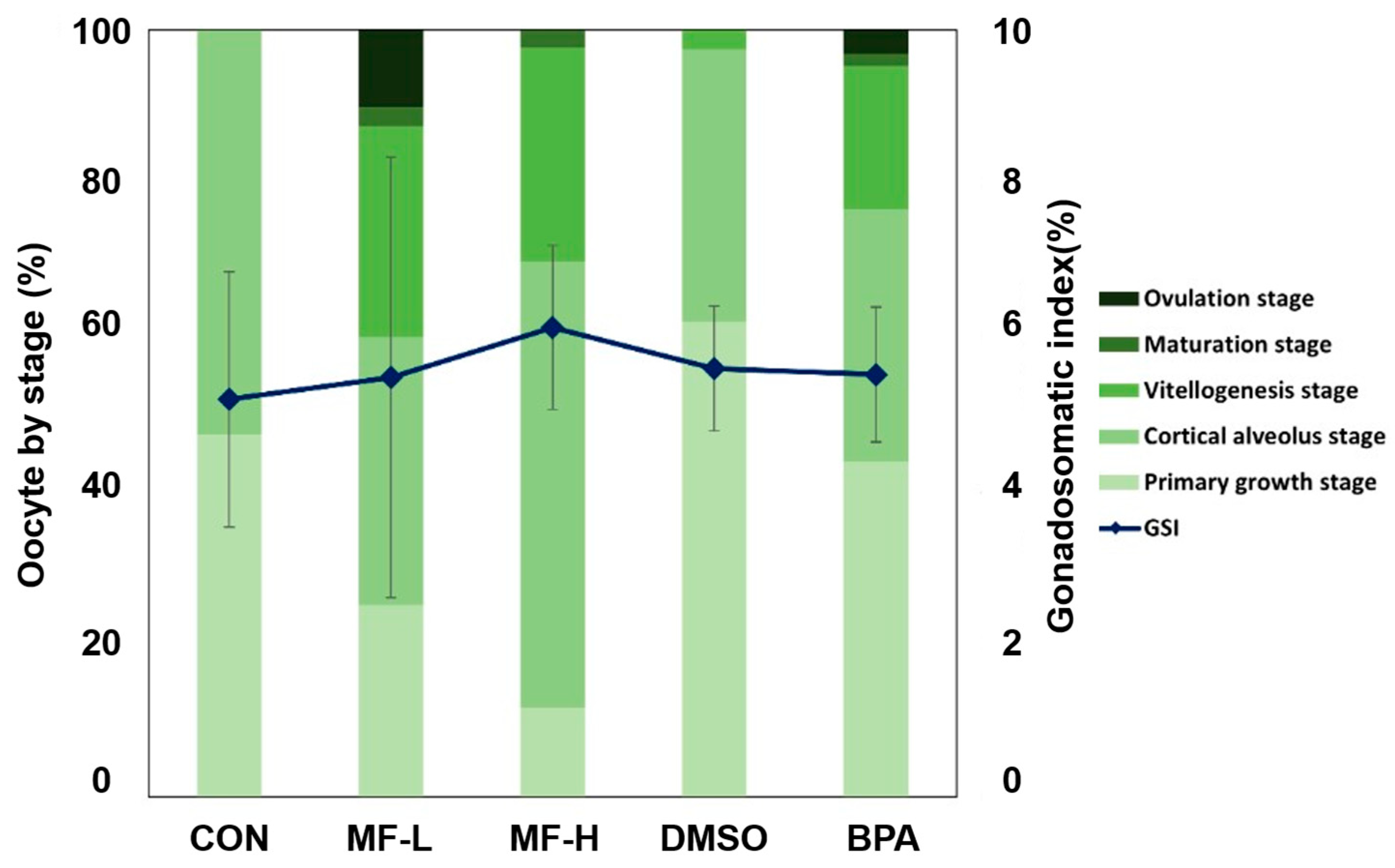
Histological observations of ovarian sections are presented in Figure 8. In the MF-L, MF-H, and BPA exposure groups, oocytes at advanced vitellogenesis and mature follicle stages were observed more frequently compared to the control group (Figure 8B,C,E). The distribution of oocyte developmental stages, along with GSI values, is illustrated in Figure 9, showing that, excluding the control and DMSO groups, all exposure groups exhibited an increased proportion of oocytes at the late maturation and ovulation stages, although no significant differences in GSI were observed among the treatment groups.

4. Discussion

This study aimed to examine whether intestinal accumulation of MFs following a 14-day exposure induces histological and cellular alterations in the intestine and influences the HPG axis and oocyte maturation in Danio rerio. The findings suggest measurable alterations in both endpoints. After exposure, MF accumulation in the intestinal tract of zebrafish was clearly observed, indicating ingestion and retention of MFs during the experimental period (Figure 1). These findings indicate that ingestion is one of the main routes of MF entry into fish, leading to their accumulation in the intestine. Previous studies have reported that microplastic ingestion in fish can induce physical stimulation of the intestinal tract, leading to increased mucus secretion through an increase in goblet cell abundance [29]. Consistent with these observations, the present study revealed increases in both the number and diameter of goblet cells in the MF-L and MF-H groups, changes that may be interpreted as related to intestinal MF accumulation (Figure 2 and Figure 4). These results suggest that MFs entering the gastrointestinal tract act as a physical stimulus, eliciting compensatory responses in mucus-producing cells and potentially influencing digestive function. The intestine serves as a primary defensive barrier, and exposure to exogenous particulate matter typically elicits protective responses, including enhanced mucus secretion and an increase in goblet cell abundance [30]. Goblet cell hypertrophy and hyperplasia, as observed here, have been reported to modify the quantity and composition of intestinal mucus, which may affect gut microbial balance. Excessive mucus production could facilitate the colonization of certain microbial populations [31]. In addition, such intestinal responses may influence nutrient absorption efficiency and energy metabolic regulation, thereby contributing to broader physiological adjustments. In contrast, no significant changes were detected in the intestinosomatic index (ISI; Figure 3), indicating that cellular and histological alterations may precede measurable changes in overall intestinal size or mass, as previously suggested by studies showing that microplastic exposure induces gene expression and histological responses in fish intestines without immediate gross morphological alterations [32].
Collectively, the proliferation of intestinal goblet cells following MF exposure highlights the importance of physical interactions between microplastics and the gastrointestinal tract in shaping digestive and absorptive functions in fish. Moreover, intestinal accumulation of MFs raises the possibility that interactions within the gut environment could influence systemic physiological processes. Alterations in the intestinal microenvironment and tissue integrity may contribute to broader physiological responses, including endocrine-related regulation. However, the present study did not directly assess systemic absorption or causal pathways linking intestinal changes to HPG axis modulation. Such processes may ultimately affect reproductive endocrinology, particularly HPG axis–related regulation.
In teleost fish, the hypothalamic–pituitary–gonadal (HPG) axis functions as a tightly regulated neuroendocrine system that governs gonadal development and reproductive cycles through coordinated interactions among hypothalamic gonadotropin-releasing hormone (gnrh), pituitary follicle-stimulating hormone (fsh) and luteinizing hormone (lh), and gonadal sex steroid hormones [33]. Regulation of this axis is mediated in part by estrogen synthesis and signaling via estrogen receptors, which modulate the expression of reproduction-related genes. Among these receptors, estrogen receptor alpha (esr1) predominantly functions in the liver by mediating estrogen-dependent induction of vtg1, whereas esr2a plays a key role in the brain by participating in feedback regulation of sex steroid hormone production [34].
Plasticizers such as BPA have been widely used as reference substances in studies examining estrogen-responsive physiological processes, as they can interact with estrogen receptors and elicit estrogen-related responses in fish [17]. In the present study, increased vtg1 expression was observed in the MF-L, MF-H, and BPA exposure groups (Figure 5), indicating that MF exposure can induce estrogen-responsive physiological changes comparable to those observed under BPA exposure [35].
Exposure to MF and BPA was also associated with increased esr2a expression in the brain (Figure 5). This response may reflect activation of feedback regulatory mechanisms within the HPG axis in response to elevated estrogen-responsive signaling. Such feedback regulation is known to influence the expression of upstream regulatory components of the HPG axis, including gnrh, fsh, and lh [36]. Consistent with this regulatory framework, reduced expression of these genes may contribute to decreased endogenous sex steroid synthesis and provide a possible explanation for the observed downregulation of hepatic esr1 expression.
Collectively, the coordinated increase in esr2a expression in the brain and decrease in esr1 expression in the liver suggest a feedback-mediated adjustment of endocrine regulation following MF exposure. These findings indicate that MF exposure may induce imbalances in sexual maturation and lead to variable modulation of HPG axis–associated signaling pathways via estrogen receptor–related mechanisms, thereby affecting reproductive physiological regulation in fish.
In the present study, reduced expression of HPG axis–related genes was accompanied by downregulation of cyp17 and cyp19a1, key enzymes involved in steroid hormone biosynthesis. While such reductions are often interpreted as changes in steroidogenic activity [37], they may reflect broader regulatory adjustments rather than solely impaired hormone production. The aryl hydrocarbon receptor (ahr) is a ligand-activated transcription factor that responds to environmental factors and modulates the expression of genes involved in xenobiotic metabolism, including cyp1a1 and cyp1b1 [38]. Previous studies have suggested that ahr activation in gonadal tissues can influence the transcription of steroidogenic genes, including cyp17 and cyp19a1, through interactions with steroidogenic factor-1 (sf-1), a central regulator of steroidogenesis [39]. Therefore, the observed downregulation of these steroidogenic genes in the present study may reflect complex regulatory interactions, potentially involving ahr-mediated pathways, rather than a simple decrease in sex hormone synthesis.
Overall, the changes in cyp17 and cyp19a1 expression suggest potential modulation of transcriptional regulation within steroidogenic pathways following MF exposure. These findings highlight the multifaceted physiological responses of the reproductive endocrine system to MF exposure, encompassing both hormones signaling and transcriptional regulation. Although ahr activation and sf-1 activity were not directly measured in this study, the observed gene expression patterns are consistent with previously reported regulatory interactions between ahr signaling and steroidogenic pathways.
Gonadosomatic index (GSI) and hepatosomatic index (HSI) were measured as indicators of reproductive status and hepatic physiological responses, respectively. Although no statistically significant differences in GSI or HSI were observed compared with the control group, both indices exhibited an increasing trend in the MF exposure groups. Activation of the aryl hydrocarbon receptor (ahr), which plays a central role in responses to exogenous substances, has previously been associated with liver enlargement [40]. Consistent with these physiological trends, gene expression analysis revealed that vtg1 expression was higher in the MF-L than in the MF-H, whereas HSI exhibited a more pronounced increase in the MF-H group, suggesting differential sensitivity of molecular and physiological endpoints to MF concentration. This discrepancy may reflect a compensatory regulatory response to higher MF concentrations, potentially involving ahr-mediated pathways and resulting in increased liver mass. These observations align with the MF-induced changes detected in HPG axis–related gene expression, suggesting that hepatic hypertrophy may represent an integrated physiological adjustment rather than an isolated tissue-specific response.
Principal component analysis (PCA) and gene correlation analyses further supported that the control and DMSO groups exhibited comparable variance distributions, supporting the suitability of DMSO as a negative control. In contrast, the MF exposure groups and the BPA group displayed partially overlapping clustering patterns, suggesting similarities in overall gene expression profiles between MF exposure and BPA treatment in the context of endocrine-regulated physiological responses (Figure 6). Consistent with previous reports that microplastic exposure can influence gonadal tissue structure and hormone-related regulation [41], gene correlation analysis in the present study revealed negative associations between vtg1 expression and reproductive-related genes, including esr1, fshβ, lhβ, and gnrh3, as well as a positive association with esr2a expression in the brain, suggesting a potential link to alterations in gonadal regulation (Figure 7).
Furthermore, correlations between ahr and steroidogenic regulatory genes, including sf-1, cyp17, and cyp19a1, indicate that MF exposure may influence gonadal somatic indices and the coordinated regulation of HPG axis hormones and steroidogenic pathways. Collectively, these multivariate analyses provide integrative evidence that MF exposure can modulate reproductive endocrine physiology in a manner comparable to BPA, affecting hormone signaling, receptor expression, and transcriptional regulation within steroidogenic pathways.
Plastic-associated compounds such as BPA have been widely used as reference substances in studies of estrogen-responsive physiology, as they can modulate ovarian development and influence oocyte maturation through estrogen-mediated pathways [42]. Consistent with these observations, histological analysis in the present study revealed an increased proportion of maturation and ovulation stage oocytes in both MF- and BPA-exposed groups compared with controls (Figure 8 and Figure 9), indicating that MF and BPA exposure can alter ovarian development and maturation.
Under normal physiological conditions, elevated estrogen levels induce negative feedback within the HPG axis, leading to transient reductions in gnrh3 and fshβ expression, while lh secretion is maintained or elevated to support late-stage oocyte maturation and ovulation [43]. In particular, lhβ, a key hormone subunit for final oocyte maturation, plays a central role in regulating the progression of oocytes to maturation and ovulation stage oocytes [44]. In the present study, MF and BPA exposure resulted in decreased gnrh3 and fshβ expression, along with marked reductions in lhβ. These patterns suggest that MF may modulate HPG axis–associated signaling and steroidogenic pathways, influencing the timing and progression of maturation and ovulation stage oocytes rather than inducing outright dysfunction.
Gonadal and histological observations further supported these findings. While the high-concentration MF exposure group (MF-H) exhibited a slight increase in GSI, oocyte stage analysis revealed a relatively high proportion of cortical alveolus stage oocytes. Compared with the BPA and low-concentration MF groups (MF-L), normal progression toward late-stage oocyte maturation appeared to be delayed in the MF-H group. Gene expression analysis showed that lhβ expression was most strongly deregulated in the MF-H group, consistent with previous studies reporting an association between reduced lhβ expression and a decreased proportion of maturation and ovulation stage oocytes. This suggests that delayed oocyte maturation may contribute to the accumulation of cortical alveolus stage oocytes observed in this group [45].
Mechanistically, negative feedback within the HPG axis associated with elevated estrogen-responsive signaling, together with potential modulation of steroidogenic pathways via ahr-related regulatory interactions, may contribute to reduced lhβ expression. As a result, while somatic and gonadal growth continue, the normal sequence of oocyte maturation may be altered, particularly under higher MF exposure. These physiological changes demonstrate the multifaceted impacts of MF exposure on reproductive regulation and oocyte maturation in zebrafish (Danio rerio).
Meanwhile, to contextualize the endocrine-related effects of MF exposure on the HPG axis and oocyte maturation, BPA, a well-characterized endocrine-active compound, was included as a reference comparator in the present study. BPA has been widely used in experimental studies to define estrogen-responsive endpoints in fish, including alterations in vitellogenin expression and reproductive development [46]. By comparing MF-induced responses with those elicited by BPA, this study aimed to evaluate whether intestinal accumulation of MF is associated with endocrine-responsive physiological patterns in reproductive and intestinal tissues, rather than to infer a shared causal mechanism. This comparative approach allows assessment of the broader physiological consequences of MF exposure, including reproductive regulation and intestinal histological responses, within the context of established endocrine-responsive benchmarks. Although MF exposure elicited ovarian and HPG-axis responses comparable to those observed under BPA exposure, similarity in physiological or transcriptional outcomes does not necessarily indicate that the two stressors share identical molecular mechanisms.
Our results indicate that MF exposure elicited MF-specific physiological effects, including intestinal accumulation and goblet cell hypertrophy/hyperplasia. Molecular, multivariate, and correlation analyses of gene expression, together with ovarian histology, revealed comparable responses between the MF- and BPA-exposed groups. These observations align with previous reports on hormone-responsive physiological changes following exposure to plastic-derived compounds [47,48]. Together, these findings suggest that the endocrine-related effects observed following MF exposure in the present study may be partially associated with plastic-derived additives, such as plasticizers. Although the leaching of BPA or other plasticizers from polyester-based MF was not directly quantified, and the present study did not explicitly determine the causal contribution of specific additives, the comparable hormone-related responses observed in both MF- and BPA-exposed groups provide indirect support for the involvement of estrogen-responsive physiological pathways following MF exposure. Additionally, whereas BPA primarily exerts estrogenic effects that influence endocrine regulation and oocyte development, the effects of MF exposure appear to extend beyond these responses. Because MFs preferentially accumulate in the intestine, their presence is accompanied by goblet cell hypertrophy and hyperplasia, suggesting that MF-induced physiological effects also involve alterations in intestinal structure and mucosal function. Collectively, these findings indicate that polyester-based MFs can elicit estrogen-responsive physiological changes comparable to those induced by BPA, while simultaneously affecting intestinal function. Consequently, MF exposure may influence not only endocrine regulation but also broader physiological processes potentially related to nutrient absorption, growth, and metabolic regulation in fish.


5. Conclusions

This study shows that a 14-day exposure to polyester-based microfibers (MF) can induce a range of physiological responses in zebrafish. MF accumulated in the intestinal tract, where they were associated with goblet cell hypertrophy and hyperplasia, suggesting modulation of the mucosal environment and digestive-related functions. Intestinal accumulation of MFs was associated with concentration-dependent changes in the expression of genes involved in reproductive and endocrine regulation. While several genes, including vtg1 and esr2a, showed response patterns comparable to those observed in the BPA reference group, higher MF concentrations were accompanied by more pronounced alterations in regulatory genes associated with reproductive control. Histological observations further indicated that MF exposure influenced the distribution of oocyte developmental stages. Under high MF exposure, progression toward late-stage oocyte maturation appeared to be constrained, despite evidence of ongoing oocyte growth. This pattern suggests that MF exposure may impair reproductive function by inhibiting HPG axis genes and suppressing steroidogenic gene expression. Overall, these findings indicate that polyester-based MF in aquatic environments can negatively influence reproductive physiology in fish by linking intestinal accumulation with HPG axis regulation and oocyte maturation in a concentration-dependent manner. Furthermore, the endocrine-related alterations observed following MF exposure are best interpreted as estrogen-responsive physiological patterns reflecting integrated biological responses to microfiber exposure. This study provides a physiological framework for understanding how microplastic exposure, particularly via intestinal accumulation, affects reproductive endocrinology and overall reproductive physiology in fish. These findings highlight the need for further investigations incorporating longer exposure durations, a broader range of MF characteristics, and quantitative assessments of plasticizer release and bioavailability to better elucidate the mechanisms underlying MF-induced endocrine and reproductive responses.

Author Contributions

Conceptualization, S.K., H.-n.M. and I.-k.Y.; methodology, S.K., J.N. and H.-n.M.; software, S.K.; validation, S.K. and I.-k.Y.; writing—original draft preparation, S.K.; writing—review and editing, S.K., J.N., H.-n.M. and I.-k.Y. All authors have read and agreed to the published version of the manuscript.

Funding

This research was supported by the Regional Innovation System & Education (RISE) program through the Jeju RISE Center, funded by the Ministry of Education (MOE) and the Jeju Special Self-Governing Province, Republic of Korea (2026-RISE-17-001).

Institutional Review Board Statement

All specimens of zebrafish (Danio rerio) were collected as part of authorized fisheries surveys conducted by the IACUC, and all procedures complied with the institutional assurance certification of Jeju National University (Approval No. [2023-0012], Approval Date: 6 March 2023).

Data Availability Statement

Data is contained within the article.

Conflicts of Interest

The authors declare no conflicts of interest. The funders had no role in the design of the study; in the collection, analyses, or interpretation of data; in the writing of the manuscript; or in the decision to publish the results.

Abbreviations

The following abbreviations are used in this manuscript:
MFMicrofiber
BPABisphenol A
ATBCAcetyl tributyl citrate
DMSODimethyl sulfoxide
PBSPhosphate-buffered saline
qPCRQuantitative polymerase chain reaction
HPGHypothalamic-Pituitary-Gonadal
GSIGonadosomatic index
HSIHepatosomatic index
ISIIntestinosomatic index
PCAPrincipal component analysis
MMolar (mol/liter)
ersEstrogen receptors
esr1Estrogen receptor alpha
esr2aEstrogen receptor beta 2
vtg1Vitellogenin 1
ahrAryl hydrocarbon receptor
sf-1Steroidogenic factor 1
gnrhGonadotropin-releasing hormone
fshFollicle-stimulating hormone
lhLuteinizing hormone
cyp17Cytochrome P450 family 17
cyp19a1Cytochrome P450 family 19 subfamily A member 1

References

  1. Geyer, R.; Jambeck, J.R.; Law, K.L. Production, use, and fate of all plastics ever made. Sci. Adv. 2017, 3, e1700782. [Google Scholar] [CrossRef]
  2. Jambeck, J.R.; Geyer, R.; Wilcox, C.; Siegler, T.R.; Perryman, M.; Andrady, A.; Law, K.L. Plastic waste inputs from land into the ocean. Science 2015, 347, 768–771. [Google Scholar] [CrossRef]
  3. Browne, M.A.; Crump, P.; Niven, S.J.; Teuten, E.; Tonkin, A.; Galloway, T.; Thompson, R. Accumulation of microplastic on shorelines woldwide: Sources and sinks. Environ. Sci. Technol. 2011, 45, 9175–9179. [Google Scholar] [CrossRef]
  4. Karami, A.; Romano, N.; Galloway, T.; Hamzah, H. Virgin microplastics cause toxicity and modulate the impacts of phenanthrene on biomarker responses in African catfish (Clarias gariepinus). Environ. Res. 2016, 151, 58–70. [Google Scholar] [CrossRef]
  5. Thevenon, F.; Carroll, C. Plastic Debris in the Ocean: The Characterization of Marine Plastics and Their Environmental Impacts, Situation Analysis Report; IUCN Situation Analysis Report; The International Union for Conservation of Nature (IUCN): Gland, Switzerland, 2015; ISBN 978-2-8317-1696-1. [Google Scholar]
  6. Hendrickson, E.; Minor, E.C.; Schreiner, K. Microplastic abundance and composition in western Lake Superior as determined via microscopy, Pyr-GC/MS, and FTIR. Environ. Sci. Technol. 2018, 52, 1787–1796. [Google Scholar] [CrossRef]
  7. Napper, I.E.; Thompson, R.C. Release of synthetic microplastic plastic fibres from domestic washing machines: Effects of fabric type and washing conditions. Mar. Pollut. Bull. 2016, 112, 39–45. [Google Scholar] [CrossRef]
  8. Yang, T.; Gao, M.; Nowack, B. Formation of microplastic fibers and fibrils during abrasion of a representative set of 12 polyester textiles. Sci. Total Environ. 2023, 862, 160758. [Google Scholar] [CrossRef] [PubMed]
  9. Huang, P.; Hu, Y.; Zhang, X.; Zhou, J.; Xiao, H.; Du, J. The combined exposure of polystyrene microplastics and high-fat feeding affects the intestinal pathology damage and microbiome in zebrafish. J. Fish Biol. 2024, 104, 2068–2080. [Google Scholar] [CrossRef]
  10. Deng, Y.; Zhang, Y.; Lemos, B.; Ren, H. Tissue accumulation of microplastics in mice and biomarker responses suggest widespread health risks of exposure. Sci. Rep. 2017, 7, 46687. [Google Scholar] [CrossRef] [PubMed]
  11. Ghosh, T. Microplastics bioaccumulation in fish: Its potential toxic effects on hematology, immune response, neurotoxicity, oxidative stress, growth, and reproductive dysfunction. Toxicol. Rep. 2025, 14, 101854. [Google Scholar] [CrossRef] [PubMed]
  12. Hu, L.; Chernick, M.; Lewis, A.M.; Ferguson, P.L.; Hinton, D.E. Chronic microfiber exposure in adult Japanese medaka (Oryzias latipes). PLoS ONE 2020, 15, e0229962. [Google Scholar] [CrossRef]
  13. Ghisari, M.; Bonefeld-Jorgensen, E.C. Effects of plasticizers and their mixtures on estrogen receptor and thyroid hormone functions. Toxicol. Lett. 2009, 189, 67–77. [Google Scholar] [CrossRef] [PubMed]
  14. Yun, K.; Jeon, H.; Lee, J.; Kho, Y.; Ji, K. Effects of two alternative plasticizers on the growth hormone-related endocrine system, neurodevelopment, and oxidative stress of zebrafish larvae. Environ. Pollut. 2024, 341, 122947. [Google Scholar] [CrossRef]
  15. Jaffe, M.; Easts, A.J.; Feng, X. Polyester fibers. In Thermal Analysis of Textiles and Fibers; Woodhead Publishing: Cambridge, UK, 2020; pp. 133–149. [Google Scholar]
  16. Meeker, J.D.; Sathyanarayana, S.; Swan, S.H. Phthalates and other additives in plastics: Human exposure and associated health outcomes. Philos. Trans. R. Soc. Lond. B Biol. Sci. 2009, 364, 2097–2113. [Google Scholar] [CrossRef] [PubMed]
  17. Molina, A.M.; Abril, N.; Morales-Prieto, N.; Monterde, J.G.; Lora, A.J.; Ayala, N.; Moyano, R. Evaluation of toxicological endpoints in female zebrafish after bisphenol A exposure. Food Chem. Toxicol. 2018, 112, 19–25. [Google Scholar] [CrossRef] [PubMed]
  18. Adatto, I.; Lawrence, C.; Krug, L.; Zon, L.I. The effects of intensive feeding on reproductive performance in laboratory zebrafish (Danio rerio). PLoS ONE 2022, 17, e0278302. [Google Scholar] [CrossRef] [PubMed]
  19. Vandenberg, L.N.; Maffini, M.V.; Sonnenschein, C.; Rubin, B.S.; Soto, A.M. Bisphenol-A and the great divide: A review of controversies in the field of endocrine disruption. Endocr. Rev. 2009, 30, 75–95. [Google Scholar] [CrossRef]
  20. Kim, M.J.; Kim, J.A.; Song, J.A.; Kho, K.H.; Choi, C.Y. Synthetic microfiber exposure negatively affects reproductive parameters in male medaka (Oryzias latipes). Gen. Comp. Endorinol. 2023, 334, 114216. [Google Scholar] [CrossRef]
  21. Kim, J.A.; Kim, M.J.; Song, J.A.; Choi, C.Y. Effects of microfiber exposure on medaka (Oryzias latipes): Oxidative stress, cell damage, and mortality. Comp. Biochem. Physiol. C Pharmacol. Toxicol. Endocrinol. 2023, 265, 109535. [Google Scholar] [CrossRef]
  22. Qiu, W.; Zhao, Y.; Yang, M.; Farajzadeh, M.; Pan, C.; Wayne, N.L. Actions of bisphenol A and bisphenol S on the reproductive neuroendocrine system during early development in zebrafish. Endocrinology 2016, 157, 636–647. [Google Scholar] [CrossRef]
  23. Canesi, L.; Fabbri, E. Environmental Effects of BPA: Focus on Aquatic Species. Dose-Response 2015, 13, 1559325815598304. [Google Scholar] [CrossRef]
  24. Syanya, F.J.; Khanna, A.N.; Lovejan, M.; Mahadevan, H.; Mumina, P. Effects of Carica papaya seed powder as a plant-based aromatase inhibitor on growth performance, feed utilisation, reproductive health, biochemical indices, and intestinal histomorphology in hybrid red tilapia (Oreochromis spp.). Vet. Integr. Sci. 2026, 24, 1–30. [Google Scholar]
  25. Munglue, P.; Rattana, K.; Sangchanjiradet, S.; Dasri, K. Effect of dietary lasia (Lasia spinosa (L.) Thwaites) extract on growth performance and intestinal histology in hybrid catfish (Clarias macrocephalus× Clarias gariepinus). CMU J. Nat. Sci. 2019, 18, 226–249. [Google Scholar] [CrossRef]
  26. Purushothaman, K.; Lau, D.; Saju, J.M.; Sk, S.M.; Lunny, D.P.; Vij, S.; Orbán, L. Morpho-histological characterisation of the alimentary canal of an important food fish, Asian seabass (Lates calcarifer). PeerJ 2016, 4, e2377. [Google Scholar] [CrossRef]
  27. Mohamedien, D.; Mokhtar, D.M.; Abdellah, N.; Awad, M.; Albano, M.; Sayed, R.K. Ovary of zebrafish during spawning season: Ultrastructure and immunohistochemical profiles of sox9 and myostatin. Animals 2023, 13, 3362. [Google Scholar] [CrossRef]
  28. Li, J.; Ge, W. Zebrafish as a model for studying ovarian development: Recent advances from targeted gene knockout studies. Mol. Cell. Endocrinol. 2020, 507, 110778. [Google Scholar] [CrossRef]
  29. Liang, W.; Li, B.; Jong, M.C.; Ma, C.; Zuo, C.; Chen, Q.; Shi, H. Process-oriented impacts of microplastic fibers on behavior and histology of fish. J. Hazard. Mater. 2023, 448, 130856. [Google Scholar] [CrossRef] [PubMed]
  30. Peda, C.; Caccamo, L.; Fossi, M.C.; Gai, F.; Andaloro, F.; Genovese, L.; Maricchiolo, G. Intestinal alterations in European sea bass Dicentrarchus labrax (Linnaeus, 1758) exposed to microplastics: Preliminary results. Environ. Pollut. 2016, 212, 251–256. [Google Scholar] [CrossRef] [PubMed]
  31. Huang, X.; Zhong, L.; Kang, Q.; Liu, S.; Feng, Y.; Geng, Y.; Luo, W. A high starch diet alters the composition of the intestinal microbiota of largemouth bass Micropterus salmoides, which may be associated with the development of enteritis. Front. Microbiol. 2021, 12, 696588. [Google Scholar] [CrossRef]
  32. Zhang, C.; Wang, F.; Wang, Q.; Zou, J.; Zhu, J. Species-specific effects of microplastics on juvenile fishes. Front. Physiol. 2023, 14, 1256005. [Google Scholar] [CrossRef]
  33. Jang, S.; Ji, K. A review on the effects of endocrine disruptors on the interaction between HPG, HPT, and HPA axes in fish. J. Environ. Health Sci. 2015, 41, 147–162. [Google Scholar] [CrossRef]
  34. Kayo, D.; Zempo, B.; Tomihara, S.; Oka, Y.; Kanda, S. Gene knockout analysis reveals essentiality of estrogen receptor β1 (Esr2a) for female reproduction in medaka. Sci. Rep. 2019, 9, 8868. [Google Scholar] [CrossRef] [PubMed]
  35. Socha, M.; Chyb, J.; Suder, A.; Bojarski, B. How endocrine disruptors affect fish reproduction on multiple levels: A review. Fish. Aquat. Life 2024, 32, 128–136. [Google Scholar] [CrossRef]
  36. Santhakumar, K. Neuroendocrine regulation of reproduction in fish—Mini review. Aquac. Fish. 2024, 9, 437–446. [Google Scholar] [CrossRef]
  37. Yang, L.; Zhang, X.; Liu, S.; Zhao, C.; Miao, Y.; Jin, L.; Zhou, L. Cyp17a1 is required for female sex determination and male fertility by regulating sex steroid biosynthesis in fish. Endocrinology 2021, 162, bqab205. [Google Scholar] [CrossRef]
  38. Andreasen, E.A.; Spitsbergen, J.M.; Tanguay, R.L.; Stegeman, J.J.; Heideman, W.; Peterson, R.E. Tissue-specific expression of ahr2, ARNT2, and CYP1A in zebrafish embryos and larvae: Effects of developmental stage and 2, 3, 7, 8-tetrachlorodibenzo-p-dioxin exposure. Toxicol. Sci. 2002, 68, 403–419. [Google Scholar] [CrossRef] [PubMed]
  39. Heiden, T.C.K.; Struble, C.A.; Rise, M.L.; Hessner, M.J.; Hutz, R.J.; Carvan, M.J., III. Molecular targets of 2, 3, 7, 8-tetrachlorodibenzo-p-dioxin (TCDD) within the zebrafish ovary: Insights into TCDD-induced endocrine disruption and reproductive toxicity. Reprod. Toxicol. 2008, 25, 47–57. [Google Scholar] [CrossRef]
  40. Zodrow, J.M.; Stegeman, J.J.; Tanguay, R.L. Histological analysis of acute toxicity of 2,3,7,8-tetrachlorodibenzo-p-dioxin (TCDD) in zebrafish. Aquat. Toxicol. 2004, 66, 25–38. [Google Scholar] [CrossRef]
  41. Gupta, P.; Mahapatra, A.; Suman, A.; Ray, S.S.; Malafaia, G.; Singh, R.K. Polystyrene microplastics disrupt female reproductive health and fertility via sirt1 modulation in zebrafish (Danio rerio). J. Hazard. Mater. 2023, 460, 132359. [Google Scholar] [CrossRef]
  42. Faheem, M.; Bhandari, R.K. Detrimental effects of bisphenol compounds on physiology and reproduction in fish: A literature review. Environ. Toxicol. Pharmacol. 2021, 81, 103497. [Google Scholar] [CrossRef]
  43. Christensen, A.; Bentley, G.E.; Cabrera, R.; Ortega, H.H.; Perfito, N.; Wu, T.J.; Micevych, P. Hormonal regulation of female reproduction. Horm. Metab. Res. 2012, 44, 587–591. [Google Scholar] [CrossRef]
  44. Li, J.; Chu, L.; Sun, X.; Liu, Y.; Cheng, C.H. IGFs mediate the action of LH on oocyte maturation in zebrafish. Mol. Endocrinol. 2015, 29, 373–383. [Google Scholar] [CrossRef] [PubMed]
  45. Allard, P. bisphenol A. In Biomarkers in Toxicology; Academic Press: Cambridge, MA, USA, 2014; pp. 459–474. [Google Scholar]
  46. Rochester, J.R. Bisphenol A and human health: A review of the literature. Reprod. Toxicol. 2013, 42, 132–155. [Google Scholar] [CrossRef] [PubMed]
  47. Lindholst, C.; Pedersen, K.L.; Pedersen, S.N. Estrogenic response of bisphenol A in rainbow trout (Oncorhynchus mykiss). Aquat. Toxicol. 2000, 48, 87–94. [Google Scholar] [CrossRef]
  48. Alonso-Magdalena, P.; Ropero, A.B.; Soriano, S.; García-Arévalo, M.; Ripoll, C.; Fuentes, E.; Nadal, Á. Bisphenol-A acts as a potent estrogen via non-classical estrogen triggered pathways. Mol. Cell. Endocrinol. 2012, 355, 201–207. [Google Scholar] [CrossRef] [PubMed]
Figure 1. Morphological and histological examination of intestinal tissues under different exposure conditions. (A) Representative stereomicroscopic images of fresh (hydrated) intestines from the control (CON), low-concentration MF (MF-L), and high-concentration MF (MF-H) groups (n = 4 per group). (B) Representative hematoxylin and eosin (H&E)-stained histological sections showing tissue architecture and goblet cells in each group (n = 6 per group).
Fishes 11 00161 g001
Figure 2. Results of the histological sections stained with H&E. CON is the control group (A), MF-L (Microfiber-low) is 1000 fiber/L exposure group (B), MF-H (Microfiber-high) is the 3000 fiber/L exposure group (C), DMSO is the DMSO negative control (D), and BPA is the BPA exposure group (E). Gc is goblet cell. (n = 6 per group).
Fishes 11 00161 g002
Figure 3. Intestinosomatic index (ISI), Data are presented as mean ± SD. Vertical bars represent the mean ± standard deviation (SD). CON is the control group, MF-L is the 1000 fiber/L exposure group, MF-H is the 3000 fiber/L exposure group, DMSO is the DMSO negative control, and BPA is the BPA exposure group (n = 10 per group). No significant differences were observed among the groups (p > 0.05).
Fishes 11 00161 g003
Figure 4. Goblet cell number and goblet cell diameter in experimental groups. The graph shows the average number of goblet cells (A) and the average diameter of goblet cells (B) in each group (n = 6 per group). The data are presented as mean ± SD. Vertical bars represent standard deviation (SD). Different letters indicate significant differences among groups (p < 0.05).
Fishes 11 00161 g004
Figure 5. Heatmap showing relative gene expression levels. Gene expression values are expressed as fold changes relative to the control group. Gonadosomatic index (GSI) and hepatosomatic index (HSI) values are included for each sample. Colors indicate the direction of change compared to the CON group: red represents upregulation, and blue represents downregulation. Significant differences are indicated by asterisks (* p < 0.05, ** p < 0.01, *** p < 0.001). Experimental groups are as follows: DMSO, negative control; MF-L, low-concentration MF exposure; MF-H, high-concentration MF exposure; BPA, BPA exposure group (n = 4 per group).
Fishes 11 00161 g005
Figure 6. Principal component analysis (PCA) of relative gene expression levels. Each point represents an individual sample (n = 4 per group), with colors indicating different experimental groups: CON, control group; DMSO, negative control; MF-L, low-concentration MF exposure; MF-H, high-concentration MF exposure; BPA, BPA exposure group. The plot illustrates the distribution and clustering of samples based on their gene expression profiles.
Fishes 11 00161 g006
Figure 7. Correlation matrix of gene expression levels. Each cell represents the Pearson correlation coefficient between pairs of genes across all individual samples (n = 4 per group). Color intensity and square size indicate the strength and direction of correlation, with red representing positive correlations and blue representing negative correlations.
Fishes 11 00161 g007
Figure 8. Results of histological analysis of the ovary. O, oogonia; CN, chromatin nucleolus stage; P, perinucleolar stage; YV, yolk vesicle stage; V, vitellogenesis; MF, mature follicles. The developmental stages of oocytes are described in Table 1. Experimental groups are as follows: CON, control group; DMSO, negative control; MF-L, low-concentration MF exposure; MF-H, high-concentration MF exposure; BPA, BPA exposure group (n = 6 per group). Subfigures: (A) CON group; (B) MF-L group; (C) MF-H group; (D) DMSO group; (E) BPA group.
Fishes 11 00161 g008
Figure 9. The bar graph shows the percentage composition of oocyte developmental stages (based on histological analysis), categorized into five ovarian phases across each group. The line graph overlays GSI values corresponding to each group. Error bars represent standard deviation. Experimental groups are as follows: CON, control group; DMSO, negative control; MF-L, low-concentration MF exposure; MF-H, high-concentration MF exposure; BPA, BPA exposure group (n = 6 per group).
Fishes 11 00161 g009
Table 1. Oocyte maturation stages in gonadal tissues based on oocyte diameter. Oocyte maturation was classified into five stages according to the criteria described by Mohamedien D. et al., 2023 [27]. Measurements in this study were conducted following these stages to evaluate oocyte developmental progression.
StageDiameter (μm)Days Post FertilizationDescription
I (A, B)
Primary growth stage
7~140~13Cystic oocytes with peripheral nucleoli indicate early meiotic prophase I (diplotene stage) and are enclosed by a single follicular cell layer
II
Cortical alveolus stage
140~340~21Oocytes at the cortical alveolus stage show active transcription and initiation of vitelline envelope formation
III
Vitellogenesis stage
340~690~45Vitellogenesis is marked by rapid oocyte growth and significant yolk accumulation
IV
Maturation stage
690~730-Oocyte maturation involves yolk cleavage, germinal vesicle breakdown, and release of the first polar body
V
Ovulation stage
730~-Ovulation involves the release of mature oocytes into the ovarian cavity in preparation for spawning
Table 2. Primer sequences used for qRT-PCR analysis.
GeneNucleotide Sequence (5′-3′)
vtg1 F
vtg1 R
TCC ATT GCT GAA AAC GAC AA
TGC ATT CAG CAC ACC TCT CA
esr1 F
esr1 R
CAG ACT GCG CAA GTG TTA TGA AG
CGC CCT CCG CGA TCT T
gnrh3 F
gnrh3 R
TAG TTT GTG TGT TGG AAGG TCA GTC TT
CAT CCT GAA TGT TGC CTC CAT T
fshβ F
fshβ R
CAG ATG AGG ATG CGT GTG C
ACC CCT GCA GGA CAG CC
lhβ F
lhβ R
GCA GAG ACA CTT ACA ACA GCC
AAA ACC AAG CCT GAG CAG CC
esr2a F
esr2a R
CAA CAG GGA GGA AGG GAA
TTA GCA GAT GAG CGA GCC
ahr F
ahr R
GCC TGG GAT AAA GGA GGA AG
CAG CTC CAT CCT GTC CAA AT
sf-1 F
sf-1 R
CGG GAC AGA CAG AGT TCA GT
TCA GGC ATC CAT CAG CGT AT
cyp17 F
cyp17 R
CTG CTC TGT TTA AGC CTG TTC TC
GCT GGC ACA AAT CCA TTC ATC
cyp19a1 F
cyp19a1 R
ACT AAG CAA GTC CTC CGC TGT GTA CC
TTT AAA CAT ACC GAT GCA TTG CAG ACC
18S rRNA F
18S rRNA R
CGA GCA GGA GAT GGG AAC C
CCG GAG TCT CGT TCC GTT ATC G
Disclaimer/Publisher’s Note: The statements, opinions and data contained in all publications are solely those of the individual author(s) and contributor(s) and not of MDPI and/or the editor(s). MDPI and/or the editor(s) disclaim responsibility for any injury to people or property resulting from any ideas, methods, instructions or products referred to in the content.