

In Situ Cultivation of Autotrophic Bioflocs Enables Zero-Water-Exchange Intensive Shrimp Farming: Mechanisms and Applications
 ,
, 
Abstract
1. Introduction
2. Materials and Methods
2.1. Experimental Design
2.2. Water Management and Bioflocs Culture
2.3. Water Quality Analysis
2.4. Biofloc Volume and Microbial Detection
2.5. Shrimp Performance
- Survival Rate (SR, %): (final number of live shrimp/Initial number of stocking shrimp) × 100;
- Feed Conversion Ratio (FCR): total weight of feed given (g)/total shrimp weight gained (g);
- Yield (kg/m3): total weight of shrimp harvested/water volume;
- Weight Gain (WG, g): final body weight −Initial body weight;
- Specific Growth Rate (SGR,%/day): (lnWt − lnW0)/t × 100;
- Water Usage (L/kg) = total weight of shrimp harvested/total water volume used.
2.6. Statistical Analysis
3. Results
3.1. Water Quality Parameters
3.2. BFV and Daily Feed Input
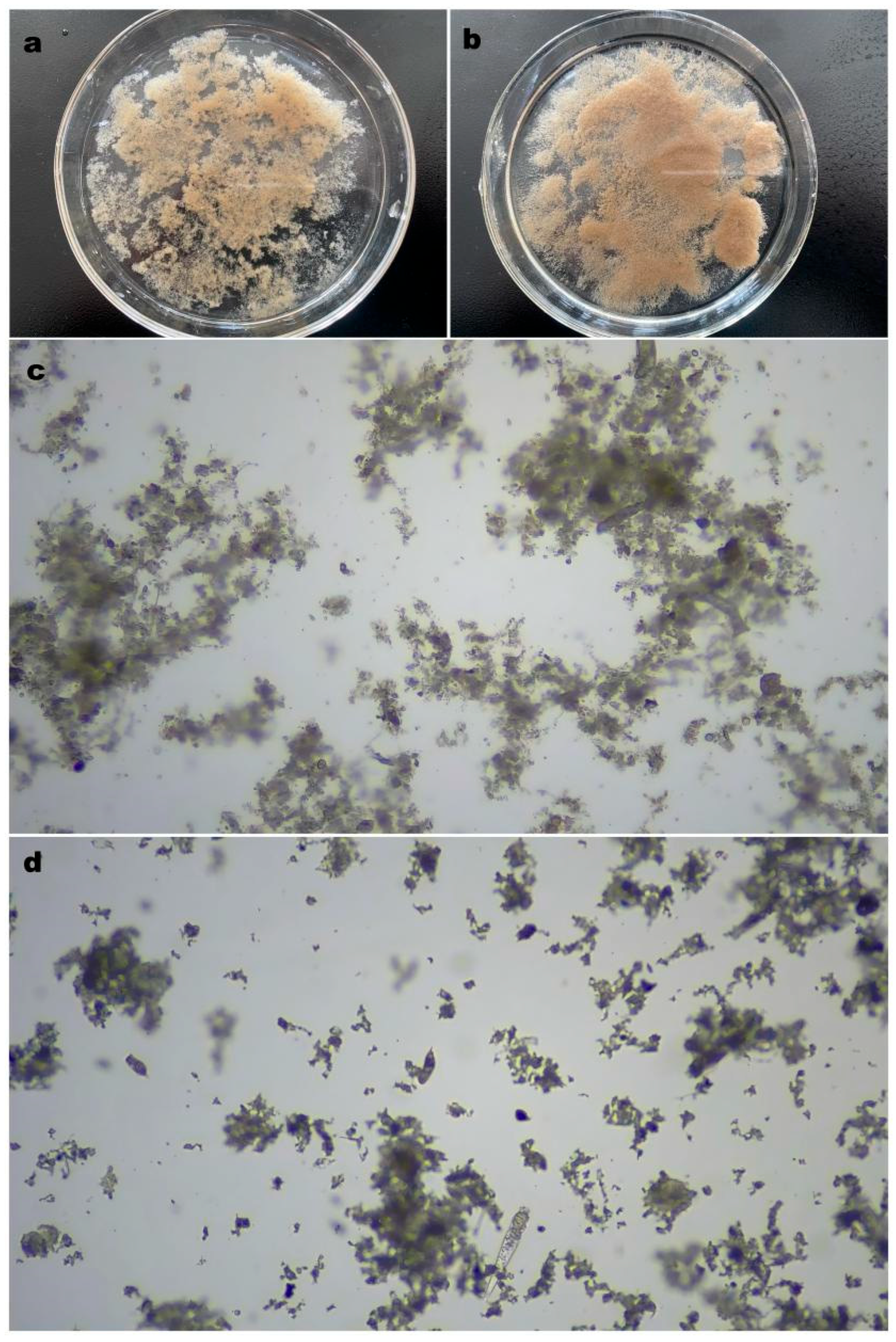
3.3. Morphology of Biofolcs
3.4. Microbial Communities Analysis
3.4.1. Alpha Diversity Indexes
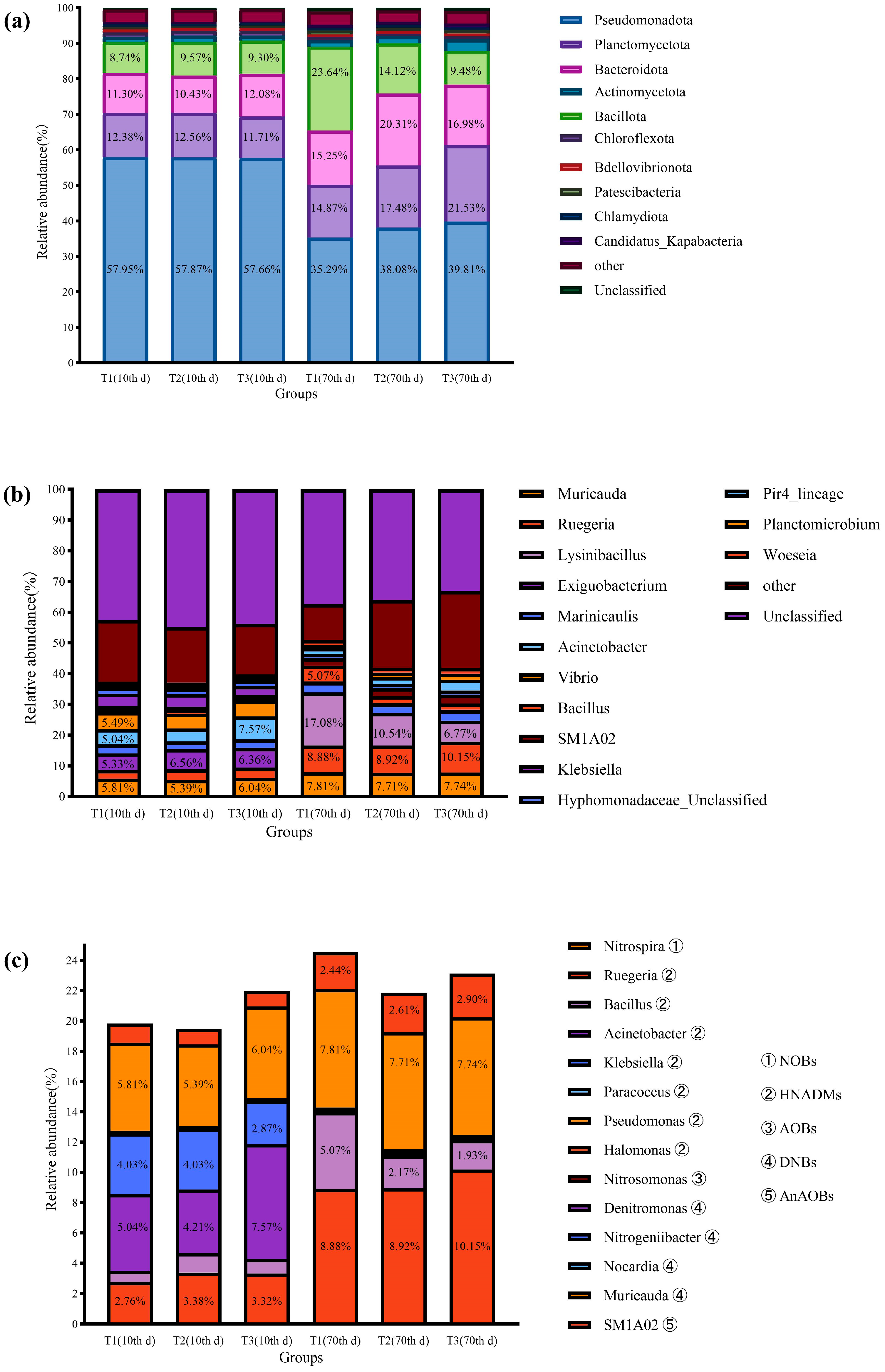
3.4.2. Bacterial Diversity
3.5. Shrimp Growth Performance
4. Discussion
4.1. Effects of ABF on Water Quality
4.2. BFV Control
4.3. Carbon Addition Strategy
4.4. Microbial Communities Shifts
4.5. Functional Bacteria Involved in Nitrogen Cycling and Nitrite Accumulation
4.6. Effects of ABF on Shrimp Performance
5. Conclusions
Author Contributions
Funding
Institutional Review Board Statement
Data Availability Statement
Conflicts of Interest
References
- SOFIA. The State of World Fisheries and Aquaculture; Food and Agriculture Organization of the United Nations (FAO): Rome, Italy, 2022. [Google Scholar] [CrossRef]
- Ekasari, J.; Napitupulu, A.D.; Djurstedt, M.; Wiyoto, W.; Baruah, K.; Kiessling, A. Production performance, fillet quality and cost effectiveness of red Tilapia (Oreochromis sp.) culture in different biofloc systems. Aquaculture 2023, 563, 738956. [Google Scholar] [CrossRef]
- Haraz, Y.G.; Shourbela, R.M.; El-Hawarry, W.N.; Mansour, A.M.; Elblehi, S.S. Performance of juvenile Oreochromis niloticus (Nile tilapia) raised in conventional and biofloc technology systems as influenced by probiotic water supplementation. Aquaculture 2023, 566, 739180. [Google Scholar] [CrossRef]
- Khanjani, M.H.; Mohammadi, A.; Emerenciano, M.G.C. Microorganisms in biofloc aquaculture system. Aquac. Rep. 2022, 26, 101300. [Google Scholar] [CrossRef]
- Soliman, A.M.; Abdel-Tawwab, M. Effects of different carbon sources on water quality, biofloc quality, and the productivity of Nile tilapia reared in biofloc-based ponds. Ann. Anim. Sci. 2022, 22, 1281–1289. [Google Scholar] [CrossRef]
- Khanjani, M.H.; Sharifinia, M. Biofloc technology as a promising tool to improve aquaculture production. Rev. Aquac. 2020, 12, 1836–1850. [Google Scholar] [CrossRef]
- Khanjani, M.H.; Mozanzadeh, M.T.; Sharifinia, M.; Emerenciano, M.G.C. Biofloc: A sustainable dietary supplement, nutritional value and functional properties. Aquaculture 2023, 562, 738757. [Google Scholar] [CrossRef]
- Kumar, V.S.; Pandey, P.; Anand, T.; Bhuvaneswari, G.R.; Dhinakaran, A.; Kumar, S. Biofloc improves water, effluent quality and growth parameters of Penaeus vannamei in an intensive culture system. J. Environ. Manag. 2018, 215, 206–215. [Google Scholar] [CrossRef]
- Black, A.; Wakelin, S.; Hamonts, K.; Gerard, E.; Condron, L. Impacts of long term copper exposure on abundance of nitrogen cycling genes and denitrification activity in pasture soils. Appl. Soil Ecol. 2019, 138, 253–261. [Google Scholar] [CrossRef]
- Shi, M.Z.; Zhao, Y.; Zhu, L.J.; Song, X.Y.; Tang, Y.; Qi, H.S.; Cao, H.J.; Wei, Z.M. Denitrification during composting: Biochemistry, implication and perspective. Int. Biodeterior. Biodegrad. 2020, 153, 105043. [Google Scholar] [CrossRef]
- Duan, S.; Zhang, Y.; Zheng, S. Heterotrophic nitrifying bacteria in wastewater biological nitrogen removal systems: A review. Crit. Rev. Environ. Sci. Technol. 2021, 52, 2302–2338. [Google Scholar] [CrossRef]
- Shi, S.; He, X.; He, L.; Fan, X.; Shu, B.; Zhou, J.; He, Q. Overlooked pathways of endogenous simultaneous nitrification and denitrification in anaerobic/aerobic/anoxic sequencing batch reactors with organic supplementation. Water Res. 2023, 230, 119493. [Google Scholar] [CrossRef]
- Guo, H.; Fu, X.; He, J.; Wang, R.; Yan, M.; Wang, J.; Dong, P.; Huang, L.; Zhang, D. Gut bacterial consortium enriched in a biofloc system protects shrimp against Vibrio parahaemolyticus infection. Microbiome 2023, 11, 230. [Google Scholar] [CrossRef]
- Tepaamorndech, S.; Nookaew, I.; Higdon, S.M.; Santiyanont, P.; Phromson, M.; Chantarasakha, K.; Mhuantong, W.; Plengvidhya, V.; Visessanguan, W. Metagenomics in bioflocs and their effects on gut microbiome and immune responses in Pacific white shrimp. Fish Shellfish Immunol. 2020, 106, 733–741. [Google Scholar] [CrossRef]
- Okabe, S.; Oozawa, Y.; Hirata, K.; Watanabe, Y. Relationship between population dynamics of nitrifiers in biofilms and reactor performance at various C:N ratios. Water Res. 1996, 30, 1563–1572. [Google Scholar] [CrossRef]
- Yue, X.; Liu, H.; Wei, H.; Chang, L.; Gong, Z.; Zheng, L.; Yin, F. Reactive and microbial inhibitory mechanisms depicting the panoramic view of pH stress effect on common biological nitrification. Water Res. 2023, 231, 119660. [Google Scholar] [CrossRef]
- Di Capua, F.; Pirozzi, F.; Lens, P.N.; Esposito, G. Electron donors for autotrophic denitrification. Chem. Eng. J. 2019, 362, 922–937. [Google Scholar] [CrossRef]
- Brandão, H.; Xavier, Í.V.; Santana, G.K.K.; Santana, H.J.K.; Krummenauer, D.; Wasielesky, W. Heterotrophic versus mixed BFT system: Impacts on water use, suspended solids production and growth performance of Pacific white shrimp. Aquac. Eng. 2021, 95, 102194. [Google Scholar] [CrossRef]
- Li, M.; Luan, Y.; Qin, Z.; Lu, D. Startup of a large height-diameter ratio bioreactor by alternate feeding: Performance of partial nitrification and enrichment of ammonia-oxidizing bacteria (AOB). Environ. Technol. 2024, 45, 2171–2179. [Google Scholar] [CrossRef] [PubMed]
- Zheng, H.; Luo, G.; Abakari, G.; Lv, G.; Tan, H.; Liu, W. Effect of seeding biofloc on the nitrification establishment in moving bed biofilm reactor (MBBR). Aquac. Fish. 2023, 8, 617–625. [Google Scholar] [CrossRef]
- Raza, B.; Zheng, Z.; Zhu, J.; Yang, W. A Review: Microbes andTheir Effect on Growth Performance of Litopenaeus vannamei (White LegShrimps) during Culture in Biofloc Technology System. Microorganisms 2024, 12, 1013. [Google Scholar] [CrossRef] [PubMed]
- Ferreira, J.D.N.; Gagliardi, T.R.; Vieira, F.N.; Martins, C.P.; Rosa, R.D.; Perazzolo, L.M. Assessing the impact of chemoautotrophic and heterotrophic biofloc cultivation systems on the immunity and intestinal bacteriome of shrimp. Aquac. Int. 2024, 32, 4647–4663. [Google Scholar] [CrossRef]
- Khanjani, M.H.; Alizadeh, M.; Sharifinia, M. Effects of different carbon sources on water quality, biofloc quality, and growth performance of Nile tilapia (Oreochromis niloticus) fingerlings in a heterotrophic culture system. Aquac. Int. 2021, 29, 307–321. [Google Scholar] [CrossRef]
- Sambhu, C.; Al Harbi, M.; Broom, M.; Nasser, A.K.V.; Sherly, D. Culture strategy for production of Indian white prawn, Fenneropenaeus indicus in semi-arid conditions using biofloc technology. Iran. J. Fish. Sci. 2023, 22, 238–251. [Google Scholar] [CrossRef]
- Martins, M.A.; Poli, M.A.; Legarda, E.C.; Pinheiro, I.C.; Carneiro, R.F.S.; Pereira, S.A.; Martins, M.L.; Gonçalves, P.; Schleder, D.D.; Vieira, F.D.N. Heterotrophic and mature biofloc systems in the integrated culture of Pacific white shrimp and Nile tilapia. Aquaculture 2020, 514, 734517. [Google Scholar] [CrossRef]
- Nakayama, C.L.; Silva, L.F.S.; dos Santos, F.A.C.; Boaventura, T.P.; Favero, G.C.; Palheta, G.D.A.; de Melo, N.F.A.C.; Romano, L.A.; Luz, R.K. Zootechnical Performance and Some Physiological Indices of Tambaqui, Colossoma macropomum Juveniles during BioflocMaturation and in Different FeedRegimes. Agriculture 2022, 12, 1025. [Google Scholar] [CrossRef]
- Souza, J.; Cardozo, A.; Wasielesky, W.; Abreu, P.C. Does the biofloc size matter to the nitrification process in Biofloc Technology (BFT) systems? Aquaculture 2019, 500, 443–450. [Google Scholar] [CrossRef]
- Nootong, K.; Pavasant, P.; Powtongsook, S. Effects of Organic Carbon Addition in Controlling Inorganic Nitrogen Concentrations in a Biofloc System. J. World Aquac. Soc. 2011, 42, 339–346. [Google Scholar] [CrossRef]
- Song, C.; Zhou, Y.; Du, L.; Dong, R.; Li, X.; Dong, D.; Huang, Z.; Song, X. Evaluating nutrient transformation and fate in the recirculating aquaculture system of Apostichopus japonicus and its environmental impact from a diet perspective. J. Water Process Eng. 2025, 72, 107552. [Google Scholar] [CrossRef]
- McCarty, P.L. Stoichiometry of biological reactions. Prog. Water Technol. 1975, 7, 157–172. [Google Scholar]
- Luo, G.; Xu, J.; Meng, H. Nitrate accumulation in biofloc aquaculture systems. Aquaculture 2020, 520, 734675. [Google Scholar] [CrossRef]
- Al-Sayegh, S.Y.; Rosas, V.T.; Vethamony, P.; Kasan, N.A.; Liew, H.J.; Ikhwanuddin, M.; Al Disi, Z.A.; Elsayed, H.; Al-Khayat, J.A. Maturation of the biofloc system in Penaeus vannamei culture under different salinities and its effects on the microbial communities. Aquac. Rep. 2024, 40, 102568. [Google Scholar] [CrossRef]
- Sun, Y.; Zhang, J.; Dong, D.; Li, M.; Yang, X.; Song, X.; Li, X. Effects of carbon source addition strategies on water quality, growth performance, and microbial community in shrimp BFT aquaculture systems. Aquaculture 2024, 578, 740027. [Google Scholar] [CrossRef]
- Silva, K.R.; Wasielesky, W.; Abreu, P.C. Nitrogen and phosphorus dynamics in the biofloc production of the pacific white shrimp, Litopenaeus vannamei. J. World Aquac. Soc. 2013, 44, 30–41. [Google Scholar] [CrossRef]
- Furtado, P.S.; Gaona, C.A.P.; Poersch, L.H.; Wasielesky, W. Application of different doses of calcium hydroxide in the farming shrimp Pacific white shrimp with the biofloc technology (BFT). Aquac. Int. 2014, 22, 1009–1023. [Google Scholar] [CrossRef]
- Ugurlu, A.; Ozturkcu, S.D. Treatment of Nitrocellulose Industry Watewaters by Upflow Denitrification Filter: Effect of Packing Media and Recirculation. Environ. Process. 2018, 5, 81–94. [Google Scholar] [CrossRef]
- Ebeling, J.M.; Timmons, M.B.; Bisogni, J. Engineering analysis of the stoichiometry of photoautotrophic, autotrophic, and heterotrophic removal of ammonia-nitrogen in aquaculture systems. Aquaculture 2006, 257, 346–358. [Google Scholar] [CrossRef]
- Hosain, E.; Amin, S.M.N.; Karim, M.; Arshad, A.; Kamarudin, M.S.; Shohaimi, S.; Naser, N.; Brown, C.L. Effect of biofloc volume on growth, survival, economics and proximate composition of Macrobrachium rosenbergii postlarvae cultured in brackish water biofloc system. Blue Biotechnol. 2025, 2, 4. [Google Scholar] [CrossRef]
- Nisar, U.; Peng, D.; Mu, Y.; Sun, Y. A Solution for Sustainable Utilization of Aquaculture Waste: A Comprehensive Review of Biofloc Technology and Aquamimicry. Front. Nutr. 2022, 8, 791738. [Google Scholar] [CrossRef]
- Khanjani, M.H.; Mohammadi, A.; Emerenciano, M.G.C. Water quality in biofloc technology (BFT): An applied review for an evolving aquaculture. Aquac. Int. 2024, 32, 9321–9374. [Google Scholar] [CrossRef]
- Xu, W.; Huang, F.; Zhao, Y.; Su, H.; Hu, X.; Xu, Y.; Wen, G.; Cao, Y. Carbohydrate addition strategy affects nitrogen dynamics, budget and utilization, and its microbial mechanisms in biofloc-based Penaeus vannamei culture. Aquaculture 2024, 589, 740907. [Google Scholar] [CrossRef]
- Browdy, C.L.; Ray, A.J.; Leffler, J.W.; Avnimelech, Y. Biofloc-based Aquaculture Systems. In Aquaculture Production Systems; Tidwell, J.H., Ed.; Wiley-Blackwell: Oxford, UK, 2012. [Google Scholar] [CrossRef]
- Wei, G.; Shan, D.; Li, G.; Li, X.; Tian, R.; He, J.; Shao, Z. Prokaryotic communities vary with floc size in a biofloc technology based aquaculture system. Aquaculture 2020, 529, 735632. [Google Scholar] [CrossRef]
- Wietz, M.; Hall, M.R.; Høj, L. Effects of seawater ozonation on biofilm development in aquaculture tanks. Syst. Appl. Microbiol. 2009, 32, 266–277. [Google Scholar] [CrossRef] [PubMed]
- Zhang, Y.; Xiang, Y.; Xu, R.; Huang, J.; Deng, J.; Zhang, X.; Wu, Z.; Huang, Z.; Yang, Z.; Xu, J.; et al. Magnetic biochar promotes the risk of mobile genetic elements propagation in sludge anaerobic digestion. J. Environ. Manag. 2023, 335, 117492. [Google Scholar] [CrossRef]
- Tian, Z.; Li, G.; Xiong, Y.; Cao, X.; Pang, H.; Tang, W.; Liu, Y.; Bai, M.; Zhu, Q.; Du, C.; et al. Step-feeding food waste fermentation liquid as supplementary carbon source for low C/N municipal wastewater treatment: Bench scale performance and response of microbial community. J. Environ. Manag. 2023, 345, 118434. [Google Scholar] [CrossRef] [PubMed]
- Vitorino, I.R.; Gambardella, N.; Semedo, M.; Magalhães, C.; Lage, O.M. Diversity and Vertical Distribution of Planctomycetota in the Water Column of the Remote North Pacific. Environ. Microbiol. Rep. 2025, 17, e70063. [Google Scholar] [CrossRef]
- Salazar, G.; Cornejo-Castillo, F.M.; Borrull, E.; Díez-Vives, C.; Lara, E.; Vaqué, D.; Arrieta, J.M.; Duarte, C.M.; Gasol, J.M.; Acinas, S.G. Particle-association lifestyle is a phylogenetically conserved trait in bathypelagic prokaryotes. Mol. Ecol. 2015, 24, 5692–5706. [Google Scholar] [CrossRef]
- Kapili, B.J.; Barnett, S.E.; Buckley, D.H.; Dekas, A.E. Evidence for phylogenetically and catabolically diverse active diazotrophs in deep-sea sediment. ISME J. 2020, 14, 971–983. [Google Scholar] [CrossRef]
- Cardona, E.; Gueguen, Y.; Magré, K.; Lorgeoux, B.; Piquemal, D.; Pierrat, F.; Noguier, F.; Saulnier, D. Bacterial community characterization of water and intestine of the shrimp Litopenaeus stylirostris in a biofloc system. BMC Microbiol. 2016, 16, 157. [Google Scholar] [CrossRef]
- Liu, W.; Yang, Y.; Lu, Z.; Li, X.; Ning, M.; He, H. Innovative approaches for enhanced nutrient (N and P) removal and biosecurity in marine recirculating aquaculture systems using biofloc and ultrafiltration combined systems. Sep. Purif. Technol. 2025, 356, 129766. [Google Scholar] [CrossRef]
- Gao, X.-Y.; Liu, Y.; Miao, L.-L.; Liu, Z.-P. Pseudomonas sp. AOB-7 utilizes PHA granules as a sustained-release carbon source and biofilm carrier for aerobic denitrification of aquaculture water. Appl. Microbiol. Biotechnol. 2020, 104, 3183–3192. [Google Scholar] [CrossRef]
- Ferreira, G.S.; Bolívar, N.C.; Pereira, S.A.; Guertler, C.; Vieira, F.D.N.; Mouriño, J.L.P.; Seiffert, W.Q. Microbial biofloc as source of probiotic bacteria for the culture of Pacific white shrimp. Aquaculture 2015, 448, 273–279. [Google Scholar] [CrossRef]
- Xie, F.; Ma, X.; Zhao, B.; Cui, Y.; Zhang, X.; Yue, X. Promoting the nitrogen removal of anammox process by Fe-C micro-electrolysis. Bioresour. Technol. 2020, 297, 122429. [Google Scholar] [CrossRef]
- Gao, Y.; Li, J.; Dong, H.; Qiang, Z. Nitrogen removal mechanism of marine anammox bacteria treating nitrogen-laden saline wastewater in response to ultraviolet (UV) irradiation: High UV tolerance and microbial community shift. Bioresour. Technol. 2021, 320, 124325. [Google Scholar] [CrossRef] [PubMed]
- Hu, B.; Lu, J.; Qin, Y.; Zhou, M.; Tan, Y.; Wu, P.; Zhao, J. A critical review of heterotrophic nitrification and aerobic denitrification process: Influencing factors and mechanisms. J. Water Process Eng. 2023, 54, 103995. [Google Scholar] [CrossRef]
- Fu, W.; Song, G.; Wang, Y.; Wang, Q.; Duan, P.; Liu, C.; Zhang, X.; Rao, Z. Advances in Research Into and Applications of Heterotrophic Nitrifying and Aerobic Denitrifying Microorganisms. Front. Environ. Sci. 2022, 10, 887093. [Google Scholar] [CrossRef]
- Rout, P.R.; Bhunia, P.; Dash, R.R. Simultaneous removal of nitrogen and phosphorous from domestic wastewater using Bacillus cereus GS-5 strain exhibiting heterotrophic nitrification, aerobic denitrification and denitrifying phosphorous remova. Bioresour. Technol. 2017, 244, 484–495. [Google Scholar] [CrossRef]
- Yao, S.; Ni, J.; Ma, T.; Li, C. Heterotrophic nitrification and aerobic denitrification at low temperature by a newly isolated bacterium, Acinetobacter sp. HA2. Bioresour. Technol. 2013, 139, 80–86. [Google Scholar] [CrossRef]
- Xiang, Z.; Chen, X.; Bai, J.; Rong, H.; Li, H.; Zhao, Y.; Huang, X. A novel anaerobic/aerobic-moving bed-dynamic membrane combined biofilm reactor (A/O-MB-DMBR) treating mariculture wastewater with chitosan (CTS): Performance, control and microbial community. Environ. Technol. Innov. 2023, 29, 103009. [Google Scholar] [CrossRef]
- Lyu, X.; Kuang, H.; Liu, W.; Tan, H.; Luo, G.; Hu, X.; Zhao, Z. Evaluation of short-term anaerobic fermentation using bioflocs waste and performance assessment. Aquaculture 2023, 577, 739929. [Google Scholar] [CrossRef]
- Xu, W.; Xu, Y.; Su, H.; Hu, X.; Xu, Y.; Li, Z.; Wen, G.; Cao, Y. Production performance, inorganic nitrogen control and bacterial community characteristics in a controlled biofloc-based system for indoor and outdoor super-intensive culture of Pacific white shrimp. Aquaculture 2021, 531, 735749. [Google Scholar] [CrossRef]
- Lin, Y.-C.; Chen, J.-C. Acute toxicity of nitrite on Pacific white shrimp (Boone) juveniles at different salinity levels. Aquaculture 2003, 224, 193–201. [Google Scholar] [CrossRef]
- Jing, L.; Ren, H.; Xu, W.; Su, H.; Hu, X.; Wen, G.; Xu, Y.; Tu, L.; Cao, Y. Intensive cultivation of whiteleg shrimp (Penaeus vannamei) under biofloc condition in land-based ponds. Aquac. Rep. 2025, 41, 102690. [Google Scholar] [CrossRef]
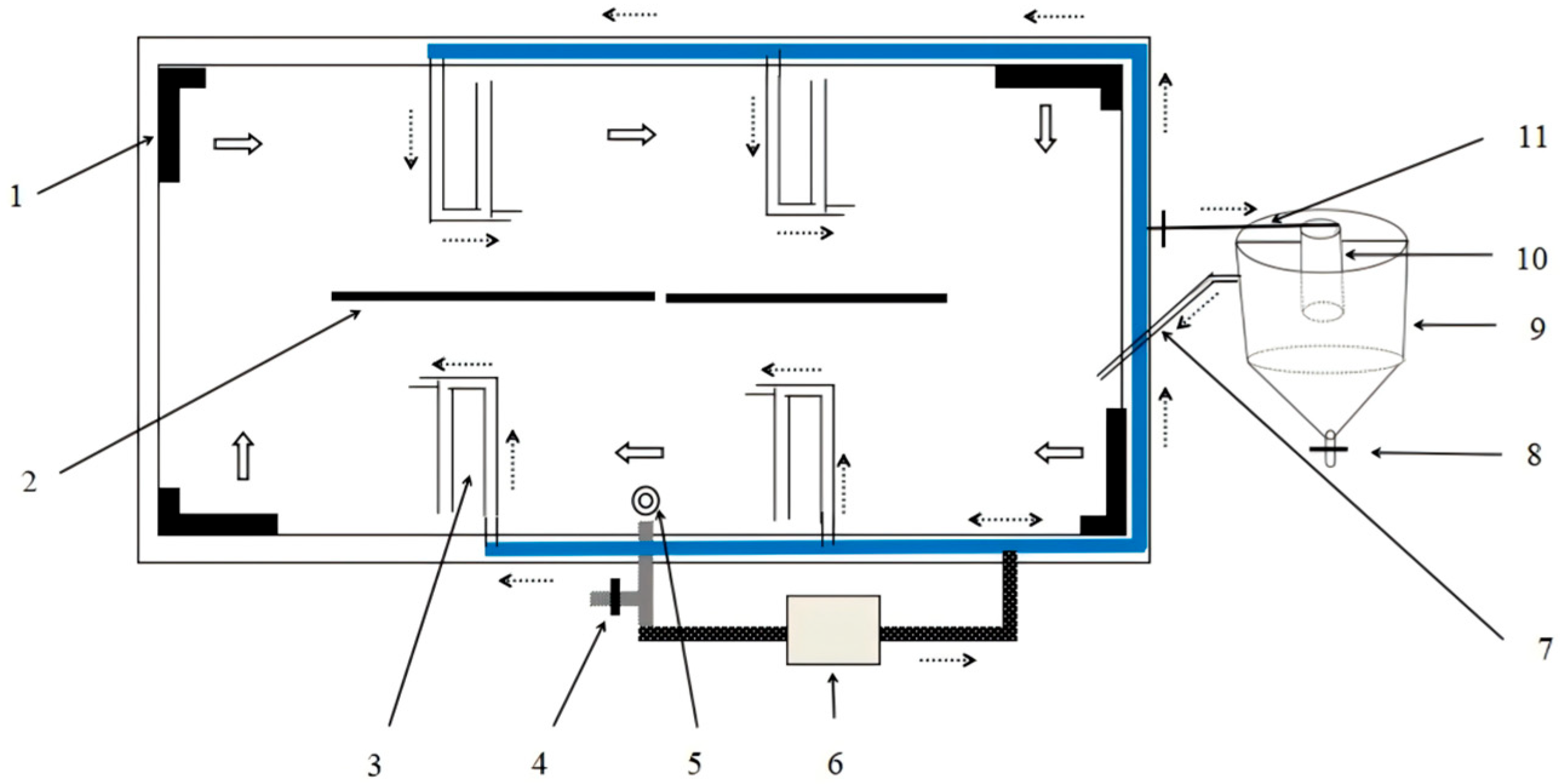
 The direction of water flow in the pipe.
  The direction of water flow in the tank.
  PVC pipe (ø90 mm).
  PVC pipe (ø63 mm).
  PVC pipe (ø50 mm).
The direction of water flow in the pipe. The direction of water flow in the tank. PVC pipe (ø90 mm). PVC pipe (ø63 mm). PVC pipe (ø50 mm).
PVC pipe (ø50 mm).
The direction of water flow in the pipe. The direction of water flow in the tank. PVC pipe (ø90 mm). PVC pipe (ø63 mm). PVC pipe (ø50 mm).



| Treatments | Stocking Density (ind/m3) | Means ± SD | ||
|---|---|---|---|---|
| Temperature (°C) | Salinity (g L−1) | DO (mg L−1) | ||
| T1 | 300 | 31.55 ± 1.23 a | 30.16 ± 1.03 a | 5.66 ± 0.44 a |
| T2 | 250 | 31.58 ± 1.18 a | 30.17 ± 1.00 a | 5.63 ± 0.41 a |
| T3 | 200 | 31.61 ± 1.14 a | 30.12 ± 1.02 a | 5.62 ± 0.43 a |
| Groups | OTU | Chao1 | Shannon |
|---|---|---|---|
| T1 (d10) | 1412.50 ± 68.95 | 1637.29 ± 76.72 b | 6.91 ± 0.26 a |
| T2 (d10) | 1322.75 ± 65.70 | 1525.30 ± 40.07 b | 6.85 ± 0.30 a |
| T3 (d10) | 1380.50 ± 93.75 | 1565.69 ± 84.52 b | 6.72 ± 0.40 a |
| T1 (d70) | 1639.50 ± 25.16 | 1818.53 ± 54.27 a | 6.94 ± 0.35 a |
| T2 (d70) | 1576.50 ± 16.05 | 1778.34 ± 32.45 a | 7.24 ± 0.33 a |
| T3 (d70) | 1619.75 ± 56.89 | 1800.94 ± 62.80 a | 7.37 ± 0.08 a |
| p-Value | - | 0.0002 | 0.085 |
| Parameters | T1 | T2 | T3 | p-Value |
|---|---|---|---|---|
| Initial body weight (g) | 0.267 ± 0.002 | 0.267 ± 0.002 | 0.267 ± 0.002 | - |
| Final body weight (g) | 24.07 ± 0.81 a | 20.18 ± 1.09 b | 25.06 ± 0.22 a | 0.0006 |
| Gained weight (g) | 23.80 ± 0.81 a | 19.91 ± 1.09 b | 24.77 ± 0.22 a | 0.0006 |
| Yield (kg·m−3) | 2.05 ± 0.17 b | 3.43 ± 0.04 a | 3.40 ± 0.22 a | <0.0001 |
| Specific growth rate (% day−1) | 3.75 ± 0.03 a | 3.60 ± 0.04 b | 3.78 ± 0.01 a | 0.0008 |
| Survival rate (%) | 27.47 ± 1.10 b | 68.0 ± 0.92 a | 67.83 ± 4.92 a | <0.0001 |
| Feed conversion ratio | 2.17 ± 0.10 a | 1.95 ± 0.03 a | 1.89 ± 0.24 a | 0.1265 |
| Water usage (L·kg−1) | 1059.85 ± 21.26 b | 611.82 ± 6.50 a | 618.58 ± 72.26 a | <0.0001 |
Disclaimer/Publisher’s Note: The statements, opinions and data contained in all publications are solely those of the individual author(s) and contributor(s) and not of MDPI and/or the editor(s). MDPI and/or the editor(s) disclaim responsibility for any injury to people or property resulting from any ideas, methods, instructions or products referred to in the content. |
© 2026 by the authors. Licensee MDPI, Basel, Switzerland. This article is an open access article distributed under the terms and conditions of the Creative Commons Attribution (CC BY) license.
Share and Cite
Xie, M.; Liu, Y.; Hu, X.; Zhang, M.; Pang, H.; Cai, J.; Lu, Y.; Jian, J.; Huang, Y. In Situ Cultivation of Autotrophic Bioflocs Enables Zero-Water-Exchange Intensive Shrimp Farming: Mechanisms and Applications. Fishes 2026, 11, 148. https://doi.org/10.3390/fishes11030148
Xie M, Liu Y, Hu X, Zhang M, Pang H, Cai J, Lu Y, Jian J, Huang Y. In Situ Cultivation of Autotrophic Bioflocs Enables Zero-Water-Exchange Intensive Shrimp Farming: Mechanisms and Applications. Fishes. 2026; 11(3):148. https://doi.org/10.3390/fishes11030148
Chicago/Turabian StyleXie, Miao, Yongkui Liu, Xuanzhi Hu, Miao Zhang, Huanying Pang, Jia Cai, Yishan Lu, Jichang Jian, and Yu Huang. 2026. "In Situ Cultivation of Autotrophic Bioflocs Enables Zero-Water-Exchange Intensive Shrimp Farming: Mechanisms and Applications" Fishes 11, no. 3: 148. https://doi.org/10.3390/fishes11030148
APA StyleXie, M., Liu, Y., Hu, X., Zhang, M., Pang, H., Cai, J., Lu, Y., Jian, J., & Huang, Y. (2026). In Situ Cultivation of Autotrophic Bioflocs Enables Zero-Water-Exchange Intensive Shrimp Farming: Mechanisms and Applications. Fishes, 11(3), 148. https://doi.org/10.3390/fishes11030148