Article

Differences in Habitat Substrate Preference Selection Among Sexes and Populations of Leptobotia elongata


1
Yangtze River Fisheries Research Institute, Chinese Academy of Fishery Science, National Agricultural Science Observing and Experimental Station of Chongqing, Wuhan 430233, China
2
State Key Laboratory of Hydraulics and Mountain River Engineering, Sichuan University, Chengdu 610065, China
3
Institute of Hydroecology, Ministry of Water Resources and Chinese Academy of Sciences, Wuhan 430079, China
4
China Gezhouba Group No. 3 Engineering Co., Ltd., Xi’an 710076, China
5
College of Hydraulic and Environment Engineering, China Three Gorges University, Yichang 443002, China
*
Author to whom correspondence should be addressed.
These authors contributed equally to this study.
Fishes 2026, 11(3), 137; https://doi.org/10.3390/fishes11030137
Submission received: 15 January 2026 / Revised: 23 February 2026 / Accepted: 24 February 2026 / Published: 26 February 2026
(This article belongs to the Special Issue Habitat as a Template for Life Histories of Fish)

Abstract

Cascade hydropower development in the upper Yangtze River has substantially altered riverine habitat conditions. However, quantitative information on fish substrate preferences remains limited. Based on field surveys, six representative substrate types were identified in the Yibin and Jiangjin reaches, and substrate selection patterns of Leptobotia elongata were quantified under controlled flume conditions. This study examined sex-specific and population-level differences in substrate preference. A total of 50 samples were analyzed using one-way ANOVA and the Kolmogorov–Smirnov test. The results are summarized as follows: (1) Substrates of 40–20 mm: Individual female L. elongata exhibited the longest residence time on the 40 mm substrate (1640 s), while individual males also spent the longest time on the 40 mm substrate (1549 s). Within this substrate range, males showed a preference only for the 40 mm substrate (PR = 739), whereas females preferred three substrate types, with the strongest preference for the 40 mm substrate (PR = 7543). (2) Substrates of 10–2.5 mm: Female individuals spent the longest time on the 10 mm substrate (1468 s), and male individuals likewise showed the longest residence time on the 10 mm substrate (1568 s). In this range, males did not show a significant preference for any substrate (PR = −907), whereas females preferred three substrate types, with the 2.5 mm substrate exhibiting the highest preference intensity (PR = 2059). (3) Population-level patterns for 40–20 mm substrates: The population spent the longest time on the 40 mm substrate (1799 s) and preferred three substrate types, among which the 20 mm substrate had the highest preference ratio relative to the other preferred substrates (PR = 4750). (4) Population-level patterns for 10–2.5 mm substrates: The longest residence time was observed on the 10 mm substrate (1762 s). The population preferred three substrate types, with the 10 mm substrate showing the highest preference ratio (PR = 5709). Overall, L. elongata showed a general tendency to prefer larger-sized substrates. This preference is likely associated with enhanced habitat complexity, improved foraging opportunities, and the formation of low-velocity refuges. Our results suggest that maintaining or restoring coarse substrate patches in regulated reaches may improve habitat suitability for L. elongata and potentially benefit other benthic fishes with similar ecological requirements.
Key Contribution: (1) Empirically compare the similarities and differences in substrate preferences between sexually mature male and female L. elongata. (2) Restore the habitat of L. elongata, providing a reference for riverbed substrate modification. (3) Analyzed substrate preferences of L. elongata across different river reaches; the findings can provide reference and guidance for ecological restoration of the Yangtze River.

1. Introduction

Riverbed substrate is a fundamental physical component of riverine habitats and plays a critical role in shaping fish distribution, reproduction, and survival [1,2,3,4]. For benthic species in particular, substrate provides essential conditions for spawning, shelter, and foraging. However, human activities such as hydropower construction, channel regulation, and dredging have substantially altered riverbed structure, leading to habitat degradation and loss in many river systems [5,6,7]. Leptobotia elongata, a migratory benthic fish endemic to the upper Yangtze River, relies heavily on hydrological conditions and substrate characteristics throughout its life cycle. Extensive cascade hydropower development in this region has markedly modified riverine environments and contributed to a sharp population decline of the species [8]. L. elongata is currently listed as Vulnerable (VU) in the China Red Data Book of Endangered Animals [9]. Understanding its behavioral responses to substrate conditions is therefore essential for effective habitat restoration and conservation planning.
Habitat structure and associated physical complexity strongly influence fish assemblages by affecting food availability, shelter, and recruitment processes [10,11,12]. Numerous studies have demonstrated that fish species richness and density vary among substrate types, with structurally complex habitats often supporting higher biodiversity [13,14,15]. Some species exhibit strong associations with specific substrate types, whereas others shift habitats across life stages. These findings highlight the ecological importance of substrate characteristics in shaping fish distribution and population dynamics, underscoring the need to incorporate habitat structure into conservation and management strategies [16]. Fish habitat selection is influenced by multiple environmental factors, including substrate, flow velocity, temperature, light, and sound [17,18,19]. Among these, riverbed substrate plays a particularly important role for benthic species, and understanding substrate preference is essential for habitat modification and restoration efforts [20]. For example, gravel enhancement has been shown to improve spawning success in salmonids [21]. In addition to environmental factors, biological traits such as sex and social behavior can shape habitat use patterns. Sex-based differences in schooling behavior and aggregation preferences have been widely documented [22,23,24,25,26,27], and these behavioral differences may indirectly influence spatial distribution and habitat selection. However, the interactive effects of sex and schooling behavior on substrate preference remain poorly understood.
In this study, L. elongata was selected as the focal species. Based on field surveys of riverbed substrate composition, experimental flumes were constructed to simulate habitats with different substrate types. Video tracking was used to quantify substrate selection by female and male individuals under solitary and group conditions. A substrate preference index was calculated to evaluate preferred substrate types for each sex and for grouped fish. We aimed to (1) determine whether substrate preference differs between males and females, and (2) assess whether group composition modifies substrate selection patterns. Understanding these behavioral responses provides critical insights for habitat conservation and riverbed restoration efforts in regulated freshwater systems.

2. Materials and Methods

2.1. Preliminary Survey

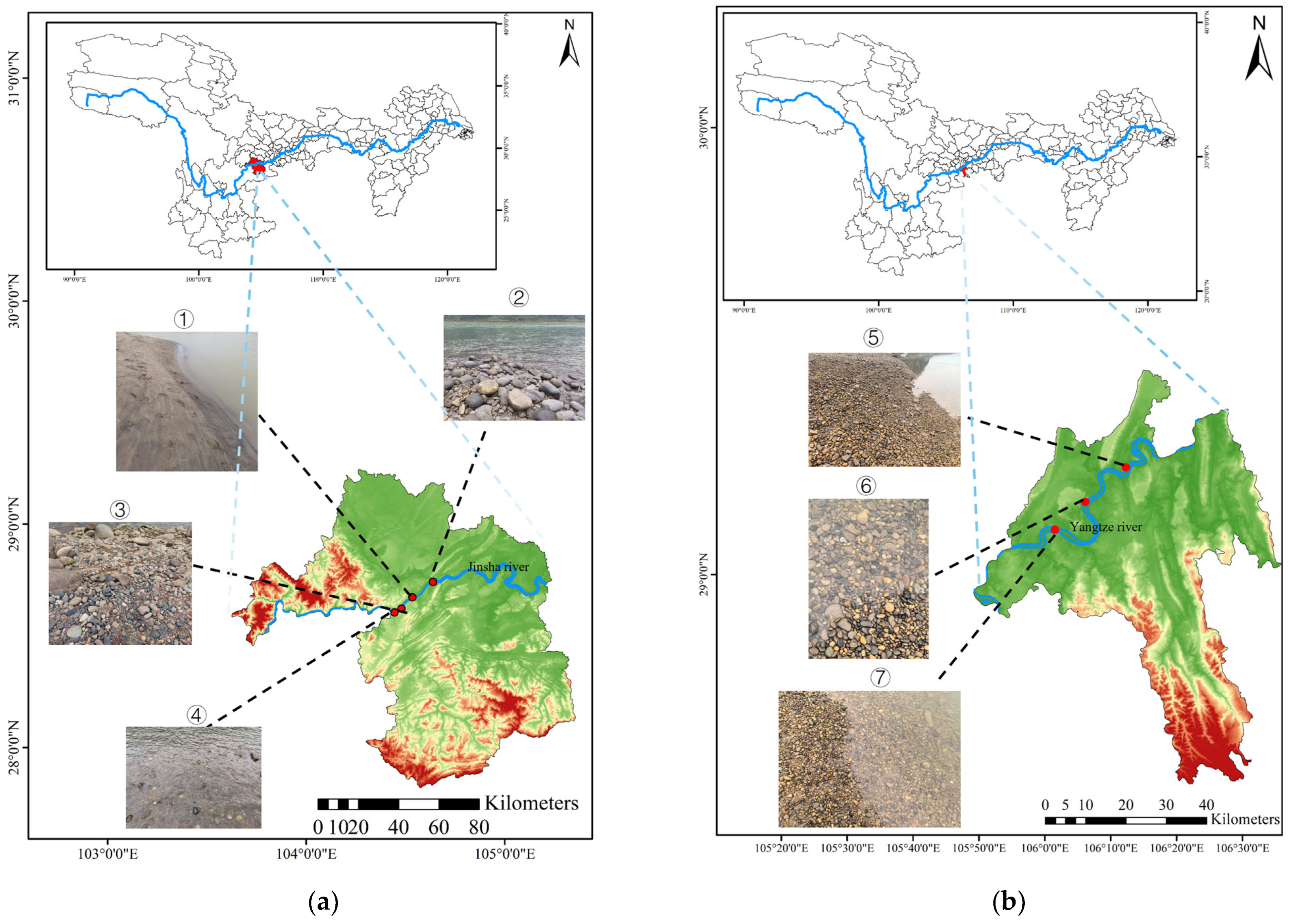
Based on preliminary fish resource surveys, L. elongata was found to be primarily distributed in the Yibin and Jiangjin sections of the upper Yangtze River (Figure 1). Field habitat surveys for this study were conducted in May 2025 across these two areas. At each sampling site, geographic coordinates were recorded, and data on substrate type and particle size were collected using measuring tapes and photographic documentation. Substrate types were classified following the “Standards for Sediment Particle Analysis in Rivers” [28]. Based on the substrate index (the volumetric proportion of small and medium gravel in the substrate composition) [29], habitats in the Yibin section were classified into three substrate types: 40 mm, 30 mm, and 20 mm. While habitats in the Jiangjin section were classified into another three substrate types: 10 mm, 5 mm, and 2.5 mm. Relevant substrate parameters are detailed in Table 1.

2.2. Experimental Setup

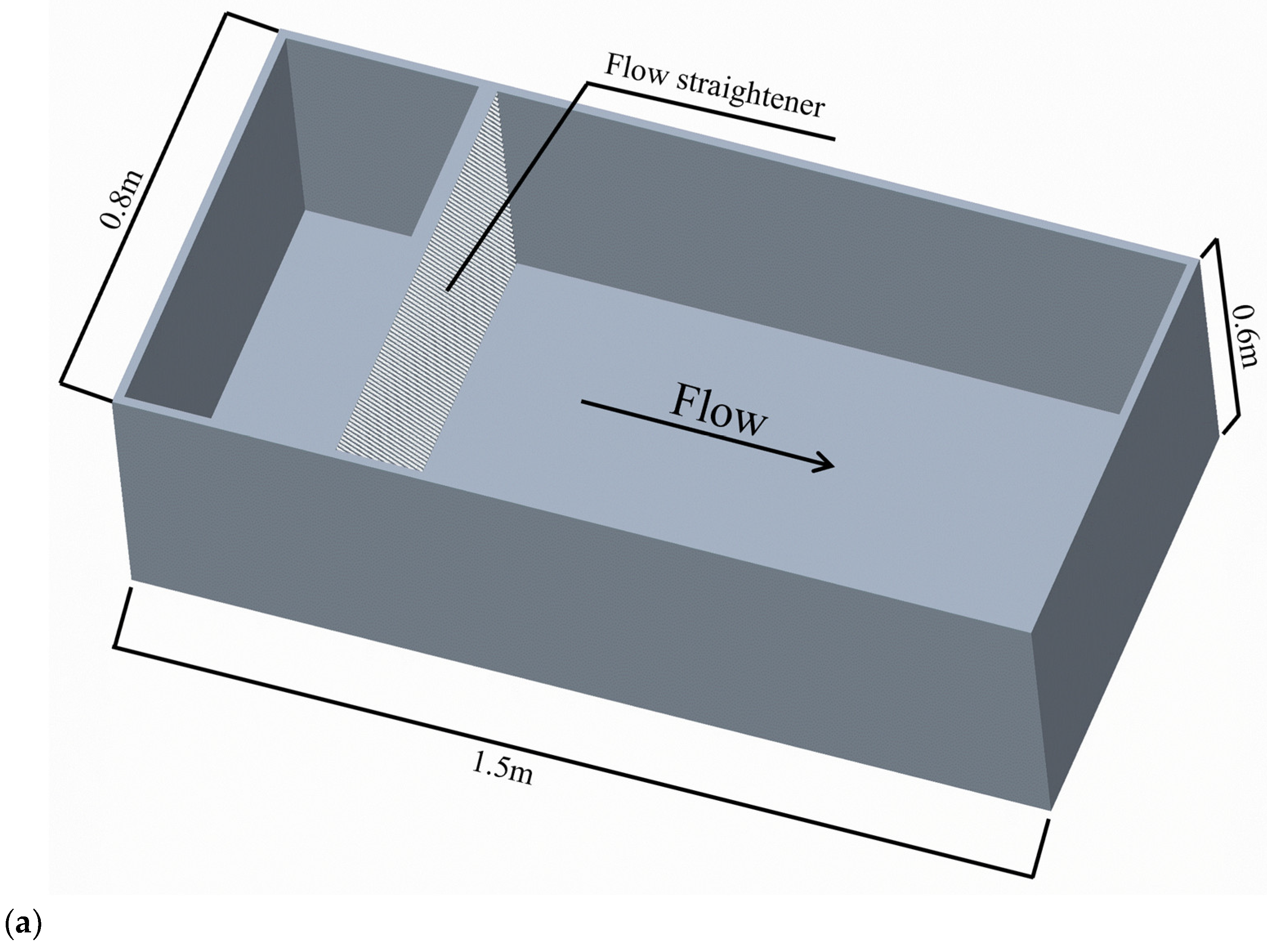
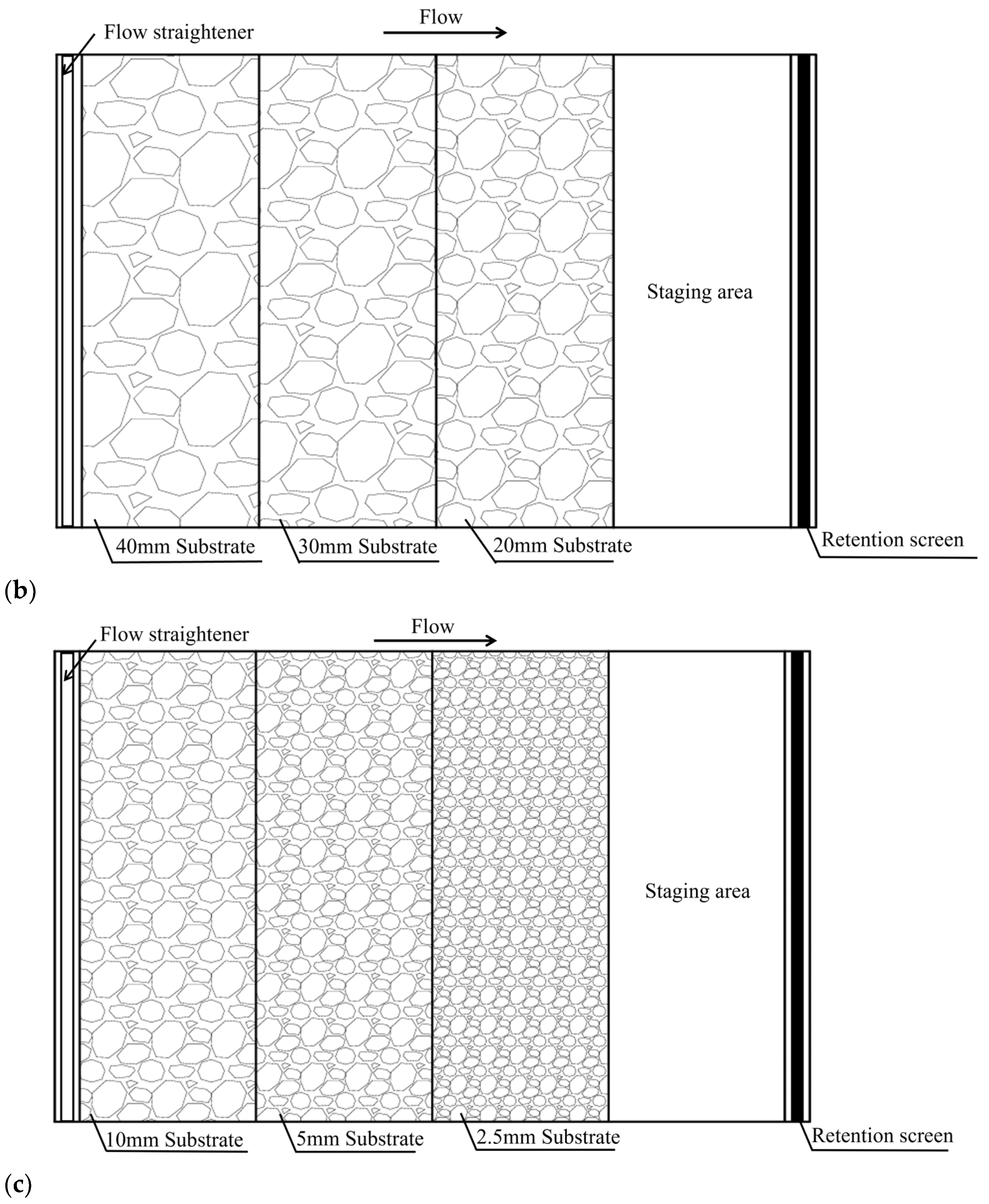
A rectangular flume (1.5 m long, 0.8 m wide, 0.6 m high and slope 0°) was used to simulate riverbed substrate habitats (Figure 2). An infrared network camera (DS-2CD2T87SWDV2-L, Hikvision, Hangzhou, China) was mounted 3.0 m above the flume to record the substrate selection behavior of L. elongata. The camera’s field of view covered the entire flume, ensuring complete behavioral observations. The experimental water was aerated tap water, maintained for 5 days, with dissolved oxygen levels kept above 7 mg/L. The water temperature was maintained at 24 °C and the depth at 0.4 m. A water pump (QDX1.5-16-37, Shanghai People’s Enterprise Group Pump Co., Ltd., Shanghai, China) provided a flow with an inflow velocity of 0.3 m/s, which exceeds the known flow perception threshold of L. elongata [30]. Two experimental substrate configurations were tested: one with substrates of 40–20 mm and another with substrates of 10–2.5 mm. In both setups, the flume was divided lengthwise into three equal sections, with each substrate type (occupying 1/3 of the total area) arranged sequentially according to particle size.

2.3. Fish Species Husbandry and Trials

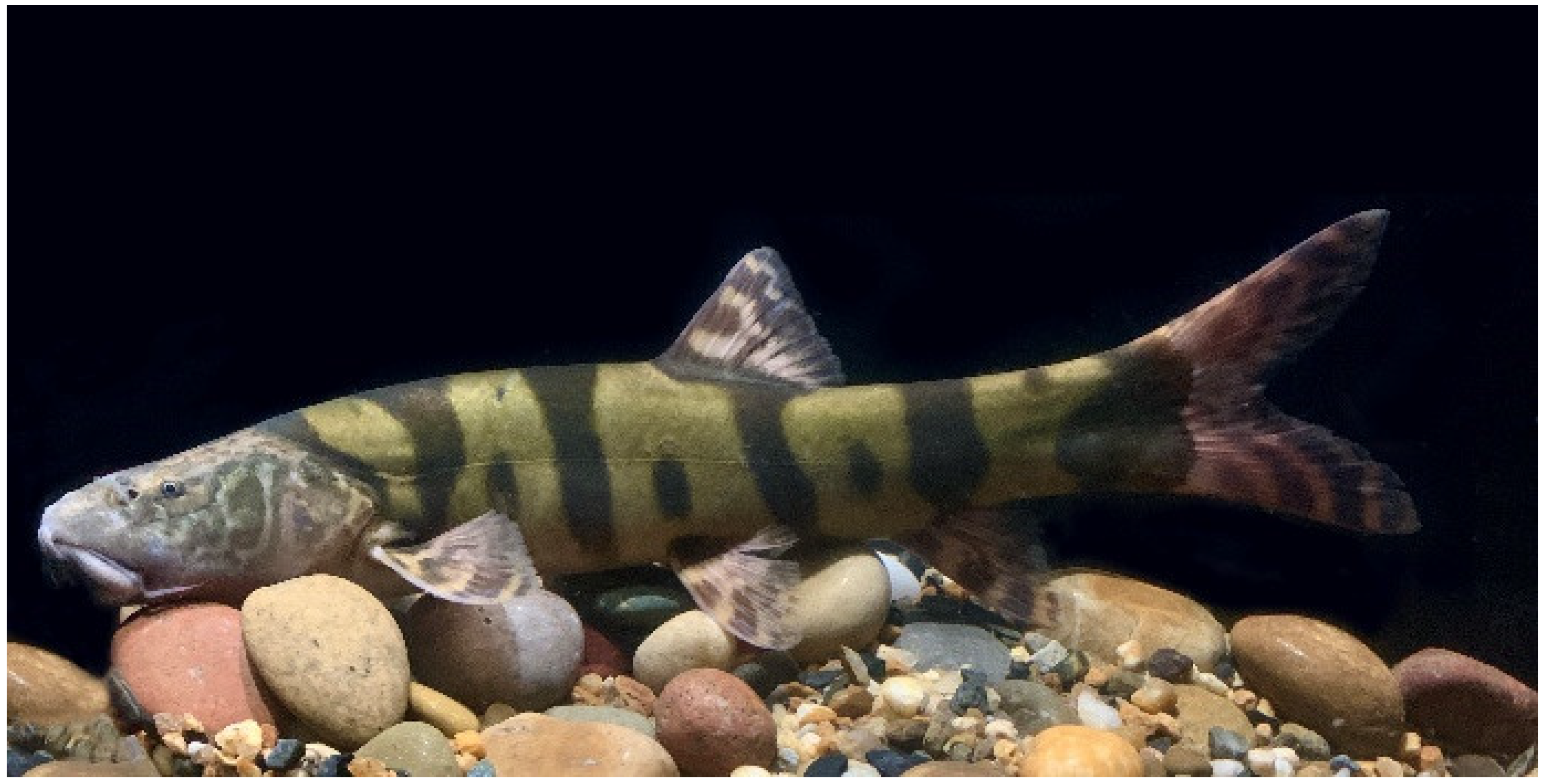
Sexually mature and cultured L. elongata (Figure 3) specimens (n = 50) were supplied by Jingzhou Breeding Base of the Yangtze River Fisheries Research Institute, Chinese Academy of Fishery Sciences (Animal Welfare and Ethics Approval Number: YFI2025YULIXIONG 02) on 28 July 2025 (Table 2) and reared in recirculating holding tank (3000 L) sterilized with permanganate to minimize the risk of disease. Water temperature was maintained at 23.0 ± 1.0 °C using the thermostatic system, dissolved oxygen was kept above 7.0 mg/L, and approximately 20% of the water volume was renewed daily. To minimize the impact of light on L. elongata, shading cloth was used to provide light shielding. Experimental fish were fed to satiation once daily with the same feed (protein content ratio was 35%). After 30 min feeding, uneaten feed and feces were removed using a siphon. To allow L. elongata to recover from transport stress and regain physical condition, the fish were acclimated for at least 10 days prior to the start of the experiments [31].
This study involved both individual and group experiments. Since schooling behavior is readily observable in groups of three fish, the group size was set to three individuals [32]. The experiments were conducted from 2 to 25 August 2025 at the behavioral research facility in Jianli city, daily between 09:00 and 18:00. Before each trial, healthy, active experimental fish were acclimated in the experimental flume’s holding zone for 1 h. After acclimation, cameras were activated to record fish behavior in the flume. Each trial lasted 30 min and was repeated five times.

2.4. Statistical Analysis

To quantify the substrate preference of L. eptobotia, the residence time of fish on different substrate types was recorded. Habitat preference was assessed based on both residence time and a calculated substrate preference index (PI). Residence time on a given substrate was determined by frame-by-frame tracking (25 frames·s−1) in SwisTrack (version 4.0.0; The Distributed Intelligent Systems and Algorithms Laboratory (DISAL) and the LPM Vision Group at EPFL, Lausanne, Switzerland), using the position of the fish head as the reference. The interval from when the fish head entered a specific substrate area until it exited was recorded as one residence event. For each 30 min trial, all such intervals within a given substrate area were summed to obtain the total residence time. The proportion of residence time for each substrate was calculated as its residence time divided by the total residence time across all substrates. The substrate preference index (PI) was calculated as the difference between the mean cumulative area-weighted residence value for a substrate and the actual area proportion of that substrate, with PI > 0 indicating preference. When PI ≥ 2, the preference ratio (PR) was used to express the relative preference intensity of the most preferred substrate compared to other preferred substrates [33]. Data were processed using Microsoft Excel 2018. Statistical analyses were performed in R (version 4.3.3), and figures were generated with Origin 2022 (64-bit). Differences in residence time among substrate types were analyzed using one-way ANOVA and the Kolmogorov–Smirnov (K–S) test. Data are presented as mean ± standard deviation (mean ± SD). A p-value < 0.05 was considered statistically significant.

3. Results

3.1. Substrate Selection Preferences of L. elongata Individuals Among Different Substrate Types

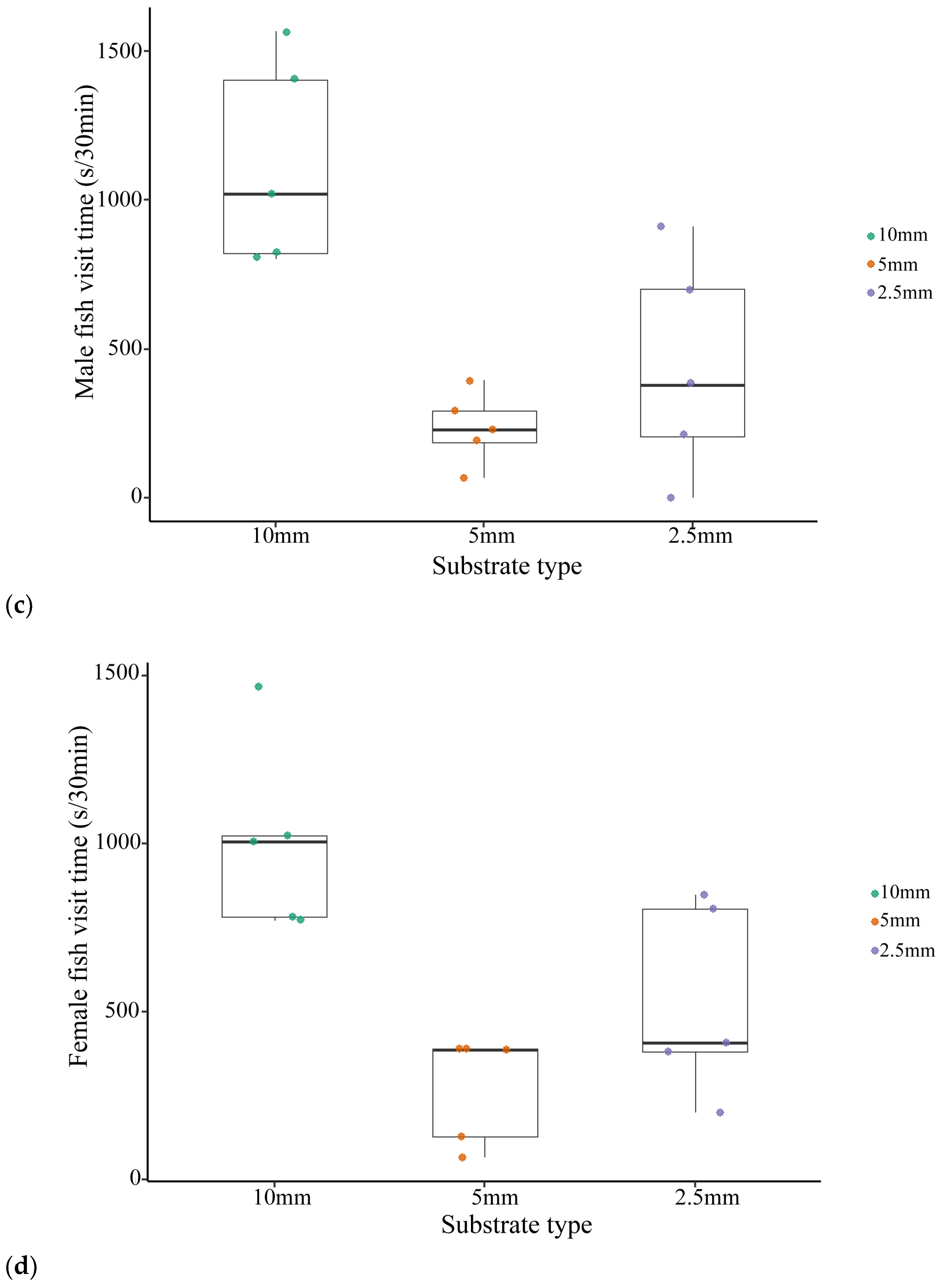
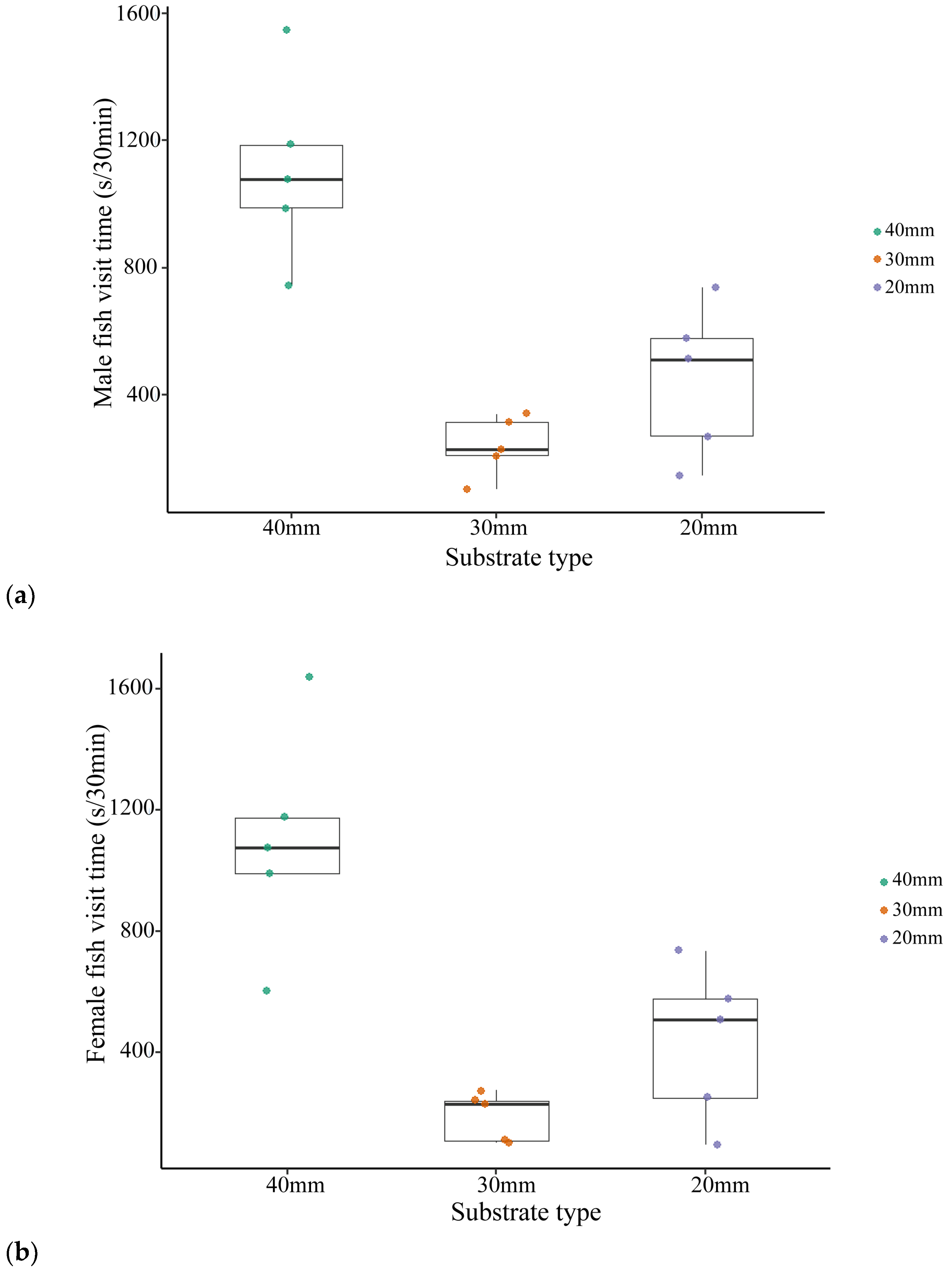
The residence times of both female and male L. elongata differed significantly among substrate types (F = 4.087, p < 0.05, Appendix A.1 Table A1). In the experiment with 40–20 mm substrates, the total residence time for both sexes was longest on the 40 mm substrate, followed by the 20 mm and then the 30 mm substrate. The time spent on the 40 mm substrate was significantly longer than that on the other two substrates (male: F = 8.974, p < 0.05; female: F = 7.347, p < 0.05) (Appendix A.2 Table A2 and Table A3). Similarly, in the 10–2.5 mm substrate experiment, the total residence time was greatest on the 10 mm substrate, followed by the 2.5 mm and then the 5 mm substrate, and residence time on the 10 mm substrate was significantly longer than on the others (male: F = 7.306, p < 0.05; female: F = 4.801, p < 0.05) (Figure 4; Appendix A.3 Table A4 and Table A5).
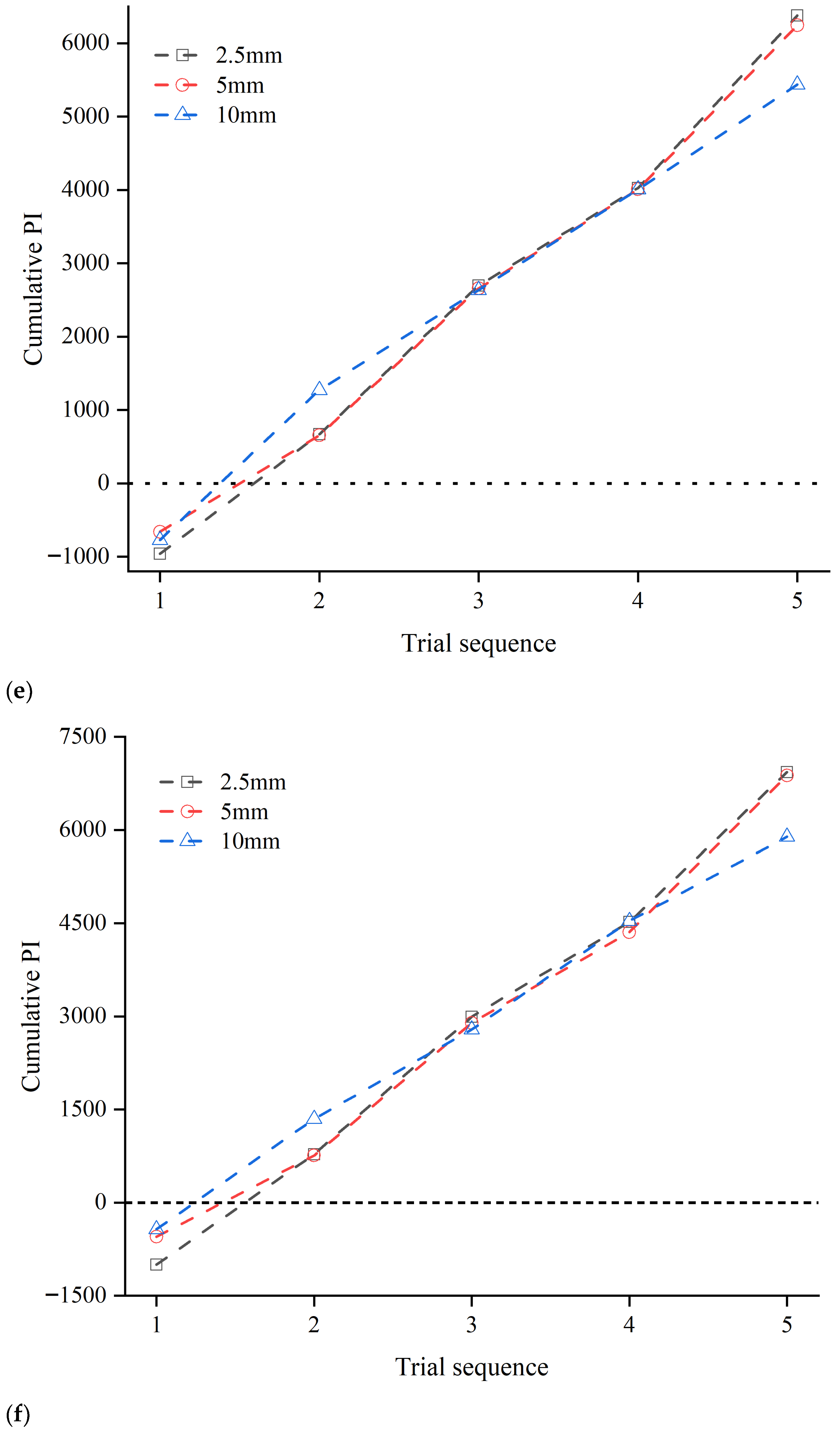
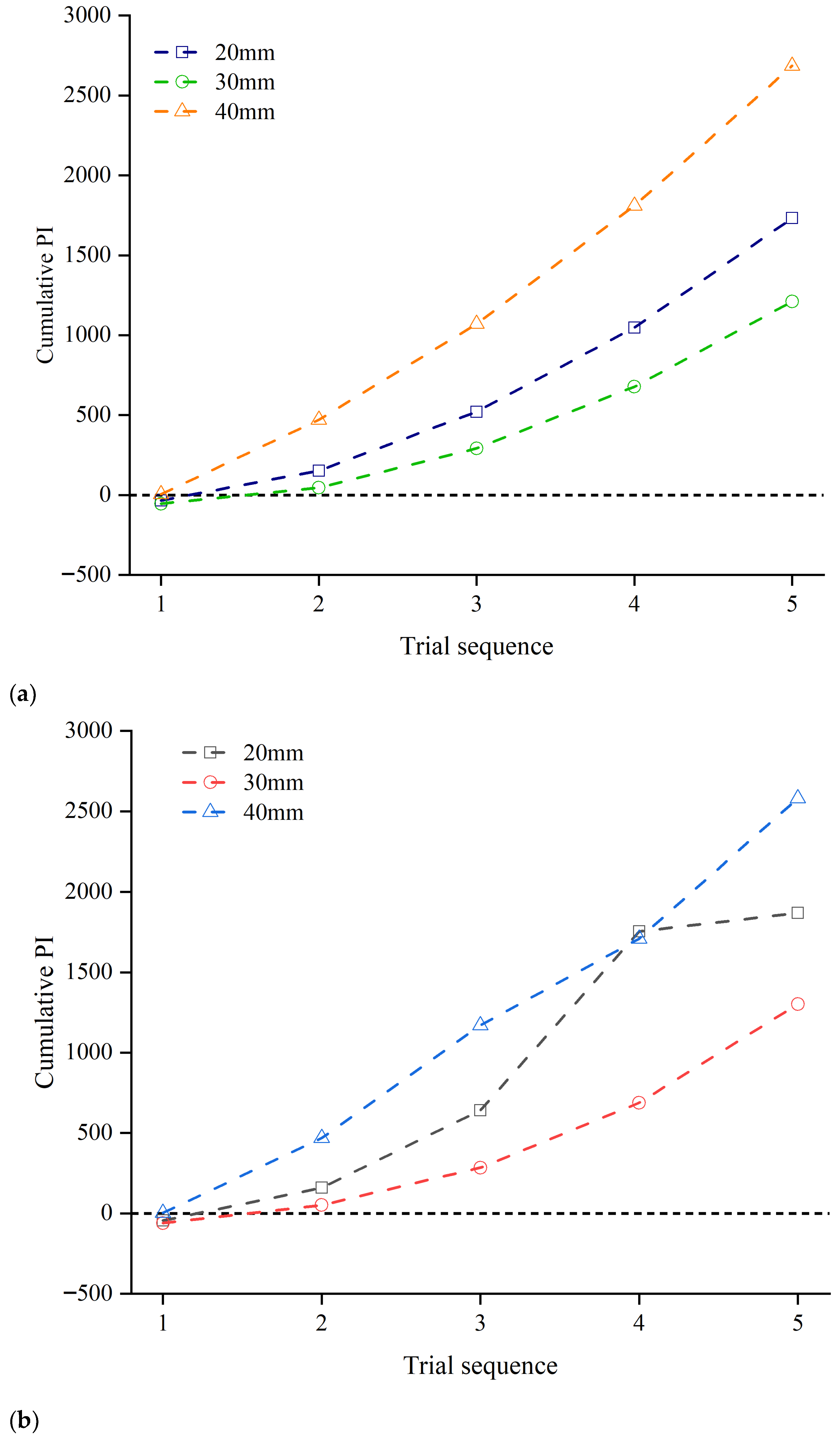
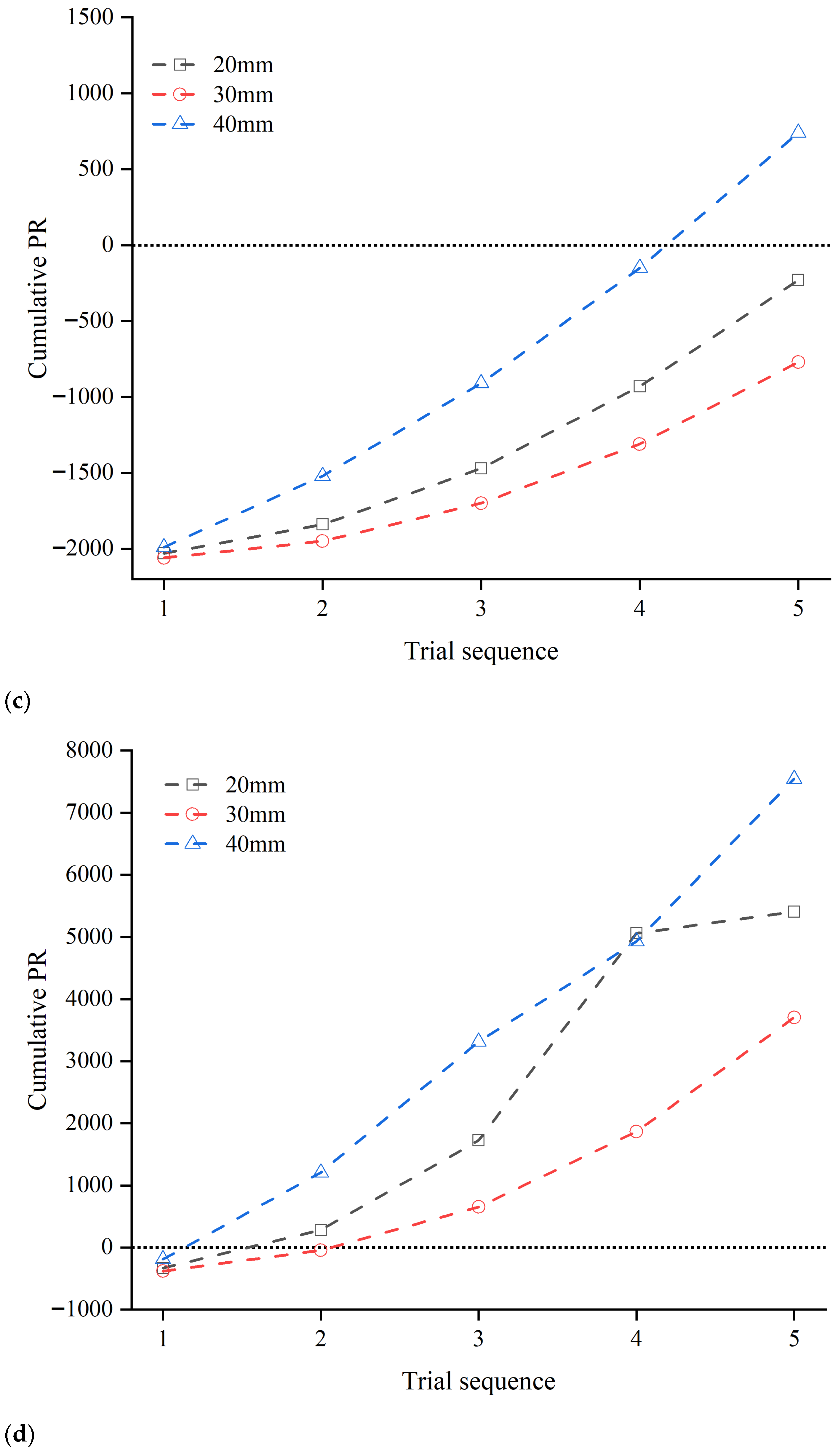
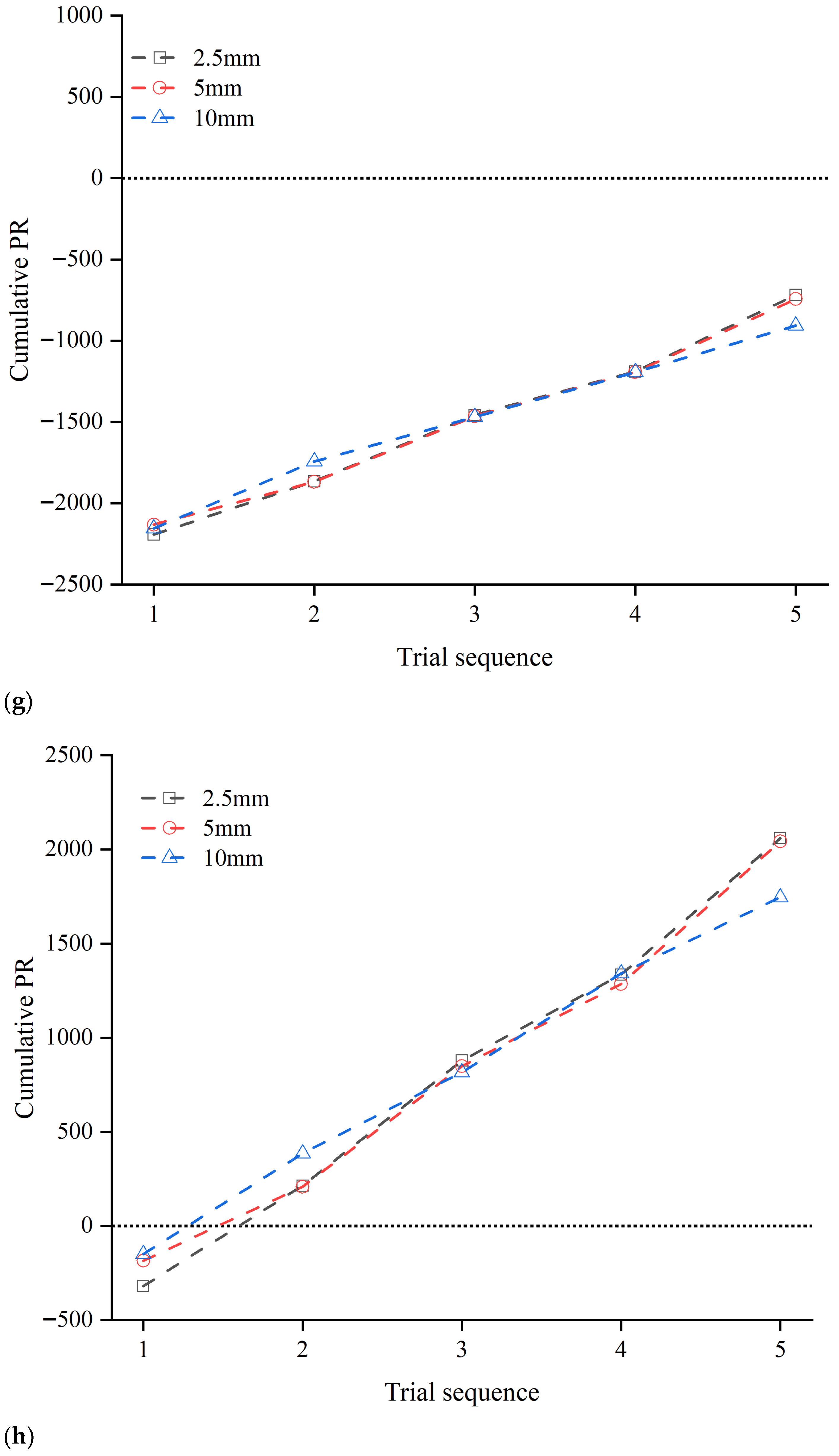
The substrate preference index (PI) was calculated for female and male L. elongata across different substrate types. Results showed that both sexes exhibited preferences for multiple substrates within each substrate-size category. In the 40–20 mm experiment, male preference intensity followed the order 40 mm (PI = 2685) > 20 mm (PI = 1732) > 30 mm (PI = 1210), with a preference ratio (PR) of 739 for the 40 mm substrate relative to others. Similarly, female preference intensity was ordered as 40 mm (PI = 2581) > 20 mm (PI = 1869) > 30 mm (PI = 1302), with a PR of 7543 for the 40 mm substrate. In the 10–2.5 mm experiment, male preference intensity ranked as 2.5 mm (PI = 6377) > 5 mm (PI = 6245) > 10 mm (PI = 5437); however, the negative preference ratio (PR = −907) indicated no overall substrate preference. Conversely, females showed a clear preference ranking of 2.5 mm (PI = 6931) > 5 mm (PI = 6877) > 10 mm (PI = 5890), with the 2.5 mm substrate having a positive PR of 2059 relative to other preferred substrates (Figure 5).

3.2. Substrate Selection Preferences of Schooling L. elongata Among Different Substrate Types

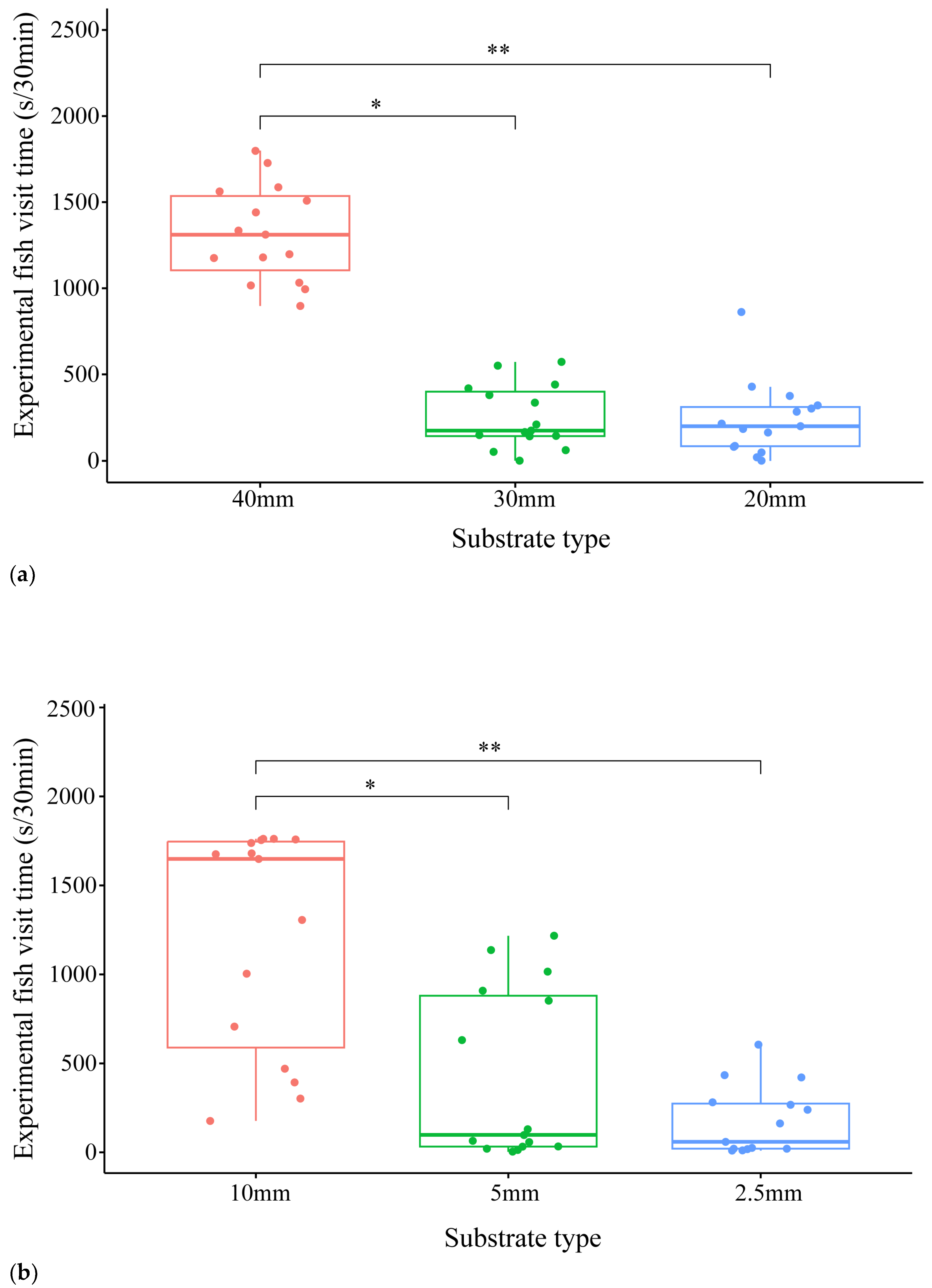
The residence time of L. elongata groups (female-to-male ratio 1:2) was quantified across different substrates. In the 40–20 mm experiment, total residence time followed the order 40 mm > 30 mm > 20 mm, and was significantly longer on the 40 mm substrate than on the others (p < 0.05, Appendix A.4 Table A6). In the 10–2.5 mm experiment, residence time followed the order 10 mm > 5 mm > 2.5 mm, with time on the 10 mm substrate also being significantly longer (Figure 6; p < 0.05, Appendix A.5 Table A7).
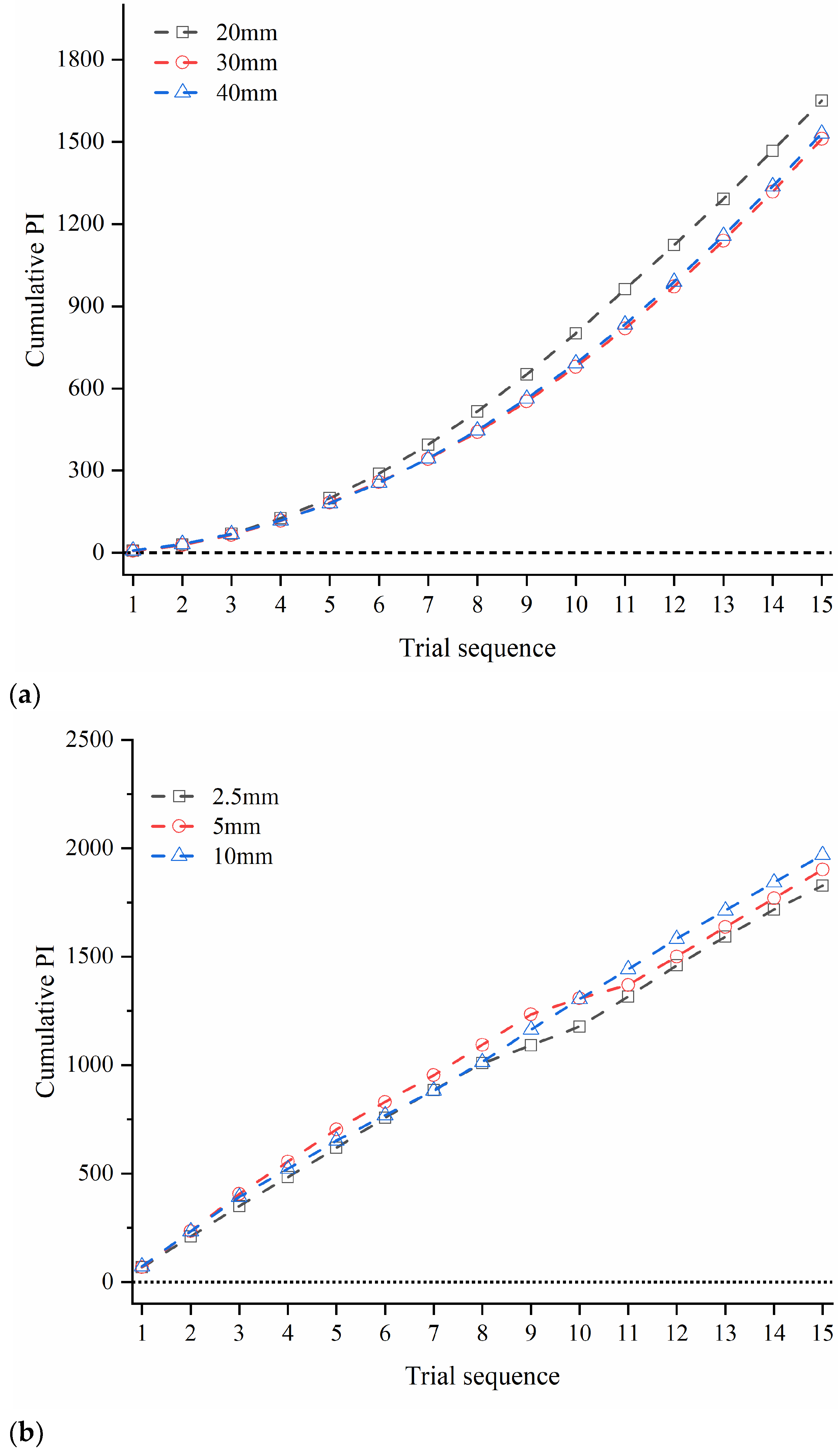
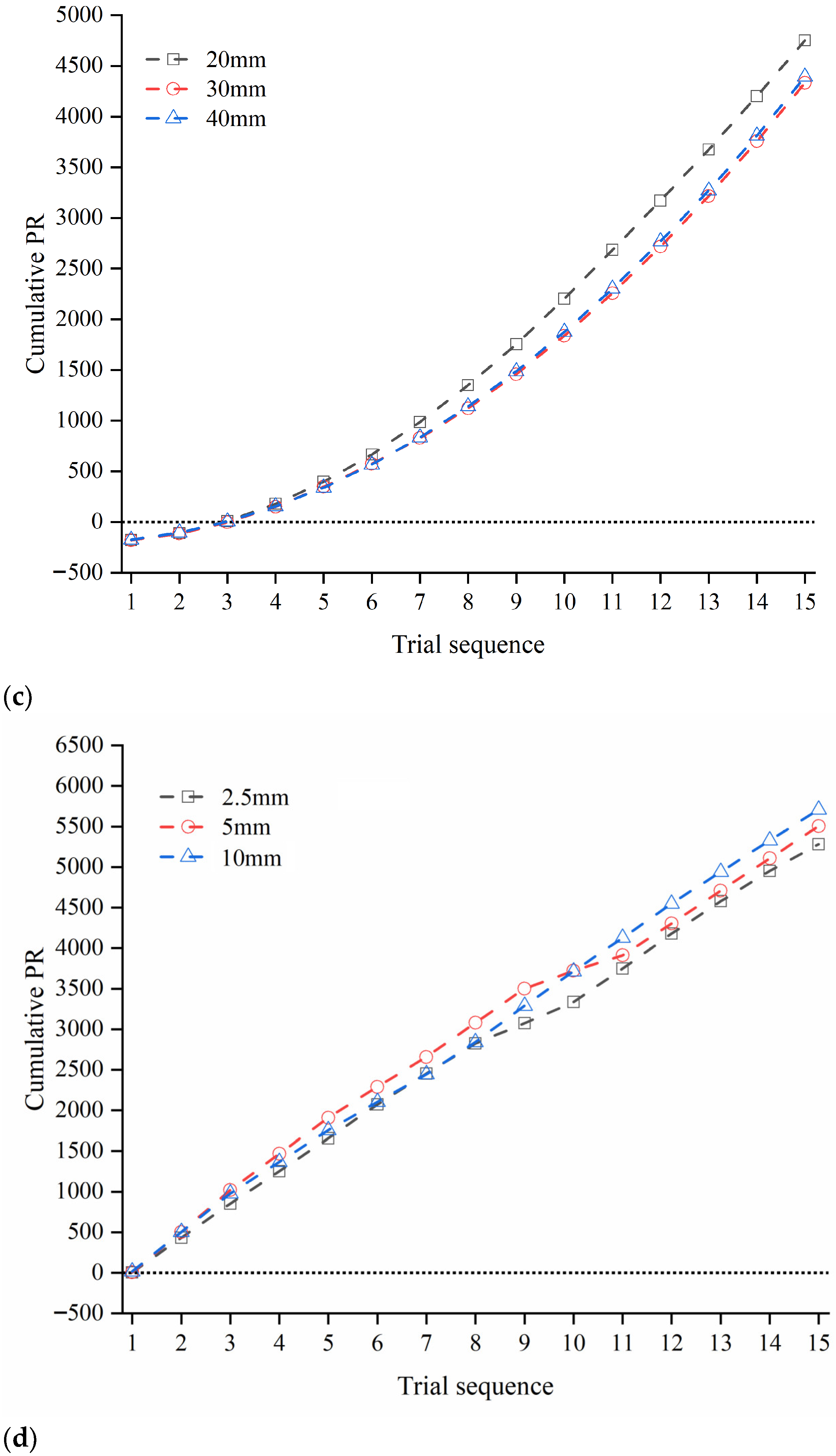
Analysis of the substrate preference index (PI) revealed that the L. elongata population exhibited preferences for multiple substrate types within each substrate-size category. In the 40–20 mm experiment, population-level preference intensity decreased in the order: 20 mm (PI = 1650) > 40 mm (PI = 1531) > 30 mm (PI = 1511). The 20 mm substrate had a preference ratio (PR) of 4750 relative to other preferred substrates. Similarly, in the 10–2.5 mm experiment, the preference order was 10 mm (PI = 1970) > 5 mm (PI = 1902) > 2.5 mm (PI = 1828), with the 10 mm substrate yielding a PR of 5709 (Figure 7).

4. Discussion

Substrate type plays an important role in shaping fish community structure and habitat use [34,35], as habitat characteristics strongly influence fish distribution and abundance [36]. Fish assemblages associated with sandy substrates are often distinct from those inhabiting harder substrates, likely due to differences in habitat complexity and prey availability. Species richness, abundance, and biomass are generally lower in sandy habitats and higher on hard substrates, with intermediate values observed in structurally complex habitats such as seagrass beds. The reduced structural complexity of unvegetated sandy bottoms limits the availability of refuges and food resources, thereby constraining fish community development [37]. Field surveys conducted in this study further revealed that Leptobotia elongata predominantly occupies habitats composed of gravel and small- to medium-sized pebbles. Substrates with greater structural complexity provide abundant interstitial spaces that support diverse benthic invertebrate assemblages, which constitute an important component of the diet of L. elongata [38]. As a carnivorous-leaning omnivorous species, L. elongata mainly feeds on benthic macroinvertebrates and small aquatic organisms. Therefore, substrate type can indirectly influence its habitat selection by mediating prey distribution, accessibility, and foraging efficiency. Consequently, clarifying substrate preferences is critical for understanding habitat requirements and for guiding riverine habitat restoration and conservation efforts [39,40].
In the present experiments, both sexes exhibited preferences for three substrate types within the 40–20 mm range, with the strongest preference for the 40 mm substrate (females: PR = 7543; males: PR = 739) (Appendix A.6 Table A8). This shared preference may be attributed to the ability of larger substrates to create low-velocity zones and visual refuges on their downstream sides, which reduce locomotor energy expenditure and facilitate spawning-related behaviors, thereby enhancing reproductive success [41,42]. In addition, coarse gravel substrates may function as effective ambush sites, increasing prey encounter rates and capture success for L. elongata. By contrast, in the 10–2.5 mm substrate range, substrate selection patterns diverged between sexes. Males showed no overall substrate preference (PR = −907), whereas females preferred three substrate types, with the highest preference for the 2.5 mm substrate (PR = 2059). This female-specific preference for finer sediments is likely related to sex-specific ecological roles, potentially associated with reproductive behavior or spawning-site selection, rather than feeding efficiency alone [43]. Overall, these results indicate that substrate preference in L. elongata reflects a balance between foraging opportunities, energetic efficiency, and reproductive ecology shaped by substrate-mediated prey availability and habitat complexity in natural riverine environments.
Social interaction and aggregation are common in natural ecosystems [44,45]. In our study, video recordings showed that male L. elongata exhibited following behaviors, including accompanying and chasing females. In the 40–20 mm substrate experiment, group substrate preferences differed from those of individual fish. This discrepancy likely reflects a leader–follower mechanism, in which one individual’s action is imitated by others while maintaining distance and moving in parallel [46,47]. In contrast, during the 10–2.5 mm substrate experiment, group preferences mirrored those of individual females. This pattern may result from reproductive strategies: oviposition cues from females can synchronize male substrate selection, overriding innate male preferences [24]. Group exploratory tendencies and leadership by key individuals also likely influence substrate selection [48,49]. Less active individuals may inhibit exploration, while stronger social connectivity facilitates coordinated movement [50]. Occasionally, individual fish temporarily separated, then the group followed, highlighting the role of following behavior in group behavior.
Overall, substrate preferences of L. elongata appear shaped by ecological habits, available substrate types, and response intensity. A clear pattern emerged: the 2.5 mm substrate was rarely selected, while larger gravel was strongly preferred. Coarse substrates create low-velocity zones and visual refuges, enhancing predator avoidance, reducing energy expenditure, and providing ambush sites that improve foraging success. Based on PI and PR values, these results can guide riverbed restoration: wherever possible, multiple large substrates should be provided, and substrates ≤ 2.5 mm should be avoided.
The present study represents a first attempt to examine potential differences in substrate preference between female and male L. elongata and to assess the influence of group behavior on substrate selection in this species. Our results suggest that sex did not influence substrate selection in the 40–20 mm size class, whereas sex-related differences may exist in the 10–2.5 mm size class. In the 40–20 mm size class, substrate preferences of groups appeared to differ from those of solitary individuals, while in the 10–2.5 mm size class, group substrate selection was generally consistent with that of individuals. The specific interactions among color, shape, and substrate size may influence individual substrate preference responses and represent an important avenue for future research. Nonetheless, this does not negate the general pattern that L. elongata predominantly selects larger substrates. Due to sample size limitations, the population-level experiments in this study were conducted with only three fish per group (female-to-male ratio of 1:2), and potential differences in substrate selection under varying group densities and sex ratios were not investigated.

5. Conclusions

Using an open flume with different substrate types, this study examined sex-specific and population-level substrate preferences of L. elongata. The results consistently showed that substrate size strongly influenced habitat use. Both females and males spent longer times on larger substrates, particularly the 40 mm substrate in the 40–20 mm treatments and the 10 mm substrate in the 10–2.5 mm treatments. Preference index analyses further indicated that individuals of both sexes displayed preferences for multiple substrate types, with the strongest preferences occurring on larger substrates. At the population level (female-to-male ratio of 1:2), group behavior modified substrate use patterns, but the overall tendency toward larger substrates remained evident. Populations spent more time on the larger substrates within each size category, while preference index results suggested shifts in preferred substrate types depending on substrate size. Overall, these findings demonstrate that L. elongata, at both individual and population levels, shows a clear tendency to prefer larger-sized substrates. This preference is likely driven by the formation of low-velocity zones and visual refuges downstream of coarse substrates, which reduce locomotor energy expenditure, enhance predator avoidance, and provide effective ambush sites that improve foraging efficiency and prey capture success.
These findings provide practical guidance for habitat restoration in the upper Yangtze River. Maintaining or restoring coarse substrate patches (e.g., 20–40 mm gravel) in regulated reaches is recommended to enhance habitat complexity and foraging opportunities for L. elongata, while substrates ≤ 2.5 mm should be avoided in restoration designs. Incorporating multiple large substrate types can also accommodate sex-specific habitat use and population-level behavioral plasticity. Such measures are expected to improve riverbed restoration effectiveness and benefit other benthic fishes with similar ecological requirements.

Author Contributions

Designed the study: X.D. and L.Y.; Data generation and Data analysis: J.L., M.W., Y.Y., W.D. and J.Y.; Funding: X.D. and L.Y.; Experimental fish supply: H.T., F.Z. and M.L.; Wrote and revised the manuscript: L.Y., J.L., S.K. and C.L. All authors have read and agreed to the published version of the manuscript.

Funding

This research was funded by the National Natural Science Foundation of China (32202942, 32202943); National Key R&D Program of China (2023YFC3205903); Hubei Province Youth Science and Technology Talent Training Project (2025DJA107); Central Public-interest Scientific Institution Basal Research Fund, CAFS (NO.2023TD09).

Institutional Review Board Statement

The study was conducted in accordance with the Declaration of Helsinki, and approved by the Welfare and Ethics Committee of Yangtze River Fisheries Research Institute, Chinese Academy of Fishery Sciences (protocol code YFI2025YULIXIONG 02; date: 26 July 2025).

Data Availability Statement

The data analyzed in this study are available from the corresponding author upon reasonable request.

Acknowledgments

The authors thank Xicheng Mu, Yuxiao Yang, and Junyu Shen, for their assistance in substrate investigation in Yibin and Jiangjin sections of the upper Yangtze River.

Conflicts of Interest

Author Yang Ji was employed by the company China Gezhouba Group No. 3 Engineering Co., Ltd. The remaining authors declare that the research was conducted in the absence of any commercial or financial relationships that could be construed as a potential conflict of interest.

Appendix A

Appendix A.1

Table A1. Male and female L. elongata residence time of both substrates.
DfSum sqMean sqF Valuep Value
Time111.5211.5214.0870.0478
Residuals58163.482.819

Appendix A.2

Table A2. Male L. elongata residence time of 40–20 mm substrates.
DfSum sqMean sqF Valuep Value
Time14.0844.0848.9740.0103
Residuals135.9160.455
Table A3. Female L. elongata residence time of 40–20 mm substrates.
DfSum sqMean sqF Valuep Value
Time13.6113.6117.3470.0178
Residuals136.3890.491

Appendix A.3

Table A4. Male L. elongata residence time of 10–2.5 mm substrates.
DfSum sqMean sqF Valuep Value
Time13.5983.5987.3060.0181
Residuals136.4020.492
Table A5. Female L. elongata residence time of 10–2.5 mm substrates.
DfSum sqMean sqF Valuep Value
Time12.6972.69694.8010.0473
Residuals137.3030.5618

Appendix A.4

Table A6. Substrates of 40–20 mm of group L. elongata.
ComparisonZ ValueP.undajP.adj
40–30 mm4.5595.127 × 10−61.538 × 10⁻⁵
40–20 mm4.8231.419 × 10−64.228 × 10⁻⁶
30–20 mm0.2647.916 × 10−11.000

Appendix A.5

Table A7. Substrates of 10–2.5 mm of group L. elongata.
ComparisonZ ValueP.undajP.adj
10–5 mm3.2321.228 × 10−30.003
10–2.5 mm4.2741.912 × 10−35.74 × 10⁻⁵
5–2.5 mm1.0422.971 × 10−10.891

Appendix A.6

Table A8. Summary of cumulative PI and PR for males, females, and groups across different substrate sizes.
Sex/GroupSubstrate SizeCumulative PICumulative PR
male40 mm2685739
male30 mm1210−770
male20 mm1732−230
male10 mm5437−907
male5 mm6245−744
male2.5 mm6377−718
female40 mm25817543
female30 mm13023706
female20 mm18695407
female10 mm58901747
female5 mm68772043
female2.5 mm69312059
Group40 mm15314392
Group30 mm15114333
Group20 mm16504750
Group10 mm19705709
Group5 mm19025505
Group2.5 mm18285282

References

  1. Opdam, P. Metapopulation theory and habitat fragmentation: A review of holarctic breeding bird studies. Landsc. Ecol. 1991, 5, 93–106. [Google Scholar] [CrossRef] [Scilit]
  2. McAdam, S.O.; Walters, C.J.; Nistor, C. Linkages between white sturgeon recruitment and altered bed substrates in the Nechako River, Canada. Trans. Am. Fish. Soc. 2005, 134, 1448–1456. [Google Scholar] [CrossRef] [Scilit]
  3. McDonald, R.; Nelson, J.; Paragamian, V.; Barton, G. Modeling the effect of flow and sediment transport on white sturgeon spawning habitat in the Kootenai River, Idaho. J. Hydraul. Eng. 2010, 136, 1077–1092. [Google Scholar] [CrossRef] [Scilit]
  4. Du, H.; Wei, Q.W.; Zhang, H.; Wan, C.Y.; Wu, J.M.; Shen, L. Changes of bottom substrate characteristics in spawning ground of chinese sturgeon downstream the gezhouba dam from impounding of three gorge reservoir. Acta Ecol. Sin. 2015, 35, 3124–3231. (In Chinese) [Google Scholar] [CrossRef] [Scilit]
  5. Wu, J.; Huang, J.; Han, X.; Xie, Z.Q.; Gao, X.M. Three-Gorges dam--experiment in habitat fragmentation? Science 2003, 300, 1239–1240. [Google Scholar] [CrossRef] [Scilit]
  6. Vörösmarty, C.J.; McIntyre, P.B.; Gessner, M.O.; Dudgeon, D.; Prusevich, A.; Green, P.; Glidden, S.; Bunn, S.E.; Sullivan, C.A.; Liermann, C.R.; et al. Global threats to human water security and river biodiversity. Nature 2010, 467, 555–561. [Google Scholar] [CrossRef] [Scilit]
  7. Cumberlidge, N.; Ng, P.K.; Yeo, D.C.; Magalhães, C.; Campos, M.R.; Alvarez, F.; Naruse, T.; Daniels, S.R.; Esser, L.J.; Attipoe, F.Y.; et al. Freshwater crabs and the biodiversity crisis: Importance, threats, status, and conservation challenges. Biol. Conserv. 2009, 142, 1665–1673. [Google Scholar] [CrossRef] [Scilit]
  8. Liu, H.Y.; Xiong, F.; Duan, X.B.; Liu, S.P.; Chen, D.Q. Estimating Population Parameters and Abundance of Elongate Loach (Leptobotia elongata) in the Jiangjin Section of the Upper Yangtze River. Chin. J. Zool. 2016, 51, 993–1002. (In Chinese) [Google Scholar]
  9. Jiang, Z.G.; Jiang, J.P.; Wang, Y.Z.; Zhang, E.; Zhang, Y.Y.; Li, L.L.; Xie, F.; Cai, B.; Cao, L.; Zheng, G.M. Red List of China’s Vertebrates. Biodivers. Sci. 2016, 24, 501–551. (In Chinese) [Google Scholar] [CrossRef] [Scilit]
  10. Bonin, M.C.; Srinivasan, M.; Almany, G.R.; Jones, G.P. Interactive effects of interspecific competition and micro habitat on early post-settlement survival in a coral reef fish. Coral Reefs 2009, 28, 265–274. [Google Scholar] [CrossRef] [Scilit]
  11. Connell, S.D.; Jones, G.P. The influence of habitat complexity on post- recruitment processes in a temperate reef fish population. J. Exp. Mar. Biol. Ecol. 1991, 151, 271–294. [Google Scholar] [CrossRef] [Scilit]
  12. Juanes, F. Role of habitat in mediating mortality during the post-settlement transition phase of temperate marine fishes. J. Fish Biol. 2007, 70, 661–677. [Google Scholar] [CrossRef] [Scilit]
  13. Messmer, V.; Jones, G.P.; Munday, P.L.; Holbrook, S.J.; Schmitt, R.J.; Brooks, A.J. Habitat biodiversity as a determninant of fish community stucture on coral reefs. Ecology 2011, 92, 2285–2298. [Google Scholar] [CrossRef] [Scilit]
  14. Tuya, F.; Wernberg, T.; Thomsen, M.S. Habitat structure affect abundances of labrid fishes across temperate reefs in south-western Australia. Environ. Biol. Fishes 2009, 86, 311–319. [Google Scholar] [CrossRef] [Scilit]
  15. Francour, P. Fish assemblages of Posidonia oceanica beds at Port-Cros (France, NW Mediterranean): Assessment of composition and long-term fluctuations by visual census. Mar. Ecol. 1997, 18, 157–173. [Google Scholar] [CrossRef] [Scilit]
  16. Guidetti, P. Differences among fish assemblages associated with nearshore Posidonia oceanica seagrass beds, rocky-algal reefs and unvegetated sand habitats in the Adriatic Sea. Estuar. Coast. Shelf Sci. 2000, 50, 515–529. [Google Scholar] [CrossRef] [Scilit]
  17. Wu, X. Research progress on water environment conditions of river fish habitat. Agric. Technol. 2022, 42, 87–90. (In Chinese) [Google Scholar]
  18. Shalgimbaeva, G.M.; Mugue, N.S.; Isbekov, K.B.; Volkov, A.A.; Mikodina, E.V. Ural (Zhayik) River spawning grounds of the sturgeon (Acipenseridae) in the republic of Kazakhstan: Modern situation. J. Ichthyol. 2022, 62, 1439–1453. [Google Scholar] [CrossRef] [Scilit]
  19. Xu, J.; Sang, W.; Dai, H.; Lin, C.Y.; Ke, S.F.; Mao, J.Q.; Wang, G.; Shi, X.T. A detailed analysis of the effect of different environmental factors on fish phototactic behavior: Directional fish guiding and expelling technique. Animals 2022, 12, 240. [Google Scholar] [CrossRef] [Scilit]
  20. Allouche, S. Nature and functions of cover for riverine fish. Knowl. Manag. Aquat. Ecosyst. 2002, 365–366, 297–324. [Google Scholar] [CrossRef] [Scilit]
  21. Barlaup, B.T.; Gabrielsen, S.E.; Skoglund, H.; Wiers, T. Addition of spawning gravel—A means to restore spawning habitat of atlantic salmon (Salmo salar L.), and Anadromous and resident brown trout (Salmo trutta L.) in regulated rivers. River Res. Appl. 2008, 24, 543–550. [Google Scholar] [CrossRef] [Scilit]
  22. Bartolino, V.; Ciannelli, L.; Bacheler, N.M.; Chan, K.S. Ontogenetic and sex-specific differences in density-dependent habitat selection of a marine fish population. Ecology 2011, 92, 189–200. [Google Scholar] [CrossRef] [Scilit]
  23. Drymon, J.M.; Dedman, S.; Froeschke, J.T.; Seubert, E.A.; Jefferson, A.E.; Kroetz, A.M.; Mareska, J.F.; Powers, S.P. Defining Sex-Specific Habitat Suitability for a Northern Gulf of Mexico Shark Assemblage. Front. Mar. Sci. 2020, 7, 35. [Google Scholar] [CrossRef] [Scilit]
  24. Shi, X.T.; Lu, J.Y.; Ke, S.F.; Li, D.Q.; Ji, H.Y.; Jiao, Y.L.; Wang, Y.Y.; Qi, H.F.; Gao, S.H.; Tu, Z.Y. Differences in habitat substrate preferences between male and female individuals and groups of Gymnocypris przewalskii during their breeding and migration period. Acta Hydrobiol. Sin. 2024, 48, 1780–1788. (In Chinese) [Google Scholar]
  25. Magurran, A.E.; Seghers, B.H. Sexual conflict as a consequence of ecology: Evidence from guppy, Poecilia reticulata, populations in Trinidad. Proc. R. Soc. Lond. Ser. B Biol. Sci. 1994, 255, 31–36. [Google Scholar]
  26. Griffiths, S.W.; Magurran, A.E. Sex and schooling behaviour in the Trinidadian guppy. Anim. Behav. 1998, 56, 689–693. [Google Scholar] [CrossRef] [Scilit] [PubMed]
  27. Richards, E.L.; van Oosterhout, C.; Cable, J. Sex-specific differences in shoaling affect parasite transmission in guppies. PLoS ONE 2010, 5, e13285. [Google Scholar] [CrossRef] [Scilit]
  28. SL 42-2010; Technical Standard for Determination of Sediment Particle Size in Open Channels. China Water & Power Press: Beijing, China, 2010. (In Chinese)
  29. Zhang, T.Y. Study on the Restoration of Fish Spawning Ground Based on the Suitability of Multiple Factors Such as Substrate. Ph.D. Thesis, Sichuan University, Chengdu, China, 2023. (In Chinese) [Google Scholar]
  30. Ding, S.B.; Shi, J.Y.; Huang, B.; Zhao, S. Swimming Capability of Six Typical Fish Species from the lower Dadu river. J. Hydroecology 2020, 41, 46–52. (In Chinese) [Google Scholar]
  31. Paylor, R.; Spencer, C.M.; Yuva-Paylorm, L.A.; Pieke-Dahl, S. The use of behavioral test batteries, II: Effect of test interval. Physiol. Behav. 2006, 87, 95–102. [Google Scholar] [CrossRef] [Scilit] [PubMed]
  32. Li, W.X.; Fu, S.J.; Qin, L.P.; Zeng, L.Q. Thermal tolerances and collective behavior during water temperature rising in juvenile grass carp (Ctenopharyngodon Idellus). Acta Hydrobiol. Sin. 2022, 46, 856–864. (In Chinese) [Google Scholar]
  33. Maia, C.M.; Volpato, G.L. A history-based method to estimate animal preference. Sci. Rep. 2016, 6, 28328. [Google Scholar] [CrossRef] [Scilit] [PubMed]
  34. Curley, B.G.; Kingsford, M.J.; Gillanders, B.M. Spatial and habitat-related patterns of temperate reef fish assemblages: Implications for the design of Marine Protected Areas. Mar. Freshw. Res. 2002, 53, 1197–1210. [Google Scholar] [CrossRef] [Scilit]
  35. La Mesa, G.; Molinari, A.; Gambaccini, S.; Tunesi, L. Spatial pattern of coastal fish assemblages in different habitats in North-western Meditteranean. Mar. Ecol. 2011, 32, 104–114. [Google Scholar] [CrossRef] [Scilit]
  36. Giakoumi, S.; Kokkoris, G. Effects of habitat and substrate complexity on shallow sublittoral fish assemblages in the Cyclades Archipelago, North-eastern Mediterranean Sea. Mediterr. Mar. Sci. 2013, 14, 58–68. [Google Scholar] [CrossRef]
  37. Harmelin-Vivien, M.L.; Bitar, G.; Harmelin, J.G.; Monestiez, P. The littoral fish community of the Lebanese rocky coast (eastern Mediterranean Sea) with emphasis on Red Sea immigrants. Biol. Invasions 2005, 7, 625–637. [Google Scholar] [CrossRef] [Scilit]
  38. Bonaca, M.O.; Lipej, L. Factors affecting habitat occu Factors affecting habitat occupancy of fish assemblages in the Gulf of Trieste (Northern Adriatic Sea). Mar. Ecol. 2005, 26, 42–53. [Google Scholar] [CrossRef] [Scilit]
  39. Feng, X.B.; Zhu, Y.J.; Li, X.; He, Y.F.; Zhao, J.H.; Yang, D.G. Habitat suitability index model and minimum habitat area estimation of young Procypris rabaudi (Tchang): A simulation experiment in laboratory. Chin. J. Appl. Ecol. 2013, 24, 227–234. (In Chinese) [Google Scholar]
  40. He, D.R.; Shi, Y.M. Attractive effect of fish reef model on black porgy (Sparus macrocephalus). J. Xiamen Univ. (Nat. Sci.) 1995, 34, 653–658. (In Chinese) [Google Scholar]
  41. Li, L. Study on the Feeding Ecology of Dominant Fishes and Food Web Structure of Fishes in the Yibin Reach of Yangtze River. Ph.D. Thesis, Huazhong Agricultural University, Wuhan, China, 2014. (In Chinese) [Google Scholar]
  42. Li, L.; Wei, Q.W.; Wu, J.M.; Zhang, H.; Liu, Y.; Xie, X. Diet of Leptobotia elongata revealed by stomach content analysis and inferred from stable isotope signatures. Environ. Biol. Fishes 2015, 98, 1965–1978. [Google Scholar] [CrossRef] [Scilit]
  43. Yang, L.; Yang, F.; Sun, H.C. Research Progress on the Biological Characteristics and Breeding Techniques of Leptobotia elongata. South China Agric. 2022, 16, 205–209. (In Chinese) [Google Scholar]
  44. Shaw, E. The schooling of fishes. Sci. Am. 1962, 206, 128–141. [Google Scholar] [CrossRef] [Scilit]
  45. Killen, S.S.; Fu, C.; Wu, Q.; Wang, Y.X.; Fu, S.J. The relationship between metabolic rate and sociability is altered by food deprivation. Funct. Ecol. 2016, 30, 1358–1365. [Google Scholar] [CrossRef] [Scilit]
  46. Barbaro, A.B.T.; Taylor, K.; Trethewey, P.F.; Youseff, L.; Birnir, B. Discrete and continuous models of the dynamics of pelagic fish: Application to the capelin. Math. Comput. Simul. 2008, 79, 3397–3414. [Google Scholar] [CrossRef] [Scilit]
  47. Kunz, H.; Hemelrijk, C.K. Simulations of the social organization of large schools of fish whose perception is obstructed. Appl. Anim. Behav. Sci. 2012, 138, 142–151. [Google Scholar] [CrossRef] [Scilit]
  48. Magnhagen, C.; Bunnefeld, N. Express your personality or go along with the group: What determines the behaviour of shoaling perch? Proc. R. Soc. B Biol. Sci. 2009, 276, 3369–3375. [Google Scholar] [CrossRef] [Scilit]
  49. Dyer, J.R.; Croft, D.P.; Morrell, L.J.; Krause, J. Shoal composition determines foraging success in the guppy. Behav. Ecol. 2009, 20, 165–171. [Google Scholar] [CrossRef] [Scilit]
  50. Brown, C.; Irving, E. Individual personality traits influence group exploration in a feral guppy population. Behav. Ecol. 2014, 25, 95–101. [Google Scholar] [CrossRef] [Scilit]
Figure 1. Geographic location map of the typical habitat of L. elongata in the Yibin and Jiangjin sections of the upper Yangtze River, including details of the sampling sites. (a) Yinbin section of the upper Yangtze River, Sampling sites include 1–4; (b) Jiangjin section of the upper Yangtze River, Sampling sites include 5–7.
Fishes 11 00137 g001
Figure 2. Schematic diagram of the experimental device used for fish behavior observations. (a) Schematic diagram of the test device; (b) substrates of 40–20 mm; (c) substrates of 10–2.5 mm.
Fishes 11 00137 g002aFishes 11 00137 g002b
Figure 3. Photograph of Leptobotia elongata in an experimental tank.
Fishes 11 00137 g003
Figure 4. Residence time in different substrates of L. elongata of different genders. (a) Male L. elongata residence time of 40–20 mm substrates; (b) Female L. elongata residence time of 40–20 mm substrates; (c) Male L. elongata residence time of 10–2.5 mm substrates; (d) Female L. elongata residence time of 10–2.5 mm substrates. Statistical differences among substrate types were determined by one-way ANOVA for each sex.
Fishes 11 00137 g004aFishes 11 00137 g004b
Figure 5. Preference index of male and female individuals for different substrate types of L. elongata. (a) Male L. elongata PI of 40–20 mm substrates; (b) Female L. elongata PI of 40–20 mm substrates; (c) Male L. elongata PR of 40–20 mm substrates; (d) Female L. elongata PR of 40–20 mm substrates; (e) Male L. elongata PI of 10–2.5 mm substrates; (f) Female L. elongata PI of 10–2.5 mm substrates; (g) Male L. elongata PR of 10–2.5 mm substrates; (h) Female L. elongata PR of 10–2.5 mm substrates. Preference ratios (PR) indicate the preference of the substrate with the highest PI relative to the other preferred substrates. Positive PR indicates a clear preference, while negative PR indicates no preference.
Fishes 11 00137 g005aFishes 11 00137 g005bFishes 11 00137 g005cFishes 11 00137 g005d
Figure 6. Residence time of different substrates of group L. elongata. (a) Substrates of 40–20 mm of group L. elongata; (b) Substrates of 10–2.5 mm of group L. elongata. Statistical differences among substrates were analyzed using Kolmogorov–Smirnov test, * indicating significant differences (p< 0.05), ** indicating significant differences (p< 0.01).
Fishes 11 00137 g006
Figure 7. Preference index of different substrate types of group L. elongata. (a) Group L. elongata PI of 40–20 mm substrates; (b) Group L. elongata PI of 10–2.5 mm substrates; (c) Group L. elongata PR of 40–20 mm substrates; (d) Group L. elongata PR of 10–2.5 mm substrates. Preference ratios (PR) indicate the preference of the substrate with the highest PI relative to the other preferred substrates. Positive PR indicates a clear preference, while negative PR indicates no preference.
Fishes 11 00137 g007aFishes 11 00137 g007b
Table 1. Habitat substrate types in the Yibin and Jiangjin sections of the upper Yangtze River, China.
Sampling SitesSediment
(<2 mm)
Gravel
(2–16 mm)
Small and Medium Pebbles
(16–250 mm)
Smooth Type-Large Pebbles and Large Stones
(>250 mm)
Bottom Mud Attachment-Large Pebbles and Large Stones
(>250 mm)
1 (Yibin)*////
2 (Yibin)+++**
3 (Yibin)+**//
4 (Yibin)+**/+
5 (Jiangjin)***//
6 (Jiangjin)*+///
7 (Jiangjin)/+*/+
Note: “*” represents a high proportion; “+” represents a low proportion; “/” represents absence this substrate type. Substrate types were classified following the “Standards for Sediment Particle Analysis in Rivers”.
Table 2. Physiological parameters of experimental fish.
Experimental SettingSample SizeLength (cm)Weight (g)
Substrate of 40–20 mm ♀520.67 ± 3.78209.5 ± 14.08
Substrate of 40–20 mm ♂521.7 ± 1.7201.1 ± 16.7
Substrate of 10–2.5 mm ♀521.5 ± 2.0199.6 ± 12.8
Substrate of 10–2.5 mm ♂522.0 ± 2.1204.3 ± 14.0
Substrate of 40–20 mm ♀:♂ = 2:11522.2 ± 2.3208.3 ± 30.1
Substrate of 10–2.5 mm ♀:♂ = 2:11522.9 ± 1.4209.1 ± 26.2
Note: “♀” represents female L. elongata; “♂” represents male L. elongata.
Disclaimer/Publisher’s Note: The statements, opinions and data contained in all publications are solely those of the individual author(s) and contributor(s) and not of MDPI and/or the editor(s). MDPI and/or the editor(s) disclaim responsibility for any injury to people or property resulting from any ideas, methods, instructions or products referred to in the content.