
Expression Profiles of Growth-Related Genes in CRISPR/Cas9-Mediated MRF4-Crispant Nile Tilapia


Abstract
1. Introduction
2. Materials and Methods
2.1. Maintenance and Breeding of Nile Tilapia
2.2. Generation of MRF4-Crispants
2.2.1. Preparation of Single-Guide RNA and Cas9 Protein
2.2.2. Microinjection of RNP Complex and Rearing and Maintenance of Embryos
2.2.3. Mutation Analysis
2.3. Growth-Related Gene Expression Analysis
2.3.1. Tissue Collection, Total RNA Extraction and cDNA Synthesis
2.3.2. Selection and Classification of Growth-Related Genes
2.3.3. Primer Design from Nile Tilapia Growth-Related Genes
2.3.4. qRT-PCR Analysis
2.4. Statistical Analysis
3. Results
3.1. Generation of Nile Tilapia MRF4-Crispants
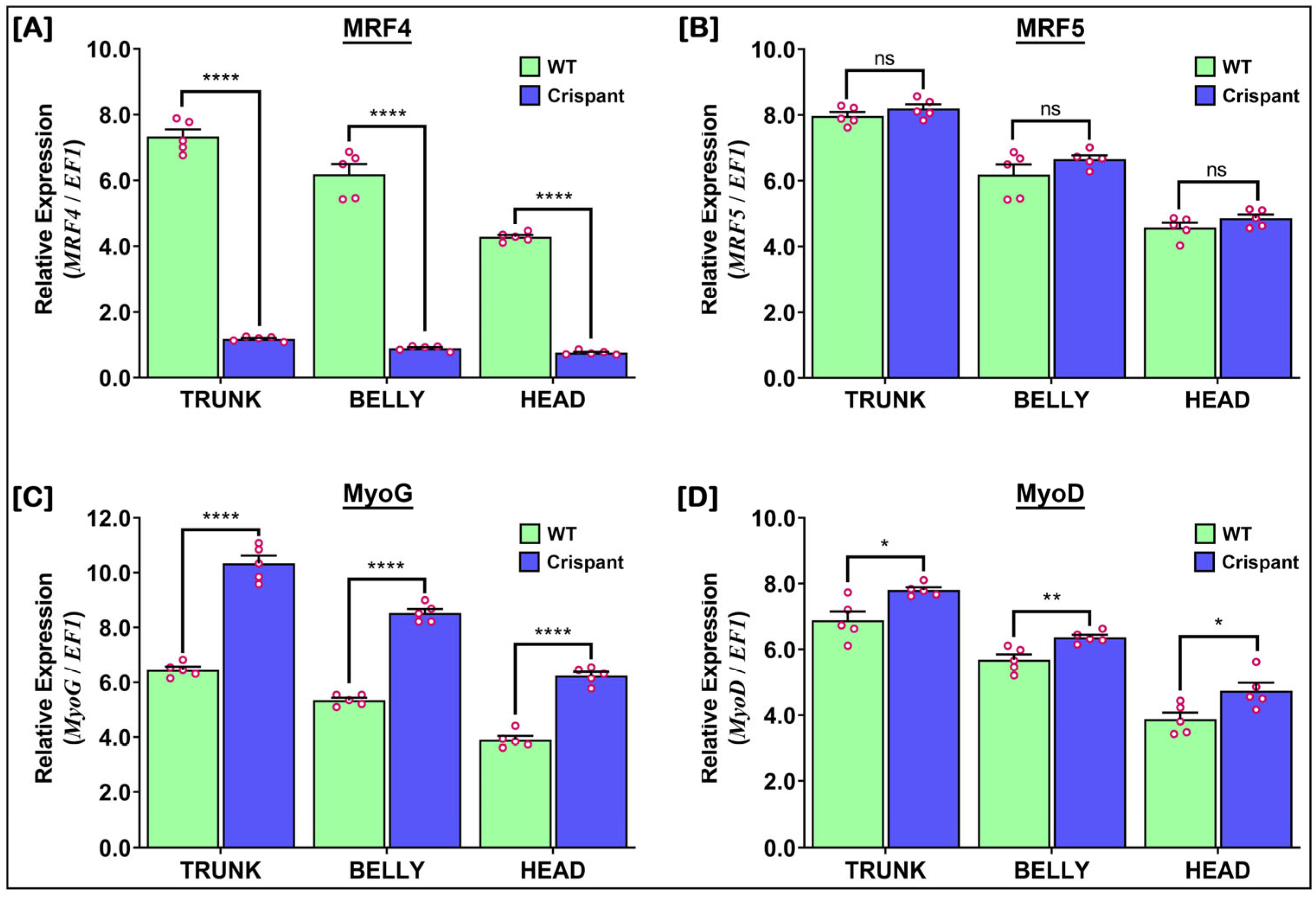
3.2. Expression Profiles of Myogenic Regulatory Factors (MRFs) in WT and Crispants
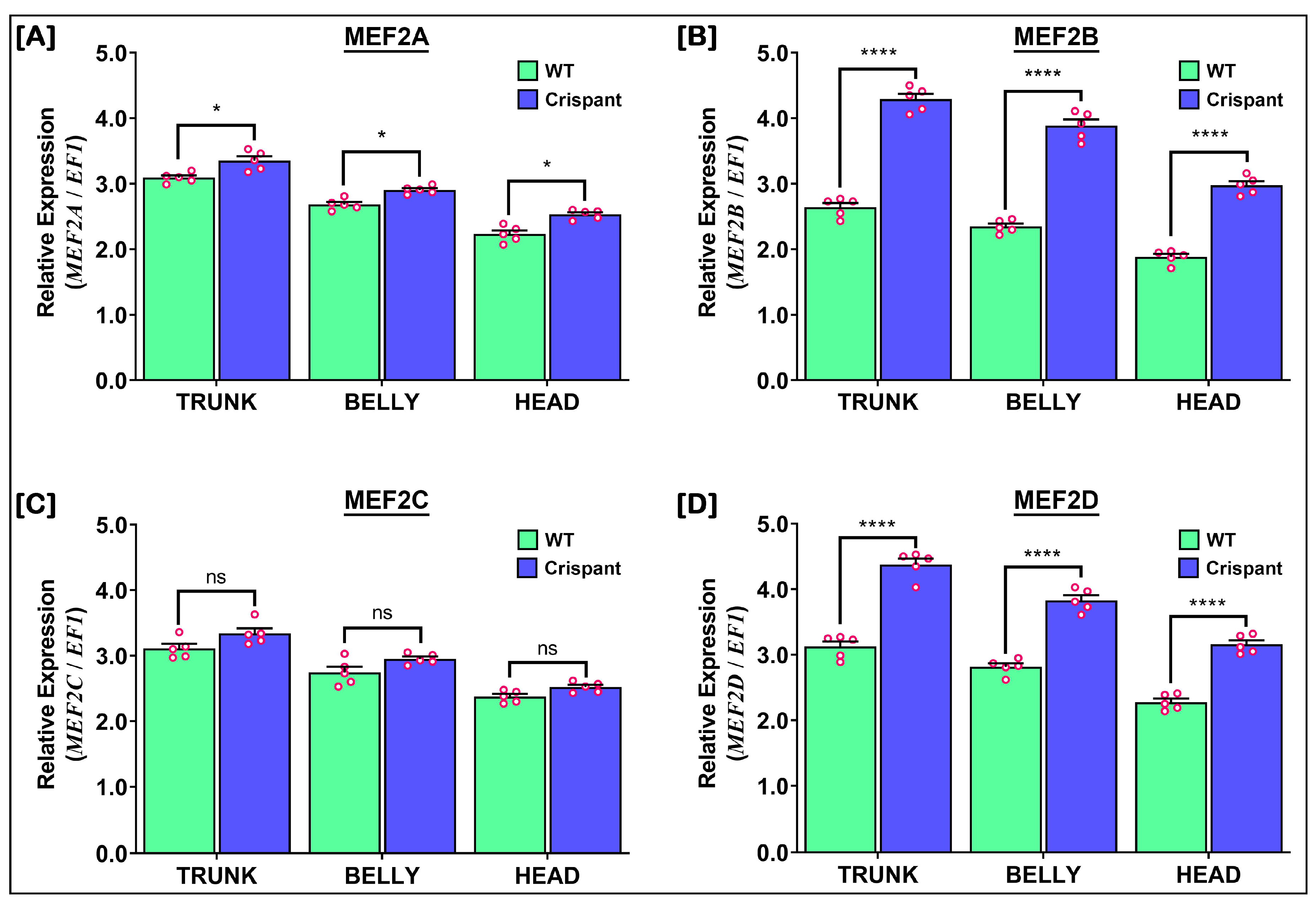
3.3. Expressions of Myocyte Enhancer Factor 2 (MEF2) Genes in WT and Crispants
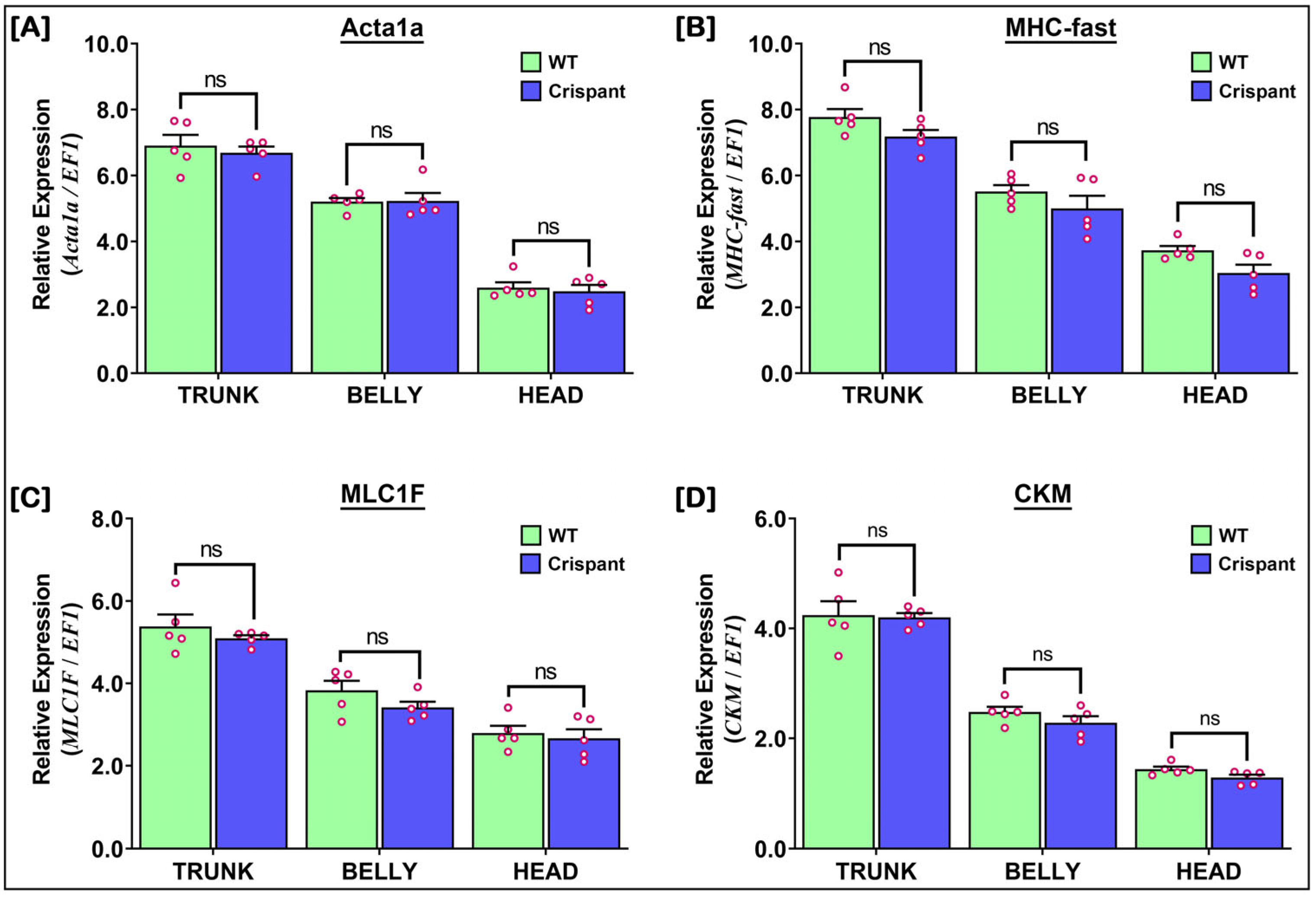
3.4. Expressions of Muscle Structural and Contractile Related Genes in WT and Crispants
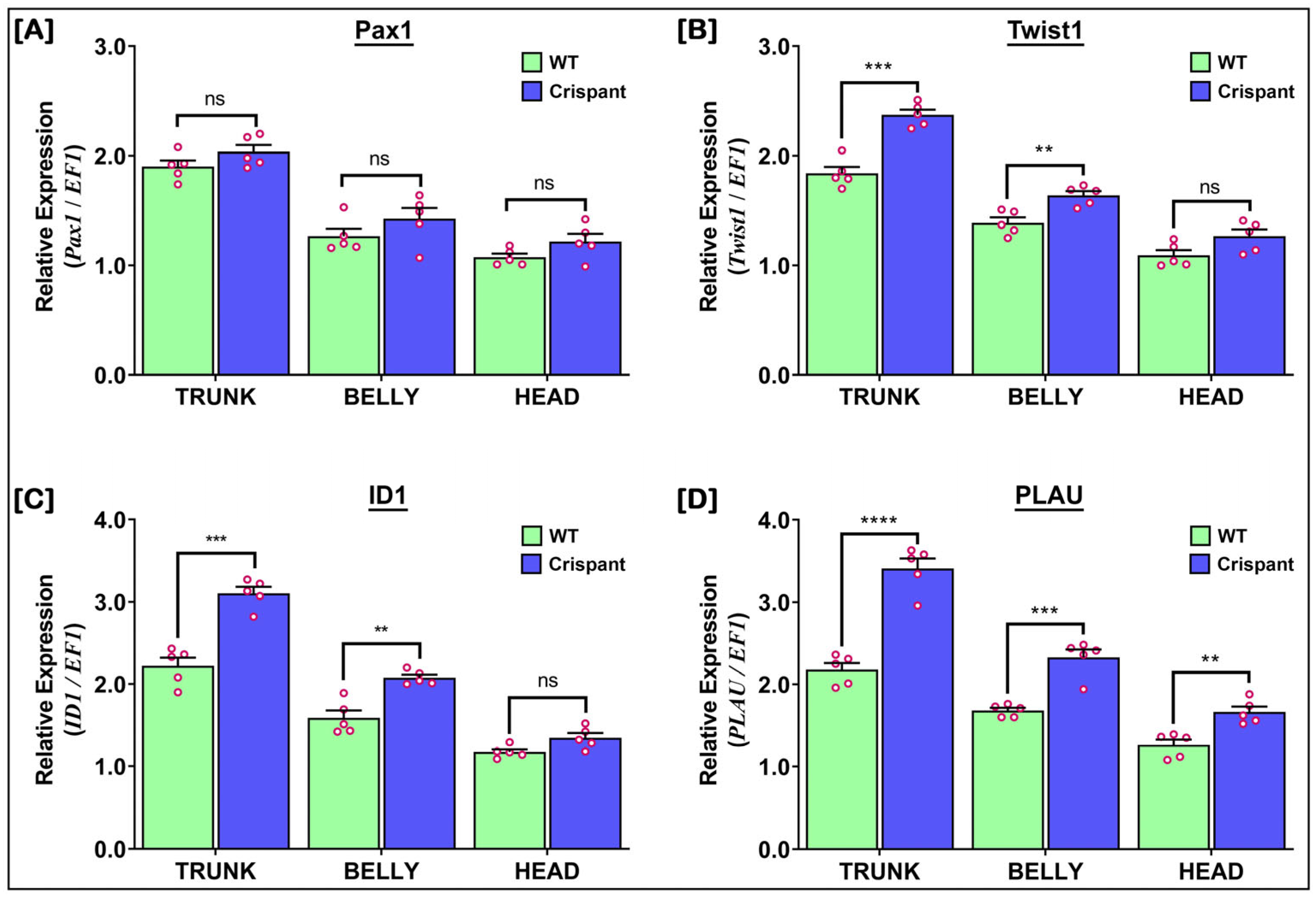
3.5. Expressions of Non-Myotomal Regulatory Genes in WT and MRF4-Crispants
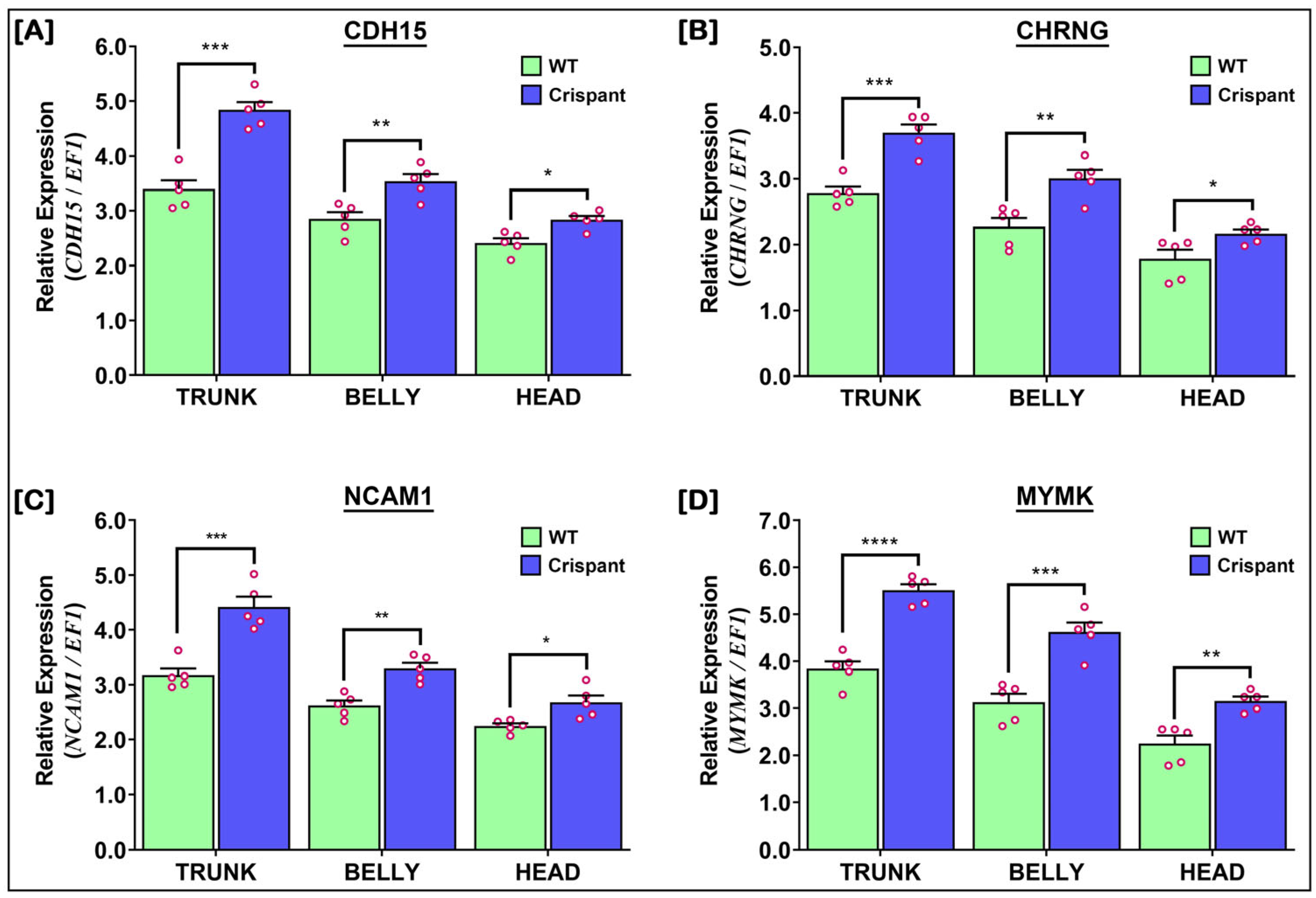
3.6. Expressions of Cell Adhesion and Fusion-Related Genes in WT and MRF4-Crispants
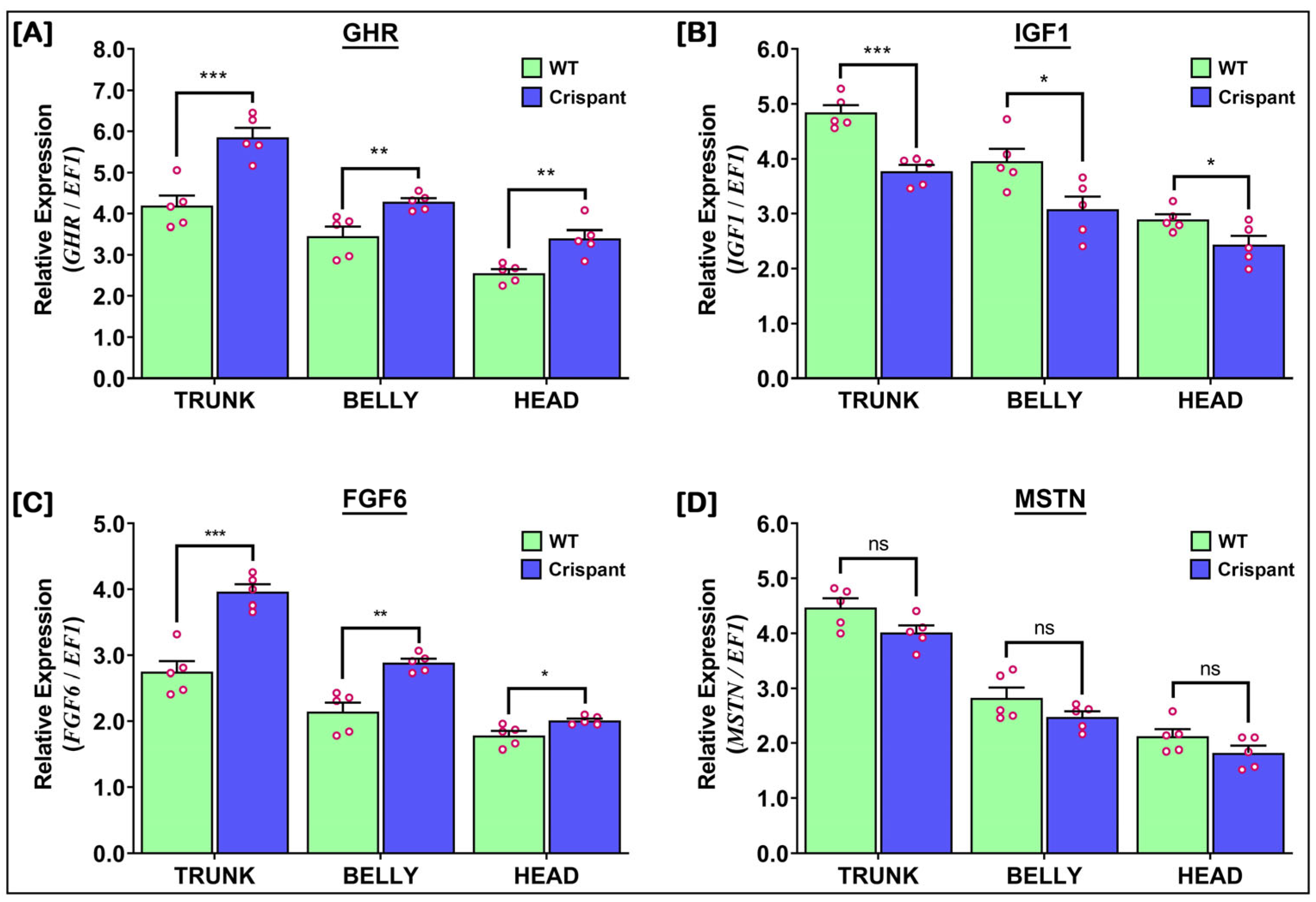
3.7. Expressions of Growth and Proliferation Regulatory Genes in WT and MRF4-Crispants
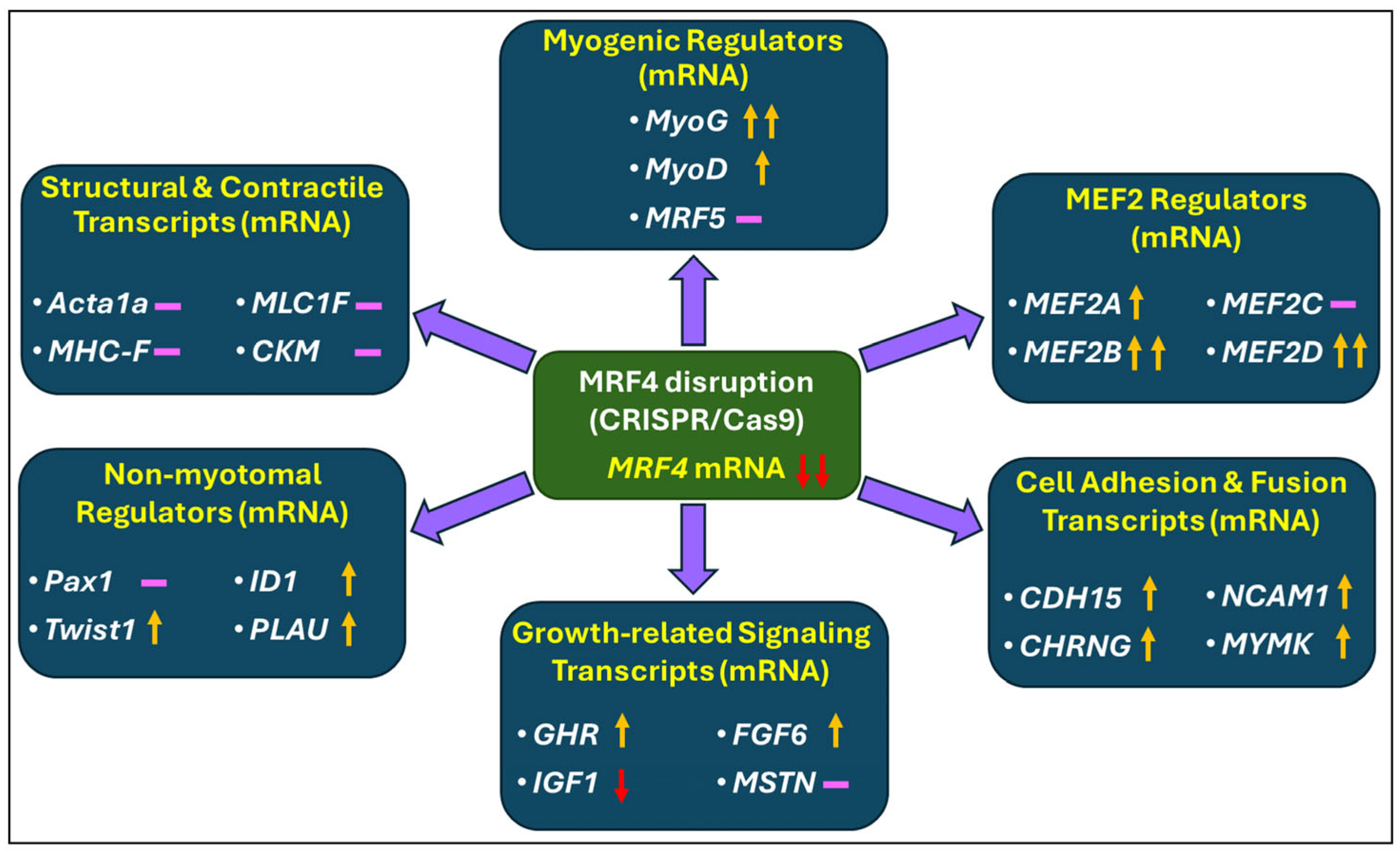
3.8. Summary Schematic of Transcript-Level Responses to MRF4 Disruption
4. Discussion
5. Conclusions
Supplementary Materials
Author Contributions
Funding
Institutional Review Board Statement
Data Availability Statement
Conflicts of Interest
References
- FAO. Species Analysis: Tilapia. FAO GLOBEFISH. 2025. Available online: https://www.fao.org/in-action/globefish/species-analysis/tilapia/en (accessed on 10 November 2025).
- El-Sayed, A.-F.M.; Fitzsimmons, K. From Africa to the world: The journey of Nile tilapia. Rev. Aquac. 2023, 15, 1887–1916. [Google Scholar] [CrossRef] [Scilit]
- Rescan, P.Y. Muscle growth patterns and regulation during fish ontogeny. Gen. Comp. Endocrinol. 2005, 142, 111–116. [Google Scholar] [CrossRef] [Scilit]
- Rescan, P.Y.; Montfort, J.; Rallière, C.; Le Cam, A.; Esquerré, D.; Hugot, K. Dynamic gene expression in fish muscle during recovery growth induced by a fasting-refeeding schedule. BMC Genom. 2007, 8, 438. [Google Scholar] [CrossRef] [Scilit]
- Johnston, I.A.; Bower, N.I.; Macqueen, D.J. Growth and the regulation of myotomal muscle mass in teleost fish. J. Exp. Biol. 2011, 214, 1617–1628. [Google Scholar] [CrossRef] [Scilit] [PubMed]
- Wright, W.E.; Sassoon, D.A.; Lin, V.K. Myogenin, a factor regulating myogenesis, has a domain homologous to MyoD. Cell 1989, 56, 607–617. [Google Scholar] [CrossRef] [Scilit] [PubMed]
- Braun, T.; Gautel, M. Transcriptional mechanisms regulating skeletal muscle differentiation, growth and homeostasis. Nat. Rev. Mol. Cell Biol. 2011, 12, 349–361. [Google Scholar] [CrossRef] [Scilit] [PubMed]
- Potthoff, M.J.; Arnold, M.A.; McAnally, J.; Richardson, J.A.; Bassel-Duby, R.; Olson, E.N. Regulation of skeletal muscle sarcomere integrity and postnatal muscle function by Mef2c. Mol. Cell Biol. 2007, 27, 8143–8151. [Google Scholar] [CrossRef] [Scilit]
- Hasty, P.; Bradley, A.; Morris, J.H.; Edmondson, D.G.; Venuti, J.M.; Olson, E.N.; Klein, W.H. Muscle Deficiency and Neonatal Death in Mice with a Targeted Mutation in the Myogenin Gene. Nature 1993, 364, 501–506. [Google Scholar] [CrossRef] [Scilit]
- Venuti, J.M.; Morris, J.H.; Vivian, J.L.; Olson, E.N.; Klein, W.H. Myogenin is required for late but not early aspects of myogenesis during mouse development. J. Cell Biol. 1995, 128, 563–576. [Google Scholar] [CrossRef] [Scilit]
- Ganassi, M.; Badodi, S.; Wanders, K.; Zammit, P.S.; Hughes, S.M. Myogenin is an essential regulator of adult myofibre growth and muscle stem cell homeostasis. eLife 2020, 9, e60445. [Google Scholar] [CrossRef] [Scilit]
- Vivian, J.L.; Olson, E.N.; Klein, W.H. Thoracic skeletal defects in myogenin- and MRF4-deficient mice correlate with early defects in myotome and intercostal musculature. Dev. Biol. 2000, 224, 29–41. [Google Scholar] [CrossRef] [Scilit] [PubMed]
- Zhu, Z.; Miller, J.B. MRF4 can substitute for myogenin during early stages of myogenesis. Dev. Dyn. 1997, 209, 233–241. [Google Scholar] [CrossRef]
- Sukhan, Z.P.; Cho, Y.; Hossen, S.; Cho, D.H.; Kho, K.H. Molecular characterization, expression analysis, and CRISPR/Cas9 mediated gene disruption of myogenic regulatory factor 4 (MRF4) in Nile tilapia. Curr. Issues Mol. Biol. 2024, 46, 13725–13745. [Google Scholar] [CrossRef] [Scilit] [PubMed]
- Moretti, I.; Ciciliot, S.; Dyar, K.A.; Abraham, R.; Murgia, M.; Agatea, L.; Akimoto, T.; Bicciato, S.; Forcato, M.; Pierre, P.; et al. MRF4 negatively regulates adult skeletal muscle growth by repressing MEF2 activity. Nat. Commun. 2016, 7, 12397. [Google Scholar] [CrossRef] [Scilit]
- Black, B.L.; Olson, E.N. Transcriptional control of muscle development by myocyte enhancer factor-2 (MEF2) proteins. Annu. Rev. Cell Dev. Biol. 1998, 14, 167–196. [Google Scholar] [CrossRef] [Scilit]
- Taylor, M.V.; Hughes, S.M. Mef2 and the skeletal muscle differentiation program. Semin. Cell Dev. Biol. 2017, 72, 33–44. [Google Scholar] [CrossRef] [Scilit]
- Macqueen, D.J.; Johnston, I.A. A well-constrained estimate for the timing of the salmonid whole genome duplication reveals major decoupling from species diversification. Proc. Biol. Sci. 2014, 281, 20132881. [Google Scholar] [CrossRef] [Scilit]
- Fuentes, E.N.; Valdés, J.A.; Molina, A.; Björnsson, B.T. Regulation of skeletal muscle growth in fish by the growth hormone–insulin-like growth factor system. Gen. Comp. Endocrinol. 2013, 192, 136–148. [Google Scholar] [CrossRef] [Scilit]
- Vélez, E.J.; Lutfi, E.; Azizi, S.; Montserrat, N.; Riera-Codina, M.; Capilla, E.; Navarro, I.; Gutiérrez, J. Contribution of in vitro myocytes studies to understanding fish muscle physiology. Comp. Biochem. Physiol. B Biochem. Mol. Biol. 2016, 199, 67–73. [Google Scholar] [CrossRef] [Scilit]
- Patapoutian, A.; Yoon, J.K.; Miner, J.H.; Wang, S.; Stark, K.; Wold, B. Disruption of the mouse MRF4 gene identifies multiple waves of myogenesis in the myotome. Development 1995, 121, 3347–3358. [Google Scholar] [CrossRef] [Scilit]
- Khalil, K.; Elayat, M.; Khalifa, E.; Daghash, S.; Elaswad, A.; Miller, M.; Abdelrahman, H.; Ye, Z.; Odin, R.; Drescher, D.; et al. Generation of myostatin gene-edited channel catfish (Ictalurus punctatus) via zygote injection of CRISPR/Cas9 system. Sci. Rep. 2017, 7, 7301. [Google Scholar] [CrossRef] [Scilit] [PubMed]
- Kishimoto, K.; Washio, Y.; Yoshiura, Y.; Toyoda, A.; Ueno, T.; Fukuyama, H.; Kinoshita, M. Production of a breed of red sea bream Pagrus major with an increase of skeletal muscle mass and reduced body length by genome editing with CRISPR/Cas9. Aquaculture 2018, 495, 415–427. [Google Scholar] [CrossRef] [Scilit]
- Ou, M.; Wang, F.; Li, K.; Wu, Y.; Huang, S.; Luo, Q.; Liu, H.; Zhang, X.; Fei, S.; Chen, K.; et al. Generation of myostatin gene-edited blotched snakehead (Channa maculata) using CRISPR/Cas9 system. Aquaculture 2023, 563, 738988. [Google Scholar] [CrossRef] [Scilit]
- Sun, T.; Meng, X.; Li, Y.; Zhang, H.; He, R.; He, R.; Liu, T.; Lv, W.; Xu, X.; Shen, Y.; et al. CRISPR/Cas9-mediated myostatin b knockout enhances growth performance and muscle hypertrophy in grass carp (Ctenopharyngodon idella). Aquaculture 2025, 613, 743355. [Google Scholar] [CrossRef] [Scilit]
- Kho, K.H.; Sukhan, Z.P.; Cho, Y.; Cho, D.; Choi, C.Y. Genome-Edited Fish in the Field. Curr. Issues Mol. Biol. 2025, 47, 1013. [Google Scholar] [CrossRef] [Scilit]
- Mege, R.M.; Goudou, D.; Diaz, C.; Nicolet, M.; Garcia, L.; Geraud, G.; Rieger, F. N-cadherin and N-CAM in myoblast fusion: Compared localisation and effect of blockade by peptides and antibodies. J. Cell Sci. 1992, 103, 897–906. [Google Scholar] [CrossRef] [Scilit]
- Cifuentes-Diaz, C.; Nicolet, M.; Goudou, D.; Rieger, F.; Mège, R.M. N-cadherin and N-CAM-mediated adhesion in development and regeneration of skeletal muscle. Neuromuscul. Disord. 1993, 3, 361–365. [Google Scholar] [CrossRef] [Scilit]
- Charlton, C.A.; Mohler, W.A.; Blau, H.M. Neural cell adhesion molecule (NCAM) and myoblast fusion. Dev. Biol. 2000, 221, 112–119. [Google Scholar] [CrossRef] [Scilit]
- Millay, D.P.; O’Rourke, J.R.; Sutherland, L.B.; Bezprozvannaya, S.; Shelton, J.M.; Bassel-Duby, R.; Olson, E.N. Myomaker is a membrane activator of myoblast fusion and muscle formation. Nature 2013, 499, 301–305. [Google Scholar] [CrossRef] [Scilit]
- Millay, D.P.; Sutherland, L.B.; Bassel-Duby, R.; Olson, E.N. Myomaker is essential for muscle regeneration. Genes Dev. 2014, 28, 1641–1646. [Google Scholar] [CrossRef] [Scilit]
- Benezra, R.; Davis, R.L.; Lockshon, D.; Turner, D.L.; Weintraub, H. The protein Id: A negative regulator of helix-loop-helix DNA binding proteins. Cell 1990, 61, 49–59. [Google Scholar] [CrossRef] [Scilit]
- Wallin, J.; Wilting, J.; Koseki, H.; Fritsch, R.; Christ, B.; Balling, R. The role of Pax-1 in axial skeleton development. Development 1994, 120, 1109–1121. [Google Scholar] [CrossRef] [Scilit]
- Suelves, M.; Vidal, B.; Ruiz, V.; Baeza-Raja, B.; Diaz-Ramos, A.; Cuartas, I.; Lluis, F.; Parra, M.; Jardi, M.; Lopez-Alemany, R.; et al. The plasminogen activation system in skeletal muscle regeneration: Antagonistic roles of urokinase-type plasminogen activator (uPA) and its inhibitor (PAI-1). Front. Biosci. 2005, 10, 2978–2985. [Google Scholar] [CrossRef] [Scilit] [PubMed]
- Philippou, A.; Maridaki, M.; Koutsilieris, M. The role of urokinase-type plasminogen activator (uPA) and transforming growth factor beta 1 (TGFβ1) in muscle regeneration. Vivo 2008, 22, 735–750. [Google Scholar]
- Qin, Q.; Xu, Y.; He, T.; Qin, C.; Xu, J. Normal and disease-related biological functions of Twist1 and underlying molecular mechanisms. Cell Res. 2012, 22, 90–106. [Google Scholar] [CrossRef] [Scilit] [PubMed]
- Li, M.; Dai, S.; Liu, X.; Xiao, H.; Wang, D. A detailed procedure for CRISPR/Cas9-mediated gene editing in tilapia. Hydrobiologia 2021, 848, 3865–3881. [Google Scholar] [CrossRef] [Scilit]
- Sukhan, Z.P.; Cho, Y.; Hossen, S.; Yang, S.W.; Hwang, N.Y.; Lee, W.K.; Kho, K.H. Functional characterization of three GnRH isoforms in small yellow croaker Larimichthys polyactis maintained in captivity: Special emphasis on reproductive dysfunction. Biology 2022, 11, 1200. [Google Scholar] [CrossRef] [Scilit]
- Nabeshima, Y.; Hanaoka, K.; Hayasaka, M.; Esumi, E.; Li, S.; Nonaka, I.; Nabeshima, Y. Myogenin gene disruption results in perinatal lethality because of severe muscle defect. Nature 1993, 364, 532–535. [Google Scholar] [CrossRef] [Scilit]
- Lazure, F.; Blackburn, D.M.; Corchado, A.H.; Sahinyan, K.; Karam, N.; Sharanek, A.; Nguyen, D.; Lepper, C.; Najafabadi, H.S.; Perkins, T.J.; et al. Myf6/MRF4 is a myogenic niche regulator required for the maintenance of the muscle stem cell pool. EMBO Rep. 2020, 21, e49499. [Google Scholar] [CrossRef] [Scilit]
- Hinterberger, T.J.; Sassoon, D.A.; Rhodes, S.J.; Konieczny, S.F. Expression of the muscle regulatory factor MRF4 during somite and skeletal myofiber development. Dev. Biol. 1991, 147, 144–156. [Google Scholar] [CrossRef] [Scilit]
- Arnold, H.H.; Winter, B. Muscle differentiation: More complexity to the network of myogenic regulators. Curr. Opin. Genet. Dev. 1998, 8, 539–544. [Google Scholar] [CrossRef] [Scilit] [PubMed]
- Potthoff, M.J.; Olson, E.N. MEF2: A central regulator of diverse developmental programs. Development 2007, 134, 4131–4140. [Google Scholar] [CrossRef] [Scilit] [PubMed]
- Estrella, N.L.; Desjardins, C.A.; Nocco, S.E.; Clark, A.L.; Maksimenko, Y.; Naya, F.J. MEF2 transcription factors regulate distinct gene programs in mammalian skeletal muscle differentiation. J. Biol. Chem. 2015, 290, 1256–1268. [Google Scholar] [CrossRef] [Scilit] [PubMed]
- Pon, J.R.; Marra, M.A. MEF2 transcription factors: Developmental regulators and emerging cancer genes. Oncotarget 2016, 7, 2297–2312. [Google Scholar] [CrossRef] [Scilit]
- Rescan, P.Y. New insights into skeletal muscle development and growth in teleost fishes. J. Exp. Zool. B Mol. Dev. Evol. 2008, 310, 541–548. [Google Scholar] [CrossRef] [Scilit]
- Spicer, D.B.; Rhee, J.; Cheung, W.L.; Lassar, A.B. Inhibition of myogenic bHLH and MEF2 transcription factors by the bHLH protein Twist. Science 1996, 272, 1476–1480. [Google Scholar] [CrossRef] [Scilit]
- Roschger, C.; Cabrele, C. The Id-protein family in developmental and cancer-associated pathways. Cell Commun. Signal. 2017, 15, 7. [Google Scholar] [CrossRef]
- DiPasquale, D.M.; Cheng, M.; Billich, W.; Huang, S.A.; van Rooijen, N.; Hornberger, T.A.; Koh, T.J. Urokinase-type plasminogen activator and macrophages are required for skeletal muscle hypertrophy in mice. Am. J. Physiol. Cell Physiol. 2007, 293, C1278–C1285. [Google Scholar] [CrossRef] [Scilit]
- Sisson, T.H.; Nguyen, M.H.; Yu, B.; Novak, M.L.; Simon, R.H.; Koh, T.J. Urokinase-type plasminogen activator increases hepatocyte growth factor activity required for skeletal muscle regeneration. Blood 2009, 114, 5052–5061. [Google Scholar] [CrossRef] [Scilit]
- Furumoto, T.A.; Miura, N.; Akasaka, T.; Mizutani-Koseki, Y.; Sudo, H.; Fukuda, K.; Maekawa, M.; Yuasa, S.; Fu, Y.; Moriya, H.; et al. Notochord-dependent expression of MFH1 and PAX1 cooperates to maintain the proliferation of sclerotome cells during the vertebral column development. Dev. Biol. 1999, 210, 15–29. [Google Scholar] [CrossRef] [Scilit]
- Sivakamasundari, V.; Kraus, P.; Sun, W.; Hu, X.; Lim, S.L.; Prabhakar, S.; Lufkin, T. A developmental transcriptomic analysis of Pax1 and Pax9 in embryonic intervertebral disc development. Biol. Open 2017, 6, 187–199. [Google Scholar] [CrossRef] [Scilit]
- Morgan, N.V.; Brueton, L.A.; Cox, P.; Greally, M.T.; Tolmie, J.; Pasha, S.; Aligianis, I.A.; van Bokhoven, H.; Marton, T.; Al-Gazali, L.; et al. Mutations in the embryonal subunit of the acetylcholine receptor (CHRNG) cause lethal and Escobar variants of multiple pterygium syndrome. Am. J. Hum. Genet. 2006, 79, 390–395. [Google Scholar] [CrossRef] [Scilit]
- Michalk, A.; Stricker, S.; Becker, J.; Rupps, R.; Pantzar, T.; Miertus, J.; Botta, G.; Naretto, V.G.; Janetzki, C.; Yaqoob, N.; et al. Acetylcholine receptor pathway mutations explain various fetal akinesia deformation sequence disorders. Am. J. Hum. Genet. 2008, 82, 464–476. [Google Scholar] [CrossRef] [Scilit]
- Luo, W.; Li, E.; Nie, Q.; Zhang, X. Myomaker, regulated by MYOD, MYOG and miR-140-3p, promotes chicken myoblast fusion. Int. J. Mol. Sci. 2015, 16, 26186–26201. [Google Scholar] [CrossRef] [Scilit]
- Hinits, Y.; Osborn, D.P.; Hughes, S.M. Differential requirements for myogenic regulatory factors distinguish medial and lateral somitic, cranial and fin muscle fibre populations. Development 2009, 136, 403–414. [Google Scholar] [CrossRef] [Scilit]



| Functional Group | Representative Genes | Primary Functional Role |
|---|---|---|
| Myogenic regulatory factor 4 (MRF4), Myogenic regulatory factor 5 (MRF5), Myogenin (MyoG), Myoblast determination protein (MyoD) | Core transcription factors driving myogenic lineage determination, differentiation, and maintenance of mature myofibers. |
| Myocyte enhancer factor 2A (MEF2A), Myocyte enhancer factor 2B (MEF2B), Myocyte enhancer factor 2C (MEF2C), Myocyte enhancer factor 2D (MEF2D) | Transcriptional co-activators that coordinate expression of structural and contractile genes function synergistically with MRFs during late myogenesis. |
| Actin alpha 1, skeletal muscle (Acta1a), Myosin heavy chain, fast skeletal muscle (MHC-fast) Myosin light chain 1, fast skeletal muscle (MLC1F), Creatine kinase, muscle-type (CKM) | Encode sarcomeric actin and myosin isoforms and energy-buffering enzymes essential for muscle contraction and muscle fiber identity. |
| Paired box gene 1 (Pax1), Twist family bHLH transcription factor 1 (Twist1), Inhibitor of DNA binding 1 (ID1), Urokinase-type plasminogen activator (PLAU) | Expressed mainly in sclerotome-derived or connective tissues; regulate progenitor maintenance, ECM remodeling, and non-myogenic cell lineages. |
| Cadherin 15 (CDH15), Cholinergic receptor nicotinic gamma subunit (CHRNG), Neural cell adhesion molecule 1 (NCAM1), Myomaker (MYMK) | Mediate myoblast recognition, adhesion, and membrane fusion; support neuromuscular junction formation and reinnervation during growth or repair. |
| Growth hormone receptor (GHR), Insulin-like growth factor 1 (IGF1), Fibroblast growth factor 6 (FGF6), Myostatin (MSTN) | Control hyperplasia and hypertrophy via the GH–IGF and FGF pathways; MSTN acts as a negative feedback inhibitor of muscle growth. |
| Primer Name | Sequence (5′–3′) | Accession No. | Length (bp) |
|---|---|---|---|
| MRF4-Fw | TGGCAATGACAGCCCACTG | PQ497691 | 178 |
| MRF4-Rv | CTTACGTCTATCCGTGGGAG | ||
| MyoG-Fw | TGTTGGAGTTGGAGTGACAG | GU246725 | 171 |
| MyoG-Rv | CGTCTCTTCTCCCTCAGTGT | ||
| MRF5-Fw | TCCAGTACATCGAGAGCCTG | XM_005456634 | 172 |
| MRF5-Rv | CCGTTGCTGTAGTTTGCATTC | ||
| MyoD-Fw | CAAGAGGAAGACGACCAACG | GU246715 | 170 |
| MyoD-Rv | CGATGTAGCTGATGGCGTTG | ||
| MEF2a-Fw | TCATGGACGAAAGGAACAGG | XM_025908678 | 170 |
| MEF2a-Rv | CAGCAACACTTTGTCCATGTC | ||
| MEF2b-Fw | GACCAGAGAAATAGACAGGTG | XM_005478988 | 160 |
| MEF2b-Rv | GAACTTTGTCCATGTCTGTGC | ||
| MEF2c-Fw | AGATCACGCGGATTATGGATG | XR_003213332 | 173 |
| MEF2c-Rv | CTTGTCCATGTCTGTGCTGG | ||
| MEF2d-Fw | CAGAGGATCACTGACGAACG | XM_025911272 | 171 |
| MEF2d-Rv | GACCTTGTCCATGTCAGTGC | ||
| Acta1a-Fw | CACCAACTGGGATGACATGG | XM_003454107 | 173 |
| Acta1a-Rv | CATACATGGCAGGGACATTG | ||
| MHC-Fw | CAGCATGGGTCAGATTACTG | XM_003439446 | 172 |
| MHC-Rv | CTCACGCTGCTTCTGCTTGA | ||
| MLC1F-Fw | CCAGATTGCTGACATCATGC | XM_003445298 | 183 |
| MLC1F-Rv | CATCCTCTTGTCCTGCCATG | ||
| CKM-Fw | GTGACGAGGAGTCCTATGAG | XM_003449801 | 185 |
| CKM-Rv | CTTGATGCTGCGACCAGTAC | ||
| Pax1-Fw | AGCGAGGTACAACGAGACTG | XM_003446220 | 192 |
| Pax1-Rv | CTAACCGACGGGACATTGTA | ||
| M-twist-Fw | TCATTCGACGACCTGCAGAC | XM_005462015 | 201 |
| M-twist -Rv | CAGCTCGTCGCTTTGTAGAAC | ||
| ID1-Fw | AGCCTGACCATCTCCAAGTG | XM_003442650 | 180 |
| ID1-Rv | CTGCAGGTCCCAGATGTAGT | ||
| PLAU-Fw | CAGCTACCTGTGGATACAGC | XM_013269037 | 186 |
| PLAU-Rv | GTGAGCTGCAGTGAGAATCC | ||
| CDH15-Fw | CTGCATTTGATGGAGACCTG | MN641108 | 187 |
| CDH15-Rv | CCTGAGTCCGTGATTATGATG | ||
| CHRNG-Fw | TGCAATGGTGCGACTACAGG | XM_005476216 | 197 |
| CHRNG-Rv | CCAGTACACACAGCCATCAG | ||
| NCAM1-Fw | TGAGGAGCCTGATTCAATGG | XM_005458467 | 166 |
| NCAM1-Rv | GGACATCCTGACCTCATATG | ||
| MYMK-Fw | TCGCTGTGAGGATCTACCAG | XM_013270882 | 191 |
| MYMK-Rv | CAGCATTAGAGCGAGAGCAC | ||
| GHR-Fw | CGATGAGACAGAGGATGTAG | NM_001279601 | 182 |
| GHR-Rv | CTTCAGGGAGATCTGTGTTG | ||
| IGF1-Fw | TAGCCACACCCTCTCACTAC | AY919869 | 210 |
| IGF1-Rv | CAGCTTTGGAAGCAGCACTC | ||
| MSTN-Fw | TGACTTAGCTGTGACCTTCG | KT987208 | 177 |
| MSTN-Rv | CCAAAGTCCTCGAAGTCCAC | ||
| FGF6-Fw | GCATCGGGTTTCACCTTCAG | XM_003447051 | 177 |
| FGF6-Rv | CTGTCGTTCCGTATAACCTC | ||
| EF1a-Fw | GGTGTGAAGCAGCTCATCG | AB075952 | 187 |
| EF1a-Rv | CACTGGTCTCCAGCATGTTG |
Disclaimer/Publisher’s Note: The statements, opinions and data contained in all publications are solely those of the individual author(s) and contributor(s) and not of MDPI and/or the editor(s). MDPI and/or the editor(s) disclaim responsibility for any injury to people or property resulting from any ideas, methods, instructions or products referred to in the content. |
© 2026 by the authors. Licensee MDPI, Basel, Switzerland. This article is an open access article distributed under the terms and conditions of the Creative Commons Attribution (CC BY) license.
Share and Cite
Sukhan, Z.P.; Cho, Y.; Cho, D.; Choi, C.Y.; Kho, K.H. Expression Profiles of Growth-Related Genes in CRISPR/Cas9-Mediated MRF4-Crispant Nile Tilapia. Fishes 2026, 11, 52. https://doi.org/10.3390/fishes11010052
Sukhan ZP, Cho Y, Cho D, Choi CY, Kho KH. Expression Profiles of Growth-Related Genes in CRISPR/Cas9-Mediated MRF4-Crispant Nile Tilapia. Fishes. 2026; 11(1):52. https://doi.org/10.3390/fishes11010052
Chicago/Turabian StyleSukhan, Zahid Parvez, Yusin Cho, Doohyun Cho, Cheol Young Choi, and Kang Hee Kho. 2026. "Expression Profiles of Growth-Related Genes in CRISPR/Cas9-Mediated MRF4-Crispant Nile Tilapia" Fishes 11, no. 1: 52. https://doi.org/10.3390/fishes11010052
APA StyleSukhan, Z. P., Cho, Y., Cho, D., Choi, C. Y., & Kho, K. H. (2026). Expression Profiles of Growth-Related Genes in CRISPR/Cas9-Mediated MRF4-Crispant Nile Tilapia. Fishes, 11(1), 52. https://doi.org/10.3390/fishes11010052