Article

Combined Microplastics and Cadmium Exposure Induces Persistent Gut Microbiota Dysbiosis in Pearl Oyster Pinctada fucata martensii

1
Fisheries College, Guangdong Ocean University, Zhanjiang 524088, China
2
Pearl Breeding and Processing Engineering Technology Research Centre of Guangdong Province, Zhanjiang 524088, China
3
Guangdong Provincial Key Laboratory of Aquatic Animal Disease Control and Healthy Culture, Zhanjiang 524088, China
4
Guangdong Science and Innovation Center for Pearl Culture, Zhanjiang 524088, China
*
Author to whom correspondence should be addressed.
Fishes 2026, 11(1), 51; https://doi.org/10.3390/fishes11010051
Submission received: 5 December 2025 / Revised: 8 January 2026 / Accepted: 13 January 2026 / Published: 14 January 2026
(This article belongs to the Special Issue Biology and Culture of Marine Invertebrates)

Abstract

In marine aquaculture environments, microplastics (MPs) and cadmium (Cd) are widespread contaminants that may jointly affect host–microbe interactions. Here, we examined the combined effects of MPs (5 mg/L) and Cd (5 μg/L) on the intestinal microbial community of pearl oysters after a 48 h exposure, followed by a 5-day recovery period. Gut microbiota dynamics were characterized using 16S rRNA gene sequencing. Alpha diversity did not vary significantly, whereas beta diversity showed marked alterations in community composition among the different exposure treatments. LEfSe analysis revealed distinct microbial biomarkers and putative pathogens under each treatment: Sulfitobacter in the MPs-alone group; Vibrio and Candidatus_Megaira in the Cd-alone group; and Tenacibaculum, Roseibacillus, and Enterovibrio across different co-exposure and recovery groups. A brief recovery period partially decreased the abundance of certain pathogens (e.g., Vibrio), yet some taxa (e.g., Enterovibrio and Tenacibaculum) remained enriched. These results indicate that exposure to MPs and Cd, whether alone or in combination, disrupts gut microbial homeostasis in pearl oysters by reshaping community structure and promoting the proliferation of potential pathogens, with some disturbances persisting after exposure ceases. Generally, our findings will aid evaluation of the ecological risks of combined pollutants in marine aquaculture systems.
Key Contribution: This study reveals that co-exposure to microplastics and cadmium induces sustained dysbiosis in the gut microbiota of pearl oysters, leading to the enrichment of potential pathogens that persist even after recovery. These findings will aid pollutant risk assessments in aquaculture.

1. Introduction

Plastics are used in countless products because they are inexpensive, lightweight, and resistant to moisture and temperature fluctuations [1]. By 2060, global plastic output is projected to reach 120 million tons per year, with less than 10% being recycled [2]. When plastic waste is poorly managed, it can be released into the environment and ultimately transported to the ocean through river systems [3,4]. Marine plastic contamination is now a global problem, with an estimated 9–14 million metric tons of plastic entering the oceans each year [5]. Large plastic debris gradually fragments into smaller pieces via weathering and photodegradation. Owing to their lower density than seawater, floating plastics remain at the surface, where prolonged sunlight exposure accelerates degradation [6] and promotes the formation of microplastics (MPs). These MPs, defined as particles smaller than 5 mm, have become pervasive environmental contaminants [6]. Plastic pollution is especially severe in regions with intense human activity, such as aquaculture areas, where MP concentrations can range from 0.6 to 362.8 particles/L [7]. Previous studies have shown that MPs influence various marine environments and taxa, including fish, seabirds, mammals, invertebrates, zooplankton, and humans [8,9]. Bao et al. [10] demonstrated that MP ingestion induces oxidative stress in the intestine of tilapia, damaging intestinal tissues and organelles and disturbing gut microbial balance. Han et al. [11] reported that MP exposure induces cardiac muscle dysfunction and activates stress and immune responses in whiteleg shrimp. De Marco et al. [12] found that short-term MP exposure in mussel gills alters amino acid and energy metabolism, disrupts osmoregulatory processes, and affects cholinergic neurotransmission. Because MPs possess a large specific surface area, they can adsorb and concentrate toxic heavy metals, serving as carriers that transport these pollutants at high concentrations [13].
Contamination of water bodies by heavy metals has become a major global environmental issue, threatening aquatic ecosystems and human well-being. Heavy metal ions are well known for their toxicity and possible carcinogenic effects. They can also accumulate in organisms, even at relatively low exposure concentrations [14]. Mkuye et al. [15] showed that the combined exposure to MPs and Cu amplifies toxicity, impairing pearl oyster health through increased oxidative stress, altered immune responses, and disruption of metabolic processes. Among these metals, cadmium (Cd) is recognized as one of the most hazardous. In addition to natural sources such as volcanic activity, human activities, including mining, metal smelting, and electroplating, are major contributors of Cd to aquatic environments [16]. In some coastal regions, seawater Cd levels as high as 48 μg/L have been reported [17]. Experimental evidence indicates that Cd exposure can suppress growth in aquatic organisms, impair antioxidant defenses, induce oxidative damage to lipids and DNA, interfere with embryonic development, and even alter gene expression patterns [18,19,20]. The joint toxicity of MPs and heavy metals can have synergistic, antagonistic, or potentiating effects [21]. MPs may adhere to internal organs (e.g., gills) or external surfaces (e.g., skin) of marine organisms [22] and, once ingested, can deliver associated contaminants such as heavy metals into the digestive tract [23]. For example, MPs have been shown to aggravate oxidative stress and tissue damage caused by low-dose Cd in zebrafish but alleviate oxidative injury induced by high-dose Cd [24]. Co-exposure to Cd and polyvinyl chloride has been reported to induce cellular senescence, disrupt galactose metabolism, and induce oxidative stress in the clam M. galloprovincialis [25].
The pearl oyster, commonly referred to as the Japanese pearl oyster (Pinctada fucata martensii), is a marine bivalve mollusk distributed in southern China, India, Japan, Southeast Asia, and Australia [26,27,28]. More than 90% of marine pearls are produced by this species, which is renowned as a source of high-quality pearls [29,30]. Pearl oysters are mainly cultivated using nearshore raft and pile culture systems [31]. Such farming practices expose the animals to environmental stressors, including fluctuations in pollutant levels, dissolved oxygen, temperature, and salinity [32]. Liusha Bay is the largest marine pearl farming area in China [33], yet it is reported to be mildly contaminated with Cd [34]. The gut microbiome is often described as an “additional organ,” playing a crucial role in gut development and in regulating diverse physiological processes. Recent work shows that the gut microbiota contributes to energy balance by influencing feeding, digestion, metabolism, and immune responses [35]. Previous studies have demonstrated that MPs can reshape the gut microbial community of bivalves, increase the abundance of pathogenic bacteria, and cause intestinal damage [36,37]. Cd exposure has also been shown to disturb the gut microbiota of the abalone Haliotis diversicolor and increase the relative abundance of certain pathogenic taxa [38]. Moreover, disruption of the gut microbiome and the resulting dysbiosis can intensify the harmful effects of contaminants, ultimately altering the permeability of the host intestinal barrier [39,40]. Such changes may cause inflammation, behavioral abnormalities, and even mortality [41]. Nevertheless, few studies have examined the combined effects of MPs and Cd on aquatic organisms and their gut microbiota, and the influence of joint MP–Cd stress on the gut microbial community of P. f. martensii has not yet been documented.
In this study, we exposed pearl oysters to MPs and Cd individually and in combination, followed by a 5-day depuration period, and then characterized temporal changes in their gut microbiota. We further explored the toxicity mechanisms of MPs and Cd to facilitate assessments of the long-term ecological risks posed by these pollutants. This study provides critical insights into the ecological risks of co-occurring pollutants in marine environments.

2. Materials and Methods

2.1. Experimental Animals and Design

Randomly selected pearl oyster P. f. martensii of uniform size (shell length 58.46 ± 4.14 mm) with intact shells were gently rinsed to remove surface fouling and then placed into 300 L aquaculture tanks for a 14-day temporary holding period. Following laboratory acclimatization, the pearl oysters were randomly allocated to one control group (C, with 0 μg/L Cd + 0 mg/L MPs) and three experimental groups, designated as B (with 5 mg/L MPs + 0 μg/L Cd), D (with 5 mg/L MPs + 5 μg/L Cd), and G (with 0 mg/L MPs + 5 μg/L Cd), based on our previous findings that mixtures of Cd and MPs influence digestion, energy metabolism, oxidative stress regulation, immune function, and metabolomes in the pearl oyster [42], as well as on prior studies concerning MPs in bivalve mollusks [43,44,45]. Firstly, a predetermined mass of MPs, with a particle size range detailed in Supplementary Table S1, was added to the seawater. The mixture was homogenized using a 65 W ultrasonic homogenizer (model LC-JY92-TTN; Lichen Bonsi Instrument Technology, Shanghai, China) to obtain a uniform MP suspension. Subsequently, MP-Cd mixtures were prepared according to previously described procedures [42]. Forty-five pearl oysters were placed in every tank. Three replicate tanks were maintained per treatment group. During the trial, pearl oysters were exposed to the respective treatments for 2 d, followed by a 5 d recovery period. Tanks were supplied with aerated artificial seawater (salinity 30 ± 0.5 psu; temperature 24 ± 0.5 °C). Water was renewed once daily throughout the experiment to maintain the target concentrations of MPs, Cd, Chlorella sp. (20,000 cells/mL), and Platymonas subcordiformis (10,000 cells/mL) in the tanks. Six pearl oysters were randomly collected from each group (with two pearl oysters sampled per tank) at 0 h, 48 h, and 7 d (following a 5-day recovery period), with the corresponding samples designated as B48, D48, G48, BR5, DR5, and GR5. Intestinal tissue from each pearl oyster was excised, immediately snap-frozen in liquid nitrogen, and then stored at −80 °C for subsequent analysis. No mortality of pearl oysters occurred during either the exposure or recovery periods.

2.2. DNA Extraction and PCR Amplification

Microbial community genomic DNA from pearl oyster intestines was isolated using the FastPure Soil DNA Isolation Kit (Magnetic bead) (MJYH, Shanghai, China) following the manufacturer’s protocol. DNA integrity and yield were assessed by 1.0% agarose gel electrophoresis and a NanoDrop 2000 spectrophotometer (Thermo Scientific, Waltham, MA, USA), after which samples were stored at −80 °C until further analysis. To amplify the bacterial 16S rRNA gene hypervariable V3–V4 region, PCR was performed with the primer pair 338F (5’-CCTACGGGNGGCWGCAG-3′) and 806R (5′-GACTACHVGGGTATCTAATCC-3′) on a T100 Thermal Cycler (BIO-RAD, Hercules, CA, USA). Each 20 µL PCR contained 10 µL of 2× Taq PCR Master Mix, 0.8 µL of each primer (5 µM), 10 ng of template DNA, and ddH2O to volume. Thermal cycling conditions were as follows: initial denaturation at 95 °C for 3 min; 29 cycles of 95 °C for 30 s, 53 °C for 30 s, and 72 °C for 45 s; and a final extension at 72 °C for 10 min, followed by a hold at 10 °C. PCR amplicons were separated on a 2% agarose gel, excised, purified using the PCR Clean-Up Kit (YuHua, Shanghai, China) according to the manufacturer’s instructions, and quantified with a Qubit 4.0 fluorometer (Thermo Fisher Scientific, Waltham, MA, USA).

2.3. Illumina Sequencing and Amplicon Sequence Processing and Analysis

Purified amplicons were mixed at equimolar concentrations and subjected to paired-end sequencing on an Illumina NextSeq 2000 platform (Illumina, San Diego, CA, USA) in accordance with standard protocols from Majorbio Bio-Pharm Technology Co. Ltd. (Shanghai, China). After demultiplexing, the resulting reads were quality filtered with fastp (0.19.6), and overlapping pairs were assembled using FLASH (v1.2.11). High-quality merged sequences were then denoised with the DADA2 plugin in Qiime2 (version 2020.2) under the recommended settings, generating single-nucleotide-resolved variants based on sample-specific error models. The denoised sequences produced by DADA2 were referred to as amplicon sequence variants (ASVs). To limit biases caused by uneven sequencing depth when estimating alpha and beta diversity, the read count for each sample was rarefied to 39,102, which still yielded an average Good’s coverage of 99.09%. Taxonomic classification of ASVs was carried out with the Naive Bayes consensus taxonomy classifier implemented in Qiime2, using the SILVA 16S rRNA database (v138) as the reference.

2.4. Statistical Analysis

Bioinformatic analysis of the gut microbiota was performed on the Majorbio Cloud platform (https://cloud.majorbio.com). Using the ASV dataset, alpha diversity metrics, including observed ASVs, Chao1, Ace, Sobs, Simpson, Coverage, and Shannon indices, were calculated using Mothur v1.30.1. Differences in alpha diversity among groups were evaluated using the Kruskal–Wallis H test. Microbial community similarity across samples was assessed through principal coordinate analysis (PCoA) based on Bray–Curtis dissimilarity using the Vegan v2.5-3 package. The Adonis test (Vegan v2.5-3) was applied to quantify the proportion of variance explained by treatment and to determine the significance of differences among groups. Linear discriminant analysis (LDA) was used to identify significantly enriched bacterial taxa (from phylum to genus) among the groups, with thresholds of LDA score > 3.5 and p < 0.05.

3. Results

3.1. Gut Microbiota of Pearl Oysters

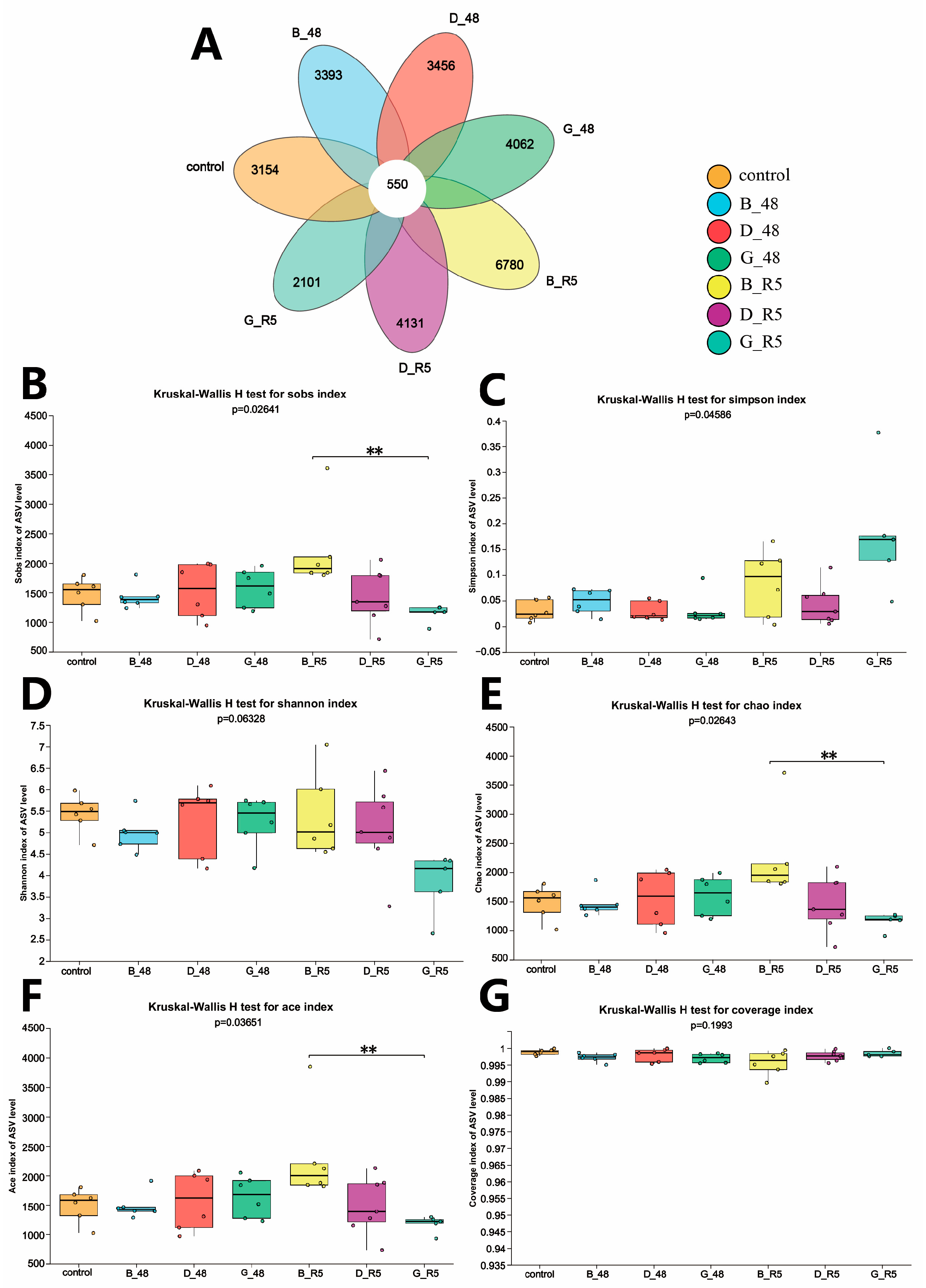
The original reads from pearl oyster gut samples were filtered and denoised to obtain ASV-level characteristic sequences. In total, 550 ASVs were shared between the control and treatment groups, and the numbers of unique ASVs in the B48, D48, G48, BR5, DR5, GR5, and control groups were 3393, 3456, 4062, 6780, 4131, 2101, and 3154, respectively (Figure 1A).

3.2. Analysis of Bacterial Community Diversity

The BR5 group showed markedly higher values for the Ace, Chao, and Sobs indices compared with the other groups, whereas the GR5 group exhibited the lowest values; significant differences in diversity were observed between BR5 and GR5 (Figure 1B–G). This pattern indicates that community richness was higher in BR5 but reduced in GR5. Relative to the other treatments, the GR5 group also displayed a lower Shannon index and a higher Simpson index, suggesting reduced microbial diversity; however, these differences were not statistically significant. Coverage values were consistently high across all groups, with no significant variation, indicating adequate sequencing depth. Shannon’s evenness and Simpson’s evenness indices were generally higher in the control group and lowest in GR5, reflecting greater evenness in the control community and reduced evenness in GR5, though group-level differences were not significant.
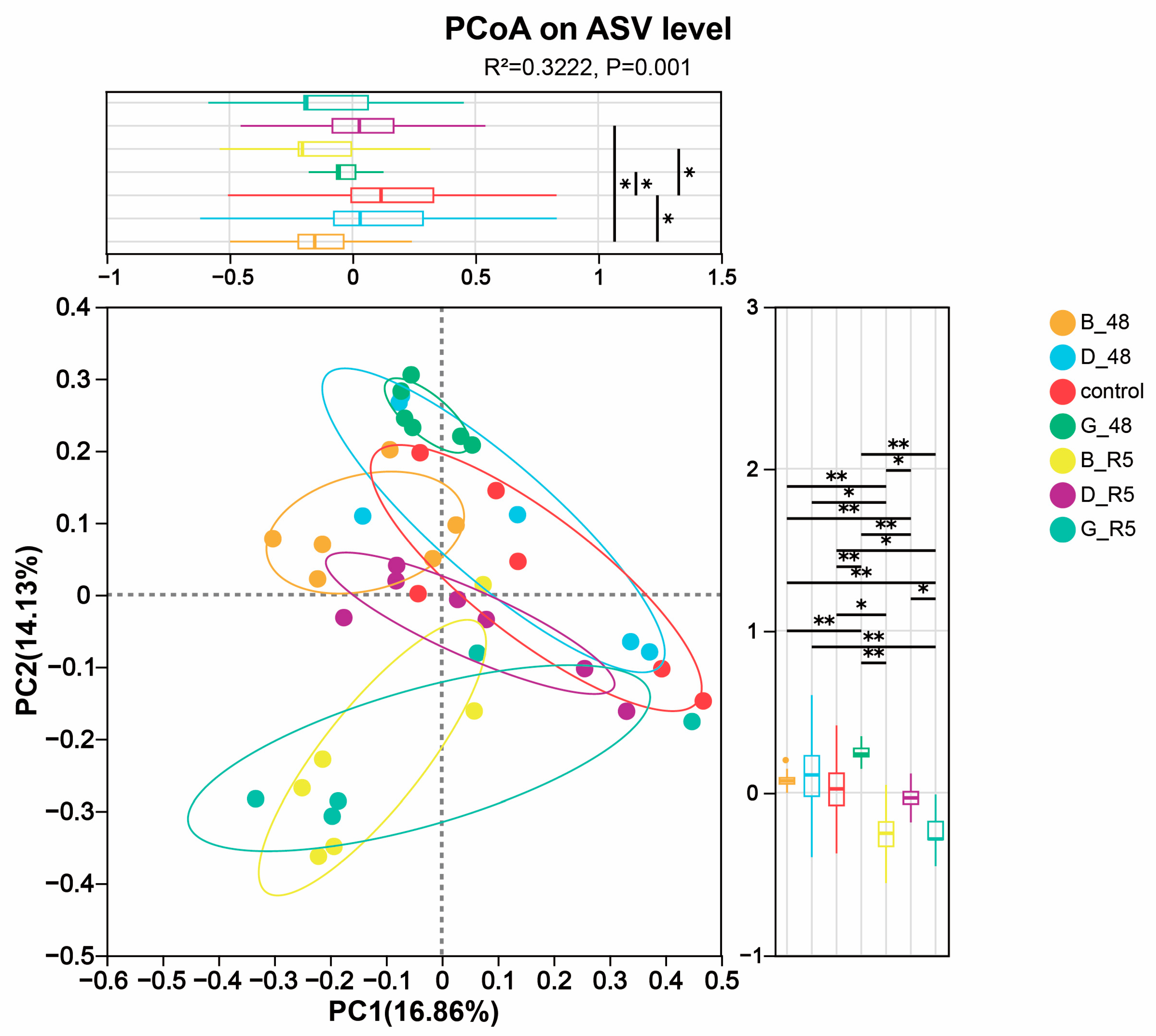
Beta diversity analysis was used to examine differences and similarities among the sample microbial communities (Figure 2). PCoA revealed clear differences in genus-level community composition under different treatments. The GR5 and BR5 groups clustered separately from the other groups. PC1 and PC2 explained 16.86% and 14.13% of the total variation in gut microbial community structure, respectively.

3.3. Community Structure Analysis

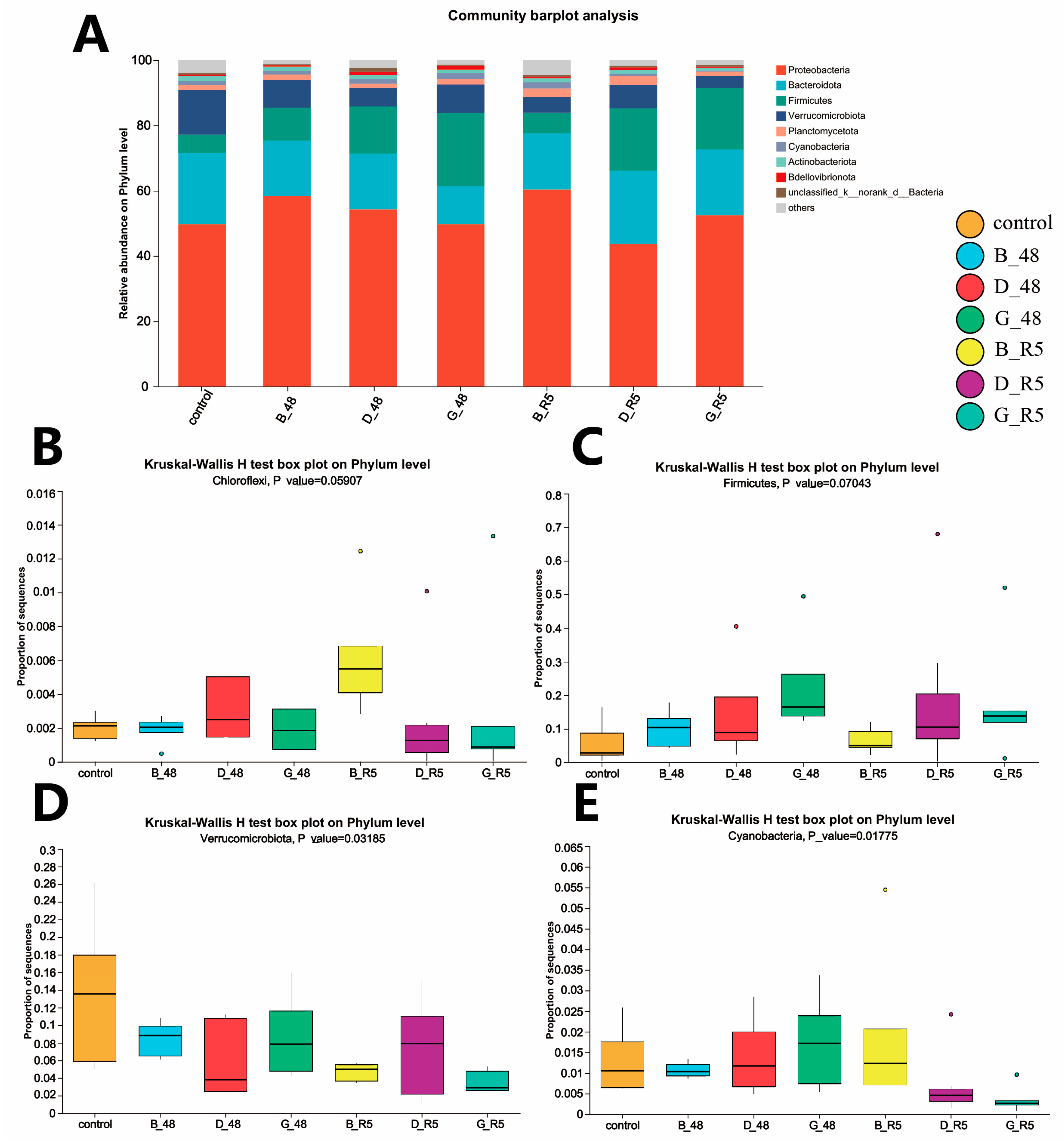
Figure 3 summarizes the composition of the top 10 dominant phyla inhabiting the digestive tract of P. f. martensii. Across six exposure conditions, Proteobacteria, Bacteroidetes, and Firmicutes were consistently the three dominant phyla in every group other than G48. In contrast, Proteobacteria, Firmicutes, and Bacteroidetes were the three most abundant phyla in G48. Proteobacteria, Firmicutes, and Verrucomicrobiota were the three dominant phyla in the control group. In every treatment and in the control, Proteobacteria were the most abundant phylum, with relative abundances above 40% in all cases. These phylum-level patterns did not differ significantly among groups.
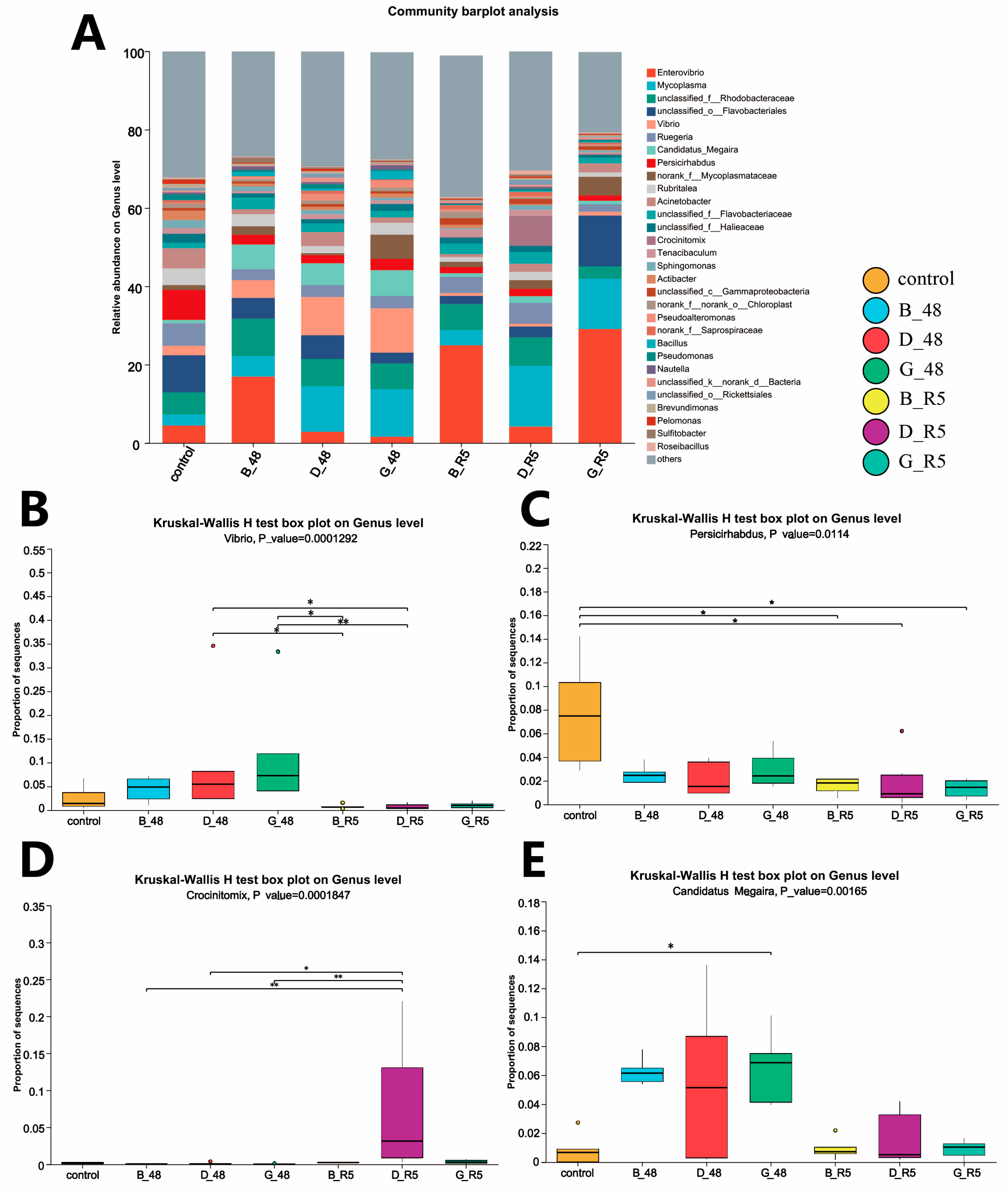
Figure 4 summarizes the genus-level composition, highlighting the 30 dominant bacterial genera identified in the gut of pearl oysters. In the control group, unnamed Flavobacteriales, Persicirhabdus, and Ruegeria were dominant. In the B48 group, Enterovibrio, unnamed Rhodobacteraceae, and Candidatus_Megaira were most common. In the D48 group, Mycoplasma, Vibrio, and unnamed Rhodobacteraceae were most abundant. In the G48 group, Mycoplasma, Vibrio, and unnamed Rhodobacteraceae were dominant. In the BR5 group, Enterovibrio, unnamed Rhodobacteraceae, and Ruegeria were enriched. In the DR5 group, Mycoplasma, Crocinitomix, and unnamed Rhodobacteraceae were prevalent. In the GR5 group, Enterovibrio, unnamed Flavobacteriales, and Mycoplasma were the dominant genera. Overall, Enterovibrio showed the greatest relative abundance in the B48, BR5, and GR5 groups, Mycoplasma was most abundant in the D48, G48, and DR5 groups, and an unnamed Flavobacteriales taxon was dominant in the control group.

3.4. LEfSe Multi-Level Species Discriminant Analysis

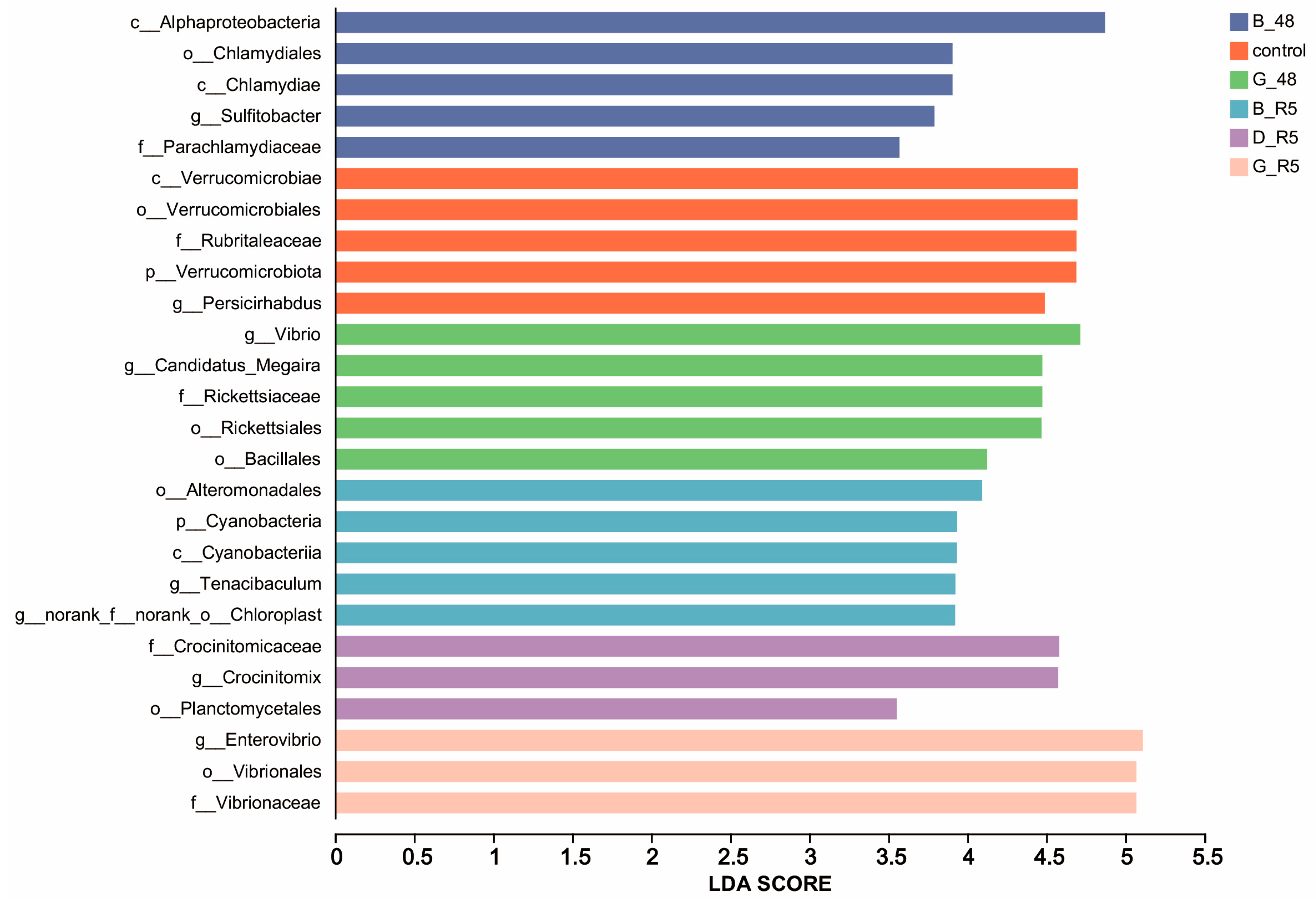
Figure 5 presents the top five bacterial taxa with the highest LDA scores (LDA > 3.5, p < 0.05). The LEfSe analysis revealed distinct genus-level biomarkers for several groups: Sulfitobacter in B48; Persicirhabdus in the control group; Vibrio and Candidatus Megaira in G48; Tenacibaculum in BR5; Crocinitomix and Roseibacillus in DR5; and Enterovibrio in GR5. No genus-level biomarker was detected for the D48 group.

4. Discussion

4.1. Effect of MPs and Cd on the Composition of the Intestinal Flora in Pearl Oysters

In aquatic animals, resident gut microbiota colonize defined niches on the intestinal mucosa and are essential for nutrient breakdown and uptake, host growth and development, immune regulation, and protection against pathogenic bacteria [46,47,48]. In this study, phylum-level analysis showed that Proteobacteria, Bacteroidetes, Firmicutes, and Verrucomicrobiota together contributed more than 88% of the total bacterial abundance in the intestines of pearl oysters in both treatment and control groups. Among these phyla, Proteobacteria was the most dominant, accounting for over 40% of the sequences in every group, consistent with the observations of Li et al. [41]. Surveys of aquaculture waters along the coastal regions of China have similarly identified Proteobacteria as the dominant bacterial phylum, with relative abundances reaching 83.11% [49]. In addition, Proteobacteria are regarded as major indigenous gut microbes that help initiate host immune responses [50]. Compared with the control group, treatment groups showed a higher relative abundance of Firmicutes and a lower abundance of Verrucomicrobiota. Previous studies have demonstrated that diets favoring Firmicutes and their metabolites can alter fatty acid absorption and lipid deposition in zebrafish [51]. Likewise, pearl oysters exposed to MPs and Cd may also experience changes in fatty acid absorption and lipid accumulation.

4.2. Effect of MPs and Cd on Species Differences in Pearl Oyster Gut Microbiota

We used LEfSe to compare discriminatory taxa among groups and examine how shifts in abundance contribute to group-level differences. We found that Sulfitobacter emerged as the unique biomarker in the B48 group. Members of this genus are broadly distributed across marine environments and are involved in sulfur cycling [52]. Previous studies also indicate that Sulfitobacter can function as a probiotic capable of suppressing fish pathogens [53]. In the control group, Persicirhabdus was identified as a key taxon; although its functions remain poorly defined, it may act as a potential pathogen. In our dataset, Persicirhabdus decreased in every treatment, and a significant reduction (p < 0.05) was observed during recovery, though additional evidence is needed to confirm its pathogenicity.
Vibrio and Candidatus Megaira were identified as the characteristic genera in the G48 group. Vibrio is a well-known opportunistic pathogen that can infect the digestive tract [54]. Its abundance declined significantly after a short recovery compared with DR5 (p < 0.05), suggesting that a brief recovery period can reduce the risk of Vibrio-associated infection. Candidatus Megaira is likewise considered a potential human pathogen [36]. Relative to the control group, its abundance increased significantly in G48 (p < 0.05), and although its levels tended to rise under exposure and decline after recovery across all experimental groups, these fluctuations were not statistically significant. Cd exposure may therefore contribute to intestinal disturbances that facilitate the proliferation of Candidatus Megaira.
Tenacibaculum was identified as the biomarker for BR5. This genus contains pathogens responsible for black spot disease in the shells of P. f. martensii, a condition that has caused major losses in pearl aquaculture [55]. Its enrichment indicates a possible pathogenic threat during the recovery phase. In DR5, Crocinitomix was detected, though its biological functions remain largely unresolved. Roseibacillus was also detected in DR5; previous work has shown that under phenanthrene or plastic exposure, this genus is correlated with metabolites involved in coenzyme A and glycerophospholipid metabolism in Oryzias latipes [56]. MP–Cd co-stress, and even the subsequent recovery period, may therefore influence metabolic function in pearl oysters through Roseibacillus.
Enterovibrio was the dominant biomarker in GR5. This genus contains pathogens frequently reported in shrimp aquaculture [57,58], and its enrichment suggests a potential disease risk for pearl oysters. Overall, LEfSe analysis highlights distinct genus-level biomarkers separating the control and treatment groups, reflecting the specific ways in which MP and Cd exposure reshape the gut microbiota of pearl oysters. Persicirhabdus in the control group represents a stable, healthy intestinal state, whereas Vibrio, Candidatus Megaira, Tenacibaculum, Roseibacillus, and Enterovibrio reflect the varied effects of pollutant exposure and subsequent recovery. These microbial shifts may influence gut homeostasis, nutrient processing, and host health. Further research is needed to clarify the functional roles of these biomarkers and their long-term consequences.
Finally, the detection of Sulfitobacter, typically considered a probiotic, as a biomarker in B48 may reflect species-level variation within the genus, exposure duration, or differences in community composition. Changes in intestinal biomarkers highlight how environmental perturbations reshape microbial communities, demonstrating both the adaptive flexibility of gut microbiota and the challenges posed to maintaining a stable beneficial flora [59].

4.3. Effect of MPs and Cd on the Diversity of the Gut Microbiota in Pearl Oysters

We evaluated the effects of MPs and Cd exposure on the gut microbiota of P. f. martensii by analyzing both α- and β-diversity indices. Exposure to MPs and Cd, either alone or in combination, did not induce statistically significant alterations in α-diversity metrics (e.g., Chao1 and Shannon), indicating that the overall richness and evenness of the microbial community were relatively resilient to short-term pollutant stress. This absence of significant α-diversity changes, however, does not preclude ecological impact, as microbial communities can undergo substantial structural reorganization without an overall change in diversity, consistent with the Anna Karenina principle for perturbed microbiomes [60]. In contrast, β-diversity analysis based on Bray–Curtis dissimilarity revealed pronounced and significant shifts in community structure. Principal coordinate analysis clearly separated the treatment groups (e.g., B48, G48, BR5) from the control, and these separations were statistically supported by the Adonis test (p < 0.05). This distinction between stable α-diversity and altered β-diversity indicates that pollutant stress did not markedly reduce species richness but selectively reshaped community composition by inhibiting sensitive taxa and enriching tolerant or opportunistic ones, including potential pathogens such as Vibrio, Tenacibaculum, and Enterovibrio. These findings align with previous reports that exposure to MPs or Cd alone can induce gut microbiota dysbiosis and alter both α- and β-diversity [61] and are consistent with studies showing that microbial community composition can shift significantly even when α-diversity remains stable [62]. The scattered distribution of samples in the PCoA space further suggests that such compositional restructuring may have adverse consequences for the host [60,63]. Therefore, the key conclusion of this study is that MPs and Cd primarily disrupt the gut ecosystem of P. f. martensii by reshaping microbial community structure (β-diversity) rather than by reducing overall diversity (α-diversity). This β-diversity-driven reorganization led directly to the enrichment of potential pathogens, highlighting ecological and health risks that extend beyond the non-significant trends observed in α-diversity metrics.
Interestingly, while single exposures to MPs or Cd significantly altered beta diversity, the co-exposure group (D) did not show a statistically significant shift. This divergence suggests that the interaction between MPs and Cd is not additive in reshaping the microbial community, possibly leading to a unique dysbiotic profile that differs from those induced by the individual pollutants. A key methodological consideration in this study is that the actual MPs concentration or particle density in the exposure media was not analytically verified post-preparation or during the experiment. Consequently, despite aiming for stable nominal exposure levels, potential discrepancies between target and bioavailable concentrations could not be entirely ruled out due to dynamic processes such as particle aggregation, sedimentation, or tank surface adsorption. It should be noted that the 5-day recovery period, while sufficient to reveal dysbiosis that persisted beyond the exposure phase, is relatively short from an ecological perspective. To fully assess the long-term consequences of microplastic and cadmium exposure on P. f. martensii, further investigation over extended durations is warranted. Nevertheless, our findings underscore that even a short-term co-exposure to MPs and Cd can induce microbial disturbances that extend into a critical post-exposure window, posing potential risks to host health in aquaculture settings.

5. Conclusions

We examined how MPs and Cd, applied either individually or in combination, influence the gut microbiota of pearl oysters and evaluated the health risks associated with these combined stressors. Our findings show that, while exposure to MPs and Cd did not significantly alter alpha diversity, beta diversity analyses revealed distinct, widely dispersed community clusters, suggesting that microbial interaction networks remained complex despite shifts in composition and structure. MPs and Cd also reshaped the gut microbiota of pearl oysters at the genus level, increasing the relative abundance of several pathogenic taxa (including Vibrio, Candidatus Megaira, Tenacibaculum, Roseibacillus, and Enterovibrio). A brief recovery phase partially reduced the abundance of pathogens (for example, Vibrio), yet the persistent enrichment of genera such as Enterovibrio and Tenacibaculum implies that prolonged exposure may cause lasting microbial dysbiosis, highlighting the health risks posed to the host by both single and combined MPs–Cd stress.

Supplementary Materials

The following supporting information can be downloaded at: https://www.mdpi.com/article/10.3390/fishes11010051/s1, Table S1. The particle size range of MPs.

Author Contributions

Conceptualization, C.Y.; methodology, L.H., Y.L., L.L., Q.S., J.L., J.Y. and Z.G.; software, L.H. and Y.L.; validation, C.Y.; formal analysis, L.H., Y.L., L.L., J.L., J.Y. and Z.G.; investigation, L.H., Y.L., L.L., J.L., J.Y. and Z.G.; resources, C.Y.; data curation, L.H., Y.L., L.L., Q.S., J.L., J.Y. and Z.G.; writing—original draft preparation, L.H., Y.L., L.L., J.L., J.Y. and Z.G.; writing—review and editing, C.Y.; visualization, C.Y.; supervision, C.Y. and Y.D.; project administration, C.Y.; funding acquisition, C.Y. All authors have read and agreed to the published version of the manuscript.

Funding

This research was funded by Shellfish & Algae Industry Innovation Team of Guangdong Modern Agricultural Technology System (Grant no. 2025CXTD23), Special Fund for Guangdong Province’s Science and Technology Innovation Strategy (grant number pdjh2024a191), Undergraduate Innovation Team of Guangdong Ocean University (grant number CXTD2025001), the earmarked fund for CARS-49, the program for scientific research start-up funds of Guangdong Ocean University (grant number 060302022304), and Hengli biosciences excellence project of Guangdong Ocean University (grant number B23335-4).

Institutional Review Board Statement

The pearl oyster P. f. martensii is a lower invertebrate, and therefore, the study was not subject to ethical approval.

Informed Consent Statement

This study does not involve human research.

Data Availability Statement

Data will be made available upon request.

Acknowledgments

We are very grateful to Marine Pearl Science and Technology Backyard in Leizhou of Guangdong for collecting samples.

Conflicts of Interest

The authors declare that the research was conducted in the absence of any commercial or financial relationships that could be construed as a potential conflict of interest.

References

  1. Liu, Z.; Yang, L. Control strategies for microplastic pollution in groundwater. Environ. Pollut. 2023, 335, 122323. [Google Scholar] [CrossRef]
  2. Sharma, S.; Basu, S.; Shetti, N.P.; Nadagouda, M.N.; Aminabhavi, T.M. Microplastics in the environment: Occurrence, perils, and eradication. Chem. Eng. J. 2021, 408, 127317. [Google Scholar] [CrossRef] [PubMed]
  3. Le, V.G.; Nguyen, M.K.; Nguyen, H.L.; Lin, C.; Hadi, M.; Hung, N.T.Q.; Bolan, N.S. A comprehensive review of micro-and nano-plastics in the atmosphere: Occurrence, fate, toxicity, and strategies for risk reduction. Sci. Total Environ. 2023, 904, 166649. [Google Scholar] [CrossRef] [PubMed]
  4. Li, J.; Liu, H.; Chen, J.P. Microplastics in freshwater systems: A review on occurrence, environmental effects, and methods for microplastics detection. Water Res. 2018, 137, 362–374. [Google Scholar] [CrossRef] [PubMed]
  5. Zhao, S.; Kvale, K.F.; Zhu, L.; Zettler, E.R.; Egger, M.; Mincer, T.J.; Zettler, L.A.A.; Lebreton, L.; Niemann, H.; Nakajima, R.; et al. The distribution of subsurface microplastics in the ocean. Nature 2025, 641, 51–61. [Google Scholar] [CrossRef]
  6. Rashid, E.; Hussain, S.M.; Ali, S.; Munir, M.; Ghafoor, A.; Yilmaz, E.; Alshehri, M.A.; Riaz, D.; Naeem, A.; Naeem, E. Impacts of microplastic accumulation in aquatic environment: Physiological, eco-toxicological, immunological, and neurotoxic effects. Aquat. Toxicol. 2024, 279, 107232. [Google Scholar] [CrossRef]
  7. Su, P.; Chang, J.; Yu, F.; Wu, X.; Ji, G. Microplastics in aquaculture environments: Sources, pollution status, toxicity and potential as substrates for nitrogen-cycling microbiota. Agric. Water Manag. 2024, 304, 109090. [Google Scholar] [CrossRef]
  8. Kushwaha, M.; Shankar, S.; Goel, D.; Singh, S.; Rahul, J.; Rachna, K.; Singh, J. Microplastics pollution in the marine environment: A review of sources, impacts and mitigation. Mar. Pollut. Bull. 2024, 209, 117109. [Google Scholar] [CrossRef]
  9. Mkuye, R.; Gong, S.; Zhao, L.; Fortunatus, M.; Charles, N.; Edna, B.; Yang, C.; Deng, Y. Effects of microplastics on physiological performance of marine bivalves, potential impacts, and enlightening the future based on a comparative study. Sci. Total Environ. 2022, 838, 155933. [Google Scholar] [CrossRef]
  10. Bao, R.; Cheng, Z.; Peng, L.; Mehmood, T.; Gao, L.; Zhuo, S.; Wang, L.; Su, Y. Effects of biodegradable and conventional microplastics on the intestine, intestinal community composition, and metabolic levels in tilapia (Oreochromis mossambicus). Aquat. Toxicol. 2023, 265, 106745. [Google Scholar] [CrossRef]
  11. Han, J.E.; Choi, S.K.; Jeon, H.J.; Park, J.K.; Han, S.H.; Jeong, J.; Kim, J.H.; Lee, J. Transcriptional response in the whiteleg shrimp (Penaeus vannamei) to short-term microplastic exposure. Aquac. Rep. 2021, 20, 100713. [Google Scholar] [CrossRef]
  12. De Marco, G.; Eliso, M.C.; Conti, G.O.; Galati, M.; Billè, B.; Maisano, M.; Ferrante, M.; Cappello, T. Short-term exposure to polystyrene microplastics hampers the cellular function of gills in the Mediterranean mussel Mytilus galloprovincialis. Aquat. Toxicol. 2023, 264, 106736. [Google Scholar] [CrossRef]
  13. Tenea, A.G.; Dinu, C.; Rus, P.A.; Ionescu, I.A.; Gheorghe, S.; Iancu, V.I.; Vasile, G.G.; Pascu, L.F.; Chiriac, F.L. Exploring adsorption dynamics of heavy metals onto varied commercial microplastic substrates: Isothermal models and kinetics analysis. Heliyon 2024, 10, e35364. [Google Scholar] [CrossRef] [PubMed]
  14. Saravanan, P.; Saravanan, V.; Rajeshkannan, R.; Arnica, G.; Rajasimman, M.; Gurunathan, B.; Pugazhendhi, A. Comprehensive review on toxic heavy metals in the aquatic system: Sources, identification, treatment strategies, and health risk assessment. Environ. Res. 2024, 258, 119440. [Google Scholar] [CrossRef] [PubMed]
  15. Mkuye, R.; Yang, X.; Yang, C.; Bubelwa, E.; Masanja, F.; Lauden, H.N.; Salman, M.; Deng, Y. Isolated and combined toxicity of PVC microplastics and copper on Pinctada fucata martensii: Immune, oxidative, and metabolomics insights. Comp. Biochem. Physiol. Part C 2025, 298, 110302. [Google Scholar] [CrossRef] [PubMed]
  16. Liu, X.H.; Pang, X.; Jin, L.; Pu, D.Y.; Wang, Z.J.; Zhang, Y.G. Exposure to acute waterborne cadmium caused severe damage on lipid metabolism of freshwater fish, revealed by nuclear lipid droplet deposition in hepatocytes of rare minnow. Aquat. Toxicol. 2023, 257, 106433. [Google Scholar] [CrossRef]
  17. Annabi-Trabelsi, N.; Guermazi, W.; Karam, Q.; Ali, M.; Uddin, S.; Leignel, V.; Ayadi, H. Concentrations of trace metals in phytoplankton and zooplankton in the Gulf of Gabès, Tunisia. Mar. Pollut. Bull. 2021, 168, 112392. [Google Scholar] [CrossRef]
  18. Hu, F.; Yin, L.; Dong, F.; Zheng, M.; Zhao, Y.; Fu, S.; Zhang, W.; Chen, X. Effects of long-term cadmium exposure on growth, antioxidant defense and DNA methylation in juvenile Nile tilapia (Oreochromis niloticus). Aquat. Toxicol. 2021, 241, 106014. [Google Scholar] [CrossRef]
  19. Zhang, T.; Zhou, X.; Ma, X.; Liu, J. Mechanisms of cadmium-caused eye hypoplasia and hypopigmentation in zebrafish embryos. Aquat. Toxicol. 2015, 167, 68–76. [Google Scholar] [CrossRef]
  20. Zhu, Q.; Zhou, Z.; Tu, D.; Zhou, Y.; Wang, C.; Liu, Z.; Gu, W.; Chen, Y.; Shu, M. Effect of cadmium exposure on hepatopancreas and gills of the estuary mud crab (Scylla paramamosain): Histopathological changes and expression characterization of stress response genes. Aquat. Toxicol. 2018, 195, 1–7. [Google Scholar] [CrossRef]
  21. Saikumar, S.; Mani, R.; Ganesan, S.; Ganesan, M. Evaluating the impact of the combined acute toxicity of iron (Fe) and microplastics on Namalycastis jaya. Aquat. Toxicol. 2024, 277, 107141. [Google Scholar] [CrossRef] [PubMed]
  22. Hartmann, N.B.; Rist, S.; Bodin, J.; Jensen, L.H.; Schmidt, S.N.; Mayer, P.; Meibom, A.; Baun, A. Microplastics as vectors for environmental contaminants: Exploring sorption, desorption, and transfer to biota. Integr. Environ. Assess. Manag. 2017, 13, 488–493. [Google Scholar] [CrossRef] [PubMed]
  23. Wang, F.; Wong, C.; Chen, D.; Lu, X.; Wang, F.; Zeng, E. Interaction of toxic chemicals with microplastics: A critical review. Water Res. 2018, 139, 208–219. [Google Scholar] [CrossRef] [PubMed]
  24. Yang, H.; Zhu, Z.; Xie, Y.; Zheng, C.; Zhou, Z.; Zhu, T.; Zhang, Y. Comparison of the combined toxicity of polystyrene microplastics and different concentrations of cadmium in zebrafish. Aquat. Toxicol. 2022, 250, 106259. [Google Scholar] [CrossRef]
  25. Yu, D.; Liu, S.; Yu, Y.; Wang, Y.; Li, L.; Peijnenburg, W.J.; Yuan, Y.; Peng, X. Transcriptomic analysis reveals interactive effects of polyvinyl chloride microplastics and cadmium on Mytilus galloprovincialis: Insights into non-coding RNA responses and environmental implications. Aquat. Toxicol. 2024, 275, 107062. [Google Scholar] [CrossRef]
  26. Yang, C.Y.; Huang, J.; Luo, J.P.; Wu, Q.; Hao, R.J.; Liao, Y.S.; Wang, Q.H.; Deng, Y.W. Molecular mechanisms of hypoxic preconditioning in the pearl oyster Pinctada fucata martensii revealed by DNA methylation profiling and transcriptome sequencing. Aquaculture 2026, 613, 743428. [Google Scholar] [CrossRef]
  27. Yang, C.; Hao, R.; He, C.; Deng, Y.; Wang, Q. Cloning and functional characterization of PmΔ5FAD in pearl oyster Pinctada fucata martensii. Aquac. Rep. 2022, 23, 101036. [Google Scholar] [CrossRef]
  28. Liao, Y.; Cai, C.; Yang, C.; Zheng, Z.; Wang, Q.; Du, X.; Deng, Y. Effect of protein sources in formulated diets on the growth, immune response, and intestinal microflora of pearl oyster Pinctada fucata martensii. Aquac. Rep. 2020, 16, 100253. [Google Scholar] [CrossRef]
  29. Mariom; Take, S.; Igarashi, Y.; Yoshitake, K.; Asakawa, S.; Maeyama, K.; Nagai, K.; Watabe, S.; Kinoshita, S. Gene expression profiles at different stages for formation of pearl sac and pearl in the pearl oyster Pinctada fucata. BMC Genom. 2019, 20, 240. [Google Scholar] [CrossRef]
  30. Yang, C.; Yang, J.; Hao, R.; Du, X.; Deng, Y. Molecular characterization of OSR1 in Pinctada fucata martensii and association of allelic variants with growth traits. Aquaculture 2020, 516, 734617. [Google Scholar] [CrossRef]
  31. Yang, C.; Wang, Q.; Hao, R.; Liao, Y.; Du, X.; Deng, Y. Effects of replacing microalgae with an artificial diet on pearl production traits and mineralization-related gene expression in pearl oyster Pinctada fucata martensii. Aquac. Res. 2017, 48, 5331–5337. [Google Scholar] [CrossRef]
  32. Adzigbli, L.; Wang, Z.; Zhao, Z.; Yang, C.; Li, J.; Deng, Y. Growth in pearl oysters: A review of genetic and environmental influences. Aquac. Res. 2020, 51, 18–28. [Google Scholar] [CrossRef]
  33. Wang, T.; Yang, C.; Wang, C.; Liao, Y.; Mkuye, R.; Deng, Y. Bacterial community profiling associated with pearl culture facilities of Liusha Bay, the largest marine pearl culture base on the western Guangdong coast, South China. Mar. Environ. Res. 2023, 189, 106063. [Google Scholar] [CrossRef] [PubMed]
  34. Wang, Z.; Ke, C.; Wang, X.; Li, L. Marine environmental quality assessment of shellfish culture in Liusha Bay. S. China Fish. Sci. 2011, 7, 24–30. [Google Scholar]
  35. Diwan, A.D.; Harke, S.N.; Panche, A.N. Host-microbiome interaction in fish and shellfish: An overview. Fish Shellfish. Immunol. Rep. 2023, 4, 100091. [Google Scholar] [CrossRef]
  36. Li, L.; Amara, R.; Souissi, S.; Dehaut, A.; Duflos, G.; Monchy, S. Impacts of microplastics exposure on mussel (Mytilus edulis) gut microbiota. Sci. Total Environ. 2020, 745, 141018. [Google Scholar] [CrossRef]
  37. Li, Z.; Feng, C.; Pang, W.; Tian, C.; Zhao, Y. Nanoplastic-induced genotoxicity and intestinal damage in freshwater benthic clams (Corbicula fluminea): Comparison with microplastics. ACS Nano 2021, 15, 9469–9481. [Google Scholar] [CrossRef]
  38. Yao, T.; Ye, L.; Wang, S.; Lu, J.; Li, H.; Yu, G. Effects of cadmium exposure on gut microbiota and antibiotic resistance genes in Haliotis diversicolor abalone. Chemosphere 2024, 352, 141507. [Google Scholar] [CrossRef]
  39. Wang, Y.; Sha, W.; Zhang, C.; Li, J.; Wang, C.; Liu, C.; Chen, J.; Zhang, W.; Song, Y.; Wang, R.; et al. Toxic effect of triphenyl phosphate (TPHP) on Cyprinus carpio and the intestinal microbial community response. Chemosphere 2022, 299, 134463. [Google Scholar] [CrossRef]
  40. Zhang, T.; Zhang, Y.; Xu, J.; Yan, Z.; Sun, Q.; Huang, Y.; Wang, S.; Li, S.; Sun, B. Toxic effects of ammonia on the intestine of the Asian clam (Corbicula fluminea). Environ. Pollut. 2021, 287, 117617. [Google Scholar] [CrossRef]
  41. Li, F.; Lin, Y.; Yang, C.; Yan, Y.; Hao, R.; Mkuye, R.; Deng, Y. Effects of titanium dioxide nanoparticle exposure on the gut microbiota of pearl oyster (Pinctada fucata martensii). Comp. Biochem. Physiol. Part C Toxicol. Pharmacol. 2024, 280, 109906. [Google Scholar] [CrossRef] [PubMed]
  42. Yao, J.; Gao, Z.; Wang, Z.; Ge, Z.; Lin, Y.; Huang, L.; Liu, J.; Zou, H.; Yang, C.; Mkuye, R.; et al. The combined effects of cadmium and microplastic mixtures on the digestion, energy metabolism, oxidative stress regulation, immune function, and metabolomes in the pearl oyster (Pinctada fucata martensii). Fishes 2025, 10, 133. [Google Scholar] [CrossRef]
  43. Barkhau, J.; Sanchez, A.; Lenz, M.; Thiel, M. Effects of microplastics (PVC, PMMA) on the mussel Semimytilus algosus differ only at high concentrations from those of natural microparticles (clay, celite). Mar. Pollut. Bull. 2022, 177, 113414. [Google Scholar] [CrossRef] [PubMed]
  44. Yap, V.; Chase, Z.; Wright, J.; Hurd, C.; Lavers, J.; Lenz, M. A comparison with natural particles reveals a small specific effect of PVC microplastics on mussel performance. Mar. Pollut. Bull. 2020, 160, 111703. [Google Scholar] [CrossRef]
  45. Xia, B.; Sui, Q.; Du, Y.; Wang, L.; Jing, J.; Zhu, L.; Zhao, X.; Sun, X.; Booth, A.; Chen, B.; et al. Secondary PVC microplastics are more toxic than primary PVC microplastics to Oryzias melastigma embryos. J. Hazard. Mater. 2022, 424, 127421. [Google Scholar] [CrossRef]
  46. Bosch, T.C.; McFall-Ngai, M.J. Metaorganisms as the new frontier. Zoology 2011, 114, 185–190. [Google Scholar] [CrossRef]
  47. Gonzalez, A.; Stombaugh, J.; Lozupone, C.; Turnbaugh, P.J.; Gordon, J.I.; Knight, R. The mind-body-microbial continuum. Dialogues Clin. Neurosci. 2011, 13, 55–62. [Google Scholar] [CrossRef]
  48. Zheng, Z.; Liao, Y.S.; Ye, J.M.; Yang, C.Y.; Adzigbli, L.; Wang, Q.H.; Du, X.D.; Deng, Y.W. Microbiota diversity in pearl oyster Pinctada fucata martensii intestine and its aquaculture environment. Front. Mar. Sci. 2021, 8, 655698. [Google Scholar] [CrossRef]
  49. Zhao, X.; Ding, J.; Dou, Y.; Wang, M.; Chang, Y. Bacterial diversity in the breeding environment of Takifugu rubripes revealed by MiSeq sequencing. Chin. J. Ecol. 2015, 34, 2965. [Google Scholar]
  50. Chen, X.; Huang, W.; Liu, C.; Song, H.; Waiho, K.; Lin, D.; Fangh, J.K.H.; Hu, M.; Kwan, K.Y.; Wang, Y. Intestinal response of mussels to nano-TiO2 and pentachlorophenol in the presence of predator. Sci. Total Environ. 2023, 867, 161456. [Google Scholar] [CrossRef]
  51. Semova, I.; Carten, J.D.; Stombaugh, J.; Mackey, L.C.; Knight, R.; Farber, S.A.; Rawls, J.F. Microbiota regulate intestinal absorption and metabolism of fatty acids in the zebrafish. Cell Host Microbe 2012, 12, 277–288. [Google Scholar] [CrossRef]
  52. Cui, H.; Fan, S.; Ding, W.; Zhang, W. Genomic analysis of novel Sulfitobacter bacterial strains isolated from marine biofilms. Mar. Drugs 2024, 22, 289. [Google Scholar] [CrossRef] [PubMed]
  53. Sharifah, E.N.; Eguchi, M. Benefits of live phytoplankton, Chlorella vulgaris, as a biocontrol agent against fish pathogen Vibrio anguillarum. Fish. Sci. 2012, 78, 367–373. [Google Scholar] [CrossRef]
  54. Kesarcodi-Watson, A.; Kaspar, H.; Lategan, M.J.; Gibson, L. Two pathogens of GreenshellTM mussel larvae, Perna canaliculus: Vibrio splendidus and a V. coralliilyticus/neptunius-like isolate. J. Fish Dis. 2009, 32, 499–507. [Google Scholar] [CrossRef] [PubMed]
  55. Sakatoku, A.; Fujimura, T.; Ito, M.; Takashima, S.; Isshiki, T. Newly isolated bacterium Tenacibaculum sp. strain Pbs-1 from diseased pearl oysters is associated with black-spot shell disease. Aquaculture 2018, 493, 61–67. [Google Scholar] [CrossRef]
  56. Byeon, E.; Jeong, H.; Lee, Y.J.; Cho, Y.; Lee, K.W.; Lee, E.; Jeong, C.B.; Lee, J.S.; Kang, H.M. Effects of microplastics and phenanthrene on gut microbiome and metabolome alterations in the marine medaka Oryzias melastigma. J. Hazard. Mater. 2024, 461, 132620. [Google Scholar] [CrossRef]
  57. Alfiansah, Y.R.; Peters, S.; Harder, J.; Hassenrück, C.; Gärdes, A. Structure and co-occurrence patterns of bacterial communities associated with white faeces disease outbreaks in Pacific white-leg shrimp Penaeus vannamei aquaculture. Sci. Rep. 2020, 10, 11980. [Google Scholar] [CrossRef]
  58. Boopathi, S.; Meenatchi, R.; Brindangnanam, P.; Sudhakaran, G.; Coumar, M.S.; Arockiaraj, J. Microbiome analysis of Litopenaeus vannamei reveals Vibrio as main risk factor of white faeces syndrome. Aquaculture 2023, 576, 739829. [Google Scholar] [CrossRef]
  59. Chen, C.; Chen, P.; Weng, F.C.H.; Shaw, G.T.W.; Wang, D. Habitat and indigenous gut microbes contribute to the plasticity of gut microbiome in oriental river prawn during rapid environmental change. PLoS ONE 2017, 12, e0181427. [Google Scholar] [CrossRef]
  60. Zaneveld, J.R.; McMinds, R.; Vega Thurber, R. Stress and stability: Applying the Anna Karenina principle to animal microbiomes. Nat. Microbiol. 2017, 2, 1–8. [Google Scholar] [CrossRef]
  61. Fackelmann, G.; Sommer, S. Microplastics and the gut microbiome: How chronically exposed species may suffer from gut dysbiosis. Mar. Pollut. Bull. 2019, 143, 193–203. [Google Scholar] [CrossRef]
  62. Medriano, C.A.; Kim, S.; Kim, L.H.; Bae, S. Chronic exposure of adult zebrafish to polyethylene and polyester-based microplastics: Metabolomic and gut microbiome alterations reflecting dysbiosis and resilience. J. Hazard. Mater. 2025, 484, 136691. [Google Scholar] [CrossRef]
  63. Drobne, D.; Rupnik, M.; Lapanje, A.; Strus, J.; Janc, M. Isopod gut microflora parameters as endpoints in toxicity studies. Environ. Toxicol. Chem. Int. J. 2002, 21, 604–609. [Google Scholar] [CrossRef]
Figure 1. (A) Venn diagram of ASVs showing gut microbial differences among treatment groups. (BG) Alpha diversity metrics of pearl oyster gut microbiota under different treatments. Asterisks denote statistically significant differences among groups. (**: p < 0.01).
Fishes 11 00051 g001
Figure 2. Principal coordinate analysis of gut microbiota in pearl oysters following co-exposure to Cd2+ and MPs. (*: p < 0.05; **: p < 0.01).
Fishes 11 00051 g002
Figure 3. Composition of the intestinal bacterial community of pearl oysters at the phylum level. (A) Relative abundance of the top 10 bacterial phyla; taxa with lower relative abundance are grouped as “Others.” (BE) Significance of differences among groups.
Fishes 11 00051 g003
Figure 4. Composition of the intestinal bacterial community of pearl oysters at the genus level. (A) Relative abundance of the top 30 bacterial genera; taxa of lower relative abundances are grouped as “Others.” (BE) Significance of differences among groups. (*: p < 0.05; **: p < 0.01).
Fishes 11 00051 g004
Figure 5. LEfSe analysis of gut microbiome biomarkers across groups. Bar plot showing LDA scores for bacterial taxa (LDA score > 3.5, p < 0.05).
Fishes 11 00051 g005
Disclaimer/Publisher’s Note: The statements, opinions and data contained in all publications are solely those of the individual author(s) and contributor(s) and not of MDPI and/or the editor(s). MDPI and/or the editor(s) disclaim responsibility for any injury to people or property resulting from any ideas, methods, instructions or products referred to in the content.