
Article

Seasonal and Size-Related Variation in Diet Composition and Feeding Strategies of the Robustus Tonguefish, Cynoglossus robustus in the Yeosu Coast, Korea

South Sea Fisheries Research Institute, National Institute of Fisheries Science, Yeosu 59780, Republic of Korea
*
Author to whom correspondence should be addressed.
Fishes 2026, 11(1), 50; https://doi.org/10.3390/fishes11010050
Submission received: 5 December 2025 / Revised: 31 December 2025 / Accepted: 13 January 2026 / Published: 14 January 2026
(This article belongs to the Special Issue Ecology of Fish: Age, Growth, Reproduction and Feeding Habits)

Abstract

This study examined the seasonal and size-related variations in the diet composition and feeding strategies of the robust tonguefish Cynoglossus robustus collected in the Yeosu Coast, Korea, from January to December 2024. Stomach content analysis identified amphipods, polychaetes, and brachyurans as the dominant prey items. Ontogenetic dietary shifts were evident, with individuals < 25 cm TL feeding mainly on amphipods, whereas larger individuals consumed more polychaetes and brachyurans, indicating a shift toward larger and more energy-efficient prey with growth. Amphipods, with Ampelisca sp. being predominant, were predominant in spring and summer, whereas crabs and polychaetes increased in autumn and winter, respectively. Seasonal variation was attributed to environmental factors and post-spawning feeding recovery. The estimated trophic level (3.22) suggests that C. robustus functions as a mesopredator consuming benthic invertebrates and plays an essential role in energy transfer within the coastal benthic ecosystem. These findings provide fundamental ecological insights into the trophic structure of the coastal ecosystem in the southern sea of Korea and serve as a scientific basis for sustainable fisheries resource management.
Key Contribution: Identification of seasonal and size-related diet shifts in the robust tonguefish (Cynoglossus robustus), highlighting its trophic role as a mesopredator in the South Sea coastal ecosystem of Korea.

1. Introduction

The Robust Tonguefish, Cynoglossus robustus (Pleuronectiformes: Cynoglossidae), is a demersal fish with an extensive distribution covering the coastal waters of the southern and western seas of Korea [1,2,3], southern Japan [4], the East China Sea, and the South China Sea. It inhabits sand and mud bottoms at depths ranging from 20 to 115 m [5]. Seasonally, this species exhibits a characteristic migration pattern, overwintering in the western and southern waters off Jeju Island and moving to the coastal areas of the southern sea from spring to summer for spawning and growth [6,7].
Tonguefishes (Cynoglossus spp.), including C. robustus, are distributed throughout Korean coastal areas, but they are predominantly harvested in the southern sea of Korea using various gear, such as coastal gill nets, offshore gill nets, coastal improved stow nets, and large trawl nets. The total fisheries production of tonguefish fluctuated from 2000 to 2024, increasing from 585 metric tons (MT) in 2002 to a peak of 2246 MT in 2020. The average annual production is approximately 1846 MT, with the southern sea accounting for approximately 76.1% of the total average catch [8]. Although C. robustus is a commercially important species, particularly along the southern coast of Korea, its specific ecological traits are often obscured because official catch statistics are aggregated for the entire Cynoglossus.
The feeding behavior of fish is governed by complex interactions and is known to influence energy flow and the distribution and structure of populations across trophic levels [9]. Feeding is not simply limited to food intake but is determined by a variety of ecological factors. Therefore, identifying the factors that dictate prey consumption by fish and their resource partitioning is crucial. Factors influencing fish diets include spatial variations in habitat structure [10], morphological characteristics of individuals [11], and interspecific interactions within the community [12]. Specifically, studying feeding ecology is essential for a functional understanding of marine ecosystems and for analyzing the effects of environmental changes on marine life [13]. Furthermore, for species positioned at higher trophic levels, feeding ecology research provides significant value for the assessment of fishery resources [14]. Understanding changes in food selectivity, habitat preferences, developmental stages, and nutritional status will contribute to a better understanding of ecological functions and the formulation of resource and fisheries management strategies [15,16,17]. However, research on the feeding ecology of C. robustus in Korea has been confined to the southern coast of Korea [18] and the Yeosu Coast [6]. Only a few studies have been conducted internationally, such as in the Seto Inland Sea, Japan [19]. Moreover, previous studies have been limited to analyzing only a specific size class (20–30 cm in total length) in the coastal waters of Yeosu [6] or have focused merely on the basic composition of stomach contents and trophic levels [20]. Consequently, no study has yet determined the correlation between seasonal and growth-related feeding characteristics and major prey organisms through in-depth stomach content analysis.
A comprehensive understanding of fish feeding strategy is intimately connected to its diel activity, habitat utilization, and the degree of inter- and intraspecific ecological niche overlap. This reflects the intensity of the competition within the fish community [21,22,23]. Thus, holistic research on the feeding ecology of fish yields core baseline data to understand growth and prey selectivity, which is indispensable for establishing effective conservation and sustainable resource management feeding strategy [24,25,26]. Therefore, this study aimed to obtain fundamental ecological data required for ecosystem-based resource assessment and management [27] by analyzing the stomach contents of the commercially important C. robustus inhabiting the Yeosu Coast, Korea, to clarify its feeding characteristics and correlations with major prey organisms in relation to season and growth, thereby enhancing the understanding of trophic interactions and energy flow within the coastal benthic ecosystem of the southern sea of Korea, and providing baseline information essential for elucidating the ecological role and food web structure of demersal fishes and for ecosystem-based fisheries resource management.

2. Materials and Methods

2.1. Sample Collection and Processing

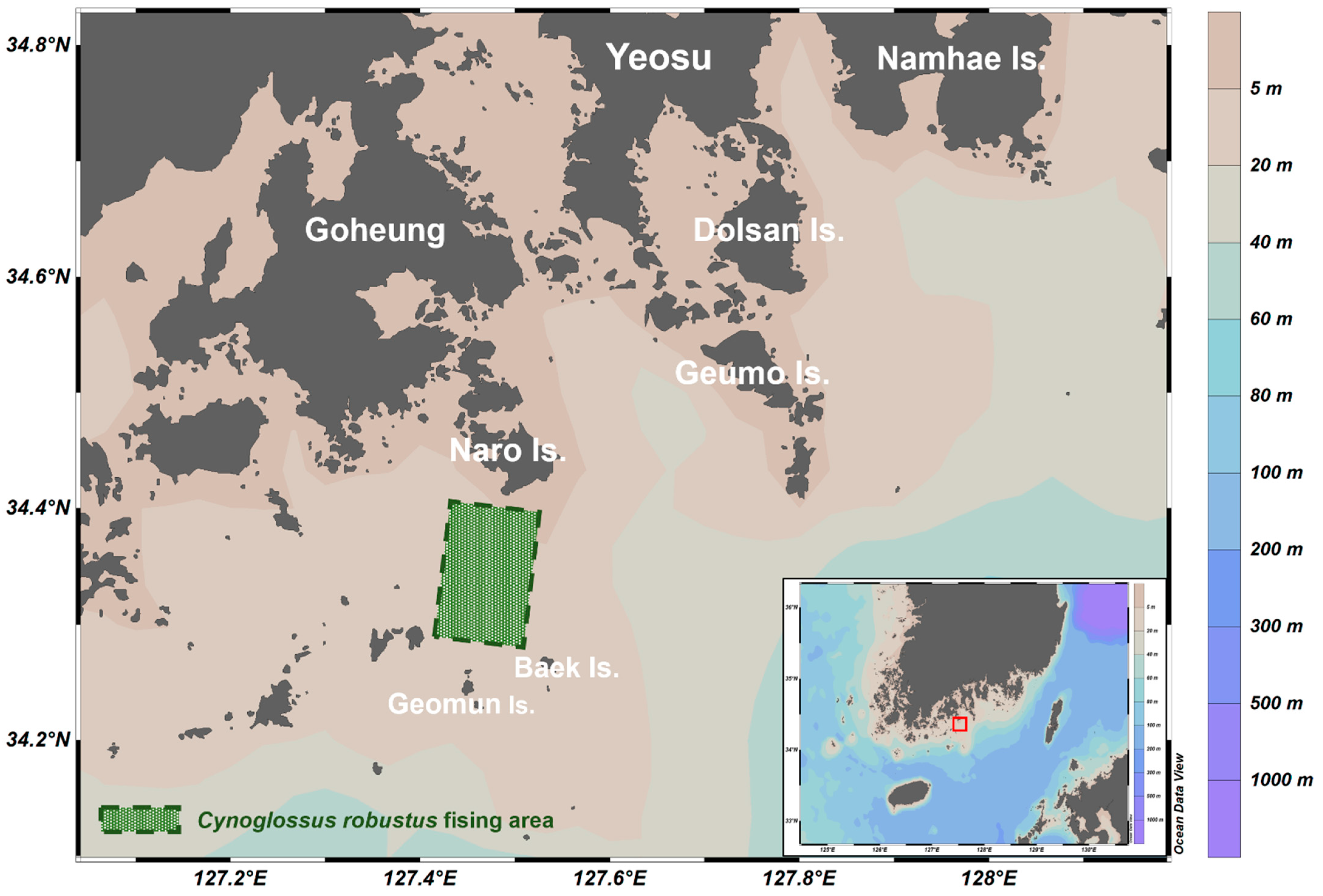
C. robustus specimens (n = 1210) were purchased monthly from January to December 2024 from coastal gillnet vessels operating in the Yeosu Coast, specifically around Narodo, Geomundo, and Baekdo Islands, Korea, and used for analysis (Figure 1). For each individual, the total length (TL; 0.1 cm) and body weight (BW; 0.1 g) were measured (GF-6000, A&D Company, Limited, Tokyo, Japan). The potential influence of sampling gear characteristics, specifically the immersion time of coastal gillnets, was carefully considered during the interpretation of the dietary data. To minimize further post-capture digestion, each specimen was dissected, excised, and immediately fixed in a 10% neutral formalin solution.

2.2. Stomach Content Analysis

The fixed stomachs were cut open using scissors, a scalpel, and forceps under a stereoscopic microscope (SZX16; Olympus Corporation, Tokyo, Japan) and analyzed. Prey items were identified at the species level where possible, referencing [2] for fish classification and [28] for invertebrates. The number of individuals per prey item was counted. For wet weight, stomach contents were sorted by taxonomic group and placed on Whatman GF/F glass microfiber filters (Cat. No. 1825-047, 47 mm diameter; Cytiva, Amersham, UK) to remove residual water and then measured to the nearest 0.00001 g using a precision balance (XP26, Mettler-Toledo International Inc., Greifensee, Switzerland).

2.3. Quantitative Analysis

The results of stomach content analysis were expressed using the frequency of occurrence ( % F ), numerical percentage ( % N ), and wet weight percentage ( % W ). These indices were calculated using the following formula:
% F   =   A i N × 100
% N = N i N t o t a l × 100
% W = W i W t o t a l × 100
where A i is the number of fish with prey items i in their stomach, N is the total number of non-empty stomachs analyzed, N i is the number of individuals of prey item i , N t o t a l is the total number of all prey organisms, W i is the wet weight of prey item i , and W t o t a l is the total wet weight of all prey organisms.
The index of relative importance ( I R I ) for each prey organism was calculated according to the method in [29], using the following equation:
I R I   =   ( % N + % W ) × % F
The calculated I R I values were then converted to the percentage index of relative importance ( % I R I ) using the follwoing standard formula:
% I R I   =   I R I i i = 1 n I R I × 100

2.4. Feeding Strategy and Niche Overlap Analysis

The feeding importance (dominant or rare), feeding strategy (specialist or generalist), and niche width (feeding breadth) of C. robustus were graphically analyzed using the method of [30], which employs the following equation:
% P i   = S i S t i × 100
where P i is the prey-specific relative abundance of the prey item i , S i is the wet weight of the prey item i in the stomach contents, and S t i is the total wet weight of all stomach contents in which the prey item i was found.
To analyze seasonal changes in prey composition, the seasons were defined as spring (March–May), summer (June–August), autumn (September–November), and winter (December–February). Additionally, to examine changes related to growth and facilitate comparison with prior studies, the fish were categorized into five size classes based on total length (TL): TL < 25 cm, 25–30 cm TL, 30–35 cm TL, 35–40 cm TL, and TL ≥ 40 cm.
The dietary overlap between the total length classes was calculated using the dietary overlap index [31] as follows:
C x y   =   1 0.5 p x i p y i × 100
where p x i and p y i are the wet weight percentages ( % W ) of prey items i in the size classes x and y , respectively.
Furthermore, feeding characteristics across size classes were assessed by calculating the mean number of prey per stomach (mN/TL) and mean wet weight of prey per stomach (mW/TL) for each class. One-way Analysis of Variance (ANOVA) was performed to test for statistical significance.

2.5. Trophic Level Analysis

The trophic level (ecological niche) of C. robustus was determined using TrophLab [32] based on the following equation:
T R O P H i   =   1 + j = 1 G C D i j · T R O P H j
where T R O P H i is the trophic level of the organism i , C D i j is the ratio of prey organisms j found in the stomach of the organism i , G is the total number of prey organisms, and T R O P H j is the trophic level of the prey organism j .

2.6. Multivariate Statistical Analysis

To analyze the differences in diet based on size class and season, two-way permutational analysis of variance (PERMANOVA) was performed. For this analysis, specimens within each size class and season were randomly assigned to subgroups containing one to seven individuals, and the mean value of the weight percentage (%W) for each prey taxonomic group was calculated for these subgroups. This use of mean values from random subgroups helps reduce the number of zero-value data points for prey taxa, thereby increasing the efficiency of the multivariate analysis [33,34]. To reduce the bias of dominant prey items, the data were log(x+1) transformed, and a Bray–curtis similarity matrix was generated.
The results of the two-way PERMANOVA included the components of variation (COV), which represent the degree of contribution of the main factors and their interaction terms to the structure of the data. A larger COV value indicates a greater influence of that factor or interaction on the community structure. When a significant difference (p < 0.05) was detected, Canonical Analysis of Principal Coordinates (CAP), a permutation-based ordination method, was performed to visualize the differences. In the CAP analysis, only vectors with a Spearman correlation coefficient of 0.4 or greater were displayed to identify the major prey taxa contributing to cluster formation. All analyses were performed using the vegan package (version 2.6-8) in the R (version 4.4.1) [35,36].

3. Results

3.1. Total Length Distribution

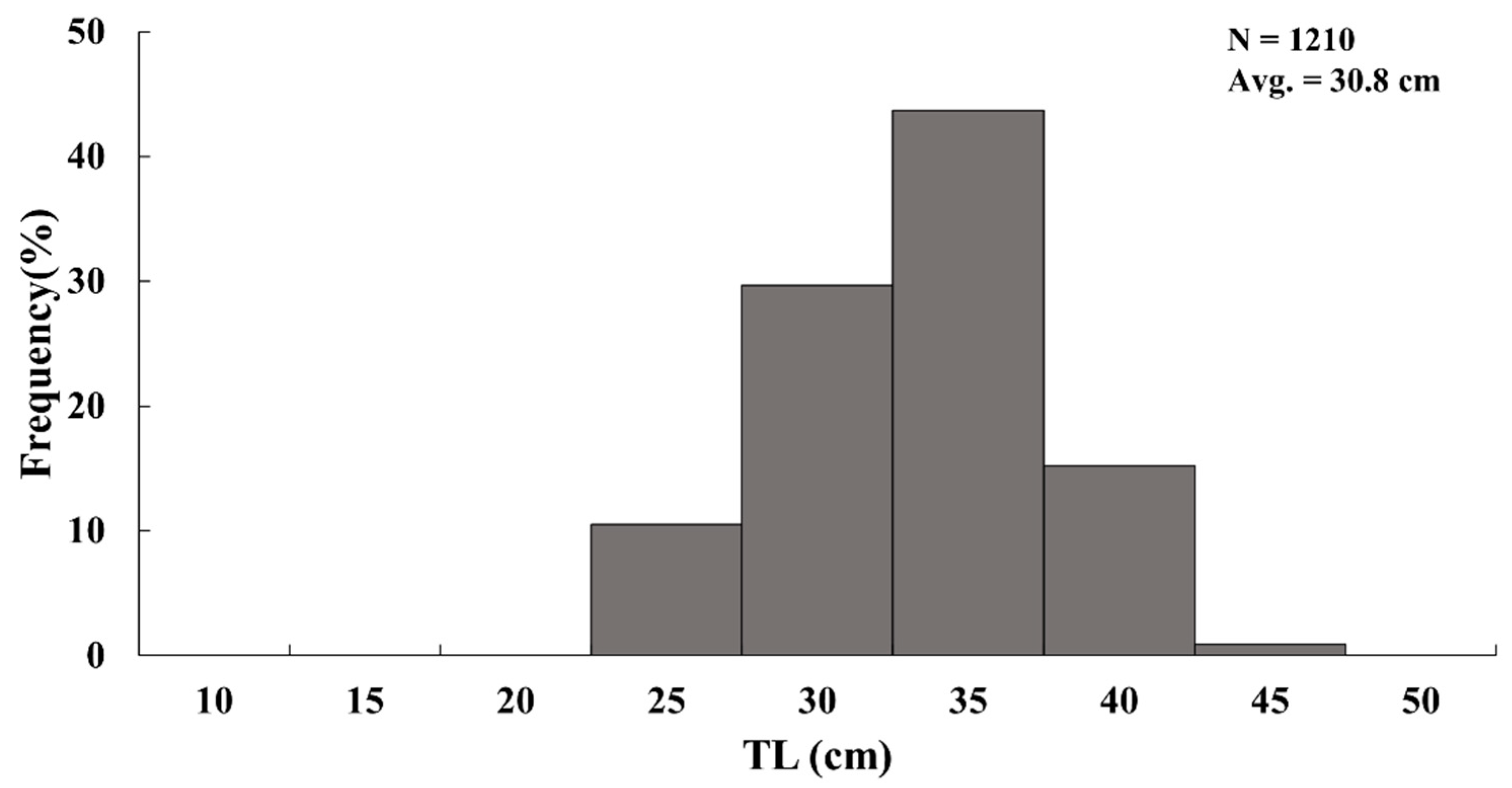
The 1210 specimens of C. robustus analyzed in this study ranged in total length (TL) from 20.3 to 43.8 cm, with a mean TL of 30.8 ± 4.2 cm (Figure 2).
The 30.0–35.0 cm size class constituted the largest proportion of the total catch, accounting for 43.7% of all individuals (Table 1).
The monthly mean total length was highest in February at 35.8 ± 2.6 cm and lowest in March at 28.4 ± 4.1 cm. The seasonal mean total lengths were 32.4 ± 3.5 cm in winter (December–February), 30.4 ± 3.6 cm in spring (March–May), 30.7 ± 4.0 cm in summer (June–August), and 30.9 ± 3.0 cm in autumn (September–November).

3.2. Stomach Contents Composition

Of the 1210 C. robustus specimens examined in this study, 450 individuals (37.2%) presented with empty stomachs (Table 2). Among these, 204 were females (34.1%) and 246 were males (38.5%). One-way ANOVA revealed no significant difference in the empty stomach rate between sexes (p > 0.05). By size class, the number of individuals with empty stomachs was 47 (38.5%) for TL < 25 cm, 155 (44.3%) for 25–30 cm TL, 156 (29.3%) for 30–35 cm TL, 86 (44.6%) for 35–40 cm TL, and 6 (50.0%) for TL ≥ 40 cm. One-way ANOVA showed a highly significant difference in the empty stomach rate among size classes (p < 0.05), with the lowest rate observed in the 30–35 cm size class. Subsequent analysis of the stomach contents of 760 prey-consuming individuals revealed that the primary prey items, in descending order of importance were amphipoda, polychaeta, brachyura, and bivalvia. Amphipoda was the most important prey group, accounting for 55.4% frequency of occurrence, 44.4% numerical percentage, 6.2% of wet weight percent, and 43.1% of relative importance. Within Amphipoda, Ampeliscidae and its representative species, Ampelisca sp., were identified as the dominant taxa. Polychaeta was the second most important prey item, accounting for 38.3% frequency of occurrence, 21.7% numerical percentage, 25.4% of wet weight percent, and 27.7% of relative importance. Lumbrineridae was confirmed as the major dominant family within polychaeta.
Brachyura was the third most important prey item, accounting for 30.1% frequency of occurrence, 11.4% numerical percentage, 29.4% of wet weight percent, and 18.9% of relative importance. Among the brachyura, Varunidae was identified as the key dominant family. Bivalvia was the fourth most important group, accounting for 18.7% frequency of occurrence, 8.0% numerical percentage, 13.4% of wet weight percent, and 6.1% of relative importance. Within bivalvia, Nuculanidae and its representative species, Saccella sematensis, were identified as the major dominant taxa.
Additionally, a variety of other prey organisms were consumed, including caridea, stomatopoda, cumacea, fish, foraminifera, gastropoda, isopoda, and ophiuroidea. However, each of these groups contributed less than 1.5% to the index of relative importance.

3.3. Feeding Strategy

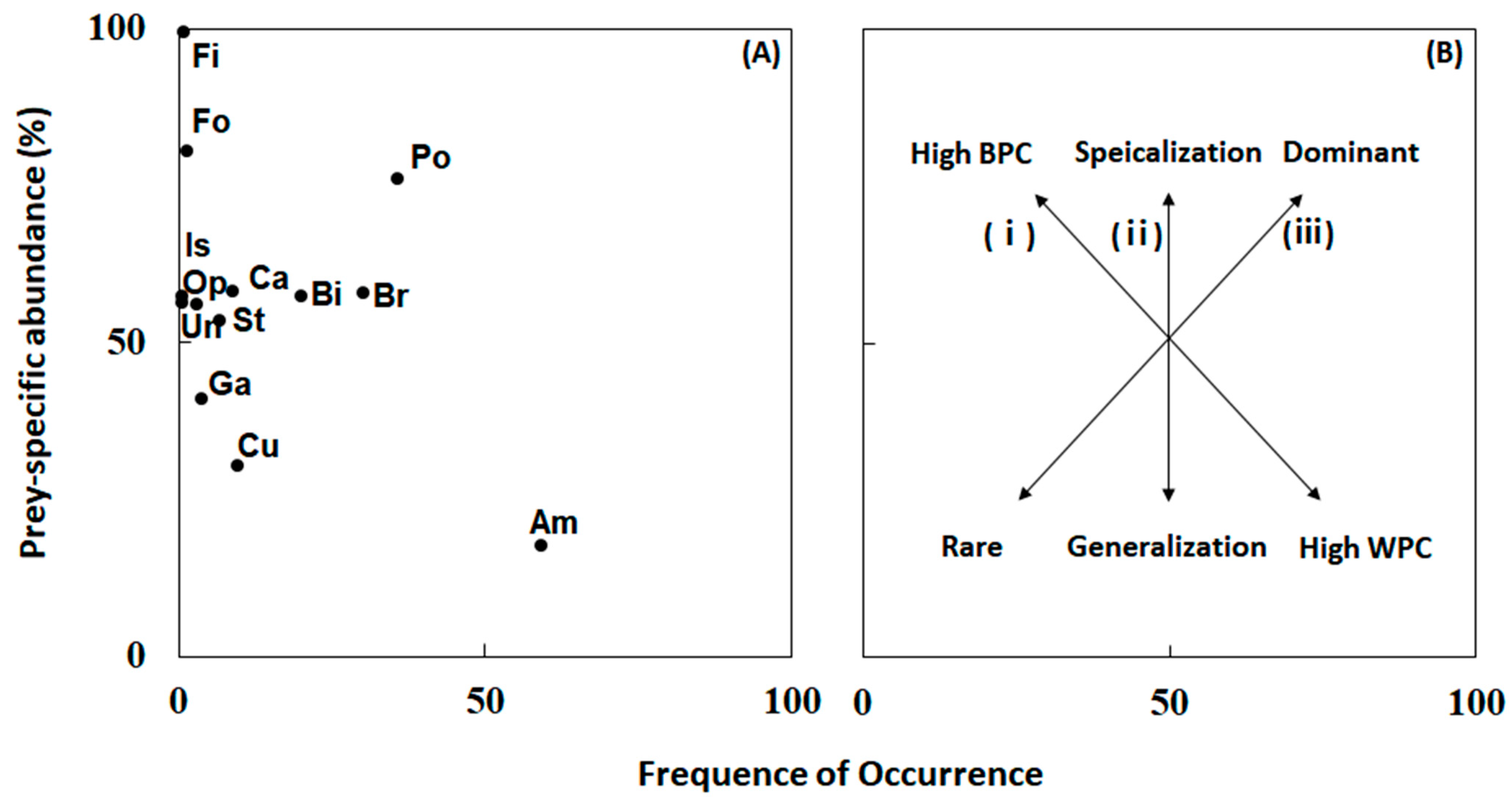
The dietary patterns and feeding strategy of C. robustus were determined by graphical analysis of stomach content data. The most important prey items were benthic invertebrates, including brachyura, amphipoda, polychaeta, and bivalvia.
These major taxonomic groups were confirmed as important prey items, exhibiting frequency of occurrence values of 30.1%, 55.4%, 38.3%, and 18.7% and prey-specific relative abundance values of 59.1%, 16.3%, 74.1%, and 57.4%, respectively. Although other prey organisms, such as caridea, cumacea, fish, isopoda, stomatopoda, and gastropoda were also consumed, they showed low frequencies of occurrence, indicating a narrow dietary breadth(Figure 3). Therefore, C. robustus was determined to be a specialist predator with a high preference for benthic food resources, primarily brachyura, amphipoda, polychaeta, and bivalvia species.

3.4. Variation in Diet Composition Across Size Classes

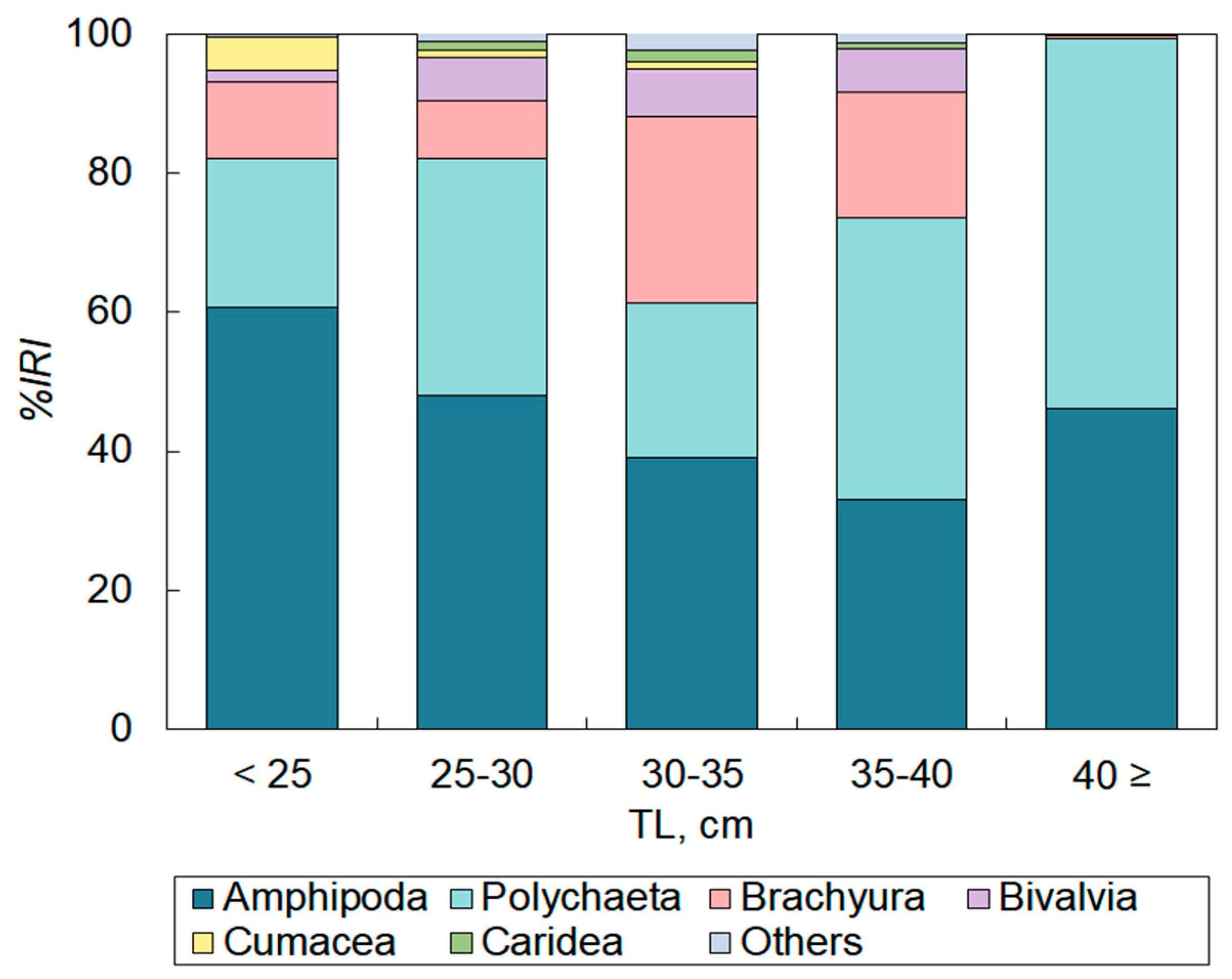
Analysis of stomach content composition across different size classes revealed clear dietary shifts (Figure 4). In the smallest size class TL < 25 cm, amphipoda was the most dominant prey item, accounting for 60.7% of the index of relative importance, followed by polychaeta at 21.5%. Minor prey items included brachyura at 10.9%, bivalvia at 1.7%, and cumacea at 4.8%. In the 25–30 cm TL size class, amphipoda remained dominant with 48.0%, while polychaeta was the second most dominant prey item at 34.0%. Minor consumption was observed in bivalvia (6.2%), brachyura (8.4%), caridea (1.4%), and cumacea (1.0%).
For the 30–35 cm TL size class, amphipoda was the most dominant (39.1%), followed by polychaeta (22.3%) and brachyura (26.8%). Minor consumption included caridea (1.5%) and cumacea (1.2%). In the 35–40 cm TL size class, polychaeta was the most dominant prey item at 40.4%, while amphipoda accounted for 33.1%, and brachyura for 18.1%. Bivalvia contributed 6.2% and caridea contributed a minor 1.0%. Finally, in the TL ≥ 40 cm size class, polychaeta was overwhelmingly dominant at 53.3%, with amphipoda following at 46.1%. Bivalvia and brachyura were only consumed in trace amounts, each accounting for 0.3% of the index of relative importance.
Across all size classes, Ampelisca sp. was consistently consumed and identified as a common dominant species. Lumbrineris latreilli began appearing in the TL ≥ 25 cm size class and became a dominant species, particularly in the TL ≥ 35 cm size class. Charybdis bimaculata was an important prey item in the 30–35 cm TL and 35–40 cm TL size classes and was also observed at low ratios in some smaller size groups. Saccella sematensis and Raeta pulchella were consumed in small amounts in the 25–40 cm TL size classes, whereas caridea and cumacea were consumed in trace amounts across all size classes.
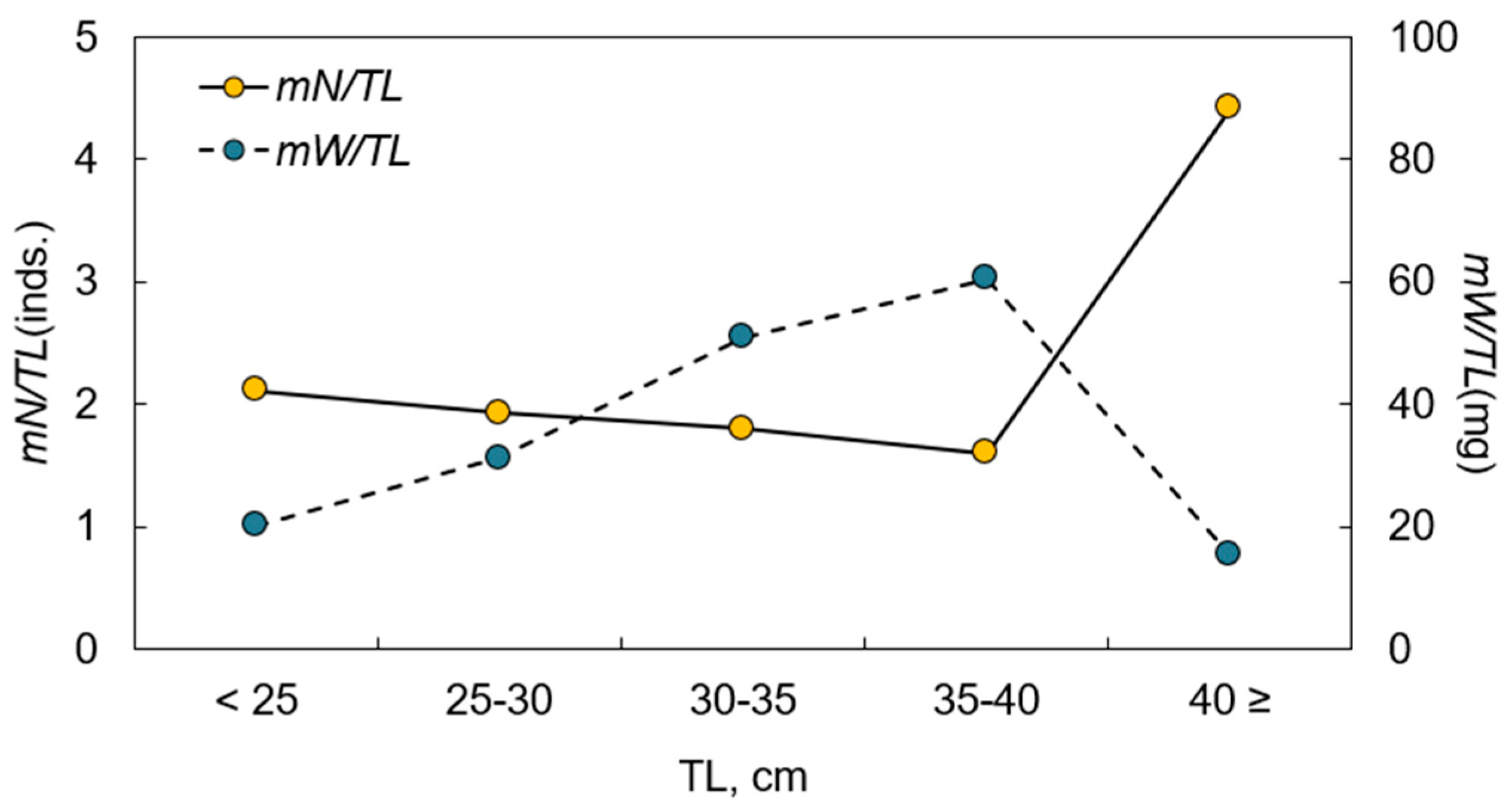
The proportion of prey organisms consumed by C. robustus changed with size, showing an increased dependency on polychaeta as fish grew larger. The highest diversity of prey organisms was observed in the 30–35 cm TL size class. In the TL ≥ 40 cm size class, polychaeta was predominantly consumed, along with minor amounts of bivalvia and brachyura. While brachyura was relatively abundant in the diets of smaller size classes, it was effectively absent in the diets of fish larger than 40 cm TL. Both the mean number of prey individuals per stomach (mN/TL, p < 0.05) and the mean wet weight of prey per stomach (mW/TL, p < 0.05) showed statistically significant differences among size classes. The mean wet weight of prey per stomach increased from the TL < 25 cm class to the 35–40 cm TL class, but then decreased in the TL ≥ 40 cm class (Figure 5).

3.5. Seasonal Changes in Stomach Contents and Trophic Level

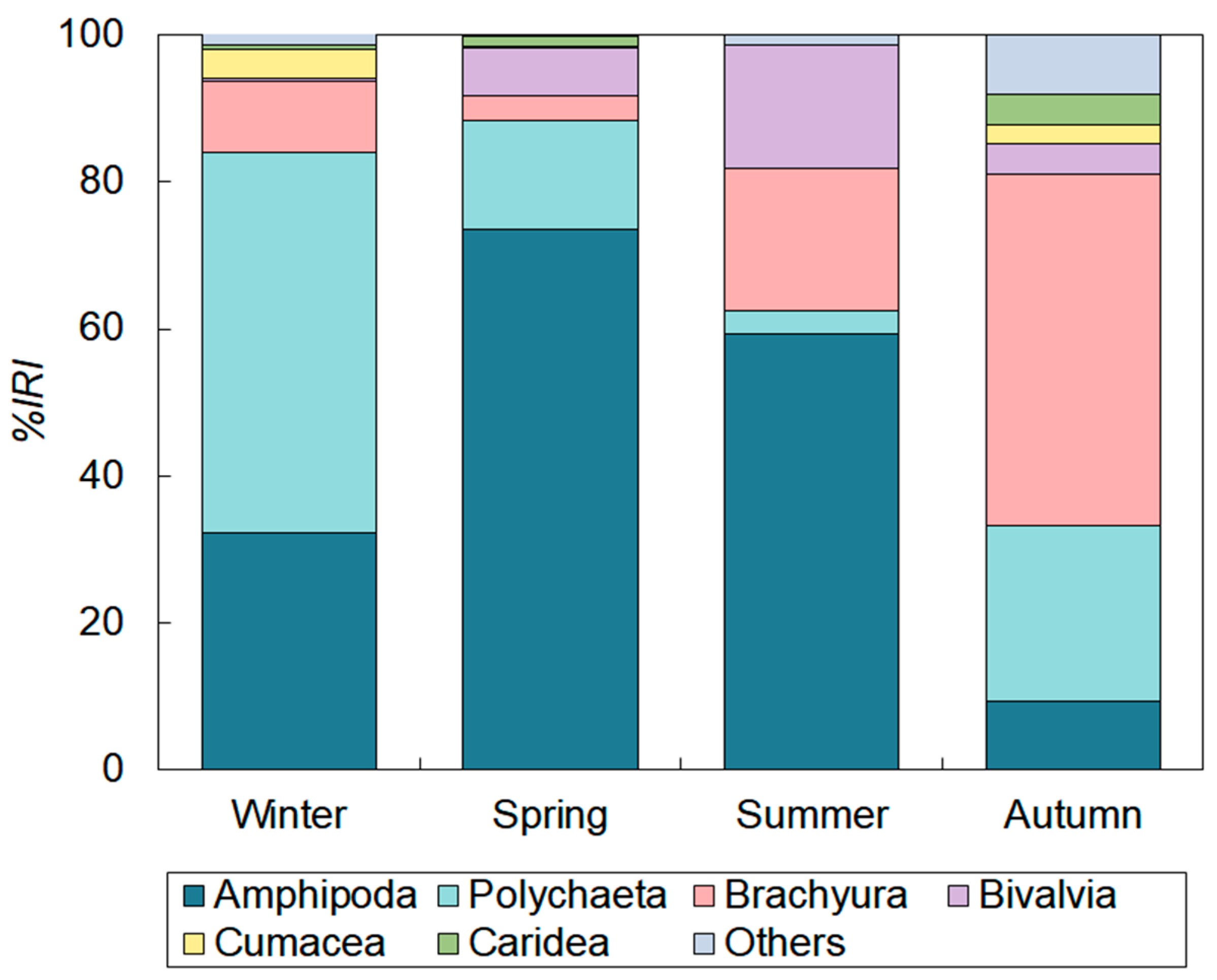
The analysis of seasonal changes in the diet composition of C. robustus revealed distinct patterns (Figure 6). In winter, polychaeta was the dominant prey item, accounting for 51.8% of the index of relative importance, primarily because of the consumption of Lumbrineris latreilli. Amphipoda followed at 32.2%. In spring, amphipoda became the dominant prey item, contributing 73.5% of the index of relative importance. Ampelisca sp. was the most commonly consumed species. Polychaeta contributed 14.8%, and bivalvia contributed 6.6%. Saccella sematensis was identified among the bivalves.
In the summer, amphipoda remained dominant at 59.4%. The main species consumed were Ampithoe sp. and Byblis japonicus. Brachyura and bivalvia contributed 19.4% and 16.8%, respectively. Saccella sematensis was confirmed to belong to the bivalvia group. In autumn, brachyura became the dominant prey item, contributing 47.9% of the index of relative importance. This shift was primarily due to the consumption of Hemigrapsus sp. Polychaeta followed at 23.8% and amphipoda significantly decreased to 9.4%, indicating a distinct pattern of brachyura dominance. Accordingly, the trophic level of C. robustus was estimated as 3.22.

3.6. Feeding Ptterns Across Size Classes and Seasons

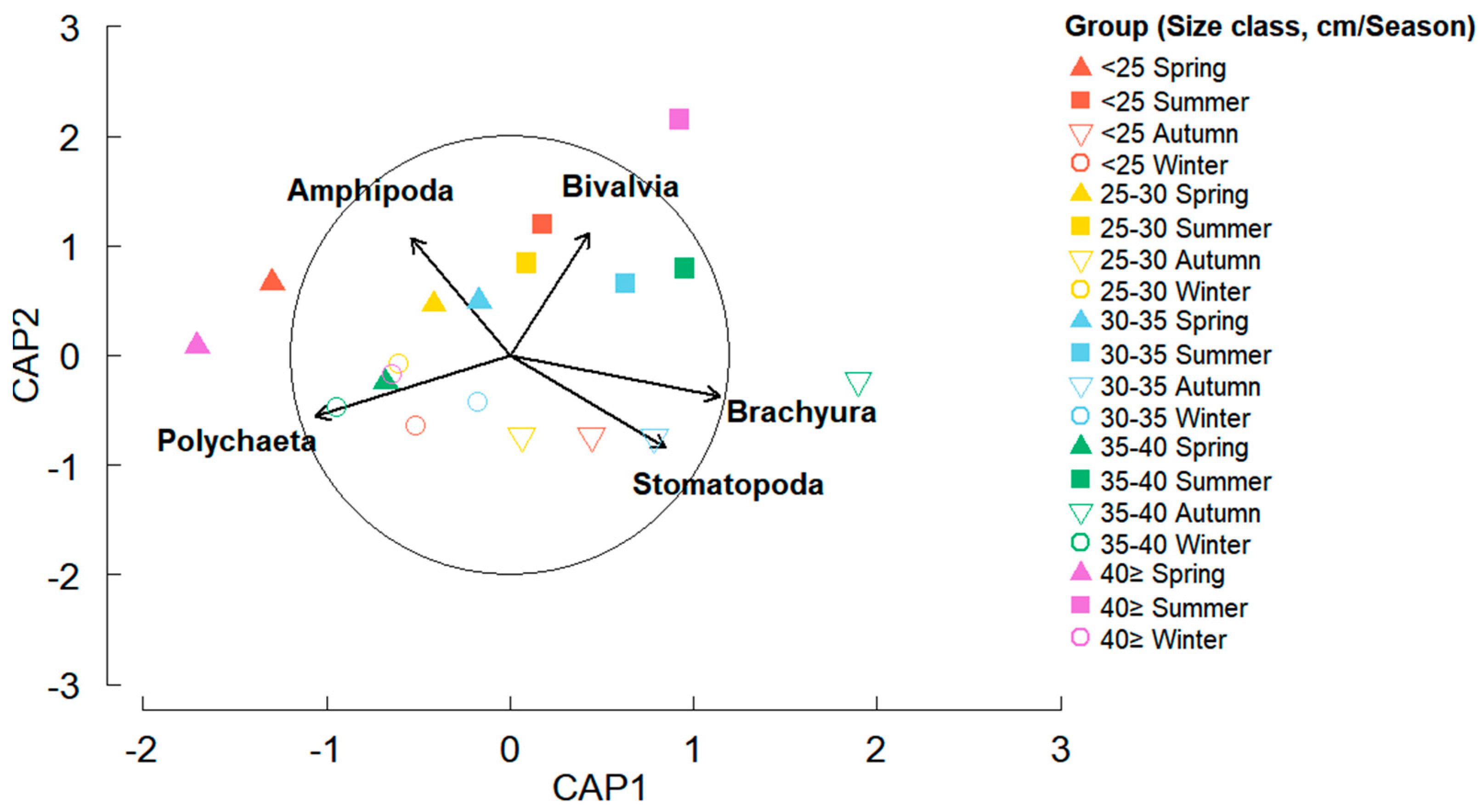
The results of the two-way PERMANOVA (Table 3) showed that the diet composition of C. robustus was significantly affected by both size class (p < 0.05) and season (p < 0.05). The interaction term (size × season) also showed a significant difference (p < 0.05). A comparison of the components of variation (COV) revealed that the season factor (COV = 1.3623) had the largest influence on dietary changes, being approximately 2.47 times higher than the size class factor (COV = 0.5522) and 3.26 times higher than the size × season interaction (COV = 0.4184). This confirmed that season was the most significant factor influencing dietary variation in C. robustus.
Based on the PERMANOVA results, the canonical analysis of principal coordinates (CAP) performed on the bray–curtis distance matrix showed that the first axis (CAP1) explained 39.15% of the total variance and the second axis (CAP2) explained 29.17%, totaling 68.3% of the explained variance. Differences in diet composition with size class were primarily distinguished along the CAP1 axis, with brachyura and polychaeta serving as the main separating factors. These prey items were responsible for separating the TL 20–25 cm and 25–30 cm size groups from the TL 35–40 cm and ≥40 cm size groups. The CAP2 axis primarily separates the winter and spring clusters from the summer and autumn clusters. Prey consumption in individuals collected during spring and winter showed a high incidence of amphipoda and bivalvia, whereas the contribution of stomatopoda was relatively higher in summer and autumn, driving the separation between these seasonal groups (Figure 7).

4. Discussion

The stomach content analysis of a total of 1210 specimens of C. robustus, collected in the Yeosu Coast, Korea, to determine their feeding characteristics in relation to size and season, revealed a 37.2% frequency of empty stomachs. This rate was higher than that reported in previous studies in the Yeosu Coast (21.3%) [6] and the Seto Inland Sea, Japan (14.0%) [19], and it also showed a large difference from the 75.3% reported in a recent survey of the southern coast [18]. These differences can be attributed to variations in habitat, seasonal environmental parameters, and prey compositions. Furthermore, the elevated empty stomach rate is likely due to the combined effects of the time difference between capture and feeding strategy [37], the prolonged immersion time of the coastal gillnets used in this study [38,39], and the characteristic of the gear, where fish are held captive for extended periods, which may lead to digestion and evacuation of stomach contents [40].
Analysis of the feeding characteristics of C. robustus in this study showed that Amphipoda was the most important prey item, regardless of the season or size class. Amphipoda is a representative organism belonging to a low trophic position [41,42] and plays an important role as a connecting link in the intermediate trophic level of the marine food web, as it inhabits various marine environments including coasts, continental shelves, estuaries, and deep seas. Furthermore, it exhibits a wide distribution, survives across a broad range of water temperatures from tropical to temperate and polar regions, and possesses high abundance and biomass [43]. On the soft bottom of the Geomundo coast (water depth 52–92 m) in the southern sea of Korea, the Ampeliscidae family showed the highest frequency of occurrence (23%) [44]. In the present study, Amphipoda was confirmed to be a major prey item for C. robustus. Among them, Ampelisca sp. was the dominant species, with a frequency of occurrence of 13.8%, which is consistent with a previous study conducted in the Yeosu Coast [6]. Thus, amphipoda was confirmed to be the most important prey item for C. robustus inhabiting the Yeosu Coast. Among these, the Ampeliscidae family is one of the most abundant and diverse amphipods in the world ocean [45], showing high abundance and species diversity, particularly in various seabed environments, such as continental shelves, continental slopes, and deep-sea sediments. Previous studies have reported that it is the dominant family within the amphipod community in various regions, including the Portuguese continental shelf [46], Icelandic waters [47], and the Bering Sea [48]. Amphipoda is rich in proteins, essential amino acids, calcium [49], and omega-3 fatty acids (EPA, DHA), thus serving as an important food source that supports the growth and reproduction of fish [50,51,52]. The selective utilization of this nutritionally superior and highly accessible food source by C. robustus is consistent with the optimal foraging theory [53], which predicts a relatively high energy gain with minimal foraging effort and is thus considered an adaptive resource utilization feeding strategy for the benthic environment in the Yeosu Coast.
PERMANOVA analysis revealed a significant difference among the size classes (p < 0.05). Although individuals smaller than TL 20 cm were not collected, the consumption ratio of amphipoda was high at 70.6% in the TL < 25 cm size group. However, this ratio decreased to 35.1% in the TL ≥ 35 cm size group. Conversely, the consumption ratio of polychaeta was 13.0% in the TL < 25 cm size group, but it peaked at 53.3% in the TL ≥ 40 cm size group.
Similar trends of decreasing amphipoda consumption and increasing consumption of larger prey such as bivalvia, caridea, and polychaeta with growth were observed in preceding studies in the Yeosu Coast [6] and the Seto Inland Sea, Japan [19]. In addition, a clear dietary shift was reported in studies of C. robustus inhabiting the southern coast [18]. In the TL < 30 cm size group, polychaeta was the most important prey at 41.0%, while brachyura dominated the TL 30–35 cm size group at 51.2% and polychaeta again showed the highest ratio, 72.7%, in the TL ≥ 35 cm size group.
In the present study, the mean wet weight of prey (mW/ST) showed a significant increase with increasing total length, indicating a tendency for individuals to switch to relatively larger prey as they grow. This result is consistent with the confirmed trend of decreased amphipoda consumption and increased polychaeta consumption, reflecting an ontogenetic dietary shift where the fish adaptively transition to prey of higher size and nutritional efficiency to balance physiological demands and feeding efficiency, which is an adaptive feeding strategy.
The pattern of dietary shift confirmed in this study has been similarly reported in previous studies of both benthic and pelagic fish species. Hexagrammos otakii showed a shift in prey items from small invertebrates such as brachyura or amphipoda to fish [54]. Glyptocephalus stelleri exhibited an increasing consumption of polychaeta from smaller prey like euphausiacea and amphipoda [55]. Furthermore, pelagic species such as Scomber japonicus also showed a shift in feeding targets from small crustaceans like copepoda and euphausiacea to fish such as Engraulis japonicus [56]. Scomberomorus niphonius was reported to show an increase in the consumption ratio of Trichiurus japonicus and an increase in the mean prey weight, shifting from smaller fish such as Engraulis japonicus and Sardinops melanostictus [27].
Similar results were also observed in the Engraulis japonicus, an important commercial species off the southern sea of Korea. Engraulis japonicus showed a shift in its diet from smaller prey, predominantly the copepoda species Calanus sinicus and Paracalanus orientalis, to larger prey, including the euphausiacea species euphausia pacifica, mollusca bivalve larvae, and decapoda larvae, which belong to the large crustaceans, crustaceans, and mollusks, mollusca. This dietary shift was consistent with the finding that Engraulis japonicus employs two feeding modes, selective feeding, raptorial feeding, and filter feeding, filter feeding, with a predominant tendency toward selectively consuming larger prey based on size [57].
Generally, most fish species consume zooplankton during their larval and juvenile stages, and as they grow, they shift to larger prey such as small crustaceans, fish, or benthic organisms [58]. This phenomenon is driven by changes in feeding strategy, including behaviors aimed at gaining advantage in growth and competition by consuming relatively larger prey organisms as they grow [59,60], changes in oral structure with growth [61], improved swimming ability [62], changes in digestive enzymes [63], and food availability and predation risk. This transition to larger prey is considered a feeding strategy to maintain internal energy balance [64,65].
The prey organisms also showed a significant difference across seasons (PERMANOVA, p < 0.05). The consumption ratio of amphipoda was high in spring and summer (73.5%, 59.4%), while brachyura was the main prey item in autumn (47.9%), and polychaeta dominated in winter (39.6%). The spawning season for C. robustus is during the summer (June–August) [66]. The high consumption of amphipoda in spring and summer is likely due to the ecological characteristics of the habitat, leading to differences in the prey community [67], resulting in the predominant consumption of amphipoda, which appears frequently during the period of rising water temperature in summer [68]. Conversely, the increased consumption of brachyura and polychaeta in autumn and winter is thought to be a selective feeding strategy to consume larger, more energy-efficient prey to recover the energy consumed after the spawning season [20]. However, the Seto Inland Sea showed a difference, with caridea confirmed as the major prey item [19]. Studies in the surrounding Hiuchi-Nada area of the Seto Inland Sea reported that crangonidae was the dominant prey for Paralichthys olivaceus [69,70], while Exopalaemon orientis and Metapenaeus ensiswere the dominant prey for Lateolabrax japonicus and Glossogobius olivaceus, respectively, in Oita Prefecture [71], indicating that caridea dominates as a major prey organism. Furthermore, according to a preceding study on the spatio-temporal distribution and dominant species of the macrozoobenthic communities on a soft bottom of the Korean coasts [72], the Jeollanam-do region, which encompasses the Yeosu Coast, exhibits the highest macrobenthic species richness in Korea, with a total of 937 species recorded. The southern sea is characterized by a predominantly Mud-dominant sediment type at most stations, providing an ideal habitat for Annelida and Arthropoda, which were identified as the most dominant taxa in terms of both species number and density in this region. This environmental context directly aligns with our findings, where amphipods and polychaetes were confirmed as the predominant prey items. Given that fish generally selectively feed on abundant prey while minimizing their activity [73,74], it is concluded that C. robustus employs an active and flexible foraging strategy as an opportunistic feeder, selectively utilizing the most abundant and accessible food resources within the Mud-dominant benthic environment of the Yeosu Coast.
The average trophic level of C. robustus was 3.22 ± 0.46. This value was similar to that of other congeneric species such as C. joyneri (3.43) [75] and C. abbreviatus (3.5) [76]. A preceding study [18] also reported a similar trophic level of 3.23, which is in agreement with the findings of the present study. OSPAR, a marine environmental assessment organization, classifies species with a trophic level of 3.25 or higher as meso- and top predators [77]. The trophic level of C. robustus, which is close to this standard, showed a similar pattern to the feeding ecology of Solea solea [78], which functions as an intermediate predator by consuming various benthic invertebrates.
In the present study, C. robustus functioned as an intermediate predator in the marine ecosystem, primarily consuming various benthic invertebrates such as amphipoda and polychaeta. The main prey during the larval and juvenile stages of Cynoglossidae species is known to be copepoda [79,80,81], and C. robustus also transitioned from smaller to larger prey targets during its growth process. This feeding strategy is judged to be largely influenced by the habitat environment rather than by species-specific characteristics [82,83]. However, to clearly determine the feeding characteristics and feeding strategy of C. robustus inhabiting the Yeosu Coast, it is judged that supplementary analysis is necessary through securing additional samples of size groups smaller than TL 10 cm, which were not included in this study. Furthermore, while this study focused on size-dependent dietary shifts, integrating age determination using calcified structures such as otoliths would provide a more refined understanding of the species’ chronological life history. This combined information can be utilized as useful baseline data for regional food web diagnosis and the formulation of ecosystem-based resource management strategies in the southern sea of Korea.

5. Conclusions

This study reveals the distinct feeding ecology of the robustus tonguefish (Cynoglossus robustus) in the Yeosu Coast, Korea, firmly establishing its role as an intermediate predator within the coastal benthic ecosystem. The primary prey item, amphipods, dominated the diet across all size classes and seasons. This finding is consistent with the optimal foraging theory, suggesting C. robustus efficiently utilizes this highly available and nutritionally effective resource. A clear ontogenetic dietary shift was observed, with amphipod consumption decreasing as individuals grew, while larger prey such as polychaetes became increasingly important. This reflects an adaptive feeding strategy to maximize energy efficiency. Seasonal differences were also evident; while amphipods dominated in spring and summer, the consumption shifted to larger, energy-rich prey like brachyurans and polychaetes in autumn and winter to support post-spawning recovery. These flexible feeding characteristics appear to be strongly influenced by local habitat conditions and the availability of prey organisms. Overall, the findings provide valuable ecological information for understanding the regional food web and contribute significantly to the development of ecosystem-based fisheries management strategies in the southern sea of Korea.

Author Contributions

Conceptualization, S.J.H. and S.Y.M.; methodology, S.J.H. and S.Y.M.; software, S.J.H.; validation, S.J.H. and S.Y.M.; formal analysis, S.J.H. and S.Y.M.; investigation, S.J.H. and S.Y.M.; resources, S.J.H. and S.Y.M.; data curation, S.J.H. and S.Y.M.; writing—original draft preparation, S.J.H.; writing—review and editing, S.J.H. and S.Y.M.; visualization, S.J.H.; supervision, S.J.H.; project administration, S.Y.M.; funding acquisition, S.Y.M. All authors have read and agreed to the published version of the manuscript.

Funding

This research was funded by National Institute of Fisheries Science, Republic of Korea, grant number [R2026011].

Institutional Review Board Statement

The study was conducted according to the guidelines of the Code of Ethics of the National Institute of Fisheries Science, Republic of Korea. Ethical review and approval were waived for this study. The samples (Cynoglossus robustus) used in this research were dead specimens obtained from commercial fisheries. The authors did not conduct any experiments on live animals.

Informed Consent Statement

Not applicable.

Data Availability Statement

Data will be made available on request.

Acknowledgments

We express our gratitude to the researchers at the Fisheries Resources Laboratory in the South Sea Fisheries Research Institute (NIFS) for collecting stomach content samples from the robust tonguefish (Cynoglossus robustus) for this study. During the preparation of this work, the first author, Seung Jo Han, used ChatGPT-4o to improve English grammar and to assist with coding for data analysis in the R programming language. The final version was reviewed and edited by the authors. All content was subsequently reviewed and revised by the author, who takes full responsibility for the content of the published article.

Conflicts of Interest

The authors declare that they have no conficts of interest.

References

  1. Kim, I.S.; Choi, Y. A taxonomic revision of the family Cynoglossidae (Pisces, Pleuronectiformes) from Korea. J. Korean Fish. Soc. 1994, 27, 803–813. [Google Scholar]
  2. Kim, I.S.; Choi, Y.; Lee, C.L.; Lee, Y.J.; Kim, B.J.; Kim, J.H. Illustrated Book of Korean Fishes; Kyohak Press Co.: Seoul, Republic of Korea, 2005; pp. 1–615. [Google Scholar]
  3. Ji, H.S.; Kang, S.; Kim, M.J.; Kim, H.W.; Myoung, S.H.; Park, J.H.; Baek, J.I.; Song, Y.S.; Yang, J.H.; Yoo, H.J.; et al. Commercial Fishes in Korea, 3rd ed.; National Institute of Fisheries Science: Busan, Republic of Korea, 2024. [Google Scholar]
  4. Kusakabe, T. Age and growth of robust tonguefish Cynoglossus robustus in Osaka Bay, Japan. Nippon Suisan Gakkaishi 2011, 77, 1–7. [Google Scholar] [CrossRef][Green Version]
  5. Ni, I.H.; Kwok, K.Y. Marine fish fauna in Hong Kong waters. Zool. Stud. 1999, 38, 130–152. [Google Scholar]
  6. Baeck, G.W.; Huh, S.H. Feeding habits of the robust tonguefish (Cynoglossus robustus) collected in the coastal waters of Yeosu. Korean J. Ichthyol. 2004, 16, 341–347. [Google Scholar]
  7. Ji, H.S.; Yoo, H.J.; Kim, J.K.; Kim, D.N.; Kim, S.T.; Kim, J.Y.; Kim, H.J.; Moon, S.Y.; Shin, D.H.; Oh, T.Y.; et al. Fish Eggs, Larvae and Juveniles of Korea; National Institute of Fisheries Science: Busan, Republic of Korea, 2020. [Google Scholar]
  8. Korean Statistical Information Service (KOSIS). Fishery Production Survey. Available online: http://kosis.kr (accessed on 18 September 2025).
  9. Brodeur, R.D.; Smith, B.E.; McBride, R.S.; Heintz, R.; Farley, E. New perspectives on the feeding ecology and trophic dynamics of fishes. Environ. Biol. Fishes 2017, 100, 293–297. [Google Scholar] [CrossRef]
  10. Morris, M.T.; Hauton, C.; Baylay, A.J.; Peruzza, L.; Targett, T.E.; Ciotti, B.J. Spatial variation in the gastrointestinal microbiome, diet, and nutritional condition of a juvenile flatfish among coastal habitats. Mar. Environ. Res. 2021, 170, 105413. [Google Scholar] [CrossRef]
  11. Choi, B.; Kim, W.S.; Ji, C.W.; Kim, M.S.; Kwak, I.S. Application of combined analyses of stable isotopes and stomach contents for understanding ontogenetic niche shifts in silver croaker (Pennahia argentata). Int. J. Environ. Res. Public Health 2021, 18, 4073. [Google Scholar] [CrossRef]
  12. Carrassón, M.; Cartes, J.E. Trophic relationships in a Mediterranean deep-sea fish community: Partition of food resources, dietary overlap and connections within the benthic boundary layer. Mar. Ecol. Prog. Ser. 2002, 241, 41–55. [Google Scholar] [CrossRef]
  13. Hayden, B.; Palomares, M.L.D.; Smith, B.E.; Poelen, J.H. Biological and environmental drivers of trophic ecology in marine fishes—A global perspective. Sci. Rep. 2019, 9, 11415. [Google Scholar] [CrossRef] [PubMed]
  14. Wang, J.; Liu, X.; Mu, X.; Li, H.; Li, B.; Zhang, Y. Ensemble predictions of high trophic-level fish distribution and species association in response to climate change in the coastal waters of China. Mar. Pollut. Bull. 2025, 214, 117800. [Google Scholar] [CrossRef]
  15. Huh, S.H.; Park, J.M.; Nam, K.M.; Park, S.C.; Park, C.I.; Baeck, G.W. Feeding habits of Scorpaena neglecta in the coastal waters off Busan. Korean J. Ichthyol. 2008, 20, 117–122. [Google Scholar]
  16. Stergiou, K.I.; Karpouzi, V.S. Feeding habits and trophic levels of Mediterranean fish. Rev. Fish Biol. Fish. 2002, 11, 217–254. [Google Scholar] [CrossRef]
  17. Priyadharsini, S.; Manoharan, J.; Varadharajan, D.; Subramaniyan, A. Interpretation on the food and feeding habits of Dascyllus trimaculatus (Rüppell, 1829) from Gulf of Mannar, South East Coast of India. Arch. Appl. Sci. Res. 2012, 4, 1758–1762. [Google Scholar]
  18. Choi, C.H.; Cho, J.I.; Moon, S.Y.; Choi, H.Y.; Baeck, G.W. Feeding habits of robust tonguefish Cynoglossus robustus in the coastal waters of South Sea, Korea. Korean J. Fish. Aquat. Sci. 2025, 58, 146–151. [Google Scholar]
  19. Baeck, G.W.; Park, J.M.; Hashimoto, H. Feeding ecology of three tonguefishes, genus Cynoglossus (Cynoglossidae), in the Seto Inland Sea, Japan. Anim. Cells Syst. 2011, 15, 325–336. [Google Scholar] [CrossRef]
  20. Choi, C.H.; Kim, H.J.; Lee, J.H.; Baek, G.W. Diet composition and trophic level of bluefin searobin (Chelidonichthys spinosus) in the South Sea of Korea. J. Korean Soc. Fish. Ocean Technol. 2024, 60, 397–404. [Google Scholar] [CrossRef]
  21. Alanärä, A.; Burns, M.D.; Metcalfe, N.B. Intraspecific resource partitioning in brown trout: The temporal distribution of foraging is determined by social rank. J. Anim. Ecol. 2001, 70, 980–986. [Google Scholar] [CrossRef]
  22. David, B.O.; Closs, G.P.; Crow, S.K.; Hansen, E.A. Is diel activity determined by social rank in a drift-feeding stream fish dominance hierarchy? Anim. Behav. 2007, 74, 259–263. [Google Scholar] [CrossRef]
  23. Saeed, F.; Iqbal, K.J.; Atique, U.; Javid, A.; Khan, N.; Iqbal, S.; Afzal, G. Toxic trace metals assessment in selected organs of edible fish species, sediment and water in Head Punjnad, Punjab, Pakistan. Punjab Univ. J. Zool. 2020, 35, 43–50. [Google Scholar] [CrossRef]
  24. Hu, W.; Du, J.; Su, S.; Tan, H.; Yang, W.; Ding, L.; Chen, B. Effects of climate change in the seas of China: Predicted changes in the distribution of fish species and diversity. Ecol. Indic. 2022, 134, 108489. [Google Scholar] [CrossRef]
  25. Liu, Y.; Cheng, J.; Chen, Y. A spatial analysis of trophic composition: A case study of hairtail (Trichiurus japonicus) in the East China Sea. Hydrobiologia 2009, 632, 79–90. [Google Scholar] [CrossRef]
  26. Wight, K.J.; McNicholl, D.G.; Dunmall, K.M. A systematic review of the trophic ecology of eight ecologically and culturally important fish species in the North American Arctic. Polar Biol. 2023, 46, 409–425. [Google Scholar] [CrossRef]
  27. Lee, J.E.; Seong, G.C.; Kim, H.; Moon, S.Y.; Baeck, G.W. Diet composition of Spanish mackerel Scomberomorus niphonius in the South Sea of Korea. Korean J. Fish. Aquat. Sci. 2021, 54, 808–813. [Google Scholar]
  28. Hong, S.Y.; Park, K.Y.; Park, C.W.; Han, C.H.; Suh, H.L.; Yun, S.G.; Song, C.B.; Jo, S.G.; Lim, H.S.; Kang, Y.S.; et al. Marine Invertebrates in Korean Coasts; Academy Publishing Co.: Seoul, Republic of Korea, 2006; pp. 1–479. [Google Scholar]
  29. Pinkas, L.; Oliphant, M.S.; Iverson, I.L.K. Food habits of albacore, bluefin tuna and bonito in California waters. Fish. Bull. 1970, 152, 47–82. [Google Scholar]
  30. Amundsen, P.A.; Gabler, H.M.; Staldvik, F.J. A new approach to graphical analysis of feeding strategy from stomach contents data—Modification of the Costello (1990) method. J. Fish Biol. 1996, 48, 607–614. [Google Scholar] [CrossRef]
  31. Schoener, T.W. Nonsynchronous spatial overlap of lizards in patchy habitats. Ecology 1970, 51, 408–418. [Google Scholar] [CrossRef]
  32. Pauly, D.; Palomares, M.L. Approaches for dealing with three sources of bias when studying the fishing down marine food web phenomenon. In Fishing down the Mediterranean Food Webs? CIESM Workshop Series; CIESM: Marcellise, Monaco, 2000; Volume 12, pp. 61–66. [Google Scholar]
  33. White, W.T.; Platell, M.E.; Potter, I.C. Comparisons between the diets of four abundant species of elasmobranchs in a subtropical embayment: Implications for resource partitioning. Mar. Biol. 2004, 144, 439–448. [Google Scholar] [CrossRef]
  34. Marshall, A.D.; Kyne, P.M.; Bennett, M.B. Comparing the diet of two sympatric urolophid elasmobranchs (Trygonoptera testacea Müller & Henle and Urolophus kapalensis Yearsley & Last): Evidence of ontogenetic shifts and possible resource partitioning. J. Fish Biol. 2008, 72, 883–898. [Google Scholar] [CrossRef]
  35. R Core Team. R: A Language and Environment for Statistical Computing; R Foundation for Statistical Computing: Vienna, Austria, 2024; Available online: https://www.r-project.org (accessed on 18 September 2025).
  36. Oksanen, J.; Blanchet, F.G.; Friendly, M.; Kindt, R.; Legendre, P.; McGlinn, D.; Minchin, P.R.; O’Hara, R.B.; Simpson, G.L.; Solymos, P.; et al. Vegan: Community Ecology Package, Version 2.6-8; R Package, 2024. Available online: https://CRAN.R-project.org/package=vegan (accessed on 18 October 2025).
  37. Choi, H.C.; Cho, J.H.; Huh, S.H.; Park, J.M. Feeding habits of larval Acanthogobius flavimanus from the Nakdong River Estuary, Korea. Korean J. Ichthyol. 2019, 31, 150–158. [Google Scholar] [CrossRef]
  38. Vinson, M.R.; Angradi, T.R. Stomach emptiness in fishes: Sources of variation and study design implications. Rev. Fish. Sci. 2011, 19, 63–73. [Google Scholar] [CrossRef]
  39. Song, H.T.; Kim, H.; Park, J.H.; Jung, J.H.; Song, M.; Han, K.H.; Moon, S.Y. Diet composition and feeding habits of black rockfish (Sebastes inermis) caught in the coastal waters of Yeosu, Korea. Fish. Aquat. Sci. 2024, 27, 654–664. [Google Scholar] [CrossRef]
  40. Buckland, A.; Baker, R.; Loneragan, N.; Sheaves, M. Standardising fish stomach content analysis: The importance of prey condition. Fish. Res. 2017, 186, 126–136. [Google Scholar] [CrossRef]
  41. Hamed, E.; Sayed, A.E.; Abdel-Razek, F.A.; Zaid, M.M.A.; Mohammed, T.A.A. Habitat preference by the marine amphipod Cymadusa filosa (Savigny, 1816) (Amphipoda), using different artificial substrata from northern Hurghada, Red Sea, Egypt. Int. J. Dev. Res. 2014, 4, 949–952. [Google Scholar]
  42. Zheng, X.; Huang, L.; Lin, R.; Du, J. Roles of epiphytes associated with macroalgae in benthic food web of a eutrophic coastal lagoon. Contin. Shelf Res. 2015, 110, 201–209. [Google Scholar] [CrossRef]
  43. Ritter, C.J.; Bourne, D.G. Marine amphipods as integral members of global ocean ecosystems. J. Exp. Mar. Biol. Ecol. 2024, 572, 151985. [Google Scholar] [CrossRef]
  44. Kim, K.W.; Choi, J.H.; Shin, S.Y.; Kim, J.; Kim, Y.H. Amphipod (Crustacea: Malacostraca) fauna of the continental shelf region in the southern sea of Korea. J. Species Res. 2024, 13, 159–177. [Google Scholar] [CrossRef]
  45. Dauvin, J.C.; Sampaio, L.; Rodrigues, A.M.; Quintino, V. Taxonomy and ecology of sympatric Ampelisca species (Crustacea, Amphipoda) from the Strait of Gibraltar to the Strait of Dover, North-Eastern Atlantic. Front. Mar. Sci. 2021, 8, 643078. [Google Scholar] [CrossRef]
  46. Marques, J.C.; Bellan-Santini, D. Biodiversity in the ecosystem of the Portuguese continental shelf: Distributional ecology and the role of benthic amphipods. Mar. Biol. 1993, 115, 555–564. [Google Scholar] [CrossRef]
  47. Dauvin, J.C.; Alizier, S.; Weppe, A.; Guðmundsson, G. Diversity and zoogeography of Icelandic deep-sea Ampeliscidae (Crustacea: Amphipoda). Deep Sea Res. Part I Oceanogr. Res. Pap. 2012, 68, 12–23. [Google Scholar] [CrossRef]
  48. Coyle, K.O.; Bluhm, B.; Konar, B.; Blanchard, A.; Highsmith, R.C. Amphipod prey of gray whales in the northern Bering Sea: Comparison of biomass and distribution between the 1980s and 2002–2003. Deep Sea Res. Part II Top. Stud. Oceanogr. 2007, 54, 2906–2918. [Google Scholar] [CrossRef]
  49. Jiménez-Prada, P.; Hachero-Cruzado, I.; Giráldez, I.; Fernández-Diaz, C.; Vilas, C.; Cañavate, J.P.; Guerra-García, J.M. Crustacean amphipods from marsh ponds: A nutritious feed resource with potential for application in integrated multi-trophic aquaculture. PeerJ 2018, 6, e4194. [Google Scholar] [CrossRef] [PubMed]
  50. Woods, C.M. Caprellid amphipods: An overlooked marine finfish aquaculture resource? Aquaculture 2009, 289, 199–211. [Google Scholar] [CrossRef]
  51. Vargas-Abúndez, J.A.; López-Vázquez, H.I.; Mascaró, M.; Martínez-Moreno, G.L.; Simões, N. Marine amphipods as a new live prey for ornamental aquaculture: Exploring the potential of Parhyale hawaiensis and Elasmopus pectenicrus. PeerJ 2021, 9, e10840. [Google Scholar] [CrossRef]
  52. Jiménez-Prada, P.; Hachero-Cruzado, I.; Guerra-García, J.M. Aquaculture waste as food for amphipods: The case of Gammarus insensibilis in marsh ponds from southern Spain. Aquac. Int. 2021, 29, 139–153. [Google Scholar] [CrossRef]
  53. Pyke, G. Optimal foraging theory: An introduction. In Encyclopedia of Animal Behavior, 2nd ed.; Elsevier Academic Press: Oxford, UK, 2019; pp. 111–117. [Google Scholar] [CrossRef]
  54. Jung, J.H.; Kim, H.Y.; Moon, S.Y. Feeding habits of Hexagrammos otakii off the Yeosu coast of Korea. Korean J. Fish. Aquat. Sci. 2022, 55, 705–713. [Google Scholar]
  55. Seong, G.C.; Ko, A.; Nam, K.M.; Jeong, J.M.; Kim, J.N.; Baeck, G.W. Diet of the Korean flounder Glyptocephalus stelleri in the coastal waters of the East Sea of Korea. Korean J. Fish. Aquat. Sci. 2019, 52, 430–436. [Google Scholar]
  56. Seong, G.C.; Kim, D.G.; Jin, S.; Soh, H.Y.; Baeck, G.W. Diet composition of the chub mackerel Scomber japonicus in the coastal waters of the South Sea of Korea. Korean J. Fish. Aquat. Sci. 2021, 54, 73–79. [Google Scholar]
  57. Moon, S.Y.; Kim, H. Feeding habits of Pacific anchovy, Engraulis japonicus (Actinopterygii: Clupeiformes: Engraulidae), captured off the southern coasts of Korea. Acta Ichthyol. Pisc. 2024, 54, 1–11. [Google Scholar] [CrossRef]
  58. Eriksen, E.; Skjoldal, H.R.; Ono, K.; Dolgov, A. Diet and trophic structure of fishes in the Barents Sea: Effects of size within (ontogenetic) and between species. Prog. Oceanogr. 2024, 227, 103299. [Google Scholar] [CrossRef]
  59. Klein, Z.B.; Quist, M.C.; Dux, A.M.; Corsi, M.P. Ontogenetic diet shifts with potential ramifications for resource competition in a KokaneeMysis diluviana system. Hydrobiologia 2020, 847, 3951–3966. [Google Scholar] [CrossRef]
  60. Baeck, G.W.; Park, J.M.; Ye, S.J.; Jeong, J.M.; An, Y.S. Feeding habits of Hoplobrotula armata in the coastal waters of Geomum-do, Korea. Korean J. Fish. Aquat. Sci. 2012, 45, 372–378. [Google Scholar] [CrossRef]
  61. Alsafy, M.A.M.; Seif, M.A.; El-Mansi, A.A.; El-Beskawy, M.; El Dakroury, M.; Eldesoqui, M.B.; Ez Elarab, S.M.; El-Gendy, S.A.A. Macro- and micro-morphological comparison of the detailed structure of the oral cavity roof in two different feeding habits marine fishes: Pagrus pagrus and Boops boops. Saudi J. Biol. Sci. 2021, 28, 6235–6248. [Google Scholar] [CrossRef]
  62. Voesenek, C.J.; Muijres, F.T.; Van Leeuwen, J.L. Biomechanics of swimming in developing larval fish. J. Exp. Biol. 2018, 221, jeb149583. [Google Scholar] [CrossRef] [PubMed]
  63. Rafanan, K.; Herrera, M.; German, D.; Catabay, C. Diet shifts alter the activity and distribution of digestive enzymes in an herbivorous fish. Physiology 2024, 39, 2232. [Google Scholar] [CrossRef]
  64. Sánchez-Hernández, J.; Nunn, A.D.; Adams, C.E.; Amundsen, P.A. Causes and consequences of ontogenetic dietary shifts: A global synthesis using fish models. Biol. Rev. 2019, 94, 539–554. [Google Scholar] [CrossRef]
  65. Franks, J.S.; Hoffmayer, E.R.; Ballard, J.R.; Garber, N.M.; Garber, A.F. Diet of wahoo Acanthocybium solandri from the Northcentral Gulf of Mexico. In Proceedings of the 60th Gulf and Caribbean Fisheries Institute, Punta Cana, Dominican Republic, 5–9 November 2007; pp. 353–362. [Google Scholar]
  66. Moon, S.Y.; Baeck, G.W.; Choi, H.; Park, J.H. Maturation and spawning of female robust tonguefish Cynoglossus robustus in the South Sea of Korea. Korean J. Fish. Aquat. Sci. 2025, 58, 119–126. [Google Scholar]
  67. Kang, D.Y.; Kim, D.G.; Seong, G.C.; Jin, S.; Jeong, J.M.; Kang, S.K.; Baeck, G.W. Feeding habits of whitespotted conger, Conger myriaster, in the West Sea of Korea. Korean J. Ichthyol. 2023, 35, 177–182. [Google Scholar] [CrossRef]
  68. Jeong, S.J.; Yu, O.H.; Suh, H. Seasonal variation and feeding habits of amphipods inhabiting Zostera marina beds in Gwangyang Bay, Korea. J. Korean Fish. Soc. 2004, 37, 122–131. [Google Scholar]
  69. Yamada, T.; Maehara, T.; Watanabe, A.; Takashima, K.; Tomiyama, T. Annual variation in the prey utilization of juvenile Japanese flounder in southwestern Hiuchi-Nada, Seto Inland Sea, Japan. Reg. Stud. Mar. Sci. 2020, 39, 101453. [Google Scholar] [CrossRef]
  70. Yamamoto, M.; Makino, H.; Kobayashi, J.; Tominaga, O. Food organisms and feeding habits of larval and juvenile Japanese flounder Paralichthys olivaceus at Ohama Beach in Hiuchi-Nada, the central Seto Inland Sea, Japan. Fish. Sci. 2004, 70, 1098–1105. [Google Scholar] [CrossRef]
  71. Nanjo, K.; Kawaida, S.; Doi, H.; Yamamori, T. Food habits of fishes in salt marsh estuaries in the western Seto Inland Sea, Japan. Ichthyol. Res. 2023, 71, 305–316. [Google Scholar] [CrossRef]
  72. Lee, J.Y.; Lim, H.S.; Lee, J.H.; Shin, H.C. Spatio-temporal distribution and dominant species of the macrozoobenthic communities on a soft bottom of the Korean coasts. The Sea J. Korean Soc. Oceanogr. 2025, 30, 174–198. [Google Scholar] [CrossRef]
  73. Choy, C.A.; Portner, E.; Iwane, M.; Drazen, J.C. Diets of five important predatory mesopelagic fishes of the central North Pacific. Mar. Ecol. Prog. Ser. 2013, 492, 169–184. [Google Scholar] [CrossRef]
  74. Ménard, F.; Labrune, C.; Shin, Y.J.; Asine, A.S.; Bard, F.X. Opportunistic predation in tuna: A size-based approach. Mar. Ecol. Prog. Ser. 2006, 323, 223–231. [Google Scholar] [CrossRef]
  75. Chen, W.; Ren, X.M.; Xu, B.D.; Zhang, C.L.; Ren, Y.P.; Xue, Y. Understanding the feeding ecology of Cynoglossus joyneri in Haizhou Bay based on stable isotope analysis. J. Appl. Ecol. 2021, 32, 1080–1086. [Google Scholar] [CrossRef]
  76. Liao, J.; Zheng, X.; Du, J.; Chen, B.; Ma, Z.; Hu, W. Biodiversity and trophic level characteristics of fishes captured by set nets in Tong’an Bay, Xiamen. Biodivers. Sci. 2014, 22, 624–629. [Google Scholar] [CrossRef]
  77. OSPAR Commission. Changes in average trophic level of marine consumers (FW-4). In Quality Status Report 2023—Thematic Assessment: Food Webs; OSPAR Commission: London, UK, 2023; Available online: https://oap.ospar.org/en/ospar-assessments/quality-status-reports/qsr-2023/indicator-assessments/changes-avg-trophic-level-consumers-fw4/ (accessed on 18 October 2025).
  78. Fanelli, E.; Principato, E.; Monfardini, E.; Da Ros, Z.; Scarcella, G.; Santojanni, A.; Colella, S. Seasonal trophic ecology and diet shift in the common sole Solea solea in the Central Adriatic Sea. Animals 2022, 12, 3369. [Google Scholar] [CrossRef] [PubMed]
  79. Yagi, Y.; Kinoshita, I.; Fujita, S.; Ueda, H.; Aoyoma, D. Comparison of the early life histories of two Cynoglossus species in the inner estuary of Ariake Bay, Japan. Ichthyol. Res. 2009, 56, 363–371. [Google Scholar] [CrossRef]
  80. Kume, G.; Furumitsu, K.; Nakata, H.; Suzuki, T.; Handa, M.; Yamaguchi, A. Spatiotemporal occurrence and feeding habits of tonguefish Cynoglossus lighti Norman, 1925, larvae in Ariake Bay, Japan. J. Appl. Ichthyol. 2015, 31, 276–281. [Google Scholar] [CrossRef]
  81. Quah, W.C.; Chew, L.L.; Chong, V.C.; Chu, C.; Teoh, C.Y.; Ooi, A.L. Does structural change in the zooplankton community affect larval fish feeding in anthropogenically disturbed tropical waters? Environ. Biol. Fishes 2022, 105, 55–76. [Google Scholar] [CrossRef]
  82. Huh, S.H.; Nam, K.M.; Park, J.M.; Jeong, J.M.; Baeck, G.W. Feeding habits of the marbled flounder, Pleuronectes yokohamae, in the coastal waters off Tongyeong, Korea. Korean J. Ichthyol. 2012, 24, 77–83. [Google Scholar]
  83. Roh, T.H.; Choi, D.H.; Lee, S.H.; Kwon, D.H.; Han, K.H.; Kim, M.J. Feeding habits of the marbled flounder (Pseudopleuronectes yokohamae) in the West Sea in Korea. Korean J. Fish. Aquat. Sci. 2022, 55, 583–589. [Google Scholar] [CrossRef]
Figure 1. Map showing the sampling locations of the robust tonguefish C. robustus in the Yeosu Coast, Korea.
Fishes 11 00050 g001
Figure 2. Size class (total length, TL) composition of C. robustus in the Yeosu Coast, Korea.
Fishes 11 00050 g002
Figure 3. Graphical representation of feeding patterns of C. robustus in the Yeosu Coast, Korea: (A) Diagram representing the prey taxa (Br, Brachyura; Am, Amphipoda; Ca, Caridea; Is, Isopoda; Ga, Gastropoda; Po, Polychaeta; St, Stomatopoda; Bi, Bivalvia; Op, Ophiuroidea; Cu, Cumacea; Un, Unknown); (B) Explanatory diagram for the interpretation of niche-width contribution [axis I, within-phenotypic component (WPC) or between-phenotypic component (BPC)] of the study population.
Fishes 11 00050 g003
Figure 4. Ontogenetic changes in the diet composition of C. robustus in the Yeosu Coast, Korea, based on the index of relative importance ( % I R I ).
Fishes 11 00050 g004
Figure 5. Size-class variation in the mean number (mN/ST, inds/stomach) and weight (mW/ST, g/stomach) of prey per stomach in C. robustus in the Yeosu Coast, Korea.
Fishes 11 00050 g005
Figure 6. Seasonal variation in the diet composition of C. robustus in the Yeosu Coast, Korea, based on the index of relative importance ( % I R I ).
Fishes 11 00050 g006
Figure 7. Canonical analysis of principal coordinates (CAP) ordination plot of diet composition of C. robustus in the Yeosu Coast, Korea, to assess differences among size classes and seasons.
Fishes 11 00050 g007
Table 1. Size distribution of the robust tonguefish C. robustus collected from January to December 2024 in the coastal waters of Yeosu, Korea. Inds., individuals; TL, total length.
YearMonthTotal
No. of Inds.
No. of Inds.Range of TL(cm)
FemaleMaleFemaleMale
2024January120734722.0–38.821.5–36.3
February100811931.5–42.830.8–38.2
March120447620.3–39.321.0–42.1
April120744625.1–43.823.4–35.8
May120586224.5–38.523.4–34.5
June90414922.5–38.423.4–33.1
July90474324.4–42.623.8–33.5
August90157530.6–40.124.2–36.2
September90513929.3–39.227.4–35.8
October90256527.0–35.422.0–34.6
November90266423.5–35.522.0–34.9
December90365423.0–35.321.7–34.4
Total121057163920.3–43.8
Table 2. Composition of the stomach contents of C. robustus by frequency of occurrence ( % F ), number ( % N ), weight ( % W ), index of relative importance ( I R I ) and percentage of I R I ( % I R I ).
Prey Organism%F%N%WIRI%IRI
Amphipoda55.444.46.22802.843.1
   Ampelisca sp.11.713.82.7
   Byblis japonicus6.63.20.3
   Ampithoe sp.8.27.71.0
   Liljeborgia sp.1.60.60.1
   Ericthonius sp.0.50.3+
   Melita sp.2.52.00.1
   Monoculodes sp.5.75.40.9
   Pleustes panopla0.40.2+
   Pontogeneia sp.1.70.80.1
   Unidentified Gammaridae16.610.31.0
Bivalvia18.78.013.4399.86.1
   Raeta pulchella1.10.40.7
   Saccella sematensis5.43.07.6
   Paratapes undulatus0.1++
   Unidentified Bivalvia12.14.55.1
Brachyura30.111.429.41227.318.9
   Megalopa0.40.1+
   Charybdis bimaculata0.80.20.4
   Hemigrapsus sp.2.10.84.5
   Unidentified Brachyura26.810.224.5
Caridea8.82.87.994.71.5
   Cragon hakodatei0.40.20.3
   Mysis0.1++
   Plesionika izumiae0.1++
   Unidentified Caridea8.02.67.4
   Unidentified Hippolytidae0.1+0.1
Cumacea9.76.00.967.61.0
   Iphinoe tenera3.92.20.3
   Unidentified Cumacea5.83.80.6
Foraminifera0.80.90.20.8+
   Rotalinoides compressiuscula0.10.2+
   Siphogenerina raphana0.10.2+
   Unidentified Foraminifera0.50.40.2
Gastropoda4.21.41.311.60.2
   Haedropleura pygmaea1.20.40.4
   Unidentified Gastropoda3.01.00.9
Isopoda0.40.10.10.1+
   Aega dofleini0.1++
   Limnoria lignorum0.30.10.1
Ophiuroidea0.40.10.40.2+
   Unidentified Ophiuroidea0.40.10.4
Stomatopoda6.42.012.191.31.4
   Squilla oratoria0.40.12.0
   Unidentified Stomatopoda6.11.910.1
Polychaeta38.321.725.41802.627.7
   Glycera sp.0.30.10.3
   Lumbrineris latreilli2.41.16.1
   Unidentified Lumbrineridae10.36.04.8
   Unidentified Polynoidae0.1+0.4
   Unidentified Polychaeta25.314.413.8
Fish0.50.22.11.2+
   Unidentified Fish0.50.22.1
Unknown2.51.10.43.60.1
Total178.1100.0100.06602.0100.0
+ less than 0.1%.
Table 3. Results of two-way PERMANOVA based on bray–curtis similarity matrix of prey composition of C. robustus in the Yeosu Coast, Korea. Shown are degrees of freedom (Df), sums of squares (SS), mean squares (MS), F-values, components of variation (COV), and p-values.
SourcedfSSMSF-ValueCOVp-Value
Size class41.21980.30502.56320.55220.0001
Season35.56761.855915.59871.36230.0001
Size class × Season111.92600.17511.47170.41840.0029
Residual13215.70490.119 0.3449
df, degrees of freedom.
Disclaimer/Publisher’s Note: The statements, opinions and data contained in all publications are solely those of the individual author(s) and contributor(s) and not of MDPI and/or the editor(s). MDPI and/or the editor(s) disclaim responsibility for any injury to people or property resulting from any ideas, methods, instructions or products referred to in the content.