Article

The Status of Fishery Resources in Poyang Lake, China, During Periods of Abnormal Drought

1
Aquatic Conservation and Rescue Center of Jiangxi Province, Nanchang 330096, China
2
Institute of Hydrobiology, Chinese Academy of Sciences, Wuhan 430072, China
3
Yangtze River Fisheries Research Institute, Chinese Academy of Fishery Science, Wuhan 430223, China
4
Freshwater Fisheries Research Center, Chinese Academy of Fishery Sciences, Wuxi 214081, China
*
Author to whom correspondence should be addressed.
Submission received: 14 November 2025 / Revised: 15 December 2025 / Accepted: 18 December 2025 / Published: 19 December 2025
(This article belongs to the Special Issue Adaptation and Response of Fish to Environmental Changes)

Abstract

The status of the fishery resources in Poyang Lake, China, during periods of abnormal drought was examined using a comparative analysis of data from four fishery resource surveys performed during 2022 and 2023, in the first half (April–June) and the second half (September–November) of each year. A total of 91 fish species (11 orders, 17 families, 54 genera) were collected, with Cyprinidae accounting for 54.95% of the total species and Megalobrama skolkovii, Aristichthys nobilis, and Hypophthalmichthys molitrix as the dominant species. The Shannon-Weiner diversity, Pielou evenness, Simpson diversity, and Margalef richness indices were 3.30, 0.73, 0.95, and 6.93, respectively. The corresponding catch per unit effort (CPUE) values of the fish were 5.49 kg·(1000 m2·h)−1, 4.45 kg·(1000 m2·h)−1, 3.03 kg·(1000 m2·h)−1, and 2.75 kg·(1000 m2·h)−1, showing a clear decreasing trend across the successive sampling periods. The abnormal drought did not cause significant differences in the number of fish species and diversity indices (p > 0.05), but altered the fish community structure, characterized by reduced dominance of small, sedentary, and herbivorous fish, and led to a significant decline in CPUE (p < 0.05). This demonstrates that abnormal hydrological regimes can undermine the effectiveness of the 10-year fishing ban and threaten the recovery of fishery resources in river-connected lakes.
Key Contribution: This study provides the first systematic documentation of the ecological impacts of an abnormal drought on fishery resources in Poyang Lake. It reveals that while species richness and diversity indices remained stable in the short term, the drought significantly altered fish community structure, reducing the dominance of small, sedentary, and herbivorous species. Most critically, it highlights a severe and persistent decline in CPUE. These findings demonstrate that abnormal hydrological regimes can undermine the effectiveness of the 10-year fishing ban and threaten the recovery of fishery resources in river-connected lakes, offering crucial scientific insights for the management of fishery resources and habitat restoration in floodplain lakes facing increasing extreme drought events.

1. Introduction

Floodplains are relatively low-lying areas along riverbanks, around lakes, and in coastal regions. They are prone to periodic inundation by lake or river flooding and constitute transitional aquatic-terrestrial ecotones, characterized by alternating aquatic and terrestrial phases [1,2]. Floodplains are shaped by intermittent hydrological fluctuations driven by periodic flooding, creating highly heterogeneous habitats with high biodiversity and productivity [3]. Their natural hydrological rhythms particularly support the reproduction, foraging, and migration of aquatic organisms [4,5,6]. However, global climate change and intensive human activities (e.g., dam building, sand mining, and water resource development) profoundly alter the natural hydrological regimes of floodplain systems: dam construction regulates river runoff and modifies flood-drought rhythms by storing and releasing water, while large-scale sand mining reduces lakebed elevation and accelerates the water recession rate, thereby disrupting the original hydrological balance [7,8,9,10,11]. Intensified abnormal water level fluctuations (e.g., non-seasonal droughts and floods), disruption of flood-drought cycles, and loss of habitat connectivity have led to floodplain habitat homogenization and a sharp decline in biodiversity, posing significant threats to fish biomass and community structure [12,13,14].
Poyang Lake, in the middle and lower reaches of the Yangtze River, is China’s largest river-connected floodplain lake and an important ecological hub. Because of its natural hydrological connectivity with the Yangtze River, its landscape heterogeneity exhibits significant spatiotemporal dynamics. It not only supports nearly half of the global population of the Yangtze finless porpoise (Neophocaena asiaeorientalis) but also supports one of the highest fishery yields in the Yangtze River Basin [15,16,17,18]. Since 2003, the operation of the Three Gorges Project has served as the fundamental driver of dramatic changes in the hydrological rhythm of Poyang Lake, with climate warming and basin sand mining further aggravating these changes [19,20,21]. Of particular note is 2022, when, mainly driven by the abnormal westward extension and northward movement of the Western Pacific Subtropical High, the Poyang Lake Basin experienced an overlap of persistent extreme high temperatures and significantly reduced rainfall. This caused the lake area to abnormally enter a prolonged period of low water levels as early as the flood season (mid-August), initiating the dry season 105 days earlier than in normal years [22]. Moreover, the dry conditions worsened over time, with the low water level hitting successive record lows: it broke the historical minimum on September 23rd (7.10 m) and continued to decline until reaching an all-time low of 6.48 m on November 18th (the anomaly of the minimum water level was −1.48 m, a historical record). The river-connected water area shrank to 226 km2, accounting for only 19.5% of the historical average for the same period. Furthermore, the Standardized Precipitation Index of the Poyang Lake Basin from July to October 2022 reached −3.41, representing the most severe consecutive summer-autumn drought since 1951. The extraordinarily low water level (below 8 m) at Xingzi Station persisted for 7 months (from late August 2022 to March 2023), marking the longest dry period on record and triggering a historic ecological crisis in Poyang Lake [22,23,24,25]. This abnormal drought event has been confirmed to threaten the survival of the Yangtze finless porpoise, aquatic vegetation, and zooplankton communities in Poyang Lake [26,27,28]. Numerous studies have shown that the water level decline caused by abnormal drought leads to the loss of fish spawning grounds and exposes eggs and early larvae with weak swimming abilities to the risk of stranding and death, thereby severely affecting the annual recruitment of fish populations. Meanwhile, falling water levels force fish to undergo non-seasonal migration and aggregate in limited spaces, intensifying intraspecific competition; they also disrupt river-lake connectivity, particularly exerting significant impacts on migratory fishes that rely on periodic floods to enter floodplains for foraging and nursing. The differential responses of fish with different ecological types under these stressors ultimately drive the restructuring of community structure [29,30,31,32,33]. However, whether these patterns apply to China’s largest freshwater river-connected lake, and how this abnormal drought affects fish diversity, resource abundance, and the differential responses of fish with different ecological types in Poyang Lake, remains to be further elucidated.
This study focused on the abnormal drought in Poyang Lake from 2022 to 2023. Systematic fishery resource surveys were used to examine the species composition response characteristics, dominant species succession, diversity indices, and resource abundance during the different water level periods, to reveal the ecological effects of abnormal hydrological stress on fish communities and provide a scientific basis for the conservation of fishery resources and habitat restoration in river-connected lakes.

2. Materials and Methods

2.1. Location of the Survey Sites

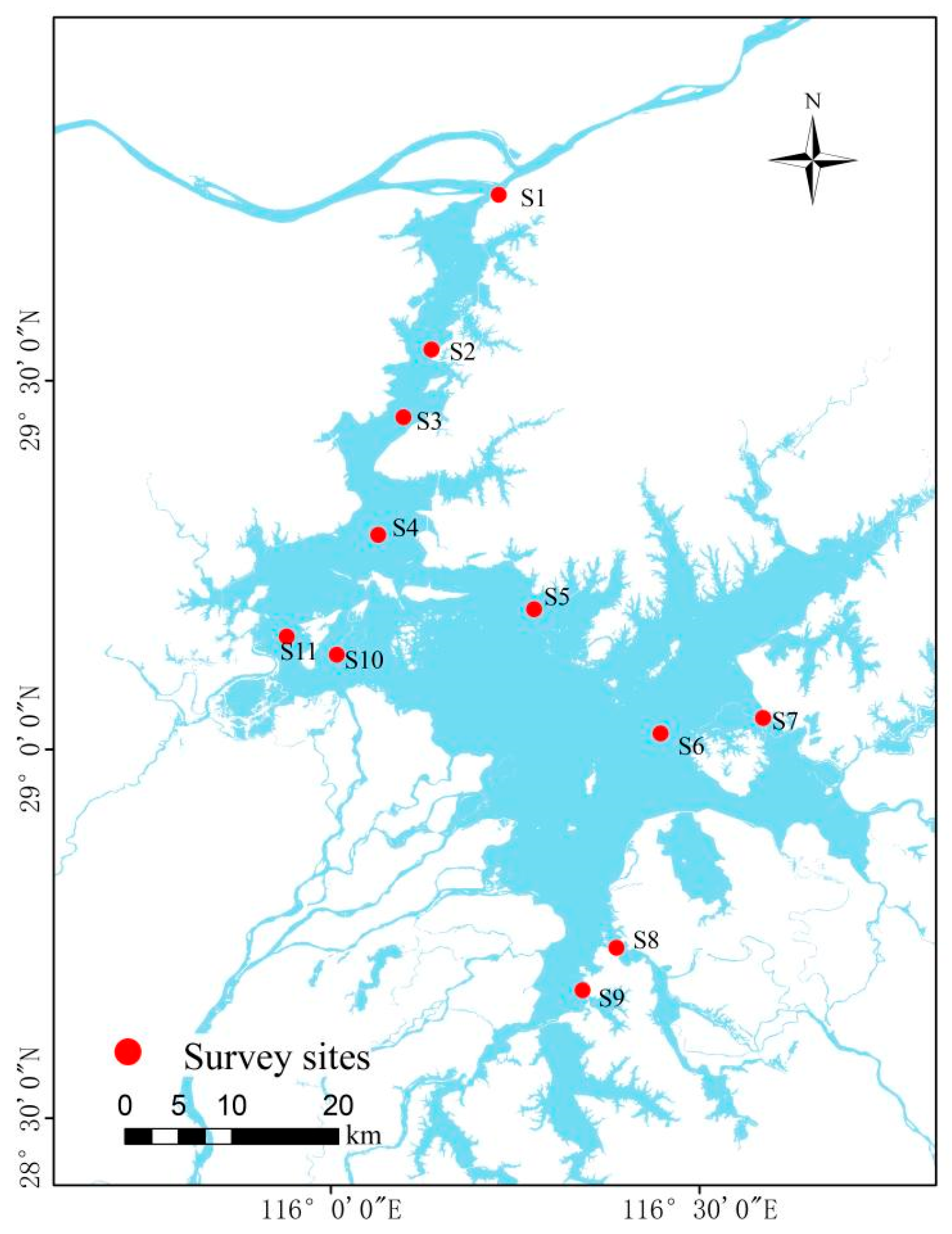
Eleven survey sites were established, covering different water area types, namely the river-connected mouth of Poyang Lake (S1), the river-connected channel (S2, S3), the main lake area (S4, S5, S6), and the inlets of the five tributaries (S7, S8, S9, S10, S11) (Figure 1, Table 1).

2.2. Sampling Design

This study centers on the ecological impacts of the 2022–2023 abnormal drought event in Poyang Lake on its fishery resources, with a primary focus on the ecological response characteristics of fish under drought stress. Based on water level data from the Xingzi Station, periods with water levels falling 1.5 standard deviations below the historical average for the same period were defined as abnormal drought periods. Accordingly, the investigation was divided into four phases: the first half of 2022 (April–June, normal water level), the second half of 2022 (September–November, abnormal drought), the first half of 2023 (April–June, abnormal drought), and the second half of 2023 (September–November, normal water level) [24]. To mitigate interference from inherent seasonal fluctuations in fish life history (e.g., spring spawning, autumn fattening), this research employs cross-year comparisons within the same season (comparing the first half of 2022 with the first half of 2023, and the second half of 2022 with the second half of 2023) to analyze trends in fish resource changes. In summary, the sampling design aligns closely with the core objectives of this study, adapts to extreme hydrological conditions, scientifically controls confounding factors, and ensures robust data comparability. This approach precisely enables comparative analysis of fishery resource status between normal water level periods (first half of 2022 and second half of 2023) and abnormal drought periods (second half of 2022 and first half of 2023), providing reliable support for systematic analysis of the ecological impacts of abnormal drought on Poyang Lake’s fishery resources.
Each survey at each site included at least five sample replicates, with the survey gears consisting of triple-layer trammel nets and ground cages. To ensure the comparability of data across different hydrological periods, 4 triple-layer trammel nets and 6 ground cages were deployed for each replicate, with each deployment lasting no less than 12 h. Specifically, the triple-layer trammel nets were deployed at an angle of 45–90° obliquely to the water flow direction, with a deployment depth of generally 2.0–3.0 m, and with the footrope in contact with the bottom substrate; while the ground cages were placed horizontally at the bottom of the water parallel to the lake shore, ensuring the entire cage was submerged in water. The triple-layer trammel nets were constructed by splicing four types of net panel: 1-finger (approximately 2 cm mesh size: 50 m long × 2 m high), 3-finger (approximately 6 cm mesh size: 50 m long × 2 m high), 5-finger (approximately 10 cm mesh size: 50 m long × 2 m high), and 7-finger (approximately 14 cm mesh size: 50 m long × 2 m high). The elongated 1.6 cm mesh ground cages were approximately: 20 m long × 40 cm wide × 40 cm high. The specifications of the gear (size and mesh size) were completely consistent across all survey periods.
Fish species identification was performed with reference to Fauna Sinica, Osteichthyes (Cypriniformes, Vol. II; Cypriniformes, Vol. III; Siluriformes) and Species and Distribution of Inland Fishes in China [34,35,36,37]. The few specimens that could not be identified on site were preserved in 10% formaldehyde solution and brought back to the laboratory for further examination. A fish measuring board (1 mm scale) and an electronic balance (0.1 g intervals) were used to measure the total length, standard length, and body weight of each fish specimen. The raw body weight measurement data of all fish specimens were recorded in grams (g) and uniformly converted to kilograms (kg) after measurement for subsequent statistical analysis. Small-bodied species were defined as having an age at sexual maturity of less than 2 years and a total length of less than 240 mm [38].
The fish survey was performed under a special permit for scientific survey fishing and the results were reported to the Department of Agriculture and Rural Affairs of Jiangxi Province for approval, in accordance with current regulations and procedures. The disposal of catches was carried out according to the relevant protocols.

2.3. Water Level Data Acquisition

The water level data on the days when sampling was performed, measured at the Xingzi Hydrological Station in Poyang Lake, were obtained from the official website of the Department of Water Resources of Jiangxi Province (http://slt.jiangxi.gov.cn/jxsslt/jhsq/jhsq/list.html, access on 1 December 2025).

2.4. Data Analysis

2.4.1. Index of Relative Importance

The index of relative importance (IRI) was used to analyze fish species dominance in Poyang Lake and is expressed as:
IRI = (Ni + Wi) × Fi × 10,000
where Ni represents the percentage of the number of individuals of a certain fish species with respect to the total number of individuals caught; Wi is the percentage of the weight of a certain fish species with respect to the total catch weight; and Fi is the frequency of occurrence of a certain fish species, i.e., the percentage of the number of survey sites where it occurred with respect to the total number of survey sites. Species with IRI ≥ 1000 were defined as dominant species, those with 100 ≤ IRI < 1000 as common species, those with 10 ≤ IRI < 100 as general species, and those with IRI < 10 as rare species.

2.4.2. Diversity Indices

The Shannon-Weiner diversity index (H′), Pielou evenness index (E), Simpson dominance index (C), and Margalef richness index (D) were used to analyze the fish survey data. For the Shannon-Weiner diversity index (H′), the natural logarithm (ln) was adopted as the logarithm base in this study. Their formulas are expressed as:
H = i = 1 S ( P i ln P i )
E = H ln S
C = 1 i = 1 S P i 2
D = S 1 ln N
where Pi is the proportion of the number of individuals of the i-th fish species in the fish community with respect to the total number of individuals of all fish; S is the total number of fish species; and N is the total number of individual fish.

2.4.3. Catch per Unit Effort

The catch per unit effort (CPUE) was used to reflect the relative resource abundance of fish in Poyang Lake. CPUE in this paper was standardized as the average catch weight per hour per unit area (1000 m2 of net area deployed) [kg·(1000 m2·h)−1] [39]. The formula is expressed as:
C P U E = 1 n i = 1 n ( 1000 × W i S T i )
where Wi is the weight of the catch (kg) from the i-th net at a certain survey site; Si is the area (m2) of the i-th net at a certain survey site; Ti is the deployment duration (h) of the i-th net at a certain survey site; and n is the number of nets used at a certain survey site.
All statistical analyses were conducted using Origin 2024 software (OriginLab, Northampton, MA, USA) for result visualization and IBM SPSS Statistics 27.0 (IBM Corp., Armonk, NY, USA) for statistical tests [40,41]. This study focused on two sets of cross-year data from the same seasons (under different water level conditions): the first half of 2022 (normal water level) vs. the first half of 2023 (abnormal drought), and the second half of 2022 (abnormal drought) vs. the second half of 2023 (normal water level). It compared the differences in the water level of Poyang Lake, average number of fish species, diversity indices (Shannon-Weiner diversity index, Pielou evenness index, Simpson dominance index, Margalef richness index), and CPUE. The statistical hypotheses were set as follows: the null hypothesis (H0) was “there is no significant difference in water level, average number of fish species, diversity indices, and CPUE between different years in the same season”; the alternative hypothesis (H1) was “there are significant differences in water level, average number of fish species, diversity indices, and CPUE between different years in the same season”. Before analyzing all indicators, statistical assumptions were verified first: normality was verified using the Shapiro-Wilk test (suitable for small samples, n < 50) and Kolmogorov-Smirnov test (suitable for large samples, n ≥ 50); homogeneity of variances was verified using Levene’s test. If an indicator met both the normality and variance homogeneity assumptions, the independent samples t-test was adopted (e.g., average number of fish species, diversity indices); if the above assumptions were not met, the Mann-Whitney U test was used (e.g., water level, CPUE). The statistical significance of all tests was defined as p < 0.05.

3. Results

3.1. Water Level Conditions

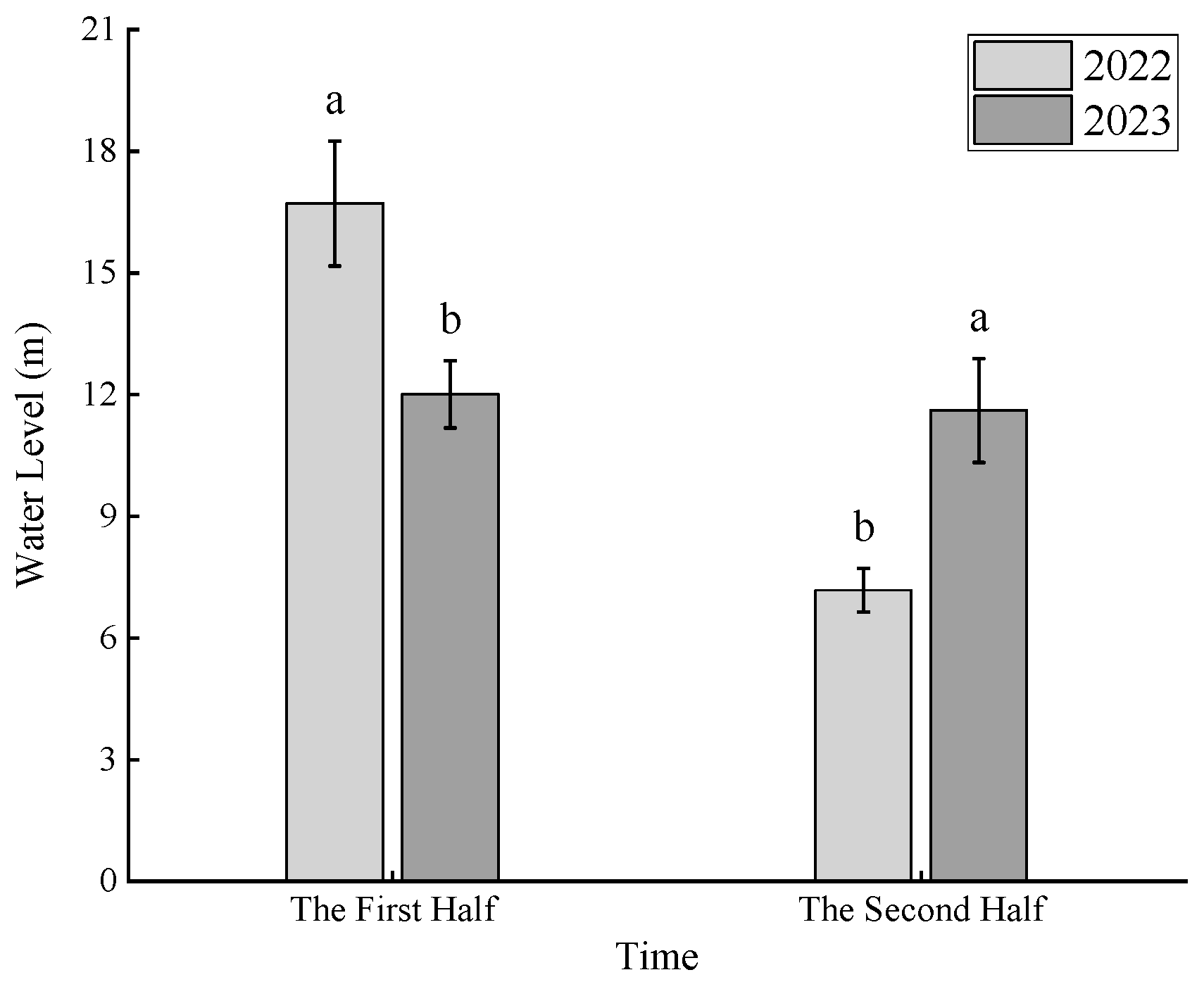
The water level of Poyang Lake was significantly (p < 0.05) lower during the drought periods in the second half of 2022 and the first half of 2023 than during the corresponding periods in normal hydrological years (Figure 2). The average daily water level during the first half of 2022 (16.71 m) was significantly [Mann-Whitney U = 56.500, Z = −11.459, n1 = 90 (2022 first half), n2 = 91 (2023 first half), p < 0.05] higher than during the first half of 2023 (12.01 m), and the average daily water level during the second half of 2022 (7.18 m) was significantly [Mann-Whitney U = 0.000, Z = −11.652, n1 = 91 (2022 second half), n2 = 91 (2023 second half), p < 0.05] lower than during the second half of 2023 (11.61 m).

3.2. Fish Species Composition

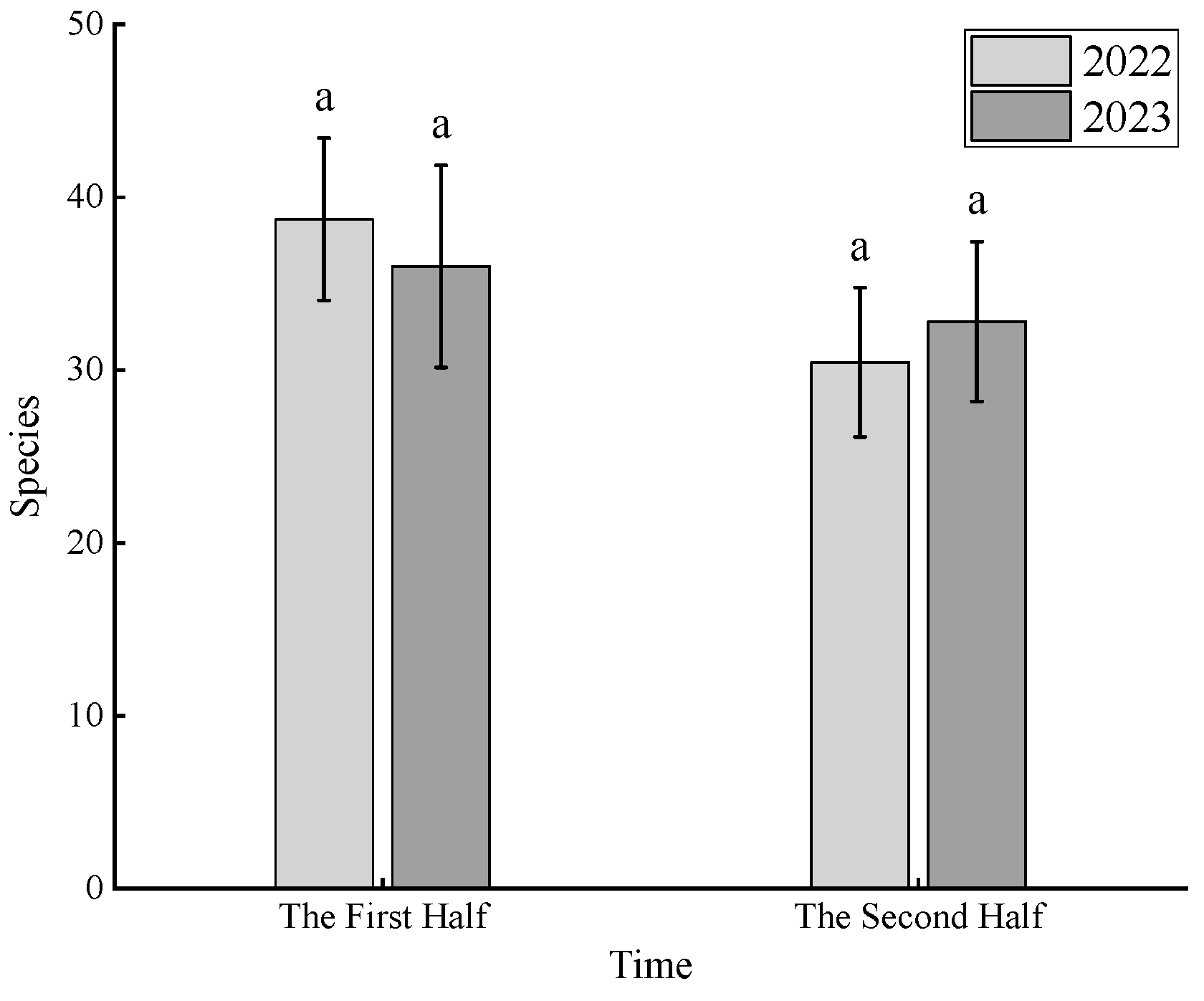
From 2022 to 2023, a total of 43,557 fish weighing 8993.73 kg were collected, among which small-bodied fishes accounted for 13.42% of the total number and 62.00% of the total weight. A total of 91 species of fish specimens were identified belonging to 11 orders, 17 families, and 54 genera. Cyprinidae had the highest number of species, with 50 species accounting for 54.95% of the total number of species, followed by Bagridae with 13 species accounting for 14.29% (Appendix A). Overall, the number of fish species collected in the first and second halves of 2022 and 2023 were 74, 55, 71, and 66, respectively, with the number of fish species collected during the first half of the year being higher than during the second half of the year. The average number of fish species in Poyang Lake during the second half of 2022 and the first half of 2023, the periods affected by abnormal drought (30.45 species and 36.00 species), were lower than in the corresponding periods in normal hydrological years (32.82 species and 38.73 species), but these differences were not significant (p > 0.05) (Figure 3).

3.3. Dominant Species

From 2022 to 2023, the aggregate data identified three dominant species in the fish community, ranked by IRI in the order Megalobrama skolkovii (IRI = 2724), Aristichthys nobilis (IRI = 2266), and Hypophthalmichthys molitrix (IRI = 1732), which collectively accounted for 53.69% by weight and 13.53% by abundance. Based on the descriptive comparison of the IRI, the composition of dominant species and their dominance differed during the same survey periods between years. In the first half of 2022 and 2023, a total of nine dominant species were collected, among which Megalobrama skolkovii and Aristichthys nobilis were the dominant species (IRI ≥ 1000) in both years. Compared with the first half of 2022, the first half of 2023, during the abnormal drought period, showed an increase in the dominance of Pelteobagrus fulvidraco, Hypophthalmichthys molitrix, Coilia nasus, and Pelteobagrus eupogon, which all transitioned from common species (100 ≤ IRI < 1000) to dominant ones (IRI ≥ 1000) (Table 2). The dominance of Carassius auratus and Coilia brachygnathus decreased, changing from dominant species (IRI ≥ 1000) to common ones (100 ≤ IRI < 1000). The dominance of Hemiculter bleekeri declined sharply, with its IRI falling from 1107 to 79, thereby classifying it as a general species (10 ≤ IRI < 100). In the second half of 2022 and 2023, a total of 10 dominant species were collected, among which Megalobrama skolkovii, Hypophthalmichthys molitrix, Aristichthys nobilis, and Coilia brachygnathus were dominant species (IRI ≥ 1000) in both years. Compared with the second half of 2023, the second half of 2022, during the abnormal drought period, showed an increase in the dominance of Parabramis pekinensis and Culter mongolicus, both of which changed from common species (100 ≤ IRI < 1000) to dominant ones (IRI ≥ 1000). The dominance of Carassius auratus increased rapidly, with its IRI rising from 94 to 1054, changing from a general species (10 ≤ IRI < 100) to a dominant one (IRI ≥ 1000). The dominance of Saurogobio dabryi and Cyprinus carpio decreased, changing from dominant species (IRI ≥ 1000) to common ones (100 ≤ IRI < 1000). The dominance of Coilia nasus decreased rapidly, with its IRI dropping from 1339 to 93, changing from a dominant species (IRI ≥ 1000) to a general one (10 ≤ IRI < 100).

3.4. Diversity Indices During Different Periods

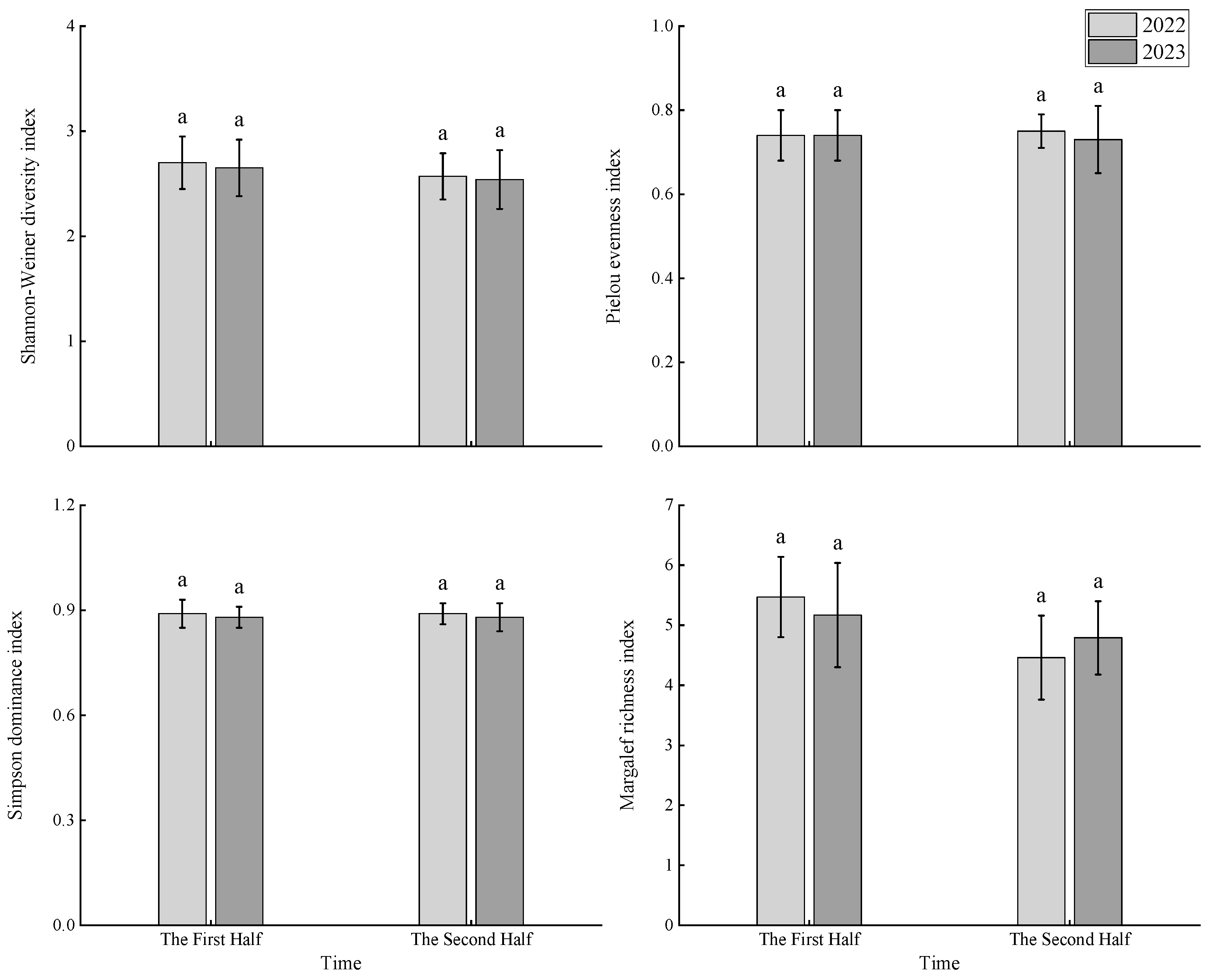
From 2022 to 2023, the aggregate data revealed values of 3.30, 0.73, 0.95, and 6.93 for the Shannon-Weiner diversity, Pielou evenness, Simpson dominance, and Margalef richness indices of the fish community in Poyang Lake, respectively. Specifically, in the first half of 2022, the Shannon-Weiner diversity, Pielou evenness, Simpson dominance, and Margalef richness indices were 2.70, 0.74, 0.89, and 5.47, respectively. In the second half of 2022, the corresponding indices were 2.57, 0.75, 0.89, and 4.46, respectively. In the first half of 2023 these indices were 2.65, 0.74, 0.88, and 5.17, respectively. In the second half of 2023, the indices were 2.54, 0.73, 0.88, and 4.79, respectively. Independent sample t-tests detected no significant differences (p > 0.05) between years in these indices during equivalent periods (Figure 4).

3.5. Resource Abundance

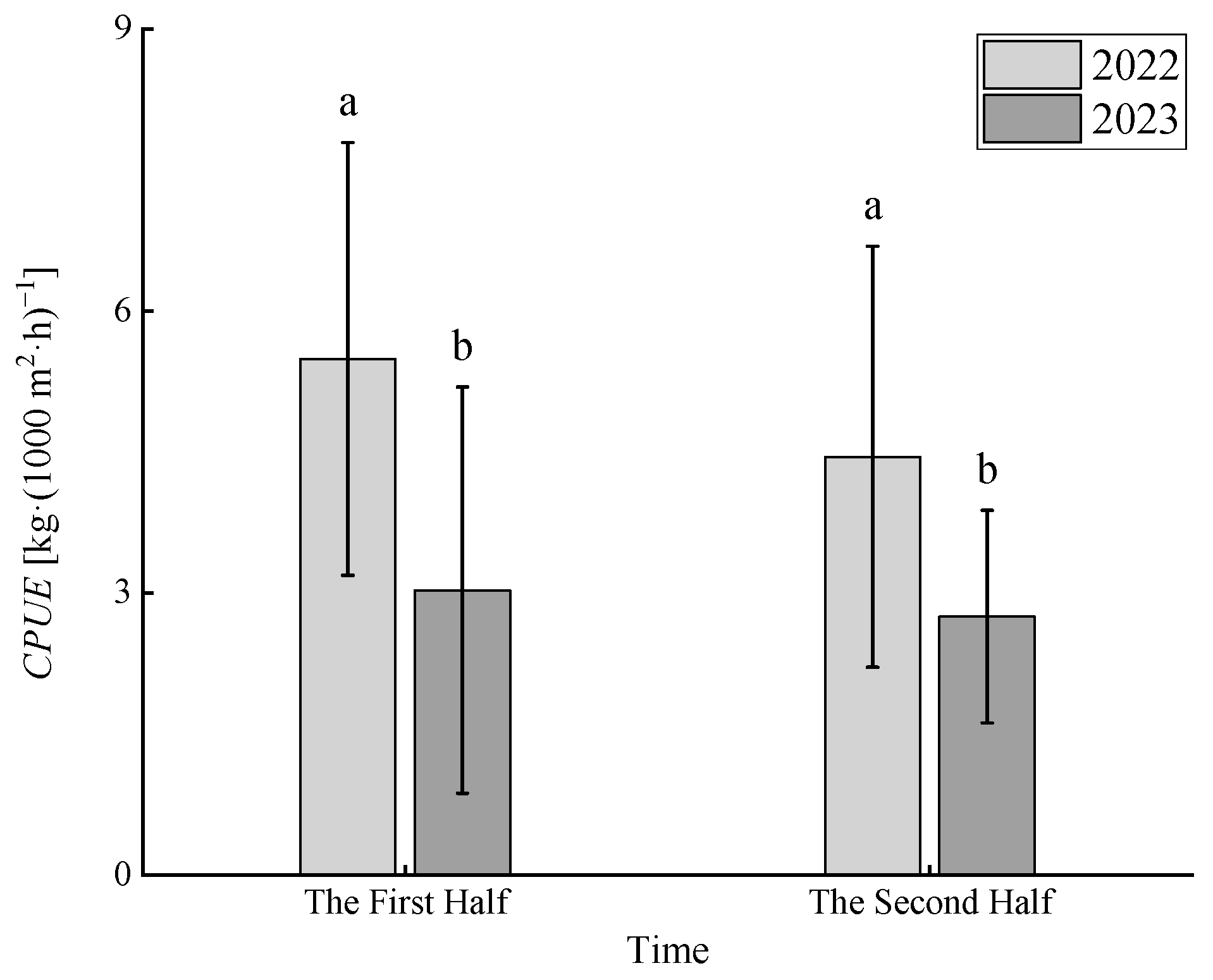
The CPUE of the fish in Poyang Lake in the first and second halves of 2022 and 2023 were 5.49 kg·(1000 m2·h)−1, 4.45 kg·(1000 m2·h)−1, 3.03 kg·(1000 m2·h)−1, and 2.75 kg·(1000 m2·h)−1, respectively. During the entire survey period, the CPUE showed a continuous downward trend with a cumulative decline rate of 49.91%. However, there were differences in the changes in CPUE across different regions. For example, the CPUE at the river-connected mouth (S1) basically remained unchanged during the four surveys, while the river-connected channel (S2, S3) had the largest decline, reaching 69.28%. The main lake area (S4, S5, S6) decreased by 45.58%, and the inlets of the five tributaries (S7, S8, S9, S10, S11) decreased by 47.89%. There were significant differences [First Half: Mann-Whitney U = 25.000, Z = −2.331, n1 = 11 (2022 first half), n2 = 11 (2023 first half), p < 0.05; Second Half: Mann-Whitney U = 28.000, Z = −2.134, n1 = 11 (2022 second half), n2 = 11 (2023 second half), p < 0.05] in the CPUE during the same survey period between years (Figure 5). The CPUE in the second half of 2022, during the abnormal drought, was significantly higher than in the second half of 2023, while the CPUE in the first half of 2023, during the abnormal drought, was significantly lower than in the first half of 2022.

4. Discussion

4.1. Status Quo of the Fishery Resources in Poyang Lake

The floodplain lakes of the Yangtze River basin are influenced by the periodic flooding of the Yangtze River, and are characterized by high spatiotemporal habitat heterogeneity, which supports rich fishery resources and extremely high biological productivity [42]. From 2022 to 2023, a total of 91 species of fish belonging to 11 orders, 17 families, and 54 genera were found in Poyang Lake, accounting for 66.91% of the historical cumulative recorded species count (136 species) in the lake from 1955–2000 [43]. According to the Bulletin on Aquatic Biological Resources and Habitat Status in the Yangtze River Basin [44], the number of fish species in Poyang Lake was 63 and 66 in 2020 and 2021, respectively. The implementation of a 10-year fishing ban in 2020 in the key waters of the Yangtze River Basin, by removing the primary anthropogenic disturbance of fishing, has significantly reduced anthropogenic stress on aquatic biota, thereby contributing to the restoration of the connectivity of the ecological corridor formed by the Poyang Lake. Since the fishing ban, the number of fish species in Poyang Lake has increased annually, rising from 63 species in 2020 to 81 species in 2023, a 28.57% increase. Class II nationally protected species (e.g., Myxocyprinus asiaticus), critically endangered fish species (e.g., Ochetobius elongatus), and economically important fish species (e.g., Mylopharyngodon piceus, Ctenopharyngodon idellus, Hypophthalmichthys molitrix, and Aristichthys nobilis) with individuals reaching the body length at first sexual maturity [45].
In lakes of the middle and lower reaches of the Yangtze River, the composition of the fish population is typically dominated by Cyprinidae, the most numerous family, and Bagridae, the second most numerous, as evidenced in lakes such as Dongting Lake, Qili Lake, and Gehu Lake [46,47,48]. Poyang Lake is no exception, with Cyprinidae having the highest number of species, accounting for 54.95% of the total, followed by Bagridae at 14.29%. Compared with historical data, the compositional structure of the fish community in Poyang Lake, dominated by Cyprinidae followed by Bagridae, has not changed [43,49,50,51]. However, at the species level the dominant fish in Poyang Lake have changed continuously as the environment has changed, a process which can be generally divided into three stages. (1) 1950s–1960s: Productivity levels in the lake were low and the dominant species were medium-sized and large fish such as Cyprinus carpio, Hypophthalmichthys molitrix, Aristichthys nobilis, Ctenopharyngodon idellus, Silurus meridionalis, Culter alburnus, Culter mongolicus, and Megalobrama amblycephala [52]. (2) 1980s–early 2000s: Rapid social development and intensified fishing practices led to overfishing. The fish in Poyang Lake showed a trend toward younger ages and smaller sizes, with the dominant species shifting to small and medium-sized fish such as Pseudobrama simoni, Coilia brachygnathus, Carassius auratus, Hemiculter bleekeri, Saurogobio dabryi, and Acheilognathus taenianalis, indicating a significant decline in fishery resources [49,50,53]. (3) Post-Yangtze River fishing ban era: The population structure of the fish in Poyang Lake began to recover naturally after the removal of fishing pressure. The composition of the dominant species shifted from families of small-bodied fish to medium- and large-sized fish. For example, from 2021 to 2022, the dominant species consisted of medium-sized and large fish such as Carassius auratus, Coilia brachygnathus, Ctenopharyngodon idellus, Culter dabryi, Hypophthalmichthys molitrix, Aristichthys nobilis, and Megalobrama skolkovii [51]. This is partially congruent with the findings of this study. Specifically, the IRI values of the dominant species Megalobrama skolkovii, Aristichthys nobilis, and Hypophthalmichthys molitrix during 2022–2023 reached 2486, 1853, and 1521, respectively. However, Carassius auratus and Coilia brachygnathus, which were dominant species in the 2021–2022 survey, showed a decline in dominance during the abnormal drought periods of this study (the second half of 2022 and the first half of 2023), transitioning from dominant species (IRI ≥ 1000) to common species (100 ≤ IRI < 1000).
The diversity indices measured in this study are key indicators of community structure stability and ecosystem health. The Shannon-Weiner diversity, Pielou evenness, Simpson dominance, and Margalef richness indices of the fish community in Poyang Lake were 3.30, 0.73, 0.95, and 6.93, respectively. Notably, when compared with other major lakes in the middle and lower reaches of the Yangtze River (e.g., Dongting Lake, Gehu Lake, and Qili Lake), Poyang Lake’s diversity indices all fall within a relatively high range [46,47,48]. This indicates that its fish community is characterized by high species richness, even individual distribution, and low dominance of dominant species. Furthermore, compared with the 2020–2021 baseline data [53], these indices showed differential improvements: the Shannon-Weiner diversity index increased from 2.51 to 3.30 (a 31.5% rise), the Simpson dominance index rose from 0.88 to 0.95 (an 8.0% increase), and the Margalef richness index surged from 4.44 to 6.93 (a 56.1% growth). While the Pielou evenness index slightly decreased from 0.74 to 0.73 (a 1.4% reduction), it remained within the range indicating uniform species distribution. Collectively, these results demonstrate a significant enhancement in fish diversity and community structure stability in Poyang Lake since the implementation of the 10-year fishing ban, underscoring the policy’s effectiveness in facilitating the recovery of aquatic biological resources.

4.2. Response Characteristics of Fish in Poyang Lake During Periods of Abnormal Drought

Seasonally driven and predictable periodic water level fluctuations can promote higher biodiversity and productivity. Conversely, abnormal hydrological regimes typically lead to the loss of habitat complexity, a decrease in the number of biological species, or reduced diversity through prolonged low water levels, reduced inundated area, and disrupted timing of flood pulses [1]. Since this study did not systematically conduct relevant surveys on the habitat complexity of Poyang Lake during the abnormal drought period (e.g., area of submerged vegetation and depth variability indices), it thus only focuses on changes in fish species number and diversity indices for discussion. For example, the flow-phenology mismatch caused by the severe drought in California, USA, from 2012 to 2016 led to the reduced reproduction, population decline, and temporary range contraction of three Pacific salmonid fish [54]. In this study, no significant differences were found in the average number of fish species, or the Shannon-Weiner diversity, Pielou evenness, Simpson diversity, or Margalef richness indices in Poyang Lake during the same periods between years. This result may be related to the emergency refuge function of some specific habitats (e.g., dish-shaped lakes, navigation channels, and sand pits) during the abnormal drought [26]. These specific habitats provide temporary shelter for aquatic organisms such as the Yangtze finless porpoise and fish, which can to a certain extent maintain the relative stability of the species composition structure in the short term, thereby keeping the diversity indices stable. However, such specific habitats have a limited scope and are difficult to alleviate the decline in fishery resources caused by the reduction in living space, habitat quality degradation (e.g., hypoxia and water environment deterioration), and intensified interspecific competition induced by abnormal drought. Thus, this study presents a “contradiction” in Poyang Lake fish under abnormal drought stress: diversity indices did not show a significant decline (p > 0.05), but CPUE showed a significant decline (p < 0.05). In essence, this contradiction arises because diversity indices and CPUE measure different core dimensions of ecosystem status and exhibit distinct response mechanisms to drought stress. Diversity indices are calculated based on the relative proportion of species number and individual number, and their stability can reflect “no species loss” and “undamaged community structure evenness”. As a core indicator of resource abundance, CPUE directly reflects the catch biomass per unit effort. Its decline is directly related to the “reduction in individual numbers” and “intensified survival pressure” caused by drought, but these changes have not reached the level of “species extinction” and thus are not reflected in diversity indices. Overall, diversity indices are more sensitive to “species presence”, while CPUE is more sensitive to “individual survival”. In this study, although abnormal drought did not lead to the disappearance of a large number of fish species in Poyang Lake, it could still cause the decline of fish resources by reducing individual numbers and biomass [30], revealing the “illusion of stability” of river-connected lake ecosystems under short-term extreme stress: the stability of diversity indices does not mean that resources are undamaged, and a comprehensive evaluation of ecological health status still needs to combine indicators such as biomass and reproductive success rate.
Periodic water level fluctuations are a primary driver of fish community structure in river-connected lakes [33], and abnormal drought reshapes community composition through two key theoretical mechanisms, namely “Habitat Filtering” and “Ecological Niche Differentiation”, which screen species with adaptive traits via environmental stress and regulate interspecific competition and stress tolerance through resource dimension differentiation, respectively [33,55,56,57]. Specifically, abnormal drought in Poyang Lake caused a sharp drop in water level, desiccation of the hydro-fluctuation zone, and compression of water space, forming “drought-induced habitat filtering”: migratory fish (e.g., Coilia nasus) successfully passed environmental screening by virtue of their migratory adaptive traits, as they could migrate to the mainstem and tributaries of the Yangtze River for refuge through hydrological connectivity, resulting in smaller losses of reproductive populations; in contrast, sedentary fish (e.g., Coilia brachygnathus) showed a significant decline in dominance since they could not escape the stressful environment due to insufficient adaptability, and small-bodied fish (e.g., Hemiculter bleekeri), which are highly dependent on habitat complexity and have weak stress tolerance traits, became the main eliminated group, this is consistent with the core view of suitable habitat ecology that “stressful environments strengthen trait screening” [30,58,59,60]. Building on this, habitat filtering further triggers spatial niche reconstruction: under normal hydrological conditions, the “spatial niche isolation” formed by the hydro-fluctuation zone can reduce the encounter probability between small-bodied fish and carnivorous fish [1,30], while drought compresses the spatial niche of small-bodied fish and promotes the aggregation of carnivorous fish (e.g., Culter mongolicus), leading to increased “niche overlap” and intensified interspecific competition [14,61,62,63]. Consequently, the IRI of small-bodied fish plummeted from the dominant species level to the rare species level, which is exactly the result of the dual effects of space loss and predation pressure, consistent with the chain reaction model of “from environmental stress to niche reconstruction to community structure adjustment” in suitable habitat ecology [33,64]. Additionally, the differential responses of fish with different feeding habits are essentially the embodiment of ecological niche differentiation, which emphasizes that species avoid competition by occupying different resource dimensions (e.g., food, space) [33,56,57]: the niche of herbivorous fish (e.g., Parabramis pekinensis) was highly dependent on aquatic plants, and drought compressed their food resources, leading to a significant decline in IRI; in contrast, omnivorous fish (e.g., Pelteobagrus fulvidraco, Pelteobagrus eupogon) had a niche covering multiple resource types, so drought would not completely deprive them of their survival basis, allowing them to be promoted to dominant species. This confirms the core conclusion that “the higher the degree of niche differentiation, the stronger the tolerance to extreme environments” [65,66]. Overall, this abnormal drought event caused a decline in the IRI of small-bodied, sedentary, and herbivorous fish in Poyang Lake through “Habitat Filtering” and “Ecological Niche Differentiation”.
Drastic water level fluctuations are a significant stress factor for fish survival and reproduction. Sudden water level falls caused by hydropeaking or natural drought can easily lead to fish stranding and the rate of water level decline is positively correlated with stranding risk [67,68]. In this study, the average daily water level of Poyang Lake during abnormal drought period was significantly lower than normal water level period, and water level fluctuations were abnormal. Comparing cross-year data from the same periods in Poyang Lake, this study found that the CPUE in the first half of 2023 (abnormal drought period) was significantly lower than that in the corresponding period of 2022 (normal water level period), which was consistent with the general rule that “fish CPUE during abnormal drought periods is usually lower than that during normal water level periods.” However, the data also revealed a special phenomenon: the CPUE in the second half of 2022 (abnormal drought period) was instead significantly higher than that in the second half of 2023 (normal water level period). This indicates that the impacts of abnormal drought have persistence and a lag effect, and even if water levels recover, fishery resources are difficult to return to the pre-abnormal drought level in the short term. The specific impact mechanisms are as follows: During the 2022 flood season (mid-August), Poyang Lake abruptly transitioned from normal hydrology to abnormal drought, with an abnormal shrinkage of river-connected water bodies. Fish were trapped in limited water areas, enduring high-density stress, and superimposed with multiple pressures such as hypoxia, water quality deterioration, disease, and interspecific competition, leading to mass mortality. Meanwhile, submerged plants retreated toward the lake center and decreased in biomass, resulting in the loss of fish feeding grounds [27]. The aforementioned stresses also prompted some fish to migrate early to the mainstem and tributaries of the Yangtze River, significantly shortening their fattening cycle. By the second half of 2022, the fish CPUE had decreased by 18.94% compared with that before the drought (the first half of 2022). More seriously, this abnormal drought event persisted into the following year. In the first half of 2023, the water level rise in Poyang Lake was severely delayed (starting on June 19), and the maximum water level was significantly low (the water level at Xingzi Station on June 29 was only 15.19 m). Since water level rise is a key triggering condition for the spawning and reproduction of most freshwater fish, abnormally low water levels during the breeding period usually lead to a decrease in fish reproductive success and juvenile survival rate, as well as a significant reduction in population recruitment [68,69]. This cumulative effect led to a further drop in CPUE to 2.75 kg·(1000 m2·h)−1 in the second half of 2023, a decrease of 38.20% compared with the second half of 2022; as of 2024 [unpublished data, CPUE = 2.52 kg·(1000 m2·h)−1], there was still no significant sign of recovery in fishery resources. Overall, abnormal hydrological rhythms not only exert immediate destructive effects on fish and other aquatic organisms but also cause long-term ecological consequences through pathways such as population structure damage and inhibition of reproductive success. However, the duration and intensity of such impacts still need to be further clarified through long-term monitoring and future research.

4.3. Recommendations for Mitigating the Adverse Effects of Abnormal Drought on Fishery Resources in Poyang Lake

From late June to mid-November 2022, the Poyang Lake basin experienced a severe drought, with persistent high temperatures, low rainfall, and record low water levels in its rivers and lakes [25]. The living space for fish in the lake area was severely compressed, habitat functions gradually deteriorated, and fishery resource abundance significantly declined, which to some extent undermined the achievements of the 10-year fishing ban. To mitigate the adverse effects of abnormal drought on fish in Poyang Lake, the following three measures are recommended: (1) Hydraulic Project Scheduling: The Upstream Reservoir Group, with the Three Gorges as the core, should implement water replenishment schedules during the Poyang Lake dry season; incorporate the ecological water level requirements of Poyang Lake into the operation system of the Three Gorges Reservoir and establish an “ecological operation red line”; increase the discharge flow from the mainstem Yangtze River; reduce the discharge flow from the river-connected channels of Poyang Lake to alleviate the drought conditions in the lake area [70]; develop a regulatory Poyang Lake Water Control Project to maintain a suitable water level in the lake area during the dry season to ensure living space for fish and other aquatic organisms; establish a joint scheduling mechanism for the Five Rivers reservoir group; and reasonably adjust the reservoir storage and discharge plans based on weather forecasts and watershed inflow predictions before the onset of the dry season to increase discharge flows to replenish downstream rivers and increase the water inflow into the lake, while ensuring reservoir safety and function. (2) Ecological Engineering Restoration: During the survey, fish were observed concentrating in deep-water areas in sand pits during the dry season. It is recommended that the area and volume of existing sand pits (e.g., Songmenshan and Jinxi Lake) be expanded and fully connected to the main river channel to ensure that the fish, Yangtze finless porpoises, and other aquatic organisms concentrated in sand pits have relatively safe living spaces, even when the water levels in Poyang Lake are extremely low [20]. (3) Policy and Institutional Guarantees: Enhance the development of scientific standardized measures for aquatic organism proliferation and release to better conserve aquatic biological resources and protect biodiversity; strictly maintain the 10-year fishing ban in the Yangtze River and police illegal fishing activities to ensure sufficient reproductive and growth opportunities for the fish in Poyang Lake to promote the natural recovery of populations.

5. Conclusions

Since the implementation of the 10-year fishing ban in the key waters of the Yangtze River Basin, the ecological corridor of Poyang Lake has remained unobstructed, the number of fish species has increased year by year, dominant species have shifted from small fish taxa to medium-sized and large fish taxa, diversity levels have improved, and community structure stability has strengthened, demonstrating the significant effectiveness of the fishing ban policy. However, the fish community structure in Poyang Lake changed significantly as a result of the abnormal drought in the second half of 2022, showing an overall decline in the dominance of small, sedentary, herbivorous fish. Although there were no significant differences in the number of fish species and diversity indices, the sharp decline in the CPUE of fish reveals that they are facing multiple ecological stresses induced by the abnormal drought. The fish suffered high-density stress within a limited space, further aggravated by issues such as hypoxia, water quality deterioration, disease, and interspecific competition, leading to mass mortality of the remaining population. Feeding grounds were essentially lost, causing fish to migrate early to the mainstem and tributaries of the Yangtze River, significantly shortening their fattening cycle. Abnormal hydrological rhythms during the breeding season reduced fish reproductive success and juvenile survival rates, resulting in a substantial reduction in fish recruitment, further exacerbating the decline of the fishery resources in Poyang Lake and undermining the achievements of the 10-year fishing ban. There is an urgent need to implement the relevant measures (as outlined above) to ensure the ecological health of Poyang Lake.

Author Contributions

Conceptualization, S.W. (Sheng Wang); methodology, L.P. and S.W. (Sheng Wang); software, L.P. and J.M.; validation, S.W. (Sheng Wang) and L.P.; formal analysis, L.P. and S.W. (Sixin Wen); investigation, S.W. (Sixin Wen), X.S. and G.Z.; resources, X.D.; data curation, S.W. (Sixin Wen), W.M., H.J. and X.S.; writing—original draft preparation, L.P., M.L. and K.L.; writing—review and editing, S.W. (Sheng Wang); visualization, L.P.; supervision, S.W. (Sheng Wang); project administration, S.W. (Sheng Wang); funding acquisition, J.Y. and S.W. (Sheng Wang). All authors have read and agreed to the published version of the manuscript.

Funding

This research was funded by the National Key R&D Program (2024YFF1308800), the Key Science and Technology Project of Jiangxi Province (20252ABF010001), the Special Fund for Survey and Monitoring System of Aquatic Biological Resources in Jiangxi Province (JXSSJC-2023-01), and the Investigation of Important Habitats of Coilia nasus in Key Waters of Jiangxi Province (2023–2025).

Institutional Review Board Statement

Regarding the Ethical Statement, relevant ethical review requirements were not applicable to this field survey study. The fishery resource investigation was conducted after being submitted to the Department of Agriculture and Rural Affairs of Jiangxi Province for approval in accordance with the specified regulations and procedures, and obtaining a special permit for scientific survey fishing (Approval of the Department of Agriculture and Rural Affairs of Jiangxi Province on Approving Units Including the Jiangxi Provincial Aquatic Conservation and Rescue Center to Conduct Special Permit Fishing for Scientific Survey). All sampling activities strictly complied with the requirements of the Fisheries Law of the People’s Republic of China, the Regulations on the Administration of Fisheries Harvesting Permits, the Notice of the General Office of the Ministry of Agriculture and Rural Affairs on Strengthening and Regulating the Monitoring and Survey of Aquatic Organisms in the Yangtze River Basin, and the Notice on Regulating the Monitoring Marking of Aquatic Biological Resources in the Yangtze River. The handling and release of captured fish were conducted on the principle of minimizing ecological impact, and endangered species were immediately released back to their natural habitats in accordance with the provisions of the permit.

Informed Consent Statement

Not applicable.

Data Availability Statement

The original contributions presented in this study are included in the article. Further inquiries can be directed to the corresponding author.

Conflicts of Interest

The authors declare no conflicts of interest.

Appendix A

Table A1. A list of fish species in Poyang Lake from 2022 to 2023.
SpeciesEcological TypeThe First Half of 2022The Second Half of 2022The First Half of 2023The Second Half of 2023
Anguilliformes
Anguillidae +
Anguilla japonicaCM
Clupeiformes
Engraulidae
Coilia nasusCM++++
Coilia brachygnathusCS++++
Cypriniformes
Cyprinidae
Mylopharyngodon piceusCM++++
Ctenopharyngodon idellusHM++++
Squaliobarbus curriculusOM++++
Ochetobius elongatusCM+++
Elopichthys bambusaCM +++
Pseudolaubuca sinensis *OS++++
Pseudolaubuca engraulis *OM +
Sinibrama wui *OS +
Toxabramis swinhonis *PS+ +
Hemiculter leucisculus *PS++++
Hemiculter bleekeri *PS++++
Cultrichthys erythropterusCS++++
Culter alburnusCS++++
Culter mongolicusCS++++
Culter oxycephaloidesCS+ +
Culter dabryiCS++++
Culter oxycephaloidesCS++ +
Parabramis pekinensisHM++++
Megalobrama skolkoviiOS++++
Megalobrama amblycephalaHS++++
Xenocypris argenteaHS++++
Xenocypris davidiHM++++
Xenocypris microlepisOM++++
Distoechodon tumirostrisOS+
Pseudobrama simoni *PM++++
Aristichthys nobilisPM++++
Hypophthalmichthys molitrixPM++++
Hemibarbus labeo *OS++++
Hemibarbus maculatus *OS++++
Pseudorasbora parva *OS+ ++
Sarcocheilichthys sinensis *CS+++
Sarcocheilichthys nigripinnis *OS++++
Sarcocheilichthys kiangsiensis *OS++
Squalidus argentatus *OS++++
Coreius heterodonOM+
Abbottina rivularis *OS+ +
Pseudogobio vaillanti *OS+ ++
Paracanthobrama guichenoti *OS++++
Saurogobio dumerili *OS ++
Saurogobio dabryi *OS++++
Saurogobio gymnocheilus *OS++++
Rhodeus sinensis *OS+ ++
Rhodeus ocellatus *DeS+
Acheilognathus macropterus *OS++++
Acheilognathus tonkinensis *HS+
Acheilognathus barbatulus *HS+
Acheilognathus chankaensis *DeS++ +
Acheilognathus taenianalis *OS++++
Cyprinus carpioOS++++
Carassius auratus *OS++++
Catostomidae
Myxocyprinus asiaticusOM+
Cobitidae
Parabotia fasciata *DeS+ +
Parabotia banarescui *CS++ +
Cobitis sinensis *DeS+ +
Cobitis macrostigma *CS++++
Cobitis rara *OS +
Misgurnus anguillicaudatus *DeS++++
Paramisgurnus dabryanus *DeS++++
Siluriformes
Siluridae
Silurus asotusCS++++
Silurus meridionalisCS+ ++
Bagridae
Pelteobagrus fulvidraco *OS++++
Pelteobagrus eupogon *OS++++
Pelteobagrus vachelliiOS++++
Pelteobagrus nitidus *OS++++
Leiocassis longirostrisCM+ ++
Leiocassis crassilabrisCS++++
Leiocassis argentivittatus *CS+ +
Pseudobagrus tenuisOS++++
Pseudobagrus truncatusCS +
Pseudobagrus emarginatusCS +
Pseudobagrus albomarginatusCS++++
Pseudobagrus analisCS +
Mystus macropterusCS ++
Sisoridae
Glyptothorax sinensisCS +
Osmeriformes
Salangidae
Protosalanx hyalocranius *CM +
Gobiiformes
Eleotridae
Odontobutis potamophila *CS +
Gobiidae
Rhinogobius giurinus *CS++++
Rhinogobius cliffordpopei *OS+
Mugiliformes
Mugilidae
Mugil cephalusHM +
Beloniformes
Hemiramphidae
Hyporhamphus intermedius *CS+ +
Synbranchiformes
Synbranchidae
Monopterus albusDeS +
Mastacembelidae
Sinobdella sinensisCS+ ++
Anabantiformes
Channidae
Channa argusCS++++
Perciformes
Serranidae
Siniperca chuatsiCS++++
Siniperca kneriCS++++
Siniperca scherzeriCS+
Siniperca roulei *CS +
Siniperca obscura *CS +
Note: “+” indicates collected samples; “*” indicates small-bodied species; O: Omnivorous; P: Planktivorous; H: Herbivorous; De: Detritivorous; C: Carnivorous; S: Sedentary; M: Migratory.

References

  1. Junk, W.J.; Bayley, P.B.; Sparks, R.E. The flood pulse concept in river-floodplain systems. Can. Spec. Publ. Fish. Aquat. Sci. 1989, 106, 110–127. [Google Scholar]
  2. Wang, H.Z.; Liu, X.Q.; Wang, H.J. The Yangtze River-floodplain ecosystem: Multiple threats and holistic conservation. Acta Hydrobiol. Sin. 2019, 43, 157–182. [Google Scholar]
  3. Tockner, K.; Stanford, J.A. Riverine flood plains: Present state and future trends. Environ. Conserv. 2002, 29, 308–330. [Google Scholar] [CrossRef] [Scilit]
  4. Welcomme, R.L. Fisheries Ecology of Floodplain Rivers; Longman Press: London, UK, 1979. [Google Scholar]
  5. Robinson, C.T.; Tockner, K.; Ward, J.V. The fauna of dynamic riverine landscapes. Freshw. Biol. 2002, 47, 661–677. [Google Scholar] [CrossRef] [Scilit]
  6. Górski, K. Floods and Fish: Recruitment and Distribution of Fish in the Volga River Floodplain; Wageningen UR: Wageningen, The Netherlands, 2010. [Google Scholar]
  7. Paerl, H.W.; Hall, N.S.; Calandrino, E.S. Controlling harmful cyanobacterial blooms in a world experiencing anthropogenic and climatic-induced change. Sci. Total Environ. 2011, 409, 1739–1745. [Google Scholar] [CrossRef] [Scilit]
  8. Pinter, N.; Ickes, B.S.; Wlosinski, J.H.; Van der Ploeg, R.R. Trends in flood stages: Contrasting results from the Mississippi and Rhine River systems. J. Hydrol. 2006, 331, 554–566. [Google Scholar] [CrossRef] [Scilit]
  9. Hu, Z.P.; Wang, S.G. Erosion and deposition evolution of Poyang Lake and its hydrological and ecological effects. Water Resour. Hydropower Eng. 2022, 53, 66–78. [Google Scholar]
  10. Chen, Q.W.; Liu, L.F.; Liu, C.M. Impact of dam construction on river ecosystems and study on reservoir ecological operation. J. Beijing Norm. Univ. 2007, 43, 578–582. [Google Scholar]
  11. Huang, X.R.; Gao, L.Y.; Yang, P.P.; Xi, Y.Y. Cumulative impact of dam constructions on streamflow and sediment regime in lower reaches of the Jinsha River, China. J. Mt. Sci. 2018, 15, 2752–2765. [Google Scholar] [CrossRef] [Scilit]
  12. Welcomme, R.L. Inland Fisheries: Ecology and Management; Blackwell Science, Fishing News Books: Oxford, UK, 2001. [Google Scholar]
  13. Wantzen, K.M.; Rothhaupt, K.O.; Mörtl, M.; Cantonati, M.; G.-Tóth, L.; Fischer, P. Ecological effects of water-level fluctuations in lakes: An urgent issue. Hydrobiologia 2008, 613, 1–4. [Google Scholar] [CrossRef] [Scilit]
  14. Gownaris, N.J.; Rountos, K.J.; Kaufman, L.; Kolding, J.; Lwiza, K.M.M.; Pikitch, E.K. Water level fluctuations and the ecosystem functioning of lakes. J. Great Lakes Res. 2018, 44, 1154–1163. [Google Scholar] [CrossRef] [Scilit]
  15. Wu, G.F.; de Leeuw, J.; Skidmore, A.K.; Prins, H.H.T.; Best, E.P.H.; Liu, Y.L. Will the Three Gorges Dam affect the underwater light climate of Vallisneria spiralis L. and food habitat of Siberian crane in Poyang Lake? Hydrobiologia 2009, 623, 213–222. [Google Scholar] [CrossRef] [Scilit]
  16. Dronova, I.; Gong, P.; Wang, L. Object-based analysis and change detection of major wetland cover types and their classification uncertainty during the low water period at Poyang Lake, China. Remote Sens. Environ. 2011, 115, 3220–3236. [Google Scholar] [CrossRef] [Scilit]
  17. Liu, X.J.; Qin, J.J.; Xu, Y.; Zhou, M.; Wu, X.P.; Ouyang, S. Biodiversity pattern of fish assemblages in Poyang Lake Basin: Threat and conservation. Ecol. Evol. 2019, 9, 11672–11683. [Google Scholar] [CrossRef] [Scilit]
  18. Zhang, H.; Kang, M.; Shen, L.; Wu, J.M.; Li, J.Y.; Du, H.; Wang, C.Y.; Yang, H.L.; Zhou, Q.; Liu, Z.G.; et al. Rapid change in Yangtze fisheries and its implications for global freshwater ecosystem management. Fish Fish. 2020, 21, 601–620. [Google Scholar] [CrossRef] [Scilit]
  19. Mei, X.F.; Dai, Z.J.; Du, J.Z.; Chen, J.Y. Linkage between Three Gorges Dam impacts and the dramatic recessions in China’s largest freshwater lake, Poyang Lake. Sci. Rep. 2015, 5, 18197. [Google Scholar] [CrossRef] [Scilit]
  20. Ye, X.C.; Xu, C.Y.; Zhang, Q.; Yao, J.; Li, X.H. Quantifying the human induced water level decline of china’s largest freshwater lake from the changing underlying surface in the lake region. Water Resour. Manag. 2018, 32, 1467–1482. [Google Scholar] [CrossRef] [Scilit]
  21. Li, Q.Y.; Lai, G.Y.; Devlin, A.T. A review on the driving forces of water decline and its impacts on the environment in Poyang Lake, China. J. Water Clim. Change 2020, 12, 1370–1391. [Google Scholar] [CrossRef] [Scilit]
  22. Hu, Z.P. Serious drought in Poyang Lake in 2022 and countermeasures for drought prevention and disaster reduction. China Flood Drought Manag. 2023, 33, 1–6+39. [Google Scholar]
  23. Min, J.L.; Yu, J.X.; Que, J.L.; Tian, Z.; Rao, R.C.; Guo, X.Q.; Tang, H.; Yang, Y.; Dai, Y.G. Habitat analysis of Yangtze finless porpoises in Poyang Lake under extremely low water level. Acta Agric. Univ. Jiangxi 2023, 45, 1230–1239. [Google Scholar]
  24. Zhang, Q.; Xue, C.Y.; Xia, J. Impacts, causes and countermeasures of extreme drought in Poyang Lake. Bull. Chin. Acad. Sci. 2023, 38, 1894–1902. [Google Scholar]
  25. Lei, S.; Shi, S.; Qu, Y.P.; Liu, Y.W.; Liao, J.Y.; Zhang, Y.; Zhang, Y.; Li, S.Y.; Dong, B.X. Characteristics of extreme drought in the Poyang Lake Basin in 2022 and implications for future response. J. Hydraul. Eng. 2023, 54, 333–346. [Google Scholar]
  26. Min, J.L.; Yu, J.X.; Zhang, Y.Y.; Li, D.M.; Que, J.L.; Tian, Z.; Rao, R.C.; Mei, Z.G.; Dai, Y.G. Distribution risks and protection countermeasures of Yangtze finless porpoise in Poyang Lake during abnormal dry period. Acta Hydrobiol. Sin. 2024, 48, 1642–1650. [Google Scholar]
  27. Guo, M.; Yu, D.K.; Li, Z.; Liu, T.; Jin, J.F.; Wang, Y.Y. The impact of extreme droughts on aquatic macrophyte communities in the sub-lakes of Poyang Lake. J. Ecol. Rural Environ. 2024, 40, 790–798. [Google Scholar]
  28. Shen, Y.Y.; Cheng, J.X.; Xu, L.G.; Li, R.Y.; You, H.L.; Yang, H. Characteristics of zooplankton community structure in Poyang Lake and their influencing factors under extreme hydrological drought. Acta Ecol. Sin. 2023, 43, 10399–10412. [Google Scholar]
  29. Fortin, R.; Dumont, P.; Fournier, H.; Cadieux, C.; Villeneuve, D. Reproduction and Year Class Strength of the Northern Pike (Esox lucius L.) in the Upper Richelieu and Missisquoi Bay. Can. J. Zool. 1982, 60, 227–240. [Google Scholar] [CrossRef] [Scilit]
  30. Gafny, S.; Gasith, A.; Goren, M. Effect of water level fluctuation on shore spawning of Mirogrex terraesanctae (Steinitz), (Cyprinidae) in Lake Kinneret, Israel. J. Fish Biol. 1992, 41, 863–871. [Google Scholar] [CrossRef] [Scilit]
  31. Winfield, I.J.; Fletcher, J.M.; Cubby, P.R. The impact on the whitefish (Coregonus lavaretus (L.)) of reservoir operations at Haweswater, UK. Adv. Limnol. 1998, 50, 185–195. [Google Scholar]
  32. Nagrodski, A.; Raby, G.D.; Hasler, C.T.; Taylor, M.K.; Cooke, S.J. Fish stranding in freshwater systems: Sources, consequences, and mitigation. J. Environ. Manag. 2012, 103, 133–141. [Google Scholar] [CrossRef] [Scilit]
  33. Röpke, C.P.; Amadio, S.A.; Winemiller, K.O.; Zuanon, J. Seasonal dynamics of the fish assemblage in a floodplain lake at the confluence of the Negro and Amazon Rivers. J. Fish Biol. 2015, 87, 272–290. [Google Scholar] [CrossRef] [Scilit] [PubMed]
  34. Chen, Y.Y. Fauna Sinica: Osteichthyes (Cypriniformes); Science Press: Beijing, China, 1998; Volume 2. [Google Scholar]
  35. Chen, Y.Y. Fauna Sinica: Osteichthyes (Cypriniformes); Science Press: Beijing, China, 2000; Volume 3. [Google Scholar]
  36. Chu, X.L. Fauna Sinica: Osteichthyes (Siluriformes); Science Press: Beijing, China, 1999. [Google Scholar]
  37. Zhang, C.G.; Zhao, Y.H. Species and Distribution of Inland Fishes in China; Science Press: Beijing, China, 2016. [Google Scholar]
  38. Ye, S.W.; Li, Z.J.; Lek-Ang, S.; Feng, G.P.; Lek, S.; Cao, W.X. Community structure of small fishes in a shallow macrophytic lake (Niushan Lake) along the middle reach of the Yangtze River, China. Aquat. Living Resour. 2006, 19, 349–359. [Google Scholar] [CrossRef] [Scilit]
  39. Xing, B.B.; Guo, R.; Li, X.S.; Zhao, X.Y.; Zhang, G.S.; Xu, C.C.; Sun, S.; You, Z.B. Fishing capacity comparison of different types of gillnet in the Liaodong Bay. Prog. Fish. Sci. 2017, 38, 24–30. [Google Scholar]
  40. OriginLab. Origin 2024 [Software]; OriginLab Corporation: Northampton, MA, USA, 2024. [Google Scholar]
  41. IBM Corp. IBM SPSS Statistics 27.0 [Software]; IBM Corporation: Armonk, NY, USA, 2022. [Google Scholar]
  42. Cui, Y.B.; Li, Z.J. Fishery Resources and Conservation of Environmental in Lakes of the ChangJiang River Basin; Science Press: Beijing, China, 2005. [Google Scholar]
  43. Zhang, T.L.; Li, Z.J. Fish resources and fishery utilization of Lake Poyang. J. Lake Sci. 2007, 19, 434–444. [Google Scholar] [CrossRef] [Scilit]
  44. Yangtze River Basin Fishery Supervision and Administration Office, Ministry of Agriculture and Rural Affairs. Bulletin on Aquatic Biological Resources and Habitat Status in the Yangtze River Basin (2021); State Council Information Office: Beijing, China, 2022. [Google Scholar]
  45. Qiu, Q.R.; Fan, Z.T.; Wang, L.L. Study on Germplasm of Major Freshwater Cultured Fishes; China Science and Technology Press: Beijing, China, 1991. [Google Scholar]
  46. Jiang, Z.G.; Cao, L.; Zhang, E. Spatio-temporal variations of fish assemblages in the Dongting Lake. Acta Hydrobiol. Sin. 2019, 43, 42–48. [Google Scholar]
  47. Hu, M.Q.; Wang, Y.P.; Liu, S.L.; Zhu, Q.; Li, L.X.; Li, P.J.; Liu, K. Fish community diversity and its relationship with environmental variables in Qili Lake wetland in Anqing. Chin. J. Ecol. 2021, 40, 2485–2495. [Google Scholar]
  48. Li, J.W.; Xu, D.P.; Li, W.; Kong, Y.J.; Hua, S.P.; Liu, Q.G.; Zhang, S.; Hu, Z.J. Spatial and temporal distribution of fish assemblages and its relationship with environmental factors in Lake Gehu. J. Fish. China 2022, 34, 1205–1218. [Google Scholar]
  49. Guo, Z.Z.; Liu, R.L. The Fishes of Jiangxi Province. J. Nanchang Univ. (Nat. Sci.) 1995, 19, 222–232. [Google Scholar]
  50. Fang, C.L.; Chen, W.J.; Zhou, H.M.; Zhang, Y.P.; Fu, P.F.; He, G.; Wu, B.; Wang, S. Fish resources and utilization suggestions in Poyang Lake. Jiangsu Agric. Sci. 2016, 44, 233–243. [Google Scholar]
  51. Wu, B.; Zhang, H.X.; Wu, Z.J.; Zhang, G.F.; Fu, P.F.; Wang, C.L.; Zhang, Y.P.; Fu, H.Y. Fishery resource survey in Poyang Lake and coves during 2020–2021. J. Hydrol. 2025, 46, 99–110. [Google Scholar]
  52. Guo, Z.Z.; Zou, D.L.; Liu, R.L.; Pan, Y.H.; Ye, G.Y.; Liu, S.P. Poyang Lake fish survey report (one of the Jiangxi wildlife resources survey reports). J. Nanchang Univ. (Nat. Sci.) 1964, 00, 121–130. [Google Scholar]
  53. Deng, Y.M.; Wang, Y.P.; Hu, M.Q.; Cheng, X.; Huang, Z.J.; Liu, K. Fish community diversity and environmental influencing factors in Poyang Lake before the fishing ban. J. Fish. China 2023, 47, 193–205. [Google Scholar]
  54. Carlson, S.M.; Pregler, K.C.; Obedzinski, M.; Gallagher, S.P.; Rhoades, S.J.; Woelfle-Hazard, C.; Queener, N.; Thompson, S.E.; Power, M.E. Anatomy of a range contraction: Flow–phenology mismatches threaten salmonid fishes near their trailing edge. Proc. Natl. Acad. Sci. USA 2025, 122, e2415670122. [Google Scholar] [CrossRef] [Scilit] [PubMed]
  55. Kraft, N.J.B.; Adler, P.B.; Godoy, O.; James, E.C.; Fuller, S.; Levine, J.M. Community assembly, coexistence and the environmental filtering metaphor. Funct. Ecol. 2015, 29, 592–599. [Google Scholar] [CrossRef] [Scilit]
  56. Chase, J.M.; Leibold, M.A. Ecological Niches: Linking Classical and Contemporary Approaches; University of Chicago Press: Chicago, IL, USA, 2003. [Google Scholar]
  57. Silvertown, J. Plant coexistence and the niche. Trends Ecol. Evol. 2004, 19, 605–611. [Google Scholar] [CrossRef] [Scilit]
  58. Poff, N.L.; Zimmerman, J.K.H. Ecological responses to altered flow regimes: A literature review to inform the science and management of environmental flows. Freshwat. Biol. 2010, 55, 194–205. [Google Scholar] [CrossRef] [Scilit]
  59. Olden, J.D.; Kennard, M.J.; Pusey, B.J. Biodiversity management in a changing world: A review of 13 years of adaptive management in the Columbia River Basin. N. Am. J. Fish. Manag. 2010, 30, 960–980. [Google Scholar]
  60. Mosepele, K.; Kolding, J.; Bokhutlo, T. Fish community dynamics in an inland floodplain system of the Okavango Delta, Botswana. Ecohydrol. Hydrobiol. 2017, 17, 89–102. [Google Scholar] [CrossRef] [Scilit]
  61. Winemiller, K.O.; Fitzgerald, D.B.; Bower, L.M.; Pianka, E.R. Balancing biodiversity in a changing environment: Extinction debt, immigration credit and species turnover. Trends Ecol. Evol. 2016, 31, 13–22. [Google Scholar]
  62. Matthews, W.J.; Marsh-Matthews, E. Dynamics of an intermittent stream fish community over 35 years: Effects of drought and environmental heterogeneity. Freshwat. Biol. 2016, 61, 690–704. [Google Scholar]
  63. Yang, S.F.; Ye, S.W.; Xu, J.; Li, M.Z.; Liu, H.Z. Evaluation of the effects of the “10-year fishing ban” in Poyang Lake ecosystem based on Ecopath model. Acta Hydrobiol. Sin. 2024, 48, 1402–1413. [Google Scholar]
  64. Cott, P.A.; Sibley, P.K.; Somers, W.M.; Lilly, M.R.; Gordon, A.M. A review of water level fluctuations on aquatic biota with an emphasis on fishes in ice-covered lakes. J. Am. Water Resour. Assoc. 2008, 44, 343–359. [Google Scholar] [CrossRef] [Scilit]
  65. Clavel, J.; Julliard, R.; Devictor, V. Worldwide decline of specialist species: Toward a global functional homogenization? Front. Ecol. Environ. 2011, 9, 222–228. [Google Scholar] [CrossRef] [Scilit]
  66. Villéger, S.; Grenouillet, G.; Brosse, S. Functional homogenization of fish assemblages in tropical reservoirs: The role of introduced species and environmental filters. J. Appl. Ecol. 2017, 54, 1853–1862. [Google Scholar]
  67. Bell, E.; Kramer, S.; Zajanc, D.; Aspitle, J. Salmonid fry stranding mortality associated with daily water level fluctuations in Trail Bridge Reservoir, Oregon. N. Am. J. Fish. Manag. 2008, 28, 1515–1528. [Google Scholar] [CrossRef] [Scilit]
  68. Webb, P.W. The impact of changes in water level and human development on forage fish assemblages in Great Lakes coastal marshes. J. Great Lakes Res. 2008, 34, 615–630. [Google Scholar] [CrossRef]
  69. Kahl, U.; Hülsmann, S.; Radke, R.J.; Benndorf, J. The impact of water level fluctuations on the year class strength of roach: Implications for fish stock management. Limnologica 2008, 38, 258–268. [Google Scholar] [CrossRef] [Scilit]
  70. Jing, P.F.; Li, X.N.; Guo, S.; Lu, J.; Fu, Q.P. Study on water replenishment operation strategy of Three Gorges Reservoir in extremely dry year 2022. Yangtze River 2024, 55, 51–59. [Google Scholar]
Figure 1. Map of the fishery resource survey sites in Poyang Lake.
Fishes 11 00002 g001
Figure 2. Water level conditions at the Xingzi Hydrological Station in Poyang Lake in the first and second halves of 2022 and 2023. Note: Lowercase letters a and b represent statistical significance; groups with the same letter show no significant difference (p > 0.05), while groups with different letters indicate significant differences (p < 0.05) between the equivalent periods of different years.
Fishes 11 00002 g002
Figure 3. Changes in the average number of fish species collected in Poyang Lake in the first and second halves of 2022 and 2023. Note: Lowercase letter a represents statistical significance; groups with the same letter show no significant difference (p > 0.05).
Fishes 11 00002 g003
Figure 4. Changes in fish diversity indices in Poyang Lake in the first and second halves of 2022 and 2023. Note: Lowercase letter a represents statistical significance; groups with the same letter show no significant difference (p > 0.05).
Fishes 11 00002 g004
Figure 5. Changes in the CPUE of the fish in Poyang Lake during the first and second halves of 2022 and 2023. Note: Lowercase letters a and b represent statistical significance; groups with the same letter show no significant difference (p > 0.05), while groups with different letters indicate significant differences (p < 0.05) between the equivalent periods of different years.
Fishes 11 00002 g005
Table 1. Longitude and latitude of fishery resource survey sites in Poyang Lake.
Water Area TypesSurvey SitesLongitudeLatitude
The river-connected mouthS1116.22777829.751858
The river-connected channelS2116.13665329.541906
S3116.09845729.450308
The main lake areaS4116.06437829.290592
S5116.27569229.189792
S6116.44729129.021504
The inlets of the five tributariesS7116.58644129.042409
S8116.38742828.730671
S9116.34155028.673347
S10116.00818929.128218
S11115.94023829.152779
Table 2. Composition and IRI of dominant fish species during different survey periods.
Dominant SpeciesThe First Half of 2022The Second Half of 2022The First Half of 2023The Second Half of 2023 2022–2023
Megalobrama skolkovii27712112307827002724
Aristichthys nobilis34191687203113592266
Hypophthalmichthys molitrix8682627122913241732
Coilia nasus3079315981339972
Coilia brachygnathus108214032811154957
Carassius auratus1732105439294895
Parabramis pekinensis7221235714891868
Pelteobagrus fulvidraco7152601603328808
Cyprinus carpio5828107441056798
Culter mongolicus1891132510823665
Saurogobio dabryi3306063551556655
Hemiculter bleekeri1107310795459
Pelteobagrus eupogon1561701021346447
Note: Boldface indicates that species with IRI ≥ 1000 were defined as dominant species.
Disclaimer/Publisher’s Note: The statements, opinions and data contained in all publications are solely those of the individual author(s) and contributor(s) and not of MDPI and/or the editor(s). MDPI and/or the editor(s) disclaim responsibility for any injury to people or property resulting from any ideas, methods, instructions or products referred to in the content.