


Abstract
In sturgeon aquaculture, all-female production is desirable due to the high value of caviar. Genetic sexing and the production of WW superfemales are important steps toward achieving this. In this study, we identified the WSR and ZSR primers for amplification of W- and Z-specific regions, respectively. WSR primers were designed on the gene W-linked RT RNase H-like domain containing protein (rnhW). The polymerase chain reaction (PCR) bands were obtained with the WSR primer only in phenotypic female sturgeons, indicating that stable genetic sexing was achieved in most species, including those captured around Hokkaido. Moreover, rnhW showed female-specific expression in the gonads during early sex differentiation in kaluga and Amur sturgeon. ZSR primers were developed from the orofacial cleft 1 candidate gene 1 protein homolog. Clear and distinct gel band patterns for ZZ, ZW, and WW genotypes were obtained using WSR and ZSR primers, consistent with genotypic estimations by quantitative PCR. This consistency confirmed the presence of WW superfemales among offspring produced by fertilizing ZW females with ZW pseudomales masculinized using 17α-methyltestosterone. Our findings provide new insights into the mechanisms of sex determination and differentiation in sturgeons, bringing the establishment of an all-female production system within reach.
Keywords:
WW superfemale; sturgeon; W-linked RT RNase H-like domain containing protein; W-specific marker; Z-specific marker Key Contribution:
We identified the gene rnhW on the W chromosome, which is expressed in the undifferentiated gonads of ZW females. Furthermore, we successfully produced WW superfemale sturgeons by using ZW pseudomales treated with 17α-methyltestosterone as broodstock.
1. Introduction
In fish, females and males may have different economic values, and aquaculture sometimes requires prioritizing the production of one sex. In Acipenseriformes, the ovaries are of high economic value as caviar. However, it is difficult to distinguish sex by appearance in sturgeons, and the cost of raising males is a major issue in sturgeon aquaculture [1,2]. Therefore, the establishment of all-female production technology is desirable.
In general, sex determination in vertebrates can be broadly categorized into genotypic sex determination (GSD), which is controlled by genetic factors, and environmental sex determination (ESD), which is influenced by external environmental factors [3]. GSD mainly depends on sex chromosomes. In many mammals, males are the heterogametic sex (XX females/XY males), with sex determined by the Sex-determining region Y (SRY) [4]. In birds, females are heterogametic (ZZ males/ZW females), and Doublesex and mab-3 related transcription factor 1 (DMRT1) has been proposed as a candidate sex-determining gene [5]. In reptiles, in addition to GSD with XX/XY or ZZ/ZW systems, temperature-dependent sex determination (TSD) also occurs [6].
Fish also exhibit diverse sex determination systems. Medaka (Oryzias latipes) has an XX/XY-type GSD, and the DM-domain gene on the Y chromosome (dmy) was the second sex-determining gene identified in vertebrates [7]. In other GSD species, such as tiger puffer (Takifugu rubripes) and Nile tilapia (Oreochromis niloticus), sex is determined by single-nucleotide polymorphisms (SNPs) in anti-Müllerian hormone receptor type II (Amhr2) or anti-Müllerian hormone (Amh), respectively [8,9]. In ZZ/ZW-type Seriola species, sex is also determined by an SNP in 17β-hydroxysteroid dehydrogenase 1 (hsd17b1) [10]. Furthermore, the pejerrey (Odontesthes bonariensis), in which amhy acts as the sex-determining gene, exhibits both GSD and TSD systems [11,12,13]. In contrast, the wrasse (Pseudolabrus sieboldi) is a diandric protogynous fish species and possesses functionally sex-changing gonads [14].
In fish, sex control using sex steroids is often applied. In Nile tilapia, which exhibits an XX/XY system, sex reversal can be easily induced by administering estrogen or androgen. All-female and all-male production can then be achieved by mating XX females with XX males or YY males, respectively. Omoto et al. (2002) successfully feminized and masculinized sturgeons by treatment with estradiol-17β (E2) or 17α-methyltestosterone (MT) treatment from 3 months after hatching (mah), respectively [15]. In sturgeons, sex is thought to be determined by a ZZ/ZW system, as both males and females can be produced through gynogenesis [16,17,18,19,20,21]. Recently, a female-specific genomic region was discovered in sterlet (Acipenser ruthenus), supporting the existence of a ZZ/ZW sex determination system in sturgeons [22]. Primers named “AllWSex2,” designed for this W-specific region, have enabled genetic sexing in most sturgeon species, greatly advancing aquaculture. In other words, it is now possible to identify genetically female individuals that have undergone masculinization. Thus, it should be possible to produce an all-female population through artificial fertilization using broodstock sex-reversed with sex steroids, as in Nile tilapia.
Mating ZW females with ZW pseudomales treated with MT produces WW superfemales. Crossing ZZ males with these WW superfemales should then yield an all-female next generation. We have already successfully produced a generation including WW superfemales using ZW pseudomales generated by MT administration as broodstock (unpublished data). However, several issues have arisen in this process. One such issue is that the masculinization of ZW females is extremely difficult compared with other fish. At present, ZW pseudomales are obtained only rarely, even when the fish are fed diets supplemented with MT according to empirical protocols. To overcome this limitation, it is necessary to deepen our understanding of the mechanisms underlying sex determination and differentiation in sturgeons.
In fish, molecular sex differentiation, in which sex differentiation–related genes show sexual dimorphic expression, precedes morphological sex differentiation. In Nile tilapia, morphological sex differentiation of the gonads begins around 20 to 25 days after hatching (dah). However, sexually dimorphic gene expressions have been observed in the undifferentiated gonads as early as 4 dah. In XY males, the sex-determining gene amhy is expressed at 4 dah, followed by gonadal soma-derived factor (gsdf) at 5 dah and dmrt1 at 6 dah. In contrast, in XX females, forkhead box protein L2 (foxl2) and cytochrome P450, family 19, subfamily A, polypeptide 1a (cyp19a1a) are induced at 5 dah [23,24]. Sex differentiation in sturgeons has been examined in several studies. In bester (Huso huso × Acipenser ruthenus), shortnose sturgeon (Acipenser brevirostrum), and Adriatic sturgeon (Acipenser naccarii), morphological sex differentiation occurs 6 months after hatching [25,26,27]. Recently, the molecular mechanisms of sexual differentiation have also been studied in sturgeon [28]. In Russian sturgeon (Acipenser gueldenstaedtii), it has been suggested that mRNA levels of foxl2, cyp19a1a, and hsd17b1 are higher, while those of gsdf are lower, in the undifferentiated gonads of 9 mah females, with males showing the opposite expression pattern [29]. In Yangtze sturgeon (Acipenser dabryanus) and Siberian sturgeon (Acipenser baerii), higher expression levels of foxl2, cyp19a1a, and hsd17b1 have been reported in genetic females [30,31]. In Amur sturgeon (Acipenser schrenckii), foxl2 exhibited dimorphic expression even at the undifferentiated stage of the gonads, whereas dmrt1a and dmrt1b showed high expression only in morphologically differentiated testes [32]. Overall, sex differentiation–related genes in sturgeons largely correspond to those in other fish species. However, no sex-determining gene has yet been identified in sturgeons, and the relationship between W-linked genes and sex differentiation remains unclear.
Another problem regarding W-specific primers remains: current W-specific primers (AllWSex2) do not discriminate between ZW females and WW superfemales. To distinguish ZW females from WW superfemales, primers that specifically recognize the Z chromosome also need to be designed; however, this has not yet been accomplished. Orofacial cleft 1 candidate gene 1 protein homolog (ofcc1) is the gene located closest to the sex-associated region reported by Kuhl et al. (2021) [22], and a cluster of SNPs has been identified near the start of this gene [33]. This region may provide a clue for designing Z-specific primers.
Along the coast of Hokkaido, the Mikado sturgeon, kaluga, and Amur sturgeon are occasionally caught [34,35,36]. These species have been considered promising candidates for aquaculture in Hokkaido, and efforts have been devoted to their breeding. However, although the AllWSex2 primers have been primarily validated in sturgeon species originating from Europe, North America, and Russia, their effectiveness has not yet been assessed in sturgeons inhabiting the coastal waters of Hokkaido.
In this study, we aimed to identify W-linked genes potentially involved in sex differentiation, develop W-specific primers applicable to sturgeon species found along the coast of Hokkaido, and design Z-specific primers to distinguish ZW females from WW superfemales. First, we identified W-linked RT RNase H-like domain-containing protein (rnhW), located in the female-specific region of the W chromosome, as a candidate gene potentially involved in sex differentiation. We investigated whether primers designed for this gene can be used for genetic sexing in various species, including kaluga and Amur sturgeon, and whether rnhW is transcribed in undifferentiated gonads. Additionally, we designed specific primers for the Z chromosome based on the sequences surrounding ofcc1 and confirmed the presence of WW superfemales in the offspring produced by fertilizing ZW females with ZW pseudomales.
2. Materials and Methods
2.1. Search for W-Linked Female-Specific Transcripts in Undifferentiated Gonads
The sequence of the female-specific region on the W chromosome was extracted from positions 61,246,236–61,267,280 of the W-linked scaffold (CACTIG010000179.1). A homology search was then performed using this sturgeon female-specific region (CACTIG010000179.1: 61,246,236–61,267,280) as the query sequence against an expressed sequence tag (EST) database of five Russian sturgeons, which was constructed from morphologically undifferentiated gonads at 9 mah during the RNA-Seq analysis by Hagihara et al. (2014) [29]. Contigs with an expected value of 0 were selected and subsequently compared with the NCBI database using Blastx to identify any known genes.
2.2. Isolation of rnhW cDNA from Kaluga and Amur Sturgeon
2.2.1. Animals and Sample Collection
All animal experiments in this study were conducted in accordance with the regulations established by the Institutional Animal Care and Use Committee at Hokkaido University (Approval No. 2-1). All sturgeons used in this study were obtained from aquaculture. In this section, we used 6-month-old kalugas reared at the Shikaoi-cho Environmental Conservation Center and 4-month-old Amur sturgeons obtained from Toyone Fish Farmers. All fish were anesthetized on ice and euthanized before sample collection. For sampling, one gonad from each fish was isolated and stored in RNAlater Stabilization Solution (Thermo Fisher Scientific, Waltham, MA, USA) at –30 °C until RNA extraction.
2.2.2. Molecular Cloning
Total RNA was extracted from the gonads of 6-month-old kalugas and 4-month-old Amur sturgeons using ISOGEN (Nippon Gene Co., Ltd., Toyama, Japan). Extracted RNA was quantified using a NanoDrop 2000 spectrophotometer (Thermo Fisher Scientific Inc., Waltham, MA, USA), and its quality was verified based on A260/280 and A260/230 ratios. Next, 4000 ng of total RNA was treated with Deoxyribonuclease (RT Grade) (Nippon Gene Co., Ltd., Toyama, Japan) to remove genomic DNA (gDNA). cDNA was then reverse-transcribed from 1000 ng of DNase-treated total RNA using ReverTra Ace (Toyobo Co., Ltd., Osaka, Japan) and Oligo (dT) primers (Thermo Fisher Scientific Inc., Waltham, MA, USA) in 15 μL reactions. The resulting cDNA was diluted fivefold for reverse transcription (RT)-PCR to avoid PCR inhibition.
The rnhW cDNA was cloned following the procedures described below for sequence determination. To amplify the rnhW coding region of kaluga and Amur sturgeon, PCR was performed using KOD-Plus-Neo (Toyobo Co., Ltd., Osaka, Japan) with the rnhW-F and -R primers designed based on the Russian sturgeon rnhW contig obtained from the EST database. Primer sequences are shown in Table 1. The amplified rnhW coding regions were inserted into the pBluescript SK (-) vector (Promega Corp., Madison, WI, USA) using Ligation high Ver. 2 (Toyobo Co., Ltd., Osaka, Japan). The ligation products were transformed into XL1-Blue Escherichia coli (E. coli) by electroporation. The transformed E. coli cells were cultured on LB agar plates. Subsequently, the insertion of the target sequence into the vector was verified by colony-direct PCR using Taq DNA polymerase (BioAcademia Inc., Osaka, Japan). Plasmids were extracted from eight colonies derived from Amur sturgeon and kaluga, respectively. Sequencing analysis was performed using a SupreDye v3.1 Cycle Sequencing Kit (M&S TechnoSystems Inc., Osaka, Japan) on an Applied Biosystems™ 3130xl Genetic Analyzer (Thermo Fisher Scientific Inc., Foster City, CA, USA). Domains within RnhW were analyzed using InterProScan (http://www.ebi.ac.uk/interpro/search/sequence/, accessed on 6 October 2025). The rnhW cDNA sequences of kaluga and Amur sturgeon obtained in this study were deposited in the DNA Data Bank of Japan (DDBJ) under accession numbers LC892049 and LC892050. This sequence was also used to design primers for subsequent expression analysis by RT-PCR.
Table 1.
Sequences of primers used in this study.
2.3. Genetic Sex Identification in Various Sturgeon Species
2.3.1. Animals
Genetic sexing was performed using the species listed in Table 2. Twelve kalugas (Huso dauricus), twelve Amur sturgeons (Acipenser schrenckii), eight Russian sturgeons, twelve Siberian sturgeons, eight lake sturgeons (Acipenser fulvescens), twelve sterlets, twelve kalmika (Huso dauricus × Acipenser mikadoi), and twelve besters were fin-clipped for genetic discrimination. Collected fins were stored in 100% ethanol until the time of use. Russian and Siberian sturgeons were raised at the Toyone Fish Farmers (Toyone, Aichi, Japan). Besters were raised at the Shikaoi-cho Environmental Conservation Center (Shikaoi, Hokkaido, Japan). The other sturgeon species were raised outdoors in river water at the Nanae Fresh-Water Station, Field Science Center for Northern Biosphere, Hokkaido University (Nanae, Hokkaido, Japan).
Table 2.
Species used in genetic sexing.
2.3.2. Phenotypic Sexing
In Amur sturgeons, Siberian sturgeons, and Russian sturgeons, a portion of their gonad was biopsied. Kalugas, sterlets, and besters were euthanized on ice. Their gonads were fixed in Bouin’s solution overnight, replaced with 70% ethanol the following day, and stored at 4 °C. The samples were dehydrated in a graded ethanol series, replaced with PathoClean (Wako Pure Chemical Inc., Osaka, Japan), and embedded in paraffin. Sections were cut at 5 µm thickness and stained with hematoxylin and eosin (HE). Phenotypic sex was determined by histological observation (Figures S1–S6).
Adult males of lake sturgeon and kalmika were confirmed to undergo spermiation following administration of 20 µg/kg body weight of luteinizing hormone-releasing hormone analog (LHRHa; Sigma-Aldrich, St. Louis, MO, USA). Ovarian biopsies in adult females confirmed the presence of ovarian follicles in late vitellogenesis (Figure S7). Prior to biopsy, all fish were anesthetized with approximately 0.01% 2-phenoxyethanol (Wako Pure Chemical Inc., Osaka, Japan).
2.3.3. Genotyping
gDNA from fin clips was extracted using Template Prepper for DNA (Nippon Gene Co., Ltd., Toyama, Japan) according to the manufacturer’s protocols. Extracted gDNA was diluted 10-fold to prevent PCR inhibition. Polymerase chain reaction (PCR) was performed using KOD-Plus-Neo (Toyobo Co., Ltd., Osaka, Japan) under the following conditions: 98 °C for 2 min, 35 cycles at 98 °C (10 s), annealing at 60 °C (30 s), and 68 °C (15 s). Several primer sets were designed based on the rnhW transcript, and the WSR-F and -R primer pair, which showed the highest female specificity, was used (Table 1). PCR products were electrophoresed on 1.5% agarose gels, stained with ethidium bromide. As a negative control (no-template control), autoclaved Milli-Q water was added instead of the sample in the PCR using WSR primers, and the absence of bands was confirmed (Figure S1A).
2.4. Expression Analysis of rnhW mRNA in Undifferentiated Gonads
2.4.1. RT-PCR
The Amur sturgeon and kaluga used for expression analysis were genetically sexed by PCR using WSR primers. Gonads were collected from five males and five females of the kaluga, and from four males and four females of the Amur sturgeon. Total RNA was obtained from the 6-month-old kaluga and 4-month-old Amur sturgeon. cDNA for expression analysis was synthesized as described in Section 2.2.2., except that random hexamers were used instead of Oligo (dT) primers (Thermo Fisher Scientific Inc., Waltham, MA, USA). To examine whether rnhW is expressed in undifferentiated gonads of females, RT-PCR was performed using KAPATaq Extra HotStart ReadyMix with dye (Kapa Biosystems Inc., Wilmington, MA, USA) with rnhW-RT-F and -R primers under the following cycling conditions: initial denaturation at 95 °C for 3 min, followed by 35 cycles of denaturation at 95 °C for 30 s, annealing at 55 °C for 30 s, and extension at 72 °C for 1 min. The rnhW-F and -R primers were designed based on conserved regions shared among kaluga, Amur sturgeon, and Russian sturgeon (Figure S9). The expression of ef1α was also analyzed as an internal control under the same PCR conditions using ef1α-RT-F and -R primers. PCR products were electrophoresed on 1.5% agarose gels, stained with ethidium bromide. Next, the PCR bands were visualized and compared between males and females within each species.
2.4.2. Histological Observation
The contralateral gonad to that used for RNA extraction was fixed in Bouin’s solution with muscle tissue overnight, replaced with 70% ethanol the following day, and stored at 4 °C. Subsequent processing was carried out following the same procedures as described in Section 2.3.2.
2.5. Genetic Identification of WW Superfemale Sturgeons
2.5.1. Production of WW Superfemales
Offspring, including WW superfemales of besters, were produced by artificial fertilization using sperm from ZW pseudomales at the Shikaoi-cho Environmental Conservation Center. ZW pseudomales used as male parents had been masculinized from 2009 to 2010 by feeding a commercial diet containing MT (10 mg/kg diet). Fish were monitored daily for health and welfare, and all procedures were performed in accordance with institutional guidelines to minimize stress and suffering. The procedures for inducing ovulation and spermiation are described as follows. Ovulation induction in ZW females was performed using two LHRHa injections: the first injection consisted of 2 µg/kg body weight of LHRHa, and the second injection of 50 µg/kg body weight of LHRHa was administered 24 h later. Dorsal fins were collected from 48 offspring randomly selected for WW superfemale determination and stored in 100% ethanol.
2.5.2. Design of Z-Specific Primers
To distinguish ZW from WW genotypes through electrophoretic visualization of PCR bands, it is necessary to design not only W-specific primers but also Z-specific primers. The ofcc1 homolog (LOC117394522) is located near the AllWSex2 region [33]. Degani et al. (2022) also noted that this gene is present on both the Z and W chromosomes, with a cluster of sex-associated SNPs near its 5′ end [33]. We compared the male sterlet ofcc1 sequence on chromosome 4 (NC_048326.1), where sex differences were observed, with the female ofcc1 sequence extracted from CACTIG010000179.1. Female sterlet ofcc1 was found to lack exon 1, 2, and surrounding sequences. Therefore, the ZSR-F and -R primer set was designed around exon 2 to detect only the male ofcc1, serving as the Z-specific primer.
2.5.3. Genomic PCR Using WSR and ZSR Primers
PCR was performed as described in Section 2.3.3. using the ZSR and WSR primer sets. PCR products specific to the W and Z alleles were visualized by electrophoresis, and the resulting band patterns allowed classification into ZZ, ZW, and WW genotypes. As a negative control (no-template control), autoclaved Milli-Q water was added instead of the sample in the PCR using ZSR primers, and the absence of bands was confirmed (Figure S1B).
2.5.4. Genomic Quantitative PCR
qPCR using gDNA requires high-quality DNA templates in precise amounts. Therefore, gDNA was extracted using magnetic beads, and DNA concentration was measured using a fluorescence-based assay, as described below. gDNA from fin clips of bester sturgeons was extracted using the Agencourt DNAdvance, 4 × 96 kit (Beckman Coulter, Inc., Brea, CA, USA) according to the manufacturer’s instructions. DNA concentration was measured using the QubitTM dsDNA BR Assay kit (Thermo Fisher Scientific Inc., Waltham, MA, USA), adjusted to 10 ng/μL, and 4 μL was used in a 20 μL qPCR. Ct values were measured using PowerUp SYBR Green Master Mix (Thermo Fisher Scientific Inc., Waltham, MA, USA) on a StepOnePlus Real-Time PCR System (Thermo Fisher Scientific Inc., Waltham, MA, USA). The WqPCR-F and -R primers, which showed the best amplification efficiency among several sets designed around rnhW, targeted a region referred to as the “green block” [22]. Kuhl et al. (2021) reported that this region, spanning CACTIG010000179.1: 61,261,166–61,261,703, corresponds to the portion of the contig enriched in female-specific sequences. qPCR analysis using the WqPCR primers was performed, and the resulting Ct values were compared among ZZ, ZW, and WW genotypes. The threshold for determining the cycle threshold (CT) was set automatically by the instrument software. In WW individuals, the W chromosome is present in one additional copy compared to ZW individuals; thus, the Ct value is expected to be approximately one cycle lower. In this study, 48 besters were used. To prevent errors in the amount of gDNA added that could arise from handling a large number of samples at once, the experiments were conducted in four separate batches of 12 individuals each.
2.5.5. Statistical Analysis
The observed genotype frequencies (ZZ, ZW, and WW) were tested for deviation from the expected Mendelian ratio of 1:2:1 using a chi-square goodness-of-fit test. The test was performed in R version 4.3.1. A p-value greater than 0.05 was considered to indicate no significant deviation from the expected ratio.
3. Results
3.1. Screening of Female-Specific Genes Expressed in Undifferentiated Gonads
We screened genes located in the female-specific genomic region (CACTIG010000179.1: 61,246,236–61,267,280) of sterlet that are expressed in morphologically undifferentiated gonads. First, eight transcripts showing homology to female-specific genomic regions were selected from an EST database constructed from undifferentiated gonads of Russian sturgeon in our laboratory. These transcripts were further analyzed using Blastx and were found to have homology to known genes (Table S1). Among these five transcripts, all except c119269_g1_i1 had similar sequences not only in the female-specific genomic region but also on other chromosomes. Therefore, we focused on contig c119269_g1_i1 in this study. Its sequence showed 54% homology to the European eel NYN domain and retroviral integrase catalytic domain-containing protein-like (Nynrin-like) and was located between transposon-like sequences in the female-specific region.
3.2. Identification of rnhW in Kaluga and Amur Sturgeon
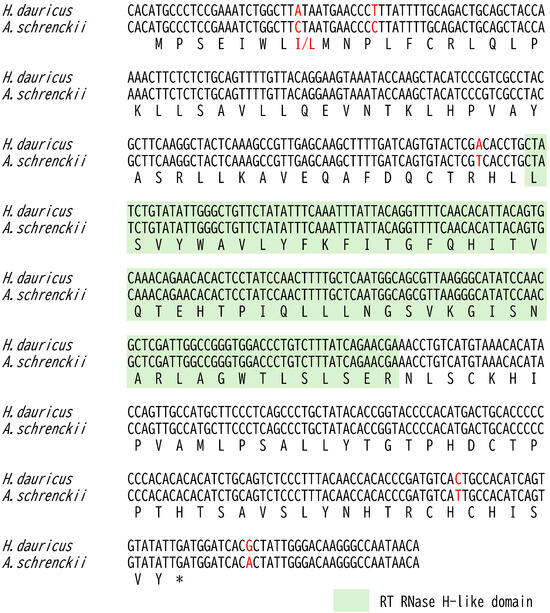
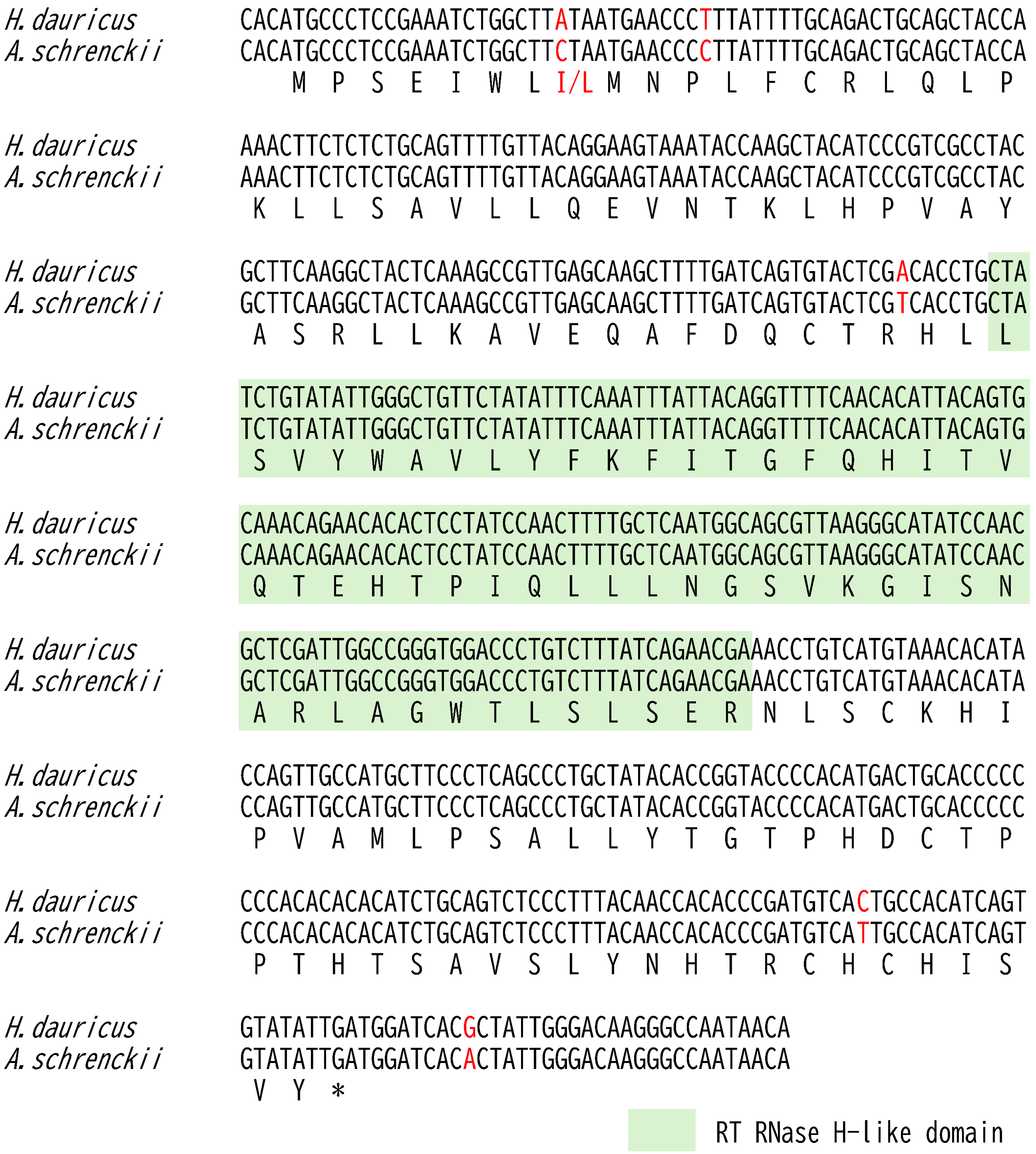
The coding sequence (CDS) of rnhW was isolated from cDNA of the ZW female undifferentiated gonad of kaluga and Amur sturgeon. The CDS was 483 bp (161 aa) and contained an RNase H-like domain within the RT (RT RNase H) region from residues 22 to 111 aa (Figure 1).
Figure 1.
Nucleotide and amino acid sequences of kaluga and Amur sturgeon rnhw. The nucleotide sequences in the top and bottom rows correspond to kaluga and Amur sturgeon, respectively. Letters highlighted in red indicate sequence differences between the two species. An asterisk indicates the stop codon of rnhW. The coding sequence (CDS) is 483 bp, 161 aa. Green highlights indicate the RT RNase H-like domain.
3.3. Genetic Sexing Using the Primer Designed on rnhW
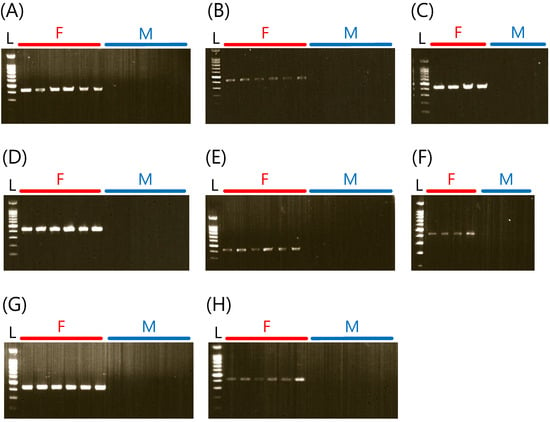
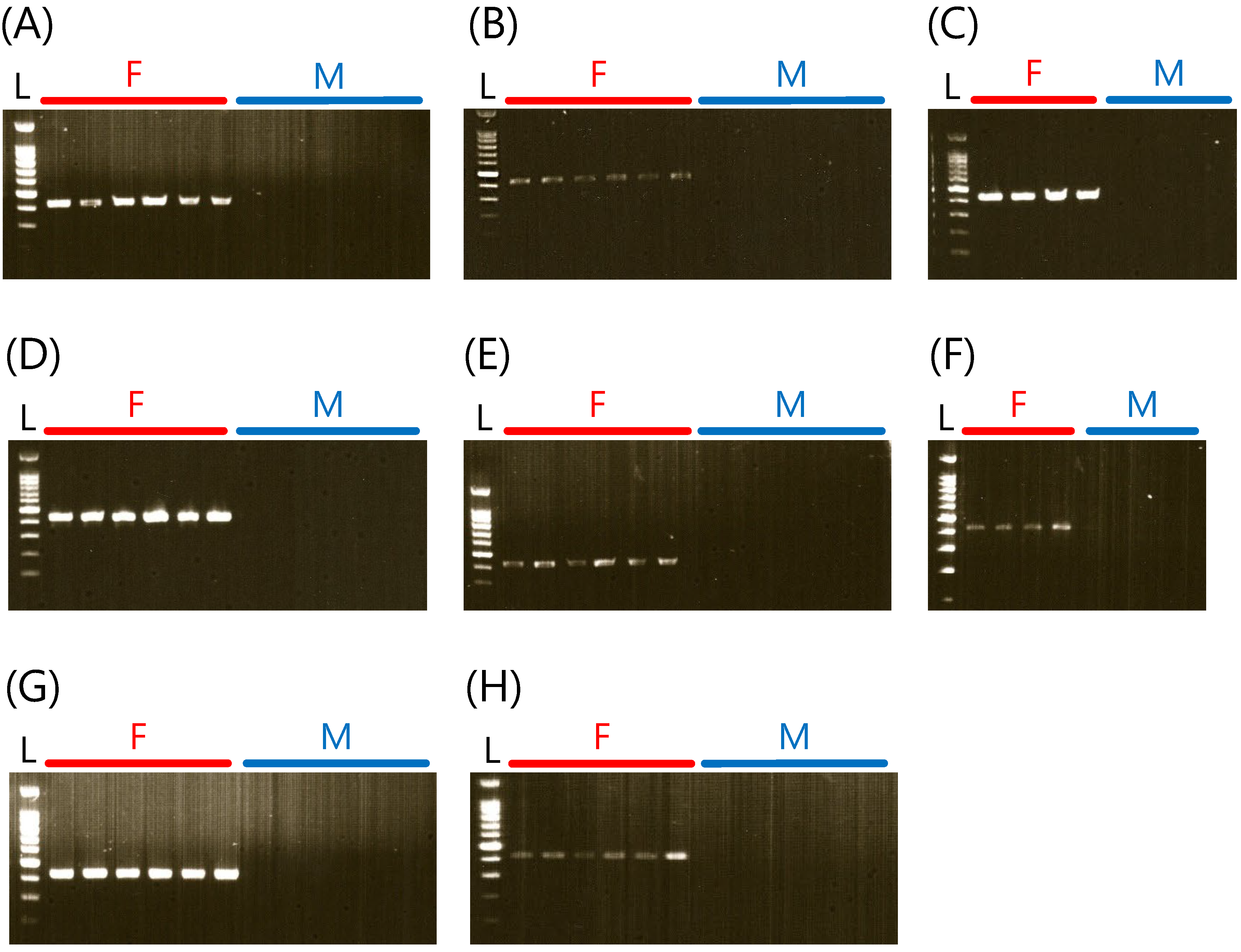
We tested whether WSR primers designed on rnhW could be used for genetic sexing in several sturgeon species. The WSR primers produced specific amplification in all species examined, including hybrid sturgeons (Figure 2). All individuals showing female-specific amplification were confirmed to be morphologically female by histological observation or visual inspection (Figures S1–S7).
Figure 2.
PCR products using the WSR primer under the same PCR conditions for females and males of (A) kaluga (Huso dauricus), (B) Amur sturgeon (Acipenser schrenckii), (C) Russian sturgeon (Acipenser gueldenstaedtii), (D) Siberian sturgeon (Acipenser baerii), (E) sterlet (Acipenser ruthenus), (F) lake sturgeon (Acipenser fulvescens), (G) bester (Huso × Acipenser ruthenus) and (H) kalmika (Huso dauricus × Acipenser mikadoi). The red and blue bars indicate the PCR bands obtained from the samples of females and males, respectively. Amplicon size: 424 bp. F; Female, M; Male, L; ladder, 100 bp-size-marker (Apro Science, Tokushima, Japan).
3.4. mRNA Expression of rnhW in the Undifferentiated Gonads Sampled from Female and Male Sturgeons
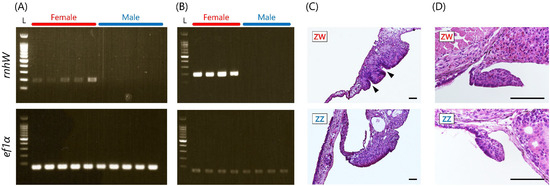
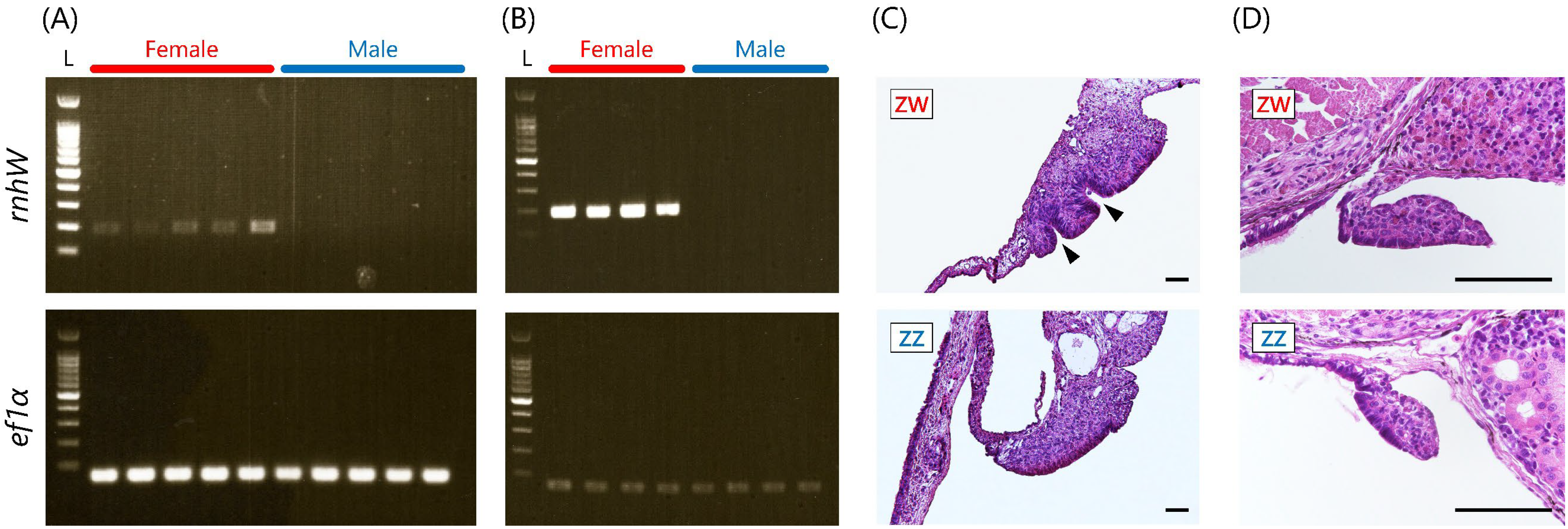
rnhW mRNA expression was observed in all ZW females in the undifferentiated gonads of kalugas at 6 mah and Amur sturgeons at 4 mah (Figure 3A,B). Moreover, the band intensity of rnhW relative to EF1α was higher in 4-month-old Amur sturgeon than in 6-month-old kaluga. In contrast, no band of rnhW was detected in ZZ males of either kalugas or Amur sturgeons. In some ZW female kalugas, epithelial invagination, which is an early sign of ovarian differentiation, was observed (Figure 3C and Figure S10). Morphological testicular differentiation in ZZ male kalugas had not yet occurred. In Amur sturgeons, histological observations showed that the gonads of both ZW females and ZZ males had not yet undergone morphological differentiation (Figure 3D and Figure S11), and the suspension of their gonads had just begun.
Figure 3.
rnhW mRNA expression in the undifferentiated gonads of sturgeons by RT-PCR. cDNA samples were prepared from (A) kalugas (Huso dauricus) at 6 months after hatching (mah) and (B) Amur sturgeons at 4 mah. ef1α was used as an internal control. The red and blue bars indicate the PCR bands obtained from the samples of females and males, respectively. Amplicon size: 195 bp, L: ladder, 100 bp size marker (Apro Science, Tokushima, Japan). (C) Typical micrograph of a tissue section of an undifferentiation gonad sampled from a 6-month-old kaluga. Arrowheads indicate epithelial invaginations. Scale bar = 100 µm. (D) Typical micrograph of a tissue section of an undifferentiation gonad sampled from a 4-month-old Amur sturgeon. Scale bar = 100 µm.
3.5. Identifying WW Superfemales Using Genomic PCR with Z-Specific and W-Specific Primers
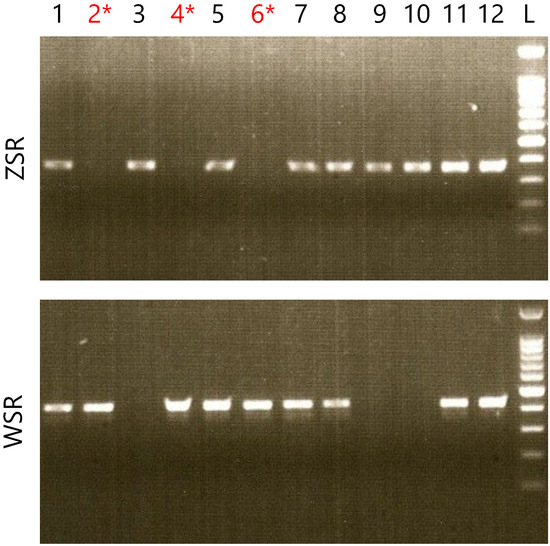
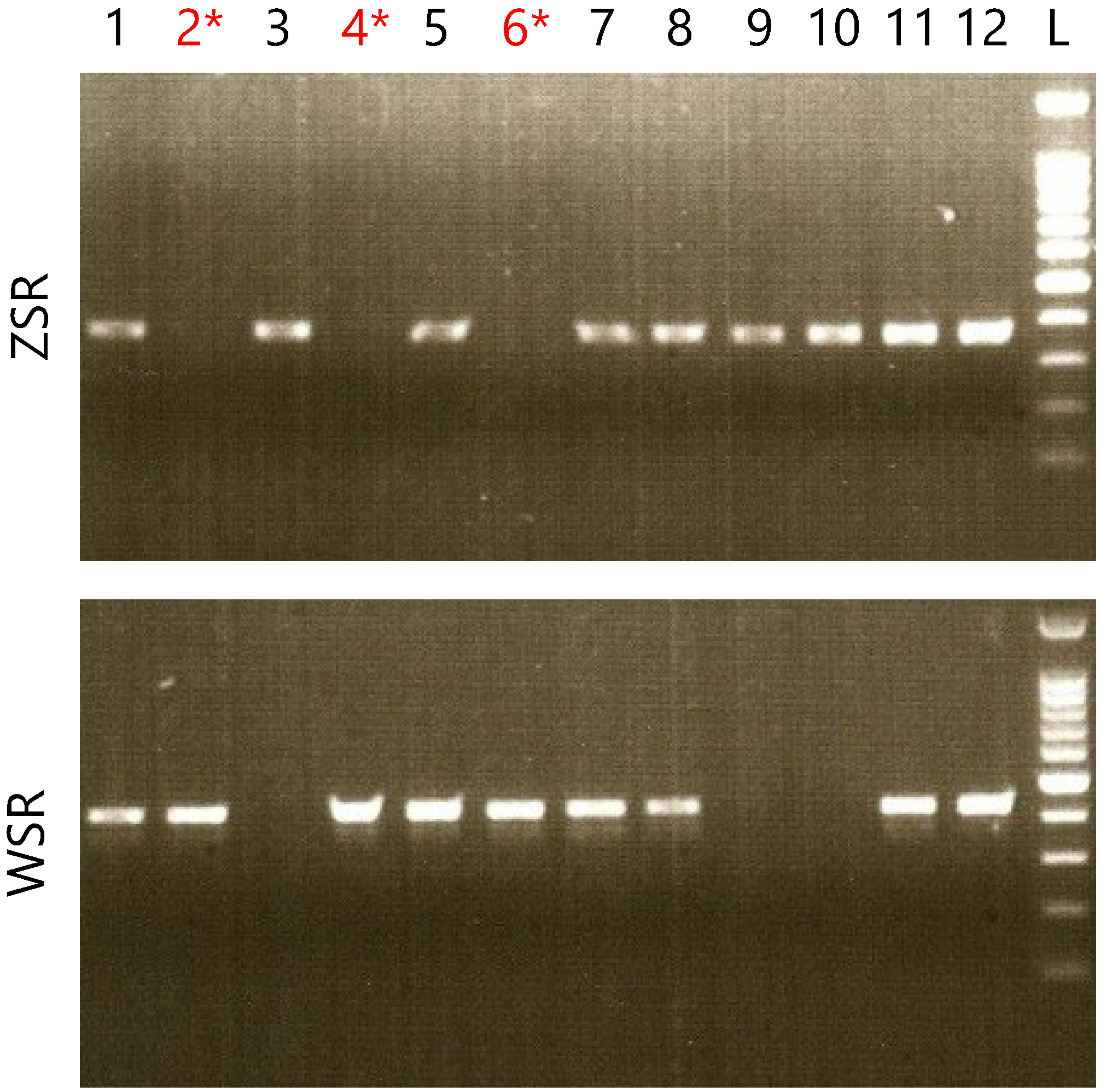
Genomic PCR was performed on 48 besters, including potential WW superfemales, using ZSR primers. In 10 of the 48 individuals, no bands were detected (upper row, Figure 4 and Figures S12–S14). In addition, 34 fish showed specific bands in genomic PCR using the WSR primers (lower row, Figure 4 and Figures S12–S14). WW superfemales were estimated based on the combination of Z- and W-specific amplifications.
Figure 4.
Results of genomic PCR in besters #1 to #12 for identifying WW superfemales. Genomic PCR using ZSR (upper row) and WSR primers (lower row). Asterisks indicate estimated WW superfemales. L: ladder, 100 bp size marker (Apro Science).
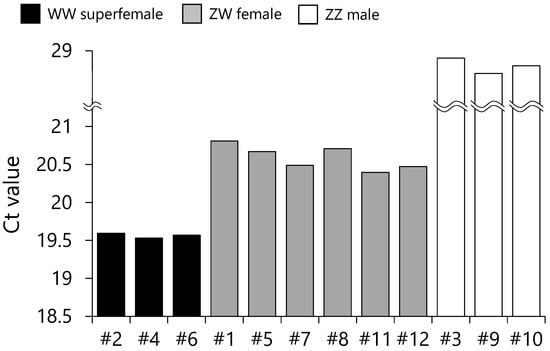
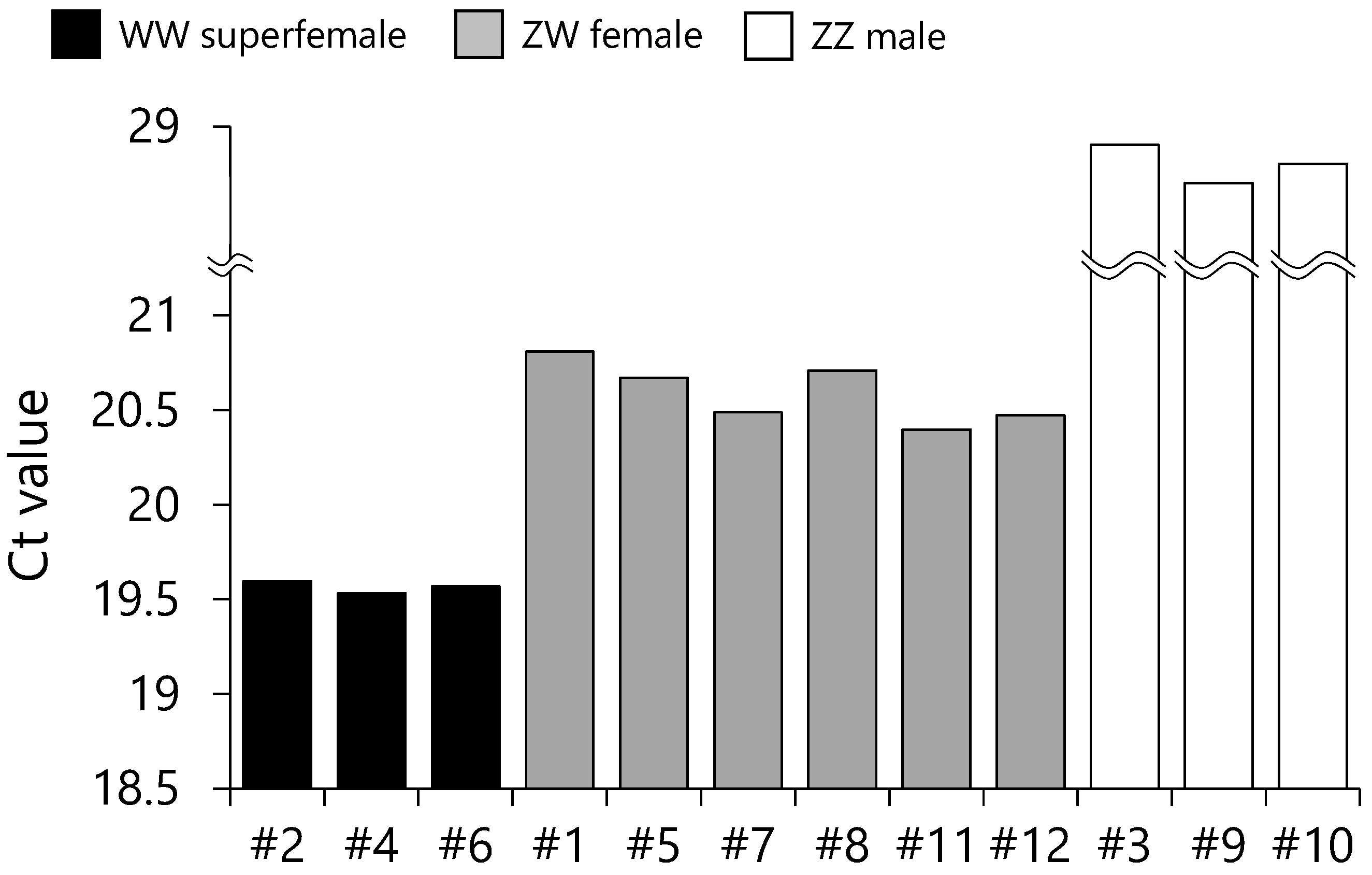
qPCR analysis using WqPCR primers showed that the Ct values of WW superfemales, as estimated by electrophoresis, were one cycle lower than those of ZW females (Figure 5 and Figures S15–S17). The electrophoresis patterns using the combination of ZSR and WSR primers corresponded with the results of qPCR analysis using WqPCR primers. Among the 48 besters, there were 10 WW superfemales, 24 ZW females, and 14 ZZ males (Table 3 and Tables S2–S4). The observed genotype frequencies (ZZ:ZW:WW = 14:24:10) were tested against the expected Mendelian ratio of 1:2:1 using a chi-square goodness-of-fit test. The result (χ2 = 0.67, df = 2, p = 0.72) indicated no significant deviation from the expected ratio.
Figure 5.
Ct values for besters #1 to #12 by qPCR using WqPCR primers in Experiment 1. WW superfemales (solid column), ZW females (shaded column), and ZZ males (open column) were estimated by genomic PCR (see Figure 4).
Table 3.
Summary of genotype classification for besters #1–#12.
4. Discussion
Our analysis identified rnhW, a W-linked gene encoding an RT RNase H-like domain, as a candidate involved in female-specific processes in sturgeons. While several other contigs showed homology to transposase or reverse transcriptase-related sequences, these were present in multiple genomic locations, making it difficult to assign them specifically to the W chromosome. In contrast, rnhW is exclusively located on the W chromosome, suggesting a potential role in female gonadal differentiation or maintenance. The exclusive W-linkage of rnhW highlights its utility as a molecular marker for genetic sexing and may provide insight into the mechanisms underlying sturgeon sex determination.
rnhW mRNA expression was confirmed in the undifferentiated gonads of ZW females by RT-PCR. Expression was particularly high at the onset of gonadal suspension. This study does not include quantitative PCR data on expression levels; however, measurements of rnhW mRNA levels in kalugas during 5–24 mah have already been completed (Tousaka, Surugaya, Ijiri et al., under review). According to those data, rnhW expression was already high at 5 mah during the early phase of undifferentiated gonadal development, showing a pattern similar to that of E2 synthesis–related genes such as cyp19a1a, foxl2, and hsd17b1. These findings suggest that rnhW might be involved in sex determination and differentiation in Acipenseridae.
Although the nucleotide sequence of rnhW was determined, the RnhW protein is composed solely of an RT RNase H-like domain, with no additional recognizable motifs. Consequently, its potential function in sex determination or differentiation could not be predicted. Future functional analyses, such as knockdown, knockout, or overexpression of rnhW, may contribute to a better understanding of the mechanisms underlying sex determination and differentiation in sturgeons.
Although the function of RnhW remains unclear, its W chromosome specificity demonstrates its utility as a molecular marker for genetic sexing. AllWSex2 was the first primer enabling genetic sex identification in some sturgeons [33], a discovery that represented a breakthrough in sturgeon aquaculture. Since then, several additional W-specific markers in Acipenseridaes have been reported [22,37,38,39,40]. However, genetic sex identification using AllWSex2 had not been validated in Amur sturgeon, kaluga, and mikado sturgeon caught around Hokkaido, Japan. In these species, AllWSex2 primers showed problems such as smearing, low reproducibility, and non-specific amplification, particularly in crude samples. We examined whether primers designed on rnhW could achieve female-specific amplification by genomic PCR. The primers designed for rnhW showed high female specificity across multiple sturgeon species, including hybrids, suggesting that rnhW is widely conserved on the W chromosome in both Atlantic and Pacific clade sturgeons.
Using W-specific markers alone, ZW females and WW superfemales cannot be distinguished. Recently, Kinami and Ineno (2025) reported the first evidence of WW superfemales produced through gynogenesis by discriminating Z- and W-allelic amplicons using melting curve analysis [41]. However, no primers amplifying Z-specific regions had previously been available. This study demonstrated the design of Z-specific primers for the first time. Consequently, W- and Z-specific products could be readily amplified using genomic PCR and obtained by electrophoresis. For aquaculture farmers, this approach is cost-effective and simplifies the distinction among ZZ males, ZW females, and WW superfemales, since expensive reagents and complex procedures, such as the use of a qPCR machine, are not required. This approach has already been implemented in some aquaculture farms in Japan under our supervision
WW superfemales were also identified using these WSR and ZSR primers in this study. If sturgeons exhibit a ZZ/ZW sex-determination system, the genotypes of the next generation produced from ZW pseudomales and ZW females should occur in a ratio of ZZ:ZW:WW = 1:2:1. The actual genotypic ratios closely matched theoretical expectations, further confirming that the ZZ/ZW system determines sex in sturgeons. The WW superfemales identified in this study are the offspring produced by artificially fertilizing ZW females with ZW pseudomales that had been masculinized through MT administration decades ago. This represents the first reported example of producing WW superfemales in this manner. Currently, we are attempting to masculinize WW superfemales. However, as shown in Figure S18, numerous oocytes were observed in the gonads of WW superfemales during MT treatment, suggesting that masculinization of WW superfemales is even more difficult than that of ZW females. In contrast, in the absence of MT treatment, the ovaries of these WW superfemales are expected to develop normally. Generally, male sturgeons reach sexual maturity earlier than females. Although masculinization of WW individuals is challenging, its successful implementation would allow rapid production of all-female offspring by crossing them with ZW females.
5. Conclusions
In summary, we have, for the first time, confirmed that the rnhW gene, located on the W chromosome, is expressed in morphologically undifferentiated gonads. Although several W-specific genomic regions have been reported previously, none have been shown to be transcribed in the gonads. WSR, W-specific primers designed on rnhW, enabled more stable genetic sex discrimination in several species, including hybrid sturgeons. ZSR, Z-specific primers, were also developed. The combination of WSR and ZSR primers allowed clear discrimination among ZZ, ZW, and WW genotypes, and several WW superfemales were indeed identified —the first such finding worldwide in offspring with ZW pseudomales as parents. These findings provide new scientific insights into the mechanisms of sex determination and differentiation in sturgeons and represent a step toward the development of all-female production.
Supplementary Materials
The following supporting information can be downloaded at https://www.mdpi.com/article/10.3390/fishes10120618/s1, Figure S1: The electrophoresis images of PCR for primer quality verification; Figure S2: Histological images with hematoxylin and eosin from 2-year-old kalugas used for genetic sexing; Figure S3: Histological images with hematoxylin and eosin from 2-year- and 4-month-old Amur sturgeons used for genetic sexing; Figure S4: Histological images with hematoxylin and eosin from 2-year-old Russian sturgeons used for genetic sexing; Figure S5: Histological images with hematoxylin and eosin from 2-year-old Siberian sturgeons used for genetic sexing; Figure S6: Histological images with hematoxylin and eosin from 6-month-old sterlets used for genetic sexing; Figure S7: Histological images with hematoxylin and eosin from 16-month-old besters used for genetic sexing; Figure S8: Typical stereomicroscopic images of ovarian follicles from 28-year-old female lake sturgeons and 15-year-old female kalmikas used for genetic sexing; Figure S9: The nucleotide sequence of rnhW cDNA from top to bottom: Russian sturgeon, kaluga, and Amur sturgeon; Figure S10: Histological images with hematoxylin and eosin from 6-month-old kalugas used for rnhW expression analysis; Figure S11: Histological images with hematoxylin and eosin from 4-month-old Amur sturgeons used for rnhW expression analysis; Figure S12: The results of genomic PCR in bester #13–#24 to identify WW superfemales; Figure S13: The results of genomic PCR in bester #25–36 to identify WW superfemales; Figure S14: The results of genomic PCR in bester #37–48 to identify WW superfemales; Figure S15: Ct values for bester #13–#24 by qPCR using WqPCR primers; Figure S16: Ct values for bester #25–#36 by qPCR using WqPCR primers; Figure S17: Ct values for bester #37–#48 by qPCR using WqPCR primers; Figure S18: Typical histological images of MT-treated WW superfemales, showing abundant oocytes despite treatment; Table S1: Five transcripts identified from female-specific regions by Blastx analyses; Table S2: Summary of genotype classification in bester #13–#24; Table S3: Summary of genotype classification in bester #25–#36; Table S4: Summary of genotype classification in bester #37–#48.
Author Contributions
Conceptualization, S.A.; methodology, S.A., S.I., and R.S.; software, R.S. and S.Y.; validation, K.T. and S.Y.; formal analysis, R.S., K.T., and S.Y.; investigation, R.S., K.T., and S.Y.; resources, S.A.; data curation, R.S. and S.Y.; writing—original draft preparation, R.S.; writing—review and editing, S.A. and S.I.; visualization, S.Y.; supervision, S.A. and R.S.; project administration, S.A. and S.I.; funding acquisition, S.A. All authors have read and agreed to the published version of the manuscript.
Funding
This research was funded by the Japan Society for the Promotion of Science (JSPS) KAKENHI, grant number 23K21228.
Institutional Review Board Statement
This study was approved by the Institutional Animal Care and Use Committee of Hokkaido University (protocol code: 2-1, date of approval: 24 February 2023). All animal experiments were conducted in accordance with the guidelines of the same committee.
Data Availability Statement
The nucleotide sequence data generated in this study have been deposited in the DNA Data Bank of Japan (DDBJ) database (https://www.ddbj.nig.ac.jp/index-e.html, accessed on 24 September 2025) under accession numbers LC892049 and LC892050.
Acknowledgments
We are grateful to the members of the Sturgeon Research Team in the Laboratory of Fish Reproductive Physiology, Graduate School of Fisheries Sciences, Hokkaido University, for their outstanding support with the experiments. We also thank the staff of Chitose Aquarium, the Hometown of Salmon; Bifuka Sturgeon Museum; Shibetsu Salmon Museum; Shikaoi-cho Environmental Conservation Center; Toyone Fish Farmers; and the Nanae Fresh-Water Station, Field Science Center for Northern Biosphere, Hokkaido University, for their assistance with sampling.
Conflicts of Interest
The authors declare no conflicts of interest. The funders had no role in the design of the study; in the collection, analyses, or interpretation of data; in the writing of the manuscript; or in the decision to publish the results.
References
- Chapman, F.A.; Van Eenennaam, J.P. Sturgeon Aquaculture-Specialized Techniques: Determining the Sex of Sturgeon by Direct Examination of the Gonad Using a Minimally Invasive Surgical Procedure. EDIS 2012, 2012, FA183. [Google Scholar] [CrossRef] [Scilit]
- Wuertz, S.; Güralp, H.; Pšenička, M.; Chebanov, M. Sex Determination in Sturgeon. In Sex Control in Aquaculture; Wang, H.-P., Piferrer, F., Chen, S.-L., Shen, Z.-G., Eds.; John Wiley & Sons Ltd.: Hoboken, NJ, USA, 2018; pp. 647–668. [Google Scholar] [CrossRef] [Scilit]
- Capel, B. Vertebrate Sex Determination: Evolutionary Plasticity of a Fundamental Switch. Nat. Rev. Genet. 2017, 18, 675–689. [Google Scholar] [CrossRef] [Scilit]
- Bachtrog, D.; Mank, J.E.; Peichel, C.L.; Kirkpatrick, M.; Otto, S.P.; Ashman, T.L.; Hahn, M.W.; Kitano, J.; Mayrose, I.; Ming, R.; et al. Sex Determination: Why So Many Ways of Doing It? PLoS Biol. 2014, 12, e1001899. [Google Scholar] [CrossRef] [Scilit] [PubMed]
- Smith, C.A.; Roeszler, K.N.; Ohnesorg, T.; Cummins, D.M.; Farlie, P.G.; Doran, T.J.; Sinclair, A.H. The Avian Z-Linked Gene DMRT1 Is Required for Male Sex Determination in the Chicken. Nature 2009, 461, 267–271. [Google Scholar] [CrossRef] [Scilit] [PubMed]
- Nagahama, Y.; Chakraborty, T.; Paul-Prasanth, B.; Ohta, K.; Nakamura, M. Sex Determination, Gonadal Sex Differentiation, and Plasticity in Vertebrate Species. Physiol. Rev. 2021, 101, 1237–1308. [Google Scholar] [CrossRef] [Scilit]
- Matsuda, M.; Nagahama, Y.; Shinomiya, A.; Sato, T.; Matsuda, C.; Kobayashi, T.; Morrey, C.E.; Shibata, N.; Asakawa, S.; Shimizu, N.; et al. DMY Is a Y-Specific DM-Domain Gene Required for Male Development in the Medaka Fish. Nature 2002, 417, 559–563. [Google Scholar] [CrossRef] [Scilit]
- Kamiya, T.; Kai, W.; Tasumi, S.; Oka, A.; Matsunaga, T. A Trans-Species Missense SNP in Amhr2 Is Associated with Sex Determination in the Tiger Pufferfish. PLoS Genet. 2012, 8, 1002798. [Google Scholar] [CrossRef] [Scilit]
- Li, M.; Sun, Y.; Zhao, J.; Shi, H.; Zeng, S.; Ye, K.; Jiang, D.; Zhou, L.; Sun, L.; Tao, W.; et al. A Tandem Duplicate of Anti-Müllerian Hormone with a Missense SNP on the Y Chromosome Is Essential for Male Sex Determination in Nile Tilapia, Oreochromis niloticus. PLoS Genet. 2015, 11, e1005678. [Google Scholar] [CrossRef] [Scilit]
- Koyama, T.; Nakamoto, M.; Morishima, K.; Yamashita, R.; Yamashita, T.; Sasaki, K.; Kuruma, Y.; Mizuno, N.; Suzuki, M.; Okada, Y.; et al. A SNP in a Steroidogenic Enzyme Is Associated with Phenotypic Sex in Seriola Fishes. Curr. Biol. 2019, 29, 1901–1909.e8. [Google Scholar] [CrossRef] [Scilit]
- Strüssmann, C.A.; Saito, T.; Usui, M.; Yamada, H.; Takashima, F. Thermal Thresholds and Critical Period of Thermolabile Sex Determination in Two Atherinid Fishes, Odontesthes bonariensis and Patagonina hatcheri. J. Exp. Zool. 1997, 278, 167–177. [Google Scholar] [CrossRef]
- Hattori, R.S.; Murai, Y.; Oura, M.; Masuda, S.; Majhi, S.K.; Sakamoto, T.; Fernandino, J.I.; Somoza, G.M.; Yokota, M.; Strüssmann, C.A. A Y-Linked Anti-Müllerian Hormone Duplication Takes over a Critical Role in Sex Determination. Proc. Natl. Acad. Sci. USA 2012, 109, 2955–2959. [Google Scholar] [CrossRef] [Scilit] [PubMed]
- Yamamoto, Y.; Zhang, Y.; Sarida, M.; Hattori, R.S.; Strüssmann, C.A. Coexistence of Genotypic and Temperature-Dependent Sex Determination in Pejerrey Odontesthes bonariensis. PLoS ONE 2014, 9, e102574. [Google Scholar] [CrossRef] [Scilit] [PubMed]
- Nakazono, A. Studies on the Sexual Reversal and Spawning Behavior of the Five Species of Japanese Labrid Fishes. Rep. Fish. Res. Lab. Kyushu Univ. 1979, 4, 1–64. [Google Scholar]
- Omoto, N.; Maebayashi, M.; Mitsuhashi, E.; Yoshitomi, K.; Adachi, S.; Yamauchi, K. Effects of Estradiol-17β and 17α-Methyltestosterone on Gonadal Sex Differentiation in the F2 Hybrid Sturgeon, the Bester. Fish. Sci. 2002, 68, 1047–1054. [Google Scholar] [CrossRef] [Scilit]
- Van Eenennaam, A.L.; Van Eenennaam, J.P.; Medrano, J.F.; Doroshov, S.I. Rapid Verification of Meiotic Gynogenesis and Polyploidy in White Sturgeon (Acipenser Transmontanus Richardson). Aquaculture 1996, 147, 177–189. [Google Scholar] [CrossRef] [Scilit]
- Omoto, N.; Maebayashi, M.; Adachi, S.; Arai, K.; Yamauchi, K. Sex Ratios of Triploids and Gynogenetic Diploids Induced in the Hybrid Sturgeon, the Bester (Huso huso Female x Acipenser ruthenus Male). Aquaculture 2005, 245, 39–47. [Google Scholar] [CrossRef] [Scilit]
- Flynn, S.R.; Matsuoka, M.; Reith, M.; Martin-Robichaud, D.J.; Benfey, T.J. Gynogenesis and Sex Determination in Shortnose Sturgeon, Acipenser brevirostrum Lesuere. Aquaculture 2006, 253, 721–727. [Google Scholar] [CrossRef] [Scilit]
- Fopp-Bayat, D. Meiotic Gynogenesis Revealed Not Homogametic Female Sex Determination System in Siberian Sturgeon (Acipenser baerii Brandt). Aquaculture 2010, 305, 174–177. [Google Scholar] [CrossRef] [Scilit]
- Shelton, W.L.; Mims, S.D. Evidence for Female Heterogametic Sex Determination in Paddlefish Polyodon spathula Based on Gynogenesis. Aquaculture 2012, 356–357, 116–118. [Google Scholar] [CrossRef] [Scilit]
- Fopp-Bayat, D.; Hliwa, P.; Ocalewicz, K. Presence of Gynogenetic Males Suggests a Female Heterogamety in Sterlet Acipenser ruthenus L. Anim. Reprod. Sci. 2018, 189, 110–118. [Google Scholar] [CrossRef] [Scilit]
- Kuhl, H.; Guiguen, Y.; Höhne, C.; Kreuz, E.; Du, K.; Klopp, C.; Lopez-Roques, C.; Yebra-Pimentel, E.S.; Ciorpac, M.; Gessner, J.; et al. A 180 Myr-Old Female-Specific Genome Region in Sturgeon Reveals the Oldest Known Vertebrate Sex Determining System with Undifferentiated Sex Chromosomes. Philos. Trans. R. Soc. B Biol. Sci. 2021, 376, 20200089. [Google Scholar] [CrossRef] [Scilit]
- Ijiri, S.; Kaneko, H.; Kobayashi, T.; Wang, D.S.; Sakai, F.; Paul-Prasanth, B.; Nakamura, M.; Nagahama, Y. Sexual Dimorphic Expression of Genes in Gonads during Early Differentiation of a Teleost Fish, the Nile Tilapia Oreochromis niloticus. Biol. Reprod. 2008, 78, 333–341. [Google Scholar] [CrossRef] [Scilit]
- Liu, X.; Dai, S.; Wu, J.; Wei, X.; Zhou, X.; Chen, M.; Tan, D.; Pu, D.; Li, M.; Wang, D. Roles of Anti-Müllerian Hormone and Its Duplicates in Sex Determination and Germ Cell Proliferation of Nile Tilapia. Genetics 2022, 220, iyab237. [Google Scholar] [CrossRef] [Scilit] [PubMed]
- Omoto, N.; Maebayashi, M.; Mitsuhashi, E.; Yoshitomi, K.; Adachi, S.; Yamauchi, K. Histological Observations of Gonadal Sex Differentiation in the F2 Hybrid. Fish. Sci. 2001, 67, 1104–1110. [Google Scholar] [CrossRef] [Scilit]
- Flynn, S.R.; Benfey, T.J. Sex Differentiation and Aspects of Gametogenesis in Shortnose Sturgeon Acipenser brevirostrum Lesueur. J. Fish. Biol. 2007, 70, 1027–1044. [Google Scholar] [CrossRef] [Scilit]
- Grandi, G.; Chicca, M. Histological and Ultrastructural Investigation of Early Gonad Development and Sex Differentiation in Adriatic Sturgeon (Acipenser naccarii, Acipenseriformes, Chondrostei). J. Morphol. 2008, 269, 1238–1262. [Google Scholar] [CrossRef] [Scilit]
- Fajkowska, M.; Ostaszewska, T.; Rzepkowska, M. Molecular Mechanisms of Sex Differentiation in Sturgeons. Rev. Aquac. 2020, 12, 1003–1027. [Google Scholar] [CrossRef] [Scilit]
- Hagihara, S.; Yamashita, R.; Yamamoto, S.; Ishihara, M.; Abe, T.; Ijiri, S.; Adachi, S. Identification of Genes Involved in Gonadal Sex Differentiation and the Dimorphic Expression Pattern in Undifferentiated Gonads of Russian Sturgeon Acipenser gueldenstaedtii Brandt & Ratzeburg, 1833. J. Appl. Ichthyol. 2014, 30, 1557–1564. [Google Scholar] [CrossRef] [Scilit]
- Ruan, R.; Li, Y.; Yue, H.; Ye, H.; Jin, J.; Wu, J.; Du, H.; Li, C. Transcriptome Analyses Reveal Expression Profiles of Morphologically Undifferentiated and Differentiated Gonads of Yangtze Sturgeon Acipenser dabryanus. Genes 2023, 14, 2058. [Google Scholar] [CrossRef] [Scilit]
- Lasalle, A.; Benech-Correa, G.; Brunet, F.G.; Vizziano-Cantonnet, D. Hsd17b1 Is a Key Gene for Ovarian Differentiation of the Siberian Sturgeon. Mol. Reprod. Dev. 2024, 91, e23729. [Google Scholar] [CrossRef] [Scilit]
- Okada, H.; Hagihara, S.; Yamashita, K.; Ijiri, S.; Adachi, S. Expression Pattern of Foxl2 and Dmrt1 in Gonad of Amur Sturgeon Acipenser schrenckii in Relation to Sex Differentiation. Aquaculture 2017, 479, 712–720. [Google Scholar] [CrossRef] [Scilit]
- Degani, G.; Nevo Sarel, M.; Hajouj, A.; Hurvitz, A.; Veksler-Lublinsky, I.; Meerson, A. Whole-Genome Inter-Sex Variation in Russian Sturgeon (Acipenser gueldenstaedtii). Int. J. Mol. Sci. 2022, 23, 9469. [Google Scholar] [CrossRef] [Scilit] [PubMed]
- Omoto, N.; Maebayashi, M.; Hara, A.; Adachi, S.; Yamauchi, K. Gonadal Maturity in Wild Sturgeons, Huso dauricus, Acipenser mikadoi and A. schrenckii Caught near Hokkaido, Japan. Environ. Biol. Fishes 2004, 70, 381–391. [Google Scholar] [CrossRef] [Scilit]
- Azuma, N.; Hagihara, S.; Ichimura, M.; Takagi, Y.; Ura, K.; Adachi, S. Genetic Characterization of Amur Sturgeon Acipenser schrenckii and Its Hybrid Caught around Hokkaido. Ichthyol. Res. 2017, 64, 139–144. [Google Scholar] [CrossRef] [Scilit]
- Hagihara, S.; Azuma, N.; Suyama, K.; Katakura, S.; Ijiri, S.; Adachi, S. First Report of the Occurrence of a Female Amur Sturgeon Acipenser schrenckii in Advanced Stages of Oogenesis, off the Coast of Mombetsu, Hokkaido, Japan. Coast. Mar. Sci. 2018, 41, 7–10. [Google Scholar] [CrossRef]
- Ruan, R.; Feng, T.; Li, Y.; Yue, H.; Ye, H.; Du, H.; Liu, Q.; Ruan, J.; Li, C.; Wei, Q. Screening and Identification of Female-Specific DNA Sequences in Octaploid Sturgeon Using Comparative Genomics with High-Throughput Sequencing. Genomics 2021, 113, 4237–4244. [Google Scholar] [CrossRef] [Scilit]
- Bogár, K.; Stanivuk, J.; Géczi, A.; Fazekas, G.L.; Kovács, B.; Lázár, B.; Molnár, M.; Ardó, L.; Ljubobratović, U.; Kovács, G.; et al. Investigation of Sexes and Fertility Potential of Female Russian Sturgeon (Acipenser gueldenstaedtii) and Male American Paddlefish (Polyodon spathula) Hybrids. Life 2024, 14, 818. [Google Scholar] [CrossRef] [Scilit]
- Sard, N.M.; Kreiser, B.R.; Pendleton, R.M.; Lubinski, B.A.; Johnson, R.L.; Fox, D.A.; Van Eenennaam, J.P.; Kahn, J.E.; Hager, C.; Higgs, A.L.; et al. Validation of a Molecular Sex Marker in Three Sturgeons from Eastern North America. Conserv. Genet. Resour. 2024, 16, 173–177. [Google Scholar] [CrossRef] [Scilit]
- Pozveh, H.S.T.; Dorafshan, S.; Benfey, T.J.; Addison, J.A.; Litvak, M.K. Validation of Using Multiplex PCR with Sex Markers SSM4 and ALLWSex2 in Long-Term Stored Blood Samples to Determine Sex of the North American Shortnose Sturgeon (Acipenser brevirostrum). Fishes 2025, 10, 478. [Google Scholar] [CrossRef] [Scilit]
- Kinami, R.; Ineno, T. First Evidence of WW Superfemale for Hybrid Sturgeon, the Bester (Huso huso × Acipenser ruthenus). Aquaculture 2025, 596, 741808. [Google Scholar] [CrossRef] [Scilit]

Disclaimer/Publisher’s Note: The statements, opinions and data contained in all publications are solely those of the individual author(s) and contributor(s) and not of MDPI and/or the editor(s). MDPI and/or the editor(s) disclaim responsibility for any injury to people or property resulting from any ideas, methods, instructions or products referred to in the content. |
© 2025 by the authors. Licensee MDPI, Basel, Switzerland. This article is an open access article distributed under the terms and conditions of the Creative Commons Attribution (CC BY) license (https://creativecommons.org/licenses/by/4.0/).