
Article

Dynamic Ocular Response to Mechanical Loading: The Role of Viscoelasticity in Energy Dissipation by the Cornea

by
Frederick H. Silver
1,2,*,
Tanmay Deshmukh
2,
Dominick Benedetto
3 and
Michael Gonzalez-Mercedes
2
1
Department of Pathology and Laboratory Medicine, Robert Wood Johnson Medical School, Rutgers, The State University of New Jersey, Piscataway, NJ 08854, USA
2
OptoVibronex, LLC, Ben Franklin Tech Partners, Bethlehem, PA 18015, USA
3
Center For Advanced Eye Care, Vero Beach, FL 32960, USA
*
Author to whom correspondence should be addressed.
Biomimetics 2023, 8(1), 63; https://doi.org/10.3390/biomimetics8010063

Submission received: 23 December 2022 / Revised: 26 January 2023 / Accepted: 31 January 2023 / Published: 3 February 2023
(This article belongs to the Special Issue Dynamical Response of Biological System and Biomaterial)

Abstract

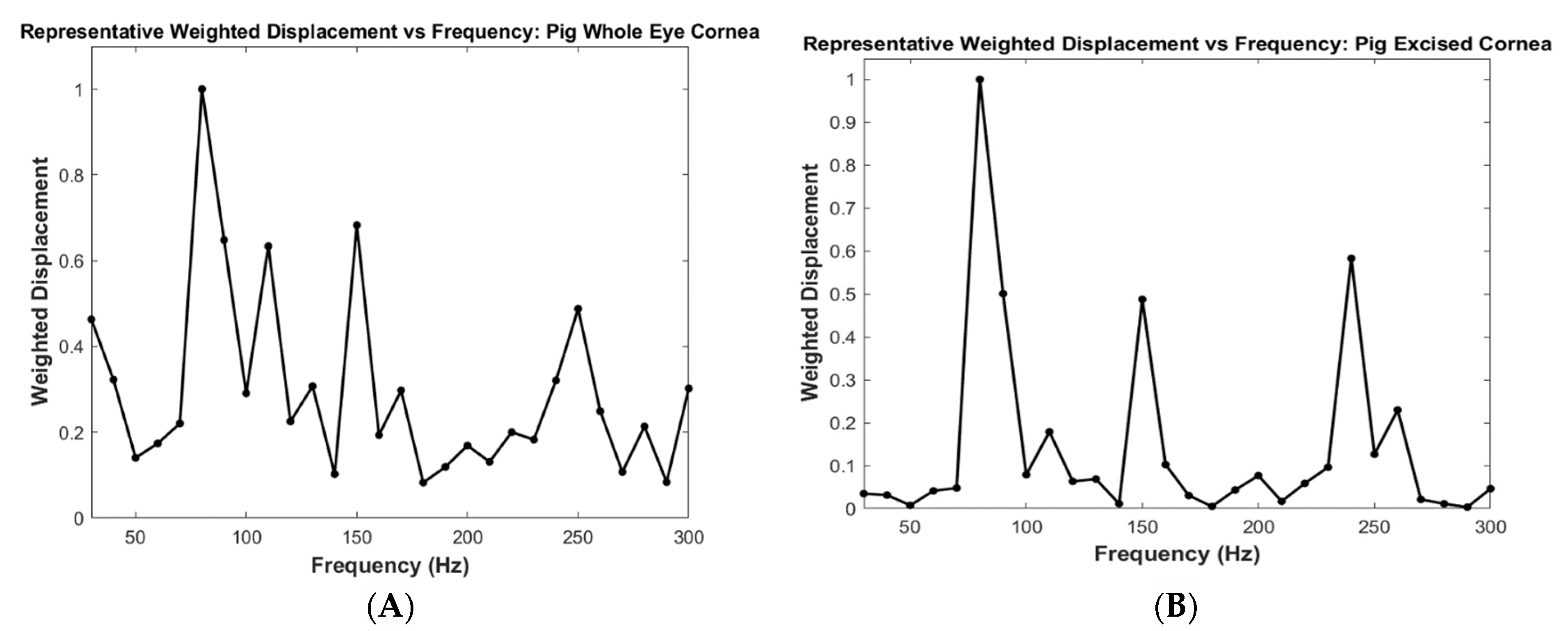
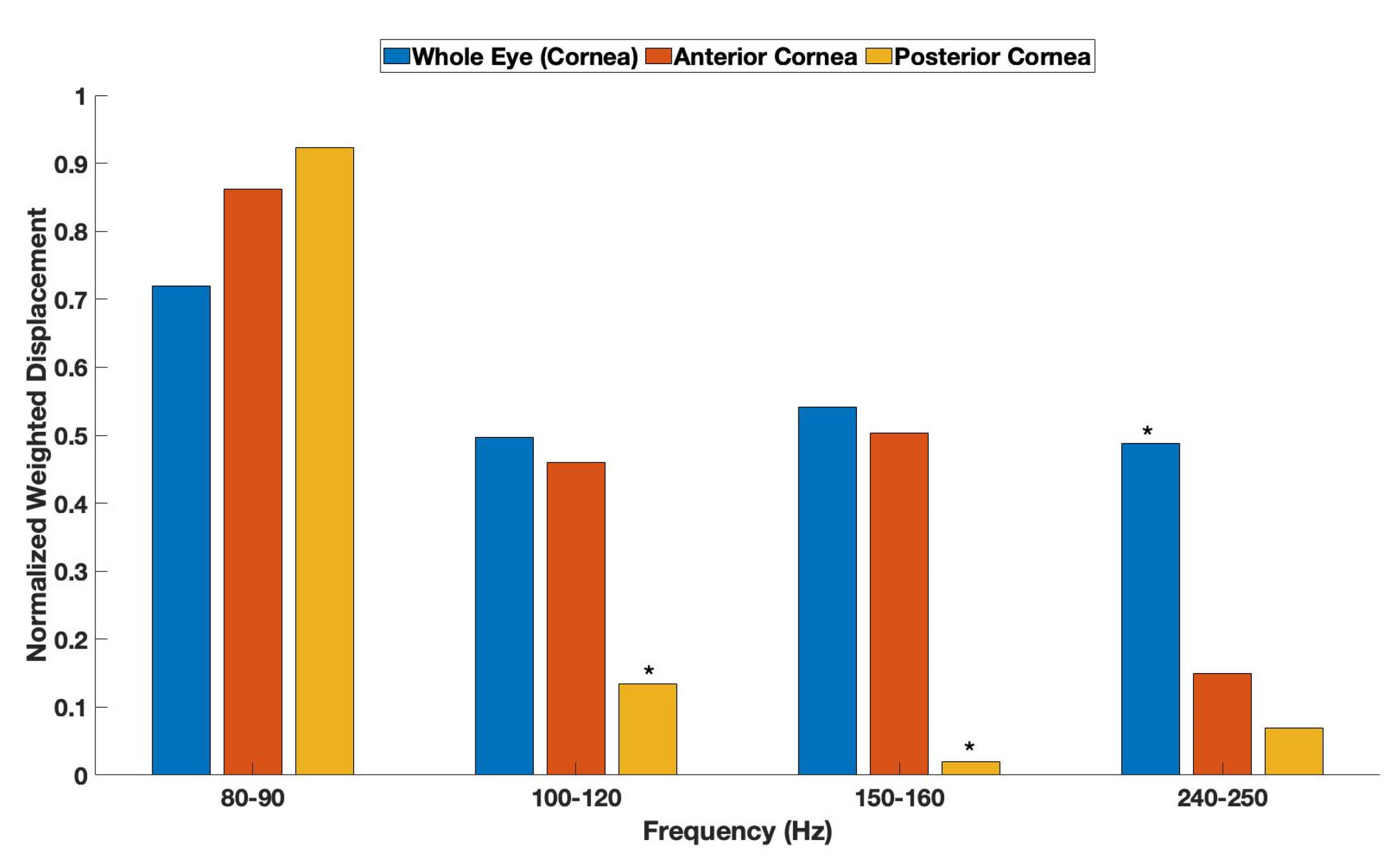
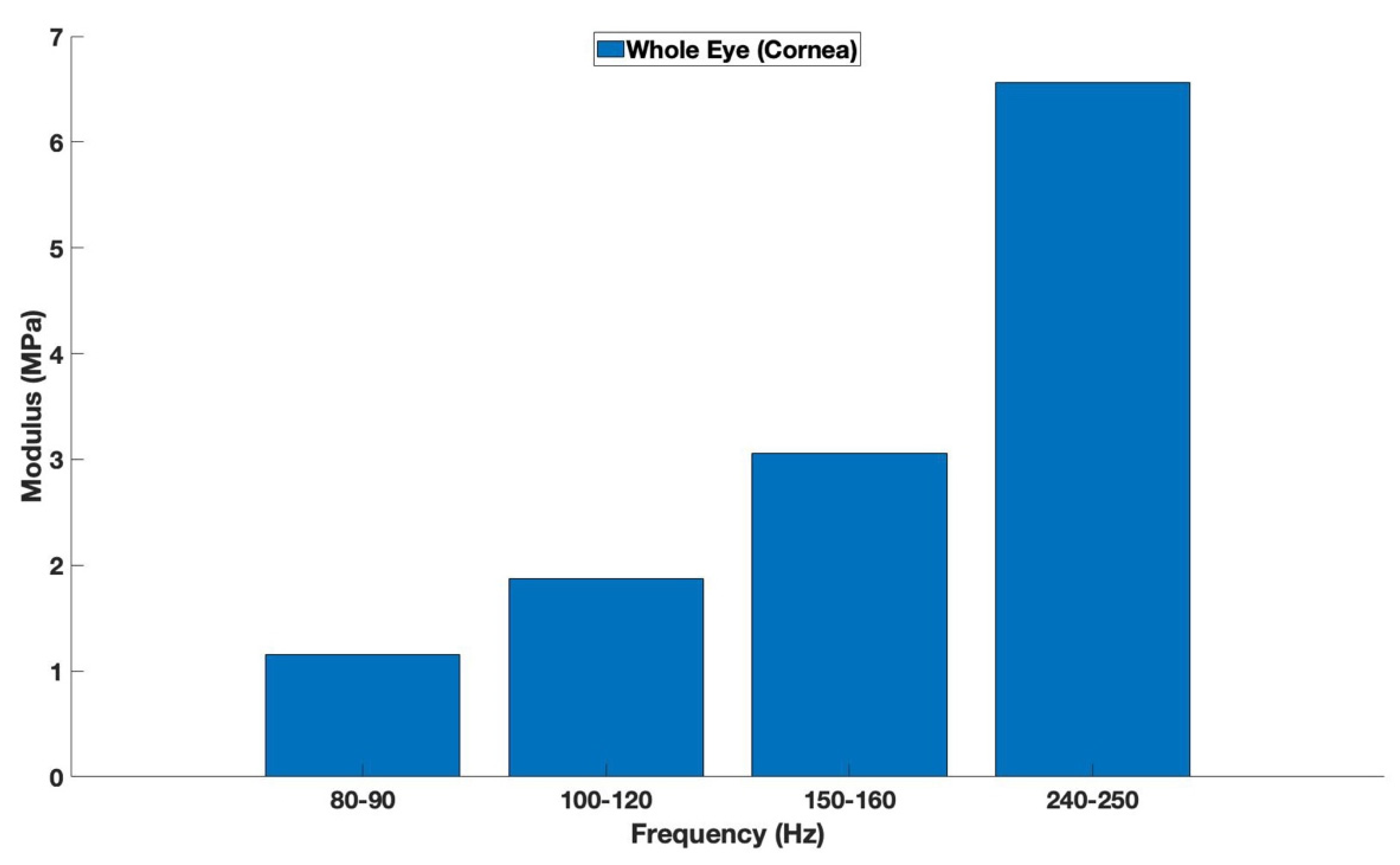
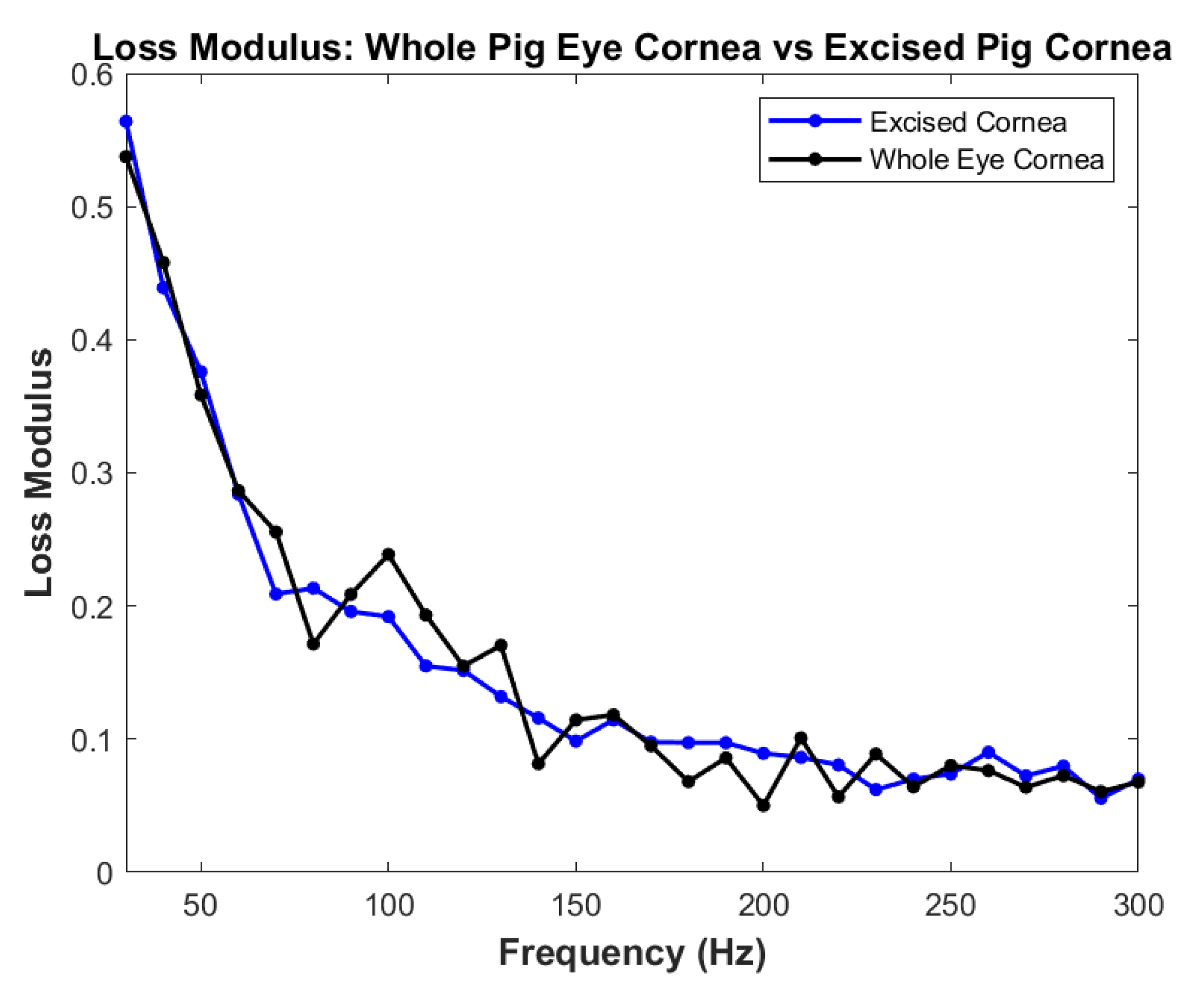
We have used vibrational optical coherence tomography (VOCT) to measure the resonant frequency, elastic modulus, and loss modulus of components of the anterior segment of pig eyes in vitro. Such basic biomechanical properties of the cornea have been shown to be abnormal not only in diseases of the anterior segment but also in posterior segment diseases as well. This information is needed to better understand corneal biomechanics in health and disease and to be able to diagnose the early stages of corneal pathologies. Results of dynamic viscoelastic studies on whole pig eyes and isolated corneas indicate that at low strain rates (30 Hz or less), the viscous loss modulus is as high as 0.6 times the elastic modulus for both whole eyes and corneas. This large viscous loss is similar to that of skin, which has been hypothesized to be dependent upon the physical association of proteoglycans with collagenous fibers. The energy dissipation properties of the cornea provide a mechanism to dissipate energy associated with blunt trauma, thereby preventing delamination and failure. The cornea possesses the ability to store impact energy and transmit excess energy to the posterior segment of the eye through its serial connection to the limbus and sclera. In this manner, the viscoelastic properties of the cornea, in concert with that of the posterior segment of the pig eye, function to prevent mechanical failure of the primary focusing element of the eye. Results of resonant frequency studies suggest that the 100–120 Hz and 150–160 Hz resonant frequency peaks reside in the anterior segment of the cornea since the removal of the anterior segment of the cornea decreases the peak heights at these resonant frequencies. These results suggest that there is more than one collagen fibril network found in the anterior portion of the cornea that provides structural integrity to prevent corneal delamination and that VOCT may be useful clinically to diagnose corneal diseases.
Keywords: viscoelasticity; corneal biomechanics; energy dissipation; elastic modulus; OCT; vibrational optical coherence tomography; proteoglycans; corneal diseases; loss modulus viscoelasticity; corneal biomechanics; energy dissipation; elastic modulus; OCT; vibrational optical coherence tomography; proteoglycans; corneal diseases; loss modulus