
Surface Contamination by Antineoplastic Drugs—Assessment, Detection, and Cleaning Measures: A Scoping Review


Abstract
1. Introduction
2. Methods
2.1. Research Question
- -
- map the extent and patterns of environmental surface contamination;
- -
- identify analytical and monitoring methodologies used for detection; and
- -
- evaluate reported cleaning and decontamination strategies and their effectiveness.
2.2. Eligibility Criteria
2.3. Information Sources and Search Strategy
2.4. Study Selection
2.5. Data Analysis and Synthesis
3. Results
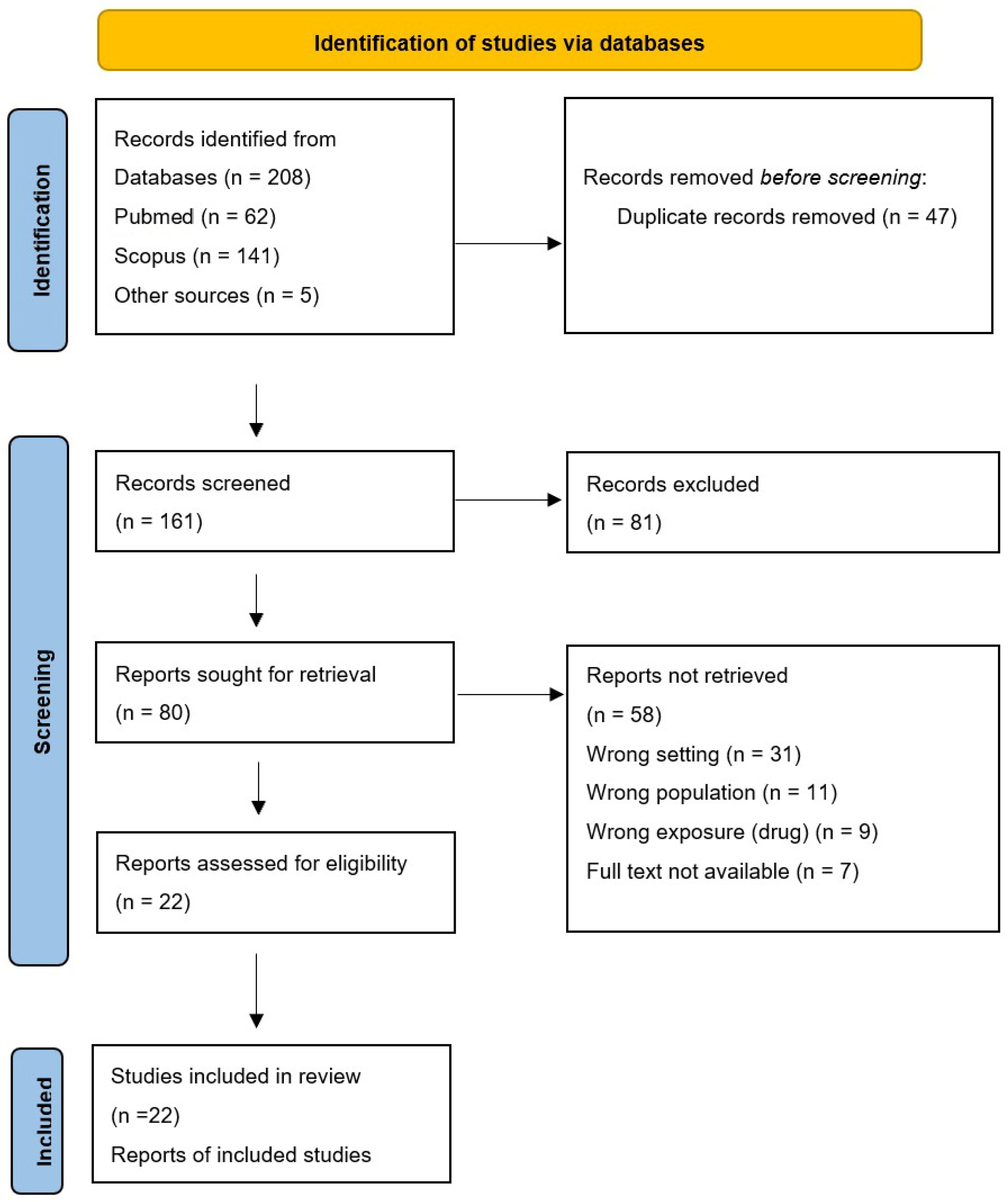
3.1. Study Selection
3.2. Contamination Patterns Across Settings


| Study | Country | Setting | Drugs Tested | Findings | Key Notes |
|---|---|---|---|---|---|
| Botha et al. (2025) [8] | South Africa | 6 oncology pharmacies | CP, ifosfamide, methotrexate, 5-FU + others (9 total) | 5-FU most common; contamination persisted post-cleaning, especially in SP1; CP and ifosfamide detected in staff urine | First report from LMIC; highlights poor cleaning efficacy |
| Li et al. (2025) [38] | China | 16 healthcare institutions | CP, gemcitabine | Median contamination up to 36.61 ng/cm2 (CP); higher levels in ward-based preparation areas; contamination concentrated on BSCs and preparation tables; cleaning reduced but did not eliminate residues | Higher contamination without BSCs; preparation volume correlated with contamination |
| Portilha-Cunha et al. (2025) [15] | Portugal | Tertiary hospital | 13 drugs | Low contamination overall, but CP > 957 pg/cm2 in 4 locations | Incomplete decontamination despite standardized cleaning |
| Woodward et al. (2024) [17] | Australia | 4 hospitals | 10 drugs 10 cytotoxic drugs (including ifosfamide, CP, methotrexate) | All hospitals had measurable contamination; ifosfamide most frequent; no significant difference with CSTDs | CSTDs reduced but did not eliminate contamination; reinforce need for consistent cleaning |
| Sottani et al. (2022) [39] | Italy | Pharmacy areas and patient care units | CP, 5-FU, gemcitabine, platinum compounds | 59% positive wipe samples in patient care units vs. 44% in pharmacies; highest surface concentrations for 5-FU; contamination detected across all years | Multicenter (9 hospitals); 5-year longitudinal monitoring (8288 measurements) |
| Walton et al. (2020) [9] | USA | Inpatient oncology units | CP, etoposide | 61% of surfaces contaminated, including toilets | Demonstrates contamination beyond preparation areas |
| Chauchat et al. (2019) [14] | Canada | 83 centres (pharmacy + patient care) | 10 drugs | CP on 36% of surfaces; armrests and hoods most contaminated | Large-scale multicenter contamination study |
| Chaffee et al. (2019) [37] | USA | Outpatient pharmacy (simulated) | CP | Counting trays exceeded 1 ng/cm2 after 3 prescriptions | Highlights risk in oral chemo dispensing |
| Salch et al. (2019) [40] | USA | 338 hospital pharmacies | CP, ifosfamide, 5-fluorouracil, docetaxel, paclitaxel | Contamination predominantly in preparation areas but also in non-preparation locations; higher contamination at initial wipe events; reduced contamination with CSTD use, but not eliminated | Large multicenter dataset (5842 wipes); demonstrates persistence of contamination despite engineering controls; persistent residues |
| Hon et al. (2013) [23] | Canada | Hospital medication system (pharmacy, transport, administration, waste) | CP | Contamination detected across all stages; highest levels during preparation (GM 0.019 ng/cm2; max 26.1 ng/cm2) | 438 wipe samples; widespread contamination on frequently touched surfaces |
| Bussières et al. (2012) [24] | Canada | 25 hospitals (pharmacy + patient care areas) | CP, ifosfamide, methotrexate | All hospitals had ≥1 positive sample; 52% CP, 20% ifosfamide, 3% methotrexate; contamination detected in preparation and patient-care areas | Multicenter Canadian study; no CSTD use; highlights widespread contamination across the medication-use process |
| Valero-García et al. (2018) [41] | Spain | 10 hospital pharmacies (compounding areas) | CP, ifosfamide, 5-fluorouracil | All hospitals had positive samples; 49% CP, 23% ifosfamide, 10% 5-FU; highest contamination on cabinet airfoils and floors in front of cabinets | Multicentric European study; contamination variability between centres; no association with number of preparations |
| Touzin et al. (2008) [16] | Canada | Hematology–oncology pharmacy | CP, ifosfamide, methotrexate | Contamination increased post-refit; ifosfamide highest | Persistence after structural renovation |
3.3. Methods for Monitoring and Detection of Antineoplastic Drugs
3.4. Cleaning and Decontamination Strategies
4. Discussion
4.1. Overview and Key Findings
4.2. Integration of Engineering Controls and Cleaning Practices
4.3. Monitoring and Detection Challenges
4.4. Cleaning and Decontamination Effectiveness
4.5. Policy and Occupational Health Implications
4.6. Limitations and Future Research
5. Conclusions
Supplementary Materials
Author Contributions
Funding
Institutional Review Board Statement
Informed Consent Statement
Data Availability Statement
Conflicts of Interest
Correction Statement
References
- Skov, T.; Maarup, B.; Olsen, J.; Rørth, M.; Winthereik, H.; Lynge, E. Leukaemia and reproductive outcome among nurses handling antineoplastic drugs. Occup. Environ. Med. 1992, 49, 855–861. [Google Scholar] [CrossRef] [PubMed]
- Connor, T.H.; McDiarmid, M.A. Preventing occupational exposures to antineoplastic drugs in health care settings. CA Cancer J. Clin. 2006, 56, 354–365. [Google Scholar] [CrossRef] [PubMed]
- Suspiro, A.; Prista, J. Exposição ocupacional a citostáticos e efeitos sobre a saúde. Rev. Port. Saúde Pública 2012, 30, 76–88. [Google Scholar] [CrossRef]
- National Institute for Occupational Safety and Health (NIOSH). Preventing Occupational Exposure to Antineoplastic and Other Hazardous Drugs in Healthcare Settings; National Institute for Occupational Safety and Health (NIOSH): Cincinnati, OH, USA, 2004. Available online: https://www.cdc.gov/niosh/docs/2004-165/pdfs/2004-165.pdf (accessed on 15 November 2025).
- Pirot, C.; Benoist, H.; Saint-Lorant, G. Impact of lack of knowledge on risk perception and protective practices of home nurses handling antineoplastic drugs. J. Oncol. Pharm. Pract. 2023, 30, 313–321. [Google Scholar] [CrossRef]
- Leso, V.; Sottani, C.; Santocono, C.; Russo, F.; Grignani, E.; Iavicoli, I. Exposure to antineoplastic drugs in occupational settings: A systematic review of biological monitoring data. Int. J. Environ. Res. Public Health 2022, 19, 3737. [Google Scholar] [CrossRef]
- Hilliquin, D.; Tanguay, C.; Gagné, S.; Caron, N.J.; Bussières, J.-F. Cross-sectional evaluation of surface contamination with antineoplastic drugs in canadian health care centres. Can. J. Hosp. Pharm. 2019, 72, 377. [Google Scholar] [CrossRef]
- Botha, R.; Nelson, G.; Sessink, P.; Brouwer, D. Assessing antineoplastic drug contamination in South African oncology pharmacies: Workplace and biological monitoring. J. Oncol. Pharm. Pract. 2025, 10781552251321150. [Google Scholar] [CrossRef]
- Walton, A.L.; Bush, M.A.; Douglas, C.E.; Allen, D.H.; Polovich, M.; Spasojevic, I. Surface Contamination with Antineoplastic Drugs on Two Inpatient Oncology Units. Oncol. Nurs. Forum 2020, 47, 263–272. [Google Scholar] [CrossRef]
- International Society of Oncology Pharmacy Practitioners (ISOPP). ISOPP Standards for the Safe Handling of Cytotoxics. J. Oncol. Pharm. Pract. 2022, 28, S1–S126. [Google Scholar] [CrossRef]
- Connor, T.H.; Eckel, S.F.; McDiarmid, M.A.; Polovich, M.; Power, L.A. Safe Handling of Hazardous Chemotherapy Drugs in Limited-Resource Settings; Pan American Health Organization (PAHO): Washington, DC, USA, 2013.
- United States Pharmacopeia (USP). USP <800>: Hazardous Drugs—Handling in Healthcare Settings; The United States Pharmacopeial Convention: Rockville, MD, USA, 2017; Available online: https://www.usp.org/compounding/general-chapter-hazardous-drugs-handling-healthcare (accessed on 20 November 2025).
- Dugheri, S.; Bonari, A.; Pompilio, I.; Boccalon, P.; Mucci, N.; Arcangeli, G. A new approach to assessing occupational exposure to antineoplastic drugs in hospital environments. Arh. Hig. Rada Toksikol. 2018, 69, 226–237. [Google Scholar] [CrossRef]
- Chauchat, L.; Tanguay, C.; Caron, N.J.; Gagné, S.; Labrèche, F.; Bussières, J.-F. Surface contamination with ten antineoplastic drugs in 83 Canadian centers. J. Oncol. Pharm. Pract. 2019, 25, 1089–1098. [Google Scholar] [CrossRef]
- Portilha-Cunha, M.F.; Norton, P.; Alves, A.; Ribeiro, A.R.L.; Silva, A.M.T.; Santos, M.S.F. Tackling antineoplastic drugs’ contamination in healthcare settings: New insights on surface cleaning approaches. J. Occup. Environ. Hyg. 2025, 22, 386–399. [Google Scholar] [CrossRef]
- Touzin, K.; Bussieres, J.-F.; Langlois, É.; Lefebvre, M. Evaluation of surface contamination in a hospital hematology—Oncology pharmacy. J. Oncol. Pharm. Pract. 2009, 15, 53–61. [Google Scholar] [CrossRef] [PubMed]
- Woodward, V.; Panjarjian, M.; Devi, D.; Hanrahan, J.; Soriano, M.; Roper, M.; Musa, H.; Davies, S.; Samios, P.; Teh, M.; et al. Surface contamination of cytotoxic medicine in preparation and patient care areas in Australian hospitals: A retrospective cross-sectional study. J. Pharm. Pract. Res. 2024, 54, 306–313. [Google Scholar] [CrossRef]
- Valero-García, S.; Centelles-Oria, M.; Palanques-Pastor, T.; Vila Clérigues, N.; López-Briz, E.; Poveda Andrés, J.L. Analysis of chemical contamination by hazardous drugs with BD HD Check® system in a tertiary hospital. J. Oncol. Pharm. Pract. 2022, 28, 1583–1593. [Google Scholar] [CrossRef] [PubMed]
- Bouchfaa, M.; Vasseur, M.; Courtin, J.; Pinturaud, M.; Beauval, N.; Allorge, D.; Odou, P.; Simon, N. Assessment of chemical contamination by cancer drugs during use of the RIVATM compounding robot: A pilot study. J. Oncol. Pharm. Pract. 2025, 31, 1061–1070. [Google Scholar] [CrossRef]
- Merger, D.; Tanguay, C.; Langlois, E.; Lefebvre, M.; Bussières, J.-F. Multicenter study of environmental contamination with antineoplastic drugs in 33 Canadian hospitals. Int. Arch. Occup. Environ. Health 2014, 87, 307–313. [Google Scholar] [CrossRef]
- Huff, M.S.N. Hazardous Drug Administration in the Home Setting: Reducing Exposure Risks. Master’s Thesis, University of San Francisco, San Francisco, CA, USA, 2018. [Google Scholar]
- Hodson, L.; Ovesen, J.; Couch, J.; Hirst, D.; Lawson, C.; Lentz, T.J.; MacKenzie, B.; Mead, K. Managing Hazardous Drug Exposures: Information for Healthcare Settings; National Institute for Occupational Safety and Health (NIOSH): Cincinnati, OH, USA, 2023. [CrossRef]
- Hon, C.-Y.; Teschke, K.; Chu, W.; Demers, P.; Venners, S. Antineoplastic drug contamination of surfaces throughout the hospital medication system in Canadian hospitals. J. Occup. Environ. Hyg. 2013, 10, 374–383. [Google Scholar] [CrossRef]
- Bussières, J.-F.; Tanguay, C.; Touzin, K.; Langlois, É.; Lefebvre, M. Environmental contamination with hazardous drugs in Quebec hospitals. Can. J. Hosp. Pharm. 2012, 65, 428. [Google Scholar] [CrossRef]
- Ndaw, S.; Remy, A. Occupational exposure to antineoplastic drugs in twelve french health care setting: Biological monitoring and surface contamination. Int. J. Environ. Res. Public Health 2023, 20, 4952. [Google Scholar] [CrossRef]
- Soteriades, E.S.; Economidou, S.C.; Tsivitanidou, A.; Polyviou, P.; Lorimer, A.; Katodritis, N.; Theophanous-Kitiri, S. Environmental assessment of cytotoxic drugs in the Oncology Center of Cyprus. PLoS ONE 2020, 15, e0216098. [Google Scholar] [CrossRef] [PubMed]
- Borghi, F.; Zellino, C.; Zago, A.; De Vito, G.; Del Vecchio, R.L.; Cattaneo, A.; Spinazzè, A.; Cavallo, D.M. Exposure Assessment and Monitoring of Antiblastic Drugs Preparation in Health Care Settings: A Systematic Review. Med. Lav. 2024, 115, e2024012. [Google Scholar] [CrossRef] [PubMed]
- Yuan, Z.; Li, Q.; Tang, T.; Zhang, M.; Liu, Y.; Liu, L. Studies on the optimization of decontamination protocol for surfaces contaminated with cytotoxic drugs in PIVAS. J. Oncol. Pharm. Pract. 2023, 29, 1565–1573. [Google Scholar] [CrossRef] [PubMed]
- Simon, N.; Guichard, N.; Odou, P.; Decaudin, B.; Bonnabry, P.; Fleury-Souverain, S. Efficiency of four solutions in removing 23 conventional antineoplastic drugs from contaminated surfaces. PLoS ONE 2020, 15, e0235131. [Google Scholar] [CrossRef]
- Simon, N.; Odou, P.; Decaudin, B.; Bonnabry, P.; Fleury-Souverain, S. Efficiency of degradation or desorption methods in antineoplastic drug decontamination: A critical review. J. Oncol. Pharm. Pract. 2019, 25, 929–946. [Google Scholar] [CrossRef]
- Walton, A.L.; Powell, M.A.; Ledbetter, L.; Bush, M.A. A scoping review of surface wipe sampling for antineoplastic drug contamination in patient care areas. J. Occup. Environ. Hyg. 2025, 22, 495–514. [Google Scholar] [CrossRef]
- Hon, C.-Y. Side-by-Side Comparison of Methods for Environmental Monitoring for Hazardous Drug Contamination. Can. J. Hosp. Pharm. 2023, 76, 87. [Google Scholar] [CrossRef]
- Occupational Safety and Health Administration (OSHA). Controlling Occupational Exposure to Hazardous Drugs. 2023. Available online: https://www.osha.gov/hazardous-drugs/controlling-occex (accessed on 29 October 2025).
- Arksey, H.; O’malley, L. Scoping studies: Towards a methodological framework. Int. J. Soc. Res. Methodol. 2005, 8, 19–32. [Google Scholar] [CrossRef]
- Tricco, A.C.; Lillie, E.; Zarin, W.; O’Brien, K.K.; Colquhoun, H.; Levac, D.; Moher, D.; Peters, M.D.J.; Horsley, T.; Weeks, L.; et al. PRISMA extension for scoping reviews (PRISMA-ScR): Checklist and explanation. Ann. Intern Med. 2018, 169, 467–473. [Google Scholar] [CrossRef]
- National Institute for Occupational Safety and Health (NIOSH). NIOSH List of Hazardous Drugs in Healthcare Settings, 2024; DHHS (NIOSH) Publication No. 2025-103; U.S. Department of Health and Human Services, Centers for Disease Control and Prevention: Cincinnati, OH, USA, 2024. [CrossRef]
- Chaffee, B.W.; Lander, M.J.; Christen, C.; Redic, K.A. Surface contamination of counting tools after mock dispensing of cyclophosphamide in a simulated outpatient pharmacy. J. Oncol. Pharm. Pract. 2019, 25, 85–93. [Google Scholar] [CrossRef]
- Li, C.; Wang, S.; Wang, M.; Jing, L.; Pang, C.; Ma, N.; Dong, W. The surface contamination of hazardous drugs in different working places of healthcare facilities in shaanxi, China. J. Oncol. Pharm. Pract. 2025, 10781552251376292. [Google Scholar] [CrossRef] [PubMed]
- Sottani, C.; Grignani, E.; Cornacchia, M.; Negri, S.; della Cuna, F.S.R.; Cottica, D.; Bruzzese, D.; Severi, P.; Strocchi, D.; Verna, G.; et al. Occupational exposure assessment to antineoplastic drugs in nine Italian hospital centers over a 5-year survey program. Int. J. Environ. Res. Public Health 2022, 19, 8601. [Google Scholar] [CrossRef] [PubMed]
- Salch, S.A.; Zamboni, W.C.; Zamboni, B.A.; Eckel, S.F. Patterns and characteristics associated with surface contamination of hazardous drugs in hospital pharmacies. Am. J. Health-Syst. Pharm. 2019, 76, 591–598. [Google Scholar] [CrossRef] [PubMed]
- Valero-García, S.; Poveda-Andrés, J.L.; Multicenter Group for the Analysis of Hazardous Drug Contamination in Work Surfaces at Spanish Hospital Pharmacy Units. Hazardous drugs levels in compounding area surfaces of Hospital Pharmacies Services: Multicentric study. Farm. Hosp. 2018, 42, 152–158. [Google Scholar]
- Arnold, S.; Jeronimo, M.; Astrakianakis, G.; Kunz, M.; Petersen, A.; Chambers, C.; Malard Johnson, D.; Zimdars, E.; Davies, H.W. Developing wipe sampling strategy guidance for assessing environmental contamination of antineoplastic drugs. J. Oncol. Pharm. Pract. 2023, 29, 1816–1824. [Google Scholar] [CrossRef]
- Demircan Yildirim, F.; Ekmekci, I. Design of Analytical Method Validation Protocol Evaluating Environmental Monitoring of AND Contamination on Surfaces Based on Cleaning Validation Procedures: A Multi Component RP-UHPLC Method. J. Chromatogr. Sci. 2022, 60, 926–936. [Google Scholar] [CrossRef]
- Lema-Atán, J.Á.; Lendoiro, E.; Paniagua-González, L.; Cruz, A.; López-Rivadulla, M.; de-Castro-Ríos, A. LC–MS-MS determination of cytostatic drugs on surfaces and in urine to assess occupational exposure. J. Anal. Toxicol. 2022, 46, e248–e255. [Google Scholar] [CrossRef]
- Connor, T.H.; Zock, M.D.; Snow, A.H. Surface wipe sampling for antineoplastic (chemotherapy) and other hazardous drug residue in healthcare settings: Methodology and recommendations. J. Occup. Environ. Hyg. 2016, 13, 658–667. [Google Scholar] [CrossRef]
- Smith, J.P.; Sammons, D.L.; Robertson, S.A.; Pretty, J.R.; DeBord, D.G.; Connor, T.H.; Snawder, J.E. Detection and measurement of surface contamination by multiple antineoplastic drugs using multiplex bead assay. J. Oncol. Pharm. Pract. 2016, 22, 60–67. [Google Scholar] [CrossRef]
- Turci, R.; Sottani, C.; Spagnoli, G.; Minoia, C. Biological and environmental monitoring of hospital personnel exposed to antineoplastic agents: A review of analytical methods. J. Chromatogr. B 2003, 789, 169–209. [Google Scholar] [CrossRef]
- United States Pharmacopeia Convention. USP <797> Pharmaceutical Compounding—Sterile Preparations; United States Pharmacopeia and National Formulary (USP 42–NF 37); United States Pharmacopeia Convention: Rockville, MD, USA, 2019. [Google Scholar]
- National Association of Pharmacy Regulatory Authorities (NAPRA). Model Standards for Pharmacy Compounding of Hazardous Sterile Preparations; National Association of Pharmacy Regulatory Authorities (NAPRA): Ottawa, ON, Canada, 2016. [Google Scholar]
- Walton, A.L.; Bush, M.A.; Sung, A.D.; Powell, M.A.; Jin, H.J.; Silva, S.G.; Spasojevic, I. Assessing Etoposide and Cyclophosphamide Contamination and Current Cleaning Practices in Patient Bathrooms. Clin. J. Oncol. Nurs. 2025, 29, E52. [Google Scholar] [CrossRef] [PubMed]
- Bláhová, L.; Kuta, J.; Doležalová, L.; Kozáková, Š.; Krovová, T.; Bláha, L. The efficiency of antineoplastic drug contamination removal by widely used disinfectants--laboratory and hospital studies. Int. Arch. Occup. Environ. Health 2021, 94, 1687–1702. [Google Scholar] [CrossRef] [PubMed]
- Federici, M.; Raffaelli, J.; Paolucci, D.; Schierl, R.; Krämer, I. Efficacy of four cleaning solutions for the decontamination of selected cytotoxic drugs on the different surfaces of an automated compounding system. J. Occup. Environ. Hyg. 2019, 16, 6–15. [Google Scholar] [CrossRef] [PubMed]
- Adé, A.; Chauchat, L.; Frève, J.-F.O.; Gagné, S.; Caron, N.; Bussières, J.-F. Comparison of decontamination efficacy of cleaning solutions on a biological safety cabinet workbench contaminated by cyclophosphamide. Can. J. Hosp. Pharm. 2017, 70, 407. [Google Scholar] [CrossRef]
- Cox, J.; Speed, V.; O’Neal, S.; Hasselwander, T.; Sherwood, C.; Eckel, S.F.; Zamboni, W.C. Development and evaluation of a novel product to remove surface contamination of hazardous drugs. J. Oncol. Pharm. Pract. 2017, 23, 103–115. [Google Scholar] [CrossRef]
- Queruau Lamerie, T.; Nussbaumer, S.; Décaudin, B.; Fleury-Souverain, S.; Goossens, J.-F.; Bonnabry, P.; Odou, P. Evaluation of decontamination efficacy of cleaning solutions on stainless steel and glass surfaces contaminated by 10 antineoplastic agents. Ann. Occup. Hyg. 2013, 57, 456–469. [Google Scholar]
- Almeida-Silva, M.; Viegas, S.; Curwin, B.; Marder, M.E.; Schlüter, U. Exposure science and occupational health: Insights from ISES 2022. Front. Public Health 2024, 12, 1515173. [Google Scholar] [CrossRef]
- Gonzalo, N.; Rey, M.; Fontanals, S.; Quer, N.; Clopés, A.; Muñoz, C. Simultaneous determination of five cytotoxic drugs in surface wiped samples using liquid chromatography and tandem mass spectrometry for the control of environmental contamination in a comprehensive cancer centre. Int. J. Environ. Anal. Chem. 2024, 104, 2675–2690. [Google Scholar] [CrossRef]
- Sessink, P.; Connor, T.H.; Jorgenson, J.A.; Tyler, T. Reduction in surface contamination with antineoplastic drugs in 22 hospital pharmacies in the us following implementation of a closed-system drug transfer device. J. Oncol. Pharm. Pract. 2010, 17, 39–48. [Google Scholar] [CrossRef]
- Clark, B.A.; Sessink, P. Use of a closed system drug-transfer device eliminates surface contamination with antineoplastic agents. J. Oncol. Pharm. Pract. 2013, 19, 99–104. [Google Scholar] [CrossRef]
- Becton, Dickinson and Company (BD). BD HD Check® System—Results and Evidence; BD Medical: Franklin Lakes, NJ, USA, 2021. [Google Scholar]
- Böhlandt, A.; Groeneveld, S.; Fischer, E.; Schierl, R. Cleaning efficiencies of three cleaning agents on four different surfaces after contamination by gemcitabine and 5-fluorouracile. J. Occup. Environ. Hyg. 2015, 12, 384–392. [Google Scholar] [CrossRef]
- United States Pharmacopeia (USP). General Chapter <797>—Pharmaceutical Compounding—Sterile Preparations. 2023. Available online: https://www.usp.org/compounding/general-chapter-797 (accessed on 17 December 2025).
- Quinn, M.M.; Henneberger, P.K.; Braun, B.; Delclos, G.L.; Fagan, K.; Huang, V.; Knaack, J.L.S.; Kusek, L.; Lee, S.-J.; Le Moual, N.; et al. Cleaning and disinfecting environmental surfaces in health care: Toward an integrated framework for infection and occupational illness prevention. Am. J. Infect. Control 2015, 43, 424–434. [Google Scholar] [CrossRef]
- Dumas, O.; Wiley, A.S.; Quinot, C.; Varraso, R.; Zock, J.-P.; Henneberger, P.K.; Speizer, F.E.; Le Moual, N.; Camargo, C.A., Jr. Occupational exposure to disinfectants and asthma control in US nurses. Eur. Respir. J. 2017, 50, 1700237. [Google Scholar] [CrossRef]
- Pechter, E.; Rosenman, K.D. Occupational health risks associated with use of environmental surface disinfectants in health care. Am. J. Infect. Control 2016, 44, 1755–1756. [Google Scholar] [CrossRef]
- Direção-Geral da Saúde (DGS). 018/2012; Prevenção da Exposição Ocupacional a Medicamentos Perigosos. Direção-Geral da Saúde (DGS): Lisboa, Portugal, 2012. Available online: https://www.dgs.pt (accessed on 19 December 2025).
- Bhakta, S.B.; Carmine Colavecchia, A.; Coffey, W.; Curlee, D.R.; Garey, K.W. Implementation and evaluation of a sterile compounding robot in a satellite oncology pharmacy. Bull. Am. Soc. Hosp. Pharm. 2018, 75, S51–S57. [Google Scholar] [CrossRef]
| Study | Method | Detection Limit/ Sensitivity | Sampling Frequency | Strengths | Limitations |
|---|---|---|---|---|---|
| Botha et al. (2025) [8] | LC—MS/MS + urinary biomonitoring | Not specified (below guidance values) | Pre-/post-cleaning | Links environmental and biological data | Small sample size |
| Arnold et al. (2022) [42] | Surface wipe sampling with probabilistic simulation modeling (LOD—and HGV-based benchmarks) | LOD-based + HGV benchmarks (90th percentile) | Sentinel vs. random surfaces; 2–20 surfaces; annual to monthly | Evidence-based guidance on number of surfaces, frequency, and drug panels; supports USP <800> | Modeling-based; not a primary analytical validation study |
| Demircan Yildirim & Ekmekci (2022) [43] | RP—UHPLC (method validation) | LOD ~0.04–0.13 ng/cm2 | Laboratory validation | Very low LOD; ICH-compliant; multicomponent method | Methodological study; no real-world hospital measurements |
| Lema-Atán et al. (2022) [44] | LC—MS/MS (multianalyte; surface wipe sampling + urinary biomonitoring) | 5–100 pg/cm2 (surface); 5–250 pg/mL (urine) | Not specified (application study) | Very high sensitivity; simultaneous detection of multiple cytostatic drugs; combined environmental and biological monitoring; fully validated according to SWGTOX | High analytical complexity; requires advanced instrumentation and expertise; not suitable for real-time feedback; variable recovery depending on compound and matrix |
| Valero-García et al. (2021) [18] | Immunoassay (BD HD Check®) + LC—MS/MS | ≥100 pg/cm2 | Routine | Rapid on-site detection; immediate intervention | Semi-quantitative method; comparison with LC—MS/MS not performed |
| Walton et al. (2020) [9] | LC—MS/MS | Not specified | End of workday | High sensitivity; comprehensive mapping | Delayed feedback |
| Chauchat et al. (2018) [14] | LC—MS/MS | ≈10 pg/cm2 | Once per facility | High precision; multi-analyte quantification | Requires lab infrastructure |
| Connor et al. (2016) [45] | Surface wipe sampling framework + LC—MS/MS | Method-dependent (pg–ng/cm2 range reported across studies) | Not applicable (methodological review) | Reference methodological framework; standardizes sampling design, analytical performance, and interpretation | No primary contamination data; not designed for exposure quantification |
| Smith et al. (2016) [46] | Fluorescence Covalent Microbead Immunosorbent Assay (FCMIA) for 5-fluorouracil, paclitaxel, doxorubicin | 0.0036–0.93 ng/cm2 (drug-dependent) | Single test on glazed ceramic tiles (100 cm2) | Simultaneous detection of multiple drugs; rapid, low-cost, semi-quantitative; minimal operator training required | Recovery varied by compound and surface; limited to 3 drugs; validation on limited surfaces |
| Hon et al. (2013) [23] | LC—MS/MS | LOD: 0.356 ng/wipe (0.00–0.049 ng/cm2, surface-adjusted) | Repeated sampling (two rounds, ≥4 months apart) | High analytical sensitivity; repeated measurements; use of laboratory-derived values below LOD improves exposure estimation | Delayed results; single marker drug (cyclophosphamide) |
| Touzin et al. (2008) [16] | LC—MS/MS | ≤1 ng/cm2 | Pre- and post-renovation | Enables time-trend comparison | Time delay between sampling and results Turnaround > 72 h |
| Turci et al. (2003) [47] | HPLC—MS/MS; GC—MS | CP: ~0.01–0.1 ng/cm2; IF: ~0.02–0.2 ng/cm2; 5-FU: ~0.1–1 ng/cm2 | Methodological review | Establishes analytical sensitivity; method validation | Not a field study; older instrumentation |
| Study | Cleaning Agent/Protocol | Surfaces Tested | Effectiveness | Observations |
|---|---|---|---|---|
| Portilha-Cunha et al. (2025) [15] | Six commercial disinfectants—oxidizing (NaOCl, H2O2) and surfactant/alcohol-based | Stainless steel, laminate, PVC | None fully effective; best >90% | Higher efficacy with direct surface application and two-step cleaning |
| Botha et al. (2025) [8] | Routine alcohol cleaning | Workbenches | 17.4% reduction post-cleaning | Demonstrates poor protocol compliance |
| Walton et al. (2024) [50] | Routine cleaning: bleach-based disinfectant (concentration not specified), non-bleach neutral detergents, and hydrogen peroxide-based wipes; discharge cleaning: bleach-based disinfectant wipes combined with neutral detergent | Toilets, floors, walls (patient bathrooms) | Significant reduction of etoposide contamination on toilets; no significant reduction of CP on floors or walls | Bleach used only during discharge cleaning; protocols not specific to antineoplastic drugs |
| Woodward et al. (2024) [17] | Institutional cleaning protocol (unspecified composition) | Multiple hospital areas | Contamination persisted | Highlights need for standardization |
| Simon et al. (2020) [29] | 70% isopropanol; Ethanol-H2O2 admixture; SDS 10−2 M + IPA 80/20; 0.5% NaOCl | Stainless steel (100 cm2) | NaOCl: ~100% (52.9–100) standard; SDS + IPA: ~99.6% vigorous; IPA: ~79.9% standard | Vigorous wiping improved efficiency; surfactant mixture nearly equivalent to NaOCl; 70% isopropanol inadequate. |
| Bláhová et al. (2021) [51] | Active NaOCl, peracetic acid, H2O2-based, alcohol-based, detergents, QAS | Stainless steel (lab); hospital floors (Marmoleum) | NaOCl and peracetic acid: highest removal (up to ~99–100%); H2O2: moderate; alcohols: ineffective for CP | Alcohol-based disinfectants mobilized deeply embedded CP and FU, increasing surface contamination; CP highly persistent; repeated cleaning required |
| Federici et al. (2018) [52] | 0.5% NaOCl; SDS–isopropanol (0.23% SDS + IPA 80/20); 0.2% NaOH–EtOH; 0.1% benzalkonium chloride | Stainless steel, aluminum, polyoxymethylene (POM), polycarbonate (PC) (robotic compounding system) | 81.5–100% removal; overall efficacy > 95% for all agents; NaOCl highest (~98–100%) | No protocol achieved complete removal; aluminum surfaces showed lowest efficacy; cleaning performance depended on surface type and drug; residues persisted despite high efficacy |
| Adé et al. (2017) [53] | Hydrogen peroxide and surfactant-based mixtures | Benchtops | >90% removal after two steps | Multi-step process required |
| Cox et al. (2016) [54] | Two-step commercial decontamination system (HDClean™: quaternary ammonium wipe + isopropanol wipe) | Biological safety cabinets, floors, countertops, keyboards, pass-through handles (pharmacy and nursing units) | Near-complete removal (≈90–100%) for most drugs; non-detectable residues after repeated cleaning | More effective than sodium hypochlorite-based products and routine institutional protocols; efficacy maintained even without CSTD; platinum agents harder to remove |
| Lamerie et al. (2013) [55] | Ultrapure water; IPA/H2O; acetone; NaOCl; surfactants (SDS, DWL, Tween 40, Span 80 ± IPA) | Stainless steel, glass | NaOCl ≈ 98%; surfactant + IPA ≈ 90–95%; IPA alone ≈ 80%; acetone ≈ 40% | Alcohol insufficient alone; surfactant mixture better |
| Step | Purpose | Recommended Agents | References |
|---|---|---|---|
| 1. Deactivation | Chemically inactivate cytotoxic compounds | Sodium hypochlorite (NaOCl, 0.5–2%) or hydrogen peroxide (H2O2) solutions | USP <800> [12]; NIOSH [22] |
| 2. Decontamination | Physically remove hazardous drug residues from surfaces | Neutral detergents or surfactant-based solutions (e.g., SDS + IPA) | ISOPP [10]; NIOSH [22] |
| 3. Cleaning | Eliminate dirt and residual chemical agents | Germicidal detergents compatible with surface materials | USP <800> [12]; OSHA [33] |
| 4. Disinfection | Ensure microbiological control after chemical decontamination | 70% isopropanol (IPA) following removal steps | USP <797> [62], USP <800> [12] |
Disclaimer/Publisher’s Note: The statements, opinions and data contained in all publications are solely those of the individual author(s) and contributor(s) and not of MDPI and/or the editor(s). MDPI and/or the editor(s) disclaim responsibility for any injury to people or property resulting from any ideas, methods, instructions or products referred to in the content. |
© 2026 by the authors. Licensee MDPI, Basel, Switzerland. This article is an open access article distributed under the terms and conditions of the Creative Commons Attribution (CC BY) license.
Share and Cite
Silva, V.; Matos, C. Surface Contamination by Antineoplastic Drugs—Assessment, Detection, and Cleaning Measures: A Scoping Review. Safety 2026, 12, 31. https://doi.org/10.3390/safety12020031
Silva V, Matos C. Surface Contamination by Antineoplastic Drugs—Assessment, Detection, and Cleaning Measures: A Scoping Review. Safety. 2026; 12(2):31. https://doi.org/10.3390/safety12020031
Chicago/Turabian StyleSilva, Vítor, and Cristiano Matos. 2026. "Surface Contamination by Antineoplastic Drugs—Assessment, Detection, and Cleaning Measures: A Scoping Review" Safety 12, no. 2: 31. https://doi.org/10.3390/safety12020031
APA StyleSilva, V., & Matos, C. (2026). Surface Contamination by Antineoplastic Drugs—Assessment, Detection, and Cleaning Measures: A Scoping Review. Safety, 12(2), 31. https://doi.org/10.3390/safety12020031