Review

Surface Contamination by Antineoplastic Drugs—Assessment, Detection, and Cleaning Measures: A Scoping Review


1
Hospitais da Universidade de Coimbra (HUC), Unidade Local de Saúde de Coimbra, Praceta Prof. Mota Pinto, 3000-075 Coimbra, Portugal
2
Associação Portuguesa de Licenciados em Farmácia (APLF), 3140-348 Coimbra, Portugal
3
European Association of Pharmacy Technicians, B-1080 Brussels, Belgium
4
Escola Superior de Tecnologia da Saúde de Coimbra, Instituto Politécnico de Coimbra, R. 5 de Outubro, 3045-043 Coimbra, Portugal
*
Author to whom correspondence should be addressed.
Safety 2026, 12(2), 31; https://doi.org/10.3390/safety12020031
Submission received: 26 December 2025 / Revised: 23 January 2026 / Accepted: 28 January 2026 / Published: 1 March 2026

Abstract

Background: Antineoplastic drugs are essential in the treatment of cancer; however, they are classified as hazardous due to their genotoxic, mutagenic, and carcinogenic properties. Healthcare professionals are at risk of exposure primarily through surface contamination. Despite international safety guidelines and technological innovations during the last decades, contamination remains a global occupational health challenge. Objective: This scoping review aims to identify and compare monitoring and detection methods, as well as cleaning and decontamination strategies, in relation to international occupational-safety standards. Methods: Following Arksey and O’Malley’s methodological framework and PRISMA-ScR reporting standards, the peer-reviewed literature and guidelines from 2000 to 2025 were reviewed. Studies were charted across three domains: contamination prevalence, monitoring/detection methods, and cleaning/decontamination effectiveness. Results: Evidence from twenty-two studies conducted in several countries worldwide demonstrated widespread surface contamination across hospital pharmacies, patient-care units, and outpatient facilities. Cyclophosphamide, ifosfamide, and methotrexate were the most frequently detected agents. LC—MS/MS wipe sampling remains the quantitative gold standard, while rapid immunoassay-based tools allow near real-time assessments but with reduced sensitivity. Cleaning protocols varied significantly: oxidizing and surfactant-based agents such as sodium hypochlorite and hydrogen peroxide achieved the highest removal rates (>90%) yet failed to eliminate residues completely. The included studies reported a wide range of monitoring, detection, and cleaning approaches used in healthcare settings. Conclusion: Surface contamination by antineoplastic drugs persists worldwide. Effective management requires harmonized contamination thresholds, validated cleaning strategies, adoption of rapid detection technologies, and continuous occupational surveillance.

1. Introduction

The toxicological hazards associated with antineoplastic drugs (ADs) have been consistently demonstrated during the last decades [1,2]. In particular, their carcinogenic, mutagenic, teratogenic, and reproductive toxic effects are well established and widely recognized in the scientific literature [3,4]. These properties highlight the capacity of those substances to initiate and promote malignant transformations but also to induce genetic alterations, impair fetal development, and compromise reproductive health [2,4,5]. Such evidence is a public health and occupational safety concern, reinforcing the need for continuous monitoring, stringent regulatory frameworks, and the adoption of preventive measures aimed at reducing exposure [6]. In healthcare settings, exposures are most likely to occur through four pathways: dermal contact, inhalation of aerosolized material, accidental ingestion, and accidental injection [7,8], with dermal contact via contaminated surfaces being the most common [9].
The importance of decontamination and surface monitoring in chemotherapy handling is immeasurable [2]. These substances can be both cytotoxic and/or genotoxic, properties that make them particularly hazardous [3,4,10]. While therapeutically beneficial in targeting malignant cells, it can simultaneously harm healthy tissues and induce genetic damage [3] and pose a significant risk to patients undergoing treatment but also to healthcare professionals who are involved in preparation, administration, and disposal of these drugs [3,11]. Accidental exposure, even at low levels, has been associated with adverse health effects such as skin reactions, reproductive toxicity, and long-term carcinogenic outcomes [3,4]. Therefore, strict adherence to safety protocols, the use of PPE, and the implementation of specialized handling procedures such as the use of biological safety cabinets, closed-system drug transfer devices (CSTDs), and validated cleaning protocols are important to minimize risks and protect both patients and healthcare providers [4,10,12]. In addition, environmental monitoring and effective decontamination protocols are essential to mitigate occupational exposure and maintain safe working conditions in oncology settings [2,13].
Though not every AD is equally persistent or volatile in the environment, a number of agents have been identified as a significant source of surface contamination in different healthcare settings [4,10]. According to the previous studies, the residues of cyclophosphamide [9,14,15], ifosfamide [14,16,17], methotrexate [14,16,18], doxorubicin [14,15,18] and 5-fluorouracil (5-FU) [8,15] were among the most common agents found on work surfaces, such as biological safety cabinets, preparation benches, and patient-contact areas.
The surface contamination causes are mostly aerosolization and dispersion of the droplets during the reconstitution and transfer of drugs or indirectly through the contaminated gloves, vials, or equipment [4,10]. These residues can remain chemically stable and persist for several days or weeks if not effectively removed, posing risks of dermal absorption and cross-contamination [14,15]. Cyclophosphamide and ifosfamide are frequently used as marker drugs for environmental monitoring due to their prevalence and analytical detectability [14,16], while methotrexate and doxorubicin are commonly included in modern monitoring assays such as rapid immunoassay kits [15,18].
The longevity of these residues underscores the need for regular wipe sampling, surface monitoring, and strict cleaning protocols [10,19]. This is especially important in the areas where drugs are prepared and where patients are being handled and inadvertent exposures may cause serious occupational health hazards [20]. The persistence of cytotoxic residues on work surfaces has been well documented, with measurable contamination persisting for days or even weeks after drug preparation or administration [9,14,15], due to the chemical stability of some drugs that are resistant to degradation and attached firmly to surfaces of stainless steel, PVC, and laminate [2,4].
Surface contamination is not only setting a risk of occupational exposure to pharmacy and nursing personnel that have been involved in drug compounding, drug transport, and administration but also leads to a secondary exposure of patients and even family members [21,22]. For instance, residues transferred from contaminated gloves or infusion devices may reach infusion chairs, bedding, or portable infusion pumps that patients carry home, extending the contamination beyond hospital boundaries [2,4]. Essentially, contamination must be conceptualized as a circular, bidirectional process rather than a unidirectional pathway in which high-touch areas and devices used to deliver the treatment (e.g., infusion pumps, touchscreens, digital workstations) may serve as hub-like hotspots for the transmission and recontamination link in the chain of transfer from one care setting, its workers, and even family members at home [21,23,24,25]. These results highlight the fact that cytotoxic contamination is a spectrum of risk, which traverses throughout the whole cycle of medication handling, including its preparation and disposal, and explains why extensive environmental monitoring and educating staff should be a constant [26,27].
The efficacy of different cleaning agents in terms of lowering the surface contamination has been a center of interest in designing safe processes in hospital setting [28,29]. The effectiveness of cleaning agents and procedures depends on the material properties and environmental conditions, and cleaning agents and procedures should be based on these conditions [29,30].
While Liquid Chromatography–Tandem Mass Spectrometry (LC—MS/MS) wipe sampling remains the quantitative gold standard for detecting surface contamination, its delayed turnaround can limit immediate corrective actions [31,32]. Environmental wipe sampling has repeatedly proven to be the most reliable method for identifying contamination hotspots and evaluating the effectiveness of cleaning practices [14,15,31]. International standards such as the International Society of Oncology Pharmacy Practitioners (ISOPP (2022) recommend periodic surface monitoring as a critical component of hazardous drug safety programs [10]. To complement these analytical methods, rapid immunoassay-based detection tools have been introduced to enable near real-time screening and prompt corrective measures, although their sensitivity for certain agents like cyclophosphamide remains limited [18,32]. As far as the authors’ knowledge, currently, BD HD Check® (Becton, Dickinson and Company, Franklin Lakes, NJ, USA) systems are the sole commercially produced qualitative tests that specifically target the detection of hazardous substances like cyclophosphamide, methotrexate and doxorubicin.
Based on this, the current international standards (USP <800>, OSHA, ISOPP) and the ISOPP Standards have recommended a four-stage approach that includes deactivation, decontamination, cleaning, and disinfection to ensure that all of the hazardous drug residues are removed [10,12,33]. The framework is designed to guarantee full ablation of cytotoxic products and promote microbiological safety and now is considered as the best practice in oncology pharmaceutical and nursing settings. Nonetheless, the practice of the approach absolutely differs in several facilities, and the information about its effectiveness in practice has not been consistent.
There is an urgent need to consolidate international knowledge on surface contamination, evaluate current monitoring and detection methods, and compare cleaning and decontamination techniques in light of evolving standards. This review was designed as a scoping review, conducted in accordance with the PRISMA Extension for Scoping Reviews (PRISMA-ScR), and structured as an evidence synthesis across three predefined domains: (i) surface contamination by ADs, (ii) monitoring and detection methods, and (iii) cleaning and decontamination strategies in healthcare settings.

2. Methods

This review was conducted according to the methodological framework proposed by Arksey and O’Malley (2005) [34]. The review process was explicitly reported in accordance with the Preferred Reporting Items for Systematic Reviews and Meta-Analyses extension for Scoping Reviews (PRISMA-ScR) checklist (Tricco et al., 2018) [35] to ensure transparency, reproducibility, and methodological rigor in reporting—See Supplementary Material: Table S1: PRISMA Checklist.

2.1. Research Question

This review was guided by the central research question: “What is the current evidence on surface contamination with antineoplastic drugs in healthcare settings, and what methods are used for detection, monitoring, and decontamination?”.
Specifically, the review aimed to:
-
map the extent and patterns of environmental surface contamination;
-
identify analytical and monitoring methodologies used for detection; and
-
evaluate reported cleaning and decontamination strategies and their effectiveness.

2.2. Eligibility Criteria

Studies were considered eligible if they presented empirical information on surface contamination by ADs in healthcare environments and information on monitoring, detection, or decontamination strategies and were published from January 2000 to June 2025 in English, Portuguese, Spanish, or French.
Exclusion criteria comprised articles without explicit environmental surface data, including those focusing exclusively on biological monitoring, personal protective equipment compliance, or risk perception, as well as editorials, opinion papers, narrative reviews, and other non-empirical publications. Publications lacking sufficient methodological detail to allow data extraction and interpretation were also excluded. Methodological and guidance papers without original environmental surface contamination data were not included in the final study count but were used to contextualize monitoring, detection, and interpretation practices.

2.3. Information Sources and Search Strategy

A comprehensive literature search was performed across PubMed and Scopus, complemented by manual searches of national and institutional guidelines (including USP <800> [12], ISOPP Standards 2022 [12], and NIOSH List of Hazardous Drugs in Healthcare Settings, 2024 [36]). The grey literature, such as governmental and occupational safety reports, was also screened to capture relevant international contexts. The search strategy combined related terms as (“antineoplastic agents” OR “chemotherapy” OR “cytotoxic” OR “hazardous drugs” AND “surface contamination” AND “wipe sampling” OR “surface wipe”). Only studies reporting environmental surface contamination assessed through wipe sampling in healthcare settings were considered. All records were imported into Mendeley Desktop 1.19.1 (Elsevier, Amsterdam, The Netherlands) for duplicate removal. Two independent reviewers screened titles and abstracts, followed by full-text assessment based on predefined inclusion criteria. Any disagreements were resolved through discussion until consensus was achieved.

2.4. Study Selection

The results of the search were compiled and screened for duplicate records, which were subsequently removed. Two reviewers independently screened titles and abstracts for eligibility, followed by full-text assessment of potentially relevant studies. Any disagreements at any stage of the selection process were resolved through discussion until consensus was achieved. The study selection process is reported in the Results section using a PRISMA-ScR flow diagram.

2.5. Data Analysis and Synthesis

Collected data were summarized and interpreted using descriptive and thematic analysis. A standardized data-charting approach was adopted to derive data of study characteristics, healthcare environment, ADs evaluated, sampling locations, analytical techniques and detection limits, contamination levels reported, and cleaning or decontamination protocols.
The evidence was synthesized across three predefined domains: (1) contamination prevalence and patterns; (2) monitoring and detection methods; and (3) cleaning and decontamination strategies. No formal risk-of-bias assessment was performed, in line with scoping review methodology, as the objective was to map the available evidence rather than to appraise methodological quality.

3. Results

3.1. Study Selection

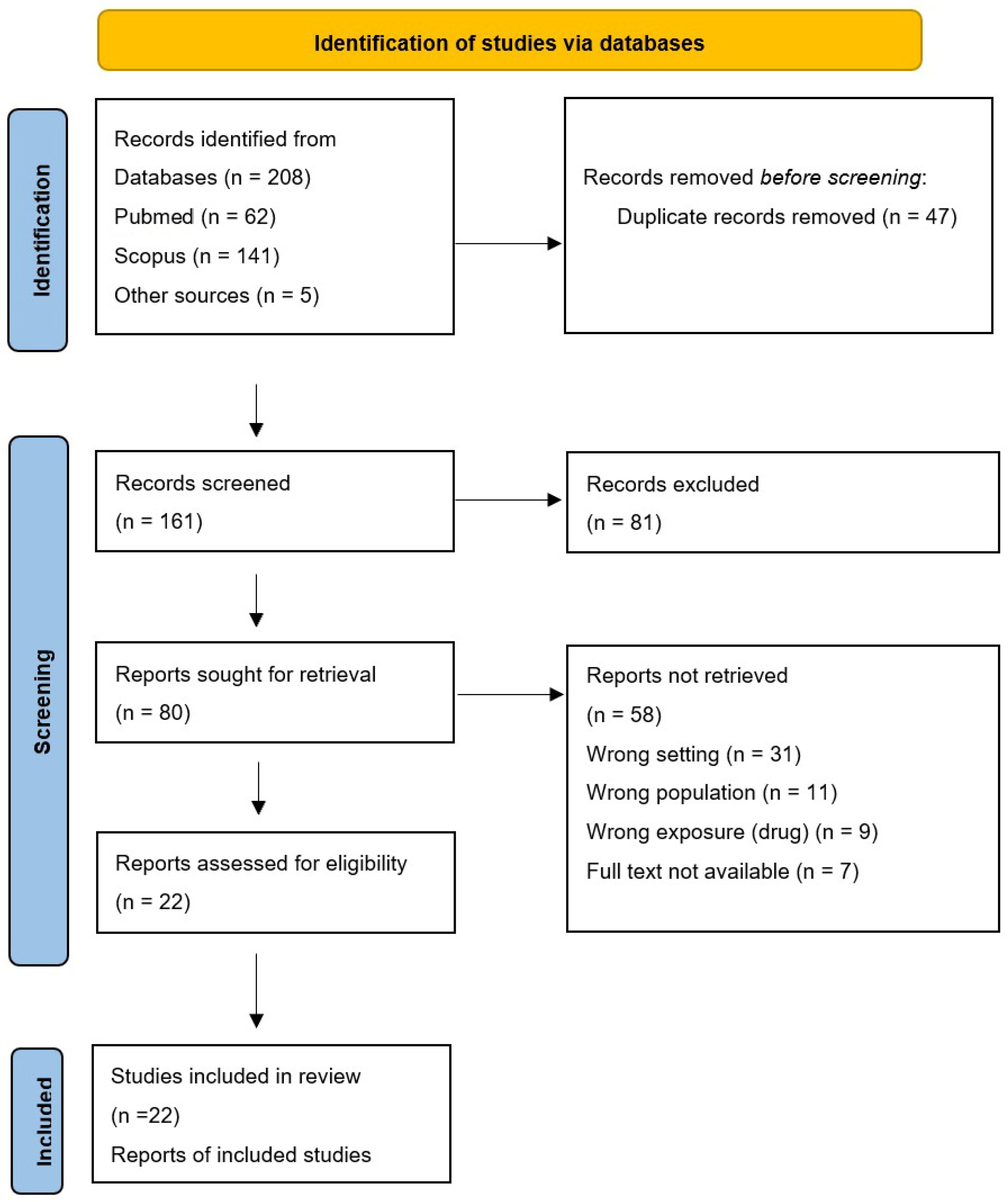
The literature search identified a total of 208 records through database searching in PubMed and Scopus. Five additional records were identified through manual searches of guidelines or the grey literature that met the inclusion criteria. After removal of 47 duplicate records, 161 unique records remained and were screened based on titles and abstracts.
Following the initial screening, 80 full-text articles were assessed for eligibility. All records were assessed for inclusion criteria. Consequently, 22 studies were included in the final scoping review. The study selection process is illustrated in Figure 1, in accordance with the PRISMA extension for scoping reviews (PRISMA-ScR).

3.2. Contamination Patterns Across Settings

The surface contamination with ADs was always recorded in all the reviewed studies irrespective of their geographical area or types of facilities [8,9,14]. This widespread result was not only reported to be present in the controlled conditions like hospital pharmacies and biological safety cabinets but also within outpatient units, patient-care areas, and high-touch surfaces where both patients and staff interacted [8,37]. This type of finding reflects a universal and an endemic issue which cuts across institutional boundaries and reaffirms the ubiquity of occupational risks of exposure within the boundaries of oncological care. The contamination was found in different settings, as hospital pharmacies, places of preparations, outpatient units, or even public or patient-care areas [9,37]. Cyclophosphamide, ifosfamide, and methotrexate became the most widespread agents that were detected as frequently as possible as a marker drug to monitor the environment [9,14,16]. Some of them contained higher amounts of contamination compared to international guidance values of 100 pg/cm2, and this indicates the presence of residues despite laid down control methods [15]. Table 1 summarizes the main findings of surface contamination.
Figure 1. PRISMA-ScR flowchart.
Safety 12 00031 g001
Table 1. Surface contamination by antineoplastic agents.
StudyCountrySettingDrugs TestedFindingsKey Notes
Botha et al. (2025) [8]South
Africa
6 oncology pharmaciesCP, ifosfamide, methotrexate, 5-FU + others (9 total)5-FU most common; contamination persisted post-cleaning, especially in SP1; CP and ifosfamide detected in staff urineFirst report from LMIC; highlights poor cleaning efficacy
Li et al. (2025) [38]China16 healthcare institutionsCP, gemcitabineMedian contamination up to 36.61 ng/cm2 (CP); higher levels in ward-based preparation areas; contamination concentrated on BSCs and preparation tables; cleaning reduced but did not eliminate residuesHigher contamination without BSCs; preparation volume correlated with contamination
Portilha-Cunha et al. (2025) [15]PortugalTertiary hospital13 drugsLow contamination overall, but CP > 957 pg/cm2 in 4 locationsIncomplete decontamination despite standardized cleaning
Woodward et al. (2024) [17]Australia4 hospitals10 drugs
10 cytotoxic drugs (including ifosfamide, CP, methotrexate)
All hospitals had measurable contamination; ifosfamide most frequent; no significant difference with CSTDsCSTDs reduced but did not eliminate contamination; reinforce need for consistent cleaning
Sottani et al. (2022) [39]ItalyPharmacy areas and patient care unitsCP, 5-FU, gemcitabine, platinum compounds59% positive wipe samples in patient care units vs. 44% in pharmacies; highest surface concentrations for 5-FU; contamination detected across all yearsMulticenter (9 hospitals); 5-year longitudinal monitoring (8288 measurements)
Walton et al. (2020) [9]USAInpatient
oncology units
CP, etoposide61% of surfaces contaminated, including toiletsDemonstrates contamination beyond preparation areas
Chauchat et al. (2019) [14]Canada83 centres
(pharmacy + patient care)
10 drugsCP on 36% of surfaces; armrests and hoods most contaminatedLarge-scale multicenter contamination study
Chaffee et al. (2019) [37]USAOutpatient pharmacy
(simulated)
CPCounting trays exceeded 1 ng/cm2 after 3 prescriptionsHighlights risk in oral chemo dispensing
Salch et al. (2019) [40]USA338 hospital pharmaciesCP, ifosfamide, 5-fluorouracil, docetaxel, paclitaxelContamination predominantly in preparation areas but also in non-preparation locations; higher contamination at initial wipe events; reduced contamination with CSTD use, but not eliminatedLarge multicenter dataset (5842 wipes); demonstrates persistence of contamination despite engineering controls; persistent residues
Hon et al. (2013) [23]CanadaHospital medication system (pharmacy, transport, administration, waste)CPContamination detected across all stages; highest levels during preparation (GM 0.019 ng/cm2; max 26.1 ng/cm2)438 wipe samples; widespread contamination on frequently touched surfaces
Bussières et al. (2012) [24]Canada25 hospitals (pharmacy + patient care areas)CP, ifosfamide, methotrexateAll hospitals had ≥1 positive sample; 52% CP, 20% ifosfamide, 3% methotrexate; contamination detected in preparation and patient-care areasMulticenter Canadian study; no CSTD use; highlights widespread contamination across the medication-use process
Valero-García et al. (2018) [41]Spain10 hospital pharmacies (compounding areas)CP, ifosfamide, 5-fluorouracilAll hospitals had positive samples; 49% CP, 23% ifosfamide, 10% 5-FU; highest contamination on cabinet airfoils and floors in front of cabinetsMulticentric European study; contamination variability between centres; no association with number of preparations
Touzin et al. (2008) [16]CanadaHematology–oncology
pharmacy
CP, ifosfamide, methotrexateContamination increased post-refit; ifosfamide highestPersistence after structural renovation
5-FU refers to 5-fluorouracil; CP refers to cyclophosphamide; CSTD stands for closed-system transfer device; LMIC denotes low- and middle-income country; SP1 designates Study Pharmacy 1.
As shown in Table 1, surface contamination appears with detectable levels found on both preparation and patient-contact surfaces. Chauchat et al. (2018) reported contamination of 36% of sampled surfaces in 83 Canadian centers, with armrests and biological safety cabinets having the greatest contamination levels [14]. Similarly, Bussières et al. (2012) conducted a multicenter study in 25 Quebec hospitals and found that all institutions had at least one surface sample positive for cyclophosphamide, ifosfamide, or methotrexate [24]. Contamination was detected in both pharmacy and patient-care areas, including biological safety cabinet grilles, validation counters, armrests, floors, and exterior drug containers, reinforcing the widespread nature of surface contamination across the medication-use process [24]. Equally, the findings of Touzin et al. (2008) in a hematology–oncology pharmacy observed that there was continuing contamination despite the facility renovation, with the concentrations of ifosfamide rising, which was an indication of recontamination due to structural or workflow factors [16]. Walton et al. (2020) also found residues of cyclophosphamide and etoposide in a variety of locations, such as IV poles, toilets, and doorknobs, indicating that the contamination does not just happen in the area of compounding but spreads to patient-care environments [9]. Hon et al. (2013) reported detectable cyclophosphamide contamination on frequently touched surfaces throughout all stages of the hospital medication system, from drug delivery to waste disposal [23]. Based on 438 surface wipe samples, contamination was most pronounced during the drug preparation stage, which showed the highest levels (geometric mean 0.019 ng/cm2; maximum 26.1 ng/cm2) [23]. Chaffee et al. (2019) also discovered that in simulated outpatient dispensing settings, trays holding over 1 ng/cm 2 of cyclophosphamide post-three fill orders were relatively easy to contaminate, thus illustrating the ease of contamination during routine dispensing [37]. Valero-García et al. (2018) conducted a multicentric study in ten Spanish hospital pharmacies and confirmed the presence of hazardous drugs in all participating centers [41]. Surface contamination was detected for cyclophosphamide, ifosfamide, and 5-fluorouracil in 49%, 23%, and 10% of samples, respectively, with the highest levels observed on biological safety cabinet airfoils and floors in front of compounding cabinets [41]. Significant variability was observed between hospitals and sampling locations, and no association was found between contamination levels and the number of preparations, highlighting the need for standardized compounding and decontamination practices.
In a large multicenter analysis, Salch et al. (2019) evaluated contamination data from 5842 surface wipe samples collected over six years in 338 hospital pharmacies and identified detectable contamination for cyclophosphamide, ifosfamide, 5-fluorouracil, docetaxel, and paclitaxel [40]. Higher contamination levels were observed during initial wipe events compared with subsequent monitoring, and contamination was also detected in areas not directly involved in drug preparation [40]. Although the use of CSTDs was associated with significantly lower contamination levels, residues were not completely eliminated.
In a long-term multicenter monitoring program, Sottani et al. (2022) assessed surface contamination by ADs in nine Italian hospitals over a five-year period (2016–2021), generating 8288 environmental measurements [39]. Positive wipe samples were more frequent in patient care units than in pharmacy areas (59% vs. 44%), while dermal pad samples showed higher positivity in pharmacies (24% vs. 10%) [39]. Cyclophosphamide, gemcitabine, 5-fluorouracil, and platinum compounds were consistently detected, with 5-fluorouracil presenting the highest surface concentrations despite a lower frequency of positive samples [39]. Although contamination levels remained detectable across all settings, a decreasing trend over time was observed.
Persistent residues were also observed after cleaning procedures. Botha et al. (2025) found that despite standard cleaning, contamination persisted in South African pharmacies, with (5-FU) being the most common agent detected and urinary biomarkers of exposure found among staff [8]. Likewise, Portilha-Cunha et al. (2025) reported cyclophosphamide levels up to 957 pg/cm2, exceeding the international technical guidance value of 100 pg/cm2, even after daily cleaning routines [15]. All these results prove the fact that surface contamination is systematic, including preparation, administration, and waste-handling sections, and that validated cleaning procedures and systematic environmental monitoring as well as continuing occupational safety education are needed.
More recently, Li et al. (2025) [38] reported surface contamination with cyclophosphamide and gemcitabine in 16 healthcare institutions in China, based on 659 wipe samples collected in pharmacy intravenous admixture services and ward-based preparation rooms. Median contamination levels reached up to 36.6 ng/cm2 for cyclophosphamide, with higher concentrations observed on biological safety cabinets and preparation tables [38].

3.3. Methods for Monitoring and Detection of Antineoplastic Drugs

Monitoring practices varied substantially between studies, particularly regarding sampling frequency and analytical technique. Most relied on LC—MS/MS, the quantitative gold standard, while a few used gas chromatography–tandem mass spectrometry (GC-MS/MS) or emerging immunoassay-based rapid tests. A detailed summary of the monitoring methods, detection limits, and analytical characteristics of each study is presented in Table 2.
LC—MS/MS remains the reference analytical method globally for the accurate quantification of surface contamination, as consistently reported across multiple studies and reviews [9,14,16,23,45]. The need to have laboratory facilities and the time lag in receiving the results, however, restrict its use as a real-time risk management tool.
Recent analytical advances have expanded LC—MS/MS-based wipe sampling beyond single-compound approaches. Lema-Atán et al. (2022) developed and fully validated a multianalyte LC—MS/MS method for the simultaneous determination of twelve cytostatic drugs on work surfaces and in urine, enabling integrated assessment of environmental and biological contamination [44]. The method achieved very low limits of detection for surfaces (5–100 pg/cm2) using calibration procedures that account for sampling and extraction efficiency, thereby improving the accuracy and comparability of occupational exposure assessments [44].
Hon et al. (2013) further strengthened wipe sampling methodology by employing repeated measurements over time and by appropriately handling values below the limit of detection without reliance on substitution methods, thereby improving the accuracy of low-level contamination estimates [23].
Surface wipe sampling was the predominant approach used to assess environmental contamination by ADs across the reviewed studies. A standardized methodological framework for wipe sampling has been described by Connor et al. (2016) [45] outlining key elements such as sampling strategy, surface area selection, wipe materials, extraction efficiency, and analytical performance parameters. Within this framework, LC—MS/MS was identified as the preferred analytical technique due to its high sensitivity and specificity [45].
While Connor et al. (2016) [45] provided a conceptual and methodological foundation for surface wipe sampling in healthcare settings, Demircan Yildirim and Ekmekci (2022) translated these principles into practice by validating a multicomponent RP-UHPLC method compliant with ICH Q2 (R1) [43]. Their method achieved limits of detection ranging from approximately 0.04 to 0.13 ng/cm2 across seven ADs, strengthening the reliability, sensitivity, and comparability of environmental monitoring data in occupational exposure assessments [43].
Building on earlier methodological recommendations, Arnold et al. (2022) used simulation modeling based on longitudinal wipe sampling data from nine cancer centers to evaluate the efficiency of different sampling strategies [42]. The authors demonstrated that the use of sentinel surfaces combined with a multi-drug panel (≥3 ADs) markedly increased detection probability, achieving >99% likelihood of identifying contamination when five sentinel surfaces were sampled semi-annually [42]. The study further proposed the use of drug-specific hygienic guidance values (HGVs), derived from 90th percentile surface concentrations (e.g., 0.031 ng/cm2 for cyclophosphamide), as quantitative benchmarks for surveillance and continuous improvement programs [42].
Earlier analytical work by Turci et al. (2003) [47] demonstrated that HPLC—MS/MS and GC—MS enable the detection of ADs residues on surfaces at low ng/cm2 and, in some cases, pg/cm2 levels, depending on the compound and analytical approach. Reported limits of detection ranged from approximately 0.01 to 0.1 ng/cm2 for cyclophosphamide and ifosfamide, while higher limits were observed for 5-fluorouracil [47]. These findings provided the analytical foundation for subsequent environmental wipe sampling studies in healthcare settings.
Rapid immunoassay-based tools have been successfully implemented in Spanish hospital settings, enabling immediate feedback and facilitating targeted decontamination [18]. Similar rapid monitoring approaches are being explored in Portuguese healthcare environments to strengthen contamination surveillance and improve intervention timelines [15]. Nevertheless, validation studies have shown reduced sensitivity for certain agents particularly cyclophosphamide, highlighting the complementary, rather than substitutive, role of these rapid detection systems [32].
Emerging multiplex immunoassay platforms such as the Fluorescence Covalent Microbead Immunosorbent Assay (FCMIA) allow simultaneous detection of multiple ADs at sub-ng/cm2 levels, offering a feasible, low-cost alternative for routine screening [46].
Current international guidelines, including USP <800> ISOPP Standards, NIOSH, and the Canadian NAPRA (National Association of Pharmacy Regulatory Authorities) Model Standards for Pharmacy Compounding of Hazardous Sterile Preparations, all emphasize the importance of periodic surface wipe sampling typically conducted annually or following procedural or engineering changes to verify contamination control and ensure ongoing occupational safety in hazardous drug handling areas [4,10,48,49].

3.4. Cleaning and Decontamination Strategies

Cleaning and decontamination protocols were inconsistent across facilities, with efficacy depending on the type of surface, the cleaning agent used, and the frequency of application. Table 3 summarizes the evidence from studies assessing the effectiveness of various cleaning strategies for ADs residues.
Experimental evidence from automated compounding systems further confirms that, although oxidizing and surfactant-based agents achieve high removal efficiencies (>95%), none completely eliminate ADs residues, particularly on porous surfaces such as aluminum [52].
Agents containing oxidizing compounds (e.g., sodium hypochlorite and hydrogen peroxide) or surfactant/alcohol blends achieved the highest removal efficiencies, often exceeding 90%, but still left detectable residues. Recent studies also confirmed that 0.5% sodium hypochlorite and anionic surfactant/alcohol mixtures such as sodium dodecyl sulfate (SDS 10−2 M + isopropanol 80/20) consistently achieve the greatest overall removal efficiency—up to 99–100% under optimal wiping conditions—whereas 70% isopropanol alone remains largely ineffective [15,29,55]. Bláhová et al. (2021) systematically evaluated the efficiency of nine commonly used hospital disinfectants against multiple ADs under both laboratory and real hospital conditions [51]. Chlorine-based and peracetic acid disinfectants achieved the highest removal efficiencies, frequently exceeding 90–99%, whereas hydrogen peroxide-based products showed only moderate effectiveness, particularly against cyclophosphamide [51]. Importantly, alcohol-based disinfectants not only failed to remove persistent residues but mobilized deeply embedded contamination from floor materials, resulting in transient increases in surface levels of cyclophosphamide and 5-fluorouracil [51]. These findings highlight cyclophosphamide as the most persistent and problematic contaminant and demonstrate that disinfectant choice can critically influence occupational exposure risk. Similarly, Queruau Lamerie et al. (2013) and Adé et al. (2017) showed that vigorous mechanical action and multi-step cleaning significantly enhance residue removal, while single-pass applications or pre-wetted wipes are insufficient [53,55]. In addition, Cox et al. (2016) demonstrated that a two-step decontamination system combining a quaternary ammonium solution with isopropanol achieved near-complete removal of multiple ADs across pharmacy and nursing unit surfaces, outperforming sodium hypochlorite-based products and routine institutional cleaning protocols [54].
Evidence from real-world patient-care environments was also reported. Walton et al. (2024) assessed routine and discharge cleaning practices in patient bathrooms and observed a significant reduction in etoposide contamination on toilets after discharge cleaning [50]. In contrast, no statistically significant reduction in cyclophosphamide contamination was observed on floors or walls. Despite the use of bleach-based products during discharge cleaning, cyclophosphamide contamination remained detectable on 43 of 96 sampled surfaces.
Several studies incorporated post-cleaning surface wipe sampling, enabling direct assessment of decontamination efficacy under routine and discharge cleaning conditions, including pre- and post-cleaning comparisons in both controlled and patient-care environments [8,15,29,31,54].
These frameworks also recommend routine surface contamination monitoring (at least every six months) and regular staff training to verify and maintain effective contamination control [10,12].

4. Discussion

These findings are consistent with previous multicenter monitoring studies, such as those by Chauchat et al. (2019) and Touzin et al. (2008), which demonstrated measurable contamination in both pharmacy compounding areas and patient-care environments [14,16]. Similarly, Walton et al. (2020) and Chaffee et al. (2018) observed cytotoxic residues on unexpected surfaces including door handles, toilets, and counting trays, underscoring that contamination extends beyond controlled preparation zones [9,37].
Despite published guidance on the subject over decades and the improvement of engineering controls like biological safety cabinets or the development of CSTDs, which can reduce contamination levels, residues of key marker drugs, such as cyclophosphamide, ifosfamide and methotrexate, are often detectable on surfaces [8,14,15,17]. Poor adherence to best practices, inconsistency in cleaning regimes across institutions, and a low level of effectiveness of alcohol-based disinfection alone contribute to the persistent presence of surface contamination in healthcare settings [15,53,55].

4.1. Overview and Key Findings

Surface contamination by ADs remains a persistent occupational health concern worldwide [8,9,15,17,37]. Measurable residues were identified on a wide variety of surfaces, including preparation benches, infusion chairs, and even patient-contact areas such as armrests and toilets [8,9,14]. Cyclophosphamide, ifosfamide, and methotrexate were the most frequently detected marker drugs [16,17]. Persistent residues even after cleaning reinforce that current cleaning protocols are insufficient to fully remove cytotoxic contamination [8,15].
These outcomes emphasize institutional shortcomings in contamination management, which extends beyond the practices of handling but also the environmental hygiene, surface materials, and workflow design [15,16]. Surface contamination control is deeply influenced by environmental hygiene standards, the physical characteristics of work surfaces, and the design of pharmacy and nursing workflows [15,16]. An example would be in porous or irregular surfaces like laminate and PVC, which are more prone to retention of residues than stainless steel, especially when the cleaning agents are not applied consistently or mechanically [15,55]. Moreover, interruptions in the workflow, insufficient spatial distance between preparation and administration areas, and understaff training are also part of the recontamination cycles [8,17,55]. These structural and procedural loopholes indicate the necessity of a comprehensive contamination management approach that incorporates facility planning, which has been proven to be effective, including training of personnel and regular training.
Several studies reported contamination levels exceeding the proposed technical guidance value (TGV) of 100 pg/cm2, suggesting that existing cleaning routines and monitoring frequencies are not adequately preventing occupational exposure [56]. Higher contamination levels, particularly for cyclophosphamide and ifosfamide, have been highlighted previously, indicating that the current cleaning routines and/or the frequency of monitoring are not well in place to prevent occupational exposure [14,15,16,25]. Nevertheless, such overruns are also possible indicators of constraints of standardization and precision of methods of sampling and cleaning of samples [30,57]. The difference in wipe material, type of solvent used, the degree of wiping pressure, and area sampled may influence the recovery rates and result in underestimation of the actual contamination levels [58]. Additionally, the use of alcohol-based products alone has been found ineffective in eliminating most of the cytotoxic residues [8,15,55]. Therefore, with haphazard methodology, not only during cleaning, but also during environmental sampling, one may obtain an inaccurately low level of contamination or a concealed presence.
From an occupational health standpoint, environmental surface monitoring and verification of the effectiveness of cleaning activities are an important part of exposure prevention programs for hazardous drugs because dermal contact with contaminated surfaces is a significant means of exposure [4,10,22]. Although this review focused on environmental contamination rather than health outcomes, international guidance and occupational studies emphasize that contamination control should be integrated with administrative measures, appropriate use of personal protective equipment, and, where feasible, biological monitoring to support comprehensive exposure assessment [10,23,24,25]. Inadequate cleaning methods and inconsistent PPE use may contribute to sustained recontamination and ongoing occupational exposure, reinforcing the need for routine audits and continuous surveillance within a hierarchical risk-management framework [4,10].

4.2. Integration of Engineering Controls and Cleaning Practices

Walton et al. (2025) identified widespread contamination in patient-care environments, with residues found on floors, armchairs, IV poles, doorknobs, and even bathroom surfaces [31]. Cyclophosphamide was the most frequently detected compound, and contamination occurred regardless of PPE or CSTD use. Similarly, Portilha-Cunha et al. (2025) demonstrated that none of the six cleaning agents evaluated could completely remove all target drugs including cyclophosphamide, doxorubicin, and etoposide even when multi-step cleaning was applied [15]. These findings support the importance of validated, multi-step, and adjustable cleaning protocols tailored to each healthcare facility’s workflow.
CSTDs can significantly reduce surface contamination during drug preparation, as reported in several observational and multicenter studies, supporting guideline recommendations [58,59]. This aligns with international standards such as USP <800>, ISOPP, and NIOSH guidance, which emphasize combining engineering controls with routine environmental monitoring [10,12,22]. Regular surface wipe sampling and analytical monitoring not only provide critical insight into contamination levels but also serve as a measure of the efficacy of implemented cleaning and handling practices [14,25,31].

4.3. Monitoring and Detection Challenges

Monitoring practices varied substantially among studies, particularly in sampling frequency and analytical sensitivity (Table 2). LC—MS/MS was consistently applied as the analytical benchmark for surface contamination, providing high precision and multi-analyte quantification [9,14]. However, the requirement for laboratory infrastructure and delayed reporting (often > 72 h) limits its use for real-time risk management.
Rapid immunoassay-based tools were successfully implemented in Spanish hospital settings [18] and are being experimentally explored in Portuguese contexts [15] to complement LC—MS/MS monitoring. These devices enable near-real-time feedback and targeted cleaning, are easily transportable and user-friendly, and do not require a special laboratory infrastructure [60]. They also enable checking the effectiveness of cleaning on-site and constant quality control in hazardous drug handling facilities [33,60] However, they can have reduced sensitivity for specific agents such as cyclophosphamide, underscoring their complementary rather than substitutive role [32].
International guidelines, including USP <800> (2017), ISOPP, NIOSH, and the NAPRA uniformly recommend periodic surface wipe sampling, ideally performed annually or following procedural or engineering modifications, as an integral component of hazardous drug safety programs [4,10,12,49]. Nevertheless, even with these recommendations, there is still a sporadic application of these recommendations in the hospital setting, usually because of resource constraints, the absence of standardized analytical capabilities, and operational priorities [8,9,15]. Modifications in cleaning products, pharmacy workflow, and facility renovation may modify the dynamics of contamination and necessitate the re-validation of the monitoring plans, which is not conducted systematically [16,17]. Moreover, slowness in laboratory turnaround time and lack of a real-time feedback mechanism decrease the practical effect of wipe sampling on instant corrective action [9,14,58].

4.4. Cleaning and Decontamination Effectiveness

Agents containing oxidizing compounds such as sodium hypochlorite (NaOCl) or hydrogen peroxide (H2O2), and surfactant/alcohol blends, achieved the highest removal efficiencies (>90%) but still left detectable residues [15,53,55]. Similarly, Böhlandt et al. (2015) reported that an SDS-2P (sodium dodecyl sulfate + 2-propanol) solution outperformed alcohol wipes, achieving 89–100% removal efficiency on stainless steel and PVC [61]. Alcohol-only cleaning proved inadequate, as evidenced by Botha et al. (2025), where post-cleaning contamination reduction was only 17.4% [8].
Direct disinfectant application to dirty surfaces instead of interacting with pre-wetted wipes enhanced cleaning effectiveness to a great extent [15]. However, differences in cleaning performance among studies highlight the importance of standardized and validated decontamination procedures, employee training, and routine verification using wipe samples. NIOSH and ISOPP identify that a medical organization should put down cleaning rules, justify the selection of products, and regularly check the performance audit to maintain control over contamination [4,10].
The observed inconsistencies in the facilities are indicative of a larger inconsistency in the international harmonization of practices in hazardous drug surface control. Despite a rather high level of efficacy, shown by oxidizing and surfactant-based agents, the fact that residues remain suggests that the current practice is not entirely in line with the requirements of a set of global standards, including USP <800>, NIOSH, ISOPP, and Occupational Safety and Health Administration (OSHA) [10,12,22,33].
Table 4 summarizes this recommended procedural hierarchy.
Following this four-stage framework, it is critical to avoid the inappropriate use of unverified or overly concentrated oxidizing agents, as these may damage surfaces or generate harmful fumes. Therefore, the selection of validated cleaning products, surface compatibility testing, and documentation through quality audits are key components of safe and effective contamination control [10,12,22,33].
An additional aspect that warrants consideration is the potential occupational impact of the cleaning and decontamination agents themselves. While oxidizing compounds such as sodium hypochlorite and hydrogen peroxide consistently demonstrate higher removal efficiencies for ADs residues, their frequent or improper use has been associated with adverse effects including respiratory irritation, skin sensitization, and occupational asthma [63,64,65]. This introduces an important risk–benefit balance in contamination control, whereby the health risks related to chronic low-level exposure to residual cytotoxic drugs must be weighed against those arising from repeated exposure to aggressive chemical disinfectants. Although none of the included studies directly assessed this comparison, international guidance highlights the need to optimize decontamination efficacy while minimizing secondary occupational exposures through appropriate product selection, ventilation, surface compatibility assessment, and staff training [10].

4.5. Policy and Occupational Health Implications

The persistent detection of surface contamination highlights the systemic need for harmonized contamination thresholds, validated cleaning protocols, and routine environmental audits, supported by international standards that promote a hierarchical control model integrating engineering measures, administrative procedures, and appropriate use of personal protective equipment [4,10,66]. The automation on drug preparation process, as well as the systematic occupational surveillance (environmental and biological) are seen as ways to reducing the risk of contamination [67], as well as regular and periodic training reinforcement [10,22].
Integrating such values into existing frameworks (USP <800>, ISOPP, NIOSH) could strengthen evidence-based policy, harmonize assessment practices, and enable data-driven risk mitigation [10,22,56].

4.6. Limitations and Future Research

This scoping review presents limitations that should be acknowledged. First, despite a comprehensive search strategy across different sources, the inclusion of only studies published in English, Portuguese, Spanish, and French may have excluded relevant evidence published in other languages. Second, the heterogeneity of study designs, contamination thresholds, sampling frequencies, and analytical methods limited direct comparison across studies and precluded quantitative synthesis. The majority of studies focused on a limited set of substances (e.g., cyclophosphamide, ifosfamide, methotrexate), while other commonly used ADs remain underrepresented. Finally, potential publication bias cannot be excluded, as negative or non-significant findings may be less likely to be reported.
Few studies have simultaneously evaluated environmental pollution and biological exposure, which is a considerable gap in risk characterization [8]. Further studies should thus aim at creating general cleaning formulations that have been proven to be effective on a variety of surface materials and ADs classes. It is also important to enhance sensitivity and specificity of rapid on-site tools of detection to determine low concentration residues with greater efficiency. The inclusion of environmental and biomonitoring data would give a better view of the correlation between surface and internal exposure to contamination in healthcare workers. Moreover, the creation of standardized reporting structures and set harmonized TGVs would ease international benchmarking and enhance the administration of occupational safety throughout healthcare systems. All in all, this review helps to sum evidence to the harmonization of monitoring and controlling the occurrence of antineoplastic surface contamination in healthcare settings.
Comparative studies on the effectiveness of cleaning and decontamination protocols considering surface material, workflow, and environmental conditions would provide evidence-based recommendations for practice. In addition, further validation of rapid immunoassay-based detection tools is necessary to strengthen their role as complementary and fast monitoring strategies alongside LC—MS/MS. Longitudinal research linking environmental contamination levels with biological monitoring and occupational health outcomes would enhance understanding of exposure–effect relationships. Finally, future studies should explore the impact of automation in drug preparation, implementation of CSTDs, and continuous training programs on reducing surface contamination and improving healthcare worker safety.

5. Conclusions

Surface contamination by ADs is still a major problem in occupational health, and residues which are persistent are reported in the preparation, administration, and patient-care rooms. LC—MS/MS offers precise quantification with less time available to take corrective measures: fast immunoassay instruments, less sensitive, but allow measurements and specific actions on site in near real time. Cleaning and decontamination methods are heterogeneous across facilities; oxidizing and surfactant-based agents achieve the highest removal rates but do not completely remove residues.
To improve safety, the healthcare facility is recommended to use the harmonized, evidence based multi-step cleaning process, combine both environmental and biological monitoring, and invest in the ongoing training of its staff. Establishing internationally accepted contamination thresholds and aligning national guidance with international frameworks are key to consistent, auditable, and protective practices across healthcare systems.

Supplementary Materials

The following supporting information can be downloaded at: https://www.mdpi.com/article/10.3390/safety12020031/s1, Table S1: PRISMA Checklist.

Author Contributions

Conceptualization, C.M.; methodology, V.S. and C.M. validation, V.S. and C.M.; formal analysis, V.S.; investigation, V.S. and C.M.; writing—original draft preparation, V.S.; writing—review and editing, V.S. and C.M. All authors have read and agreed to the published version of the manuscript.

Funding

Associação Portuguesa de Licenciados em Farmácia (APLF) have received an unrestricted Education grant from Beckton Dickinson® for the development of the project “Portuguese recommendations for the safety of pharmacy technicians handling chemotherapy”.

Institutional Review Board Statement

Not applicable.

Informed Consent Statement

Not applicable.

Data Availability Statement

The data presented in this study are derived from previously published sources and are summarized within the article. Further inquiries can be directed to the corresponding author.

Conflicts of Interest

The authors declare no conflicts of interest.

Correction Statement

This article has been republished with a minor correction to the Supplementary Materials. This change does not affect the scientific content of the article.

References

  1. Skov, T.; Maarup, B.; Olsen, J.; Rørth, M.; Winthereik, H.; Lynge, E. Leukaemia and reproductive outcome among nurses handling antineoplastic drugs. Occup. Environ. Med. 1992, 49, 855–861. [Google Scholar] [CrossRef] [PubMed]
  2. Connor, T.H.; McDiarmid, M.A. Preventing occupational exposures to antineoplastic drugs in health care settings. CA Cancer J. Clin. 2006, 56, 354–365. [Google Scholar] [CrossRef] [PubMed]
  3. Suspiro, A.; Prista, J. Exposição ocupacional a citostáticos e efeitos sobre a saúde. Rev. Port. Saúde Pública 2012, 30, 76–88. [Google Scholar] [CrossRef]
  4. National Institute for Occupational Safety and Health (NIOSH). Preventing Occupational Exposure to Antineoplastic and Other Hazardous Drugs in Healthcare Settings; National Institute for Occupational Safety and Health (NIOSH): Cincinnati, OH, USA, 2004. Available online: https://www.cdc.gov/niosh/docs/2004-165/pdfs/2004-165.pdf (accessed on 15 November 2025).
  5. Pirot, C.; Benoist, H.; Saint-Lorant, G. Impact of lack of knowledge on risk perception and protective practices of home nurses handling antineoplastic drugs. J. Oncol. Pharm. Pract. 2023, 30, 313–321. [Google Scholar] [CrossRef]
  6. Leso, V.; Sottani, C.; Santocono, C.; Russo, F.; Grignani, E.; Iavicoli, I. Exposure to antineoplastic drugs in occupational settings: A systematic review of biological monitoring data. Int. J. Environ. Res. Public Health 2022, 19, 3737. [Google Scholar] [CrossRef]
  7. Hilliquin, D.; Tanguay, C.; Gagné, S.; Caron, N.J.; Bussières, J.-F. Cross-sectional evaluation of surface contamination with antineoplastic drugs in canadian health care centres. Can. J. Hosp. Pharm. 2019, 72, 377. [Google Scholar] [CrossRef]
  8. Botha, R.; Nelson, G.; Sessink, P.; Brouwer, D. Assessing antineoplastic drug contamination in South African oncology pharmacies: Workplace and biological monitoring. J. Oncol. Pharm. Pract. 2025, 10781552251321150. [Google Scholar] [CrossRef]
  9. Walton, A.L.; Bush, M.A.; Douglas, C.E.; Allen, D.H.; Polovich, M.; Spasojevic, I. Surface Contamination with Antineoplastic Drugs on Two Inpatient Oncology Units. Oncol. Nurs. Forum 2020, 47, 263–272. [Google Scholar] [CrossRef]
  10. International Society of Oncology Pharmacy Practitioners (ISOPP). ISOPP Standards for the Safe Handling of Cytotoxics. J. Oncol. Pharm. Pract. 2022, 28, S1–S126. [Google Scholar] [CrossRef]
  11. Connor, T.H.; Eckel, S.F.; McDiarmid, M.A.; Polovich, M.; Power, L.A. Safe Handling of Hazardous Chemotherapy Drugs in Limited-Resource Settings; Pan American Health Organization (PAHO): Washington, DC, USA, 2013.
  12. United States Pharmacopeia (USP). USP <800>: Hazardous Drugs—Handling in Healthcare Settings; The United States Pharmacopeial Convention: Rockville, MD, USA, 2017; Available online: https://www.usp.org/compounding/general-chapter-hazardous-drugs-handling-healthcare (accessed on 20 November 2025).
  13. Dugheri, S.; Bonari, A.; Pompilio, I.; Boccalon, P.; Mucci, N.; Arcangeli, G. A new approach to assessing occupational exposure to antineoplastic drugs in hospital environments. Arh. Hig. Rada Toksikol. 2018, 69, 226–237. [Google Scholar] [CrossRef]
  14. Chauchat, L.; Tanguay, C.; Caron, N.J.; Gagné, S.; Labrèche, F.; Bussières, J.-F. Surface contamination with ten antineoplastic drugs in 83 Canadian centers. J. Oncol. Pharm. Pract. 2019, 25, 1089–1098. [Google Scholar] [CrossRef]
  15. Portilha-Cunha, M.F.; Norton, P.; Alves, A.; Ribeiro, A.R.L.; Silva, A.M.T.; Santos, M.S.F. Tackling antineoplastic drugs’ contamination in healthcare settings: New insights on surface cleaning approaches. J. Occup. Environ. Hyg. 2025, 22, 386–399. [Google Scholar] [CrossRef]
  16. Touzin, K.; Bussieres, J.-F.; Langlois, É.; Lefebvre, M. Evaluation of surface contamination in a hospital hematology—Oncology pharmacy. J. Oncol. Pharm. Pract. 2009, 15, 53–61. [Google Scholar] [CrossRef] [PubMed]
  17. Woodward, V.; Panjarjian, M.; Devi, D.; Hanrahan, J.; Soriano, M.; Roper, M.; Musa, H.; Davies, S.; Samios, P.; Teh, M.; et al. Surface contamination of cytotoxic medicine in preparation and patient care areas in Australian hospitals: A retrospective cross-sectional study. J. Pharm. Pract. Res. 2024, 54, 306–313. [Google Scholar] [CrossRef]
  18. Valero-García, S.; Centelles-Oria, M.; Palanques-Pastor, T.; Vila Clérigues, N.; López-Briz, E.; Poveda Andrés, J.L. Analysis of chemical contamination by hazardous drugs with BD HD Check® system in a tertiary hospital. J. Oncol. Pharm. Pract. 2022, 28, 1583–1593. [Google Scholar] [CrossRef] [PubMed]
  19. Bouchfaa, M.; Vasseur, M.; Courtin, J.; Pinturaud, M.; Beauval, N.; Allorge, D.; Odou, P.; Simon, N. Assessment of chemical contamination by cancer drugs during use of the RIVATM compounding robot: A pilot study. J. Oncol. Pharm. Pract. 2025, 31, 1061–1070. [Google Scholar] [CrossRef]
  20. Merger, D.; Tanguay, C.; Langlois, E.; Lefebvre, M.; Bussières, J.-F. Multicenter study of environmental contamination with antineoplastic drugs in 33 Canadian hospitals. Int. Arch. Occup. Environ. Health 2014, 87, 307–313. [Google Scholar] [CrossRef]
  21. Huff, M.S.N. Hazardous Drug Administration in the Home Setting: Reducing Exposure Risks. Master’s Thesis, University of San Francisco, San Francisco, CA, USA, 2018. [Google Scholar]
  22. Hodson, L.; Ovesen, J.; Couch, J.; Hirst, D.; Lawson, C.; Lentz, T.J.; MacKenzie, B.; Mead, K. Managing Hazardous Drug Exposures: Information for Healthcare Settings; National Institute for Occupational Safety and Health (NIOSH): Cincinnati, OH, USA, 2023. [CrossRef]
  23. Hon, C.-Y.; Teschke, K.; Chu, W.; Demers, P.; Venners, S. Antineoplastic drug contamination of surfaces throughout the hospital medication system in Canadian hospitals. J. Occup. Environ. Hyg. 2013, 10, 374–383. [Google Scholar] [CrossRef]
  24. Bussières, J.-F.; Tanguay, C.; Touzin, K.; Langlois, É.; Lefebvre, M. Environmental contamination with hazardous drugs in Quebec hospitals. Can. J. Hosp. Pharm. 2012, 65, 428. [Google Scholar] [CrossRef]
  25. Ndaw, S.; Remy, A. Occupational exposure to antineoplastic drugs in twelve french health care setting: Biological monitoring and surface contamination. Int. J. Environ. Res. Public Health 2023, 20, 4952. [Google Scholar] [CrossRef]
  26. Soteriades, E.S.; Economidou, S.C.; Tsivitanidou, A.; Polyviou, P.; Lorimer, A.; Katodritis, N.; Theophanous-Kitiri, S. Environmental assessment of cytotoxic drugs in the Oncology Center of Cyprus. PLoS ONE 2020, 15, e0216098. [Google Scholar] [CrossRef] [PubMed]
  27. Borghi, F.; Zellino, C.; Zago, A.; De Vito, G.; Del Vecchio, R.L.; Cattaneo, A.; Spinazzè, A.; Cavallo, D.M. Exposure Assessment and Monitoring of Antiblastic Drugs Preparation in Health Care Settings: A Systematic Review. Med. Lav. 2024, 115, e2024012. [Google Scholar] [CrossRef] [PubMed]
  28. Yuan, Z.; Li, Q.; Tang, T.; Zhang, M.; Liu, Y.; Liu, L. Studies on the optimization of decontamination protocol for surfaces contaminated with cytotoxic drugs in PIVAS. J. Oncol. Pharm. Pract. 2023, 29, 1565–1573. [Google Scholar] [CrossRef] [PubMed]
  29. Simon, N.; Guichard, N.; Odou, P.; Decaudin, B.; Bonnabry, P.; Fleury-Souverain, S. Efficiency of four solutions in removing 23 conventional antineoplastic drugs from contaminated surfaces. PLoS ONE 2020, 15, e0235131. [Google Scholar] [CrossRef]
  30. Simon, N.; Odou, P.; Decaudin, B.; Bonnabry, P.; Fleury-Souverain, S. Efficiency of degradation or desorption methods in antineoplastic drug decontamination: A critical review. J. Oncol. Pharm. Pract. 2019, 25, 929–946. [Google Scholar] [CrossRef]
  31. Walton, A.L.; Powell, M.A.; Ledbetter, L.; Bush, M.A. A scoping review of surface wipe sampling for antineoplastic drug contamination in patient care areas. J. Occup. Environ. Hyg. 2025, 22, 495–514. [Google Scholar] [CrossRef]
  32. Hon, C.-Y. Side-by-Side Comparison of Methods for Environmental Monitoring for Hazardous Drug Contamination. Can. J. Hosp. Pharm. 2023, 76, 87. [Google Scholar] [CrossRef]
  33. Occupational Safety and Health Administration (OSHA). Controlling Occupational Exposure to Hazardous Drugs. 2023. Available online: https://www.osha.gov/hazardous-drugs/controlling-occex (accessed on 29 October 2025).
  34. Arksey, H.; O’malley, L. Scoping studies: Towards a methodological framework. Int. J. Soc. Res. Methodol. 2005, 8, 19–32. [Google Scholar] [CrossRef]
  35. Tricco, A.C.; Lillie, E.; Zarin, W.; O’Brien, K.K.; Colquhoun, H.; Levac, D.; Moher, D.; Peters, M.D.J.; Horsley, T.; Weeks, L.; et al. PRISMA extension for scoping reviews (PRISMA-ScR): Checklist and explanation. Ann. Intern Med. 2018, 169, 467–473. [Google Scholar] [CrossRef]
  36. National Institute for Occupational Safety and Health (NIOSH). NIOSH List of Hazardous Drugs in Healthcare Settings, 2024; DHHS (NIOSH) Publication No. 2025-103; U.S. Department of Health and Human Services, Centers for Disease Control and Prevention: Cincinnati, OH, USA, 2024. [CrossRef]
  37. Chaffee, B.W.; Lander, M.J.; Christen, C.; Redic, K.A. Surface contamination of counting tools after mock dispensing of cyclophosphamide in a simulated outpatient pharmacy. J. Oncol. Pharm. Pract. 2019, 25, 85–93. [Google Scholar] [CrossRef]
  38. Li, C.; Wang, S.; Wang, M.; Jing, L.; Pang, C.; Ma, N.; Dong, W. The surface contamination of hazardous drugs in different working places of healthcare facilities in shaanxi, China. J. Oncol. Pharm. Pract. 2025, 10781552251376292. [Google Scholar] [CrossRef] [PubMed]
  39. Sottani, C.; Grignani, E.; Cornacchia, M.; Negri, S.; della Cuna, F.S.R.; Cottica, D.; Bruzzese, D.; Severi, P.; Strocchi, D.; Verna, G.; et al. Occupational exposure assessment to antineoplastic drugs in nine Italian hospital centers over a 5-year survey program. Int. J. Environ. Res. Public Health 2022, 19, 8601. [Google Scholar] [CrossRef] [PubMed]
  40. Salch, S.A.; Zamboni, W.C.; Zamboni, B.A.; Eckel, S.F. Patterns and characteristics associated with surface contamination of hazardous drugs in hospital pharmacies. Am. J. Health-Syst. Pharm. 2019, 76, 591–598. [Google Scholar] [CrossRef] [PubMed]
  41. Valero-García, S.; Poveda-Andrés, J.L.; Multicenter Group for the Analysis of Hazardous Drug Contamination in Work Surfaces at Spanish Hospital Pharmacy Units. Hazardous drugs levels in compounding area surfaces of Hospital Pharmacies Services: Multicentric study. Farm. Hosp. 2018, 42, 152–158. [Google Scholar]
  42. Arnold, S.; Jeronimo, M.; Astrakianakis, G.; Kunz, M.; Petersen, A.; Chambers, C.; Malard Johnson, D.; Zimdars, E.; Davies, H.W. Developing wipe sampling strategy guidance for assessing environmental contamination of antineoplastic drugs. J. Oncol. Pharm. Pract. 2023, 29, 1816–1824. [Google Scholar] [CrossRef]
  43. Demircan Yildirim, F.; Ekmekci, I. Design of Analytical Method Validation Protocol Evaluating Environmental Monitoring of AND Contamination on Surfaces Based on Cleaning Validation Procedures: A Multi Component RP-UHPLC Method. J. Chromatogr. Sci. 2022, 60, 926–936. [Google Scholar] [CrossRef]
  44. Lema-Atán, J.Á.; Lendoiro, E.; Paniagua-González, L.; Cruz, A.; López-Rivadulla, M.; de-Castro-Ríos, A. LC–MS-MS determination of cytostatic drugs on surfaces and in urine to assess occupational exposure. J. Anal. Toxicol. 2022, 46, e248–e255. [Google Scholar] [CrossRef]
  45. Connor, T.H.; Zock, M.D.; Snow, A.H. Surface wipe sampling for antineoplastic (chemotherapy) and other hazardous drug residue in healthcare settings: Methodology and recommendations. J. Occup. Environ. Hyg. 2016, 13, 658–667. [Google Scholar] [CrossRef]
  46. Smith, J.P.; Sammons, D.L.; Robertson, S.A.; Pretty, J.R.; DeBord, D.G.; Connor, T.H.; Snawder, J.E. Detection and measurement of surface contamination by multiple antineoplastic drugs using multiplex bead assay. J. Oncol. Pharm. Pract. 2016, 22, 60–67. [Google Scholar] [CrossRef]
  47. Turci, R.; Sottani, C.; Spagnoli, G.; Minoia, C. Biological and environmental monitoring of hospital personnel exposed to antineoplastic agents: A review of analytical methods. J. Chromatogr. B 2003, 789, 169–209. [Google Scholar] [CrossRef]
  48. United States Pharmacopeia Convention. USP <797> Pharmaceutical Compounding—Sterile Preparations; United States Pharmacopeia and National Formulary (USP 42–NF 37); United States Pharmacopeia Convention: Rockville, MD, USA, 2019. [Google Scholar]
  49. National Association of Pharmacy Regulatory Authorities (NAPRA). Model Standards for Pharmacy Compounding of Hazardous Sterile Preparations; National Association of Pharmacy Regulatory Authorities (NAPRA): Ottawa, ON, Canada, 2016. [Google Scholar]
  50. Walton, A.L.; Bush, M.A.; Sung, A.D.; Powell, M.A.; Jin, H.J.; Silva, S.G.; Spasojevic, I. Assessing Etoposide and Cyclophosphamide Contamination and Current Cleaning Practices in Patient Bathrooms. Clin. J. Oncol. Nurs. 2025, 29, E52. [Google Scholar] [CrossRef] [PubMed]
  51. Bláhová, L.; Kuta, J.; Doležalová, L.; Kozáková, Š.; Krovová, T.; Bláha, L. The efficiency of antineoplastic drug contamination removal by widely used disinfectants--laboratory and hospital studies. Int. Arch. Occup. Environ. Health 2021, 94, 1687–1702. [Google Scholar] [CrossRef] [PubMed]
  52. Federici, M.; Raffaelli, J.; Paolucci, D.; Schierl, R.; Krämer, I. Efficacy of four cleaning solutions for the decontamination of selected cytotoxic drugs on the different surfaces of an automated compounding system. J. Occup. Environ. Hyg. 2019, 16, 6–15. [Google Scholar] [CrossRef] [PubMed]
  53. Adé, A.; Chauchat, L.; Frève, J.-F.O.; Gagné, S.; Caron, N.; Bussières, J.-F. Comparison of decontamination efficacy of cleaning solutions on a biological safety cabinet workbench contaminated by cyclophosphamide. Can. J. Hosp. Pharm. 2017, 70, 407. [Google Scholar] [CrossRef]
  54. Cox, J.; Speed, V.; O’Neal, S.; Hasselwander, T.; Sherwood, C.; Eckel, S.F.; Zamboni, W.C. Development and evaluation of a novel product to remove surface contamination of hazardous drugs. J. Oncol. Pharm. Pract. 2017, 23, 103–115. [Google Scholar] [CrossRef]
  55. Queruau Lamerie, T.; Nussbaumer, S.; Décaudin, B.; Fleury-Souverain, S.; Goossens, J.-F.; Bonnabry, P.; Odou, P. Evaluation of decontamination efficacy of cleaning solutions on stainless steel and glass surfaces contaminated by 10 antineoplastic agents. Ann. Occup. Hyg. 2013, 57, 456–469. [Google Scholar]
  56. Almeida-Silva, M.; Viegas, S.; Curwin, B.; Marder, M.E.; Schlüter, U. Exposure science and occupational health: Insights from ISES 2022. Front. Public Health 2024, 12, 1515173. [Google Scholar] [CrossRef]
  57. Gonzalo, N.; Rey, M.; Fontanals, S.; Quer, N.; Clopés, A.; Muñoz, C. Simultaneous determination of five cytotoxic drugs in surface wiped samples using liquid chromatography and tandem mass spectrometry for the control of environmental contamination in a comprehensive cancer centre. Int. J. Environ. Anal. Chem. 2024, 104, 2675–2690. [Google Scholar] [CrossRef]
  58. Sessink, P.; Connor, T.H.; Jorgenson, J.A.; Tyler, T. Reduction in surface contamination with antineoplastic drugs in 22 hospital pharmacies in the us following implementation of a closed-system drug transfer device. J. Oncol. Pharm. Pract. 2010, 17, 39–48. [Google Scholar] [CrossRef]
  59. Clark, B.A.; Sessink, P. Use of a closed system drug-transfer device eliminates surface contamination with antineoplastic agents. J. Oncol. Pharm. Pract. 2013, 19, 99–104. [Google Scholar] [CrossRef]
  60. Becton, Dickinson and Company (BD). BD HD Check® System—Results and Evidence; BD Medical: Franklin Lakes, NJ, USA, 2021. [Google Scholar]
  61. Böhlandt, A.; Groeneveld, S.; Fischer, E.; Schierl, R. Cleaning efficiencies of three cleaning agents on four different surfaces after contamination by gemcitabine and 5-fluorouracile. J. Occup. Environ. Hyg. 2015, 12, 384–392. [Google Scholar] [CrossRef]
  62. United States Pharmacopeia (USP). General Chapter <797>—Pharmaceutical Compounding—Sterile Preparations. 2023. Available online: https://www.usp.org/compounding/general-chapter-797 (accessed on 17 December 2025).
  63. Quinn, M.M.; Henneberger, P.K.; Braun, B.; Delclos, G.L.; Fagan, K.; Huang, V.; Knaack, J.L.S.; Kusek, L.; Lee, S.-J.; Le Moual, N.; et al. Cleaning and disinfecting environmental surfaces in health care: Toward an integrated framework for infection and occupational illness prevention. Am. J. Infect. Control 2015, 43, 424–434. [Google Scholar] [CrossRef]
  64. Dumas, O.; Wiley, A.S.; Quinot, C.; Varraso, R.; Zock, J.-P.; Henneberger, P.K.; Speizer, F.E.; Le Moual, N.; Camargo, C.A., Jr. Occupational exposure to disinfectants and asthma control in US nurses. Eur. Respir. J. 2017, 50, 1700237. [Google Scholar] [CrossRef]
  65. Pechter, E.; Rosenman, K.D. Occupational health risks associated with use of environmental surface disinfectants in health care. Am. J. Infect. Control 2016, 44, 1755–1756. [Google Scholar] [CrossRef]
  66. Direção-Geral da Saúde (DGS). 018/2012; Prevenção da Exposição Ocupacional a Medicamentos Perigosos. Direção-Geral da Saúde (DGS): Lisboa, Portugal, 2012. Available online: https://www.dgs.pt (accessed on 19 December 2025).
  67. Bhakta, S.B.; Carmine Colavecchia, A.; Coffey, W.; Curlee, D.R.; Garey, K.W. Implementation and evaluation of a sterile compounding robot in a satellite oncology pharmacy. Bull. Am. Soc. Hosp. Pharm. 2018, 75, S51–S57. [Google Scholar] [CrossRef]
Table 2. Monitoring and detection methods.
StudyMethodDetection Limit/
Sensitivity
Sampling FrequencyStrengthsLimitations
Botha et al. (2025) [8]LC—MS/MS + urinary biomonitoringNot specified (below guidance values)Pre-/post-cleaningLinks environmental and biological dataSmall sample size
Arnold et al. (2022) [42]Surface wipe sampling with probabilistic simulation modeling (LOD—and HGV-based benchmarks)LOD-based + HGV benchmarks (90th percentile)Sentinel vs. random surfaces; 2–20 surfaces; annual to monthlyEvidence-based guidance on number of surfaces, frequency, and drug panels; supports USP <800>Modeling-based; not a primary analytical validation study
Demircan Yildirim & Ekmekci (2022) [43]RP—UHPLC (method validation)LOD ~0.04–0.13 ng/cm2Laboratory validationVery low LOD; ICH-compliant; multicomponent methodMethodological study; no real-world hospital measurements
Lema-Atán et al. (2022) [44]LC—MS/MS (multianalyte; surface wipe sampling + urinary biomonitoring)5–100 pg/cm2 (surface); 5–250 pg/mL (urine)Not specified (application study)Very high sensitivity; simultaneous detection of multiple cytostatic drugs; combined environmental and biological monitoring; fully validated according to SWGTOXHigh analytical complexity; requires advanced instrumentation and expertise; not suitable for real-time feedback; variable recovery depending on compound and matrix
Valero-García et al. (2021) [18]Immunoassay (BD HD Check®) + LC—MS/MS≥100 pg/cm2RoutineRapid on-site detection; immediate interventionSemi-quantitative method; comparison with LC—MS/MS not performed
Walton et al. (2020) [9] LC—MS/MSNot specifiedEnd of workdayHigh sensitivity; comprehensive mappingDelayed feedback
Chauchat et al. (2018) [14]LC—MS/MS≈10 pg/cm2Once per facilityHigh precision; multi-analyte quantificationRequires lab infrastructure
Connor et al. (2016) [45]Surface wipe sampling framework + LC—MS/MSMethod-dependent (pg–ng/cm2 range reported across studies)Not applicable (methodological review)Reference methodological framework; standardizes sampling design, analytical performance, and interpretationNo primary contamination data; not designed for exposure quantification
Smith et al. (2016) [46]Fluorescence Covalent Microbead Immunosorbent Assay (FCMIA) for 5-fluorouracil, paclitaxel, doxorubicin0.0036–0.93 ng/cm2 (drug-dependent)Single test on glazed ceramic tiles (100 cm2)Simultaneous detection of multiple drugs; rapid, low-cost, semi-quantitative; minimal operator training requiredRecovery varied by compound and surface; limited to 3 drugs; validation on limited surfaces
Hon et al. (2013) [23]LC—MS/MSLOD: 0.356 ng/wipe (0.00–0.049 ng/cm2, surface-adjusted)Repeated sampling (two rounds, ≥4 months apart)High analytical sensitivity; repeated measurements; use of laboratory-derived values below LOD improves exposure estimationDelayed results; single marker drug (cyclophosphamide)
Touzin et al. (2008) [16]LC—MS/MS≤1 ng/cm2Pre- and post-renovationEnables time-trend comparisonTime delay between sampling and results
Turnaround > 72 h
Turci et al. (2003) [47]HPLC—MS/MS; GC—MSCP: ~0.01–0.1 ng/cm2; IF: ~0.02–0.2 ng/cm2; 5-FU: ~0.1–1 ng/cm2Methodological reviewEstablishes analytical sensitivity; method validationNot a field study; older instrumentation
5-FU—5-fluorouracil; BD HD Check®—Becton Dickinson Hazardous Drug Check (rapid immunoassay detection device); CP—cyclophosphamide; GC—MS—gas chromatography–mass spectrometry; IF—ifosfamide; LC—MS/MS—liquid chromatography–tandem mass spectrometry; LOD—limit of detection; ng/cm2—nanograms per square centimeter; pg/cm2—picograms per square centimeter; RP—UHPLC—reverse phase ultra-high-performance liquid chromatography; SWGTOX—Scientific Working Group for Forensic Toxicology.
Table 3. Summary of studies assessing the effectiveness of cleaning and decontamination strategies for antineoplastic drug residues.
StudyCleaning Agent/ProtocolSurfaces TestedEffectivenessObservations
Portilha-Cunha et al. (2025) [15]Six commercial disinfectants—oxidizing (NaOCl, H2O2) and surfactant/alcohol-based Stainless steel, laminate, PVCNone fully effective; best >90%Higher efficacy with direct surface application and two-step cleaning
Botha et al. (2025) [8]Routine alcohol cleaningWorkbenches17.4% reduction post-cleaningDemonstrates poor protocol compliance
Walton et al. (2024) [50]Routine cleaning: bleach-based disinfectant (concentration not specified), non-bleach neutral detergents, and hydrogen peroxide-based wipes; discharge cleaning: bleach-based disinfectant wipes combined with neutral detergentToilets, floors, walls (patient bathrooms)Significant reduction of etoposide contamination on toilets; no significant reduction of CP on floors or wallsBleach used only during discharge cleaning; protocols not specific to antineoplastic drugs
Woodward et al. (2024) [17]Institutional cleaning protocol (unspecified composition)Multiple hospital areasContamination persistedHighlights need for standardization
Simon et al. (2020) [29]70% isopropanol; Ethanol-H2O2 admixture; SDS 10−2 M + IPA 80/20; 0.5% NaOClStainless steel (100 cm2)NaOCl: ~100% (52.9–100) standard; SDS + IPA: ~99.6% vigorous; IPA: ~79.9% standardVigorous wiping improved efficiency; surfactant mixture nearly equivalent to NaOCl; 70% isopropanol inadequate.
Bláhová et al. (2021) [51]Active NaOCl, peracetic acid, H2O2-based, alcohol-based, detergents, QASStainless steel (lab); hospital floors (Marmoleum)NaOCl and peracetic acid: highest removal (up to ~99–100%); H2O2: moderate; alcohols: ineffective for CPAlcohol-based disinfectants mobilized deeply embedded CP and FU, increasing surface contamination; CP highly persistent; repeated cleaning required
Federici et al. (2018) [52]0.5% NaOCl; SDS–isopropanol (0.23% SDS + IPA 80/20); 0.2% NaOH–EtOH; 0.1% benzalkonium chlorideStainless steel, aluminum, polyoxymethylene (POM), polycarbonate (PC) (robotic compounding system)81.5–100% removal; overall efficacy > 95% for all agents; NaOCl highest (~98–100%)No protocol achieved complete removal; aluminum surfaces showed lowest efficacy; cleaning performance depended on surface type and drug; residues persisted despite high efficacy
Adé et al. (2017) [53]Hydrogen peroxide and surfactant-based mixturesBenchtops>90% removal after two stepsMulti-step process required
Cox et al. (2016) [54]Two-step commercial decontamination system (HDClean™: quaternary ammonium wipe + isopropanol wipe)Biological safety cabinets, floors, countertops, keyboards, pass-through handles (pharmacy and nursing units)Near-complete removal (≈90–100%) for most drugs; non-detectable residues after repeated cleaningMore effective than sodium hypochlorite-based products and routine institutional protocols; efficacy maintained even without CSTD; platinum agents harder to remove
Lamerie et al. (2013) [55]Ultrapure water; IPA/H2O; acetone; NaOCl; surfactants (SDS, DWL, Tween 40, Span 80 ± IPA)Stainless steel, glassNaOCl ≈ 98%; surfactant + IPA ≈ 90–95%; IPA alone ≈ 80%; acetone ≈ 40%Alcohol insufficient alone; surfactant mixture better
CP—cyclophosphamide; CSTD—closed-system drug transfer device; FU—5-fluorouracil; H2O2—hydrogen peroxide; IPA—isopropyl alcohol (isopropanol); NaOCl—sodium hypochlorite; NaOH—sodium hydroxide; PC—polycarbonate; POM—polyoxymethylene; PVC—polyvinyl chloride; QAS—quaternary ammonium salts; SDS—sodium dodecyl sulfate.
Table 4. Recommended four-stage cleaning and decontamination process for hazardous drug residues.
StepPurposeRecommended AgentsReferences
1. DeactivationChemically inactivate cytotoxic compoundsSodium hypochlorite (NaOCl, 0.5–2%) or hydrogen peroxide (H2O2) solutionsUSP <800> [12]; NIOSH [22]
2. DecontaminationPhysically remove hazardous drug residues from surfacesNeutral detergents or surfactant-based solutions (e.g., SDS + IPA)ISOPP [10]; NIOSH [22]
3. CleaningEliminate dirt and residual chemical agentsGermicidal detergents compatible with surface materialsUSP <800> [12]; OSHA [33]
4. DisinfectionEnsure microbiological control after chemical decontamination70% isopropanol (IPA) following removal stepsUSP <797> [62], USP <800> [12]
H2O2—hydrogen peroxide; IPA—isopropyl alcohol (isopropanol); NaOCl—sodium hypochlorite; SDS—sodium dodecyl sulfate; ISOPP—International Society of Oncology Pharmacy Practitioners; NIOSH—National Institute for Occupational Safety and Health; OSHA—Occupational Safety and Health Administration; USP—United States Pharmacopeia.
Disclaimer/Publisher’s Note: The statements, opinions and data contained in all publications are solely those of the individual author(s) and contributor(s) and not of MDPI and/or the editor(s). MDPI and/or the editor(s) disclaim responsibility for any injury to people or property resulting from any ideas, methods, instructions or products referred to in the content.