Article

Laboratory Scale vs. Pilot Scale Recyclability Evaluation of a Brown Packaging Paper Containing Strength Additive


by
Joana C. Vieira
1,*,
Pedro Videira
1,
António de O. Mendes
1,
Paula Pinto
2,
Belinda Soares
2,
Mariana P. Costa
2,
Paulo T. Fiadeiro
1,
Joana M. R. Curto
1,
Maria E. Amaral
1,
Ana P. Costa
1 and
Vera L. D. Costa
1
1
Fiber Materials and Environmental Technologies Research Unit (FibEnTech-UBI), University of Beira Interior, R. Marquês D’Ávila e Bolama, 6201-001 Covilhã, Portugal
2
RAIZ—Forest and Paper Research Institute, R. José Estevão, Eixo, 3800-783 Aveiro, Portugal
*
Author to whom correspondence should be addressed.
Recycling 2026, 11(6), 107; https://doi.org/10.3390/recycling11060107
Submission received: 17 April 2026 / Revised: 12 June 2026 / Accepted: 16 June 2026 / Published: 17 June 2026

Abstract

Harmonized laboratory methodologies, notably the CEPI recyclability laboratory test method (latest version 3, released February 2025) and the 4evergreen protocol (latest revision 1, released January 2025), are widely used to assess the recyclability of paper-based materials. However, the extent to which laboratory-scale results reflect pilot-scale behavior remains insufficiently documented. In this work, the recyclability of brown packaging paper was evaluated at both laboratory and pilot scales. Disintegration was performed under identical consistency, temperature, and duration, followed by screening, filtrate analysis, macro-stickies quantification, and paper sheet adhesion evaluation according to the CEPI methodology. In parallel, recycled paper prototypes were produced in a pilot paper machine and were mechanically characterized. The material was classified as technically recyclable in a conventional recycling mill at both scales, with closely aligned recyclability scores. Nevertheless, pilot-scale testing revealed higher dissolved and colloidal substances, increased macro-stickies content, and sheet adhesion phenomena not fully apparent at laboratory scale. These results demonstrate that while laboratory tests are robust for recyclability classification, pilot-scale trials provide essential insights into runnability and operational risks relevant for industrial implementation.

1. Introduction

Paper and board packaging currently represents one of the most sustainable solutions within the packaging sector, driven by the increasing demand for renewable materials and by regulatory pressure to reduce the environmental footprint of packaging systems [1,2]. Paper-based materials are widely recognized as key enablers of circular economy strategies due to their renewable origin and potential for integration into low-impact packaging systems [2]. Moreover, paper-based packaging benefits from high collection and recycling rates across Europe and from a well-established recycling infrastructure, positioning it as a key material in the transition towards circular and bio-based packaging systems [1,3]. These drivers have reinforced the need to ensure that fiber-based products placed on the market are effectively compatible with existing recycling processes, thereby supporting material circularity and maximizing fiber recovery.
To address this challenge, harmonized and robust methodologies have been developed to assess the recyclability of paper-based products in a consistent and comparable manner. In this context, the Confederation of European Paper Industries (CEPI), in collaboration with the 4evergreen alliance, established a harmonized laboratory recyclability test method that provides a standardized framework for evaluating the recyclability of paper and board products [4,5]. The most recent version of this methodology, published in February 2025, translates the key stages of a conventional paper recycling mill into a laboratory-scale protocol, including the disintegration of the cellulose-based product, coarse and fine screening, filtrate analysis (e.g., chemical oxygen demand), macro-stickies quantification, and the formation and evaluation of new paper sheets [4,5,6]. This methodology is widely used to support recyclability claims, eco-design strategies, and regulatory compliance, and it forms the technical basis for the recyclability assessment.
Despite its robustness and wide acceptance, the CEPI methodology is inherently conducted under controlled laboratory conditions. However, the effective recyclability of cellulose-based materials depends on multiple interacting factors, including chemical composition, presence of functional additives, contaminants, fiber morphology, and process conditions [7,8,9]. These factors may lead to significant differences in material behavior when the scale of operation changes. Strength agents and adhesive systems are known to influence disintegration efficiency, dissolved and colloidal substances, macro-stickies formation, and sheet adhesion, which are critical parameters in both recycling and papermaking operations [10,11,12].
Pilot-scale testing represents an intermediate step between laboratory and industrial scales and introduces operational variability that is closer to real mill conditions. Parameters such as larger sample volumes, continuous flow regimes, residence time distribution, hydrodynamic shear, and fiber heterogeneity can significantly influence recycling performance, sheet quality, and machine runnability [12,13,14]. Previous studies have highlighted that pilot-scale trials are essential to bridge the gap between laboratory assessments and industrial reality, particularly when evaluating fiber-based materials incorporating functional additives or designed to replace less recyclable packaging solutions [8,12,13,14]. These scale-dependent effects are central to the interpretation of the mechanical performance, stickies behavior, and process runnability limitations.
Based on this premise, the present study proposes a systematic comparison between laboratory-scale recyclability assessment, as defined by the CEPI methodology, and pilot-scale disintegration and papermaking using a pilot pulper and pilot paper machine. An industrial brown packaging paper was selected as a representative case study. The objective was to evaluate whether recyclability classifications obtained at laboratory scale remain consistent when the processing scale is increased, while simultaneously analyzing process-relevant indicators such as macro-stickies formation, sheet quality, mechanical performance, and operational runnability. The knowledge generated by this work is essential to support the practical viability of recycling processes and to guide the development of new paper-based packaging solutions that maintain material circularity, contribute to higher fiber recovery, and align with the European Union Packaging and Packaging Waste Regulation (PPWR) target of 100% recyclable packaging by 2030 [15], which requires that packaging is not only technically recyclable but also compatible with existing industrial recycling systems at scale.

2. Results

2.1. CEPI Methodology (Recyclability Laboratory Test Method Part I—Recycling Mill with Conventional Process)

Table 1 presents the main steps and results for the CEPI methodology, as it transitions from laboratory scale to pilot scale.
In addition to the overall quantitative determination of macro-stickies (MS), their size distribution was evaluated based on predefined area classes to provide further insight into their morphology and potential process implications. As shown in Table 2, macro-stickies at laboratory scale were either absent or limited to the smallest size class (C1), indicating minimal contamination. In contrast, pilot-scale samples exhibited a significant increase in MS content, mainly concentrated in the smaller size classes (C1–C2), suggesting enhanced fragmentation and dispersion under higher energy conditions.
Both laboratory-scale and pilot-scale assessments classified the brown packaging paper as technically recyclable in a conventional recycling mill. Recyclability scores obtained at the two scales were closely aligned. However, pilot-scale disintegration resulted in higher levels of DCS and COD, as well as substantially higher MS content.

2.2. Production of Two Pilot Papers

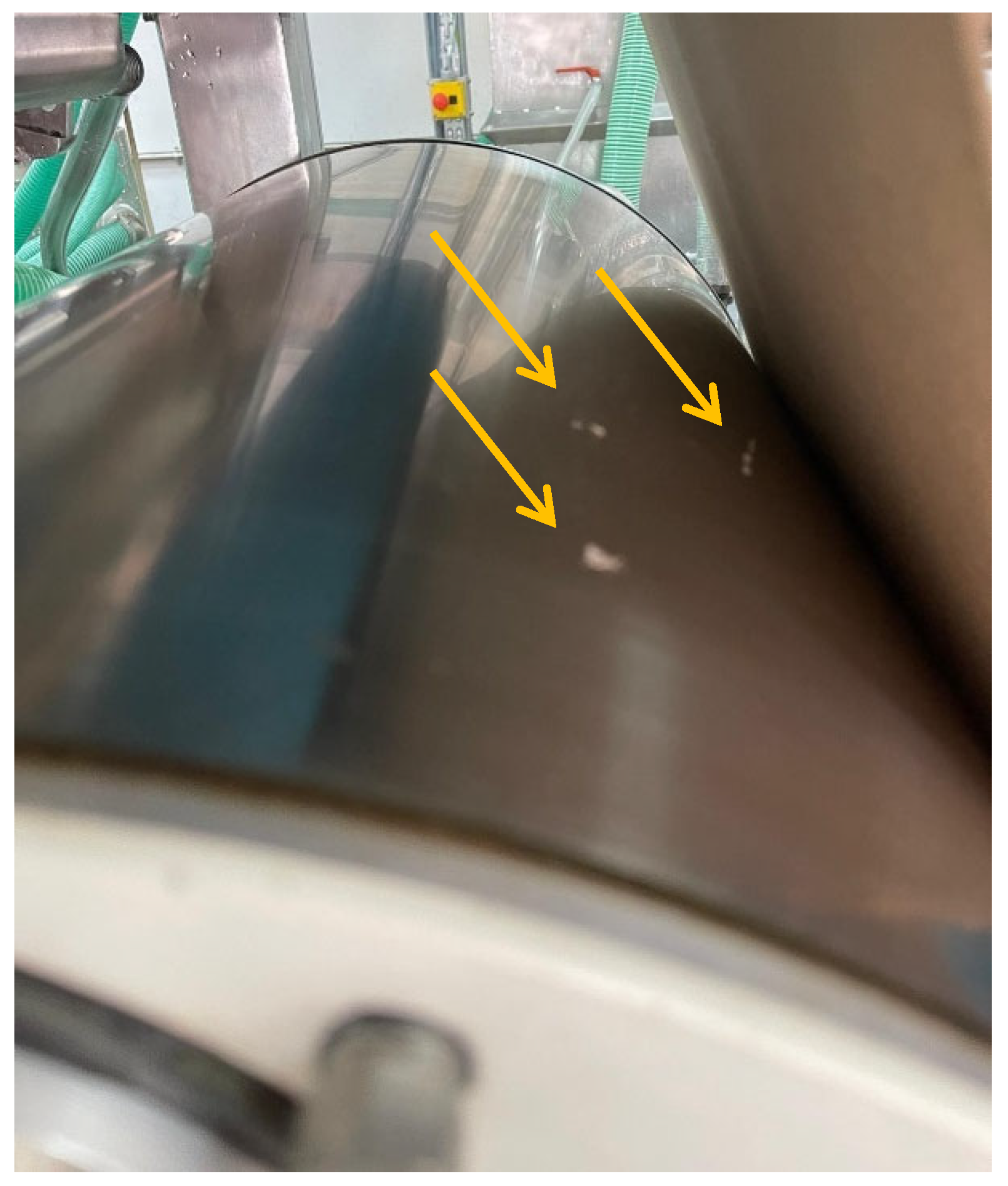
During pilot papermaking, a slight sheet adhesion to the first dryer cylinder was observed during exploratory trials conducted at higher machine speeds (3–5 m/min), exceeding those used for the production of Prototype 1 and Prototype 2, close to the operational limits of the pilot machine. This adhesion occurred when the paper sheet had the highest moisture content and was manifested as localized fiber accumulation on the cylinder surface. Although no major sheet breaks were observed, this effect limited runnability and prevented stable operation at these higher speeds. Figure 1 shows a photograph that documents this occurrence. The yellow arrows in Figure 1 indicate fiber clusters that adhered to the surface of the first drying cylinder.

2.3. Characterization of the Original Paper and the Two Pilot Papers Produced

The characterization began with a study of the volatile solids content for the three paper samples under analysis (Original Paper, Prototype 1, and Prototype 2), according to ISO 1762 [16] and in triplicate. Table 3 shows the results of the volatile solids content obtained for the three paper samples under study.
The ashes exhibited a characteristic white hue, indicating the validity of the test, as they incinerated slowly along the heating ramp. In general, the values obtained for the volatile solids content of the papers under study meet the European standards NP EN 13432 [17] and EN 14995 [18], with contents exceeding 50%.
Internal bond strength was determined using the Scott bond method according to ISO 16260 [19]. Table 4 shows the results obtained for the three paper samples studied.
Regarding the mechanical properties of the two prototypes and the original paper under study, three different tests were carried out: the tensile test, where the tensile index, elongation, Young’s modulus, and Tensile Energy Absorption (T.E.A.) index were determined; the burst test, where the burst index was determined; and the tear test, where the tear index was determined.
The study of tensile strength properties was carried out on a universal mechanical testing machine, in accordance with ISO 1924-2 [20]. Table 5 shows the results obtained for the three target samples in the machine direction (MD), and Table 6 shows the results for the same test in the cross direction (CD).
The burst test was conducted on a burst test machine, which operates on the Mullen principle, in accordance with ISO 2758 [21]. Table 7 shows the results obtained in the burst test for the three paper samples under study.
The tear test was performed on the Elmendorf testing machine, in accordance with ISO 1974 [22]. Table 8 shows the results obtained in the tear test for the three paper samples under study, in MD and CD.
Mechanical testing showed the expected reductions in tensile, bursting, and internal bond strengths for recycled paper compared with the original material, while tearing resistance exhibited higher variability.

3. Discussion

3.1. CEPI Recyclability Laboratory Test Method Part I—Recycling Mill with Conventional Process

It should be emphasized that the laboratory and pilot disintegration processes are not directly equivalent in terms of specific energy input. The significantly higher energy applied at pilot scale reflects the inherent differences in equipment design and operating conditions, and therefore the results should be interpreted as scale-dependent rather than strictly comparable under identical processing conditions.
The CEPI recyclability assessment performed at both laboratory and pilot scales classified the brown packaging paper as technically recyclable in a conventional recycling mill, with high and closely aligned Technical Recyclability Scores (TRS of 99 and 97 points, respectively). This agreement confirms the robustness of the CEPI laboratory methodology as an effective screening tool [4,5,6]. The very high Total Screening Yield scores obtained at both scales (>99.7 points) showed only a negligible decrease (−0.2 points), indicating that fiber recovery remained essentially unchanged despite the scale-up, even in the presence of a strength additive, supporting earlier findings that kraft fibers can remain largely recoverable after recycling when strength systems are used at controlled levels [9,10]. Similarly, the Technical Recyclability Score decreased only slightly, from 99 to 97 points (≈2% reduction), confirming that the overall recyclability classification was not significantly affected.
Despite this overall consistency, pilot-scale disintegration led to systematically higher values of DCS, COD, and MS content compared to laboratory-scale testing. Quantitatively, ER and DCS increased moderately (both by approximately 6%), while COD showed a more pronounced rise of about 16%. In contrast, the most significant change was observed for macro-stickies (MS), which increased dramatically, from 2.2 mm2/kg at laboratory scale to 61.5 mm2/kg at pilot scale (approximately a 28-fold increase). This behavior is mainly associated with the different specific energy inputs applied in each system. While laboratory disintegration was performed at approximately 1.8 kWh/t, the pilot pulper operated at a much higher specific energy of approximately 261.9 kWh/t (Table 1), despite identical consistency and disintegration time. The higher specific energy consumption observed at pilot scale can be explained by scale-related effects, particularly differences in equipment configuration, energy transfer efficiency, and hydrodynamic conditions. Compared to controlled laboratory systems, pilot-scale operation is more prone to energy losses and uneven energy distribution, which reduces overall process efficiency and increases energy demand. In addition, operational constraints and flow regimes at larger scale further contribute to this behavior. The resulting higher energy input intensifies shear and mechanical stresses, enhancing fiber fragmentation and promoting the release of fines and contaminants. Consequently, a greater amount of dissolved and colloidal substances is transferred into the process water, which is consistent with the higher ER, DCS, and COD values measured at pilot scale.
Similar trends have been reported in previous laboratory-to-pilot or industrial scale comparisons, where increased specific energy during repulping led to higher contaminant loads without significantly affecting fiber yield [8,12]. This behavior is particularly relevant for papers containing strength additives and functional chemicals, which are susceptible to partial dissolution or dispersion under high-energy pulping conditions and are known contributors to DCS accumulation and increased COD in recycling systems [9,10,11]. Although the higher DCS levels slightly penalized the recyclability score at pilot scale, the overall impact remained moderate, and no visual impurities were detected in the resulting handsheets.
Although the TRS values (>97) clearly meet the criteria for technical recyclability under the CEPI framework, the significant increase in DCS and macro-stickies observed at pilot scale must be interpreted in light of industrial thresholds. In practice, elevated DCS levels are known to compromise retention efficiency and water circuit stability, while high macro-stickies content may lead to deposit formation and machine contamination. In this context, the PPWR requirement that packaging must be recyclable “at scale” implies that such materials should not only pass laboratory-based recyclability criteria but also remain compatible with industrial process constraints.
From an industrial standpoint, these findings show that a material may be technically recyclable while still posing operational challenges. Previous studies have shown that elevated DCS levels can negatively affect drainage, retention aid performance, and paper machine stability, especially in mills operating with high degrees of water recirculation [10,12]. Although the DCS penalty in the CEPI score was moderate in this study, the pilot-scale data provide a more realistic indication of potential process constraints and provide valuable complementary information beyond the laboratory assessment, supporting the view that pilot trials are essential to anticipate operational challenges not captured by laboratory tests alone [12,13,14]. The results obtained in this study clearly support this limitation, as pilot-scale testing revealed higher contaminant loads despite similar fiber yields.
A pronounced difference between laboratory and pilot scales was observed in MS content, which increased approximately 28 times. In addition to the overall increase in MS content, the size distribution analysis provides further insight into their behavior. The results show that, at pilot scale, MS were predominantly concentrated in the smallest size classes (C1–C2), whereas no significant presence was detected in larger size ranges. Although larger stickies are often associated with visible defects and deposit formation, smaller stickies are more difficult to remove during screening and cleaning stages and can accumulate in the process water. This increases their potential to interfere with retention systems, promote secondary agglomeration, and contribute to operational issues over time. This distribution suggests that the higher mechanical energy applied during pilot-scale disintegration promotes fragmentation of adhesive contaminants into smaller particles rather than the formation of large agglomerates. Higher energy input and longer interaction times promote their formation and detection, making them more relevant for downstream operations [11,12].
One of the most striking differences between laboratory and pilot scales was the substantial increase in MS content at pilot scale. This result highlights a fundamental limitation of laboratory testing: the inability to fully reproduce the cumulative exposure of pulp suspensions to adhesive and polymeric contaminants. The concept of “stickies exposure” proposed by Huber et al. [12] helps explain this behavior, as pilot-scale systems better represent the cumulative exposure of the pulp to MS-forming components. The predominance of small-sized stickies is consistent with the concept of “stickies exposure", where repeated mechanical action and shear favor the progressive fragmentation and dispersion of contaminants in the system. Although MS levels did not compromise the recyclability classification in this study, their substantial increase at pilot scale indicates a potential risk for deposit formation and runnability issues in industrial settings, reinforcing the importance of pilot scale validation when evaluating packaging papers containing functional additives [10,11,12]. In laboratory tests, MS may remain below detection thresholds or appear only as micro-scale entities, whereas pilot-scale systems allow their growth and interaction to be observed more clearly [11,12]. Although MS levels in this study did not compromise the recyclability classification, their magnitude at pilot scale suggests an increased risk of deposits and runnability disturbances under industrial conditions. This finding reinforces the argument that recyclability classification alone is insufficient to guarantee smooth industrial implementation, particularly for packaging papers incorporating functional additives [10,11,12].

3.2. Production of Two Pilot Papers

During pilot papermaking, slight sheet adhesion to the first dryer cylinder was observed at higher machine speeds, particularly when the sheet exhibited higher moisture content. This phenomenon was not detected during laboratory handsheet evaluation, illustrating a clear limitation of laboratory-scale testing in predicting machine runnability. Sheet adhesion is a complex phenomenon influenced by surface chemistry, residual stickies, moisture distribution, and thermal conditions, and it is highly sensitive to machine speed and operating regime [10,11,12]. The fact that adhesion occurred only at higher speeds and moisture highlights dynamic operating conditions in revealing runnability limitations. This observation illustrates a key distinction between recyclability and runnability: a material may be recyclable from a fiber recovery perspective while still posing challenges during papermaking. Similar discrepancies have been reported in the literature, where materials classified as recyclable under laboratory protocols exhibited operational issues when processed on pilot or industrial machines [12,13,14]. Consequently, pilot-scale papermaking trials play a crucial role in bridging the gap between regulatory compliance and practical feasibility. These findings underline the value of pilot-scale papermaking trials in identifying operational risks that are not reflected in CEPI’s recyclability scores alone.

3.3. Characterization of the Original Paper and the Two Pilot Papers Produced

It should be noted that the recycled prototypes were produced at significantly higher grammages than the original paper, due to pilot-scale process limitations. Therefore, direct comparison of absolute mechanical properties should be interpreted with caution, and emphasis is placed on relative trends and structural effects rather than absolute values. Given the exploratory and process-oriented nature of this study, the results are discussed in terms of trends and relative differences rather than formal statistical significance.
The volatile solids content of the recycled prototypes remained high (>94%), exceeding the thresholds defined in European standards for organic content in packaging materials [17,18]. Compared to the original paper (92.1%), the volatile solids increased to 95.7% (+3.9%) for Prototype 1 and 94.1% (+2.2%) for Prototype 2, indicating a relative reduction in inorganic fillers. This behavior is consistent with previous studies reporting preferential loss of mineral fillers during recycling processes [7,8,9].
A significant reduction in internal bond strength was observed in the recycled prototypes compared to the original paper, decreasing from 321.5 J/m2 to 179.7 J/m2 (−44%) for Prototype 1 and 133.4 J/m2 (−59%) for Prototype 2. This reduction is consistent with well-established effects of fiber recycling, including hornification, reduced fiber swelling, and diminished inter-fiber bonding potential [7,8,9]. The more pronounced reduction observed in Prototype 2 may be linked to the higher machine speed and reflects the combined influence of recycling-induced fiber changes and sheet structure differences related to formation conditions.
Mechanical testing revealed general trends consistent with recycled fiber behavior; although the comparison is influenced by differences in grammage and sheet structure, the results are all normalized by the grammage. In the MD direction, the tensile index decreased from 105.3 Nm/g to 53.9 Nm/g (−49%) for Prototype 1 and 68.1 Nm/g (−35%) for Prototype 2. Similarly, the Young’s modulus decreased by approximately 44–45%, and the T.E.A. index by about 63% and 37% for Prototypes 1 and 2, respectively. In the CD direction, tensile index reductions of approximately 44% (Prototype 1) and 39% (Prototype 2) were observed, confirming the general weakening of the fiber network. Despite these reductions, Prototype 2 consistently showed higher tensile and T.E.A. values than Prototype 1 (e.g., +26% in MD tensile index and +71% in T.E.A.), despite its lower grammage. This suggests that higher machine speed and flow rate contributed to improved fiber alignment and load distribution within the sheet. The burst index followed a similar trend, decreasing from 5.8 to 3.3 kPa·m2/g (−43%) for Prototype 1 and to 3.7 kPa·m2/g (−36%) for Prototype 2, further confirming the loss in bonding strength associated with recycling.
Conversely, tear resistance increased for the recycled papers. In the MD direction, the tear index increased from 9.8 to approximately 14.2 mN·m2/g (+45%), while in the CD direction, increases of +16% (Prototype 1) and +51% (Prototype 2) were observed. This apparent paradox, lower tensile and burst strength combined with higher tear resistance, is a characteristic feature of recycled papers and has been widely reported in the literature [8,9]. Overall, these results confirm that mechanical property evolution in recycled papers must be interpreted in structural terms, with processing conditions such as machine speed influencing the balance between strength and toughness properties. The observed increase in tear resistance is consistent with structural and fiber orientation effects developed during paper formation. The differences between machine direction (MD) and cross direction (CD) properties provide indirect evidence of anisotropy, which is widely associated with fiber alignment and bonding structure in paper materials. Nevertheless, it should be emphasized that this interpretation is based on indirect evidence and literature consistency, rather than on direct measurement of fiber orientation.
From a critical perspective, the results of this study highlight both the strengths and the limitations of current recyclability assessment frameworks. The CEPI methodology provides a robust, harmonized basis for recyclability classification and is well suited for comparative assessments and eco-design guidance. However, it does not fully capture scale-dependent phenomena related to contaminant behavior, water system load, and machine runnability. Pilot-scale testing, while more resource-intensive, offers essential complementary information that is directly relevant to industrial implementation. The combined use of laboratory and pilot-scale evaluations therefore represents a balanced and pragmatic approach to recyclability assessment, enabling both regulatory alignment and operational risk mitigation. This dual-scale strategy is particularly important in the context of evolving packaging designs and increasing use of functional additives, as required by the transition toward sustainable and high-performance fiber-based packaging solutions [10,12,13,14,15].

3.4. Implications for the Papermaking Industry

The differences observed between laboratory-scale and pilot-scale recycling have direct implications for industrial papermaking. Even though the material is classified as technically recyclable under the CEPI methodology, the pilot-scale results show that real mill environments may experience higher dissolved and colloidal substances, increased macro-stickies, and a greater tendency for sheet adhesion during drying. In a closed or semi-closed water circuit, elevated DCS and COD can interfere with retention systems, promote deposits, and make process control more sensitive. These issues rarely appear during small-scale laboratory testing because the hydrodynamics and residence times do not replicate mill-like conditions.
The substantial increase in MS during pilot scale recycling processes is particularly relevant. Stickies are known to accumulate, agglomerate, and become more problematic under continuous, shear-intensive conditions [23]. This means that mills processing papers containing strength additives or other functional chemistries may face higher cleaning requirements, more frequent doctor blade interventions, and an increased risk of runnability disturbances. The size distribution of MS is particularly relevant from an industrial perspective. While large stickies are more easily removed by screening and cleaning systems, smaller particles are more likely to pass through process barriers and remain in the system. The predominance of small-sized stickies observed at pilot scale suggests a higher risk of accumulation in the water circuit and interaction with fibers and additives, which may lead to deposit formation and reduced process stability over time. This highlights that not only the total amount of stickies, but also their size distribution, is a critical factor in assessing recyclability and process compatibility. The sheet adhesion observed during pilot papermaking illustrates how such effects can materialize in practice, appearing only under machine-speed conditions and not in laboratory handsheets. These effects are expected to become more pronounced under multi-cycle recycling conditions, where contaminant accumulation and water-loop closure further amplify process constraints.
From an industrial perspective, although no universal thresholds exist, paper mills typically aim to minimize DCS accumulation and MS content to avoid process instabilities, deposits, and increased cleaning frequency. The pilot-scale results obtained in this study indicate that, despite being technically recyclable, the material may approach operational limits under certain conditions. This distinction is particularly relevant in the context of the PPWR, which emphasizes not only recyclability classification but also effective recyclability within existing industrial infrastructures.
Therefore, while the CEPI methodology remains essential for recyclability assessment and classification, pilot-scale trials provide a realistic view of operational risks, helping mills anticipate necessary adjustments such as water-loop management, chemical dosing strategies, or machine-speed optimization.

3.5. Limitations

Although the present study provides valuable insight into scale-dependent recyclability behavior, several limitations should be acknowledged. First, this work focuses on a single paper grade containing one specific strength additive system, which limits the generalization of the findings to other paper types, additive chemistries, or functional paper systems. Different strength resins, coatings, or adhesive additives may behave differently under the same conditions. Therefore, the conclusions should be interpreted as specific to the material and conditions investigated. Second, the pilot trials were performed using one pulper configuration and one pilot paper machine, both of which have their own hydrodynamic characteristics. Industrial mills often use equipment with different geometries, flow regimes, and water-loop complexities, which could influence the magnitude of DCS release, stickies formation, or sheet adhesion. Finally, the study evaluates a single recycling cycle. In mill operation, many of the effects highlighted here (especially DCS build-up, COD accumulation, and stickies aggregation) can intensify over multiple cycles due to water recirculation and repeated exposure to shear.
This limitation is particularly relevant, as industrial paper recycling systems operate under continuous or multi-cycle conditions, where the accumulation of DCS, COD, and MS can significantly influence process stability and paper quality. Therefore, while the present single-cycle approach enables a controlled comparison between laboratory and pilot scales, it does not fully capture the cumulative effects typically observed in industrial recycling loops.
It should be noted that the statistical analysis in this study is limited to descriptive statistics (mean values and standard deviations), due to the number of replicates available for each experimental condition. While this approach allows for the assessment of data variability, it does not enable robust inferential statistical comparisons. Therefore, the results should be interpreted primarily in terms of observed trends rather than strict statistical significance.
Future research should address a broader range of materials, including different strength additive systems, varying grammages, and alternative functional additives. In addition, studies involving multiple recycling cycles and different degrees of water-loop closure would be particularly relevant to better represent industrial conditions and to assess the cumulative effects on DCS, COD, and macro-stickies formation. Also, future work involving multiple recycling cycles would be essential to assess the progressive evolution of contaminant load, fiber quality, and runnability under more realistic mill conditions.
Despite these limitations, the findings reported in the work provide a meaningful comparison between laboratory scale and pilot scale, highlighting areas where verification of pilot-scale operating conditions is especially important.

4. Materials and Methods

4.1. Materials

A commercial packaging kraft paper, brown in color, with a grammage of 80 g/m2, a thickness of 960 μm, a volatile solid content of 92.1%, a moisture content of 8.85%, and containing a cationic natural polymer strength additive, was supplied in reel form. The material satisfied the minimum natural aging requirements of 30 days for the recyclability test, to reflect realistic post-use conditions.

4.2. Methods

4.2.1. CEPI Methodology

The recyclability of the paper-based material was assessed using the harmonized CEPI Recyclability Laboratory Test Method (Part I: recycling mill with conventional process) [6], which simulates, at laboratory scale, the main unit operations of a conventional paper recycling mill. This methodology reproduces the key stages of industrial recycling, including repulping, coarse and fine screening, filtrate analysis, macro-stickies quantification, and handsheets formation, allowing both process-related and product-quality parameters to be evaluated. The method provides a structured framework to determine the technical recyclability of paper and board products and to identify potential limitations related to processability, contaminant generation, or sheet quality.
i.
Disintegration
Repulping was performed under controlled conditions according to the disintegration protocol defined in the method. Disintegration was carried out at 2.5% consistency in demineralized water at 40 °C for 10 min. In cases where the combined mass of coarse and fine rejects exceeded 15% and contained a significant fibrous fraction, the extended 20 min disintegration option described in Version 3 [6] should be applied to ensure adequate fiber release, but in the case of this work, it was not necessary.
ii.
Stock analysis (screening, rejects, macro-stickies, and handsheets)
After disintegration, the pulp suspension was subjected to coarse screening using a 5 mm perforated screen to separate the coarse reject (CR) from the accepted coarse (AC). The accepted coarse was subsequently processed by fine screening using a slotted screen with an aperture of approximately 150 µm, yielding the fine reject (FR) and the final accepted material (AM). The masses of coarse and fine rejects were determined and expressed as percentages of the initial dry sample mass, providing quantitative indicators of fiber recovery and material processability. Macro-stickies were quantified following the updated specimen preparation protocol defined in Version 3 [6], which improves representativeness and reproducibility by standardizing abrasive addition and avoiding subsampling of the screened material. Results were expressed as macro-stickies surface area per unit mass. Handsheets were produced from both the AC and AM and evaluated for visual cleanliness, formation quality, and sheet adhesion behavior. Sheet adhesion was assessed using the detailed criteria and visual guidance provided in Version 3 [6], which aim to reduce subjectivity and improve comparability between laboratories.
iii.
Filtrate analysis
Filtrates collected during the screening stages were analyzed to determine evaporation residue (ER) and the concentration of dissolved and colloidal substances (DCS), which are relevant indicators of potential load on the recycling process water circuit. In addition to the standard CEPI parameters, chemical oxygen demand (COD) was determined in the collected filtrates to further characterize the organic load of the process water. COD was measured using Lovibond COD test kits based on the dichromate method, and results were expressed in mg O2/L.
The main calculated parameters were determined as follows:
  • Coarse reject (%) by Equation (1):
CR (%) = (mCR/m0) × 100
  • Fine reject (%) by Equation (2):
FR (%) = (mFR/m0) × 100
  • Macro-stickies content (mm2/kg) by Equation (3):
MS = AMS/msample
where mCR and mFR are the masses of coarse and fine rejects, respectively, m0 is the initial dry mass of the sample, AMS is the measured macro-stickies area, and msample is the corresponding dry mass of the sample used for macro-stickies area determination. Additional parameters (e.g., ER and DCS) were determined according to the CEPI method [6].
All measured parameters, including reject levels, filtrate characteristics, macro-stickies content, and handsheet quality indicators, were measured in duplicate and combined according to the CEPI scoring framework to derive the technical recyclability classification of the material for a conventional recycling mill. This approach allowed not only a recyclability judgment to be made, but also the identification of scale-relevant risks related to stickies formation, water system load, and sheet runnability.

4.2.2. Recyclability Pilot-Scale Test Method

Pilot-scale recyclability was assessed using a methodology equivalent to the CEPI Recyclability Laboratory Test Method (Version 3, Part I [6]), with the exception of the disintegration stage, which was performed at pilot scale. The main operating conditions and a comparison between laboratory- and pilot-scale disintegration are presented in Table 9.
Disintegration was carried out in a 250 L pilot pulper using 6250 g oven-dry material, applying a scaled-up specific energy input. The process was conducted at the same target consistency and temperature defined in the CEPI methodology in order to ensure comparability between scales. Following disintegration, the resulting pulp was subjected to the same sequence of operations as in the laboratory procedure, including coarse and fine screening, filtrate collection and analysis, macro-stickies quantification, and handsheets production and evaluation. This approach allowed the direct comparison of laboratory-scale and pilot-scale recyclability outcomes, while introducing hydrodynamic and mechanical conditions closer to those encountered in industrial recycling systems.

4.2.3. Production of Two Pilot Papers

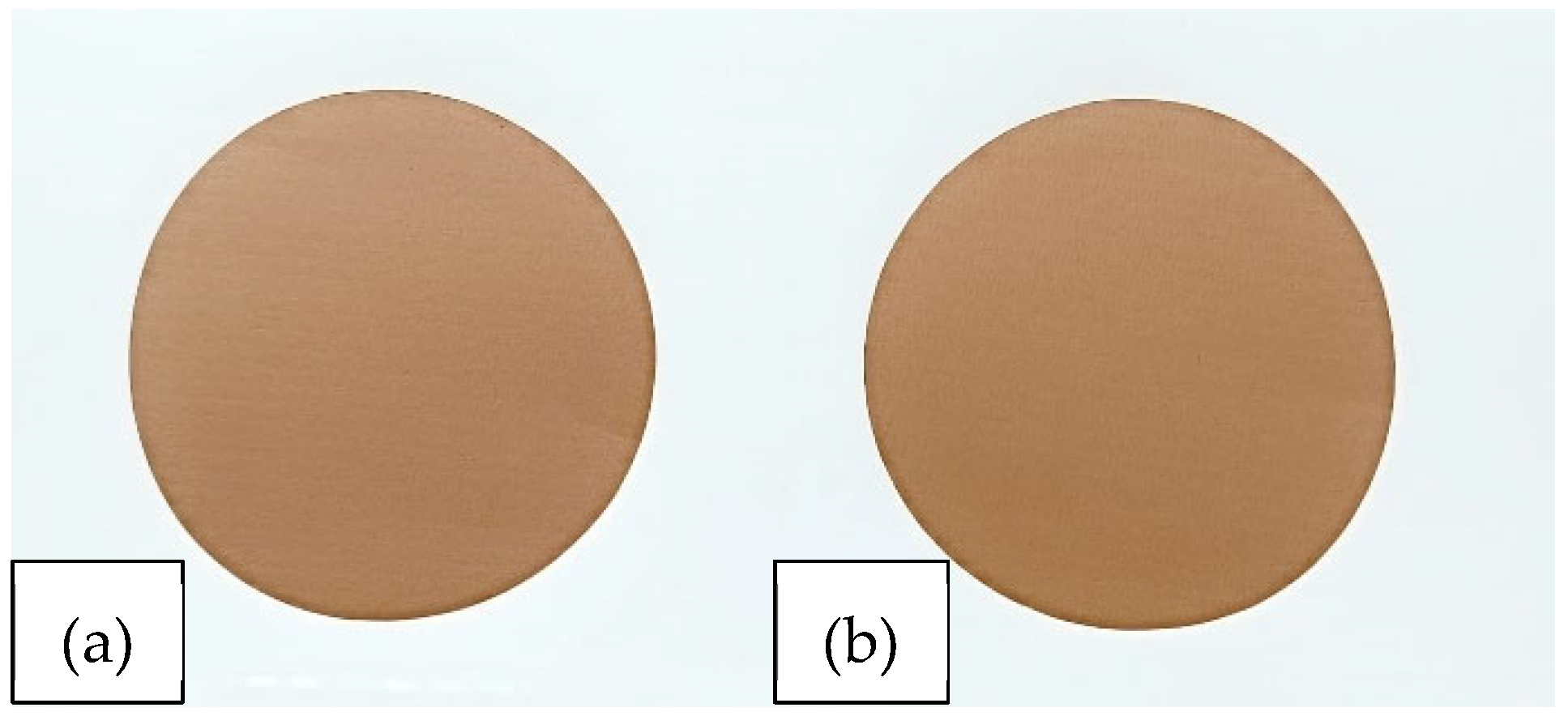
Recycled paper prototypes were produced on the pilot paper machine using the pulp obtained from the pilot-scale recyclability trials. During papermaking, the headbox (machine chest) of the pilot paper machine was operated at a consistency of 0.44%, and two separate production runs were carried out in order to generate paper prototypes under distinct operating conditions. These runs were designed to evaluate the influence of machine speed and flow rate on sheet formation and final paper properties. The first run resulted in Prototype 1, produced at a grammage of 235.6 g/m2, a machine speed of 1.0 m/min, and a flow rate of 25.0 L/min. The second run yielded Prototype 2, produced at a lower grammage of 170.2 g/m2, using a higher machine speed of 2.0 m/min and an increased flow rate of 35.0 L/min. These operating conditions allowed the production of two recycled paper demonstrators (see Figure 2) with clearly differentiated structural characteristics for subsequent evaluation. It should be noted that the selected grammages were not predefined targets but resulted from the optimization of the pilot-scale papermaking process. Several operating parameters were adjusted during the trials in order to achieve stable sheet formation. Attempts were made to produce lower grammage sheets closer to the original commercial kraft paper (80 g/m2). However, these conditions led to runnability limitations, including slight sheet adhesion to the first dryer cylinder at higher machine speeds, which prevented stable production. Therefore, the selected grammages correspond to the operational window in which stable sheet formation could be consistently achieved.

4.2.4. Characterization of the Original Paper and the Two Pilot Papers Produced

The original paper and the two prototypes produced at pilot scale were characterized according to Table 10, using the respective international testing standards. With the exception of the volatile solids content, which was measured in triplicate, 10 specimens were used for each of the other mechanical characterization tests.

5. Conclusions

This study shows that a brown packaging paper with a strength additive is technically recyclable in conventional mills at both laboratory and pilot scales, achieving high CEPI scores (TRS 99 and 97) and high fiber recovery. While laboratory results confirmed recyclability, pilot-scale trials revealed increased levels of ER, DCS, COD, and macro-stickies, highlighting scale-dependent effects not observed at laboratory scale. No major defects were observed in handsheets formation, although runnability limitations, such as sheet adhesion at higher machine speeds, were identified. The mechanical properties of the recycled papers were consistent with expected post-use fiber behavior.
Overall, these findings support a two-tier assessment strategy: using the CEPI methodology for harmonized classification and complementing it with pilot-scale pulping and papermaking to assess process-related risks under more realistic conditions. It should be noted that these conclusions are specific to the studied material and conditions, and further work considering different additive systems, grammages, and multiple recycling cycles is required to extend their applicability to other functional paper systems. This combined approach offers designers and mills a balanced path to regulatory alignment and operational robustness for fiber-based packaging with functional additives, supporting the need to complement standardized recyclability tests with pilot-scale validation to ensure compliance with PPWR requirements for recyclability at scale and in practice.
Despite the limitations in statistical treatment and scale-related variability, the consistency of the observed trends supports the robustness of the main conclusions.

Author Contributions

Conceptualization, J.C.V. and V.L.D.C.; methodology, J.C.V. and V.L.D.C.; validation, J.C.V. and V.L.D.C.; formal analysis, J.C.V., V.L.D.C. and P.V.; investigation, J.C.V., V.L.D.C., A.d.O.M., P.V., P.T.F., J.M.R.C., M.E.A. and A.P.C.; resources, J.C.V., P.V., A.d.O.M., P.P., B.S., M.P.C., P.T.F., J.M.R.C., M.E.A., A.P.C. and V.L.D.C.; data curation, J.C.V. and V.L.D.C.; writing—original draft preparation, J.C.V. and V.L.D.C.; writing—review and editing, J.C.V., P.V., A.d.O.M., P.P., B.S., M.P.C., P.T.F., J.M.R.C., M.E.A., A.P.C. and V.L.D.C.; visualization, J.C.V., V.L.D.C., A.d.O.M., P.T.F., J.M.R.C., M.E.A. and A.P.C.; supervision, P.T.F., A.P.C., J.M.R.C., M.E.A. and P.P.; project administration, P.T.F., A.P.C., J.M.R.C., M.E.A. and P.P.; funding acquisition, P.T.F., A.P.C., J.M.R.C., M.E.A. and P.P. All authors have read and agreed to the published version of the manuscript.

Funding

The authors are grateful for the financial support granted by the Recovery and Resilience Plan (PRR) and by the Next Generation EU European Funds to Universidade da Beira Interior, through the Green Agenda for Business Innovation “From Fossil to Forest—Sustainable packaging and products to replace fossil plastic” (Project No. 8 with the application C644920945-00000036). The authors are very grateful for the support granted by the Research Unit of Fiber Materials and Environmental Technologies (FibEnTech-UBI), through the Projects references UID/00195/2025 (https://doi.org/10.54499/UID/00195/2025), UID/PRR/00195/2025 (https://doi.org/10.54499/UID/PRR/00195/2025) and UID/PRR2/00195/2025 (https://doi.org/10.54499/UID/PRR2/00195/2025), funded by FCT—Fundação para a Ciência e a Tecnologia, IP/MECI.

Data Availability Statement

The original contributions presented in this study are included in the article.

Acknowledgments

The authors acknowledge the materials, access to equipment and installations, and all the general support given by the RAIZ—Forest and Paper Research Institute, and the Optical Center, the Research Center of Paper Science and Technology, the Departments of Physics, and Chemistry of the Universidade da Beira Interior.

Conflicts of Interest

The authors declare no conflicts of interest.

Abbreviations

The following abbreviations are used in this manuscript:
CEPIConfederation of European Paper Industries
PPWREuropean Union Packaging and Packaging Waste Regulation
EREvaporation Residue
DCSDissolved and Colloidal Substances
CODChemical Oxygen Demand
CRCoarse Reject
ACAccepted Coarse
FRFine Reject
AMAccepted Material
MSMacro-stickies
TRSTechnical Recyclability Score
TSYTotal Screening Yield
VIVisual Impurities
SASheet Adhesion
NPNorma Portuguesa (Portuguese Norm)
ENEuropean Norm
ISOInternational Standard Organization
T.E.A.Tensile Energy Absorption
MDMachine Direction
CDCross Direction

References

  1. European Paper Recycling Council. Monitoring Report 2023—European Declaration on Paper Recycling 2021–2030; European Paper Recycling Council/CEPI: Oslo, Norway, 2023; p. 8. [Google Scholar]
  2. Supto, S.T.J.; Ridoy, M.N. Assessing the Environmental Sustainability and Footprint of Industrial Packaging. Eng. Proc. 2025, 117, 34. [Google Scholar] [CrossRef] [Scilit]
  3. Waste Management Indicators. Available online: https://ec.europa.eu/eurostat/statistics-explained/index.php?title=Waste_management_indicators (accessed on 6 February 2026).
  4. Wakio, A.; Maghanga, J.K.; Mutinda, E.K. Recyclability of Paper Waste: A Confederation of European Paper Industries (CEPI)-Based Evaluation of Mixed Office Waste and Old Packaging Material in Nairobi, Kenya. Afr. J. Environ. Sci. Technol. 2025, 19, 301–311. [Google Scholar] [CrossRef] [Scilit]
  5. Fibre-Based Packaging Recyclability Evaluation Protocol, Version 1 2025. Available online: https://4evergreenforum.eu/wp-content/uploads/Fibre-based-packaging-recyclability-evaluation-protocol-4EG-Beta-Release.pdf (accessed on 9 February 2026).
  6. 4evergreen Cepi Recyclability Test Method Version 3 2025. Available online: https://www.cepi.org/cepi-recyclability-test-method-version-3/ (accessed on 6 February 2026).
  7. Laivins, G.V. The Mechanism of Hornification of Wood Pulps. In Proceedings of the Trans. of the Xth Fund. Res. Symp. Oxford, 1993; Baker, C.F., Ed.; Fundamental Research Committee (FRC): Manchester, UK, 2018; pp. 1235–1260. [Google Scholar]
  8. Minor, J.L.; Atalla, R.H. Strength Loss in Recycled Fibers and Methods of Restoration. MRS Proc. 1992, 266, 215. [Google Scholar] [CrossRef] [Scilit]
  9. Hubbe, M.A.; Venditti, R.A.; Rojas Orlando, J. What Happens to Cellulosic Fibers during Papermaking and Recycling? A Review. BioResources 2007, 2, 739–788. [Google Scholar] [CrossRef] [Scilit]
  10. Belle, J.; Hirtz, D.; Sängerlaub, S. Expert Survey on the Impact of Cardboard and Paper Recycling Processes, Fiber-Based Composites/Laminates and Regulations, and Their Significance for the Circular Economy and the Sustainability of the German Paper Industry. Sustainability 2024, 16, 6610. [Google Scholar] [CrossRef] [Scilit]
  11. Mendes, A.D.O.; Vieira, J.C.; Costa, V.L.D.; Pinto, P.; Soares, B.; Barata, P.; Curto, J.M.R.; Amaral, M.E.; Costa, A.P.; Fiadeiro, P.T. Macro Stickies Content Evaluation of Different Cellulose-Based Materials Through Image Analysis. Recycling 2025, 10, 69. [Google Scholar] [CrossRef] [Scilit]
  12. Huber, P.; Delagoutte, T.; Ossard, S. The Concept of Stickies Exposure for Paper Recycling Processes. Nord. Pulp Pap. Res. J. 2013, 28, 82–93. [Google Scholar] [CrossRef] [Scilit]
  13. Leppänen, I.; Vikman, M.; Harlin, A.; Orelma, H. Enzymatic Degradation and Pilot-Scale Composting of Cellulose-Based Films with Different Chemical Structures. J. Polym. Environ. 2020, 28, 458–470. [Google Scholar] [CrossRef] [Scilit]
  14. Mariño, M.A.; Paredes, M.G.; Martinez, N.; Millan, D.; Tapia, R.A.; Ruiz, D.; Isaacs, M.; Pavez, P. A Ternary Eutectic Solvent for Cellulose Nanocrystal Production: Exploring the Recyclability and Pre-Pilot Scale-Up. Front. Chem. 2023, 11, 1233889. [Google Scholar] [CrossRef] [Scilit] [PubMed]
  15. The Packaging and Packaging Waste Regulation (PPWR)—Regulation (EU) 2025/40 of the European Parliament and of the Council of 19 December 2024 on Packaging and Packaging Waste, Amending Regulation (EU) 2019/1020 and Directive (EU) 2019/904, and Repealing Directive 94/62/EC (Text with EEA Relevance). 2025. Available online: https://eur-lex.europa.eu/legal-content/EN/TXT/PDF/?uri=OJ:L_202500040 (accessed on 6 February 2026).
  16. ISO 1762; Paper, Board, Pulps and Cellulose Nanomaterials—Determination of Residue (Ash Content) on Ignition at 525 °C. ISO: Geneva, Switzerland, 2019.
  17. NP EN 13432; Requisitos Para Embalagens Valorizáveis por Compostagem e Biodegradação. Instituto Português da Qualidade: Caparica, Portugal, 2015.
  18. EN 14995; Plastics—Evaluation of Compostability—Test Scheme and Specifications. CEN: Brussels, Belgium, 2006.
  19. ISO 16260; Paper and Board—Determination of Internal Bond Strength. ISO: Geneva, Switzerland, 2016.
  20. ISO 1924-2; Paper and Board—Determination of Tensile Properties Part 2: Constant Rate of Elongation Method (20 Mm/Min). ISO: Geneva, Switzerland, 2008.
  21. ISO 2758; Paper—Determination of Bursting Strength. ISO: Geneva, Switzerland, 2014.
  22. ISO 1974; Paper—Determination of Tearing Resistance—Elmendorf Method. ISO: Geneva, Switzerland, 2012.
  23. Wang, Y.; Marcello, C.; Sawant, N.; Salam, A.; Abubakr, S.; Qi, D.; Li, K. Identification and Characterization of Sticky Contaminants in Multiple Recycled Paper Grades. Cellulose 2023, 30, 1957–1970. [Google Scholar] [CrossRef] [Scilit]
  24. ISO 5263-1; Pulps—Laboratory Wet Disintegration. ISO: Geneva, Switzerland, 2004.
  25. American Public Health Association; American Water Works Association; Water Environment Federation. Standard Methods for the Examination of Water and Wastewater, 24th ed.; American Public Health Association: Washington, DC, USA; American Water Works Association: Washington, DC, USA; Water Environment Federation: Washington, DC, USA, 2022. [Google Scholar]
  26. TAPPI T 275; Screening of Pulp (Somerville-Type Equipment). TAPPI: Atlanta, GA, USA, 2007.
  27. ISO 5269-2; Pulps—Preparation of Laboratory Sheets for Physical Testing—Part 2: Rapid-Köthen Method. ISO: Geneva, Switzerland, 2004.
  28. ISO 6588-1; Paper, Board and Pulps—Determination of pH of Aqueous Extracts—Part 1: Cold Extraction. ISO: Geneva, Switzerland, 2021.
  29. ISO 534; Paper and Board—Determination of Thickness, Density and Specific Volume. ISO: Geneva, Switzerland, 2011.
Figure 1. Photograph showing the adhesion of the sheet to the first drying cylinder at the machine’s highest speed (5 m/min).
Recycling 11 00107 g001
Figure 2. Photographs taken on the light table of the obtained prototypes: (a) Prototype 1, (b) Prototype 2.
Recycling 11 00107 g002
Table 1. Summary of results obtained using the CEPI methodology applied to the original sample under study, for the two disintegration scales (laboratory vs. pilot).
CEPI
Methodology
ParametersLaboratory DisintegrationPilot Pulper Disintegration
Filtrate
Analysis
Evaporation Residue
(ER)
ER = 4.28%ER = 4.55%
Dissolved and Colloidal Substances
(DCS)
DCS = 42.8 mg/gDCS = 45.5 mg/g
Chemical Oxygen
Demand
(COD)
COD = 33.4 mg O2/gCOD = 38.9 mg O2/g
Stock
Analysis
Coarse Reject
(CR—Sieve 5.0 mm)
Recycling 11 00107 i001
CR = 0.07%
Recycling 11 00107 i002
CR = 0.14%
Accepted Coarse Sheet
(AC)
Recycling 11 00107 i003
Good formation
(homogeneous structure)
Recycling 11 00107 i004
Good formation
(homogeneous structure)
Fine Reject
(FR—Sieve 150 μm)
Recycling 11 00107 i005
FR = 0.02%
Recycling 11 00107 i006
FR = 0.02%
Accepted Material Sheet
(AM)
Recycling 11 00107 i007
Good formation
(homogeneous structure)
Recycling 11 00107 i008
Good formation
(homogeneous structure)
Macro-stickies
(MS)
Recycling 11 00107 i009
MS = 2.2 mm2/kg
Recycling 11 00107 i010
MS = 61.5 mm2/kg
Determination of the Technical
Recyclability Score
(TRS/points)
Total Screening Yield Score (TSYscore) TSYscore = 99.9 pointsTSYscore = 99.7 points
Dissolved and Colloidal
Substances Score (DCSscore)
DCSscore = −1.4 pointsDCSscore = −2.3 points
Visual Impurities Score (VIscore)VIscore = 0 pointsVIscore = 0 points
Sheet Adhesion Score (SAscore) SAscore = 0 pointsSAscore = 0 points
TRS = TSY Score + DCS Score + VI Score + SA Score
TRSTRS = 99 pointsTRS = 97 points
Sample Recyclability
Evaluation
Technically recyclable in a
recycling mill with conventional process
Technically recyclable in a
recycling mill with conventional process
Table 2. Macro-stickies size distribution by area classes for laboratory and pilot-scale samples.
Distribution Classes
(Area in mm2)
LaboratoryPilot
MS Sheet 1MS Sheet 2MS Sheet 1MS Sheet 2
C1 (0.01–0.05)0.02150.00000.08960.1470
C2 (0.05–0.10)0.00000.00000.22400.1541
C3 (0.10–0.20)0.00000.00000.00000.0000
C4 (0.20–0.50)0.00000.00000.00000.0000
C5 (0.50–1.00)0.00000.00000.00000.0000
C6 (1.00–2.00)0.00000.00000.00000.0000
C7 (2.00–5.00)0.00000.00000.00000.0000
C8 (>5.00)0.00000.00000.00000.0000
Total Area (mm2)0.010750.30735
MS (mm2/kg)2.261.5
Table 3. Volatile solids content (%) of the three paper samples studied.
PaperVolatile Solids
Content (%)
X ¯ σ
Original Paper92.11.46
Prototype 195.70.79
Prototype 294.11.08
Table 4. Internal bond strength (J/m2), using the Scott bond method, of the three paper samples studied.
PaperScott Bond (J/m2)
X ¯ σ
Original Paper321.512.3
Prototype 1179.715.2
Prototype 2133.412.2
Table 5. Results of the tensile test of the three paper samples analyzed (the original paper and the two prototypes) at MD.
PaperTensile Index (Nm/g)Elongation (%)Young’s Modulus (MPa)T.E.A. Index (J/g)
X ¯ σ X ¯ σ X ¯ σ X ¯ σ
Original Paper105.32.72.760.14981.625.41.890.14
Prototype 153.95.71.920.36545.022.70.700.20
Prototype 268.13.92.640.08607.924.31.200.08
Table 6. Results of the tensile test of the three paper samples analyzed (the original paper and the two prototypes) at CD.
PaperTensile Index (Nm/g)Elongation (%)Young’s Modulus (MPa)T.E.A. Index (J/g)
X ¯ σ X ¯ σ X ¯ σ X ¯ σ
Original Paper64.62.05.680.31545.09.72.550.20
Prototype 136.31.53.410.28320.412.60.940.11
Prototype 239.21.23.590.15337.29.41.050.08
Table 7. Burst index (kPa·m2/g) of the three paper samples analyzed (the original paper and the two prototypes).
PaperBurst Index (kPa·m2/g)
X ¯ σ
Original Paper5.80.18
Prototype 13.30.20
Prototype 23.70.21
Table 8. Tear index (mN·m2/g) of the three paper samples analyzed (MD and CD).
PaperTear Index MD (mN·m2/g)Tear Index CD (mN·m2/g)
X ¯ σ X ¯ σ
Original Paper9.80.409.80.40
Prototype 114.21.1511.41.24
Prototype 214.11.1614.81.44
Table 9. Comparison of disintegration parameters used at laboratory and pilot scale.
ParameterLaboratory DisintegrationPilot Pulper Disintegration
Sample
Preparation
Recycling 11 00107 i011Recycling 11 00107 i012
Consistency2.5%2.5%
Disintegration Time10 min10 min
Specific Energy1.8 kWh/t261.9 kWh/t
Batch Volume2 dm3250 dm3
pH8.648.61
Table 10. Performed tests and respective adopted standards and equipment.
Performed Test/ProcessStandardEquipmentManufacturer
Information
Laboratory DisintegratorISO 5263-1 [24]Laboratory Pulp
Disintegrator
PTA Group, San Sebastian, Spain
Pilot DisintegratorNot applicablePilot Pulp
Disintegrator
SMIL, Covilhã, Portugal
Chemical Oxygen Demand (COD)Standard Methods for the Examination of Water and Wastewater [25]Thermo Reactor RD 125/Photometer MD200Lovibond, Dortmund, Germany
Stock AnalysisTAPPI T 275 [26]SommervilleFRANK-PTI GmbH, Birkenau, Germany
ISO 5269-2 [27]Rapid-Köthen Automatic Sheet Forming MachineFRANK-PTI GmbH, Birkenau, Germany
Not applicableDigilan Oven IDL 122Labolan SL, Navarre, Spain
pHISO 6588-1 [28]SevenDirect SD23Mettler Toledo, Greifensee, Switzerland
ThicknessISO 534 [29]Universal Electric Micrometer MU-25PTA Group, San Sebastian, Spain
Paper ProductionNot applicableDr. Mader Pilot Paper Machine Dr. Mader, Maschinenbau, Germany
Volatile Solids ContentISO 1762 [16]MuffleNabertherm, Lilienthal, Germany
Internal Bond Strength (Scott bond method)ISO 16260 [19]Scott internal bond tester Model-BPrecision Scientific, Petroleum Instruments, Houston, TX, USA
Tensile Index, Elongation, Young’s Modulus, T.E.A. (MD and CD)ISO 1924-2 [20]Universal Mechanical testing machineThwing-Albert Instrument Company, West Berlin, NJ, USA
Burst IndexISO 2758 [21]Burst Tester EM 50–80PTA Group, San Sebastian, Spain
Tear Index
(MD and CD)
ISO 1974 [22]DEA-100 Elmendorf Automatic Tear TesterPTA Group, San Sebastian, Spain
Disclaimer/Publisher’s Note: The statements, opinions and data contained in all publications are solely those of the individual author(s) and contributor(s) and not of MDPI and/or the editor(s). MDPI and/or the editor(s) disclaim responsibility for any injury to people or property resulting from any ideas, methods, instructions or products referred to in the content.