1. Introduction
The total volume of waste generated across production and consumption sectors increases annually. Household waste constitutes only a minor proportion of this total; however, in absolute terms, it nonetheless poses risks at multiple levels. This issue is compounded by ineffective waste management systems and low environmental awareness among the general population.
Most of the waste is unevenly distributed and deposited in landfills and dump sites. Certain landfills bear a physical resemblance to natural landscapes, such as waste heaps or hills. Unlike their natural counterparts, however, their composition consists primarily of specific, newly formed substrates, including construction and some industrial waste materials. A further distinguishing characteristic of landfills is their open, non-enclosed nature, whereby they interact continuously with the natural environment and the results of human activity. Such formations are classified within the World Reference Base for Soil Resources (WRB) as “technosols”—a reference group whose central concept defines them [
1] as “soils whose properties and pedogenic processes are dominated by industrial (anthropogenic) materials transported by humans.” Technosols retain the physicochemical properties imparted by their constituent substrates [
2]. Over time, the slow decomposition of recalcitrant compounds—including polystyrene, polystyrene-based foams, Teflon, and polyethylene—commences within landfill bodies, persisting over decades and generating significant environmental impacts. Polyvinyl chloride and PVC-based materials, for instance, function as sources of highly toxic dioxins throughout the entire biodegradation process. Contamination of groundwater, surface water, soil, and vegetation may be prevented or reduced to maximum allowable concentration (MAC) levels through strict adherence to environmental regulations, the construction and maintenance of appropriate engineering and protective infrastructure (bypass channels, leachate collection systems, protective membranes at the base of the facility, etc.), moderate leachate recirculation, and the adoption of advanced leachate treatment technologies—including aerobic processes and membrane bioreactor (MBR) integration, anaerobic digestion, membrane separation techniques such as microfiltration (MF), ultrafiltration (UF), and nanofiltration (NF), reverse osmosis, activated sludge biological treatment, and multimedia filtration [
3]. The construction of such infrastructure and the deployment of advanced treatment technologies entail substantial costs that frequently render them unattainable for individual economic entities or municipalities.
Leachate migrating from landfills poses a significant risk of contaminating surface waters and shallow groundwater, particularly where the base of the facility was not originally protected by an anti-seepage membrane or a retaining soil layer. In the absence of an operational leachate collection system, accumulated leachate is not extracted from designated bypass channels adjacent to the facility. Where such accumulation infrastructure is entirely lacking, leachate may ultimately form surface seepage ponds. Leachate reaches groundwater by percolating through the soil profile, subsoil, and the vadose zone, while surface water is affected via soil infiltration, surface runoff, and groundwater connectivity [
4].
Improper operation of landfills may enforce a range of adverse processes, including: pollution of the surface atmospheric layer; contamination of surface and groundwater with associated alterations in their hydrochemical and biological parameters; degradation and physical destruction of soils; and the deterioration of vegetation cover. Collectively, these processes exert significant pressure on the health of proximate populations and on the overall quality of the natural environment.
It is important to note that the altered properties of natural components—and their interactions—resulting from the negative impacts of landfills will affect ecosystem resilience differently across space. Climatic characteristics, for instance, reveal clear correlations between ecosystem resilience and the heat–moisture ratio. Regions with an optimal heat–moisture balance exhibit the greatest resilience to external pressures, whereas areas characterised by pronounced limiting factors for heat and moisture, combined with high variability, demonstrate the least.
Landfills thus exert a complex and multifaceted negative impact on the natural environment and, consequently, on the sanitary–epidemiological situation. This impact varies considerably depending on site location. Nevertheless, the closure of all landfills would precipitate an environmental crisis, as alternative disposal methods in Armenia remain underdeveloped and waste would accumulate at points of generation.
Landfills represent the most prevalent form of waste disposal both globally [
5,
6,
7,
8] and in Armenia [
9,
10]. Numerous unauthorised dump sites also emerge along roadsides, in parks, and in forested areas [
11]. The intensity of human activity in the vicinity of landfills exceeds the natural self-purification capacity of local ecosystems. Groundwater, surface water, soil, and vegetation are all subject to severe contamination [
12,
13,
14,
15], which directly or indirectly affects the health of nearby residents [
16,
17,
18,
19]. Non-conventional remote sensing data—including optical, multispectral [
20], and radar [
21,
22] imagery acquired from ground-based platforms, satellites, and unmanned aerial vehicles [
23,
24,
25,
26,
27]—are increasingly being applied to waste monitoring. Multiple studies have evaluated such data [
28,
29,
30] at varying spatial resolutions for the purposes of identifying and monitoring waste disposal sites. Contemporary remote sensing techniques enable the automated identification [
31,
32] of landfill sites and littered areas through object-oriented analysis, image segmentation, and machine learning approaches that exploit object heterogeneity. Remote sensing supports a broad range of applications: appraising dump site conditions, analysing environmental impacts, and detecting unauthorised disposal sites. It is regarded as a viable alternative to costly, hazardous, and labour-intensive field surveys. Vegetation analysis is also conducted using remote sensing [
33], employing indices such as the NDVI and PRI which can indicate the presence of landfill gas emissions or soil salinisation. Aerial and satellite imagery is further utilised for emergency monitoring at waste sites, delivering objective and current information rapidly and independently of meteorological conditions. Satellite and UAV data encompass multiple parameters that provide insight into landfill characteristics. Contemporary analytical tools also facilitate the identification of suitable landfill locations [
34,
35] and the detection of littered areas. Uncontrolled waste deposition on unprepared terrain disrupts natural processes and transforms large areas into de facto landfills. Such landfills are characterised by a specific, newly formed substrate [
36] composed of organic food waste, mineral soil, construction materials (including metal, timber, concrete, and plasterboard), and certain industrial waste [
37,
38]. This substrate constitutes an artificial, non-toxic, bulk material of industrial or domestic origin, deposited upon soil or bedrock [
39,
40].
Solid household waste management in Armenia represents a matter of significant concern [
41]. The existing system relies predominantly on landfills and, to a lesser extent, on unregulated dump sites in the vicinity of settlements [
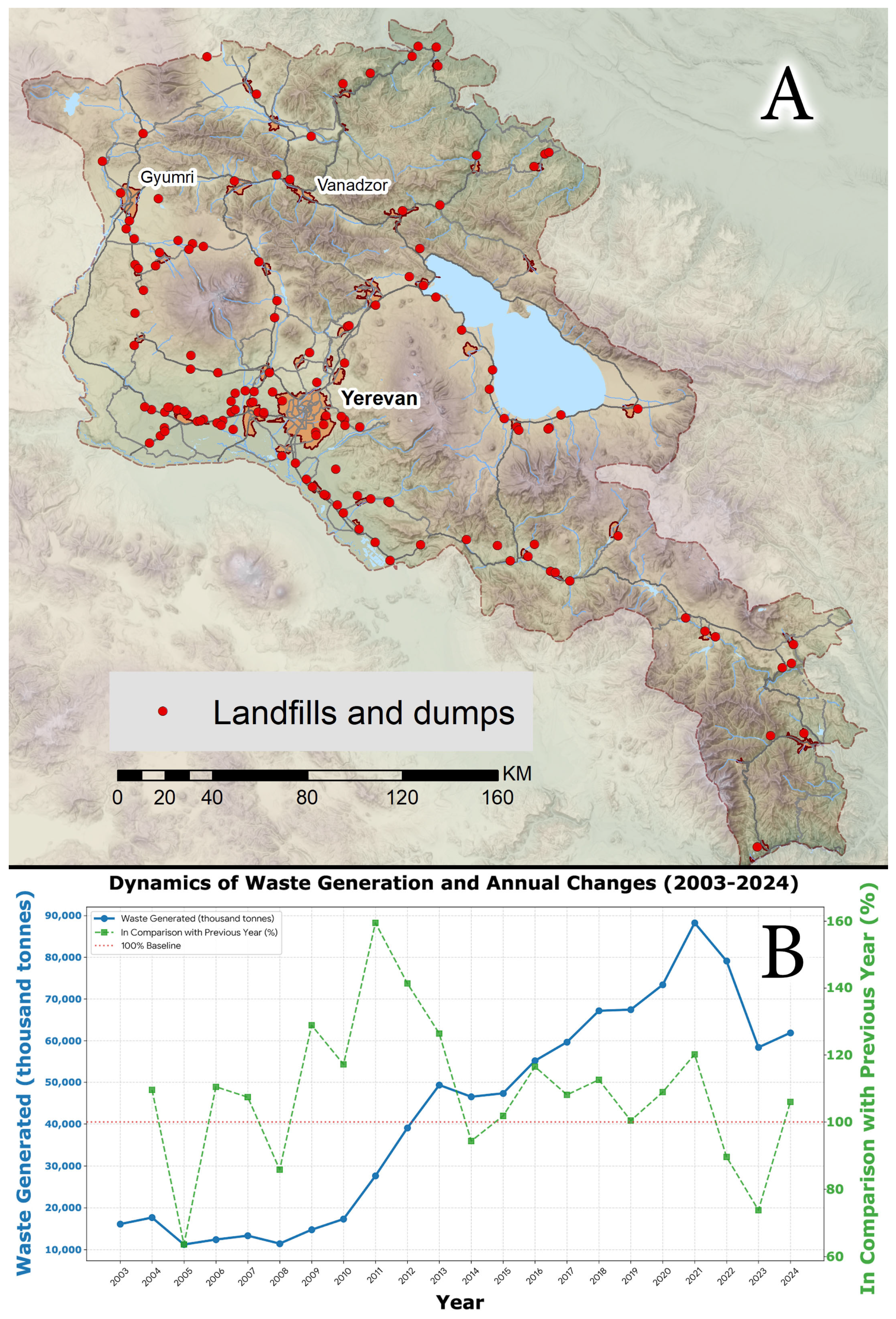
42]. Over the past two decades, the country’s annual waste output has increased nearly sixfold, now exceeding 80,000 tonnes according to official data (
Figure 1) [
43]. This figure, however, likely underestimates the true volume, as not all waste is accurately recorded or monitored. Annual waste generation grows at rates of 90–120%, and in certain years considerably more—reaching 160% in 2011. This rapid rate of increase contributes to the saturation of existing landfill capacity and the proliferation of illegal dump sites [
44].
This increase in recorded waste production is attributable in part to improvements in data collection systems; however, it is driven primarily by rising consumption patterns. The expansion of consumer goods production generates correspondingly greater volumes of waste, further exacerbating the challenge of solid waste management in Armenia. Unauthorised dumping occurs around many large settlements, while official landfill infrastructure remains confined to major urban centres, resulting in a spatially uneven formal waste management system. Due to spatial distribution, specifisity of the terrain, as well as the presence of hazardous waste constituents and unavoidable discharges—most notably landfill leachate—landfill sites exert a measurable negative impact on the surrounding environment. Extensive areas have been rendered heavily polluted as a consequence, with contamination of water bodies, atmosphere, and groundwater documented at distances of several kilometres from the source.
The majority of landfills and dump sites were established in negative relief features, including ravines, hollows, and gullies, while others occupy valley slopes, exhausted mining pits, and various excavated landforms. They were established without environmental impact assessments or protective engineering structures. Uncontrolled dump sites constitute the dominant component of Armenia’s overall waste disposal infrastructure, operating outside the formal waste management system. Waste disposed of at such locations may be characterised as “unauthorised”; nevertheless, local authorities are typically aware of these sites, which thereby acquire the de facto status of “tolerated dumps”.
Local authorities tend to regard landfills exclusively as components of the functional production zoning area, focusing their attention solely on technical operational aspects. This approach, however, fails to account for the migration of materials and chemical elements within the landfill body and the surrounding area—processes that give rise to zones of varying composition and concentration and, consequently, to differentiated degrees of environmental impact.
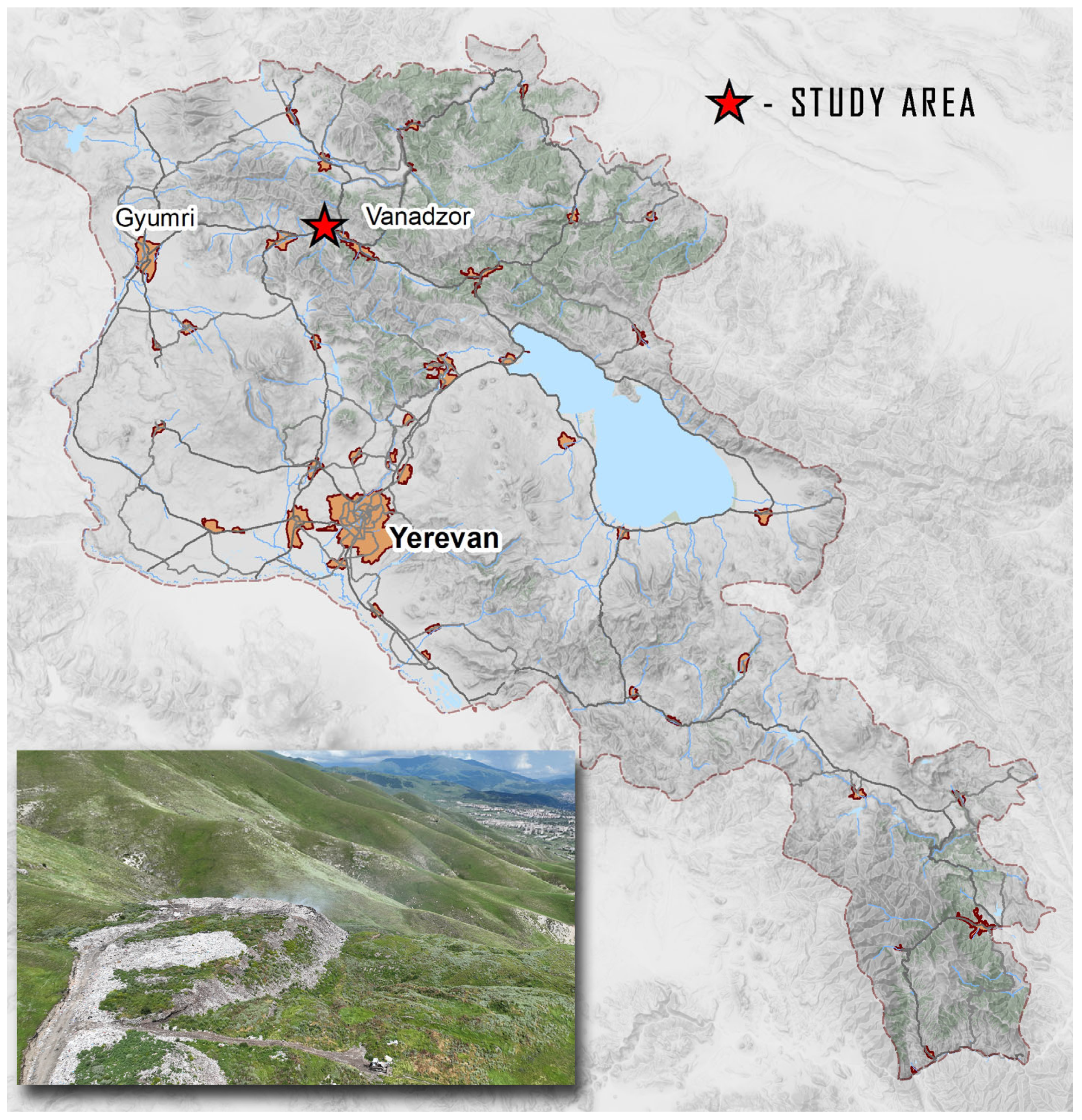
The case study site is situated in the Lori region, on the left bank of the Pambak River at the base of a valley (40°51′34.5394″ N, 44°23′58.0759″ E). The area’s absolute elevation does not exceed 1500–1700 m. The terrain features a pronounced network of ravines and gullies. These have deep cuts and a high gradient (
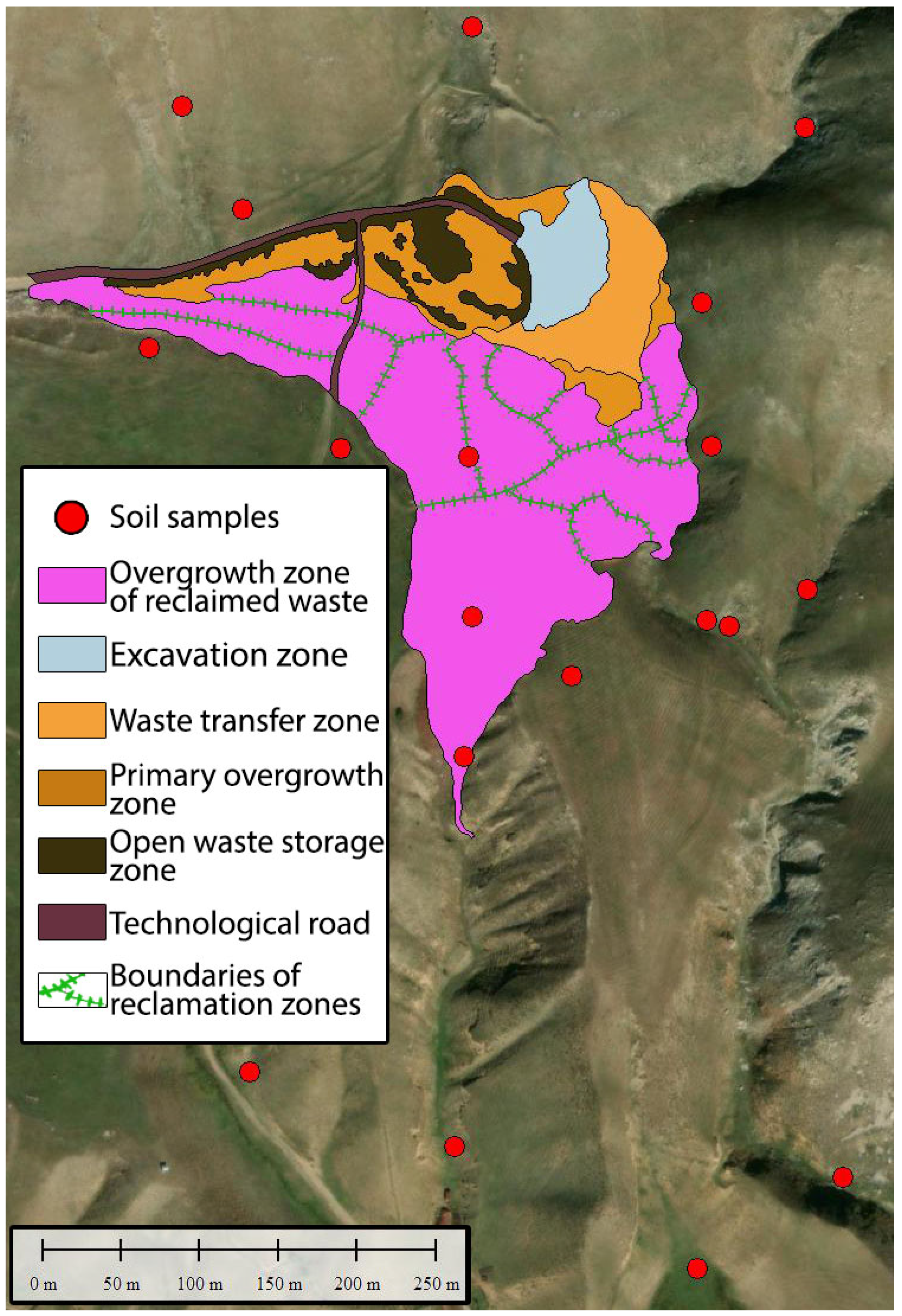
Figure 2). Spontaneous waste disposal occurs throughout the area rather than at a single site. Littering is visible in several areas, especially along the technological road and the road to the settlement. The landfill covers approximately 4.3 hectares.
The landfill body additionally exhibits diverse micro-relief forms, attributable to both the natural waste accumulation process and partially reclaimed sections. The study area constitutes an active landfill site, at which waste is transported and deposited on a daily basis. This activity has been traceable through satellite imagery since the second half of the twentieth century, while partial reclamation efforts have been monitored over the past two decades. Due to insufficient historical documentation, it is not possible to establish an approximate commencement date for landfill operations; it was in all likelihood operating without formal authorisation from inception, and no records exist pertaining to the initiation of waste disposal activities. The landfill is situated approximately ten kilometres from the city of Vanadzor and one kilometre from the village of Archut. Its proximity to agricultural land and the character of the surrounding terrain indicate a significant potential for adverse impacts on natural environment components. Both surface and subsurface fires have been recorded at the site; the latter burn through underlying waste layers, generating subsurface voids into which overlying waste masses may subsequently subside. Waste rockfalls and debris landslides have additionally been observed across certain areas of the site.
The landfill presents a good case for the study of ecological and geochemical characteristics, as well as for remote monitoring and spatial zoning. The site exhibits a range of typical physical–geographical features, encompassing landforms and micro-relief, exogenous geomorphic processes, and land-use structures. Soil–vegetation cover is present across portions of the site, alongside areas of surface water accumulation and migration pathways. A partially reclaimed section is also present within the study area.
The principal objective of this study is to comprehensively identify and characterise landfill and waste disposal sites using ecological–geochemical and physical–geographical indicators. The zones are defined as spatially distinct areas differentiated by their intended use, modes of utilisation, formation dynamics, and the specific natural and anthropogenic processes operating within them.
A critical step in this process is the comprehensive assessment of site characteristics and parameters—both horizontal and spatial—through the application of contemporary remote sensing methods. Particular attention is paid to field investigations at a key study site, encompassing the sampling of natural components and waste materials, ecological–geochemical zoning, identification of zones of environmental influence, and the compilation of a final ecological–geochemical zoning map.
The scientific novelty of this study is established by several key aspects. First, it employs an integrated approach to the investigation of landfills, combining remote sensing, field, and laboratory research methods. Second, it presents an updated cartographic inventory of landfill locations across Armenia, undertaken for the first time. The study further incorporates ecological–geochemical zoning of solid municipal waste landfills, followed by analysis of their environmental impacts and cartographic representation of the results. Additional contributions include the comparative analysis of chemical element distributions across the studied landfills, and the identification and characterisation of functional zones within landfill bodies.
The practical significance of this study resides in the potential application of the developed ecological–geochemical zoning methodology to support decision-making in the operation of waste disposal facilities. The findings may be used to develop methodological frameworks for the application of remote and ground-based survey techniques, to refine methods for delineating sanitary protection zones, to guide the planning of reclamation works, and to formulate measures aimed at minimising adverse environmental impacts.
The methodological foundation of the study draws upon the principles and methods of landscape geochemistry, applied geochemistry, remote sensing, and environmental mapping. The condition of the study objects is assessed through an integrated methodological approach combining remote monitoring, field observations, and laboratory analysis, thereby ensuring the reliability and representativeness of the results obtained.
2. Results
2.1. Chronological Analysis and Zoning
From the earliest available high-resolution satellite imagery, dated to 2002, the landfill boundaries have been indistinct, characterised by irregular, curvilinear edges that are difficult to delineate precisely and extend along the margins of the surrounding terrain. The bulk of the waste mass occupies a topographic depression, filling it substantially, with additional waste accumulation observed along the access road leading to the site. On satellite imagery, the landfill surface presents as a heterogeneous mixture of light and dark grey tones, consistent with the appearance of hilly, uneven terrain.
Since 2002, boundary modifications have been recorded in the western section of the landfill, which slopes toward the road. Throughout the observation period, the landfill boundaries have remained undefined. Dark grey tones visible in the central portion of the site indicate areas where waste has been covered by a soil layer.
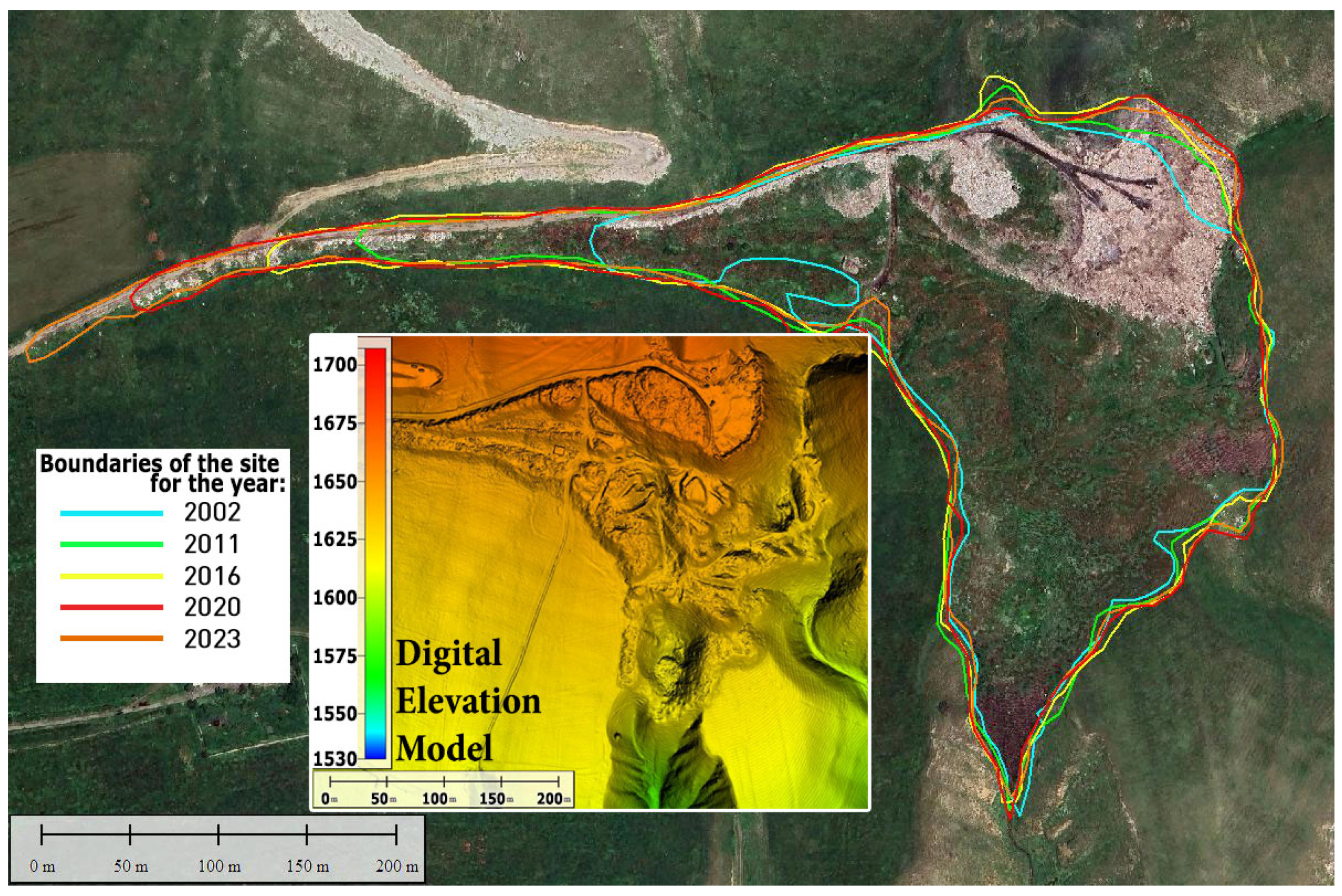
Over 20 years, the landfill’s area has expanded significantly (
Figure 3). Littering occurs along the entire perimeter, at distances of 4–10m. In 2016, remote sensing data revealed partial reclamation and soil filling of part of the landfill. The increase in area over the years (2002—Perimeter: 1.419 km., Area: 0.0598 sq.km.; 2011—Perimeter: 1.588 km., Area: 0.0685 sq.km.; 2016—Perimeter: 1.678 km., Area: 0.0725 sq.km.; 2020—Perimeter: 1.989 km., Area: 0.0716 sq.km.; 2023—Perimeter: 1.874 km, Area: 0.0736 sq.km.) was paralleled by an increase in the height of the waste mound in the central part.
Three principal processes are identifiable at the landfill: active waste disposal, vegetation encroachment, and soil coverage of deposited material. Remote sensing data enable the assessment of activity at both uncontrolled and controlled sites, allowing for the documentation of areal expansion and the identification of dominant site processes. The processes operating at key locations are classified as either natural or anthropogenic in origin. Spatial zoning of the landfill was conducted using an orthomosaic with a resolution of 3.5 cm/px.
The landfill lacks clearly delineated zones and the infrastructure necessary for standard operational requirements. Absent features include a checkpoint, a weighing and radiometric control station, fire-suppression water reservoirs, a disinfection basin for waste vehicle undercarriages, perimeter fencing, and bypass drainage channels. Functional zoning derived from remote sensing data facilitates the identification of individual landfill elements, which in turn indicate the specific processes operating at the site. These elements reflect the formation dynamics of discrete site sections, thereby enabling more accurate delineation of ecological and geochemical zones.
The landfill site exhibits no evidence of compliance with established waste disposal technology. This is corroborated by the site’s geometric characteristics and surface parameters: the depositional structure presents an undefined shape, indistinct contour lines, and highly variable waste mass concentration. Geometric parameters and surface characteristics serve as diagnostic indicators for classifying site type according to its management regime. A controlled site is characterised by a form approximating a regular geometric figure, clearly defined and rectilinear contour lines, uniform waste mass concentration, and spatial elongation within established land boundaries—characteristics that are, in each respect, the inverse of those observed at an uncontrolled site.
In addition to areal calculation, the perimeter and volume of each waste zone should be determined. Such measurements are particularly valuable for controlled sites in the context of designing bypass roads, diversion channels, and leachate collection systems. For uncontrolled sites characterised by indistinct or irregular boundaries, perimeter calculation is of limited practical utility. Assessment of waste mass concentration enables the subdivision of the landfill into zones of low, medium, and high concentration.
2.2. Morphometric Characteristics
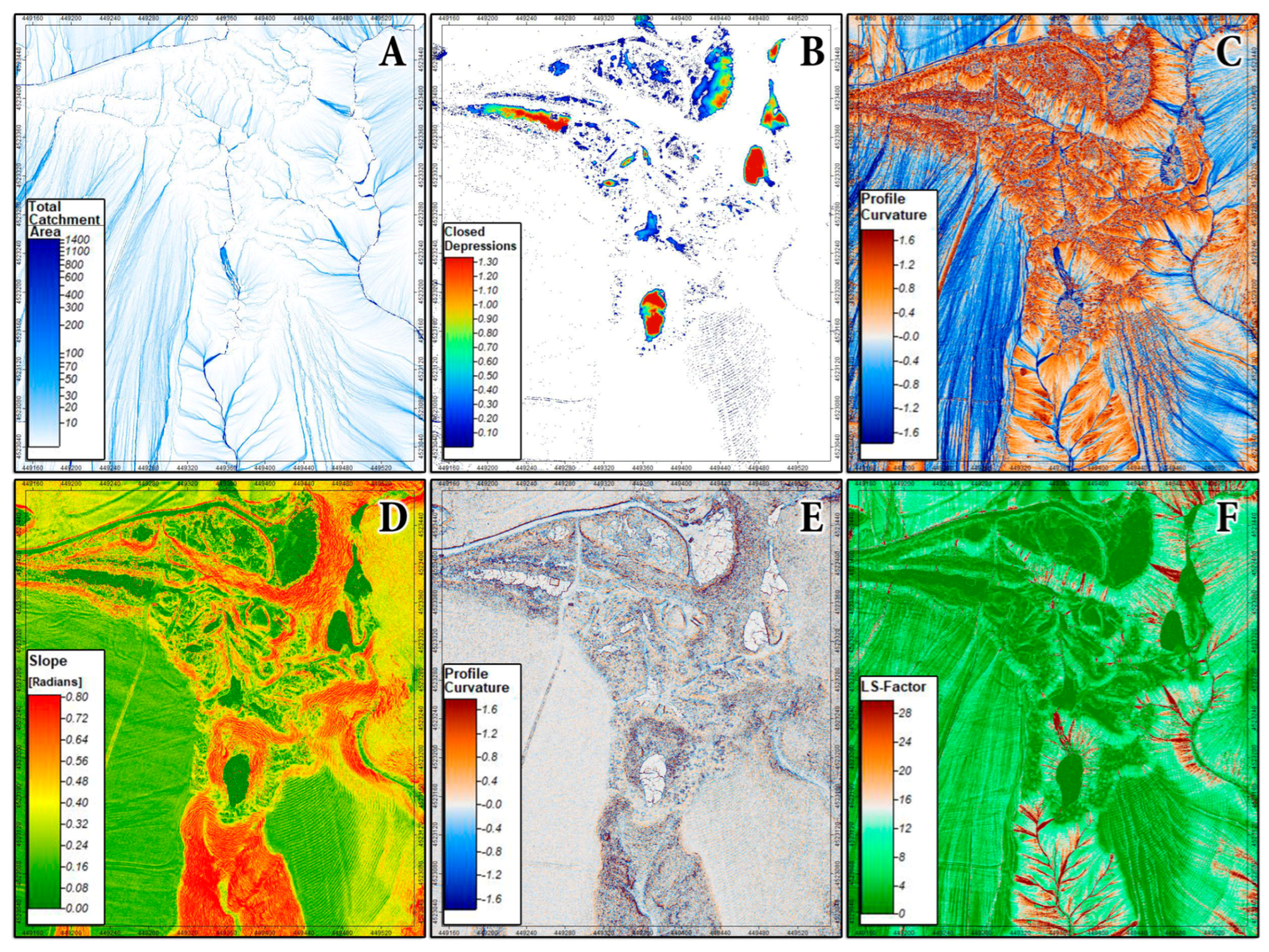
The landfill is located on highly dissected terrain, with slopes exceeding 5 degrees in the Pambak River Valley. This topography causes geomorphic hazards such as erosion, slope instability, karst, and suffusion (
Figure 4;
Table 1). The area is surrounded by pastures, farmland, and a settlement. These features make the site potentially hazardous due to the risk of landslides.
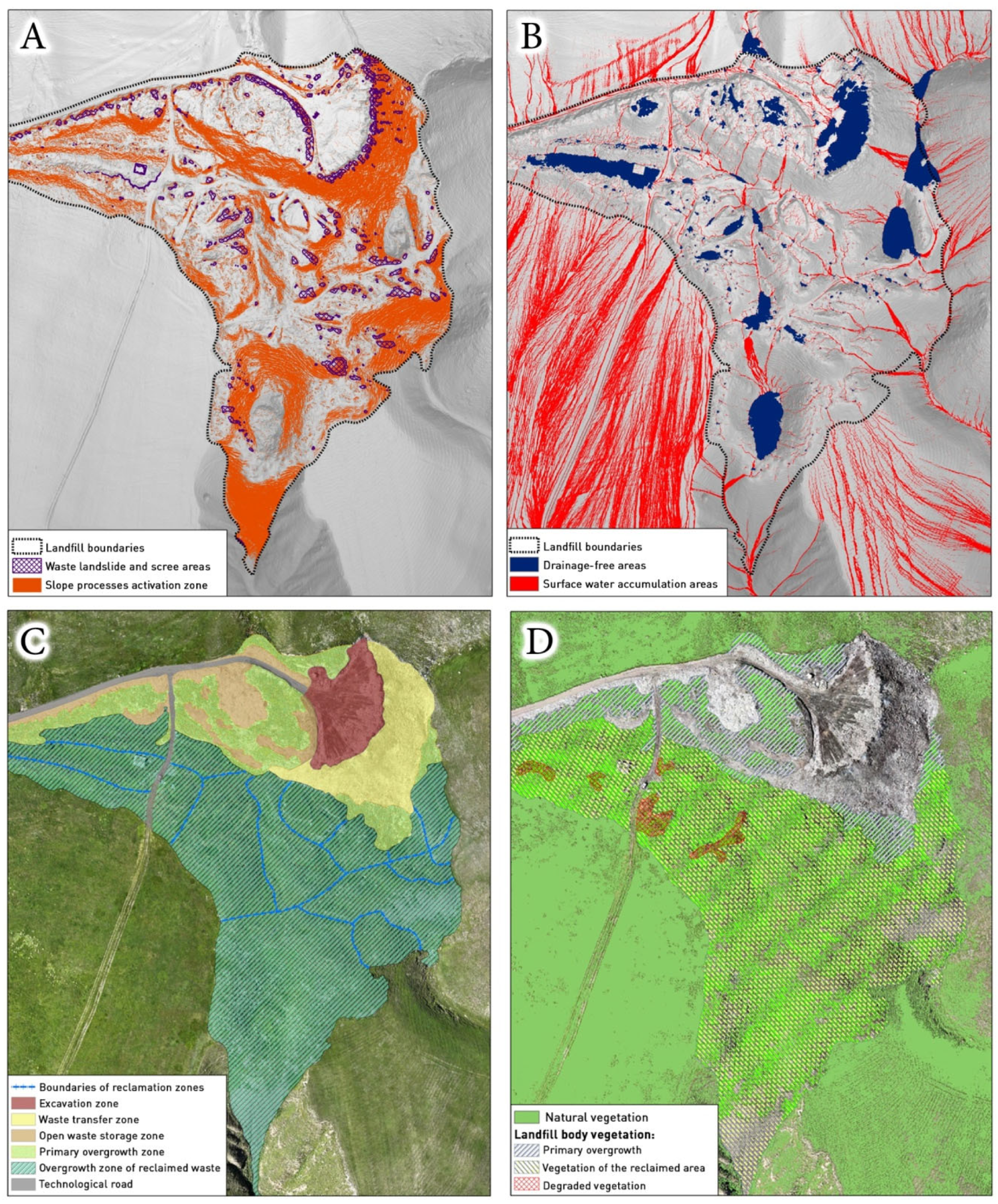
Active development of surface runoff within the landfill site can lead to erosion. This occurs primarily through slope, gully, and microstream processes. Runoff may be active during the spring snowmelt period. Morphologically prominent landfill slopes may trigger debris slides and landslides. Seasonal activation of underground watercourses can lead to pollution. This can result in pollutants being transported to the main river in the valley. Weathering and deflation, although to a lesser extent, can also be dangerous geomorphological processes for the landfill. From a technogenic morphogenesis perspective, the landfill is classified as a technogenic-accumulative type of anthropogenic relief (
Figure 5A,B).
2.3. Soil and Vegetation
The main source of pollution and changes in soil properties at a landfill site and its surrounding area is leachate. Leachate migrates through the soil, aeration zone, and surface and subsurface runoff, adversely affecting the soil. In addition to leachate, landfill gas also affects the soil at a landfill. If the landfill surface is sealed and obstructions develop, landfill gas may move horizontally to other areas of the landfill, entering the soil and causing further damage (
Figure 5C).
Leachate migration is highly dependent on the physical and chemical properties of the underlying soil profile, which controls the movement and storage of water and dissolved substances. Particularly important physical soil properties include horizon stratification, depth, structure, texture, and bulk density, which, in turn, influence the soil profile hydrology and hydraulic characteristics such as permeability, saturated hydraulic conductivity (Ks), volumetric water content, and field capacity, also known as the drainable upper limit. Soil chemical properties that influence solute transport processes include pH, adsorption, and ion exchange.
Soil degradation is characterized by a decrease in humus reserves and other nutrients (nitrogen, potassium, phosphorus, and micronutrients), increased soil acidity, soil compaction, deterioration of soil structure and texture, soil waterlogging, soil salinization, and soil degradation. Leachate seeps into groundwater and surface runoff, and landfill gas migrates from the landfill into adjacent soils, disrupting the soil’s biological activity and self-purification processes.
It is worth noting that during the partial reclamation process, soil was brought to the landfill to cover the waste. Despite this, over several decades, this soil did not develop into soil with traditional horizons; rather, it merely served as a “lid” that facilitated waste decomposition and the release of landfill gases, where the soil layer is thinnest.
One of the direct and indirect indicators of the negative impact of a landfill on vegetation (
Figure 5D) is its state: species composition, structure, indicators of productivity, development of herbaceous cover, etc. Vegetation near landfills is mostly represented by ruderal species. On landfill sites, food and fodder plants are introduced. Various zones of negative impact form around landfill bodies due to the following processes: the influence of landfill gases, weathering of fine particles, leachate infiltration into the soil and water bodies. As a result, plant mineral nutrition is disturbed, leading to color changes (yellowing), accelerated or slowed growth, and the death of the species.
An important aspect of solid waste landfill research is the use of spectral vegetation indices, which provide valuable data for environmental monitoring of these areas. These indices allow for a comprehensive assessment of vegetation conditions at waste disposal sites and identify potential problem areas requiring special attention.
Vegetation analysis was conducted (
Table 2) using the NDVI, GNDVI, SAVI, and NDRE in the near-infrared channel, which is most informative for assessing vegetation disturbance. The NDVI and SAVI were calculated by identifying areas where vegetation density and condition at a specific point in the image are equal to the difference in reflected light intensity in the red and infrared ranges, divided by the sum of their intensities. Using multi-temporal data enabled a detailed analysis of the dynamics of changes within individual zones, including both reductions and possible increases in vegetation cover and its condition. Furthermore, this approach effectively helped isolate areas where reclamation had taken place (
Table 2).
The ability to combine vegetation indices with other monitoring methods is particularly valuable. These data were successfully combined with surface temperature analysis, enabling a more comprehensive assessment of the study area’s condition.
However, the use of vegetation indices has certain limitations. Weather conditions, such as cloud cover, significantly impacted the accuracy of the results, but this did not significantly affect the final estimates and characteristics.
An additional factor reducing the accuracy of the measurements was the presence of disturbed soil cover areas within the landfill, which could distort the resulting spectral characteristics. However, the SAVI was effective in isolating vegetation.
Despite these limitations, spectral vegetation indices have enabled effective monitoring of degradation and vegetation overgrowth, assessment of the effectiveness of reclamation efforts, and timely identification of emerging environmental problems.
2.4. Air Pollution
Sources of atmospheric air pollution include landfill gas, leachate, and waste combustion. Landfill gas can travel long distances due to pressure gradients and prevailing winds. It sometimes moves up to several kilometers. When waste is burned, smoke and odor can also spread up to several kilometers. In windless conditions, they may cover the entire valley of the Pambak River complex. Landfill fires release many organic compounds, such as phenols, naphthalene’s, and aliphatic and aromatic hydrocarbons. Dioxides, in particular, are dangerous. They can contribute to an increased incidence of cancer among the population.
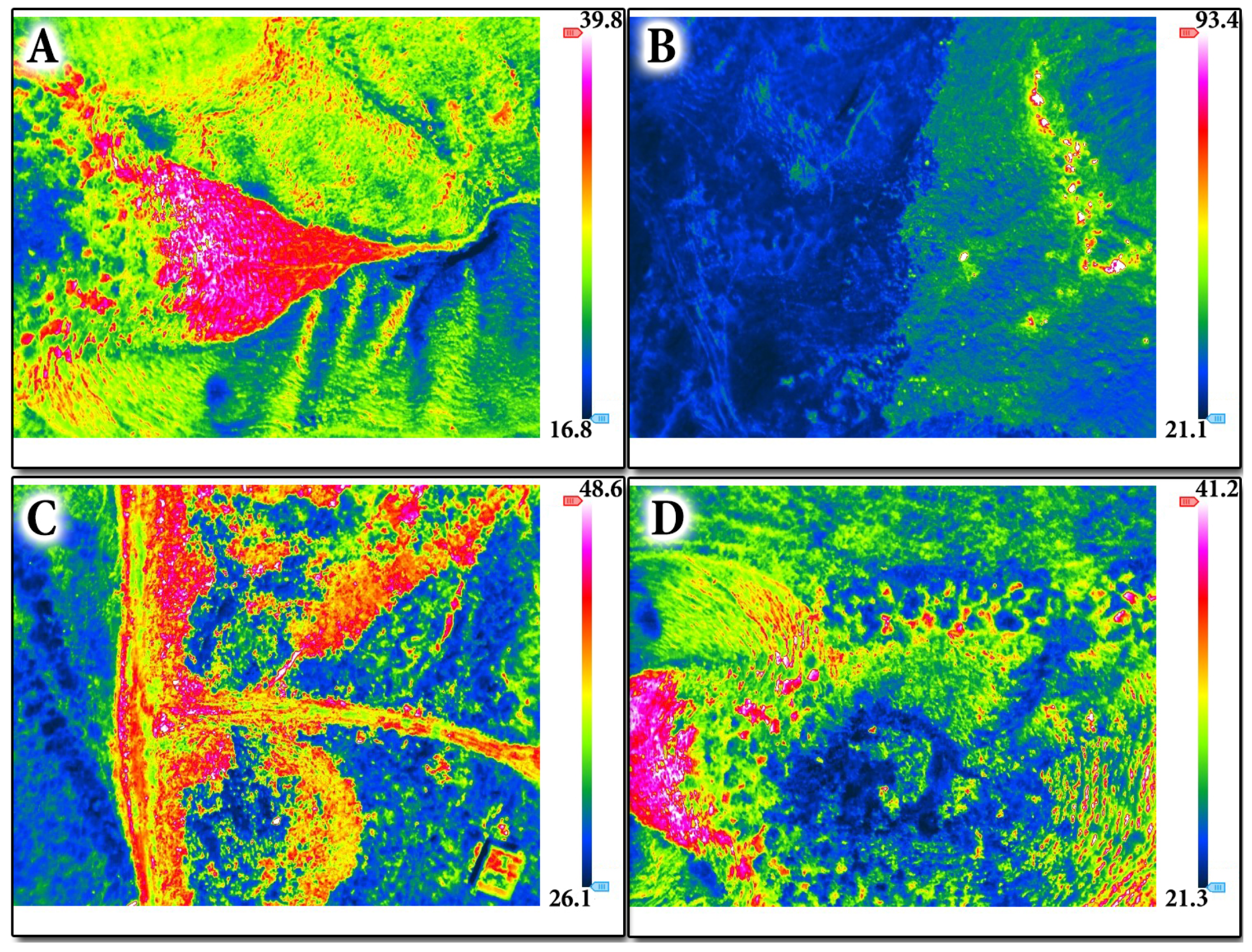
Combustion at the landfill occurs year-round through both open surface fires and subsurface smouldering within the waste body. During subsurface burning, surface waste retains elevated temperatures even under heavy precipitation, such that surface runoff may remain thermally anomalous upon leaving the site. Suppression of these fires is exceptionally difficult, as the majority occur on steep slopes (
Figure 6) that are largely inaccessible. Large subsurface voids beneath the waste mass ignite and burn, resulting in the subsidence of overlying waste layers. Combustion events are detectable in low- and medium-resolution satellite imagery as surface fire signatures, while UAV-mounted thermal imaging enables precise localisation of active burning zones and areas of thermally elevated waste attributable to decomposition processes. Deep-seated fires persist within the lower waste strata, generating voids and significantly increasing the risk of sinkhole formation. Digital elevation modelling identifies zones of landslide activity and waste mass displacement. Substantial landfill gas emissions occur as a consequence of the large accumulated waste volume, with the pronounced odours affecting surrounding communities attributable to gaseous impurities including hydrogen sulphide and organic sulphur compounds.
Biogas migrates laterally to form a surface zone both within and beyond the landfill boundaries, with certain sections exposed directly to the atmosphere. Temperature anomalies recorded in thermal imagery represent real-time deviations from a reference baseline, thereby facilitating the identification of active biogas emission areas. Elevated thermal anomalies at specific temporal intervals are indicative of periods of intensified biogas release from compacted waste into the atmosphere.
Analysis of the landfill’s developmental dynamics enables the identification of zones corresponding to distinct phases of biogas formation and emission. The quantitative and qualitative composition of biogas at a given site is determined by local geological conditions, the chemical composition of deposited waste, storage conditions, and moisture content.
Based on the research findings, zones of biogas flux into the surface atmosphere have been delineated across the landfill surface. The composition of principal biogas constituents is governed by the phase of methanogenesis. Temperature anomalies associated with methanogenic phases, recorded at the surface and on the slopes of the primary waste bodies as well as on historically reclaimed slopes, were identified during field inspection. Elongated surface cracks were observed on the slopes, through which biogas is presumed to be actively released.
Thermal contamination of landfill waste is a complex process associated with the release of heat during waste biodegradation. The temperature within the landfill depends on external factors, including the thickness and density of the waste, the ambient temperature, the intensity of biodegradation, and the waste’s moisture content.
During residual decomposition within landfill bodies, temperatures occur at approximately 35 °C. In the vicinity of active decomposition zones, temperatures range from 30 to 60 °C. Maximum temperatures recorded at landfill cover surfaces reach 60–80 °C, a threshold conducive to the spontaneous combustion of waste materials. In and immediately adjacent to zones of open combustion, temperatures exceed 80 °C.
With respect to temperature distribution within the surface layers of uncovered waste, the following patterns are observed: temperatures at the uppermost sections of landfill bodies are consistently higher than those recorded at lower elevations; minimum temperatures are found at the base of the landfill; and the observed temperature gradients are associated with the physicochemical processes underlying aerobic and anaerobic respiration within the waste mass.
Based on UAV thermal imaging and its processing, four thermal production zones (
Table 3) were identified:
1. Background heating zone (unheated surfaces): Temperatures do not exceed 20 °C. Thermal balance is maintained solely by solar radiation.
2. Zone of weak thermal impact: temperature range 20–40 °C. The initial stage of deep heat release is observed.
3. Zones of active processes and release: range 40–80 °C. This zone is characterized by active thermal radiation and the formation of high-temperature zones.
4. High-temperature zone above 80 °C. This temperature regime represents waste combustion or smoldering. This is the epicenter of thermal energy, with peak heat transfer.
Thermal imaging investigations enable the identification of anomalous temperature zones that represent potential sources of spontaneous waste combustion. The principal causes of landfill fires include improper waste storage practices, air infiltration into compacted waste masses, and spontaneous ignition induced by elevated summer temperatures. Individual fires range in extent from 1 to 10 square meters, with combustion of dense waste occurring at flame heights exceeding one meter.
2.5. Geochemical Impact
The average content of the studied elements in the landfill decreases in the following order: Ca > Fe > K >> Ti >> Mn >> Zn >> Cu > Ba >> Pb >> Sr >> Cr > Zr >> V >> Mo >> Rb >> As >> Co >> Cd. In contrast, the order in the Upper Continental Crust (UCC) is: Fe >> Ca >> K >> Ti >> Mn >> Ba >> Sr >> Zr >> V > Cr >> Rb >> Zn >> Cu >> Co >> Pb >> As >> Mo >> Cd. The only major difference among key elements (Fe, Ca, K, Ti, Mn) is that Fe is most abundant in the UCC and Ca is highest in the landfill (
Table 4) [
45]. This could result from local geology, such as volcanic rocks, marls, and limestones. Added Ca from human activities may also play a role. Notably, Zn, Cu, Pb, Cr, and Mo are higher in the landfill than in the UCC, likely due to local geology or human impact at the landfill.
UCC showed significant excesses (more than 3 times) for Cd, Mo, Cu, Pb, Zn, and As. The specific excesses were 91.1% for Cd, 70.9% for Mo, 27.9% for Cu, 22.9% for Pb, 14.3% for Zn, and 4% for As. Among these elements, Cd and Mo stand out for exceeding UCC levels most notably. A detailed analysis showed that Cd was present in 11 of 17 soil samples, and Mo in 5 of 17. The spatial distribution of Cd in five soil samples (
Figure 7) revealed that all five samples were located on the landfill. This distribution also corresponds to the period immediately after rainfall, indicating that Cd runoff is likely most pronounced shortly after rainfall events. A similar pattern was observed for Mo, with the highest concentrations found in soils directly on the landfill, particularly following recent precipitation. The dataset also indicated that Cr, V, Ca, Sr, As, Cu, Pb, Zn, Fe, Mn, and Ba had comparatively higher concentrations in soils located on volcanic lava. This suggests that such soils may serve as a potential source of contamination to the surrounding environment [
46] due to their high content of these elements.
We compared the average, minimum, and maximum levels of elements (Cr, V, Cd, Mo, As, Zn, Cu, Mn, Pb) to the MACs set by Armenia. All minimum levels fell below the MACs. However, average levels exceeded the MACs for Cr, Cd, As, Zn, Cu, and Pb, with excesses of 1.9, 4.1, 1.9, 4.4, 5.9, and 6, respectively. Likewise, excesses for the maximum observed levels were found for Cr, Cd, Mo, As, Zn, Cu, Mn, and Pb, with values of 9.0, 8.3, 3.9, 4.6, 21.4, 45.6, 1.1, and 45, respectively.
The comparison between UCC and MAX values confirmed that the chemical composition of the soil samples studied, especially those directly developed on the landfill, has been significantly altered. This study also showed that decades of landfill use have led to increased levels of potentially toxic elements (PTEs), including Cr, Cu, Zn, Pb, As, Mo, and Cd. These findings highlight the need for a more detailed investigation of the landfill site to fully assess its impact on the local environment and ecosystem. It is essential to understand the migration pathways of these PTEs to better assess the extent of landfill’s impact and develop appropriate mitigation strategies.
The principal findings of this study indicate critical contamination levels within the reclaimed portion of the landfill. Concentrations of zinc (Zn), lead (Pb), copper (Cu), chromium (Cr), cadmium (Cd), and arsenic (As) exceeded background levels by several-fold—copper concentrations were elevated by a factor of 19, and lead concentrations by nearly 10. Spatial distribution analysis of contaminants revealed a clear pattern: the highest concentrations of toxic elements were recorded directly within the landfill body, with contamination levels declining progressively to the west and east; the northern section, oriented toward an adjacent hill, was classified as exhibiting acceptable contamination levels. Environmental risk assessment identified the landfill’s condition as extremely unfavourable, with a “very high” environmental risk rating assigned—one that poses a threat not only to the landfill itself but to adjacent ecosystems. The anthropogenic origin of the contamination was established on the basis of high coefficients of variation for Cr, Mo, Zn, Cu, and Pb, clearly indicating that the accumulation of these elements in the soil is directly attributable to landfill operations. The scientific significance of this study resides in its demonstration that, even following remediation, municipal landfills continue to function as long-term sources of toxic pollution, underscoring the necessity for rigorous ongoing monitoring of such sites and careful planning for the potential extraction and processing—commonly referred to as “landfill mining”—of deposited waste.
3. Discussion
The characteristics of the investigated landfill site and its complex zoning indicate a range of impacts. Relevant indicators include: (1) morphological characteristics of the landfill body, with associated morphodynamic processes that alter site topography and facilitate pollutant migration, particularly during periods of elevated runoff following rainfall or snowmelt; (2) geochemical properties, characterised by hazardous substances present at concentrations substantially exceeding permissible levels; and (3) bioindication characteristics reflecting the landfill’s impact on surrounding vegetation and the condition of proximate plant communities. These characteristics may be grouped into three categories according to their function and relative importance. The first encompasses morphological and chronological features required for the selection of waste management methods, the delineation of landuse restriction zones, and the design of monitoring protocols. The second pertains to characteristics that determine the hazardous nature of waste—specifically its geochemical composition and the extent of reclamation zones, which are essential for imposing necessary restrictions on hazardous waste activities. The third addresses morphodynamic and bioindication features, which facilitate the tracing of pollutant migration pathways and the detection of environmental and vegetative impacts, particularly during and immediately following runoff events. Both waste composition and disposal location influence the challenges associated with site management. The zones under study receive municipal, construction, and industrial waste.
Uncontrolled waste deposition in unequipped mountainous terrain immediately disrupts natural processes and results in the coverage of extensive land areas. Although dump sites occupy less surface area than formal landfills, their environmental impact is frequently more severe, owing to their placement within valley complexes and ravines that promote the dispersal of pollutants, particularly during peak runoff events. At uncontrolled and unzoned sites, new waste accumulation areas emerge spontaneously and waste volumes increase progressively. Such sites are generally known to local authorities and are often tacitly permitted, yet effective waste management at these locations remains unaddressed.
The investigations yielded significant findings that necessitate continued monitoring and interpretation through ongoing dynamic observation of the site. A comprehensive approach demonstrated the effectiveness of integrated remote and ground-based research methods; the combination of aerial photography, geochemical analysis, and field observations provided the most complete characterisation of site conditions.
Distinct spatial patterns in pollutant distribution within the landfill were also identified. A clear relationship between terrain morphology and contamination distribution was established, confirming that topographic features must be considered when planning and selecting site locations in mountainous terrain. Systematic analysis of the factors influencing waste disposal sites identified the principal determinants of impact: the site’s operational characteristics, the composition of incoming waste, and the geological and geomorphological properties of the terrain.
The developed methodology for ecological–geochemical zoning of waste disposal sites has demonstrated its effectiveness and may be recommended for application at comparable locations. The identification of characteristic features of contaminated zones enables the prediction of negative process trajectories, as scenario outcomes for each zone are predefined by their respective conditions.
Current monitoring methods do not adequately reflect the state of waste disposal facilities and require improvement. Remote monitoring combined with ground-based surveys provides the most reliable basis for landfill assessment.
The practical significance of this study resides in its potential to improve monitoring systems for waste disposal facilities and to inform the development of measures aimed at reducing adverse environmental impacts. Remediation planning for disturbed areas or the landfill as a whole should be grounded exclusively in individually tailored decontamination measures for each identified zone.
Future research may adapt the developed methodology to diverse types of waste disposal facilities operating under varying conditions, with particular relevance to rugged mountainous terrain. The methodology may be further expanded through the addition of indicators for facility condition assessment, the development of research protocols that account for regional characteristics, and the creation of a database for the systematic storage of monitoring results. Further work should also refine environmental risk assessment methods and formulate recommendations for optimising landfill operations at both the site and zone levels.
The study is subject to several limitations, including the seasonal nature of fieldwork, restricted access to certain areas of the site, and the compositional heterogeneity of the waste. Data availability also constrains the research, as remote sensing applications require ultra-high spatial resolution imagery.
4. Materials and Methods
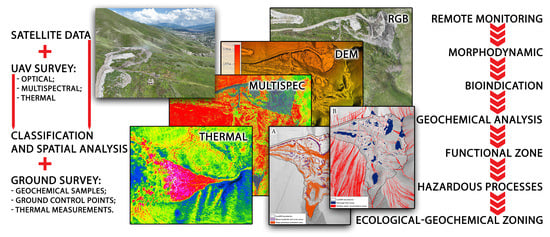
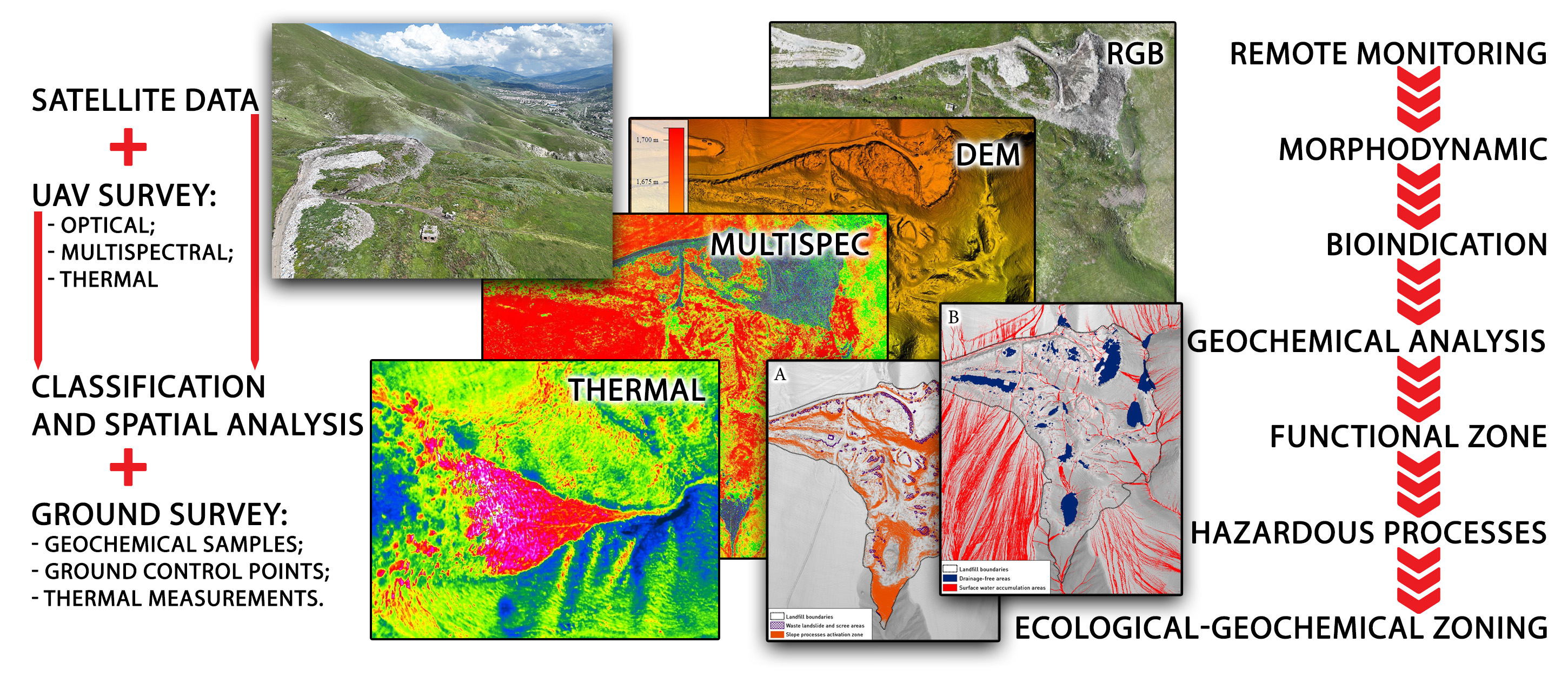
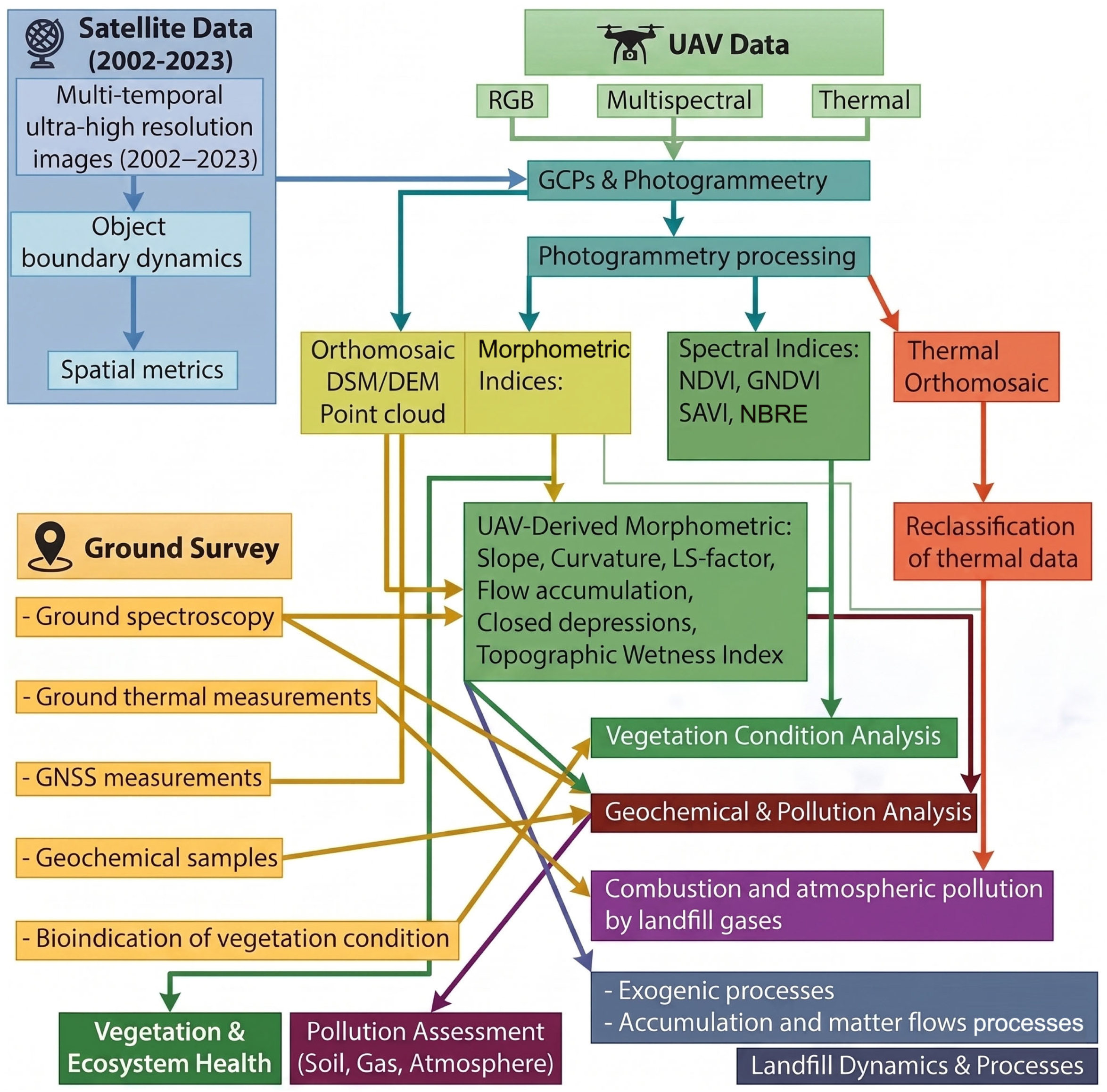
The research was conducted using remote sensing, including images of different spatial resolution and UAV aerial photography (
Figure 8). The space imagery used for the study’s chronological analysis is super-high resolution data from different time periods: 2002, 2011, 2013, and 2016–2023. The ground-based component of the study involved two main activities: the creation of a temporary reference network to re-link the aerial survey with geochemical studies aimed at assessing soil contamination levels.
DJI Mavic 3M, DJI Mavic 3T and DJI Matrice200 Zenmuse (SZ DJI Technology Co., Ltd., Shenzhen, China) were used for UAV survey (
Table 5). The drone DJI Mavic 3M, which was used for optical and multispectral survey is equipped with a satellite navigation system and supports multiple global navigation systems: GPS, Galileo, BeiDou, and GLONASS. This multi-system approach achieves high positioning accuracy. Drone was used with RTK correction, horizontal positioning accuracy is 1 cm plus 1 mm per kilometer. Vertical positioning accuracy is 1.5 cm plus 1 mm per kilometer. The onboard equipment included a powerful RGB camera with a 4/3-inch CMOS sensor and a 20-megapixel resolution. The camera has a wide 84° field of view and an equivalent focal length of 24 mm. Its flexible aperture adjustment system allowed aperture settings from f/2.8 to f/11 and focusing from 1 m to infinity. A wide ISO range from 100 to 6400 and an adjustable shutter speed (from 8 to 1/8000 of a second for the electronic shutter and from 8 to 1/2000 of a second for the mechanical shutter) ensured high-quality photography in a variety of lighting conditions. The maximum image resolution is 5280 × 3956 pixels. For advanced spectral analysis, the drone was equipped with a multispectral camera. This camera consists of four 5-megapixel cameras. The modules recorded radiation across the green, red, red-edge, and near-infrared spectra. This enabled detailed analysis of vegetation and other surface objects.
Aerial photography proved a valuable instrument for identifying structural elements and functional zones, and for conducting temporal analysis of waste disposal sites. Optical, multispectral, and thermal aerial imagery was acquired at the study site during the spring and summer seasons to obtain information on topography, micro-relief, vegetation condition, soil moisture, and landfill leachate accumulation. The aerial survey data were geometrically calibrated and processed to generate orthophotographic maps, digital terrain models, and three-dimensional point clouds. Spectral index imagery was derived from the multispectral data, including the Normalized Difference Vegetation Index (NDVI), the Green Normalized Difference Vegetation Index (GNDVI), the Normalized Difference Red-Edge (NDRE), and the Soil-Adjusted Vegetation Index (SAVI).
Software processing was performed using Agisoft Metashape 2.0.2, Global Mapper 25.0, and SAGA GIS 7.9.1. These tools were used for photogrammetric processing, point cloud classification, spatial analysis, and retrospective analysis of archived satellite images. The processing included recognition and classification of elements at waste disposal sites. It also included morphometric analysis of the terrain and landfill area, focusing on slope, surface dissection, topography, moisture content, and the development of exogenous processes. The results of these analyses were used to create a zoning system for controlled and uncontrolled waste sites. A synthesis of functional, chronological, bioindication, and ecological–geochemical data helped to better understand the impacts of landfills on adjacent landscapes.
The geochemical study of the site aimed at investigating the movement and accumulation of chemicals within and around the landfill. Various field techniques were used to collect environmental samples. Route surveys were conducted, and observations were made with a component-by-component analysis. Visual inspections were conducted to check for signs of contamination. Additionally, laboratory methods were employed to analyze selected soil samples, using analytical techniques.