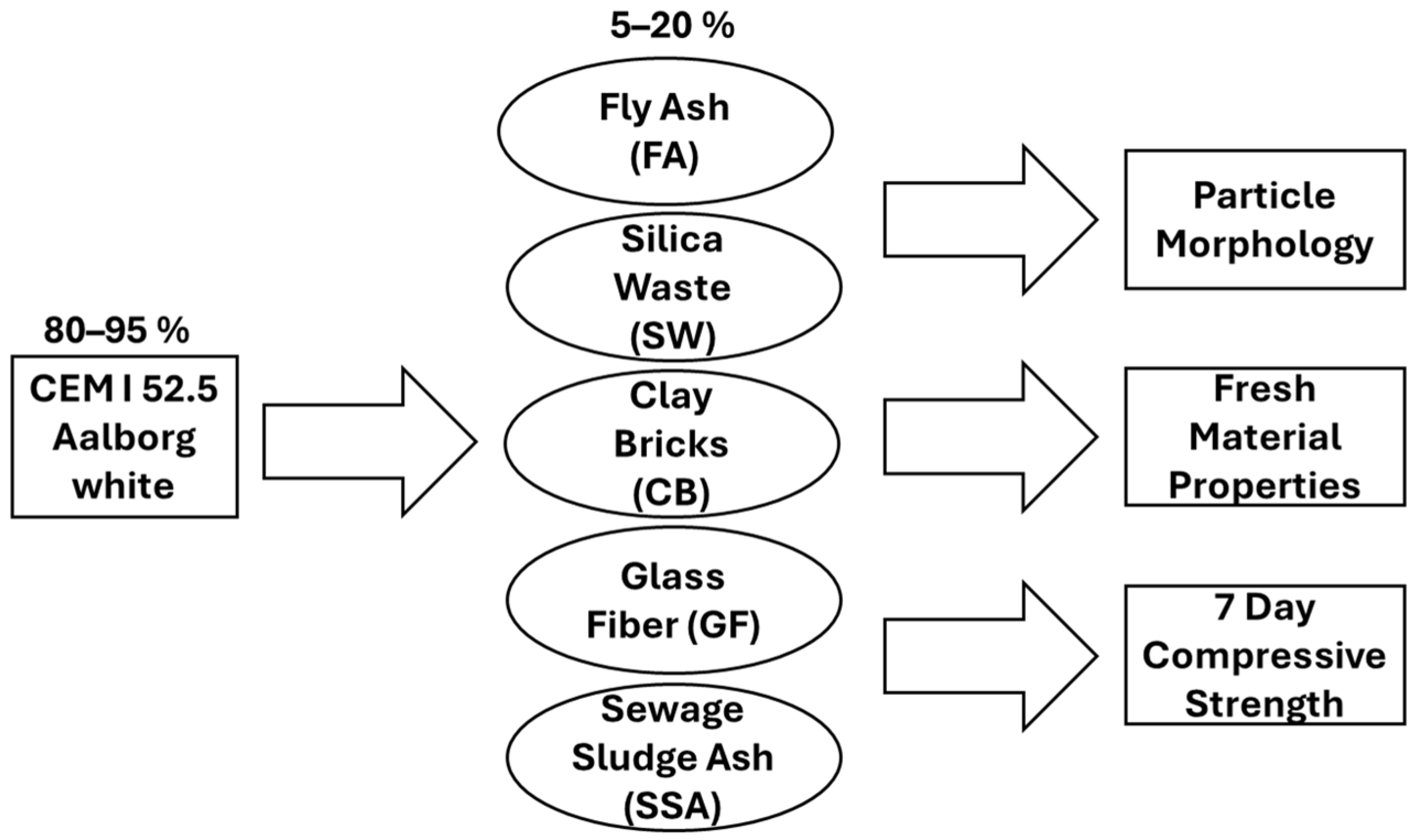


Comparative Analysis of Industrial Waste as Supplementary Cementitious Materials—A Preliminary Study


Abstract
1. Introduction
2. Results and Discussion
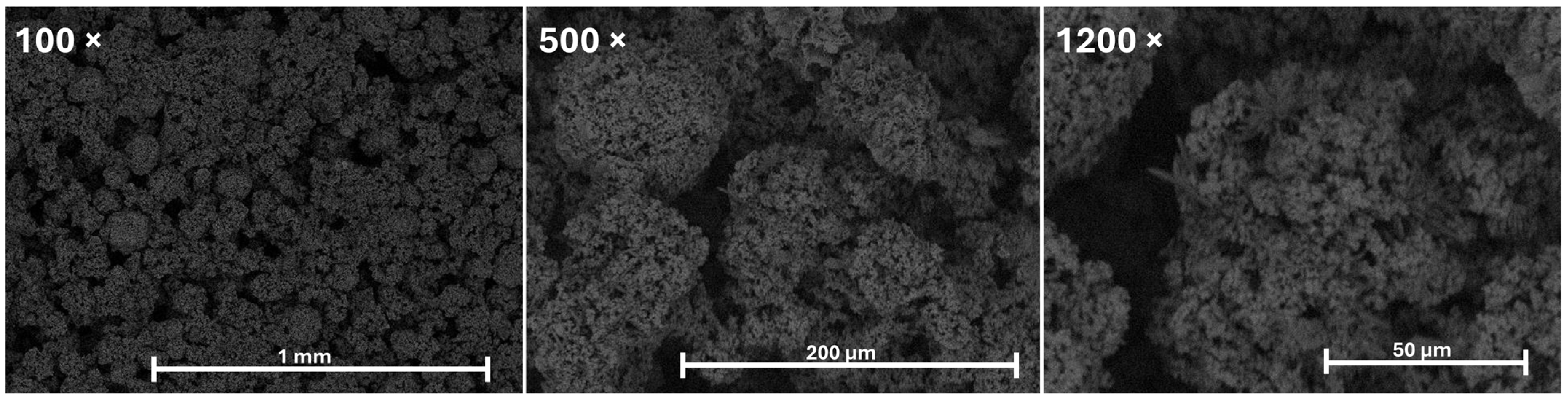
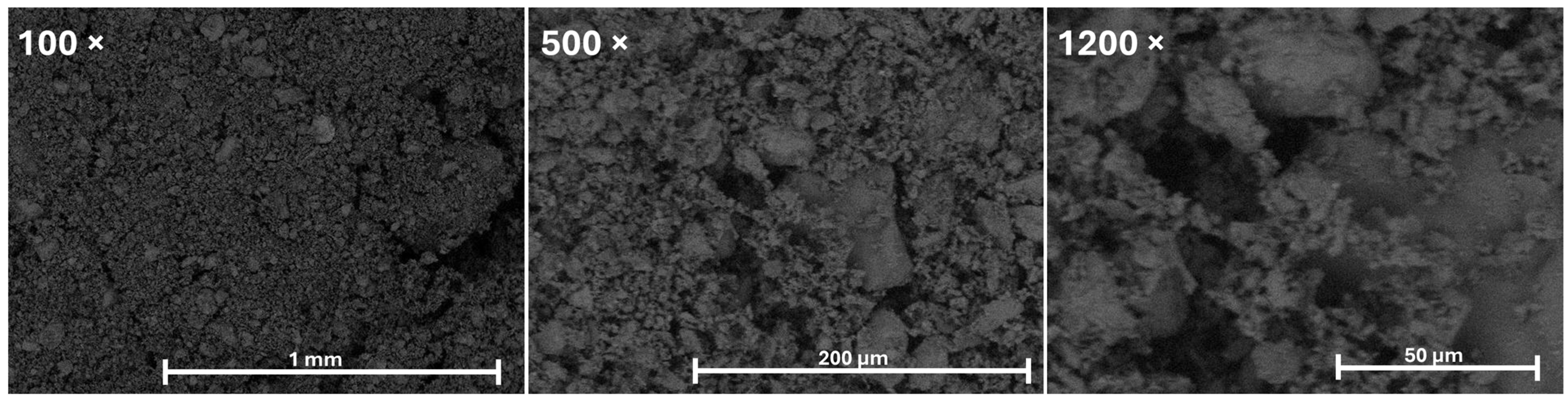
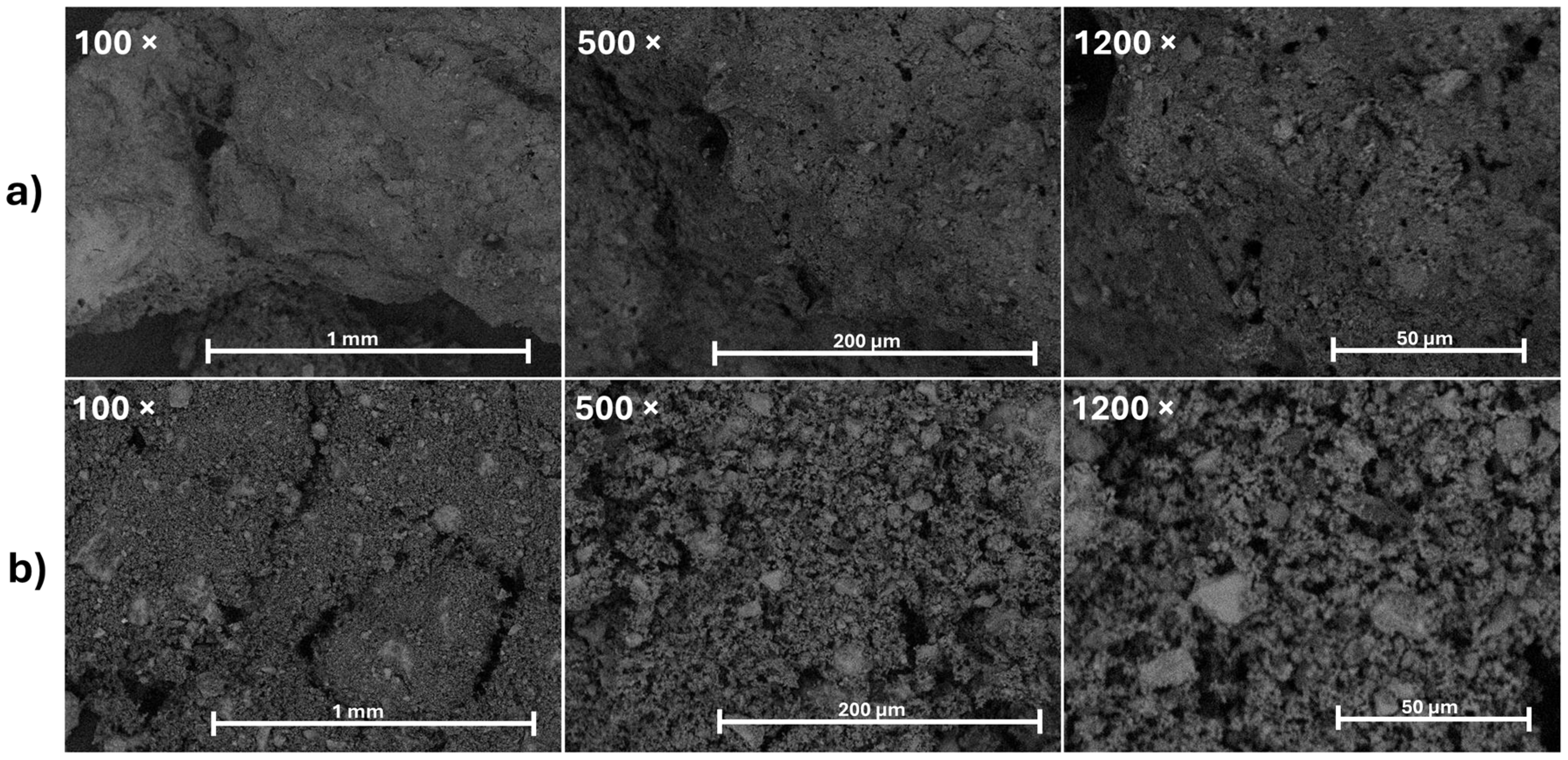
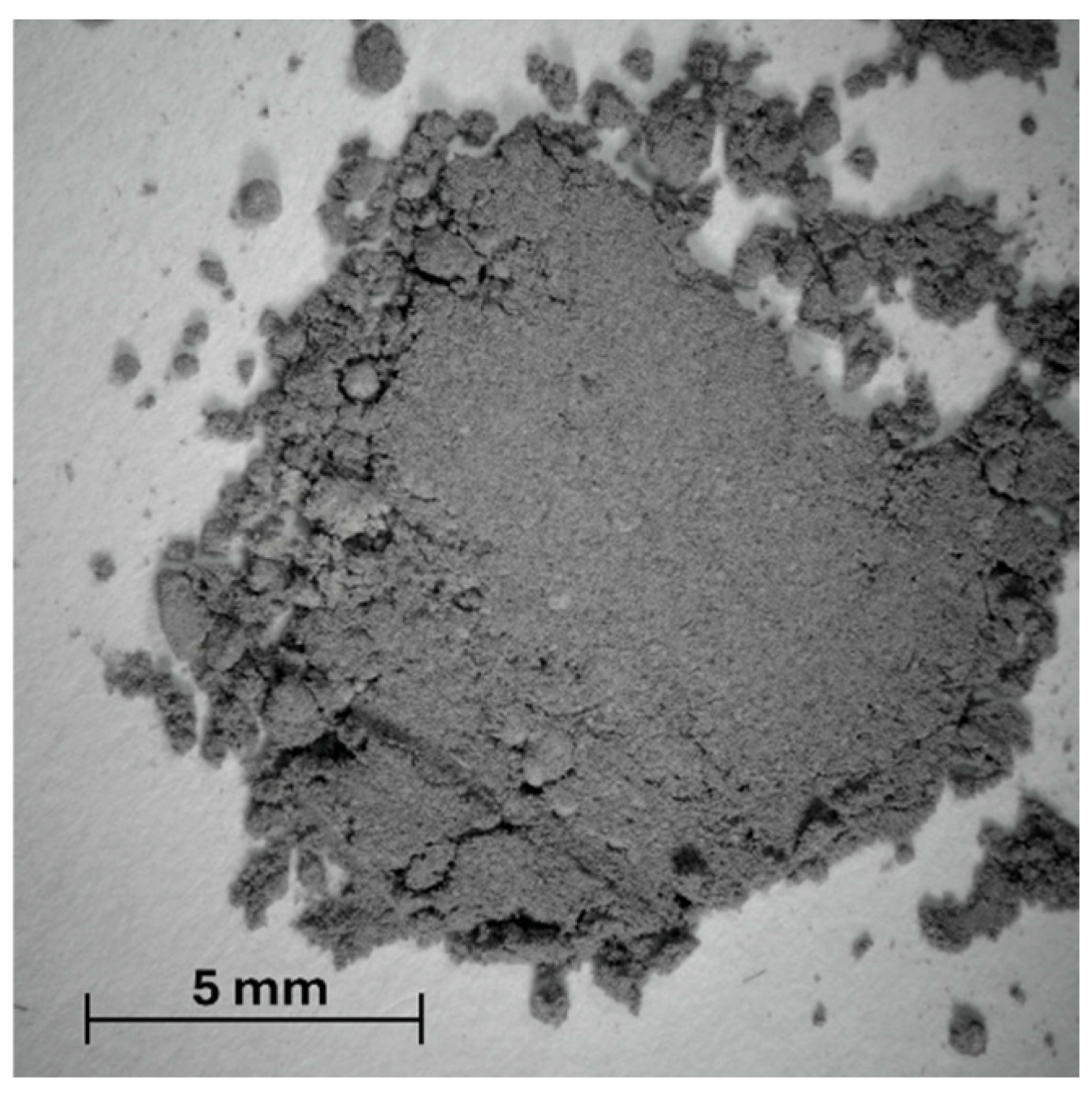
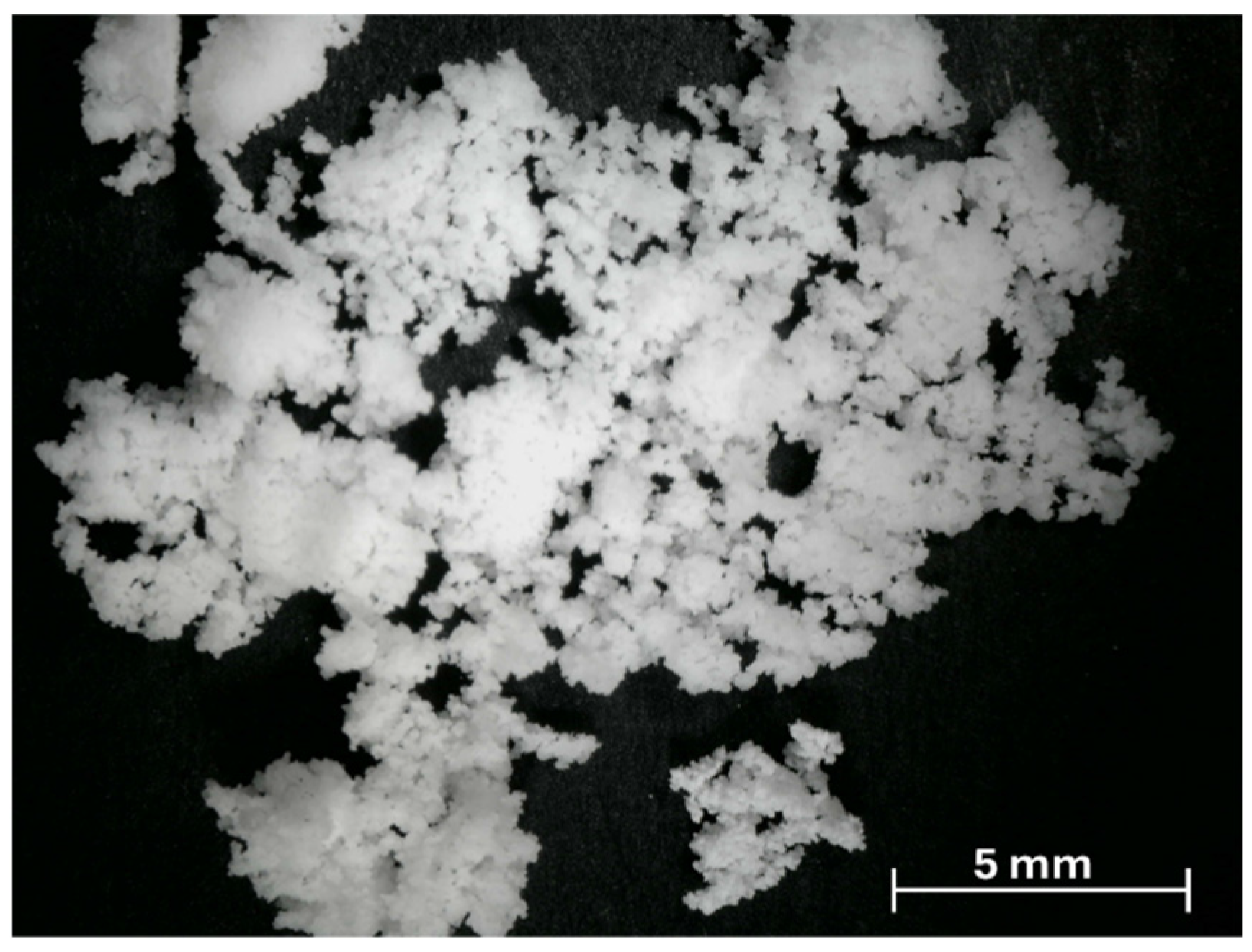
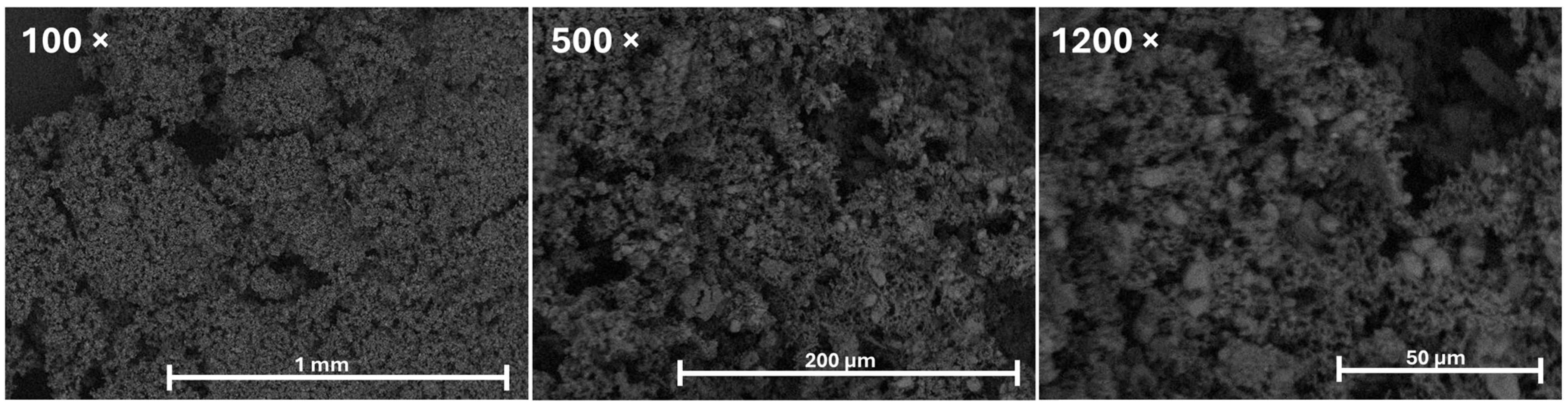
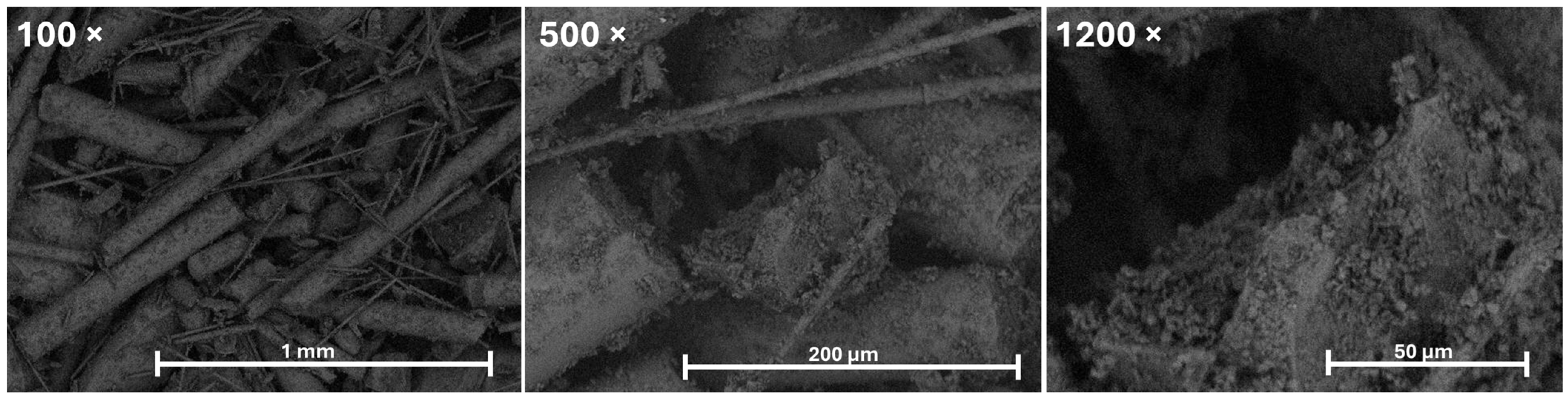
2.1. Particle Morphology
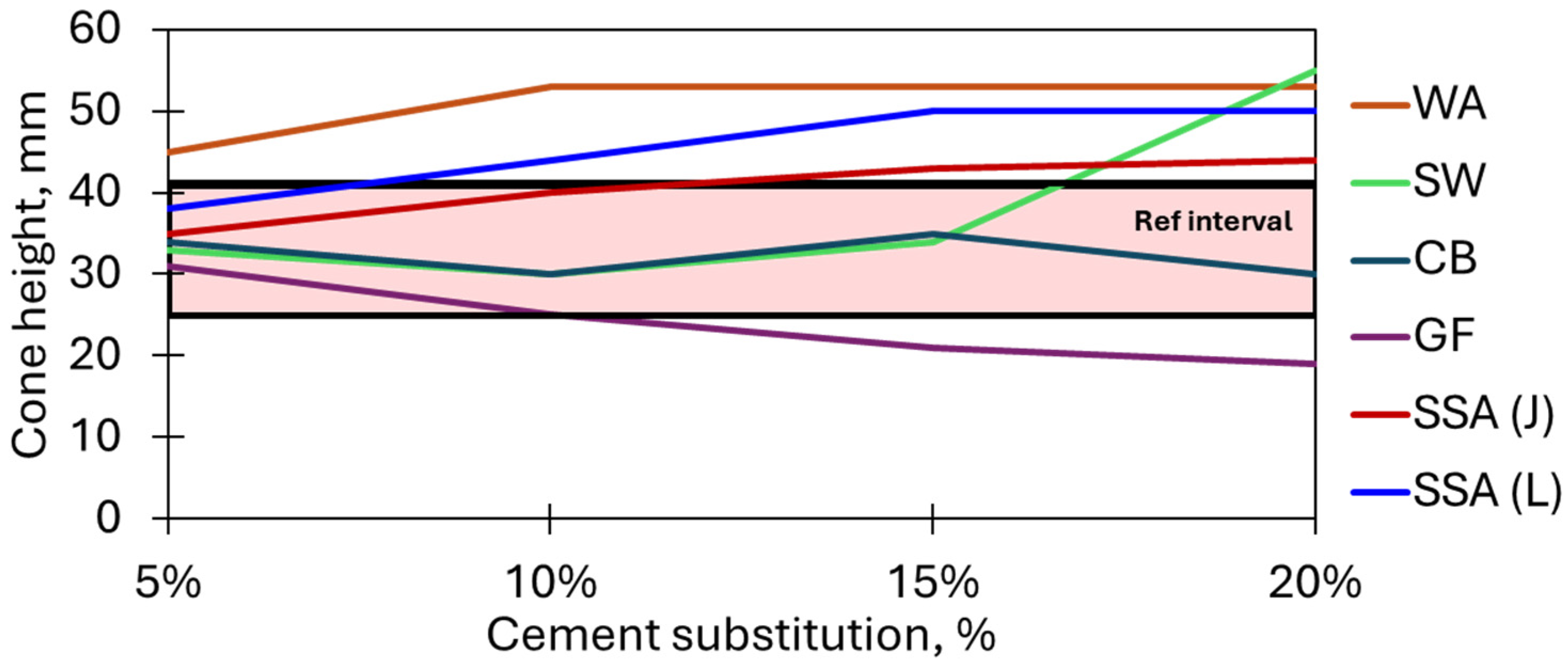
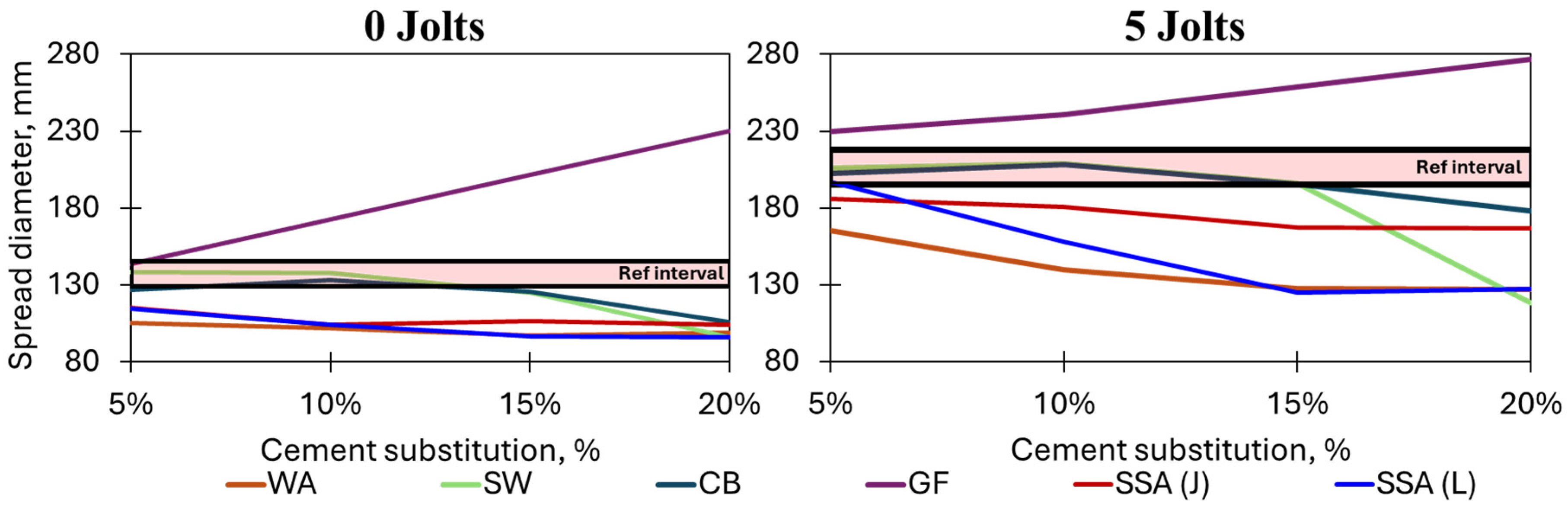
2.2. Fresh Material Properties
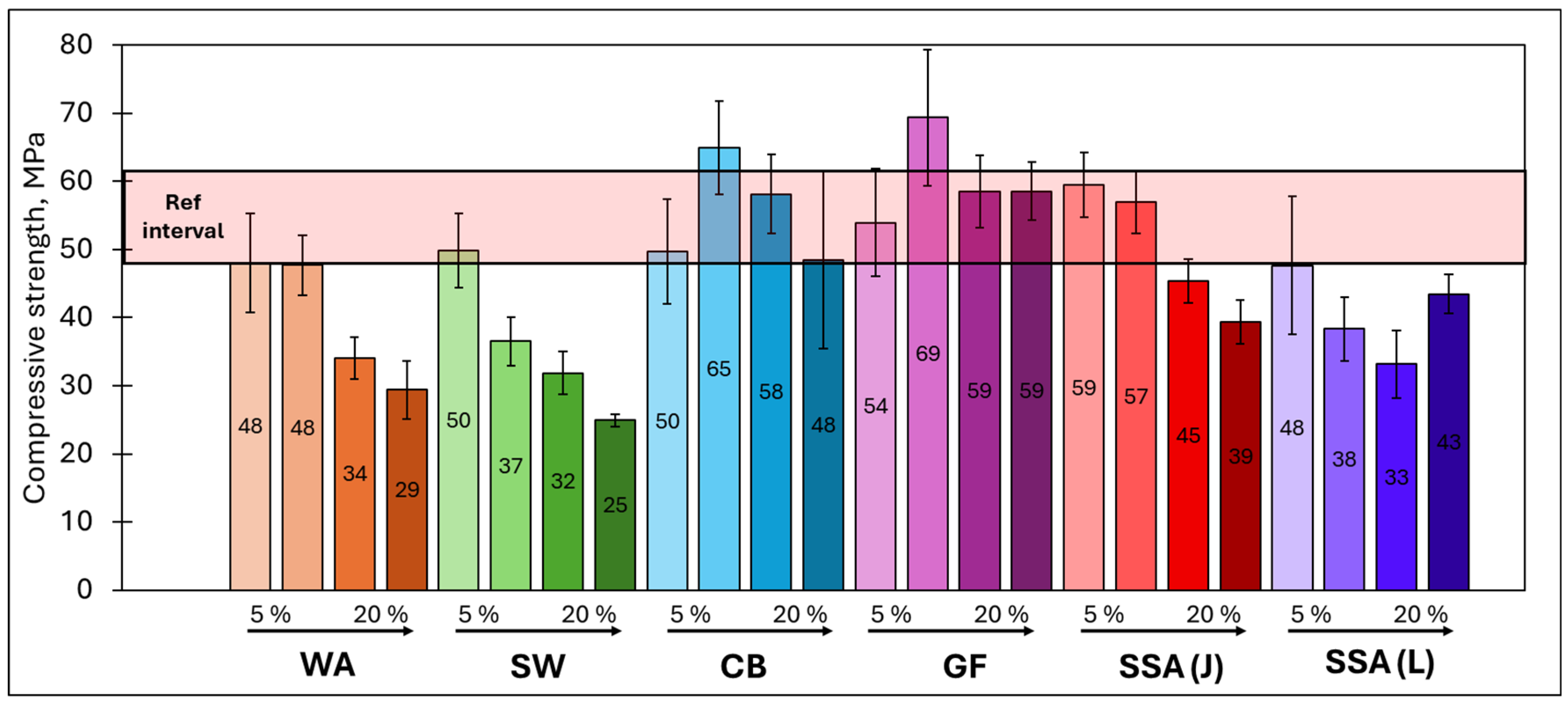
2.3. Density and Mechanical Compressive Strength
3. Materials and Methods
3.1. Raw Materials
3.1.1. CEM I 52.5 R Aalborg White Cement
3.1.2. Wood Ash
3.1.3. Silica Waste
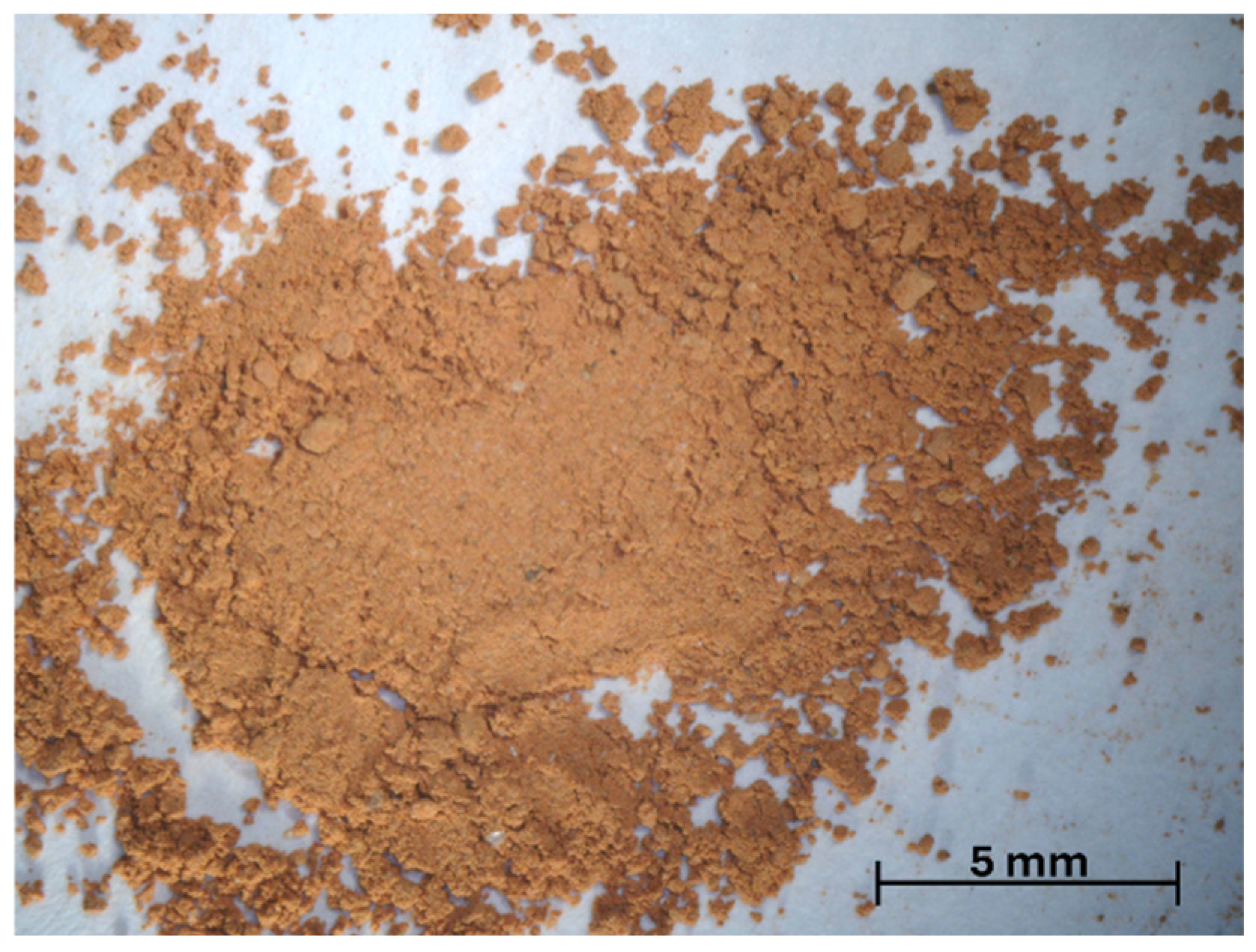
3.1.4. Clay Brick
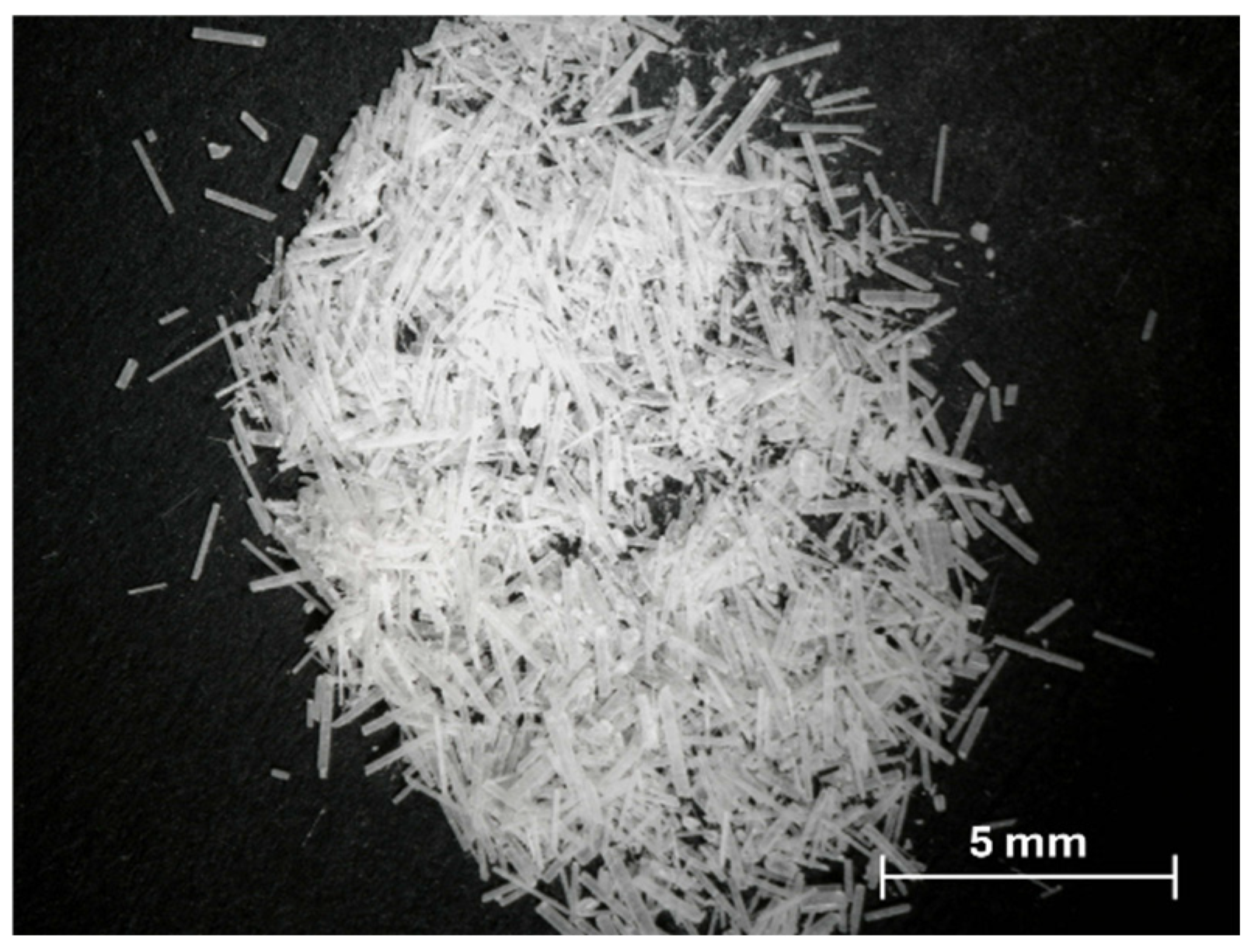
3.1.5. Glass Fiber
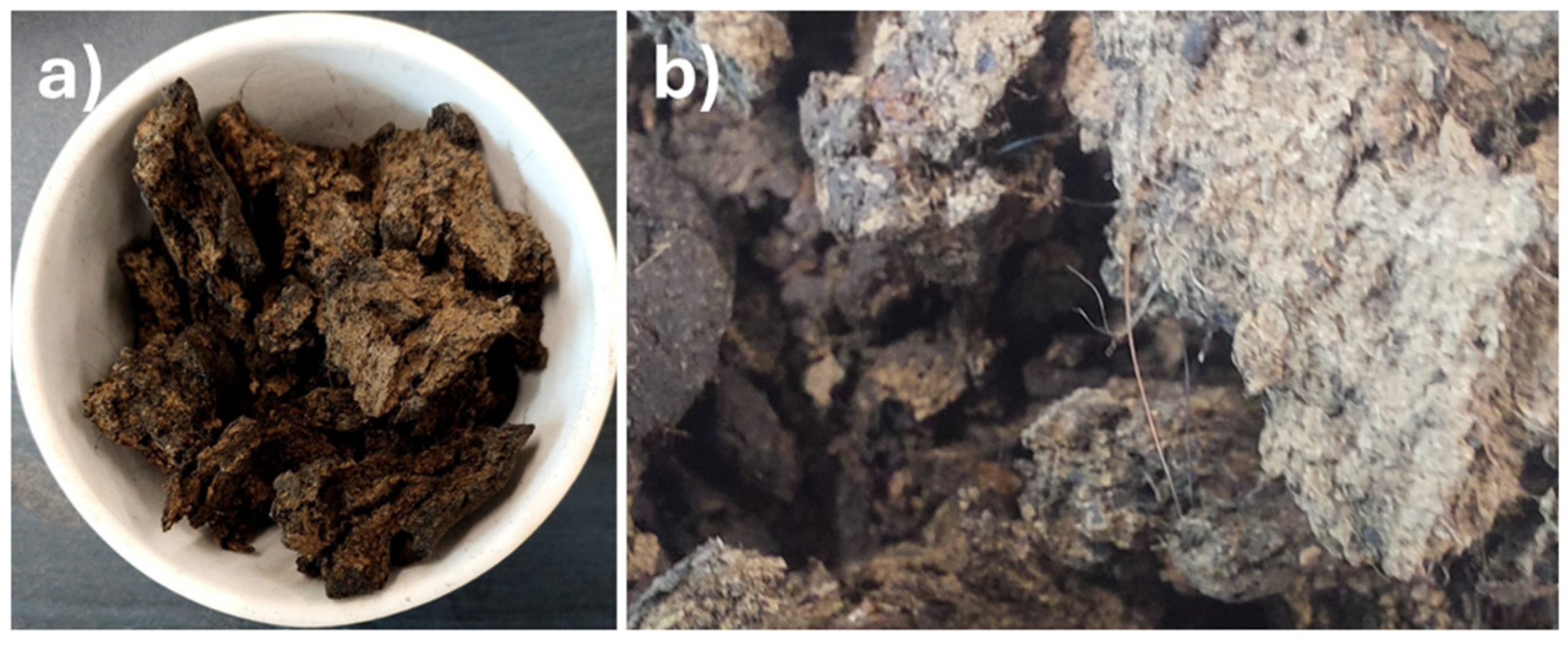
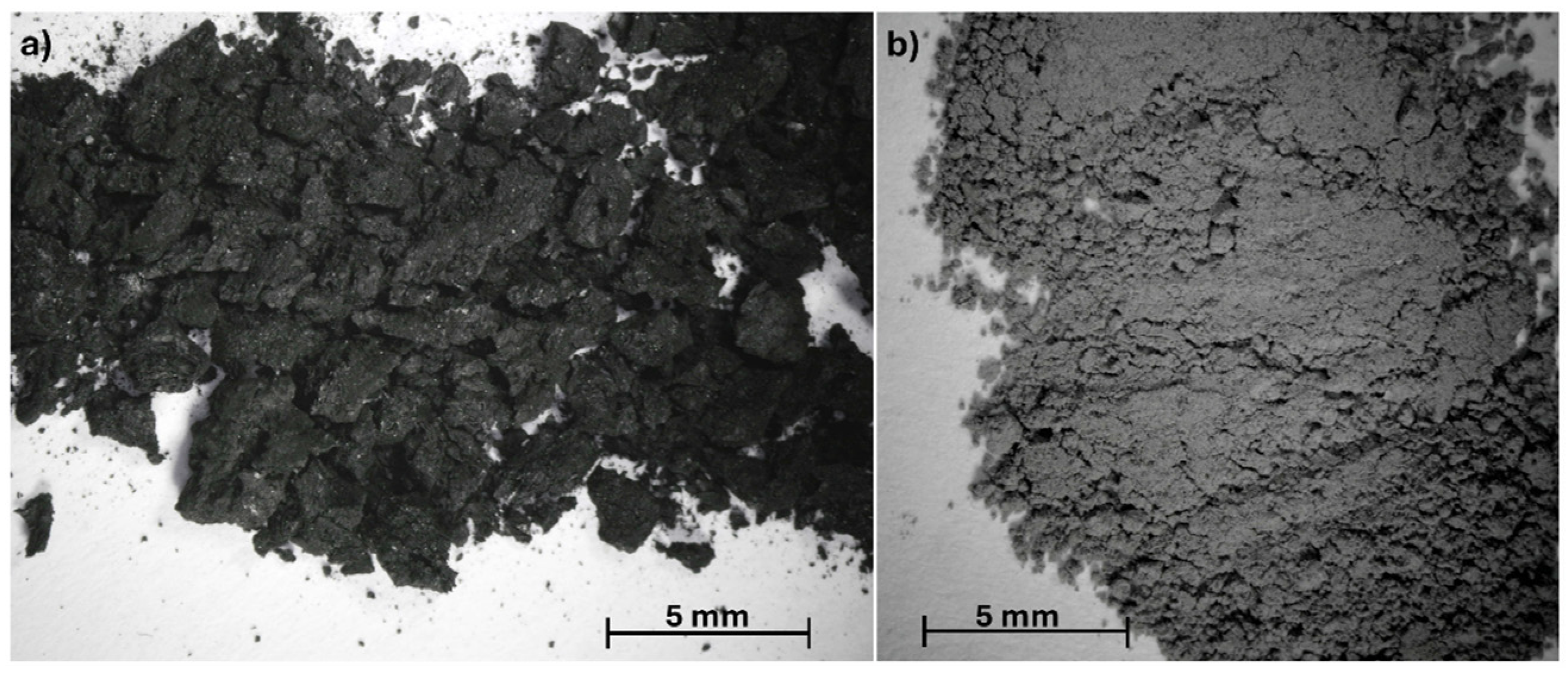
3.1.6. Sewage Sludge
3.2. Processing of the Sewage Sludge
3.3. Mix Design and Sample Preparation
3.4. Characterisation Techniques
4. Conclusions
Author Contributions
Funding
Data Availability Statement
Conflicts of Interest
References
- Wu, S.; Shao, Z.; Andrew, R.M.; Bing, L.; Wang, J.; Niu, L.; Liu, Z.; Xi, F. Global CO2 Uptake by Cement Materials Accounts 1930–2023. Sci. Data 2024, 11, 1409. [Google Scholar] [CrossRef] [Scilit]
- Fayomi, G.U.; Mini, S.E.; Fayomi, O.S.I.; Ayoola, A.A. Perspectives on Environmental CO2 Emission and Energy Factor in Cement Industry. IOP Conf. Ser. Earth Environ. Sci. 2019, 331, 012035. [Google Scholar] [CrossRef] [Scilit]
- Gibbs, M.J.; Soyka, P.; Conneely, D. CO2 emissions from cement production. In Good Practice Guidance and Uncertainty Management in National Greenhouse Gas Inventories; Intergovernmental Panel on Climate Change (IPCC): Geneva, Switzerland, 2001; pp. 175–182. [Google Scholar]
- Sauve, G.; Van Acker, K. Overview of Municipal Solid Wastes-Derived Refuse-Derived Fuels for Cement Co-Processing. Alex. Eng. J. 2023, 84, 153–174. [Google Scholar] [CrossRef] [Scilit]
- Bullo, M.; Romagnoli, F.; Ragazzi, M.; Adami, L.; Tubino, M.; Rada, E.C. Life Cycle Assessment of Cement Factory and Modular Gasification of Waste. Manag. Environ. Qual. 2025, 37, 453–473. [Google Scholar] [CrossRef] [Scilit]
- Terán-Cuadrado, G.; Nurdiawati, A.; Al-Ghamdi, S.G. Comparative Prospective Life Cycle Assessment of Decarbonization Strategies in the Saudi Cement Industry. Environ. Impact Assess. Rev. 2026, 119, 108362. [Google Scholar] [CrossRef] [Scilit]
- Teker Ercan, E.E.; Andreas, L.; Cwirzen, A.; Habermehl-Cwirzen, K. Wood Ash as Sustainable Alternative Raw Material for the Production of Concrete—A Review. Materials 2023, 16, 2557. [Google Scholar] [CrossRef] [Scilit] [PubMed]
- Siddique, R. Utilization of Wood Ash in Concrete Manufacturing. Resour. Conserv. Recycl. 2012, 67, 27–33. [Google Scholar] [CrossRef] [Scilit]
- Shah, S.A.; Tantray, M.A.; Bhat, A.R. Wood Ash as an Eco-Friendly Alternative for Sustainable Cement Replacement in Concrete. Clean. Circ. Bioecon. 2025, 12, 100178. [Google Scholar] [CrossRef] [Scilit]
- Mukharjee, B.B.; Barai, S.V. Influence of Nano-Silica on the Properties of Recycled Aggregate Concrete. Constr. Build. Mater. 2014, 55, 29–37. [Google Scholar] [CrossRef] [Scilit]
- Furlani, E.; Zanocco, M.; Tubaro, E.; Rondinella, A.; Maschio, S. Waste Silica Sand as a Possible Pozzolanic Filler to Produce Cement Mortars: Experimental Investigation. J. Mater. Cycles Waste Manag. 2024, 26, 1795–1803. [Google Scholar] [CrossRef] [Scilit]
- Sallı Bideci, Ö.; Bideci, A.; Ashour, A. Utilization of Recycled Brick Powder as Supplementary Cementitious Materials—A Comprehensive Review. Materials 2024, 17, 637. [Google Scholar] [CrossRef] [Scilit]
- Hasan, M.T.; Abdul-Hamead, A.A.; Othman, F.M. Sustainable Concrete Using Porcelain and Clay Brick Waste as Partial Sand Replacement: Evaluation of Mechanical and Durability Properties. Constr. Mater. 2025, 5, 78. [Google Scholar] [CrossRef] [Scilit]
- Mehta, A.; Ashish, D.K. Silica Fume and Waste Glass in Cement Concrete Production: A Review. J. Build. Eng. 2020, 29, 100888. [Google Scholar] [CrossRef] [Scilit]
- Gengan, G.; Kew, H.; Konstantinos, P. Effect of Recycled of Recycled Glass Aggregates on Mechanical and Physical Properties of Structural Concrete. Theory Build. Pract. 2023, 2023, 102–111. [Google Scholar] [CrossRef] [Scilit]
- Abid, S.R.; Nahhab, A.H.; Al-Dahawi, A.M.; Kadhum, A.L.; Ali, S.H. Mechanical Properties of Engineered Cementitious Composites with Low Cost Fibers and Recycled Glass Filler. Sustainability 2023, 15, 9952. [Google Scholar] [CrossRef] [Scilit]
- Fontes, C.M.A.; Toledo Filho, R.D.; Barbosa, M.C. Sewage Sludge Ash (SSA) in High Performance Concrete: Characterization and Application. Rev. IBRACON Estrut. Mater. 2016, 9, 989–1006. [Google Scholar] [CrossRef] [Scilit]
- Akintayo, B.D.; Babatunde, O.M.; Akintayo, D.C.; Olanrewaju, O.A. Transforming Industrial Waste into Low-Carbon Cement: A Multi-Criteria Assessment of Supplementary Cementitious Materials for Sustainable Concrete Design. Recycling 2025, 10, 211. [Google Scholar] [CrossRef] [Scilit]
- Scrivener, K.L.; John, V.M.; Gartner, E.M. Effects of Different Supplementary Cementitious Materials on Durability and Mechanical Properties of Cement Composite—Comprehensive Review. Heliyon 2023, 9, e17924. [Google Scholar] [CrossRef] [Scilit]
- Cai, Y.; Lin, Z.; Wang, Q. Influence of Supplementary Cementitious Materials on the Rheology of Fresh Concrete: A Review. J. Asian Concr. Fed. 2025, 11, 1–23. [Google Scholar] [CrossRef] [Scilit]
- Bhatt, A.; Priyadarshini, S.; Acharath Mohanakrishnan, A.; Abri, A.; Sattler, M.; Techapaphawit, S. Physical, Chemical, and Geotechnical Properties of Coal Fly Ash: A Global Review. Case Stud. Constr. Mater. 2019, 11, e00263. [Google Scholar] [CrossRef] [Scilit]
- Siddique, R. Utilization of Industrial By-Products in Concrete. Procedia Eng. 2014, 95, 335–347. [Google Scholar] [CrossRef] [Scilit]
- Moolchandani, K. Industrial Byproducts in Concrete: A State-of-the-Art Review. Next Mater. 2025, 8, 100593. [Google Scholar] [CrossRef] [Scilit]
- Mocanu, A.C.; Miculescu, F.; Dascălu, C.A.; Voicu, Ș.I.; Pandele, M.A.; Ciocoiu, R.C.; Batalu, D.; Dondea, S.; Mitran, V.; Ciocan, L.T. Influence of Ceramic Particles Size and Ratio on Surface—Volume Features of the Naturally Derived HA-Reinforced Filaments for Biomedical Applications. J. Funct. Biomater. 2022, 13, 199. [Google Scholar] [CrossRef] [Scilit]
- Tibebu, A.; Mekonnen, E.; Kumar, L.; Chimdi, J.; Hailu, H.; Fikadu, N. Compression and workability behavior of chopped glass fiber reinforced concrete. Mater Today Proc. 2022, 62, 5087–5094. [Google Scholar] [CrossRef] [Scilit]
- Nakic, D.; Vouk, D.; Štirmer, N.; Cheeseman, C.R. Use of Sewage Sludge Ash in Cementitious Materials. Rev. Adv. Mater. Sci. 2017, 42, 158–170. [Google Scholar]
- Rutkowska, G.; Żółtowski, M.; Rusakov, K.; Pawluk, K.; Andrzejak, J.; Żółtowski, B. The Influence of Fly Ash from Sewage Sludge on the Concrete Carbonation Course. Buildings 2023, 13, 1838. [Google Scholar] [CrossRef] [Scilit]
- Verma, S.; Singh, A.; Gupta, R.; Sundriyal, S. The Effect of Wood Ash on the Workability, Water Absorption, Compressive Strength in Cement Mortar. Int. J. Mod. Trends Sci. Technol. 2023, 9, 368–373. [Google Scholar]
- Antoni; Chandra, L.; Hardjito, D. The Impact of Using Fly Ash, Silica Fume and Calcium Carbonate on the Workability and Compressive Strength of Mortar. Procedia Eng. 2015, 125, 773–779. [Google Scholar] [CrossRef] [Scilit]
- Saravanan, T.J.; Kabeer, K.I.S.A. Automated Compressive Strength Prediction for Concrete Composites with Ceramic Waste Powder as Partial Cement Replacement with Data-Driven Techniques. Innov. Infrastruct. Solut. 2025, 11, 31. [Google Scholar] [CrossRef] [Scilit]
- Zaid, O.; Ahmad, J.; Siddique, M.S.; Aslam, F.; Alabduljabbar, H.; Khedher, K.M. A step towards sustainable glass fiber reinforced concrete utilizing silica fume and waste coconut shell aggregate. Sci. Rep. 2021, 11, 12822. [Google Scholar] [CrossRef] [Scilit] [PubMed]
- de Azevedo Basto, P.; Savastano Junior, H.; de Melo Neto, A.A. Characterization and Pozzolanic Properties of Sewage Sludge Ashes (SSA) by Electrical Conductivity. Cem. Concr. Compos. 2019, 104, 103410. [Google Scholar] [CrossRef] [Scilit]
- EN-197-1-2011; Cement. The British Standards Institution: London, UK, 2011; pp. 1–49.
- Sakret CEM I 52.5 R/White Cement Aalborg White. Available online: https://en.sakret.lv/product/cem-i-52-5-r-white-cement-aalborg-white/ (accessed on 4 November 2025).
- Vaičiukynienė, D.; Jakevičius, L.; Kantautas, A.; Vaitkevičius, V.; Vaičiukynas, V.; Dvořák, K. Conversion of Silica By-Product into Zeolites by Thermo-Sonochemical Treatment. Ultrason. Sonochem. 2020, 72, 105426. [Google Scholar] [CrossRef] [Scilit] [PubMed]
- BS EN 196-1:2005; Methods of Testing Cement. Determination of Strength. The British Standards Institution: London, UK, 2005.
- BS EN 206-1; Part 1: Method of Specifying and Guidance for the Specifier. The British Standards Institution: London, UK, 2006.
- ASTM C143/C143M-12; American Society for Testing and Materials C143—Test Method for Slump of Hydraulic-Cement Concrete. ASTM international: West Conshohocken, PA, USA, 2012.
- BS EN 12390-7:2019+AC:2020; Testing Hardened Concrete. Density of Hardened Concrete. The British Standards Institution: London, UK, 2020.








| Sample | Material Density, kg/m3 | Sample | Material Density, kg/m3 | Sample | Material Density, kg/m3 |
|---|---|---|---|---|---|
| REF | 1925 ± 37 | ||||
| WA5 | 1932 ± 11 | CB5 | 1928 ± 20 | J5 | 1880 ± 18 |
| WA10 | 1898 ± 15 | CB10 | 1909 ± 21 | J10 | 1878 ± 16 |
| WA15 | 1893 ± 9 | CB15 | 1908 ± 23 | J15 | 1877 ± 13 |
| WA20 | 1871 ± 12 | CB20 | 1884 ± 30 | J20 | 1891 ± 20 |
| SW5 | 1869 ± 20 | GF5 | 1941 ± 15 | L5 | 1911 ± 19 |
| SW10 | 1808 ± 23 | GF10 | 1893 ± 19 | L10 | 1885 ± 26 |
| SW15 | 1763 ± 30 | GF15 | 1900 ± 23 | L15 | 1883 ± 16 |
| SW20 | 1685 ± 13 | GF20 | 1893 ± 28 | L20 | 1856 ± 20 |
| Sample | Composition, Mass Parts | Water | ||||||
|---|---|---|---|---|---|---|---|---|
| СЕM I 52.5 R | FA | SW | CB | GF | SSA (J) | SSA (L) | ||
| REF | 100 | 40 | ||||||
| WA5 | 95 | 5 | 40 | |||||
| WA10 | 90 | 10 | ||||||
| WA15 | 85 | 15 | ||||||
| WA20 | 80 | 20 | ||||||
| SW5 | 95 | 5 | 40 | |||||
| SW10 | 90 | 10 | ||||||
| SW15 | 85 | 15 | ||||||
| SW20 | 80 | 20 | ||||||
| CB5 | 95 | 5 | 40 | |||||
| CB10 | 90 | 10 | ||||||
| CB15 | 85 | 15 | ||||||
| CB20 | 80 | 20 | ||||||
| GF5 | 95 | 5 | 40 | |||||
| GF10 | 90 | 10 | ||||||
| GF15 | 85 | 15 | ||||||
| GF20 | 80 | 20 | ||||||
| J5 | 95 | 5 | 40 | |||||
| J10 | 90 | 10 | ||||||
| J15 | 85 | 15 | ||||||
| J20 | 80 | 20 | ||||||
| L5 | 95 | 5 | 40 | |||||
| L10 | 90 | 10 | ||||||
| L15 | 85 | 15 | ||||||
| L20 | 80 | 20 | ||||||
Disclaimer/Publisher’s Note: The statements, opinions and data contained in all publications are solely those of the individual author(s) and contributor(s) and not of MDPI and/or the editor(s). MDPI and/or the editor(s) disclaim responsibility for any injury to people or property resulting from any ideas, methods, instructions or products referred to in the content. |
© 2026 by the authors. Licensee MDPI, Basel, Switzerland. This article is an open access article distributed under the terms and conditions of the Creative Commons Attribution (CC BY) license.
Share and Cite
Argalis, P.P.; Gelzis, K.; Valdovskis, R.K.; Vitola, L. Comparative Analysis of Industrial Waste as Supplementary Cementitious Materials—A Preliminary Study. Recycling 2026, 11, 75. https://doi.org/10.3390/recycling11040075
Argalis PP, Gelzis K, Valdovskis RK, Vitola L. Comparative Analysis of Industrial Waste as Supplementary Cementitious Materials—A Preliminary Study. Recycling. 2026; 11(4):75. https://doi.org/10.3390/recycling11040075
Chicago/Turabian StyleArgalis, Pauls P., Kristers Gelzis, Ralfs K. Valdovskis, and Laura Vitola. 2026. "Comparative Analysis of Industrial Waste as Supplementary Cementitious Materials—A Preliminary Study" Recycling 11, no. 4: 75. https://doi.org/10.3390/recycling11040075
APA StyleArgalis, P. P., Gelzis, K., Valdovskis, R. K., & Vitola, L. (2026). Comparative Analysis of Industrial Waste as Supplementary Cementitious Materials—A Preliminary Study. Recycling, 11(4), 75. https://doi.org/10.3390/recycling11040075