
Article

Advancing Plastic Waste Circularity Through Modular Portable Pyrolysis Systems

by
Dimitrios-Aristotelis Koumpakis
,
Dimitrios Christoforidis
,
Vasileios Diamantis
,
Alexandra V. Michailidou
and
Christos Vlachokostas
*
Sustainability Engineering Laboratory, Department of Mechanical Engineering, Aristotle University of Thessaloniki, 54124 Thessaloniki, Greece
*
Author to whom correspondence should be addressed.
Recycling 2026, 11(4), 67; https://doi.org/10.3390/recycling11040067
Submission received: 9 February 2026 / Revised: 16 March 2026 / Accepted: 25 March 2026 / Published: 1 April 2026

Abstract

The lack of centralized waste management infrastructure in certain regions makes plastic waste an escalating environmental and economic problem. This research investigates how modular portable pyrolysis systems function as sustainable decentralized solutions. A standard shipping container houses a custom-designed pyrolysis unit which demonstrates flexibility and adaptability. The system contains a batch rotary kiln reactor with a processing capacity of 750 kg per batch which is fed with urban plastic waste, to produce pyrolytic oil, syngas and char. The produced pyrolytic oil exhibits an energy content comparable to that of conventional diesel fuel. Additionally, the integration of biomass briquettes and recycled pyrolytic gas can reduce to a big extent the external energy requirements, improving the system’s overall energy autonomy. Therefore, the system becomes economically reliable due to its low operational expenses and the short cycle of approximately 7-h operation. The unit’s mobility enables on-site treatment operations which reduces both transportation emissions and expenses. The analysis includes technical design elements together with performance metrics for different plastics. This conceptual study demonstrates the feasibility of containerized pyrolysis as a practical method to enhance plastic waste chemical recycling rates while presenting a scalable framework for industrial symbiosis and local waste-to-energy conversion.

1. Introduction

The exponential growth of plastic production and consumption over the last century has created an escalating global waste crisis. Each year, millions of tons of plastic are discarded, with a large portion ending up in landfills, oceans, or informal dumpsites [1,2]. Conventional waste management systems, including mechanical recycling, remain inadequate due to limitations in sorting, contamination, and the degradation of polymer properties during repeated recycling cycles [3]. As a result, significant quantities of mixed and non-recyclable plastics persist in the environment, contributing to severe ecological and economic consequences [4].
Thermochemical conversion technologies such as pyrolysis have emerged as promising alternatives for recovering energy and valuable materials from plastic waste [5,6]. Pyrolysis involves the decomposition of polymers in an oxygen-free environment at elevated temperatures, converting plastics into liquid fuels, syngas, and char [7]. Under controlled operating conditions, pyrolysis has been reported to exhibit lower greenhouse gas emissions and reduced formation of toxic compounds such as dioxins and furans compared to conventional incineration [8]. The produced pyrolytic oil may serve as an alternative energy carrier or as a potential feedstock for petrochemical processes following appropriate upgrading and refining [9,10]. Hence, it enhances the objectives of circular economy.
Beside these vital advantages, the problem is that large-scale pyrolysis plants are demanding substantial capital investment, complex infrastructure, and steady feedstock supply [11]. In many small communities, where organized recycling systems or advanced waste treatment infrastructure are absent, mixed post-consumer plastic waste from households accumulates without viable valorization pathways [12]. All these constraints render the technology unsuitable for regions that lack centralized waste management systems. Based on this context, portable and modular pyrolysis systems are highly beneficial because these methods provide a practical and sustainable solution. They are kept within standard shipping containers. Therefore, it is possible to deploy and transport these complex units directly at waste generation sites. Secondly, it decreases logistics, minimizing emissions, and enabling local energy recovery [13].
Previous studies by Roychand, Maqsood and Sharuddin have investigated different reactor designs which include batch rotatory kilns, conical spouted beds and fluidized beds to achieve better conversion rates and product quality [14,15,16]. The implementation of decentralized pyrolysis systems faces multiple technical barriers which affect their economic viability through high operational expenses, limited production capacity and unstable fuel output [16,17]. The worldwide implementation of pyrolysis technology faces additional issues because standardization and quality certification for pyrolysis products are still under development.
This research investigates containerized modular pyrolysis systems which replicate industrial pyrolysis operational methods through a compact and adaptable design. The proposed method aims to reduce transportation needs, simplify logistics and boost system performance through its implementation of industrial pyrolysis functionality in containerized scaled down systems. The research shows that containerized pyrolysis systems can provide an industrial symbiosis solution which enables sustainable plastic waste management and local energy independence through their scalable design.

2. Results

2.1. Quantified Outputs and Product Value

Using the design throughput of 750 kg per batch and a theoretical maximum of three batches per day, the proposed unit can process up to 2.25 t/day of mixed plastic feedstock under ideal operating conditions. For the present results, the feedstock is assumed to be polyolefin-rich, with PE and PP as the dominant fractions and smaller PS contents. Based on representative literature values for mixed polyolefin pyrolysis, an average product distribution of 75 wt% liquid oil, 15 wt% non-condensable gas, and 10 wt% char was adopted for the mass balance.
Applying these fractions to the nominal batch capacity gives calculated outputs of 562.5 kg of pyrolysis oil, 112.5 kg of non-condensable gas, and 75.0 kg of char per batch. When extended to the full daily throughput, the corresponding production becomes 1687.5 kg/day of pyrolytic oil, 337.5 kg/day of gas, and 225.0 kg/day of char. The liquid fraction is therefore the dominant product stream, accounting for three quarters of the total recovered mass, while gas and char represent smaller but potentially useful secondary streams. Table 1 presents the calculated material outputs of the proposed unit per batch and per day.
From an economic perspective, the liquid oil fraction is expected to be the principal value-bearing stream. A recent review reports indicative selling values of €523–784/t for pyrolysis oil and €174–261/t for non-condensable gas [8]. Using these indicative values, the calculated gross product value of the oil stream is approximately €294–441 per batch and €883–1323 per day. By comparison, the theoretical value of the gas stream is considerably lower, about €20–29 per batch or €59–88 per day, and in practice this stream is more important as an internal energy carrier than as a saleable product. The char fraction is not assigned a fixed market value in this study because plastic-derived char remains application-dependent and often requires further qualification before commercial use, although recent literature supports its possible use in building materials and carbon-based products. The corresponding indicative daily product values are summarized in Table 2.
These results indicate that the economic significance of the proposed unit is driven primarily by the liquid hydrocarbon output, which represents more than 90% of the indicative gross product value under the adopted assumptions. This means that the viability of the concept is closely linked to the quality, storage, and upgrading route of the produced oil. In decentralized rural settings, this stream could potentially be directed to local industrial heating users, small asphalt-related operations, or regional upgrading facilities, while the gas can reduce imported fuel demand and the char may provide an additional, albeit smaller, local valorization route. The values presented here should be interpreted as indicative gross output values only, since they exclude operating costs, labor, maintenance, upgrading, transport, and compliance-related expenses.

2.2. Environmental Benefits of Decentralized Circular Integration

The environmental benefits of the proposed system arise primarily from local energy recovery, reduced transportation needs, and partial substitution of fossil fuels. In the proposed configuration, part of the non-condensable gas produced during pyrolysis is recirculated and burned within the system to support reactor heating after the start-up phase. In addition, locally sourced biomass pellets can provide the initial thermal input required for reactor start-up, reducing the need for externally supplied fossil fuels such as liquefied petroleum gas (LPG).
A second environmental benefit arises from the decentralized deployment of the unit. Instead of transporting plastic waste to distant centralized treatment facilities, the waste can be processed locally in rural communities or industrial sites. This reduces transportation demand for both waste and fuel supply, while allowing the produced materials to remain within the local economy.
To illustrate the potential magnitude of these effects, indicative daily CO2-equivalent savings were estimated for a processing capacity of three batches per day (2.25 t/day). Transport emissions were calculated using an emission factor of 0.096 kg CO2e per tonne-kilometer, corresponding to articulated heavy goods vehicles (>33 t) reported in the UK Government greenhouse gas conversion factors 2025. Fossil fuel combustion emissions for LPG were estimated using a factor of approximately 3.0 kg CO2 per kg LPG [21]. The resulting order-of-magnitude estimates are presented in Table 3.
These calculations indicate that the largest potential emission reduction may arise from substituting fossil fuel combustion during start-up heating, while additional benefits result from reduced transportation of both plastic waste and external fuel supplies. Although the presented values are indicative rather than full life-cycle results, they illustrate the potential environmental advantages of decentralized waste-to-energy systems.
Beyond environmental impacts, localized processing of plastic waste may also create economic opportunities for small communities. Plastic waste streams can be converted into intermediate raw materials with potential commercial value, supporting local employment in waste collection, plant operation, product handling, and downstream material utilization. However, the actual environmental and economic performance of such systems will depend strongly on feedstock quality, local infrastructure, regulatory frameworks, and operational efficiency.

3. Discussion

The results highlight several technical considerations regarding the feasibility of decentralized plastic pyrolysis systems. While the proposed containerized unit demonstrates that small-scale thermochemical conversion is structurally possible within a standardized transportable framework, the effectiveness of such a system depends strongly on feedstock characteristics and operational consistency. Polyolefin-rich plastics such as polyethylene and polypropylene are generally favorable for pyrolysis due to their high hydrocarbon content and relatively predictable liquid yields. However, the presence of other polymers, particularly PVC and PET, may introduce contaminants that affect product quality and process stability. This reinforces the importance of upstream waste sorting and feedstock management even when chemical recycling technologies are applied to mixed plastic streams.
Energy integration also plays an important role in the viability of the proposed system. The recirculation of non-condensable gases for reactor heating represents a practical method to reduce external energy demand once the process reaches stable operation. Such internal energy reuse is commonly implemented in pyrolysis systems and contributes to improved thermal efficiency. However, the degree to which this reduces overall fuel consumption depends on the actual gas composition and heating requirements of the reactor. Consequently, the assumption of partial energy self-sufficiency should be considered conditional and would require further verification through detailed energy balance analysis.
Another aspect emerging from the results is the potential benefit of decentralized waste treatment in reducing transportation requirements. Locating the processing unit closer to the source of plastic waste may reduce emissions associated with long-distance waste transport and create opportunities for local use of the generated products. For example, pyrolysis oil and char may serve as intermediate raw materials for nearby industrial or construction activities, while recovered gases can support internal energy needs. These localized material flows may provide environmental and logistical advantages, although their actual impact depends on local infrastructure, market demand, and regulatory frameworks.
Despite these potential benefits, pyrolysis should not be interpreted as a universal solution for plastic waste management. Mechanical recycling remains the preferred pathway for clean and homogeneous plastic streams because it preserves the material value of polymers. Chemical recycling technologies such as pyrolysis are more appropriately applied to plastic fractions that cannot be mechanically recycled due to contamination, degradation, or complex compositions. In this context, decentralized pyrolysis systems may complement existing waste management strategies rather than replace them.
Overall, the findings suggest that containerized pyrolysis units may represent a technically plausible option for localized treatment of specific plastic waste streams. Nevertheless, uncertainties remain regarding long-term operational performance, product upgrading requirements, and economic viability. Further work involving pilot-scale testing, techno-economic evaluation, and life-cycle assessment would therefore be necessary to better understand the practical role of such systems within integrated waste management and circular resource strategies.

4. Materials and Methods

4.1. Fundamentals of Plastic Pyrolysis

Pyrolysis is the thermal decomposition of organic materials in the absence of oxygen, leading to the breakdown of long-chain polymers into smaller hydrocarbon molecules [22]. This process can convert thermoplastic polymers into liquid oil, non-condensable gases, and solid char, while the final product distribution is mainly influenced by temperature, heating rate, residence time, pressure, and reactor configuration [23]. Unlike combustion, pyrolysis proceeds in an oxygen-free or inert atmosphere and does not rely on oxidative reactions [24].
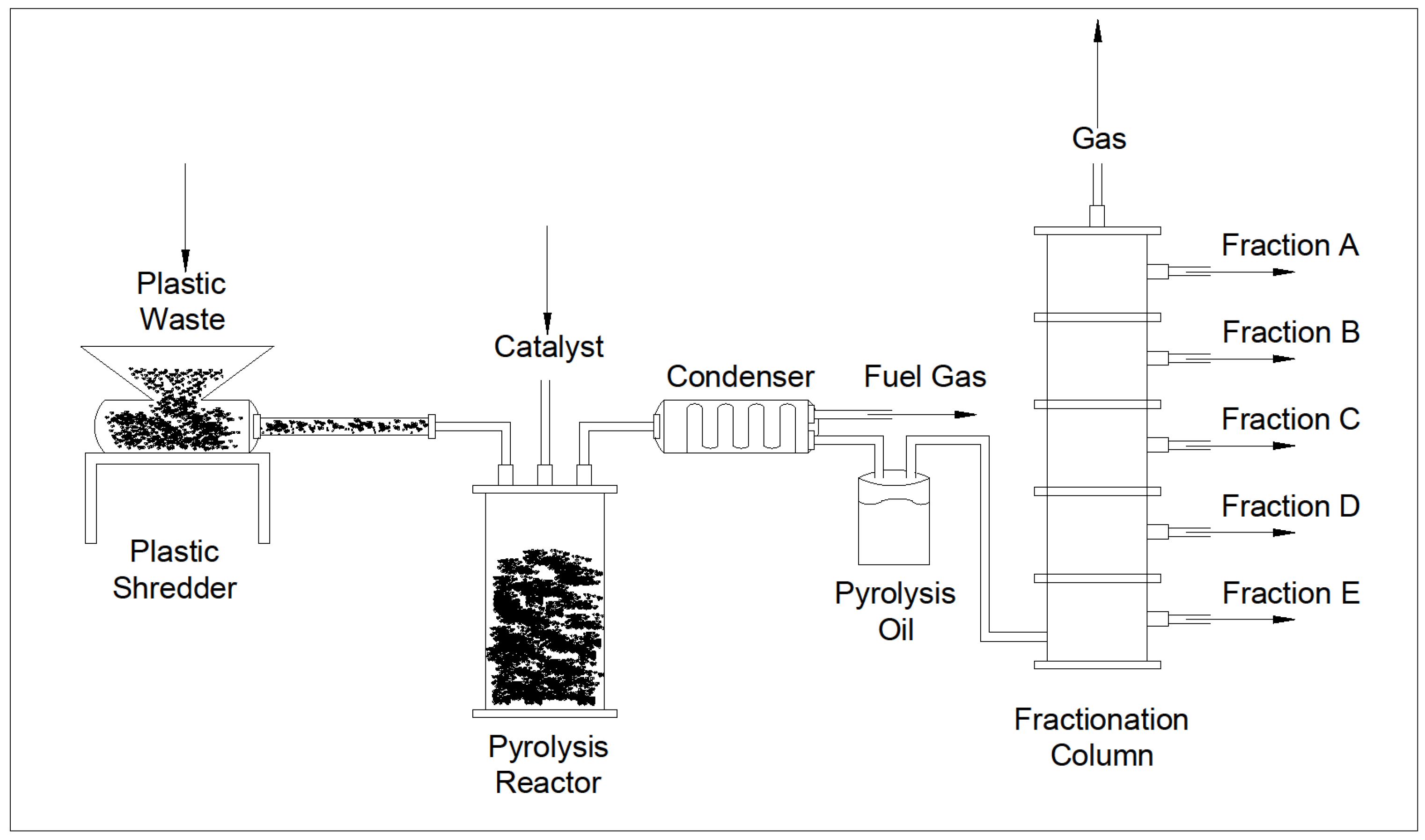
The general process route considered in this study is illustrated in Figure 1, which summarizes the main stages of plastic pyrolysis from feedstock input to product separation.
Shredded plastic waste is introduced into a sealed reactor and heated externally under an inert atmosphere [24]. The volatilized products then pass through a condensation system, where condensable hydrocarbons are recovered as liquid oil, while non-condensable gases may be reused for process heating [25]. Solid char remains inside the reactor and is removed after cooling. Depending on the intended end use, the liquid product may require further upgrading or refining [26].
Pyrolysis systems are commonly classified according to heating rate and residence time as slow, fast, or flash pyrolysis [27]. In the present work, the focus is on slow pyrolysis, which operates at moderate heating rates and moderate residence times and is generally associated with higher liquid and solid product recovery [8]. Fast and flash pyrolysis typically require finer feedstock preparation and more complex reactor designs in order to maximize liquid yields under short residence times [28]. Although several technological variations exist, including catalytic, vacuum, microwave-assisted, and plasma-based systems, the basic principle remains the same: thermal decomposition under controlled, oxygen-free conditions [29].
Reactor type is a key parameter in process design because it affects heat transfer, feedstock handling, and product distribution. Among the common reactor configurations reported in the literature, rotary kiln systems are considered particularly suitable for small-scale and batch-based applications due to their mechanical robustness, tolerance to feedstock variability, and externally heated operation [30,31,32,33]. Representative schematics of alternative reactor types discussed in the literature are included in the Supplementary Materials (Figures S1–S4). This is especially relevant for decentralized systems where operational simplicity and flexibility are required.
Feedstock composition also strongly influences pyrolysis performance. In municipal plastic waste, the dominant polymers are typically polyethylene (PE), polypropylene (PP), polystyrene (PS), polyethylene terephthalate (PET), and polyvinyl chloride (PVC) [34]. Polyolefins, especially PE and PP, are generally favorable for pyrolysis due to their high hydrocarbon content, low ash fraction, and relatively high liquid yields [35]. PS also exhibits high depolymerization efficiency under suitable conditions [36]. By contrast, PVC may generate hydrogen chloride (HCl), which can cause corrosion and increase gas-cleaning requirements [37], while PET promotes the formation of oxygenated compounds that can reduce oil stability and calorific value [29]. For this reason, the proposed system is primarily intended for polyolefin-rich feedstocks, while effective pre-treatment and sorting remain important to minimize contaminants and ensure stable process performance [37].

4.2. Containerized Solutions

Containerized processing units represent a modular and transportable approach to decentralized waste management and resource recovery. In contrast to large, centralized pyrolysis facilities that require extensive infrastructure, permanent installation, and continuous feedstock supply, container-based systems are designed for flexible deployment, reduced site preparation requirements, and scalable operation [33].
A containerized configuration typically integrates the reactor, condensation system, gas treatment unit, control panel, and auxiliary equipment within standard ISO shipping containers. This approach enables rapid transportation, simplified installation, and relocation when necessary. Pre-assembled modules reduce on-site construction time and may lower capital risks associated with permanent infrastructure, particularly in regions where waste volumes are variable or seasonal [38].
Such systems are particularly relevant in geographically isolated or infrastructure-limited areas, including rural municipalities, island communities, and remote industrial sites. In these contexts, centralized waste treatment facilities may be economically unfeasible due to low population density, limited feedstock quantities, or high transport costs [39]. Transporting plastic waste over long distances can significantly increase logistical expenses and associated emissions. A modular unit allows local processing of mixed post-consumer plastic waste streams, contributing to reduced transport dependency and enhanced local resource valorization [40].
Containerized solutions are also compatible with small- to medium-scale waste generation sites such as industrial parks, agricultural cooperatives, construction hubs, or port facilities where plastic residues accumulate but do not justify large-scale treatment plants [41]. The modular architecture allows incremental capacity expansion by adding additional units, rather than oversizing a centralized installation.
Operationally, containerization supports standardized design principles, improved process control integration, and simplified commissioning. Enclosed layouts enhance safety management, facilitate monitoring of emissions and gas handling, and allow integration of inert gas systems, temperature controls, and basic automation within a compact footprint [42].
However, it should be noted that containerized systems generally operate at smaller capacities compared to industrial continuous reactors and may require batch-based operation. Their economic performance depends on feedstock availability, product upgrading pathways, and logistical conditions [43]. Therefore, containerization should be understood as a decentralized complement to, rather than a replacement for large-scale centralized recycling or pyrolysis infrastructures.
Within this framework, the proposed system adopts containerized architecture to enable modular deployment in small communities and distributed waste-generation sites, while maintaining process control and operational safety consistent with thermochemical conversion practices.

4.3. Operational Definition and Process Framework

The proposed system is defined as a modular, containerized, batch-operated slow pyrolysis unit based on a rotary kiln reactor. This configuration was selected due to its mechanical robustness, feedstock flexibility, and suitability for decentralized applications such as rural municipalities and island communities.
A rotary kiln reactor was chosen because it tolerates heterogeneous plastic feedstocks and offers relatively simple construction compared to fluidized-bed or spouted-bed systems. Slow rotational movement (≈0.5 rpm) promotes gradual heating, improved mixing, and more uniform temperature distribution during thermal decomposition [44]. External heating through insulated reactor walls simplifies the system and avoids the need for more complex gas-fluidization arrangements.
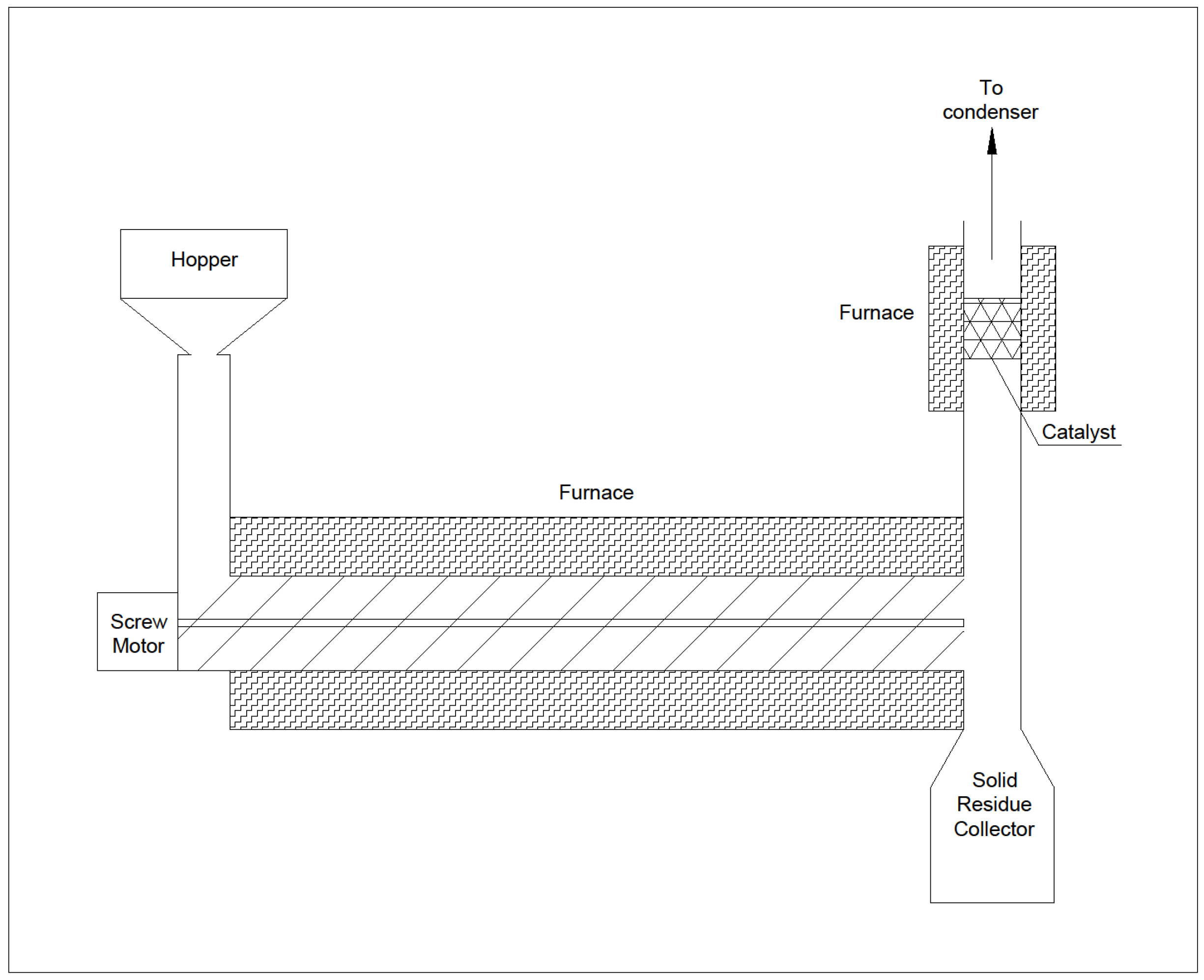
The reactor is designed to operate under near-atmospheric pressure at approximately 500 °C, consistent with slow pyrolysis conditions favoring liquid product recovery. A non-catalytic configuration was adopted in order to reduce system complexity, avoid catalyst deactivation associated with impurities or chlorine traces, and minimize operating and replacement costs. Although catalytic systems can improve product selectivity, they also require stricter feedstock control and more demanding maintenance [45]. The operating principle of the selected reactor concept is illustrated in Figure 2.
The unit operates in batch mode with a nominal loading capacity of approximately 750 kg of pre-shredded plastic per cycle. Batch operation was selected because it is mechanically simpler and more adaptable to fluctuating feedstock quantities than continuous systems, making it more appropriate for small-scale and intermittently supplied waste streams [46]. Considering heating, pyrolysis, cooling, unloading, and basic maintenance, the effective cycle duration is estimated at approximately 7 h, corresponding to a maximum theoretical throughput of 2.25 tons per day under ideal operation [47].
The target feedstock consists primarily of polyolefin-rich plastic waste streams derived from post-consumer and post-industrial sources, in which polyethylene (PE) and polypropylene (PP) form the dominant fraction. Limited quantities of polystyrene (PS) may also be processed [7,8]. Plastics containing significant halogen content are excluded because they can form corrosive and chlorinated compounds during thermal treatment [9]. The system is designed to favor liquid oil production, since liquid hydrocarbons offer greater transport flexibility and downstream upgrading potential than gaseous products [48]. At operating temperatures around 500 °C and moderate heating rates (5–15 °C/min), literature indicates that polyolefin-dominant feedstocks can yield substantial liquid fractions under slow pyrolysis conditions [49]. Non-condensable gases may be partially recirculated to support process heating, improving energy integration at small scale [50].
Thermal efficiency is enhanced through insulation of the reactor and associated piping with high-temperature ceramic fiber, which reduces heat losses and improves energy retention [51]. Temperature monitoring along the reactor body is incorporated to support controlled heating and stable operation.
From a techno-economic perspective, the selected framework prioritizes low mechanical complexity, moderate capital expenditure, and operational robustness. The absence of catalytic systems, high-pressure conditions, or advanced fluidization mechanisms reduces both capital and operational burdens. Combined with modular containerization, this makes the proposed unit more suitable for decentralized deployment in regions lacking centralized waste treatment infrastructure, while also limiting transport requirements and associated logistical burdens [52].

4.4. Design of Containerized Pyrolysis Unit

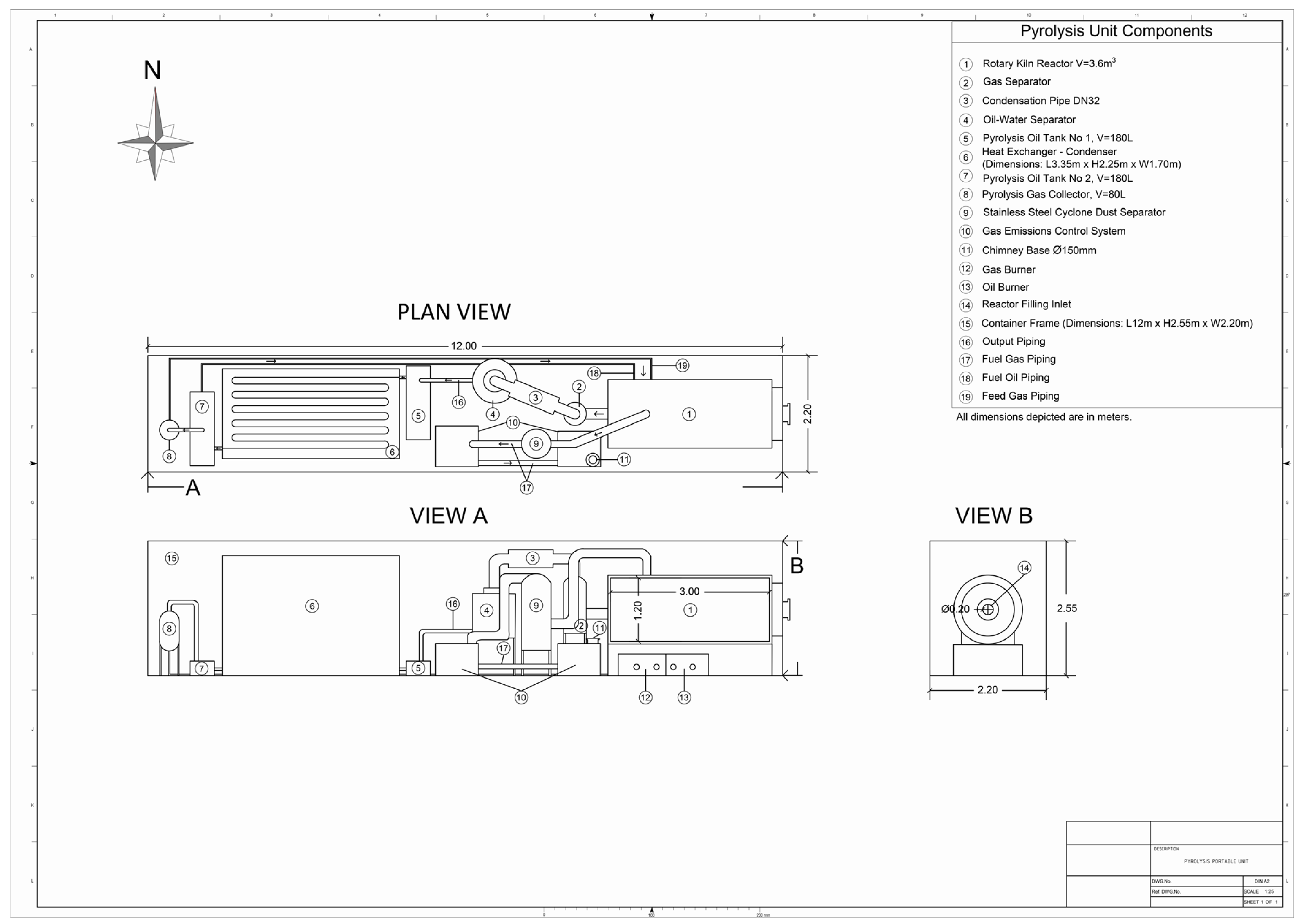
The physical layout of the proposed unit is based on the use of a standard shipping container as the hosting structure, providing a compact and transportable platform for decentralized deployment. For the present design, a container frame with dimensions L 12 m × W 2.20 m × H 2.55 m (Length × Width × Height) was selected [53]. The detailed arrangement of the main components is presented in Figure 3, where the reactor, condensation system, gas handling, storage units, and auxiliary equipment are integrated within the containerized configuration.
The unit is intended to process plastic waste streams such as polyethylene (PE), polypropylene (PP), polystyrene (PS), plastic bags, plastic cables, shoe soles, and tires [54]. By contrast, PVC and PET are excluded or minimized because of their unfavorable behavior during pyrolysis, particularly due to chlorine release in PVC and oxygenated compound formation in PET, both of which may affect equipment integrity and product quality [17].
The feedstock is introduced into the batch rotary kiln reactor through an inlet port of approximately 20 cm diameter, typically after shredding. The reactor has an internal volume of 3.6 m3 and a nominal batch capacity of 750 kg. Before heating begins, the reactor is purged with nitrogen in order to remove oxygen and maintain an inert internal atmosphere [55]. Oxygen displacement is verified through continuous monitoring until acceptable thresholds are reached. After purging, the reactor is heated externally to approximately 500 °C while rotating slowly to promote uniform thermal treatment.
The gaseous products released during pyrolysis consist mainly of hydrocarbon vapors, light gases, and condensable tar fractions, together with possible traces of water originating from residual feedstock moisture or impurities. These products are transferred through piping to a gas purification stage, where particulates and heavier tar components are partially removed. The cleaned gas stream then enters a horizontal condenser, where condensable hydrocarbons form a liquid fraction. Since traces of water may also be present in the condensed phase, the liquid stream is directed to a gravity-based oil–water separator. Phase separation is promoted by density differences, while coalescing media improve the aggregation of fine droplets and enhance separation efficiency.
The recovered liquid is collected in two 180 L oil tanks, which act as intermediate collection vessels before transfer to downstream storage or handling. The remaining uncondensed gas is directed to a gas collector tank of 80 L, which functions as a temporary buffer before recirculation to the burner system. The overall gas handling line is supported by a secondary heat exchanger-condenser and a cyclone dust separator, which removes heavier particles from exhaust gases prior to discharge through the chimney system.
Solid char remains inside the reactor during processing and is removed manually after cooling. The cooling and condensation stages require approximately 1.5 h, while reactor opening and cleaning require an additional 30 min. During this step, char, tar residues, and, in the case of tire processing, steel wire can be recovered for further handling or utilization.
The overall operational sequence therefore includes feedstock loading, inert gas purging, thermal conversion, gas cleaning, condensation, oil–water separation, gas recirculation, and residue removal. Under ideal operating conditions, the full cycle is completed in approximately 7 h, allowing a maximum of three batches per day and a theoretical processing capacity of 2.25 tons/day. The non-condensable gas may be partially recirculated to support reactor heating after start-up, improving process energy integration. In addition, the literature data indicate that pyrolysis oil yields vary depending on feedstock composition, as summarized in Table 4.
Although the process can partially utilize internally generated gas and oil for heating, an external start-up energy source is still required [59]. In the present concept, this initial demand may be met by locally sourced biomass pellets, allowing the proposed design to better align with decentralized resource recovery scenarios.

5. Conclusions

The present study developed and evaluated a conceptual design framework for a containerized, batch-operated slow pyrolysis unit intended for decentralized treatment of polyolefin-rich plastic waste streams. The results indicate that such a configuration can be technically feasible under defined operational assumptions, particularly when applied to pre-sorted mixed polyolefins or industrial plastic scrap rather than highly heterogeneous municipal solid waste streams. The containerized configuration allows the integration of the reactor, condensation, gas treatment, and storage components within a standardized mobile structure, potentially enabling localized plastic waste processing in rural or infrastructure-limited areas.
Under controlled operational conditions and appropriate gas-cleaning systems, pyrolysis may offer certain environmental advantages compared with landfilling and conventional incineration, particularly in terms of hydrocarbon recovery and waste volume reduction. The circular integration analysis suggests that internal gas reuse, local biomass-supported start-up energy, and localized product utilization may reduce transportation-related greenhouse gas emissions and support decentralized resource recovery. Nevertheless, these potential benefits are indicative and depend strongly on system boundaries, operational efficiency, and local logistics.
In summary:
  • Pyrolysis represents a treatment option for plastic fractions that are unsuitable for mechanical recycling due to contamination, degradation, or mixed composition.
  • When implemented under controlled operational frameworks, it may provide conditional environmental benefits relative to landfilling or incineration by enabling partial recovery of hydrocarbon value from plastic waste.
  • The liquid and gaseous products generated during pyrolysis have the potential to contribute to reduced reliance on virgin fossil resources when appropriate upgrading and quality control measures are applied.
  • The proposed containerized configuration demonstrates conceptual feasibility for decentralized applications but requires further technical validation, economic evaluation, and environmental assessment before practical deployment.
Despite the potential advantages, regulatory uncertainty in some jurisdictions and the limited maturity of small-scale pyrolysis markets may also influence deployment potential. Furthermore, plastic-derived oils may exhibit chemical instability, requiring stabilization before storage or transport.
To support the practical development of decentralized pyrolysis systems, several measures should be considered:
  • Conduct detailed life-cycle and techno-economic assessments to evaluate environmental and economic performance.
  • Perform systematic risk assessments addressing emissions control, contaminant handling, and by-product management.
  • Establish clear feedstock quality criteria and preprocessing guidelines through collaboration between waste suppliers and processing operators.
  • Develop stable contractual frameworks that ensure consistent feedstock supply and operational continuity.
  • Encourage policy and regulatory frameworks that support pilot projects, research, and controlled integration of chemical recycling technologies within existing waste management systems.
Overall, containerized pyrolysis should be viewed not as a replacement for mechanical recycling but as a complementary technology within an integrated plastic waste management hierarchy. Its potential role lies in treating plastic fractions that cannot be effectively recycled through conventional mechanical processes, particularly in decentralized contexts where transportation logistics, waste composition, or infrastructure constraints limit the applicability of traditional recycling pathways.

Supplementary Materials

The following supporting information can be downloaded at: https://www.mdpi.com/article/10.3390/recycling11040067/s1. Figure S1: Fluidized bed reactor operating scheme. Figure S2: Semi-Batch reactor operating scheme. Figure S3: Fixed Bed reactor operating scheme. Figure S4: CSPR reactor operating scheme.

Author Contributions

Conceptualization, C.V. and D.-A.K.; methodology, D.-A.K.; validation, V.D., D.C. and A.V.M.; investigation, D.-A.K.; data curation, D.-A.K.; writing—original draft preparation, D.-A.K.; writing—review and editing, D.-A.K., V.D. and D.C.; visualization, D.-A.K.; supervision, C.V. and A.V.M. All authors have read and agreed to the published version of the manuscript.

Funding

This research received no external funding.

Data Availability Statement

The raw data supporting the conclusions of this article will be made available by the authors on request.

Conflicts of Interest

The authors declare no conflict of interest.

Abbreviation

CO2Carbon Dioxide
CO2eCarbon Dioxide Equivalent
UKUnited Kingdom
EUEuropean Union
DEFRADepartment for Environment, Food & Rural Affairs
HDPEHigh-Density Polyethylene
LCALife Cycle Assessment
LDPELow-Density Polyethylene
MJ/kgMegajoules per kilogram
MSWMunicipal Solid Waste
PEPolyethylene
PETPolyethylene Terephthalate
PPPolypropylene
PSPolystyrene
PVCPolyvinyl chloride
wt%Weight Percent
kgKilogram
LLiters

References

  1. Eze, W.U.; Umunakwe, R.; Obasi, H.C.; Ugbaja, M.I.; Uche, C.C.; Madufor, I.C. Plastics waste management: A review of pyrolysis technology. Clean Technol. Recycl. 2021, 1, 50–69. [Google Scholar] [CrossRef]
  2. Andooz, A.; Eqbalpour, M.; Kowsari, E.; Ramakrishna, S.; Cheshmeh, Z.A. A comprehensive review on pyrolysis from the circular economy point of view and its environmental and social effects. J. Clean. Prod. 2023, 388, 136021. [Google Scholar] [CrossRef]
  3. Laghezza, M.; Fiore, S.; Berruti, F. A review on the pyrolytic conversion of plastic waste into fuels and chemicals. J. Anal. Appl. Pyrolysis 2024, 179, 106479. [Google Scholar] [CrossRef]
  4. Adekanmbi, A.O.; Ani, E.C.; Abatan, A.; Izuka, U.; Ninduwezuor-Ehiobu, N.; Obaigbena, A. Assessing the environmental and health impacts of plastic production and recycling. World J. Biol. Pharm. Health Sci. 2024, 17, 232–241. [Google Scholar] [CrossRef]
  5. Saxena, S. Pyrolysis and beyond: Sustainable valorization of plastic waste. Appl. Energy Combust. Sci. 2025, 21, 100311. [Google Scholar] [CrossRef]
  6. Jiang, J.; Shi, K.; Zhang, X.; Yu, K.; Zhang, H.; He, J.; Ju, Y.; Liu, J. From plastic waste to wealth using chemical recycling: A review. J. Environ. Chem. Eng. 2022, 10, 106867. [Google Scholar] [CrossRef]
  7. Aznárez, A.; Korili, S.A.; Gil, A. Literature Review on the Recycling Postconsumer Plastic Waste from Pyrolysis. Ind. Eng. Chem. Res. 2025, 64, 12419–12438. [Google Scholar] [CrossRef]
  8. Hasan, M.M.; Haque, R.; Jahirul, M.I.; Rasul, M.G. Pyrolysis of plastic waste for sustainable energy Recovery: Technological advancements and environmental impacts. Energy Convers. Manag. 2025, 326, 119511. [Google Scholar] [CrossRef]
  9. Kumagai, S.; Fujiwara, K.; Nishiyama, T.; Saito, Y.; Yoshioka, T. Chemical Feedstock Recovery Through Plastic Pyrolysis: Challenges and Perspectives Toward a Circular Economy. ChemSusChem 2025, 18, e202500210. [Google Scholar] [CrossRef]
  10. Park, H.; Kim, K.; Yu, M.; Yun, Z.; Lee, S. Economic analysis of the circular economy based on waste plastic pyrolysis oil: A case of the university campus. Environ. Dev. Sustain. 2023, 26, 6293–6313. [Google Scholar] [CrossRef]
  11. Stathatou, P.M.; Anglou, E.; Chang, Y.; Sweet, J.; Ganesan, A.; Yutthasaksunthorn, N.; Phillips, E.V.; Ragam, N.S.; Asensio, O.I.; Nair, S.; et al. Enabling Informed Decisions on Pyrolysis: A Key to Turn the Tide on Plastics Recycling. ACS Sustain. Chem. Eng. 2025, 13, 8496–8507. [Google Scholar] [CrossRef] [PubMed]
  12. Koumpakis, D.-A.; Vlachokostas, C.; Tsakirakis, A.; Petridis, S. Evaluating Plastic Waste Management Strategies: Logistic Regression Insights on Pyrolysis vs. Recycling. Recycling 2025, 10, 33. [Google Scholar] [CrossRef]
  13. Koumpakis, D.-A.; Michailidou, A.V.; Vlachokostas, C. Harnessing Pyrolysis for Industrial Energy Autonomy and Sustainable Waste Management. Energies 2025, 18, 3041. [Google Scholar] [CrossRef]
  14. Roychand, R.; Zafar, M.A.; Jacob, M.; Ngo, T. A Comprehensive Review on the Thermochemical Treatment of Plastic Waste to Produce High Value Products for Different Applications. Mater. Circ. Econ. 2025, 7, 3. [Google Scholar] [CrossRef]
  15. Maqsood, T.; Dai, J.; Zhang, Y.; Guang, M.; Li, B. Pyrolysis of plastic species: A review of resources and products. J. Anal. Appl. Pyrolysis 2021, 159, 105295. [Google Scholar] [CrossRef]
  16. Sharuddin, S.D.A.; Abnisa, F.; Daud, W.M.A.W.; Aroua, M.K. A review on pyrolysis of plastic wastes. Energy Convers. Manag. 2016, 115, 308–326. [Google Scholar] [CrossRef]
  17. Havaei, M.; Akin, O.; Locaspi, A.; Varghese, R.J.; Minette, F.; Romers, E.; De Meester, S.; Van Geem, K.M. Beyond the Landfill: A critical review of techniques for End-of-Life Polyvinyl chloride (PVC) valorization. Waste Manag. 2025, 193, 105–134. [Google Scholar] [CrossRef]
  18. Kismanto, A.; Fajar, R.; Supriatna, N.K.; Aminuddin; Ermada, F.J.; Yarsono, S.; Dewa, R.P.; Nainggolan, L.M.; Alamsyah, R.; Surjosatyo, A. Techno-Economic Assessment of a 1200 Liter Rotary KilnBatch Reactor for the Production of Oil from Plastic Waste. Evergreen 2023, 10, 1877–1888. [Google Scholar] [CrossRef]
  19. Iwanek, E.M.; Kirk, D.W. Application of Slow Pyrolysis to Convert Waste Plastics from a Compost-Reject Stream into Py-Char. Energies 2022, 15, 3072. [Google Scholar] [CrossRef]
  20. Sekar, V.; Sundaram, B.; Dubey, B.K. Reuse of Plastic Waste in Various Systems. In Waste-to-Wealth; CRC Press: New York, NY, USA, 2024; pp. 301–314. [Google Scholar] [CrossRef]
  21. Rahman, N.M.; Tracy, B.L. Radon control systems in existing and new construction: A review. Radiat. Prot. Dosim. 2009, 135, 243–255. [Google Scholar] [CrossRef]
  22. Yansaneh, O.Y.; Zein, S.H. Recent Advances on Waste Plastic Thermal Pyrolysis: A Critical Overview. Processes 2022, 10, 332. [Google Scholar] [CrossRef]
  23. Benedini, L.; Jensen, C.D.; Ahrenfeldt, J.; Henriksen, U.B. Production and characterization of two-step condensation bio-oil from pyrolysis. J. Anal. Appl. Pyrolysis 2024, 183, 106744. [Google Scholar] [CrossRef]
  24. Yadav, G.; Singh, A.; Dutta, A.; Uekert, T.; DesVeaux, J.S.; Nicholson, S.R.; Tan, E.C.D.; Mukarakate, C.; Schaidle, J.A.; Wrasman, C.J.; et al. Techno-economic analysis and life cycle assessment for catalytic fast pyrolysis of mixed plastic waste. Energy Environ. Sci. 2023, 16, 3638–3653. [Google Scholar] [CrossRef]
  25. Belbessai, S.; Azara, A.; Abatzoglou, N. Recent Advances in the Decontamination and Upgrading of Waste Plastic Pyrolysis Products: An Overview. Processes 2022, 10, 733. [Google Scholar] [CrossRef]
  26. Ore, O.T.; Adebiyi, F.M. A review on current trends and prospects in the pyrolysis of heavy oils. J. Pet. Explor. Prod. Technol. 2021, 11, 1521–1530. [Google Scholar] [CrossRef]
  27. Chen, Y.; Bai, L.; Peng, D.; Wang, X.; Wu, M.; Bian, Z. Advancements in catalysis for plastic resource utilization. Environ. Sci. Adv. 2023, 2, 1151–1166. [Google Scholar] [CrossRef]
  28. Li, H.; Aguirre-Villegas, H.A.; Allen, R.D.; Bai, X.; Benson, C.H.; Beckham, G.T.; Bradshaw, S.L.; Brown, J.L.; Brown, R.C.; Cecon, V.S.; et al. Expanding plastics recycling technologies: Chemical aspects, technology status and challenges. Green Chem. 2022, 24, 8899–9002. [Google Scholar] [CrossRef]
  29. Giglio, E.; Marino, A.; Pizarro, P.; Escola, J.M.; Migliori, M.; Giordano, G.; Serrano, D.P. Critical issues for the deployment of plastic waste pyrolysis. Catal. Sci. Technol. 2023, 13, 5799–5820. [Google Scholar] [CrossRef]
  30. Gallo, A.; Alonso, E.; Pérez-Rábago, C.; Fuentealba, E.; Roldán, M.I. A lab-scale rotary kiln for thermal treatment of particulate materials under high concentrated solar radiation: Experimental assessment and transient numerical modeling. Sol. Energy 2019, 188, 1013–1030. [Google Scholar] [CrossRef]
  31. Chuakham, S.; Putkham, A.I.; Chaiyachet, Y.; Saengprajak, A.; Banlue, K.; Tanpaiboonkul, N.; Putkham, A. Scalable Production of Bio-Calcium Oxide via Thermal Decomposition of Solid—Hatchery Waste in a Laboratory-Scale Rotary Kiln. Sci. Rep. 2024, 15, 865. [Google Scholar] [CrossRef]
  32. Koumpakis, D.-A.; Michailidou, A.V.; Vlachokostas, C.; Mertzanakis, C. Closing the Loop between Plastic Waste Management and Energy Cogeneration: An Innovative Design for a Flexible Pyrolysis Small-Scale Unit. Recycling 2024, 9, 92. [Google Scholar] [CrossRef]
  33. Frączak, D.; Fabiś, G.; Orlińska, B. Influence of the Feedstock on the Process Parameters, Product Composition and Pilot-Scale Cracking of Plastics. Materials 2021, 14, 3094. [Google Scholar] [CrossRef]
  34. Sharma, V.; Hossain, A.K.; Griffiths, G.; Duraisamy, G.; Krishnasamy, A.; Ravikrishnan, V.; Sodré, J.R. Plastic waste to liquid fuel: A review of technologies, applications, and challenges. Sustain. Energy Technol. Assess. 2022, 53, 102651. [Google Scholar] [CrossRef]
  35. Grause, G.; Buekens, A.; Sakata, Y.; Okuwaki, A.; Yoshioka, T. Feedstock recycling of waste polymeric material. J. Mater. Cycles Waste Manag. 2011, 13, 265–282. [Google Scholar] [CrossRef]
  36. O’ROurke, G.; Hennebel, T.; Stalpaert, M.; Skorynina, A.; Bugaev, A.; Janssens, K.; Van Emelen, L.; Lemmens, V.; Silva, R.D.O.; Colemonts, C.; et al. Catalytic tandem dehydrochlorination–hydrogenation of PVC towards valorisation of chlorinated plastic waste. Chem. Sci. 2023, 14, 4401–4412. [Google Scholar] [CrossRef] [PubMed]
  37. Zohourian, M.; Pamidimukkala, A.; Kermanshachi, S.; Almaskati, D. Modular Construction: A Comprehensive Review. Buildings 2025, 15, 2020. [Google Scholar] [CrossRef]
  38. Capodaglio, A. Integrated, Decentralized Wastewater Management for Resource Recovery in Rural and Peri-Urban Areas. Resources 2017, 6, 22. [Google Scholar] [CrossRef]
  39. Ma, J.; Tominac, P.A.; Aguirre-Villegas, H.A.; Olafasakin, O.O.; Wright, M.M.; Benson, C.H.; Huber, G.W.; Zavala, V.M. Economic evaluation of infrastructures for thermochemical upcycling of post-consumer plastic waste. Green Chem. 2023, 25, 1032–1044. [Google Scholar] [CrossRef]
  40. Capetillo, A.A.; Bauer, F.; Chaminade, C. Emerging Technologies Supporting the Transition to a Circular Economy in the Plastic Materials Value Chain. Circ. Econ. Sustain. 2023, 3, 953–982. [Google Scholar] [CrossRef]
  41. Pelzer, F.; Klose, A.; Miesner, J.; Schmauder, M.; Urbas, L. Safety in modular process plants: Demonstration of safety concepts. Elektrotechnik Informationstechnik 2021, 138, 462–468. [Google Scholar] [CrossRef]
  42. Jungbauer, A.; Satzer, P.; Duerauer, A.; Azevedo, A.; Aires-Barros, R.; Nilsson, B.; Farid, S.; Goldrick, S.; Ottens, M.; Sponchioni, M.; et al. Continuous downstream processing. Sep. Purif. Technol. 2024, 338, 126439. [Google Scholar] [CrossRef]
  43. Mazloum, S.; Awad, S.; Allam, N.; Aboumsallem, Y.; Loubar, K.; Tazerout, M. Modelling plastic heating and melting in a semi-batch pyrolysis reactor. Appl. Energy 2021, 283, 116375. [Google Scholar] [CrossRef]
  44. Fadillah, G.; Fatimah, I.; Sahroni, I.; Musawwa, M.M.; Mahlia, T.M.I.; Muraza, O. Recent Progress in Low-Cost Catalysts for Pyrolysis of Plastic Waste to Fuels. Catalysts 2021, 11, 837. [Google Scholar] [CrossRef]
  45. Shah, H.H.; Amin, M.; Iqbal, A.; Nadeem, I.; Kalin, M.; Soomar, A.M.; Galal, A.M. A review on gasification and pyrolysis of waste plastics. Front. Chem. 2023, 10, 960894. [Google Scholar] [CrossRef] [PubMed]
  46. Le, A.T.M.; Doan, H.D.; Ngo, L.P.; Huynh, L.T.; Huynh, T.N.; Phan, H.T.; Tran, T.T. A Conceptual Design and Numerical Analysis for a Small-Scale and Low-Cost Plastic Recycling Machine. E3S Web Conf. 2019, 93, 02007. [Google Scholar] [CrossRef]
  47. Tahir, J.; Ahmad, R.; Martinez, P. A critical review of sustianable refuse-derived fuel production in waste processing facility. Energy Convers. Manag. X 2024, 24, 100687. [Google Scholar] [CrossRef]
  48. Abbas-Abadi, M.S.; Kusenberg, M.; Zayoud, A.; Roosen, M.; Vermeire, F.; Madanikashani, S.; Kuzmanović, M.; Parvizi, B.; Kresovic, U.; De Meester, S.; et al. Thermal pyrolysis of waste versus virgin polyolefin feedstocks: The role of pressure, temperature and waste composition. Waste Manag. 2023, 165, 108–118. [Google Scholar] [CrossRef]
  49. Ekici, E.; Yildiz, G.; Yildiz, M.J.; Kalinowska, M.; Şeker, E.; Wang, J. Continuous flow pyrolysis of virgin and waste polyolefins: A comparative study, process optimization and product characterization. Front. Chem. Sci. Eng. 2024, 18, 70. [Google Scholar] [CrossRef]
  50. Saari, J.; Suikkanen, H.; Mendoza-Martinez, C.; Hyvärinen, J. Optimization of Natural Circulation District Heating Reactor Primary Heat Exchangers. Energies 2023, 16, 2739. [Google Scholar] [CrossRef]
  51. Kreiger, M.; Anzalone, G.C.; Mulder, M.L.; Glover, A.; Pearce, J.M. Distributed Recycling of Post-Consumer Plastic Waste in Rural Areas. MRS Proc. 2013, 1492, 91–96. [Google Scholar] [CrossRef]
  52. Kristiansen, A.B.; Satola, D.; Lee, K.; Zhao, B.; Ma, T.; Wang, R.; Gustavsen, A.; Novakovic, V. Feasibility study of an off-grid container unit for industrial construction. Sustain. Cities Soc. 2020, 61, 102335. [Google Scholar] [CrossRef]
  53. DeNeve, D.; Joshi, C.; Samdani, A.; Higgins, J.; Seay, J. Optimization of an Appropriate Technology Based Process for Converting Waste Plastic in to Liquid Fuel via Thermal Decomposition. J. Sustain. Dev. 2017, 10, 116. [Google Scholar] [CrossRef]
  54. Zaman, C.Z.; Pal, K.; Yehye, W.A.; Sagadevan, S.; Shah, S.T.; Adebisi, G.A.; Marliana, E.; Rafique, R.F.; Johan, R.B. Pyrolysis: A Sustainable Way to Generate Energy from Waste. In Pyrolysis; InTech: London, UK, 2017. [Google Scholar] [CrossRef]
  55. Zabaniotou, A.; Vaskalis, I. Economic Assessment of Polypropylene Waste (PP) Pyrolysis in Circular Economy and Industrial Symbiosis. Energies 2023, 16, 593. [Google Scholar] [CrossRef]
  56. Kim, J.-K.; Song, S.-H.; Kim, D.K.; Cho, E.; Kim, J.-S. Characteristics of waxy oils from the pyrolysis of waste polyethylene and polypropylene using a new-type fluidized bed reactor. J. Environ. Manag. 2025, 396, 128179. [Google Scholar] [CrossRef]
  57. Genuino, H.C.; Ruiz, M.P.; Heeres, H.J.; Kersten, S.R.A. Pyrolysis of mixed plastic waste: Predicting the product yields. Waste Manag. 2023, 156, 208–215. [Google Scholar] [CrossRef]
  58. Badger, P.; Badger, S.; Puettmann, M.; Steele, P.; Cooper, J. Techno-economic analysis: Preliminary assessment of pyrolysis oil production costs and material energy balance associated with a transportable fast pyrolysis system. Bioresources 2010, 6, 34–47. [Google Scholar] [CrossRef]
  59. Greenhouse Gas Reporting: Conversion Factors. 2025. Available online: https://www.gov.uk/government/publications/greenhouse-gas-reporting-conversion-factors-2025 (accessed on 7 March 2026).
Figure 1. Pyrolysis flow scheme.
Recycling 11 00067 g001
Figure 2. Rotary Screw Klin Reactor operating scheme.
Recycling 11 00067 g002
Figure 3. Arrangement design of portable pyrolysis unit in a standard shipping container.
Recycling 11 00067 g003
Table 1. Estimated output and storage per batch of mixed plastic waste.
Product FractionYield (wt%)Storage SystemPotential End Users
Pyrolysis Oil~75%* Storage tanks (180 L)Industrial heating facilities,
small refineries [18]
Non-condensable Gas~15%Pyrolytic gas collector tank (80 L) connected to burner systemInternal reactor heating,
auxiliary heating systems [19]
Char/Solid Residue~10%Bulk container sack
0.19 m3
Cement plant
construction materials [20]
* The condensed liquid is first collected in intermediate storage tanks (180 L each) that function as temporary condensate receivers. From these tanks the oil is periodically transferred to larger external storage containers for further handling, transport, or upgrading.
Table 2. Indicative daily product value based on theoretical outputs (2.25 t feedstock/day).
ProductDaily Output (t/day)Indicative Price (€/t)Indicative Daily Value (€/day)
Pyrolysis Oil1.69523–784883–1323
Non-condensable Gas *0.34180–25059–88
Char0.23--
* The gas value is theoretical, since the proposed concept primarily reuses this stream internally to support the reactor’s thermal demand.
Table 3. Indicative daily CO2 savings from circular integration measures (three batches per day).
Circularity MechanismMain AssumptionIndicative
CO2 Saving (kg/day)
Avoided import of external
support gas for combustion
0.18 t/day LPG equivalent
not transported over 100 km
1.62
Avoided transport of plastic waste
to centralized waste management
2.25 t/day waste
not transported 100 km
20.25
Replacement of bought LPG with local
biomass pellets for start-up/support heating
0.18 t/day LPG
combustion avoided
540.0
Table 4. Percentages of oil by weight per plastic [56,57,58].
Plastic TypeOil Content (wt%)
High-Density Polyethylene (HDPE)70–85%
Low-Density Polyethylene (LDPE)75–95%
Polypropylene (PP)70–90%
Polystyrene (PS)80–95%
Disclaimer/Publisher’s Note: The statements, opinions and data contained in all publications are solely those of the individual author(s) and contributor(s) and not of MDPI and/or the editor(s). MDPI and/or the editor(s) disclaim responsibility for any injury to people or property resulting from any ideas, methods, instructions or products referred to in the content.