
Degradation of a Lithium-Ion Battery Cell for Enhanced First and Second Life: Effects of Temperature, Orientation, C-Rate and State of Charge

 ,
,  , , ,
, , ,  and
and
Abstract
1. Introduction
2. Experimental
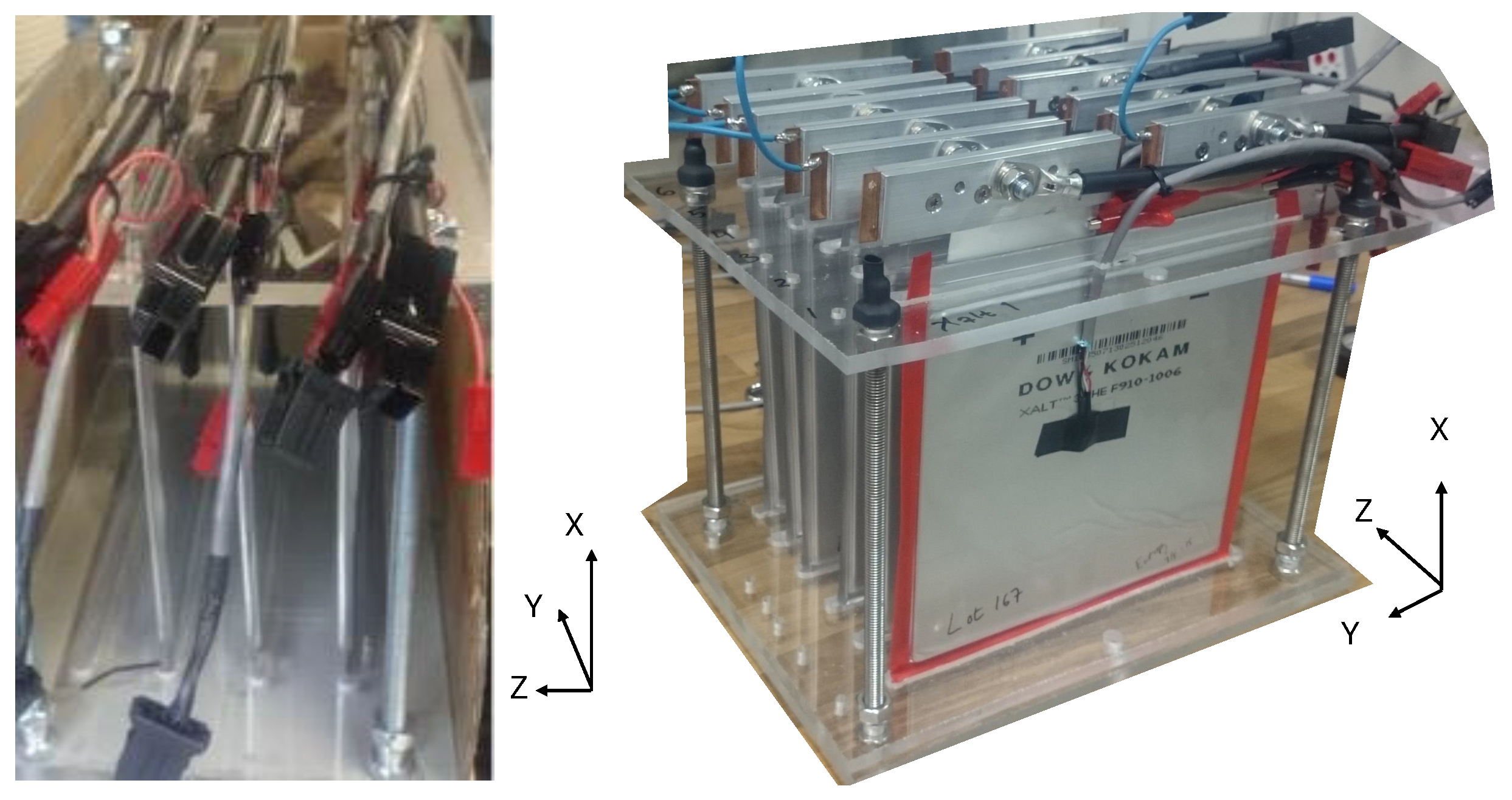
2.1. Cell and Testing Infrastructure
2.2. Cycle Life Testing and Characterisation
2.3. Diagnostics
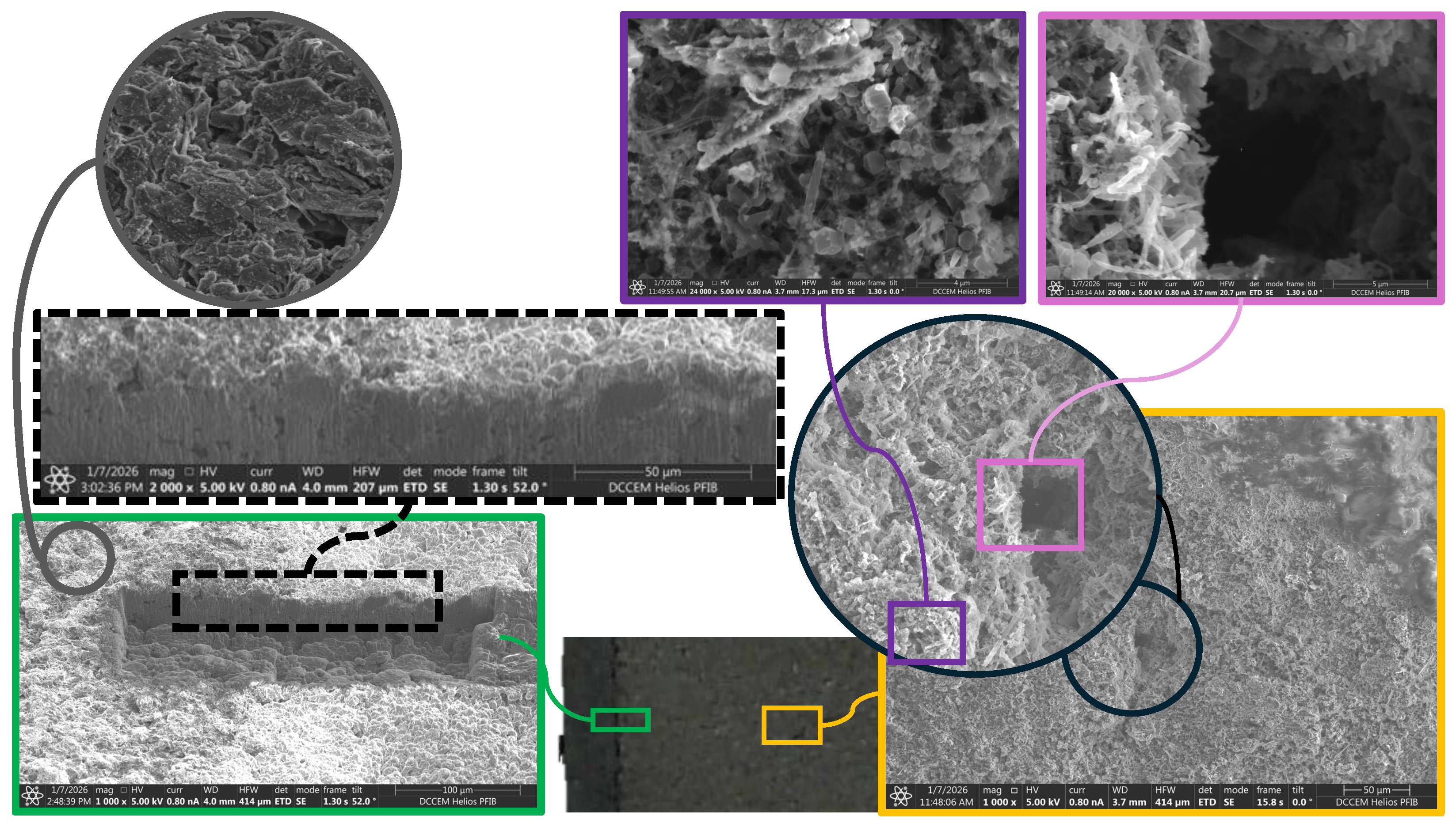
2.4. Post-Mortem Analysis
3. Results and Discussion
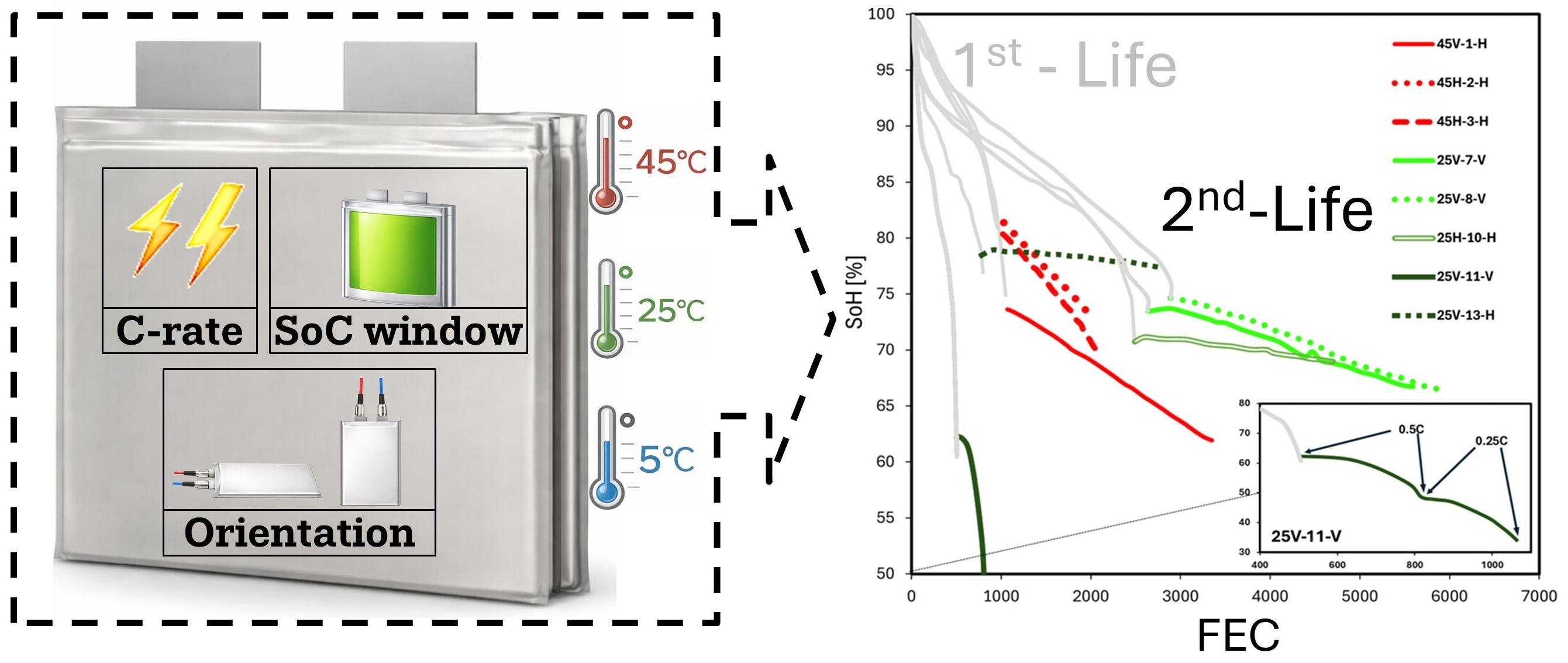
3.1. Capacity Development
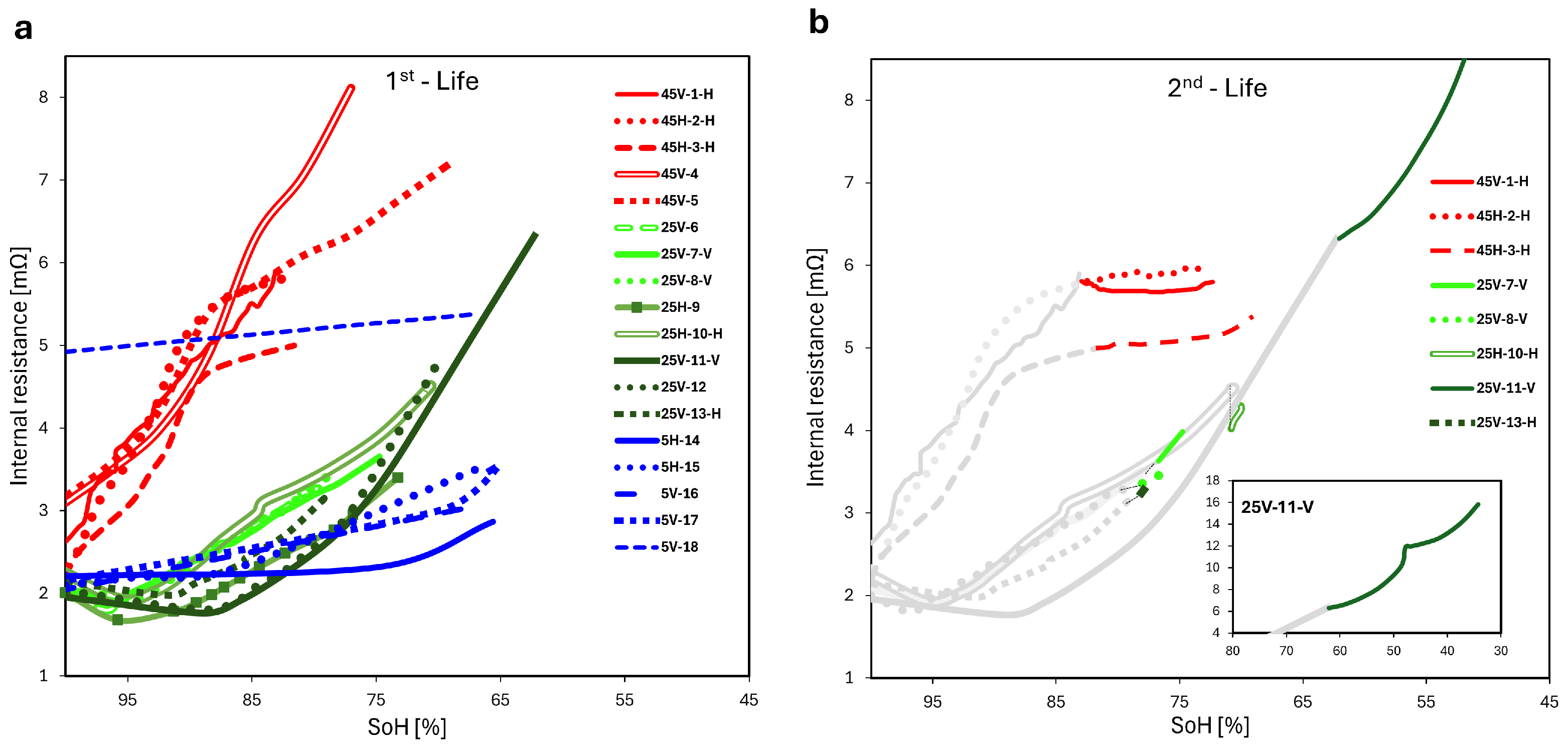
3.2. Resistance Development
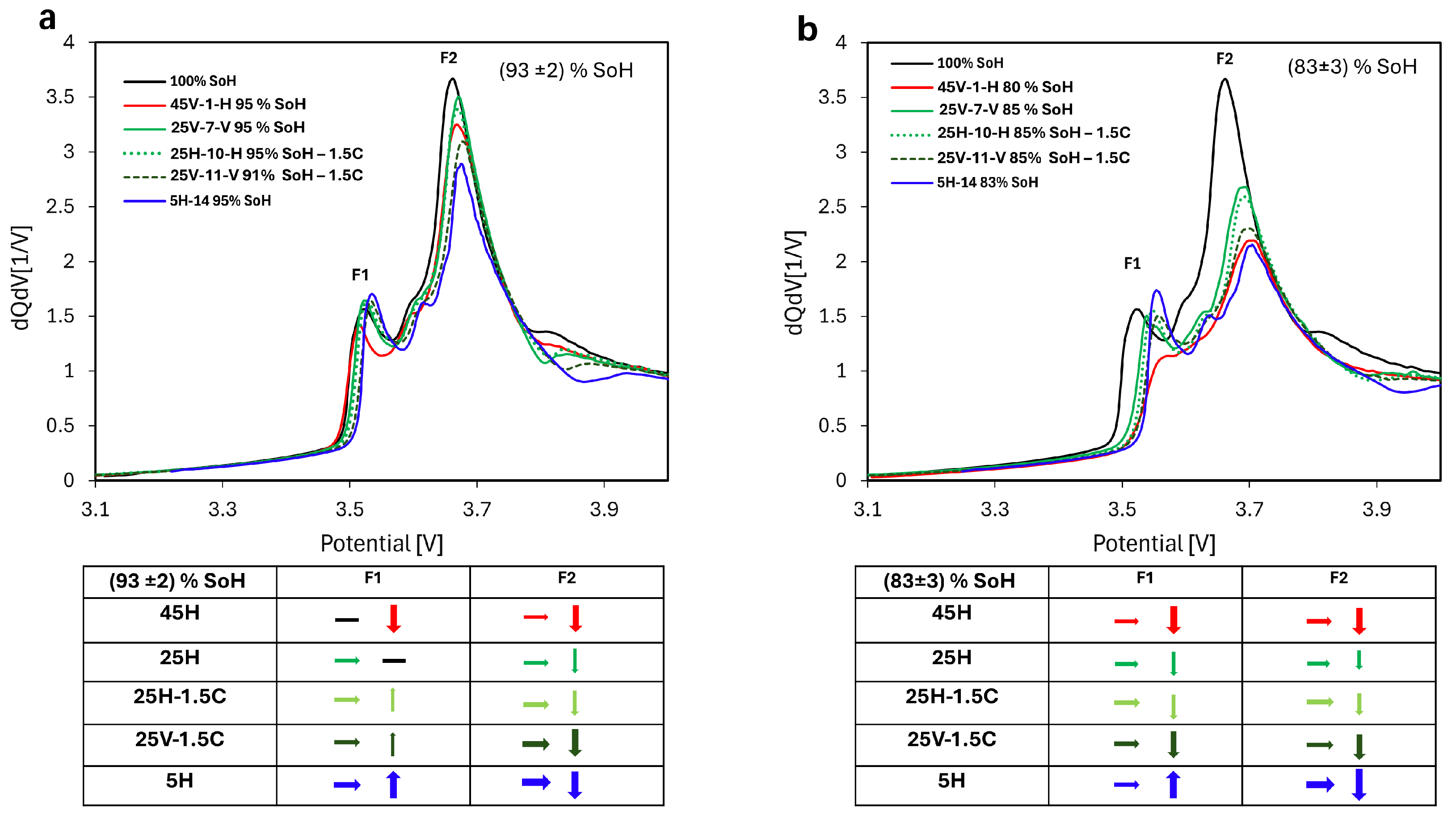
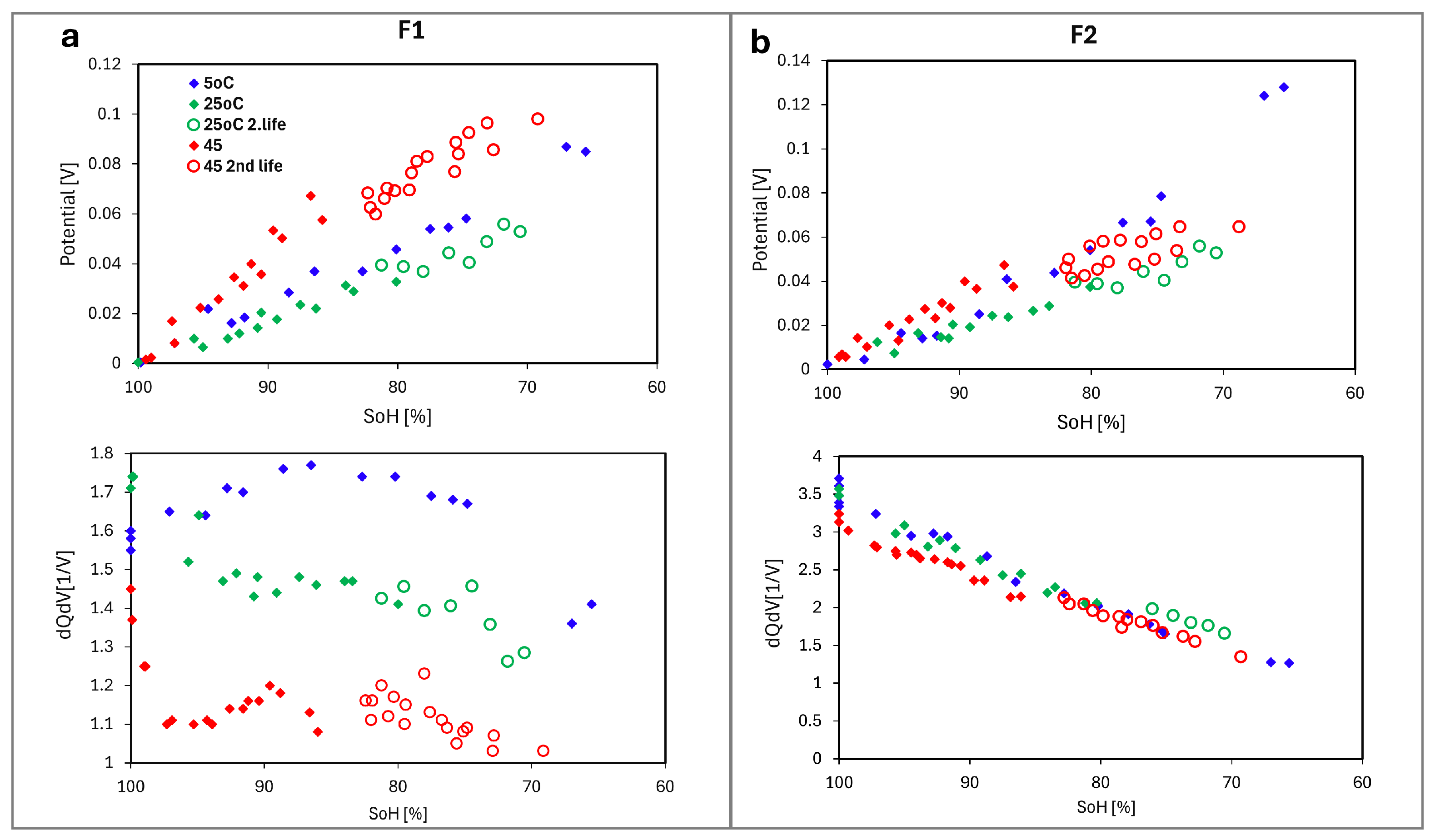
3.3. Changes in Incremental Capacity Curves
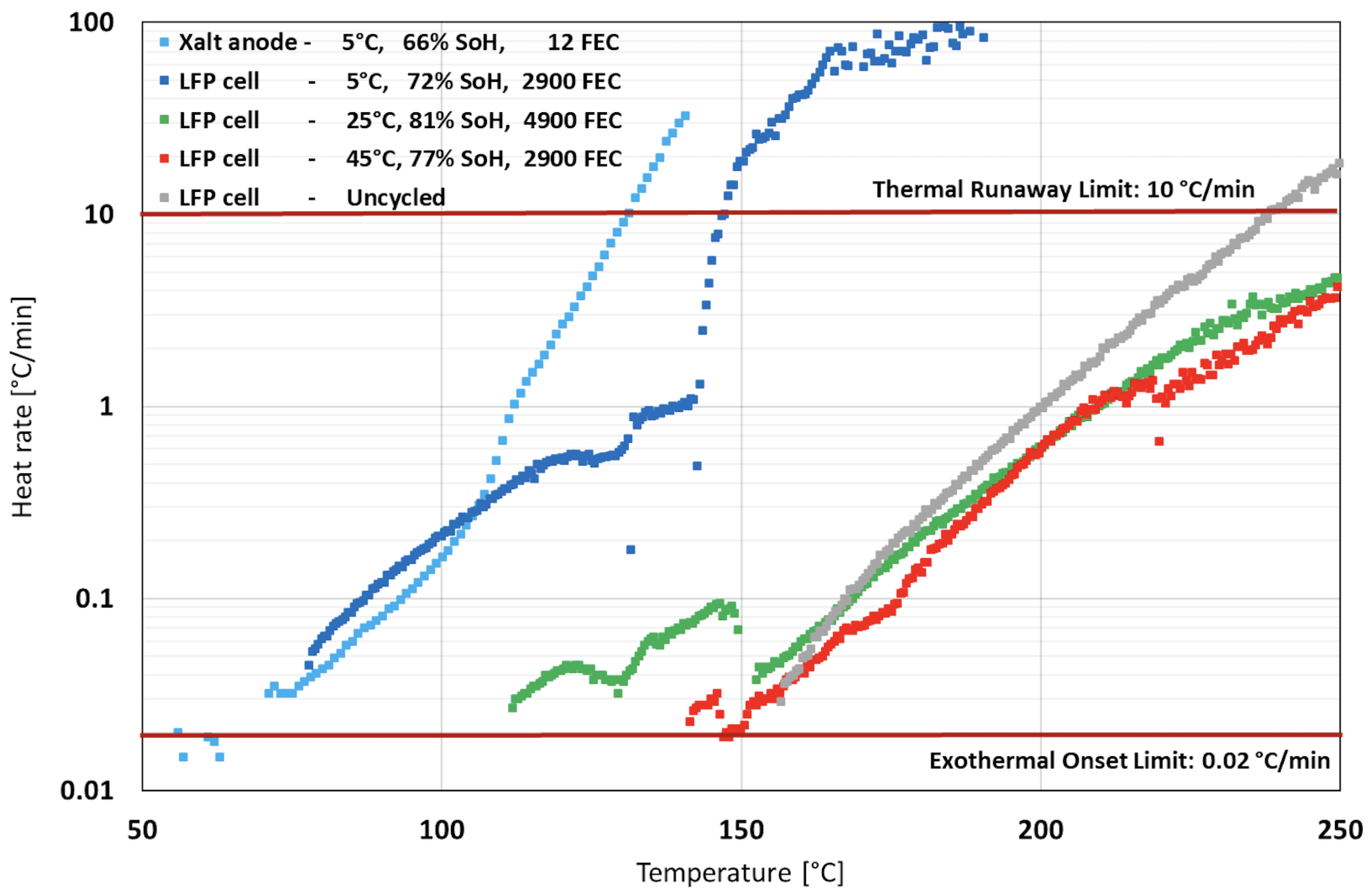
3.4. (Material) ARC Testing
3.5. Investigation of Anodes Cycled at Low Temperatures (5 °C)
4. Conclusions
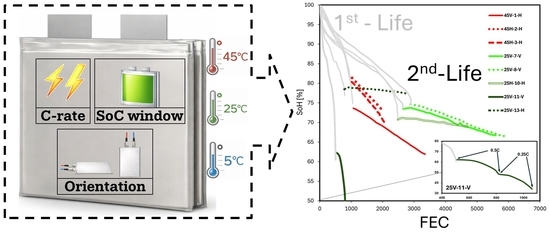
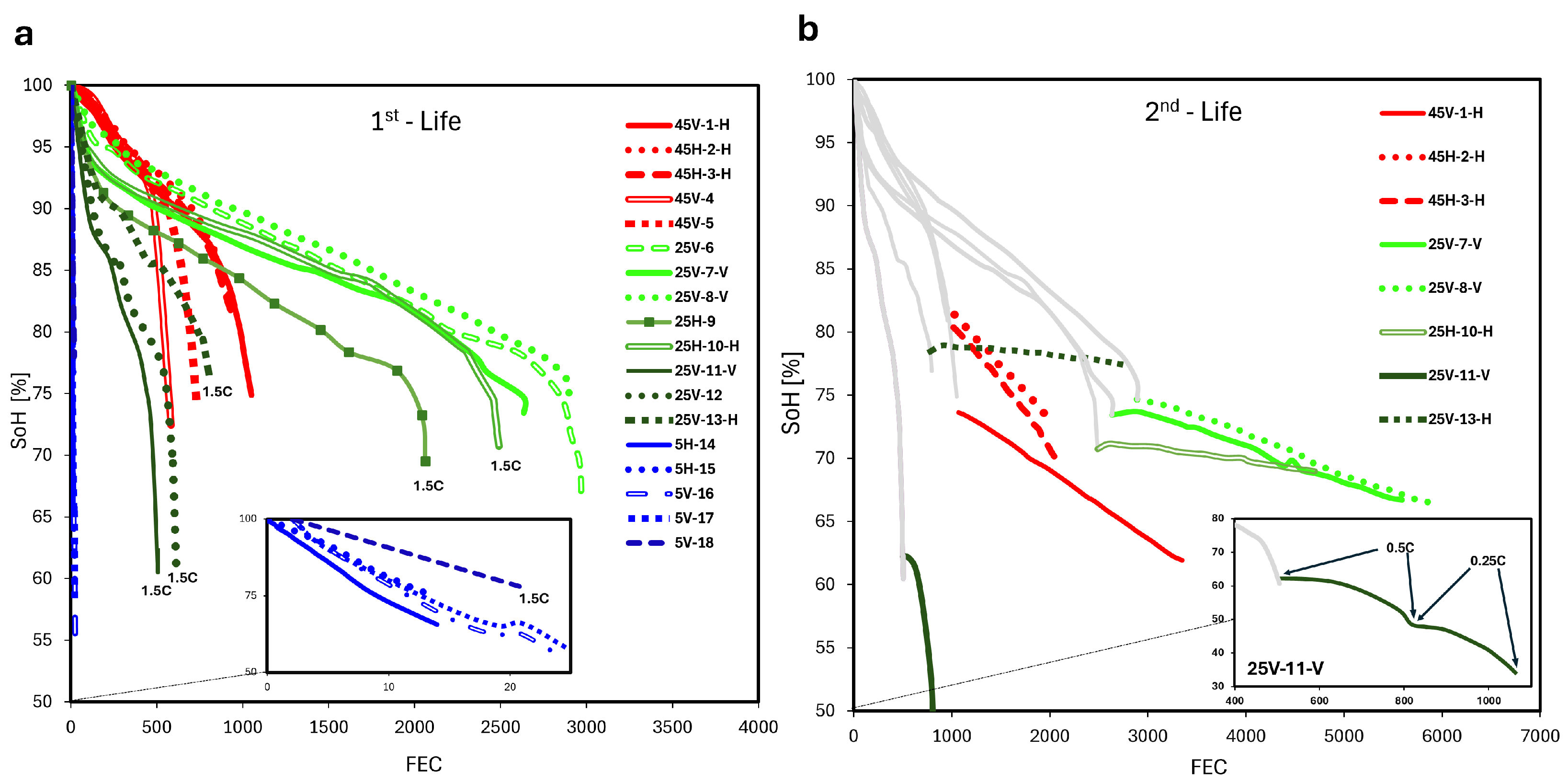
- By changing cycling conditions at a SoH of around 75%, the amount of added full equivalent cycles can double before reaching 70% SOH.
- Cycling cells at room temperature provides lower degradation rates than cycling cells at 5 and 45 °C.
- Increasing the ambient operation temperature in first life from 25 to 45 °C will increase the degradation rate of second-life cycling, despite the second-life operation temperature being lowered back to 25 °C.
- For second-life cycling, reducing the SoC window (by 40%) is more important than lowering the C-rate (by 1/3) (for the selected cells).
- First-life cycling in room-temperature air (25 °C) gives lower degradation rates as well as lower cell resistance compared to elevated air temperatures (45 °C). These two effects positively contribute to the lower degradation rate in second-life cycling.
- Vertically oriented cells (standing) experienced higher degradation than horizontally oriented (lying) cells when not under pretension. Vertically oriented cells at 1C degrade at similar rates to horizontal cells at 1.5 C, for the selected cells in the first life in this study.
- Cycling cells at excessively high C-rates and low temperatures (1 C and 5 °C) leads to the most extreme degradation rates (tenfold higher than other temperatures) in this study.
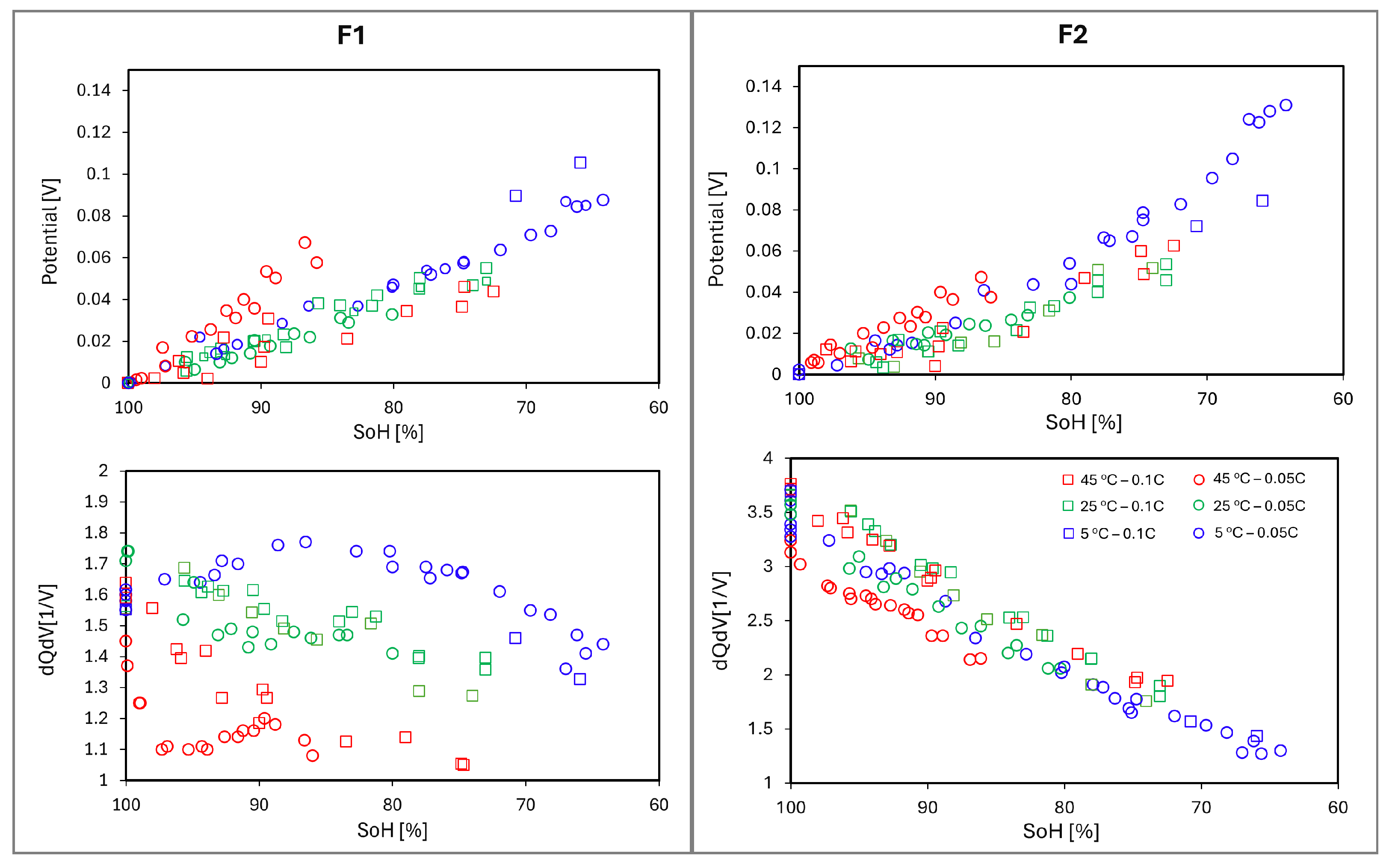
- In the ICA analysis, and for the two selected features (most distinct positive peaks at 100% SOH), feature 1 (F1, lower cell potential) was the one peak that most strongly indicated compatibility with a second life, considering both safety and lowered degradation rates.
Author Contributions
Funding
Data Availability Statement
Acknowledgments
Conflicts of Interest
Appendix A. Experimental Details of the Battery and First-Life Testing Conditions


| Specifications | Range |
|---|---|
| Capacity (C/2) | 31 Ah |
| Voltage range (nominal voltage) | 2.7–4.2 V (3.7 V) |
| Continuos max charge and disch. | 2 C and 5 C |
| Temperature window, charge and disch. | 0–45 °C and −20–60 °C |
Appendix B. ICA First Life Comparison and Confidence Considerations

Appendix C. Visual Inspection in Air
Appendix D. SEM, FIB, EDX, and SIMS Example Investigations

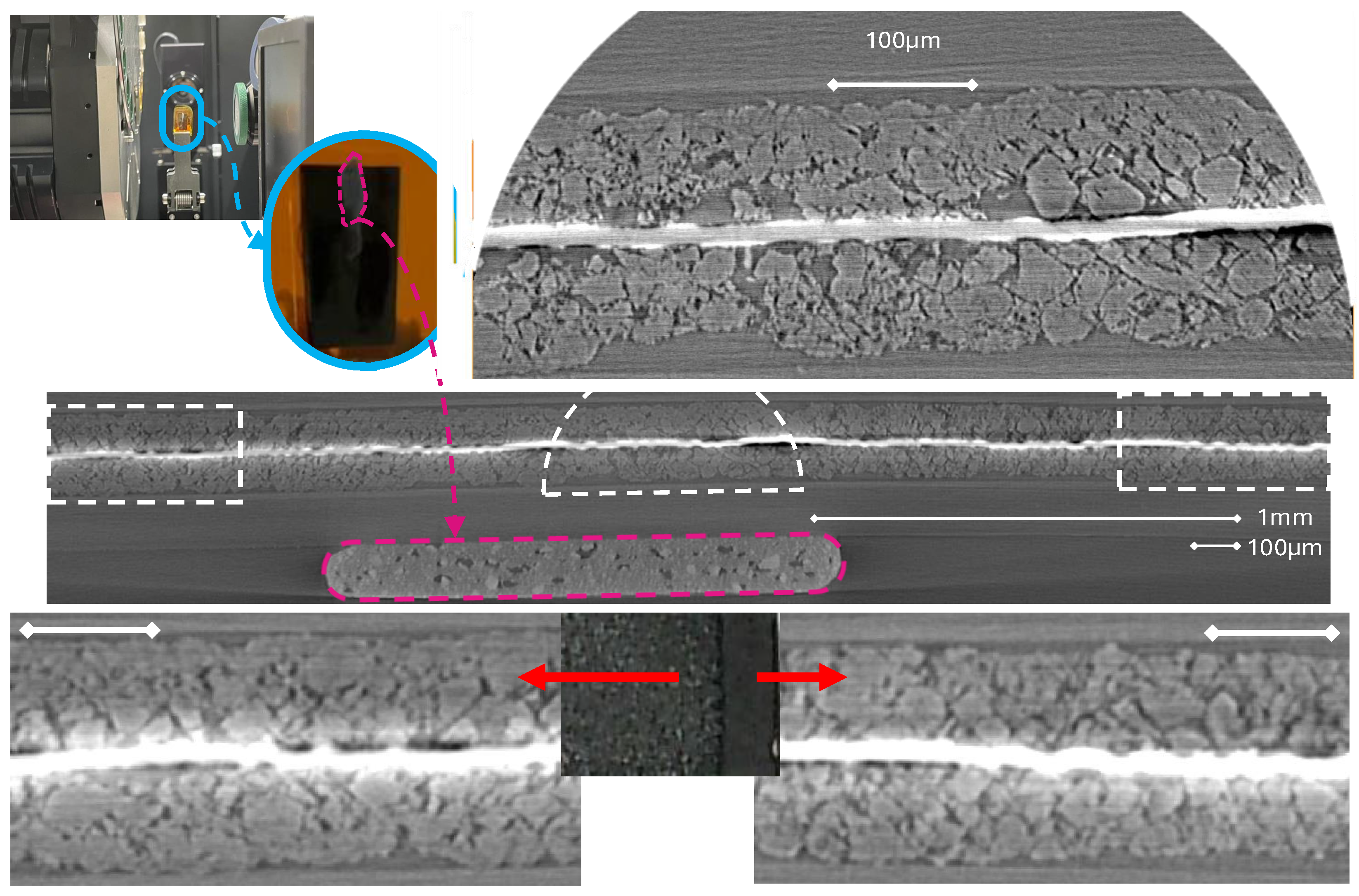
Appendix E. XCT Visualisation and Porosity

Appendix F. Lithium Leaching

References
- International Energy Agency (IEA). Batteries and Secure Energy Transitions. 2024. Available online: https://www.iea.org/reports/batteries-and-secure-energy-transitions (accessed on 18 February 2026).
- Shahjalal, M.; Roy, P.K.; Shams, T.; Fly, A.; Chowdhury, J.I.; Ahmed, M.R.; Liu, K. A review on second-life of Li-ion batteries: Prospects, challenges, and issues. Energy 2022, 241, 122881. [Google Scholar] [CrossRef]
- Martinez-Laserna, E.; Gandiaga, I.; Sarasketa-Zabala, E.; Badeda, J.; Stroe, D.I.; Swierczynski, M.; Goikoetxea, A. Battery second life: Hype, hope or reality? A critical review of the state of the art. Renew. Sustain. Energy Rev. 2018, 93, 701–718. [Google Scholar] [CrossRef]
- Farrington, M.D. Proposed amendments to UN ST/SG/AC.10/11: Transport of dangerous goods—Lithium batteries. J. Power Sources 1999, 80, 278–285. [Google Scholar] [CrossRef]
- Shen, H.; Zhang, Y.; Wu, Y. A comparative study on air transport safety of lithium-ion batteries with different SOCs. Appl. Therm. Eng. 2020, 179, 115679. [Google Scholar] [CrossRef]
- Haram, M.H.S.M.; Lee, J.W.; Ramasamy, G.; Ngu, E.E.; Thiagarajah, S.P.; Lee, Y.H. Feasibility of utilising second life EV batteries: Applications, lifespan, economics, environmental impact, assessment, and challenges. Alex. Eng. J. 2021, 60, 4517–4536. [Google Scholar] [CrossRef]
- Eleftheriadis, P.; Leva, S.; Gangi, M.; Rey, A.V.; Borgo, A.; Coslop, G.; Groppo, E.; Grande, L.; Sedzik, M. Second Life Batteries: Current Regulatory Framework, Evaluation Methods, and Economic Assessment: Reuse, refurbish, or recycle. IEEE Ind. Appl. Mag. 2024, 30, 46–58. [Google Scholar] [CrossRef]
- Neigum, K.; Wang, Z. Technology, economic, and environmental analysis of second-life batteries as stationary energy storage: A review. J. Energy Storage 2024, 103, 114393. [Google Scholar] [CrossRef]
- Rallo, H.; Casals, L.C.; De La Torre, D.; Reinhardt, R.; Marchante, C.; Amante, B. Lithium-ion battery 2nd life used as a stationary energy storage system: Ageing and economic analysis in two real cases. J. Clean. Prod. 2020, 272, 122584. [Google Scholar] [CrossRef]
- Koh, S.; Smith, L.; Miah, J.; Astudillo, D.; Eufrasio, R.; Gladwin, D.; Brown, S.; Stone, D. Higher 2nd life Lithium Titanate battery content in hybrid energy storage systems lowers environmental-economic impact and balances eco-efficiency. Renew. Sustain. Energy Rev. 2021, 152, 111704. [Google Scholar] [CrossRef]
- Vullum-Bruer, F.; Galteland, O.; Gouis, M.; McDougall, N.; Tenhunen-Lunkka, A. Existing and Upcoming Challenges for Extending Electric Vehicle Battery Lifetime Through 2nd Life Applications. J. Circ. Econ. 2024, 2. [Google Scholar] [CrossRef]
- Casals, L.C.; García, B.A.; Canal, C. Second life batteries lifespan: Rest of useful life and environmental analysis. J. Environ. Manag. 2019, 232, 354–363. [Google Scholar] [CrossRef]
- Lee, H.; Lim, D.; Lee, B.; Gu, J.; Choi, Y.; Lim, H. What is the optimized cost for a used battery?: Economic analysis in case of energy storage system as 2nd life of battery. J. Clean. Prod. 2022, 374, 133669. [Google Scholar] [CrossRef]
- Hossain, E.; Member, S.; Murtaugh, D.; Mody, J.; Mansur, H.; Faruque, R.; Sunny, S.H. A Comprehensive Review on Second-Life Batteries: Current State, Manufacturing Considerations, Applications, Impacts, Barriers and Potential Solutions, Business Strategies, and Policies. IEEE Access 2019, 7, 73215–73252. [Google Scholar] [CrossRef]
- Wewer, A.; Bilge, P.; Dietrich, F. Advances of 2nd life applications for lithium ion batteries from electric vehicles based on energy demand. Sustainability 2021, 13, 5726. [Google Scholar] [CrossRef]
- Iqbal, H.; Sarwar, S.; Kirli, D.; Shek, J.K.; Kiprakis, A.E. A survey of second-life batteries based on techno-economic perspective and applications-based analysis. Carbon Neutrality 2023, 2, 8. [Google Scholar] [CrossRef]
- Neubauer, J.; Pesaran, A. The ability of battery second use strategies to impact plug-in electric vehicle prices and serve utility energy storage applications. J. Power Sources 2011, 196, 10351–10358. [Google Scholar] [CrossRef]
- Viswanathan, V.V.; Kintner-Meyer, M. Second use of transportation batteries: Maximizing the value of batteries for transportation and grid services. IEEE Trans. Veh. Technol. 2011, 60, 2963–2970. [Google Scholar] [CrossRef]
- Martinez-Laserna, E.; Sarasketa-Zabala, E.; Sarria, I.V.; Stroe, D.I.; Swierczynski, M.; Warnecke, A.; Timmermans, J.M.; Goutam, S.; Omar, N.; Rodriguez, P. Technical viability of battery second life: A study from the ageing perspective. IEEE Trans. Ind. Appl. 2018, 54, 2703–2713. [Google Scholar] [CrossRef]
- Wang, C.; Lin, D.; Zhao, B.; Zhang, X.; Wang, Y.; Wang, Y.; Cao, W.; Jiang, F. State estimation and aging mechanism of 2nd life lithium-ion batteries: Non-destructive and postmortem combined analysis. Electrochim. Acta 2023, 443, 141996. [Google Scholar] [CrossRef]
- Timke, B.; Winter, M.; Niehoff, P. Impact of State of Health (SOH) on the Thermal Safety of Lithium Ion Cells for Long 1st Life and 2nd Life Applications. J. Electrochem. Soc. 2024, 171, 100526. [Google Scholar] [CrossRef]
- Hu, X.; Deng, X.; Wang, F.; Deng, Z.; Lin, X.; Teodorescu, R.; Pecht, M.G. A review of second-life lithium-ion batteries for stationary energy storage applications. Proc. IEEE 2022, 110, 735–753. [Google Scholar] [CrossRef]
- Li, J.; He, S.; Yang, Q.; Wei, Z.; Li, Y.; He, H. A comprehensive review of second life batteries toward sustainable mechanisms: Potential, challenges, and future prospects. IEEE Trans. Transp. Electrif. 2022, 9, 4824–4845. [Google Scholar] [CrossRef]
- Salek, F.; Resalati, S.; Babaie, M.; Henshall, P.; Morrey, D.; Yao, L. A review of the technical challenges and solutions in maximising the potential use of second life batteries from electric vehicles. Batteries 2024, 10, 79. [Google Scholar] [CrossRef]
- John, J.; Kudva, G.; Jayalakshmi, N. Secondary life of electric vehicle batteries: Degradation, state of health estimation using incremental capacity analysis, applications and challenges. IEEE Access 2024, 12, 63735–63753. [Google Scholar] [CrossRef]
- Roslan, M.; Satpathy, P.R.; Prasankumar, T.; Ramachandaramurthy, V.K.; Mansor, M.; Walker, S.L. Second-life battery energy storage system for energy sustainability: Recent advancements, key takeaways and future perspectives. J. Energy Storage 2025, 123, 116808. [Google Scholar] [CrossRef]
- Shen, J.; Zhou, M.; Liu, W.; Shi, Y.; Tang, W.; Deng, Y.; Liu, R.; Zuo, Y.; Zhang, J. Advanced direct recycling technology enables a second life of spent lithium-ion battery. Energy Storage Mater. 2025, 74, 103964. [Google Scholar] [CrossRef]
- Gu, X.; Bai, H.; Cui, X.; Zhu, J.; Zhuang, W.; Li, Z.; Hu, X.; Song, Z. Challenges and opportunities for second-life batteries: Key technologies and economy. Renew. Sustain. Energy Rev. 2024, 192, 114191. [Google Scholar] [CrossRef]
- Nazim, M.S.; Elavarasan, R.M. Extending battery lifecycles: A holistic review of second-life lithium-ion technology in sustainable energy systems from assessment to emerging trends. Renew. Sustain. Energy Rev. 2026, 233, 116848. [Google Scholar] [CrossRef]
- Redondo-Iglesias, E.; Venet, P.; Pelissier, S. Calendar and cycling ageing combination of batteries in electric vehicles. Microelectron. Reliab. 2018, 88-90, 1212–1215. [Google Scholar] [CrossRef]
- Uddin, K.; Chouchelamane, G.H.; Pastor-fern, C.; Widanage, W.D.; Marco, J. A Comparison between Electrochemical Impedance Spectroscopy and Incremental Capacity-Differential Voltage as Li-ion Diagnostic Techniques to Identify and Quantify the Effects of Degradation Modes within Battery Management Systems. J. Power Sources 2017, 360, 301–3018. [Google Scholar] [CrossRef]
- Gordon, I.J.; Genies, S.; Larbi, G.S.; Boulineau, A.; Daniel, L.; Alias, M. Original implementation of Electrochemical Impedance Spectroscopy (EIS) in symmetric cells: Evaluation of post-mortem protocols applied to characterize electrode materials for Li-ion batteries. J. Power Sources 2016, 307, 788–795. [Google Scholar] [CrossRef]
- Choi, W.; Shin, H.c.; Kim, J.M.; Choi, J.y.; Yoon, W.s. Modeling and Applications of Electrochemical Impedance Spectroscopy (EIS) for Lithium-ion Batteries. J. Electrochem. Sci. Technol. 2020, 11, 1–13. [Google Scholar] [CrossRef]
- Spitthoff, L.; Shearing, P.R.; Burheim, O.S. Temperature, Ageing and Thermal Management of Lithium-Ion Batteries. Energies 2021, 14, 1248. [Google Scholar] [CrossRef]
- Burheim, O.S.; Lamb, J.J. Engineering Energy Storage; Academic Press: Cambridge, MA, USA, 2024. [Google Scholar]
- Bloom, I.; Cole, B.W.; Sohn, J.J.; Jones, S.A.; Polzin, E.G.; Battaglia, V.S.; Henriksen, G.L.; Motloch, C.; Richardson, R.; Unkelhaeuser, T.; et al. An accelerated calendar and cycle life study of Li-ion cells. J. Power Sources 2001, 101, 238–247. [Google Scholar] [CrossRef]
- Dubarry, M.; Qin, N.; Brooker, P. Calendar aging of commercial Li-ion cells of different chemistries—A review. Curr. Opin. Electrochem. 2018, 9, 106–113. [Google Scholar] [CrossRef]
- Vetter, J.; Novák, P.; Wagner, M.R.; Veit, C.; Möller, K.C.; Besenhard, J.O.; Winter, M.; Wohlfahrt-Mehrens, M.; Vogler, C.; Hammouche, A. Ageing mechanisms in lithium-ion batteries. J. Power Sources 2005, 147, 269–281. [Google Scholar] [CrossRef]
- Broussely, M.; Herreyre, S.; Biensan, P.; Kasztejna, P.; Nechev, K.; Staniewicz, R.J. Aging mechanism in Li ion cells and calendar life predictions. J. Power Sources 2001, 97–98, 13–21. [Google Scholar] [CrossRef]
- Dubarry, M.; Anseán, D. Best practices for incremental capacity analysis. Front. Energy Res. 2022, 10, 1023555. [Google Scholar] [CrossRef]
- Bloom, I.; Christophersen, J.; Gering, K. Differential voltage analyses of high-power lithium-ion cells: 2. Applications. J. Power Sources 2005, 139, 304–313. [Google Scholar] [CrossRef]
- Dubarry, M.; Truchot, C.; Liaw, B.Y. Synthesize battery degradation modes via a diagnostic and prognostic model. J. Power Sources 2012, 219, 204–216. [Google Scholar] [CrossRef]
- Edge, J.S.; O’Kane, S.; Prosser, R.; Kirkaldy, N.D.; Patel, A.N.; Hales, A.; Ghosh, A.; Ai, W.; Chen, J.; Yang, J.; et al. Lithium ion battery degradation: What you need to know. Phys. Chem. Chem. Phys. 2021, 23, 8200–8221. [Google Scholar] [CrossRef]
- Birkl, C.R.; Roberts, M.R.; McTurk, E.; Bruce, P.G.; Howey, D.A. Degradation diagnostics for lithium ion cells. J. Power Sources 2017, 341, 373–386. [Google Scholar] [CrossRef]
- Troxler, Y.; Wu, B.; Marinescu, M.; Yufit, V.; Patel, Y.; Marquis, A.J.; Brandon, N.P.; Offer, G.J. The effect of thermal gradients on the performance of lithium-ion batteries. J. Power Sources 2014, 247, 1018–1025. [Google Scholar] [CrossRef]
- Lin, X.; Khosravinia, K.; Hu, X.; Li, J.; Lu, W. Lithium Plating Mechanism, Detection, and Mitigation in Lithium-Ion Batteries. Prog. Energy Combust. Sci. 2021, 87, 100953. [Google Scholar] [CrossRef]
- Ma, S.; Jiang, M.; Tao, P.; Song, C.; Wu, J.; Wang, J.; Deng, T.; Shang, W. Progress in Natural Science: Materials International Temperature effect and thermal impact in lithium-ion batteries: A review. Prog. Nat. Sci. Mater. Int. 2018, 28, 653–666. [Google Scholar] [CrossRef]
- Yang, B.; Zhang, H.; Yu, L.; Fan, W.; Huang, D. Lithium difluorophosphate as an additive to improve the low temperature performance of LiNi0.5Co0.2Mn0.3O2/graphite cells. Electrochim. Acta 2016, 221, 107–114. [Google Scholar] [CrossRef]
- Wang, H.; Zhang, H.; Cheng, Y.; Feng, K.; Li, X.; Zhang, H. All-NASICON LVP-LTP aqueous lithium ion battery with excellent stability and low-temperature performance. Electrochim. Acta 2018, 278, 279–289. [Google Scholar] [CrossRef]
- Hong, Z.; Tian, H.; Fang, Z.; Luo, Y.; Wu, H.; Zhao, F.; Li, Q.; Fan, S.; Wang, J. Challenges and Advances in Wide-Temperature Electrolytes for Lithium-Ion Batteries. ChemElectroChem 2024, 11, e202300759. [Google Scholar] [CrossRef]
- Zhang, S.S.; Xu, K.; Jow, T.R. The low temperature performance of Li-ion batteries. J. Power Sources 2003, 115, 137–140. [Google Scholar] [CrossRef]
- Zhang, S.S.; Xu, K.; Jow, T.R. A new approach toward improved low temperature performance of Li-ion battery. Electrochem. Commun. 2002, 4, 928–932. [Google Scholar] [CrossRef]
- Gunawardhana, N.; Dimov, N.; Sasidharan, M.; Park, G.J.; Nakamura, H.; Yoshio, M. Suppression of lithium deposition at sub-zero temperatures on graphite by surface modification. Electrochem. Commun. 2011, 13, 1116–1118. [Google Scholar] [CrossRef]
- Petzl, M.; Kasper, M.; Danzer, M.A. Lithium plating in a commercial lithium-ion battery—A low-temperature aging study. J. Power Sources 2015, 275, 799–807. [Google Scholar] [CrossRef]
- Alcaide, F.; Álvarez, G.; Bekaert, E.; Bonilla, F.; Gucciardi, E.; Urdampilleta, I.; Vicedo, R.; Ayerbe, E. Exploring the Influence of Temperature on Anode Degradation in Cycling-Aged Commercial Cylindrical Graphite-Si|NCA Cells. J. Electrochem. Soc. 2023, 170, 80523. [Google Scholar] [CrossRef]
- Zhu, Y.; Zhu, J.; Jiang, B.; Wang, X.; Wei, X.; Dai, H. Insights on the degradation mechanism for large format prismatic graphite/LiFePO4 battery cycled under elevated temperature. J. Energy Storage 2023, 60, 106624. [Google Scholar] [CrossRef]
- Sun, H.; Jiang, B.; You, H.; Yang, B.; Wang, X.; Wei, X.; Dai, H. Quantitative Analysis of Degradation Modes of Lithium-Ion Battery under Different Operating Conditions. Energies 2021, 14, 350. [Google Scholar] [CrossRef]
- Zhu, J.; Dewi Darma, M.S.; Knapp, M.; Sørensen, D.R.; Heere, M.; Fang, Q.; Wang, X.; Dai, H.; Mereacre, L.; Senyshyn, A.; et al. Investigation of lithium-ion battery degradation mechanisms by combining differential voltage analysis and alternating current impedance. J. Power Sources 2020, 448, 227575. [Google Scholar] [CrossRef]
- Wittman, R.; Dubarry, M.; Ivanov, S.; Juba, B.W.; Romàn-Kustas, J.; Fresquez, A.; Langendorf, J.; Grant, R.; Taggart, G.; Chalamala, B.; et al. Characterization of Cycle-Aged Commercial NMC and NCA Lithium-ion Cells: I. Temperature-Dependent Degradation. J. Electrochem. Soc. 2023, 170, 120538. [Google Scholar] [CrossRef]
- Spitthoff, L.; Vie, P.J.S.; Wahl, M.S.; Wind, J.; Burheim, O.S. Incremental capacity analysis (dQ/dV) as a tool for analysing the effect of ambient temperature and mechanical clamping on degradation. J. Electroanal. Chem. 2023, 944, 117627. [Google Scholar] [CrossRef]
- Richter, F.; Kjelstrup, S.; Vie, P.J.S.; Burheim, O.S. Thermal conductivity and internal temperature profiles of Li-ion secondary batteries. J. Power Sources 2017, 359, 592–600. [Google Scholar] [CrossRef]
- Hua, J.; Vie, P.J.S.; Wind, J. Methods for faster estimation of the entropy profile of a lithium-ion battery: A comparison of accelerated potentiometry and the estimation of entropy through thermal signatures. Electrochim. Acta 2025, 509, 145289. [Google Scholar] [CrossRef]
- Wind, J.; Vie, P.J.S. Entropy Profiles for Li-Ion Batteries—Effects of Chemistries and Degradation. Entropy 2025, 27, 364. [Google Scholar] [CrossRef]
- Sun, Y.; Hughes, G.M.; Bu, J.; Liu, J.; Grovenor, C.R.; Grant, P.S. Visualizing the Li distribution in an all-solid-state battery composite electrode using combined plasma focused-ion beam microscopy and secondary-ion mass spectroscopy. Micron 2025, 190, 103746. [Google Scholar] [CrossRef]
- Scott, S.; Du, W.; Horwood, R.; Lei, C.; Shearing, P.; Abbott, A.P. An Assessment of Blended Short Loop Recycled Graphite Electrodes Using X-Ray Micro-Computed Tomography. Adv. Energy Mater. 2025, 15, 2403498. [Google Scholar] [CrossRef]
- Milojevic, Z.; Attidekou, P.S.; Muhammad, M.; Ahmeid, M.; Lambert, S.; Das, P.K. Influence of orientation on ageing of large-size pouch lithium-ion batteries during electric vehicle life. J. Power Sources 2021, 506, 230242. [Google Scholar] [CrossRef]
- Solchenbach, S.; Tacconis, C.; Martin, A.G.; Peters, V.; Wallisch, L.; Stanke, A.; Hofer, J.; Renz, D.; Lewerich, B.; Bauer, G.; et al. Electrolyte motion induced salt inhomogeneity–a novel aging mechanism in large-format lithium-ion cells. Energy Environ. Sci. 2024, 17, 7294–7317. [Google Scholar] [CrossRef]
- Attia, P.M.; Bills, A.; Brosa Planella, F.; Dechent, P.; dos Reis, G.; Dubarry, M.; Gasper, P.; Gilchrist, R.; Greenbank, S.; Howey, D.; et al. Review—“Knees” in Lithium-Ion Battery Aging Trajectories. J. Electrochem. Soc. 2022, 169, 60517. [Google Scholar] [CrossRef]
- You, H.; Zhu, J.; Wang, X.; Jiang, B.; Wei, X.; Dai, H. Nonlinear aging knee-point prediction for lithium-ion batteries faced with different application scenarios. eTransportation 2023, 18, 100270. [Google Scholar] [CrossRef]
- Laszczynski, N.; Solchenbach, S.; Gasteiger, H.A.; Lucht, B.L. Understanding Electrolyte Decomposition of Graphite/NCM811 Cells at Elevated Operating Voltage. J. Electrochem. Soc. 2019, 166, A1853. [Google Scholar] [CrossRef]
- Zhu, J.; Knapp, M.; Sørensen, D.R.; Heere, M.; Darma, M.S.D.; Müller, M.; Mereacre, L.; Dai, H.; Senyshyn, A.; Wei, X.; et al. Investigation of capacity fade for 18650-type lithium-ion batteries cycled in different state of charge (SoC) ranges. J. Power Sources 2021, 489, 229422. [Google Scholar] [CrossRef]
- Lian, T.; Vie, P.J.S.; Gilljam, M.; Forseth, S. (Invited) Changes in Thermal Stability of Cyclic Aged Commercial Lithium-Ion Cells. Electrochem. Soc. Trans. 2019, 89, 73–81. [Google Scholar] [CrossRef]


| Cell Label | Cycling Conditions During 1st Life | Cycling Conditions During 2nd Life | ||||||||
|---|---|---|---|---|---|---|---|---|---|---|
| Temp (°C) | Orientation | C-Rate | SoC (%) | Year(s) | Temp (°C) | Orientation | C-Rate | SoC (%) | Year(s) | |
| 45V-1-H | 45 | V | 1 | 0–100 | 2015–2016 | 25 | H | 0.25 | 10–70 | 2022–2023 |
| 45H-2-H | 45 | H | 1 | 0–100 | 2022–2024 | 25 | H | 0.25 | 10–70 | 2023–2024 |
| 45H-3-H | 45 | H | 1 | 0–100 | 2022–2024 | 25 | H | 0.25 | 10–70 | 2023–2024 |
| 45V-4 | 45 | V | 1 | 0–100 | 2015–2016 | – | – | – | – | – |
| 45V-5 | 45 | V | 1 | 0–100 | 2015–2016 | – | – | – | – | – |
| 25V-6 | 25 | V | 1 | 0–100 | 2016–2017 | – | – | – | – | – |
| 25V-7-V | 25 | V | 1 | 0–100 | 2016–2017 | 25 | V | 0.25 | 10–70 | 2019–2023 |
| 25V-8-V | 25 | V | 1 | 0–100 | 2016–2017 | 25 | V | 0.25 | 10–70 | 2019–2023 |
| 25H-9 | 25 | H | 1.5 | 0–100 | 2016–2017 | – | – | – | – | – |
| 25H-10-H | 25 | H | 1.5 | 0–100 | 2016–2017 | 25 | H | 0.25 | 10–70 | 2022–2023 |
| 25V-11-V | 25 | V | 1.5 | 0–100 | 2015–2016 | 25 | V | 0.25–0.5 * | 0–100 | 2016–2017 |
| 25V-12 | 25 | V | 1.5 | 0–100 | 2015–2016 | – | – | – | – | – |
| 25V-13-H | 25 | V | 1.5 | 0–100 | 2015–2016 | 25 | H | 0.25 | 10–70 | 2022–2023 |
| 5H-14 | 5 | H | 1 | 0–100 | 2022 | – | – | – | – | – |
| 5H-15 | 5 | H | 1 | 0–100 | 2022 | – | – | – | – | – |
| 5V-16 | 5 | V | 1 | 0–100 | 2015 | – | – | – | – | – |
| 5V-17 | 5 | V | 1 | 0–100 | 2015 | – | – | – | – | – |
| 5V-18 | 5 | V | 1.5 | 0–100 | 2015 | – | – | – | – | – |
Disclaimer/Publisher’s Note: The statements, opinions and data contained in all publications are solely those of the individual author(s) and contributor(s) and not of MDPI and/or the editor(s). MDPI and/or the editor(s) disclaim responsibility for any injury to people or property resulting from any ideas, methods, instructions or products referred to in the content. |
© 2026 by the authors. Licensee MDPI, Basel, Switzerland. This article is an open access article distributed under the terms and conditions of the Creative Commons Attribution (CC BY) license.
Share and Cite
Ezeigwe, E.R.; Woll, S.A.; Erichsen, L.T.B.; Solberg, S.B.B.; Hughes, G.M.; Du, W.; Lamb, J.J.; Wind, J.; Lian, T.; Shearing, P.R.; et al. Degradation of a Lithium-Ion Battery Cell for Enhanced First and Second Life: Effects of Temperature, Orientation, C-Rate and State of Charge. Batteries 2026, 12, 121. https://doi.org/10.3390/batteries12040121
Ezeigwe ER, Woll SA, Erichsen LTB, Solberg SBB, Hughes GM, Du W, Lamb JJ, Wind J, Lian T, Shearing PR, et al. Degradation of a Lithium-Ion Battery Cell for Enhanced First and Second Life: Effects of Temperature, Orientation, C-Rate and State of Charge. Batteries. 2026; 12(4):121. https://doi.org/10.3390/batteries12040121
Chicago/Turabian StyleEzeigwe, Ejikeme Raphael, Sivert A. Woll, Lene T. B. Erichsen, Simon B. B. Solberg, Gareth M. Hughes, Wenjia Du, Jacob J. Lamb, Julia Wind, Torleif Lian, Paul R. Shearing, and et al. 2026. "Degradation of a Lithium-Ion Battery Cell for Enhanced First and Second Life: Effects of Temperature, Orientation, C-Rate and State of Charge" Batteries 12, no. 4: 121. https://doi.org/10.3390/batteries12040121
APA StyleEzeigwe, E. R., Woll, S. A., Erichsen, L. T. B., Solberg, S. B. B., Hughes, G. M., Du, W., Lamb, J. J., Wind, J., Lian, T., Shearing, P. R., Burheim, O. S., & Vie, P. J. S. (2026). Degradation of a Lithium-Ion Battery Cell for Enhanced First and Second Life: Effects of Temperature, Orientation, C-Rate and State of Charge. Batteries, 12(4), 121. https://doi.org/10.3390/batteries12040121