Article

Investigation of Laser Intensity Profiles in the Laser Drying of Anodes for Lithium-Ion Battery Production


Production Engineering of E-Mobility Components (PEM), RWTH Aachen University, 52072 Aachen, Germany
*
Author to whom correspondence should be addressed.
Batteries 2026, 12(4), 122; https://doi.org/10.3390/batteries12040122
Submission received: 22 January 2026 / Revised: 5 March 2026 / Accepted: 13 March 2026 / Published: 1 April 2026
(This article belongs to the Section Battery Processing, Manufacturing and Recycling)

Abstract

The growing demand for lithium-ion batteries, along with the imperative for sustainable and cost-efficient production, necessitates the exploration of innovative technological approaches. Among the most energy-intensive steps in battery manufacturing is the electrode drying process. This study examined the impact of rapid laser-based drying on critical quality parameters of anode electrodes. A vertical-cavity surface-emitting laser (VCSEL) was employed, enabling precise and independent control of the power distribution. By applying various intensity profiles, the influence of laser power modulation on electrode drying behaviour and resulting quality was systematically investigated. The outcomes were compared to both conventional convection drying and laser drying at constant power. The objective was to assess the viability of profile-controlled laser drying as a stand-alone alternative and to identify its benefits and limitations with regard to electrode quality and process efficiency.

1. Introduction

The increasing demand for lithium-ion batteries (LiB) is driven by climate change mitigation measures, particularly in the automotive and energy sectors [1]. To meet these requirements, it is essential to develop cost-effective and environmentally friendly production methods [2]. A critical aspect of battery production is the electrode drying process, which affects both the properties and costs of the batteries [3]. Traditional drying methods, such as convection dryers, are energy-intensive and expensive [4], while innovative approaches like laser drying offer promising benefits, including a significant reduction in energy consumption and capital costs [2,5,6]. In addition to these advantages, laser technology reduces operating costs (OPEX) through lower maintenance requirements and the long service life of the equipment [7]. Lasers enable precise control of energy input, minimising thermal and mechanical stress. Furthermore, laser units can be modularly adapted, allowing a rapid response to changing product requirements, leading to improved process control and higher efficiency [3].
Despite the promising advantages of laser drying, there are still research gaps indicating that the quality of electrodes cannot yet be fully guaranteed using stand-alone systems because of binder migration [2,5,8]. Binder migration describes the redistribution of dissolved binder within the electrode coating during the drying process because of solvent evaporation and internal mass transport processes [9,10]. As the solvent evaporates at the electrode surface, a capillary-driven liquid flow from the interior of the coating towards the evaporation interface is induced, which transports dissolved binder components toward the surface of the electrode [9,11]. This process leads to an inhomogeneous binder distribution across the coating thickness, with binder accumulation near the electrode surface and a reduced binder concentration at the current collector interface [10,11,12]. Since the adhesion of the electrode coating strongly depends on the binder content at the substrate interface, such redistribution can reduce the adhesion strength and mechanical stability of the electrode layer [13]. The extent of binder migration is strongly influenced by the drying rate and the associated solvent evaporation flux, as higher drying rates promote stronger capillary transport and therefore increase the tendency for binder accumulation near the surface [9,12].
Studies on the utilisation of radiation-based drying suggest that the quality of laser-dried and IR-dried electrodes is approaching that of conventionally dried electrodes [2,8,14,15]. Several publications propose or demonstrate hybrid laser–convection drying concepts, combining rapid radiative energy input with convective solvent removal to reduce drying time while maintaining electrode quality [2,8,15]. Wolf et al. demonstrated a hybrid laser–convection drying process in which laser irradiation is first applied to rapidly supply thermal energy to the electrode surface and accelerate the initial drying stage. Subsequently, convective drying is used to complete solvent removal from the coating, resulting in significantly reduced overall drying times without compromising electrode quality [8]. Similarly, Altvater et al. investigated multistage drying profiles based on near-infrared (NIR) radiation, in which the drying rate is varied across multiple drying stages by adjusting the applied radiation intensity. This approach enables accelerated solvent evaporation while maintaining electrode quality and mitigating binder migration effects [14]. These examples demonstrate that applying different drying rates over the drying process can effectively reduce drying times while maintaining electrode quality. Therefore, the aim of this work is to further optimise the laser intensity distribution to improve the laser-based stand-alone drying process.

2. Materials and Methods

2.1. Material

For all experiments in this study, an anode slurry was prepared and used. Graphite (SIGRACELL GAM AR-20B, SGL Carbon SE, Wiesbaden, Germany), styrene-butadiene rubber (SBR, BM-451B, Zeon Europe GmbH, Düsseldorf, Germany), carboxymethyl cellulose (CMC, MAC500LC, Nippon Paper Industries Co., Tokyo, Japan), carbon black (C-Nergy Super C45, Imerys S.A., Paris, France), and distilled water were used. The SBR was applied as an aqueous dispersion with a solid content of 40 weight percent. The exact composition is shown in Table 1.
All components were weighed with a high-precision scale in a controlled environment to ensure a mass tolerance of ±0.1 g. The mixing process was carried out using an intensive mixer (EL1, Maschinenfabrik Gustav Eirich GmbH & Co. KG, Hardheim, Germany).

2.2. Stationary Test Stand Setup

Immediately after mixing, the slurry was applied to one side of a copper foil using an automatic film applicator (ZAA 2600.HA, Proceq AG, Schwerzenbach, Switzerland) and a universal foil applicator (ZUA 2000, Proceq AG) with the desired coating thickness and subsequently dried in a stationary process. The setup for the drying process is shown in Figure 1.
A stationary test stand was used to investigate electrode drying using a VCSEL. This setup enables the batch-wise drying of individual electrode samples. A thermal imaging camera was used to monitor the process. The test stand consisted of an upper and lower section, separated by a shielding plate to protect the other components below the laser. The distance between the laser module and the electrode was 580 mm. For the drying experiments, the airflow visible in the figure was deactivated to avoid any influence on the process. The VCSEL used was a prototype from Trumpf with 28 emitters, controlled by three driver racks (PPM430, TRUMPF Photonic Components GmbH, Ditzingen, Germany) and a maximum power of 11.2 kW.

2.3. Laser Intensity Profiles

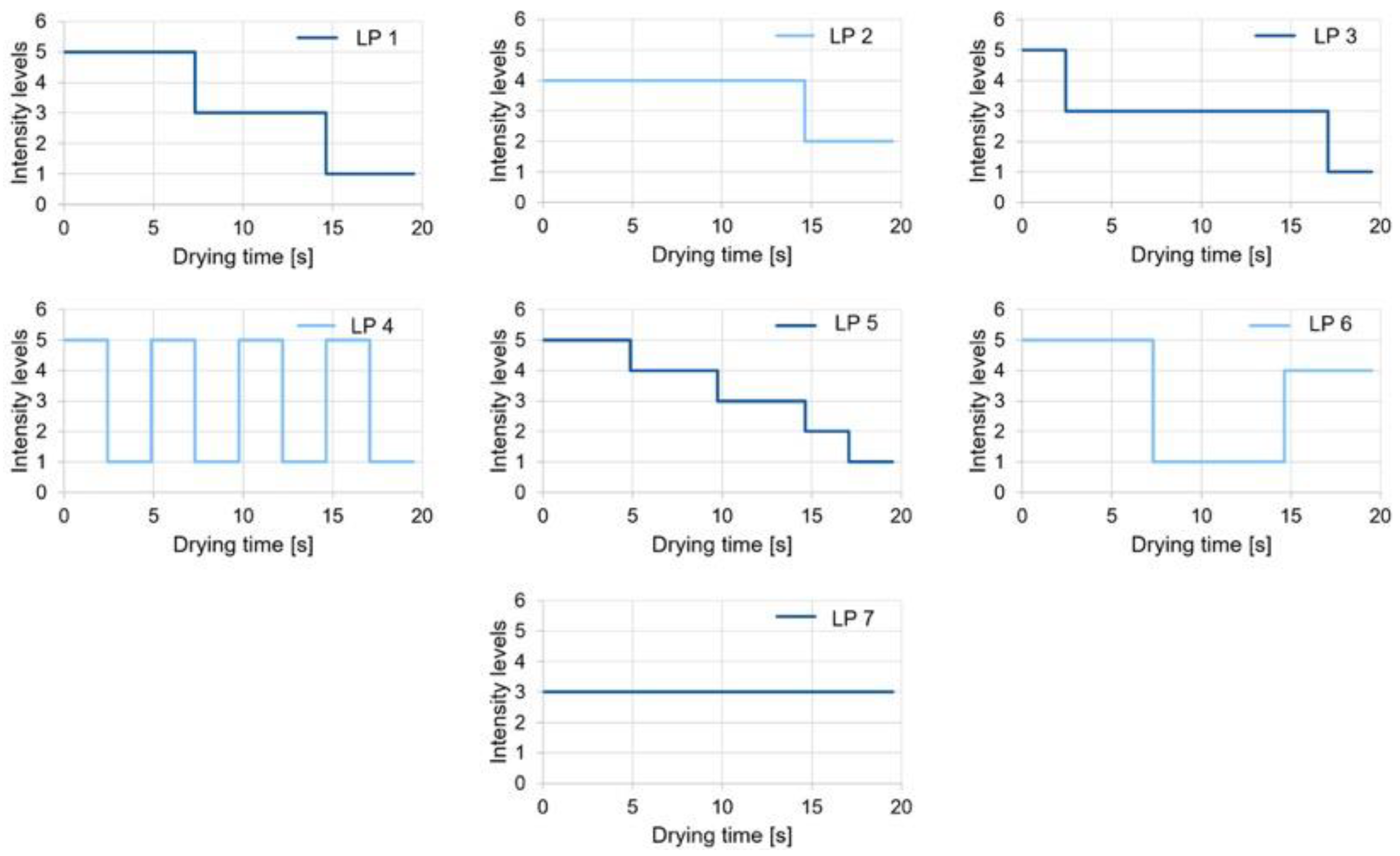
Seven laser intensity profiles (Figure 2) were developed to investigate the effects of laser intensity on drying. All profiles were divided into 8 time zones and 5 laser intensity levels. These profiles were based on a drying model of Kumberg et al. and findings on binder migration, with the goal of improving anode adhesion [12].
Considering the reduction in the risk of binder migration during the initial phases of drying, the profiles were designed to have high intensity levels in the early drying phases [2]. Additionally, profiles were used to cover the effects of alternating, steadily increasing, and constant intensities.

2.4. Parameters

For the experiments, two different wet layer thicknesses of 170 µm (high energy electrode) and 130 µm (high power electrodes) were used, resulting in dried area weights of 82 g/m2 and 58 g/m2, respectively. The laser power was adjusted depending on the layer thickness, the intensity level, and the drying time. The drying times and laser intensities are summarised in Table 2 for high energy electrodes and in Table 3 for high power electrodes.
The intensity profiles used in the experiments comprised five discrete power levels. Intensity level 3 corresponds to the minimum continuous power required to achieve fully dried electrodes under the given conditions. The other levels were defined relative to this reference: intensity level 0 represents 0 W/cm2, while levels 1, 2, 4, and 5 represent sub- and supercritical power settings in relation to level 3. Accordingly, the applied laser intensity varied as a function of the total drying time. The different intensity levels were used to perform tests with the various profiles presented in Figure 2.
The drying time differed between 39 s and 9.75 s for high energy electrodes. For the shortest drying time, a drying rate of 9.48 g/m2s was achieved. The drying rate is calculated with Equation (1):
x d = m L t
where
x d corresponds to the drying rate [g/m2s];
m L stands for dried solvent [g/m2];
t corresponds to the drying time [s].
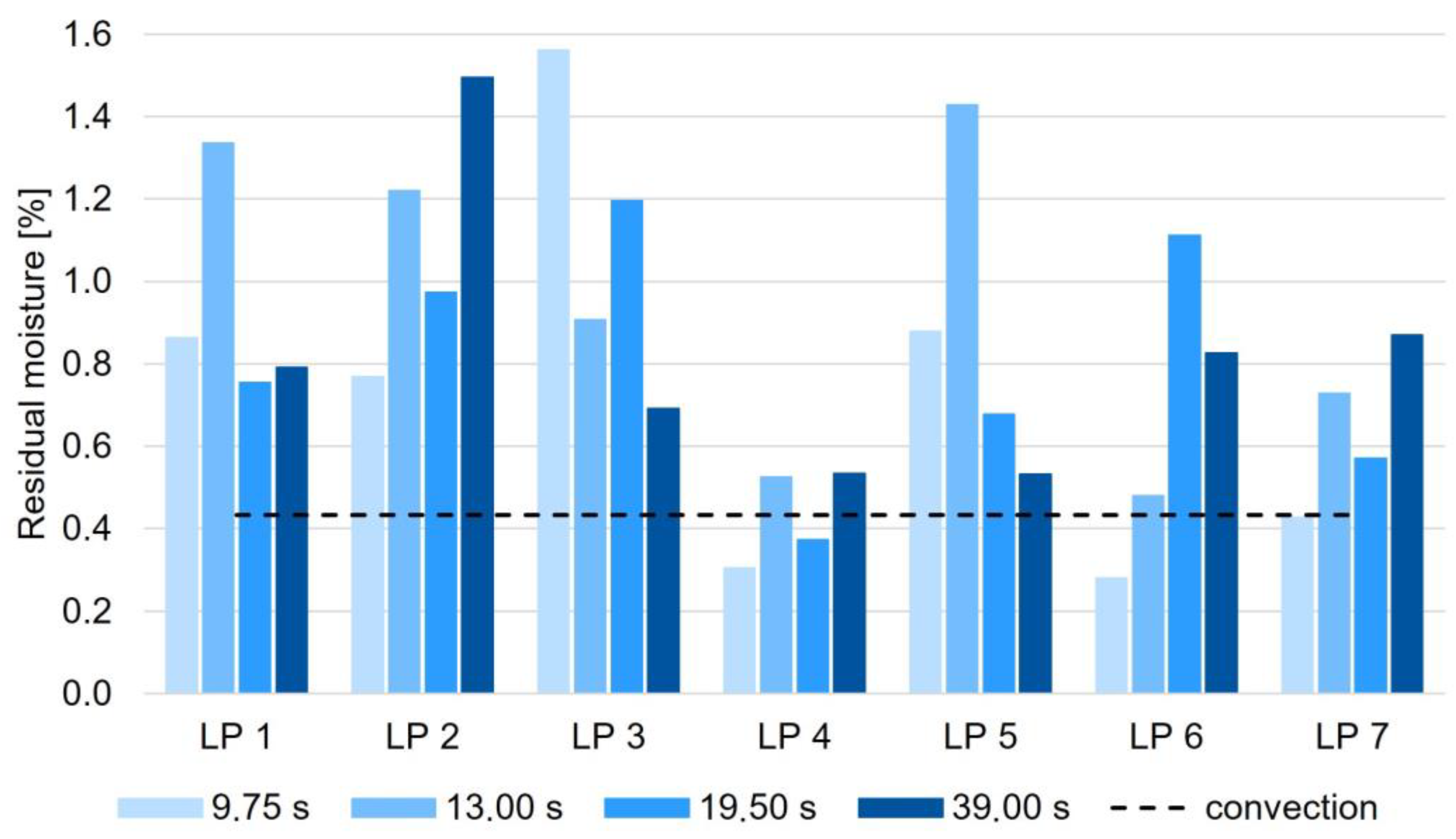
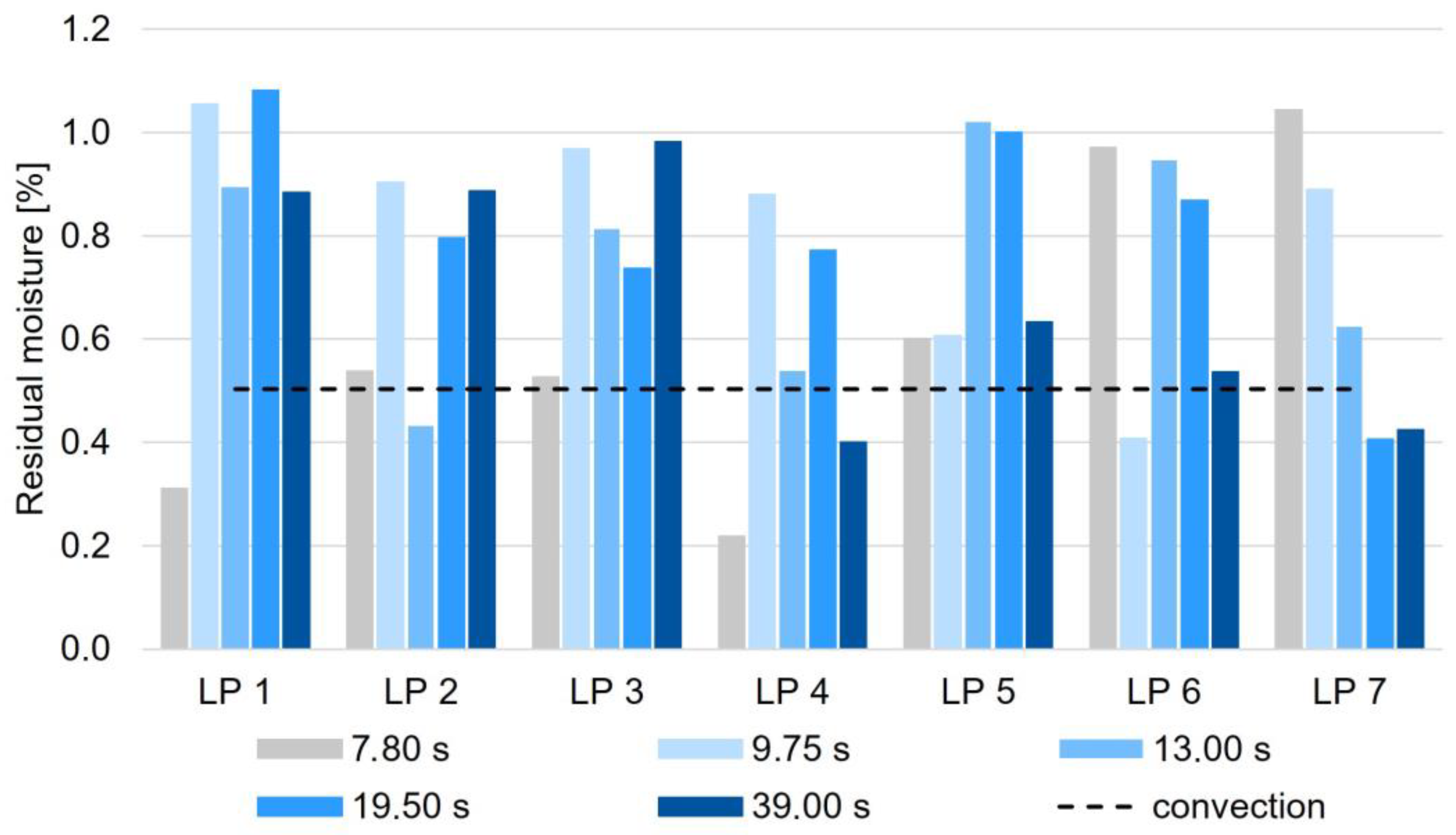
The dried solvent mass per unit area mL was calculated based on the solids content and the dried area weight, neglecting the measured residual moisture values, as they were below 1.6% and 1.1%, respectively.
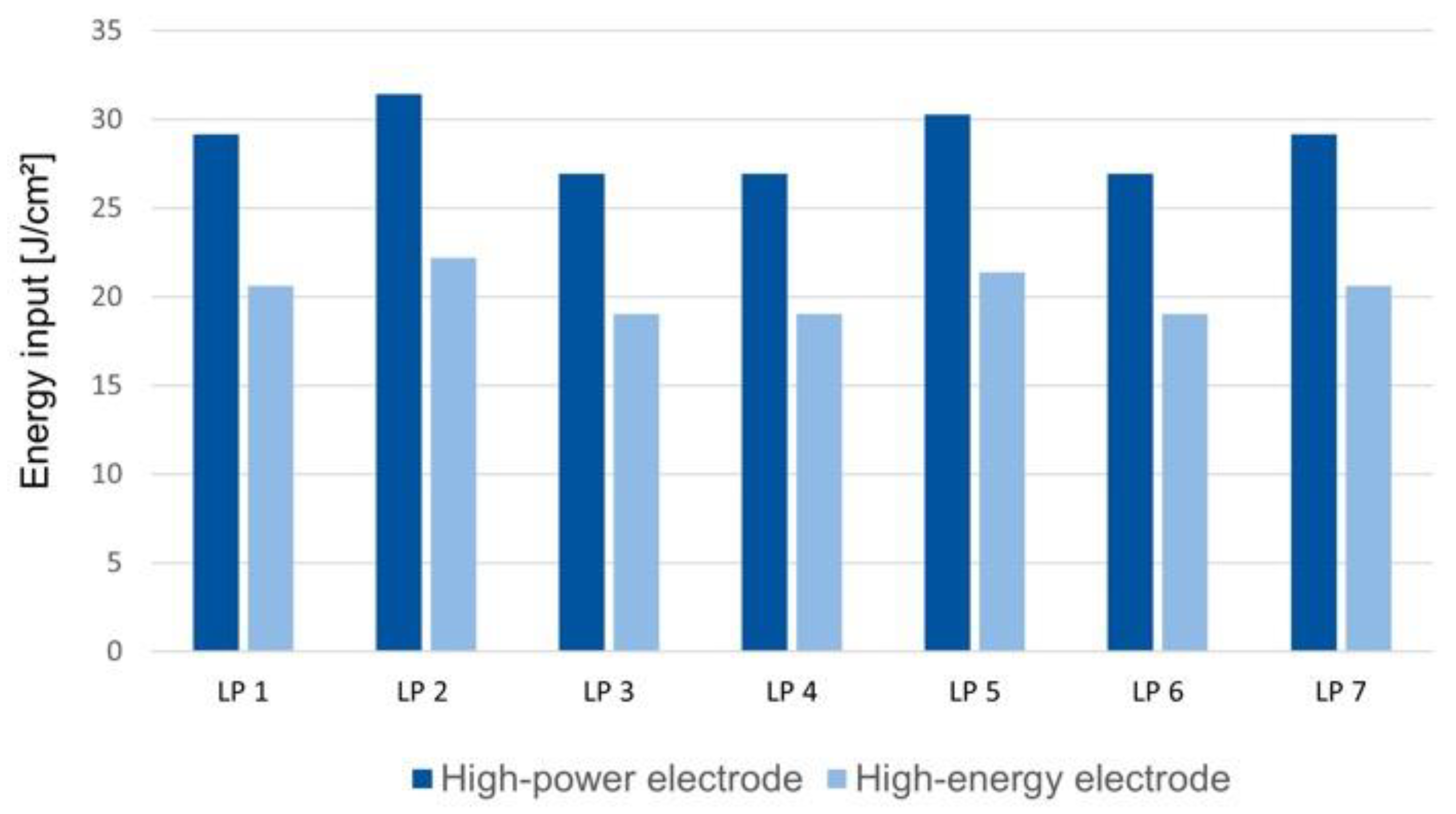
The averaged energy inputs of the drying times into the electrodes for the different laser profiles are presented in Figure 3 for both the high-energy and high-power electrode cells. The energy inputs were calculated by multiplying the drying time with the laser intensity.
The profiles can be summarised as follows: LP 3, LP 4, and LP 7 showed the lowest energy input, with approximately 27 J/cm2 for the high-energy cell and 19 J/cm2 for the high-power cell. Next were LP 1 and LP 6, with around 29 J/cm2 for the high-energy cell and around 20.7 J/cm2 for the high-power cell. LP 5 had the second-highest energy input, with approximately 30 J/cm2 for the high-energy cell and 21.4 J/cm2 for the high-power cell. The profile with the highest energy input was LP 2 at approximately 31 J/cm2 in the high-energy cell and 22.2 J/cm2 in the high-power cell. The slight variations in energy input between the individual profiles are due to the laser’s adjustment capabilities and the defined characteristics of each laser profile. In all cases, the energy input had to be configured to ensure that the electrode was fully dried.
For the convective drying, the electrode samples were dried under stationary conditions using a directed hot air stream, as illustrated in Figure 1. An air volume flow of 300 L/min was applied, resulting in an airflow velocity of approximately 1.5 m/s at the electrode surface. The nozzle outlet temperature of the air stream was set to 110 °C for high-energy electrodes and for high-power electrodes. Under these conditions, the resulting drying times were approximately 180 s and 120 s for the high-energy and high-power electrodes, respectively.
Adhesion is a key quality criterion for dried anodes [16]. In this work, adhesion measurements were carried out using a tensile testing machine (5940 series, Instron GmbH, Darmstadt, Germany). A circular sample with a diameter of 46 mm was punched out, fixed on the tensile stamps, and compressed with a force of 930 N. The required detachment force was measured and indicated in [MPa] or [N/mm2] [17].

2.5. Quality Analysis Methodes

Another quality criterion is the residual moisture. This is determined by a moisture analyser (MA X2.IC.A.WH, RADWAG, Hilden, Germany) by weighing a 46 mm sample, heating it to 150 °C, and weighing it again. The difference in weight before and after heating indicates the residual moisture content. For precise measurement, an analytical balance (ABT 220-5DNM, KERN & SOHN GmbH, Balingen-Frommern, Germany) was used. For the optical analysis of the anode, a digital microscope (VHX970-F, Keyence, Frankfurt, Germany) was used to identify potential damage to the electrodes. To investigate the electrochemical properties of the anodes, half-cells were assembled in an argon glovebox. The cell consisted of a spring, spacer, anode sample (14 mm diameter), separator (Celgard 2500, Celgard LLC, Charlotte, USA), lithium metal chip (EQ-Lib-LiC, xtra GmbH, Leonberg, Germany) and electrolyte (LiPF6, E-Lyte Innovations GmbH, Kaiserslautern, Germany). The relevant results for the evaluation include formation and a pulse test. For formation, the cell was charged using a constant-current–constant-voltage (CCCV) protocol to 1.5 V vs. Li/Li+ at 0.05 C, followed by a 5 min rest. Subsequently, the cell was discharged to 0.01 V using CCCV at 0.1 C. The Coulombic efficiency (CE) was calculated as the ratio of discharged to charged capacity.
For the pulse test, the cell was charged to 10% of its nominal capacity at 0.5 C and rested for 60 min to allow relaxation. A current pulse of 2 C was then applied for 10 s. The internal resistance was determined from the voltage response using Ohm’s law. The internal resistance provides an indicator of the electrochemical performance of the anode, as lower resistance reflects improved charge transport and reduced polarisation within the electrode.

3. Results and Discussion

3.1. Adhesion

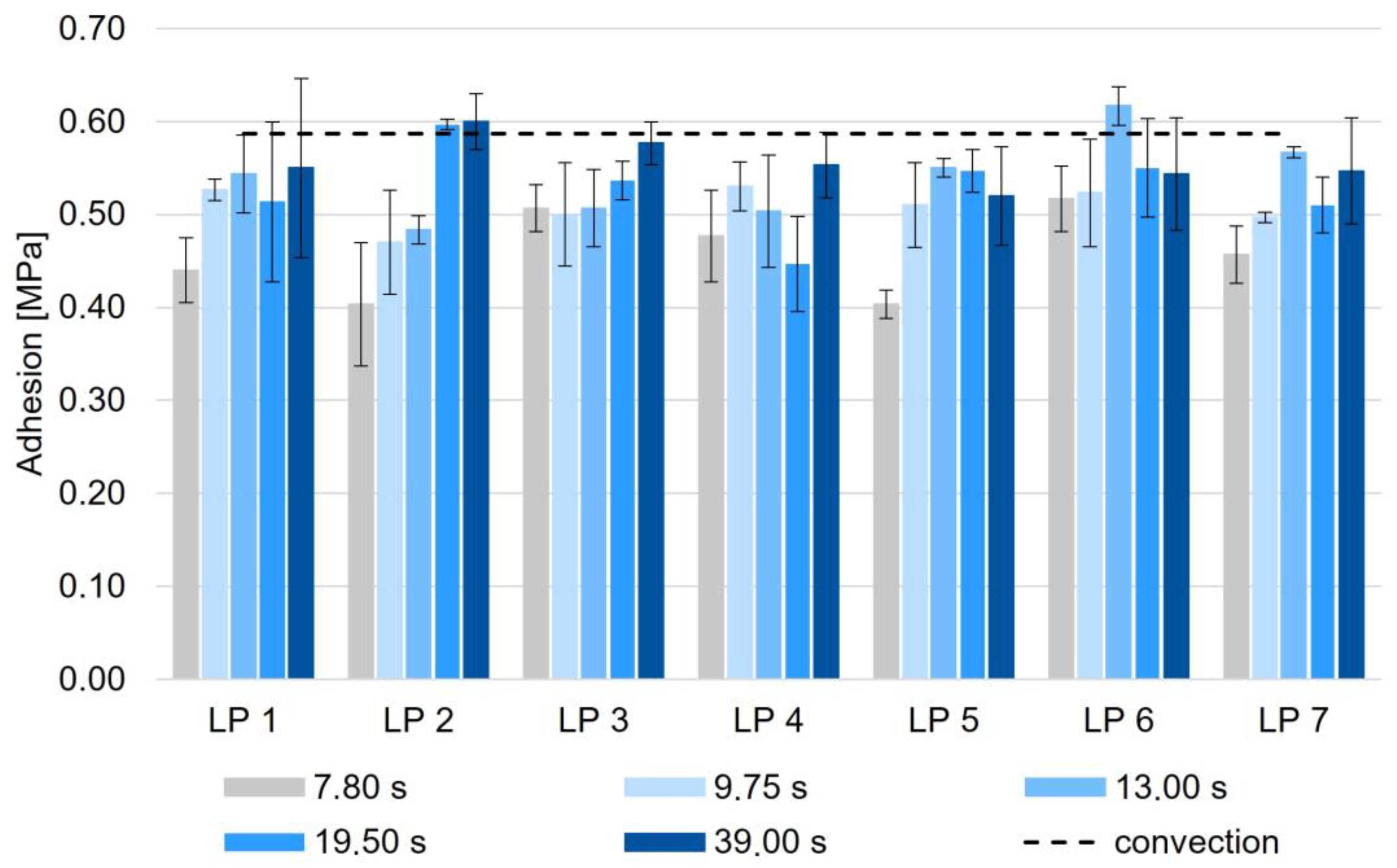
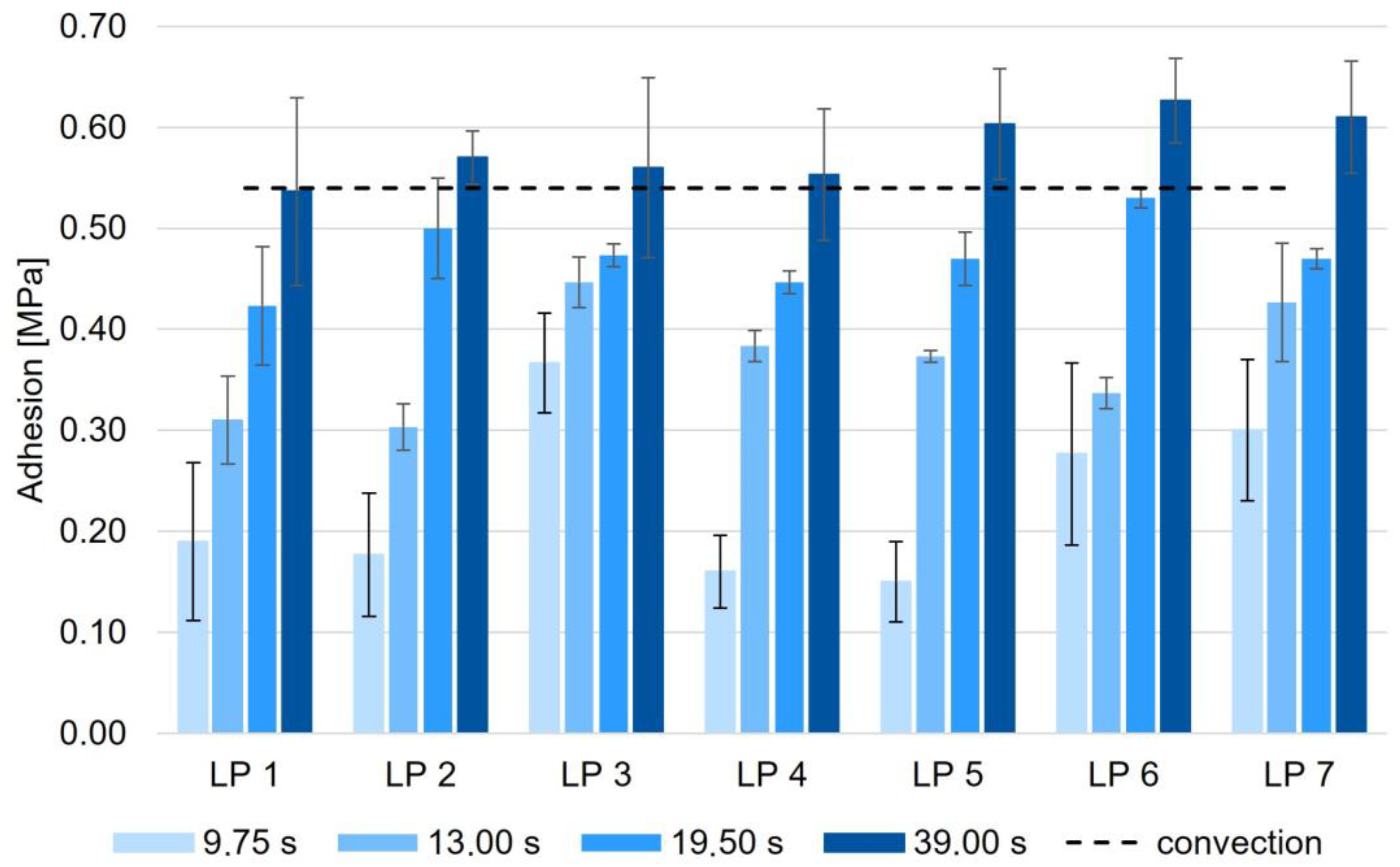
The adhesion results of the laser-dried anodes were compared with the adhesion results of stationary convection-dried anodes, which showed the influence of the laser profiles. The anodes were divided into two categories to differentiate between the effects of different coating thicknesses.

3.1.1. High-Energy Electrode

A strong influence of the laser power could be observed in the high-energy electrode. Figure 4 clearly shows that the adhesion values increased with longer drying times and thus lower laser intensities. The noticeable jumps between drying times of 9.75 s and 13.00 s clearly highlight this effect. These findings are consistent with the results reported by Wang et al., who identified a correlation between elevated drying performance and reduced adhesion [18]. LP 7 was characterised by a constant intensity over the entire drying time. Therefore, LP 7 served as a reference so that a comparison could be made between the individual laser profiles. The dashed line in Figure 4 represents convection drying with a drying time of 180 s. This allowed for laser drying to be compared with convection drying.
With a drying time of 39.00 s, each laser profile had higher adhesion values than convection drying. LP 6 was the only profile that also had higher values than LP 7. Also, at a drying time of 19.50 s, LP 6 showed the best adhesion values, although they were slightly below those of convection drying.
If we consider shorter drying times, LP 3 had the best adhesion values at drying times of 13.00 s and 9.75 s. These were higher compared to the constant laser power of LP 7 but showed a significant reduction in adhesion values when compared to convection drying.
The reason for the better adhesion values of LP 3 with short drying times is most likely due to the lower amount of energy applied to the electrode and the properties of the profile itself. LP 3 had a high laser power in the first drying zone, but this was already reduced in zone 2. This enables gentler drying, which leads to lower capillary forces and therefore higher adhesion. Looking at the amount of energy used in LP 3, 4, and 7, these profiles had the same low amounts of energy. A comparison of the mentioned profiles showed that there was a significant difference in how energy is introduced into the electrode depending on the profile used. This observation is further supported by the study of Wang et al. and Altvater et al. on two-stage and three-stage drying processes [14,18]. The influence of the profiles with the same amount of energy can also be illustrated using LP 1 and 6. Significant differences in adhesion could be observed between the profiles, with LP 6 always exhibiting higher adhesion forces.
In the present measurement data, the influence of laser profiles could be particularly observed at low drying times. When looking at the standard deviations of the adhesion measurements, these were especially high when the adhesion forces were low. LP 1, 2 and 6 were particularly affected at short drying times. Therefore, the impact of laser profiles at low drying times should be viewed critically.

3.1.2. High-Power Electrode

If we look at Figure 5, we can see that the influence of the drying power was significantly lower for the high-power electrode than for the high-energy electrode. Based on this observation, the drying time of 7.8 s was also analysed for the high-power electrode. At this drying speed, the influence of the laser power on LP 1 and 5 is clearly recognisable. In contrast to the high-energy electrode, some profiles showed higher adhesion values with shorter drying times than with longer drying times. This behaviour indicates that the drying rate affected adhesion loss was significantly lower for thin coated electrodes compared to thick coated electrodes, which means that the influence of the drying rate on binder migration has a greater effect at higher layer thicknesses. Similar observations have been reported in previous studies [12,17,19]. As a result, the adhesion of thin electrodes is less influenced by the drying process. The convection drying time was 120 s.
LP 6 and LP 2 exhibited the highest adhesion forces for the drying times analysed and were the only profiles to exceed both the comparative LP 7 and the adhesion values for convection drying. LP 6 achieved the highest adhesion at a drying time of 13.00 s. At the longer drying times of 19.50 s and 39.00 s, LP 2 had, with PL 6, the highest adhesion values, which, when analysing the standard deviations, were at a similar level to those of convection drying.
In summary, it can be stated that LP 6 represents the laser drying profile that most effectively minimises adhesion losses. At a drying time of 19.50 s, LP 6 yielded the lowest adhesion losses, particularly for high-energy electrodes. For high-power electrodes, LP 6 likewise provided the most effective limitation of adhesion losses at a reduced drying time of 13.00 s.
Like the high-energy electrode, LP 3 achieved high adhesion values at low drying times. The constant adhesion forces exhibited by profile 3 at different drying times are particularly striking. Even with a drying time of 7.8 s, high adhesion values were achieved. Although the adhesion values of LP 3 at drying times of 9.75 s and 13.00 s were lower compared to LP 4 or LP 5, the standard deviation indicates that the adhesion values of these profiles could be equalised. Furthermore, apart from the drying time of 13.00 s, LP 3 always outperformed LP 7, which had a constant laser intensity.
LP 5, which was able to achieve similar adhesion values to LP 6 in the high-energy electrode, only showed adhesion forces in the high-power electrode at drying times of 13.00 s and 19.50 s, which are comparable to the values of laser LP 7. This means that LP 5 cannot significantly increase the adhesion values of the high-power electrode.
In general, it is difficult to make a clear differentiation between the individual profiles of the high-power electrode, as most of the adhesion values were in a similar range. This characteristic, which occurs at low coating thicknesses, is consistent with the findings of Fink et al. [15]. This makes a conclusive evaluation of the individual profiles difficult. The reason for the similar adhesion values lies in the low layer thickness of the electrodes, which is associated with reduced binder migration.

3.2. Electrochemical Results

The electrochemical tests were only carried out on the high-energy electrode, as the effects of laser drying were much more significant in the adhesion measurements. It can therefore be assumed that laser drying also has a stronger influence on the electrochemical tests of the high-energy electrode. The electrochemical tests used the anodes that were dried with LP 6 and LP 1. LP 6 was chosen as it had the highest adhesion values and was therefore the best profile. LP 1, which had average adhesion values, was selected for comparison. All samples of the laser profiles were produced with a drying time of 39.00 s. This drying time was the slowest and therefore achieved the highest adhesion values. The convection drying samples and LP 7 with a constant laser power served as reference tests.
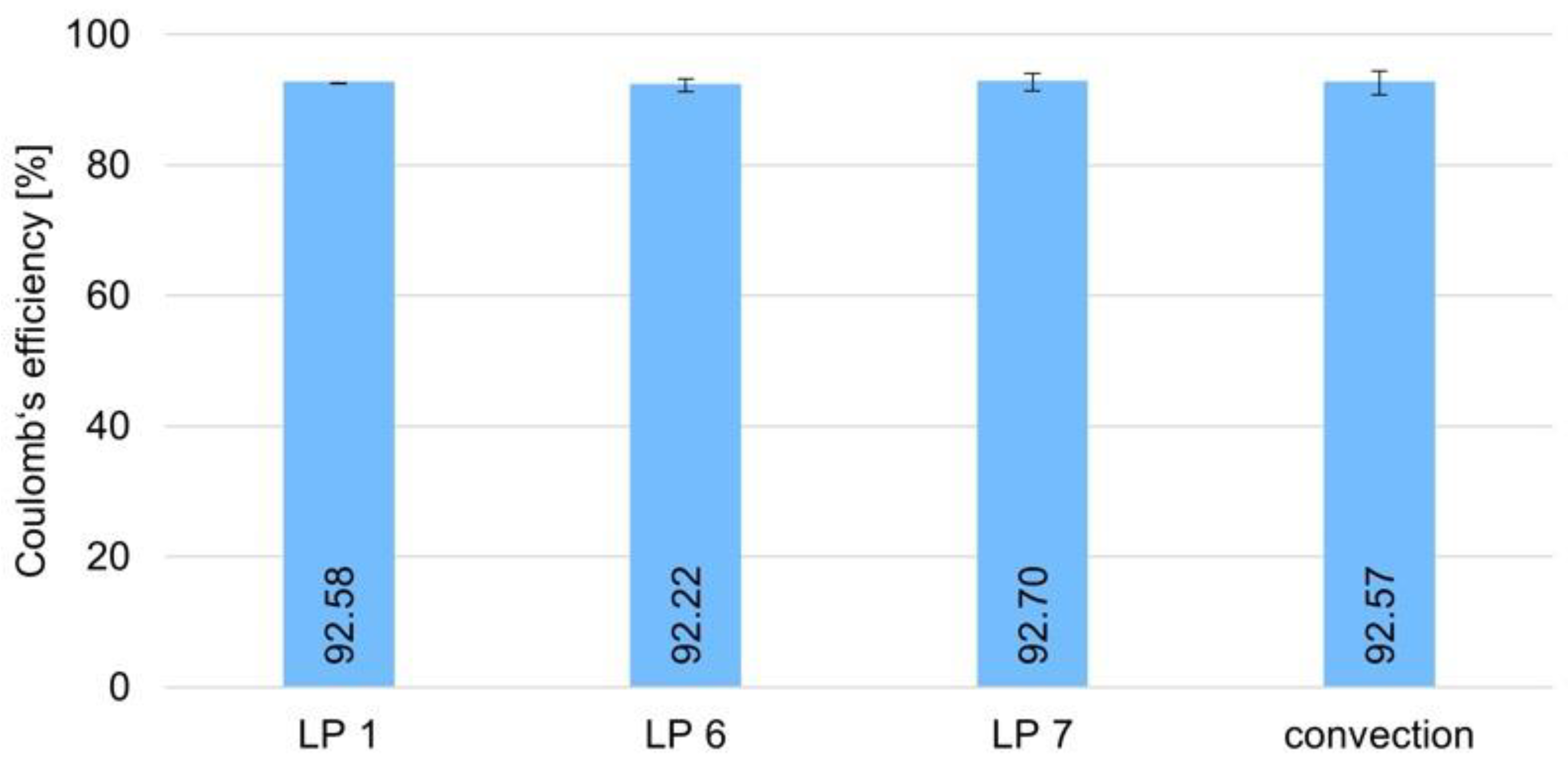
The Coulombic efficiency of the half-cell is shown in Figure 6 and was approx. 92% regardless of the drying technology used. The low standard deviations support the observation that the Coulombic efficiency is not influenced by different drying methods. The Coulomb efficiency was calculated from the quotient of the first discharge and charge capacity.
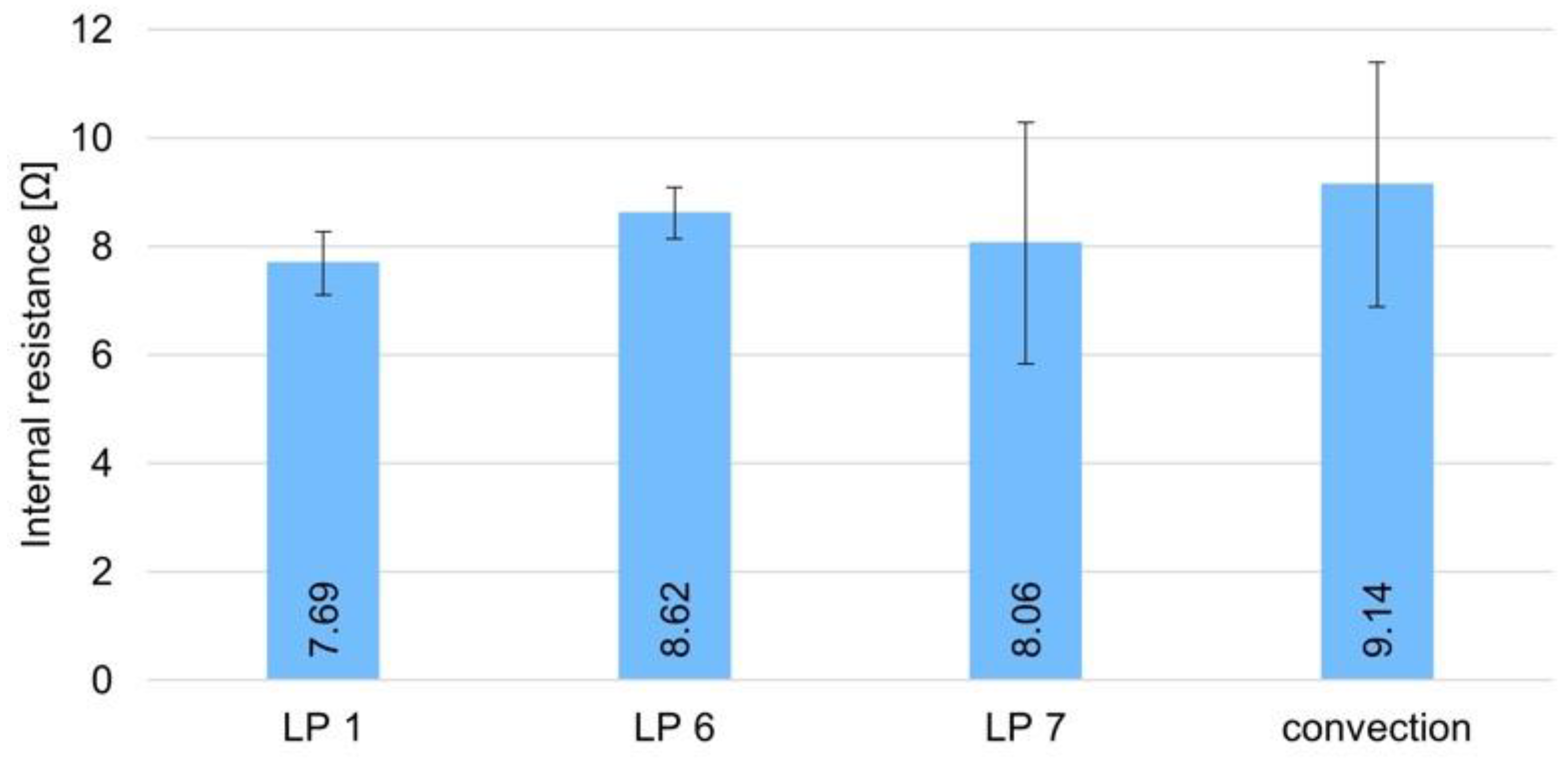
The second electrochemical quality parameter determined was the internal resistance of the half-cells, the results of which are shown in Figure 7. The half-cells with laser-dried anodes, exhibiting an internal resistance of approximately 8 Ω, showed very similar values, with no statistically significant deviations observed between the measurements, nor in comparison to the convectively dried reference sample.

3.3. Temperature–Time Diagrams

During the laser drying process, the temperature of the electrode was recorded using a thermal imaging camera. These images, which were recorded with a resolution of 20 Hz, enabled the creation of the following temperature–time diagrams.
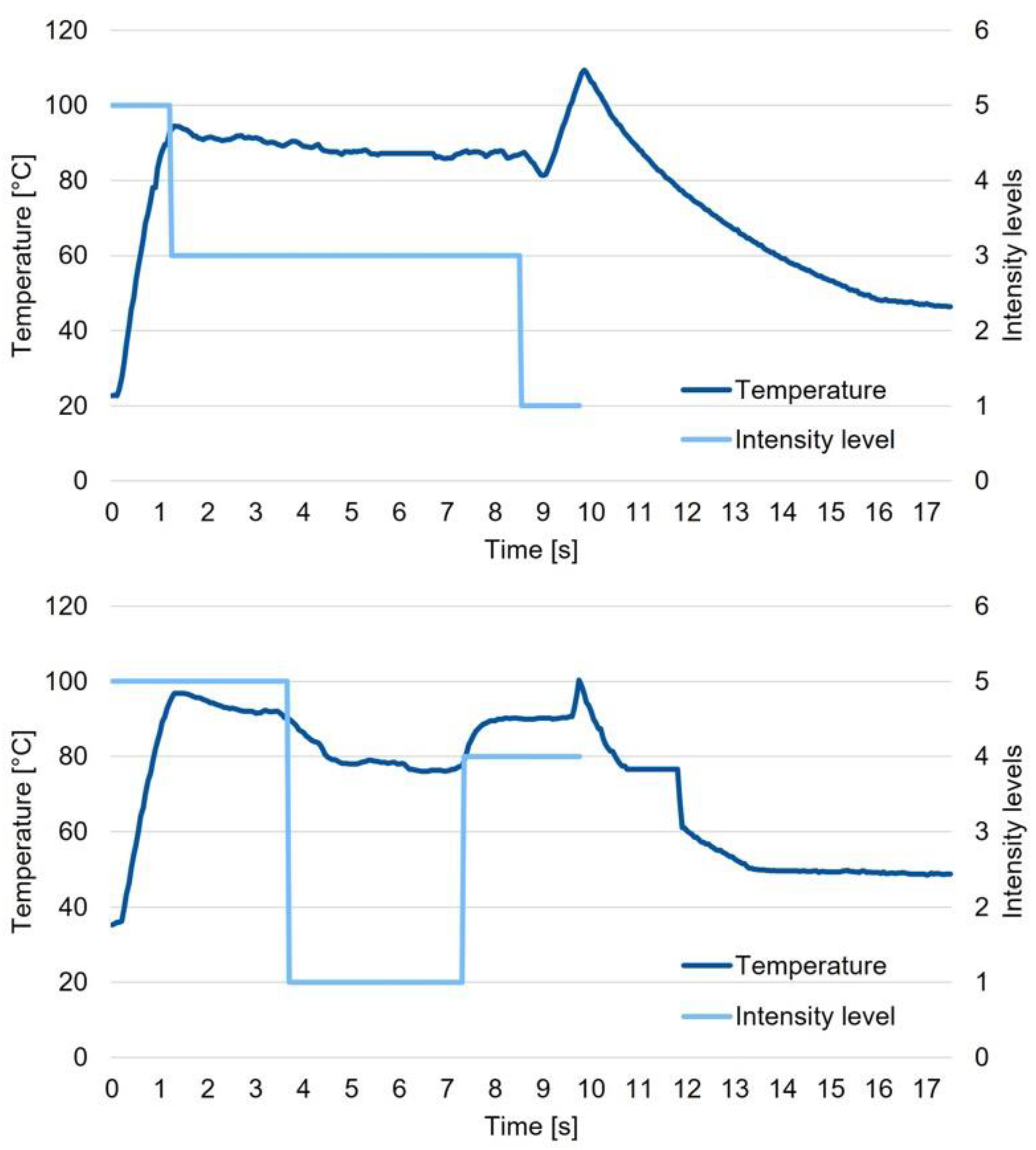
Figure 8 shows an example of the temperature–time diagrams for LP 3 and LP 6 of the high-energy electrode. The drying process can be divided into four phases. For the temperature curves shown in Figure 8, the drying time was 9.75 s.
The first phase is the heating phase (I), in which the slurry is heated to a maximum temperature of 95 °C. The warm-up phase is followed by the vaporisation phase (II), in which temperatures of 70–90 °C are reached, depending on the power used. A slight reduction in temperature can be observed here compared to the warm-up phase.
The third phase is the overheating phase (III), which occurs when an electrode is completely dry, or the capillary forces are not strong enough to transport further solvent to the surface. The last phase is the cooling phase (IV), in which the laser power is reduced to 0 W/cm2 and the drying process is thus completed. Immediate cooling of the electrode can be observed in this phase. The duration of the cooling down to room temperature can be significantly longer than the actual laser drying. The short plateau observed in the temperature profile during Phase IV for the parameter set LP 6 resulted from a calibration interval of the thermal imaging camera. During this brief period—lasting approximately one second—no valid temperature data were recorded, leading to a temporary interruption in measurement. The zones shown here have already been described by Wolf et al. in a dynamic process and could be confirmed in this work by experiments in a stationary test setup [8].
As shown in Figure 8, higher laser intensities lead to higher electrode temperatures. Higher temperatures and heat fluxes increase the solvent evaporation rate, which can enhance the transport of binder towards the electrode surface. This redistribution may lead to a reduced binder concentration at the current collector interface, which is known to negatively affect the adhesion strength of the coating. Previous studies have shown that fast drying conditions promote binder accumulation near the evaporation surface and result in inhomogeneous binder distributions within the electrode layer [10]. Since the adhesion of the electrode coating strongly depends on the local binder concentration at the substrate interface, variations in the thermal history and the associated drying rate can directly influence the measured adhesion values [10,11]. Furthermore, process studies on laser drying demonstrate that drying parameters such as laser power and energy input determine the thermal exposure and evaporation dynamics of the electrode, thereby affecting transport phenomena during drying and the resulting electrode properties [19]. Similar relationships between drying conditions, binder redistribution, and adhesion have also been reported for conventionally dried electrodes [12].

3.4. Optical Inspection

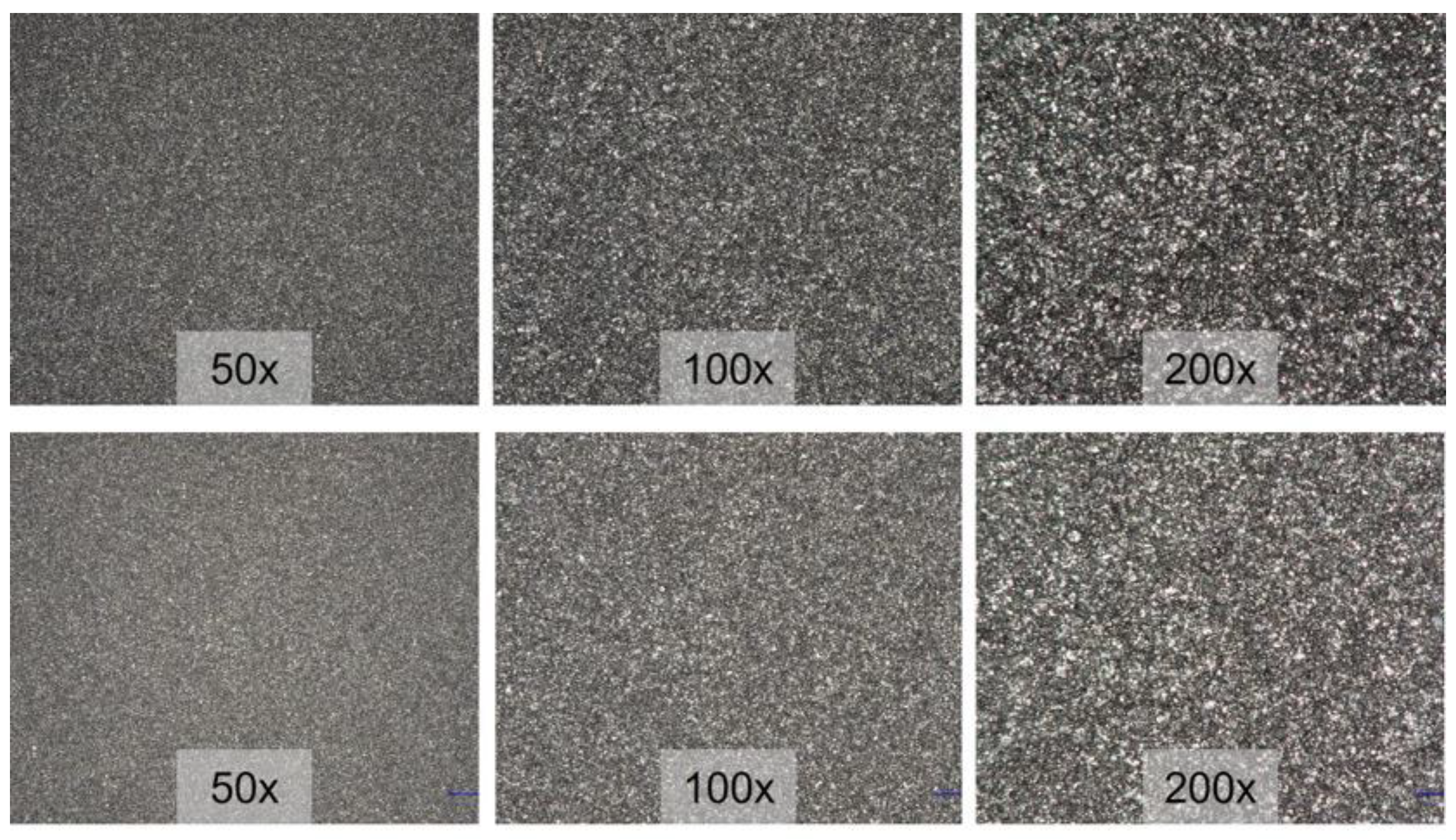
When examining the anodes, it was found that no damage was recognisable on the surface. The absence of damage on the electrode surface was also demonstrated by Wolf et al. [17]. The results presented in Figure 9 illustrate the formation of an open-pored surface structure by the graphite particles. The brighter particles had a higher position than darker particles, which was particularly visible at high magnifications. A network of channels formed between the individual graphite particles as a result of water evaporation and the associated capillary forces, through which the water was transported during the drying process. The ends of these channels are recognisable as black holes in the images.
The electrode surfaces shown in Figure 9 correspond to high-energy electrodes dried under different laser profiles and drying times. The upper image shows the electrode processed with LP 7 (39 s), whereas the lower image shows the electrode processed with LP 5 (9.75 s). No visible differences in the surface morphology could be observed between the two samples, although LP 5 with a drying time of 9.75 s exhibited the lowest adhesion values. This indicates that despite the differences in drying parameters and adhesion strength, no significant optical differences in the electrode surface could be identified.

3.5. Residual Moisture

The residual moisture results of the high-energy and high-power electrode are presented below. These values were mainly used to validate that the electrodes produced were sufficiently dry. Based on parameter studies on laser drying processes, a residual moisture content of up to 1.5% can be considered sufficiently dry after primary electrode drying [19].
Figure 10 and Figure 11 shows the residual moisture of the high-energy electrode and the high-power electrode. The residual moisture of the convection-dried electrode, which had a low residual moisture value of 0.43% and 0.51%, respectively, was used as a reference. These low values can be attributed to the drying time of 180 s and 120 s for convection drying. The residual moisture values were lower in the high-power electrode compared to the high-energy electrode. Given that the analysis was based on a single sample, further interpretation of the data is not considered meaningful.

4. Conclusions

In this work, the influence and benefits of laser intensity profiles during electrode drying using a laser were investigated. The use of laser profiles was intended to counteract the drop in adhesion forces typically found in laser-dried electrodes. Two anodes with different surface weights were defined as the test object. A distinction was made between a high-energy and a high-power electrode.
It was shown that the laser profiles had a stronger influence on the high-energy electrode than on the high-power electrode. In addition, it was shown that longer drying times and correspondingly lower laser intensities resulted in higher adhesion. The drying times used in the laser-based experiments were significantly shorter than those required for convection drying. Despite this reduction in process time, comparable adhesion values were achieved relative to the convective reference. It should be noted that the convective parameter set was not subject to further optimisation and served solely as a baseline reference for comparative purposes.
The temperature–time diagrams created using a thermal imaging camera during laser drying allowed the drying process of the electrodes to be divided into four phases. Knowledge of these drying phases allows future laser drying processes to be controlled in such a way that overheating of the electrode is avoided.
The optical examination of the anodes produced using laser drying showed no surface damage. The electrochemical tests revealed no significant differences in Coulombic efficiency or internal resistance between the convection-dried and laser-dried anodes.
To achieve adhesion values comparable to those of conventional convection drying, drying times of 19.50 s or 39.00 s would have to be simulated. With a drying time of 39.00 s, adhesion can even be improved by selecting a suitable laser profile.
Overall, it can be concluded that laser drying represents a promising technological solution for the electrode drying process. For successful integration of laser drying with tailored laser profiles into industrial processes, particular focus must be placed on process capability. To ensure this capability, an inline control system could be developed that enables precise regulation of the drying process.

Author Contributions

Conceptualisation, V.G. and B.I.; methodology, V.G.; software, V.G.; validation, V.G. and T.H.; formal analysis, V.G.; investigation, V.G.; resources, B.I.; data curation, V.G.; writing—original draft preparation, V.G.; writing—review and editing, B.I. and V.G.; visualisation, V.G. and T.H.; supervision, B.I.; project administration, B.I.; funding acquisition, B.I., S.W., H.B., H.H. and A.K. All authors have read and agreed to the published version of the manuscript.

Funding

This research received no external funding. Open access funding provided by the Open Access Publishing Fund of RWTH Aachen University.

Data Availability Statement

The raw data supporting the conclusions of this article will be made available by the authors on request.

Conflicts of Interest

The authors declare no conflicts of interest.

Abbreviations

The following abbreviations are used in this manuscript:
CMCCarboxymethyl cellulose
DI-WaterDistilled water
IRInfrared
LiBLithium-ion batteries
LPLaser profile
OPEXOperating costs
SBRStyrene-butadiene rubber
VCSELVertical-cavity surface-emitting laser

References

  1. Martins, L.S.; Guimarães, L.F.; Junior, A.B.B.; Tenório, J.A.S.; Espinosa, D.C.R. Electric Car Battery: An Overview on Global Demand, Recycling and Future Approaches towards Sustainability. J. Environ. Manag. 2021, 295, 113091. [Google Scholar] [CrossRef] [PubMed]
  2. Kampker, A.; Heimes, H.; Dorn, B.; Wolf, S.; Ingendoh, B.; Ambrosy, G.; Deutskens, C.; Apetz, R.; Verstraeten, R. VCSEL Laser Drying in Battery Production; RWTH Aachen University: Aachen, Germany, 2024. [Google Scholar]
  3. Neb, D.; Kim, S.; Clever, H.; Dorn, B.; Kampker, A. Current Advances on Laser Drying of Electrodes for Lithium-Ion Battery Cells. Procedia CIRP 2022, 107, 1577–1587. [Google Scholar] [CrossRef]
  4. Heimes, H.; Kampker, A.; Lienemann, C.; Locke, M.; Offermans, C.; Michaelis, S.; Rahimzei, E. Lithium-Ion Battery Cell Production Process; Springer: Berlin, Germany, 2018. [Google Scholar]
  5. Neb, D.; Wolf, S.; Ingendoh, B.; Klein, S.; Dorn, B.; Heimes, H.; Kampker, A. Investigation of Laser-Based Drying of Electrodes for Lithium-Ion-Battery Production Using Vertical-Cavity Surface-Emitting Lasers (VCSEL). In Proceedings of the Conference on Production Systems and Logistics: CPSL 2023-2; Publish-Ing.: Hannover, Germany, 2023. [Google Scholar] [CrossRef]
  6. Kampker, A.; Heimes, H.; Dorn, B.; Neb, D.; Wolf, S.; Arnd, A.; Britten, S.; Hendel, R. Diode Laser Drying of Electrodes for Lithium-Ion Batteries; RWTH Aachen University: Aachen, Germany, 2023. [Google Scholar]
  7. Koerner, R.A.; Apetz, R.; Conrads, R.; Deppe, C.; Gronenborn, S.; Kolb, J.S.; Moench, H.; Weidenfeld, S.; Herper, M.; Groben, D. Novel High-Power Laser Modules for Drying Applications Based on VCSEL Arrays. In High-Power Diode Laser Technology XXII; SPIE: Cardiff, UK, 2024. [Google Scholar] [CrossRef]
  8. Wolf, S.; Schwenzer, N.; Tratz, T.; Göken, V.; Börner, M.; Neb, D.; Heimes, H.; Winter, M.; Kampker, A. Optimized LiFePO4-Based Cathode Production for Lithium-Ion Batteries through Laser- and Convection-Based Hybrid Drying Process. World Electr. Veh. J. 2023, 14, 281. [Google Scholar] [CrossRef]
  9. Jaiser, S.; Müller, M.; Baunach, M.; Bauer, W.; Scharfer, P.; Schabel, W. Investigation of Film Solidification and Binder Migration during Drying of Li-Ion Battery Anodes. J. Power Sources 2016, 318, 210–219. [Google Scholar] [CrossRef]
  10. Nikpour, M.; Liu, B.; Minson, P.; Hillman, Z.; Mazzeo, B.A.; Wheeler, D.R. Li-Ion Electrode Microstructure Evolution during Drying and Calendering. Batteries 2022, 8, 107. [Google Scholar] [CrossRef]
  11. Jaiser, S.; Kumberg, J.; Klaver, J.; Urai, J.L.; Schabel, W.; Schmatz, J.; Scharfer, P. Microstructure Formation of Lithium-Ion Battery Electrodes during Drying—An Ex-Situ Study Using Cryogenic Broad Ion Beam Slope-Cutting and Scanning Electron Microscopy. J. Power Sources 2017, 345, 97–107. [Google Scholar] [CrossRef]
  12. Kumberg, J.; Müller, M.; Diehm, R.; Spiegel, S.; Wachsmann, C.; Bauer, W.; Scharfer, P.; Schabel, W. Drying of Lithium-Ion Battery Anodes for Use in High-Energy Cells: Influence of Electrode Thickness on Drying Time, Adhesion, and Crack Formation. Energy Technol. 2019, 7, 1900722. [Google Scholar] [CrossRef]
  13. Westphal, B.; Bockholt, H.; Günther, T.; Haselrieder, W.; Kwade, A. Influence of Convective Drying Parameters on Electrode Performance and Physical Electrode Properties. ECS Trans. 2015, 64, 57–68. [Google Scholar] [CrossRef]
  14. Altvater, A.; Klemens, J.; Borho, J.; Smith, A.; Heckmann, T.; Scharfer, P.; Schabel, W. Application of Multistage Drying Profiles for Accelerated Production of Li-Ion Battery Anodes Using Infrared Radiation. Energy Technol. 2024, 12, 2301272. [Google Scholar] [CrossRef]
  15. Fink, S.; Demir, D.; Börner, M.; Göken, V.; Vedder, C. High-Speed Laser Drying of Lithium-Ion Battery Anodes: Challenges and Opportunities. World Electr. Veh. J. 2023, 14, 255. [Google Scholar] [CrossRef]
  16. Günther, T.; Billot, N.; Schuster, J.; Schnell, J.; Spingler, F.B.; Gasteiger, H.A. The Manufacturing of Electrodes: Key Process for the Future Success of Lithium-Ion Batteries. Adv. Mater. Res. 2016, 1140, 304–311. [Google Scholar] [CrossRef]
  17. Wolf, S.; Garbade, L.; Göken, V.; Tien, R.; Börner, M.; Neb, D.; Heimes, H.H. Process and Material Analysis of Laser- and Convection-Dried Silicon–Graphite Anodes for Lithium-Ion Batteries. World Electr. Veh. J. 2023, 14, 87. [Google Scholar] [CrossRef]
  18. Wang, H.; Chen, Y.; Song, Y.; Xiong, D. Rapid Electrode Drying for High-Quality Lithium-Ion Batteries: A Three-Stage Laser Irradiation Method. J. Energy Storage 2025, 118, 116288. [Google Scholar] [CrossRef]
  19. Neb, D. Parameter-Based Analysis of Laser Drying Processes for the Efficient Production of Battery Electrodes. Ph.D. Thesis, RWTH Aachen University, Aachen, Germany, 2025. [Google Scholar]
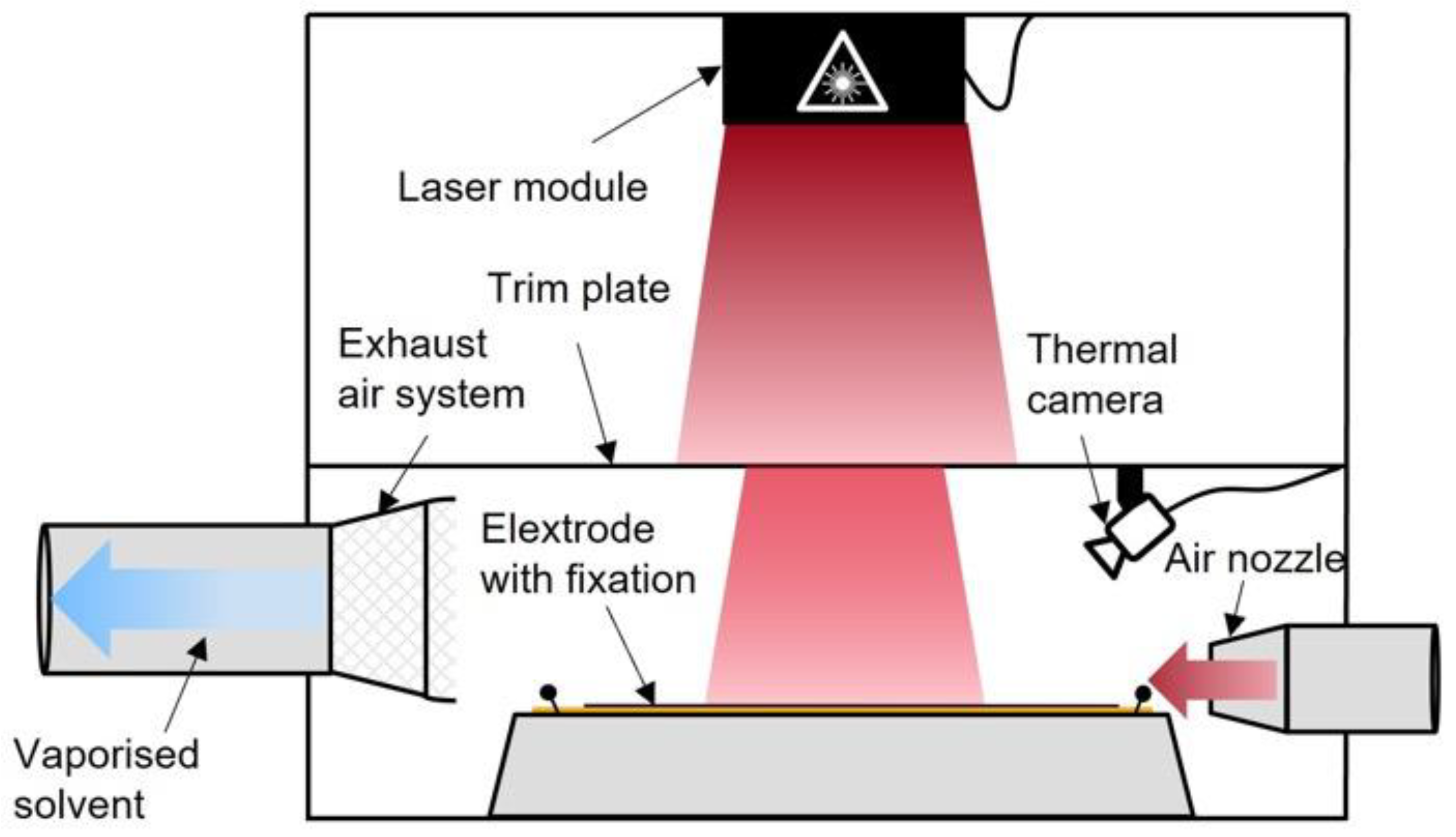
Figure 1. Setup of the stationary laser drying system.
Batteries 12 00122 g001
Figure 2. Laser intensity profiles.
Batteries 12 00122 g002
Figure 3. Average energy input of the high-energy and high-power electrodes.
Batteries 12 00122 g003
Figure 4. Adhesion of the high-energy electrode at different drying times.
Batteries 12 00122 g004
Figure 5. Adhesion of the high-power electrode at different drying times.
Batteries 12 00122 g005
Figure 6. Coulomb efficiency of the half cells.
Batteries 12 00122 g006
Figure 7. Internal resistance of the half cells.
Batteries 12 00122 g007
Figure 8. Laser drying phases on LP 3 (top) and LP 6 (bottom).
Batteries 12 00122 g008
Figure 9. Surface of high-energy anodes at different magnifications.
Batteries 12 00122 g009
Figure 10. Residual moisture of the high-energy electrode with different drying times.
Batteries 12 00122 g010
Figure 11. Residual moisture of the high-power electrode with different drying times.
Batteries 12 00122 g011
Table 1. Composition of the anode slurry.
GraphiteSBRCMCCarbon Black (C45)DI-Water
Wwet [%]42.33.40.90.453.0
Wdry [%]94.03.02.01.00.0
Table 2. Drying times and laser intensities of the high energy electrode.
Total Drying Time [s]39.0019.5013.009.75
Time per zone [s]4.8752.4381.6251.219
Average drying rate high energy electrode [g/m2s]2.374.747.119.48
Intensity level 5 [W/cm2]1.162.293.454.58
Intensity level 4 [W/cm2]0.931.832.763.67
Intensity level 3 [W/cm2]0.701.382.072.75
Intensity level 2 [W/cm2]0.460.921.381.83
Intensity level 1 [W/cm2]0.230.460.690.92
Table 3. Drying times and laser intensities of the high power electrode.
Total Drying Time [s]39.0019.5013.009.757.80
Time per zone [s]4.8752.4381.6251.2190.975
Average drying rate high energy electrode [g/m2s]1.673.355.036.718.38
Intensity level 5 [W/cm2]0.801.642.443.244.08
Intensity level 4 [W/cm2]0.641.311.952.603.26
Intensity level 3 [W/cm2]0.480.981.461.952.45
Intensity level 2 [W/cm2]0.320.650.981.301.63
Intensity level 1 [W/cm2]0.160.330.490.650.82
Disclaimer/Publisher’s Note: The statements, opinions and data contained in all publications are solely those of the individual author(s) and contributor(s) and not of MDPI and/or the editor(s). MDPI and/or the editor(s) disclaim responsibility for any injury to people or property resulting from any ideas, methods, instructions or products referred to in the content.