Review

Molecular Probes for Evaluation of Oxidative Stress by In Vivo EPR Spectroscopy and Imaging: State-of-the-Art and Limitations


1
Laboratoire de Chimie et Biochimie Pharmacologiques et Toxicologiques, UMR 8601 CNRS, Université Paris Descartes, Sorbonne Paris Cité, 45 rue des Saints-Pères, 75006 Paris, France
2
École Supérieure du Professorat et de l’Éducation (ESPE) de l’Académie de Paris, Sorbonne Université, 10 rue Molitor, 75016 Paris, France
*
Author to whom correspondence should be addressed.
Magnetochemistry 2019, 5(1), 13; https://doi.org/10.3390/magnetochemistry5010013

Submission received: 31 December 2018 / Revised: 24 January 2019 / Accepted: 28 January 2019 / Published: 5 February 2019
(This article belongs to the Special Issue Electron Paramagnetic Resonance)

Abstract

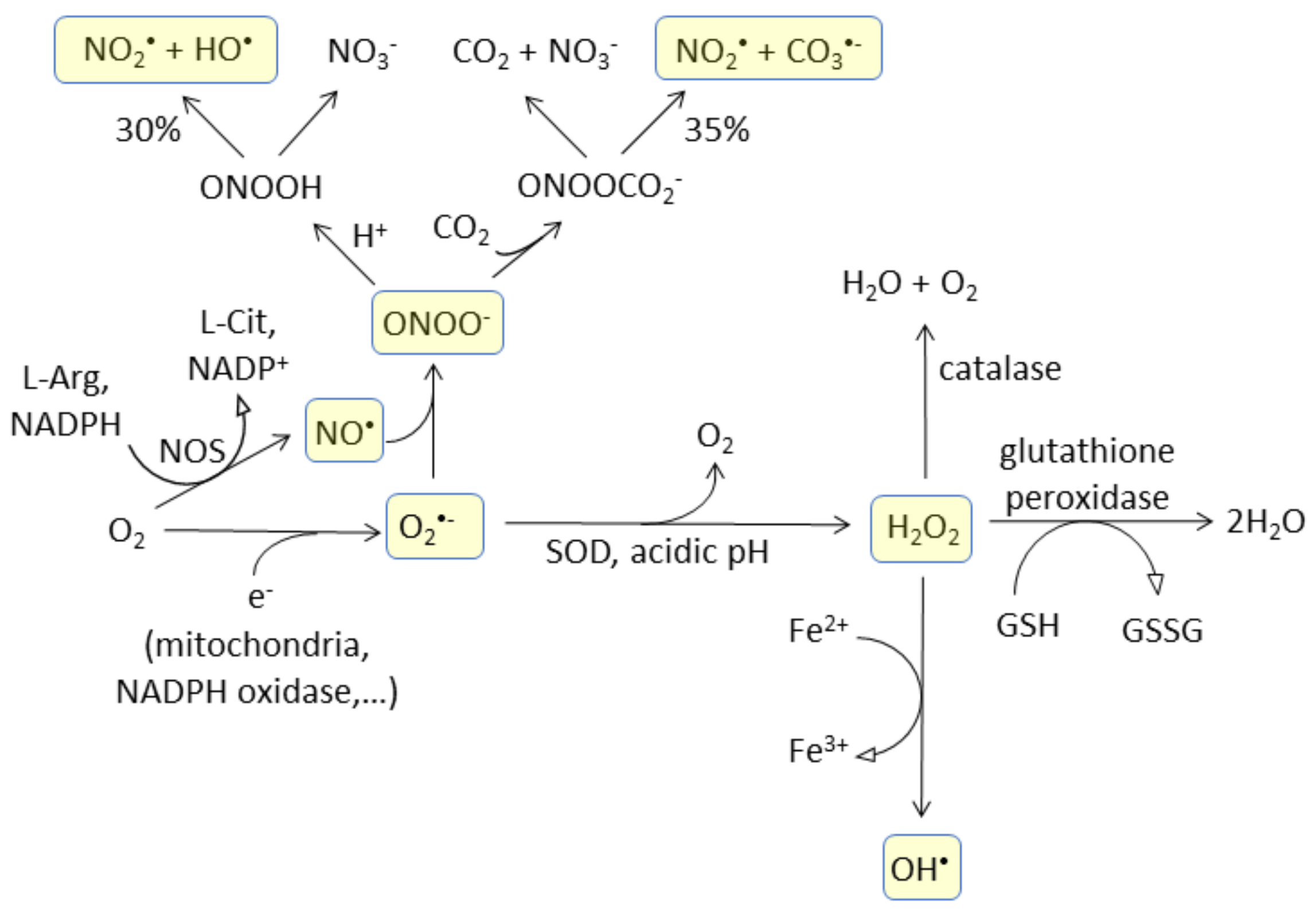
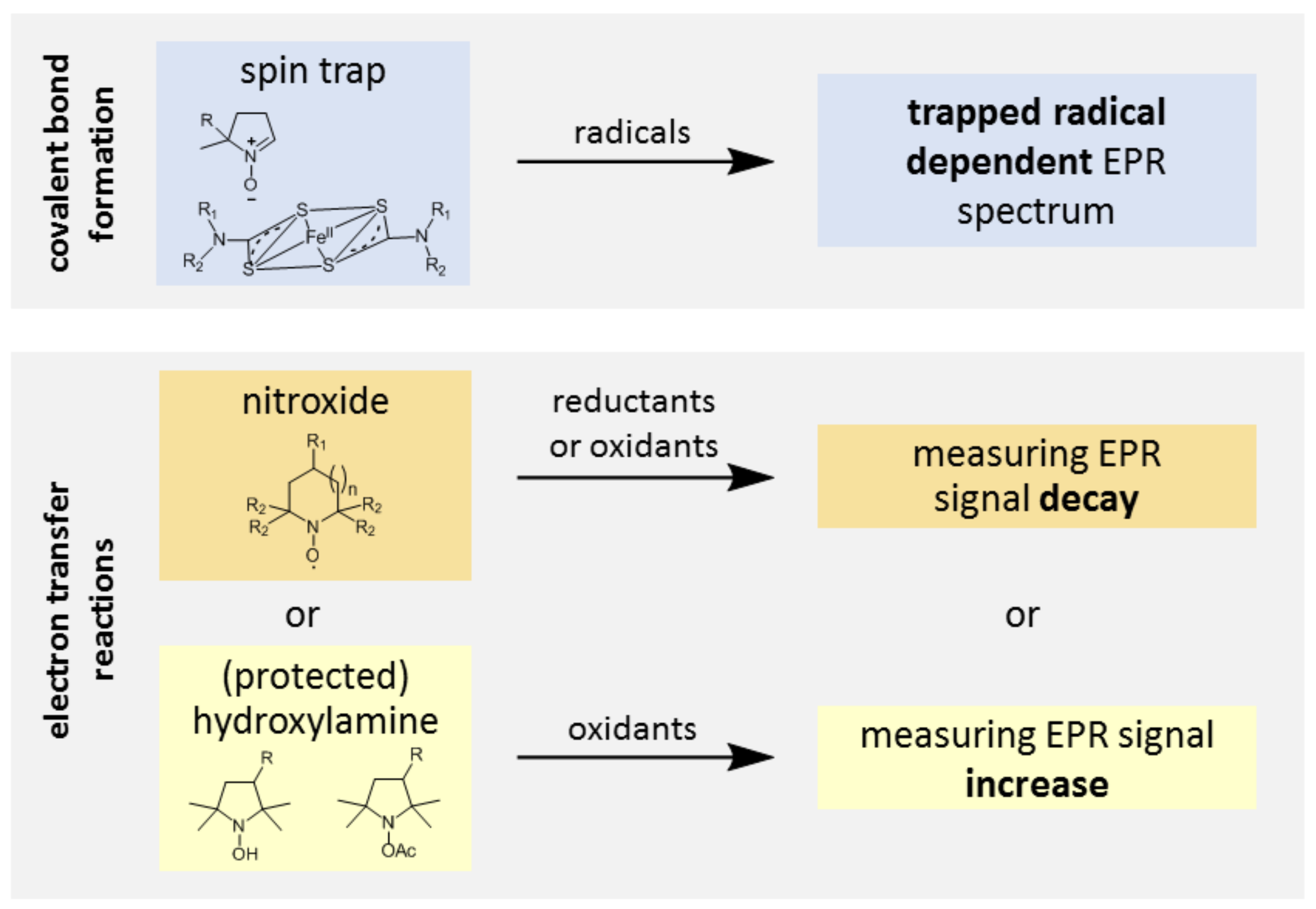
Oxidative stress, defined as a misbalance between the production of reactive oxygen species and the antioxidant defenses of the cell, appears as a critical factor either in the onset or in the etiology of many pathological conditions. Several methods of detection exist. However, they usually rely on ex vivo evaluation or reports on the status of living tissues only up to a few millimeters in depth, while a whole-body, real-time, non-invasive monitoring technique is required for early diagnosis or as an aid to therapy (to monitor the action of a drug). Methods based on electron paramagnetic resonance (EPR), in association with molecular probes based on aminoxyl radicals (nitroxides) or hydroxylamines especially, have emerged as very promising to meet these standards. The principles involve monitoring the rate of decrease or increase of the EPR signal in vivo after injection of the nitroxide or the hydroxylamine probe, respectively, in a pathological versus a control situation. There have been many successful applications in various rodent models. However, current limitations lie in both the field of the technical development of the spectrometers and the molecular probes. The scope of this review will mainly focus on the latter.
Keywords: electron paramagnetic resonance; electron spin resonance; nitroxyl radical; hydroxylamine; spin probe; oxidative stress; reactive oxygen and nitrogen species electron paramagnetic resonance; electron spin resonance; nitroxyl radical; hydroxylamine; spin probe; oxidative stress; reactive oxygen and nitrogen species