Review

Brain Redox Imaging Using In Vivo Electron Paramagnetic Resonance Imaging and Nitroxide Imaging Probes

1
Health Sciences University of Hokkaido, Ishikari, Hokkaido 061-0293, Japan
2
Health Sciences University of Hokkaido, Sapporo, Hokkaido 002-8072, Japan
3
Department of Systems Innovation, Graduate School of Engineering Science, Osaka University, Osaka 560-8531, Japan
*
Author to whom correspondence should be addressed.
Magnetochemistry 2019, 5(1), 11; https://doi.org/10.3390/magnetochemistry5010011

Submission received: 24 December 2018 / Revised: 26 January 2019 / Accepted: 28 January 2019 / Published: 2 February 2019
(This article belongs to the Special Issue Electron Paramagnetic Resonance)

Abstract

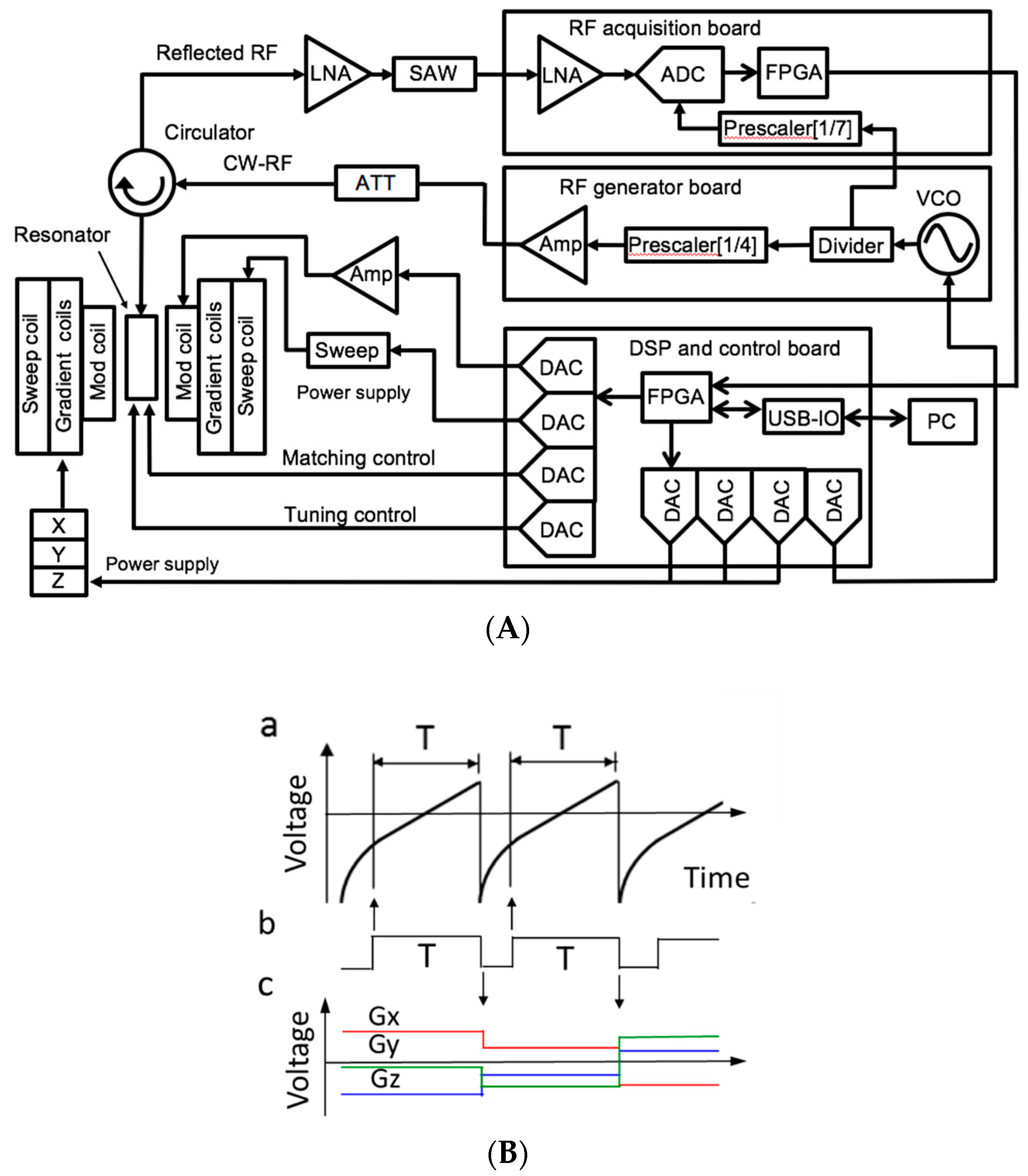
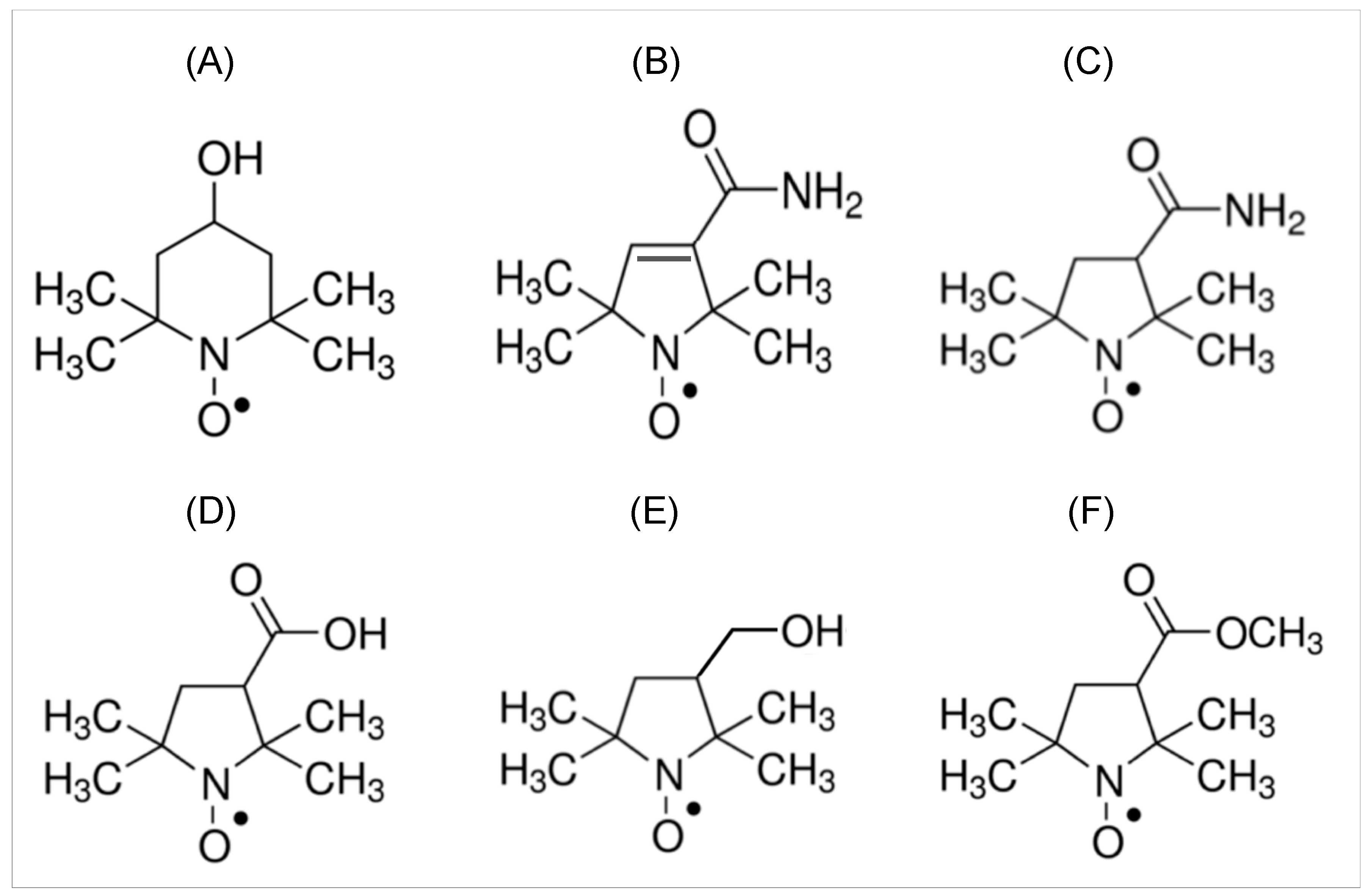
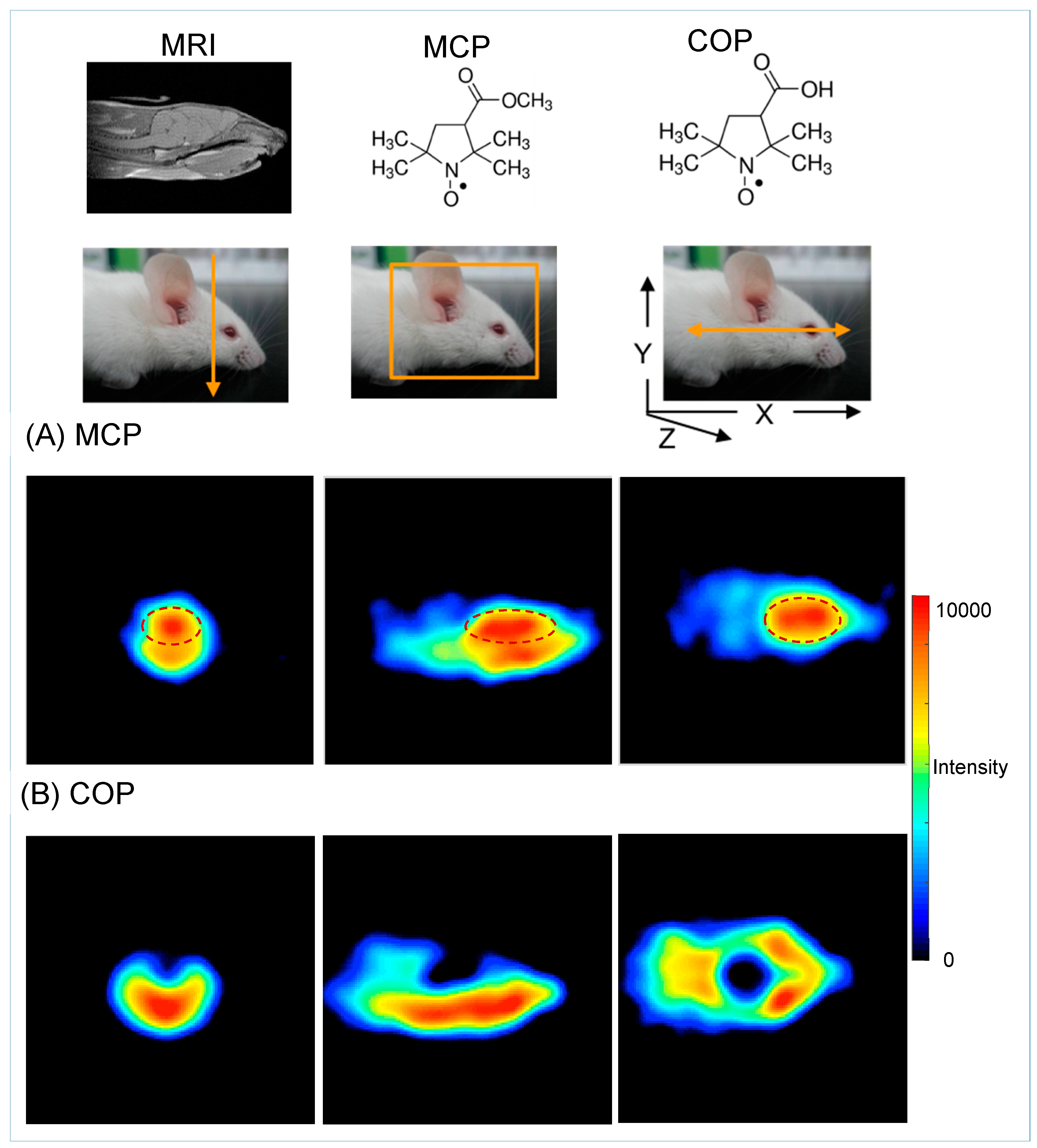
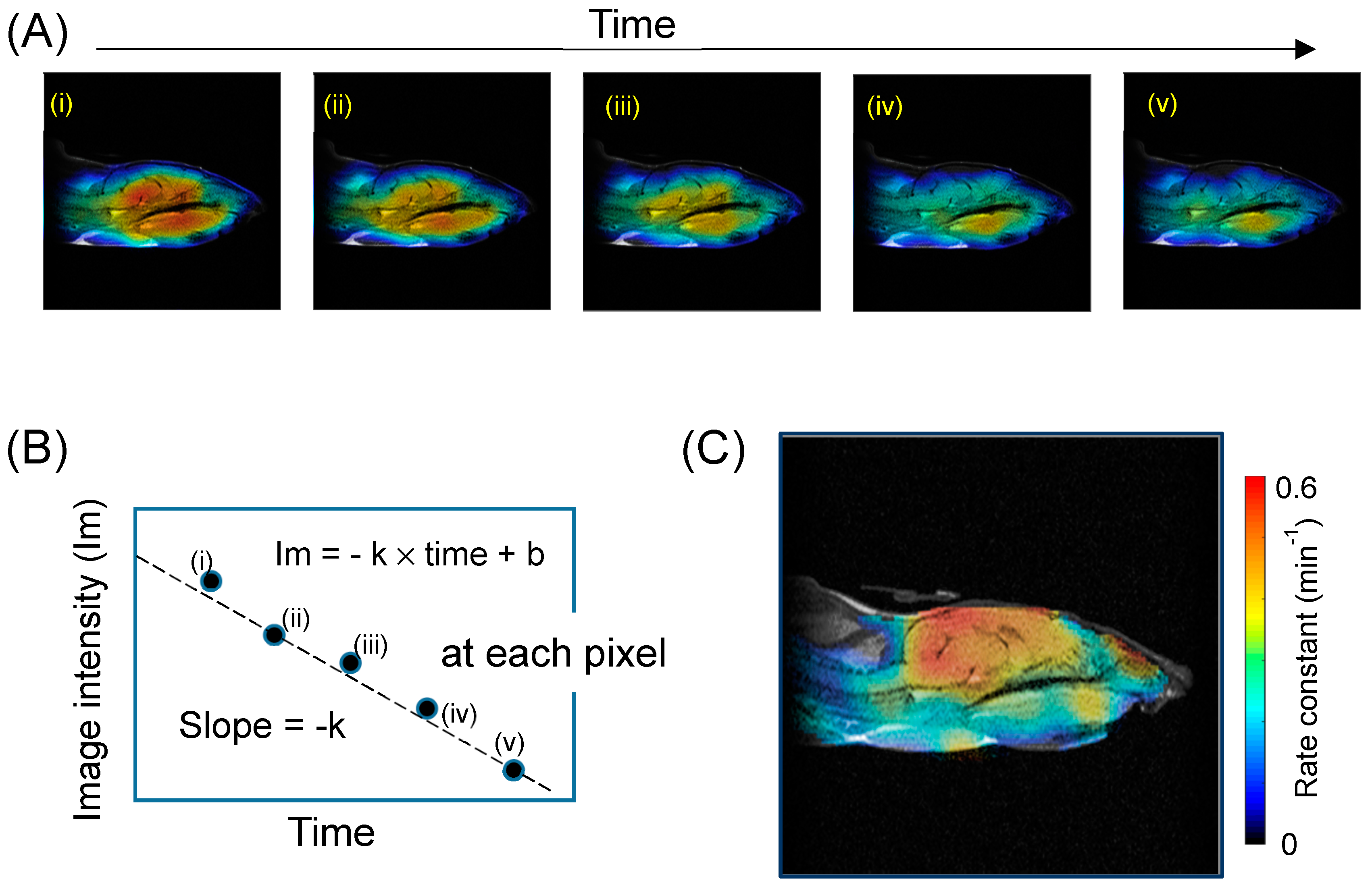
Reactive oxygen species (ROS) are produced by living organisms as a result of normal cellular metabolism. Under normal physiological conditions, oxidative damage is prevented by the regulation of ROS by the antioxidant network. However, increased ROS and decreased antioxidant defense may contribute to many brain disorders, such as stroke, Parkinson’s disease, and Alzheimer’s disease. Noninvasive assessment of brain redox status is necessary for monitoring the disease state and the oxidative damage. Continuous-wave electron paramagnetic resonance (CW-EPR) imaging using redox-sensitive imaging probes, such as nitroxides, is a powerful method for visualizing the redox status modulated by oxidative stress in vivo. For conventional CW-EPR imaging, however, poor signal-to-noise ratio, low acquisition efficiency, and lack of anatomic visualization limit its ability to achieve three-dimensional redox mapping of small rodent brains. In this review, we discuss the instrumentation and coregistration of EPR images to anatomical images and appropriate nitroxide imaging probes, all of which are needed for a sophisticated in vivo EPR imager for all rodents. Using new EPR imaging systems, site-specific distribution and kinetics of nitroxide imaging probes in rodent brains can be obtained more accurately, compared to previous EPR imaging systems. We also describe the redox imaging studies of animal models of brain disease using newly developed EPR imaging.
Keywords: ROS; oxidative stress; redox status; EPR imaging; MRI; brain disease; antioxidant ROS; oxidative stress; redox status; EPR imaging; MRI; brain disease; antioxidant