Article

Construction of Y-Doped Magnetic CoFe2O4 Electrode Materials Based on Dual-Waste Biomass and Study on Performance of Asymmetric Supercapacitors

1
School of Pharmacy, Mudanjiang Medical University, Mudanjiang 157011, China
2
School of Basic Medicine, Mudanjiang Medical University, Mudanjiang 157011, China
3
Pharmaceutical Department, Hongqi Hospital Affiliated to Mudanjiang Medical University, Mudanjiang 157011, China
*
Author to whom correspondence should be addressed.
Magnetochemistry 2026, 12(6), 64; https://doi.org/10.3390/magnetochemistry12060064
Submission received: 6 April 2026 / Revised: 23 May 2026 / Accepted: 25 May 2026 / Published: 4 June 2026
(This article belongs to the Section Magnetic Materials)

Abstract

Magnetic materials have demonstrated considerable potential for applications in the field of energy storage. Spinel-type CoFe2O4 possesses both good redox activity and structural stability, but its magnetism may affect the electrochemical performance. During the high-temperature carbonization and activation processes, the magnetism is significantly weakened, thereby exerting only a limited effect on device performance. To address the issues of high cost and poor environmental friendliness of traditional electrode materials, two types of waste biomass, namely banana peels and sunflower seed shells, were employed as carbon sources for the preparation of Y-doped CoFe2O4/carbon composites in this study. Y-doped CoFe2O4/banana peel carbon was used as the positive electrode, while Y-doped CoFe2O4/sunflower seed shell carbon was used as the negative electrode. The results indicate that the CoFe2O4/BPC cathode doped with 0.4% Y has the best performance, with a specific capacitance of 1788 F/g at 1 A/g and a retention rate of 98% after 10,000 cycles. In addition, the SSPC anode exhibited a specific capacitance of 350 F/g and excellent cycling stability. The assembled device achieved a specific capacitance of 190 F/g at 1 A/g and a capacitance retention rate of 83.6% after 10,000 cycles at 5 A/g, demonstrating good energy density, power density and cycling stability. This research provides experimental evidence for the development of low-cost supercapacitors based on biomass.

1. Introduction

Supercapacitors have attracted widespread attention due to their high power density, rapid charging and discharging capabilities, and excellent cycle stability. However, their electrochemical performance is largely determined by the structure and composition of the electrode materials [1]. Currently, a single type of material often fails to balance the specific capacitance, conductivity, and structural stability. Carbon-based materials exhibit excellent conductivity and cycling stability; however, their energy-storage behavior primarily relies on the electric double-layer capacitance mechanism, resulting in relatively low specific capacitance. In contrast, metal-based oxide materials that store energy through Faradaic redox reactions generally possess higher theoretical specific capacitance, but they often suffer from poor electrical conductivity and structural instability during cycling. Therefore, developing new functional material systems that can simultaneously achieve multiple performance advantages has become an important research direction for improving the performance of supercapacitors [2,3].
Magnetic materials, which possess unique spin structures and magnetic response characteristics, exhibit potential advantages in regulating electron transport and interfacial charge distribution. Recent studies have demonstrated that the incorporation of magnetic components can optimize electron transport pathways, improve interfacial conductivity, and, to some extent, promote electrochemical reaction kinetics, thereby enhancing energy-storage performance. Therefore, the construction of novel electrode material systems based on magnetic modulation effects has gradually emerged as a research hotspot in the field of energy storage. Among various magnetic materials, spinel-type CoFe2O4 is a typical ferromagnetic bimetallic oxide that possesses a stable crystal structure and abundant redox-active sites, thereby providing multiple electron-transfer pathways for electrochemical reactions. Additionally, its inherent magnetic properties are expected to enhance charge-transport behavior during electrode reactions through magnetic modulation effects. However, CoFe2O4 still suffers from relatively poor intrinsic conductivity and is prone to volume expansion and structural degradation during repeated charge–discharge processes, thereby compromising its cycling stability. It is worth noting that, during high-temperature treatment, CoFe2O4 may undergo a certain degree of thermal demagnetization, leading to weakened magnetic properties and thereby minimizing adverse effects on device testing and practical applications.
Based on the abovementioned issues, the introduction of carbon materials with high conductivity and stable structure as supporting carriers is considered an effective strategy for enhancing the electrochemical performance of magnetic oxides. Carbon materials can not only construct continuous conductive networks to facilitate rapid electron transmission, but also can buffer volume changes during charging and discharging, thereby improving the cycling stability of the materials. Among various carbon sources, biomass carbon materials prepared from agricultural and food-processing wastes, due to their abundant availability, low cost, and environmental friendliness, have attracted much attention [4,5]. For example, waste materials such as banana peels and sunflower seed shells not only have a large annual output but also are rich in carbon, hydrogen, and oxygen elements and have a natural porous structures. Through simple processes such as carbonization and activation, porous carbon materials with high specific surface area, rich pore structure, and good conductivity can be obtained, thus achieving the dual goals of waste valorization and carbon reduction. Studies have shown that these materials have good application potential in supercapacitors. For instance, in their latest research in 2026, Song et al. adopted the strategy of Fenton-microwave pre-treatment combined with KOH activation to prepare walnut shell-based hierarchical porous carbon materials. This approach effectively improved the pore structure of the materials and enhanced their conductivity, thereby significantly improving their electrochemical performance [6]. Liao et al. used peanut shells as the carbon source to prepare nitrogen-doped porous carbon materials. At a current density of 1 A/g, the specific capacitance of these materials reached 302 F/g, and they still exhibited good capacitance retention at high current densities [7]. Moreover, although introducing carbon materials can to some extent improve the conductivity of CoFe2O4 and alleviate the structural degradation problem, there is still room for further optimization of its intrinsic electronic structure and active site distribution [8]. Therefore, from the perspective of electronic structure regulation, fine-tuning the design of the materials becomes one of the key approaches to enhance their electrochemical performance. Among them, element doping is considered an effective strategy. By introducing exogenous elements, the energy band structure of the materials can be adjusted, the electrical conductivity can be improved, and more defects and active sites can be induced to form, thereby promoting the kinetics of electrochemical reactions [9,10,11]. Among various doping modification methods, compared with traditional transition metals and other rare earth doping modification approaches, yttrium ions have excellent ion radius compatibility. After doping, they can optimize the micro-crystalline structure of ferrite without causing obvious lattice distortion. At the same time, yttrium doping can effectively refine grains, improve interface conductivity, and reduce charge transfer resistance, significantly enhancing the electrochemical reaction activity and structural stability of the material. However, other metal dopants are prone to causing excessive lattice defects and decreased structural integrity, making it difficult to achieve efficient improvement in material performance [12,13].
Based on these considerations, the integration of rare-earth-doped transition-metal oxides with biomass-derived carbon materials is anticipated to achieve synergistic enhancement of electrochemical performance. Furthermore, the construction of asymmetric supercapacitors utilizing distinct anode and cathode materials can effectively expand the operating voltage window, thereby enhancing the energy density of the assembled device. In this work, banana peels and sunflower seed shells were utilized as feedstocks to prepare positive and negative electrode material systems, respectively. Y-doped CoFe2O4 with diverse doping levels was synthesized through a hydrothermal method and combined with banana peel-derived carbon to obtain the Y-CoFe2O4/BPC composite positive electrode; meanwhile, porous carbon derived from sunflower seed shells via KOH activation was prepared and utilized as the anode material. This work comprehensively explored the influence of Y doping content on the microstructural features and electrochemical responses of the material, and subsequently assembled asymmetric supercapacitor devices for performance evaluation. The results demonstrated that the optimized composite exhibited exceptional electrochemical performance in terms of specific capacitance, rate capability, and cycling stability. This study not only provides a novel strategy for regulating the electrochemical properties of electrode materials through rare-earth doping but also establishes a theoretical foundation and technical support for the value-added utilization of agricultural wastes in advanced high-performance energy-storage applications.

2. Experiment

2.1. Experimental Reagents

Fresh banana peels (marketed ripe bananas, peeled and washed for later use), sunflower seed shells (marketed sunflower seeds, shells removed and collected, washed and dried); Y(NO3)3·6H2O (Shandong Desheng New Materials Co., Ltd., Jinan, China), Co(NO3)2·6H2O (Shanghai McLyn Biochemical Technology Co., Ltd., Shanghai, China), Fe(NO3)3·9H2O (Tianjin Yongda Chemical Reagent Co., Ltd., Tianjin, China), KOH (Sinopharm Chemical Reagent Co., Ltd., Shanghai, China), C2H5OH (Sinopharm Chemical Reagent Co., Ltd., Shanghai, China), and PVDF (Sinopharm Chemical Reagent Co., Ltd., Shanghai, China) were used as received without further purification.

2.2. Preparation of CoFe2O4/Banana Peel Carbon Composite Cathodes with Different Doping Ratios of Y

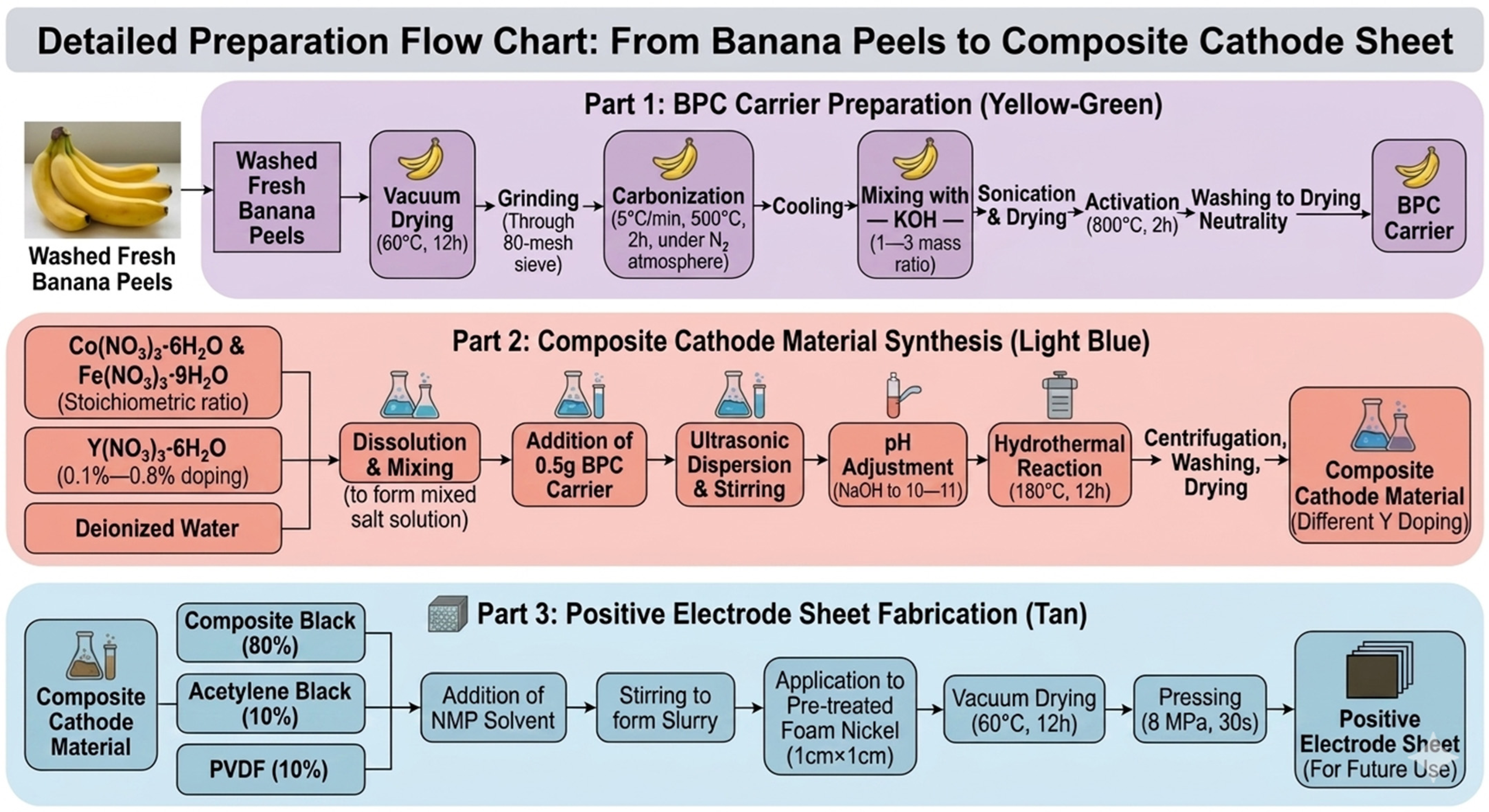
To begin with, thoroughly cleaned banana peels were subjected to vacuum drying at 60 °C for 12 h until a constant weight was achieved. The dried precursor was subsequently pulverized and sieved through an 80-mesh screen to achieve a homogeneous particle-size distribution. Following this pretreatment, the banana peel samples were carbonized under a nitrogen atmosphere. The temperature was increased to 500 °C at a heating rate of 5 °C min−1 and maintained for 2 h. After naturally cooling to room temperature, the carbonized products were mixed with KOH at a mass ratio of 1:3, subjected to ultrasonic treatment, and thoroughly dried. The resulting mixture was further activated at 800 °C for 2 h, repeatedly rinsed with deionized water until the eluate reached a neutral pH, and then dried to obtain the banana peel-derived carbon (BPC) matrix. Furthermore, a hydrothermal method was adopted for the synthesis of the composite cathode material. Co(NO3)2·6H2O and Fe(NO3)3·9H2O were weighed according to the stoichiometric ratio, while Y(NO3)3·6H2O was introduced at doping concentrations ranging from 0.1% to 0.8% by mass. All metal salts were dissolved in deionized water to prepare a homogeneous mixed-salt solution. After the addition of 0.5 g of BPC, the dispersion was subjected to ultrasonic treatment and magnetic stirring to ensure uniform dispersion. Subsequently, the pH of the mixed solution was adjusted to 10–11 using NaOH solution. The hydrothermal reaction was conducted in a Teflon-lined stainless-steel autoclave at 180 °C for 12 h. After cooling to room temperature, the product was collected by centrifugation, alternately rinsed several times with deionized water and ethanol, and dried to obtain Y-doped composite cathode materials with different Y doping concentrations. For cathode fabrication, the as-synthesized composite, acetylene black, and PVDF were mixed at a mass ratio of 8:1:1. An appropriate amount of NMP was added to the mixture, which was subsequently stirred thoroughly to form a homogeneous slurry. The slurry was uniformly coated onto pretreated nickel foam (1 cm × 1 cm), followed by vacuum drying at 60 °C for 12 h. Finally, the electrode was cold-pressed at 8 MPa for 30 s to ensure intimate interfacial contact, thereby yielding the target cathode for subsequent electrochemical measurements.

2.3. Preparation of Sunflower Seed Shell Carbon Anode

After washing and drying, sunflower seed husks were crushed and sieved using an 80-mesh screen (Xinxiang Xinzheng Screening Machinery Co., Ltd., Xinxiang, China) was used in this work., followed by vacuum drying at 60 °C for 12 h. The resultant powder was placed into a ceramic boat and transferred into a box resistance furnace for carbonization under a nitrogen atmosphere. The temperature was raised to 450 °C at a heating rate of 5 °C/min and maintained for 2 h, and the carbonized product was collected after natural cooling to room temperature. Subsequently, the carbonized sample was thoroughly mixed with KOH at a mass ratio of 1:4, and an appropriate amount of deionized water was added. After 30 min of ultrasonic treatment and continuous stirring to form a homogeneous paste, the mixture was vacuum-dried at 60 °C for 12 h. The dried composite was loaded into a new ceramic boat and subjected to activation in the resistance furnace under an N2 atmosphere. The activation temperature was increased to 850 °C at 5 °C/min and kept for 3 h. Once cooled to ambient temperature, the obtained material was washed with 1 mol/L hydrochloric acid until neutral, and then repeatedly rinsed with deionized water. Finally, the sample was vacuum-dried at 60 °C for 12 h to obtain sunflower seed shell-derived porous carbon (SSPC), which was sealed and stored for subsequent tests. The preparation process is shown in Figure 1.
Different activation parameters were employed for the banana peel-derived carbon and sunflower seed shell-derived carbon. This was due to the natural differences in composition, structure, and thermal stability of the two types of biomass. The banana peel is rich in pectin and cellulose, whereas the sunflower seed shell has a higher lignin content and a more compact structure. Therefore, stronger activation conditions are required to form a fully developed pore structure. In this study, the optimal preparation parameters were adopted for both types of biomass, with the aim of enabling each material to exhibit its best electrochemical performance. Thus, conducting performance comparisons under their respective optimal conditions can objectively reflect the inherent advantages of the two biomass raw materials, ensuring the scientificity and fairness of the performance comparison.

3. Results and Discussion

3.1. Structural and Morphological Characterization

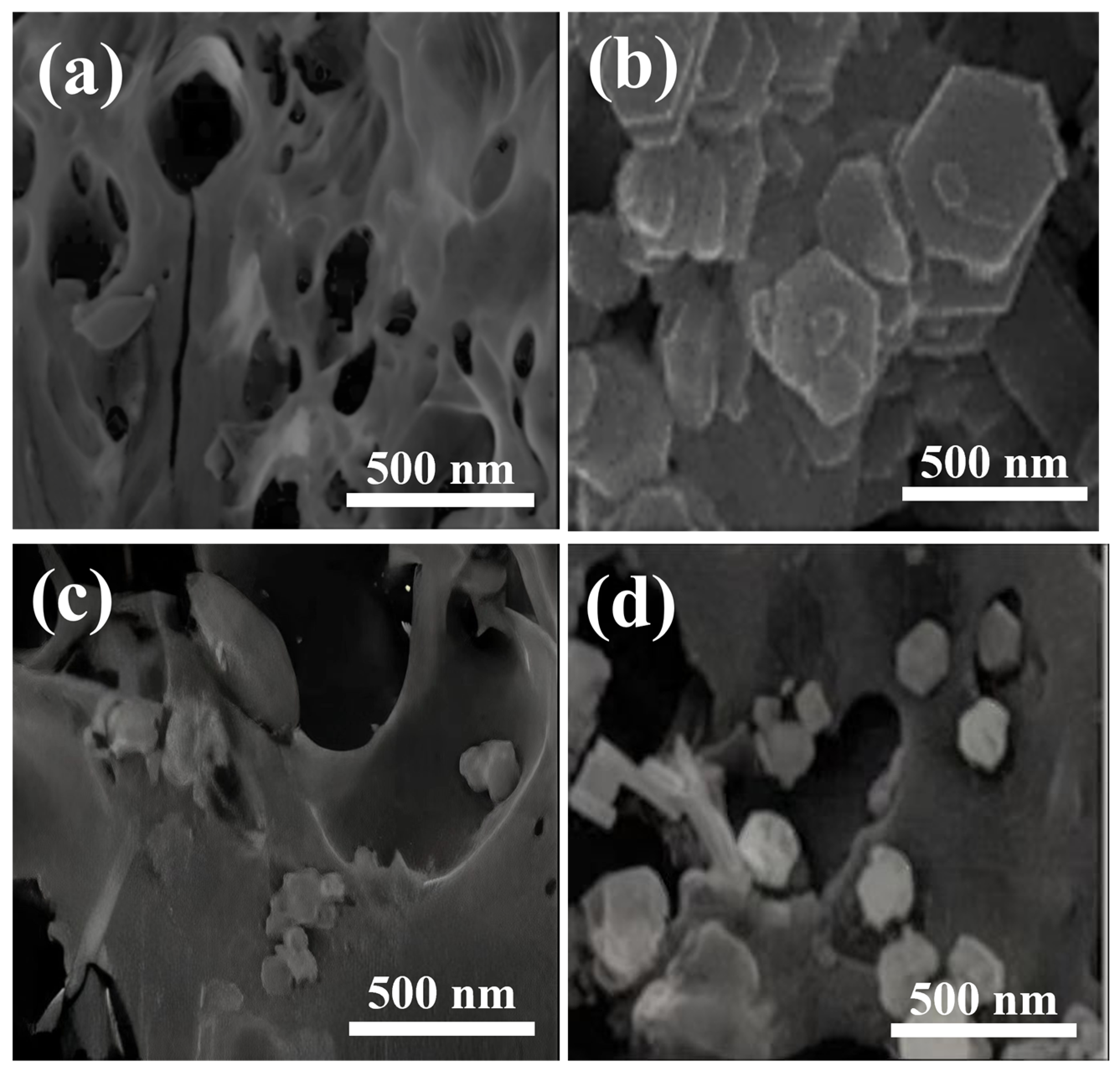
The microstructure and surface morphology of the as-synthesized electrode materials are presented in Figure 2.
As illustrated in Figure 2a, pristine BPC exhibits a characteristic porous architecture with a high specific surface area. However, a pronounced spontaneous stacking tendency exists between the layers, which results in partial pore blockage. This phenomenon not only reduces the accessibility of active sites but also prolongs the diffusion pathways of electrolyte ions, thereby limiting further improvement of the electrochemical performance. Pure CoFe2O4 (Figure 2b) exhibits uniformly distributed hexagonal-like particles with relatively consistent sizes. The regular morphology of these particles indicates that the material possesses good crystallinity. These particles possess abundant redox-active sites, which can provide a high pseudocapacitive contribution. However, such materials inherently exhibit poor electrical conductivity and are prone to particle agglomeration. When used alone, these materials still face difficulties in simultaneously achieving high specific capacitance and exceptional rate capability. In the CoFe2O4/BPC composite (Figure 2c), CoFe2O4 particles were successfully anchored both on the surface and within the pores of the BPC layers. Acting as “stiffeners” between the carbon layers, these particles effectively expanded the layered structure and significantly increased the interlayer spacing, thereby suppressing the stacking behavior of pristine BPC. This design not only preserved a greater number of active sites and porous structures but also created sufficient channels for rapid electrolyte-ion transport. Meanwhile, the high conductivity of BPC efficiently enhanced the electron-transfer efficiency of CoFe2O4.
Upon further introduction of Y doping (Figure 2d), the particle size of 0.4% Y-CoFe2O4/BPC became more uniform, and its dispersibility was markedly improved. Y doping optimized the nucleation and growth process of the particles, reduced agglomeration, and enabled more precise control over the interlayer spacing [14,15,16]. This uniform structure not only further shortened the ion diffusion pathway but also produced a synergistic effect between the double-layer capacitance of BPC and the pseudocapacitive contribution of CoFe2O4. Combined with the optimization of the material’s electrochemical activity via Y doping, the composite material realized a dual improvement in capacity and rate performance [17,18,19,20].
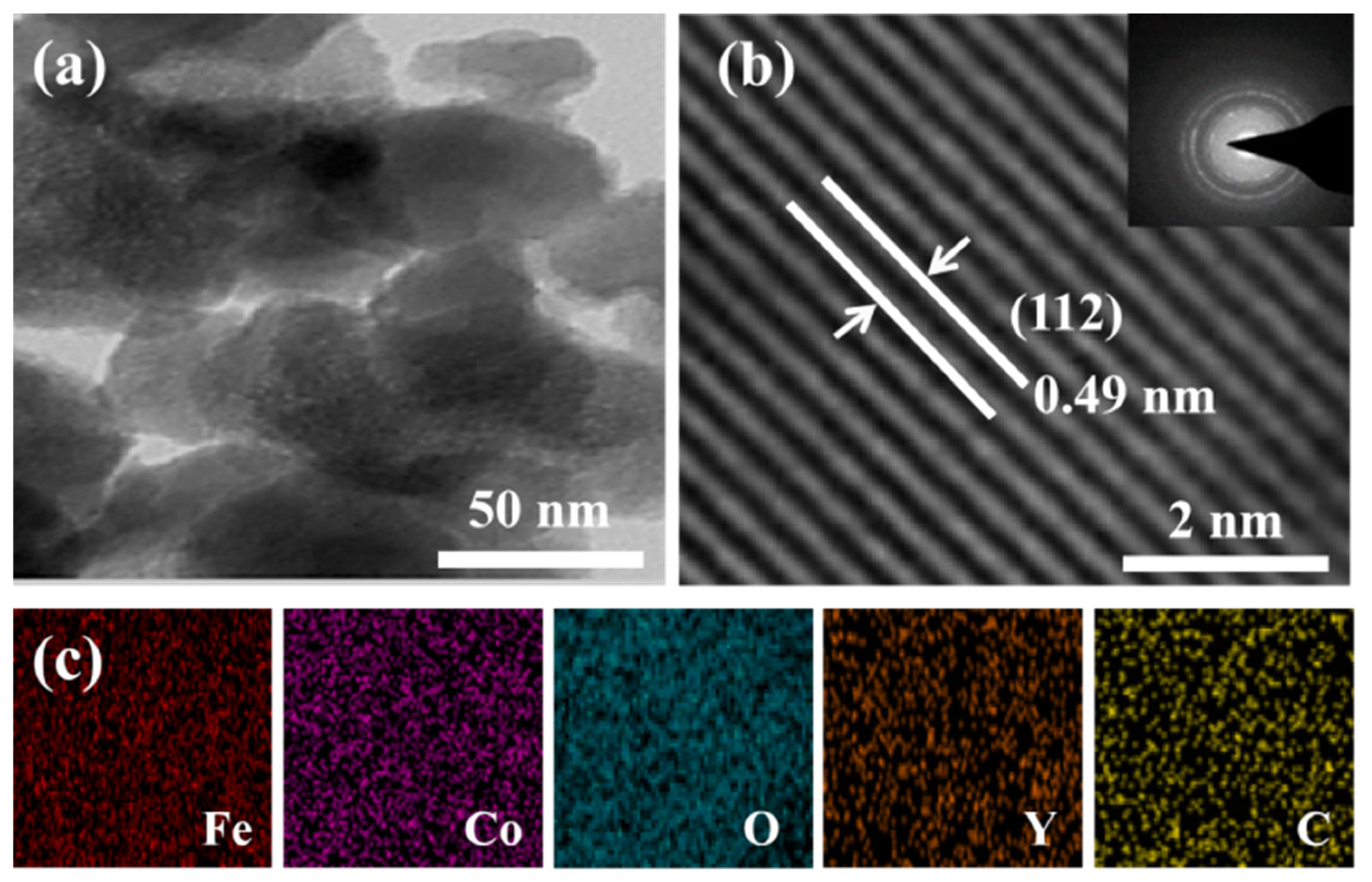
Transmission electron microscopy characterization revealed the microstructural features, crystallinity, and elemental distribution of the 0.4% Y-CoFe2O4/BPC composite, as shown in Figure 3. The TEM image in Figure 3a demonstrates that the Y-CoFe2O4/BPC nanoparticles are uniformly dispersed within the amorphous BPC matrix without any obvious agglomeration. This uniformly dispersed configuration not only alleviates the loss of active sites caused by particle aggregation but also provides abundant pathways for rapid electrolyte-ion transport, thereby facilitating the enhancement of the material’s rate capability. The HRTEM micrograph displayed in Figure 3b reveals clear lattice fringes with a spacing of 0.49 nm, which corresponds precisely to the (112) interplanar spacing of spinel-type CoFe2O4, confirming the excellent crystallinity of the CoFe2O4 nanoparticles. The SAED pattern located in the upper-right corner exhibits typical polycrystalline diffraction rings, further confirming the polycrystalline nature of CoFe2O4. This is in agreement with the crystal plane information from HRTEM, indicating that the prepared CoFe2O4 particles have high crystallinity and excellent pseudocapacitive reaction activity. Figure 3c presents elemental mapping images of five elements (Fe, Co, O, Y, C) in a mapping diagram. Among these elements, the distributions of Fe, Co, and O exhibit significant overlap and correspond closely to the particle locations, directly confirming the formation and uniform distribution of the CoFe2O4 phase. Furthermore, the Y element is uniformly distributed throughout the particle regions, confirming that Y was successfully incorporated into the CoFe2O4 lattice rather than merely adsorbed on the material surface or forming a secondary phase. The C element is continuously distributed throughout the entire substrate region, corresponding to the amorphous BPC carbon matrix and clearly outlining the morphology of the carbon framework. This uniform elemental distribution indicates that both the Y-doping and particle-loading processes were successfully achieved, thereby establishing a critical structural foundation for enhancing the electrochemical performance of the material.
The elemental composition of the 0.4% Y-CoFe2O4/BPC composite material was analyzed using EDS spectroscopy (The EDS spectroscopy analysis was carried out using an energy-dispersive X-ray spectrometer manufactured by Oxford Instruments, sourced from High Wycombe, UK.). The results showed that the atomic percentages of C, O, Co, Fe and Y elements in the sample were 45.26%, 32.77%, 9.23%, 12.74% and 0.40%, respectively, confirming that Y had successfully been doped into the composite material system. The complete EDS elemental content data of the related samples are summarized in Table S1 of the Supplementary Materials.

3.2. Phase Analysis

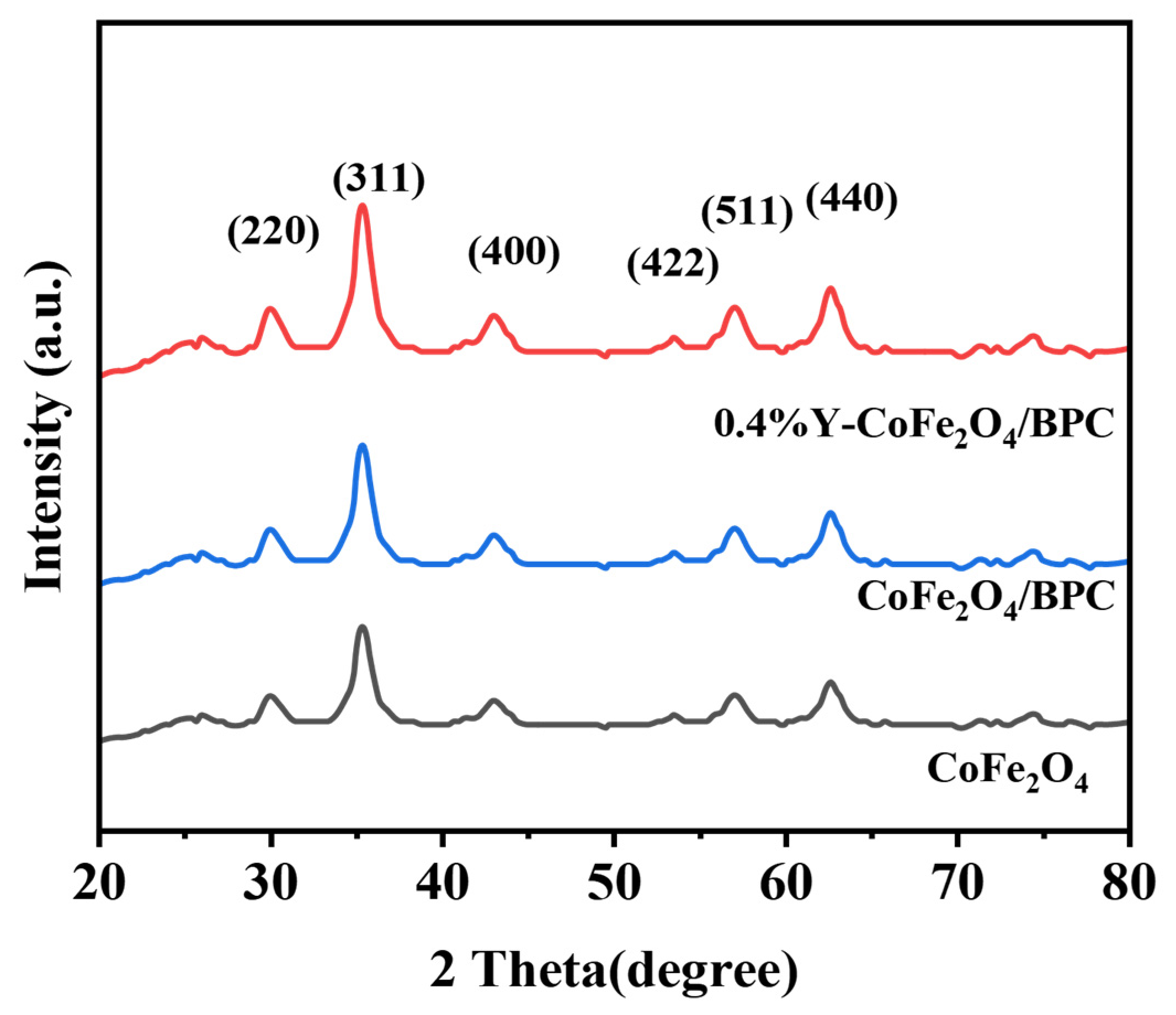
The XRD characterization results clearly reveal the regulation law of Y doping amount on the crystal structure of CoFe2O4/BPC composite materials (Figure 4). The characteristic diffraction peaks of pure CoFe2O4 are in complete agreement with the standard spectrum of spinel-type CoFe2O4 (JCPDS card No. 22-1086), confirming its successful synthesis; among them, strong characteristic diffraction peaks appear at approximately 2θ = 30.5°, 35.6°, 42.3°, 53.8°, 56.9° and 62.3°, corresponding to the (220), (311), (400), (422), (511) and (440) characteristic crystal planes of the target crystal. After introducing the BPC matrix, the characteristic diffraction peaks of CoFe2O4 are retained, indicating that the particles still maintain good crystallinity in the carbon matrix [21].
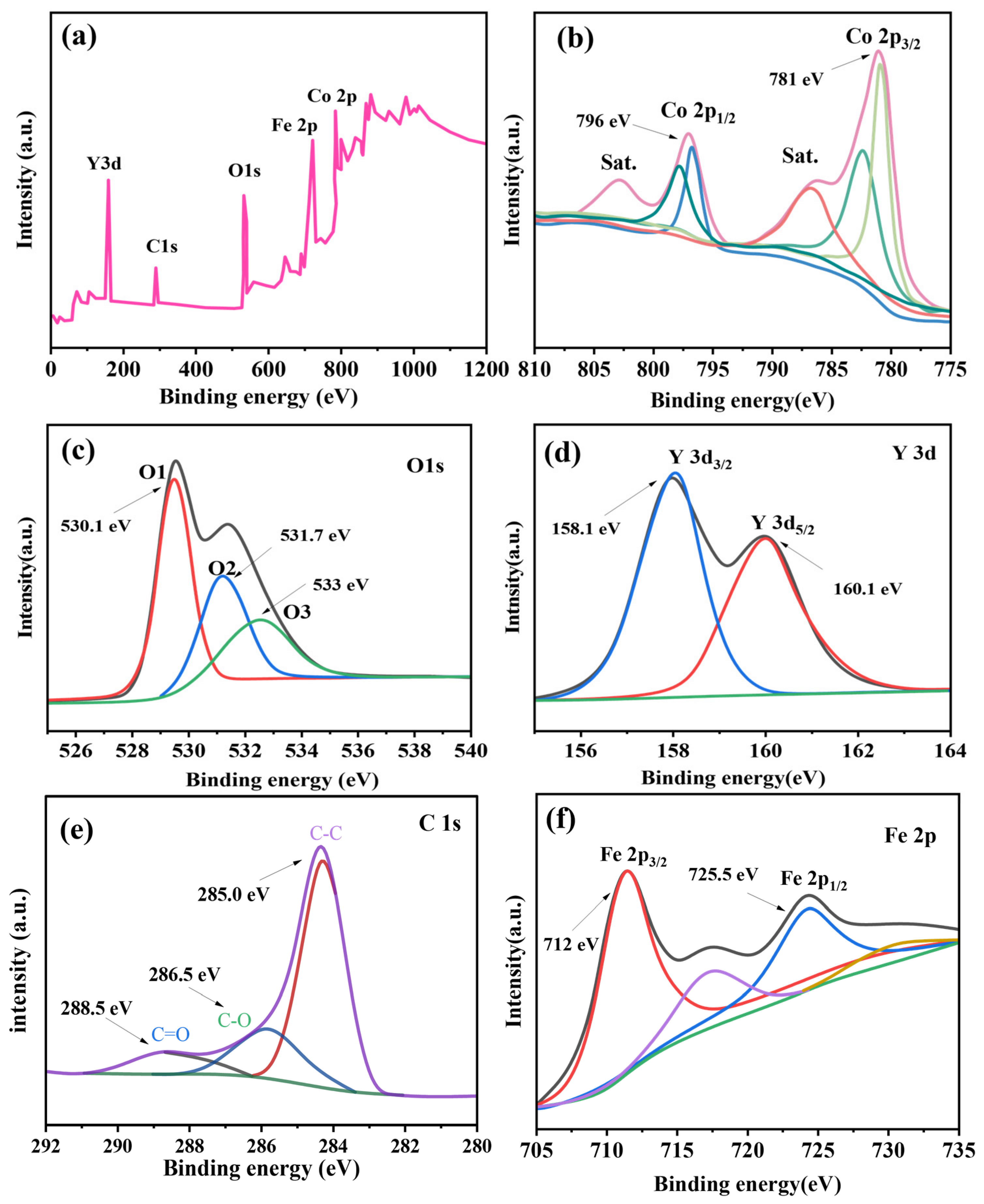
The full spectrum of XPS (Figure 5a) further confirms that the doped Y-CoFe2O4/BPC materials simultaneously contain characteristic peaks of C 1s, O 1s, Co 2p, Y 3d and Fe 2p. This not only reflects the C and O signals of the BPC substrate, but also includes the Co and Fe signals of CoFe2O4. The presence of the Y 3d characteristic peak directly verifies the successful doping of the Y element, and from the elemental composition perspective, it confirms the successful preparation of the composite material. To further explore the chemical state of the element, high-resolution XPS characterization was conducted. The Co 2p spectrum in Figure 5b presents a typical double peak of Co 2p1/2 (796 eV) and Co 2p3/2 (781 eV), along with satellite peaks, further confirming the coexistence of Co2+ and Co3+, and revealing the redox characteristics of CoFe2O4 [22,23]. The O 1s spectrum in Figure 5c can be decomposed into three peaks: the lattice oxygen at ~530.1 eV (O1), the surface hydroxyl/adsorbed oxygen at ~531.7 eV (O2), and the adsorbed water/carbonate at ~533.0 eV (O3), reflecting the abundant oxygen species on the material surface, which is conducive to enhancing its electrochemical activity. Figure 5d clearly shows the Y 3d3/2 peak at approximately 158.1 eV and the Y 3d5/2 peak at approximately 160.1 eV in the Y 3d spectrum, confirming that Y has been doped into the CoFe2O4 lattice in the form of Y3+. Figure 5e of the C 1s spectrum resolves three signal peaks: ~285.0 eV of graphitized carbon (C-C/C=C), ~286.5 eV of hydroxyl/ether bond (C-O), and ~288.5 eV of carbonyl/carboxyl (C=O), proving the presence of oxygen-containing functional groups in the carbon framework and surface of the BPC substrate. These functional groups can enhance the hydrophilicity and interfacial bonding strength of the material. The Fe 2p spectrum in Figure 5f shows characteristic peaks at approximately 712.0 eV for Fe 2p3/2 and 725.5 eV for Fe 2p1/2, accompanied by prominent satellite peaks, confirming that Fe exists in a mixed oxidation state in the material, which is consistent with the structural characteristics of spinel CoFe2O4. In conclusion, the XPS results confirm that CoFe2O4 has been successfully loaded on the surface of BPC, and the composite material retains the mixed valence state characteristics of CoFe2O4 and the surface functional groups of BPC, while achieving uniform doping of the Y element, providing key structural and chemical state support for its excellent electrochemical performance [24]. Figure S1 shows the Raman spectrum of the 0.4% Y-CoFe2O4/BPC composite material. In the low wavenumber region (200–800 cm−1), the characteristic Raman active vibration modes of the CoFe2O4 spinel structure are observed: the A1g peak at 630 cm−1, corresponding to the symmetric stretching vibration of Fe-O bonds in the tetrahedral coordination environment; the T2g (2) peak at 470 cm−1, which originates from the bending and stretching vibrations of Co/Fe-O bonds in the octahedral sites, and together they reflect the local vibration characteristics of the metal–oxygen coordination bonds within the lattice. In the high wavenumber region (1000–1800 cm−1), the D peak (~1350 cm−1) and G peak (~1580 cm−1) of the biomass porous carbon (BPC) substrate are clearly distinguishable: the D peak represents the defect/disorder structure of the carbon material, resulting from sp3 hybridized carbon and the disorder vibration at the edge sites; the G peak corresponds to the in-plane stretching vibration of the sp2 hybridized carbon bonds in graphite carbon. This indicates that the BPC substrate simultaneously contains disordered defects and partial graphite-like structures. This “defect-graphitization” coexisting structure can provide abundant active sites and rapid electron transmission channels for electrochemical processes.

3.3. Analysis of Pore Structure and Specific Surface Area

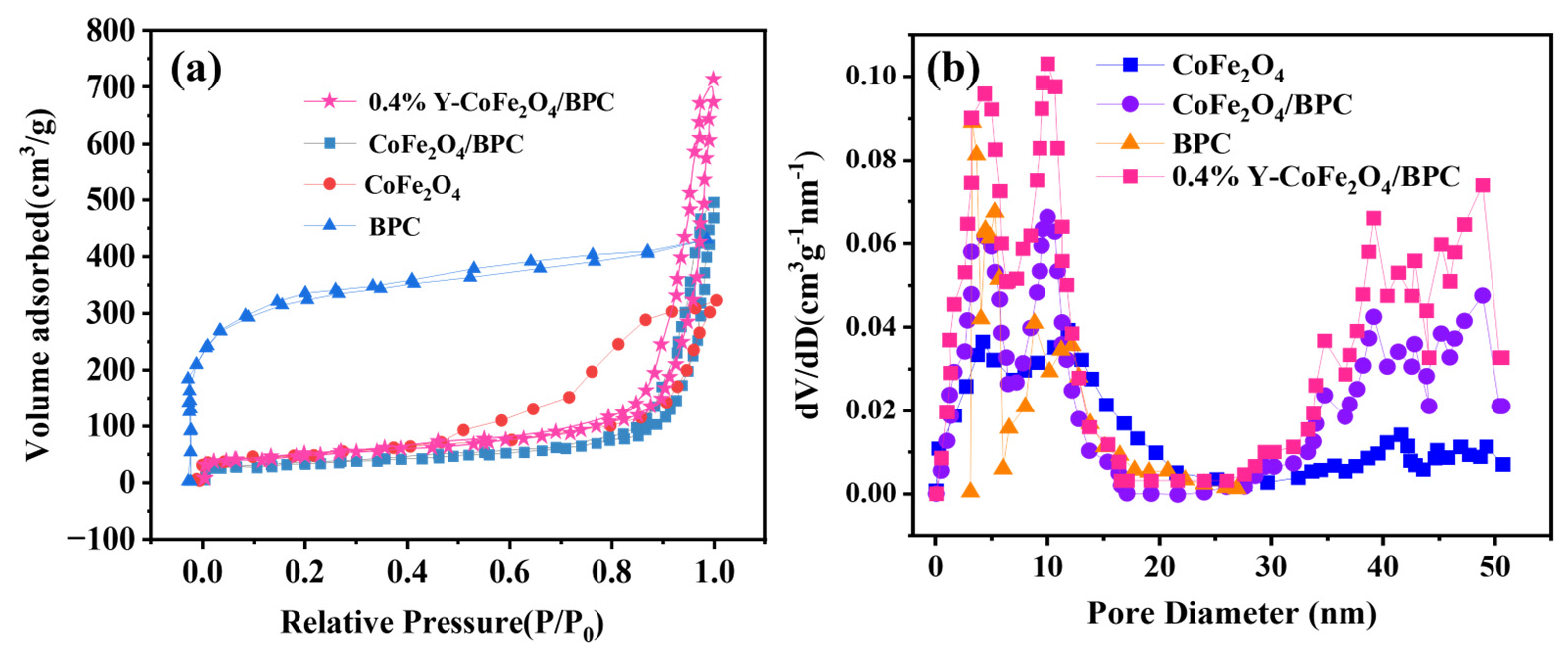
To deeply reveal the pore structural features of BPC, CoFe2O4, CoFe2O4/BPC and 0.4% CoFe2O4/BPC, N2 physisorption analysis were conducted on them, as shown in Figure 6.
The N2 adsorption–desorption isotherms shown in Figure 6a demonstrate that all samples exhibit typical characteristics of type-IV isotherms. In the medium- and high-pressure regions, a distinct hysteresis loop is observed, which is a characteristic feature of mesoporous materials, indicating the presence of mesoporous structures within the samples. In terms of adsorption capacity, 0.4% Y-CoFe2O4/BPC exhibits a significantly higher adsorption capacity than the other samples. This is followed by CoFe2O4/BPC and BPC, whereas pure-phase CoFe2O4 exhibits the lowest adsorption capacity. This result suggests that the combined effect of Y doping and the BPC support effectively enhances the specific surface area and pore volume of the composite, thereby generating abundant channels for electrolyte-ion diffusion and charge accumulation [25]. The pore-size distribution profiles shown in Figure 6b demonstrate that all samples possess pore sizes mainly distributed within the mesoporous range of 2–50 nm, which is highly consistent with the adsorption–desorption isotherm results. Among these samples, 0.4% Y-CoFe2O4/BPC exhibits pronounced pore-size distribution peaks at 2–10 nm and 30–50 nm, indicating a more developed pore structure with both mesoporous and macroporous characteristics. The pore-size distribution peak intensity of CoFe2O4/BPC is the second highest, whereas that of BPC is relatively weaker. Pure-phase CoFe2O4 exhibits the weakest pore-size distribution peak, indicating an underdeveloped pore structure. The formation of such a hierarchical pore structure helps shorten ion-diffusion pathways and enhance the rate capability of the material. In summary, the 0.4% Y-CoFe2O4/BPC composite possesses a large specific surface area, high pore volume, and a well-regulated pore-size distribution, endowing it with significant advantages as a supercapacitor electrode material: A large specific surface area exposes additional electrochemically active sites, thereby enhancing the specific capacitance; The well-developed pore volume and hierarchical pore structure promote the rapid transport and diffusion of electrolyte ions, thereby enhancing the rate capability; The abundant porous structure can effectively alleviate volume expansion during charge–discharge cycles, thereby improving the cycling stability [26,27,28]. The pore-structure parameters, including specific surface area, pore volume, and average pore diameter, of the prepared materials are summarized in Table S2 of the Supplementary Materials.

3.4. Electrochemical Performance Testing

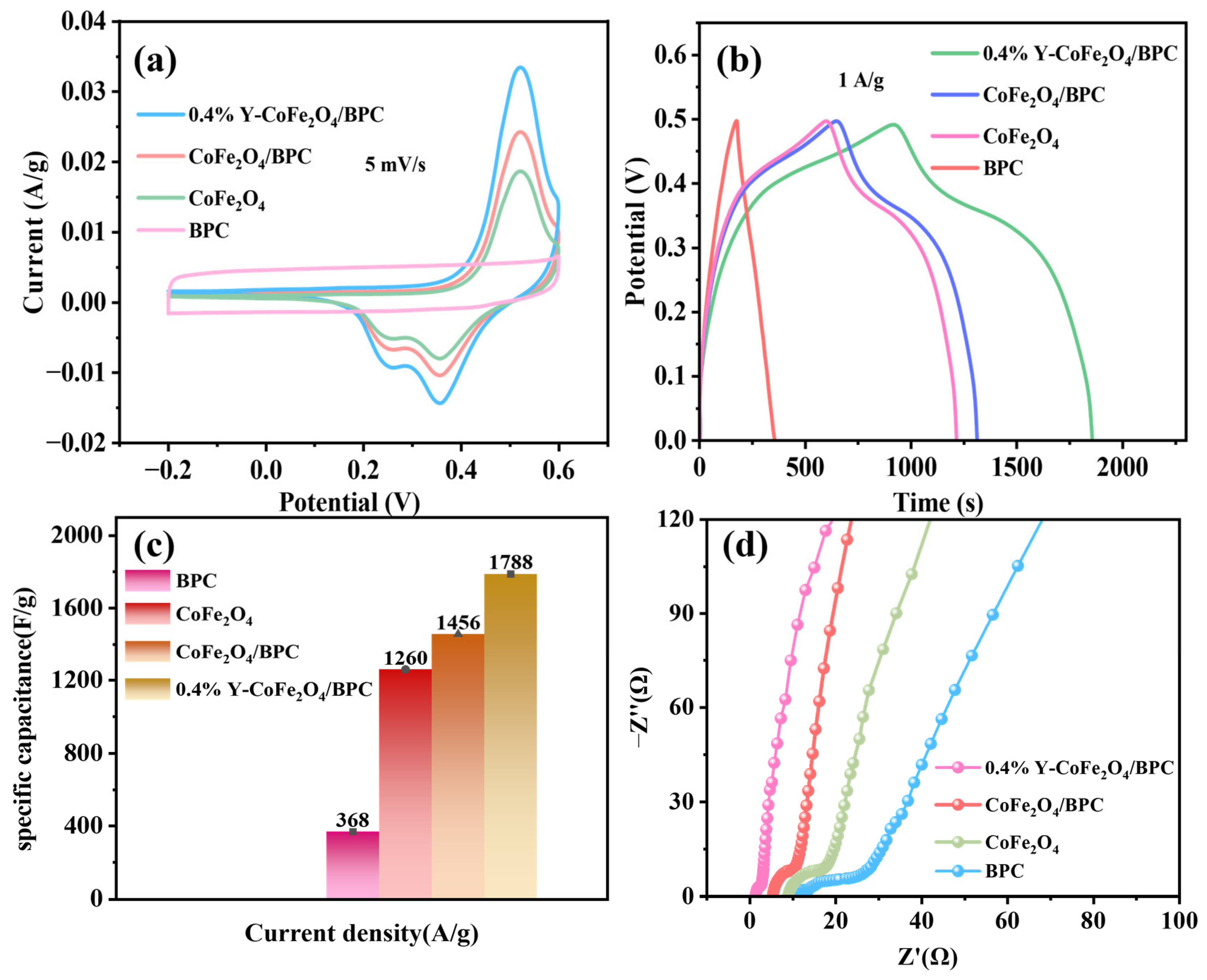
The electrochemical tests of CoFe2O4, BPC, CoFe2O4/BPC and 0.4% Y-CoFe2O4/BPC are shown in Figure 7.
Figure 7a shows the CV curves of BPC, CoFe2O4, CoFe2O4/BPC and 0.4% Y-CoFe2O4/BPC electrodes at a scan rate of 5 mV/s. All the curves exhibit distinct redox peaks within the 0.2–0.6 V range, corresponding to the reversible Faradaic reactions of Fe2+/Fe3 and Co2+/Co3+ in CoFe2O4, indicating their typical pseudocapacitive energy storage mechanism. Compared with pure-phase CoFe2O4, the CV curve of 0.4% Y-CoFe2O4/BPC encloses the largest area, and the redox peak currents are significantly enhanced, suggesting that Y doping and carbon compositing effectively enhance the electrochemical activity and charge storage capacity of the material. In addition, the peak position of the Y-doped sample slightly shifts and the peak shape becomes wider. This is attributed to the regulation of the electronic structure of CoFe2O4 by Y3+, which promotes ion diffusion and charge transfer. It is worth noting that the CV curve of BPC within the potential window of −0.2 to 0.6 V shows a typical quasi-rectangular shape with no obvious redox peaks, indicating a storage behavior dominated by double-layer capacitance. Moreover, its current response is much lower than that of the composite electrode, making it difficult to clearly display the performance difference on the same coordinate system. Therefore, Figure 7a takes the pseudocapacitive behavior of the CoFe2O4-based composite electrode as the core comparison object, which can fully reflect the improvement effect of Y-doping and carbon compositing on the electrochemical performance. Figure 7b shows the constant current charge–discharge curves of each electrode at a current density of 1 A/g. All curves exhibit voltage platforms corresponding to the CV peak positions, further confirming the pseudocapacitive dominant energy storage mechanism. The discharge time of 0.4% Y-CoFe2O4/BPC is the longest, indicating the highest specific capacity. The charge–discharge curve of BPC is approximately symmetrical and triangular, without obvious voltage platforms, which is consistent with the CV results. Its specific capacity is only 368 F/g, much lower than the composite electrode, so it is not listed separately in Figure 7b to avoid affecting the intuitive comparison of the performance differences in the pseudocapacitive electrodes. From the specific capacity bar chart in Figure 7c, it can be seen that at 1 A/g, the specific capacity of 0.4% Y-CoFe2O4/BPC reaches 1788 F/g, significantly higher than CoFe2O4/BPC (1456 F/g), pure-phase CoFe2O4 (1260 F/g), and BPC (368 F/g). The enhanced electrochemical performance can be attributed to the following factors: (i) the high conductivity and large specific surface area of BPC provide excellent dispersion and efficient electron-transport pathways for the active materials; (ii) Y doping introduces additional defects and active sites, thereby optimizing the electronic structure of the material and enhancing the Faradaic reaction activity. Figure 7d shows the Nyquist plots of the impedance of each electrode. The diameter of the semicircle in the high-frequency region corresponds to the charge transfer resistance (Rct), and the slope of the straight line in the low-frequency region reflects the ion diffusion ability. Among all samples, 0.4% Y-CoFe2O4/BPC exhibits the smallest semicircular diameter, indicating a significantly reduced interfacial charge-transfer resistance. Meanwhile, the slope of the linear region in the low-frequency range is the largest, suggesting the lowest diffusion resistance for electrolyte ions within the electrode. Although the Nyquist curve of BPC shows a relatively low solution resistance, its charge transfer resistance is relatively large and the ionic diffusion kinetics are relatively sluggish. Overall, its electrochemical performance is markedly inferior to that of the composite electrode. Therefore, Figure 7d focuses on comparing the kinetic differences in different CoFe2O4-based electrodes. Furthermore, there are slight differences in the solution resistances (Rs) of different samples, which mainly result from the changes in the electrical conductivity of the materials as well as the minor fluctuations in the contact conditions during electrode preparation. These differences are relatively small and do not affect the analysis of the charge transfer resistance and ion diffusion kinetics. The above results indicate that the synergistic effects of Y doping and carbon compositing effectively optimize the electron- and ion-transport kinetics of the electrode, thereby laying a solid foundation for its excellent rate capability and cycling stability [26,27,28]. Equivalent-circuit fitting was performed based on the Nyquist plots obtained from electrochemical impedance spectroscopy. The impedance parameters Rs and Rct corresponding to each sample are summarized in Table S3.
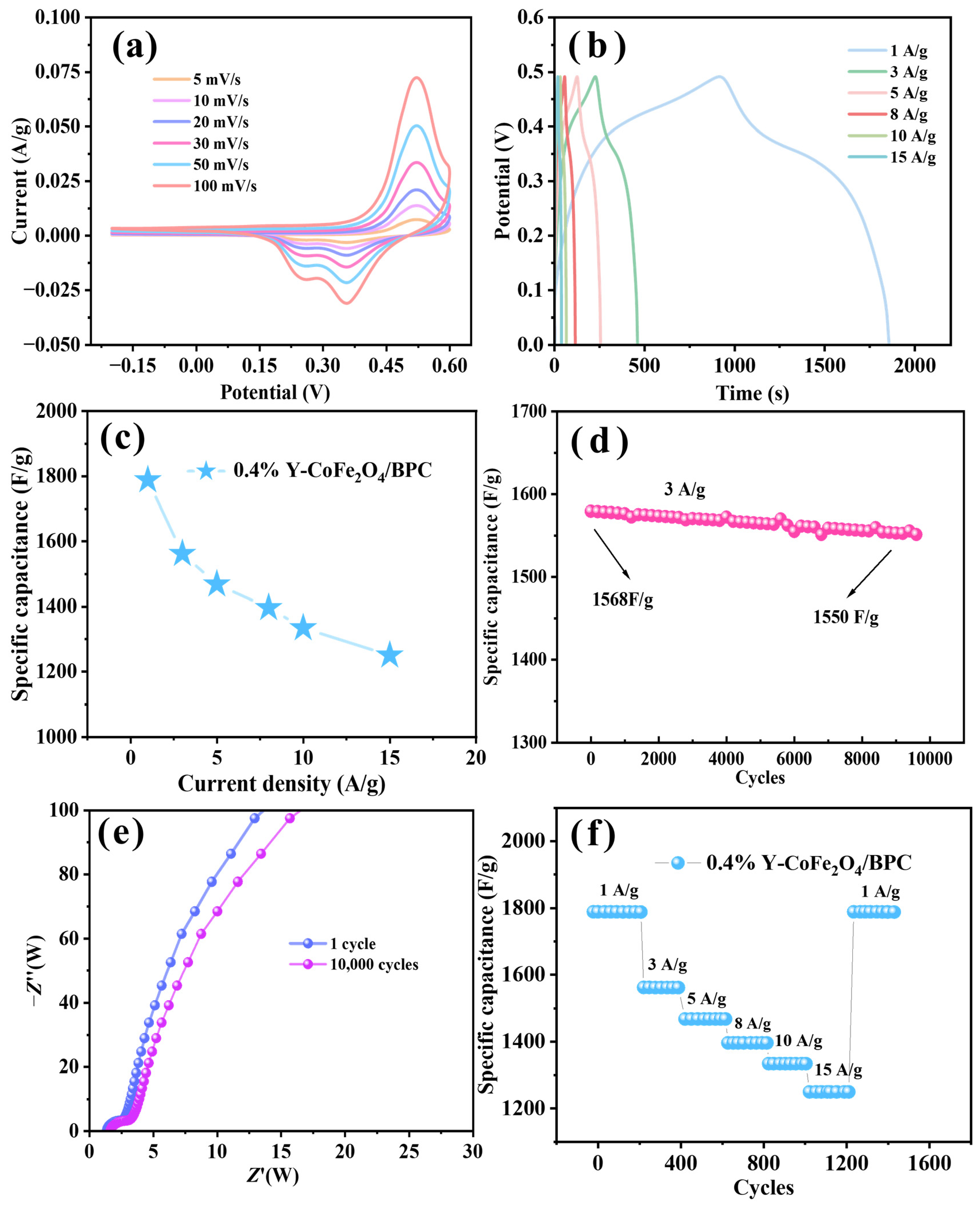
The electrochemical performance of 0.4% Y-CoFe2O4/BPC is presented in Figure 8. Figure 8a displays the CV curves of the 0.4% Y-CoFe2O4/BPC composite at scan rates spanning from 5 mV/s to 100 mV/s. The CV curves maintain a relatively stable shape, while the redox peaks gradually shift with increasing scan rate. This observation indicates that the electrode material exhibits enhanced reaction kinetic properties. Figure 8b gives the galvanostatic charge–discharge curves of 0.4% Y-CoFe2O4/BPC composite under different current densities. It can be observed that the voltage plateaus in the GCD curves correspond well to the redox peaks in Figure 8a. The GCD curves at different current densities are analogous in shape, all featuring distinct charge–discharge plateaus, indicating that reversible redox reactions take place during the charge–discharge process. At a current density of 1 A/g, 0.4% Y-CoFe2O4/BPC exhibits the longest discharge time, suggesting that its specific capacitance is maximized. From Figure 8c, which depicts the specific capacitance retention at various current densities, at 1 A/g, 0.4% Y-CoFe2O4/BPC exhibits a high specific capacitance of approximately 1788 F/g. Even when the current density increases to 20 A/g, nearly 66% of the initial specific capacitance is retained, corresponding to 1250 F/g, thereby demonstrating excellent rate capability. This is primarily attributed to the synergistic interaction between Y doping and the BPC matrix, which effectively accelerates the transport of ions and electrons within the material. Long-cycle stability evaluation was conducted at a current density of 3 A/g for 10,000 cycles, as shown in Figure 8d. The initial specific capacitance of the electrode attains 1568 F/g, and after cycling repeatedly, the specific capacitance still remains at 1550 F/g, with a capacitance retention rate as high as 98%. Such excellent cycling stability proves that the electrode has superior electrochemical durability. The EIS measurements conducted before and after cycling (Figure 8e) show that the two Nyquist plots almost completely overlap. The semicircle diameter in the high-frequency region is relatively small, whereas the curve in the low-frequency region approaches a vertical line, indicating low internal resistance and ideal capacitive behavior of the electrode. After prolonged cycling, no significant increase in the interfacial impedance of the electrode is observed. In addition, the cycling stability tests conducted under different current densities (Figure 8f) demonstrate that when the current density is switched among 3, 5, 8, 10, and 15 A/g and subsequently returned to 1 A/g, the specific capacitance of the electrode can fully recover to its initial value. This result confirms that the electrode can maintain a stable structure and reliable electrochemical performance under various operating conditions. In conclusion, the 0.4% Y-CoFe2O4/BPC electrode exhibits high specific capacitance, superior rate capability, outstanding long-term cycling stability, and low internal resistance, rendering it a promising candidate material for high-performance supercapacitors. The comprehensive electrochemical performance of the prepared electrodes is summarized in Table 1.
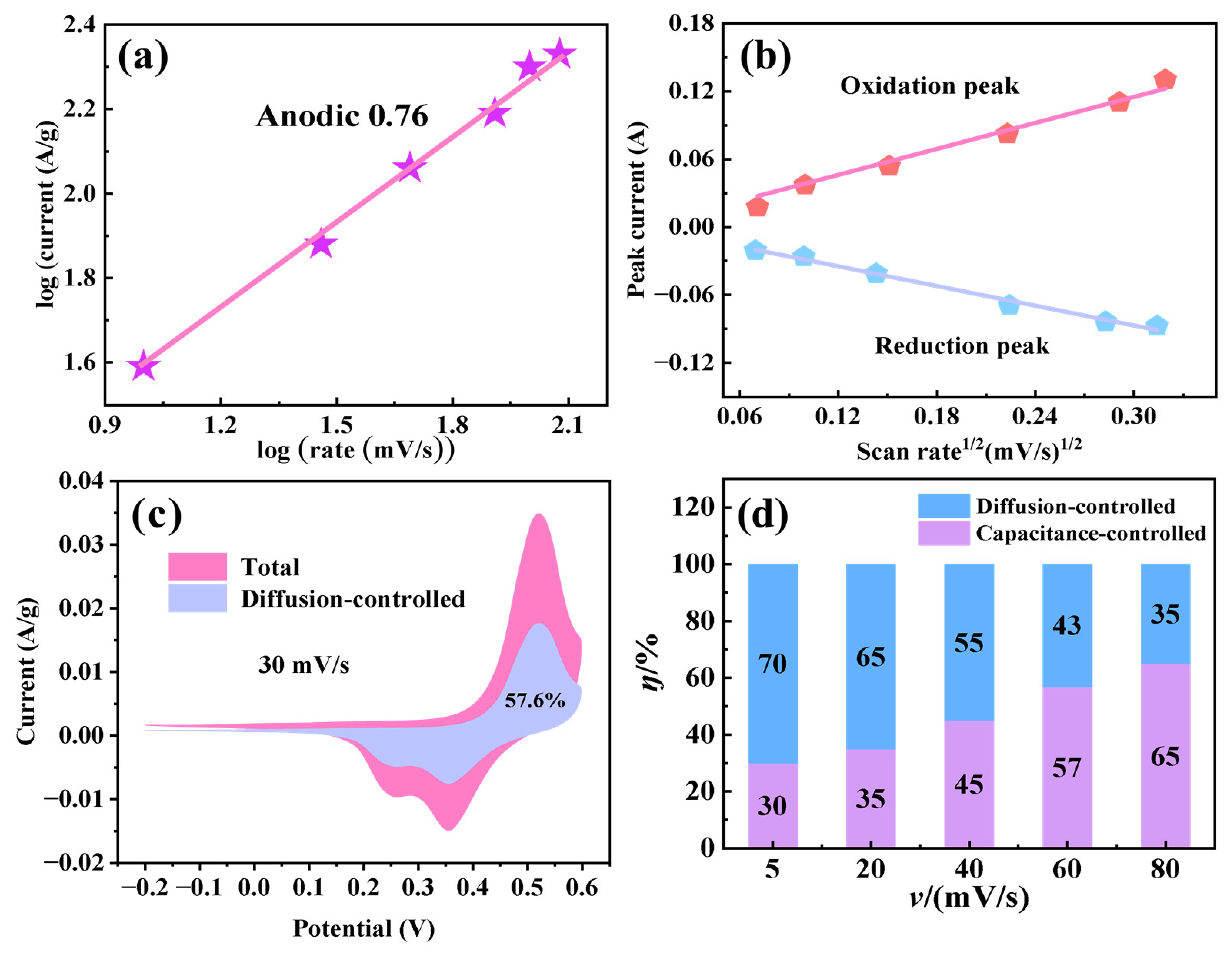
Figure 9a demonstrates that the logarithm of the oxidation peak current (log i) exhibits a strong linear correlation with the logarithm of the scan rate (log v), with a slope approaching 0.5. This result suggests that the electrode reaction is primarily diffusion-controlled, with an additional contribution from surface capacitive effects. This finding indicates that ion diffusion within the electrode material serves as a key charge-storage mechanism, while electrochemically active sites on the material surface also participate in rapid pseudocapacitive reactions. Figure 9b further shows that the oxidation peak current increases linearly with the square root of the scan rate (v1/2), whereas the reduction peak current decreases linearly, and neither relationship passes through the origin. This deviation from the origin confirms that the electrode reaction involves both diffusion-controlled and capacitive-controlled processes. The intercept represents the contribution of surface pseudocapacitance, which is closely associated with the increased number of surface defects and active sites induced by Y doping. At a scan rate of 30 mV/s (Figure 9c), the contribution from diffusion-controlled processes accounts for 57.6%, whereas the contribution from capacitive-controlled processes accounts for 42.4%. This result indicates that, at this scan rate, ion diffusion remains the dominant charge-storage mechanism, while surface pseudocapacitance also plays a crucial role, with the two processes functioning synergistically to enhance the electrode’s specific capacitance. As the scan rate increases from 5 to 80 mV/s (Figure 9d), the contribution of capacitive-controlled processes increases markedly from 30% to 65%, whereas the contribution of diffusion-controlled processes decreases from 70% to 35%. This trend clearly indicates that, at low scan rates, ions have sufficient time to diffuse into the bulk phase of the electrode material, rendering diffusion-controlled processes dominant and thereby providing high specific capacitance. At high scan rates, ion diffusion becomes limited, and rapid surface pseudocapacitive reactions become the dominant charge-storage pathway, thereby ensuring the electrode’s rate capability under high current densities. In conclusion, the charge-storage mechanism of the 0.4% Y-CoFe2O4/BPC electrode involves the synergistic interaction between diffusion-controlled and capacitive-controlled processes. This unique kinetic characteristic enables the electrode to achieve high specific capacitance at low scan rates while maintaining excellent rate capability at high scan rates, thereby providing a theoretical basis for its application in high-performance supercapacitors.

3.5. Characterization of the Negative Electrode Structure and Morphology of Sunflower Seed Shell

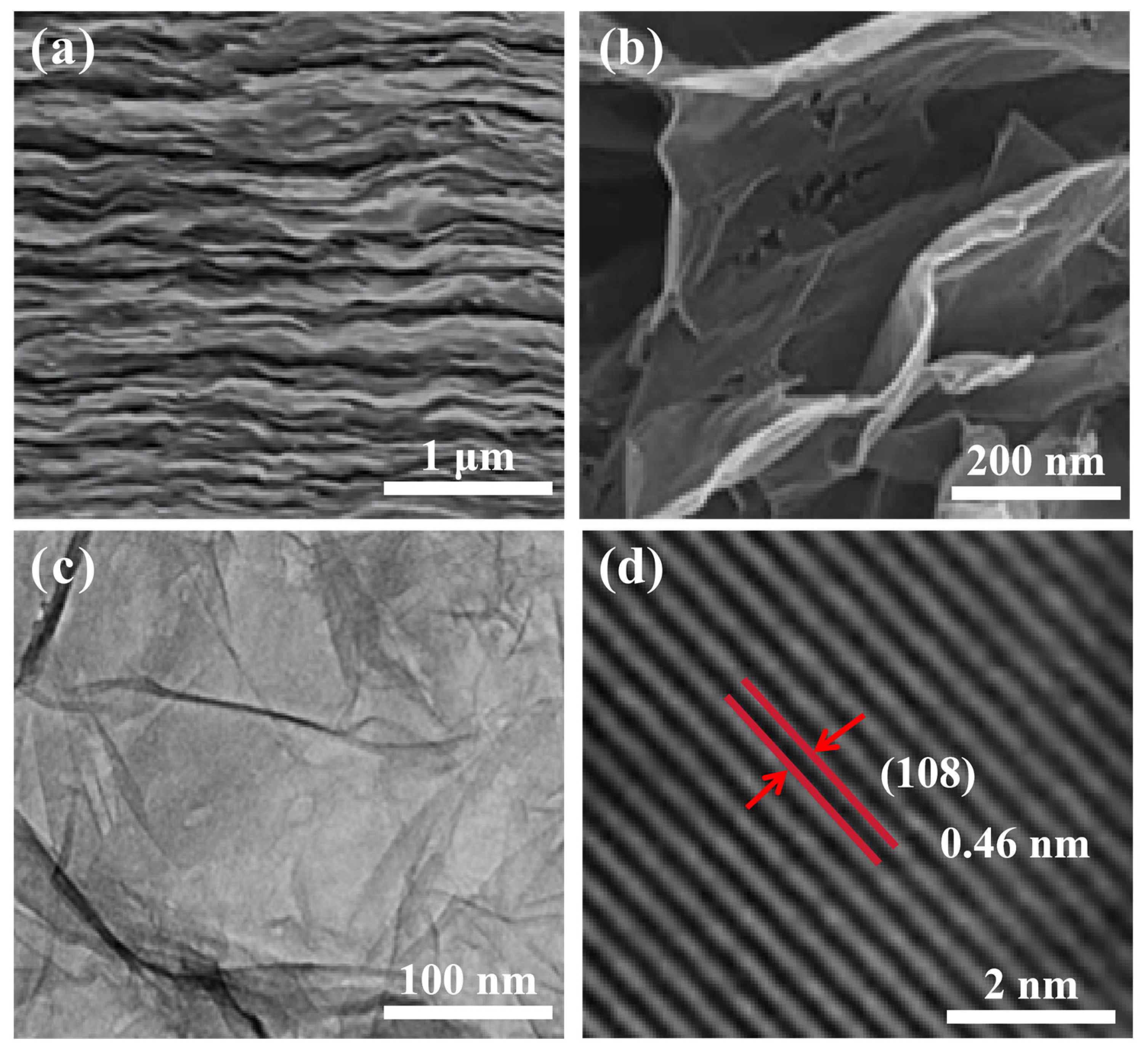
Figure 10a displays a low-magnification SEM image, which reveals that SSPC exhibits a distinct layered stacking structure. The lamellae are arranged in a wavy and wrinkled morphology, maintaining good continuity on the micrometer scale and providing pathways for the swift movement of electrolyte ions. Figure 10b presents a high-magnification SEM image that further reveals that SSPC is composed of ultrathin two-dimensional nanosheets. The nanosheets are interconnected and stacked together, forming a highly porous structure that facilitates the formation of electric double-layer capacitance. The TEM image shown in Figure 10c further confirms the two-dimensional nanosheet structure of SSPC. The nanosheets are ultrathin with obvious folds, and translucent edges can be observed, indicating that their thickness is at the nanometer scale. Figure 10d shows clear lattice fringes with an interplanar spacing of 0.46 nm, corresponding to the (108) crystal plane, along with the selected-area electron diffraction (SAED) pattern shown in the inset. These results indicate that SSPC possesses a certain degree of graphitization and crystallinity, which can significantly enhance the electrical conductivity of the material [35,36].
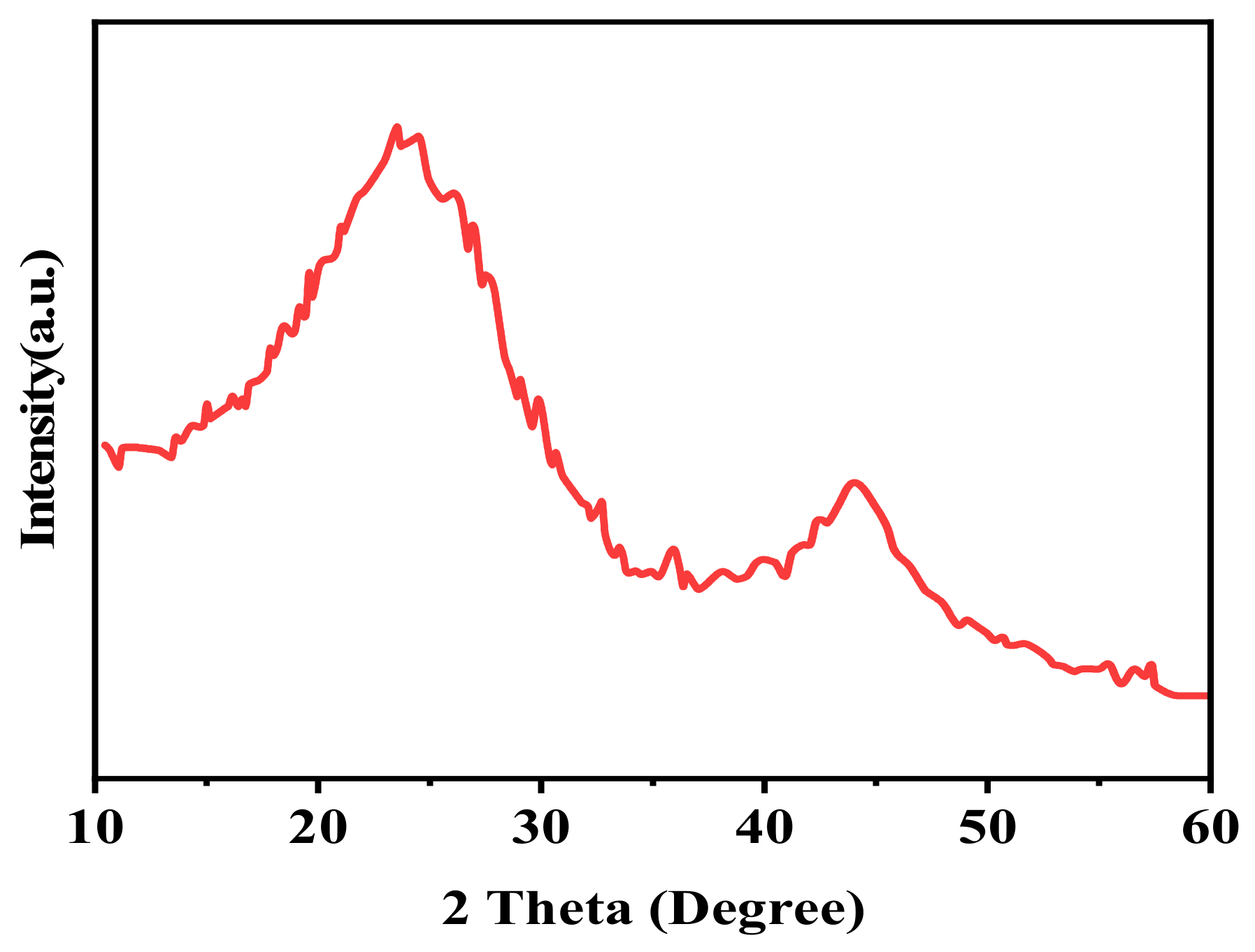
Figure 11 shows the XRD spectrum of SSPC.
The XRD pattern of the sample is shown in Figure 11. A broad and intense diffraction peak appears at 2θ ≈ 25°, corresponding to the (002) plane of amorphous carbon, indicating that the material predominantly exists in an amorphous or partially graphitized form. A weaker broad peak is also observed at 2θ ≈ 43°, corresponding to the (100) plane, further confirming the graphite-like layered structure of the carbon skeleton. The overall diffraction profile is broadened without sharp crystalline peaks, and only slight baseline fluctuations are observed in the high-angle region (e.g., around 2θ ≈ 50°), which is characteristic of amorphous carbon materials. This indicates that the material has low crystallinity and is dominated by an amorphous structure. Such a structure can provide abundant defects and active sites, thereby contributing to improved electrochemical performance [37].
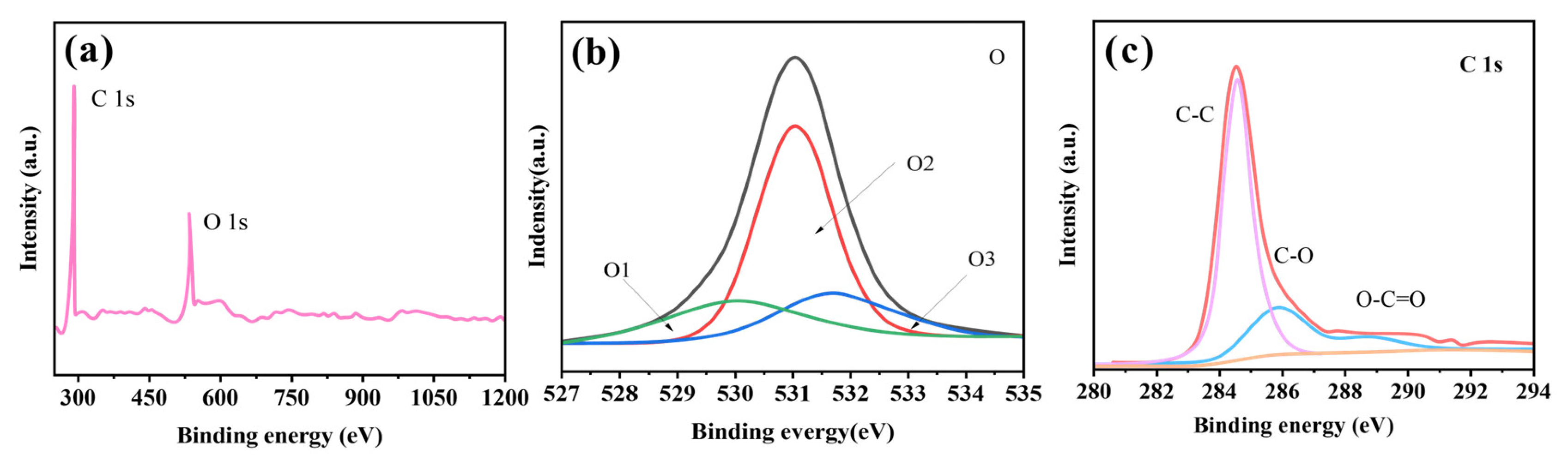
Figure 12 displays the XPS survey spectrum of SSPC. Figure 12a shows the full-survey spectrum, in which the primary surface elemental components, including C 1s (285 eV) and O 1s (531 eV), as well as the characteristic peaks of metallic elements such as Co 2p, Y 3d, and Fe 2p, are clearly identified, thereby providing a qualitative elemental basis for the subsequent high-resolution spectral analysis. Figure 12b reveals that the high-resolution O 1s spectrum can be decomposed into three sub-peaks. The O1 peak (531.7 eV) is assigned to oxygen species associated with surface-adsorbed hydroxyl groups or water molecules; O2 (532.8 eV) corresponds to oxygen atoms in ether bonds or hydroxyl groups within the carbon matrix; and O3 (533.6 eV) represents oxygen species in carbonyl or ester groups. The high-resolution C 1s spectrum can also be fitted into three independent peaks. The C-C (284.8 eV) peak corresponds to the sp2 hybridized carbon skeleton, which is a characteristic feature of graphitized carbon. The C-O (286.2 eV) peak is attributed to carbon atoms in oxygen-containing functional groups, including ether and hydroxyl groups. The C=O peak (288.6 eV) corresponds to carbon atoms in carbonyl or carboxyl groups, demonstrating that SSPC is primarily composed of sp2-hybridized carbon frameworks with a moderate amount of surface oxygen-containing functional groups, which is consistent with the layered carbon structural features observed in the SEM and TEM analyses. In addition, the high-resolution spectra of Co 2p, Y 3d, and Fe 2p can be employed to analyze the chemical valence states of relevant metallic elements in detail. Specifically, the Co 2p spectrum can differentiate Co2+ and Co3+, the Y 3d spectrum can confirm the valence state of yttrium element, and the Fe 2p spectrum can distinguish Fe2+ and Fe3+. These metallic components can provide additional pseudocapacitive contributions to the electrode materials, thereby enhancing their overall electrochemical performance [38,39,40,41,42,43].
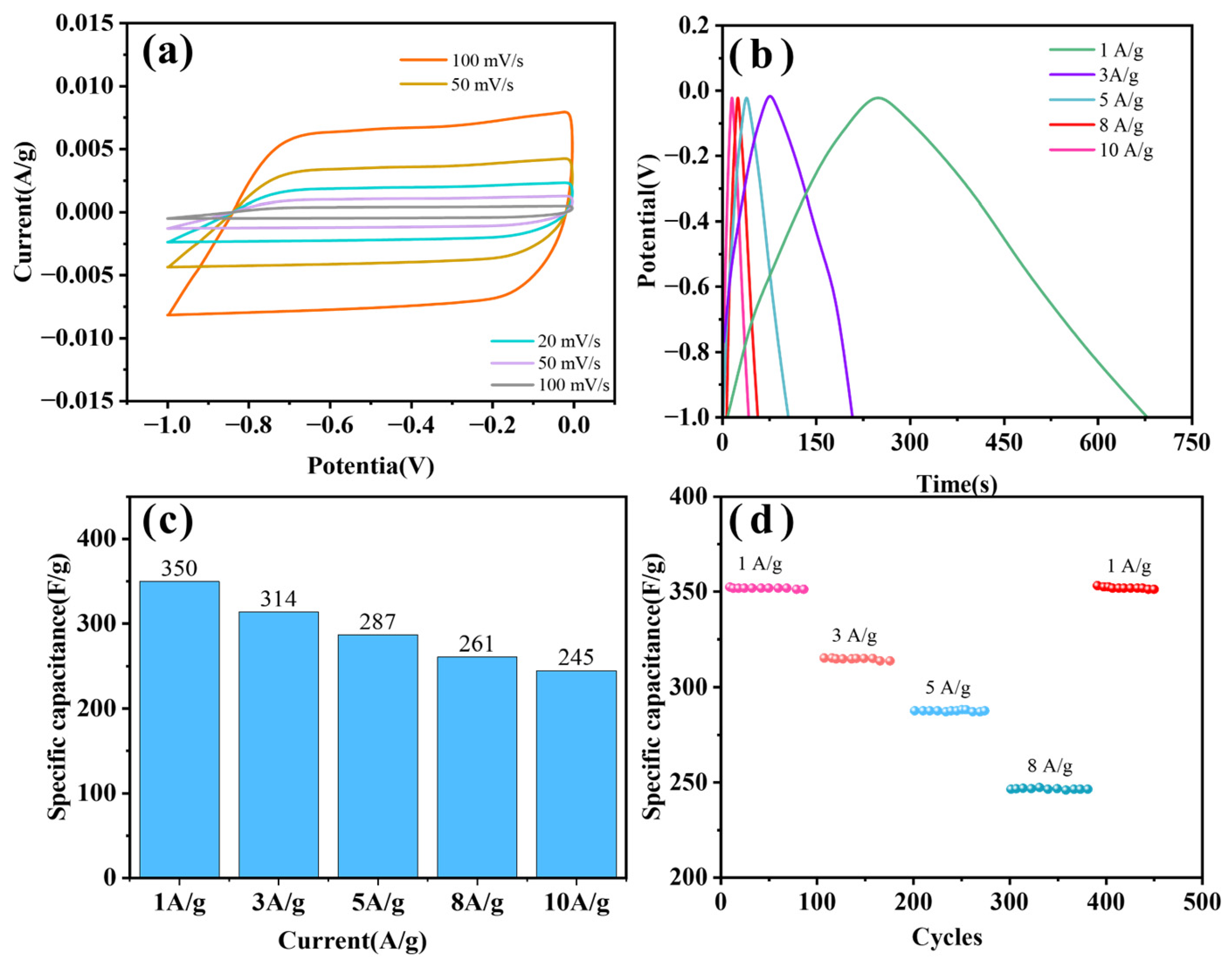
Within the potential window of −1.0 to 0 V, the CV profiles of the SSPC electrode at scan rates of 5, 10, 20, 50, and 100 mV/s all displayed a nearly rectangular shape with no discernible redox peaks (Figure 13a). This demonstrates that its charge-storage mechanism is dominated by electric double-layer capacitance, which is consistent with the typical performance traits of carbon-based supercapacitors. As the scan rate increases from 5 to 100 mV/s, the rectangular characteristics of the CV curves become slightly distorted; however, a satisfactory capacitive response is still maintained, indicating that the material retains efficient ion transport and charge-storage capability even at high scan rates. The charge–discharge curves under various current densities are all approximate isosceles triangles without distinct voltage plateaus (Figure 13b), which further verifies the dominant effect of double-layer capacitance. The variation in specific capacitance with current density is illustrated in Figure 13c. At 1 A/g, the specific capacitance reaches 350 F/g. As the current density increases sequentially to 3, 5, 8, and 10 A/g, the corresponding specific capacitances decrease to 314, 287, 261, and 245 F/g, respectively. The gradual decrease in capacitance with increasing current density is attributed to the limited penetration of electrolyte ions into the micropores under high current-density conditions, resulting in reduced utilization efficiency of electrochemically active sites. Even at a high rate of 10 A/g, SSPC still maintains a specific capacitance of 245 F/g, displaying outstanding rate performance. After 500 charge–discharge cycles at the current densities of 1, 3, 5, and 8 A/g, the specific capacitance of the SSPC electrode shows scarcely any obvious attenuation (Figure 13d). In particular, the capacitance remains at nearly 350 F/g after cycling at 1 A/g, which reflects remarkable cycling stability. This result suggests that the structure of SSPC remains stable during repeated charge–discharge processes and possesses favorable electrochemical reversibility, thereby laying a solid foundation for its application in long-lifespan energy-storage devices. In summary, the SSPC electrode material has high specific capacitance, satisfactory rate performance, and outstanding cycling stability, rendering it a highly promising option for supercapacitor electrodes, which is appropriate for energy storage scenarios that require high power density and long operational life. As summarized in Table S4, the specific capacitances of the banana peel-derived carbon and sunflower seed shell-derived carbon prepared in this study are comparable to those of most reported biomass-derived carbon materials, such as pencil-shaving-derived carbon and hazelnut-shell-derived carbon [44,45,46,47,48,49]; however, they are not superior to certain extensively optimized biomass carbon materials. This is mainly because the primary focus of this study is not solely to achieve ultrahigh specific capacitance in biomass-derived carbon materials.
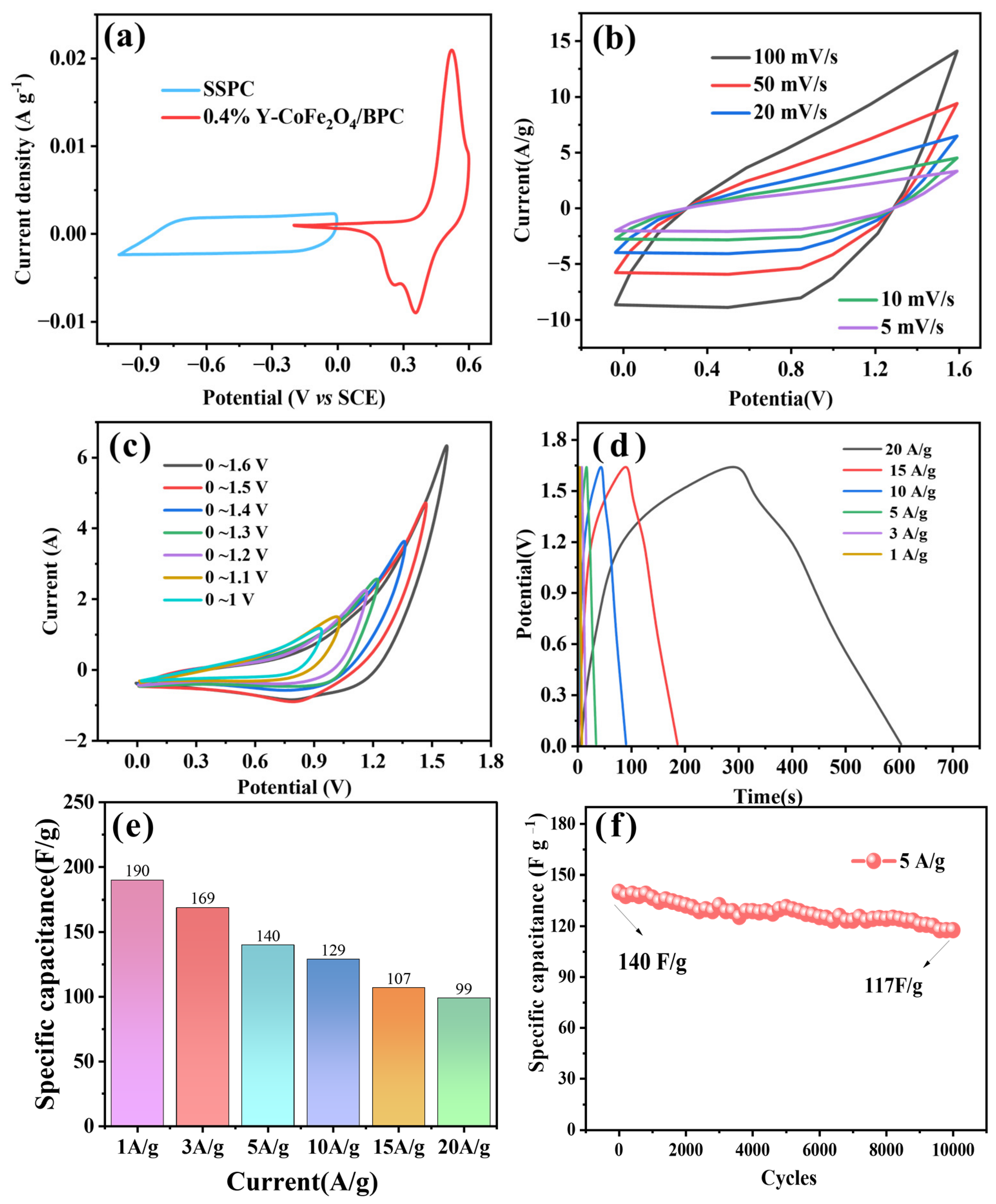
Figure 14a compares the CV curves of SSPC and 0.4% Y-CoFe2O4/BPC electrodes in the potential range of −1 to 0.6 V (vs SCE). The CV curve of the SSPC electrode presents an approximate rectangular profile without obvious redox peaks, which demonstrates that the charge storage mechanism of this electrode is governed by electric double-layer capacitance. In contrast, the 0.4% Y-CoFe2O4/BPC electrode displays distinct redox peaks originating from the Faradaic reactions of Y-CoFe2O4. This reveals that the charge storage of this electrode relies mainly on pseudocapacitance, forming a good supplement to the electric double-layer capacitance of SSPC. When the scan rates range from 5 to 100 mV/s, the CV curves for the 0.4% Y-CoFe2O4/BPC//SSPC device (Figure 14b) maintain good symmetry. The redox peaks shift slightly with increasing scan rate, which is characteristic of ion diffusion and charge-transfer behavior at high scan rates, indicating that the device can maintain a stable electrochemical response over a wide scan-rate range. Furthermore, CV tests under different potential windows (Figure 14c) show that as the potential window is expanded to 0–1.6 V, the curve has no obvious polarization or side reactions, indicating that this potential window is the optimal interval for the stable operation of the device. The GCD curves recorded at different current densities (Figure 14d) exhibit approximately symmetric triangular shapes without obvious voltage plateaus, which is consistent with the electrochemical characteristics of a device integrating electric double-layer capacitance and pseudocapacitance. The relationship between specific capacitance and current density is illustrated in Figure 14e: at 1 A/g, the specific capacitance of the device is able to reach 190 F/g; when the current density increases to 3, 5, 10, 15 and 20 A/g one by one, the specific capacitances are 169, 140, 129, 107 and 99 F/g in turn. The specific capacitance decreases gradually with the rise in current density, which is attributed to the fact that electrolyte ions are difficult to fully enter the micropores and contact the active sites of electrode materials at high current densities, reducing the efficient utilization ratio of active sites. Even at a high current density of 20 A/g, the device still maintains a specific capacitance of 99 F/g, exhibiting outstanding rate performance. At 5 A/g, the 0.4% Y-CoFe2O4/BPC//SSPC device experiences 10,000 charge–discharge cycles (Figure 14f). The test results show that the initial specific capacitance of the device is 140 F/g, and the specific capacitance after long cycles is 117 F/g, with a capacitance retention rate of about 83.6%. This verifies that the Y-CoFe2O4/BPC//SSPC device maintains excellent structural stability and favorable electrochemical reversibility in long-term cycling, which can fulfill the application requirements of long-life energy storage devices. In conclusion, the 0.4% Y-CoFe2O4/BPC//SSPC device achieves high specific capacitance, excellent rate capability, and remarkable cycling stability through the synergistic interaction between electric double-layer capacitance and pseudocapacitance, thereby providing new insights into the development of high-performance supercapacitors.
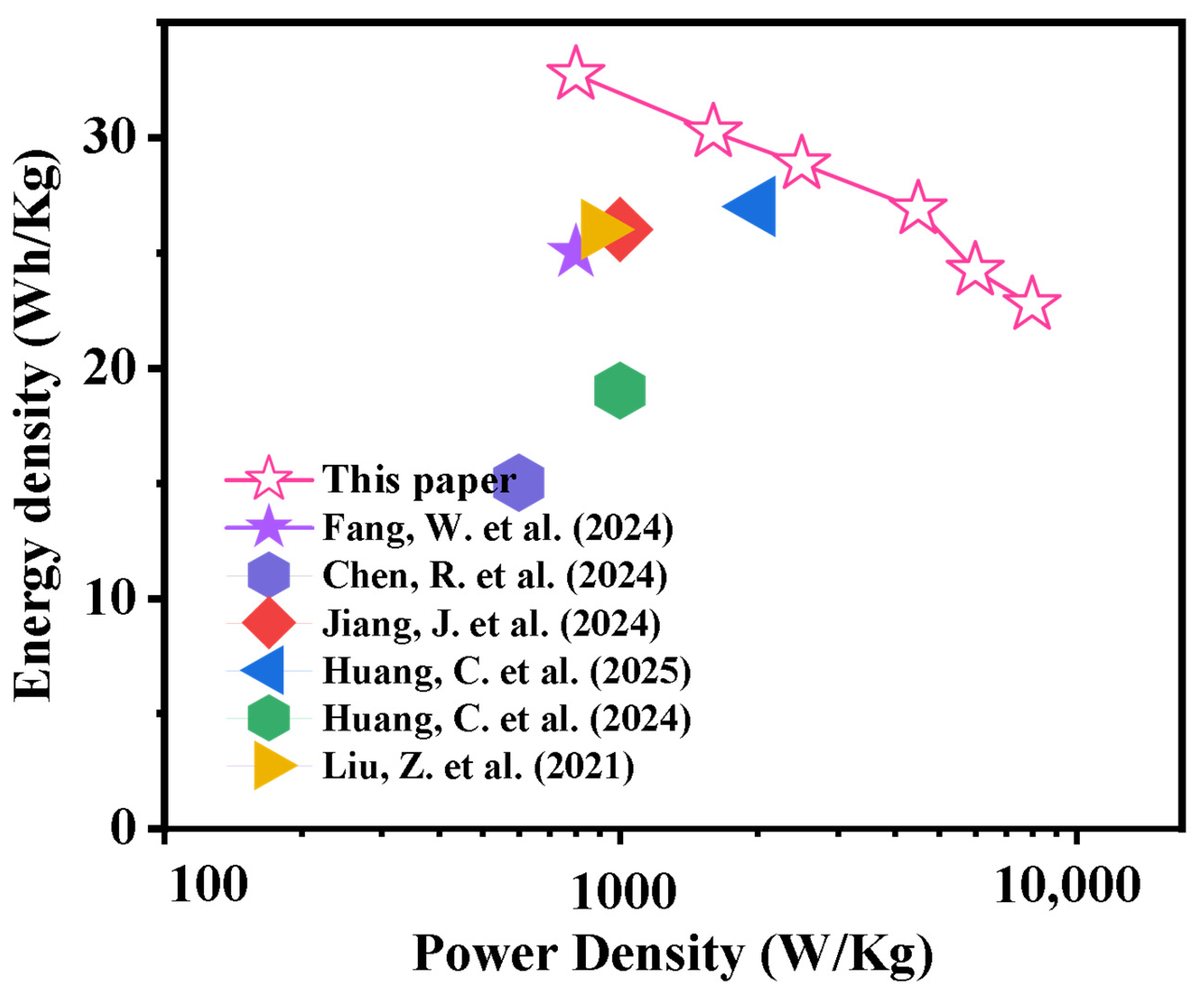
The 0.4% Y-CoFe2O4/BPC//SSPC device prepared in this study exhibits significantly enhanced electrochemical performance on the Ragone plot compared with previously reported devices (Refs. [50,51,52,53,54,55]), as shown in Figure 15. At a power density of approximately 800 W/kg, the device achieves an energy density of 33 Wh/kg. Even when the power density increases to 8000 W/kg, an energy density of 23 Wh/kg is still retained, demonstrating a well-balanced trade-off between power density and energy density. By comparison, the energy densities of the supercapacitor devices reported in the referenced literature are typically within the range of 15–28 Wh/kg, while their power densities are predominantly concentrated between 800 and 2000 W/kg. At elevated power densities, the energy density of these previously reported devices decreases much more rapidly. This result indicates that the device prepared in this study can maintain a relatively high energy-storage capability even under rapid charge–discharge conditions. The effective modification induced by 0.4% Y doping substantially enhances the overall power–energy performance of the device, thereby demonstrating its considerable potential for application in high-power-density energy-storage systems.

4. Conclusions

By combining the hydrothermal method with carbonization and activation processes, the effective doping of the Y element onto CoFe2O4 and the composite with banana peel carbon were achieved. The influence of the doping ratio on the material structure and electrochemical performance was systematically studied. The results showed that 0.4% was the optimal doping ratio. Under this condition, the 0.4% Y-CoFe2O4/BPC positive electrode had uniform particle distribution, high crystallinity, and developed multi-level pore structure, with significant improvements in specific surface area and pore volume. Electrochemical tests revealed that the cathode has a specific capacity of 1788 F/g at 1 A/g, retains 98% after 10,000 cycles at 3 A/g, and still maintains 1250 F/g at 20 A/g, demonstrating excellent rate performance. Its energy storage mechanism is the synergistic effect of diffusion control and capacitance control. Additionally, the porous carbon (SSPC) negative electrode prepared from sunflower seed shells through KOH activation has a two-dimensional wrinkled structure, with abundant mesopores and a certain degree of graphiteification. At 1 A/g, its specific capacity is 350 F/g, showing good rate performance and cycle stability. Based on the positive and negative electrode assembly of 0.4% Y-CoFe2O4/BPC//SSPC asymmetric supercapacitor, the synergistic effect of pseudocapacitance and double-layer capacitance was achieved. The working voltage window was expanded to 1.6 V. The specific capacitance was 190 F/g at 1 A/g, remained 99 F/g at 20 A/g, and maintained an 83.6% retention rate after 10,000 cycles at 5 A/g, demonstrating excellent energy density, power density, and cycle stability.

Supplementary Materials

The following supporting information can be downloaded at: https://www.mdpi.com/article/10.3390/magnetochemistry12060064/s1, Figure S1: Raman spectrum of 0.4% Y-CoFe2O4/BPC composite material; Table S1:Elemental contents of the prepared samples; Table S2: Pore textural properties of the pure CoFe2O4, CoFe2O4/BPC and 0.4%Y-CoFe2O4/BPC composites; Table S3: Fitting values of the equivalent circuit elements for BPC, CoFe2O4, CoFe2O4/BPC and 0.4% Y-CoFe2O4/BPC electrodes; Table S4: Comparison of Capacitive Properties between Published Biomass-Based Materials and Results of This Study.

Author Contributions

F.L.: writing—original draft, funding acquisition. Y.Z.: writing—reviewing and editing, supervision. B.J.: Writing—review and editing, supervision, and conceptualization. X.M.: writing—reviewing and editing, supervision, and conceptualization. All authors have read and agreed to the published version of the manuscript.

Funding

This research received no external funding.

Institutional Review Board Statement

Not applicable.

Informed Consent Statement

Not applicable.

Data Availability Statement

The data provided in this study can be obtained by contacting the corresponding author.

Acknowledgments

The authors extend gratitude to the editors and reviewers for their diligent work and valuable suggestions on this manuscript.

Conflicts of Interest

The authors declare no conflicts of interest.

References

  1. Gao, S.; Zhao, J.; Hu, Z.; Zheng, L.; Zhai, S.; Wei, L.; Li, D.; An, Q.; Xiao, Z.; Zhou, G. Three-dimensional porous carbon-supported Co/Fe bimetallic nanoparticles derived from carboxymethyl cellulose for enhanced supercapacitor electrodes. J. Alloys Compd. 2024, 1003, 175747. [Google Scholar] [CrossRef] [Scilit]
  2. Jiang, H.; Zhou, H.; Ke, Q.; Chen, P.; Wang, S.; Rao, B.; Wu, G. Rational construction of CoFe-S/rGO composites with enriched sulfur vacancies for high-performance supercapacitor. Appl. Surf. Sci. 2024, 648, 159063. [Google Scholar] [CrossRef] [Scilit]
  3. Nabi, G.; Siddiqa, A.; Tanveer, M.; Nadeem, A.; Ahmad, K.S. Manganese substitution effects on structural and electrochemical performance of CoFe2O4 for promising supercapacitor electrode materials. Inorg. Chem. Commun. 2024, 168, 112850. [Google Scholar] [CrossRef] [Scilit]
  4. Prabakaran, K.; Kavinkumar, T.; Shafi, P.M.; Shobin, L.; Mangalaraja, R.V.; Bhaviripudi, V.R.; Abarzúa, C.V.; Thirumurugan, A. Synthesis and surface engineering of carbon-modified cobalt ferrite for advanced supercapacitor electrode materials. Inorg. Chem. Commun. 2025, 171, 113534. [Google Scholar] [CrossRef] [Scilit]
  5. Asadian, E.; Hekmat, F.; Kahnamouei, M.H.; Mohammadpour, R.; Shahrokhian, S.; Sasanpour, P. Supercapacitor-powered wearable biosensor for continuous lactate monitoring from sweat. Biosens. Bioelectron. 2025, 275, 117226. [Google Scholar] [CrossRef] [Scilit]
  6. Song, T.; Liu, Z.; Zhao, X.; Li, Y.; Zhu, X.; Li, L.; Song, X.; Yan, W.; Bi, D. Synergistic Fenton–microwave pretreatment enables efficient KOH activation of walnut shells into hierarchical porous carbon for high-performance supercapacitors. Appl. Surf. Sci. 2026, 162, 166238. [Google Scholar] [CrossRef] [Scilit]
  7. Liao, Y.; Ye, Y.; Liu, R.; Luo, J.; Zhao, C. CH3COOK etching to prepare N-doped Peanut Shell microporous carbon for efficient CO2 adsorption. ACS Appl. Mater. Interfaces 2025, 17, 19189–19199. [Google Scholar] [CrossRef] [Scilit]
  8. Yin, W.; Ouyang, J.; Li, M.; Wang, Y.; Cheng, M.; Geng, Y.; Liu, Z.; Luo, J.; Cai, J.; Luo, Y. Fe/Co-doped MOF-derived nanoporous carbon in wood-based carbon electrodes for high-performance supercapacitors. J. Energy Storage 2025, 134, 118117. [Google Scholar] [CrossRef] [Scilit]
  9. Yuan, Y.; Han, C.; Fu, Y.; Ye, Z.; Shen, Q.; Feng, W.; Zhao, Y. Structural energy storage composites based on etching engineering Fe-doped Co MOF electrode toward high energy density supercapacitors. J. Power Sources 2024, 609, 234688. [Google Scholar] [CrossRef] [Scilit]
  10. Vadivel, M.; Pandian, M.S.; Ramasamy, P.; Jing, Q.; Liu, B. Facile synthesis of ternary g-C3N4/polyacrylic acid/CoFe2O4 nanocomposites for solar light irradiated photocatalytic and supercapacitor applications. J. Alloys Compd. 2024, 971, 172670. [Google Scholar] [CrossRef] [Scilit]
  11. Xu, J.; Chen, S.; Han, N.; Chen, Z.; Jing, Y.; Zhang, Y.; Bing, P. In situ design of bimetallic CoFe-MOF on carbon cloth with abundant oxygen vacancies for advanced flexible asymmetric supercapacitors with high energy density. Electrochim. Acta 2024, 507, 145141. [Google Scholar] [CrossRef] [Scilit]
  12. Daboin Lujano, V.B.; Bercoff, P.G.; Riva, J.S. Magnetic-Field-Enhanced Oxygen Evolution in Yttrium-Doped CoFe2O4 Langmuir–Blodgett Nanofilms. ACS Appl. Energy Mater. 2026, 9, 3069–3082. [Google Scholar] [CrossRef] [Scilit]
  13. Nikmanesh, H.; Jaberolansar, E.; Kameli, P.; Varzaneh, A.G.; Mehrabi, M.; Rostami, M. Structural and magnetic properties of CoFe2O4 ferrite nanoparticles doped by gadolinium. Nanotechnology 2022, 33, 045704. [Google Scholar] [CrossRef] [Scilit] [PubMed]
  14. Nabi, G.; Ali, W.; Majid, A.; Alharbi, T.; Saeed, S.; Albedah, M. Controlled growth of Bi-Functional La doped CeO2 nanorods for photocatalytic H2 production and supercapacitor applications. Int. J. Hydrogen Energy 2022, 47, 15480–15490. [Google Scholar] [CrossRef] [Scilit]
  15. Alanazi, M.M.; Abdelmohsen, S.A.M.; Sulayem, L.M.; Aman, S.; Farid, H.; Waheed, M. Electrochemical enhancement of BaMnO3 perovskites using Sm doping for supercapacitor applications. Ceram. Int. 2025, 51, 17945–17954. [Google Scholar] [CrossRef] [Scilit]
  16. Raza, T.; Arshad, M.; Batool, Z.; Ahmad, M.; Murtaza, I.; Ali, A.; Raza, M.A.; Zaheer, H.; Kousar, R. High capacitive rare-earth co-doped transition metal/graphene oxide composites as effective electrode material for supercapacitors. J. Rare Earths 2025, 43, 1909–1919. [Google Scholar] [CrossRef] [Scilit]
  17. Hasnalkar, K.P.; Mehere, A.C.; Chavan, S.V.; Baburao, B.R.; Kakade, P.M.; Mandlik, N.T.; Rathod, S.M. Enhanced electrochemical performance of Tb3+ ions doped cobalt nanoferrite electrodes for supercapacitor application. J. Alloys Compd. 2025, 1037, 182202. [Google Scholar] [CrossRef] [Scilit]
  18. Kumar, K.S.; Ghanem, M.A.; Reddy, L.; Roy, N.; Joo, S.W. Comprehensive characterization of Co/Cr, Fe/Cr, and Mg/Cr-codoped ZnO nanoparticles by solution combustion method for improved battery-type supercapacitor performance. Ceram. Int. 2025, 51, 8634–8646. [Google Scholar] [CrossRef] [Scilit]
  19. Liu, X.Y.; Zhao, X.M.; Ma, D.M.; Xiang, J.; Zhao, R.-D.; Yao, J.-F.; Li, Y.-F.; Zhang, S.-B. Nanoengineering of CoFe-LDH@Ni(OH)2 for supercapacitor and water splitting applications. J. Mater. Sci. 2024, 59, 14295–14312. [Google Scholar] [CrossRef] [Scilit]
  20. Ji, Y.; Li, W.; You, Y.; Xu, G. In situ synthesis of M (Fe, Cu, Co and Ni)-MOF@ MXene composites for enhanced specific capacitance and cyclic stability in supercapacitor electrodes. Chem. Eng. J. 2024, 496, 154009. [Google Scholar] [CrossRef] [Scilit]
  21. Mohammadi Zardkhoshoui, A.; Rahmati Rostami, G.; Hosseiny Davarani, S.S. Advanced supercapacitor electrodes: Trimetallic Co–Mn–Fe selenide nanoflowers encased in reduced graphene oxide. Energy Fuels 2024, 38, 21498–21509. [Google Scholar] [CrossRef] [Scilit]
  22. Seenivasan, S.; Adhikari, S.; Sivagurunathan, A.T.; Kim, D.-H. Supercapatteries: Unlocking the potential of battery-supercapacitor fusion. Energy Environ. Sci. 2025, 18, 1054–1095. [Google Scholar] [CrossRef] [Scilit]
  23. Kumar, K.S.; Goud, J.P.; Roy, N.; Su, K.J.; Joo, S.W. In-situ synthesis of SnO2/CoFe2O4/Fe3O4 nanograss array composite: A redox-active electrode material for battery-type supercapacitors. Ceram. Int. 2024, 50, 20535–20546. [Google Scholar] [CrossRef] [Scilit]
  24. Uppugalla, S.; Srinivasan, P. Polyaniline nanofibers and porous Ni[OH]2 sheets coated carbon fabric for high performance super capacitor. J. Appl. Polym. Sci. 2019, 136, 48042. [Google Scholar] [CrossRef] [Scilit]
  25. Sukanya, R.; Hasan, M.; Karthik, R.; Kumar, D.R.; Kamaraj, E.; Milton, A.; Breslin, C.; Lee, J.; Shim, J.-J. In situ decoration of 0D-nickel boride on 2D-vanadium MXene composites: An advanced electrode material for high energy density supercapacitors. Chem. Eng. J. 2024, 497, 154928. [Google Scholar] [CrossRef] [Scilit]
  26. Wang, D.; Han, X.; Zhang, X. Achieving high-capacity aqueous calcium-ion storage in amorphous manganese oxide nanospheres for calcium-ion asymmetric supercapacitors. J. Power Sources 2024, 599, 234215. [Google Scholar] [CrossRef] [Scilit]
  27. Zhou, X.; Li, X.; Chen, D.; Zhao, D.; Huang, X. Ultrathin CoFe-layered double hydroxide nanosheets embedded in high conductance Cu3N nanowire arrays with a 3D core–shell architecture for ultrahigh capacitance supercapacitors. J. Mater. Chem. A 2018, 6, 24603–24613. [Google Scholar] [CrossRef] [Scilit]
  28. Hu, W.; Chen, L.; Wu, X.; Du, M.; Song, Y.; Wu, Z.; Zheng, Q. Slight zinc doping by an ultrafast electrodeposition process boosts the cycling performance of layered double hydroxides for ultralong-life-span supercapacitors. ACS Appl. Mater. Interfaces 2021, 13, 38346–38357. [Google Scholar] [CrossRef] [Scilit]
  29. Zhang, Q.; Liu, Z.; Zhao, B.; Cheng, Y.; Zhang, L.; Wu, H.-H.; Wang, M.-S.; Dai, S.; Zhang, K.; Ding, D.; et al. Design and understanding of dendritic mixed-metal hydroxide nanosheets@ N-doped carbon nanotube array electrode for high-performance asymmetric supercapacitors. Energy Storage Mater. 2019, 16, 632–645. [Google Scholar] [CrossRef] [Scilit]
  30. Xie, M.; Duan, S.; Shen, Y.; Fang, K.; Wang, Y.; Lin, M.; Guo, X. In-situ-grown Mg (OH)2-derived hybrid α-Ni (OH)2 for highly stable supercapacitor. ACS Energy Lett. 2016, 1, 814–819. [Google Scholar] [CrossRef] [Scilit]
  31. Yao, Y.; Li, H.; Yu, Y.; Du, C.; Wan, L.; Ye, H.; Chen, J.; Zhang, Y.; Xie, M. Stabilizing microstructure of Co-Ni layered double hydroxides by magnesium doping and confinement in carbonaceous mesopores for ultrahighly-stable asymmetric supercapacitor. J. Energy Storage 2023, 59, 106422. [Google Scholar] [CrossRef] [Scilit]
  32. Li, M.; Addad, A.; Dolci, M.; Roussel, P.; Naushad, M.; Szunerits, S.; Boukherroub, R. NiMnCr layered double hydroxide-carbon spheres modified Ni foam: An efficient positive electrode for hybrid supercapacitors. Chem. Eng. J. 2020, 396, 125370. [Google Scholar] [CrossRef] [Scilit]
  33. Sun, X.; Wu, S.; Wang, J.; Yang, J.; Tian, S.; Hu, Q.; Chang, L.; Wang, Z.; Sun, Y.; Wang, Y.; et al. Hierarchical structural design of cobalt sulphide nanoparticles/nickel sulphide for high-performance supercapacitors. Chem. Eng. J. 2024, 500, 157393. [Google Scholar] [CrossRef] [Scilit]
  34. Sun, L.; Liu, Y.; Yan, M.; Yang, Q.; Liu, X.; Shi, W. Lewis acid etched NixCo1-xSe2 derived from ZIF-L on CoO nanowires for hybrid-supercapacitors. Chem. Eng. J. 2022, 431, 133472. [Google Scholar] [CrossRef] [Scilit]
  35. Xia, A.; Chen, J.; Li, J.; Yu, B.; Tan, G. Sm-doping and carbon aerogel synergistically improve the electrochemical properties of δ-MnO2 as supercapacitor electrodes. J. Energy Storage 2025, 113, 115658. [Google Scholar] [CrossRef] [Scilit]
  36. Zhao, J.; Zhou, C.; Guo, Y.; Shen, Z.; Luo, G.; Wu, Q.; Yang, L.; Wang, X.; Hu, Z. Balancing loading mass and gravimetric capacitance of NiCo− layered double hydroxides to achieve ultrahigh areal performance for flexible supercapacitors. Adv. Powder Mater. 2024, 3, 100151. [Google Scholar] [CrossRef] [Scilit]
  37. Wang, Y.; Xu, F.; Sun, L.; Fang, S.; Lao, J.; Zhang, C.; Wei, S.; Liao, L.; Guan, Y.; Xia, Y.; et al. Controllable preparation of nickel cobalt manganese ternary metal-organic frameworks for high-performance supercapacitor. J. Energy Storage 2023, 58, 106395. [Google Scholar] [CrossRef] [Scilit]
  38. Yu, J.; Su, H.; Shi, C.; Qiu, G.; Bai, L.; Li, Z. Ni0.85Se anchored on N-doped MoSe2 hybrids for long-life asymmetric supercapacitors. Electrochim. Acta 2023, 471, 143392. [Google Scholar] [CrossRef] [Scilit]
  39. Devillers, N.; Jemei, S.; Péra, M.C.; Bienaimé, D.; Gustin, F. Review of characterization methods for supercapacitor modelling. J. Power Sources 2014, 246, 596–608. [Google Scholar] [CrossRef] [Scilit]
  40. Banerjee, S.; Mordina, B.; Sinha, P.; Kar, K.K. Recent advancement of supercapacitors: A current era of supercapacitor devices through the development of electrical double layer, pseudo and their hybrid supercapacitor electrodes. J. Energy Storage 2025, 108, 115075. [Google Scholar] [CrossRef] [Scilit]
  41. Ramesh, R. Review of battery-supercapacitor hybrid energy storage systems for electric vehicles. Results Eng. 2024, 24, 103598. [Google Scholar] [CrossRef] [Scilit]
  42. Wang, Y.; Xu, T.; Liu, K.; Zhang, M.; Cai, X.; Si, C. Biomass-based materials for advanced supercapacitor: Principles, progress, and perspectives. Aggregate 2024, 5, E428. [Google Scholar] [CrossRef] [Scilit]
  43. Abdelhaleem, S.; Shalaby, M.S.; Hashem, H.M.; Yousif, N.M. Facile Synthesis and Characterization of Perovskite-Type Nd1−xCaxMnO3 Nanocomposites for High-Performance Supercapacitor Electrodes. J. Electron. Mater. 2025, 54, 3789–3800. [Google Scholar] [CrossRef] [Scilit]
  44. Li, Z.; Chen, D.; An, Y.; Chen, C.; Wu, L.; Chen, Z.; Sun, Y.; Zhang, X. Flexible and anti-freezing quasi-solid-state zinc ion hybrid supercapacitors based on pencil shavings derived porous carbon. Energy Storage Mater. 2020, 28, 307–314. [Google Scholar] [CrossRef] [Scilit]
  45. Reddygunta, K.K.R.; Callander, A.; Šiller, L.; Faulds, K.; Berlouis, L.; Ivaturi, A. Sono-exfoliated graphene-like activated carbon from hazelnut shells for flexible supercapacitors. Int. J. Energy Res. 2022, 46, 16512–16537. [Google Scholar] [CrossRef] [Scilit]
  46. Reddygunta, K.K.R.; Šiller, L.; Ivaturi, A. Sheet-like ZnCo2O4 microspheres and pomelo peel waste-derived activated carbon for high performance solid state asymmetric supercapacitors. Sustain. Energy Fuels 2024, 8, 2751–2761. [Google Scholar] [CrossRef] [Scilit]
  47. Li, Z.; Mi, H.; Bai, Z.; Ji, C.; Sun, L.; Gao, S.; Qiu, J. Sustainable biowaste strategy to fabricate dual-doped carbon frameworks with remarkable performance for flexible solid-state supercapacitors. J. Power Sources 2019, 418, 112–121. [Google Scholar] [CrossRef] [Scilit]
  48. Li, Z.; Gao, S.; Mi, H.; Lei, C.; Ji, C.; Xie, Z.; Yu, C.; Qiu, J. High-energy quasi-solid-state supercapacitors enabled by carbon nanofoam from biowaste and high-voltage inorganic gel electrolyte. Carbon 2019, 149, 273–280. [Google Scholar] [CrossRef] [Scilit]
  49. Reddygunta, K.K.R.; Šiller, L.; Ivaturi, A. Corn husk derived activated carbon/siloxene composite electrodes based symmetric supercapacitor with high energy density and wide temperature tolerance. ChemElectroChem 2024, 11, E202400230. [Google Scholar] [CrossRef] [Scilit]
  50. Fang, W.; Shen, Y.; Bai, M.; Zhong, X.; Hu, X. Construction of Co3O4@NiMoO4 core-shell structure for high-current density photo-assisted lithium-oxygen battery. Appl. Surf. Sci. 2024, 681, 161551. [Google Scholar] [CrossRef] [Scilit]
  51. Chen, R.; Yu, J.; Xiong, T.; Song, Y.; Jin, G.; Wang, Y.; Liu, C.; Xu, L. 3D layered MgCo2O4@CoMoO4 porous nanomaterial arrays grown on nickel foams: Preparation and application as high-performance electrodes for supercapacitor. J. Alloys Compd. 2024, 988, 174269. [Google Scholar] [CrossRef] [Scilit]
  52. Jiang, J.; Zhou, W.; Li, W.; Huang, Z.; Zhang, M.; Jin, J.; Xie, J. Construction of electron-interactive CoMoO4@CoP core–shell structure on boron-doped graphene aerogel as strongly interface coupled hybrid electrodes for high flexible supercapacitor. Chem. Eng. J. 2024, 496, 154123. [Google Scholar] [CrossRef] [Scilit]
  53. Huang, C.; Jiang, Z.; Meng, D.; Li, X.; Zeng, J.; Wu, X.; Liu, M.; Song, K.; Liu, F.; Wei, A.; et al. Cobalt substitution-induced π-donation in NiMoO4 for enhanced electrochemical charge storage. J. Colloid Interface Sci. 2025, 677, 194–204. [Google Scholar] [CrossRef] [Scilit] [PubMed]
  54. Huang, C.; Li, X.; Jiang, Z.; Meng, D.; Wang, Y.; Liu, M.; Zhou, X.; Liu, F.; Xu, B.; Zou, X.; et al. Dual polarization in CoMoO4-NiMoO4 heterojunction boosted electrochemical charge storage. Acta Mater. 2024, 281, 120419. [Google Scholar] [CrossRef] [Scilit]
  55. Liu, Z.; Qiu, Y.; Zhang, A.; Yang, W.; Barrow, C.J.; Razal, J.M.; Liu, J. In situ embedding of cobalt sulfide quantum dots among transition metal layered double hydroxides for high performance all-solid-state asymmetric supercapacitors. J. Mater. Chem. A 2021, 9, 22573–22584. [Google Scholar] [CrossRef] [Scilit]
Figure 1. Schematic diagram of the preparation process of Y-CoFe2O4/BPC.
Magnetochemistry 12 00064 g001
Figure 2. SEM: (a) BPC; (b) CoFe2O4; (c) CoFe2O4/BPC; (d) 0.4% Y-CoFe2O4/BPC.
Magnetochemistry 12 00064 g002
Figure 3. (a) TEM image of 0.4% Y-CoFe2O4/BPC; (b) High-magnification TEM image of 0.4% Y-CoFe2O4/BPC; (c) Distribution maps of Fe, Co, O, Y, and C elements.
Magnetochemistry 12 00064 g003
Figure 4. XRD patterns of CoFe2O4, CoFe2O4/BPC, and 0.4% Y-CoFe2O4/BPC.
Magnetochemistry 12 00064 g004
Figure 5. XPS Spectrum: (a) Full Spectrum; (b) Co 2p; (c) O 1s; (d) Y3d; (e) C 1s; (f) Fe 2p.
Magnetochemistry 12 00064 g005
Figure 6. (a,b) N2 adsorption–desorption isotherms and corresponding pore size distributions: BPC, CoFe2O4, CoFe2O4/BPC, and 0.4% Y-CoFe2O4/BPC.
Magnetochemistry 12 00064 g006
Figure 7. (a) CV curves of BPC, CoFe2O4, CoFe2O4/BPC and 0.4% Y-CoFe2O4/BPC at a sweep rate of 5 mV/s; (b) Charge and discharge curves of CoFe2O4, BPC, CoFe2O4/BPC and 0.4% Y-CoFe2O4/BPC at an current density of 1 A/g; (c) Specific capacitances of each material; (d) Nyquist plots of CoFe2O4 BPC, CoFe2O4/BPC and 0.4% Y-CoFe2O4/BPC electrodes.
Magnetochemistry 12 00064 g007
Figure 8. (a) CV profiles of 0.4% Y-CoFe2O4/BPC electrode at various scan rates; (b) GCD profiles of the as-prepared 0.4% Y-CoFe2O4/BPC at different current densities; (c) Specific capacitance retention behavior at diverse current densities; (d) Cycling performance of 0.4% Y-CoFe2O4/BPC electrode after 10,000 consecutive cycles; (e) EIS spectra before and after cycling; (f) Cycling stability of 0.4% Y-CoFe2O4/BPC at varying current densities.
Magnetochemistry 12 00064 g008
Figure 9. (a) Graph showing the linear relationship between the logarithm of the oxidation peak current and the logarithm of the sweep rate; (b) Relationship between the peak currents of the oxidation peak and the reduction peak and the square root of the sweep rate; (c) At a sweep rate of 30 mV/s, the proportion of diffusion control contribution and capacitance control contribution; (d) Proportion of diffusion control and capacitance control contributions at different sweep rates.
Magnetochemistry 12 00064 g009
Figure 10. (a,b) show the SEM characterization results of SSPC; (c) shows the TEM characterization result of SSPC; (d) is the high-magnification TEM image of SSPC.
Magnetochemistry 12 00064 g010
Figure 11. XRD analysis diagram of SSPC.
Magnetochemistry 12 00064 g011
Figure 12. High-resolution XPS spectrum: (a) Full spectrum; (b) O 1s; (c) C 1s.
Magnetochemistry 12 00064 g012
Figure 13. (a) CV curves of SSPC at different scanning rates; (b) charge–discharge curves of SSPC at different current densities; (c) capacity vs. current density plot of SSPC; (d) cycling stability curve of SSPC at different current densities.
Magnetochemistry 12 00064 g013
Figure 14. (a) CV curves of 0.4% Y-CoFe2O4/BPC electrode and SSPC; (b) CV curves of 0.4% Y-CoFe2O4/BPC electrode and SSPC under different scan rates; (c) CV curves of 0.4% Y-CoFe2O4/BPC//SSPC at different potentials; (d) GCD curves of 0.4% Y-CoFe2O4/BPC//SSPC at different current densities; (e) Capacity vs. scan rate diagram of 0.4% Y-CoFe2O4/BPC//SSPC; (f) Cycling energy storage of 5 A/g Y-CoFe2O4/BPC device.
Magnetochemistry 12 00064 g014
Figure 15. Displays the Ragone plot illustrating the relationship between power density and energy density of the 0.4% Y-CoFe2O4/BPC//SSPC device, in comparison with other representative energy storage devices [50,51,52,53,54,55].
Magnetochemistry 12 00064 g015
Table 1. Comparison of capacitive performances between recently reported metallic compound-based materials and this work.
MaterialsSpecific CapacitanceRate Capability: RetentionCycle Stability: RetentionMass Loading [mg/cm2]References
NiCoAl-LDH@CC1137 F/g58% (20 A/g)97% (10,000 cycles)1.5[29]
NiCoMg-LDH800 F/g61% (20 A/g)85% (30,000 cycles)[30]
Mg-NiCo-LDH@NF1931 F/g77% (20 A/g)95% (10,000 cycles)2.3[31]
NiCoZn-LDH@C1928 F/g73% (50 A/g)96% (10,000 cycles)1.8[32]
NiCoZn-LDH@PANI1749 F/g62% (20 A/g)89% (40,000 cycles)1.6[33]
NiMnCr-LDH@CS569 C/g73% (20 A/g)76% (10,000 cycles)[34]
This work1788 F/g71% (15 A/g)100% (10,000 cycles)1.9This Paper
Disclaimer/Publisher’s Note: The statements, opinions and data contained in all publications are solely those of the individual author(s) and contributor(s) and not of MDPI and/or the editor(s). MDPI and/or the editor(s) disclaim responsibility for any injury to people or property resulting from any ideas, methods, instructions or products referred to in the content.