Article

Preliminary Assessment of Four Wild Leafy Species to Be Used as Baby Salads

Department of Agriculture, Food, Environment and Forestry (DAGRI), University of Florence Piazzale delle Cascine 18, 50144 Firenze, Italy
*
Author to whom correspondence should be addressed.
Horticulturae 2023, 9(6), 650; https://doi.org/10.3390/horticulturae9060650

Submission received: 16 May 2023 / Revised: 26 May 2023 / Accepted: 29 May 2023 / Published: 1 June 2023

Abstract

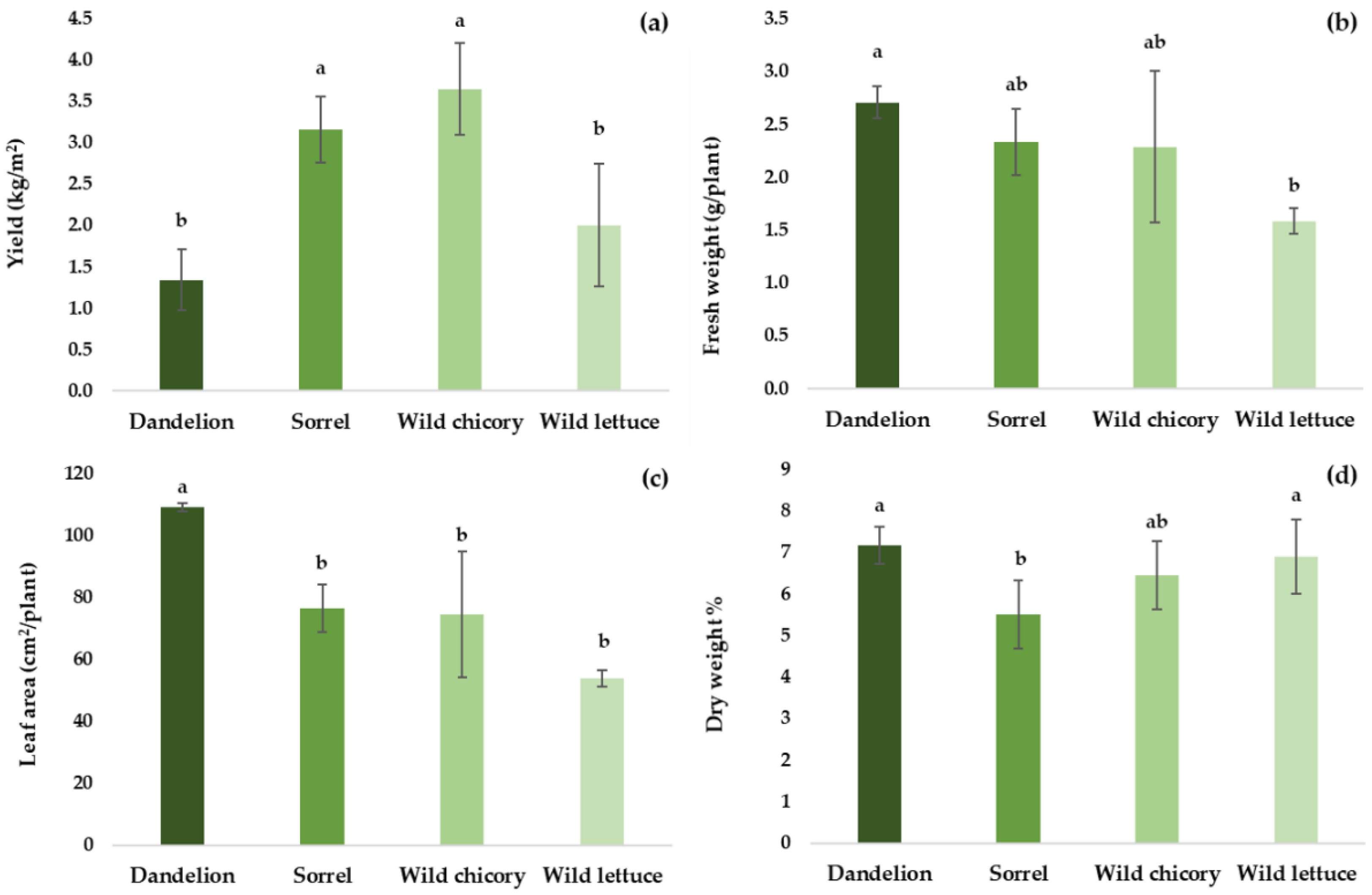
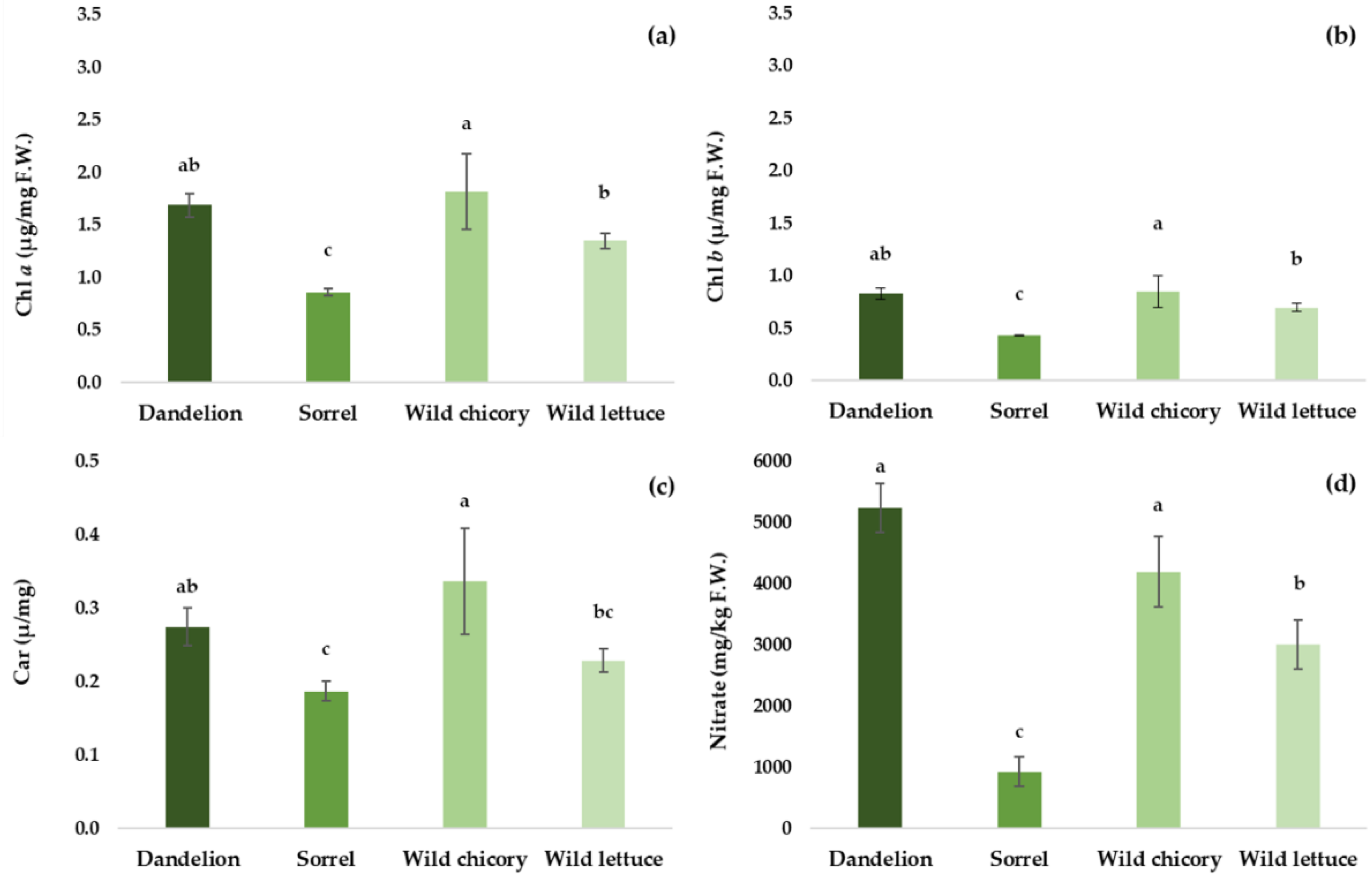
Wild edible leafy plants, thanks to their organoleptic characteristics and nutritional value that can make them be appreciated as salads by consumers, represent a good opportunity for growers and the fresh-cut industry, which are always looking for new crops to expand the number of products they offer. In this study, four wild species (dandelion, sorrel, wild chicory, and wild lettuce) were cultivated hydroponically up to the baby leaf stage in order to evaluate them as potential crops. At harvest, yield and antioxidant compounds, minerals, and nitrates content were assessed. The contribution to human mineral intake and the possible health risk associated with heavy metals were investigated. A characterization of the sensory profile was also carried out. Yield and chlorophylls and carotenoids content of the investigated species were comparable to those of common leafy vegetables. Variability in nitrate content was observed, with the lowest value in sorrel and the highest in dandelion. All species could contribute in Cr, Mg, and Se intake, and health risks due to heavy metals were excluded. Each species was well characterized by distinctive and peculiar sensory notes. In conclusion, the results of this preliminary study suggest that the four wild investigated species may be promising for baby leaf production.
Keywords: Taraxacum campylodes G.E.Haglund; Rumex acetosa L.; Cichorium intybus L.; Lactuca serriola L.; leafy vegetables; yield and quality; nitrate; dietary intake; health risk; sensory profile Taraxacum campylodes G.E.Haglund; Rumex acetosa L.; Cichorium intybus L.; Lactuca serriola L.; leafy vegetables; yield and quality; nitrate; dietary intake; health risk; sensory profile