Article

Effect of Seawater Irrigation on the Sugars, Organic Acids, and Volatiles in ‘Reliance’ Grape
1
State Key Laboratory of Crop Biology, Collaborative Innovation Center of Fruit and Vegetable Quality and Efficient Production, College of Horticulture Science and Engineering, Shandong Agricultural University, Tai’an 271018, China
2
Department of viticulture, Yantai Agricultural Science Academy, Yantai 264003, China
*
Authors to whom correspondence should be addressed.
Horticulturae 2022, 8(3), 248; https://doi.org/10.3390/horticulturae8030248

Submission received: 14 February 2022 / Revised: 6 March 2022 / Accepted: 11 March 2022 / Published: 15 March 2022
(This article belongs to the Special Issue Viticulture under Constantly Changing Climate Conditions)

Abstract

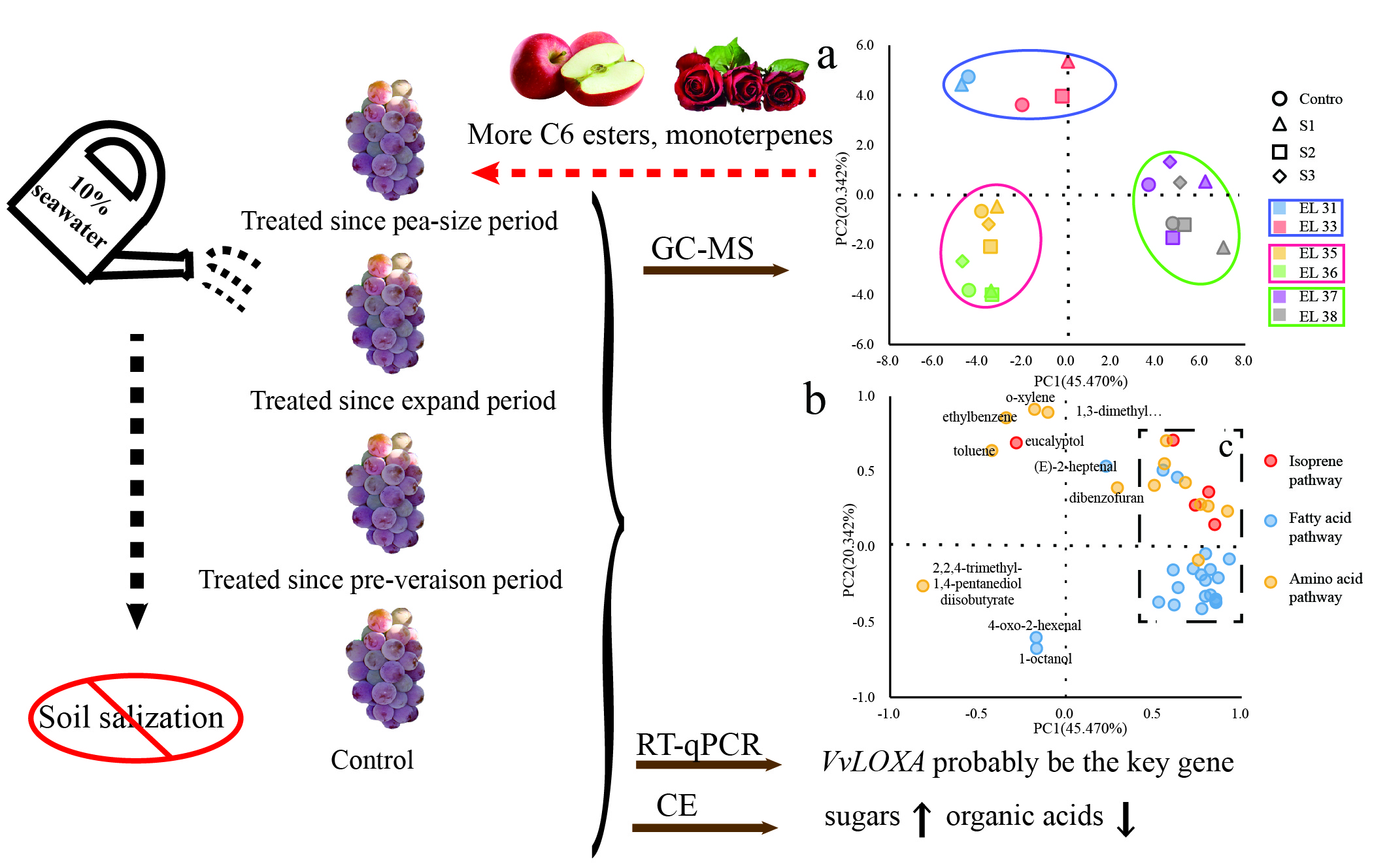
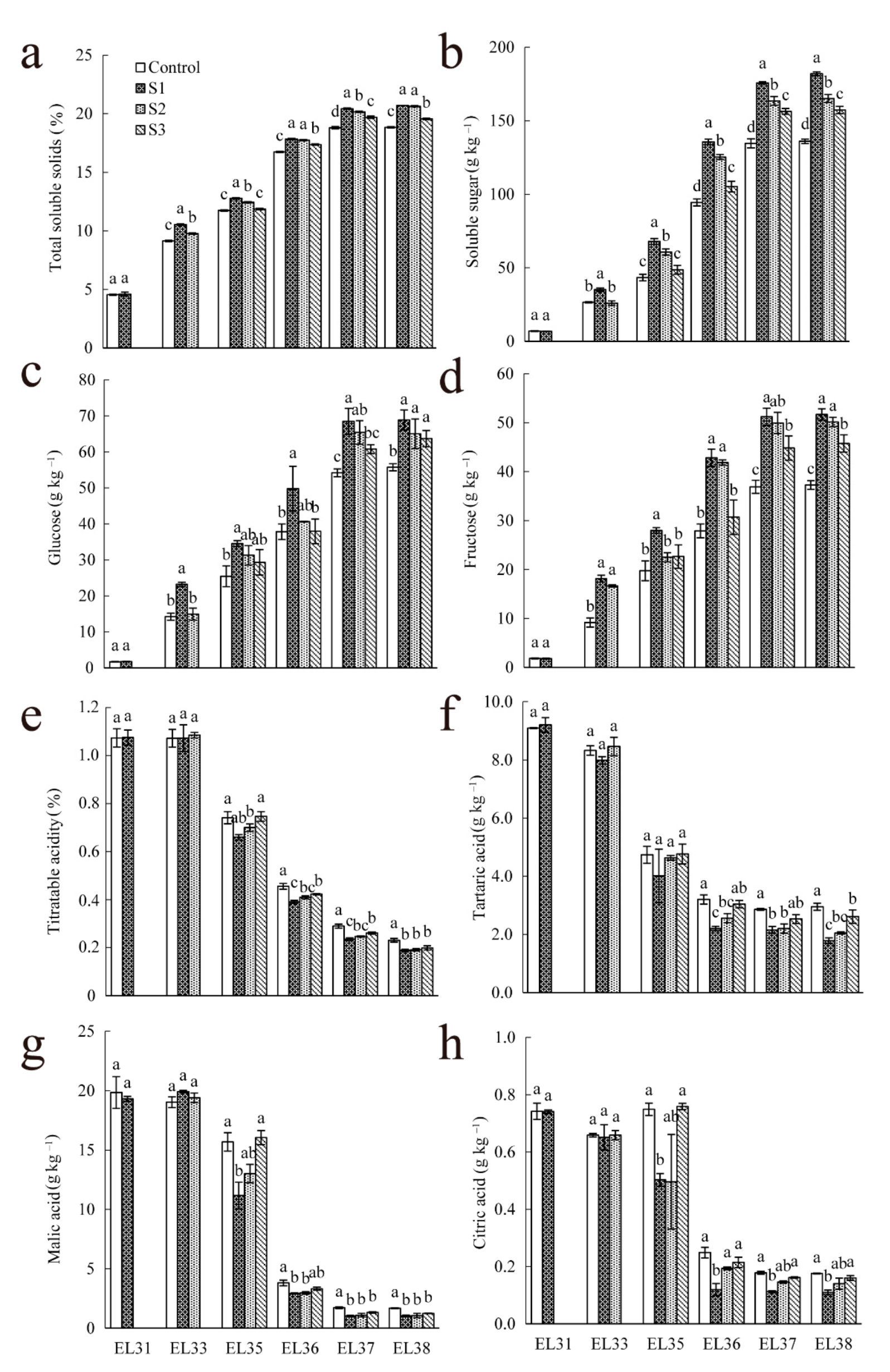
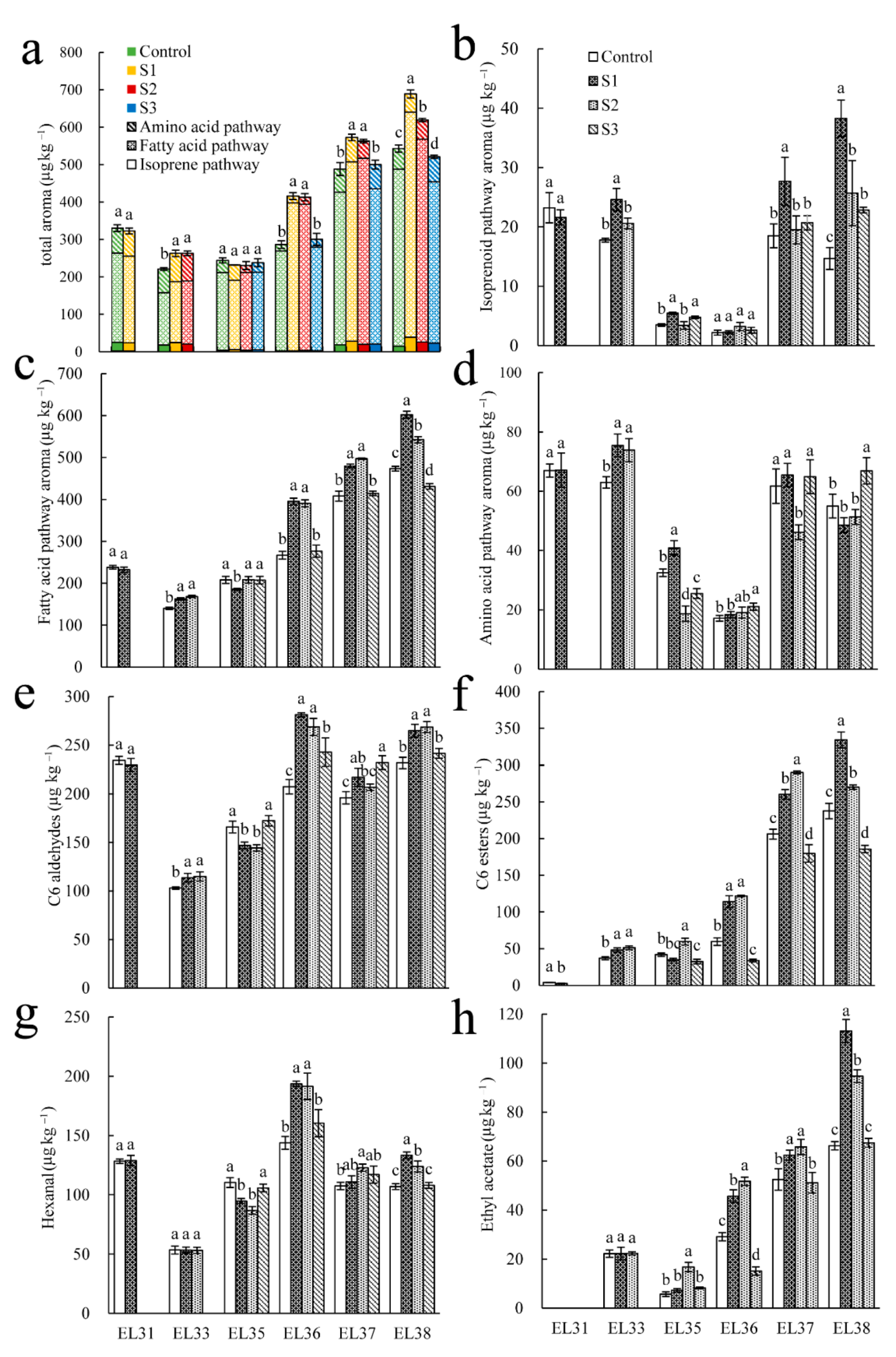
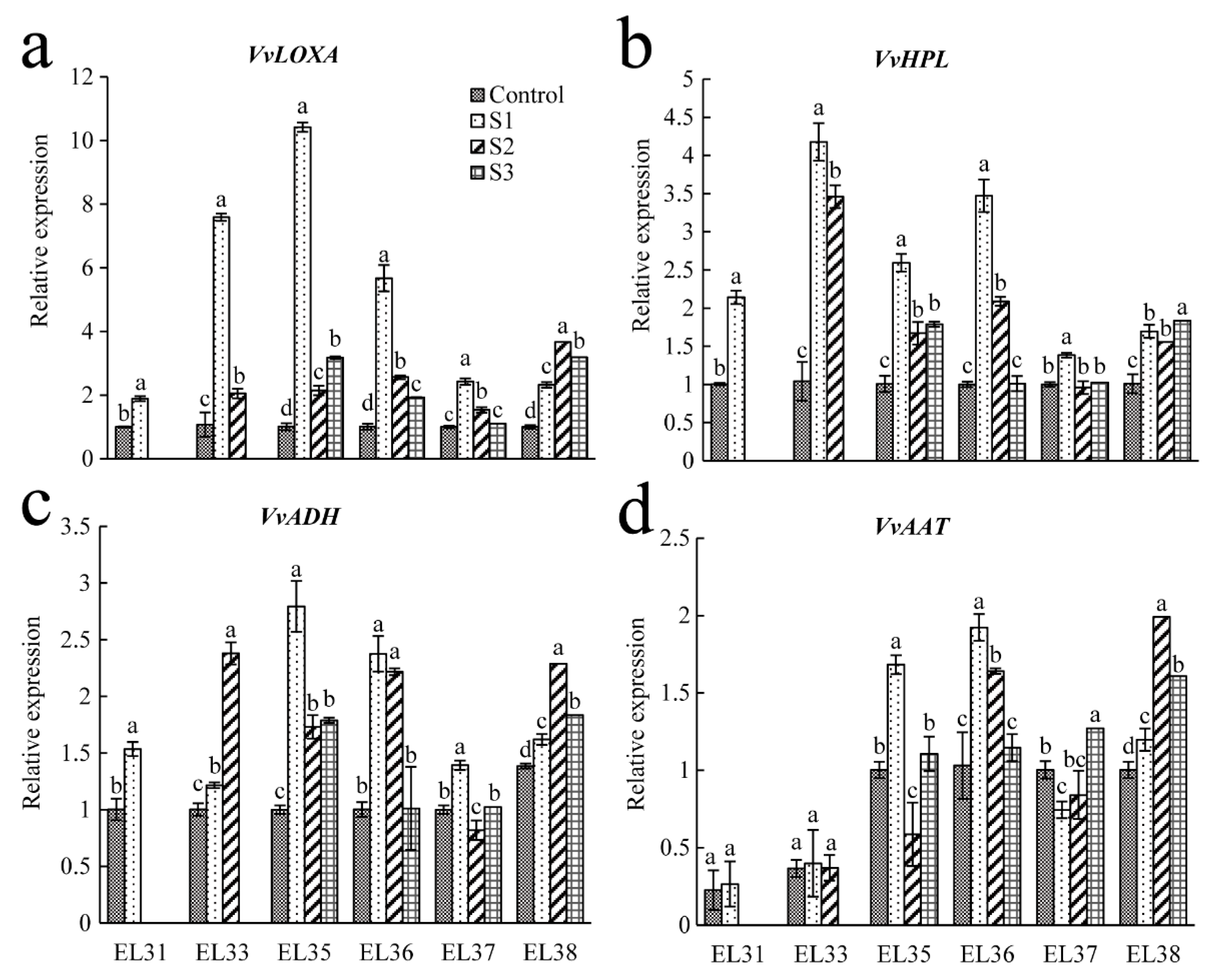
Ongoing climate change in recent decades exacerbated the decline in agricultural water use, and seawater irrigation could feasibly alleviate the shortage of water resources, which restricts viticulture in some countries. However, studies on the effects of seawater irrigation on grape volatiles are limited. Herein, ‘Reliance’ grapevines were irrigated with diluted seawater (10% concentrations) in the field since the pea-size berry stage (S1), stage EL 32 (S2), and the pre-veraison period (S3) every seven days. Results showed irrigation with seawater significantly increased the sugar content and decreased the organic acids when compared with the control berries. Seawater irrigation did not induce secondary soil salinization, and it enhanced the volatiles in the fatty acid and isoprene pathways without affecting the amino acid pathway aroma. More terpenes were found in seawater-treated berries, including citronellol, β-myrcene, α-terpineol, and trans-rose oxide. Gene profiling by RT-qPCR analysis revealed that VvLOXA could be the primary gene in C6 volatile biosynthesis altered by the seawater. Moreover, seawater irrigation during the pea-size period had the best effect on fruit quality. This work adds to our understanding of the effect of seawater irrigation on grape aroma quality and provides a sufficient basis for the utilization of seawater in vineyards.
Keywords: irrigation; volatile composition; soil irrigation; volatile composition; soil
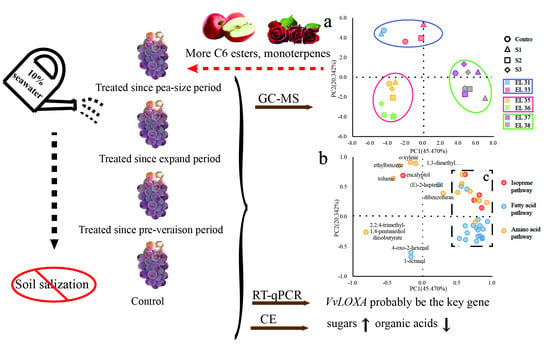
Graphical Abstract