Article

The Differential Response of Intracellular Water Metabolism Derived from Intrinsic Electrophysiological Information in Morus alba L. and Broussonetia papyrifera (L.) Vent. Subjected to Water Shortage

1
Key Laboratory of Modern Agricultural Equipment and Technology, Ministry of Education, Institute of Agricultural Engineering, Jiangsu University, Zhenjiang 212013, China
2
Research Center for Environmental Bio-Science and Technology, State Key Laboratory of Environmental Geochemistry, Institute of Geochemistry, Chinese Academy of Sciences, Guiyang 550081, China
*
Author to whom correspondence should be addressed.
Horticulturae 2022, 8(2), 182; https://doi.org/10.3390/horticulturae8020182

Submission received: 26 December 2021 / Revised: 11 February 2022 / Accepted: 18 February 2022 / Published: 21 February 2022
(This article belongs to the Special Issue Plant Physiology under Abiotic Stresses)

Abstract

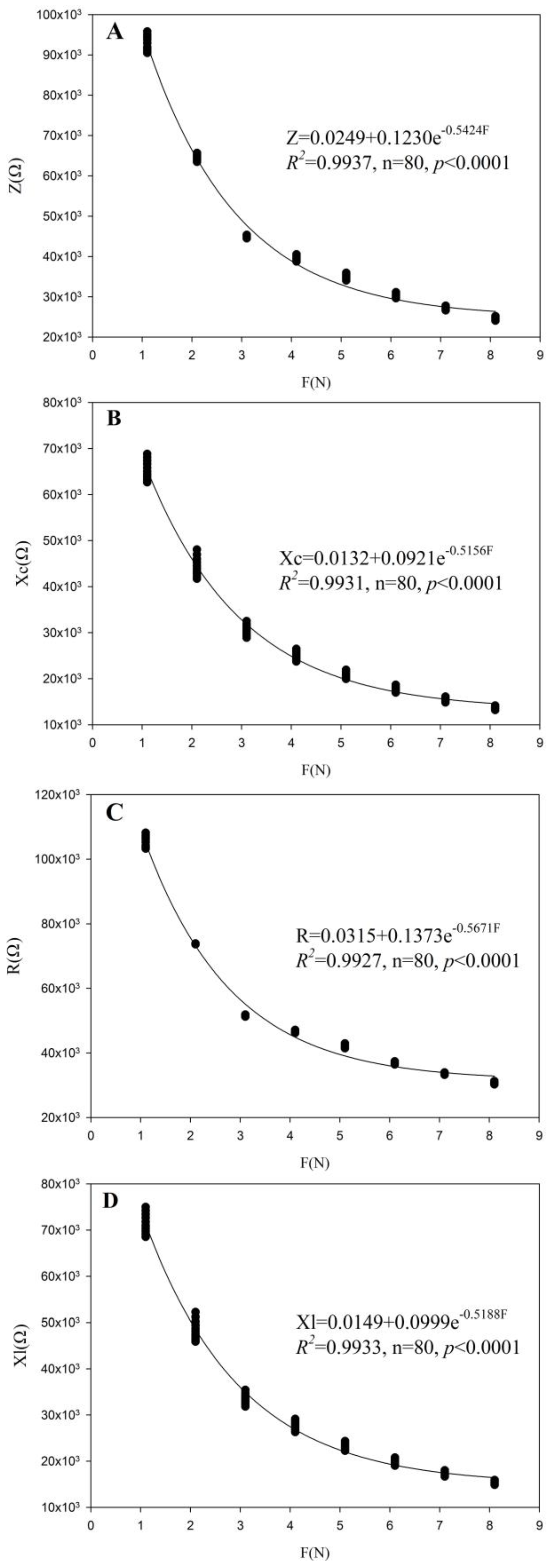
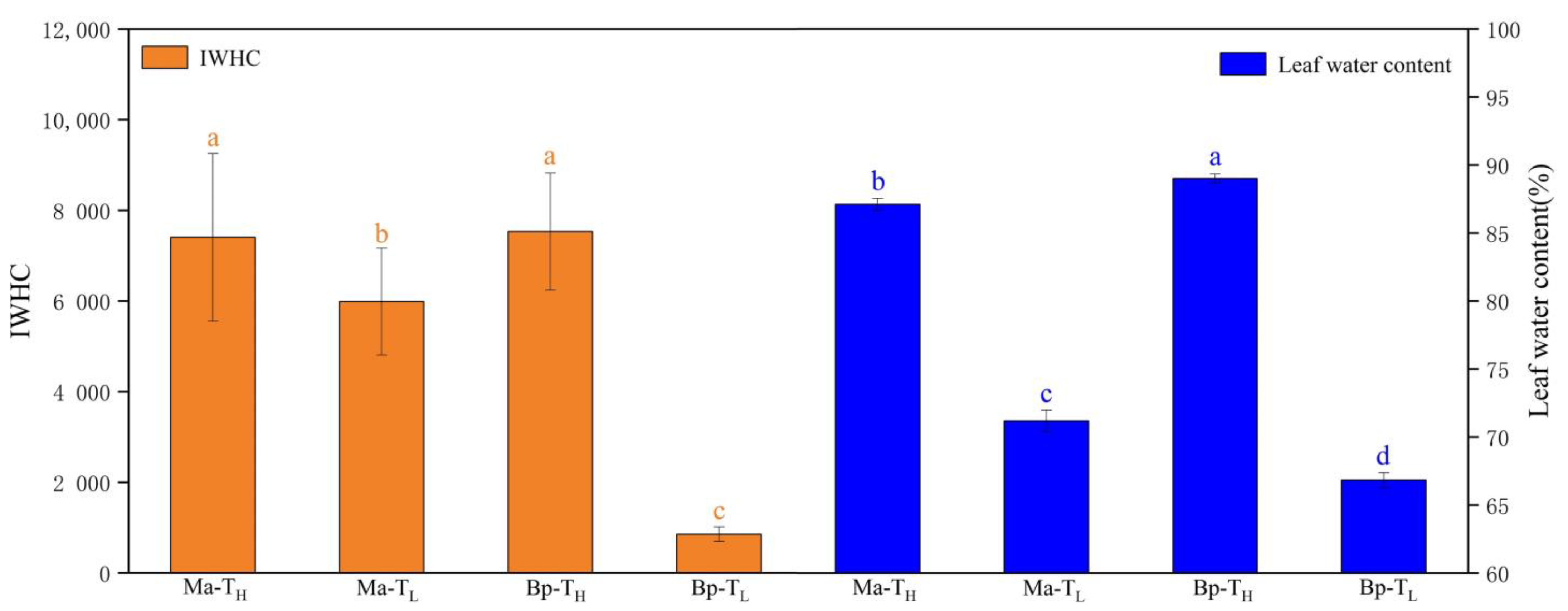
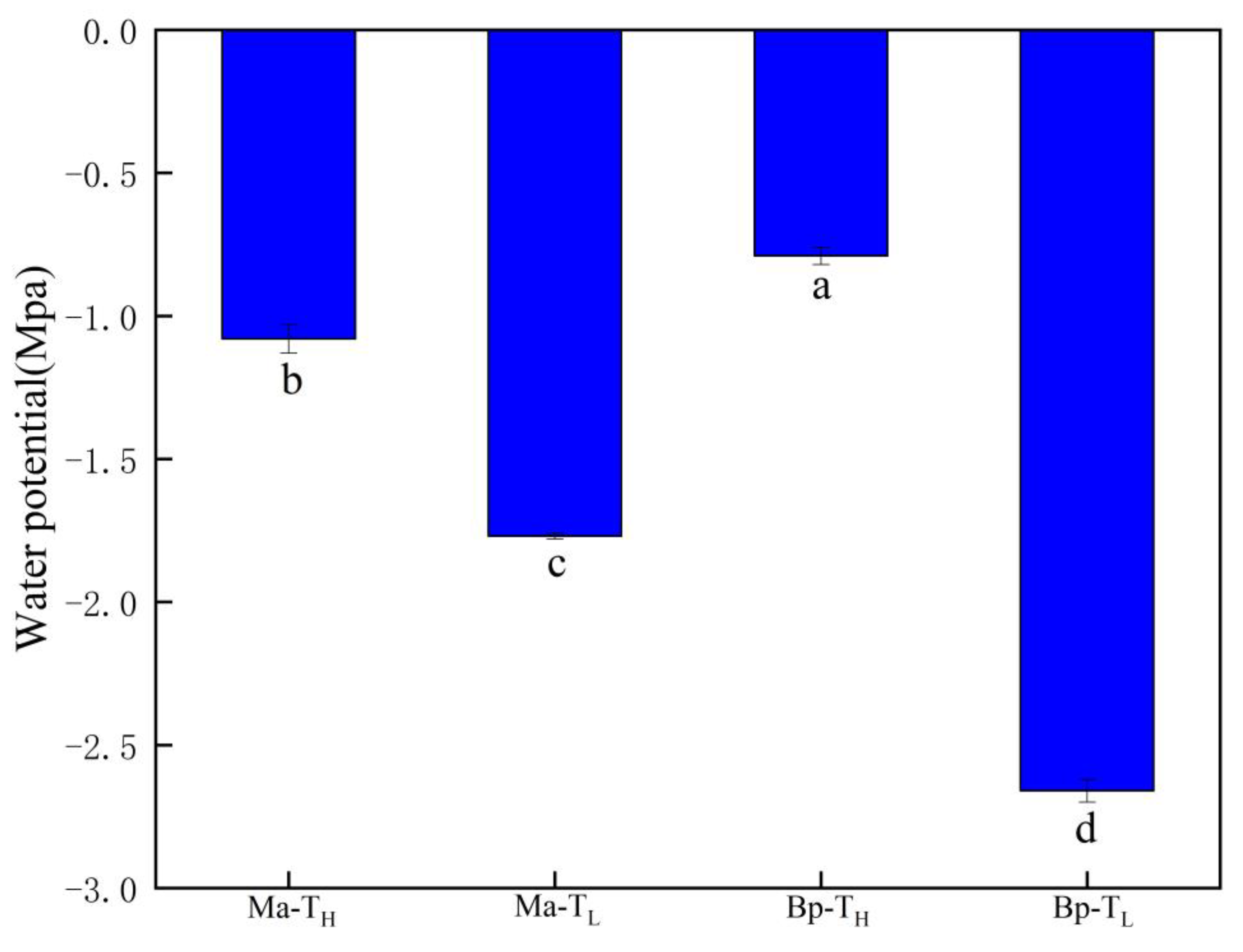
Plant electrical signals can quickly respond to the shifting environment. Almost all life activities of plants are dependent on water. The measurement of plant electrophysiological indices provides a more convenient method for studying the intracellular water utilization. In this study, Morus alba L. (Morus alba or M. alba) and Broussonetia papyrifera (L.) Vent. (Broussonetia papyrifera or B. papyrifera) were experimental materials, and the parameters were measured in two habitats (waterfront, well-water and arid slopes, deficient-water). The physiological and electrophysiological responses of leaves to different habitats were analyzed. The theoretically intrinsic relationships between the clamping force and leaf impedance (Z), capacitive reactance (Xc), resistance (R), and inductive reactance (Xl) were revealed as 3-parameter exponential decay and linear models based on bioenergetics, respectively. Leaf intrinsic electrophysiological parameters were successfully obtained by using the above-mentioned relationships and were used to manifest metabolic activity in plants. The intracellular water-holding capacity (IWHC), water use efficiency (IWUE), water-holding time (IWHT), and water transfer rate (WTR) of plant leaves were defined based on the intrinsic electrophysiological parameters and were used to reflect the intracellular water metabolism. The correlation between the physiological and electrophysiological parameters of the two plant species in the two habitats was also analyzed. The results showed that Morus alba continuously adapted to the shifting environment, the intracellular water metabolism was insensitive to soil water shortage and was independent from the external physiological state. The intracellular water metabolism in Broussonetia papyrifera was very sensitive to soil water shortage, and both intracellular water metabolism and immediate physiological parameters could characterize the response of Broussonetia papyrifera growth and development to soil water.
Keywords: electrophysiological signals; intracellular water metabolism; bioenergetics; plant physiological information; water shortage response electrophysiological signals; intracellular water metabolism; bioenergetics; plant physiological information; water shortage response