Article

Asexual Propagation of Campanula pelviformis and Petromarula pinnata—Two Local Endemic Plants of Crete with Multipurpose Crop Potential


by
Ioannis Anestis
1,
Eleftherios Karapatzak
2,
Georgios Menexes
3,
Stefanos Kostas
1,
Andreas Mamolos
4,
Georgios Tsoktouridis
2,5,
Nikos Krigas
2,6,* and
Stefanos Hatzilazarou
1,*
1
Laboratory of Floriculture, School of Agriculture, Aristotle University of Thessaloniki, 54124 Thessaloniki, Greece
2
Institute of Plant Breeding and Genetic Resources, Hellenic Agricultural Organization Demeter, 57001 Thermi, Greece
3
Laboratory of Agronomy, School of Agriculture, Aristotle University of Thessaloniki, 54124 Thessaloniki, Greece
4
Laboratory of Ecology and Environmental Protection, School of Agriculture, Aristotle University of Thessaloniki, 54124 Thessaloniki, Greece
5
Theofrastos Fertilizers, Irinis & Filias, 20100 Korinthos, Greece
6
Department of Agriculture, School of Agricultural Sciences, Hellenic Mediterranean University, 71410 Heraklion, Greece
*
Authors to whom correspondence should be addressed.
Horticulturae 2026, 12(7), 826; https://doi.org/10.3390/horticulturae12070826
Submission received: 6 May 2026 / Revised: 27 June 2026 / Accepted: 2 July 2026 / Published: 6 July 2026

Highlights

What are the main findings?
  • Campanula pelviformis and Petromarula pinnata (local endemic plants of Crete, Greece, with value in the economic sector) were sourced with permission from the wild as promising neglected and underutilized species.
  • Commercially acceptable rooting success (>90%) within four weeks was achieved for the first time in both species.
  • Young shoot cuttings consistently outperformed sub-apical cuttings in all root quality metrics.
  • The synergistic application of IBA and a biostimulant (Theocopper 1%) optimized rooting and root traits of sub-apical and young shoot cuttings in C. pelviformis, with a significant population effect confirmed across the three wild-collected populations.
What are the implications of the main findings?
  • The discovery of the first evidence-based asexual propagation protocols for both species, enabling their sustainable large-scale cultivation.
  • Theocopper (environmentally friendly biostimulant) as an IBA synergist enhanced vegetative propagation in both species.

Abstract
The urgency for sustainable propagation methods is increasing as anthropogenic disturbances threaten global biodiversity and plant productivity. This study focused on the cutting propagation of Campanula pelviformis and Petromarula pinnata, two local endemic species of Crete (Greece) with known multipurpose crop potential. For C. pelviformis, the effects of cutting type and indole-3-butyric acid (IBA) treatments applied with or without the commercially available and environmentally friendly fertilizer Theocopper and population were investigated. For P. pinnata, the effects of cutting type and IBA treatments were examined. Root dry mass was assessed four weeks after propagation onset, while rooting success, root number and length were measured in the third week to evaluate overall rooting performance. Vegetative propagation of P. pinnata was straightforwardly achieved across cutting types (>90% rooting success), and superior root traits were observed in young shoot cuttings. In C. pelviformis, high rooting success (90%) was recorded in four of the six treatments using adventitious shoot cuttings, while the combined application of 1% Theocopper and IBA efficiently enhanced both rooting percentages and root traits in young shoot cuttings and sub-apical stem sections. The results further indicated a population effect on rooting success and traits among cutting types. The data produced may guide conservation purposes and/or sustainable utilization of these neglected species as novel multipurpose crops, especially in landscaping design with native plants.

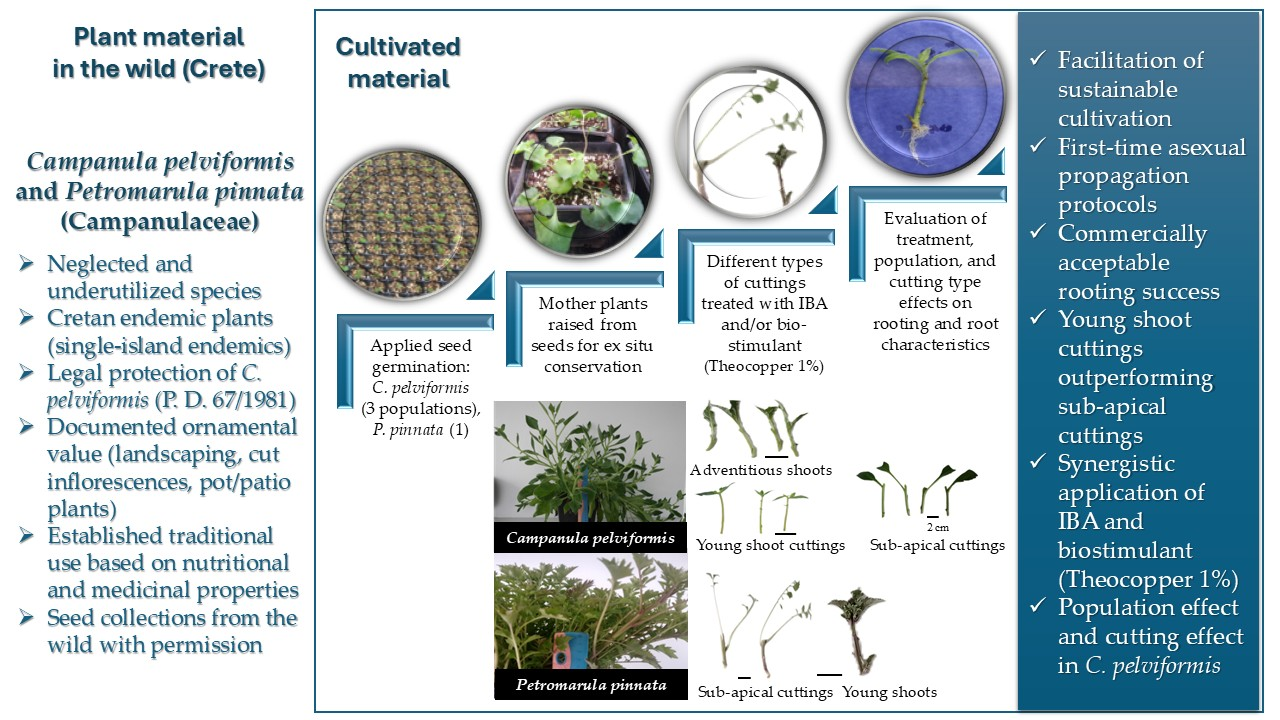
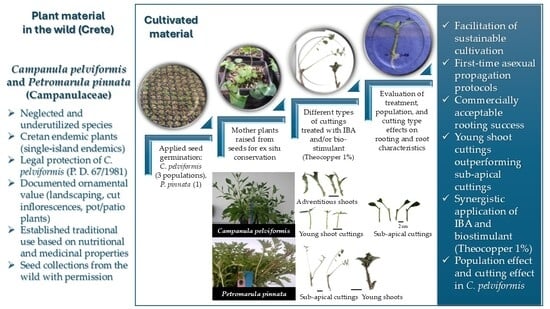
Graphical Abstract

1. Introduction

Human-induced environmental disturbances such as global warming, climate change, and industrial pollution pose challenges to biodiversity, plant health, and productivity [1,2]. The intensive utilization of plant genetic resources for various applications has increased globally and locally, imposing the need to develop new, sustainable cultivation methods and novel crops [3,4,5,6], responding to increased consumer and market demands [7].
Recent research highlights the potential of several neglected and underutilized plant species (NUPs) in the agro-alimentary sector but also in the medicinal–cosmetic sector, which is on an ongoing quest for new bioactive plant-derived compounds, or the horticultural–ornamental sector seeking native species for landscaping design; these sectors are important in global economic domains [8,9,10,11] and across spatial scales, requiring constantly novel valuable products [12,13,14,15,16]. Native plant germplasm, particularly NUPs of the Mediterranean basin, are often associated with local endemism, ancient ethnobotanic heritage and traditional practices, ancestral breeding efforts based on wild crop relatives, and often include NUPs with documented nutritional or pharmaceutical [8,9] and ornamental value [10,17,18,19]. In this way, the Mediterranean biodiversity and the biocultural heritage in the Mediterranean region constitute an immense source tank to address modern challenges related to biodiversity, plant health, and productivity [8,9,10,20]. To this end, new research lines and focus are channeled towards developing applied initiatives for novel crops and new value chains’ creation. To achieve the latter, efficient propagation methods should first be established to ensure availability of certified and sustainably produced selected propagation material of NUPs, and such endeavors are conducted worldwide [8].
Among the numerous NUPs of the Mediterranean Basin, two members of the Campanulaceae family, namely Campanula pelviformis Lam. (protected by the Greek Presidential Decree 67/1981) and Petromarula pinnata (L.) A. DC. emerge as new and promising multipurpose crop species [21]. Both species are local endemics of Crete Island (Greece) and are well-documented for their promising potential across various economic sectors, exhibiting ornamental value suitable for potted or patio plants as well as for landscaping applications in the horticultural industry [8,21]. Evidence of existing consumer interest in these species from an ornamental perspective has already been demonstrated through uncontrolled electronic trade [22]. Furthermore, these species contain bioactive phytochemicals for medicinal–cosmetic purposes [9,23,24] and long-standing nutritional value and benefits as edible wild greens consumed traditionally in Crete [10,21,23,24]. Notably, nine secondary metabolites with medicinal value have been recently isolated from the aerial parts of C. pelviformis [23], and both species contain substantial levels of nutritional compounds, while P. pinnata exhibits notable antioxidant and bactericidal activities in addition [21,23,24]. These findings highlight the need for ex situ conservation strategies in support of sustainable utilization of these Cretan local endemic NUPs (single-island endemics). This can be initiated via a particular set of actions that include the development and application of both sexual and asexual propagation methods [21].
Sexual propagation of C. pelviformis and P. pinnata has been extensively studied to date, including germination tests on both freshly collected and stored seeds [25]. Additionally, seed traits such as length, width, and mass of freshly collected seeds from these taxa have been analyzed [25,26]. While sexual propagation promotes genetic diversity among seedlings, large-scale seedling production for conservation or sustainable exploitation can be cost-prohibitive and labor-intensive due to the very small size of seeds of Campanulaceae species [25,27], requiring specialized handling and/or seed dormancy release after maturation. Interestingly though, there is no previous experience or published records regarding the asexual propagation of these multipurpose Cretan NUPs [21], and, therefore, this extant research gap should be bridged to allow sustainable utilization initiatives.
From an agronomic perspective, asexual propagation may ensure the uniformity of favorable plant traits inherent in the studied species and can bypass biological issues encountered in sexual propagation such as low seed viability [28,29]; upon successful establishment, high-quality plants can be raised ex situ in large quantities, compensating for the generally increased cost of production and delayed mass production compared to sexual propagation [28]. Propagation-wise, different parts of plants can be used as cuttings such as shoots, roots, and leaves, while the type of cutting, the age of parent plants, the environmental conditions, the seasonal timing (both in terms of collection and establishment), and the application of plant growth regulators are critical factors that influence rooting success of cuttings [28,30]. The application of exogenous plant growth regulators is considered a key factor for the rooting of cuttings, with the use of indole-3-butyric acid (IBA) being regarded as the most reliable rooting enhancer [31]. Although IBA is commonly used for mass production via vegetative propagation, increasing interest has also arisen in recent years regarding the synergistic action of IBA with other substances and environmentally friendly compounds such as organic biostimulators, or natural rooting hormones like coconut oil [32,33,34,35,36,37,38].
This study aimed to develop effective asexual propagation protocols for the local Cretan endemic NUPs belonging to Campanulaceae, namely P. pinnata and C. pelviformis. In absence of previous experience for the focal Cretan NUPs, this investigation first aimed to define whether these species can generate appropriate cutting material with considerable rooting capacity under ex situ man-made settings and whether a successful propagation protocol can be developed via conventional and alternative methods; such clonal propagation protocols should be envisaged as a complement to, rather than a replacement for, conservation strategies, offering the possibility for raising uniform stocks of specific genotypes or facilitating sustainable cultivation efforts. To identify the most effective combinations for rooting success of cuttings, the evaluation for C. pelviformis focused on the effects of population, cutting type, and IBA treatment applied with or without a commercial and environmentally friendly fertilizer with biostimulant activity, as well as on the physical characteristics of the produced roots. A similar approach was followed for P. pinnata, which included the evaluation of IBA and cutting type, using the same rooting parameters.

2. Materials and Methods

2.1. Establishment of Mother Stock Plants from Seedlings

Mature capsules with seeds of C. pelviformis and P. pinnata were collected from the wild in July 2022, during targeted botanical expeditions in various locations of Crete, Greece, using a special permit from the Greek Ministry of Environment and Energy (5539/845 of 24 February 2022) (Table 1). The seed collection was carried out manually, choosing 10 individual plants per population of the focal NUPs. The mixed collected materials were transferred to the laboratory, allowing them to dry naturally in shade at room temperature for 10 days. Seeds were then manually cleaned from each of the dried materials, placed in 125 mL glass bottles (Sigma-Aldrich, St. Louis, MI, USA), and stored in a fridge (model: CRW500SD, Chrisagis, Athens, Greece) until experimentation.
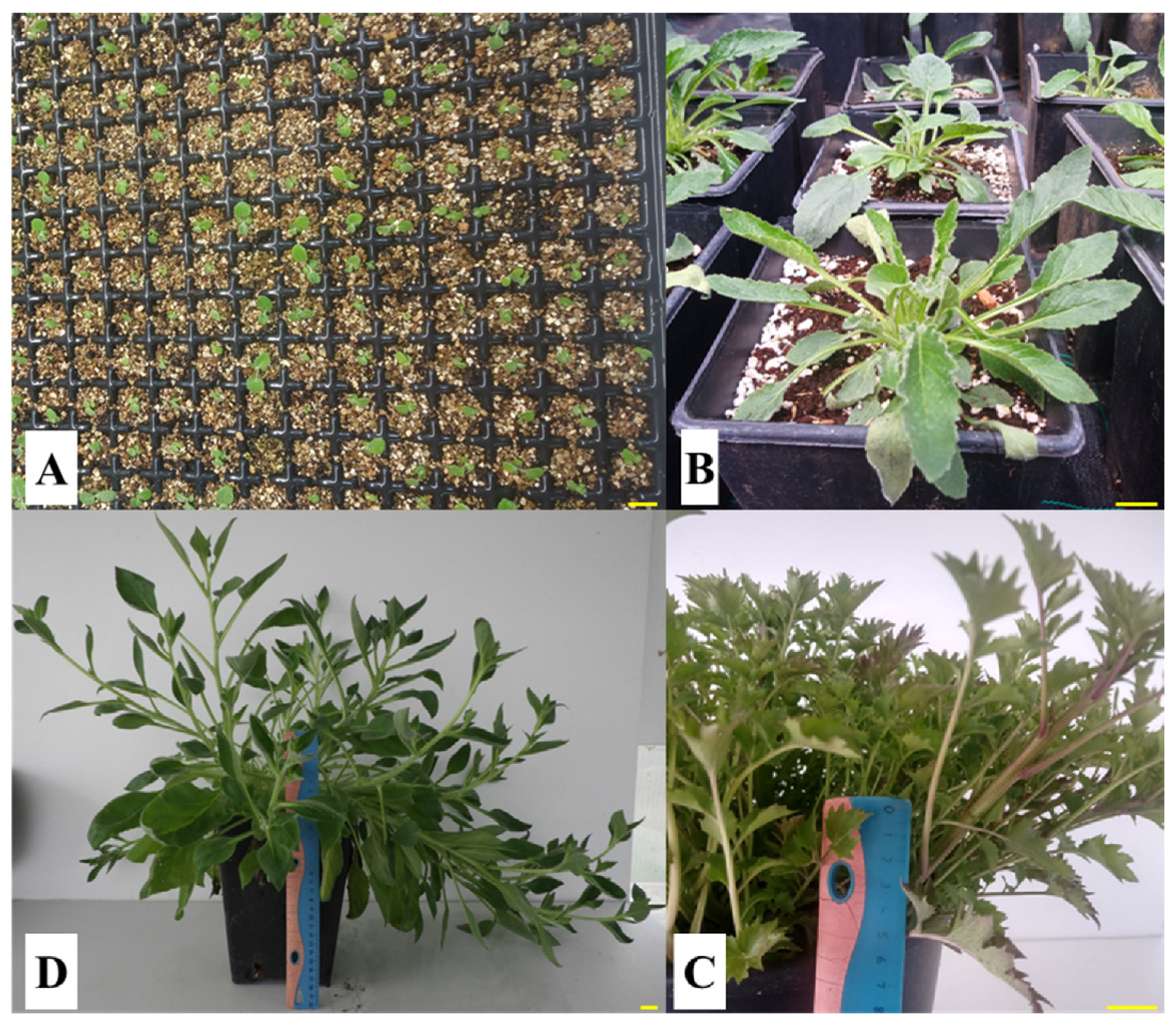
On 3 November 2023, a total of 250 seeds per population were sown in propagation trays filled with peat (TS1, Klassmann-Deilmann GmbH, Geeste, Germany) and vermiculite (RHP, ’s-Gravenzande, The Netherlands) at 3:1 v/v (Figure 1). The trays were placed in a growth chamber set at 15 °C, based on the results of previous seed germination studies [26] (Figure 1A). Seedlings were irrigated using tap water manually every four days. After two months, when more than 100 seedlings per population had reached approximately 2 cm in height, the trays were moved to a greenhouse bench at the Institute of Plant Breeding and Genetic Resources (IPBGR), Hellenic Agricultural Organization-Demeter, where they were transplanted into 0.33 L pots containing a mixture of peat (TS2, Klassmann-Deilmann GmbH, Geeste, Germany) and perlite (Geoflor, Perlite Hellas S.A., Volos, Greece) (3:1, v/v). In the greenhouse, the pots were irrigated automatically three times a day for two min each via sprinkler at a rate of 50 L per h. On 3 June 2024, following seedling establishment, 50 plants per population were transplanted into 1.6 L pots containing a mixture of peat TS2 and perlite (3:1, v/v), and irrigation was continued using the same automatic system. On 4 November 2024, following the growth pattern of C. pelviformis plants, 50 plants were selected phenotypically based on plant health, vigor, and optimal growth and were transplanted into 3 L pots filled with a substrate composed of peat TS2, perlite, and soil (4:2:1, v/v) (Figure 1B,C) to enable further growth and shoot development and produce adequate cutting material for experimentation.
For P. pinnata GR-1-BBGK-22,68, three-year-old mother stock plants were used for harvesting of different cuttings (Table 1); these mother plants were previously established from seeds [25] under similar ex situ conditions with those of C. pelviformis.

2.2. Asexual Propagation Experiments

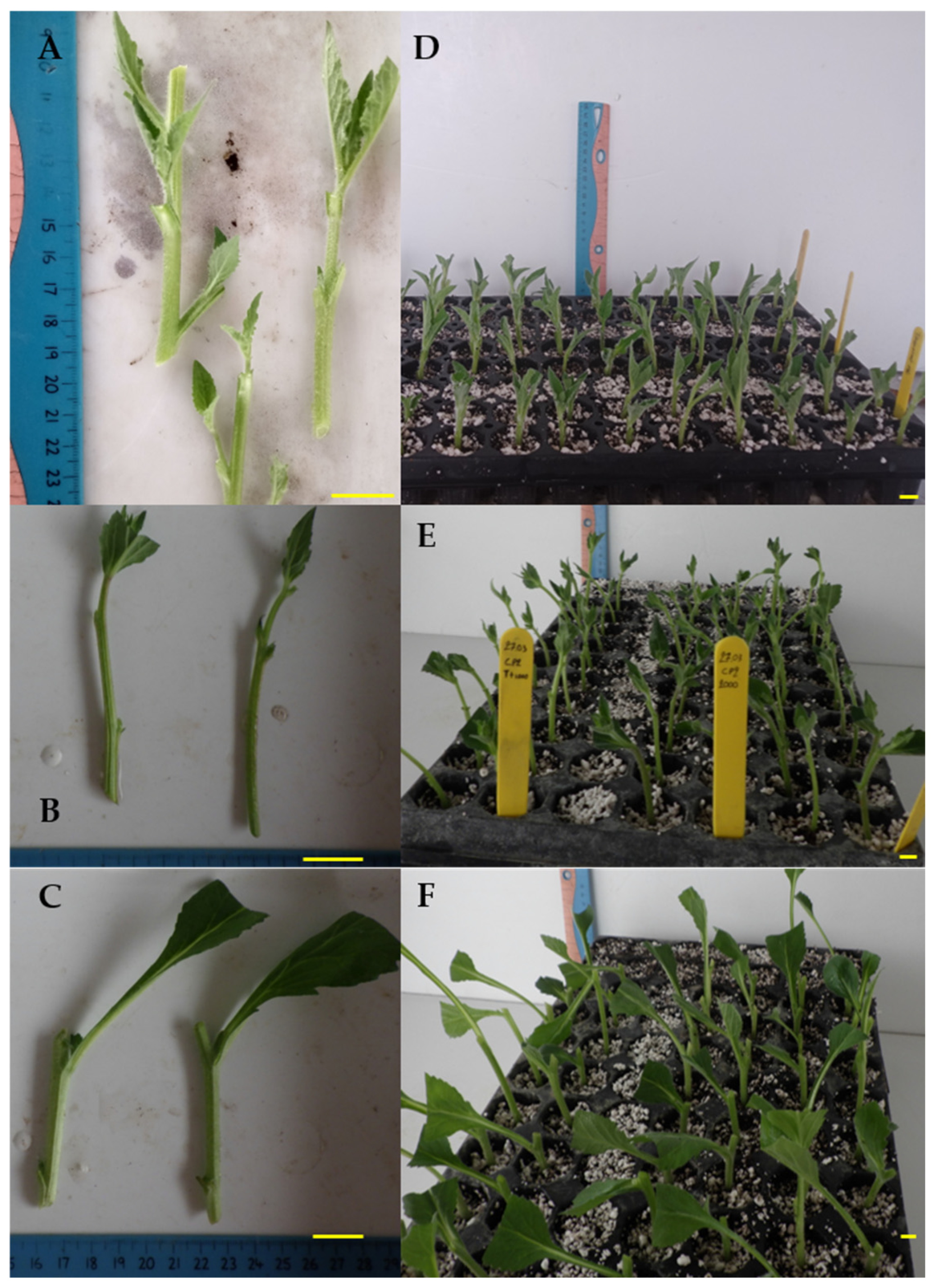
The propagation experiments for C. pelviformis included three types of cuttings and were commenced in two stages based on the developmental patterns of the mother plants. Once the produced seedlings formed multiple new adventitious shoots consisting of 4–6 cm stem segments in mid-January 2025, they were excised from the upper part of the shoot, each containing the apical meristem (Figure 2A). Leaves were thinned to 2–3 fully developed leaves per cutting. Consecutively, when mother stock plants began producing young shoots in late March, two additional types of cuttings were collected, particularly young shoot cuttings 4–6 cm in length bearing the apical meristem (Figure 2B) and sub-apical stem sections bearing two axillary buds (Figure 2C). The leaves of each cutting were thinned to one to two leaves per cutting.
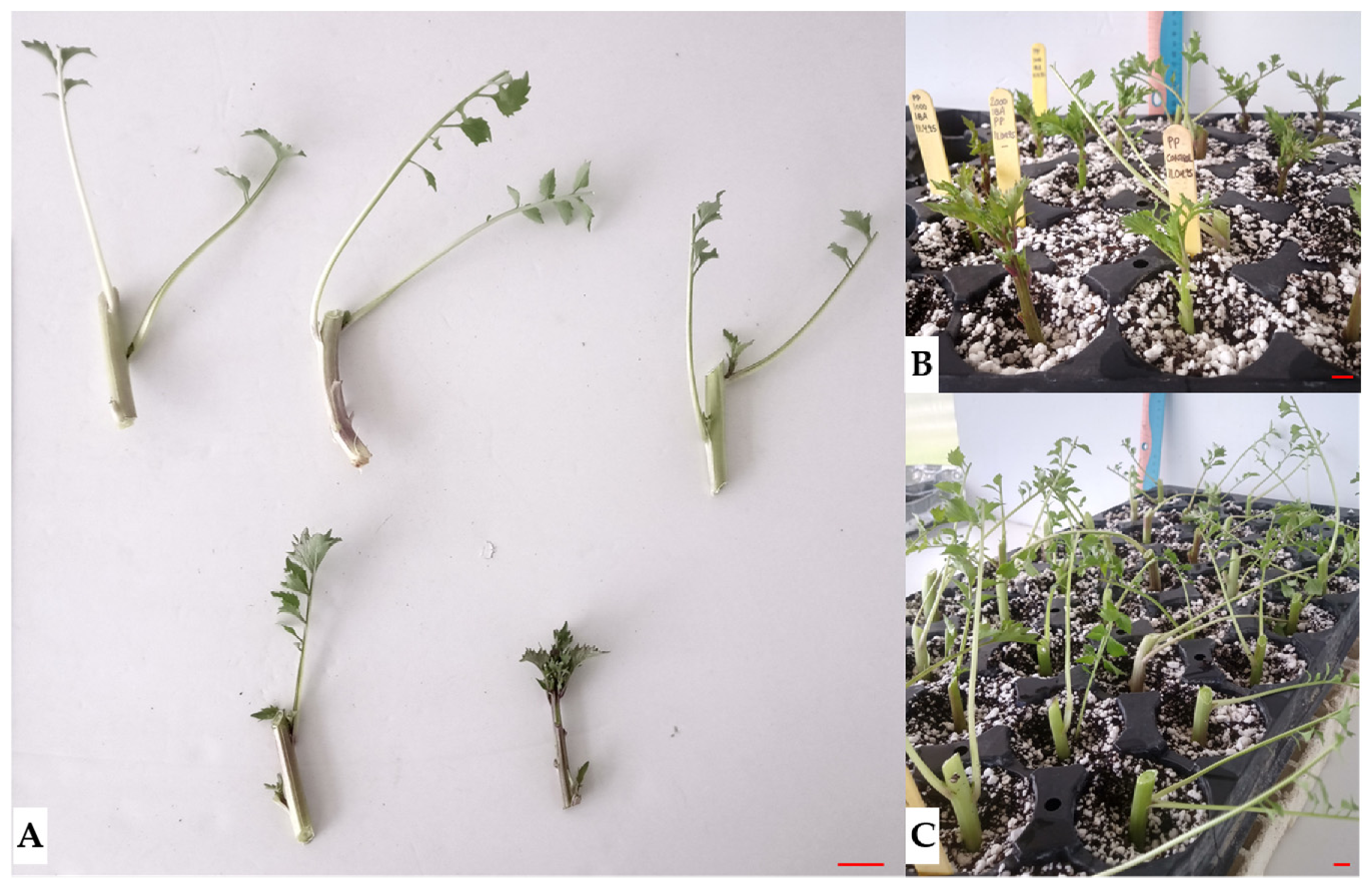
For P. pinnata, propagation trials began in mid-April 2025, coinciding with the development of newly emerged stems on mother plants. Collected cuttings included fresh young shoots containing the apical meristem (4–6 cm) (Figure 3A), as well as sub-apical stem sections taken from lower parts of the stem with two axillary buds (Figure 3A). Similarly, each cutting was thinned to one or two remaining leaves to ensure a total leaf area of one fully developed leaf.
For C. pelviformis, the IBA application (Indole-3-butyric acid 98%, Thermo Fisher Scientific Inc., Leicestershire, UK) was evaluated on the three collected cutting types either alone and/or in combination with a commercially available and environmentally friendly alternative fertilizer containing nitrogen, potassium, copper, and amino acids (THEOCOPPER, Theofrastos fertilizers, Korinthos, Greece, Supplementary Table S1). Six treatments were evaluated: (a) control—cuttings were immersed for 10 s in a solution prepared with water in 50% ethanol and placed directly into propagation trays immediately after excision from the stock mother plant to maintain turgor; (b) treatment of 1000 mg × L−1 IBA—cuttings were immersed for 10 s in a 1000 mg × L−1 IBA solution prepared in 50% ethanol; (c) treatment of 2000 mg × L−1 IBA—cuttings were immersed for 10 s in a 2000 mg × L−1 IBA solution prepared in 50% ethanol; (d) 1% Theocopper—cuttings were immersed for 10 min in 1% Theocopper solution prepared with deionized water (for details, see [39]); (e) Treatment of 1000 mg × L−1 IBA + 1% Theocopper—Cuttings were first immersed for 10 min in 1% Theocopper in deionized water and then for 10 s in a 1000 mg × L−1 IBA in 50% ethanol; and (f) treatment of 2000 mg × L−1 IBA + 1% Theocopper—cuttings were first immersed for 10 min in 1% Theocopper in deionized water and then for 10 s in a 2000 mg × L−1 IBA in 50% ethanol. In total, 24 cuttings per population and cutting type were evaluated across the six treatments. For P. pinnata, the first three treatments described above were evaluated on two types of collected cuttings due to limited availability of plant material.
Rooting conditions entailed propagation trays filled with perlite, peat moss (Terrahum, Klasmann-Deilmann, Gmbh, Germany), peat (3:1, v/v) under an intermittent automated benchtop fog system inside a greenhouse at ambient temperature conditions with a relative humidity of 70–85%.

2.3. Measurements Conducted on the Asexual Propagation Experiments

In the third week, data were collected on rooting success, number and length of the produced roots by cutting type. By the fourth week, the endpoint of the experiment was set when several treatments of C. pelviformis had reached 100% rooting. A similar methodological approach was applied to P. pinnata, as it exhibited a comparable response pattern. At the end of the experiments and after the measurements of root parameters, the produced roots from eight rooted cuttings were carefully removed from each treatment using a scalpel, placed in paper bags, and then dried in an oven at 65 °C for 72 h. After drying, root dry mass was determined using a four-digit analytical balance.
Consecutively, 16 of the remaining rooted cuttings from the three most effective treatments in terms of rooting percentages per population and cutting type for C. pelviformis and for each cutting type for P. pinnata were transplanted into 0.33 L pots containing a substrate mixture of peat TS2 and perlite (3:1 v/v) and were placed in a greenhouse equipped with an automated irrigation system. Two weeks later, the surviving plants were recorded to estimate the frequencies of the successfully acclimatized plants.

2.4. Statistical Analysis

Completely randomized factorial experiments with a split-plot arrangement were used for both studied species. For C. pelviformis, population (3 populations) was the main plot factor, treatment (6 levels) was the sub-plot factor, and cutting type (3 types) was assigned as a sub-sub-plot factor (as a within-unit factor nested within mother plants). For P. pinnata, treatment (3 treatments) was the main plot factor, with cutting type (2 types) designated as the sub-plot factor. The dataset was analyzed within the methodological framework of Mixed Linear Models with the ANOVA method [40,41]. The LSD criterion was used for the comparison of mean values. Since treatments’ combinations resulted in different rooting success, the parameters of root number, root length, and root dry mass had unequal replications. For the application of the LSD criterion, the harmonic mean of the number of replications per combined treatment was used (detailed data are presented in the Supplementary Tables S5, S7, S9, S11 and S13). In addition, since the experiment was unbalanced, Type III Sum of Squares was used in all ANOVA models.
For rooting success, the 24 cuttings were randomly allocated into three different trays of eight cuttings each, and the rooting percentage (%) was estimated from eight cuttings using binary data (0 for no rooting and 1 for rooted cuttings). This process resulted in three replications of rooting success per combined treatment. Count data were collected for the number of roots produced for each cutting (24 cuttings per treatment). The mean length of roots produced per cutting was used for each of the 24 cuttings per treatment. The same procedure was followed for root dry mass; however, only eight (or fewer, when necessary) randomly selected cuttings per treatment were used for the statistical analysis of dry mass measurements. For C. pelviformis, the number, length, and dry mass of produced roots were square root transformed, while untransformed raw data were used for rooting success. For P. pinnata, only the dry mass of produced roots was square root transformed, while root number and length were analyzed without transformation. These transformations aimed to achieve normality and homoscedasticity of the models’ residuals.
Normality and homoscedasticity were assessed using the residuals of linear models. Particularly, normality was evaluated using histograms, boxplots, median values of residuals (should be near 0), and coefficients of skewness and kurtosis, as well as the Kolmogorov–Smirnov test (p > 0.05). The homoscedasticity was checked through residuals-versus-model predicted values and Spearman’s rho correlations between the predicted values estimated by the model and the absolute values of the residuals. These assumptions were not significantly violated. All the above-mentioned procedures were done using the IBM SPSS Statistics v.27.0 (SPSS, Inc., IBM Corp., Armonk, NY, USA). In all hypothesis-testing procedures, the significance level was preset at a = 0.05 (p ≤ 0.05).

3. Results

3.1. Asexual Propagation of Campanula pelviformis

The individual effects of population, treatment, and cutting type were statistically significant for all examined parameters in C. pelviformis; additionally, most of the two-way and the three-way interactions were also statistically significant. Exceptions (not statistically significant) included the population X cutting type interaction for root number (p = 0.111) and the treatment X cutting type interaction for root dry mass (p = 0.471, Table 2).
All parameters except root percentages were square root transformed before analysis; partial eta squared is an effect size index. Moreover, high values of partial eta squared were observed in population (η2 = 0.926) and treatment (η2 = 0.953) on root percentages, treatment (η2 = 0.333), and the three-way interaction (η2 = 0.223) on root number, population (η2 = 0.395) and the three-way interaction (η2 = 0.298) on root length, and population (η2 = 0.574) and treatment (η2 = 0.391) on root dry mass. Detailed descriptive statistics and the ANOVA results are provided in the Supplementary Materials (Supplementary Tables S2–S9).
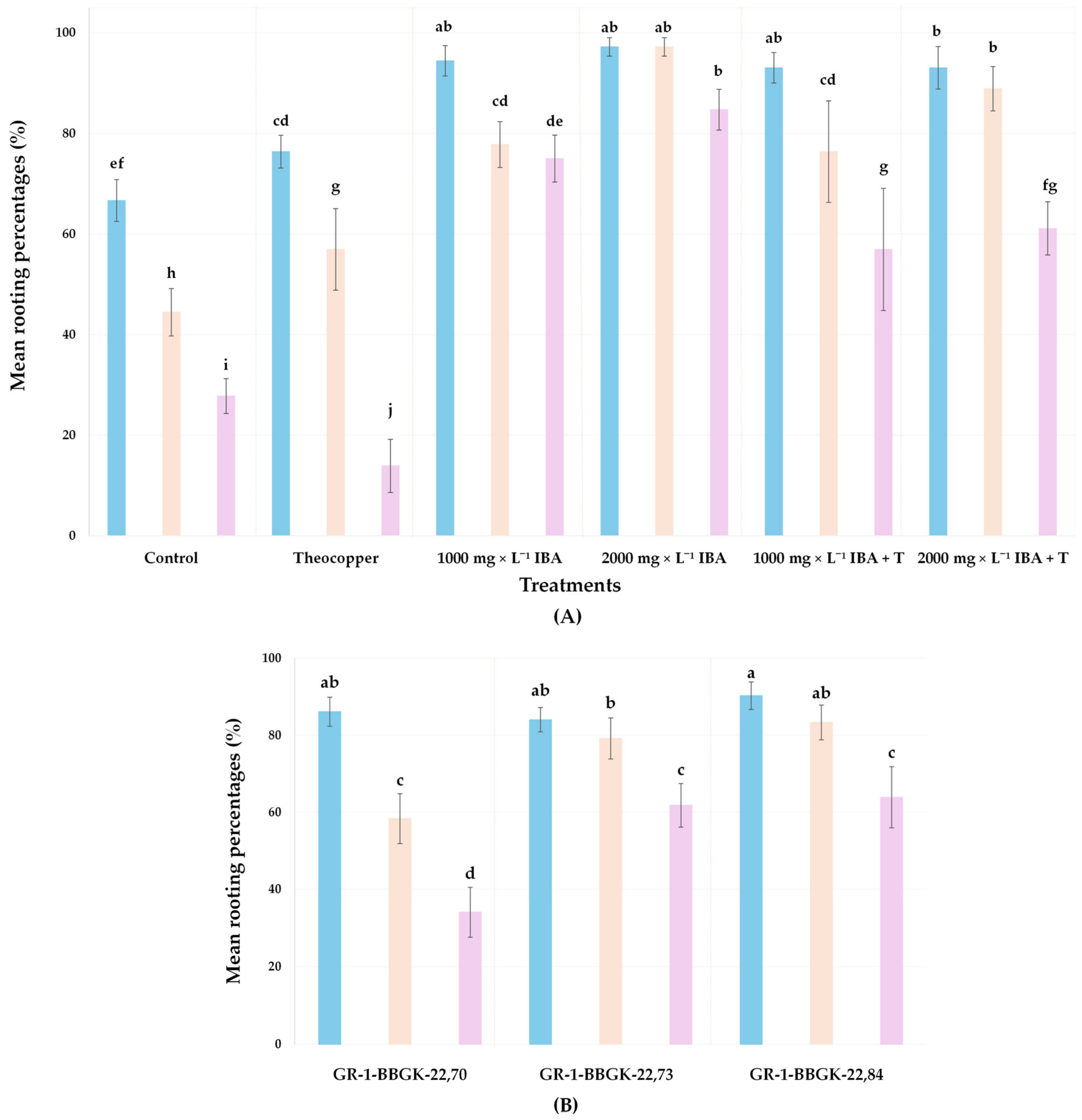
Adventitious shoot cuttings exhibited comparably the highest rooting frequencies across all treatments (>66%). High rooting success (>94%) was significantly enhanced by increasing concentrations of IBA, while similar values were observed by the combined application of IBA and 1% Theocopper (Figure 4). Moderate rooting percentages were observed in young shoot cuttings (44–57%), and relatively low rooting percentages were observed in sub-apical stem sections (14–28%) under control and 1% Theocopper treatments (Figure 4). Rooting was increased under 1000 and 2000 mg × L−1 IBA treatments for both cutting types (>75%), reaching a maximum in young shoot cuttings treated with 2000 mg × L−1 IBA (97%). The combined application of IBA and 1% Theocopper resulted in 57–61% rooting success for sub-apical stem sections.
Across populations (Figure 4), cuttings derived from adventitious shoots generally exhibited the highest rooting percentages (>84%), with adventitious shoot cuttings of population GR-1-BBGK-22,84 demonstrating the highest percentages (90.3 ± 3.6%). In addition, young shoot cuttings of C. pelviformis population GR-1-BBGK-22,84 and population GR-1-BBGK-22,73 showed similarly high rooting percentages (79–83%), while sub-apical stem sections consistently showed the lowest percentages across populations (<64%).
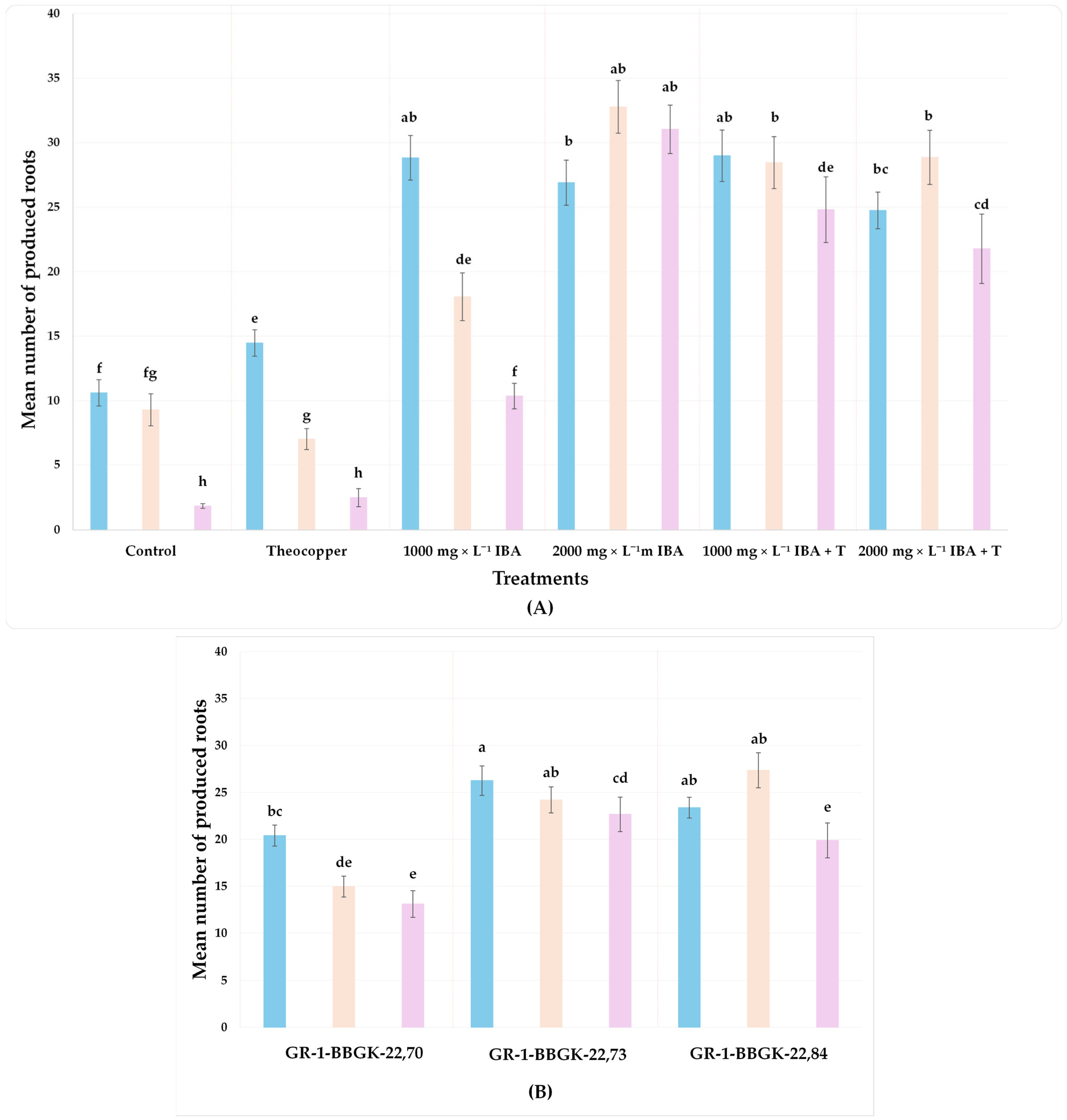
According to Figure 5, control and 1% Theocopper treatments had a limited effect on root production, with adventitious shoot cuttings producing the highest number of roots under both treatments (10.6 ± 1.0 and 14.5 ± 1.0 roots, respectively). In contrast, the ap-plication of IBA had a strong impact in root production with adventitious shoot cuttings presenting the highest number of roots at 1000 mg × L−1 IBA (28.8 ± 1.7 roots), whereas treatment with 2000 mg × L−1 IBA increased root production across all three cutting types, with young shoot cuttings and sub-apical stem sections exhibiting the highest values (32.8 ± 2.0 and 31.0 ± 1.9 roots, respectively). Similarly, the combined treatments increased root production for all cutting types compared to control and 1% Theocopper treatments (>21.8 roots). The highest root production was observed in adventitious shoot and young shoot cuttings treated with 1% Theocopper with 1000 mg × L−1 IBA (29.0 ± 2.0 and 28.4 ± 2.0 roots, respectively) and in young shoot cuttings treated with 1% Theocopper and 2000 mg × L−1 IBA (28.9 ± 2.1 roots).
Based on the observed population effects (Figure 5), adventitious shoots and young shoot cuttings produced higher numbers of roots, particularly in C. pelviformis population GR-1-BBGK-22,73 (26.3 ± 1.6 and 24.2 ± 1.4 roots, respectively) and population GR-1-BBGK-22,84 (23.4 ± 1.1 and 27.4 ± 1.9 roots, respectively). Sub-apical stem sections also exhibited relatively high mean root number in these populations (20–23 roots), whereas all cutting types showed the lowest root number in population GR-1-BBGK-22,70.
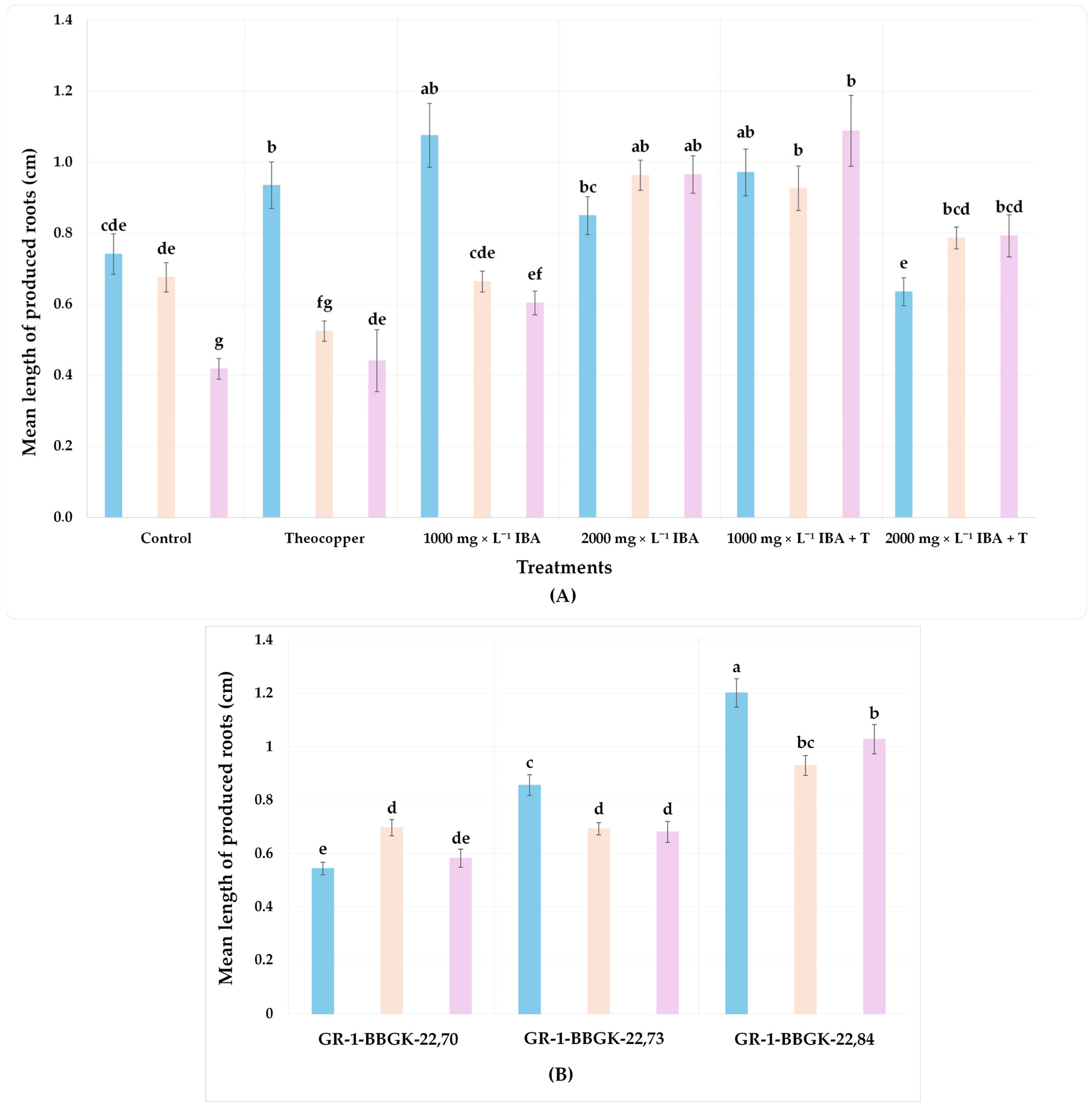
As shown in Figure 6, control, 1% Theocopper, and 1000 mg × L−1 IBA treatments had a limited effect on root length, particularly in young shoot cuttings (0.7 ± 0.04, 0.5 ± 0.03, 0.7 ± 0.03 cm, respectively) and sub-apical stem sections (0.4 ± 0.03, 0.4 ± 0.09, 0.6 ± 0.03 cm, respectively). However, treatment with 1000 mg × L−1 IBA significantly increased root length in adventitious shoot cuttings (1.1 ± 0.09 cm). Moreover, application of the higher IBA concentration had a strong effect on root length, with young shoot cuttings and sub-apical stem sections producing the longest roots (1.0 ± 0.04 and 1.0 ± 0.05 cm, respectively). Similarly, combined treatments increased root length in young shoot cuttings (0.9 ± 0.06 cm at T + 1000 mg × L−1 IBA and 0.8 ± 0.03 cm at T + 2000 mg × L−1 IBA) and in sub-apical stem sections (1.1 ± 0.1 and 0.8 ± 0.1 cm, respectively) compared with control and 1% Theocopper treatments.
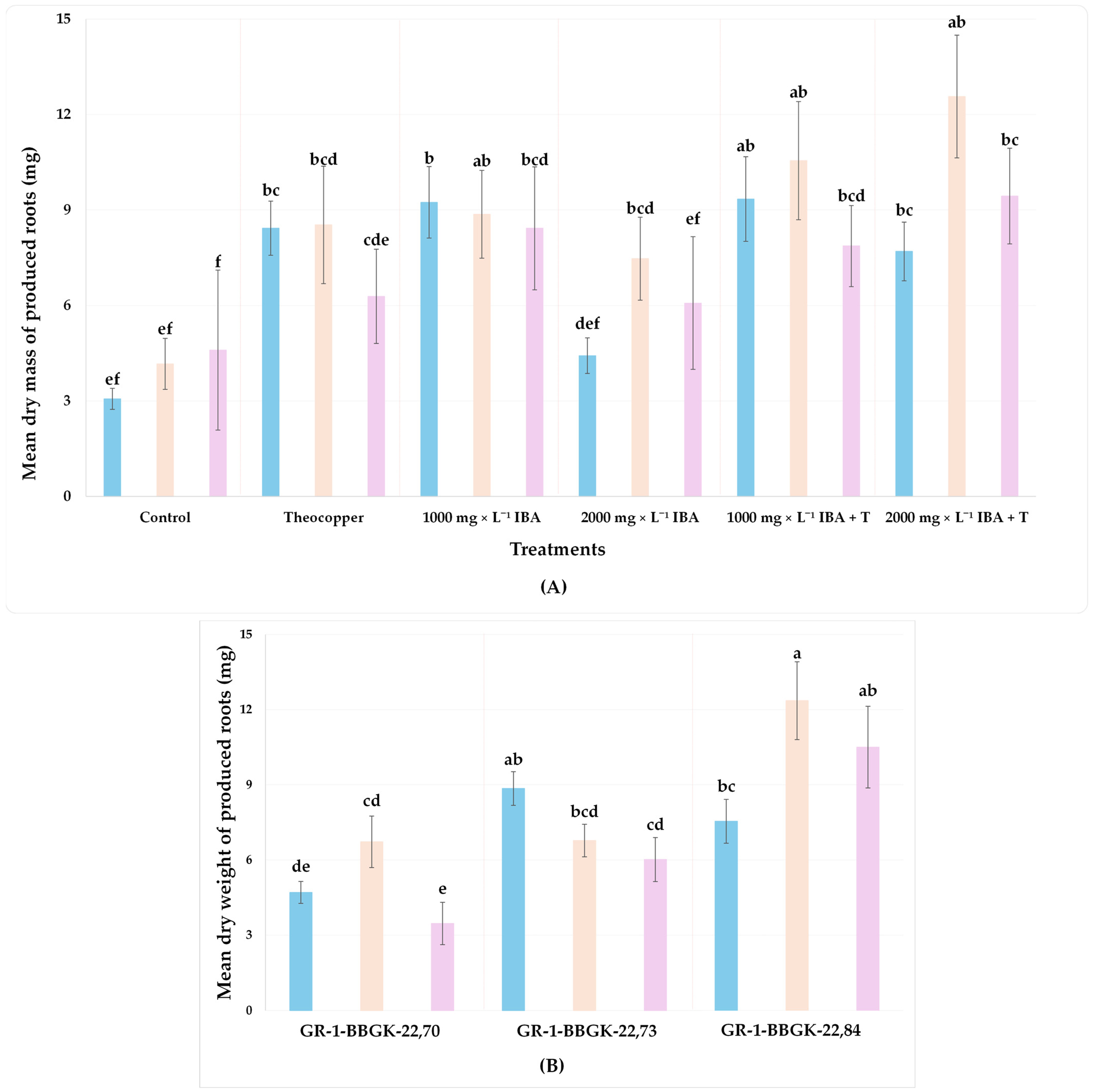
According to Figure 7, all examined treatments affected the dry mass of produced roots compared with the control treatment (3.1–4.6 mg across all cutting types). Treatment with 1000 mg × L−1 IBA increased root dry mass in all cutting types (8.4–9.2 mg), and the same was detected after combined application with 1% Theocopper (7.9–9.3 mg). Notably, the highest root dry mass was observed in young shoot cuttings that were treated with 1% Theocopper combined with 1000 and 2000 mg × L−1 IBA (10.5 ± 1.9 and 12.6 ± 1.9 mg, respectively).
Young shoot cuttings and sub-apical stem sections derived from C. pelviformis population GR-1-BBGK-22,84 produced the highest dry mass values (12.3 ± 1.5 and 10.5 ± 1.6 mg, respectively). Adventitious shoot cuttings from this population, as well as population GR-1-BBGK-22,73 (Figure 7) also showed relatively increased dry mass (7.5 ± 0.9 and 8.8 ± 0.7 mg, respectively), while the remaining cutting types from GR-1-BBGK-22,73 and all cuttings from GR-1-BBGK-22,70 produced comparably lower dry mass values (>6.8 ± 0.6 mg, Figure 7).
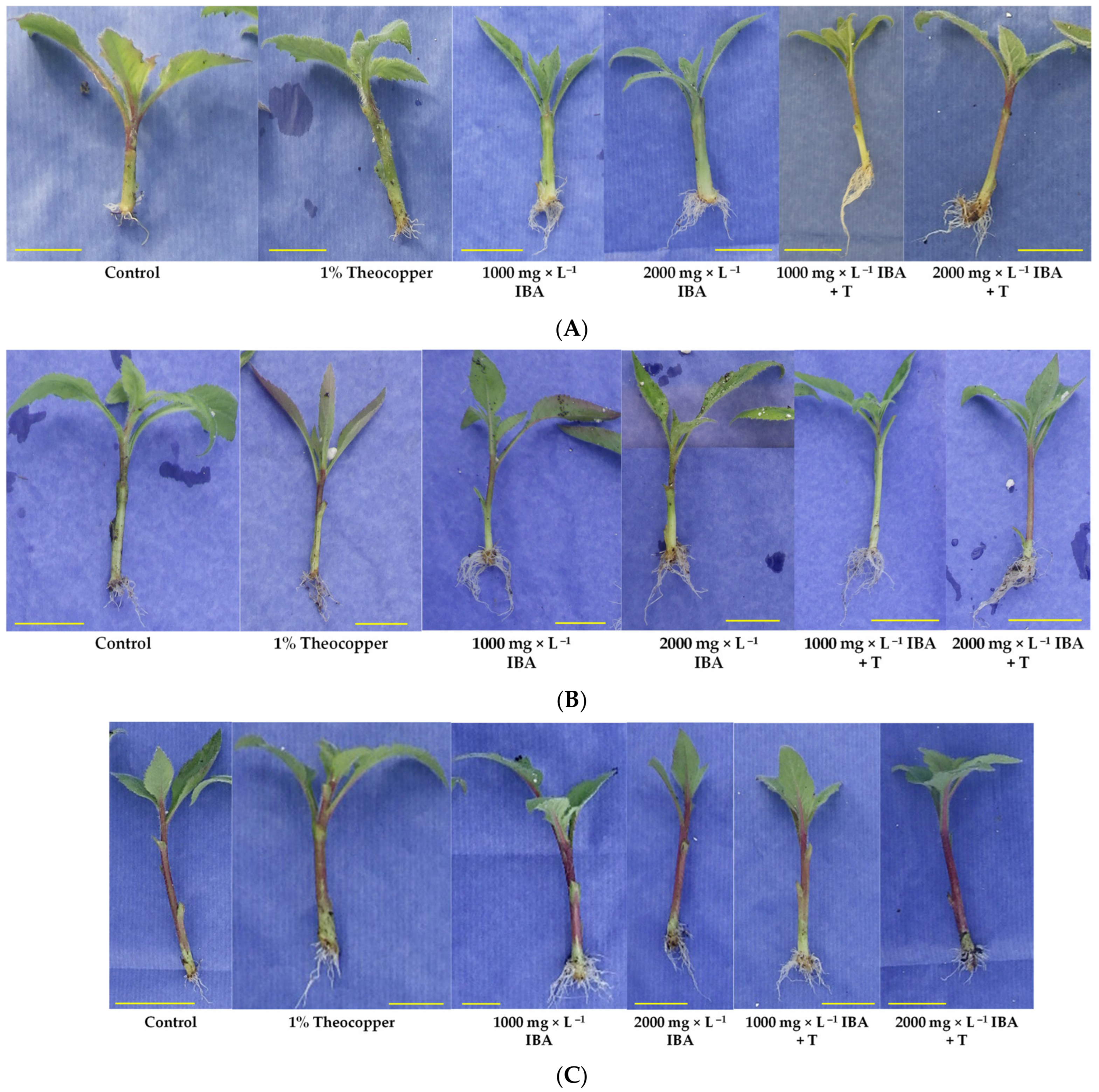
All cutting types derived from C. pelviformis population GR-1-BBGK-22,84 (Figure 8B) produced longer roots, particularly adventitious shoot cuttings (1.2 ± 0.05 cm). Adventitious shoot cuttings from population GR-1-BBGK-22,73 (Figure 8A) also exhibited increased root length (0.9 ± 0.04 cm), whereas the remaining cutting types from both populations GR-1-BBGK-22,73 and GR-1-BBGK-22,70 produced shorter roots (>0.7 ± 0.03 cm).
The survival rates of the rooted cuttings by the 6th week after experimentation reached 93.8% for adventitious shoots and young shoot cuttings of C. pelviformis populations GR-1-BBGK-22,84 and GR-1-BBGK-22,73, while the corresponding cuttings of population GR-1-BBGK-22,70 were 87.5%. In addition, survival rates of 87.5% were recorded for all sub-apical cuttings across the examined populations of C. pelviformis.

3.2. Asexual Propagation of Petromarula pinnata

In P. pinnata GR-1-BBGK-22,68, the effects of the two studied factors (IBA treatment and cutting type) were statistically significant for root number (p < 0.001), root length (p < 0.001) and root dry mass (p = 0.007 for IBA treatment, and p < 0.001 for cutting type), while their interaction was significant for root number (p = 0.005) and root dry mass (p = 0.044, Table 3). Details on the descriptive statistics and the ANOVA results are provided in the Supplementary Materials (Supplementary Tables S10–S15). High values of partial eta squared were observed in cutting type (η2 = 0.794) and treatment (η2 = 0.597) on root number, cutting type (η2 = 0.484) and treatment (η2 = 0.268) on root length, and cutting type (η2 = 0.692) and treatment (η2 = 0.373) on root dry mass.
Rooting success for P. pinnata GR-1-BBGK-22,68 cuttings was 100% across all treatments in young shoot cuttings, whereas in sub-apical stem sections reached 91.7% in the control, 95.83% at 1000 mg × L−1 IBA treatment, and 100% at 2000 mg × L−1 IBA treatment.
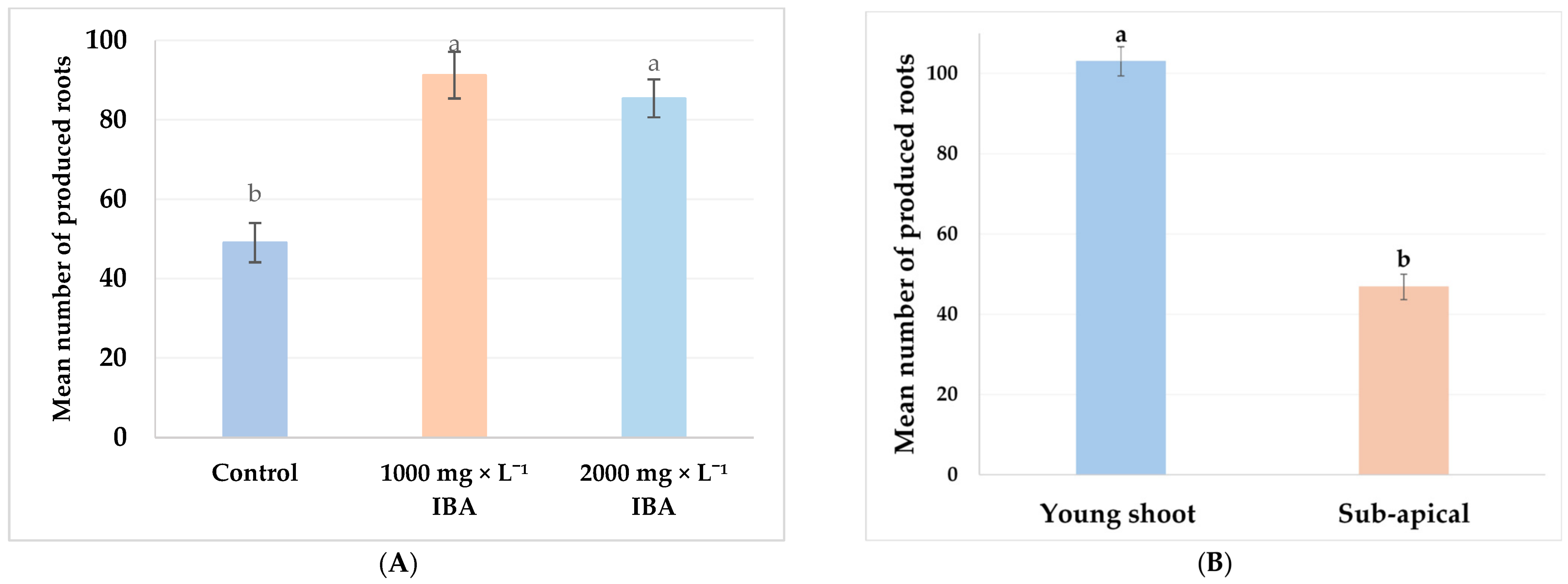
Root number increased significantly with the application of IBA (91.3 ± 5.9 roots at 1000 mg × L−1 IBA and 85.4 ± 4.8 roots at 2000 mg × L−1 IBA) compared with the control treatment (49.1 ± 5.0 roots,Figure 9). In addition, young shoot cuttings produced approximately twice as many roots as sub-apical stem sections (103.0 ± 3.6 vs. 46.8 ± 3.2 roots, respectively).
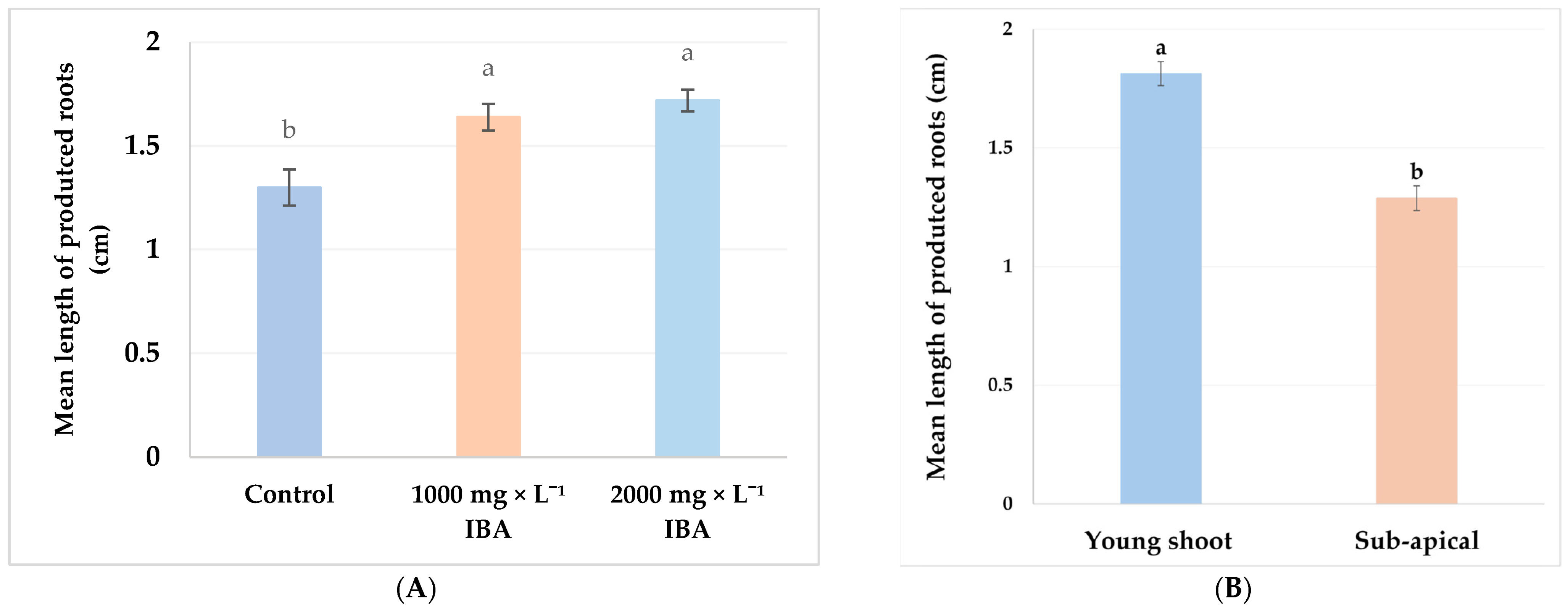
The application of IBA at both concentrations increased root length (>1.6 ± 0.06 cm) compared with the control (1.3 ± 0.09 cm) (Figure 10). Regarding cutting type, young shoot cuttings produced longer roots than those of sub-apical stem sections (1.8 ± 0.05 cm and 1.3 ± 0.05 cm, respectively).
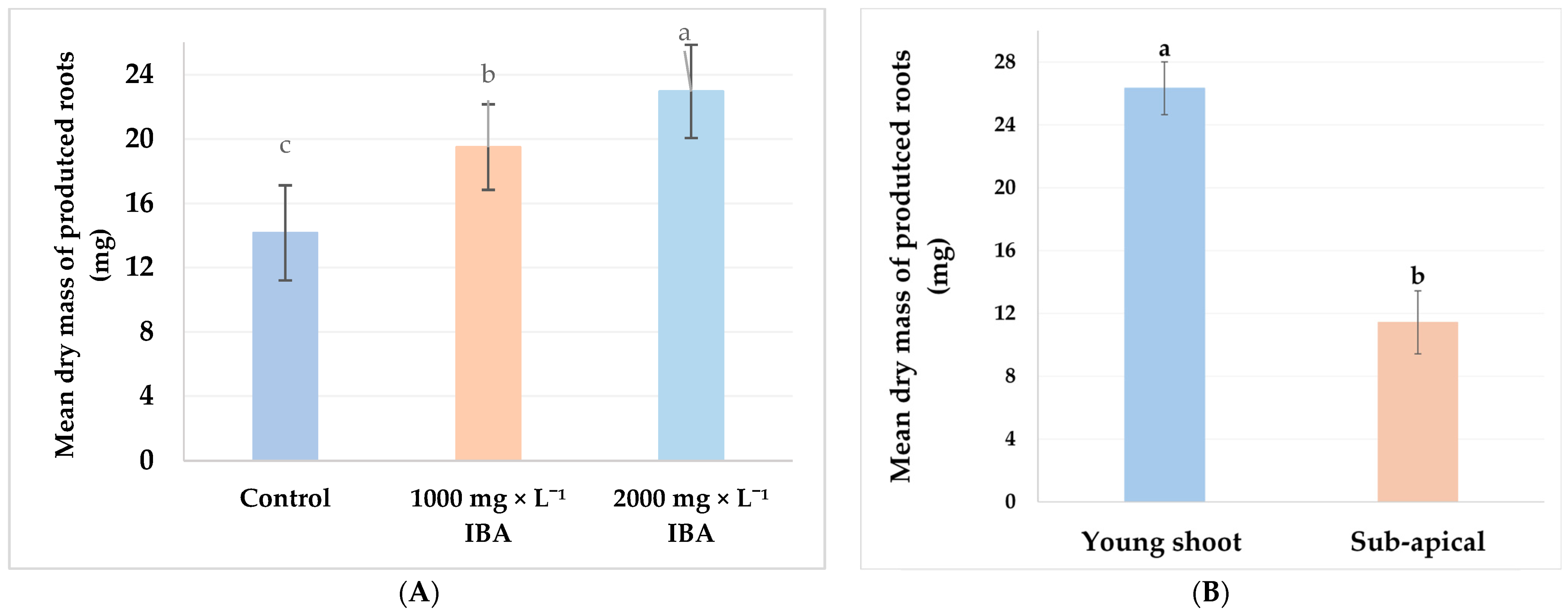
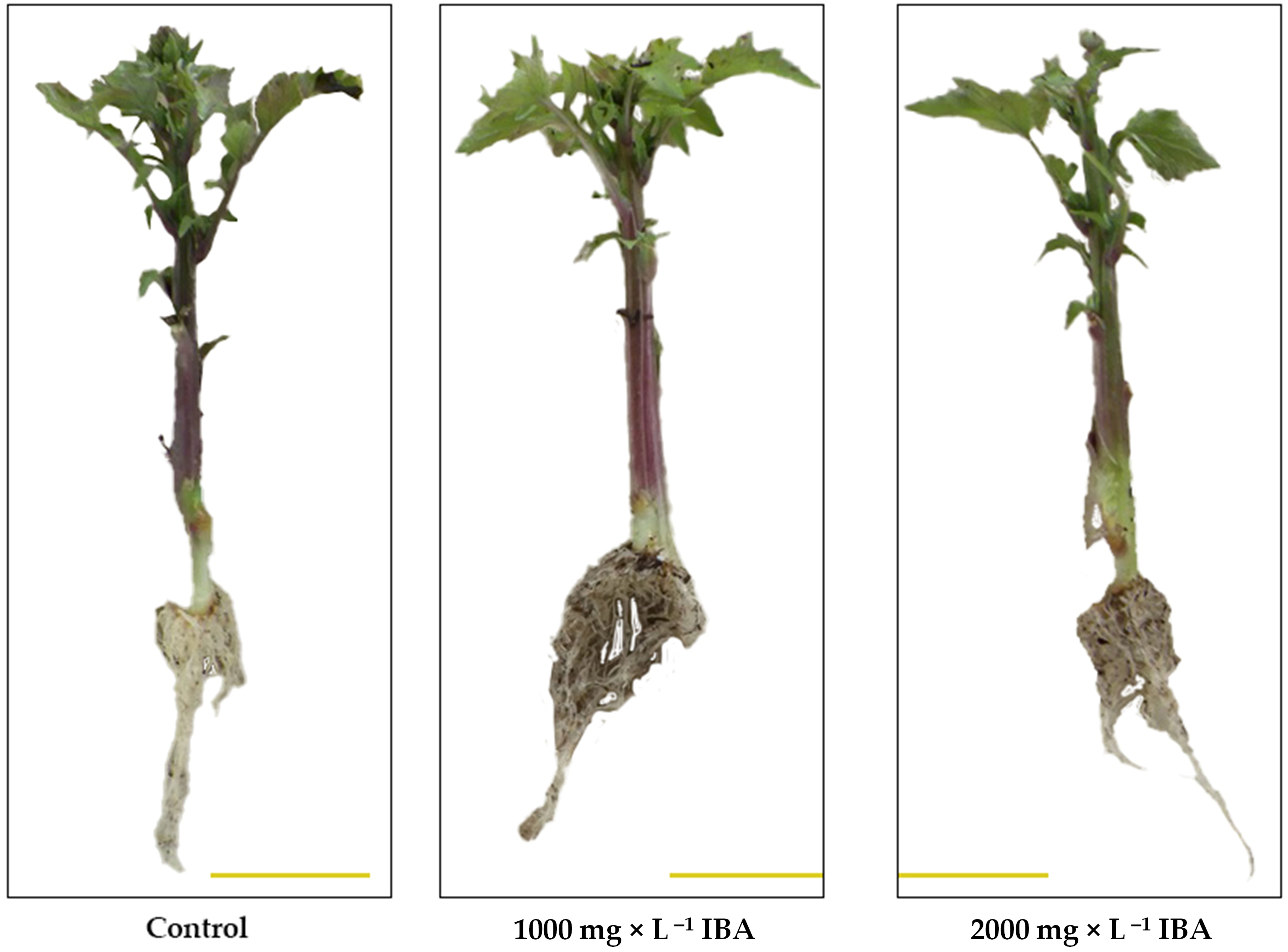
The application of IBA increased the dry mass of the produced roots (>19 mg), with higher IBA concentration resulting in further increases (23.0 ± 2.9 mg) compared to the control (14.2 ± 3.0 mg) (Figure 11 and Figure 12). Young shoot cuttings produced almost twice as high dry root mass (26.3 ± 1.7 mg) as sub-apical stem sections (11.4 ± 2.0 mg) (Figure 11B and Figure 12).
After six weeks, both cutting types of P. pinnata exhibited a survival rate of 93.8%.

4. Discussion

The development of successful vegetative propagation protocols either for conservation purposes and/or sustainable exploitation of NUPs can provide a reliable and cost-effective approach, ensuring genetic uniformity, maintenance of selected genotypes, and rapid production of plant material [28]. Over the past decade, significant efforts for the development of ex situ vegetative propagation protocols via cuttings have been conducted for several herbaceous NUPs [21,42,43,44,45,46]. Although detailed research on sexual propagation via seeds has already been conducted for the focal NUPs of the current study, resulting in comprehensive protocols indicating appropriate temperatures (10 and 15 °C) and no preference in light conditions for increased seed germination (>80–85% for both species) [25,26], unfortunately, no previous studies have yet addressed their asexual propagation [21]. In this context, the present investigation developed effective asexual propagation protocols via cuttings for the focal NUPs. The results demonstrated a rooting performance (>90%) across IBA treatments with or without 1% Theocopper for adventitious shoot cuttings and with 2000 mg × L−1 IBA for young shoot cuttings in C. pelviformis, as well as across all treatments and cutting types examined in P. pinnata under man-made settings, which are commercially accepted according to current standards [31]. Petromarula pinnata exhibited a straightforward rooting capacity, as untreated and treated cuttings resulted in very high rooting success (>90%) for both examined cutting types. In C. pelviformis, high rooting success was observed primarily in adventitious shoot cuttings under four of the six treatments (>93%). Vegetative propagation studies focusing on cuttings of different Campanulaceae species that are endemic to Greece are scarce in the literature; however, similar studies in the Eurasiatic Campanula rapunculoides L. and the Balkan endemic Campanula portenschlagiana Schult. have recorded high rooting capacity (72% and 85–100%, respectively) [47,48,49]. Comparable results employing IBA application have been reported for other herbaceous perennial Greek endemic species with conservation priority belonging to different families. In these cases, adventitious shoot cuttings of the local endemics of Crete Carlina diae (Rech.f.) Meusel & Kästner (Asteraceae), Limonium chersonesum Erben & Brullo (Plumbaginaceae), Erysimum krendlii Polatschek (Brassicaceae), and Dianthus ingoldbyi Turrill (Caryophyllaceae) have also exhibited high rooting capacity [42,44,45,46]. The same applies to another local endemic plant of Paxi Islands of the Ionian Archipelago, namely Centaurea paxorum Phitos & T. Georgiadis (Asteraceae) [45].
The results of the current study showed that the highest rooting success was observed in both adventitious and young shoot cuttings treated with 2000 mg × L−1 IBA for C. pelviformis. This response may be partly attributed to higher concentrations of exogenous auxin interacting with endogenous indole-3-acetic acid (IAA), thereby potentially promoting the cambium differentiation and enhancing further rooting induction in both cutting types [30,50,51]. Similar results have been reported for other herbaceous perennial Greek endemic NUPs such as the local Cretan endemic Lomelosia minoana (P.H.Davis) Greuter & Burdet subsp. minoana (Dipsacaceae) [43] or the local endemic of Naxos Island (Cyclades, Aegean Archipelago) Erysimum naxense Snogerup (Brassicaceae) [45]. Moreover, the application of 2000 mg × L−1 IBA in stem cuttings has been reported to increase rooting percentages in the ornamental herbaceous perennial Paeonia ‘Yang Fei Chu Yu’ (86.7%), as well as in the eastern Mediterranean medicinal and aromatic plant Salvia tomentosa Mill. (Lamiaceae) when treated with 1500 mg × L−1 IBA (79.5%), while the application of IBA powder resulted in 100% rooting in the Greek endemic herbaceous perennial Nepeta camphorata Boiss. & Heldr. (Lamiaceae) [52,53,54].
Although improvements in root-related attributes following the application of IBA (without using biostimulants) have been previously reported in studies on herbaceous Greek endemic perennial plants [42,44,46] or on various woody species originating from other regions of the world (e.g., [34,55]), literature reports remain scarce regarding the environmentally friendly alternative fertilizer applied in this study as a rooting enhancer (1% Theocopper). A previous study using added amino acids such as L-glutamate and L-tryptophan to the nutrient solution of C. portenschlagiana cuttings under an aeroponic system has shown increased root capacity in terms of number of rooted explants by 40 to 100% for two genotypes, as well as increased root length, while enhanced root biomass has been recorded for one of the two genotypes. Such amino acids may contribute indirectly to root development, through nitrogen remobilization in the case of glutamate or via IAA biosynthesis in the case of tryptophan [56,57,58]. Among the IBA-supplemented treatments that outperformed the non-IBA treatments in the current study, the most significant enhancement of the measured rooting traits (root number, length, and dry mass) was observed in 2000 mg × L−1 IBA and its combined application with the alternative fertilizer applied as a rooting enhancer (1% Theocopper). These effects were particularly pronounced in sub-apical stem sections and young shoot cuttings of C. pelviformis. Moreover, our results showed that root dry mass was further increased with higher IBA concentrations in P. pinnata. Notably, a similar effect of 1% Theocopper combined with 1000/2000 mg × L−1 IBA on root dry mass has been recently reported for another herbaceous perennial Greek subendemic species, namely Helichrysum orientale (L.) Gaertn. (Asteraceae) [39]; in the latter study, all treatments of 1% Theocopper combined with three concentrations of IBA (1000/2000/4000 mg × L−1) are reported to result in the production of statistically significant high amounts of root dry mass [39]. In general, a higher root volume in cuttings has been correlated in the literature with root surface area and the quality of the produced plants in other herbaceous ornamental perennials such as Oenothera lindheimeri (Engelm. & A.Gray) W.L.Wagner & Hoch (Siskiyou Pink’ gaura; Onograceae), Pixie Star’ dianthus (Dianthus alpinus L.; Caryophyllaceae), Salvia yangii B.T.Drew (Perovskia, previously known as Perovskia atriplicifolia Benth.; Lamiaceae), and ‘Mainacht’ salvia (Salvia × sylvestris L.) [59].
The current results indicated that superior root characteristics were achieved from apical cuttings in both studied species. In contrast, vegetative propagation of C. rapunculoides in the absence of any plant growth regulator shows a higher rooting capacity of basal cuttings (72%) compared to tip cuttings (14–17%), thus implying that the possible use of plant growth regulators may further enhance the efficiency of this propagation method [47]. Moreover, the combined effect of the alternative fertilizer applied in the current study as a rooting enhancer with IBA showed the capacity to increase the measured root characteristics in sub-apical cutting types. The application of the fertilizer as a rooting enhancer with IBA may have provided further availability of nutritive elements (e.g., nitrogen and potassium) to the cuttings along with IBA. As suggested by other studies in cultivated commercial roses [60], increased nitrogen availability during cutting propagation may be positively correlated with increased root number along with enhancement of IBA uptake and carbohydrate availability coming from the photosynthesizing leaves of the cutting. Although the precise mechanism of the observed enhancement of rooting characteristics of the sub-apical stem sections via the use of 1% Theocopper remains unclear from the current data, this enhancement in the studied Cretan NUPs may translate into higher propagation success. Moreover, the effective use of both sub-apical and apical cuttings in commercial propagation could improve the overall protocol efficiency by increasing the availability of suitable plant material for propagation and subsequent cultivation of these multipurpose NUPs.
In general, genotypic variation in rooting success among cutting types has been reported in previous studies for woody species such as Santalum austrocaledonicum Vieill. (Santalaceae) [61] and Colutea istria Mill. (Fabaceae) [62], shrubby species like Rosa damascena Mill. [63] or cultivated mother stock plants of different varieties of the herbaceous ornamental perennials C. portenschlagiana and Salvia greggii A.Gray (Lamiaceae) [48,64]. Vegetation propagation trials using cuttings from two genotypes of endemic C. portenschlagiana have revealed important differences between genotypes in terms of root-related traits, including rooting success, number of roots, root length, and fresh and dry weight. Such findings, combined with hormonal content analysis, have shown higher concentrations of IBA and IAA and lower concentrations of abscisic acid (ABA) in the genotype with higher root capacity [48,65]. The latter confirms the established role of auxins and ABA in adventitious root development, while increased flavonoid levels detected in the same genotype may also affect root efficiency [48,65]. A population effect has also been reported in previous seed germination studies regarding C. pelviformis and P. pinnata, with different populations showing varied patterns [25,26]. In this study, variation in all examined rooting metrics was observed among populations of C. pelviformis, thus indicating a possible population effect. Although the superior rooting capacity of adventitious shoot cuttings in C. pelviformis was consistent across the different populations investigated herein (>84%), young shoot cuttings and sub-apical stem sections showed variable rooting success among populations (34–83%). It is generally known that intraspecific genotype variation can significantly affect the success of vegetative propagation and that different genotypes can exhibit notable differences in their physiological responses such as varied endogenous hormone levels, carbohydrate allocation ratios, or varied responses of the same cutting type to the same rooting conditions [66]. In this context, it is notable that such intraspecific genotypic patterns were also detected in the current study for C. pelviformis, and further studies are needed to define genotypic differences in terms of specific physiological responses. Compared to other populations or genotypes examined in the present study, the high rooting success of C. pelviformis population GR-1-BBGK-22,84, with improved root characteristics in terms of number, length, and mass across all tested cutting types, was further enhanced via the combined effect of IBA and 1% Theocopper. This observation may imply a positive combined effect of IBA and 1% Theocopper on adventitious root growth for this population, resulting in faster exploitation of the substrate and enhanced survival of the rooted cuttings.
Taken altogether, the asexual propagation of both studied species can be regarded as a straightforward, rapid, and reliable propagation method, suitable for producing plant material intended for landscaping and gardening purposes or for agro-alimentary or medicinal–cosmetic cultivation contexts [67]. The asexual propagation of P. pinnata via young shoot cuttings can be readily achieved even without the use of rooting enhancers; however, their application can further improve root quality. In contrast, although C. pelviformis cuttings also exhibited high rooting success, the combined use of hormonal and non-hormonal and environmentally friendly rooting enhancers containing nutrients appears beneficial for achieving better root traits and increasing successful plant establishment.
Compared to seed germination and seedling development, the vegetative propagation of C. pelviformis through cuttings may shorten the time needed to first flowering, thus representing a notable advantage for this species in terms of ornamental value. In the present study, first flowering of the biennial (or short-lived perennial) C. pelviformis [68] was observed in all asexually propagated populations during their ex situ assessment, thus highlighting the noteworthy potential of this propagation method. Specifically, mother plants of C. pelviformis developed ex situ from seedlings required more than 13 months to reach an immature flowering stage, whereas cuttings in this study initiated their flowering within only four to five weeks under vegetative propagation conditions. This indicates a clear advantage for the rapid mass production of flowering individuals compared to sexual propagation and seedling development.
In contrast to C. pelviformis and as expected due to the perennial habit of P. pinnata [68], this species exhibited a dissimilar response in ex situ conditions, with most of the donor mother plants developed from seedlings requiring at least three years to reach their first flowering. The cuttings in this study that were excised from mother plants at the immature first flowering stage were not observed to commence to bloom under vegetative propagation conditions within the four to six weeks’ timeframe in which they were monitored. However, even though it cannot be concluded from the current data that the rooted cuttings commence to immediate bloom, the observed fact is that the cuttings reach ex situ a well-developed stage (approximately 10 cm in height with fully developed leaves and vascular system) by the sixth week after onset, while the corresponding timeframe for seedlings to reach the same stage needs at least 12 weeks under similar environmental conditions [25]. Therefore, the vegetative propagation of P. pinnata through cuttings may represent a practical approach for the rapid production of established plants. Although the present study did not assess subsequent growth performance, time to flowering, or directly compare cutting-derived plants with seedlings, the successful rooting and establishment observed suggest that this propagation method could have practical advantages for large-scale plant production. Further studies are needed to evaluate these potential benefits. Although P. pinnata in wild habitats is considered as a perennial species [68], some foreign nurseries consider that plants of P. pinnata cultivated in a pilot way outside the species’ native range (Crete) can be monocarpic at their grounds (e.g., in UK, see https://cotswoldgardenflowers.co.uk/products/petromarula-pinnata, accessed on 13 April 2026), and often that they begin to flower within two years (e.g., https://plantlust.com/plants/12922/petromarula-pinnata/, accessed on 13 April 2026). However, there is no scientific ex situ monitoring of the lifespan of P. pinnata, and therefore the monocarpic nature of this species or its exact lifespan has not yet been scientifically documented. The latter also raises questions about how cuttings of this species might respond if taken at later developmental stages, closer to the end of the species’ lifespan. Therefore, relevant further research is proposed in this direction to determine the lifespan of P. pinnata in both natural habitats and ex situ conditions.

5. Conclusions

This study provided the first evidence that the local Cretan endemic NUPs Campanula pelviformis and Petromarula pinnata (Campanulaceae) can produce cuttings of different types possessing significant rooting capacity, suggesting their suitability for nursery propagation under controlled conditions. Although mother plant productivity, propagation costs, scalability, or long-term post-acclimatization performance was not substantiated herein, this study showed that asexual propagation by cuttings of C. pelviformis may be a straightforward procedure for the rapid mass production of flowering individuals destined for ornamental use and landscape applications compared to sexual propagation and seedlings’ development. In this study, we proposed an ex situ asexual propagation protocol for P. pinnata using the conventional rooting hormone IBA; although its cuttings may root readily even without treatment, young shoot cuttings should be markedly preferred. For C. pelviformis, high rooting success and superior root quality were achieved through specific combinations of population, cutting type, and hormone treatment. Notably, the combination of 1% Theocopper with IBA enhanced rooting success in certain treatments, thus highlighting the potential use of environmentally friendly fertilizers that act as biostimulants in applied vegetative propagation of the focal NUPs and possibly other herbaceous perennials. Overall, the findings of the current study establish a solid baseline for future genotype conservation efforts and pave the way for the sustainable cultivation and potential commercial exploitation of populations of C. pelviformis and P. pinnata as novel multipurpose crops with strong local identity shaped by endemism (single-island endemics) and promising value across agro-alimentary, medicinal–cosmetic, and ornamental domains, especially in landscaping design with native plants.

Supplementary Materials

The following supporting information can be downloaded at: https://www.mdpi.com/article/10.3390/horticulturae12070826/s1, Table S1. Product details of Theocopper(alternative and environmentally friendly biostimulant); Table S2. Tests of between-subject effects (ANOVA) for testing the effects (main and interactions) of Campanula pelviformis populations (GR-1-BBGK-22,70; GR-1-BBGK-22,73; GR-1-BBGK-22,84), treatment (control, 1% Theocopper, 1000 mg × L−1 1 IBA, 2000 mg × L−1 IBA, 1000 mg × L−1 IBA + Theocopper, 2000 mg × L−1 IBA + Theocopper), and cutting types (adventitious shoots, young shoots, sub-apical stem sections) on rooting percentages of cuttings; Table S3. Descriptive statistical indices for treatments regarding the rooting percentages of cuttings (%) in Campanula pelviformis populations; Table S4. Tests of between-subject effects (ANOVA) for testing the effects (main and interactions) of Campanula pelviformis populations (GR-1-BBGK-22,70; GR-1-BBGK-22,73; GR-1-BBGK-22,84), treatment (control, 1% Theocopper, 1000 mg × L−1 IBA, 2000 mg × L−1 IBA, 1000 mg × L−1 IBA + Theocopper, 2000 mg × L−1 IBA + Theocopper), and cutting types (adventitious shoots, young shoots, sub-apical stem sections) on number of produced roots (squared-root transformed data); Table S5. Descriptive statistical indices for treatments regarding the number of produced roots in Campanula pelviformis populations; Table S6. Tests of between-subject effects (ANOVA) for testing the effects (main and interactions) of Campanula pelviformis populations (GR-1-BBGK-22,70; GR-1-BBGK-22,73; GR-1-BBGK-22,84), treatment (control, 1% Theocopper, 1000 mg × L−1 IBA, 2000 mg × L−1 IBA, 1000 mg × L−1 IBA + Theocopper, 2000 mg × L−1 IBA + Theocopper), and cutting types (adventitious shoots, young shoots, sub-apical stem sections) length of produced roots (squared-root transformed data); Table S7. Descriptive statistical indices for treatments regarding the length of produced roots (cm) in Campanula pelviformis populations; Table S8. Tests of between-subject effects (ANOVA) for testing the effects (main and interactions) of Campanula pelviformis populations (GR-1-BBGK-22,70; GR-1-BBGK-22,73; GR-1-BBGK-22,84), treatment (control, 1% Theocopper, 1000 mg × L−1 IBA, 2000 mg × L−1 IBA, 1000 mg × L−1 IBA + Theocopper, 2000 mg × L−1 IBA + Theocoper), and cutting types (adventitious shoots, young shoots, sub-apical stem sections) on dry weight of produced roots (squared-root transformed data); Table S9. Descriptive statistical indices for treatments regarding dry weight of produced roots (mg) in Campanula pelviformis populations; Table S10. Tests of between-subject effects (ANOVA) for testing the effects (main and interactions) of treatment (control, 1000 mg × L−1 IBA, 2000 mg × L−1 IBA), and cutting types (young shoots, sub-apical stem sections) on number of produced roots of Petromarula pinnata; Table S11. Descriptive statistical indices for treatments regarding the number of produced roots in Petromarula pinnata; Table S12. Tests of between-subject effects (ANOVA) for testing the effects (main and interactions) of treatment (control, 1000 mg × L−1 IBA, 2000 mg × L−1 IBA), and cutting types (young shoots, sub-apical stem sections) on length of produced roots of Petromarula pinnata; Table S13. Descriptive statistical indices for treatments regarding the length of produced roots (cm) in Petromarula pinnata. Table S14. Tests of between-subject effects (ANOVA) for testing the effects (main and interactions) of treatment (control, 1000 mg × L−1 IBA, 2000 mg × L−1 IBA), and cutting types (young shoots, sub-apical stem sections) on dry weight of produced roots of Petromarula pinnata (squared-root transformed data). Table S15. Descriptive statistical indices for treatments regarding the dry weight of produced roots (mg) in Petromarula pinnata (squared-root transformed data).

Author Contributions

Conceptualization, I.A., S.H., S.K., G.T. and N.K.; methodology, I.A., E.K., G.M., S.K., G.T., N.K. and S.H.; software, I.A. and G.M.; validation, E.K., A.,M., S.K., G.M., N.K. and S.H.; formal analysis, I.A., E.K. and G.M.; investigation, I.A. and E.K.; resources, S.H., S.K., G.T. and N.K.; data curation, E.K. and G.M.; writing—original draft preparation, I.A.; writing—review and editing, E.K., G.M., S.K., A.M., G.T., N.K. and S.H.; visualization, I.A. and E.K.; supervision, S.K., S.H. and N.K.; project administration, G.T., S.K., S.H. and N.K.; funding acquisition, G.T., S.K., S.H. and N.K. All authors have read and agreed to the published version of the manuscript.

Funding

The scientific work of N.K., E.K. and G.T. has been partially supported by the projects entitled ‘Indigenous edible plants of Crete as alternative new crops contributing to biodiversity preservation, protection from soil degradation and mitigation of climate change impacts’ (acronym: Cretan Greens 4 Clima Pro; M16ΣYN-01106) and ‘Establishment of an operational group to promote new floricultural crops derived from rare and highly prized native plants of Greece for the production of cut flowers using precision fertilization’ (acronym: Endemic Cut Flowers; M16ΣYN2-00419) which were co-funded under Measure 16—Cooperation (16.1–16.5) by Greece and the European Union (European Agricultural Fund for Rural Development 2014–2020).

Data Availability Statement

All data supporting the results of this study are included in the manuscript with its Supplementary Materials, and the datasets are available upon request.

Acknowledgments

All experimental procedures were carried out by I.A. and the present research constitutes part of his Ph.D. thesis. The authors would like to thank Magda Parlamenta, Stylianos Papakonstantinou and the staff of the Institute of Plant Breeding and Genetic Resources of the Hellenic Agricultural Organization Demeter for their help in the ex situ maintenance of the mother plants of Campanula pelviformis and Petromarula pinnata.

Conflicts of Interest

Author Georgios Tsoktouridis was employed by the company Theofrastos Fertilizers, Irinis & Filias, 20100 Korinthos, Greece. The remaining authors declare that the research was conducted in the absence of any commercial or financial relationships that could be construed as a potential conflict of interest.

References

  1. Zandalinas, S.I.; Sengupta, S.; Fritschi, F.B.; Azad, R.K.; Nechushtai, R.; Mittler, R. The impact of multifactorial stress combination on plant growth and survival. New Phytol. 2021, 230, 1034–1048. [Google Scholar] [CrossRef] [Scilit]
  2. Zandalinas, S.I.; Fritschi, F.B.; Mittler, R. Global warming, climate change, and environmental pollution: Recipe for a multifactorial stress combination disaster. Trends Plant Sci. 2021, 26, 6. [Google Scholar] [CrossRef] [Scilit]
  3. MacMaoláin, C. The future control of food: A guide to international negotiations and rules on intellectual property, biodiversity and food security. Eur. J. Int. Law 2008, 19, 1118–1120. [Google Scholar] [CrossRef] [Scilit]
  4. Muluneh, M.G. Impact of climate change on biodiversity and food security: A global perspective—A review article. Agric. Food Secur. 2021, 10, 36. [Google Scholar] [CrossRef] [Scilit]
  5. Pathirana, R.; Carimi, F. Management and utilization of plant genetic resources for a sustainable agriculture. Plants 2022, 11, 2038. [Google Scholar] [CrossRef] [Scilit]
  6. Schröder, P.; Sauvêtre, A.; Gnädinger, F.; Pesaresi, P.; Chmeliková, L.; Doğan, N.; Gerl, G.; Gökçe, A.; Hamel, C.; Millan, R.; et al. Discussion paper: Sustainable increase of crop production through improved technical strategies, breeding and adapted management—A European perspective. Sci. Total Environ. 2019, 678, 146–161. [Google Scholar] [CrossRef] [Scilit]
  7. Rossi, R. The EU Fruit and Vegetable Sector: Main Features, Challenges and Prospects; EPRS: European Parliamentary Research Service: Brussels, Belgium, 2019. Available online: https://policycommons.net/artifacts/1335181/the-eu-fruit-and-vegetable-sector/1941483/ (accessed on 20 December 2025).
  8. Krigas, N.; Tsoktouridis, G.; Anestis, I.; Khabbach, A.; Libiad, M.; Megdiche-Ksouri, W.; Ghrabi-Gammar, Z.; Lamchouri, F.; Tsiripidis, I.; Tsiafouli, M.A.; et al. Exploring the potential of neglected local endemic plants of three Mediterranean regions in the ornamental sector: Value chain feasibility and readiness timescale for their sustainable exploitation. Sustainability 2021, 13, 2539. [Google Scholar] [CrossRef] [Scilit]
  9. Bourgou, S.; Ben Haj Jilani, I.; Karous, O.; Megdiche-Ksouri, W.; Ghrabi-Gammar, Z.; Libiad, M.; Khabbach, A.; El Haissoufi, M.; Lamchouri, F.; Greveniotis, V.; et al. Medicinal-cosmetic potential of the local endemic plants of Crete (Greece), Northern Morocco and Tunisia: Priorities for conservation and sustainable exploitation of neglected and underutilized phytogenetic resources. Biology 2021, 10, 1344. [Google Scholar] [CrossRef] [Scilit]
  10. Libiad, M.; Khabbach, A.; El Haissoufi, M.; Anestis, I.; Lamchouri, F.; Bourgou, S.; Megdiche-Ksouri, W.; Ghrabi-Gammar, Z.; Greveniotis, V.; Tsiripidis, I.; et al. Agro-alimentary potential of the neglected and underutilized local endemic plants of Crete (Greece), Rif-Mediterranean Coast of Morocco and Tunisia: Perspectives and challenges. Plants 2021, 10, 1770. [Google Scholar] [CrossRef] [Scilit]
  11. Devrani, N.; Kakkar, P.; Sahu, A.; Tiwari, C. Global Trends in Floriculture. In Floriculture and Landscaping Chronicles: A Collaborative Insights; Burud, A., Kolur, S.M., Karthik, D.R., Kumar, D.L., Yadav, D., Kaushal, N., Eds.; Stella International Publication: Kurukshetra, India, 2024; pp. 190–221. [Google Scholar]
  12. Monder, M.J.; Pacholczak, A.; Zajączkowska, M. Directions in ornamental herbaceous plant selection in the Central European temperate zone in the time of climate change: Benefits and threats. Agriculture 2024, 14, 2328. [Google Scholar] [CrossRef] [Scilit]
  13. Corrado, G.; El-Nakhel, C.; Graziani, G.; Pannico, A.; Zarrelli, A.; Giannini, P.; Ritieni, A.; De Pascale, S.; Kyriacou, M.C.; Rouphael, Y. Productive and morphometric traits, mineral composition and secondary metabolome components of borage and purslane as underutilized species for microgreens production. Horticulturae 2021, 7, 211. [Google Scholar] [CrossRef] [Scilit]
  14. Alexopoulos, A.A.; Assimakopoulou, A.; Panagopoulos, P.; Bakea, M.; Vidalis, N.; Karapanos, I.C.; Petropoulos, S.A. Impact of salinity on the growth and chemical composition of two underutilized wild edible greens: Taraxacum officinale and Reichardia picroides. Horticulturae 2021, 7, 160. [Google Scholar] [CrossRef] [Scilit]
  15. Hunter, D.; Borelli, T.; Beltrame, D.M.O.; Oliveira, C.N.S.; Coradin, L.; Wasike, L.W.; Wasilwa, L.; Mwai, J.; Manjella, A.; Samarasinghe, G.W.L.; et al. The potential of neglected and underutilized species for improving diets and nutrition. Planta 2019, 250, 709–729. [Google Scholar] [CrossRef] [Scilit]
  16. Raimundo, J.R.; Frazão, D.F.; Domingues, J.L.; Quintela-Sabarís, C.; Dentinho, T.P.; Anjos, O.; Alves, M.; Delgado, F. Neglected Mediterranean plant species are valuable resources: The example of Cistus ladanifer. Planta 2018, 248, 1351–1364. [Google Scholar] [CrossRef] [Scilit]
  17. IPGRI. Neglected and Underutilized Plant Species: Strategic Action Plan of the International Plant Genetic Resources Institute; International Plant Genetic Resources Institute: Rome, Italy, 2002. [Google Scholar]
  18. Dansi, A.; Vodouhè, R.; Azokpota, P.; Yedomonhan, H.; Assogba, P.; Adjatin, A.; Loko, Y.L.; Dossou-Aminon, I.; Akpagana, K. Diversity of the neglected and underutilized crop species of importance in Benin. Sci. World J. 2012, 2012, 932947. [Google Scholar] [CrossRef] [Scilit]
  19. Ebert, A.W. Potential of underutilized traditional vegetables and legume crops to contribute to food and nutritional security, income and more sustainable production systems. Sustainability 2014, 6, 319–335. [Google Scholar] [CrossRef] [Scilit]
  20. Baldermann, S.; Blagojevic, L.; Frede, K.; Klopsch, R.; Neugart, S.; Neumann, A.; Ngwene, B.; Norkeweit, J.; Schröter, D.; Schröter, A.; et al. Are neglected plants the food for the future? Crit. Rev. Plant Sci. 2016, 35, 106–119. [Google Scholar] [CrossRef] [Scilit]
  21. Krigas, N.; Anestis, I.; Pipinis, E.; Kostas, S.; Papaioannou, E.; Karapatzak, E.; Paschalidis, K.; Lazari, D.; Hatzilazarou, S.; Tsoktouridis, G. From wild rocky outcrops in Crete (Greece) to pots, gardens, home vases and/or forks: Introducing Campanula pelviformis and Petromarula pinnata (Campanulaceae) as new and unique multi-purpose crops. Acta Hortic. 2025, 1439, 363. [Google Scholar] [CrossRef] [Scilit]
  22. Menteli, V.; Krigas, N.; Avramakis, M.; Turland, N.; Vokou, D. Endemic plants of Crete in electronic trade and wildlife tourism: Current patterns and implications for conservation. J. Biol. Res.-Thessalon. 2019, 26, 10. [Google Scholar] [CrossRef] [Scilit]
  23. Tsiftsoglou, O.S.; Lagogiannis, G.; Psaroudaki, A.; Vantsioti, A.; Mitić, M.N.; Mrmošanin, J.M.; Lazari, D. Phytochemical analysis of the aerial parts of Campanula pelviformis Lam. (Campanulaceae): Documenting the dietary value of a local endemic plant of Crete (Greece) traditionally used as wild edible green. Sustainability 2023, 15, 7404. [Google Scholar] [CrossRef] [Scilit]
  24. Dimitriadis, K.M.; Karavergou, S.; Tsiftsoglou, O.S.; Karapatzak, E.; Paschalidis, K.; Hadjipavlou-Litina, D.; Charalambous, D.; Krigas, N.; Lazari, D. Nutritional value, major chemical compounds, and biological activities of Petromarula pinnata (Campanulaceae)—A unique nutraceutical wild edible green of Crete (Greece). Horticulturae 2024, 10, 689. [Google Scholar] [CrossRef] [Scilit]
  25. Anestis, I.; Pipinis, E.; Karapatzak, E.; Kostas, S.; Menexes, G.; Dariotis, E.; Tsoktouridis, G.; Hatzilazarou, S.; Krigas, N. Effect of genotype and altitude on the germination of freshly collected seeds from wild-growing populations of Campanula pelviformis Lam. and Petromarula pinnata (L.) A. DC. (Campanulaceae). Horticulturae 2024, 10, 1149. [Google Scholar] [CrossRef] [Scilit]
  26. Anestis, I.; Pipinis, E.; Kostas, S.; Papaioannou, E.; Karapatzak, E.; Dariotis, E.; Tsoulpha, P.; Koundourakis, E.; Chatzileontari, E.; Tsoktouridis, G.; et al. GIS-Facilitated germination of stored seeds from five wild-growing populations of Campanula pelviformis Lam. and fertilization effects on growth, nutrients, phenol content and antioxidant potential. Horticulturae 2023, 9, 877. [Google Scholar] [CrossRef] [Scilit]
  27. Kim, H.; Kim, J.H.; Lee, J.H.; Kim, G.M.; Lee, M.H.; Park, C.Y.; Kim, D.H.; Lee, D.H.; Kim, K.M.; Na, C.S. Dormancy-release and germination improvement of Korean bellflower (Campanula takesimana Nakai), a rare and endemic plant native to the Korean peninsula. PLoS ONE 2023, 18, e0292280. [Google Scholar] [CrossRef] [Scilit]
  28. Hartmann, H.T.; Kester, D.E.; Davies, F.T.; Geneve, R.L. Plant Propagation: Principles and Practices, 8th ed.; Pearson Education: London, UK, 2011; pp. 293–430. [Google Scholar]
  29. Yang, Y.Y.; Kim, J.G. The optimal balance between sexual and asexual reproduction in variable environments: A systematic review. J. Ecol. Environ. 2016, 40, 12. [Google Scholar] [CrossRef] [Scilit]
  30. da Costa, C.T.; de Almeida, M.R.; Ruedell, C.M.; Schwambach, J.; Maraschin, F.S.; Fett-Neto, A.G. When stress and development go hand in hand: Main hormonal controls of adventitious rooting in cuttings. Front. Plant Sci. 2013, 4, 133. [Google Scholar] [CrossRef] [Scilit]
  31. Blythe, E.K.; Sibley, J.L.; Tilt, K.M.; Ruter, J.M. Methods of auxin application in cutting propagation: A review of 70 years of scientific discovery and commercial practice. J. Environ. Hortic. 2007, 25, 166–185. [Google Scholar] [CrossRef] [Scilit]
  32. Kisvarga, S.; Farkas, D.; Boronkay, G.; Neményi, A.; Orlóci, L. Effects of biostimulants in horticulture, with emphasis on ornamental plant production. Agronomy 2022, 12, 1043. [Google Scholar] [CrossRef] [Scilit]
  33. Abbott, L.K.; Macdonald, L.M.; Wong, M.T.F.; Webb, M.J.; Jenkins, S.N.; Farrell, M. Potential roles of biological amendments for profitable grain production—A review. Agric. Ecosyst. Environ. 2018, 256, 34–50. [Google Scholar] [CrossRef] [Scilit]
  34. Abdel-Rahman, S.; Abdul-Hafeez, E.; Saleh, A. Improving rooting and growth of Conocarpus erectus stem cuttings using Indole-3-Butyric Acid (IBA) and some biostimulants. Sci. J. Flowers Ornam. Plants 2020, 7, 109–129. [Google Scholar] [CrossRef] [Scilit]
  35. Wise, K.; Gill, H.; Selby-Pham, J. Willow bark extract and the biostimulant complex Root Nectar® increase propagation efficiency in chrysanthemum and lavender cuttings. Sci. Hortic. 2020, 263, 109108. [Google Scholar] [CrossRef] [Scilit]
  36. Trofimuk, L.P.; Kirillov, P.S.; Egorov, A.A. Application of biostimulants for vegetative propagation of endangered Abies gracilis. J. For. Res. 2020, 31, 1195–1199. [Google Scholar] [CrossRef] [Scilit]
  37. Monder, M.J.; Wolinski, K.; Niedzielski, M. The propagation of Rosa gallica ‘Tuscany Superb’ by root cuttings with the use of IBA and biostimulants. Not. Bot. Horti Agrobot. Cluj-Napoca 2019, 47, 691–698. [Google Scholar] [CrossRef] [Scilit]
  38. Zulfiqar, F.; Younis, A.; Finnegan, P.M.; Ferrante, A. Comparison of soaking corms with Moringa leaf extract alone or in combination with synthetic plant growth regulators on the growth, physiology and vase life of sword lily. Plants 2020, 9, 1590. [Google Scholar] [CrossRef] [Scilit]
  39. Tsoktouridis, G.; Krigas, N. Propagation strategies of endemic and native plant species of Greece. Acta Hortic. 2025, 1439, 215–226. [Google Scholar] [CrossRef] [Scilit]
  40. Gomez, K.A.; Gomez, A.A. Statistical Procedures in Agricultural Research, 2nd ed.; Wiley: New York, NY, USA, 1984. [Google Scholar]
  41. Steel, R.; Torrie, J.; Dickey, D. Principles and Procedures of Statistics: A Biometrical Approach, 3rd ed.; McGraw-Hill: New York, NY, USA, 1997. [Google Scholar]
  42. Grigoriadou, K.; Sarropoulou, V.; Krigas, N.; Maloupa, E.; Tsoktouridis, G. GIS-Facilitated effective propagation protocols of the Endangered local endemic of Crete Carlina diae (Rech. f.) Meusel and A. Kástner (Asteraceae): Serving ex situ conservation needs and its future sustainable utilization as an ornamental. Plants 2020, 9, 1465. [Google Scholar] [CrossRef] [Scilit]
  43. Grigoriadou, K.; Krigas, N.; Sarropoulou, V.; Maloupa, E.; Tsoktouridis, G. Propagation and ex situ conservation of Lomelosia minoana subsp. minoana and Scutellaria hirta—Two ornamental and medicinal Cretan endemics (Greece). Not. Bot. Horti Agrobot. Cluj-Napoca 2021, 49, 12168. [Google Scholar] [CrossRef] [Scilit]
  44. Grigoriadou, K.; Krigas, N.; Sarropoulou, V.; Maloupa, E.; Tsoktouridis, G. Vegetative propagation and ex situ conservation of Acantholimon androsaceum and Limonium chersonesum, two promising local endemics of Crete (Greece) available for floricultural and pharmaceutical sustainable exploitation. Not. Bot. Horti Agrobot. Cluj-Napoca 2021, 49, 12261. [Google Scholar] [CrossRef] [Scilit]
  45. Sarropoulou, V.; Maloupa, E. Vegetative propagation of three prioritized Greek endemics with potential commercial interest: Erysimum naxense Snogerup, Erysimum krendlii Polatschek and Centaurea paxorum Phitos & Georgiadis. GSC Biol. Pharm. Sci. 2019, 6, 56–63. [Google Scholar] [CrossRef] [Scilit]
  46. Sarropoulou, V.; Maloupa, E. Effect of indole-3-butyric acid application type and concentration on rooting efficacy in three endemic rare-endangered Dianthus species with conservation priority. Int. J. Curr. Res. Biosci. Plant Biol. 2019, 6, 1–10. [Google Scholar] [CrossRef] [Scilit]
  47. Scariot, V.; Gaino, W.; Devecchi, M. Propagation and cultivation protocols for wild creeping bellflowers (Campanula rapunculoides L.). Acta Hortic. 2012, 952, 265–272. [Google Scholar] [CrossRef] [Scilit]
  48. Bergonci, T.; Fomsgaard, I.S.; Kjaer, K.H.; Paponov, I.A. Hormone–Flavonoid patterns in two genotypes of Campanula portenschlagiana with distinct adventitious rooting competence. Horticulturae 2023, 9, 121. [Google Scholar] [CrossRef] [Scilit]
  49. Kamath, D.; Kong, Y.; Dayboll, C.; Zheng, Y. Dynamic versus Concurrent lighting with red and blue light-emitting diodes as the sole light source can potentially improve Campanula stock plant morphology for cutting production. HortScience 2021, 56, 1439–1445. [Google Scholar] [CrossRef] [Scilit]
  50. de Klerk, G.J.; van der Krieken, W.; de Jong, J.C. Review the formation of adventitious roots: New concepts, new possibilities. In Vitro Cell. Dev. Biol.-Plant 1999, 35, 189–199. [Google Scholar] [CrossRef] [Scilit]
  51. Geiss, G.; Gutierrez, L.; Bellini, C. 5 Adventitious root formation: New insight and perspectives. Ann. Plant Rev. 2009, 37, 127–156. [Google Scholar] [CrossRef] [Scilit]
  52. Guo, X.F.; Fu, X.L.; Zang, D.K.; Ma, Y. Effect of auxin treatments, cuttings’ collection date and initial characteristics on Paeonia ‘Yang Fei Chu Yu’ cutting propagation. Sci. Hortic. 2009, 119, 177–181. [Google Scholar] [CrossRef] [Scilit]
  53. Martini, A.N.; Bertsouklis, K.; Vlachou, G.; Papafotiou, M. Investigating the rooting of stem cuttings of five Mediterranean Salvia spp., as a means for their wider exploitation in sustainable horticulture. Sustainability 2025, 17, 8999. [Google Scholar] [CrossRef] [Scilit]
  54. Darras, A.I.; Spiliopoulos, I.; Kartsonas, E.; Assimomitis, P.; Karras, S. Antioxidant profile, propagation and cultivation of Nepeta camphorata, the endemic species of Mt Taygetos (Greece). S. Afr. J. Bot. 2020, 131, 391–397. [Google Scholar] [CrossRef] [Scilit]
  55. Dada, C.A.; Kayode, J.; Arowosegbe, S. Effects of rooting hormones on the juvenile stem cuttings of Annona muricata Linn. (Annonaceae). World News Nat. Sci. 2019, 23, 336–342. [Google Scholar]
  56. Bergonci, T.; Paponov, I.A. Amino Acid treatments induce adventitious root formation in two different genotypes of Campanula portenschlagiana. Biol. Life Sci. Forum 2022, 16, 8. [Google Scholar] [CrossRef] [Scilit]
  57. Druege, U.; Hilo, A.; Pérez-Pérez, J.M.; Klopotek, Y.; Acosta, M.; Shahinnia, F.; Zerche, S.; Franken, P.; Hajirezaei, M.R. Molecular and physiological control of adventitious rooting in cuttings: Phytohormone action meets resource allocation. Ann. Bot. 2019, 123, 929–949. [Google Scholar] [CrossRef] [Scilit]
  58. Zhao, Y. Auxin biosynthesis. Arab. Book 2014, 12, e0173. [Google Scholar] [CrossRef] [Scilit]
  59. Twardoski, M.C.; Crocker, J.L.; Scoggins, H.L. Quantity and quality of cuttings as influenced by stock plant nutrition of herbaceous perennials. HortTechnology 2012, 22, 89–93. [Google Scholar] [CrossRef] [Scilit]
  60. Otiende, M.A.; Nyabundi, J.O.; Ngamau, K.; Opala, P. Effects of cutting position of rose rootstock cultivars on rooting and its relationship with mineral nutrient content and endogenous carbohydrates. Sci. Hortic. 2017, 225, 204–212. [Google Scholar] [CrossRef] [Scilit]
  61. Tate, H.T.; Page, T. Cutting propagation of Santalum austrocaledonicum: Τhe effect of genotype, cutting source, cutting size, propagation medium, IBA and irradiance. New For. 2018, 49, 551–570. [Google Scholar] [CrossRef] [Scilit]
  62. de Andres, E.F.; Sanchez, F.J.; Catalan, G.; Tenorio, J.L.; Ayerbe, L. Vegetative propagation of Colutea istria Mill. from leafy stem cuttings. Agrofor. Syst. 2005, 63, 7–14. [Google Scholar] [CrossRef] [Scilit]
  63. Nasri, F.; Fadakar, A.; Saba, M.K.; Yousefi, B. Study of indole butyric acid IBA effects on cutting rooting improving some of wild genotypes of damask roses Rosa damascena Mill. J. Agric. Sci. 2015, 60, 263–275. [Google Scholar] [CrossRef] [Scilit]
  64. Koski, R.D.C.; Klett, J.E.; Burcham, D. Effects of photoperiod treatments on stock plants and cutting rooting of three cultivars of ornamental perennials. HortTechnology 2024, 34, 234–240. [Google Scholar] [CrossRef] [Scilit]
  65. Lakehal, A.; Bellini, C. Control of adventitious root formation: Insights into synergistic and antagonistic hormonal interactions. Physiol. Plant. 2019, 165, 90–100. [Google Scholar] [CrossRef] [Scilit]
  66. Sandhya, S.; Mehta, S.; Pandey, S.; Husen, A. Adventitious root formation in cuttings as influenced by genotypes, leaf area, and types of cuttings. In Environmental, Physiological and Chemical Controls of Adventitious Rooting in Cuttings; Husen, A., Ed.; Elsevier, Academic Press: Amsterdam, The Netherlands, 2022; pp. 381–395. [Google Scholar] [CrossRef] [Scilit]
  67. Krigas, N.; Panagiotidou, M.; Maloupa, E. Incorporating biogeographical principles in horticulture: Design of the Ionian Islands Unique Rock Garden in Thessaloniki, Greece. Sibbaldia 2017, 15, 129–146. [Google Scholar] [CrossRef] [Scilit]
  68. Strid, A. Atlas of the Aegean Flora; Botanic Garden and Botanical Museum Berlin, Freie Universität Berlin: Berlin, Germany, 2016. [Google Scholar]
Figure 1. Different stages of ex situ establishment of mother stock plants: (A) Germinated seeds of Campanula pelviformis after 45 days at 15 °C, (B) Campanula pelviformis seedlings after the second transplantation, and indicative photos of well-developed mother plants of (C) Petromarula pinnata and (D) Campanula pelviformis used for cutting propagation. Yellow bars within the photos represent 2 cm.
Horticulturae 12 00826 g001
Figure 2. Herbaceous adventitious shoot cuttings (A), young shoot cuttings (B), and sub-apical stem sections (C) excised from Campanula pelviformis that were transferred, respectively, to propagation trays under different treatments ((D,E,F), respectively). Yellow bars within plates represent 2 cm.
Horticulturae 12 00826 g002
Figure 3. Young shoot cuttings and sub-apical stem sections of Petromarula pinnata (A) transferred into different propagation trays under different treatments ((B) young shoot cuttings; (C) sub-apical stem sections). Red bars represent 2 cm.
Horticulturae 12 00826 g003
Figure 4. Mean rooting percentages under control, 1% Theocopper (T), 1000 mg × L−1 IBA, 2000 mg × L−1 IBA, 1% Theocopper combined with 1000 mg × L−1 IBA, and 1% Theocopper combined with 2000 mg × L−1 IBA treatments for each cutting type (A), and (B) for different populations of Campanula pelviformis (GR-1-BBGK-22,70; GR-1-BBGK-22,73; GR-1-BBGK-22,84) by cutting type. Blue, orange and pink bars represent cuttings from adventitious shoots, young shoot cuttings, and sub-apical cuttings, respectively. Different lower-case letters indicate differences among mean values at a significant level of a = 0.05 (p ≤ 0.05). Comparisons among the final mean rooting percentages were performed using the LSD criterion. Error bars correspond to standard errors.
Horticulturae 12 00826 g004
Figure 5. Mean number of produced roots under control, 1% Theocopper (T), 1000 mg × L−1 IBA, 2000 mg × L−1 IBA, 1% Theocopper combined with 1000 mg × L−1 IBA, and 1% Theocopper combined with 2000 mg × L−1 IBA treatments for each cutting type (A), and (B) for different populations of Campanula pelviformis (GR-1-BBGK-22,70; GR-1-BBGK-22,73; GR-1-BBGK-22,84) by cutting type. Blue, orange and pink bars represent cuttings from adventitious shoots, young shoot cuttings, and sub-apical cuttings, respectively. Different lower-case letters indicate differences among mean values at a significant level of a = 0.05 (p ≤ 0.05). Comparisons among the final mean number or produced roots were performed using the LSD criterion. Error bars correspond to standard errors.
Horticulturae 12 00826 g005
Figure 6. Mean length of produced roots under control, 1% Theocopper (T), 1000 mg × L−1 IBA, 2000 mg × L−1 IBA, 1% Theocopper combined with 1000 mg × L−1 IBA, and 1% Theocopper combined with 2000 mg × L−1 IBA treatments for each cutting type (A), and (B) for different populations of Campanula pelviformis (GR-1-BBGK-22,70; GR-1-BBGK-22,73; GR-1-BBGK-22,84) by cutting type. Blue, orange and pink bars represent cuttings from adventitious shoots, young shoot cuttings, and sub-apical cuttings, respectively. Different lower-case letters indicate differences among mean values at a significant level of a = 0.05 (p ≤ 0.05). Comparisons among the final mean root length were performed using the LSD criterion. Error bars correspond to standard errors.
Horticulturae 12 00826 g006
Figure 7. Mean dry mass of produced roots under control, 1% Theocopper (T), 1000 mg × L−1 IBA, 2000 mg × L−1 IBA, 1% Theocopper combined with 1000 mg × L−1 IBA, and 1% Theocopper combined with 2000 mg × L−1 IBA treatments for each cutting type (A), and (B) for different populations of Campanula pelviformis (GR-1-BBGK-22,70; GR-1-BBGK-22,73; GR-1-BBGK-22,84) by cutting type. Blue, orange and pink bars represent cuttings from adventitious shoots, young shoot cuttings, and sub-apical cuttings, respectively. Different lower-case letters indicate differences among mean values at a significant level of a = 0.05 (p ≤ 0.05). Comparisons among the final mean root dry weight were performed using the LSD criterion. Error bars correspond to standard errors.
Horticulturae 12 00826 g007
Figure 8. Representative photos of cutting propagation results for different populations ((A) GR-1-BBGK-22,73; (B) GR-1-BBGK-22,84; (C) GR-1-BBGK-22,70) of Campanula pelviformis across the six treatments examined. Bars in photos represent 2 cm.
Horticulturae 12 00826 g008
Figure 9. (A) Mean number of produced roots under control, 1000 mg × L−1 IBA, and 2000 mg × L−1 IBA treatments, and (B) per cutting type in Petromarula pinnata GR-1-BBGK-22,68. Different lower-case letters indicate differences among mean values at a significant level of a = 0.05 (p ≤ 0.05). Comparisons among the final mean number of produced roots were performed using the LSD criterion. Error bars correspond to standard errors.
Horticulturae 12 00826 g009
Figure 10. (A) Mean length of produced roots (cm) under control, 1000 mg × L−1 IBA, and 2000 mg × L−1 IBA treatments, and (B) per cutting type in Petromarula pinnata GR-1-BBGK-22,68. Different lower-case letters indicate differences among mean values at a significant level of a = 0.05 (p ≤ 0.05). Comparisons among the final mean root length were performed using the LSD criterion. Error bars correspond to standard errors.
Horticulturae 12 00826 g010
Figure 11. (A) Mean dry mass (mg) of produced roots under control, 1000 mg × L−1 IBA, and 2000 mg × L−1 IBA treatments, and (B) per cutting type in Petromarula pinnata GR-1-BBGK-22,68. Different lower-case letters indicate differences among mean values at a significant level of a = 0.05 (p ≤ 0.05). Comparisons among the final mean root dry mass were performed using the LSD criterion. Error bars correspond to standard errors.
Horticulturae 12 00826 g011
Figure 12. Representative photos of cutting propagation results for the population Petromarula pinnata GR-1-BBGK-22,68 across the three treatments examined. Bars in photos represent 2 cm.
Horticulturae 12 00826 g012
Table 1. IPEN (International Plant Exchange Network) accession numbers and geographical details of collected seeds of the studied Campanulaceae species from different areas of Crete Island, Greece.
SpeciesIPEN Accession NumberCollection Site and Cretan RegionLatitude (North)Longitude (East)Altitude (m)
Campanula pelviformisGR-1-BBGK-22,70Istron, Lasithi35.124825.748543
GR-1-BBGK-22,84Tsigouni Gorge, Lasithi35.152825.9102224
GR-1-BBGK-22,73Thrypti, Lasithi35.093125.8640834
Petromarula pinnataGR-1-BBGK-22,68Agia Eirini Gorge, Herakleion35.281925.1650132
Table 2. Significance (p ≤ 0.05) and partial eta squared of individual factors and interactions thereof examined for mean rooting percentage, root number per cutting, root length and root dry mass in Campanula pelviformis cuttings.
Source of VariationRoot Percentages (%)Root NumberRoot Length (cm)Root Dry Mass (mg)
p-ValuesPartial Eta Squaredp-ValuesPartial Eta Squaredp-ValuesPartial Eta Squaredp-ValuesPartial Eta Squared
Population<0.0010.926<0.0010.073<0.0010.395<0.0010.574
Treatment<0.0010.953<0.0010.333<0.0010.094<0.0010.391
Population × treatment<0.0010.747<0.0010.071<0.0010.125<0.0010.234
Cutting type<0.0010.822<0.0010.101<0.0010.031<0.0010.066
Population × cutting type<0.0010.4390.1110.015<0.0010.062<0.0010.086
Treatment × cutting type<0.0010.564<0.0010.13<0.0010.1850.4710.041
Population × treatment × cutting type<0.0010.474<0.0010.223<0.0010.298<0.0010.231
Table 3. Significance (p ≤ 0.05) and partial eta squared of the examined factors and their interaction per cutting, root length and root dry mass in Petromarula pinnata GR-1-BBGK-22,68.
Source of VariationRoot Number 1Root Length 1Root Dry Mass 2
p-ValuesPartial Eta Squaredp-ValuesPartial Eta Squaredp-ValuesPartial Eta Squared
Treatment<0.0010.597<0.0010.2680.0070.373
Cutting type<0.0010.794<0.0010.484<0.0010.692
Treatment × cutting type0.0050.1470.1210.0620.0440.257
1 Denotes parameters without transformation, and 2 denotes parameters with a squared-root transformation; partial eta squared is an effect size index.
Disclaimer/Publisher’s Note: The statements, opinions and data contained in all publications are solely those of the individual author(s) and contributor(s) and not of MDPI and/or the editor(s). MDPI and/or the editor(s) disclaim responsibility for any injury to people or property resulting from any ideas, methods, instructions or products referred to in the content.