Article

Exogenous Salicylic Acid Alleviates Waterlogging Stress in Xanthoceras sorbifolium: Physiological Mechanisms and Molecular Regulation

1
Co-Innovation Center for Sustainable Forestry in Southern China, College of Forestry & Grassland, Nanjing Forestry University, Nanjing 210037, China
2
Co-Innovation Center for Sustainable Forestry in Southern China, College of Soil & Water Conservation, Nanjing Forestry University, Nanjing 210037, China
3
Yancheng Forest Farm, Yancheng 224057, China
*
Author to whom correspondence should be addressed.
Horticulturae 2026, 12(7), 824; https://doi.org/10.3390/horticulturae12070824 (registering DOI)
Submission received: 1 June 2026 / Revised: 29 June 2026 / Accepted: 3 July 2026 / Published: 6 July 2026

Abstract

A major Chinese woody oil plant with unsaturated-fatty-acid-rich seeds for biodiesel and edible oil, Xanthoceras sorbifolium tolerates drought but not waterlogging; salicylic acid (SA), a key stress response signal, is inexpensive, safe, and effective for enhancing stress tolerance. Two-year-old saplings of Xanthoceras sorbifolium were used as materials. They were sprayed with 0.5 mmol·L−1 SA for 3 days (based on prior studies), and then waterlogged for 10 days; physiological and transcriptomic data were collected. SA significantly increased height, diameter, and root dry weight by 392.6%, 450.0%, and 242.4% compared to water control; enhanced osmotic regulatory substances, antioxidant enzyme activities, secondary metabolites, and root activity; and reduced malondialdehyde content and relative electrical conductivity by 23.40% and 148.7%. SA-enhanced antioxidant defense correlated with synergistic transcriptional regulation. Transcriptome analysis showed that SA up-regulated key enzyme genes involved in flavonoid synthesis, such as PAL and 4CL, and regulated hormone signal transduction-related genes such as SAUR and DELLA. Key transcription factor genes were also screened, mainly including members of the MYB, bHLH, and ERF families. SA alleviated waterlogging damage. Meanwhile, this study provides valuable insights into the molecular basis of the response to waterlogging stress regulated by salicylic acid, and offers important theoretical and practical significance for the promotion and cultivation of Xanthoceras sorbifolium in rainy southern regions of China.

1. Introduction

Xanthoceras sorbifolium Bunge (family Sapindaceae) is a deciduous small tree or shrub native to northern China and an important woody oilseed plant. Its roots, stems, leaves, flowers, and fruits all have significant medicinal value and can be used as herbal medicines. They exhibit various bioactivities such as anti-inflammatory and antiviral effects. A series of products, including oil, medicine, food, tea and health supplements, have been developed from Xanthoceras sorbifolium [1,2]. As an excellent economic and ecological tree species, it possesses high economic, ecological, and ornamental value, showing broad application prospects [3]. It can grow in different soil types such as rocky mountains, loess hills, calcareous alluvial soils, and fixed sand dunes, with strong adaptability and drought resistance, but it is not tolerant to waterlogging [4,5]. Notably, most Sapindaceae members, such as Koelreuteria paniculata [6] and Litchi chinensis [7], are sensitive to water stress, with root hypoxia significantly inhibiting their growth and development. However, the molecular response mechanisms of this family under waterlogging stress remain unclear. As a representative species of Sapindaceae with both ecological and economic value, studying the waterlogging tolerance of X. sorbifolium is of great significance for understanding the stress adaptation strategies of this family. X. sorbifolium plantations suffer substantial yield losses under water deficit stress, causing significant economic damage to growers [8]. Therefore, exploring the mechanisms underlying waterlogging stress response is of great importance.
Salicylic acid (SA) is a small phenolic compound widely present in plants, with the chemical name o-hydroxybenzoic acid [9,10]. SA is found in willow bark and leaves and is known for its efficacy in relieving joint pain and fever [11]. Besides its medical applications, SA is extensively involved in regulating various physiological and biochemical processes in plants, such as flowering, thermogenesis, stomatal movement, senescence, and autophagy [12]. SA can modulate crosstalk between ethylene (ET) and abscisic acid (ABA) signaling pathways, thereby regulating stomatal closure and root aerenchyma formation to alleviate the inhibition of energy metabolism caused by hypoxia. It also acts as a signaling molecule to initiate plant defense mechanisms, activate immune responses, help plants resist pathogens, and alleviate damage from biotic and abiotic stresses [13,14]. Under waterlogging stress, exogenous SA application can effectively inhibit excessive ROS accumulation, significantly increase antioxidant enzyme activities, and improve leaf photosynthetic efficiency, thereby promoting sapling growth and development by enhancing the activities of antioxidant enzymes such as Peroxidase (POD) and Catalase (CAT) and the contents of secondary metabolites, scavenging excess ROS and reducing stress damage [15,16]. These responses have been verified in mung bean [13], maize [17], peony [18], and cherry [19].
Recent advances in transcriptomics and quantitative real-time PCR (qRT-PCR) have enabled rapid identification of gene expression changes in plants under different physiological conditions [20]. These techniques play a crucial role in analyzing the molecular response mechanisms of plants under stress. Several transcriptome sequencing studies have identified genes related to plant resistance. These genes encode proteins involved in hormone signaling, osmolyte accumulation, membrane permeability, ion transport, and redox reactions [21,22,23]. These findings indicate that genetic and epigenetic changes in gene expression can ultimately enhance plant waterlogging tolerance.
Global climate change has led to a marked increase in extreme rainfall events in southern China in recent years. Field waterlogging caused by short-duration heavy summer rainfall has become a major meteorological constraint on economic forest tree production. Moreover, climate projections suggest that high precipitation levels will persist in this region over the next several decades [24,25]. Waterlogging, as an abiotic stress factor, has become one of the most important adverse conditions restricting normal plant growth and development [26]. Currently, research on Xanthoceras sorbifolium mainly focuses on fruit traits, breeding of superior varieties [27,28], and tolerance to abiotic stresses such as drought, salinity, and cold [29,30], but studies on the effects of waterlogging stress are relatively scarce. Based on the above analysis, we propose the following hypothesis: exogenous SA treatment can activate hormone signaling pathways and secondary metabolic pathways in X. sorbifolium, reshape the gene expression network, thereby enhancing antioxidant defense capacity, maintaining cell membrane stability, and ultimately alleviating growth inhibition and oxidative damage caused by waterlogging stress. To test this hypothesis, this study systematically elucidates the regulatory mechanisms of exogenous SA on the physiological responses and gene expression of X. sorbifolium seedlings under waterlogging stress through physiological and biochemical index determination combined with transcriptome sequencing.

2. Materials and Methods

2.1. Plant Materials, Waterlogging Treatment, and Sample Collection

Xanthoceras sorbifolium seeds were collected in August 2022 from Yancheng Forest Farm, Jiangsu Province (33°35′ N, 120°15′ E). In December of the same year, they were subjected to low-temperature stratification. (A method for breaking seed dormancy is to mix seeds with moist sand and store them at low temperature, simulating winter conditions to promote embryo development and prepare for germination. Specifically, the seeds are mixed with sand that has a moisture content of about 60%, and the mixture is stored at 4 °C). In February of the following year, seeds were soaked to accelerate germination. After germination, they were sown in non-woven bags filled with a substrate of peat:vermiculite:perlite = 1:1:1 (v:v:v). The substrate contained 183.31 g·kg−1 organic matter, 5.99 g·kg−1 total nitrogen, and had a pH of 5.84. In May 2024, the saplings were transplanted into plastic pots (upper diameter 17.9 cm, bottom diameter 14.7 cm, height 18.8 cm). After two months of acclimatization, the experiment was started. The experiment was conducted in July 2024 in an outdoor plastic greenhouse at Nanjing Forestry University, Nanjing, China. No artificial climate control equipment was used during the experiment; all environmental conditions depended on the natural climate. Daily meteorological records for July 2024 were obtained from the Nanjing Meteorological Bureau/China Meteorological Data Service Centre (CMA). The environmental parameters inside the greenhouse during the experimental period (1–13 July 2024) are summarized in (Supplementary Table S5).
In July 2024, the uniformly growing two-year-old saplings without pests or diseases were selected for the waterlogging experiment. Three treatments were set up: (1) continuous spraying of distilled water for three days followed by normal water management (CK); (2) continuous spraying of distilled water for three days followed by waterlogging treatment (W); (3) continuous spraying of 0.5 mmol·L−1 salicylic acid for three days followed by waterlogging treatment (SA). Saplings were sprayed once a day. To enhance leaf adhesion, 0.04% Tween-80 was added to the spray solution. The spraying amount was such that droplets formed on the leaf surface but did not drip (about 20 mL). Spraying was performed in the evening, after sunset. Three days later, waterlogging treatment was started by maintaining a water level about 2 cm above the soil surface. Water was replenished daily to maintain waterlogging. Each treatment had 30 pots (replicates), giving a total of 90 pots. Three saplings per treatment were randomly selected and labeled for subsequent growth measurements. For physiological and biochemical determinations, nine pots were randomly selected from the remaining 27 pots per treatment. The leaves from every three pots were pooled and mixed to constitute one sample, resulting in three biological replicates per treatment. Sampling was performed after 10 days of waterlogging. Healthy, mature leaves from the same position of saplings (excluding the labeled ones) were collected. Leaves were first rinsed with tap water to remove surface contaminants, then washed 2–3 times with distilled water, and finally blotted dry with absorbent paper. The collected leaves were mixed and stored at −80 °C for subsequent physiological and biochemical assays.

2.2. Growth Parameter Measurement

One day before treatment and 10 days after treatment, the height and ground diameter of labeled saplings were measured using a tape measure and a vernier caliper, respectively, and the increments were calculated. Leaf morphology was photographed to compare differences. After 10 days of treatment, the biomass of labeled saplings was determined. The cleaned saplings were separated into aboveground and belowground parts, placed in an oven (FD115, BINDER, Tuttlingen, Germany), killed at 105 °C for 30 min, and then dried at 80 °C to constant weight. The dry weights of aboveground and belowground parts were then measured using an electronic balance.

2.3. Physiological Index Measurement

2.3.1. Relative Water Content (RWC)

This was determined according to Xu et al. [31]. Fresh leaves (0.5 g) were immersed in deionized water for 24 h until saturated. After blotting surface water, saturated fresh weight was recorded. Samples were oven-dried at 105 °C to constant weight. RWC (%) = (fresh weight − dry weight)/(saturated fresh weight − dry weight) × 100%.

2.3.2. Root Vigor

This was measured using the TTC method [32]. Root samples (0.2 g) were incubated with 0.4% TTC (Shanghai Aladdin Biochemical Technology Co., Ltd., Shanghai, China) at 37 °C in the dark for 3 h. After adding ethyl acetate (Shanghai Aladdin Biochemical Technology Co., Ltd., Shanghai, China), samples were ground and extracted. Absorbance at 485 nm (UVmini-1240, Shimadzu Instruments Co., Ltd., Suzhou, China) was measured, and TTC reduction was calculated from a standard curve. Results: μg·g−1·h−1.

2.3.3. Malondialdehyde (MDA)

This was determined using the TBA (Shanghai Aladdin Biochemical Technology Co., Ltd., Shanghai, China) method [33]. Root samples (0.2 g) were homogenized in 5 mL 10% TCA (Shanghai Aladdin Biochemical Technology Co., Ltd., Shanghai, China). After centrifugation, 2 mL supernatant was mixed with 2 mL 0.67% TBA and heated in a boiling water bath for 15 min. After cooling and centrifugation, absorbance at 532 and 600 nm was measured. MDA was calculated using an extinction coefficient of 155 mM−1·cm−1. Results: μmol·g−1.

2.3.4. Relative Electrolyte Conductivity (REC)

This was determined according to Xing et al. [34]. Fresh leaves were washed, blotted dry, and cut into ~1 cm2 pieces. Leaf segments (0.5 g) were placed in 20 mL deionized water and incubated at room temperature for 24 h. Leaching solution conductivity (L1) was measured using a DDS-307 meter (Shanghai INESA Scientific Instrument, Shanghai, China). Samples were boiled for 30 min, cooled, and total conductivity (L2) was measured. REC (%) = L1/L2 × 100%.

2.3.5. Soluble Sugar (SS)

This was determined using the anthrone method [35]. Fresh leaves (0.2 g) were extracted with 5 mL deionized water in a boiling water bath for 20 min. After cooling and filtration, the filtrate was brought up to 10 mL. An aliquot (1 mL) was mixed with 4 mL anthrone reagent (Shanghai Aladdin Biochemical Technology Co., Ltd., Shanghai, China) and heated for 10 min. Absorbance at 630 nm was measured. Standard curve: glucose (Shanghai Aladdin Biochemical Technology Co., Ltd., Shanghai, China) (0–200 μg·mL−1, y = 0.007x + 0.0304, R2 = 0.9967). Results: mg·g−1.

2.3.6. Soluble Protein (SP)

This was determined using the Coomassie brilliant blue G-250 method [35]. Fresh leaves (0.2 g) were homogenized in 5 mL phosphate buffer (pH 7.8) on ice. After centrifugation at 4 °C, 0.1 mL supernatant was mixed with 5 mL staining solution, then was left to stand for 2 min, and absorbance at 595 nm was measured. Standard: BSA (Shanghai Macklin Biochemical Co., Ltd., Shanghai, China) (y = 0.007x + 0.0643, R2 = 0.9964). Results: mg·g−1.

2.3.7. Proline (Pro)

This was determined using the acidic ninhydrin method [36]. Fresh leaves (0.5 g) were extracted with 5 mL 3% sulfosalicylic acid (Shanghai Aladdin Biochemical Technology Co., Ltd., Shanghai, China) in a boiling water bath for 15 min. After cooling and filtration, the filtrate was brought up to 5 mL. An aliquot (2 mL) was mixed with 2 mL glacial acetic acid (Shanghai Aladdin Biochemical Technology Co., Ltd., Shanghai, China) and 2 mL acidic ninhydrin (Shanghai Aladdin Biochemical Technology Co., Ltd., Shanghai, China) reagent, and heated for 30 min. After cooling, 4 mL toluene (Shanghai Aladdin Biochemical Technology Co., Ltd., Shanghai, China) was added, shaken for 30 s, and the upper phase was collected. Absorbance at 520 nm was measured. Standard: proline.

2.3.8. Superoxide Dismutase (SOD) and Peroxidase (POD)

Crude enzyme extracts were prepared according to Wassie et al. [37]. Fresh leaves (0.5 g) were homogenized in 5 mL 50 mmol·L−1 phosphate buffer (pH 7.8, 1% PVP) on ice, then centrifuged at 4 °C, 12,000 r·min−1 for 20 min.
SOD: NBT photoreduction method. Reaction mixture contained NBT (Shanghai Macklin Biochemical Co., Ltd., Shanghai, China), riboflavin (Shanghai Aladdin Biochemical Technology Co., Ltd., Shanghai, China), and methionine (Shanghai Aladdin Biochemical Technology Co., Ltd., Shanghai, China). After illumination, absorbance at 560 nm was measured. One unit (U) = 50% inhibition of NBT photoreduction. Results: U·g−1.
POD: Guaiacol method. Reaction mixture contained guaiacol (Shanghai Aladdin Biochemical Technology Co., Ltd., Shanghai, China) and H2O2 (Shanghai Aladdin Biochemical Technology Co., Ltd., Shanghai, China). Absorbance at 460 nm was monitored for 3 min. One unit (U) = ΔOD460 0.01·min−1. Results: U·g−1·min−1.

2.3.9. Total Flavonoid

This was determined using the aluminum nitrate method [38] with slight modifications. Dried leaf powder (0.5 g) was defatted by Soxhlet extraction (Jiangsu Huida Medical Instruments, Jiangsu, China) with petroleum ether (Shanghai Titan Scientific Co., Ltd.,Shanghai, China). After evaporation, the residue was extracted with 4 mL methanol (Shanghai Macklin Biochemical Co., Ltd., Shanghai, China) by ultrasonication (Ningbo Xinzhi Biotechnology Co., Ltd., Ningbo Cjina) at 60 °C for 30 min (×3). Combined extracts were brought up to 15 mL. An aliquot (0.2 mL) was mixed with 5% NaNO2 (Shanghai Aladdin Biochemical Technology Co., Ltd., Shanghai, China), 10% Al(NO3)3 (Shanghai Aladdin Biochemical Technology Co., Ltd., Shanghai, China), and 4% NaOH (Shanghai Aladdin Biochemical Technology Co., Ltd., Shanghai, China). Absorbance at 510 nm was measured. Standard: rutin (Shanghai Aladdin Biochemical Technology Co., Ltd., Shanghai, China). Content (mg·g−1 DW) = (C × V × D)/W, where C = concentration (mg·mL−1), V = 15 mL, D = dilution factor, W = dry weight (g).

2.3.10. Total Saponin

This was determined using the vanillin–glacial acetic acid method [39] with slight modifications. Dried leaf powder (0.5 g) was extracted with methanol by ultrasonication at 70 °C for 20 min (×3). Combined extracts were brought to 15 mL. An aliquot (1 mL) was mixed with 0.5 mL vanillin–glacial acetic acid (Shanghai Macklin Biochemical Co., Ltd., Shanghai, China) and 5 mL perchloric acid (Shanghai Aladdin Biochemical Technology Co., Ltd., Shanghai, China), and was heated at 70 °C for 15 min. After cooling, absorbance at 560 nm was measured. Standard: ginsenoside Rg1 (Shanghai Macklin Biochemical Co., Ltd., Shanghai, China). Content (%) = (C × V)/(m × 1000) × 100%, where C = concentration (mg·mL−1), V = 15 mL, m = sample mass (g).
All indices were determined with three biological and three technical replicates. Data: mean ± SD. Equipment details: Supplementary Table S4.

2.4. RNA Extraction, Transcriptome Sequencing, and Library Construction

RNA extraction, transcriptome sequencing, and cDNA library construction were completed by Hangzhou Lianchuan Biotechnology Co., Ltd(Hangzhou Chin). Total RNA was extracted using TRIzol reagent (Invitrogen, Carlsbad, CA, USA), and libraries were constructed using the NEBNext Ultra RNA Library Prep Kit following the manufacturer’s protocol. The libraries were sequenced on the Illumina NovaSeq™ X Plus platform (LC-Bio Technology CO., Ltd., Hangzhou, China) (2 × 150 bp). Raw reads were filtered and quality-controlled using Cutadapt v1.9 and FastQC v0.11.9. Clean reads were mapped to the reference genome using HISAT2 v2.2.1, and transcripts were assembled with StringTie v2.1.6. DEGs were identified using DESeq2 (v1.52.0) and edgeR (v4.10.1) (FDR < 0.05, |fold change| ≥ 2). Functional enrichment was analyzed by GO (http://www.geneontology.org/) and KEGG (v115.1) (p < 0.05), and GSEA was performed using MSigDB (v2025.1). Alternative splicing events were detected with rMATS v4.1.1, and SNP/InDel variants were annotated with ANNOVAR (v20211019).

2.5. Quantitative Real-Time PCR (qRT-PCR) Analysis

To validate the transcriptome sequencing results, 15 randomly selected genes were analyzed. RNA reverse transcription was performed using the Evo M-MLV RT Mix Kit (Aikrekang Biotechnology Co., Ltd., Wuhan, Hubei, China). Using the Actin gene as the internal reference, amplification primers were designed on the NCBI website and are listed in the Supplementary Materials (Supplementary Table S1). The RNA-seq reads were aligned to the Xanthoceras sorbifolium reference genome (GigaDB: 10.5524/100606) using HISAT2 (v2.2.1). Primer synthesis was completed by Nanjing Bioengineering Co., Ltd (Nanjing, China). qRT-PCR was performed using the SYBR Green Premix Pro Taq HS qPCR Kit (Rox Plus) (Aikrekang Biotechnology Co., Ltd., Wuhan, Hubei, China). The relative expression levels of each gene were calculated using the 2−ΔΔCt method [14].

2.6. WGCNA

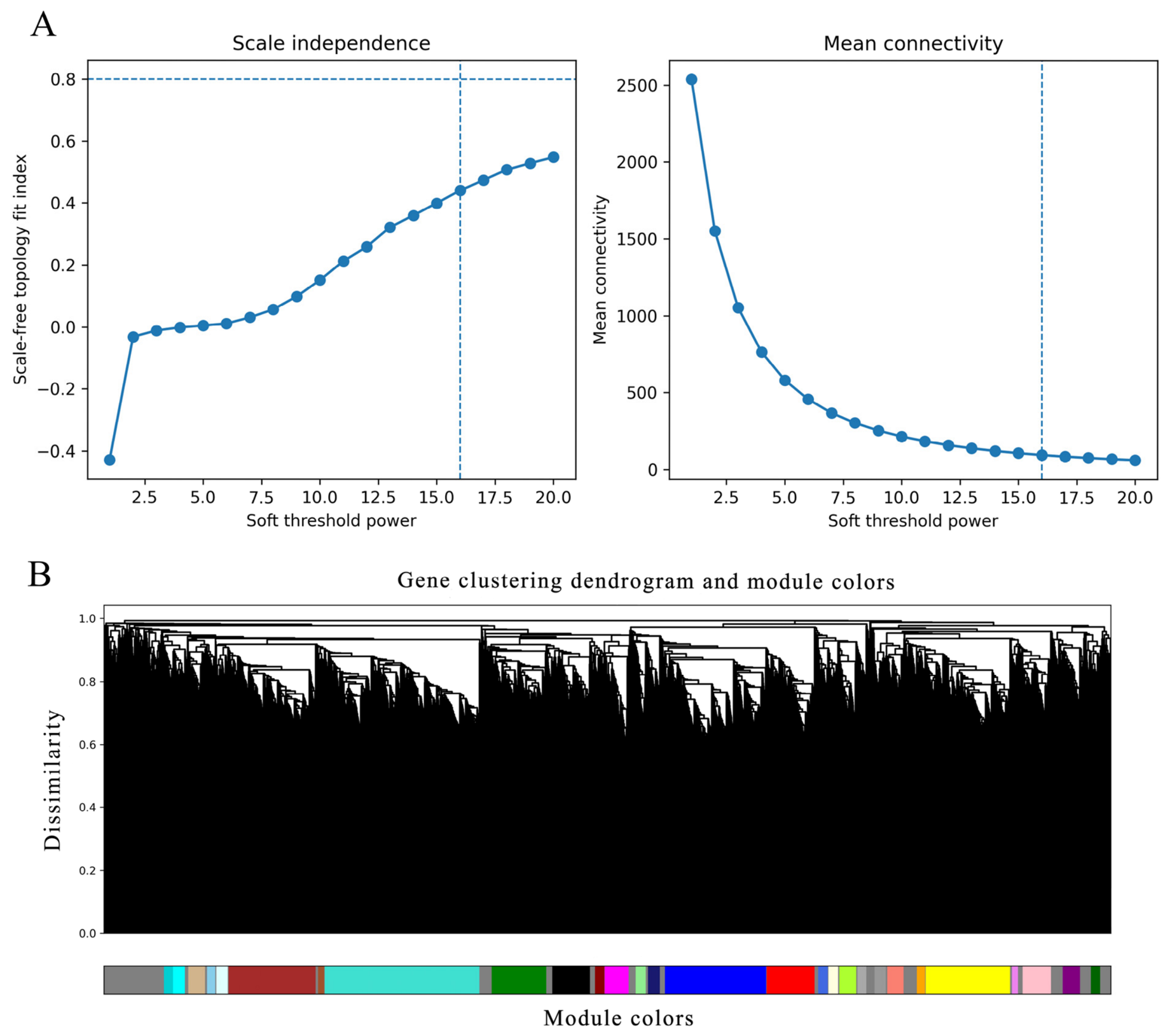
To integrate physiological traits with transcriptomic changes, an exploratory weighted gene co-expression network analysis (WGCNA v1.68) was performed. The FPKM matrix was transformed using log2(FPKM + 1). Genes with FPKM > 1 in at least three samples were retained, and the top 5000 genes with the highest variance were used for network construction. A signed weighted co-expression network was constructed using a soft-thresholding power of 16. The topological overlap matrix (TOM) was calculated, and gene modules were identified by hierarchical clustering with a minimum module size of 30. Module eigengenes were correlated with physiological traits, including root activity, RWC, MDA, REC, SOD, POD, soluble sugars, proline, total flavonoid content, and total saponin content. Hub genes were screened based on module membership and gene significance. Considering the limited number of RNA-seq samples, this WGCNA was used as an exploratory co-expression analysis to identify candidate modules and genes for further validation.

2.7. Statistical Analysis

To ensure data accuracy, at least three replicates were set for each treatment. Microsoft Excel 2019 (Microsoft, Washington, DC, USA) was used to calculate means and standard errors. SPSS version 27.0 (IBM, New York, USA) was used for Duncan’s multiple range test to assess the significance of differences among means (p < 0.05). Graphs were drawn using Origin 2025 (OriginLab, Northampton, MA, USA).

3. Results

3.1. Growth Physiological Analysis

3.1.1. Growth Parameters

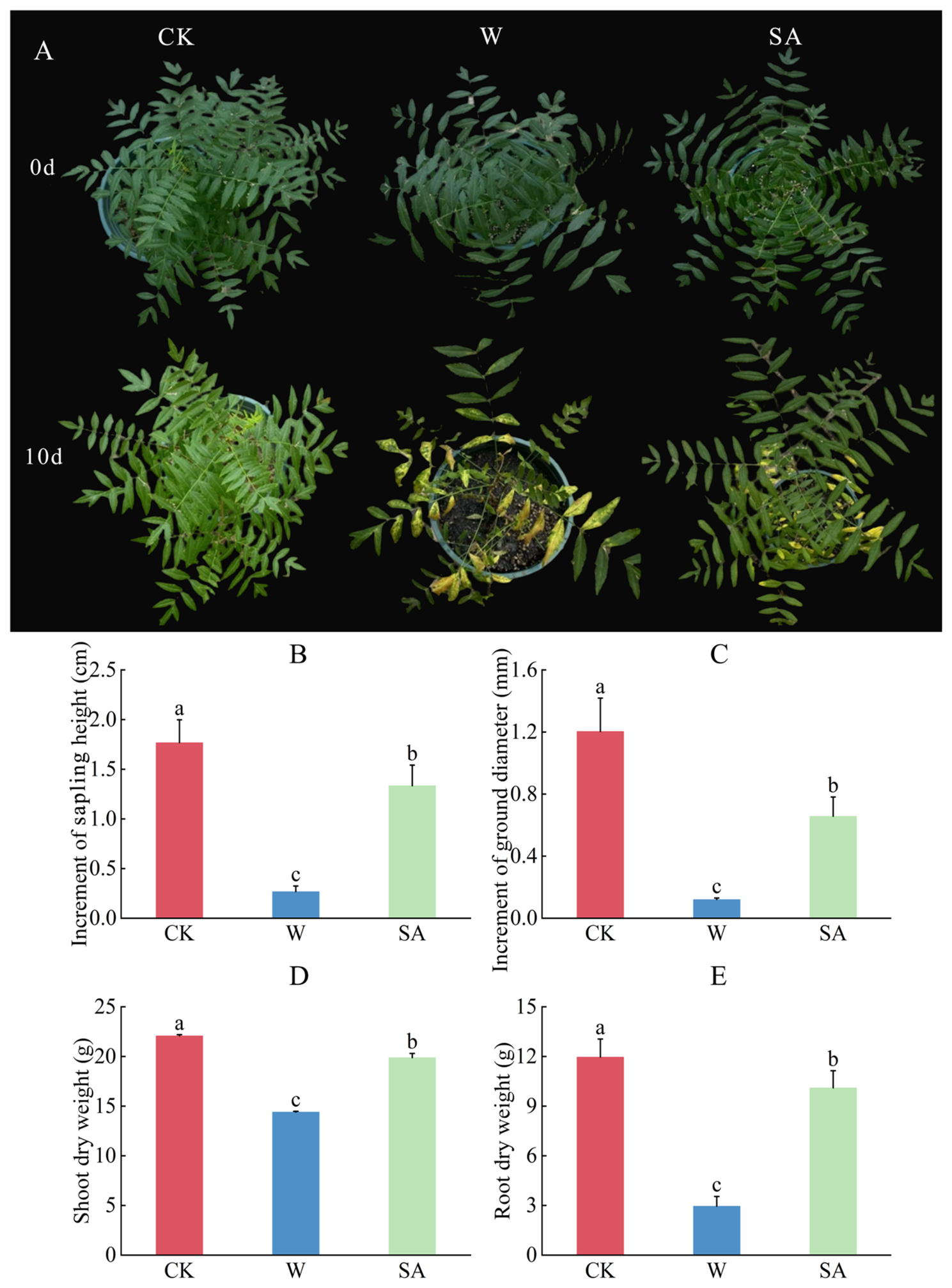
Waterlogging severely affected the leaves of Xanthoceras sorbifolium saplings. However, exogenous SA partially alleviated the damage caused by waterlogging. saplings in the W treatment group (waterlogging alone) exhibited obvious symptoms of waterlogging injury, such as yellowing, wilting, and even abscission (Figure 1A). In contrast, saplings in the SA treatment group (SA + waterlogging) showed only partial yellowing. This indicates that exogenous SA had an ameliorative effect on Xanthoceras sorbifolium saplings under waterlogging stress.
Waterlogging stress significantly inhibited the growth of Xanthoceras sorbifolium saplings, while exogenous SA promoted their growth under waterlogging. Compared with the CK group, the height increment, ground diameter increment, aboveground dry weight, and below ground dry weight of saplings in the W group were significantly reduced by 84.9%, 90.0%, 34.8%, and 75.4%, respectively. In contrast, the corresponding values in the SA group were reduced by only 24.5%, 45.4%, 9.90%, and 15.6%, respectively (Figure 1B–E). SA treatment increased the plant height increment, ground diameter increment, shoot dry weight, and root dry weight by 392.6%, 450.0%, 38.1%, and 242.4%, respectively, relative to the W group. These results indicate that exogenous SA partially alleviated waterlogging damage, promoting plant height, ground diameter growth and biomass accumulation.

3.1.2. Effects of Exogenous SA on Leaf Relative Water Content and Root Activity of Xanthoceras sorbifolium Saplings Under Waterlogging Stress

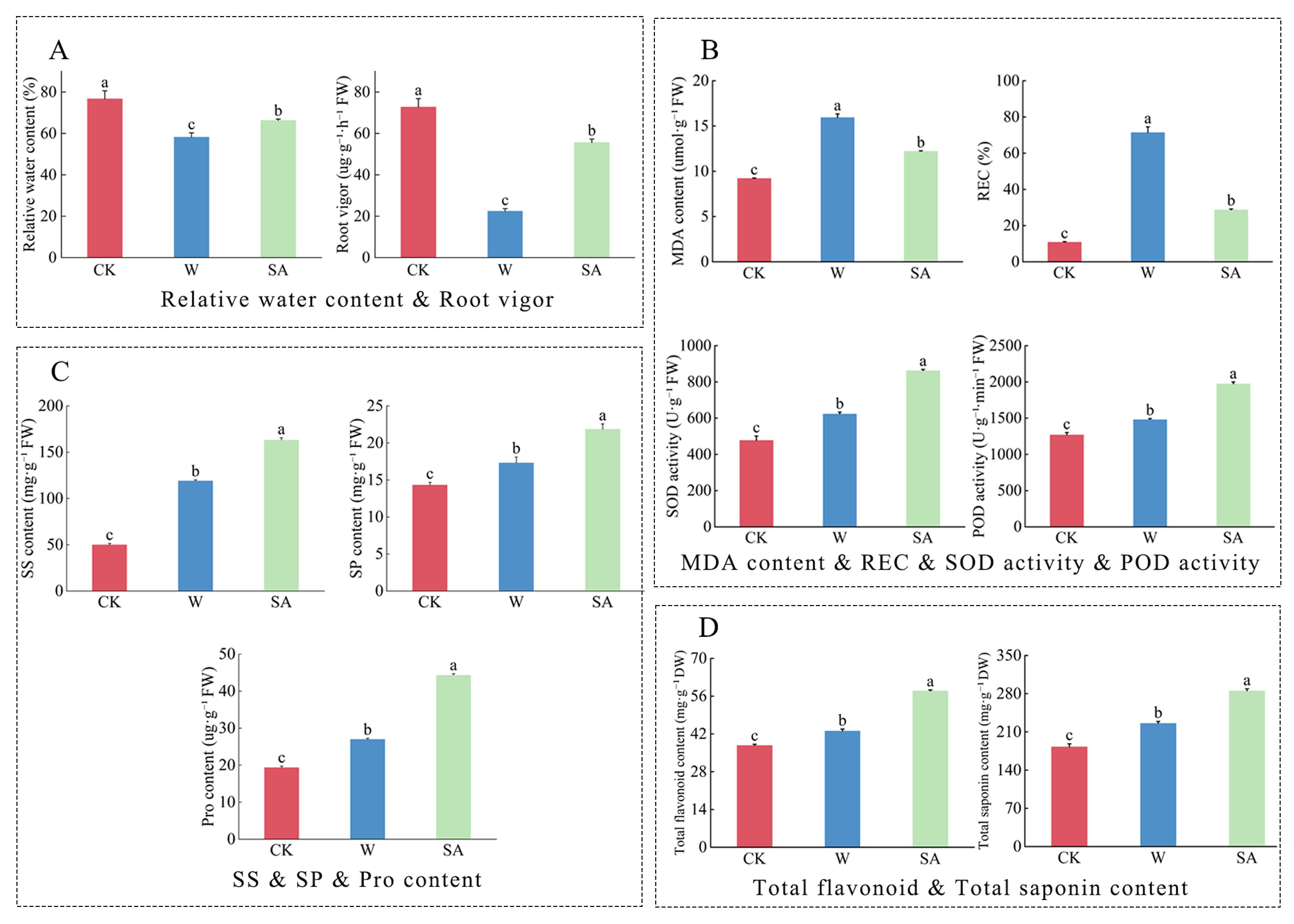
Waterlogging stress significantly reduced leaf RWC and root activity of Xanthoceras sorbifolium saplings, while exogenous SA increased these parameters under waterlogging. Compared with CK, leaf RWC and root activity in the W group were significantly decreased by 24.1% and 69.2%, respectively. In contrast, the decreases in the SA group were only 13.6% and 23.7%, respectively (Figure 2A).

3.1.3. Effects of Exogenous SA on Membrane Lipid Peroxidation and Antioxidant Protective Enzymes of Xanthoceras sorbifolium Saplings Under Waterlogging Stress

Under waterlogging stress, MDA content and REC in leaves of the W group increased significantly, by 73.1% and 558.8%, respectively, compared with CK. This indicates that waterlogging caused severe damage to the leaf membrane system of Xanthoceras sorbifolium. However, in the SA group, MDA content and REC were reduced by 23.4% and 59.8%, respectively, compared with the W group, indicating that exogenous SA alleviated the membrane damage caused by waterlogging (Figure 2B).
Under waterlogging stress, SOD and POD activities in Xanthoceras sorbifolium saplings increased significantly, by 30.5% and 16.6%, respectively, compared with CK. In the SA group, SOD and POD activities were increased by 80.7% and 55.7%, respectively, compared with CK. This indicates that exogenous SA alleviated waterlogging damage by enhancing the activities of antioxidant protective enzymes (Figure 2B).

3.1.4. Effects of Exogenous SA on Osmoregulatory Substances of Xanthoceras sorbifolium Saplings Under Waterlogging Stress

Compared with CK, the contents of SS, SP, and Pro in leaves of the W group increased significantly by 138.4%, 20.9%, and 39.5%, respectively. In contrast, compared with CK, the SS, SP, and Pro contents in the SA group increased by 227.2%, 52.6%, and 129.1%, respectively. Compared with the W group, SA treatment significantly increased SS, SP, and Pro by 37.2%, 26.2%, and 64.2%, respectively (Figure 2C). The changes in SS and Pro were greater than that in SP, indicating that SS and Pro play a major role in osmotic regulation.

3.1.5. Effects of Exogenous SA on Secondary Metabolite Contents of Xanthoceras sorbifolium Saplings Under Waterlogging Stress

Under waterlogging stress, the contents of secondary metabolites in Xanthoceras sorbifolium saplings increased significantly. Compared with CK, total flavonoid and total saponin contents in leaves of the W group increased significantly by 14.2% and 23.5%, respectively. In the SA group, total flavonoid and total saponin contents were significantly higher than in the W group, increasing by 53.7% and 56.2%, respectively, compared with CK (Figure 2D). These results indicate that exogenous SA can increase secondary metabolite contents of Xanthoceras sorbifolium under waterlogging stress, enhance its antioxidant capacity, and thereby improve its tolerance to waterlogging.

3.2. Transcriptome Analysis

3.2.1. Transcriptome Sequencing Statistics and Quality Assessment

Using the Illumina high-throughput sequencing platform, RNA sequencing was performed on Xanthoceras sorbifolium samples from CK, SA, and W treatments, and a total of nine cDNA libraries were successfully constructed. After quality control, the average numbers of clean reads for CK, SA, and W were 36,707,751, 37,315,495, and 46,441,009, respectively. After aligning the clean reads of each sample to the Xanthoceras sorbifolium reference genome, the total mapping rates were above 79.54%, with unique mapping rates ranging from 74.05% to 77.22%, indicating good alignment quality. In addition, the Q30 values were all above 97.58%, and GC contents ranged from 43.5% to 44.0%, indicating low sequencing error rates and good overall data quality suitable for subsequent analysis. These data are listed in the Supplementary Materials (Supplementary Table S2).

3.2.2. Differential Expression Analysis of Genes in Xanthoceras sorbifolium Under Different Treatments

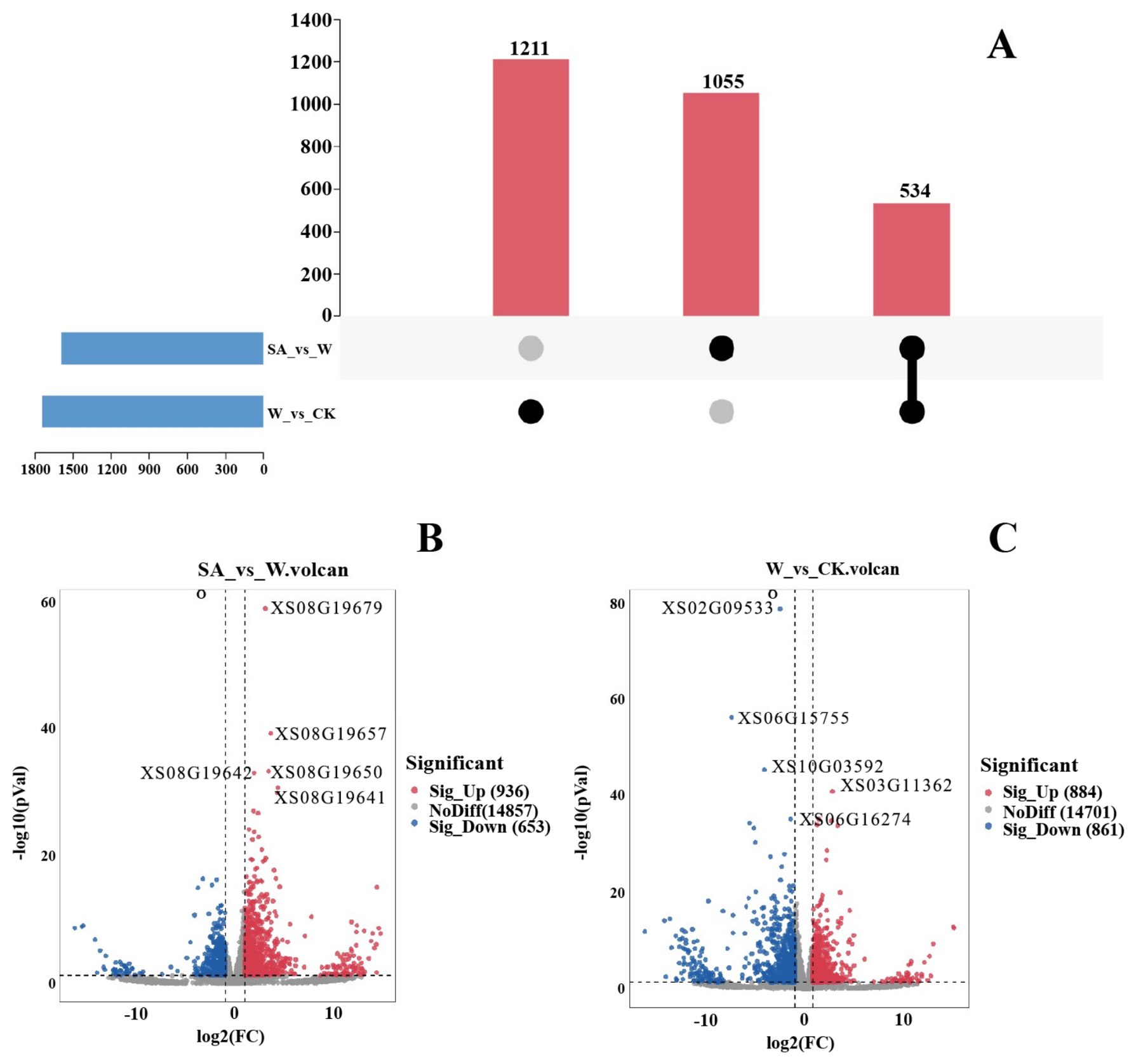
Differential expression analysis was performed based on FPKM values, with thresholds of |log2FC| ≥ 1 and FDR < 0.05. A total of 2800 DEGs were identified across the two comparison groups (Supplementary Table S3), of which 534 were commonly differentially expressed in both groups (Figure 3A). Specifically, between SA and W, there were 1589 DEGs, including 936 up-regulated and 653 down-regulated genes (Figure 3B); between W and CK, there were 1745 DEGs, including 884 up-regulated and 861 down-regulated genes (Figure 3C).

3.2.3. GO Functional Annotation and Enrichment Analysis of DEGs Between Different Treatments

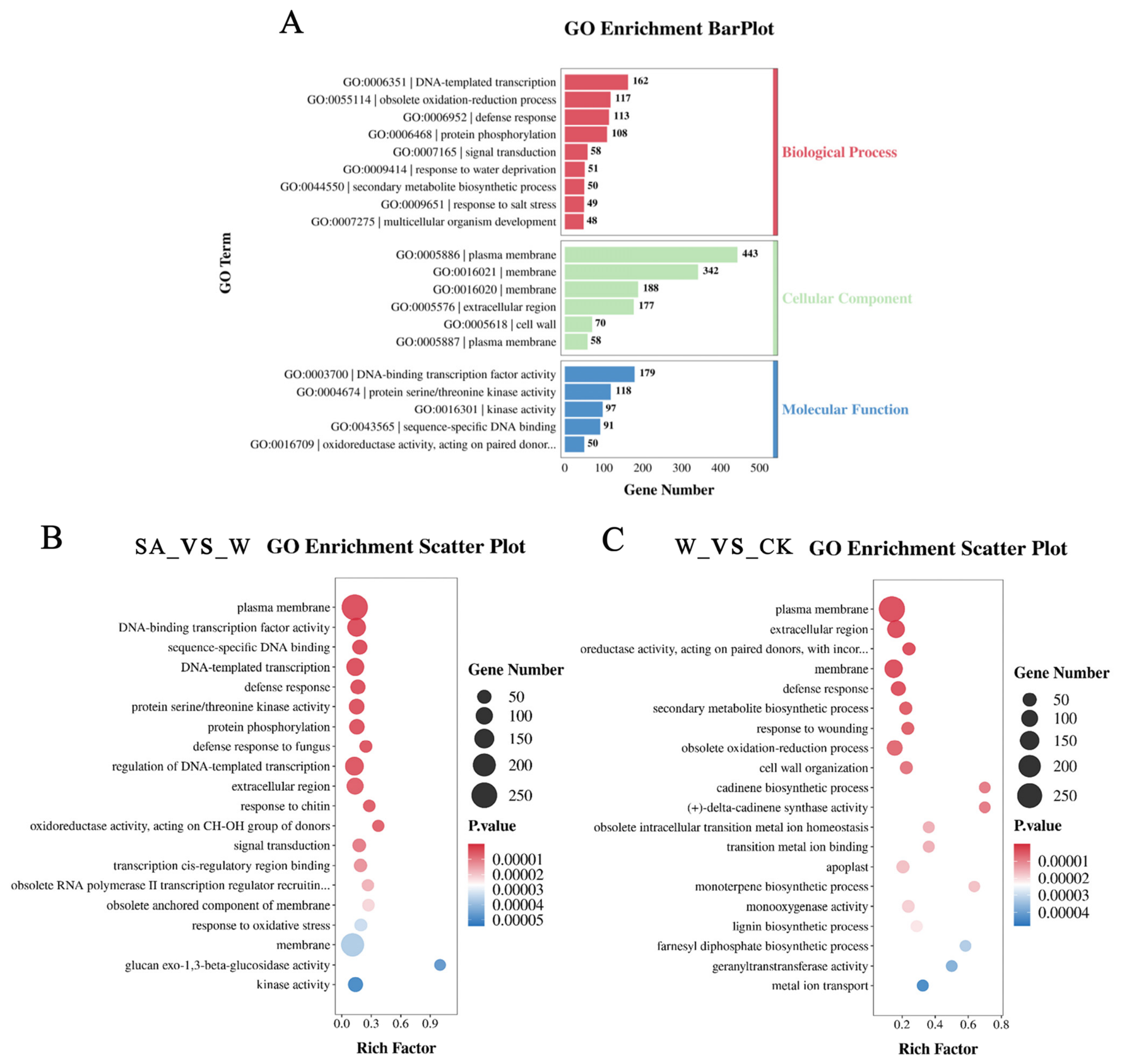
GO functional annotation was performed on 2800 differentially expressed genes (DEGs), and the results were categorized into three ontologies: biological process (BP), cellular component (CC), and molecular function (MF) (Figure 4A). Within the BP category, DNA-templated transcription (GO:0006351) annotated the highest number of DEGs (162), followed by oxidation–reduction process (GO:0055114) and defense response (GO:0006952), with 117 and 113 DEGs, respectively. In the CC category, plasma membrane (GO:0005886) annotated the most DEGs (443), followed by membrane (GO:0016021) and membrane part (GO:0016020). In the MF category, DNA-binding transcription factor activity (GO:0003700) annotated the highest number of DEGs (179), followed by protein serine/threonine kinase activity (GO:0004674) and kinase activity (GO:0016301), with 118 and 97 DEGs, respectively.
The common GO term most significantly enriched (by p-value) in both the SA_VS_W and W_VS_CK comparisons was plasma membrane, with 258 and 270 DEGs and Rich factors of 0.13 and 0.14, respectively. In the SA_VS_W comparison, the GO term with the highest Rich factor was glucan exo-1,3-beta-glucosidase activity (4 DEGs, Rich factor = 1.0) (Figure 4B). In the W_VS_CK comparison, the GO terms with the highest Rich factor were cadinene biosynthetic process and (+)-delta-cadinene synthase activity (7 DEGs each, Rich factor = 0.7 for both) (Figure 4C).

3.2.4. KEGG Enrichment Analysis of DEGs Between Different Treatments

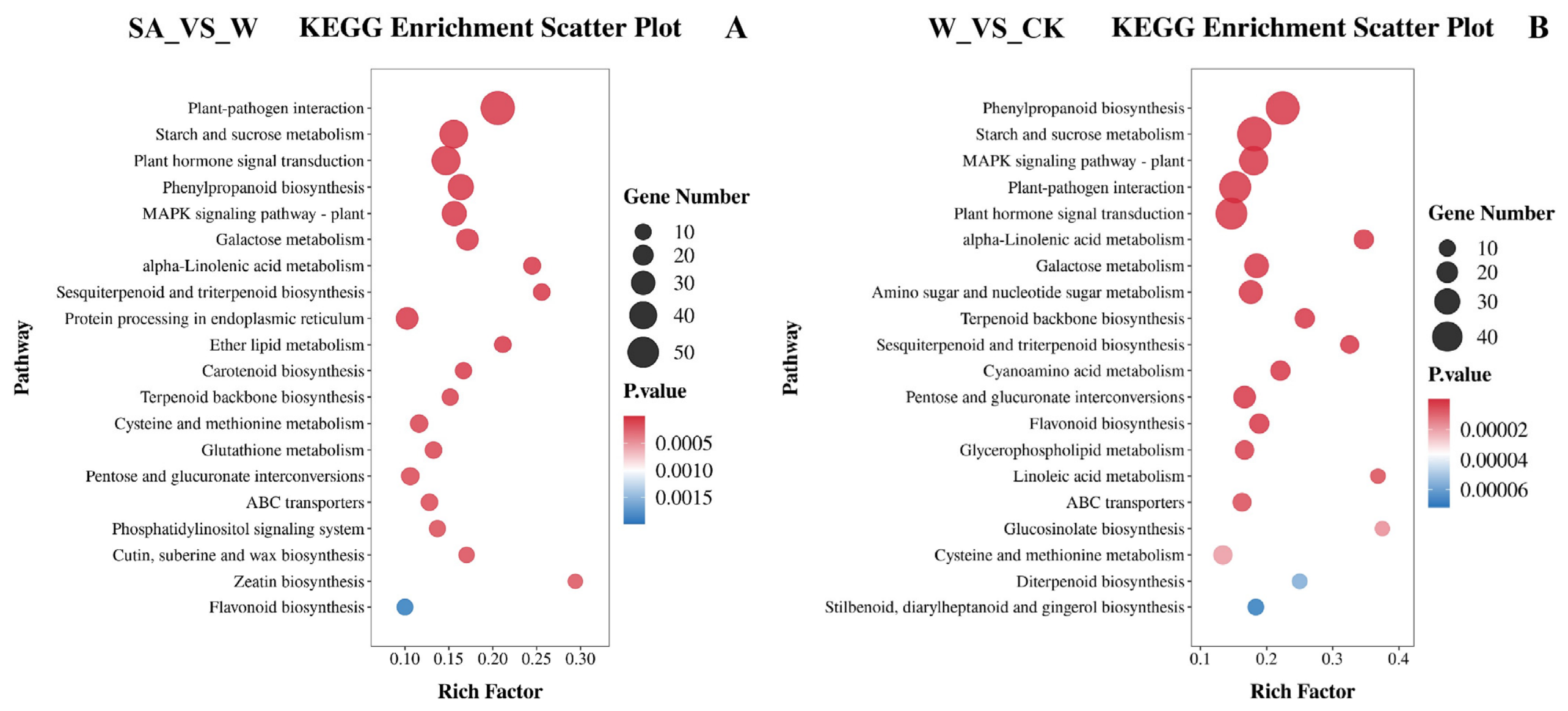
The KEGG pathway enrichment analysis revealed clear differences between the two comparison groups but also overlapping enrichment patterns. In the SA vs. W group, the plant–pathogen interaction pathway was most significantly enriched, with 58 DEGs annotated (Rich factor = 0.21); the zeatin biosynthesis pathway had the highest Rich factor (0.29), containing 5 DEGs (Figure 5A). In the W vs. CK group, the phenylpropanoid biosynthesis pathway was most significantly enriched (48 DEGs, Rich factor = 0.22); the glucosinolate biosynthesis pathway had the highest Rich factor (0.38), containing 6 DEGs (Figure 5B). Notably, 13 pathways were commonly enriched in both comparison groups, including plant hormone signal transduction, phenylpropanoid biosynthesis, and flavonoid biosynthesis, suggesting that these pathways play core roles in both waterlogging adaptation and SA-mediated regulation.

3.2.5. Expression of Enzyme Genes Involved in the Flavonoid Biosynthesis Pathway

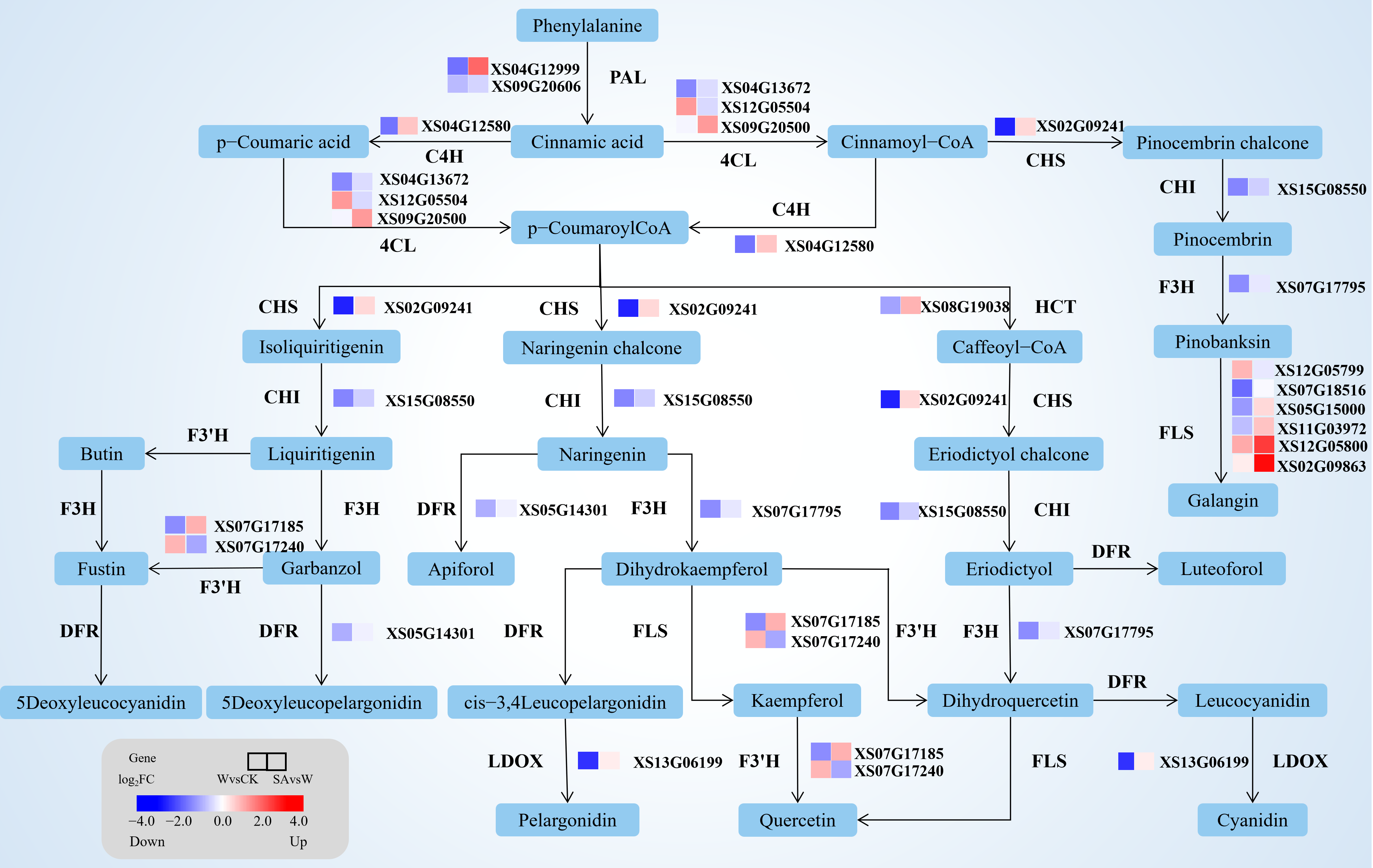
Based on KEGG enrichment analysis (|log2FC| > 1 and FDR ≤ 0.05), the phenylpropanoid biosynthesis and flavonoid biosynthesis pathways were integrated (Figure 6). Overall, waterlogging (W) compared with CK caused a widespread down-regulation trend in this pathway, involving key enzyme genes: two PAL, one C4H, one 4CL, one HCT, one CHS, one CHI, one DFR, one F3H, one F3′H, three FLS, and one LDOX. At the same time, a few homologs of 4CL (XS12G05504), F3′H (XS07G17240), and FLS (XS12G05800, XS12G05799) were specifically up-regulated. In SA compared with W, one PAL, one HCT, one 4CL, three FLS, and one F3′H were significantly up-regulated, while one F3′H homolog (XS07G17240) was significantly down-regulated.
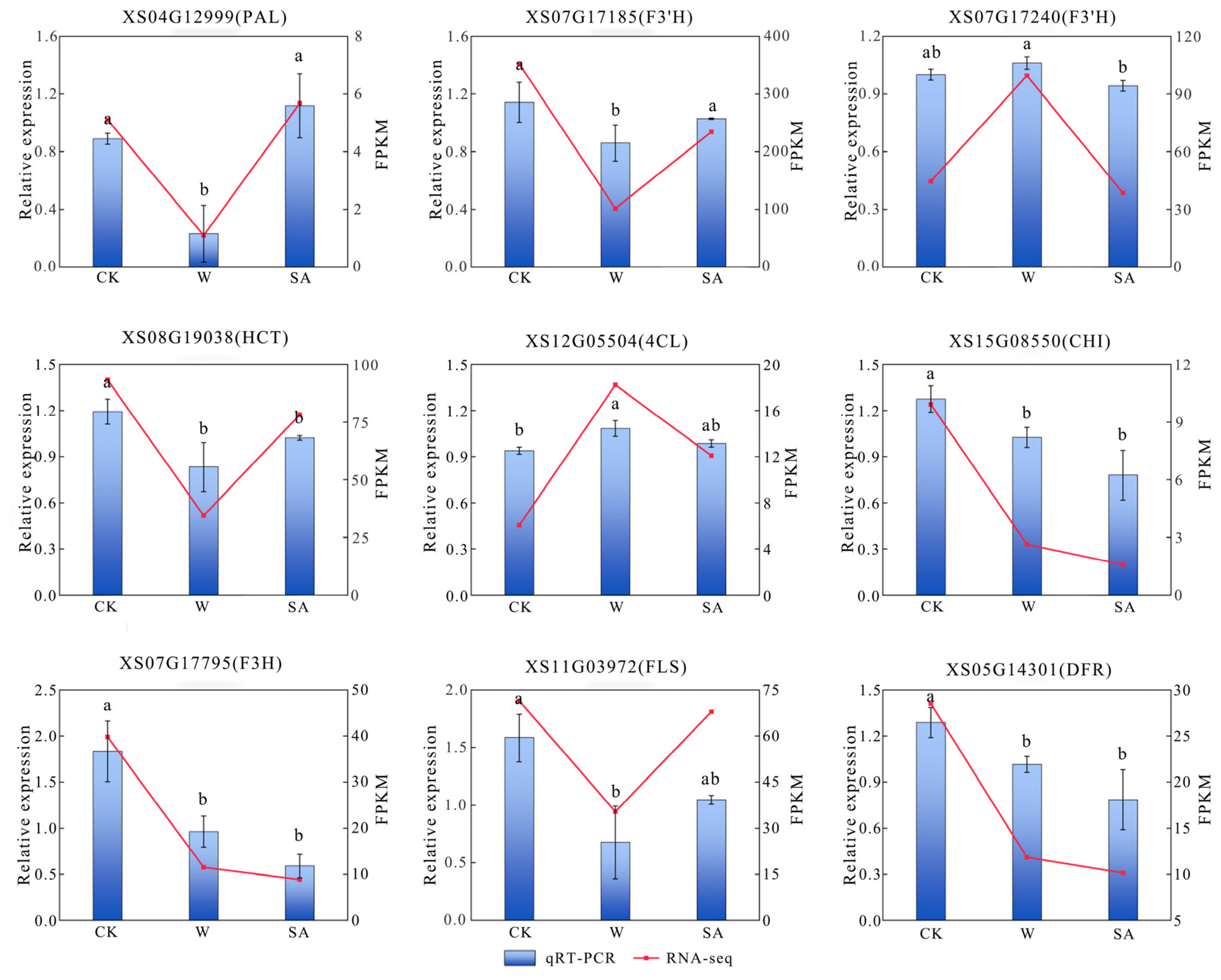
To verify the accuracy of the RNA-seq data, nine DEGs were randomly selected for qRT-PCR analysis. The results showed that the relative expression levels measured by qRT-PCR were generally consistent with the changing trends of the FPKM values obtained from RNA-seq, thereby confirming the reliability of the sequencing results (Figure 7), To further validate the reliability of the RNA-seq data, we performed a Pearson correlation analysis between the RNA-seq FPKM values and the qRT-PCR relative expression levels (2−∆∆CT) for the selected differentially expressed genes (Supplementary Figure S1).

3.2.6. Expression of Plant Hormone Signal Transduction Pathway-Related Genes

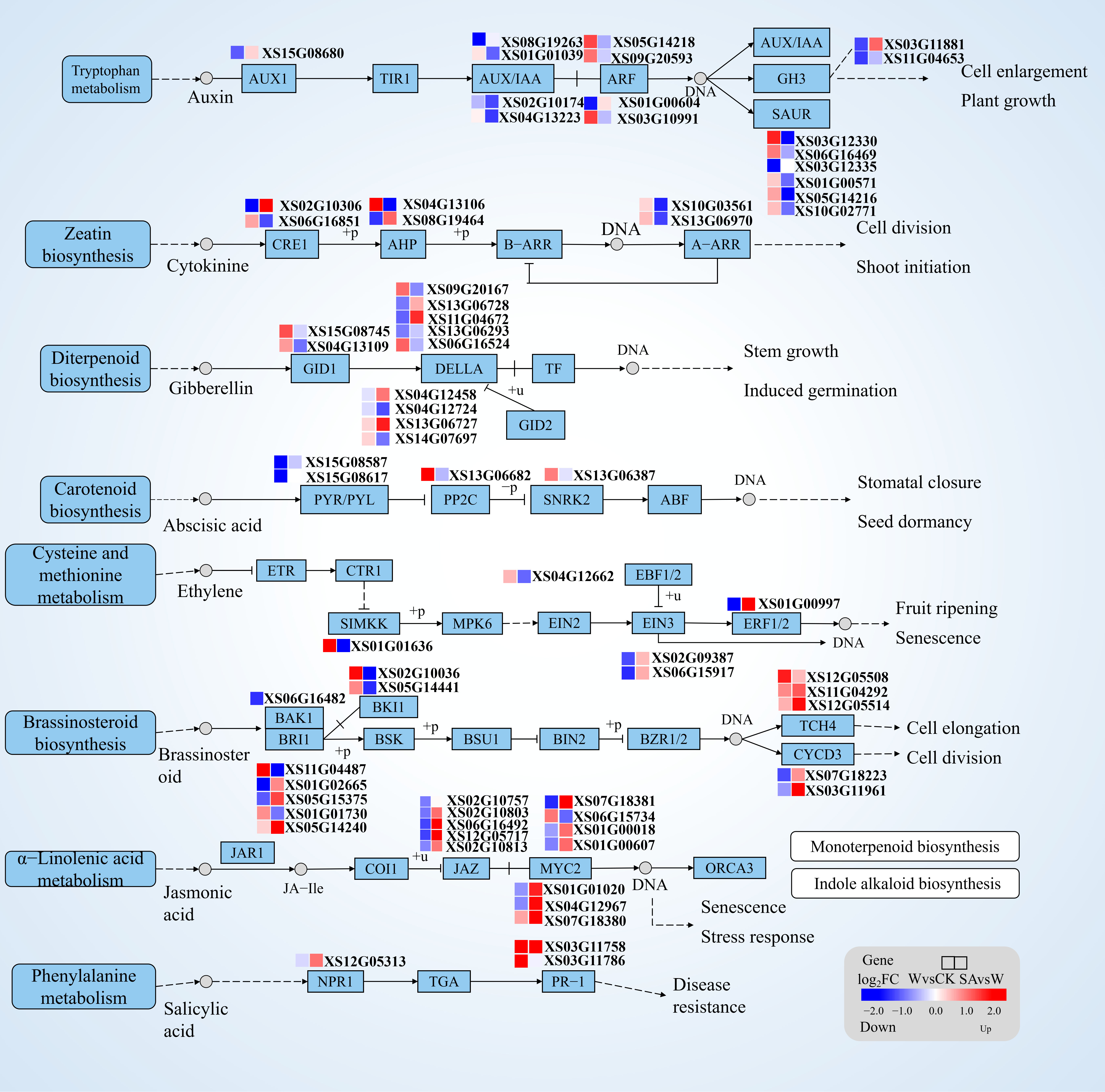
Based on the KEGG enrichment analysis (|log2FC| > 1, FDR ≤ 0.05), plant hormone signal transduction was identified as a key pathway in response to waterlogging (W) and salicylic acid (SA) treatments. Compared with the control (CK), the W treatment induced 43 DEGs (18 up/25 down) in this pathway; compared with the W treatment, the SA treatment involved 45 DEGs (24 up/21 down), among which 17 DEGs were differentially expressed in both comparison groups. Taking the auxin signaling pathway as an example, there were 11 DEGs in the W/CK comparison group and 8 DEGs in the SA/W comparison group. Compared with CK, the W treatment up-regulated three ARF and two SAUR genes, and down-regulated AUX1, IAA, ARF, two GH3, and one SAUR gene. Compared with the W treatment, the SA treatment up-regulated one GH3 gene and down-regulated three IAA and four SAUR genes. Detailed information on differentially expressed genes in the other hormone signaling pathways (cytokinin, gibberellin, abscisic acid, ethylene, brassinosteroid, jasmonic acid, and salicylic acid) is listed (Figure 8). Collectively, these results indicate that multiple plant hormones coordinate to transmit stress signals and participate in the response of Xanthoceras sorbifolium to waterlogging stress, and these related genes may play important roles in this process.

3.2.7. Transcription Factor Expression Analysis

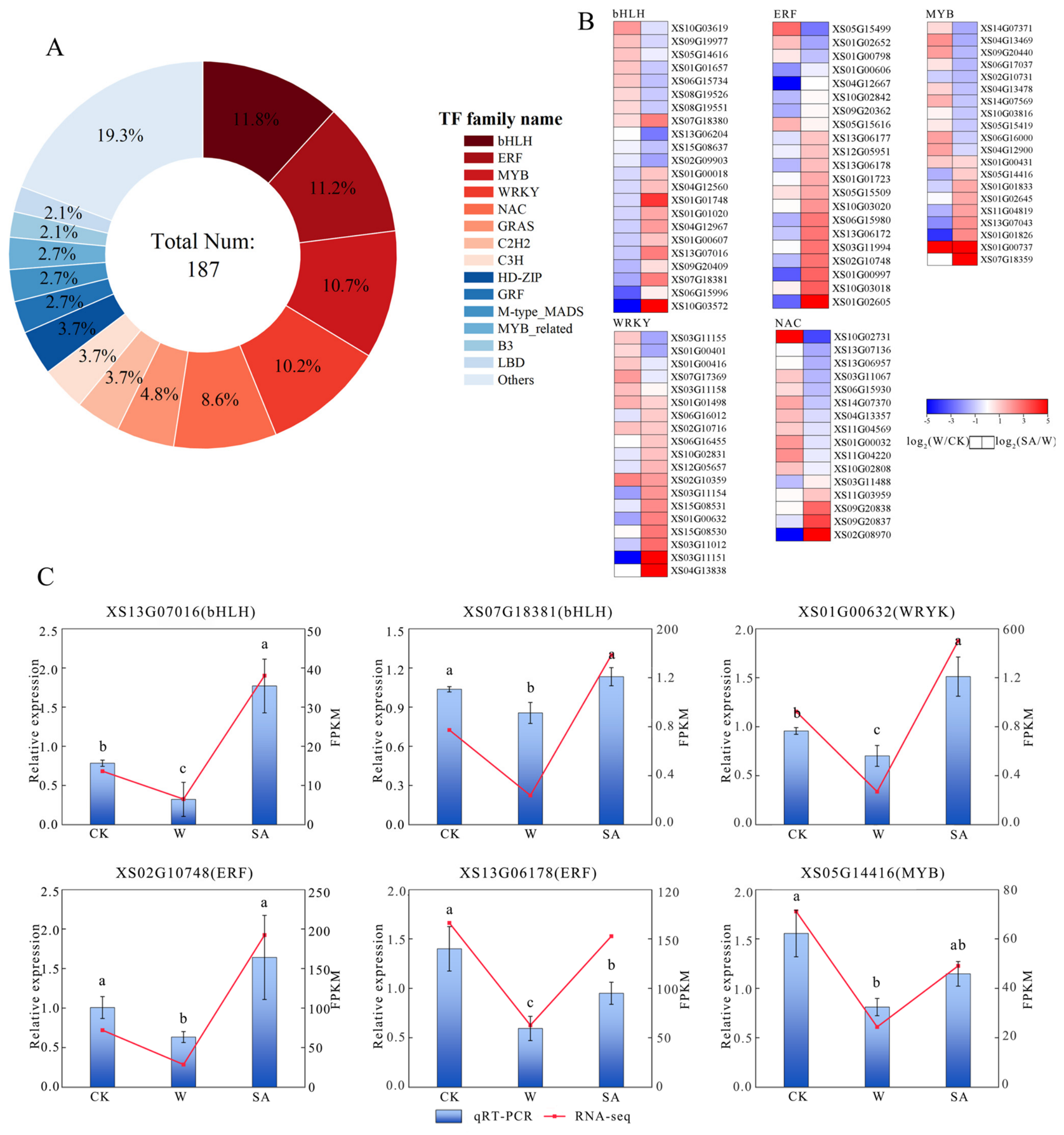
Transcription factors among the 2800 DEGs were predicted using the PlantTFDB database (E-value ≤ 1.0 × 10⁻⁵). A total of 187 differentially expressed transcription factors belonging to 37 families were identified. Among them, the bHLH, ERF, MYB, WRKY, and NAC families had the highest numbers, accounting for 11.8%, 11.2%, 10.7%, 10.2%, and 8.6% of the total TFs, respectively (Figure 9A).
Expression levels of the top five TF families were statistically analyzed (Figure 9B). Compared with CK, waterlogging (W) induced equal numbers of up- and down-regulated members in the bHLH family; in the ERF family, 3 members were up-regulated and 10 down-regulated; in WRKY and MYB, 7 were up-regulated and 4 were down-regulated; in NAC, 8 were up-regulated and 2 were down-regulated.
SA treatment generally reversed the expression direction of some genes that were down-regulated under W stress. For example, bHLH members (XS10G03572, XS07G18381), ERF members (XS01G00997, XS02G10748), MYB members (XS10G01826, XS13G07043), WRKY members (XS03G11151, XS03G11012), and NAC members (XS02G08970, XS10G02731) that were down-regulated under W stress were significantly up-regulated after SA treatment, indicating a broad activation effect of SA on these stress-related TF families. Some genes, such as MYB member (XS01G00737) and WRKY member (XS02G10359), were continuously up-regulated under both treatments (Figure 9B).
Six differentially expressed transcription factors were selected for qRT-PCR validation. The relative expression levels of these six TFs determined by qRT-PCR were generally consistent with the RNA-seq, confirming the reliability of the transcriptome data (Figure 9C).

3.3. WGCNA

To further link transcriptomic changes with physiological responses, an exploratory WGCNA was performed using the top 5000 genes with the highest expression variance. A signed co-expression network was constructed with a soft-thresholding power of 16 (Figure 10A). Based on hierarchical clustering and dynamic tree cutting, these genes were classified into 28 co-expression modules, among which the turquoise, blue, brown, and yellow modules contained the largest numbers of genes, with 768, 503, 432, and 419 genes, respectively (Figure 10B).
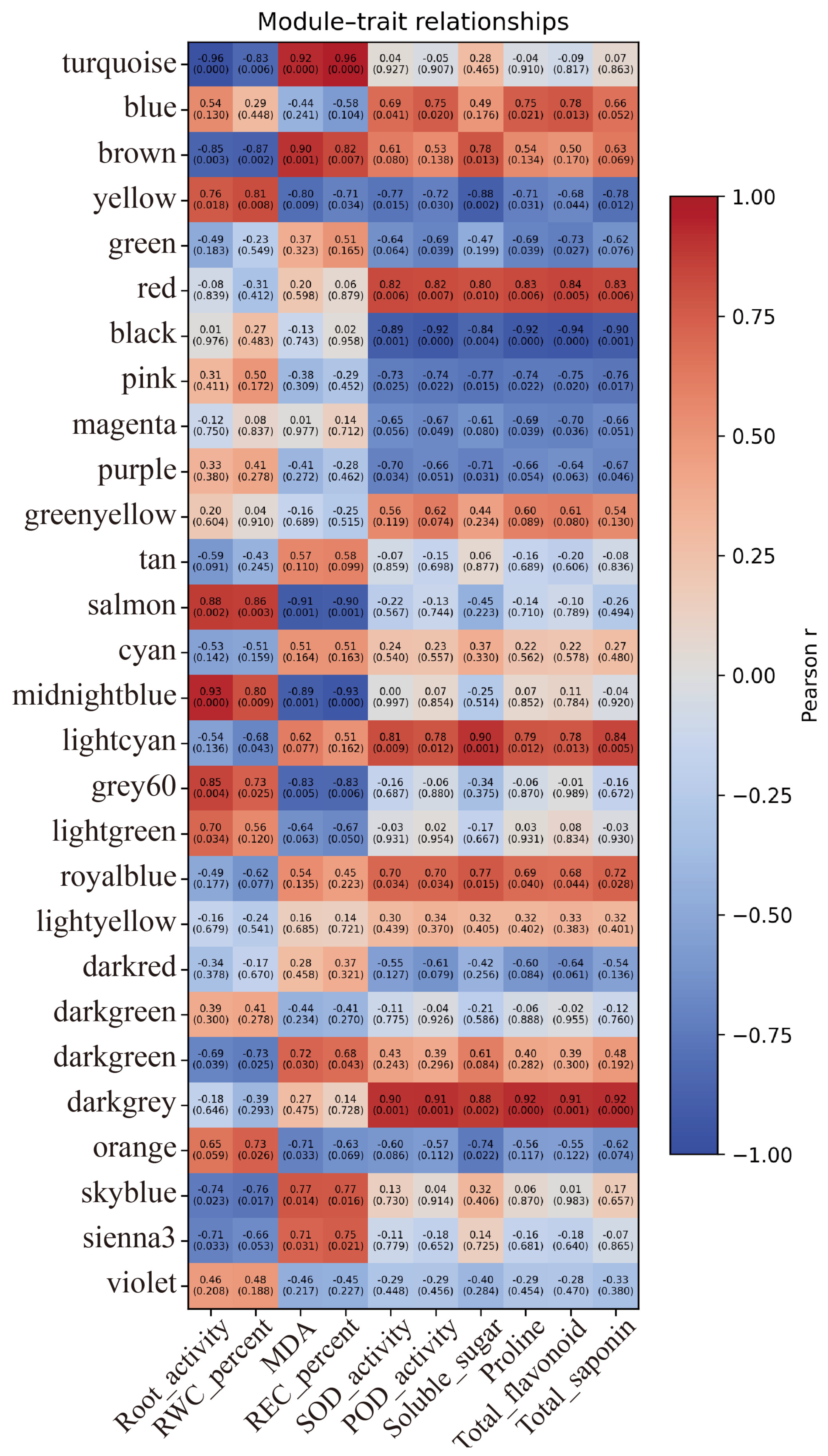
The module–trait correlation analysis revealed several modules closely associated with physiological responses to waterlogging and SA treatment (Figure 11). The turquoise module showed strong positive correlations with stress injury indicators, including REC (r = 0.96) and MDA (r = 0.92), but a strong negative correlation with root activity (r = −0.96), suggesting that this module may represent a waterlogging-injury-associated transcriptional program. In contrast, the midnight blue module was positively correlated with root activity (r = 0.93) and negatively correlated with REC (r = −0.93) and MDA (r = −0.89), indicating its potential involvement in root recovery and membrane stability. Modules associated with antioxidant defense and secondary metabolism were also identified. The dark grey module was positively correlated with POD activity (r = 0.91), SOD activity (r = 0.90), total flavonoid content (r = 0.91), total saponin content (r = 0.92), and proline content (r = 0.92). Similarly, the red module was positively correlated with total flavonoid content (r = 0.84), SOD activity (r = 0.82), and POD activity (r = 0.82). These results suggest that SA-mediated enhancement of antioxidant capacity and secondary metabolite accumulation is closely associated with specific co-expression modules. Candidate genes related to SA signaling, flavonoid biosynthesis, hormone signaling, and transcriptional regulation were located within these trait-associated modules. For example, PR1 (XS03G11758) was located in the dark grey module, NPR1 (XS12G05313) was located in the red module, FLS (XS12G05800) was located in the green-yellow module, and HCT (XS08G19038) was located in the salmon module. In addition, CRE1 (XS06G16851), AHP (XS04G13106), WRKY, ERF, bHLH, and MYB family genes were also identified in modules associated with antioxidant activity, flavonoid accumulation, root activity, or membrane stability. These findings indicate that SA-mediated waterlogging tolerance may involve coordinated regulation of defense signaling, hormone signaling, flavonoid biosynthesis, and antioxidant responses.

4. Discussion

4.1. Effects of Exogenous SA on the Physiology of Xanthoceras sorbifolium Saplings Under Waterlogging Stress

The root system is a key organ for water and nutrient uptake and plays an important role in plant growth and development. However, waterlogging stress inhibits root growth and development, thereby hindering normal plant growth [40]. Studies have shown that under abiotic stress, wheat root activity decreases significantly, while exogenous SA significantly increases ATP content and H+-ATPase activity in the roots, as well as the relative water content in leaves [41]. In our experiment, exogenous SA treatment significantly alleviated the effects of waterlogging, as shown by smaller decreases in leaf RWC and root activity. SA may improve water retention and root function in Xanthoceras sorbifolium saplings under waterlogging by maintaining root physiological activity, improving water uptake and transport efficiency, or enhancing cell membrane stability and osmotic adjustment capacity.
MDA content and REC are important indicators for evaluating the degree of membrane lipid peroxidation and plant stress tolerance [42]. After waterlogging stress, ROS accumulate massively in plants, causing adverse effects [7]. Studies have shown that under waterlogging stress, leaf MDA content increases significantly, the membrane system is damaged, REC increases, and SOD and POD activities gradually increase with prolonged waterlogging. Exogenous SA can significantly reduce ROS accumulation, increase antioxidant enzyme activities, and promote sapling growth, as verified in waxy maize (Zea mays L.) and cucumber (Cucurbita pepo) [17,43]. In our experiment, waterlogging stress caused significant oxidative damage to leaves of Xanthoceras sorbifolium saplings, manifested by sharp increases in MDA content and REC. This suggests that the cell membrane system was damaged, and the plant activated its own antioxidant defense mechanism, with adaptive increases in SOD and POD activities. Exogenous SA alleviated this damage, significantly reducing MDA accumulation and membrane permeability while increasing SOD and POD activities. SA more efficiently activated the antioxidant enzyme system in Xanthoceras sorbifolium saplings, enhancing ROS scavenging capacity, reducing membrane lipid peroxidation, and maintaining cell membrane stability. Therefore, enhancing antioxidant defense is likely an important physiological mechanism by which SA improves waterlogging tolerance in Xanthoceras sorbifolium.
Under water stress conditions, plants accumulate osmoregulatory substances (such as SS, SP, and Pro) to maintain cell membrane stability, lower osmotic potential, and enhance osmotic adjustment, thereby ensuring normal physiological processes [44]. Significant accumulation of key osmoregulatory substances like soluble sugars, soluble proteins, and proline is a typical physiological adaptation strategy of plants to cope with water and osmotic imbalance. These substances help maintain cell turgor and stabilize membrane structures and protein functions, thus alleviating physiological dehydration caused by stress [45]. Our study found that under waterlogging stress, the levels of soluble sugars, soluble proteins, and proline were significantly increased by SA treatment, consistent with previous reports [46,47]. Both SS and Pro increased markedly under SA treatment; SS showed the greatest relative change, while Pro more than doubled (from 19.33 to 44.28 μg/g). These findings suggest that both are key osmolytes in SA-induced osmotic regulation, and that Pro may contribute as much as SS to osmotic balance, with their co-accumulation likely providing synergistic protection against osmotic stress. Exogenous SA treatment significantly enhanced the accumulation of all three substances, possibly by strengthening stress perception and response through signaling regulation, and by more efficiently mobilizing carbon and nitrogen metabolism to promote the biosynthesis and accumulation of osmoregulatory substances.
Flavonoids and saponins are two major classes of secondary metabolites in plants and play extremely important roles in growth, development, and stress adaptation [48,49]. Under waterlogging stress, maize saplings increase their total flavonoid content to enhance antioxidant capacity and thereby improve stress tolerance [50]. Appropriate water stress can increase the saponin content in American ginseng (Panax quinquefolius) [51]. Our study showed that exogenous SA treatment further increased the levels of both secondary metabolites. SA, as a key defense signal molecule, may synergistically amplify waterlogging-induced secondary metabolism by regulating the phenylpropanoid and terpenoid metabolic pathways, efficiently synthesizing flavonoids and saponins with antioxidant and protective functions [52,53]. The significant increase in secondary metabolite contents under SA treatment likely strengthens the plant’s own antioxidant capacity, representing an important physiological mechanism by which SA alleviates stress damage and enhances waterlogging tolerance.

4.2. Effects of Exogenous SA on the Transcriptome of Xanthoceras sorbifolium Saplings Under Waterlogging Stress

Flavonoids are important secondary metabolites widely present in various plant tissues and play key roles in environmental adaptation and stress resistance [54]. PAL, C4H, 4CL, and CHS are key enzyme genes in the flavonoid biosynthesis pathway, regulating and controlling the biosynthesis of secondary metabolites [55]. In plants, SA is mainly synthesized via the isochorismate (ICS) and phenylalanine (PA) pathways, and chorismate can be converted to phenylalanine through multiple steps. The phenylalanine pathway shares common reaction steps with the flavonoid synthesis pathway, indicating potential synergistic regulation between SA and flavonoid synthesis [56,57]. Related studies have shown that exogenous SA significantly promotes flavonoid production in blueberry leaves, with significant up-regulation of enzyme genes involved in flavonoid synthesis [58]. In Tartary buckwheat (Fagopyrum tataricum), SA treatment significantly increased total flavonoid content in grains and up-regulated key enzyme genes (PAL, CHS, F3H, etc.), indicating that exogenous SA induces the expression of key enzyme genes in the flavonoid synthesis pathway, thereby promoting flavonoid accumulation [59]. In our study, compared with the W treatment, SA-treated Xanthoceras sorbifolium saplings under waterlogging stress showed significantly increased total flavonoid content and up-regulated expression of enzyme genes in the flavonoid synthesis pathway, including PAL (XS04G12999), 4CL (XS09G20500), FLS (XS12G05800, XS02G09863), F3′H (XS07G17185), and HCT (XS08G19038). In conclusion, these genes may be key targets through which SA regulates flavonoid accumulation in Xanthoceras sorbifolium saplings under waterlogging stress, thereby promoting total flavonoid accumulation.
Exogenous SA treatment can promote an increase in endogenous SA content, thereby enhancing plant tolerance to abiotic stress and reducing negative impacts on growth and development. NPR1 is a key regulator in SA-mediated plant defense responses. WRKY18 is an SA-induced transcription factor that specifically recognizes the W-box element in the NPR1 promoter and positively regulates NPR1 expression, and exogenous SA further enhances this regulation [60,61]. In our study, exogenous SA treatment significantly induced the up-regulation of NPR1 (XS12G05313), WRKY18 (XS02G10359), and PR1 (XS03G11758) in Xanthoceras sorbifolium. The up-regulation of these genes may promote endogenous SA accumulation, thereby enhancing tolerance to waterlogging stress. Previous studies have shown that SA spraying can increase endogenous IAA, GA and CTK contents and decrease ABA content, thereby improving plant tolerance [62]. In our study, IAA synthesis-related SAUR and GA synthesis-related DELLA were significantly up-regulated under waterlogging stress but down-regulated under SA treatment; CTK synthesis-related CRE1 and AHP were significantly down-regulated under waterlogging stress but up-regulated under SA treatment. By modulating the expression of these key hormone-related genes, SA may promote increases in endogenous IAA, GA, and CTK contents, thereby enhancing waterlogging tolerance. ERF1/2 are important members of the ethylene response factor family (AP2/ERF family) and play key roles in stress responses, growth, development, and fruit ripening. Previous studies have shown that the ethylene (ET) signaling pathway is an important pathway for plant resistance, playing a significant role in drought tolerance, cold tolerance, and antiviral defense [63]. In our study, the ERF1/2 gene (XS01G00997) in the ET signaling pathway was significantly down-regulated under waterlogging stress but up-regulated under SA treatment. Exogenous SA treatment significantly induced the expression of the BR signaling pathway genes BRI1 and TCH4 and the JA signaling pathway gene MYC2 in maize, promoting JA and BR biosynthesis and increasing their contents, thereby enhancing stress responses [64]. In our study, BRI1 (XS05G15375) in the BR pathway and MYC2 (XS07G18381) in the JA pathway were significantly down-regulated under waterlogging stress but up-regulated under SA treatment, indicating that exogenous SA may increase JA and BR contents in Xanthoceras sorbifolium, thereby enhancing waterlogging tolerance.
Related studies have shown that MYB transcription factors are key regulators of flavonoid biosynthesis, with dual regulatory roles (positive or negative) [65]. For example, overexpression of MYB6 in poplar (Populus tomentosa) increased anthocyanin and proanthocyanidin contents in Arabidopsis [66], while overexpression of VvMYB5b in tomato (Solanum lycopersicum L.) reduced the flavonoid content [67]. bHLH family genes can directly bind to the DFR promoter, triggering anthocyanin accumulation [68]. Members of the ERF, WRKY, and NAC families have also been shown to be involved in flavonoid synthesis [69,70,71]. In our study, seven MYB, five bHLH, eight ERF, five WRKY, and four NAC family transcription factors showed opposite expression trends between W and SA treatments. These TFs may act as positive or negative regulators to co-regulate flavonoid synthesis in Xanthoceras sorbifolium under SA treatment. Therefore, we hypothesize that the key TFs regulating SA-mediated flavonoid biosynthesis under waterlogging stress are MYB, MYB_related, bHLH, ERF, WRKY, and NAC. These TFs may act as positive or negative regulators to promote or inhibit the expression of flavonoid pathway genes, thereby regulating flavonoid accumulation and the response to waterlogging stress.

4.3. WGCNA Uncovers Salicylic Acid-Driven Co-Expression Networks Linking Antioxidant Physiology and Transcriptional Regulation Under Waterlogging Stress

Phytohormone salicylic acid (SA) has been widely reported to play a critical role in enhancing plant tolerance to various abiotic stresses. WGCNA further supported the physiological–transcriptomic association underlying SA-mediated waterlogging tolerance [72]. The dark grey and red modules showed strong positive correlations with POD activity, SOD activity, and total flavonoid content, suggesting that the enhancement of antioxidant defense under SA treatment is closely linked to coordinated transcriptional regulation. Notably, genes involved in SA signaling, including PR1 (XS03G11758) and NPR1 (XS12G05313), together with WRKY, ERF, bHLH, and MYB transcription factors, were identified in trait-associated modules, implying that SA signaling and transcription factor-mediated regulation may act upstream of antioxidant and secondary metabolic responses. This is mechanistically similar to the finding that WRKY1 regulates PR1-mediated immune balance against biotic stress [73].
The turquoise module showed strong positive correlations with MDA and REC but a negative correlation with root activity, suggesting that this module may represent a transcription program associated with waterlogging injury. In contrast, the midnight blue and salmon modules were positively correlated with root activity and negatively correlated with MDA and REC, indicating their potential involvement in root physiological recovery and membrane protection. Notably, hormone signaling-related genes CRE1 (XS06G16851) and AHP (XS04G13106) were present in the midnight blue module. Previous studies have indicated that CRE1-dependent cytokinin signaling may regulate root development by modulating flavonoid synthesis and auxin polar transport [74]. Thus, maintenance of cytokinin signaling may play an important role in root recovery under waterlogging stress, although whether SA directly regulates the CRE1–AHP signaling pathway remains to be determined.
Furthermore, the WGCNA results helped explain the differential flavonoid accumulation observed under waterlogging and SA treatments. Waterlogging alone induced a modest increase in the total flavonoid content, which may represent a basal stress response. In contrast, SA treatment more strongly activated flavonoid accumulation and placed flavonoid-related genes such as FLS and HCT into modules associated with antioxidant activity and membrane stability. This finding is mechanistically similar to the study by Xie et al. [75] in Litsea coreana, in which WGCNA also identified modules highly correlated with flavonoid content and revealed transcription factors (e.g., R2R3-MYB, NAC) and key enzyme genes (e.g., PAL, CHI) as potential hub genes. In addition, in poplar [76], the flavonoid biosynthesis and glutathione metabolism pathways were significantly enriched under stress, with increased activities of antioxidant enzymes (POD, CAT) and accumulation of proline contributing positively to stress adaptation. Therefore, SA-induced flavonoid biosynthesis may be interpreted as a secondary defense mechanism, cooperating with enzymatic antioxidants such as POD and SOD to alleviate oxidative damage.

4.4. Limitations and Future Perspectives

This study was conducted under controlled greenhouse conditions with uniform soil and constant flooding, which may not fully reflect field complexity. The limited RNA-seq sample size also restricts the statistical power of WGCNA; therefore, the identified modules are correlative, not causal. Future field trials should evaluate SA dose and timing under ridge–furrow or rain-fed conditions, incorporating yield traits. The candidate genes PR1 and FLS are potential targets for CRISPR/Cas9 knockout or overexpression to enhance waterlogging tolerance. Multi-omics integration and stable transformation are further needed to validate the SA–NPR1–TF–antioxidant network. These efforts will provide a molecular basis for breeding waterlogging-tolerant Xanthoceras sorbifolium and offer insights into stress tolerance in woody oilseed crops.

5. Conclusions

In this study, based on growth and physiological analyses, treatment with 0.5 mmol·L−1 salicylic acid significantly increased the contents of osmotic regulatory substances (such as soluble sugars), antioxidant enzyme activities (such as superoxide dismutase), and secondary metabolite contents (such as total flavonoids) in Xanthoceras sorbifolium saplings under waterlogging stress. It also significantly reduced malondialdehyde content and relative electrical conductivity. Moreover, leaf wilting, yellowing, and overall plant growth were markedly improved, indicating that exogenous salicylic acid effectively alleviated the damage caused by waterlogging stress in Xanthoceras sorbifolium. Based on transcriptomic analysis, key enzyme genes involved in the flavonoid biosynthesis pathway were screened, mainly including PAL, 4CL, HCT, F3′H, and FLS. Key genes involved in the plant hormone signal transduction pathway were also identified, including SAUR, CRE1, AHP, DELLA, ERF1/2, BRI1, MYC2, and PR1. In addition, key transcription factor genes were screened, mainly including members of the MYB, bHLH, ERF, WRKY, and NAC families. These genes showed significantly differential expression between the two comparison groups, suggesting that they may be key genes mediating the alleviating effect of salicylic acid on waterlogging stress in Xanthoceras sorbifolium.

Supplementary Materials

The following supporting information can be downloaded at https://www.mdpi.com/article/10.3390/horticulturae12070824/s1: Table S1: Primer sequences used for qRT-PCR analysis; Table S2: Statistical data of the RNA-Seq reads for nine samples; Table S3: 2800 differentially expressed genes in the two comparison groups; Table S4: Information on experimental instruments; Table S5: Environmental conditions in Nanjing during the experimental period (1–13 July 2024); Figure S1: Pearson’s correlation analysis between RNA-seq and qRT-PCR results.

Author Contributions

Conceptualization, X.Z. and G.W.; methodology, X.Z. and W.W.; formal analysis, J.L.; investigation, X.T.; writing—original draft preparation, X.Z. and J.L.; writing—review and editing, X.Z. and X.T.; visualization, X.Z.; resources, J.Z.; funding acquisition, G.W. All authors have read and agreed to the published version of the manuscript.

Funding

This research was funded by the Priority Academic Program Development of Jiangsu Higher Education Institutions (PAPD).

Data Availability Statement

Raw RNA sequencing data are available on the National Center for Biotechnology Information (NCBI) Gene Expression Omnibus database with the accession number PRJNA1097839.

Acknowledgments

The authors would like to express their gratitude to all the teachers for resolving various difficulties during this research period. All authors have read and approved the final manuscript.

Conflicts of Interest

The authors declare no conflicts of interest.

References

  1. Chen, X.; Chu, X.; Li, X.; Su, E.; Cao, F.; Zhu, W.; Li, S.; Wang, J. Insight into Foam Properties of Natural Saponins with Low-pH and High-Temperature Tolerance from Xanthoceras sorbifolium Bunge Leaves for Industry Applications. Food Biophys. 2023, 18, 545–555. [Google Scholar]
  2. Rong, W.; Sun, Z.; Li, Q.; Liu, R.; Zhang, T.; Wang, T.; Yang, W.; Li, Z.; Bi, K. Characterization and Simultaneous Quantification of Seven Triterpenoid Saponins in Different Parts of Xanthoceras Sorbifolia Bunge by HPLC-ESI-TOF. Anal. Methods 2016, 8, 2176–2184. [Google Scholar] [CrossRef]
  3. Shi, T.; Ma, H.; Wang, X.; Liu, H.; Yan, X.; Tian, X.; Li, Z.; Bao, Y.; Chen, Z.; Zhao, S.; et al. Differential Gene Expression and Potential Regulatory Network of Fatty Acid Biosynthesis during Fruit and Leaf Development in Yellowhorn (Xanthoceras sorbifolium), an Oil-Producing Tree with Significant Deployment Values. Front. Plant Sci. 2024, 14, 1297817. [Google Scholar] [CrossRef] [PubMed]
  4. Ban, Z.; Xu, H.; Yang, Y.; Wang, C.; Zhang, L.; Bi, Q.; Liu, X.; Wang, L. Identification of CDPK Gene Family in Yellowhorn (Xanthoceras sorbifolium Bunge) and the Role of XsCDPK10 in Drought Stress Tolerance. Ind. Crops Prod. 2025, 234, 121645. [Google Scholar] [CrossRef]
  5. Zhao, Y.; Liu, X.; Wang, M.; Bi, Q.; Cui, Y.; Wang, L. Transcriptome and Physiological Analyses Provide Insights into the Leaf Epicuticular Wax Accumulation Mechanism in Yellowhorn. Hortic. Res. 2021, 8, 134. [Google Scholar] [CrossRef] [PubMed]
  6. Lou, K.; Wang, X.; Li, Q.; Liu, J. The effects of Waterlogging Stress on Osmotic Substances and Fluorescence Characteristics of Koelreuteria bipinnata var. Integrifoliola Seedlings. Chin. Hortic. Abstr. 2015, 31, 16–19. [Google Scholar]
  7. Song, S.; Xi, B.; Liu, Y.; Zhong, J.; Wang, X.; Jia, L. Effects of Deficit Irrigation at Different Phenological Periods on Yield, Quality, and Water Productivity of Xanthoceras sorbifolium Bunge in the Horqin Sandy Land of China. Agric. Water Manag. 2026, 325, 110130. [Google Scholar] [CrossRef]
  8. Tang, N.; Yang, L.T.; Li, Q.; Chen, L.S. Physiological Responses of Litchi to Drought. Acta Hortic. 2010, 863, 273–277. [Google Scholar] [CrossRef]
  9. Roychowdhury, R.; Mishra, S.; Anand, G.; Dalal, D.; Gupta, R.; Kumar, A.; Gupta, R. Decoding the Molecular Mechanism Underlying Salicylic Acid (SA)-Mediated Plant Immunity: An Integrated Overview from Its Biosynthesis to the Mode of Action. Physiol. Plant 2024, 176, e14399. [Google Scholar] [CrossRef] [PubMed]
  10. Wang, W.; Wang, X.; Zhang, J.; Huang, M.; Cai, J.; Zhou, Q.; Dai, T.; Jiang, D. Salicylic Acid and Cold Priming Induce Late-Spring Freezing Tolerance by Maintaining Cellular Redox Homeostasis and Protecting Photosynthetic Apparatus in Wheat. Plant Growth Regul. 2020, 90, 109–121. [Google Scholar]
  11. Liu, Y.; Xu, L.; Wu, M.; Wang, J.; Qiu, D.; Lan, J.; Lu, J.; Zhang, Y.; Li, X.; Zhang, Y. Three-Step Biosynthesis of Salicylic Acid from Benzoyl-CoA in Plants. Nature 2025, 645, 201–207. [Google Scholar] [CrossRef] [PubMed]
  12. Khokon, M.A.R.; Okuma, E.; Hossain, M.A.; Munemasa, S.; Uraji, M.; Nakamura, Y.; Mori, I.C.; Murata, Y. Involvement of Extracellular Oxidative Burst in Salicylic Acid-Induced Stomatal Closure in Arabidopsis. Plant Cell Environ. 2011, 34, 434–443. [Google Scholar] [CrossRef] [PubMed]
  13. Sultana, S.; Rahman, M.M.; Das, A.K.; Haque, M.A.; Rahman, M.A.; Islam, S.M.N.; Ghosh, P.K.; Keya, S.S.; Tran, L.S.P.; Mostofa, M.G. Role of Salicylic Acid in Improving the Yield of Two Mung Bean Genotypes under Waterlogging Stress through the Modulation of Antioxidant Defense and Osmoprotectant Levels. Plant Physiol. Biochem. 2024, 206, 108230. [Google Scholar] [CrossRef] [PubMed]
  14. Wang, R.; Wang, H.L.; Tang, R.P.; Sun, M.Y.; Chen, T.M.; Duan, X.C.; Lu, X.F.; Liu, D.; Shi, X.C.; Laborda, P. Pseudomonas putida Represses JA- and SA-Mediated Defense Pathways in Rice and Promotes an Alternative Defense Mechanism Possibly through ABA Signaling. Plants 2020, 9, 1641. [Google Scholar] [CrossRef] [PubMed]
  15. Wang, P.; Su, C.; Wu, J.; Xie, Y.; Fan, J.; Wang, J.; Hui, W.; Yang, H.; Gong, W. Response of Photosynthetic Characteristics to Different Salicylic Acid Concentrations in Relation to Waterlogging Resistance in Zanthoxylum armatum. Hortic. Sci. Technol. 2023, 41, 349–360. [Google Scholar] [CrossRef]
  16. Van, H.L.; Lee, B.R.; Islam, M.T.; Park, S.H.; Jung, H.; Bae, D.W.; Kim, T.H. Characterization of Salicylic Acid-Mediated Modulation of the Drought Stress Responses: Reactive Oxygen Species, Proline, and Redox State in Brassica napus. Environ. Exp. Bot. 2019, 157, 1–10. [Google Scholar] [CrossRef]
  17. Wang, J.; Shi, S.H.; Wang, D.Y.; Sun, Y.; Zhu, M.; Li, F.H. Exogenous Salicylic Acid Ameliorates Waterlogging Stress Damages and Improves Photosynthetic Efficiency and Antioxidative Defense System in Waxy Corn. Photosynthetica 2021, 59, 84–94. [Google Scholar] [CrossRef]
  18. Zhu, X.; Shi, H.; Li, X.; Jin, S. Salicylic Acid Induces Physiological and Biochemical Changes in Peony under Waterlogging Stress. Acta Sci. Pol.-Hortorum Cultus 2020, 19, 41–52. [Google Scholar] [CrossRef]
  19. Errazuriz-Montanares, I.; Maldonado, F.; Canete-Salinas, P.; Espinosa, C.; Guajardo, J.; Vergara, K.; Contreras, S.; Acevedo-Opazo, C. Effect of Salicylic Acid Use on the Leaf Gas Exchange Response of Cherry Plants under Root Anoxia. N. Z. J. Crop Hortic. Sci. 2025, 53, 466–474. [Google Scholar]
  20. Chen, S.; Cai, Q.; Liu, P.; Liu, J.; Chen, G.; Yan, H.; Zheng, H. Identification and Validation of qRT-PCR Reference Genes for Analyzing Arabidopsis Responses to High-Temperature Stress. Curr. Issues Mol. Biol. 2024, 46, 14304–14320. [Google Scholar] [CrossRef] [PubMed]
  21. Zhu, K.; Wu, Y.; Zhao, J.; Wang, M.; Wei, G.; Shao, H.; Jin, W.; Tan, P.; Peng, F. Genome-Wide Characterization of the Role of WRKY and VQ Gene Families in Pecan and Their Expression Profile during Development and in Response to Abiotic Stresses. Horticulturae 2025, 11, 1370. [Google Scholar] [CrossRef]
  22. Norhafizah, S.; Tan, B.C.; Sima, T.; Katharina, M.; Teo, C.H. Pandanus amaryllifolius Transcriptome under Drought Stress Reveals Differential Expression Profile of Genes Related to Plant Hormone Signal Transduction and MAPK Signaling Pathways. Braz. J. Bot. 2025, 48, 34. [Google Scholar] [CrossRef]
  23. Lee, F.C.; Yeap, W.-C.; Kee, S.Y.; Kulaveerasingam, H.; Appleton, D.R. Core Transcriptome Network Modulates Temperature (Heat and Cold) and Osmotic (Drought, Salinity, and Waterlogging) Stress Responses in Oil Palm. Front. Plant Sci. 2024, 15, 1497017. [Google Scholar] [CrossRef] [PubMed]
  24. Tian, J.; Zhang, Z.; Ahmed, Z.; Zhang, L.; Su, B.; Tao, H.; Jiang, T. Projections of Precipitation over China Based on CMIP6 Models. Stoch. Environ. Res. Risk Assess. 2021, 35, 831–848. [Google Scholar] [CrossRef]
  25. Peng, D.; Zhou, T.; Hu, S.; Zhang, L.; Zheng, J.; Qu, J. Temperature and Precipitation Change over South China in CMIP5 and CMIP6 Models: Historical Simulation and Future Projection. Adv. Atmos. Sci. 2025, 42, 1423–1441. [Google Scholar] [CrossRef]
  26. Bidalia, A.; Okram, Z.; Hanief, M.; Rao, K.S. Assessment of Tolerances in Mitragyna parvifolia (Roxb.) Korth. and Syzygium Cumini Keels. saplings to Waterlogging. Photosynthetica 2018, 56, 707–717. [Google Scholar] [CrossRef]
  27. Zhou, C.; Wu, H.; Sheng, Q.; Cao, F.; Zhu, Z. Study on the Phenotypic Diversity of 33 Ornamental Xanthoceras sorbifolium Cultivars. Plants 2023, 12, 2448. [Google Scholar] [CrossRef] [PubMed]
  28. Wang, X.; Xu, H.; Liu, X.; Li, Y.; Yu, H.; Bi, Q.; Wang, L. “Zhongshi No. 1”: A New Cultivar of Xanthoceras sorbifolium with All-Female-Flowers Trait. Hortscience 2023, 58, 62–63. [Google Scholar] [CrossRef]
  29. Li, J.; Zhou, H.; Xiong, C.; Peng, Z.; Du, W.; Li, H.; Wang, L.; Ruan, C. Genome-Wide Analysis R2R3-MYB Transcription Factors in Xanthoceras sorbifolium Bunge and Functional Analysis of XsMYB30 in Drought and Salt Stresses Tolerance. Ind. Crop. Prod. 2022, 178, 114597. [Google Scholar] [CrossRef]
  30. Wang, J.; Liang, X.; Zhang, W.; Khalil, A.; Wu, Y.; Liu, S.; ul Qamar, M.T.; Wang, X.; Guo, J. Comparative Genomic Profiling of CBFs Pan-Gene Family in Five Yellowhorn Cultivars and Functional Identification of Xg11_CBF11. Front. Plant Sci. 2024, 15, 1481358. [Google Scholar] [CrossRef] [PubMed]
  31. Xu, Y.; Song, D.; Qi, X.; Asad, M.; Wang, S.; Tong, X.; Jiang, Y.; Wang, S. Physiological Responses and Transcriptome Analysis of Soybean under Gradual Water Deficit. Front. Plant Sci. 2023, 14, 1269884. [Google Scholar] [CrossRef] [PubMed]
  32. Fang, S.; Tao, Y.; Zhang, Y.; Kong, F.; Wang, Y. Effects of Metalaxyl Enantiomers Stress on Root Activity and Leaf Antioxidant Enzyme Activities in Tobacco saplings. Chirality 2018, 30, 469–474. [Google Scholar] [CrossRef] [PubMed]
  33. Li, Z.F.; Wu, X.D. Experimental Design for Determination of Malondialdehyde Content in Plants. Tianjin Agric. Sci. 2016, 22, 49–51. [Google Scholar]
  34. Xing, H.; Paudel, A.; Hershkowitz, J.; Sun, Y. Morphological and Physiological Responses of Cymbopogon citratus and Pennisetum alopecuroides to Saline Water Irrigation. Horticulturae 2025, 11, 670. [Google Scholar] [CrossRef]
  35. Zhang, X.; Wang, J.; Feng, S.; Yu, X.; Zhou, A. Morphological and Physiological Responses of Dianthus spiculifolius High Wax Mutant to Low-Temperature Stress. J. Plant Physiol. 2022, 275, 153762. [Google Scholar] [CrossRef] [PubMed]
  36. Gao, S.; Wang, Y.; Yu, S.; Huang, Y.; Liu, H.; Chen, W.; He, X. Effects of Drought Stress on Growth, Physiology and Secondary Metabolites of Two Adonis Species in Northeast China. Sci. Hortic. 2020, 259, 108795. [Google Scholar] [CrossRef]
  37. Wassie, M.; Zhang, W.; Zhang, Q.; Ji, K.; Cao, L.; Chen, L. Exogenous Salicylic Acid Ameliorates Heat Stress-Induced Damages and Improves Growth and Photosynthetic Efficiency in Alfalfa (Medicago sativa L.). Ecotoxicol. Environ. Saf. 2020, 191, 110206. [Google Scholar] [CrossRef] [PubMed]
  38. Shen, X.; Lu, Y.; Zhu, Q.; Zhang, Y.; Zeng, L. Response Surface Optimization Reveals Monthly Total Flavonoid Peaks in Ginkgo biloba Leaves with Corresponding DPPH Scavenging Activity. Sci. Rep. 2025, 15, 16613. [Google Scholar] [CrossRef] [PubMed]
  39. Hu, T.; Guo, Y.-Y.; Zhou, Q.-F.; Zhong, X.-K.; Zhu, L.; Piao, J.-H.; Chen, J.; Jiang, J.-G. Optimization of Ultrasonic-Assisted Extraction of Total Saponins from Eclipta prostrasta L. Using Response Surface Methodology. J. Food Sci. 2012, 77, C975–C982. [Google Scholar] [CrossRef] [PubMed]
  40. Chen, S.; Ten Tusscher, K.H.W.J.; Sasidharan, R.; Dekker, S.C.; de Boer, H.J. Parallels between Drought and Flooding: An Integrated Framework for Plant Eco-Physiological Responses to Water Stress. Plant-Environ. Interact. 2023, 4, 175–187. [Google Scholar] [CrossRef] [PubMed]
  41. Talaat, N.B.; Shawky, B.T. Synergistic Effects of Salicylic Acid and Melatonin on Modulating Ion Homeostasis in Salt-Stressed Wheat (Triticum aestivum L.) Plants by Enhancing Root H+-Pump Activity. Plants 2022, 11, 416. [Google Scholar] [CrossRef] [PubMed]
  42. Yaqoob, H.; Akram, N.A.; Iftikhar, S.; Ashraf, M.; Khalid, N.; Sadiq, M.; Alyemeni, M.N.; Wijaya, L.; Ahmad, P. Seed Pretreatment and Foliar Application of Proline Regulate Morphological, Physio-Biochemical Processes and Activity of Antioxidant Enzymes in Plants of Two Cultivars of Quinoa (Chenopodium quinoa Willd.). Plants 2019, 8, 588. [Google Scholar] [CrossRef] [PubMed]
  43. Biareh, V.; Shekari, F.; Sayfzadeh, S.; Zakerin, H.; Hadidi, E.; Beltrão, J.G.T.; Mastinu, A. Physiological and Qualitative Response of Cucurbita pepo L. to Salicylic Acid under Controlled Water Stress Conditions. Horticulturae 2022, 8, 79. [Google Scholar] [CrossRef]
  44. Bagal, D.; Rathore, S.; Sahu, A.; Mishra, S.; Guleria, A.; Chowdhary, A.A.; Verma, P.K.; Srivastava, V. Melatonin Improves Growth and Physio-Biochemical Characteristics of Tomato Plants under Waterlogging Stress. Russ. J. Plant Physiol. 2025, 72, 111. [Google Scholar] [CrossRef]
  45. Manghwar, H.; Hussain, A.; Alam, I.; Khoso, M.A.; Ali, Q.; Liu, F. Waterlogging Stress in Plants: Unraveling the Mechanisms and Impacts on Growth, Development, and Productivity. Environ. Exp. Bot. 2024, 224, 105824. [Google Scholar] [CrossRef]
  46. Ma, Y.; Wang, Z.; Zhou, B.; Yang, W.; Wang, Y. Salicylic Acid Improving Salinity Tolerance by Enhancing Photosynthetic Capacity, Osmotic Adjustment and Maintenance of Na+/K+ Homeostasis in Faba Bean saplings. Chem. Biol. Technol. Agric. 2025, 12, 89. [Google Scholar] [CrossRef]
  47. Zhang, H.; Yan, C.; Chen, Q.; Li, G. Depicting the Physiological, Biochemical and Metabolic Responses to the Removal of Adventitious Roots and Their Functions in Cucumis melo under Waterlogging Stress. Agronomy 2025, 15, 2281. [Google Scholar] [CrossRef]
  48. Li, Y.; Chen, Y.; Chen, J.; Shen, C. Flavonoid Metabolites in Tea Plant (Camellia sinensis) Stress Response: Insights from Bibliometric Analysis. Plant Physiol. Biochem. 2023, 202, 107934. [Google Scholar] [CrossRef] [PubMed]
  49. Zhao, Q.; Wang, J.; Li, Q.; Zhang, J.; Hou, R.; Wang, Z.; Zhu, Q.; Zhou, Y.; Chen, Y.; Huang, J. Integrated Transcriptome and Metabolome Analysis Provide Insights into the Mechanism of Saponin Biosynthesis and Its Role in Alleviating Cadmium-Induced Oxidative Damage in Ophiopogon japonicum. Plant Physiol. Biochem. 2024, 210, 108634. [Google Scholar] [CrossRef] [PubMed]
  50. Lal, A.; Kaur, K.; Kaur, G. Status of Phenolic Metabolism and Glutathione Detoxification Pathway in Waterlogged Maize as Affected by KNO3 Treatment. Russ. J. Plant Physiol. 2021, 68, 1247–1256. [Google Scholar] [CrossRef]
  51. Zhang, Y.; Lu, Y.; Wang, X.; Zhang, Y.; Xu, W.; Zhou, Y.; Tang, H.; Zhao, J.; Song, Z.; Lv, H. Physiological, Biochemical and Transcriptional Analysis Reveals the Response Mechanism of Panax quinquefolius to the Stressors of Drought and Waterlogging. Ind. Crop. Prod. 2024, 211, 118235. [Google Scholar] [CrossRef]
  52. Su, L.; Li, S.; Qiu, H.; Wang, H.; Wang, C.; He, C.; Xu, M.; Zhang, Z. Full-Length Transcriptome Analyses of Genes Involved in Triterpenoid Saponin Biosynthesis of Psammosilene tunicoides Hairy Root Cultures with Exogenous Salicylic Acid. Front. Genet. 2021, 12, 657060. [Google Scholar] [CrossRef] [PubMed]
  53. Li, X.; Zhang, L.P.; Zhang, L.; Yan, P.; Ahammed, G.J.; Han, W.Y. Methyl Salicylate Enhances Flavonoid Biosynthesis in Tea Leaves by Stimulating the Phenylpropanoid Pathway. Molecules 2019, 24, 362. [Google Scholar] [CrossRef] [PubMed]
  54. Lee, H.; Lee, S.B.; Park, S.; Song, J.; Kim, B.-G. Biochemical Evaluation of Molecular Parts for Flavonoid Production Using Plant Synthetic Biology. Front. Plant Sci. 2025, 16, 1528122. [Google Scholar] [CrossRef] [PubMed]
  55. Hu, T.; Gao, Z.-Q.; Hou, J.-M.; Tian, S.-K.; Zhang, Z.-X.; Yang, L.; Liu, Y. Identification of Biosynthetic Pathways Involved in Flavonoid Production in Licorice by RNA-Seq Based Transcriptome Analysis. Plant Growth Regul. 2020, 92, 15–28. [Google Scholar] [CrossRef]
  56. Peng, Y.; Yang, J.; Li, X.; Zhang, Y. Salicylic Acid: Biosynthesis and Signaling. Annu. Rev. Plant Biol. 2021, 72, 761–791. [Google Scholar] [CrossRef] [PubMed]
  57. Wu, J.; Zhu, W.; Zhao, Q. Salicylic Acid Biosynthesis Is Not from Phenylalanine in Arabidopsis. J. Integr. Plant Biol. 2023, 65, 881–887. [Google Scholar] [CrossRef] [PubMed]
  58. Huang, Z.; Wang, Q.; Wu, Y.; Wu, W.; Lyu, L.; Fang, D.; Cao, F.; Li, W. Role of Exogenous Salicylic Acid in Alleviating High-Temperature Stress in Blueberry through Enhanced Flavonoid Accumulation. Trees-Struct. Funct. 2026, 40, 19. [Google Scholar] [CrossRef]
  59. Wang, H.; Men, Y.; Fan, J.; Zhang, F.; Hou, S.; Han, Y.; Sun, Z. Effects of Exogenous Salicylic Acid on Flavonoid Biosynthesis and Expression Patterns of Related Genes in Tartary Buckwheat. Plant Physiol. J. 2024, 60, 117–129. [Google Scholar]
  60. Pan, J.; Sharif, R.; Xu, X.; Chen, X. Mechanisms of Waterlogging Tolerance in Plants: Research Progress and Prospects. Front. Plant Sci. 2021, 11, 627331. [Google Scholar] [CrossRef] [PubMed]
  61. Chen, J.; Mohan, R.; Zhang, Y.; Li, M.; Chen, H.; Palmer, I.A.; Chang, M.; Qi, G.; Spoel, S.H.; Mengiste, T. NPR1 Promotes Its Own and Target Gene Expression in Plant Defense by Recruiting CDK8. Plant Physiol. 2019, 181, 289–304. [Google Scholar] [CrossRef] [PubMed]
  62. Tian, H.; Xu, L.; Li, X.; Zhang, Y. Salicylic Acid: The Roles in Plant Immunity and Crosstalk with Other Hormones. J. Integr. Plant Biol. 2025, 67, 773–785. [Google Scholar] [PubMed]
  63. Liu, Z.; Zhang, Y.; Zhou, Y.; Wang, B.; Long, J.; Liao, M.; Fan, X.; Kang, W.; Liu, B.; Sun, X. Synergistic Defense in Cotton: Lignin-Mediated Barriers and JA/ET Signaling Pathways against Verticillium Wilt. Plant Sci. 2026, 364, 112943. [Google Scholar] [CrossRef] [PubMed]
  64. Wang, Z.; Guo, J.; Luo, W.; Niu, S.; Qu, L.; Li, J.; Chen, Y.; Li, G.; Yang, H.; Lu, D. Salicylic Acid Cooperates with Lignin and Sucrose Signals to Alleviate Waxy Maize Leaf Senescence under Heat Stress. Plant Cell Environ. 2025, 48, 4341–4355. [Google Scholar] [CrossRef] [PubMed]
  65. Liu, J.; Osbourn, A.; Ma, P. MYB Transcription Factors as Regulators of Phenylpropanoid Metabolism in Plants. Mol. Plant 2015, 8, 689–708. [Google Scholar] [CrossRef] [PubMed]
  66. Wang, L.; Lu, W.; Ran, L.; Dou, L.; Yao, S.; Hu, J.; Fan, D.; Li, C.; Luo, K. R2R3-MYB Transcription Factor MYB6 Promotes Anthocyanin and Proanthocyanidin Biosynthesis but Inhibits Secondary Cell Wall Formation in Populus tomentosa. Plant J. 2019, 99, 733–751. [Google Scholar] [CrossRef] [PubMed]
  67. Mahjoub, A.; Hernould, M.; Joubes, J.; Decendit, A.; Mars, M.; Barrieu, F.; Hamdi, S.; Delrot, S. Overexpression of a Grapevine R2R3-MYB Factor in Tomato Affects Vegetative Development, Flower Morphology and Flavonoid and Terpenoid Metabolism. Plant Physiol. Biochem. 2009, 47, 551–561. [Google Scholar] [CrossRef] [PubMed]
  68. Xiang, L.; Liu, X.; Li, X.; Yin, X.; Grierson, D.; Li, F.; Chen, K. A Novel bHLH Transcription Factor Involved in Regulating Anthocyanin Biosynthesis in Chrysanthemums (Chrysanthemum morifolium Ramat.). PLoS ONE 2015, 10, e0143892. [Google Scholar] [CrossRef] [PubMed]
  69. Qian, M.; Wu, H.; Yang, C.; Zhu, W.; Shi, B.; Zheng, B.; Wang, S.; Zhou, K.; Gao, A. RNA-Seq Reveals the Key Pathways and Genes Involved in the Light-Regulated Flavonoids Biosynthesis in Mango (Mangifera indica L.) Peel. Front. Plant Sci. 2023, 13, 1119384. [Google Scholar] [PubMed]
  70. Morishita, T.; Kojima, Y.; Maruta, T.; Nishizawa-Yokoi, A.; Yabuta, Y.; Shigeoka, S. Arabidopsis NAC Transcription Factor, ANAC078, Regulates Flavonoid Biosynthesis under High-Light. Plant Cell Physiol. 2009, 50, 2210–2222. [Google Scholar] [CrossRef] [PubMed]
  71. Sun, Q.; Jiang, S.; Zhang, T.; Xu, H.; Fang, H.; Zhang, J.; Su, M.; Wang, Y.; Zhang, Z.; Wang, N.; et al. Apple NAC Transcription Factor MdNAC52 Regulates Biosynthesis of Anthocyanin and Proanthocyanidin through MdMYB9 and MdMYB11. Plant Sci. 2019, 289, 110286. [Google Scholar] [PubMed]
  72. Shi, A.; Xu, J.; Shao, Y.; Alwathnani, H.; Rensing, C.; Zhang, J.; Xing, S.; Ni, W.; Zhang, L.; Yang, W. Salicylic Acid’s Impact on Sedum alfredii Growth and Cadmium Tolerance: Comparative Physiological, Transcriptomic, and Metabolomic Study. Environ. Res. 2024, 252, 119092. [Google Scholar] [PubMed]
  73. Lan, L.; Cao, L.; Zhang, L.; Fu, W.; Luo, C.; Wu, C.; Zeng, X.; Qu, S.; Yu, X.; Deng, W.; et al. A Novel Mode of WRKY1 Regulating PR1-Mediated Immune Balance to Defend against Powdery Mildew in Apple. Mol. Hortic. 2025, 5, 17. [Google Scholar] [CrossRef] [PubMed]
  74. Stolz, A.; Riefler, M.; Lomin, S.N.; Achazi, K.; Romanov, G.A.; Schmuelling, T. The Specificity of Cytokinin Signalling in Arabidopsis thaliana Is Mediated by Differing Ligand Affinities and Expression Profiles of the Receptors. Plant J. 2011, 67, 157–168. [Google Scholar] [CrossRef] [PubMed]
  75. Xie, N.; Guo, Q.; Li, H.; Yuan, G.; Gui, Q.; Xiao, Y.; Liao, M.; Yang, L. Integrated Transcriptomic and WGCNA Analyses Reveal Candidate Genes Regulating Mainly Flavonoid Biosynthesis in Litsea coreana Var. Sinensis. BMC Plant Biol. 2024, 24, 231. [Google Scholar] [CrossRef] [PubMed]
  76. Song, J.; Wang, J.; Qin, R.; Ji, G.; Cui, C.; Sun, N.; Qi, S.; Ding, C.; Zhang, H. RNA-Seq-Based WGCNA Reveals the Physiological and Molecular Responses of Poplar Leaves to NaHCO3 Stress. Trees-Struct. Funct. 2025, 39, 3. [Google Scholar]
Figure 1. Effects of different treatments on the growth and biomass accumulation of Xanthoceras sorbifolium saplings. (A) Phenotype of Xanthoceras sorbifolium sapling; (B) increment of sapling height; (C) increment of ground diameter; (D) shoot dry weight; (E) root dry weight. Values are means ± SD (n = 3). Bars indicate SD. Different lowercase letters indicate significant differences among treatments (p < 0.05).
Horticulturae 12 00824 g001
Figure 2. Physiological indicators of Xanthoceras sorbifolium saplings under different treatments. (A) Relative water content and root vigor; (B) malondialdehyde content, relative electrolyte conductivity, superoxide dismutase activity, peroxidase activity; (C) soluble sugar content, soluble protein content, proline content; (D) total flavonoid content, total saponin content. Values are means ± SD (n = 3). Bars indicate SD. Different lowercase letters indicate significant differences among treatments (p < 0.05).
Horticulturae 12 00824 g002
Figure 3. Differential gene expression plot. (A) Differential gene UpSet plot. The x-axis (bottom dots) denotes distinct comparison sets (not a continuous scale), and the blue bars show the total DEG counts for each group; (B) differential gene volcano map between SA_VS_W; (C) differential gene volcano map between W_VS_CK.
Horticulturae 12 00824 g003
Figure 4. GO functional annotation and enrichment analysis of differentially expressed genes. (A) GO functional annotation bar plot; (B) GO enrichment scatter plot of the SA_VS_W comparison group; (C) GO enrichment scatter plot of the W_VS_CK comparison group.
Horticulturae 12 00824 g004
Figure 5. KEGG enrichment of the DEGs. (A) KEGG pathway enrichment scatter plot of the comparison of the SA_VS_W groups; (B) KEGG pathway enrichment scatter plot of the comparison of the W_VS_CK groups.
Horticulturae 12 00824 g005
Figure 6. Changes in related enzyme gene expression in flavonoid biosynthesis pathway. PAL, phenylalanine ammonia-lyase; C4H, cinnamate-4-hydroxylase; 4CL, 4-coumarate-CoA ligase; CHS, chalcone synthase; CHI, chalcone isomerase; F3H, flavanone 3-hydroxylase; F3′H, flavonoid 3′-hydroxylase; FLS, flavonol synthase; DFR, dihydroflavonol-4-reductase; HCT, shikimate O-hydroxycinnamoyltransferase; LDOX, leucoanthocyanidin dioxygenase. Left panel: W vs. CK; right panel: SA vs. W. Red indicates up-regulation, blue indicates down-regulation.
Horticulturae 12 00824 g006
Figure 7. qRT-PCR analysis of genes related to flavonoid biosynthesis pathway. The actin gene was used as the reference gene for normalization; different lowercase letters above the bars indicate significant differences among treatments at p < 0.05 (one-way ANOVA with Tukey’s test).
Horticulturae 12 00824 g007
Figure 8. Changes in gene expression in plant hormone signal transduction pathway. (1) Auxin (IAA): including AUX1 (influx carrier), IAA (Aux/IAA repressor), ARF (auxin response factor), GH3 (auxin-amido synthetase), and SAUR (small auxin-up RNA). (2) Cytokinin (CTK): including CRE1 (histidine kinase receptor) and AHP (phosphotransfer protein). (3) Gibberellin (GA): including DELLA (growth repressor). (4) Abscisic acid (ABA): including PYR/PYL (receptor), PP2C (phosphatase), and SnRK2 (kinase). (5) Ethylene (ET): including ETR (receptor), EIN2 (membrane protein), and ERF1/2 (transcription factors). (6) Brassinosteroid (BR): including BRI1 (receptor kinase) and BZR1 (transcription factor). (7) Jasmonic acid (JA): including JAR1 (jasmonate-amino acid synthetase) and MYC2 (transcription factor).
Horticulturae 12 00824 g008
Figure 9. Differentially expressed transcription factors (TFs) in Xanthoceras sorbifolium under waterlogging and SA treatments. (A) Statistical analysis of DEGs transcription factors. (B) Analysis of transcription factor expression. (C) qRT-PCR validation of transcription factors. Different lowercase letters indicate significant differences among treatments at p < 0.05 according to Duncan’s multiple range test.
Horticulturae 12 00824 g009
Figure 10. WGCNA of physiological and transcriptomic responses. (A) Scale-free topology fit index (left) and mean connectivity (right) as a function of soft threshold power. The blue dashed lines indicate the selected soft threshold power (β = 16). (B) Dendrogram of top 5000 variable genes with module colors. Gene clustering dendrogram and module assignment. Module colors are shown in the color bar below the dendrogram.
Horticulturae 12 00824 g010
Figure 11. Heatmap of module–trait correlations (Pearson r/p-values; red means positive, blue means negative).
Horticulturae 12 00824 g011
Disclaimer/Publisher’s Note: The statements, opinions and data contained in all publications are solely those of the individual author(s) and contributor(s) and not of MDPI and/or the editor(s). MDPI and/or the editor(s) disclaim responsibility for any injury to people or property resulting from any ideas, methods, instructions or products referred to in the content.