Asexual Propagation of Campanula pelviformis and Petromarula pinnata—Two Local Endemic Plants of Crete with Multipurpose Crop Potential

 ,
,  , , , , and
 Highlights
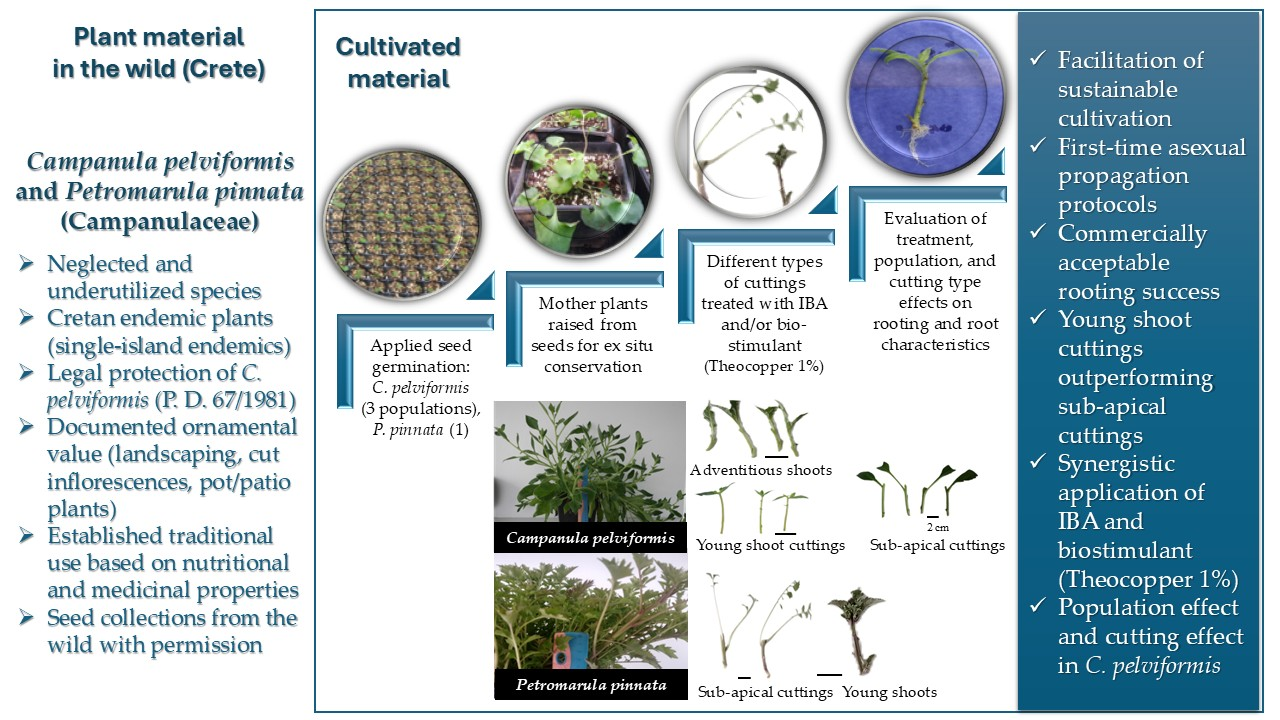
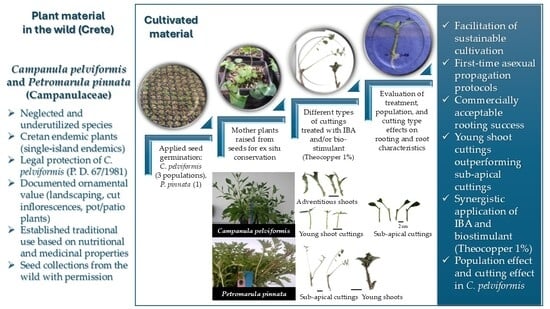
- Campanula pelviformis and Petromarula pinnata (local endemic plants of Crete, Greece, with value in the economic sector) were sourced with permission from the wild as promising neglected and underutilized species.
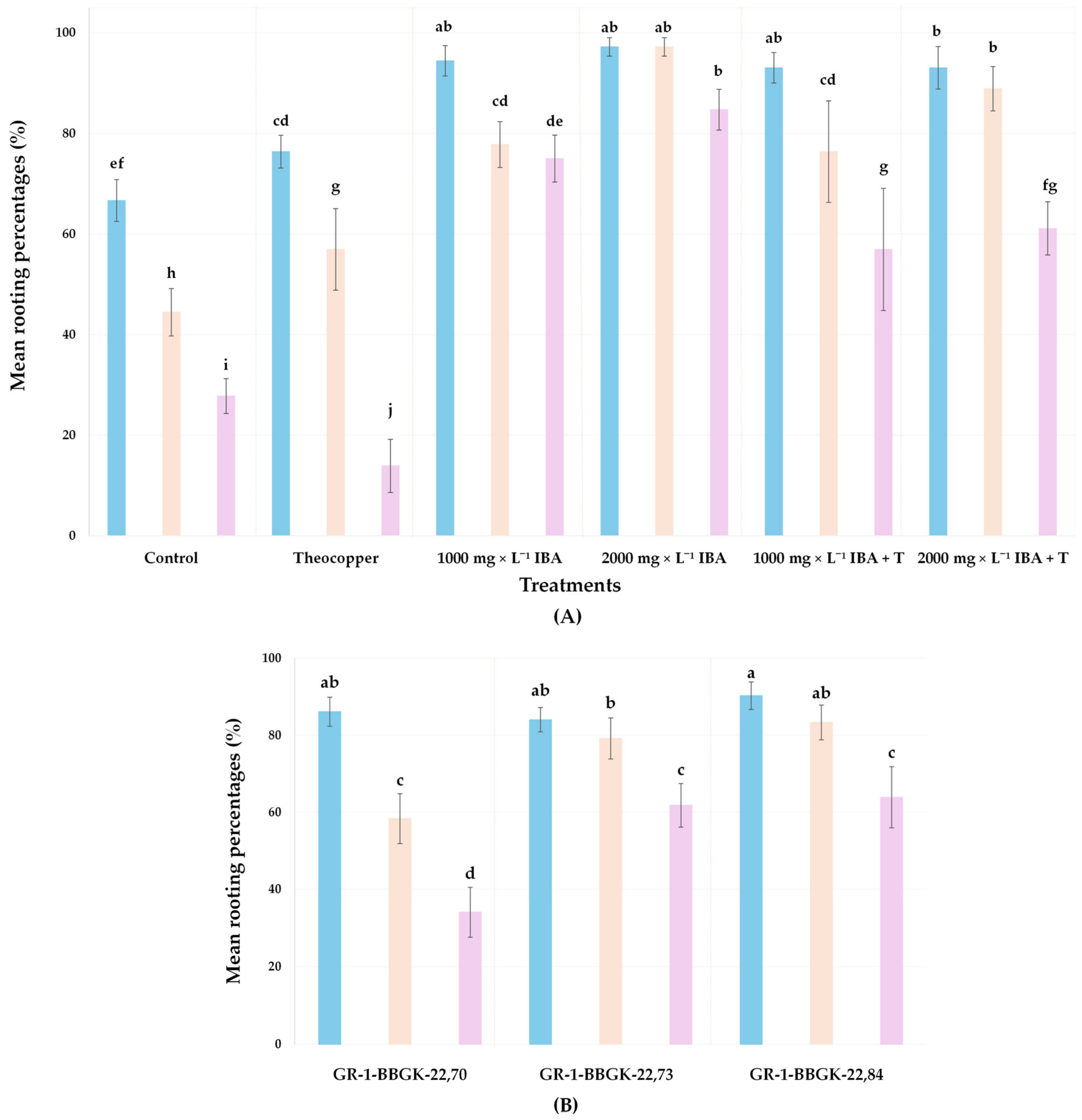
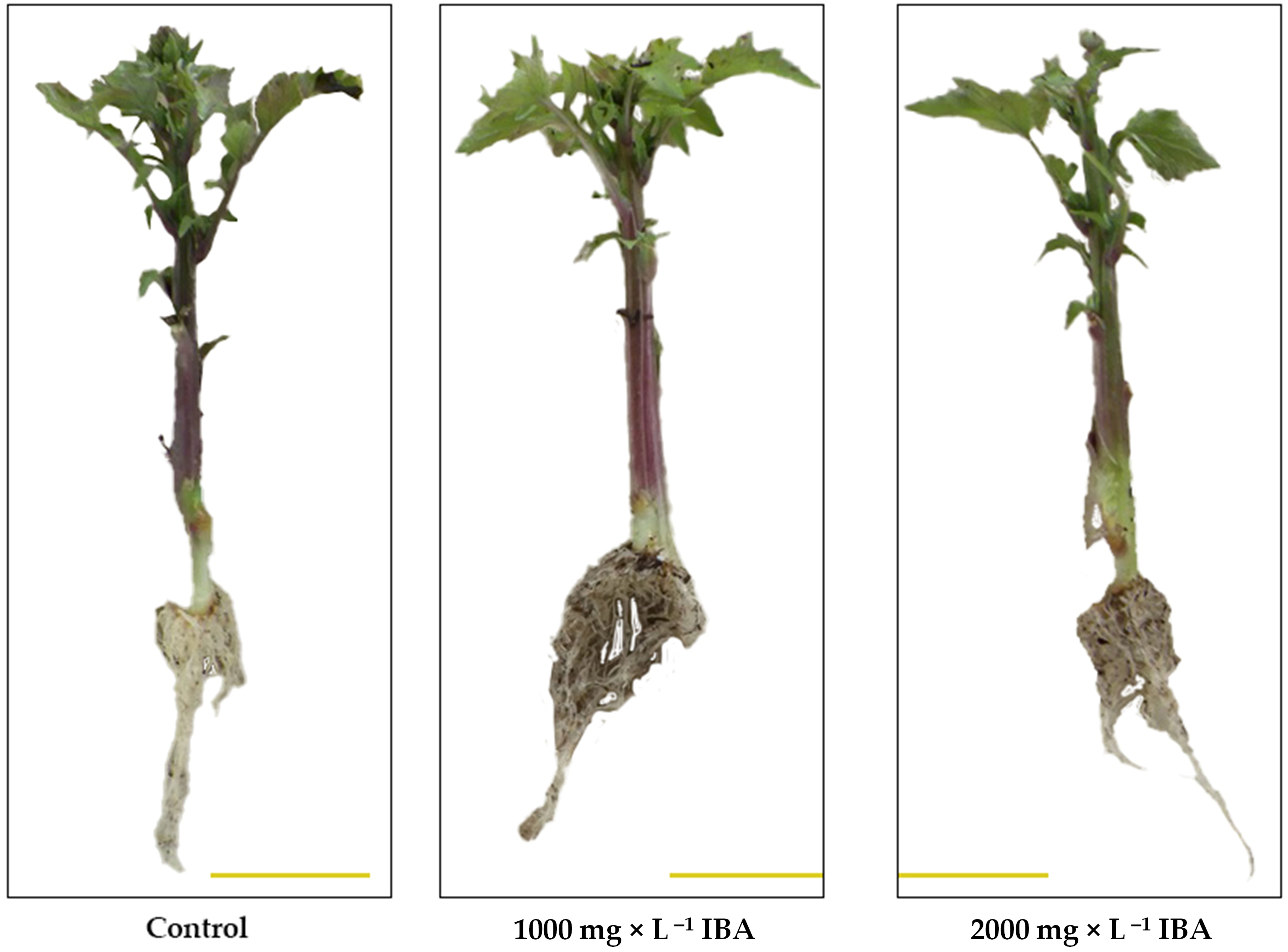
- Commercially acceptable rooting success (>90%) within four weeks was achieved for the first time in both species.
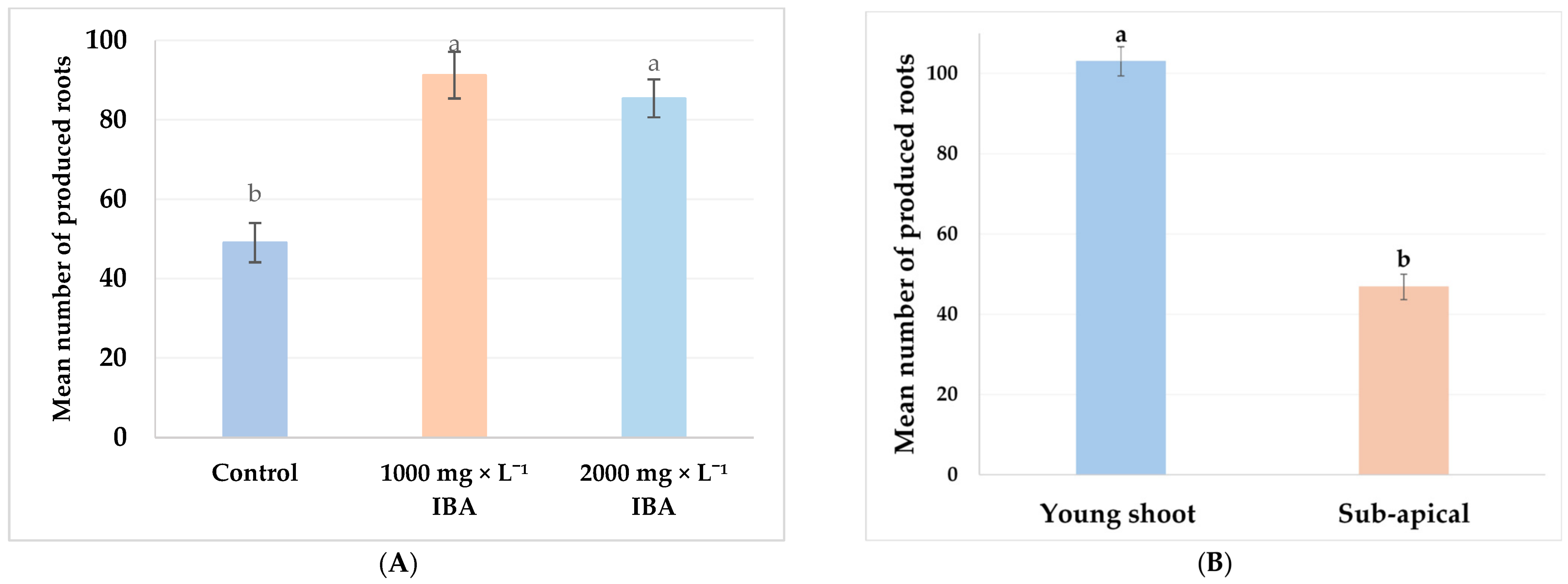
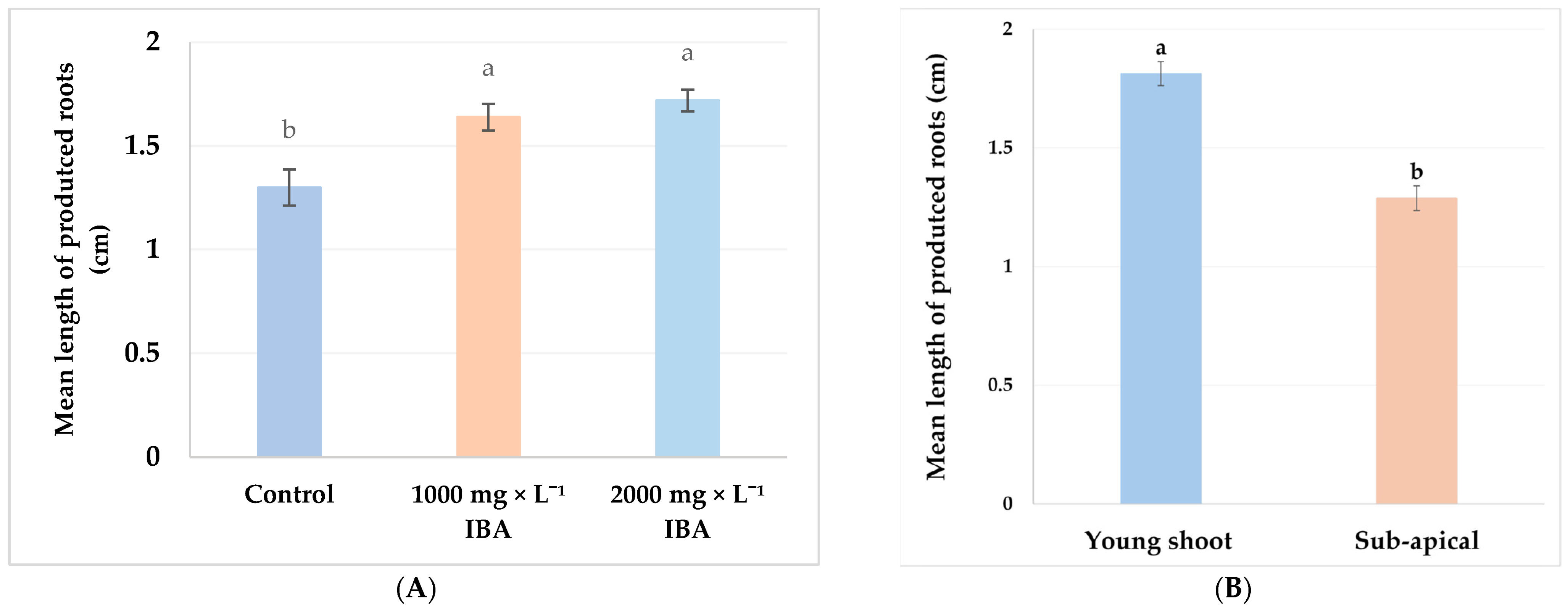
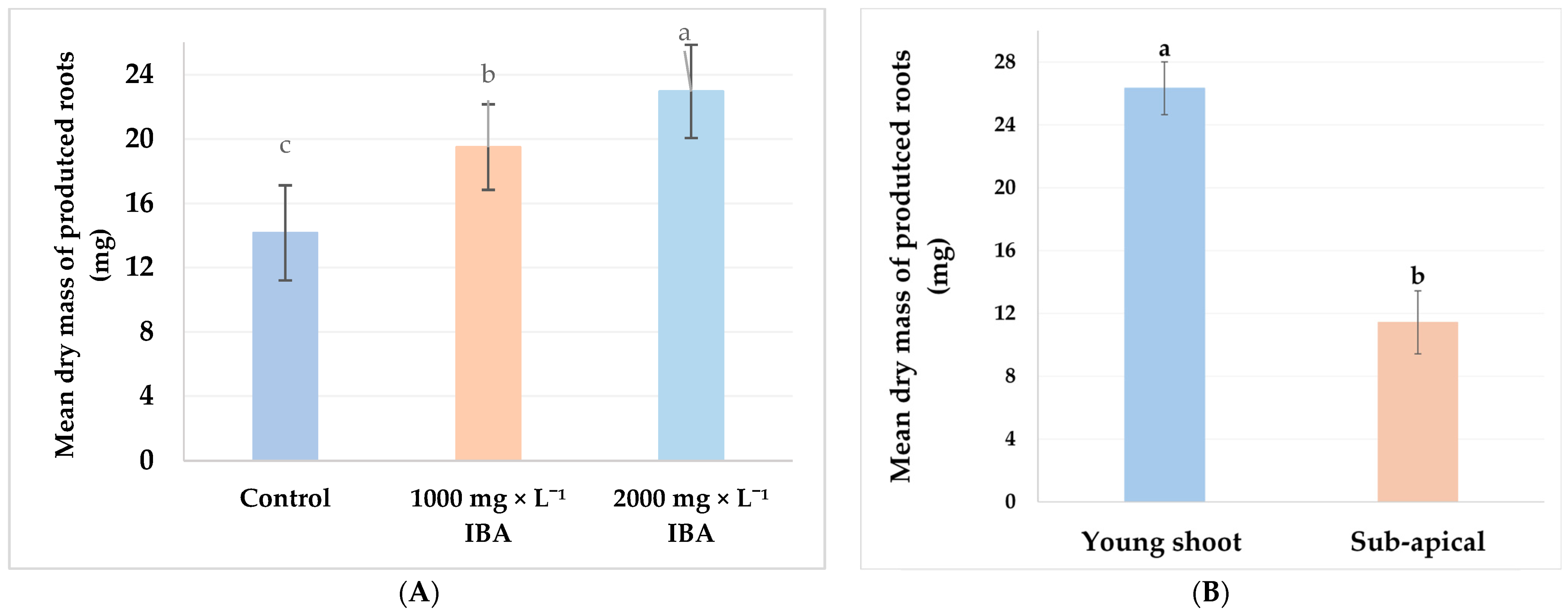
- Young shoot cuttings consistently outperformed sub-apical cuttings in all root quality metrics.
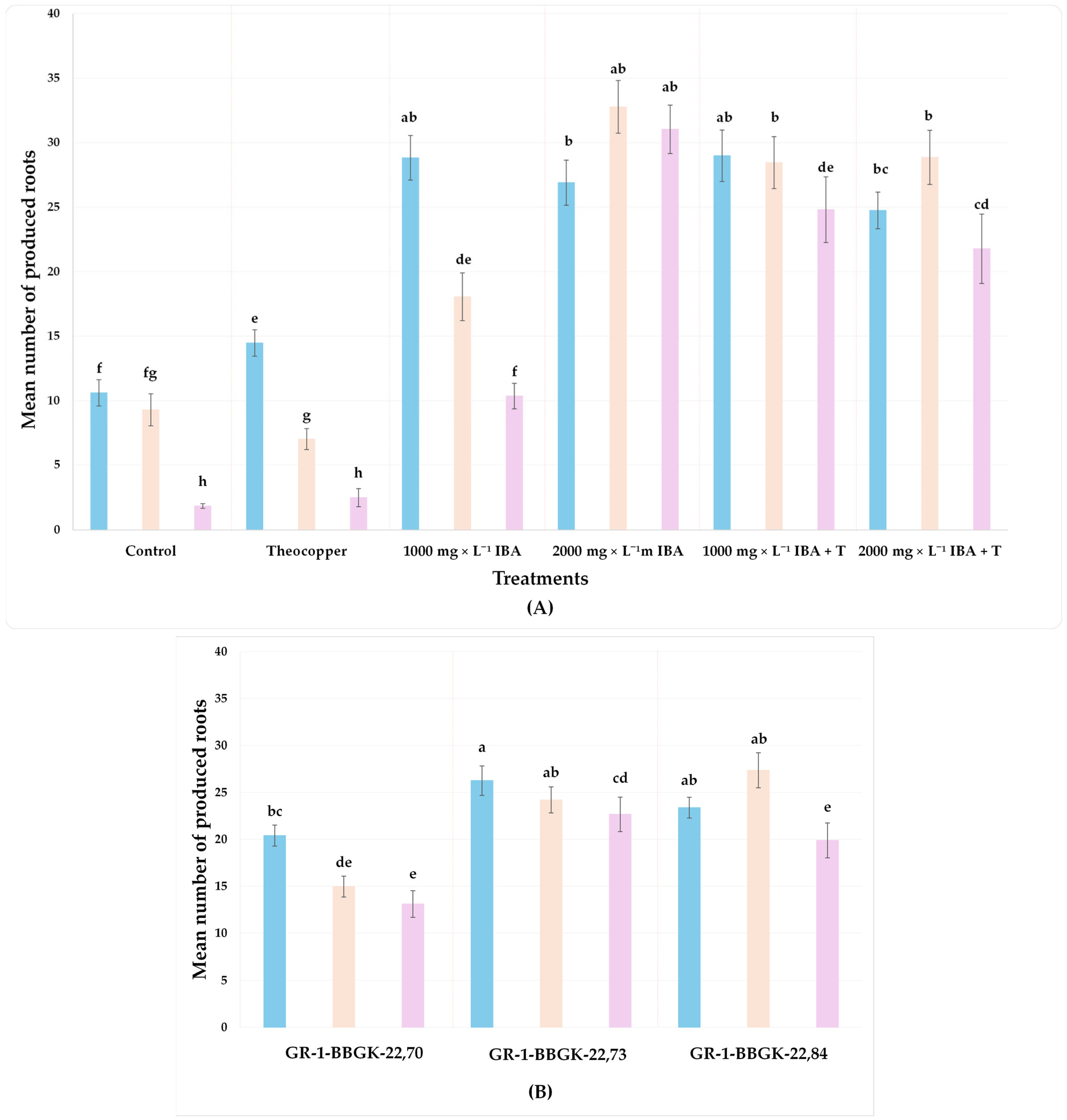
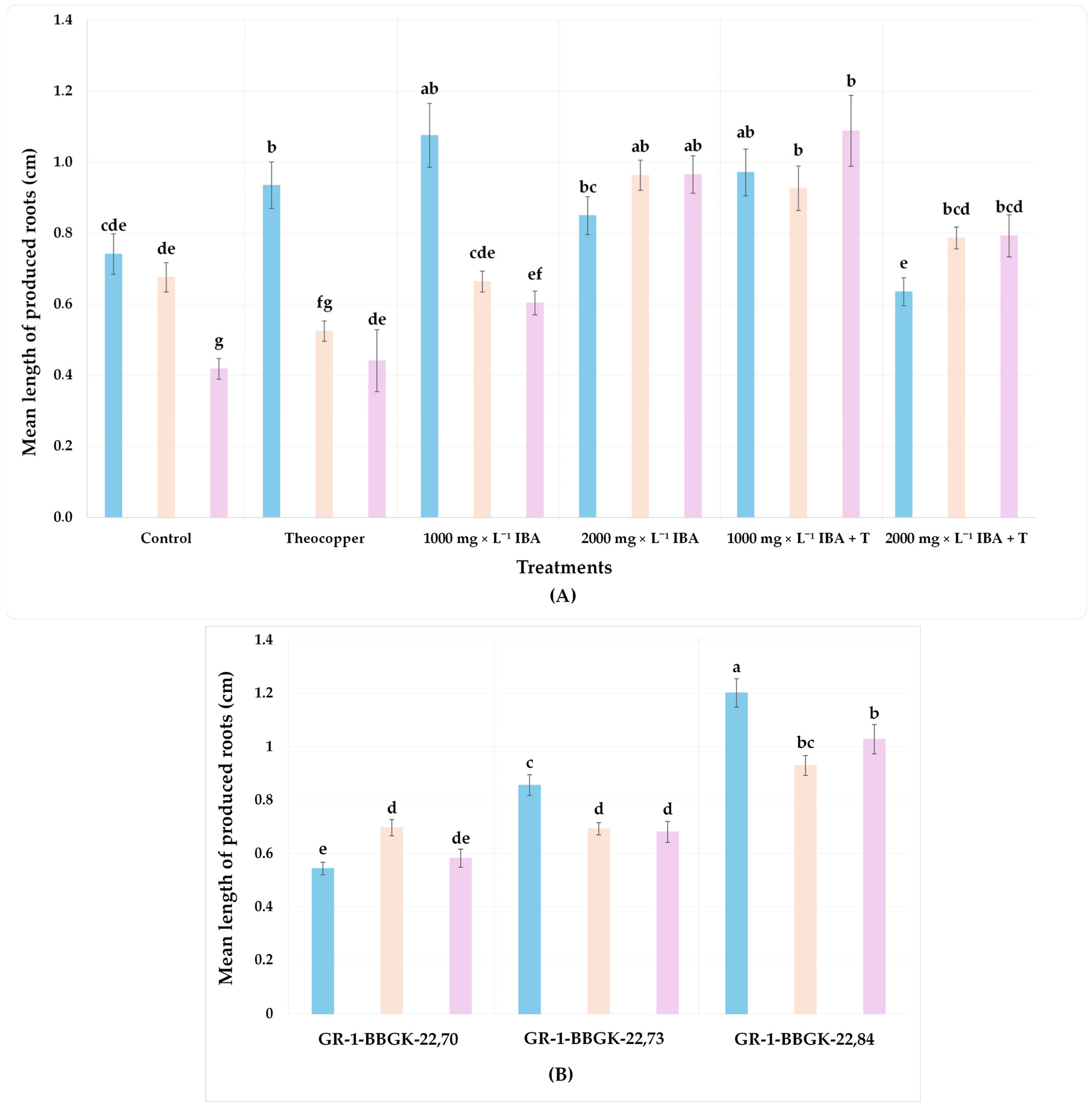
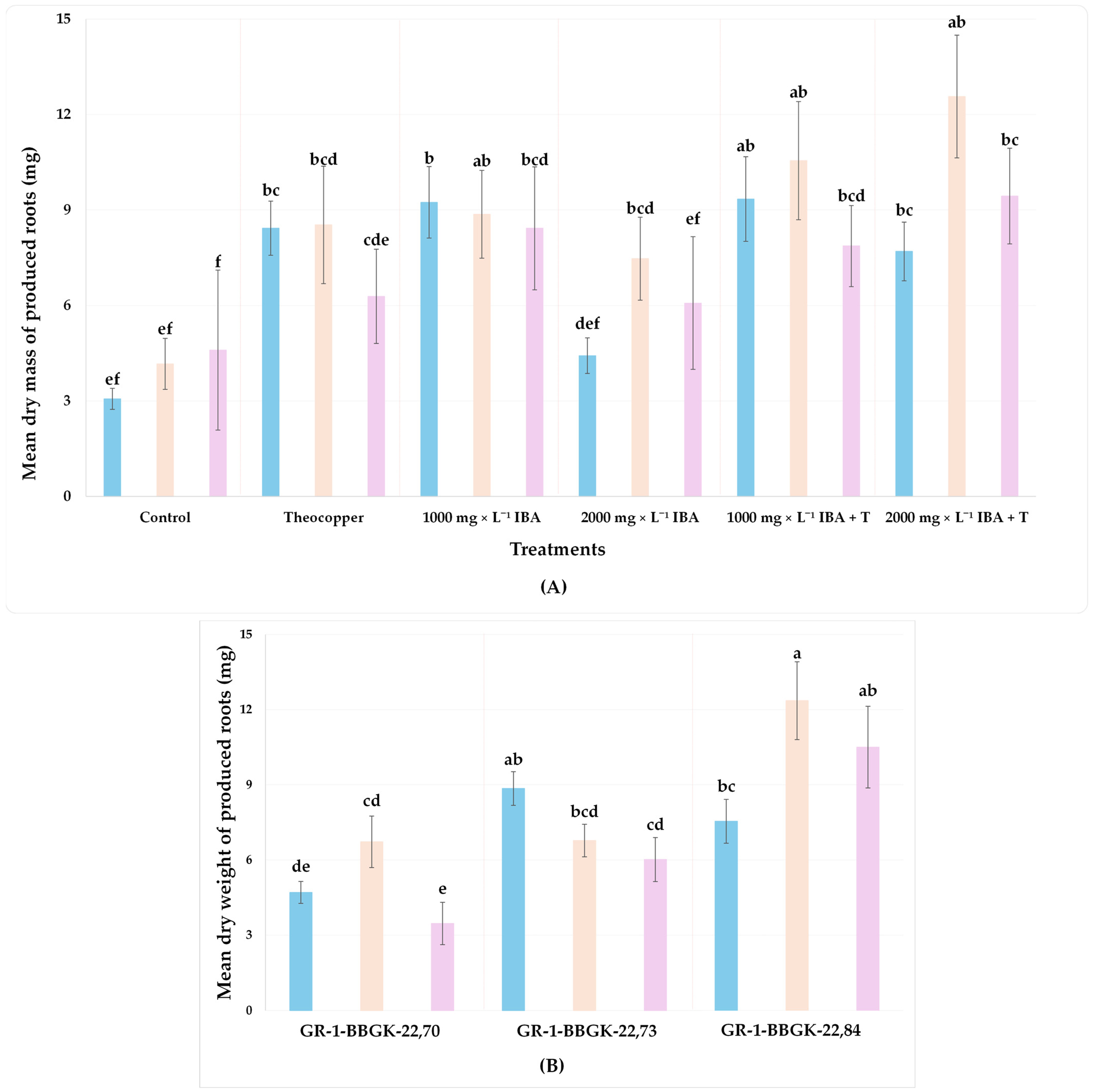
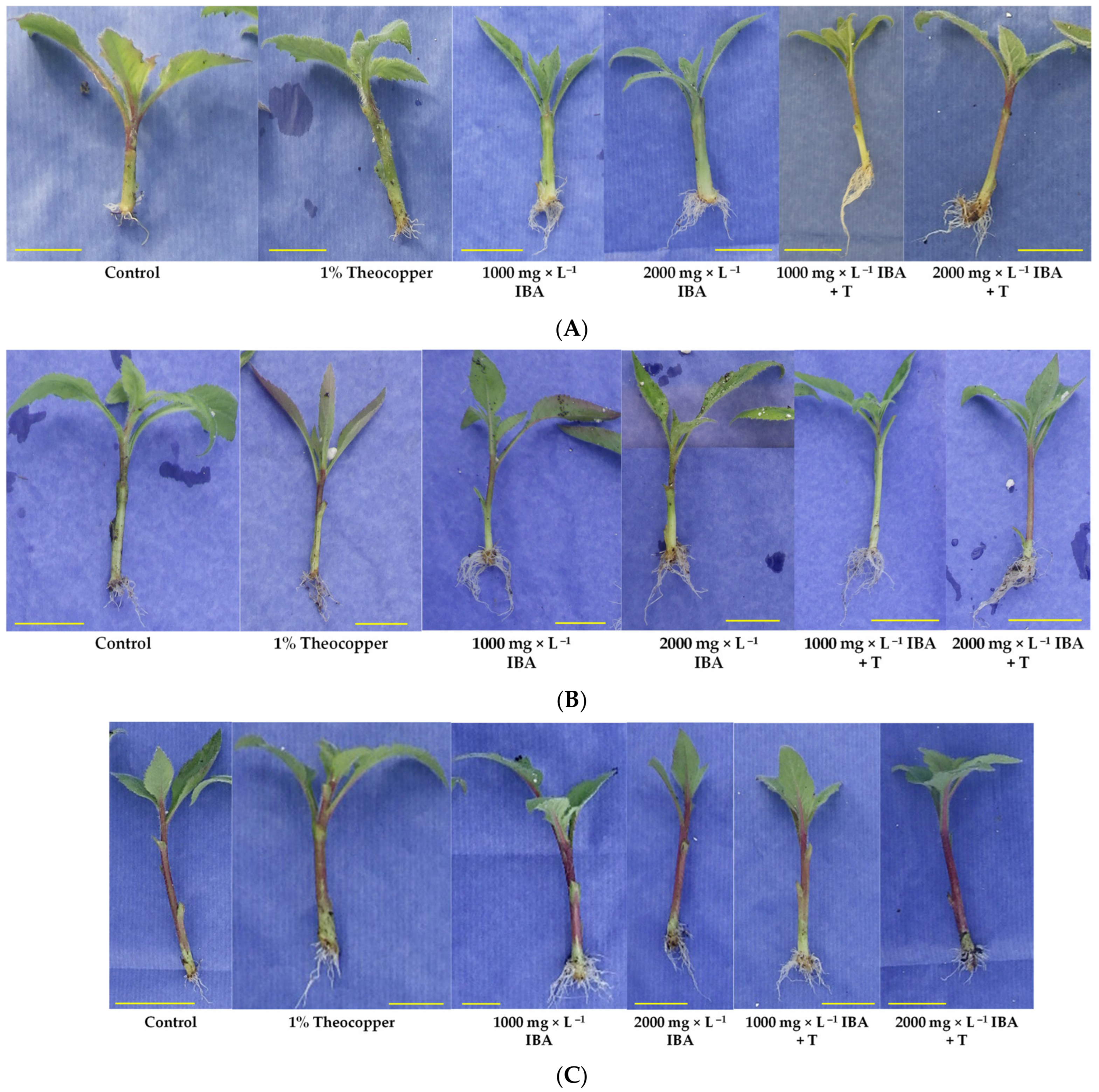
- The synergistic application of IBA and a biostimulant (Theocopper 1%) optimized rooting and root traits of sub-apical and young shoot cuttings in C. pelviformis, with a significant population effect confirmed across the three wild-collected populations.
- The discovery of the first evidence-based asexual propagation protocols for both species, enabling their sustainable large-scale cultivation.
- Theocopper (environmentally friendly biostimulant) as an IBA synergist enhanced vegetative propagation in both species.
Abstract
1. Introduction
2. Materials and Methods
2.1. Establishment of Mother Stock Plants from Seedlings
2.2. Asexual Propagation Experiments
2.3. Measurements Conducted on the Asexual Propagation Experiments
2.4. Statistical Analysis
3. Results
3.1. Asexual Propagation of Campanula pelviformis
3.2. Asexual Propagation of Petromarula pinnata
4. Discussion
5. Conclusions
Supplementary Materials
Author Contributions
Funding
Data Availability Statement
Acknowledgments
Conflicts of Interest
References
- Zandalinas, S.I.; Sengupta, S.; Fritschi, F.B.; Azad, R.K.; Nechushtai, R.; Mittler, R. The impact of multifactorial stress combination on plant growth and survival. New Phytol. 2021, 230, 1034–1048. [Google Scholar] [CrossRef] [Scilit]
- Zandalinas, S.I.; Fritschi, F.B.; Mittler, R. Global warming, climate change, and environmental pollution: Recipe for a multifactorial stress combination disaster. Trends Plant Sci. 2021, 26, 6. [Google Scholar] [CrossRef] [Scilit]
- MacMaoláin, C. The future control of food: A guide to international negotiations and rules on intellectual property, biodiversity and food security. Eur. J. Int. Law 2008, 19, 1118–1120. [Google Scholar] [CrossRef] [Scilit]
- Muluneh, M.G. Impact of climate change on biodiversity and food security: A global perspective—A review article. Agric. Food Secur. 2021, 10, 36. [Google Scholar] [CrossRef] [Scilit]
- Pathirana, R.; Carimi, F. Management and utilization of plant genetic resources for a sustainable agriculture. Plants 2022, 11, 2038. [Google Scholar] [CrossRef] [Scilit]
- Schröder, P.; Sauvêtre, A.; Gnädinger, F.; Pesaresi, P.; Chmeliková, L.; Doğan, N.; Gerl, G.; Gökçe, A.; Hamel, C.; Millan, R.; et al. Discussion paper: Sustainable increase of crop production through improved technical strategies, breeding and adapted management—A European perspective. Sci. Total Environ. 2019, 678, 146–161. [Google Scholar] [CrossRef] [Scilit]
- Rossi, R. The EU Fruit and Vegetable Sector: Main Features, Challenges and Prospects; EPRS: European Parliamentary Research Service: Brussels, Belgium, 2019. Available online: https://policycommons.net/artifacts/1335181/the-eu-fruit-and-vegetable-sector/1941483/ (accessed on 20 December 2025).
- Krigas, N.; Tsoktouridis, G.; Anestis, I.; Khabbach, A.; Libiad, M.; Megdiche-Ksouri, W.; Ghrabi-Gammar, Z.; Lamchouri, F.; Tsiripidis, I.; Tsiafouli, M.A.; et al. Exploring the potential of neglected local endemic plants of three Mediterranean regions in the ornamental sector: Value chain feasibility and readiness timescale for their sustainable exploitation. Sustainability 2021, 13, 2539. [Google Scholar] [CrossRef] [Scilit]
- Bourgou, S.; Ben Haj Jilani, I.; Karous, O.; Megdiche-Ksouri, W.; Ghrabi-Gammar, Z.; Libiad, M.; Khabbach, A.; El Haissoufi, M.; Lamchouri, F.; Greveniotis, V.; et al. Medicinal-cosmetic potential of the local endemic plants of Crete (Greece), Northern Morocco and Tunisia: Priorities for conservation and sustainable exploitation of neglected and underutilized phytogenetic resources. Biology 2021, 10, 1344. [Google Scholar] [CrossRef] [Scilit]
- Libiad, M.; Khabbach, A.; El Haissoufi, M.; Anestis, I.; Lamchouri, F.; Bourgou, S.; Megdiche-Ksouri, W.; Ghrabi-Gammar, Z.; Greveniotis, V.; Tsiripidis, I.; et al. Agro-alimentary potential of the neglected and underutilized local endemic plants of Crete (Greece), Rif-Mediterranean Coast of Morocco and Tunisia: Perspectives and challenges. Plants 2021, 10, 1770. [Google Scholar] [CrossRef] [Scilit]
- Devrani, N.; Kakkar, P.; Sahu, A.; Tiwari, C. Global Trends in Floriculture. In Floriculture and Landscaping Chronicles: A Collaborative Insights; Burud, A., Kolur, S.M., Karthik, D.R., Kumar, D.L., Yadav, D., Kaushal, N., Eds.; Stella International Publication: Kurukshetra, India, 2024; pp. 190–221. [Google Scholar]
- Monder, M.J.; Pacholczak, A.; Zajączkowska, M. Directions in ornamental herbaceous plant selection in the Central European temperate zone in the time of climate change: Benefits and threats. Agriculture 2024, 14, 2328. [Google Scholar] [CrossRef] [Scilit]
- Corrado, G.; El-Nakhel, C.; Graziani, G.; Pannico, A.; Zarrelli, A.; Giannini, P.; Ritieni, A.; De Pascale, S.; Kyriacou, M.C.; Rouphael, Y. Productive and morphometric traits, mineral composition and secondary metabolome components of borage and purslane as underutilized species for microgreens production. Horticulturae 2021, 7, 211. [Google Scholar] [CrossRef] [Scilit]
- Alexopoulos, A.A.; Assimakopoulou, A.; Panagopoulos, P.; Bakea, M.; Vidalis, N.; Karapanos, I.C.; Petropoulos, S.A. Impact of salinity on the growth and chemical composition of two underutilized wild edible greens: Taraxacum officinale and Reichardia picroides. Horticulturae 2021, 7, 160. [Google Scholar] [CrossRef] [Scilit]
- Hunter, D.; Borelli, T.; Beltrame, D.M.O.; Oliveira, C.N.S.; Coradin, L.; Wasike, L.W.; Wasilwa, L.; Mwai, J.; Manjella, A.; Samarasinghe, G.W.L.; et al. The potential of neglected and underutilized species for improving diets and nutrition. Planta 2019, 250, 709–729. [Google Scholar] [CrossRef] [Scilit]
- Raimundo, J.R.; Frazão, D.F.; Domingues, J.L.; Quintela-Sabarís, C.; Dentinho, T.P.; Anjos, O.; Alves, M.; Delgado, F. Neglected Mediterranean plant species are valuable resources: The example of Cistus ladanifer. Planta 2018, 248, 1351–1364. [Google Scholar] [CrossRef] [Scilit]
- IPGRI. Neglected and Underutilized Plant Species: Strategic Action Plan of the International Plant Genetic Resources Institute; International Plant Genetic Resources Institute: Rome, Italy, 2002. [Google Scholar]
- Dansi, A.; Vodouhè, R.; Azokpota, P.; Yedomonhan, H.; Assogba, P.; Adjatin, A.; Loko, Y.L.; Dossou-Aminon, I.; Akpagana, K. Diversity of the neglected and underutilized crop species of importance in Benin. Sci. World J. 2012, 2012, 932947. [Google Scholar] [CrossRef] [Scilit]
- Ebert, A.W. Potential of underutilized traditional vegetables and legume crops to contribute to food and nutritional security, income and more sustainable production systems. Sustainability 2014, 6, 319–335. [Google Scholar] [CrossRef] [Scilit]
- Baldermann, S.; Blagojevic, L.; Frede, K.; Klopsch, R.; Neugart, S.; Neumann, A.; Ngwene, B.; Norkeweit, J.; Schröter, D.; Schröter, A.; et al. Are neglected plants the food for the future? Crit. Rev. Plant Sci. 2016, 35, 106–119. [Google Scholar] [CrossRef] [Scilit]
- Krigas, N.; Anestis, I.; Pipinis, E.; Kostas, S.; Papaioannou, E.; Karapatzak, E.; Paschalidis, K.; Lazari, D.; Hatzilazarou, S.; Tsoktouridis, G. From wild rocky outcrops in Crete (Greece) to pots, gardens, home vases and/or forks: Introducing Campanula pelviformis and Petromarula pinnata (Campanulaceae) as new and unique multi-purpose crops. Acta Hortic. 2025, 1439, 363. [Google Scholar] [CrossRef] [Scilit]
- Menteli, V.; Krigas, N.; Avramakis, M.; Turland, N.; Vokou, D. Endemic plants of Crete in electronic trade and wildlife tourism: Current patterns and implications for conservation. J. Biol. Res.-Thessalon. 2019, 26, 10. [Google Scholar] [CrossRef] [Scilit]
- Tsiftsoglou, O.S.; Lagogiannis, G.; Psaroudaki, A.; Vantsioti, A.; Mitić, M.N.; Mrmošanin, J.M.; Lazari, D. Phytochemical analysis of the aerial parts of Campanula pelviformis Lam. (Campanulaceae): Documenting the dietary value of a local endemic plant of Crete (Greece) traditionally used as wild edible green. Sustainability 2023, 15, 7404. [Google Scholar] [CrossRef] [Scilit]
- Dimitriadis, K.M.; Karavergou, S.; Tsiftsoglou, O.S.; Karapatzak, E.; Paschalidis, K.; Hadjipavlou-Litina, D.; Charalambous, D.; Krigas, N.; Lazari, D. Nutritional value, major chemical compounds, and biological activities of Petromarula pinnata (Campanulaceae)—A unique nutraceutical wild edible green of Crete (Greece). Horticulturae 2024, 10, 689. [Google Scholar] [CrossRef] [Scilit]
- Anestis, I.; Pipinis, E.; Karapatzak, E.; Kostas, S.; Menexes, G.; Dariotis, E.; Tsoktouridis, G.; Hatzilazarou, S.; Krigas, N. Effect of genotype and altitude on the germination of freshly collected seeds from wild-growing populations of Campanula pelviformis Lam. and Petromarula pinnata (L.) A. DC. (Campanulaceae). Horticulturae 2024, 10, 1149. [Google Scholar] [CrossRef] [Scilit]
- Anestis, I.; Pipinis, E.; Kostas, S.; Papaioannou, E.; Karapatzak, E.; Dariotis, E.; Tsoulpha, P.; Koundourakis, E.; Chatzileontari, E.; Tsoktouridis, G.; et al. GIS-Facilitated germination of stored seeds from five wild-growing populations of Campanula pelviformis Lam. and fertilization effects on growth, nutrients, phenol content and antioxidant potential. Horticulturae 2023, 9, 877. [Google Scholar] [CrossRef] [Scilit]
- Kim, H.; Kim, J.H.; Lee, J.H.; Kim, G.M.; Lee, M.H.; Park, C.Y.; Kim, D.H.; Lee, D.H.; Kim, K.M.; Na, C.S. Dormancy-release and germination improvement of Korean bellflower (Campanula takesimana Nakai), a rare and endemic plant native to the Korean peninsula. PLoS ONE 2023, 18, e0292280. [Google Scholar] [CrossRef] [Scilit]
- Hartmann, H.T.; Kester, D.E.; Davies, F.T.; Geneve, R.L. Plant Propagation: Principles and Practices, 8th ed.; Pearson Education: London, UK, 2011; pp. 293–430. [Google Scholar]
- Yang, Y.Y.; Kim, J.G. The optimal balance between sexual and asexual reproduction in variable environments: A systematic review. J. Ecol. Environ. 2016, 40, 12. [Google Scholar] [CrossRef] [Scilit]
- da Costa, C.T.; de Almeida, M.R.; Ruedell, C.M.; Schwambach, J.; Maraschin, F.S.; Fett-Neto, A.G. When stress and development go hand in hand: Main hormonal controls of adventitious rooting in cuttings. Front. Plant Sci. 2013, 4, 133. [Google Scholar] [CrossRef] [Scilit]
- Blythe, E.K.; Sibley, J.L.; Tilt, K.M.; Ruter, J.M. Methods of auxin application in cutting propagation: A review of 70 years of scientific discovery and commercial practice. J. Environ. Hortic. 2007, 25, 166–185. [Google Scholar] [CrossRef] [Scilit]
- Kisvarga, S.; Farkas, D.; Boronkay, G.; Neményi, A.; Orlóci, L. Effects of biostimulants in horticulture, with emphasis on ornamental plant production. Agronomy 2022, 12, 1043. [Google Scholar] [CrossRef] [Scilit]
- Abbott, L.K.; Macdonald, L.M.; Wong, M.T.F.; Webb, M.J.; Jenkins, S.N.; Farrell, M. Potential roles of biological amendments for profitable grain production—A review. Agric. Ecosyst. Environ. 2018, 256, 34–50. [Google Scholar] [CrossRef] [Scilit]
- Abdel-Rahman, S.; Abdul-Hafeez, E.; Saleh, A. Improving rooting and growth of Conocarpus erectus stem cuttings using Indole-3-Butyric Acid (IBA) and some biostimulants. Sci. J. Flowers Ornam. Plants 2020, 7, 109–129. [Google Scholar] [CrossRef] [Scilit]
- Wise, K.; Gill, H.; Selby-Pham, J. Willow bark extract and the biostimulant complex Root Nectar® increase propagation efficiency in chrysanthemum and lavender cuttings. Sci. Hortic. 2020, 263, 109108. [Google Scholar] [CrossRef] [Scilit]
- Trofimuk, L.P.; Kirillov, P.S.; Egorov, A.A. Application of biostimulants for vegetative propagation of endangered Abies gracilis. J. For. Res. 2020, 31, 1195–1199. [Google Scholar] [CrossRef] [Scilit]
- Monder, M.J.; Wolinski, K.; Niedzielski, M. The propagation of Rosa gallica ‘Tuscany Superb’ by root cuttings with the use of IBA and biostimulants. Not. Bot. Horti Agrobot. Cluj-Napoca 2019, 47, 691–698. [Google Scholar] [CrossRef] [Scilit]
- Zulfiqar, F.; Younis, A.; Finnegan, P.M.; Ferrante, A. Comparison of soaking corms with Moringa leaf extract alone or in combination with synthetic plant growth regulators on the growth, physiology and vase life of sword lily. Plants 2020, 9, 1590. [Google Scholar] [CrossRef] [Scilit]
- Tsoktouridis, G.; Krigas, N. Propagation strategies of endemic and native plant species of Greece. Acta Hortic. 2025, 1439, 215–226. [Google Scholar] [CrossRef] [Scilit]
- Gomez, K.A.; Gomez, A.A. Statistical Procedures in Agricultural Research, 2nd ed.; Wiley: New York, NY, USA, 1984. [Google Scholar]
- Steel, R.; Torrie, J.; Dickey, D. Principles and Procedures of Statistics: A Biometrical Approach, 3rd ed.; McGraw-Hill: New York, NY, USA, 1997. [Google Scholar]
- Grigoriadou, K.; Sarropoulou, V.; Krigas, N.; Maloupa, E.; Tsoktouridis, G. GIS-Facilitated effective propagation protocols of the Endangered local endemic of Crete Carlina diae (Rech. f.) Meusel and A. Kástner (Asteraceae): Serving ex situ conservation needs and its future sustainable utilization as an ornamental. Plants 2020, 9, 1465. [Google Scholar] [CrossRef] [Scilit]
- Grigoriadou, K.; Krigas, N.; Sarropoulou, V.; Maloupa, E.; Tsoktouridis, G. Propagation and ex situ conservation of Lomelosia minoana subsp. minoana and Scutellaria hirta—Two ornamental and medicinal Cretan endemics (Greece). Not. Bot. Horti Agrobot. Cluj-Napoca 2021, 49, 12168. [Google Scholar] [CrossRef] [Scilit]
- Grigoriadou, K.; Krigas, N.; Sarropoulou, V.; Maloupa, E.; Tsoktouridis, G. Vegetative propagation and ex situ conservation of Acantholimon androsaceum and Limonium chersonesum, two promising local endemics of Crete (Greece) available for floricultural and pharmaceutical sustainable exploitation. Not. Bot. Horti Agrobot. Cluj-Napoca 2021, 49, 12261. [Google Scholar] [CrossRef] [Scilit]
- Sarropoulou, V.; Maloupa, E. Vegetative propagation of three prioritized Greek endemics with potential commercial interest: Erysimum naxense Snogerup, Erysimum krendlii Polatschek and Centaurea paxorum Phitos & Georgiadis. GSC Biol. Pharm. Sci. 2019, 6, 56–63. [Google Scholar] [CrossRef] [Scilit]
- Sarropoulou, V.; Maloupa, E. Effect of indole-3-butyric acid application type and concentration on rooting efficacy in three endemic rare-endangered Dianthus species with conservation priority. Int. J. Curr. Res. Biosci. Plant Biol. 2019, 6, 1–10. [Google Scholar] [CrossRef] [Scilit]
- Scariot, V.; Gaino, W.; Devecchi, M. Propagation and cultivation protocols for wild creeping bellflowers (Campanula rapunculoides L.). Acta Hortic. 2012, 952, 265–272. [Google Scholar] [CrossRef] [Scilit]
- Bergonci, T.; Fomsgaard, I.S.; Kjaer, K.H.; Paponov, I.A. Hormone–Flavonoid patterns in two genotypes of Campanula portenschlagiana with distinct adventitious rooting competence. Horticulturae 2023, 9, 121. [Google Scholar] [CrossRef] [Scilit]
- Kamath, D.; Kong, Y.; Dayboll, C.; Zheng, Y. Dynamic versus Concurrent lighting with red and blue light-emitting diodes as the sole light source can potentially improve Campanula stock plant morphology for cutting production. HortScience 2021, 56, 1439–1445. [Google Scholar] [CrossRef] [Scilit]
- de Klerk, G.J.; van der Krieken, W.; de Jong, J.C. Review the formation of adventitious roots: New concepts, new possibilities. In Vitro Cell. Dev. Biol.-Plant 1999, 35, 189–199. [Google Scholar] [CrossRef] [Scilit]
- Geiss, G.; Gutierrez, L.; Bellini, C. 5 Adventitious root formation: New insight and perspectives. Ann. Plant Rev. 2009, 37, 127–156. [Google Scholar] [CrossRef] [Scilit]
- Guo, X.F.; Fu, X.L.; Zang, D.K.; Ma, Y. Effect of auxin treatments, cuttings’ collection date and initial characteristics on Paeonia ‘Yang Fei Chu Yu’ cutting propagation. Sci. Hortic. 2009, 119, 177–181. [Google Scholar] [CrossRef] [Scilit]
- Martini, A.N.; Bertsouklis, K.; Vlachou, G.; Papafotiou, M. Investigating the rooting of stem cuttings of five Mediterranean Salvia spp., as a means for their wider exploitation in sustainable horticulture. Sustainability 2025, 17, 8999. [Google Scholar] [CrossRef] [Scilit]
- Darras, A.I.; Spiliopoulos, I.; Kartsonas, E.; Assimomitis, P.; Karras, S. Antioxidant profile, propagation and cultivation of Nepeta camphorata, the endemic species of Mt Taygetos (Greece). S. Afr. J. Bot. 2020, 131, 391–397. [Google Scholar] [CrossRef] [Scilit]
- Dada, C.A.; Kayode, J.; Arowosegbe, S. Effects of rooting hormones on the juvenile stem cuttings of Annona muricata Linn. (Annonaceae). World News Nat. Sci. 2019, 23, 336–342. [Google Scholar]
- Bergonci, T.; Paponov, I.A. Amino Acid treatments induce adventitious root formation in two different genotypes of Campanula portenschlagiana. Biol. Life Sci. Forum 2022, 16, 8. [Google Scholar] [CrossRef] [Scilit]
- Druege, U.; Hilo, A.; Pérez-Pérez, J.M.; Klopotek, Y.; Acosta, M.; Shahinnia, F.; Zerche, S.; Franken, P.; Hajirezaei, M.R. Molecular and physiological control of adventitious rooting in cuttings: Phytohormone action meets resource allocation. Ann. Bot. 2019, 123, 929–949. [Google Scholar] [CrossRef] [Scilit]
- Zhao, Y. Auxin biosynthesis. Arab. Book 2014, 12, e0173. [Google Scholar] [CrossRef] [Scilit]
- Twardoski, M.C.; Crocker, J.L.; Scoggins, H.L. Quantity and quality of cuttings as influenced by stock plant nutrition of herbaceous perennials. HortTechnology 2012, 22, 89–93. [Google Scholar] [CrossRef] [Scilit]
- Otiende, M.A.; Nyabundi, J.O.; Ngamau, K.; Opala, P. Effects of cutting position of rose rootstock cultivars on rooting and its relationship with mineral nutrient content and endogenous carbohydrates. Sci. Hortic. 2017, 225, 204–212. [Google Scholar] [CrossRef] [Scilit]
- Tate, H.T.; Page, T. Cutting propagation of Santalum austrocaledonicum: Τhe effect of genotype, cutting source, cutting size, propagation medium, IBA and irradiance. New For. 2018, 49, 551–570. [Google Scholar] [CrossRef] [Scilit]
- de Andres, E.F.; Sanchez, F.J.; Catalan, G.; Tenorio, J.L.; Ayerbe, L. Vegetative propagation of Colutea istria Mill. from leafy stem cuttings. Agrofor. Syst. 2005, 63, 7–14. [Google Scholar] [CrossRef] [Scilit]
- Nasri, F.; Fadakar, A.; Saba, M.K.; Yousefi, B. Study of indole butyric acid IBA effects on cutting rooting improving some of wild genotypes of damask roses Rosa damascena Mill. J. Agric. Sci. 2015, 60, 263–275. [Google Scholar] [CrossRef] [Scilit]
- Koski, R.D.C.; Klett, J.E.; Burcham, D. Effects of photoperiod treatments on stock plants and cutting rooting of three cultivars of ornamental perennials. HortTechnology 2024, 34, 234–240. [Google Scholar] [CrossRef] [Scilit]
- Lakehal, A.; Bellini, C. Control of adventitious root formation: Insights into synergistic and antagonistic hormonal interactions. Physiol. Plant. 2019, 165, 90–100. [Google Scholar] [CrossRef] [Scilit]
- Sandhya, S.; Mehta, S.; Pandey, S.; Husen, A. Adventitious root formation in cuttings as influenced by genotypes, leaf area, and types of cuttings. In Environmental, Physiological and Chemical Controls of Adventitious Rooting in Cuttings; Husen, A., Ed.; Elsevier, Academic Press: Amsterdam, The Netherlands, 2022; pp. 381–395. [Google Scholar] [CrossRef] [Scilit]
- Krigas, N.; Panagiotidou, M.; Maloupa, E. Incorporating biogeographical principles in horticulture: Design of the Ionian Islands Unique Rock Garden in Thessaloniki, Greece. Sibbaldia 2017, 15, 129–146. [Google Scholar] [CrossRef] [Scilit]
- Strid, A. Atlas of the Aegean Flora; Botanic Garden and Botanical Museum Berlin, Freie Universität Berlin: Berlin, Germany, 2016. [Google Scholar]



| Species | IPEN Accession Number | Collection Site and Cretan Region | Latitude (North) | Longitude (East) | Altitude (m) |
|---|---|---|---|---|---|
| Campanula pelviformis | GR-1-BBGK-22,70 | Istron, Lasithi | 35.1248 | 25.7485 | 43 |
| GR-1-BBGK-22,84 | Tsigouni Gorge, Lasithi | 35.1528 | 25.9102 | 224 | |
| GR-1-BBGK-22,73 | Thrypti, Lasithi | 35.0931 | 25.8640 | 834 | |
| Petromarula pinnata | GR-1-BBGK-22,68 | Agia Eirini Gorge, Herakleion | 35.2819 | 25.1650 | 132 |
| Source of Variation | Root Percentages (%) | Root Number | Root Length (cm) | Root Dry Mass (mg) | ||||
|---|---|---|---|---|---|---|---|---|
| p-Values | Partial Eta Squared | p-Values | Partial Eta Squared | p-Values | Partial Eta Squared | p-Values | Partial Eta Squared | |
| Population | <0.001 | 0.926 | <0.001 | 0.073 | <0.001 | 0.395 | <0.001 | 0.574 |
| Treatment | <0.001 | 0.953 | <0.001 | 0.333 | <0.001 | 0.094 | <0.001 | 0.391 |
| Population × treatment | <0.001 | 0.747 | <0.001 | 0.071 | <0.001 | 0.125 | <0.001 | 0.234 |
| Cutting type | <0.001 | 0.822 | <0.001 | 0.101 | <0.001 | 0.031 | <0.001 | 0.066 |
| Population × cutting type | <0.001 | 0.439 | 0.111 | 0.015 | <0.001 | 0.062 | <0.001 | 0.086 |
| Treatment × cutting type | <0.001 | 0.564 | <0.001 | 0.13 | <0.001 | 0.185 | 0.471 | 0.041 |
| Population × treatment × cutting type | <0.001 | 0.474 | <0.001 | 0.223 | <0.001 | 0.298 | <0.001 | 0.231 |
| Source of Variation | Root Number 1 | Root Length 1 | Root Dry Mass 2 | |||
|---|---|---|---|---|---|---|
| p-Values | Partial Eta Squared | p-Values | Partial Eta Squared | p-Values | Partial Eta Squared | |
| Treatment | <0.001 | 0.597 | <0.001 | 0.268 | 0.007 | 0.373 |
| Cutting type | <0.001 | 0.794 | <0.001 | 0.484 | <0.001 | 0.692 |
| Treatment × cutting type | 0.005 | 0.147 | 0.121 | 0.062 | 0.044 | 0.257 |
Disclaimer/Publisher’s Note: The statements, opinions and data contained in all publications are solely those of the individual author(s) and contributor(s) and not of MDPI and/or the editor(s). MDPI and/or the editor(s) disclaim responsibility for any injury to people or property resulting from any ideas, methods, instructions or products referred to in the content. |
© 2026 by the authors. Licensee MDPI, Basel, Switzerland. This article is an open access article distributed under the terms and conditions of the Creative Commons Attribution (CC BY) license.
Share and Cite
Anestis, I.; Karapatzak, E.; Menexes, G.; Kostas, S.; Mamolos, A.; Tsoktouridis, G.; Krigas, N.; Hatzilazarou, S. Asexual Propagation of Campanula pelviformis and Petromarula pinnata—Two Local Endemic Plants of Crete with Multipurpose Crop Potential. Horticulturae 2026, 12, 826. https://doi.org/10.3390/horticulturae12070826
Anestis I, Karapatzak E, Menexes G, Kostas S, Mamolos A, Tsoktouridis G, Krigas N, Hatzilazarou S. Asexual Propagation of Campanula pelviformis and Petromarula pinnata—Two Local Endemic Plants of Crete with Multipurpose Crop Potential. Horticulturae. 2026; 12(7):826. https://doi.org/10.3390/horticulturae12070826
Chicago/Turabian StyleAnestis, Ioannis, Eleftherios Karapatzak, Georgios Menexes, Stefanos Kostas, Andreas Mamolos, Georgios Tsoktouridis, Nikos Krigas, and Stefanos Hatzilazarou. 2026. "Asexual Propagation of Campanula pelviformis and Petromarula pinnata—Two Local Endemic Plants of Crete with Multipurpose Crop Potential" Horticulturae 12, no. 7: 826. https://doi.org/10.3390/horticulturae12070826
APA StyleAnestis, I., Karapatzak, E., Menexes, G., Kostas, S., Mamolos, A., Tsoktouridis, G., Krigas, N., & Hatzilazarou, S. (2026). Asexual Propagation of Campanula pelviformis and Petromarula pinnata—Two Local Endemic Plants of Crete with Multipurpose Crop Potential. Horticulturae, 12(7), 826. https://doi.org/10.3390/horticulturae12070826