


Abstract
Cold injury is a major limiting factor for tropical fruit cultivation in temperate regions. Papayas are particularly sensitive to low temperatures, and exposure to 12–14 °C significantly inhibits their growth. This study determined whether combining root-zone heating with minimal greenhouse heating could improve overwinter survival and recovery under low-temperature stress conditions. Root-zone temperature was maintained above 15 °C throughout the overwintering period. Conversely, the greenhouse temperature was set at the minimum level required to avoid exposure to freezing temperatures. Tree responses were measured based on survival rate, shoot growth, SPAD, and stomatal conductance in three treatments: root-zone heating with minimal greenhouse heating, conventional whole-greenhouse heating, and a minimum-heating control. Root-zone heating with minimal greenhouse heating enabled successful overwinter survival and recovery. It exhibited comparable plant performance to conventional whole-greenhouse heating, whereas all plants in the control treatment died. Stomatal conductance recovered more rapidly in trees receiving root-zone heating than in those receiving conventional whole-greenhouse heating, suggesting earlier resumption of physiological activity. These results demonstrate that root-zone temperature management can mitigate low-temperature stress and promote post-winter physiological recovery, thus providing a potential strategy for overwintering tropical crops with reduced reliance on greenhouse heating.
1. Introduction
Recently, tropical fruit tree cultivation has expanded in Japan [1]. However, the optimal growth temperature for many of these trees rests between 20 °C and 30 °C, with growth declining when temperatures fall below 15 °C to 20 °C [2,3,4]. Papaya is no exception: Exposure to temperatures around 12–14 °C for several hours can adversely affect its growth [5,6]. Furthermore, attempts to overwinter papaya in unheated greenhouses in relatively warm Japanese regions resulted in plant death due to cold weather [7]. Because most of Japan, with the exception of a few subtropical regions, is located in the temperate zone, papaya is commonly cultivated under protected greenhouse conditions [8]. In Japan, papaya is generally grown in soil, either directly in the ground or in containers. Therefore, it is common practice to heat greenhouses when it is necessary to overwinter papayas. However, increasing fuel costs have become a challenge. In temperate regions, greenhouse heating represents one of the major production costs in the cultivation of tropical fruit crops. Consequently, several studies have evaluated the economic feasibility of different climate-control strategies to reduce energy consumption while maintaining productivity [9].
Research on localized root-zone heating to reduce fuel costs has advanced in floricultural crops with long-term market supply [10,11,12,13]. In addition, systems that both heat and cool the root zone have been developed, reducing energy consumption and supporting their practical use in floriculture [14].
In contrast, fruit trees are perennial crops that produce for decades. Therefore, understanding their mechanisms of cold injury resistance is crucial for the relevant development of efficient heating methods. However, owing to the size of the tree canopy, studies examining the relationship between root-zone heating and growth are limited. To date, only a few such studies have been published [15,16].
Cold injury to plants can be classified into two separate categories: (1) freezing injury, which occurs when tissues cool excessively, resulting in cellular freezing, and (2) water-deficit injury under cold conditions (often referred to as cold wind damage), caused by low-temperature-induced reductions in root water uptake comminated with continued transpiration, leading to dehydration and defoliation. Notably, dehydration associated with water-deficit injury under cold conditions results from an imbalance between root water absorption and leaf transpiration [17,18]. Although transpiration is also reduced under low temperatures, root water uptake generally declines to a greater extent than transpiration, resulting in a disruption of plant water balance [19]. This reduction in root water uptake has been attributed to increased water viscosity and decreased root hydraulic conductivity, including reduced aquaporin activity under chilling conditions [20,21,22]. Therefore, reducing the imbalance between root water uptake and leaf transpiration may alleviate water-deficit injury under cold conditions.
A previous study demonstrated that heating the root zone of papaya trees mitigated water-deficit injury under cold conditions [16]. However, they could not assess the plants’ ability to survive winter because the plants died from freezing injury when the temperature in the unheated greenhouse fell below 0 °C.
Therefore, this study determined the effects of root-zone heating on papaya trees overwintering. Specifically, we examined whether combining minimal greenhouse heating to prevent exposure to freezing temperatures alleviated water-deficit injury under cold conditions in papaya trees. Additionally, we evaluated how different heating methods affect the physiological recovery process and aboveground growth following overwintering.
2. Materials and Methods
2.1. Plant Materials
Seedlings of the papaya cultivar ‘Ouro’ (Carica papaya L.) were used in the experiment. Seeds were purchased from a nursery (Futaba Seed Co., Ltd., Nanjo, Japan) and sown on 16 May 2024 in pots filled with commercially available humus-rich soil (Hana-chan humus-rich soil; Hanagokoro, Co., Ltd., Nagoya, Japan). The growing medium had a pH of 6.0 and an electrical conductivity (EC) of 3.0 mS cm−1 and consisted primarily of woody compost, coconut fiber, and Akadama soil. Germinated seedlings were examined, with those exhibiting vigorous growth being selected and transplanted into 15 L non-woven fabric pots.
2.2. Treatment Design and Root-Zone Heating Method
Experiments were conducted in an experimental greenhouse of the School of Agriculture at Tokai University from 5 December 2024 to 13 May 2025. At the start of the experiment, the papaya trees were approximately 8 months old, with a mean stem diameter of 32 mm and a mean plant height of 180 cm. To control the root-zone temperature, a commercially available horticultural heating mat (model 1-306; Nihon Nowden Inc., Tokyo, Japan, heat output: 100 W m−2) was placed on top of a 3 cm thick polystyrene foam board. The papaya trees were placed on a heating mat, and the pots were completely covered with an aluminum insulation sheet to improve heat retention. The heating mat was connected to an electronic thermostat (model ND-610; Nihon Nowden Inc., Tokyo, Japan), and the sensor was positioned 5 cm above the bottom of the pot. The thermostat was set to activate the heating element when the root-zone temperature dropped below the preset temperature (Figure A1).
This experiment consisted of three treatments (Table 1): control (no root-zone heating), root-zone heating (heating the root zone when the soil temperature fell below 15 °C), and air heating (heating the entire greenhouse when the air temperature fell below 15 °C).
Table 1.
Controlled air and root-zone temperature settings for each treatment.
To prevent freezing in plants, the entire greenhouse was heated during the control and root-zone heating treatments when the air temperature dropped below 3 °C. Three treatments were evaluated using four papaya seedlings per treatment. Each seedling was considered an independent experimental replicate (n = 4), resulting in a total of 12 seedlings used in the experiment.
2.3. Recording of Air and Root-Zone Temperature
The experiment involved measuring the air and root-zone temperatures over time to verify the accuracy of the temperature control. To measure air temperature, a temperature sensor (THA-3151; T&D, Tokyo, Japan, accuracy ±0.5 °C) was placed within a shaded area inside the greenhouse. To measure the root-zone temperature, temperature sensors (TR1220; T&D, Tokyo, Japan, accuracy ±0.5 °C) were positioned 5 cm above the bottom of the pot in both the control and air-heating treatments. In contrast, because heating was applied from the bottom of the pot in the root-zone heating treatment, temperature sensors were positioned 5 and 10 cm above the pot bottom to monitor the temperature patterns. A data logger recorded both air and root-zone temperature at 10 min intervals.
2.4. Measurement of Tree Growth Status
Tree growth was measured using trunk diameter and height as indicators. Trunk diameter was measured 10 cm above the ground level using calipers. Tree height was measured as the distance from the ground to the growing tip. To adjust for differences among individual trees, the trunk diameter and height of each tree were measured before the experiment began and set to 100. Relative values were calculated for each measurement date.
2.5. Change in Physiological Indicators
Chlorophyll content and stomatal conductance were measured to determine physiological changes. Chlorophyll content was measured using a SPAD meter (SPAD-502plus; Konica Minolta, Tokyo, Japan). Three fully expanded leaves were selected every 1–2 weeks during the experimental period. Stomatal conductance was measured using a leaf porometer (SC-1; Meter Group Inc., Pullman, WA, USA). Measurements were taken every 1–2 weeks during the treatment period between 11:00 and 12:00. Average stomatal conductance was calculated using measurements from two fully expanded leaves.
2.6. Statistical Analysis
Data were analyzed using Excel Statistics: BellCurve for Excel v4.10 (Social Survey Research Information Co., Ltd., Tokyo, Japan). Comparisons between treatments were conducted using analysis of variance (ANOVA). When significant differences were observed at p < 0.05, Fisher’s least significant difference method was used for multiple comparisons.
3. Results
3.1. Air and Root-Zone Temperature Control During the Experiment
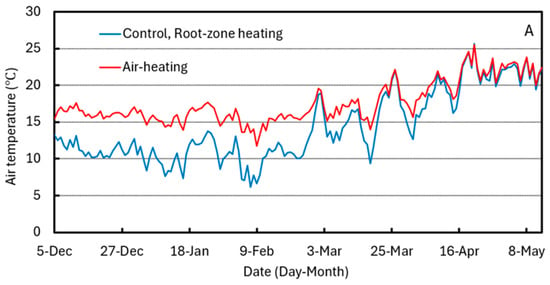
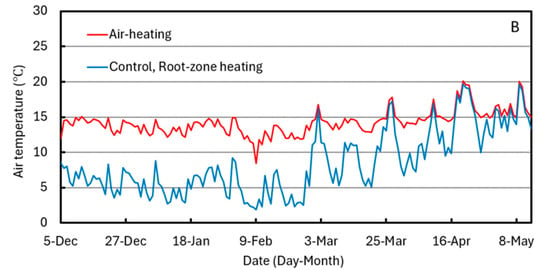
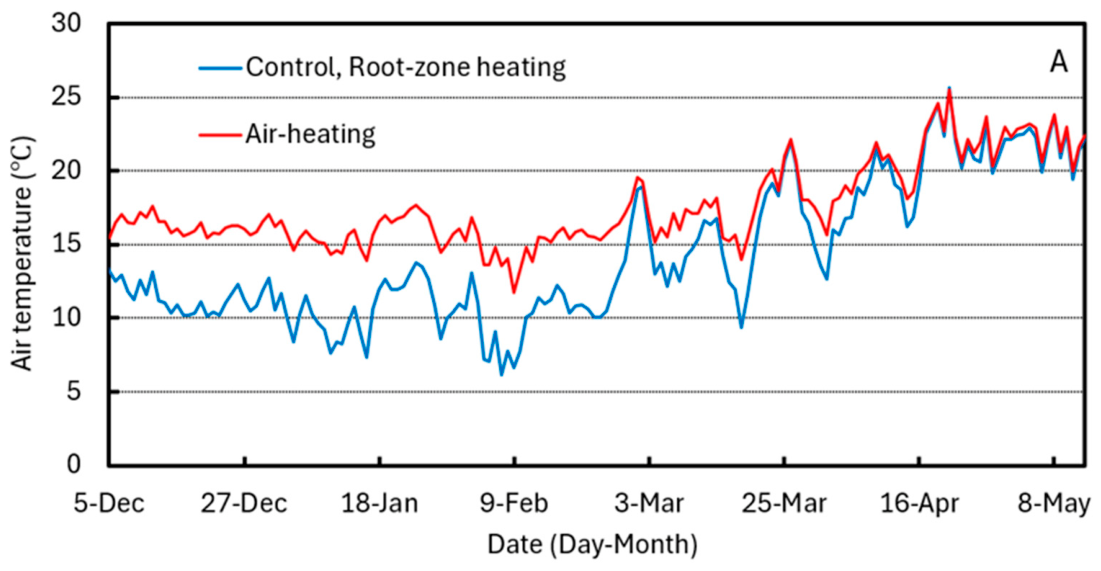
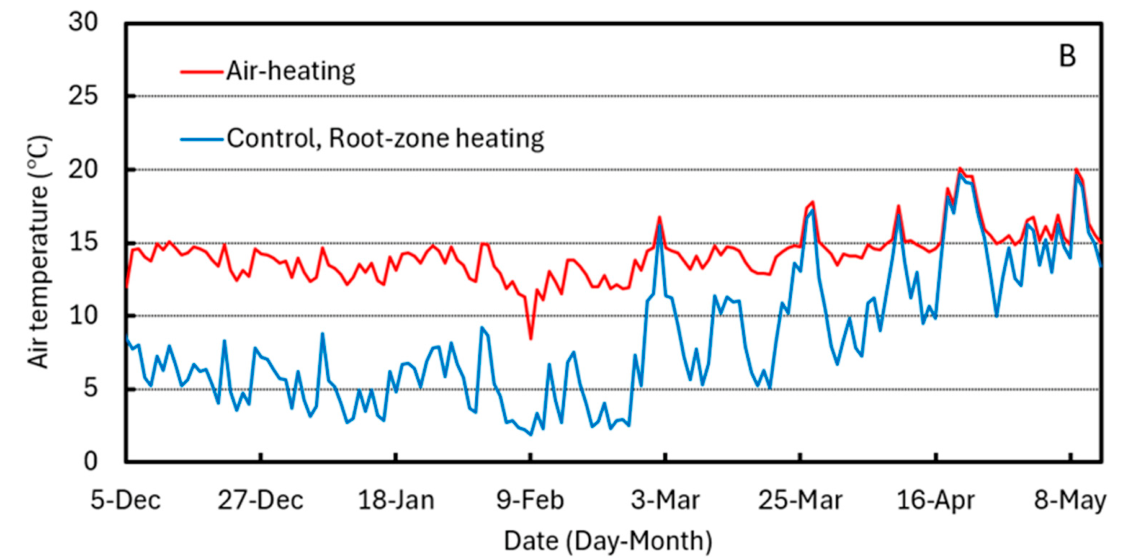
The mean air temperature during the treatment period (5 December 2024 to 13 May 2025) was 14.4 °C in both the control treatment and root-zone heating treatment, and it was 17.6 °C in the air-heating treatment (Figure 1A). Additionally, the mean daily minimum temperature during the experiment period was 8.6 °C in the control and root-zone heating treatments and 14.2 °C in the air-heating treatment (Figure 1B).
Figure 1.
Changes in daily mean air temperature (A) and daily minimum air temperature (B) during the experimental period.
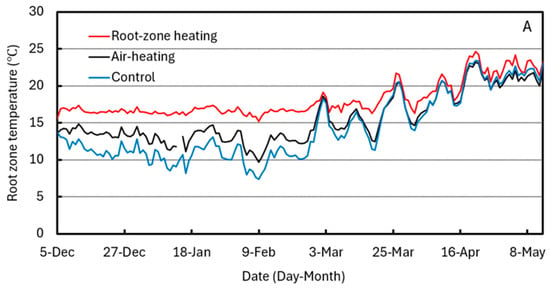
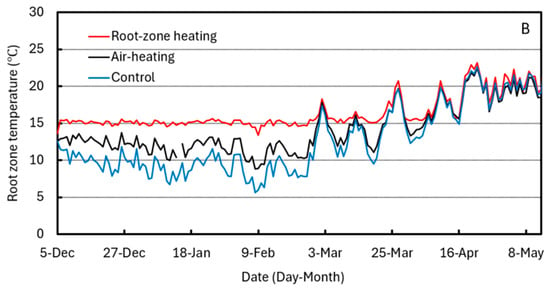
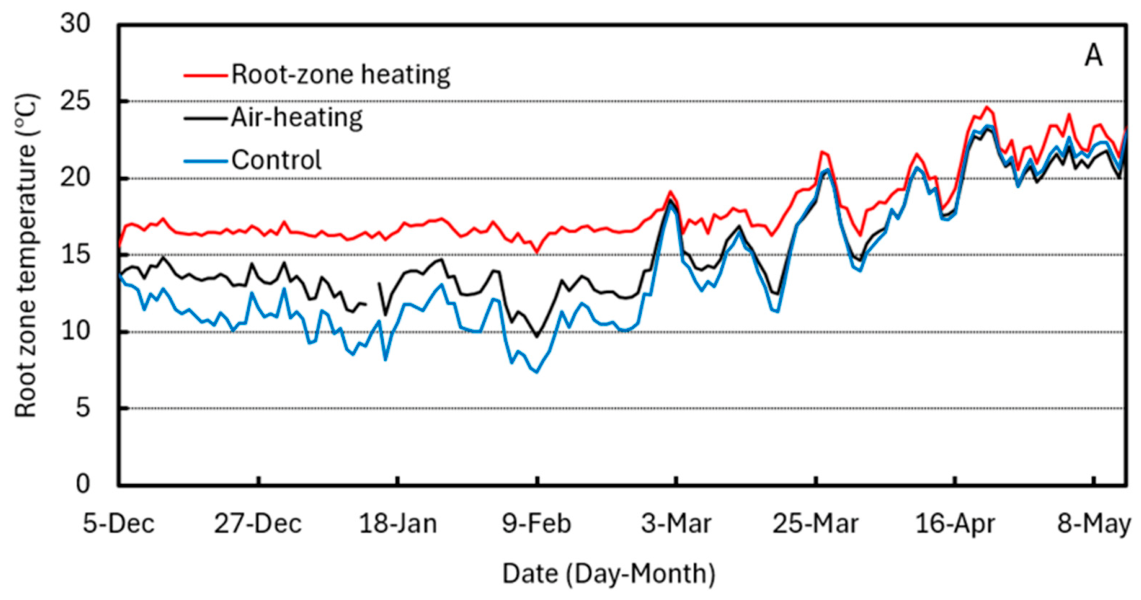
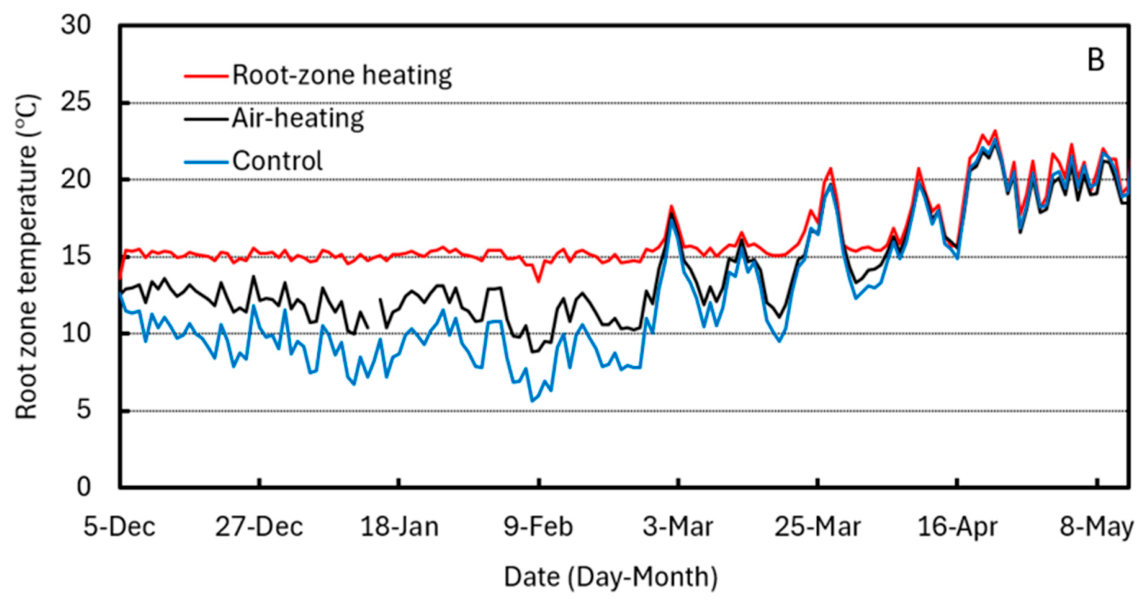
During the treatment period, the mean root-zone temperatures in the control, root-zone heating (5 cm from the bottom of the pot), and air-heating treatments were 14.4 °C, 18.1 °C, and 15.6 °C, respectively (Figure 2A). Additionally, the average temperature was 16.5 °C in the root-zone heating treatment 10 cm from the bottom of the pot, showing a 1.6 °C difference (Figure A2). Additionally, the mean daily minimum root-zone temperatures during the experiment period were 12.8 °C, 16.4 °C, and 14.2 °C in the control, root-zone heating (5 cm from the bottom of the pot), and air-heating treatments, respectively (Figure 2B).
Figure 2.
Changes in daily mean root-zone temperature (A) and daily minimum root-zone temperature (B) during the experimental period.
Root-zone temperature was measured using a temperature sensor inserted 5 cm above the bottom of the pot.
Root-zone temperature data for the air-heating treatment were unavailable on 14 and 15 January.
In February, the coldest month, the mean daily minimum air temperatures were 4.5 °C in the control and root-zone heating treatments and 12.5 °C in the air-heating treatment. On a representative day, nighttime air temperatures were lower in the control and root-zone heating treatments and higher in the air-heating treatment (Figure A3). The mean daily minimum root-zone temperatures were 8.7 °C in the control, 14.9 °C in the root-zone heating treatment (5 cm from the bottom of the pot), and 11.1 °C in the air-heating treatment (Table A1).
This study did not conduct quantitative evaluations of fuel consumption or electricity usage. However, the greenhouse heating system was operated for 132 of 160 days in the air-heating treatment. Conversely, the control and root-zone heating treatments were operated for 3 of 160 d.
3.2. Tree Survival
Herein, a tree was defined as “weakened” when all leaves had abscised, leaving only the shoot apex, or when leaf wilting progressed to the point that stomatal conductance measurements were no longer possible, and it was defined as “dead” when the tree had collapsed (Table 2).
Table 2.
Winter survival rate and damage status in each treatment.
In the control treatment, cold injury progressed in February, when the air and root-zone temperatures were the lowest. By January 28, two of the four trees had weakened, and by 11 February, the other two trees had also weakened. Furthermore, no growth recovery was observed by the end of the experiment (Table 2 and Figure A4).
In the root-zone heating treatment, one of the four trees reached a weakened stage on 11 February, after which its shoot apex died. However, on the last day of the experiment (13 May), a bud break from the lateral buds was observed, and the tree did not die. Although defoliation progressed in the remaining three trees, none reached a weakened or dead state (Table 2 and Figure A4).
During the air-heating treatment, one of the four trees exhibited signs of weakening on 11 March. Although it did not die, its subsequent growth was delayed compared with the other individuals on 13 May. Defoliation progressed in the remaining three trees; however, none reached a weakened or dead state (Table 2 and Figure A4).
In further analyses (tree height, stem diameter, SPAD, and stomatal conductance), trees that had reached a weakened state in either the root-zone or air-heating treatments were excluded, as differences in post-winter growth conditions could confound SPAD and stomatal conductance measurements.
3.3. Results of Tree Growth Status
At the end of the experiment (13 May 2025), the relative tree height was 107.8, 107.2, and 100 in the root-zone, air-heating, and control treatments, respectively, with the initial height of each tree set to 100.
Statistical analysis using one-way ANOVA followed by Fisher’s LSD test revealed that tree heights on 13 May were significantly higher in the root-zone heating and air-heating treatments than in the control treatment (p < 0.05; Table 3).
Table 3.
Change in plant height (cm) during the experimental period.
Similarly, at the end of the experiment (13 May 2025), the relative stem diameter was 113.6, 113.1, and 54.5 in the root-zone, air-heating, and control treatments, respectively, with the initial height of each tree set to 100. Shrinkage indicates the drying out or death of the stem tissue after defoliation.
Analyses of 13 May values revealed that stem diameters were significantly larger in the root-zone heating and air-heating treatments than in the control treatment (p < 0.05; Table 4).
Table 4.
Change in stem diameter (mm) during the experimental period.
3.4. Changes in Physiological Parameters
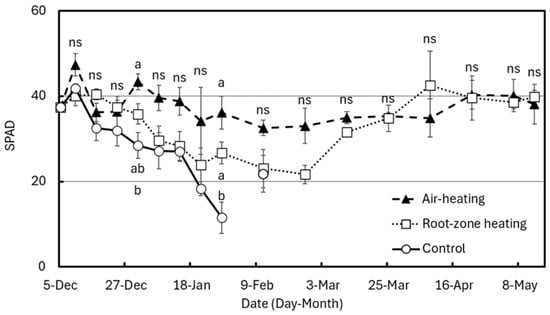
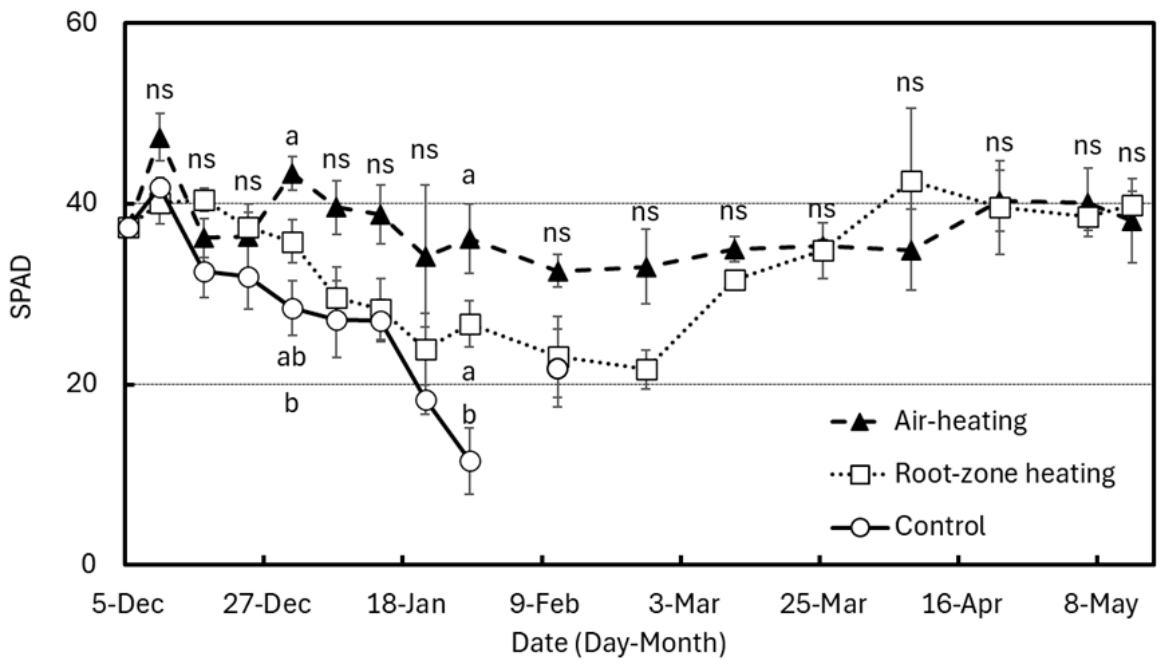
SPAD values were significantly lower in the control treatment than in the air-heating treatment. On 31 December 2024, the SPAD value was 43.4 in the air-heating treatment and 28.5 in the control treatment. The root-zone heating treatment showed an intermediate value of 35.8 (Figure 3).
Figure 3.
Change in SPAD value during the experimental period. Different letters indicate significant differences among treatments according to Fisher’s LSD test (p < 0.05). ns indicates no significant difference (n = 3–4). Values for the control treatment on 11 February are based on measurements from only two of the four trees. Error bars indicate ± SE.
After 25 February 2025, leaf abscission progressed in the control treatment until no measurable leaves remained. The trees subsequently died without recovery. In contrast, trees in both the root-zone and air-heating treatments successfully overwintered. However, no significant differences in SPAD values were observed between the two treatments during the experimental period (Figure 3).
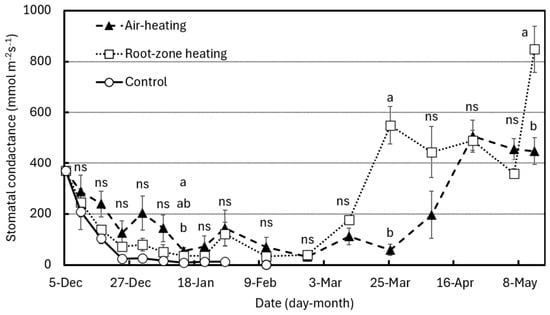
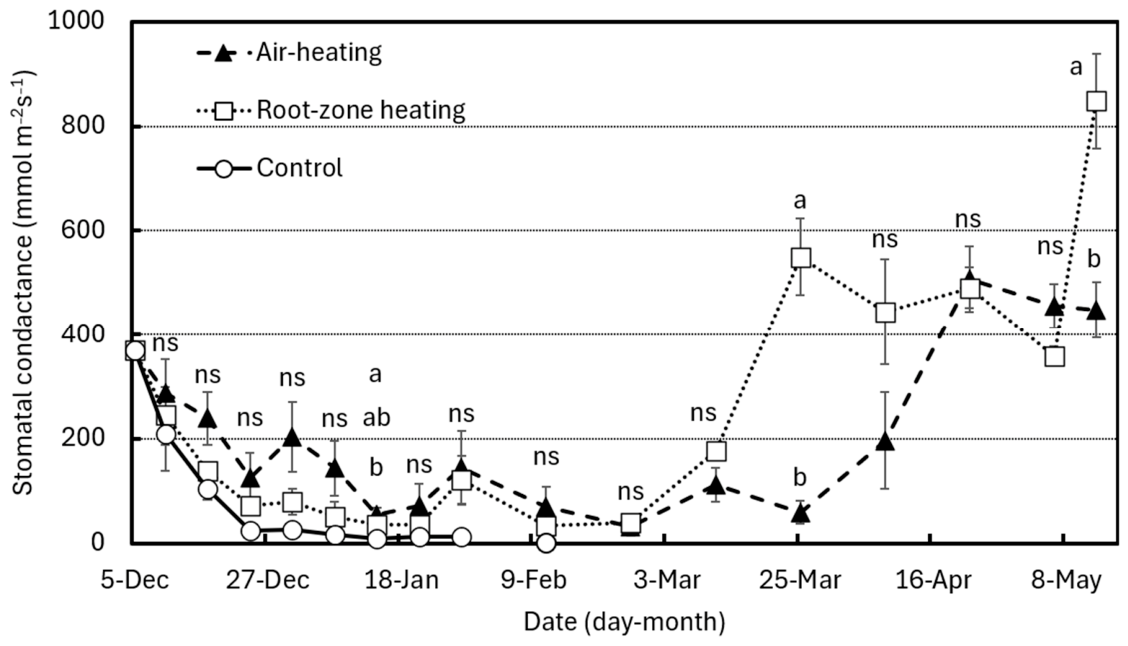
Stomatal conductance was significantly lower in the control than in the air-heating treatment. On 14 January 2025, stomatal conductance was 55.0 mmol m−2 s−1 in the air-heating treatment and 9.4 mmol m−2 s−1 in the control treatment. The root-zone heating treatment showed an intermediate value of 36.2 mmol m−2 s−1 (Figure 4).
Figure 4.
Change in stomatal conductance during the experimental period. Different letters indicate significant differences among treatments according to Fisher’s LSD test (p < 0.05). ns indicates no significant difference (n = 3–4). Values for the control treatment on 11 February are based on measurements from only two of the four trees. Error bars indicate ± SE.
After 25 February 2025, leaf abscission occurred in the control treatment until no measurable leaves remained, similarly to the decline observed in the SPAD values. Subsequently, the trees died without recovery. In contrast, in the root-zone and air-heating treatments that successfully overwintered, differences in their post-winter stomatal conductance were observed. On 25 March 2025, stomatal conductance was 58.4 mmol m−2 s−1 in the air-heating treatment, whereas it was significantly higher at 549.6 mmol m−2 s−1 in the root-zone heating treatment. By the end of the experiment on May 13, stomatal conductance reached 447.8 mmol m−2 s−1 in the air-heating treatment. Conversely, it was significantly higher in the root-zone heating treatment at 847.8 mmol m−2 s−1. These results indicate a more rapid recovery of stomatal conductance under root-zone heating (Figure 4).
4. Discussion
In the present study, trees in the control treatment began to weaken and die in late January, whereas those subjected to root-zone heating successfully overwintered. This difference was likely associated with the maintenance of root physiological activity under low-temperature conditions. Root-zone heating may have sustained root water uptake capacity during winter, resulting in higher stomatal conductance and improved plant vigor. Although plants in the present study were not exposed to freezing temperatures, prolonged exposure to low root-zone temperatures may have impaired root water uptake, resulting in physiological stress and reduced plant vigor. Root-zone heating likely alleviated these adverse effects by maintaining root physiological activity during winter.
Therefore, overwintering was considered successful because of the reduced water-deficit injury under cold conditions. Root-zone heating may mitigate water-deficit injury under cold conditions by increasing root development and maintaining root function. Previous studies using aspen trees have shown that maintaining soil temperatures at 5 °C, 10 °C, and 20 °C increases root growth at 20 °C. It also maintains stomatal conductance and water potential [23]. In the present study, stomatal conductance was maintained at similar levels in both the air and root-zone heating treatments. As the root-zone temperature was maintained at a relatively high level in the root-zone heating treatment, physiological responses similar to those previously reported were likely induced. This may have contributed to the maintenance of stomatal conductance. These responses may have mitigated the effects of the water-deficit injury under cold conditions. In contrast, the control treatment exhibited a reduction in stem diameter. This reduction was likely due to impaired water uptake, leading to desiccation and eventual tree death and resulting in stem shrinkage.
Previous studies have shown that root-zone heating reduces water-deficit injury under cold conditions in papaya. However, exposure to freezing temperatures causes papayas to die from freezing injury [16]. Herein, in addition to root-zone heating, greenhouse heating was applied when the air temperature dropped below 3 °C. This prevented greenhouse temperatures from dropping below 0 °C and ensured that plants were not exposed to freezing temperatures during overwintering. Furthermore, we previously demonstrated that root-zone heating in tropical evergreen coffee suppresses cold-induced defoliation under low-temperature, non-freezing conditions [24]. Consequently, leaves were retained during the cold period, and photosynthetic activity, indicated by the net photosynthetic rate, Fv/Fm, and stomatal conductance, recovered rapidly once the temperatures increased [24]. Taken together, controlling the root zone’s temperature facilitates overwintering in papaya and maintains leaf function, including photosynthesis.
This study examined recovery after overwintering. Stomatal conductance was higher under root-zone heating than under air-heating, suggesting that recovery occurred more rapidly. Recent studies have shown that the growth of papaya is suppressed under low-temperature conditions and is influenced by both root-zone and air temperatures [25]. In contrast, a classical study by Kadota [26] reported that the rooting limit temperature for papaya is approximately 14 °C and that root hair formation occurs at 16 °C or higher. Additionally, studies using maize have shown that root hair density decreases and that root elongation is inhibited as the temperatures decline [27]. Sufficient contact between the root hairs and soil is well-established to enhance water uptake [22]. In February, the average root-zone temperature was 12.5 °C in the air-heating treatment and 16.6 °C in the root-zone heating treatment. Compared with previous reports, this suggests that root growth and function may have continued in the root-zone heating treatment even during winter. These findings suggest that the threshold temperature for maintaining root growth and function may lie between 12.5 and 16.6 °C, although further studies are required to determine the threshold temperature for root growth more precisely.
Studies in cucumber have reported that increasing root-zone temperature promotes root growth and enhances plant water relations, resulting in increased stomatal conductance [28]. Under increased soil temperature, apple trees exhibit early spring bud break [29]. Notably, studies have shown that root pruning can delay early bud breakage associated with global warming in chestnut trees [30].
Although root growth was indirectly measured in the present study, continued root growth may have occurred in the root-zone heating treatment. As the root-zone temperatures were higher in the root-zone heating than in the air-heating treatment, this potentially led to faster recovery of stomatal conductance. In addition, the present study was conducted using young potted papaya trees under a specific set of environmental conditions. Because the experiment was performed in 15 L pots, root expansion may have been restricted, potentially resulting in different root-zone thermal responses compared with field-grown or large container-grown production systems. Therefore, further studies are needed to determine whether similar responses occur in fully mature trees and under commercial production conditions. Practical methods for applying root-zone heating to field-grown or large container-grown papaya trees should also be investigated in future research.
Accordingly, maintaining root-zone temperatures above 15 °C may help maintain the balance between root water uptake and leaf transpiration, thereby mitigating water-deficit injury under cold conditions in papayas. This may contribute to the recovery of physiological functions after overwintering. Thus, root-zone heating acts as an effective management option for stable overwintering of tropical fruit trees.
5. Conclusions
This study demonstrated that combining root-zone heating with minimal greenhouse heating to maintain non-freezing conditions reduced cold injury and enabled the successful overwintering of papaya trees. Specifically, maintaining root-zone temperatures above 15 °C reduced the severity of water-deficit injury under cold conditions and promoted earlier recovery of stomatal conductance after overwintering. Therefore, maintaining the root-zone temperature is crucial in tree survival during winter and resumption of physiological functions during recovery.
However, this study did not examine the morphological changes or metabolic activity. Therefore, the physiological mechanisms underlying the beneficial effects of root-zone heating remain unclear. In addition, the experiment was conducted using young potted trees, and further studies are required to determine whether similar responses occur in fully mature papaya trees and under commercial production conditions. Practical methods for applying root-zone heating to field-grown or large container-grown trees should also be investigated in future research. Controlling the root-zone temperature along with whole-greenhouse heating provides a promising approach for winter management of papaya trees, as it offers a viable strategy for mitigating cold injury in tropical fruit trees.
Author Contributions
Conceptualization, N.S., N.I., and A.S.; methodology, A.S.; validation, N.S.; formal analysis, N.S.; investigation, N.S.; writing—original draft preparation, N.S.; writing—review and editing, N.I. and A.S.; visualization, N.S. and A.S.; supervision, A.S. All authors have read and agreed to the published version of the manuscript.
Funding
This work was supported by the Tokai University Research Organization Grant.
Data Availability Statement
The original contributions presented in this study are included in the article. Further inquiries can be directed to the corresponding author.
Conflicts of Interest
The authors declare no conflicts of interest.
Appendix A
Table A1.
Monthly mean, daily, and minimum air and root-zone temperatures.
Appendix B
Figure A1.
Schematic diagram of the root-zone heating method.
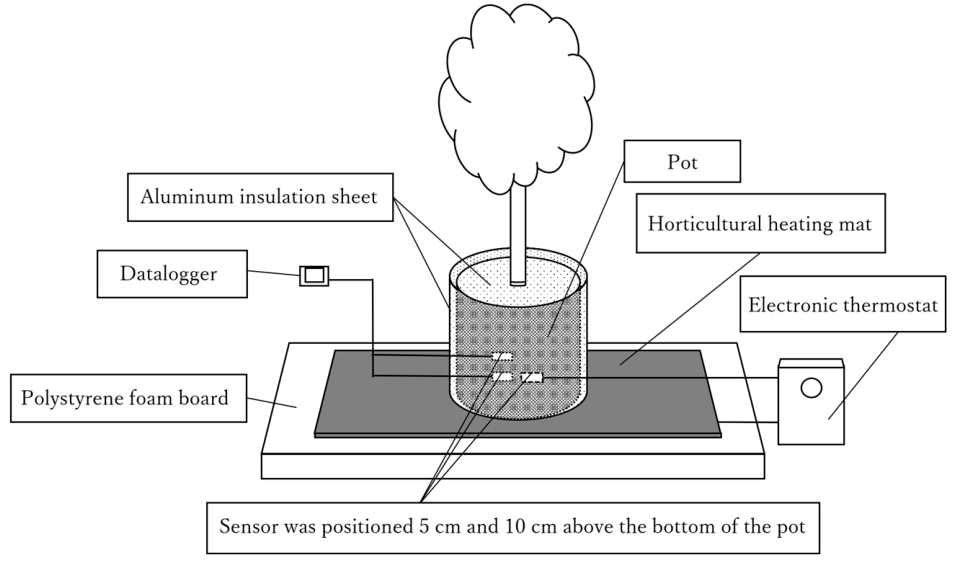
Figure A2.
Changes in daily average root-zone temperature during the experimental period, comparing root-zone temperatures at 5 cm and 10 cm above the pot’s bottom in the root-zone heating treatment.
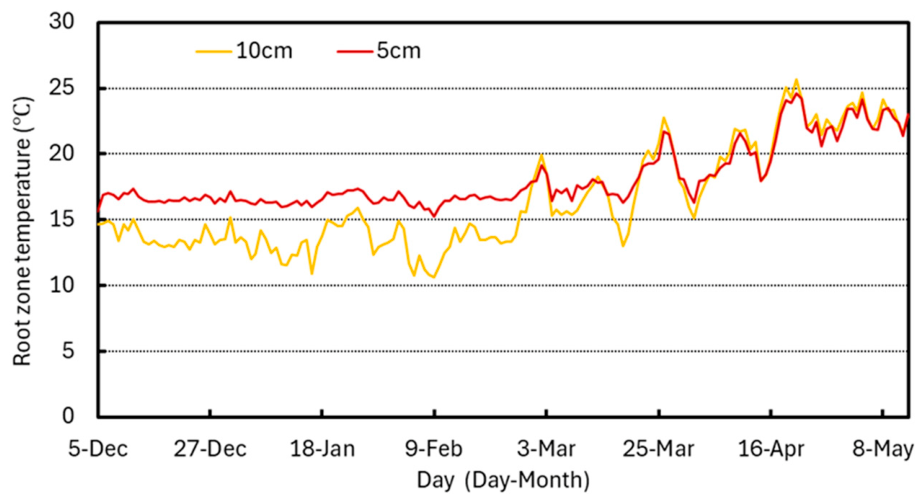
Figure A3.
Controlled air temperatures on a cold day during the experimental period (7–8 February 2025).
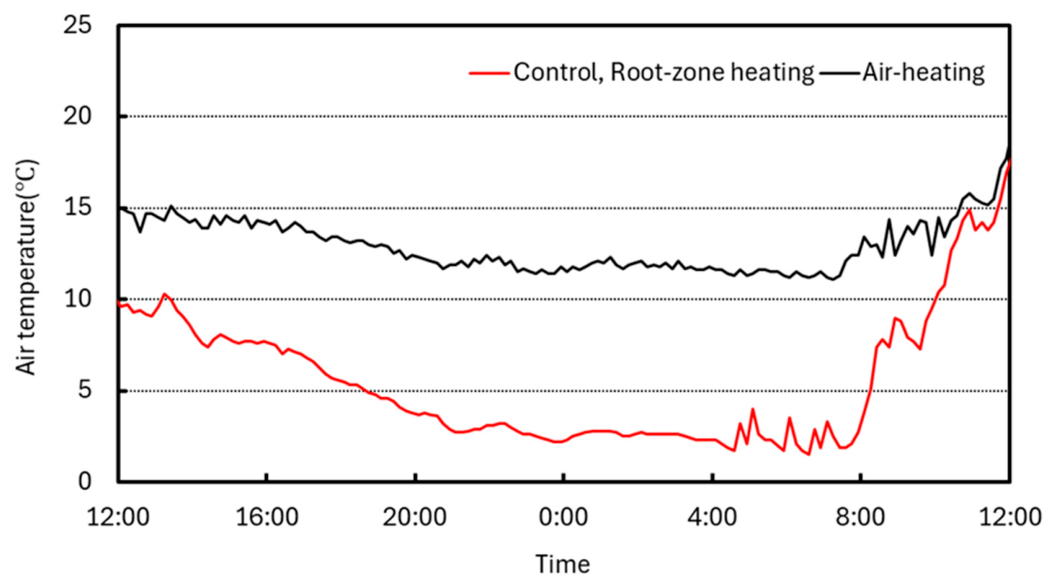
Figure A4.
Growth status of papaya trees on the final day of the experiment (13 May 2025): (A) control treatment, (B) root-zone heating treatment, and (C) air-heating treatment.
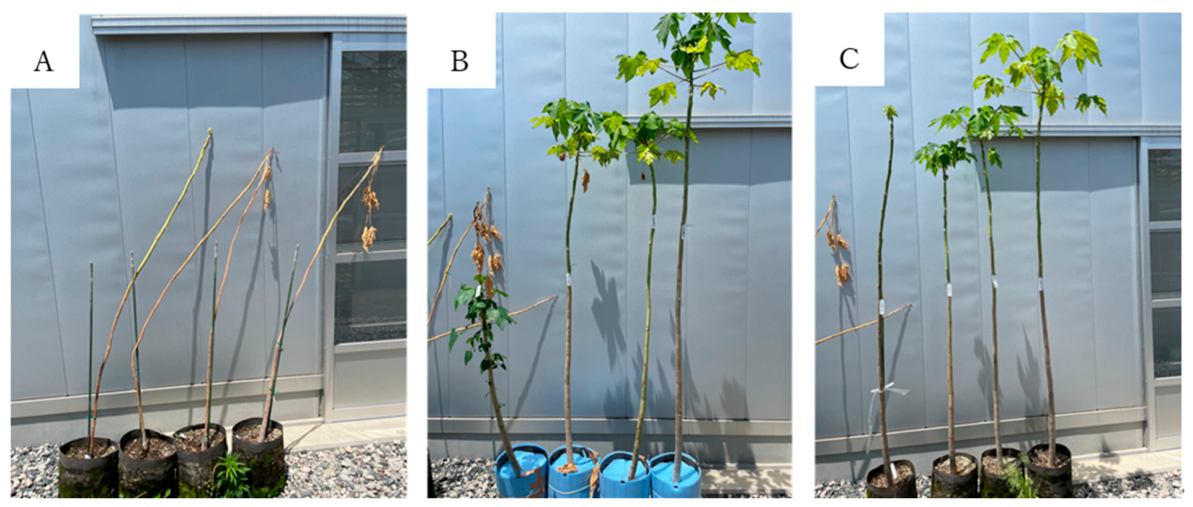
The leftmost tree in the root-zone heating and air-heating treatments corresponds to the individual classified as “Weakened” (Table 2).
References
- Ishihata, K. Introduction of tropical and subtropical fruit trees into Japan. Jpn. J. Trop. Agric. 2002, 46, 202–212. [Google Scholar] [CrossRef]
- Ishihata, K.; Mizuno, S.; Miyaura, N. Effect of the soil temperature upon the growth of some tropical fruit trees. 2. On the effects of the cultivation period and the soil temperature upon the growth of passion fruit and acerola. Bull. Exp. Farm. Fac. Agric. Kagoshima. Univ. 1989, 14, 11–19. [Google Scholar]
- Ishihata, K.; Nomura, T.; Mizuno, S. Effects of the soil temperature upon the growth of some tropical fruit trees. 3. On the effects of growing season and the soil temperature upon the growth of guava and mango. Bull. Exp. Farm. Fac. Agric. Kagoshima. Univ. 1991, 16, 1–8. [Google Scholar]
- Ishihata, K.; Nomura, T.; Mizuno, S. Effects of the soil temperature upon the growth of some tropical fruit trees. 4. Effects of the growing season and the soil temperature upon the growth of papaya and carambola. Bull. Exp. Farm. Fac. Agric. Kagoshima. Univ. 1992, 17, 1–9. [Google Scholar]
- Lange, A.H. The effect of temperature and photoperiod on the growth of Carica papaya. Ecology 1961, 42, 481–486. [Google Scholar] [CrossRef] [Scilit]
- Paull, R.E.; Duarte, O. Tropical Fruits, 2nd ed.; CAB International: Wallingford, UK, 2011; Volume 1. [Google Scholar] [CrossRef] [Scilit]
- Uchino, K.; Hamashima, A.; Iwata, K.; Kukita, H.; Kumamoto, O. Effect of low temperature on avocado, litchi and papaya in Kagoshima Prefecture from December 2015 to January 2016. Res. Trop. Agric. 2019, 12, 31–35. [Google Scholar] [CrossRef]
- Ogata, T.; Yamanaka, S.; Shoda, M.; Urasaki, N.; Yamamoto, T. Current status of tropical fruit breeding and genetics for three tropical fruit species cultivated in Japan: Pineapple, mango, and papaya. Breed. Sci. 2016, 66, 69–81. [Google Scholar] [CrossRef] [Scilit] [PubMed]
- Salinas, I.; Hueso, J.J.; Cuevas, J. Active Control of Greenhouse Climate Enhances Papaya Growth and Yield at an Affordable Cost. Agronomy 2021, 11, 378. [Google Scholar] [CrossRef] [Scilit]
- Vogelezang, J.V.M. Effect of root-zone heating on growth, flowering and keeping quality of Saintpaulia. Sci. Hortic. 1988, 34, 101–113. [Google Scholar] [CrossRef] [Scilit]
- Vogelezang, J.V.M. Effect of root-zone and air temperature on growth, ornamental value and keepability of Ficus benjamina and Schefflera arboricola ‘Compacta’. Sci. Hortic. 1991, 46, 301–313. [Google Scholar] [CrossRef] [Scilit]
- Kubota, S.; Endo, M.; Hayashi, S.; Takahashi, H.; Muramatsu, Y.; Koshioka, M. Regulation of root-zone temperature by root-zone environmental control system affects growth and flowering of Verbena × hybrida and Pelargonium × hortorum. Hortic. Res. 2013, 12, 97–102. [Google Scholar] [CrossRef] [Scilit]
- Muramatsu, Y.; Kubota, S.; Koshioka, M. Root-zone heating during winter season is effective to promote growth of Impatiens walleriana Hook. f. Hortic. Res. 2017, 16, 295–300. [Google Scholar] [CrossRef] [Scilit]
- Muramatsu, Y.; Kodaira, A.; Matano, R.; Saito, M.; Yokoyama, Y.; Kumota, S. Root-zone heating in winter using N.RECS is effective for promoting growth and flowering of pot flowers and reducing energy consumption for heating. Hortic. J. 2025, 94, 92–99. [Google Scholar] [CrossRef] [Scilit]
- Centeno, A.; Memmi, H.; Moreno, M.M.; Moreno, C.; Perez-Lopez, D. Water relations in olive trees under cold conditions. Sci. Hortic. 2018, 235, 1–8. [Google Scholar] [CrossRef] [Scilit]
- Saeki, A.; Nakamura, Y.; Osaka, M.; Iwasaki, N. Effect of root zone heating on cold tolerance of Carica papaya L. J. Hortic. Sci. Biotechnol. 2024, 99, 713–720. [Google Scholar] [CrossRef] [Scilit]
- Aroca, R.; Tognoni, F.; Irigoyen, J.J.; Sanchez-Diaz, M.; Pardossi, A. Different root low temperature response of two maize genotypes differing in chilling sensitivity. Plant Physiol. Biochem. 2001, 39, 1067–1073. [Google Scholar] [CrossRef] [Scilit]
- Pardossi, A.; Vernieri, P.; Tognoni, F. Involvement of abscisic acid in regulation of water status in Phaseolus vulgaris L. during chilling. Plant Physiol. 1992, 100, 1243–1250. [Google Scholar] [CrossRef] [Scilit] [PubMed]
- Aroca, R.; Porcel, R.; Ruiz-Lozano, J.M. Regulation of root water uptake under abiotic stress conditions. J. Exp. Bot. 2012, 63, 43–57. [Google Scholar] [CrossRef] [Scilit] [PubMed]
- Aroca, R.; Vernieri, P.; Irigoyen, J.J.; Sánchez-Díaz, M.; Tognoni, F.; Pardossi, A. Involvement of abscisic acid in leaf and root of maize (Zea mays L.) in avoiding chilling-induced water stress. Plant Sci. 2003, 165, 671–679. [Google Scholar] [CrossRef] [Scilit]
- Bloom, A.J.; Zwieniecki, M.A.; Passioura, J.B.; Randall, L.B.; Holbrook, N.M.; St. Clair, D.A. Water relations under root chilling in a sensitive and tolerant tomato species. Plant Cell Environ. 2004, 27, 971–979. [Google Scholar] [CrossRef] [Scilit]
- Lee, S.H.; Chung, G.C.; Steudle, E. Gating of aquaporins by low temperature in roots of chilling-sensitive cucumber and chilling-tolerant figleaf gourd. J. Exp. Bot. 2005, 56, 985–995. [Google Scholar] [CrossRef] [Scilit] [PubMed]
- Wan, X.; Landhausser, S.M.; Zwiazek, J.J.; Lieffers, V.J. Root water flow and growth of aspen (Populus tremuloides) at low root temperature. Tree Physiol. 1999, 19, 879–884. [Google Scholar] [CrossRef] [Scilit] [PubMed]
- Suganami, M.; Saeki, A.; Iwasaki, N.; Takata, D. Does root-zone heating mitigate the cold injury in coffee tree (Coffea arabica)? Plants 2025, 14, 3715. [Google Scholar] [CrossRef] [Scilit] [PubMed]
- Pradhan, S.; Goswami, A.K.; Singh, S.K.; Prakash, J.; Goswami, S.; Viswanathan, C.; Talukdar, A.; Sharma, V.K. Growth, nutrient acquisition and physiological responses of papaya (Carica papaya) plants to controlled low temperature stress. Indian J. Agric. Sci. 2018, 88, 726–732. [Google Scholar] [CrossRef] [Scilit]
- Kadota, T. Studies on the cardinal temperatures for the root growth of vegetable crop seedlings. Res. Rep. Kochi Univ. 1959, 8, 1–95. [Google Scholar]
- Sommer, M.L.; Zhou, Y.; Hochholdinger, F. Differential cold stress intensities drive unique morphological and transcriptomic changes in Zea mays root hairs. BMC Genom. 2025, 26, 805. [Google Scholar] [CrossRef] [Scilit] [PubMed]
- Refaie, K.M.; Saad, S.A.H.; Hussein, N.S. Smart control of soil temperature to optimize root-zone conditions for enhancing the physiological performance, growth, and productivity of greenhouse-grown cucumber. Sci. Rep. 2026, 16, 10351. [Google Scholar] [CrossRef] [Scilit] [PubMed]
- Greer, D.H.; Wünsche, J.N.; Norling, C.L.; Wiggins, H.N. Root-zone temperatures affect phenology of bud break, flower cluster development, shoot extension growth and gas exchange of ‘Braeburn’ (Malus domestica) apple trees. Tree Physiol. 2006, 26, 105–111. [Google Scholar] [CrossRef] [Scilit] [PubMed]
- Horimoto, M.; Araki, H. Effect of restricted water uptake on freezing injury of Japanese chestnut (Castanea crenata Sieb. et Zucc.) trees. J. Agric. Meteorol. 1999, 55, 329–336. [Google Scholar] [CrossRef] [Scilit]

Disclaimer/Publisher’s Note: The statements, opinions and data contained in all publications are solely those of the individual author(s) and contributor(s) and not of MDPI and/or the editor(s). MDPI and/or the editor(s) disclaim responsibility for any injury to people or property resulting from any ideas, methods, instructions or products referred to in the content. |
© 2026 by the authors. Licensee MDPI, Basel, Switzerland. This article is an open access article distributed under the terms and conditions of the Creative Commons Attribution (CC BY) license.