Review

Postharvest Physiology of Fruits and Vegetables: Implications for Knowledge Transfer and Sustainability Among Local Producers in Mexico


by
Diana Patricia Uscanga-Sosa
1,
María Bernardita Pérez-Gago
2,
Adriana Contreras-Oliva
1,*,
Juan Valente Hidalgo-Contreras
1 and
Josué Uriel Montaño-Martínez
1
1
Córdoba Campus, Colegio de Postgraduados, Amatlán de los Reyes 94946, Veracruz, Mexico
2
Unidad de Tecnología Poscosecha (UTP), Centro de Agroingenierías Avanzadas (CATA), Instituto Valenciano de Investigaciones Agrarias (IVIA), 46113 Montcada, Spain
*
Author to whom correspondence should be addressed.
Horticulturae 2026, 12(6), 747; https://doi.org/10.3390/horticulturae12060747 (registering DOI)
Submission received: 30 April 2026 / Revised: 9 June 2026 / Accepted: 12 June 2026 / Published: 19 June 2026

Abstract

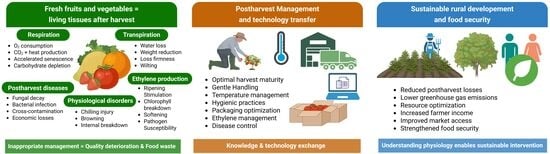
Proper handling during harvesting and subsequent postharvest management is essential to reduce losses in fruits and vegetables, particularly because these products remain metabolically active after harvest. Physiological processes such as respiration, transpiration, ethylene production, softening, physiological disorders, and postharvest diseases determine quality deterioration, shelf life, and marketability. However, these processes do not affect all commodities in the same way; for example, climacteric fruits are strongly influenced by ethylene during ripening, whereas non-climacteric fruits generally show lower ethylene production and different postharvest behavior. In Mexico, postharvest management is especially relevant because fruit and vegetable producers differ widely in terms of production scale, infrastructure, access to technology, financing capacity, and market destination. Producers with limited access to technology require practical and low-cost alternatives, while more technologically advanced producers may use specialized systems but still experience postharvest losses due to physiological deterioration, handling conditions, logistics, and market constraints. Therefore, this review summarizes the main postharvest physiological processes affecting fruits and vegetables and discusses their implications for knowledge transfer, technology adoption, and sustainability among local producers in Mexico. The review highlights that reducing postharvest losses requires commodity-specific management, continuous technical support, low-cost and locally adaptable technologies, and coordinated participation among researchers, extension personnel, producers, government institutions, industry, and market actors. Strengthening postharvest knowledge transfer to small and local producers is essential to reduce losses, improve marketability, and promote more sustainable fruit and vegetable systems in Mexico.

Graphical Abstract

1. Introduction

Fruits and vegetables are living organisms that undergo physiological, biochemical, and structural changes during ripening. These changes make them attractive and suitable for consumption; however, they also make them susceptible to physicochemical deterioration and postharvest diseases [1,2]. Fruits and vegetables contain high amounts of water, which can be lost through respiration and transpiration, reducing freshness, firmness, and turgidity and causing wilting. Their high water content also favors microbial development, making preservation more difficult [3,4].
Microbial attack in fruits and vegetables can cause off-flavors, internal and external damage, and contamination of adjacent produce. Fungal infections are particularly important because they may account for a high proportion of economic losses in horticultural products [1,2]. Ethylene is another important factor in postharvest management because it regulates ripening in climacteric fruits; therefore, its management can help extend shelf life in ethylene-sensitive commodities [3].
Proper postharvest handling requires knowledge of the physiological and microbiological factors that occur during ripening and senescence [5,6]. For example, temperature management directly affects respiration, transpiration, ethylene production, enzyme activity, spore germination, and the growth of pathogenic fungi [7].
Consequently, transferring knowledge about postharvest physiology to local producers in Mexico is essential for their social, cultural, and economic development. These transfers are normally carried out from research centers and universities to producers and are encouraged by government programs and rural extension services. However, this link is still not widespread or continuous and is often limited to short periods that do not provide sustained monitoring and support to producers [8].
Sustainability has also become increasingly important in the fruit and vegetable value chain. Sustainable postharvest practices aim to maintain quality, safety, and availability, while reducing postharvest losses and waste, avoiding economic losses for producers, and reducing environmental impacts [9].
In this context, the transfer of postharvest knowledge and technologies to small and local producers is closely related to sustainability. Improving postharvest handling can help reduce losses, optimize the use of water, energy, inputs, and infrastructure, and improve the commercial value of fruits and vegetables. Therefore, postharvest knowledge transfer should not only explain physiological processes, but also provide practical tools that allow producers to reduce deterioration, improve marketability, and participate more effectively in local and regional markets.
The objective of this review is to summarize the main postharvest physiological processes that influence the quality, shelf life, and deterioration of fruits and vegetables, and to discuss how this knowledge can support practical postharvest management, technology transfer, and sustainability strategies for local producers in Mexico. This review is intended not only for researchers and producers, but also for extension personnel, policymakers, industry stakeholders, and institutions involved in designing and implementing postharvest management and knowledge-transfer strategies in local production systems.

2. Literature Search

This narrative review was developed from a literature search conducted in Scopus and Web of Science. The search covered publications from 2015 to 2025, with the inclusion of selected classical references when required to support fundamental concepts in postharvest physiology. The following keywords and combinations were used: “postharvest physiology,” “fruits and vegetables,” “postharvest losses,” “knowledge transfer,” “technology transfer,” “smallholder farmers,” “extension services,” “sustainability,” and “Mexico.” Research articles and review papers related to postharvest physiological processes, quality deterioration, postharvest losses, postharvest management, knowledge and technology transfer, extension services, sustainability, and local production systems were included. Other types of documents and studies not directly related to the topic of the review were excluded.

3. Postharvest Physiology of Fruits and Vegetables

3.1. Respiration

Respiration is an indicator of the metabolic activity of fruits and vegetables. It involves the oxidative degradation of substrates such as sugars and organic acids to produce carbon dioxide, water, and energy [3,7]. In postharvest management, respiration is important because it reflects the rate at which harvested tissues use their stored reserves. A high respiration rate is generally associated with faster senescence, quality loss, and shorter shelf life [10]. Therefore, reducing respiration through appropriate temperature management, ventilation, and atmosphere control is one of the main objectives of postharvest handling.
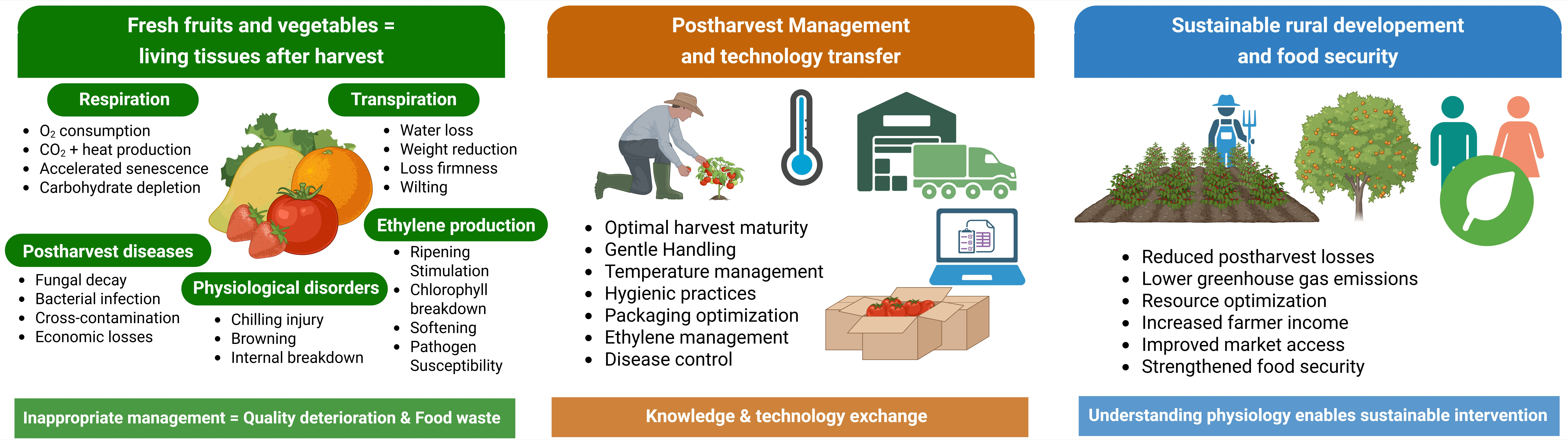
Fruits can be divided into climacteric and non-climacteric categories according to their respiration pattern and ethylene production during ripening. Climacteric fruits show an increase in respiration and ethylene production during ripening, which allows ripening to continue after harvest. In contrast, non-climacteric fruits generally show low ethylene production and do not continue ripening in the same way once detached from the plant [11,12,13].
Under normal conditions, respiration requires O2. However, when oxygen levels are very low, respiration can become anaerobic and generate compounds such as acetaldehyde and ethanol, which can cause off-flavors [7,14] (Figure 1). For this reason, storage atmospheres must be adjusted according to each commodity to reduce respiration without inducing anaerobic metabolism.

3.2. Ethylene Production

Ethylene synthesis requires oxygen and involves the precursor 1-aminocyclopropane-1-carboxylic acid (ACC). ACC is produced from S-adenosylmethionine by ACC synthase (ACS). When oxygen is present, ACC is converted by ACC oxidase (ACO) into ethylene, CO2, and HCN. Methylthioadenosine, which results from ACC synthesis, is used to regenerate methionine through the Yang cycle [15].
Fruit ripening is a complex physiological and biochemical process regulated by ethylene and other hormones. It leads to changes in appearance, texture, flavor, aroma, and sugar content [12,16].
Fruits can be classified as climacteric or non-climacteric based on their pattern of respiration and ethylene production during ripening. Although there are important differences in the synchrony and intensity of these processes among species, this classification is useful for harvest and postharvest management. Climacteric fruits include tomato, banana, apple, pear, mango, and papaya, whereas non-climacteric fruits include strawberry, grape, and citrus [11,12,13].

3.3. Transpiration

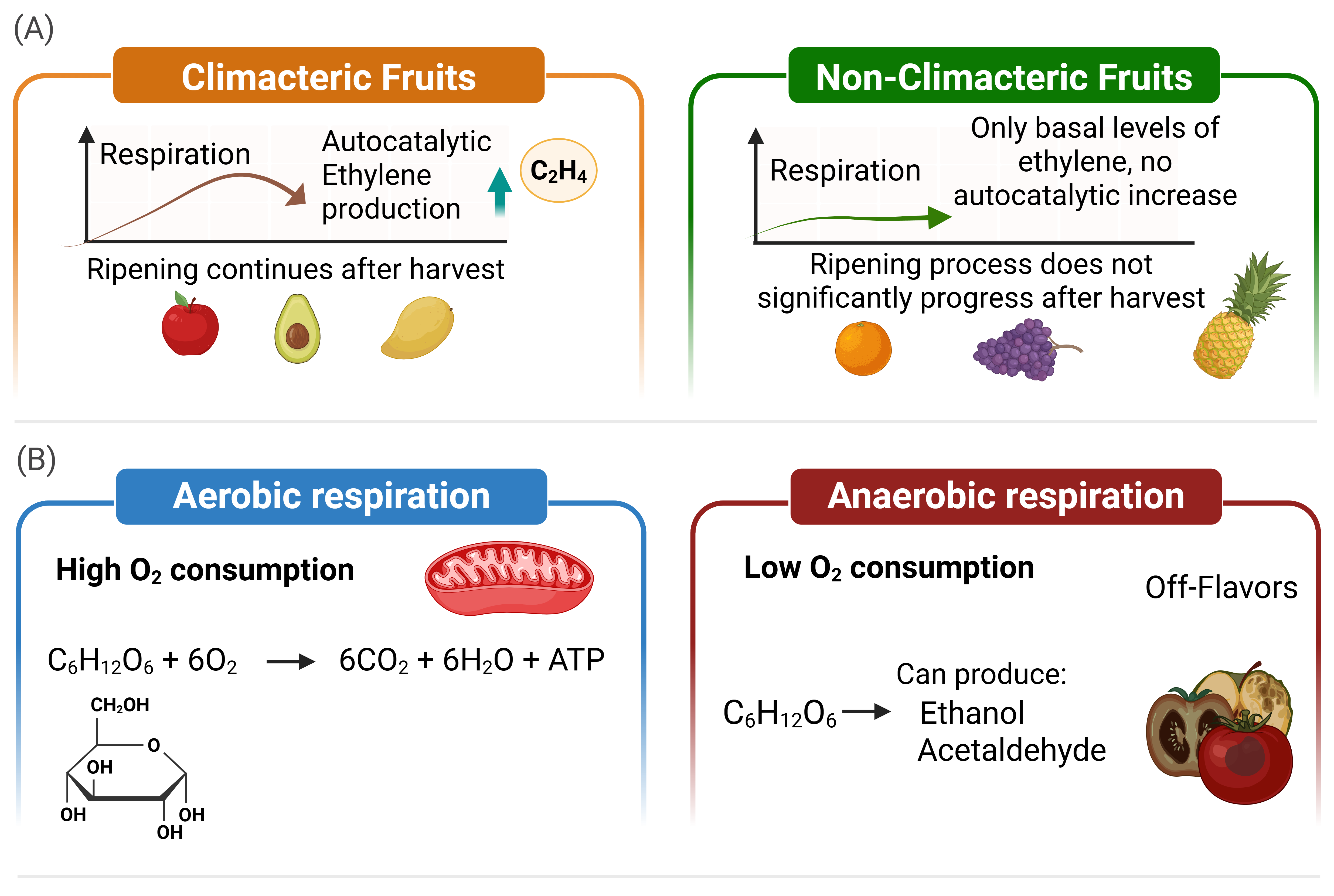
Transpiration is the loss of water from plant tissues in the form of vapor. In fruits and vegetables, this process causes weight loss, loss of firmness, wilting, shriveling, and visual deterioration, reducing marketability and shelf life [17,18]. Water loss also represents an economic problem because many horticultural products are sold by weight. This is especially important in local production systems, where inadequate storage conditions can rapidly reduce commercial value (Figure 2).
The transpiration rate depends on product characteristics and postharvest conditions. Product-related factors include surface area, surface injuries, cuticle characteristics, lenticels, cracks, and maturity stage. External factors include temperature, relative humidity, air movement, packaging, and ventilation [14,18]. In practical terms, high temperature, low relative humidity, excessive air movement, and surface injuries increase water loss. In contrast, low but commodity-appropriate temperatures and high relative humidity reduce the vapor pressure gradient between the product and the surrounding air, limiting transpiration [14,18].
The main strategies to control transpiration during storage and transport include maintaining adequate temperature and relative humidity, using packaging materials that reduce water loss, applying edible waxes or coatings, and ensuring proper ventilation [14,19]. These practices must be applied carefully because excessive humidity or condensation may favor microbial growth. Therefore, transpiration control should combine temperature and relative humidity management with adequate packaging and ventilation.

3.4. Softening

Fruit softening is one of the main textural changes associated with ripening and senescence. It occurs mainly through modification and degradation of cell wall components, which reduces firmness and changes the texture of fruits and vegetables [20,21]. Although softening can improve palatability in some fruits, excessive softening decreases resistance to handling, increases susceptibility to bruising, and facilitates microbial infection.
Softened tissues are more vulnerable to postharvest decay because cell wall degradation and loss of firmness facilitate pathogen penetration and colonization. This condition can favor the development of common postharvest fungi such as Colletotrichum, Botrytis, Penicillium, and Rhizopus, depending on the commodity and storage conditions [3]. Therefore, strategies that delay excessive softening can also contribute to reducing postharvest disease incidence and quality losses. Maintaining firmness is important during harvesting, packaging, transport, storage, commercialization, and consumer acceptance.

3.5. Physiological Disorders

Physiological disorders are alterations in fruit tissues that may originate from nutritional deficiencies or adverse climatic conditions during the preharvest period. For example, bitter pit in apples is mainly related to calcium deficiency in fruit cells and is characterized by brown spots on the skin and cellular collapse in the pulp, especially near the calyx. This disorder starts during fruit development but is mainly expressed during postharvest storage [22].
During transport or postharvest storage, inappropriate handling conditions, temperature, relative humidity, light, and gas composition can also induce oxidative stress, accelerate senescence, and promote physiological disorders [23,24].
Although low temperatures control metabolic processes such as respiration and can prolong storage and shelf life, cold-sensitive products such as bananas, pineapples, and avocados can develop chilling injury when exposed to temperatures below their tolerance limits. Symptoms may include pitting, browning, uneven ripening, and increased susceptibility to decay. Likewise, atmospheres with high CO2 and low O2 can cause physiological alterations, such as anaerobic respiration, depending on concentration, duration, temperature, and species [24].
In the Mexican context, some commercially important crops illustrate the practical relevance of physiological disorders. For example, avocado is sensitive to chilling injury during cold storage, which may result in irregular ripening, mesocarp darkening, vascular browning, skin pitting, skin darkening, off-flavors, and increased susceptibility to decay [25]. In tomato, blossom-end rot is another relevant physiological disorder associated mainly with altered Ca2+ homeostasis and irregular water supply during fruit development [26,27]. Although its origin is preharvest, affected fruits may be rejected during sorting, commercialization, or export because of visible symptoms and reduced market quality. These examples show that physiological disorders are not only biological alterations, but also factors that influence postharvest handling, marketability, and economic losses.

3.6. Pathological Alterations

Once removed from the plant, fruits lose part of the resistance that protected them during development and become more susceptible to microorganisms such as fungi and bacteria. Their high water and nutrient content also contributes to microbial growth. In addition, climatic conditions and certain postharvest handling practices can favor disease development [28,29]. Thus, physical damage and physiological deterioration increase the susceptibility of fruits and vegetables to pathogen attack.
Losses caused by diseases are highly variable and depend on the production area, species and cultivar, tree age and condition, weather conditions during the season, harvest timing and method, postharvest handling, storage conditions, and destination market [28]. In general, postharvest diseases develop when the following conditions occur:
sufficient inoculum in the environment
contact between inoculum and fruit
entry of the spore through a wound in the fruit
conditions conducive to spore development within the wound
susceptibility of the fruit to alteration
Proper handling during harvesting and subsequent postharvest management, together with appropriate environmental conditions, can reduce the incidence of postharvest diseases in fresh fruits and vegetables [29].

4. Knowledge and Technology Transfer to Local Producers

Good Agricultural Practices (GAP) consist of standards and techniques applied throughout the agricultural process, from planting and cultivation to harvesting, packaging, transportation, storage, and distribution, to produce safe food and protect the environment [30].
The main objective of GAP is to balance food production and the conservation of natural resources while ensuring food security. Governments, agricultural organizations, and society play an important role in promoting and supporting these practices through agricultural research, effective policies and regulations, and ongoing education for farmers [31].
Good Agricultural Practices in the postharvest stage are closely related to the physiological behavior of fruits and vegetables. After harvest, these products remain alive and continue processes such as respiration, transpiration, ethylene production, softening, senescence, and, in some cases, the development of physiological disorders or postharvest diseases [3]. For this reason, GAP should not only be considered recommendations for quality and safety, but also practical actions to reduce deterioration and extend shelf life.
Several postharvest practices have a clear physiological basis. Harvesting at the appropriate maturity stage helps maintain quality and reduces problems associated with immature or overripe products [3,32]. Similarly, careful harvesting, sorting, grading, and the use of clean and appropriate containers reduce mechanical damage. This is important because wounds and compression injuries can increase respiration, water loss, ethylene production, and the risk of pathogen infection [32,33]. Simple practices, such as harvesting during cooler hours of the day and keeping the product under shade, can also reduce field heat and slow metabolic activity [32,33].
Temperature and relative humidity management are among the most important postharvest practices. The rapid removal of field heat through precooling or other cooling alternatives reduces respiration, transpiration, ethylene production, enzymatic activity, and microbial growth [34,35]. In addition, high relative humidity helps reduce the vapor pressure gradient between the product and the surrounding air, limiting water loss, wilting, shriveling, and weight loss [35,36]. However, these conditions must be adapted to each commodity because some fruits and vegetables are sensitive to chilling injury, while excessive humidity or condensation can favor microbial development [34,37,38].
Packaging is another important link between GAP and postharvest physiology. Adequate packaging protects the product during handling and transport, reduces mechanical damage, and helps maintain moisture [32,33]. Modified atmosphere packaging and edible coatings can also reduce gas exchange and water loss, helping slow respiration, ripening, senescence, and dehydration [37,39,40]. Nevertheless, these technologies must be selected according to the product because excessive CO2 accumulation or O2 depletion can cause anaerobic respiration, off-flavors, discoloration, or physiological injury [37,40].
Sanitation practices also complement physiological management. Cleaning and disinfecting harvesting tools, containers, washing water, storage areas, and transport units reduce microbial inoculum and decrease the probability of postharvest disease development [41,42]. Therefore, postharvest quality depends on the integration of several practices rather than on a single technology.
For local producers with limited access to refrigeration or advanced infrastructure, low-cost technologies are especially important. Examples include field shading, improved harvest containers, simple sorting and grading, low-cost packaging, evaporative cooling systems, zero-energy cooling chambers, pot-in-pot coolers, passive cooling blankets, and passive modified atmosphere packaging [32,33,43]. These alternatives can help reduce losses without requiring high capital investment [33,43,44]. However, their adoption depends on training, technical follow-up, local climatic conditions, crop type, market requirements, and available resources [33,35]. Therefore, knowledge transfer should explain not only which practices can be used, but also why they work from a physiological point of view.
In the Mexican context, this differentiated approach is particularly relevant because producers do not have homogeneous production conditions or the same capacity to adopt postharvest technologies. The agricultural sector, including fruits and vegetables, is characterized by the coexistence of large-scale, medium-scale, and small-scale producers with important differences in their production systems [45]. This heterogeneity is also reflected in national agricultural data. According to the 2022 Agricultural Census, Mexico had 4,629,134 active agricultural production units with 25,703,081 ha of agricultural area. Of this area, 26.0% was under irrigation, whereas 74.0% depended on rainfed agriculture [46]. In addition, the census reported 30,179 production units with protected agriculture, covering 77,417 ha, with 63.9% of this area concentrated in six states: Sinaloa, Michoacán, Chihuahua, Jalisco, Estado de México, and Baja California [46]. These data suggest important differences in production conditions, infrastructure, and capacity to adopt advanced technologies.
Financial and operational constraints also influence the adoption of postharvest technologies. In 2022, only 6.1% of agricultural production units obtained credit and only 1.9% obtained insurance [46]. Producers also reported several problems that affect agricultural activity, including high input and service costs (88.8%), losses due to climatic or biological factors (61.0%), low prices or reduced sales associated with the COVID-19 pandemic (40.2%), insecurity (22.8%), transportation difficulties (21.8%), and labor shortages (17.6%) [46]. Therefore, technology transfer should not assume that all producers have the same capacity to adopt postharvest technologies. Instead, it should be adapted to production scale, crop type, market destination, local conditions, financing capacity, and available infrastructure.
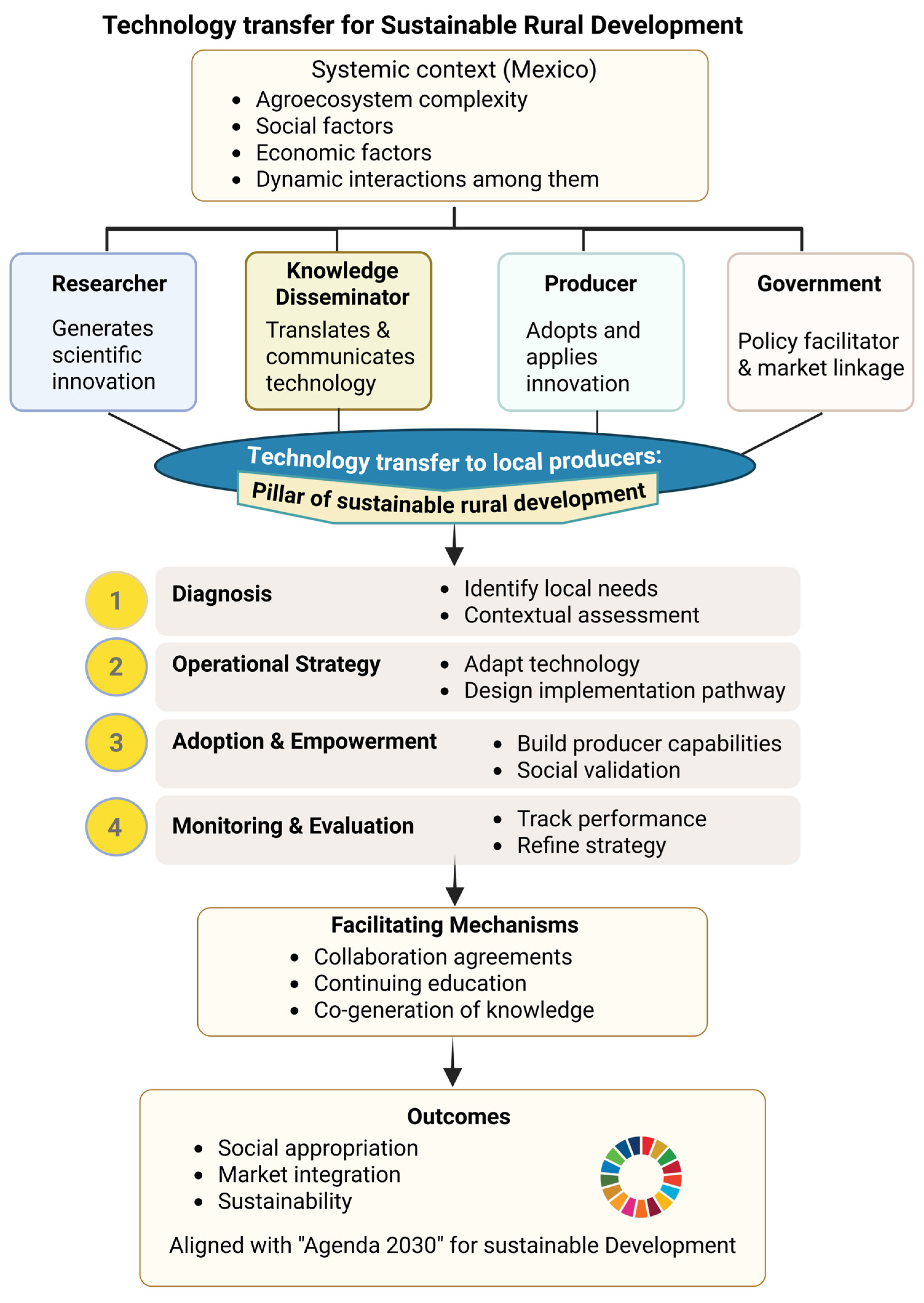
Technology transfer is crucial for the efficient use of natural resources and for applying scientific knowledge to solve production and postharvest problems. In agriculture, this process requires not only the generation of scientific information, but also its translation into practical, locally adapted recommendations [47] (Figure 3).
However, the transfer of postharvest knowledge to local producers is not always a continuous or effective process. In many cases, the adoption of postharvest practices is limited by insufficient access to appropriate technologies, lack of postharvest information, inadequate storage facilities, poor transportation and marketing infrastructure, limited financing, and weak coordination among actors in the production chain [32,33]. In addition, some technologies are not adopted because they are not adapted to the scale of production, local materials, climatic conditions, crop type, market access, or economic capacity of producers [33,43]. Therefore, technology transfer should not be limited to isolated training events, but should include diagnosis, practical demonstrations, technical follow-up, evaluation, and producer feedback.
In this sense, Figure 3 summarizes the interaction between the main actors involved in technology transfer. Researchers generate scientific and technical knowledge, while knowledge disseminators and extension personnel translate this information into practical recommendations. Producers apply, evaluate, and adapt these practices according to their local conditions. Government and public institutions can support this process through funding, infrastructure, policies, training programs, and market linkage. The food industry and other actors in the postharvest chain should also be considered because they influence quality standards, logistics, packaging, storage, commercialization, and access to technology [33,38]. Thus, an effective transfer model requires coordination among all these actors and continuous evaluation to ensure that the technology is not only introduced, but also adopted and maintained over time.
The transfer of knowledge to local producers is a fundamental pillar of sustainable rural development because it links scientific innovation with practical application in the field. This process is especially important in areas such as postharvest physiology, where proper product management has a direct impact on food security and profitability. Agricultural technology transfer in Mexico requires a comprehensive approach that considers the complexity of agroecosystems and the dynamic interaction between social, economic, and environmental factors [47].
The conceptual model proposed by García et al. [47] is based on four main actors: researcher, knowledge disseminator, producer, and government. Their coordination can reduce adoption time and improve the relevance of technological innovations. The model is organized into four key stages: diagnosis, operational strategy, adoption and empowerment, and continuous evaluation. These phases seek to ensure that technology is not only implemented, but also appropriated and socially validated. In addition, the role of government as a facilitator of public policies and market linkage is essential to avoid post-adoption failures, such as overproduction or lack of commercial access.
Collaboration agreements, such as those established among educational institutions, government agencies, and rural-development programs, illustrate this type of coordination. These agreements may include continuing education, social service, professional internships, technical training, and research activities. Their objective is to improve productivity and create mechanisms for the co-generation of technologies and knowledge transfer to producers [31].
Continuing education is key to offering better tools and alternatives to smaller-scale producers with fewer socioeconomic opportunities. Courses, workshops, diploma programs, seminars, and meetings with experts can contribute to sustainability in food production and improve the well-being of rural and coastal communities in Mexico [31].

5. Sustainability in the Postharvest Chain

The postharvest chain comprises all activities carried out after the harvest of fruits and vegetables until they reach the consumer. Sustainability in this chain involves environmental, economic, and social dimensions, including the efficient use of natural resources, reduction in pollution, economic viability, food availability, and social benefits for producers and consumers [9,48].
Fruits and vegetables are highly perishable foods; therefore, they must be transported and marketed under appropriate conditions. Major challenges in this part of the postharvest chain include insufficient or inefficient infrastructure, impractical transport networks, and lack of temperature-controlled transport, all of which can contribute to losses [49].
Estimates of food loss and waste in Mexico vary depending on the stage of the chain and the methodology used. A national framework estimated that approximately 20 million tons of food loss and waste are generated annually from 79 products between the farm gate and retail, representing more than 35% of the total food produced in the country [50]. In addition, the same framework reported an indicative estimate of around 11 million tons of household food waste per year, suggesting that the overall magnitude of food loss and waste may be higher when household waste is also considered [50].
From an environmental perspective, postharvest losses involve the waste of resources such as water, energy, land, agricultural inputs, labor, packaging, and transportation. They can also contribute to pollution and greenhouse gas emissions when residues are poorly managed [51,52]. These losses also affect producer and trader profitability, especially for small producers, and can reduce the availability and equitable distribution of fresh foods.
Reducing postharvest losses is achievable, but it requires coordination among stakeholders and the integration of technologies that address shortcomings at different levels of the chain while maintaining product quality for consumers [32,33]. However, these interventions should be implemented according to sustainability principles and should consider local technical and economic feasibility.
The carbon footprint is a useful indicator for evaluating the environmental impact of postharvest losses. This indicator is associated with greenhouse gas emissions accumulated throughout the life cycle of a product, including production, agricultural inputs, postharvest handling, packaging, transportation, storage, commercialization, and final disposal [51]. Therefore, when fruits and vegetables are lost at later stages of the chain, their environmental impact increases because more resources and emissions have already been accumulated [51].
In Mexico, food loss and waste represent an important environmental issue. A national framework for food loss and waste estimated that the embedded greenhouse gas emissions from 25 agricultural products are around 36 million tons of CO2 equivalent [50]. More recently, Albalate-Ramírez et al. [53] estimated that food loss and waste in Mexican distribution and retail centers reached 8.9 million tons in 2022, generating 0.22 million tons of CO2 equivalent per year due to final disposal. These data show that reducing postharvest losses is not only a strategy to improve food availability and producer income, but also a way to reduce unnecessary greenhouse gas emissions associated with production, handling, transport, storage, and disposal.
In addition to preventing postharvest losses, sustainability-oriented management should consider the use of unavoidable residues. Damaged or nonmarketable fruits and vegetables, as well as peels, seeds, pomace, and other by-products, can be used through different strategies depending on the local context and available infrastructure. These alternatives include composting, anaerobic digestion for biogas production, use as animal feed when safe and legally permitted, and recovery of value-added compounds such as antioxidants, phenolics, pigments, pectin, and dietary fiber [54,55]. In this way, postharvest management can move from a linear model based on disposal to a more circular approach, where residues are considered resources that may contribute to soil improvement, renewable energy production, feed formulation, or the development of new food and industrial ingredients [54,55].
In local production systems, sustainability should be linked to practices that are technically effective and economically feasible. Low-cost technologies, such as field shading, improved harvest containers, evaporative cooling systems, zero-energy cooling chambers, pot-in-pot coolers, passive cooling blankets, and passive modified atmosphere packaging, may help reduce losses without requiring high capital investment or complex infrastructure [32,33,43]. However, these technologies should be evaluated according to crop type, climate, water and energy availability, labor requirements, market destination, and the capacity of producers to maintain them over time.
Thus, a sustainable postharvest strategy should combine loss prevention, appropriate technology adoption, and circular use of residues. This approach can help preserve quality and shelf life while reducing the inefficient use of resources along the value chain.

6. Future Perspectives

Future postharvest strategies for fruits and vegetables in Mexico should integrate physiology, technology transfer, and sustainability in a more coordinated way. First, postharvest recommendations should be adapted to the physiological behavior of each commodity, including respiration rate, ethylene sensitivity, water-loss susceptibility, chilling sensitivity, softening pattern, and disease susceptibility. This information is essential to define harvest maturity, storage temperature, relative humidity, packaging, transport conditions, and commercialization time [3,32].
Second, technology transfer should move from isolated training activities to continuous and participatory models. These models should include diagnosis of local needs, practical demonstrations, producer feedback, technical follow-up, and evaluation of adoption over time. In this process, extension personnel, researchers, producers, government institutions, industry, and market actors should work together to adapt postharvest technologies to different production scales and market destinations [33,45,50].
Third, future research and extension programs should give greater attention to low-cost and locally adaptable technologies. Field shading, improved harvest containers, evaporative cooling, zero-energy cooling chambers, pot-in-pot coolers, passive cooling blankets, simple packaging systems, and passive modified atmosphere packaging may help reduce losses among local producers when they are correctly adapted to crop type, climate, infrastructure, and available resources [32,33,43].
Finally, postharvest management should be linked with sustainability indicators. Future programs could incorporate carbon footprint assessment, water-use considerations, waste reduction, composting, anaerobic digestion, safe use of residues as animal feed, and recovery of value-added compounds from fruit and vegetable by-products. This approach would allow postharvest systems to contribute not only to quality preservation and economic value, but also to climate-change mitigation, circular economy, and food-system sustainability [50,54,55].

7. Conclusions

This review emphasizes that postharvest losses in fruits and vegetables are closely related to physiological and microbiological processes such as respiration, ethylene production, transpiration, softening, physiological disorders, and postharvest diseases. These processes determine quality deterioration, shelf life, marketability, and the type of postharvest practices required for each commodity.
In the Mexican context, postharvest management and technology transfer must consider the heterogeneity of producers, production systems, infrastructure, financing capacity, and market destinations. Therefore, a single transfer model is not sufficient. Local and small-scale producers may benefit from low-cost and adaptable technologies, but their adoption requires training, technical follow-up, institutional coordination, and practical validation under local conditions.
Reducing postharvest losses also contributes to sustainability. It can decrease unnecessary use of water, energy, land, agricultural inputs, and greenhouse gas emissions, while improving food availability and producer income. In addition, the circular use of unavoidable residues through composting, anaerobic digestion, animal feed when safe and legally permitted, or recovery of value-added compounds can strengthen the environmental and economic value of postharvest systems.
Overall, improving postharvest systems requires coordinated participation from researchers, extension personnel, producers, government institutions, educational institutions, manufacturing companies, retail chains, and other actors in the supply chain. These actors can contribute to addressing the root causes of postharvest losses by providing training, technical guidance, infrastructure support, quality standards, packaging and storage alternatives, market information, and commercialization channels. This support is especially important for small and local producers, who often require not only postharvest knowledge, but also resources and market-linkage strategies to commercialize their products effectively. Integrating postharvest physiology, knowledge transfer, low-cost technologies, and sustainability criteria can help reduce losses and support more resilient local fruit and vegetable systems in Mexico.

Author Contributions

Conceptualization, A.C.-O.; investigation, D.P.U.-S.; resources, A.C.-O.; data curation, D.P.U.-S.; writing—original draft preparation, D.P.U.-S.; writing—review and editing, M.B.P.-G., A.C.-O., J.V.H.-C. and J.U.M.-M.; visualization, D.P.U.-S. and J.U.M.-M.; supervision, A.C.-O.; project administration, A.C.-O.; funding acquisition, A.C.-O. All authors have read and agreed to the published version of the manuscript.

Funding

This research received no external funding.

Data Availability Statement

No new data were created.

Acknowledgments

We gratefully acknowledge the support of the Secretariat of Science, Humanities, Technology and Innovation (SECIHTI) of Mexico through Doctorate Scholarship No. 702718.

Conflicts of Interest

The authors declare no conflicts of interest.

Abbreviations

The following abbreviations are used in this manuscript:
ACC1-aminocyclopropane-1-carboxylic acid
ACSACC synthase
ACOACC oxidase
PGpolygalacturonase
PMEpectinmethyl esterase
PLpectin lyase
RGrhamnogalacturonase
GAPGood agricultural practices
UNAMNational Autonomous University of Mexico

References

  1. Li, X.; Zeng, S.; Wisniewski, M.; Droby, S.; Yu, L.; An, F.; Leng, Y.; Wang, C.; Li, X.; He, M.; et al. Current and future trends in the biocontrol of postharvest diseases. Crit. Rev. Food Sci. Nutr. 2024, 64, 5672–5684. [Google Scholar] [CrossRef] [PubMed]
  2. Alegbeleye, O.; Odeyemi, O.; Strateva, M.; Stratev, D. Microbial spoilage of vegetables, fruits and cereals. Appl. Food Res. 2022, 2, 100122. [Google Scholar] [CrossRef]
  3. Ferdousi, J.; Hussain, M.I.; Saha, S.R.; Rob, M.; Afroz, T.; Pramanik, S.; Islam, M.R.; Nath, D.D. Postharvest physiology of fruits and vegetables and their management technology: A review. J. Anim. Plant Sci. 2024, 34, 291–303. [Google Scholar] [CrossRef]
  4. Linke, M.; Hoffmann, T.; Sonawane, A.; Rux, G.; Mahajan, P. Method for measuring the transpiration resistance of fruit and vegetables. MethodsX 2024, 13, 103058. [Google Scholar] [CrossRef]
  5. Strano, M.; Altieri, G.; Allegra, M.; Di Renzo, G.; Paterna, G.; Matera, A.; Genovese, F. Postharvest technologies of fresh citrus fruit: Advances and recent developments for loss reduction during handling and storage. Horticulturae 2022, 8, 612. [Google Scholar] [CrossRef]
  6. Le, T.D.; Nguyen, T.V.; Muoi, N.V.; Toan, H.T.; Lan, N.M.; Pham, T.N. Supply chain management of mango (Mangifera indica L.) fruit: A review with a focus on product quality during postharvest. Front. Sustain. Food Syst. 2022, 5, 799431. [Google Scholar] [CrossRef]
  7. Yahia, E.M. Postharvest Physiology and Biochemistry of Fruits and Vegetables; Woodhead Publishing: Duxford, UK, 2019; 476p. [Google Scholar] [CrossRef]
  8. Contreras-Medina, D.; Contreras-Medina, L.; Pardo-Núñez, J.; Olvera-Vargas, L.; Rodríguez-Peralta, C. Roadmapping as a driver for knowledge creation: A proposal for improving sustainable practices in the coffee supply chain from Chiapas, Mexico, using emerging technologies. Sustainability 2020, 12, 5817. [Google Scholar] [CrossRef]
  9. Cassani, L.; Gómez-Zavaglia, A. Sustainable food systems in fruits and vegetables food supply chains. Front. Nutr. 2022, 9, 829061. [Google Scholar] [CrossRef]
  10. Brizzolara, S.; Manganaris, G.A.; Fotopoulos, V.; Watkins, C.B.; Tonutti, P. Primary metabolism in fresh fruits during storage. Front. Plant Sci. 2020, 11, 80. [Google Scholar] [CrossRef]
  11. Fuentes, L.; Figueroa, C.; Valdenegro, M. Recent advances in hormonal regulation and cross-talk during non-climacteric fruit development and ripening. Horticulturae 2019, 5, 45. [Google Scholar] [CrossRef]
  12. Kou, X.; Feng, Y.; Yuan, S.; Zhao, X.; Wu, C.; Wang, C.; Xue, Z. Different regulatory mechanisms of plant hormones in the ripening of climacteric and non-climacteric fruits: A review. Plant Mol. Biol. 2021, 107, 477–497. [Google Scholar] [CrossRef]
  13. Premarathne, R.; Marapana, R.; Perera, P. Determination of physicochemical characteristics and antioxidant properties of selected climacteric and non-climacteric fruits. J. Pharmacogn. Phytochem. 2021, 10, 23–28. [Google Scholar] [CrossRef]
  14. Thompson, J.F.; Donis-González, I.R.; Rumsey, T.; Khorsandi, F.; DiCaprio, E. Postharvest Technology of Horticultural Crops: Cooling and Storage, 4th ed.; University of California: Davis, CA, USA, 2023. [Google Scholar]
  15. Van De Poel, B.; Bulens, I.; Markoula, A.; Hertog, M.; Dreesen, R.; Wirtz, M.; Vandoninck, S.; Oppermann, Y.; Keulemans, J.; Hell, R.; et al. Targeted systems biology profiling of tomato fruit reveals coordination of the Yang cycle and a distinct regulation of ethylene biosynthesis during postclimacteric ripening. Plant Physiol. 2012, 160, 1498–1514. [Google Scholar] [CrossRef] [PubMed]
  16. Liu, Y.; Tang, M.; Liu, M.; Su, D.; Chen, J.; Gao, Y.; Bouzayen, M.; Li, Z. The molecular regulation of ethylene in fruit ripening. Adv. Small Methods 2020, 4, 1900485. [Google Scholar] [CrossRef]
  17. Lentzou, D.; Xanthopoulos, G.; Templalexis, C.; Kaltsa, A. Transpiration and respiration as mechanisms of water loss in cold storage of figs. Food Res. 2021, 5, 109–118. [Google Scholar] [CrossRef]
  18. Díaz-Pérez, J.C. Transpiration. In Postharvest Physiology and Biochemistry of Fruits and Vegetables; Yahia, E.M., Ed.; Woodhead Publishing: Cambridge, UK, 2019; pp. 157–173. [Google Scholar] [CrossRef]
  19. Ergun, M.; Sargent, S.A.; Fox, A.J.; Crane, J.H.; Huber, D.J. Ripening and quality responses of mamey sapote fruit to postharvest wax and 1-methylcyclopropene treatments. Postharvest Biol. Technol. 2005, 36, 127–134. [Google Scholar] [CrossRef]
  20. Gapper, N.E.; McQuinn, R.P.; Giovannoni, J.J. Molecular and genetic regulation of fruit ripening. Plant Mol. Biol. 2013, 82, 575–591. [Google Scholar] [CrossRef]
  21. Martínez-González, M.E.; Balois-Morales, R.; Alia-Tejacal, I.; Cortes-Cruz, M.A. Postharvest of fruits: Ripening, softening and transcriptional control. Rev. Mex. Cienc. Agríc. 2017, 8, 4089–4101. [Google Scholar]
  22. Jemrić, T.; Fruk, I.; Fruk, M.; Radman, S.; Sinkovič, L.; Fruk, G. Bitter pit in apples: Pre- and postharvest factors: A review. Span. J. Agric. Res. 2016, 14, e08R01. [Google Scholar] [CrossRef]
  23. Kanayama, Y.; Kochetov, A. Abiotic stress biology in horticultural plants. In Abiotic Stress Biology in Horticultural Plants; Kanayama, Y., Kochetov, A., Eds.; Springer: Tokyo, Japan, 2015. [Google Scholar] [CrossRef]
  24. Ahmad, M.S.; Siddiqui, M.W. Factors affecting postharvest quality of fresh fruits. In Postharvest Quality Assurance of Fruits; Siddiqui, M.W., Ed.; Springer: Cham, Switzerland, 2015; pp. 7–32. [Google Scholar] [CrossRef]
  25. Ruiz-Aracil, M.C.; Valverde, J.M.; Ilea, M.I.M.; Valero, D.; Castillo, S.; Guillén, F. Innovative postharvest management for Hass avocado at the preclimacteric stage: A combined technology with GABA and 1-MCP. Foods 2024, 13, 2485. [Google Scholar] [CrossRef] [PubMed]
  26. Topcu, Y.; Nambeesan, S.U.; van der Knaap, E. Blossom-end rot: A century-old problem in tomato (Solanum lycopersicum L.) and other vegetables. Mol. Hortic. 2022, 2, 1. [Google Scholar] [CrossRef]
  27. Sethi, K.; Dhaka, S.S.; Bari, V.K. Insights into blossom end-rot disorder in tomato (Solanum lycopersicum). Plant Mol. Biol. Rep. 2024, 42, 492–514. [Google Scholar] [CrossRef]
  28. Palou, L. Postharvest disease control and alternatives to conventional chemical fungicides. In A Roadmap for Spanish Citriculture; García Álvarez-Coque, J.M., Moltó, E., Eds.; Cajamar Caja Rural: Almería, Spain, 2020; pp. 259–272. [Google Scholar]
  29. Mahajan, B.; Kapoor, S. Postharvest handling of fruits and vegetables for disease management. In Postharvest Handling and Diseases of Horticultural Produce; Singh, D., Sharma, R.R., Devappa, V., Kamil, D., Eds.; CRC Press: Boca Raton, FL, USA, 2021. [Google Scholar] [CrossRef]
  30. Secretaría de Agricultura y Desarrollo Rural. Good Agricultural Practices for Agriculture and the Environment. 2022. Available online: https://www.gob.mx/agricultura/articulos/buenas-practicas-agricolas-en-pro-de-la-agricultura-y-el-medio-ambiente (accessed on 6 June 2026).
  31. Secretaría de Agricultura y Desarrollo Rural. AGRICULTURE, IFAD and Tec de Monterrey School of Government and Public Transformation Build Partnerships for Rural Development in Mexico. 2025. Available online: https://www.gob.mx/agricultura/prensa/agricultura-fida-y-la-escuela-de-gobierno-y-transformacion-publica-del-tec-de-monterrey-tejen-alianzas-para-el-desarrollo-rural-de-mexico (accessed on 6 June 2026).
  32. Gouda, M.H.B.; Duarte-Sierra, A. An overview of low-cost approaches for the postharvest storage of fruits and vegetables for smallholders, retailers, and consumers. Horticulturae 2024, 10, 803. [Google Scholar] [CrossRef]
  33. Jarman, A.; Thompson, J.; McGuire, E.; Reid, M.; Rubsam, S.; Becker, K.; Mitcham, E. Postharvest technologies for small-scale farmers in low- and middle-income countries: A call to action. Postharvest Biol. Technol. 2023, 206, 112491. [Google Scholar] [CrossRef]
  34. Duan, Y.; Wang, G.B.; Fawole, O.A.; Verboven, P.; Zhang, X.R.; Wu, D.; Opara, U.L.; Nicolai, B.; Chen, K. Postharvest precooling of fruit and vegetables: A review. Trends Food Sci. Technol. 2020, 100, 278–291. [Google Scholar] [CrossRef]
  35. Makule, E.; Dimoso, N.; Tassou, S.A. Precooling and cold storage methods for fruits and vegetables in Sub-Saharan Africa-A review. Horticulturae 2022, 8, 776. [Google Scholar] [CrossRef]
  36. Lufu, R.; Ambaw, A.; Opara, U.L. Water loss of fresh fruit: Influencing pre-harvest, harvest and postharvest factors. Sci. Hortic. 2020, 272, 109519. [Google Scholar] [CrossRef]
  37. Wilson, M.D.; Stanley, R.A.; Eyles, A.; Ross, T. Innovative processes and technologies for modified atmosphere packaging of fresh and fresh-cut fruits and vegetables. Crit. Rev. Food Sci. Nutr. 2019, 59, 411–422. [Google Scholar] [CrossRef]
  38. Schudel, S.; Shrivastava, C.; Onwude, D.; Defraeye, T. Solution roadmap to reduce food loss from farm to retail. Food Packag. Shelf Life 2023, 35, 101057. [Google Scholar] [CrossRef]
  39. Ncama, K.; Magwaza, L.S.; Mditshwa, A.; Tesfay, S.Z. Plant-based edible coatings for managing postharvest quality of fresh horticultural produce: A review. Food Packag. Shelf Life 2018, 16, 157–167. [Google Scholar] [CrossRef]
  40. Batziakas, K.G.; Singh, S.; Ayub, K.; Kang, Q.; Brecht, J.K.; Rivard, C.L.; Pliakoni, E.D. Reducing postharvest losses of spinach stored at nonoptimum temperatures with the implementation of passive modified atmosphere packaging. HortScience 2020, 55, 326–335. [Google Scholar] [CrossRef]
  41. Sun, X.; Baldwin, E.A.; Plotto, A.; Manthey, J.A.; Narciso, J.A.; Ference, C.M.; Bai, J. Effects of controlled-release chlorine dioxide on the quality and shelf life of fresh blueberries. Food Control 2018, 91, 309–317. [Google Scholar] [CrossRef]
  42. Zhu, X.; Chen, Y.; Li, X.; Wang, Y.; Li, J.; Jiang, Y. Antimicrobial mechanism of chlorine dioxide and its application in postharvest preservation of fruits and vegetables. Postharvest Biol. Technol. 2024, 217, 112921. [Google Scholar] [CrossRef]
  43. Wittkamp, T.; Defraeye, T.; Yegon, R.; Onwude, D. Enhancing postharvest storage in low- and middle-income countries: Evaluation of the passive evaporative cooling blanket for fruits and vegetables. Energy Sustain. Dev. 2025, 88, 101787. [Google Scholar] [CrossRef]
  44. Nkolisa, N.; Magwaza, L.S.; Workneh, T.S.; Chimphango, A.F.A. Evaluating evaporative cooling system as an energy-free and cost-effective method for postharvest storage of tomatoes (Solanum lycopersicum L.) for smallholder farmers. Sci. Hortic. 2018, 241, 131–143. [Google Scholar] [CrossRef]
  45. Food and Agriculture Organization of the United Nations. Guidelines on the Measurement of Harvest and Post-Harvest Losses: Findings from the Field Test on Estimating Harvest and Post-Harvest Losses of Fruits and Vegetables in Mexico; FAO: Rome, Italy, 2020. [Google Scholar]
  46. Instituto Nacional de Estadistica y Geografia (INEGI). Censo Agropecuario 2022: Resultados Definitivos; INEGI: Aguascalientes, Mexico, 2023; Available online: https://www.inegi.org.mx/programas/ca/2022/ (accessed on 6 June 2026).
  47. García Saldaña, A.; Mata, A.H.; Aguilar Perez, L.A. Propuesta de modelo conceptual para transferencia de tecnologia agricola en Mexico. Rev. Cient. Univ. Reg. Auton. Andes 2025, 9, 10926–10940. [Google Scholar] [CrossRef]
  48. Zarta Ávila, P. La sustentabilidad o sostenibilidad: Un concepto poderoso para la humanidad. Tabula Rasa 2018, 28, 409–423. [Google Scholar] [CrossRef]
  49. Bisht, A.; Singh, S.P. Postharvest losses and management of horticultural produce: A review. J. Sci. Res. Rep. 2024, 30, 305–320. [Google Scholar] [CrossRef]
  50. World Bank; Waste and Resources Action Programme. Mexico: Conceptual Framework for a National Strategy on Food Loss and Waste; World Bank: Washington, DC, USA, 2020. [Google Scholar]
  51. Food and Agriculture Organization of the United Nations. Food Wastage Footprint & Climate Change; FAO: Rome, Italy, 2015. [Google Scholar]
  52. Gage, E.; Wang, X.; Xu, B.; Foster, A.; Evans, J.; Terry, L.A.; Falagán, N. Reducing food loss and waste contributes to energy, economic and environmental sustainability. J. Clean. Prod. 2024, 451, 142068. [Google Scholar] [CrossRef]
  53. Albalate-Ramírez, A.; Rueda-Avellaneda, J.F.; López-Hernández, B.N.; Alcalá-Rodríguez, M.M.; García-Balandrán, E.E.; Rivas-García, P.; Quintero-Herrera, S.; Velastegui-Montoya, A.; Amaya Rivas, J.L.; Soto, M. Geographic life cycle assessment of food loss and waste management in Mexico: The reality of distribution and retail centers. Sustain. Prod. Consum. 2024, 48, 289–300. [Google Scholar] [CrossRef]
  54. Zhu, Y.; Luan, Y.; Zhao, Y.; Liu, J.; Duan, Z.; Ruan, R. Current technologies and uses for fruit and vegetable wastes in a sustainable system: A review. Foods 2023, 12, 1949. [Google Scholar] [CrossRef]
  55. Wang, Y.; Ying, H.; Stefanovski, D.; Shurson, G.C.; Chen, T.; Wang, Z.; Yin, Y.; Zheng, H.; Nakaishi, T.; Li, J.; et al. Food waste used as a resource can reduce climate and resource burdens in agrifood systems. Nat. Food 2025, 6, 478–490. [Google Scholar] [CrossRef] [PubMed]
Figure 1. Main respiration patterns in climacteric and non-climacteric fruits and possible effects of low O2 conditions. Arrows indicate the direction or trend of the processes shown. (A) Main respiration patterns in climacteric and non-climacteric fruits. (B) Possible effects of low O2 conditions. Low O2 atmospheres can reduce respiration and slow deterioration in the short term; however, excessive or prolonged O2 reduction, often close to or below 1%, may induce anaerobic respiration, leading to the accumulation of acetaldehyde and ethanol, off-flavors, and physiological injury. The critical O2 limit depends on the commodity, temperature, storage duration, and gas composition.
Horticulturae 12 00747 g001
Figure 2. Some intrinsic and extrinsic factors affecting the transpiration rate of fruits and vegetables, and some strategies for reducing transpiration.
Horticulturae 12 00747 g002
Figure 3. The process of technology transfer to local producers as a pillar of sustainable rural development.
Horticulturae 12 00747 g003
Disclaimer/Publisher’s Note: The statements, opinions and data contained in all publications are solely those of the individual author(s) and contributor(s) and not of MDPI and/or the editor(s). MDPI and/or the editor(s) disclaim responsibility for any injury to people or property resulting from any ideas, methods, instructions or products referred to in the content.