Article

Comparative Analysis of Fruit Quality and Volatile Compounds in Baldwin (BW) Blueberry and Its Seedling Offspring (BWSO)


1
Institute of Horticulture, Sichuan Academy of Agricultural Sciences, Chengdu 610066, China
2
Chengdu University, Chengdu 610106, China
3
Key Laboratory of Horticultural Crop Biology and Germplasm Creation in Southwest China, Ministry of Agriculture and Rural Affairs, Chengdu 610066, China
*
Author to whom correspondence should be addressed.
Horticulturae 2026, 12(6), 745; https://doi.org/10.3390/horticulturae12060745
Submission received: 7 May 2026 / Revised: 16 June 2026 / Accepted: 16 June 2026 / Published: 18 June 2026
(This article belongs to the Section Fruit Production Systems)

Abstract

Blueberry fruit quality is characterized by multi-dimensional traits such as color, sugar-acid flavor, and volatile aroma. However, variations in progeny metabolites during seedling selection need further study. This research used the blueberry variety ‘Baldwin’ (BW) and its seedling offspring (BWSO) to compare fruit appearance, as well as sugar and acid components, anthocyanin monomers, and volatile metabolites. High-performance liquid chromatography was used to analyze anthocyanins, sugars, and acids, and gas chromatography–mass spectrometry was used to analyze volatile compounds. The results showed that, compared with BW, BWSO had a blacker skin and a lower L* value. Its total anthocyanin content increased by 35.90%, with delphinidin increasing the most (52.70%); component ratios were reconstructed. The main organic acids in BWSO decreased; titratable acid dropped by 29.82%, and the total soluble solids–acid ratio rose by 37.49%, indicating a good low-acid, high-sugar flavor. Forty-three differential volatile metabolites were found, and BWSO differed from BW in its green, fruity, and floral flavors. Notably, BWSO’s vitamin C (Vc) content decreased by 70.45% compared to BW, and Vc was negatively correlated with anthocyanin components. In conclusion, BWSO exhibits a black phenotype due to elevated total anthocyanins and restructured component ratios. Its low-acid trait yields better taste, but the antagonism between anthocyanin and Vc means balanced nutritional quality selection is crucial in dark-blueberry breeding. These findings offer new insights into the mechanism of color variation and provide a reference for balanced quality trait selection in seedling selection.

1. Introduction

Blueberries (Vaccinium spp.), rich in bioactive substances such as anthocyanins, flavonoids, and phenolic acids, are known as the “King of Berries” and have received extensive attention in the fields of functional foods and nutritional health [1]. In recent years, the cultivation area and yield of blueberries in China have been continuously increasing, and consumers’ requirements for fruit quality have also become increasingly higher. The market demand for blueberry quality has shifted from simply large-sized fruits and high sugar content to a diversified pursuit of flavor intensity, unique color, and health benefits [2]. The composition and content of anthocyanins in fruits not only determine the color phenotypes of the fruit skin and flesh but are also key indicators for evaluating their nutritional and health-care value. The sugar and acid components and their ratios are important indicators for sensory evaluation of fruits, while volatile substances are the material basis for the characteristic aroma of blueberry varieties [2,3]. Previous studies have shown significant differences in sugar–acid metabolism and volatile synthesis pathways among blueberry cultivar groups (such as northern highbush and rabbiteye) [4]. Hybrid breeding and seedling selection are the main ways for blueberry germplasm innovation. There is a complex interactive regulatory relationship between the anthocyanin metabolic pathway and the primary carbon metabolic network [5]. In blueberry fruits with high anthocyanin content, quality indicators such as sugar, acid, and vitamin C (Vc) also show trait segregation in the offspring. The genetic stability and variation laws of volatile substances during the process of seedling selection still need to be explored [4,6]. In the seedling offspring population, due to gene segregation and recombination, the progeny may exhibit transgressive segregation in tree vigor, fruit size, and internal quality, which provides valuable materials for screening new germplasms with excellent comprehensive traits. Analyzing the physiological and biochemical mechanisms of blueberry fruit quality formation under different genetic backgrounds is also of great significance for targeted breeding and cultivation regulation.
Predecessors have preliminarily revealed the differences in sugar–acid accumulation patterns and anthocyanin composition among different blueberry cultivar groups using metabolomics techniques [7,8,9]. At present, the fine-scale comparative studies at the metabolic level between a specific excellent blueberry variety and its seedling progeny population are still relatively limited. When significant variations occur in the appearance of progeny fruits (such as the evolution of fruit skin color towards black), the coordinated change laws of their internal pigment composition and flavor substance accumulation remain unclear. In this study, the blueberry variety ‘Baldwin’ (BW) and its individual seedling offspring plants (BWSO) were used as experimental materials. Preliminary observations found that the fruit skin of BWSO showed an obvious black color at the mature stage, forming a sharp contrast with the typical blue color of the parent BW. This color variation implies the remodeling of its anthocyanin metabolism. The aim of this study was to clarify the pigment–chemical basis for the formation of the black fruit phenotype of BWSO by systematically comparing the differences between BW and BWSO in aspects such as fruit appearance quality, sugar and acid component profiles, anthocyanin monomer composition, and volatile metabolite fingerprinting. This study also aimed to analyze the potential associations between color variations and internal flavor quality and nutritional indicators, as well as evaluate the genetic variation in volatile aroma components during the process of seedling selection. Unlike conventional horizontal comparisons among blueberry cultivars, this study adopted a vertical analytical approach using naturally occurring seedling variants with the same genetic background to investigate the metabolic regulation mechanism responsible for the black peel phenotype. Featuring unique experimental materials and research perspectives, this study can deepen our understanding of the metabolic mechanisms of fruit color development in blueberries and provide novel insights and theoretical support for seedling selection, elite germplasm innovation, and cultivar improvement of blueberries.

2. Materials and Methods

2.1. Plant Material and Experimental Location

The blueberry varieties tested in this experiment were BW and BWSO, with 5-year-old fruit-bearing trees. The planting density was 250 plants per 667 m2. Twelve plants with consistent growth vigor were selected as experimental materials, which were divided into three biological replicates with four plants for each treatment. The field experiment was carried out in Tianma Town, Dujiangyan City, Sichuan Province, in 2025. The experimental site is situated in the mid-subtropical humid monsoon climate zone of the Sichuan Basin, characterized by abundant rainfall, a mild climate, and distinct four seasons. The local perennial annual temperature ranges from 10 °C to 22 °C, with an average annual temperature of 16.4 °C and an average annual frost-free period of 306 days. In the experimental year of 2025, the study area presented typical regional climatic characteristics, with a moderate temperature and sufficient precipitation during the blueberry growth period, which provided stable and suitable environmental conditions for the normal growth and development of blueberry trees and ensured the validity and reliability of the experimental results.

2.2. Test Sample Collection and Processing

Approximately 1 kg of mature fruits from both BW and BWSO were collected, placed in fresh-keeping containers, and immediately transported to the laboratory in an insulated box maintained at 4 °C. Damaged fruits were removed, and only fruits of uniform size and color were selected. Half of the selected fruits were used for the determination of routine quality indicators. The remaining fruits were thoroughly mixed, homogenized under liquid nitrogen, and stored in an ultra-low-temperature freezer at −80 °C for subsequent analysis of additional quality parameters.

2.3. Appearance Quality

Ten fresh blueberry fruits were randomly selected to determine the fruit color parameters. The L*, a*, and b* values, as well as chroma (C), were measured at three evenly distributed equatorial positions of each fruit. Additionally, 50 blueberry fruits were randomly sampled to determine individual fruit mass, longitudinal diameter, and transverse diameter. All measurements were conducted in triplicate. The mean values were used to calculate the fruit shape index, which was defined as the ratio of the longitudinal diameter to the transverse diameter.

2.4. Internal Quality

2.4.1. Total Soluble Solids (TSS), Titratable Acid (TA), and Vc

TSS and TA were measured using a sugar–acid integrated machine (Pocket PAL-BXIACID1, ATAGO, Tokyo, Japan), and the TSS/TA ratio was calculated [10]. Vc was determined by using the 2,6-dichlorophenol indophenol titration method [11].

2.4.2. Anthocyanin Profile

Anthocyanin components were determined using high-performance liquid chromatography (HPLC). Briefly, 2.0 g of pulp was sampled from ultra-low-temperature-preserved blueberry fruits and ground into a homogenate. A mixed extraction solution containing 85% methanol and 0.5% formic acid was then added to the homogenate. The mixture was treated with ultrasound and subsequently centrifuged, and the supernatant was collected as crude anthocyanin extract. The extraction procedure was repeated three times, with the volume of extraction solvent set at 20 mL, 20 mL, and 10 mL in sequence. The ultrasonic parameters were 20 °C, 20 min, and 100 W, and centrifugation was performed at 5000 r/min for 10 min. All extracts from the three extractions were combined and stored in a refrigerator at −20 °C for subsequent analysis.
A total of 10 mL of the combined anthocyanin extract was evaporated to dryness at 60 °C with a rotary evaporator. The dried residue was redissolved in 1 mL of a methanol-formic acid mixed solution, and the reconstituted solution was filtered through a 0.22 μm polyvinylidene fluoride (PVDF) membrane. The samples and six anthocyanin standards were analyzed by an Agilent 1200 high-performance liquid chromatograph (Agilent Technologies, Santa Clara, CA, USA) [12]. An XDB-C18 (250 mm × 4.6 mm, 5 μm) chromatographic column was used for separation. The mobile phase consisted of 1.0% phosphoric acid solution (Phase A) and pure acetonitrile (Phase B). The flow rate was set at 0.6 mL/min, the column temperature at 25 °C, and the detection wavelength at 520 nm. The gradient elution program was configured as follows: 0–5 min, 5% B; 15–25 min, 10% B; 25–35 min, 12% B; 35–50 min, 15% B; 50–60 min, 18% B; 60–80 min, 25% B; 80–90 min, 30% B. Anthocyanin composition identification and quantification were conducted following the protocol of Xue et al. [13].

2.4.3. Analysis of Sugars and Acids

HPLC was employed to quantify the sugar and acid profiles of the pulp. Sugar analysis followed the protocol outlined in reference [14]. Briefly, a 2 g aliquot of the mixed sample was precisely weighed and extracted with 4 mL of distilled water. Following water bath incubation and centrifugation, the supernatant was filtered through a 0.45 µm aqueous membrane prior to HPLC injection. Organic acid determination adhered to our previously established methods [15,16]. Specifically, 0.5 g of the sample was homogenized with 3 mL of pre-chilled 0.2% metaphosphoric acid. After adjusting the volume and centrifuging, the resulting supernatant was collected for organic acid composition analysis.

2.4.4. Volatile Compounds

For volatile organic compound (VOC) analysis, 500 mg of the powdered sample was immediately transferred into a 20 mL headspace vial (Agilent, Palo Alto, CA, USA) containing 2 mL of saturated NaCl solution to suppress enzymatic activity and enhance volatilization via the salting-out effect. The vials were hermetically sealed with crimp-top caps equipped with TFE-silicone septa (Agilent). Prior to extraction, samples were equilibrated at 60 °C for 5 min. Subsequently, VOCs were extracted using a 120 µm DVB/CWR/PDMS SPME Arrow (Agilent) exposed to the headspace for 15 min at 60 °C.
Following extraction, analytes were thermally desorbed in the splitless injection port of an Agilent 8890 GC system (Agilent Technologies, Santa Clara, CA, USA)at 250 °C for 5 min. Separation was achieved on a DB-5MS capillary column (30 m × 0.25 mm × 0.25 μm; 5% phenyl-polymethylsiloxane) coupled to an Agilent 7000D triple-quadrupole mass spectrometer (Agilent Technologies, Santa Clara, CA, USA). Helium served as the carrier gas at a constant linear velocity of 1.2 mL/min. The oven temperature program was initiated at 40 °C (held for 3.5 min), ramped at 10 °C/min to 100 °C, then at 7 °C/min to 180 °C, and finally at 25 °C/min to 280 °C, with a final hold of 5 min. Mass spectra were acquired in electron impact (EI) mode at 70 eV. The ion source, quadrupole, and transfer line temperatures were maintained at 230 °C, 150 °C, and 280 °C, respectively. Data acquisition was performed in Selected Ion Monitoring (SIM) mode to ensure high sensitivity and specificity for target analyte identification and quantification.

2.5. Statistical Analysis

Experimental data were analyzed using IBM SPSS Statistics 23.0 (IBM, Armonk, NY, USA). Differences between the two groups were determined using an independent samples t-test. Statistical significance was set at p < 0.05. Correlation analysis was performed using Origin 2021 (OriginLab Corporation, Northampton, MA, USA).

3. Results

3.1. Comparison and Analysis of Standard Quality Parameters in Fruits of BW and BWSO

3.1.1. Appearance Quality

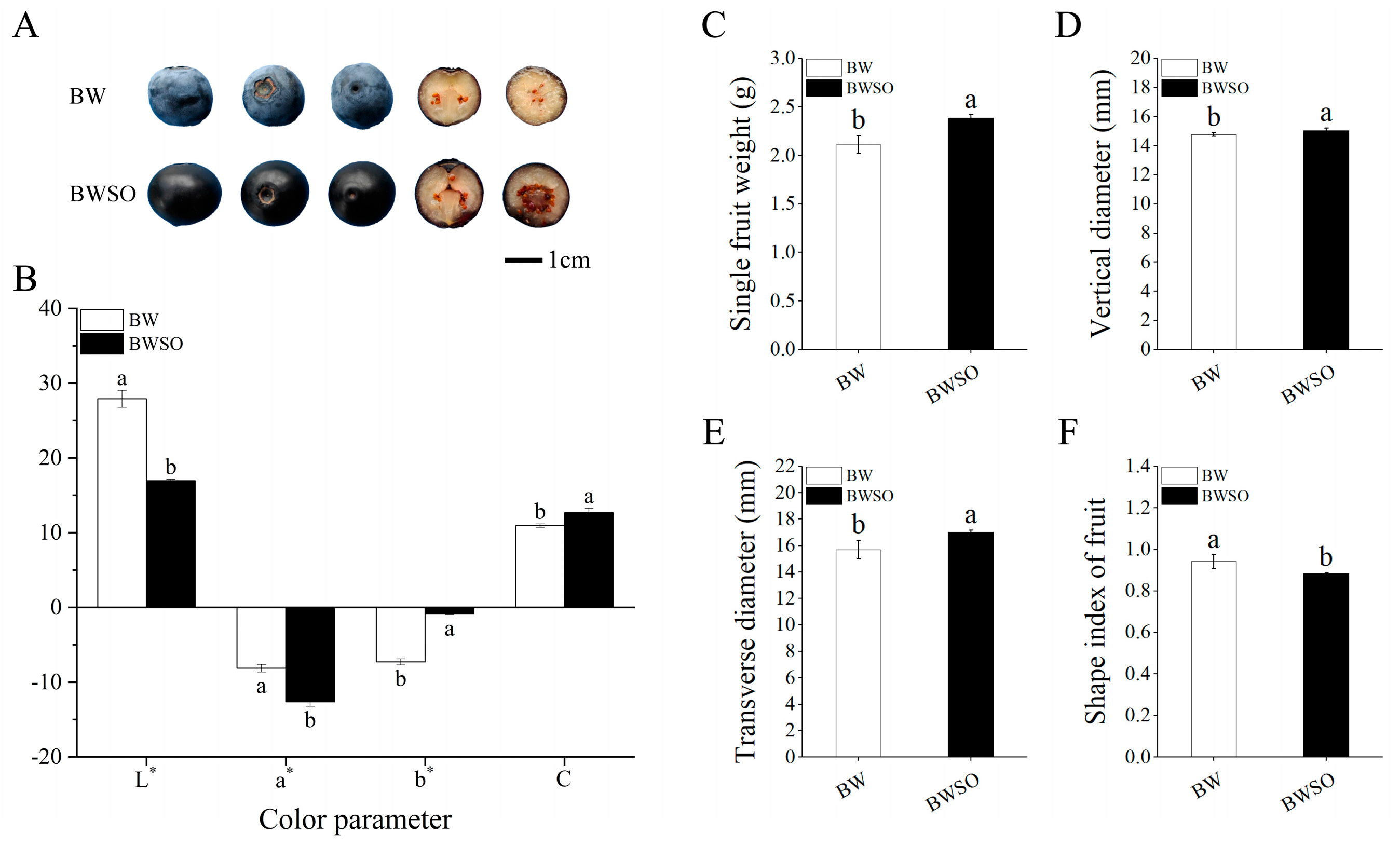
The comparison of the appearance quality of the fruits of BW and BWSO revealed that, compared with BW, the fruit skin and flesh of BWSO were darker. The fruit skin of BWSO showed an obvious black color, and the flesh presented a light purple color (Figure 1A). Measurements of the fruit skin color using a color difference meter showed that the b* and C values of the fruit skin of BWSO were significantly higher than those of BW, while the L* and a* values were significantly lower than those of BW. This indicates that the fruit skin of BWSO is blacker, greener, and purer in color than that of BW, but with a lighter blue color (Figure 1B). In addition, the single-fruit weight, longitudinal diameter, and transverse diameter of BWSO were significantly larger than those of BW, being 12.89%, 1.92%, and 8.54% higher, respectively. However, the fruit shape index of BWSO was significantly lower than that of BW (0.94 for BW, elliptical or conical), being 0.88 for BWSO, showing a round or nearly round shape (Figure 1C–F).

3.1.2. Internal Quality

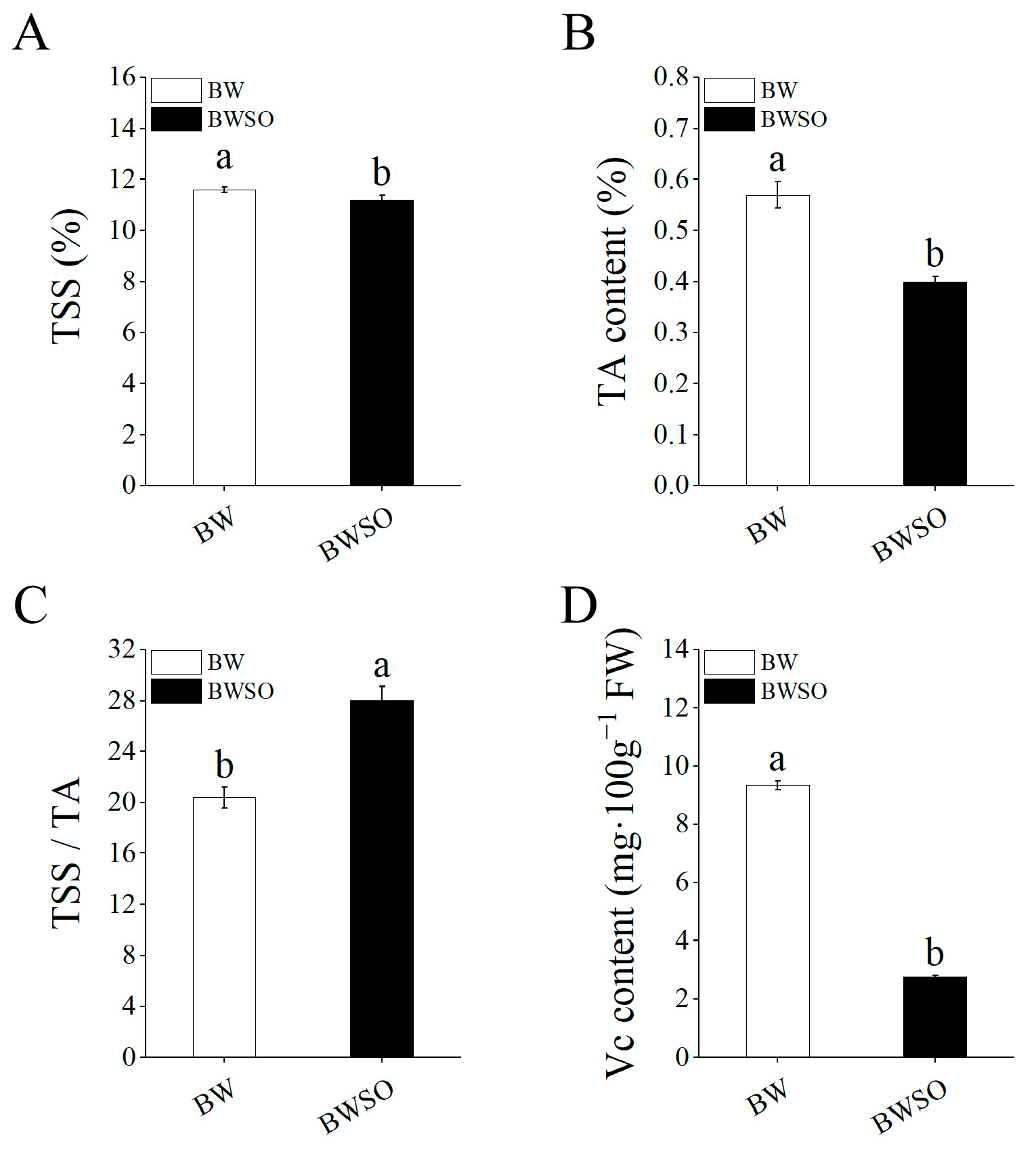
The analysis of internal quality indicated that the contents of TSS, TA, and VC in BWSO fruits were significantly lower than those in BW, being 3.40%, 29.82%, and 70.45% lower, respectively. However, the TSS/TA of BWSO was significantly higher than that of BW, reaching 28.02, with a proportion that was 37.49% higher (Figure 2). This shows that BWSO is a low-acid material, and its overall taste is better than that of BW.

3.2. Comparison and Analysis of Anthocyanin Components in Fruits of BW and BWSO

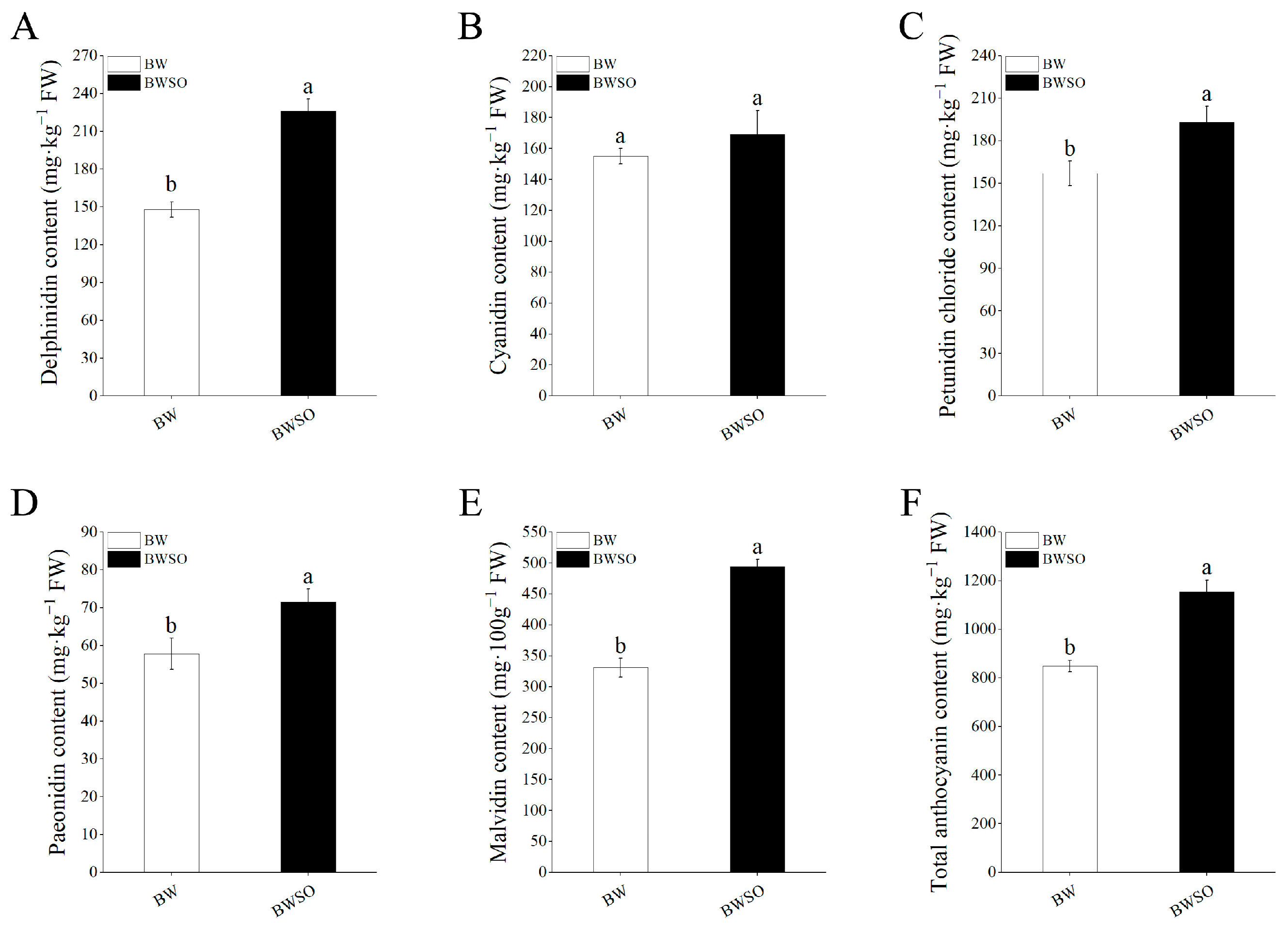
Anthocyanins are crucial pigments in the color composition of blueberries. As shown in Figure 1A regarding the fruit appearance quality, there are distinct color differences between BW and BWSO. Thus, we employed HPLC to measure the anthocyanin components in the fruits of these two materials, and the results are presented in Figure 3. Among the six common anthocyanin components, five were detected in the fruits of both materials, namely delphinidin, cyanidin, petunidin chloride, paeonidin, and malvidin, while pelargonidin was not detected. In BW, the content sequence of various anthocyanin components was malvidin > petunidin chloride > cyanidin > delphinidin > paeonidin. However, the fruits of BWSO showed a significantly different sequence, which was malvidin > delphinidin > petunidin chloride > cyanidin > paeonidin. In terms of content, the contents of delphinidin, cyanidin, petunidin chloride, paeonidin, malvidin, and total anthocyanin in BWSO fruits were significantly higher than those in BW, with the increased proportions being 52.70%, 9.03%, 22.93%, 23.70%, 49.24%, and 35.90%, respectively. Based on these results, we surmise that the increase in the content of each anthocyanin component, total anthocyanins, and the alteration in the ranking of the content of each anthocyanin component are the physiological causes for the black color of BWSO fruits.

3.3. Comparison and Analysis of Sugar Components in Fruits of BW and BWSO

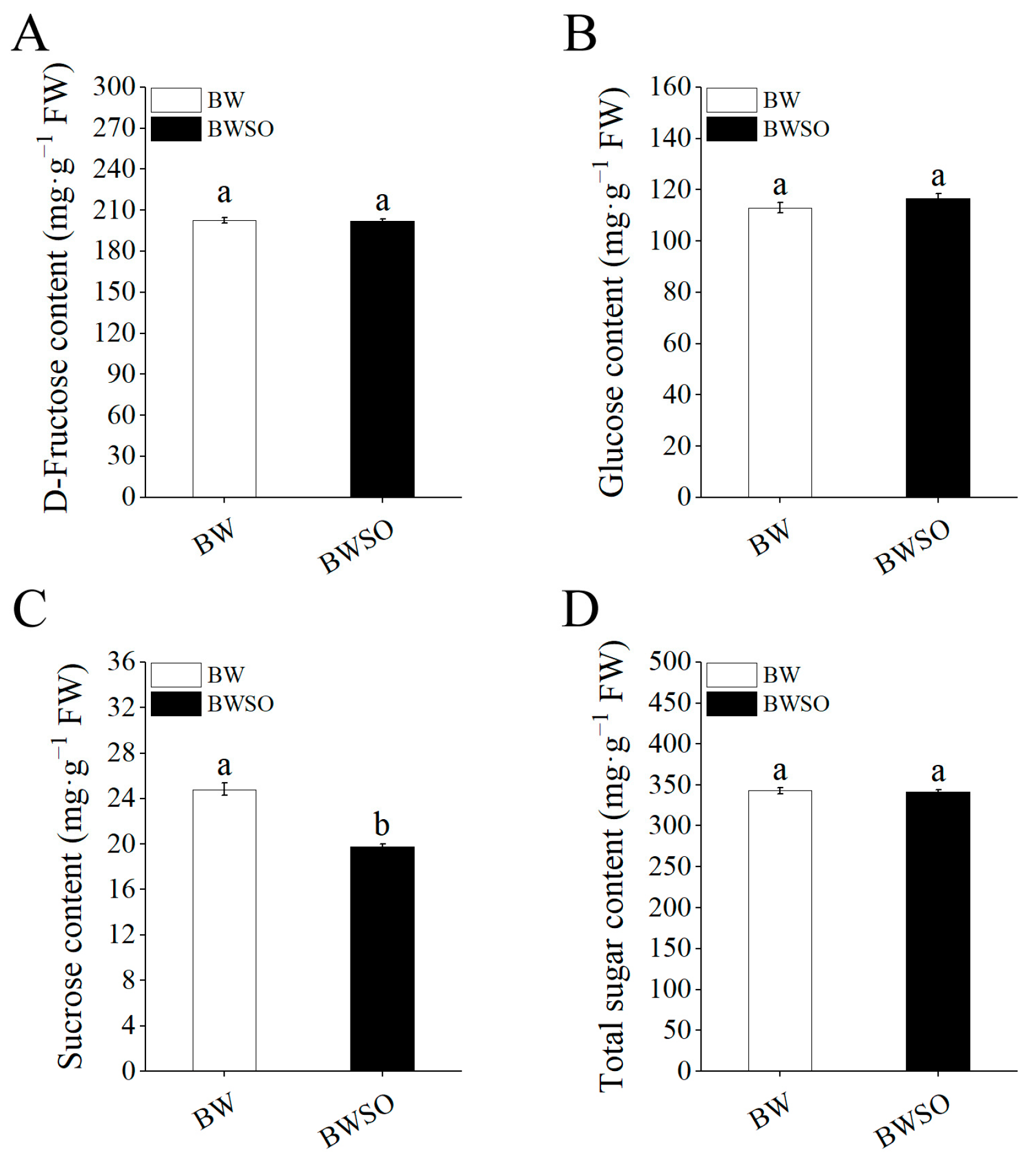
The sugar components in the fruits of BW and BWSO were determined by HPLC. A total of 19 sugars were detected, among which the sugar components with the highest contents were D-Fructose, Glucose, and Sucrose (Table S1). Analysis of the contents of these three sugar components showed that there were no significant differences in the contents of D-Fructose, Glucose, and Total sugar between the fruits of BW and BWSO (Figure 4A,D). However, the Sucrose content in BWSO fruits was significantly lower than that in BW, being 79.53% of that in BW. The above results indicate that the sugar components in BWSO fruits are the same as those in BW, but there are differences in the content of each component, especially regarding the Sucrose content, which is lower.

3.4. Comparison and Analysis of Acid Components in Fruits of BW and BWSO

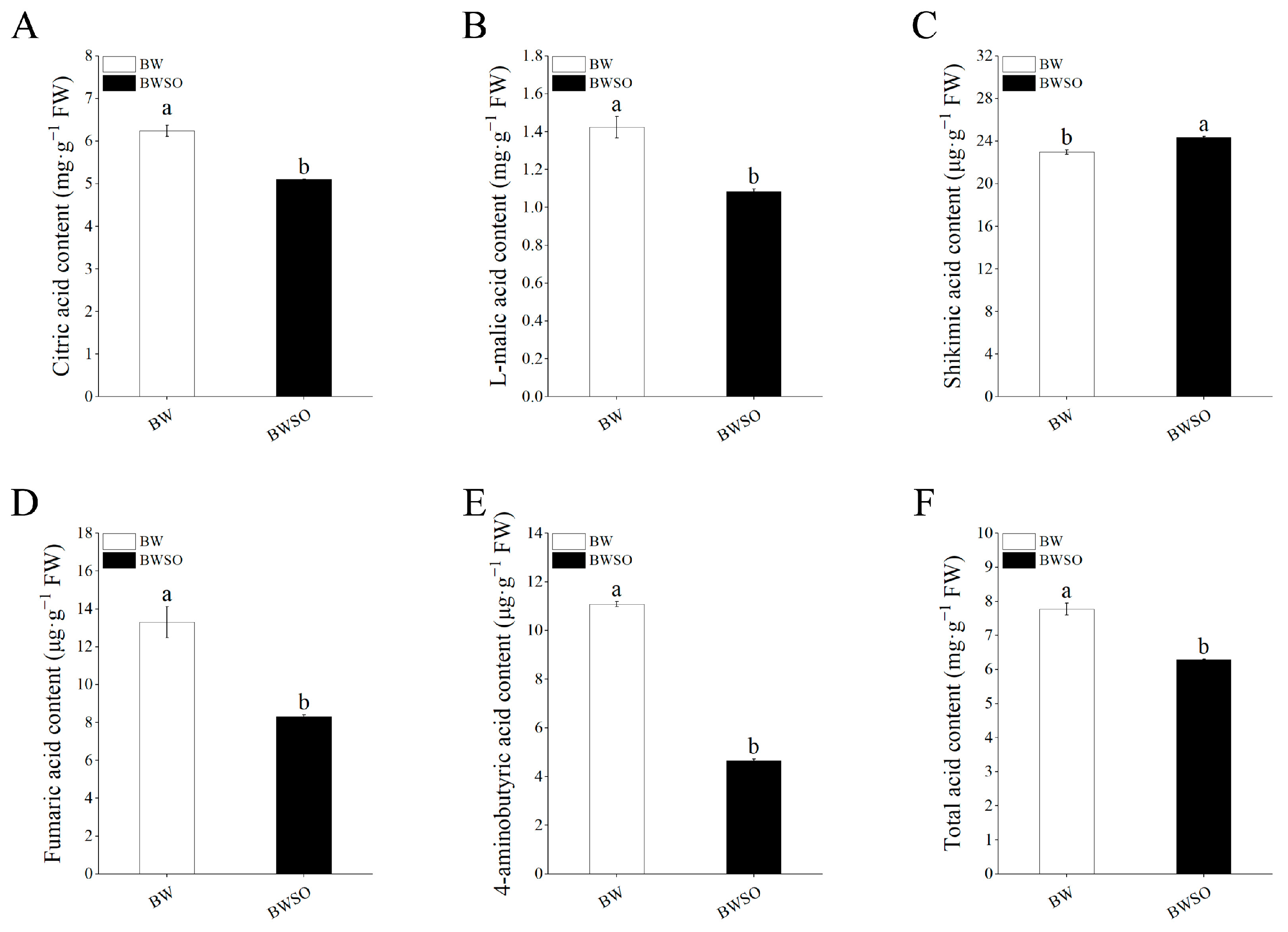
For the detection of acid components, 37 acids were detected in the fruits of BWSO, while 34 were detected in BW. Regarding 4-hydroxyhippuric acid, hippuric acid, indole-3-acetic acid, and benzoic acid, none were detected in the fruits of BW (Table S2). Analysis of the contents of five acids with relatively high contents and the total acid content showed that the contents of citric acid, L-malic acid, Fumaric acid, 4-aminobutyric acid, and total acid in BWSO fruits were significantly lower than those in BW, being 18.33%, 23.89%, 37.55%, 57.93%, and 19.12% lower, respectively. However, the content of Shikimic acid in BWSO was significantly higher than that in BW, being 6.02% higher (Figure 5). The above results indicate that the acid content in BWSO fruits is lower than that in BW.

3.5. Correlation Analysis Among Physiological Indicators of BW and BWSO

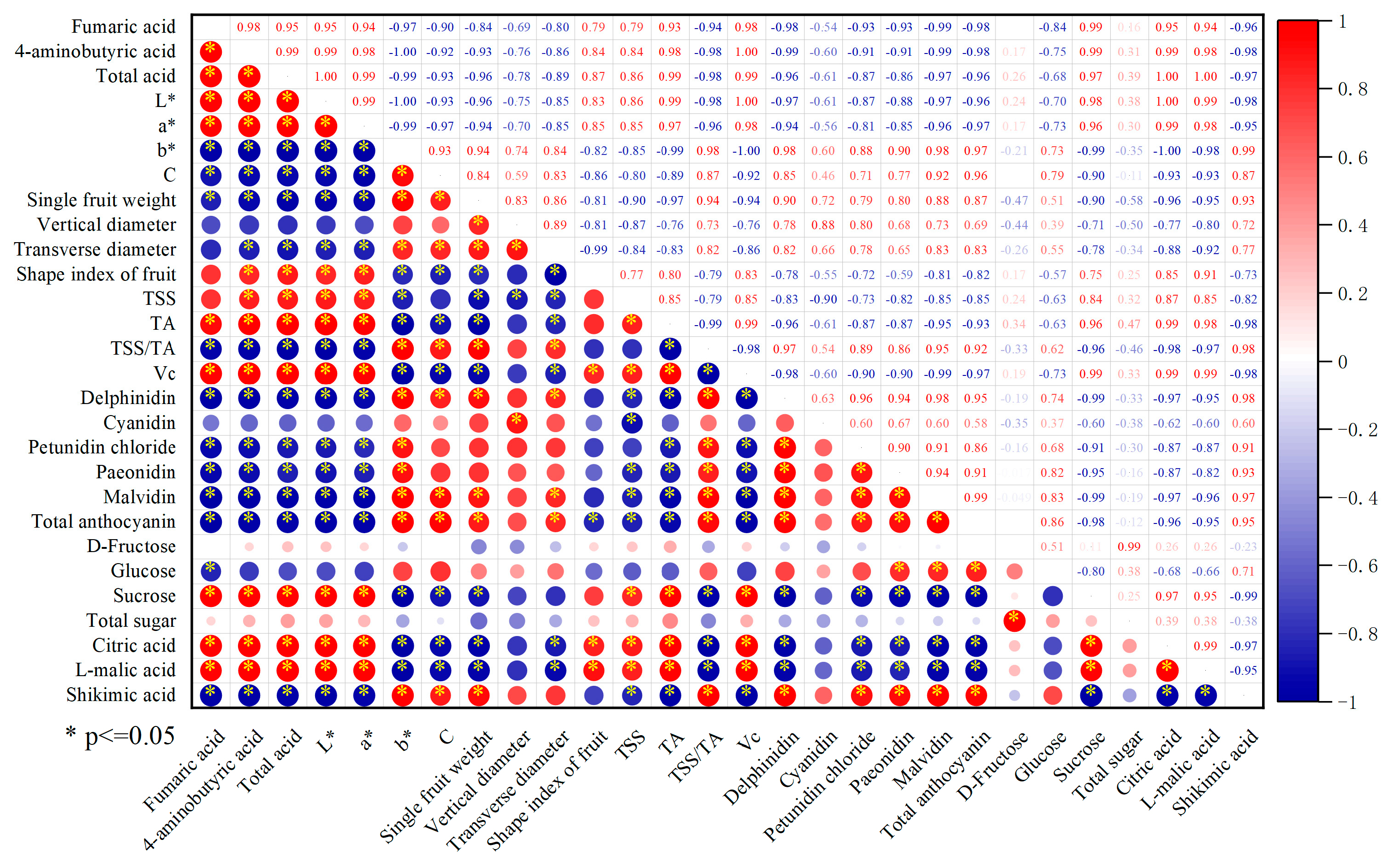
Correlation analysis showed that L* and a* were negatively correlated with delphinidin, cyanidin, petunidin chloride, paeonidin, malvidin, and total anthocyanin. Except for the non-significant correlation with cyanidin, the remainder reached a significant level. In comparison, b* and C were positively correlated with anthocyanins, which confirmed the reliability of color as an indirect selection marker for the high-anthocyanin phenotype. Further analysis revealed that VC was also negatively correlated with delphinidin, cyanidin, petunidin chloride, paeonidin, malvidin, and total anthocyanin, indicating a possible antagonistic relationship between them (Figure 6).

3.6. Comparison and Analysis of Volatile Compounds in Fruits of BW and BWSO

3.6.1. Quality Control

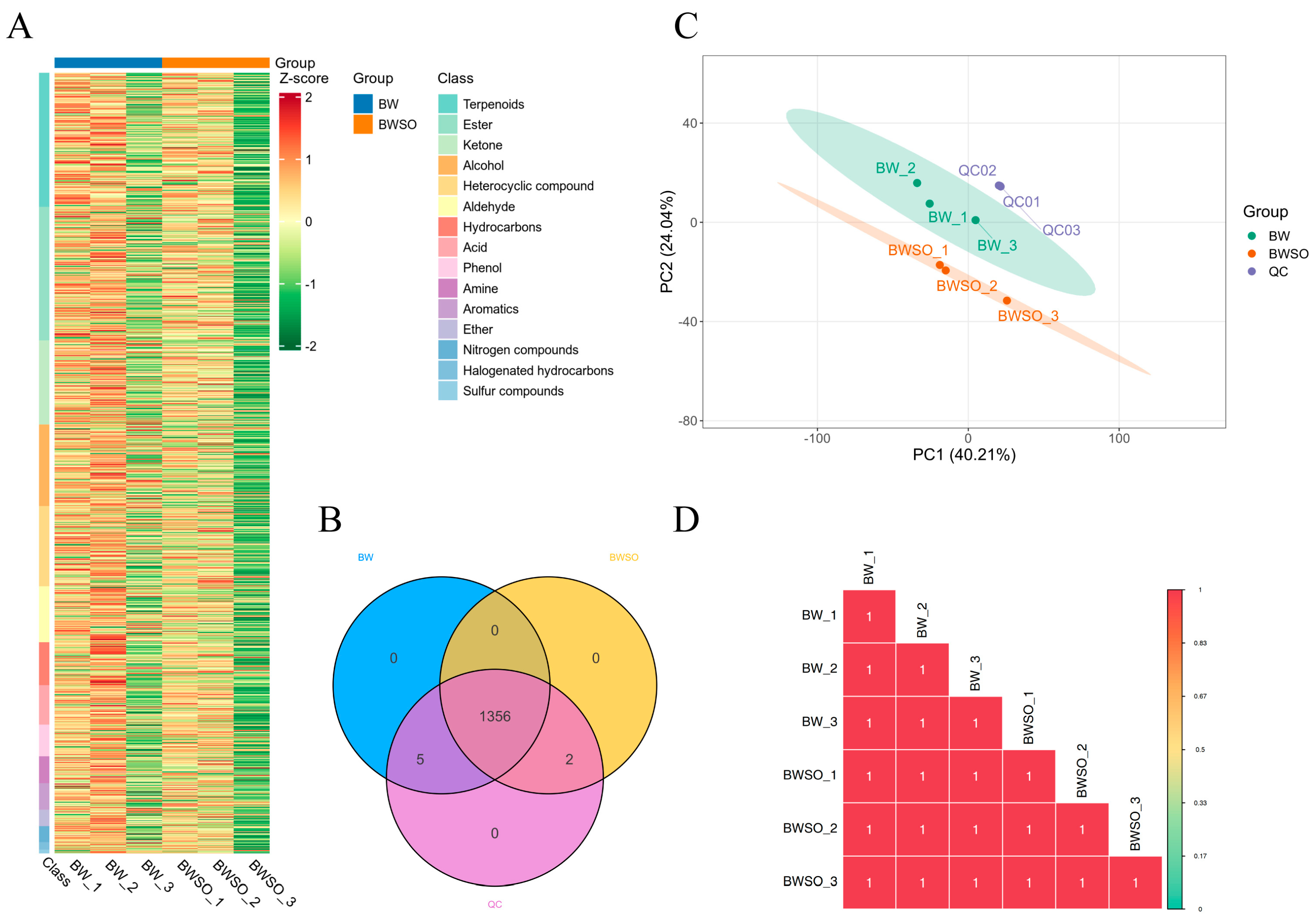
Metabolites are the basis of biological phenotypes. Based on the GC-MS detection platform and the self-built database of Maiwei, the volatile substances in the fruits of BW and BWSO were detected (Figure S1). A total of 1363 metabolites were detected, with 1361 detected in BW and 1358 detected in BWSO (Table S3). Among them, 1356 were common substances. The substances unique to BW were (S)-(+)-alpha-Phellandrene, Propane, 1-isothiocyanato-3-(methylthio)-, 2,4-Heptadien-1-ol, (E, E)-, Bicyclo [3.1.1]hept-2-ene, 2,6-dimethyl-6-(4-methyl-3-pentenyl)-, and alpha-Phellandrene. The substances unique to BWSO were 1,4-Benzenediol, 2-methyl-, and 3,3-Dimethyl-6-methylenecyclohexene (Figure 7A,B). To evaluate the reliability of the data, principal component and correlation analyses were carried out. The results are shown in Figure 7C,D. Each group could be well clustered together, and the correlation coefficients of the samples within the group relative to those between groups were all 1, indicating that the obtained differential metabolites are reliable and can be used for the next-step analysis.

3.6.2. Screening and Analysis of Differential Metabolites

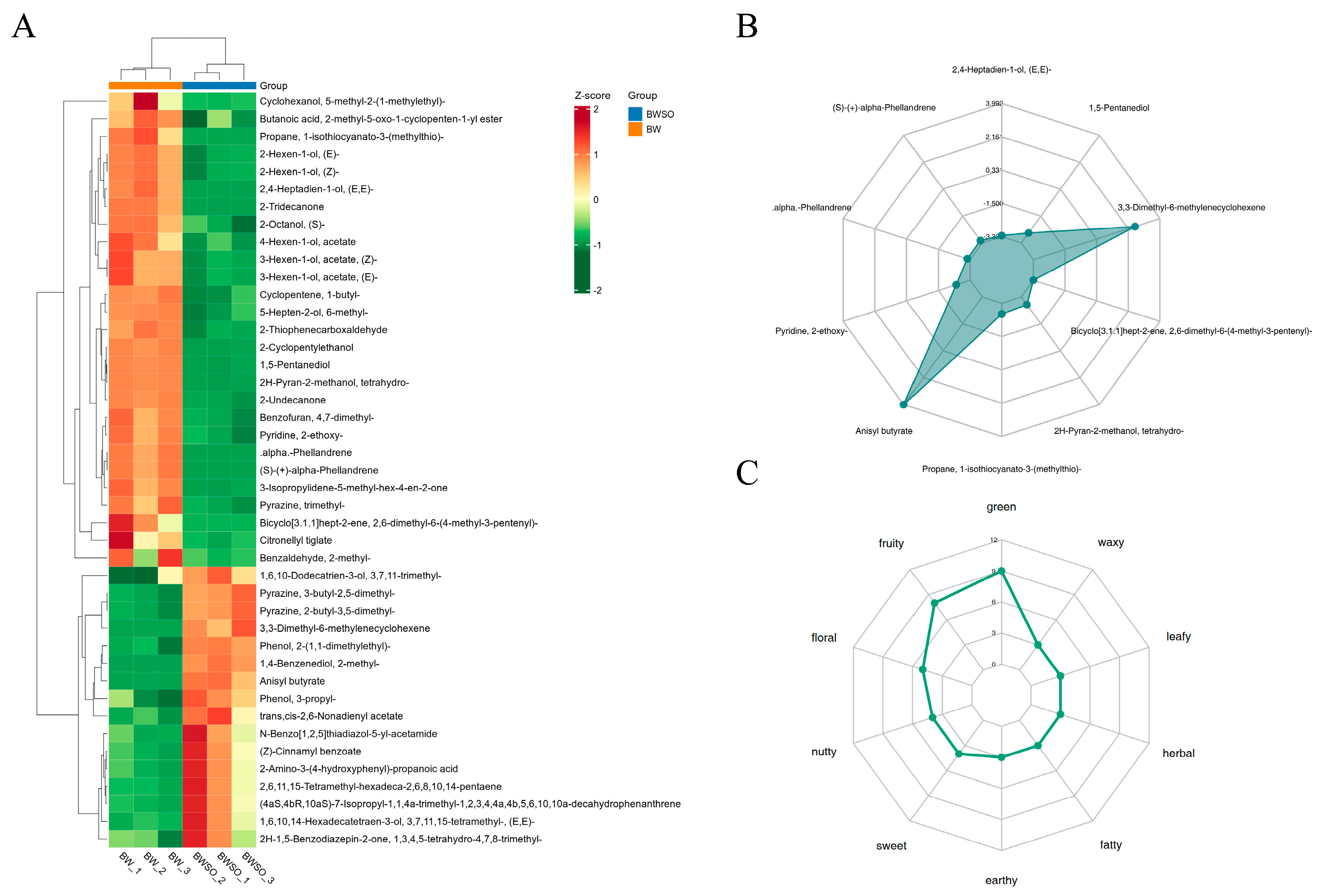
Among the various volatile substances, differential metabolites were screened under the conditions of VIP > 1 and fold change ≥ 2 or fold change ≤ 0.5. A total of 43 differential metabolites were screened in BWSO_vs_BW, among which 27 were downregulated, and 16 were upregulated. The two substances with the largest upregulation multiples in BWSO_vs_BW were Anisyl butyrate and 3,3-Dimethyl-6-methylenecyclohexene, and the two substances with the largest downregulation multiples were Bicyclo[3.1.1] hept-2-ene, 2,6-dimethyl-6-(4-methyl-3-pentenyl)- and 2,4-Heptadien-1-ol, (E,E)- (Figure 8A,B).
For the differential metabolites identified based on the screening criteria in each differential comparison group and their annotated sensory flavor characteristics, the top 10 sensory flavors with the highest number of annotations were selected to draw a radar chart. The results are shown in Figure 8C. The top three flavor-annotated substances were “green”, “fruity”, and “floral”, with the number of substances being nine, eight, and five, respectively, indicating that there are significant differences between BWSO and BW, mainly in terms of “green”, “fruity”, and “floral” flavors.

4. Discussion

4.1. Metabolic Mechanism of Fruit Color Variation Driven by the Reconstruction of Anthocyanin Components

In this study, the peel of the seedling progeny BWSO of ‘Baldwin’ blueberry showed an obvious black color, which was in sharp contrast to the typical blue color of the parent BW (Figure 1A). Colorimeter analysis showed that the lightness L* value of the BWSO peel decreased significantly, while the saturation C value increased significantly (Figure 1B). Although this phenotypic variation has been sporadically reported in blueberry seedling progeny, the pigment chemical basis has lacked systematic analysis [5]. Previous studies have shown that the color depth of blueberry fruits is mainly determined by the total amount of anthocyanins, while the hue shift is closely related to the relative proportion of different anthocyanin monomers [2,5].
In this study, precise determination by HPLC revealed that the total anthocyanin content of BWSO increased by 35.90% compared with that of the parent. The contents of the five detected monomers all increased significantly, and the relative proportions of each component underwent a significant reconstruction (Figure 3). In the parent BW, malvidin and petunidin chloride were the main components, while in BWSO, the relative abundance of delphinidin increased significantly, with an increase of 52.70%. Delphinidin is a key color-forming substance for blue-purple to black-purple fruits. The accumulation of its glycosylated derivatives in the vacuole can make the tissue present a deeper color tone [6]. Combined with the research of Jaakola et al. on the anthocyanin regulatory network of blueberries [9], we speculate that the specific activation of the delphinidin pathway in BWSO may stem from the upregulation of the F3′5′H gene expression or the differential regulation of MYB transcription factors. The significant negative correlation between the L* value and anthocyanin components in the correlation analysis (Figure 6) further confirms the causal relationship between pigment accumulation and reduced brightness from a statistical perspective. This finding is consistent with the conclusion of previous studies in purple-black tomatoes [17]; that is, the formation of black fruits is the synergistic result of “increase in total amount” and “component reconstruction” rather than the linear effect of a single factor.
It is worth noting that the Vc content in BWSO fruits decreased sharply by 70.45% compared with that in the parent BW (Figure 2D), and the correlation analysis showed that Vc was significantly negatively correlated with each anthocyanin monomer and total anthocyanins (Figure 6). This result intuitively reveals the antagonistic relationship between the accumulation of these two important antioxidant substances. Therefore, during blueberry breeding, in the process of breeding dark-colored blueberries with an extremely high anthocyanin content, changes in key nutritional indicators such as Vc should be monitored simultaneously to avoid the loss of important quality traits.

4.2. Formation of the Flavor Characteristics of Low Acid and High Sugar-to-Acid Ratio and Its Breeding Value

Flavor quality is a core indicator that determines the quality of blueberries, and the ratio of TSS/TA is recognized as the most reliable physicochemical parameter for evaluating the taste of blueberries [1,7]. In this study, the TA content of BWSO decreased by 29.82% compared with that of the parent. Although the TSS also decreased slightly (by 3.40%), the ratio of TSS/TA still increased significantly by 37.49% to reach 28.02 (Figure 2); this ratio has entered the ideal range for high-quality fresh-eating blueberries. Analysis of the organic acid profile further revealed that the decrease in the total acid content of BWSO was mainly due to the synchronous reduction in the contents of citric acid (a decrease of 18.33%) and malic acid (a decrease of 23.89%) (Figure 5). Notably, the number of organic acids detected in BWSO (37) was slightly higher than that in the parent BW (34), indicating that new branch activities may have occurred in the acid metabolic pathway of the seedling progeny. From a breeding perspective, the screening of low-acid materials is of great value for variety improvement targeting the Asian market. Asian consumers generally prefer fruits with a high sweet-to-sour ratio and a mild sour taste [8,18]. However, the low-acid trait may have a negative correlation with sugar accumulation. The citric acid cycle and the glycolysis pathway share carbon-skeleton precursors, and the downregulation of the acid synthesis flux may indirectly affect the sink strength of soluble sugars. Future research should focus on analyzing the key regulatory genes of the low-acid trait in BWSO and evaluating the genetic stability of this trait under different environmental conditions.

4.3. Variation in Volatile Metabolites Reveals the Risk of Aroma Drift in Seedling Selection

Volatile organic compounds are an indispensable component of the characteristic flavor of blueberry varieties. In this study, a total of 1363 metabolites were detected based on the GC-MS platform, and 43 differential metabolites were screened out, among which 27 were downregulated, and 16 were upregulated in BWSO (Figure 8). Sensory flavor annotation showed that the most significant differences between BWSO and the parent were in the three dimensions of “green aroma”, “fruity aroma”, and “floral aroma”. This result is consistent with the conclusion of Farneti et al.’s research on the aroma complexity of blueberries; that is, the aroma fingerprint maps of blueberries with different genotypes are significantly differentiated [3]. It is noteworthy that the five unique volatiles detected in the parent BW were not detected at all in BWSO, while BWSO only obtained two new unique substances. The asymmetric loss of aroma components in BWSO implies that during seedling selection, there may be an unintentional genetic dilution or loss of some characteristic aroma substances. Similar phenomena have been reported in the domestication and breeding studies of tomatoes [19] and strawberries [20]. Therefore, when pursuing “dominant” qualities such as high anthocyanins and low acidity, the volatile metabolite profile should be incorporated into the selection index to avoid the thinning of the flavor of the bred varieties. In the future, combining genome-wide association analyses to map the QTLs controlling key aroma components is expected to achieve a coordinated improvement of quality and flavor.
Based on the above discussions, this study systematically reveals the multi-dimensional variation characteristics of the BWSO seedling progeny in terms of color, flavor, and nutritional quality. However, several scientific issues still deserve in-depth exploration. First, transcriptome and metabolome data should be integrated to identify the key structural genes and transcriptional regulatory factors that drive the specific accumulation of delphinidin. Second, it is necessary to evaluate the genetic stability of the low-acid and high-anthocyanin phenotypes of BWSO and their response flexibility to environmental factors in multi-year and multi-site experiments. Finally, the scale of the seedling population should be expanded to map the genetic loci that control the antagonistic relationship between anthocyanins and Vc, providing molecular tools for breaking unfavorable linkages and achieving coordinated improvement of quality traits.

5. Conclusions

This study systematically analyzed the differences in fruit quality and metabolite levels between ‘Baldwin’ blueberries and their seedling progeny, BWSO. The results showed that the fruits of the blueberry seedling progeny, BWSO, had black peels, a significantly increased total anthocyanin content, a low-acid and high-soluble-solids-to-acid-ratio, an improved edible taste, but a decreased VC content and changes in characteristic aroma components, suggesting a risk of changes in nutritional quality in the breeding of dark-colored blueberries.

Supplementary Materials

The following supporting information can be downloaded at: https://www.mdpi.com/article/10.3390/horticulturae12060745/s1, Figure S1: Total Ion Chromatogram (TIC) of Volatile Substances from BW and BWSO Fruits; Table S1: Sugar components and contents in fruits of BW and BWSO; Table S2: Acid components and contents in fruits of BW and BWSO; Table S3: Volatile compounds and contents in fruits of BW and BWSO.

Author Contributions

Conceptualization, T.W., L.W. and C.H.; software, T.W.; validation, T.W.; formal analysis, T.W. and J.L.; investigation, J.L.; data curation, H.S. and Z.X.; writing—original draft preparation, T.W. and J.L.; writing—review and editing, T.W.; project administration, J.L. All authors have read and agreed to the published version of the manuscript.

Funding

This research was funded by the Sichuan Science and Technology Program [Grant No. 2021YFYZ0023-11] and the Free Exploration Project of the Institute of Horticulture, Sichuan Academy of Agricultural Sciences [Grant Nos. 2025ZYTS08, 2025ZYTS09, 2025ZYTS10].

Data Availability Statement

The original contributions presented in this study are included in the article/Supplementary Material. Further inquiries can be directed to the corresponding author.

Acknowledgments

The authors have reviewed and edited the output and take full responsibility for the content of this publication.

Conflicts of Interest

The authors declare no conflicts of interest.

References

  1. Michalska, A.; Lysiak, G. Bioactive Compounds of Blueberries: Post-Harvest Factors Influencing the Nutritional Value of Products. Int. J. Mol. Sci. 2015, 16, 18642–18663. [Google Scholar] [CrossRef] [PubMed]
  2. Kalt, W.; Cassidy, A.; Howard, L.R.; Krikorian, R.; Stull, A.J.; Tremblay, F.; Zamora-Ros, R. Recent Research on the Health Benefits of Blueberries and Their Anthocyanins. Adv. Nutr. 2020, 11, 224–236. [Google Scholar] [CrossRef] [PubMed]
  3. Farneti, B.; Khomenko, I.; Grisenti, M.; Ajelli, M.; Betta, E.; Algarra, A.A.; Cappellin, L.; Aprea, E.; Gasperi, F.; Biasioli, F.; et al. Exploring Blueberry Aroma Complexity by Chromatographic and Direct-Injection Spectrometric Techniques. Front. Plant Sci. 2017, 8, 19. [Google Scholar] [CrossRef] [PubMed]
  4. Araniti, F.; Baron, G.; Ferrario, G.; Pesenti, M.; Della Vedova, L.; Prinsi, B.; Sacchi, G.A.; Aldini, G.; Espen, L. Chemical Profiling and Antioxidant Potential of Berries from Six Blueberry Genotypes Harvested in the Italian Alps in 2020: A Comparative Biochemical Pilot Study. Agronomy 2025, 15, 262. [Google Scholar] [CrossRef]
  5. Hancock, J.F.; Lyrene, P.; Finn, C.E.; Vorsa, N.; Lobos, G.A. Blueberry breeding and genetics. Plant Breed. Rev. 2008, 30, 353–414. [Google Scholar]
  6. Tanaka, Y.; Sasaki, N.; Ohmiya, A. Biosynthesis of plant pigments: Anthocyanins, betalains and carotenoids. Plant J. Cell Mol. Biol. 2008, 54, 733–749. [Google Scholar] [CrossRef] [PubMed]
  7. Gilbert, J.L.; Guthart, M.J.; Gezan, S.A.; de Carvalho, M.P.; Schwieterman, M.L.; Colquhoun, T.A.; Bartoshuk, L.M.; Sims, C.A.; Clark, D.G.; Olmstead, J.W. Identifying Breeding Priorities for Blueberry Flavor Using Biochemical, Sensory, and Genotype by Environment Analyses. PLoS ONE 2015, 10, 21. [Google Scholar] [CrossRef] [PubMed]
  8. Colantonio, V.; Ferra, L.F.V.; Tieman, D.M.; Bliznyuk, N.; Sims, C.; Klee, H.J.; Munoz, P.; Resende, M.F.R. Metabolomic selection for enhanced fruit flavor. Proc. Natl. Acad. Sci. USA 2022, 119, 11. [Google Scholar] [CrossRef] [PubMed]
  9. Karppinen, K.; Lafferty, D.J.; Albert, N.W.; Mikkola, N.; McGhie, T.; Allan, A.C.; Afzal, B.M.; Häggman, H.; Espley, R.V.; Jaakola, L. MYBA and MYBPA transcription factors co-regulate anthocyanin biosynthesis in blue-coloured berries. New Phytol. 2021, 232, 1350–1367. [Google Scholar] [CrossRef] [PubMed]
  10. Wang, T.; Xiong, B.; Zheng, Z.; Qin, Z.; Deng, L.; Zheng, W.; Zhang, M.; Sun, G.; He, S.; Wang, J.; et al. Natural variation confers ‘Aiyuan 38’ citrus mutant a new color and unique flavor. Int. J. Mol. Sci. 2023, 24, 8816. [Google Scholar] [CrossRef] [PubMed]
  11. Kelebek, H.; Selli, S. Identification of phenolic compositions and the antioxidant capacity of mandarin juices and wines. J. Food Sci. Technol. 2014, 51, 1094–1101. [Google Scholar] [PubMed]
  12. Wang, J.X.; Tian, J.L.; Li, D.N.; Gao, N.X.; Deng, J.L.; Yang, X.F.; Wang, L.; He, Y.; Li, B.; Wang, L. Blueberry leaves as a promising sustainable source of polyphenols: Chemical composition, functional activities and future application perspectives. Food Res. Int. 2025, 207, 16. [Google Scholar] [CrossRef] [PubMed]
  13. Xue, D.; Sun, M.; Sun, Q.; Zhang, X.; Fu, M.; Hu, G.; Gao, Y.; Du, N. Comprehensive evaluation of the novel purple-fleshed tomato germplasm black ‘pearl’ and analysis of anthocyanin synthesis mechanisms and components. Food Chem. 2026, 516, 10. [Google Scholar] [CrossRef] [PubMed]
  14. Sun, B.; Di, H.; Zhang, J.; Xia, P.; Huang, W.; Jian, Y.; Zhang, C.; Zhang, F. Effect of light on sensory quality, health-promoting phytochemicals and antioxidant capacity in post-harvest baby mustard. Food Chem. 2021, 339, 128057. [Google Scholar] [PubMed]
  15. Liao, L.; Dong, T.T.; Qiu, X.; Rong, Y.; Wang, Z.H.; Zhu, J. Nitrogen nutrition is a key modulator of the sugar and organic acid content in citrus fruit. PLoS ONE 2019, 14, 18. [Google Scholar] [CrossRef] [PubMed]
  16. Bi, X.; Liao, L.; Deng, L.; Jin, Z.; Huang, Z.; Sun, G.; Xiong, B.; Wang, Z. Combined transcriptome and metabolome analyses reveal candidate genes involved in tangor (Citrus reticulata × Citrus sinensis) fruit development and quality formation. Int. J. Mol. Sci. 2022, 23, 5457. [Google Scholar] [CrossRef] [PubMed]
  17. Gonzali, S.; Mazzucato, A.; Perata, P. Purple as a tomato: Towards high anthocyanin tomatoes. Trends Plant Sci. 2009, 14, 237–241. [Google Scholar] [CrossRef] [PubMed]
  18. Klee, H.J.; Tieman, D.M. The genetics of fruit flavour preferences. Nat. Rev. Genet. 2018, 19, 347–356. [Google Scholar] [CrossRef] [PubMed]
  19. Tieman, D.; Zhu, G.T.; Resende, M.F.R.; Lin, T.; Taylor, M.; Zhang, B.; Ikeda, H.; Liu, Z.Y.; Fisher, J.; Zemach, I.; et al. A chemical genetic roadmap to improved tomato flavor. Science 2017, 355, 391–394. [Google Scholar] [CrossRef] [PubMed]
  20. Aharoni, A.; Giri, A.P.; Verstappen, F.W.A.; Bertea, C.M.; Sevenier, R.; Sun, Z.; Jongsma, M.A.; Schwab, W.; Bouwmeester, H.J. Gain and loss of fruit flavor compounds produced by wild and cultivated strawberry species. Plant Cell 2004, 16, 3110–3131. [Google Scholar] [CrossRef] [PubMed]
Figure 1. Baldwin (BW) and its seedling offspring (BWSO) fruit standard external qualities. (A) Fruit shape and its cross-section diagram; (B) color of the peel; (C) single-fruit weight; (D) vertical diameter; (E) transverse diameter; (F) shape index of fruit. Different letters above bars indicate significant differences at the p < 0.05 level according to Duncan’s test.
Horticulturae 12 00745 g001
Figure 2. BW and BWSO fruit standard internal qualities. (A) TSS (total soluble solids); (B) TA (titratable acidity); (C) TSS/TA; (D) Vc (vitamin C). Different letters after the numbers indicate significant differences at the p < 0.05 level according to Duncan’s test.
Horticulturae 12 00745 g002
Figure 3. BW and BWSO anthocyanin compositions and total anthocyanin contents. (A) delphinidin; (B) cyanidin; (C) petunidin chloride; (D) paeonidin; (E) malvidin; (F) total anthocyanin. Different letters above bars indicate significant differences at the p < 0.05 level according to Duncan’s test.
Horticulturae 12 00745 g003
Figure 4. BW and BWSO fruit sugar compositions and total sugar contents. (A) D-Fructose; (B) Glucose; (C) Sucrose; (D) Total sugar. Different letters above bars indicate significant differences at the p < 0.05 level according to Duncan’s test.
Horticulturae 12 00745 g004
Figure 5. BW and BWSO organic acid compositions and total acid contents. (A) Citric acid; (B) L-malic acid; (C) Shikimic acid; (D) Fumaric acid; (E) 4-aminobutyric acid; (F) total acid. Different letters above bars indicate significant differences at the p < 0.05 level according to Duncan’s test.
Horticulturae 12 00745 g005
Figure 6. Correlation analysis of different physiological data.
Horticulturae 12 00745 g006
Figure 7. BW and BWSO volatile compound determination and data quality control analysis. (A) Cluster heatmap; (B) Venn diagram; (C) PCA score plot of mass spectrometry data for test samples and quality control samples; (D) correlation analysis plot among samples.
Horticulturae 12 00745 g007
Figure 8. BWSO_vs_BW differential metabolite screening and flavor omics analysis. (A) Cluster heatmap of differential metabolites; (B) radar chart of the top 10 metabolites with the highest absolute Log2 FC values; (C) radar chart illustrating sensory flavor characteristic analysis of differential metabolites.
Horticulturae 12 00745 g008
Disclaimer/Publisher’s Note: The statements, opinions and data contained in all publications are solely those of the individual author(s) and contributor(s) and not of MDPI and/or the editor(s). MDPI and/or the editor(s) disclaim responsibility for any injury to people or property resulting from any ideas, methods, instructions or products referred to in the content.