1. Introduction
Roses are among the oldest and most widely cultivated ornamental plants worldwide, with a history deeply intertwined with human civilization and cultural traditions. Their aesthetic appeal and distinctive fragrance have driven extensive commercial production across numerous countries, positioning roses as one of the most significant commodities in the global floriculture industry. [
1]. Ecuador is the world’s second-largest exporter of flowers. Roses represent 75% of the sector. This activity contributes approximately 10% of the agricultural gross domestic product (GDP) and generated USD 703 million between January and August 2025. In 2025, the export value of flowers increased by 11%, reaching USD 5.3–5.5 per kilogram. Exported tons were higher in 2025 than in 2024, with an increase of 130 tons [
2].
Rose production for export is constrained by limitations in yield and quality, resulting in a high reliance on chemically synthesized substances such as fungicides, insecticides, preservatives and fertilizers [
3]. Additionally, low temperatures adversely affect flower initiation and development by reducing metabolic activity, delaying floral differentiation, and limiting bud growth, which ultimately leads to decreased flowering performance [
4]. In
Rosa × hybrida, imbalances in nutrient concentrations reduce the number of flowering stems and increase the incidence of blind shoots [
5]. Under these conditions, adequate fertilization is essential to maintain optimal plant nutritional status. Continuous flower harvesting in commercial production systems, combined with market demands for high-quality products, imposes high nutrient requirements [
6].
Recently, the use of plant biostimulants has been promoted as an alternative to chemicals used in agriculture, with emphasis on extracts from the brown seaweed
Ascophyllum nodosum (L.) [
7]. Organic inputs of plant origin such as biostimulants based on seaweed extracts have stood out notably for the content of polysaccharides, fatty acids, hormonal precursors (such as auxins, cytokinins, gibberellins, abscisic acid and brassinosteroids), vitamins, mineral nutrients and a wide range of organic components) [
8].
In addition, these biostimulants improve plant defenses by regulating molecular, physiological and biochemical processes [
9]. This species of seaweed belongs to the Fucaceae family, a group of brown algae, consisting of five recognized genera:
Ascophyllum,
Pelvetia,
Pelvetiopsis,
Silvetia and
Fucus. These algae are used in traditional medicine and agriculture [
10]. Harvested algal biomass is subjected to an alkaline extraction process, commonly using sodium hydroxide (NaOH) or potassium hydroxide (KOH). This process facilitates the release and stabilization of bioactive compounds, including polysaccharides, phytohormone precursors, and other organic molecules, which confer biostimulant activity [
11].
Through biochemical mechanisms, biostimulants contribute to the early stages of endogenous synthesis of specific growth regulators, enhancing nutrient assimilation, stimulating photosynthesis, increasing stress tolerance, and promoting crop development [
12]. Seaweed extracts are associated with positive physiological responses due to differential gene expression and signaling pathways activated by polysaccharides, polyamines, betaines, and phenolic compounds. In ornamental plant production, biostimulants based on
Ascophyllum nodosum support more sustainable agricultural practices by reducing dependence on chemical fertilizers and improving transplant quality. These marine extracts act as physiological signals that stimulate vigorous growth and enhance plant resistance, thereby contributing to environmentally friendly production systems. Moreover, their application improves nutrient use efficiency, reduces environmental impact, and promotes sustainability in ornamental horticulture [
13].
The use of biostimulants in rose cultivation represents a promising strategy for enhancing plant growth, flower production, and resistance to stress, while also contributing to more sustainable agricultural practices. Among the most commonly used biostimulants are seaweed extracts, which stimulate root development and stress tolerance; humic and fulvic acids, which improve soil structure and nutrient uptake; beneficial microorganisms, such as plant growth-promoting bacteria and mycorrhizal fungi, which support root symbiosis and overall plant health; and natural organic compounds, including amino acids, vitamins, and polysaccharides, which act as catalysts for essential physiological processes [
14].
However, further research is needed to optimize their application and gain a deeper understanding of their mechanisms of action under varying environmental and cultivation conditions. We hypothesized that biostimulant application would significantly improve physiological and yield parameters under low-temperature conditions; thus, the aim of this work was to evaluate the effect of foliar application of two formulations of biostimulants based on an algae, Ascophyllum nodosum, on the commercial quality, physiological and productive aspects of the Rosa × hybrida variety White O’hara.
2. Materials and Methods
Two experiments (two formulations of biostimulants B1 and B2) were carried out in commercial greenhouses (Monterosas Limitada C.L. farm), located in the Tupigachi parish, Pedro Moncayo, Pichincha (0°04′39.026″ N and 78°10′23.082″ W) at an altitude of 2822 m above sea level. Experiments were conducted with
Rosa × hybrida cv. White O’hara over a period of 26 weeks. Two formulations of biostimulants based on
Ascophyllum nodosum were:
B1: formulation with
A. nodosum (10%
w/
v), nitrogen (N), phosphorus (P), potassium (K) and total oxidizable organic carbon (COOT) and
B2: formulation with
A. nodosum (11%
w/
v), N, P, K, calcium (Ca), magnesium (Mg), minor elements, total oxidizable organic carbon and free amino acids (
Table 1).
A Randomized Complete Block Design (RCBD) was employed for each biostimulant formulation (B1 and B2). Following the crop failure of the control group in the second cycle, the statistical framework was modified to a balanced factorial 3 × 2 with three doses of the biostimulant (0.5, 1.0, and 1.5 mL L−1) and two production cycles, with 5 blocks, and 10 plants per plot. Applications were carried out at the experimental unit level, using the same doses and the same biostimulant in both cycles; quality variables were assessed on tree stems/block, and physiological variables were recorded at the plant level. This adjusted design ensured statistical robustness by analyzing a balanced data set of the successfully harvested treatments.
The application of biostimulants began after apical pruning (“pinch”) and was carried out every 15 days using a knapsack pump with a capacity of 20 L, equipped with a double-outlet lance. An adjuvant composed of ethoxylated fatty alcohol and polydimethylsiloxane was incorporated at a dose of 0.3 mL L−1, along with a pH adjustment to 5.5 and water hardness of 48 ppm, to optimize the efficacy of application. Standard agronomic procedures were carried out on all experimental plants, including plant lifting, removing suckers, soil drench, and sanitary pruning.
Nutritional management was carried out by drip fertigation, programmed in two 8 min pulses for 6 days a week, adjusted according to climatic conditions and soil moisture. No additional biostimulants for foliar applications were included. Regarding pest and disease management, control applications were carried out based on prior monitoring, with a frequency of three applications per week. Harvesting was based on the degree of opening of the flower bud, corresponding to the American bud at an intermediate cut-off point of grade 6, with stems of 50 to 60 cm in length. The stems were kept free of stains caused by chemicals, pests and diseases, avoiding damage caused by physical manipulation. At each production cycle, environmental variables were evaluated every two hours using the Datalogger (Sper Scientific, Evans Rd., Scottsdale, AZ, USA), recording the daily temperature (°C) and relative humidity (%). Using the provided temperature (
T) and relative humidity (
RH) data, the daily average and vapor pressure deficit (
VPD) were calculated using the following formula:
RH: Relative humidity (%);
mT: Mean temperature (°C).
At each harvest, quality variables were evaluated: stem length (cm), measured from the base of the flower bud to the cutting point; button length (cm), from the base of the button to its top end; button diameter (cm), measured at the basal part of the button, considering the outer petals; and leaf area (cm2), obtained by means of photographs of the second composite leaf from the cutting point made at the harvest of each experimental unit and subsequently analyzed with ImageJ v.2 software. Productive variables: number of days until harvest and percentage of productive and unproductive stems were evaluated at the end of each cycle.
Physiological variables were recorded every 15 days, starting from the first week after pruning between 9:30 a.m. and 12:30 p.m., including: foliar chlorophyll (μmol m
−2), measured with a Chlorophyll Concentration Meter MC-100 (Apogee Instruments, Logan, UT, USA); stomatal conductance (gs, mmol m
−2 s
−1), measured with an SC
−1 Meter foliar porometer (Meter Group, Pullman, WA, USA); and vapor pressure deficit (
VPD), calculated using the following formula:
RHh: relative humidity at leaf surface (%);
SVP: saturation vapor pressure (g s−1).
Statistically significant differences were determined using analysis of variance (F test), and the means of four doses of each biostimulant formulation and two production cycles were compared using Tukey’s test (p ≤ 0.05) with R software (version 4.2.2); graphs were made with Sigma Plot® software (version 11.0).
3. Results and Discussion
Located in Pedro Moncayo, Pichincha, the Tupigachi parish recorded an average temperature of 14.75 °C, with extremes ranging from 2.2 °C to 32.6 °C. The average relative humidity was 83.08%, while the calculated vapor pressure deficit (VPD) averaged 0.45 kPa. Despite being grown under greenhouse conditions, the plants were subjected to extreme temperature fluctuations during cycles 1 and 2, resulting in environmental stress (
Table 2).
This research was conducted from August to January, a timeframe representative of the wet season in the Ecuadorian highlands. This period is characterized by persistent cloud cover, high relative humidity, and frequent precipitation. As evidenced by the elevated humidity and low vapor pressure deficit (VPD), rose cultivation under these conditions is highly susceptible to physiological disorders such as shoot blindness and fungal pathogens, most notably Peronospora sparsa and Botrytis cinerea.
3.1. Quality Variables
It is important to highlight that during the second production cycle, a high percentage of non-productive stems was observed in the control treatment for both trials (87% and 92% for B1 and B2, respectively). These values were excluded from the statistical analysis because they are clearly not representative when considering the interpretation of the results.
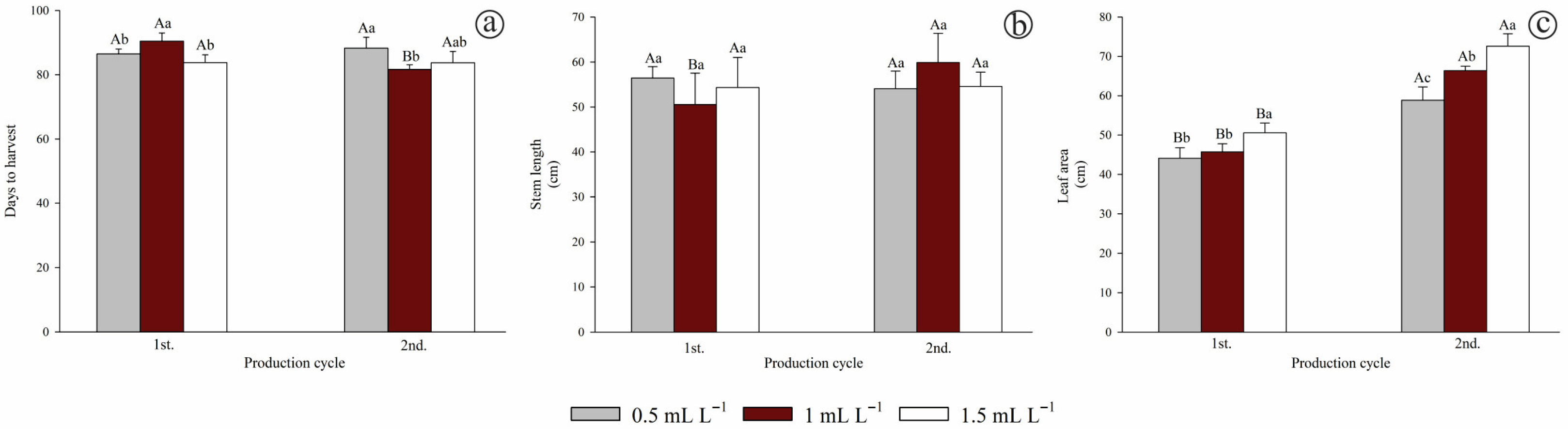
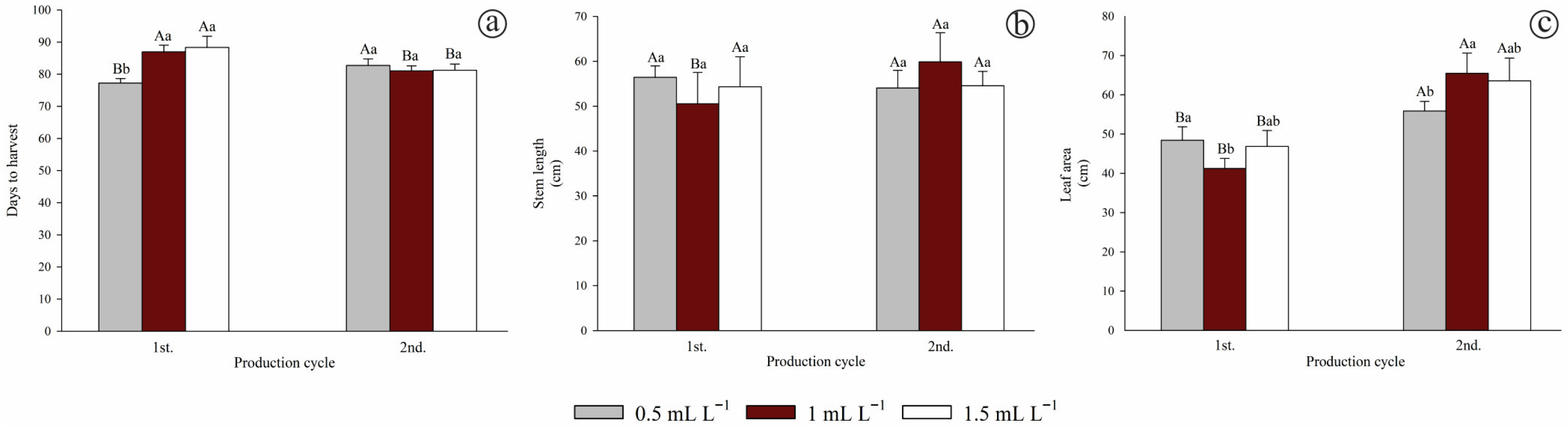
No significant differences were observed for the floral bud length and diameter between the two evaluated cycles for either of the biostimulant treatments. In contrast, significant statistical differences were detected for the number of days until harvest, stem length and leaf area for both biostimulants evaluated (
Figure 1 and
Figure 2a).
Significant differences were observed in the number of days to harvest for both biostimulants. For B1, the 1.0 mL L
−1 dose significantly shortened the production cycle by approximately 8 days in the second cycle compared to the first. Similarly, B2 at doses of 1.0 and 1.5 mL L
−1 resulted in a reduction of approximately 6 days when comparing the first and second cycles, with no significant differences observed between these two application rates (
Figure 1a and
Figure 2a).
In the case of B1, all doses promoted an increase in stem length and leaf area (
Figure 1b,c) at the end of the second cycle. On the other hand, for B1 and B2, stem length was especially favored with the application of 1.5 and 1 mL L
−1, respectively (
Figure 2c). It is important to note that the cumulative effect of biostimulation processes played a key role in these results.
The present results are consistent with previous findings reported for ornamental species, indicating
Ageratum houstonianum,
Coleus blumei,
Impatiens wallerana,
Lobularia maritima, and
Salvia splendens, which exhibit a stronger positive response to biostimulant applications when they are combined with macronutrient supply. The synergistic interaction between biostimulants and mineral nutrients enhances nutrient use efficiency, accelerates plant growth and flowering and shortens the production cycle [
15]. This aspect is particularly important because it reduces production costs and the risk of exposure to pest or disease attacks.
Quality variables showed a significant response to biostimulant formulations during the harvest of productive stems. Although the increments in mean values were slight, they represent a statistically superior performance over the two production periods. In floriculture, a small increase in stem length already represents an economic gain. Similarly, consistent results reported across various species indicate that the application of seaweed-derived biostimulants produces significant positive effects, including enhanced shoot growth, increased leaf area, a shortened crop cycle, more intense leaf coloration, larger flower buds, and superior root system development in terms of length [
16,
17].
We hypothesize that the increase in stem length and leaf area observed during the second production cycle may be attributed to the ability of
A. nodosum extract to stimulate shoot growth through the coordinated activation of multiple hormonal signaling pathways, particularly those involving salicylic acid, cytokinins, and auxins [
18].
It is worth noting that successive or multi-season applications highlight a cumulative effect that amplifies the benefits over time. Repeated treatments promote the accumulation of bioactive compounds, such as phenols and antioxidants, while simultaneously enhancing plant tolerance to stress factors, including drought. Moreover, evidence indicates that even two applications of biopreparations derived from this seaweed are sufficient to stimulate root development and improve plant stress resistance [
19]
3.2. Physiological Variables
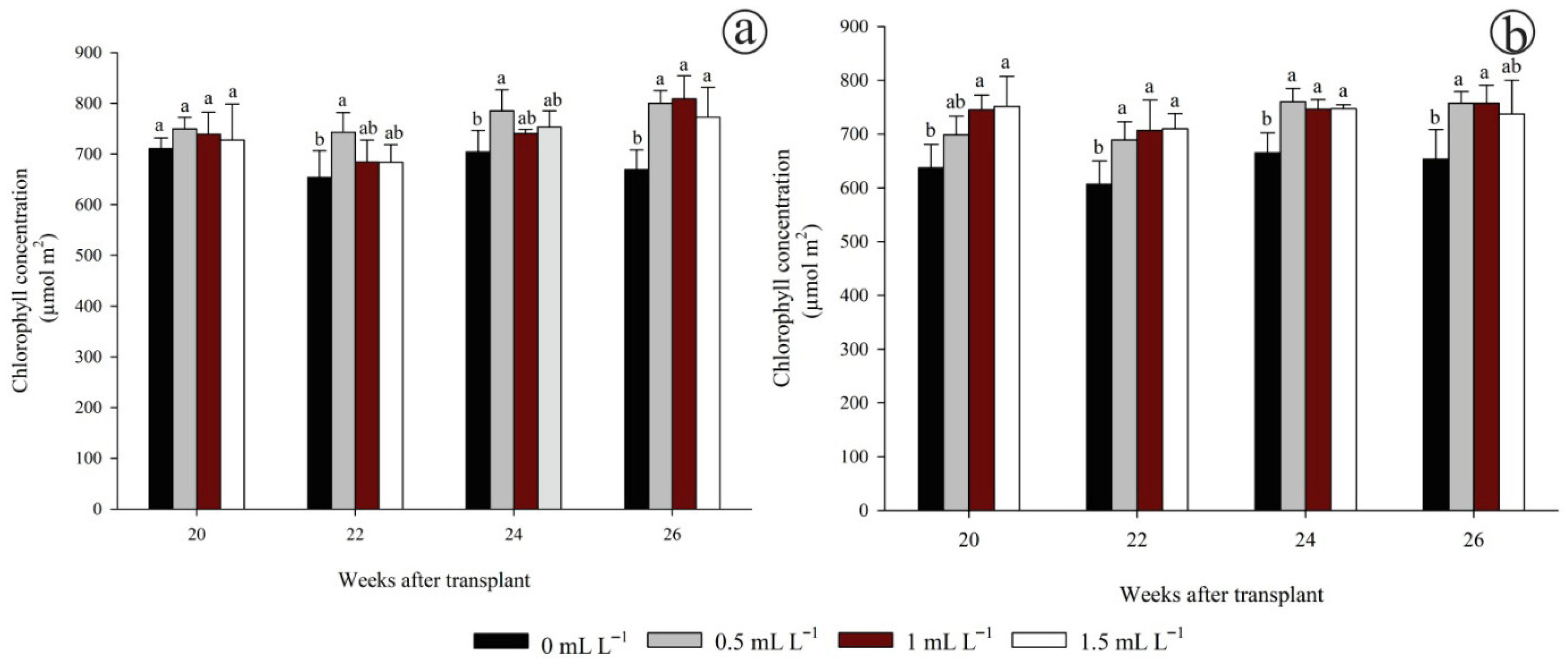
At the beginning of the cycle, chlorophyll content did not show significant differences. However, as the cycle advanced, a general decreasing trend was observed in the control treatments, which was also evident across both biostimulant trials. In some cases, these differences reached statistical significance (for clarity, only data from the last four sampling dates are presented) (
Figure 3a,b).
In the B1 trial, the 0.5 mL L
−1 treatment reached an average of 742.55 μmol m
−2 of chlorophyll. In the B2 trial, the 0.5 and 1.0 mL L
−1 treatments did not differ significantly from each other but were both significantly higher than the conventional farm management control, with averages of 782.4 and 787.8 μmol m
−2, respectively. Toward the end of the cycle, this trend was maintained, with the farm control consistently ranking lowest, while the B1 and B2 treatments showed increases of around 16–17% in chlorophyll content compared to the control at 26 WAT (weeks after transplanting). Our results are consistent with previous studies that indicate a significant increase in chlorophyll content (approximately 20%) following foliar applications of
A. nodosum extract at a concentration of 0.5%, applied at 10-day intervals, in
Solanum lycopersicum and
Capsicum annuum [
20,
21].
These results may be interrelated, as seaweed extract application has been shown to increase chlorophyll content, thereby enhancing photosynthetic capacity and promoting plant growth. Consistent findings in roses and other ornamental species indicate that biostimulant treatments improve photosynthetic efficiency, contributing to overall plant development [
22].
Chlorophyll content is considered a key agronomic parameter and has been widely reported to correlate with leaf nitrogen status [
23]. In addition, increased chlorophyll levels have been associated with higher glycine betaine content in plants, a compound that plays a crucial role in enhancing tolerance to abiotic stresses such as salinity, drought, and extreme temperatures. Glycine betaine functions as an osmoprotectant and stabilizer of proteins and membranes, as well as a regulator of metabolic processes, thereby contributing significantly to plant growth, development, and productivity [
24].
Therefore, the determination of chlorophyll content and stomatal conductance is essential to assess the physiological impact of biostimulation, as these variables are closely linked to key biochemical processes whose effects may ultimately be reflected in improved productivity in rose cultivation [
25].
For
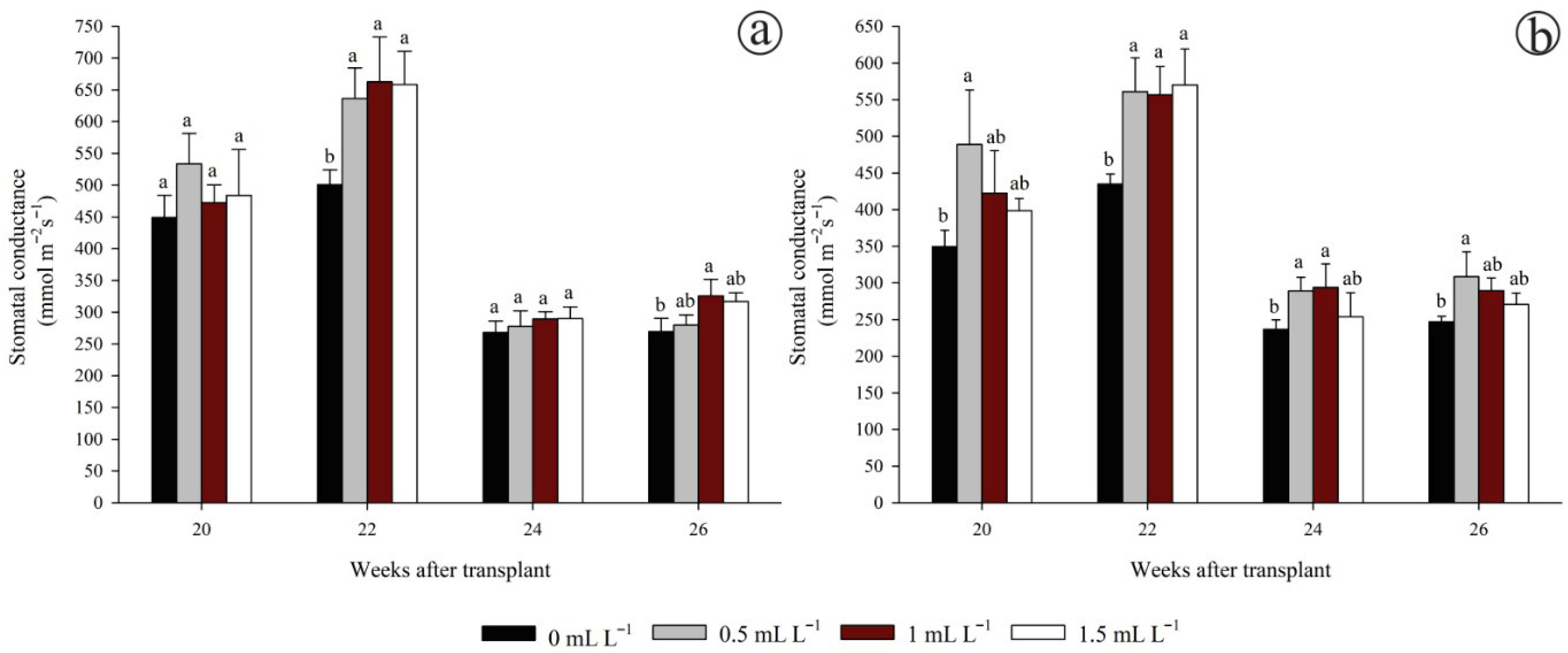
gs, the control consistently showed the lowest values across measurement dates. In both B1 and B2 trials, treatments with
A. nodosum recorded higher
gs values, with differences on some dates. In B1, the 1.0 mL L
−1 dosage achieved the highest mean at 26 WAT, whereas in B2, this behavior was observed with the 0.5 mL L
−1 treatment (
Figure 4a,b).
The increase in stomatal conductance observed with the application of A. nodosum extract may have contributed to improved crop performance. Similar positive responses to this seaweed-derived biostimulant have been reported in other crops, including grapevine, tomato, and soybean, among others.
Reduced stomatal conductance is a major limitation to photosynthesis under moderate stress conditions, as it restricts CO
2 diffusion into the leaf and decreases carbon assimilation. Consequently, stomatal development and regulation are considered key physiological traits for improving photosynthetic performance and water-use efficiency in crops. In this context, ongoing climate change underscores the need to re-optimize stomatal properties to enhance crop resilience and productivity under increasingly variable environmental conditions [
26].
Consistent with previous findings, in this study, relatively high temperatures were recorded during cultivation (maximum temperature 32.6 °C), conditions that may induce plant stress and promote stomatal closure. Under such circumstances, the application of seaweed-based treatments has been shown to enhance carbon assimilation and delay leaf senescence, responses closely associated with improved tolerance to abiotic stresses such as elevated temperatures. These effects are further linked to reduced evapotranspiration, increased stomatal conductance, and the regulation of key biosynthetic enzymes [
27].
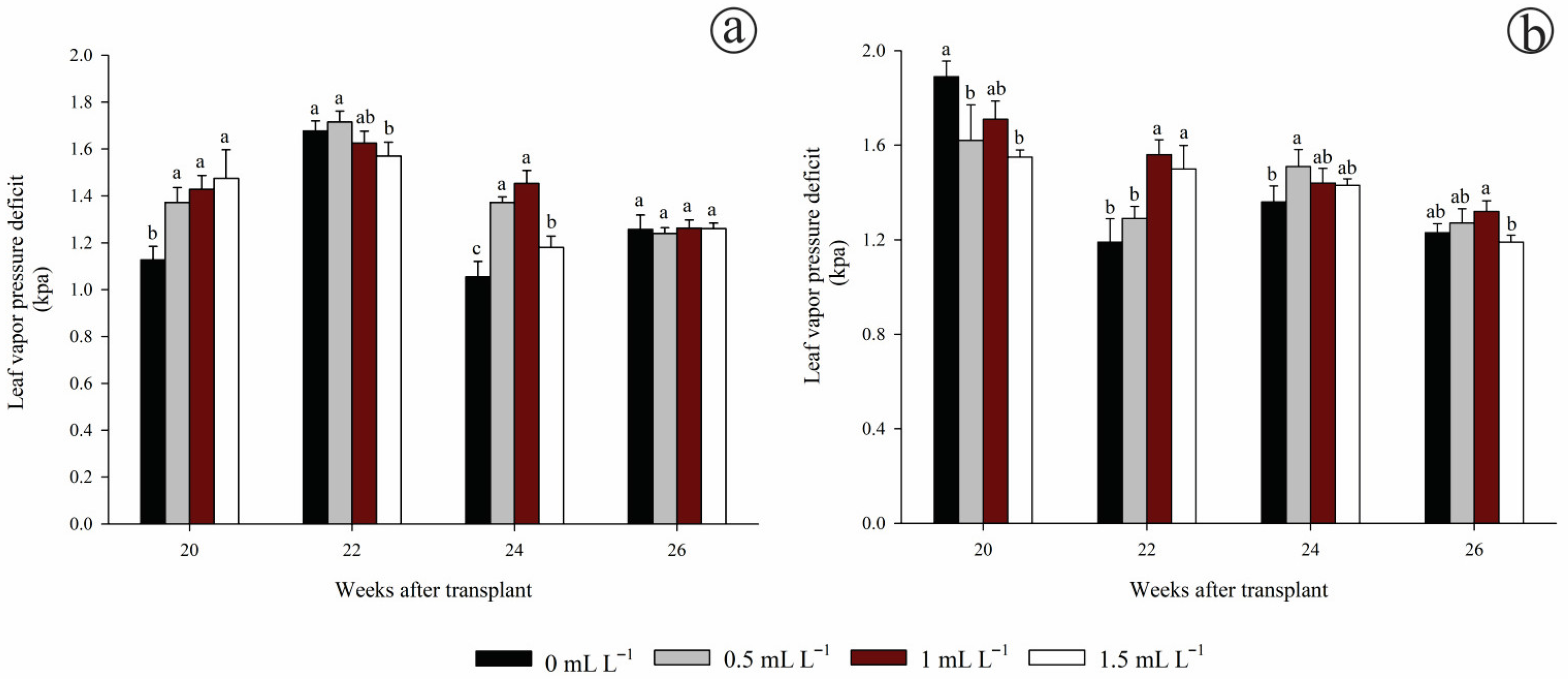
In the case of leaf vapor pressure deficit, the control treatment consistently exhibited lower means, while all
A. nodosum treatments significantly outperformed the control, as observed in chlorophyll content and stomatal conductance (
Figure 5a,b).
The increase in the leaf vapor pressure deficit (VPD) favors greater transpiration, which in turn increases the translocation of water and nutrients from the soil to the vegetative system. This allows the plant’s biochemical processes to be carried out more efficiently, improving yield and reducing the effects of stress through proper stomatal regulation [
28]. These effects were shown in the second cycle of the trial with B1, where a significant increase in flower stem production was observed, as well as notable improvements in the variables of stem length and leaf area.
3.3. Productive Variables
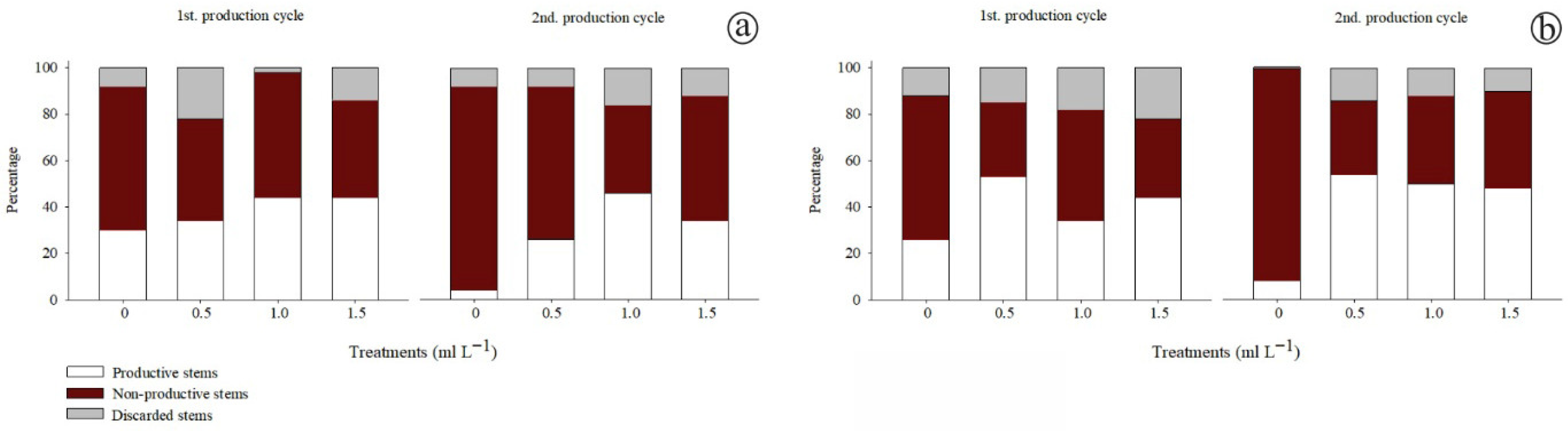
Regarding the productive stems, the control treatments registered values of 26% and 30% in the first cycle, and only 4% and 8% in the second cycle, for biostimulants 1 and 2, respectively. In contrast, all treatments with
A. nodosum showed better averages for productive stems. The 1 mL L
−1 dose of B1 presented the best response, reaching 46% productive stems, while the 0.5 mL L
−1 dose of B2 obtained the highest percentage, with 52% (
Figure 6a,b).
According to Boukhari et al. [
29] and Goñi et al. [
30] the extracts from
A. nodosum are capable of promoting antioxidant stimulation while reducing lipid peroxidation that is triggered under abiotic stress and contributes to the elimination of reactive oxygen species, processes of utmost importance that allow the maintenance of balance in cell differentiation, on which the formation of flower buds (productive stems) depends; otherwise, there would be an increase in leaf mass in the form of rosettes (unproductive—vegetative stems). This benefits crop productivity.
The reduction in unproductive stems from 54% to 38% with the 1 mL L
−1 dose of the biostimulant B1 is attributed to the benefits of these products for plant productivity. Biostimulants interact with plant signaling processes, mitigating the negative response to stress. This effect is mediated by signaling molecules generated by both the plant and associated microbial populations, such as bacteria, yeasts, and fungi, both endophytes and non-endophytes [
31]. Likewise, the dose of 1.5 mL L
−1 in the second production cycle showed a 10% decrease in unproductive stems, in contrast to the control treatment, which presented a 30% increase in non-productive stems.
The high percentage of unproductive stems observed in the control treatments can be attributed to environmental stress, particularly the low temperatures recorded during the investigation, with a minimum of 2.2 °C and an average of 14.75 °C. Low temperatures (12 to 15 °C) increase shoot blindness, which is common during winter, while the ideal range for the plant’s biochemical processes is 18 to 22 °C [
32]. In addition, the reduction in light energy inhibits the production of hormones such as auxins, cytokinins and gibberellins, which are essential to mobilize photosynthates towards flower bud differentiation [
33].
Although several growth and visual attributes relevant to cut rose production were evaluated—such as stem length, bud size, leaf area, and productivity components—the research did not include postharvest evaluations, particularly vase life. Vase life is widely recognized as one of the most important commercial quality parameters for cut roses because it directly influences market value, transportability, and consumer satisfaction. Future research should incorporate postharvest assessments to determine whether the application of biostimulants derived from Ascophyllum nodosum can influence vase life and other quality traits during storage and display. It is essential to carry out a cost–benefit analysis considering the costs associated with each of the proposed doses of biostimulants. This analysis should include a comparison with the company’s control treatment, which, although it has lower production, does not incur additional expenses related to the application of other agricultural bio-inputs. It is important to note that the cost per treatment must be calculated based on the number of applications carried out per production cycle. In the case of the present study, a total of seven applications were carried out for each biostimulant.
4. Conclusions
The results of this study indicate that foliar applications of Ascophyllum nodosum-based seaweed extracts positively affect the physiological performance and productive response of Rosa × hybrida cv. White O’Hara. For this, the choice of a specific stimulant dose is justified from an economic and management perspective.
The application of A. nodosum extract improved photosynthetic activity and carbon assimilation, in addition to delaying leaf senescence. These effects positively influenced physiological variables such as chlorophyll concentration, stomatal conductance (gs), and vapor pressure deficit (VPD), which were clearly associated with a reduction in the number of unproductive stems. Moreover, the biostimulant treatments exhibited the most favorable responses under the low- and high-temperature stress conditions recorded during the experimental period (minimum of 2.2 °C and maximum of 32.6 °C), indicating an enhanced tolerance to abiotic stress. For this purpose, the use of 1.5 mL L−1 of biostimulant B1 and 1 mL L−1 of B2 is recommended.
Overall, the findings support the role of biostimulants as effective tools within sustainable horticultural systems. Beyond their agronomic benefits, the adoption of such technological innovations can contribute to improving production resilience, optimizing resource use, and supporting the economic sustainability of ornamental crop production systems.




 ,
,