Article

Overexpression of CmMYBS3 Decreases Cold Tolerance in Ground Cover Chrysanthemum

1
College of Agricultural, Yanbian University, Yanji 133002, China
2
Yanbian Academy of Forestry Sciences, Yanji 133002, China
*
Authors to whom correspondence should be addressed.
These authors contributed equally to this work.
Horticulturae 2026, 12(6), 711; https://doi.org/10.3390/horticulturae12060711 (registering DOI)
Submission received: 27 April 2026 / Revised: 1 June 2026 / Accepted: 2 June 2026 / Published: 8 June 2026
(This article belongs to the Section Biotic and Abiotic Stress)

Abstract

Low temperature constitutes a critical abiotic stress that significantly impairs plant growth and development, particularly for species in cold regions. In Northeast China, the persistently low winter temperatures over an extended period pose significant challenges to the survival of chrysanthemums. This study employed the ground cover plant ‘Yingjie’ as the experimental material and cloned CmMYBS3. The CmMYBS3 protein lacks transcriptional activity and is localized exclusively in the nucleus. Under low-temperature treatment, the activities of SOD, CAT, and POD were significantly lower in chrysanthemums overexpressing CmMYBS3 than in the wild-type line. Additionally, the MDA content in the CmMYBS3 overexpression lines was higher than in the wild-type lines. To elucidate the mechanism by which CmMYBS3 regulates the response to low temperature, we conducted transcriptome sequencing analysis and identified a total of 5425 differentially expressed genes, comprising 2646 upregulated genes and 2779 downregulated genes. The GO analysis reveals that the primary enrichment occurs in the “biological process”, “cellular component”, and “molecular function”. The KEGG enrichment analysis identified significant alterations in several pathways associated with plant growth and development, as well as stress responses. Through yeast single-hybrid analysis, it was demonstrated that CmMYBS3 specifically binds to the promoter region of CmDREB1 and inhibiting the expression of the CmDREB1. This study demonstrates that CmMYBS3 reduces the cold tolerance of ground cover chrysanthemums by suppressing the expression of the CmDREB1 gene, providing an important theoretical basis for the breeding of cold-tolerant ground cover chrysanthemum varieties.

1. Introduction

Abiotic stresses, such as temperature stress, salinity stress, drought, and waterlogging stress, significantly affect plant growth and development. Among these, low-temperature stress plays a crucial role in the geographical distribution of plants and influences their yield and quality, especially in cold regions such as high latitudes or high altitudes. Low temperatures impair plant physiological processes, compromise cellular membrane integrity, and suppress photosynthetic activity. In response to low-temperature stress, plants enhance the activity of antioxidant enzymes and promote the accumulation of osmoregulatory substances, effectively mitigating stress-induced damage [1,2,3]. In addition, plants mitigate the damage caused by low-temperature stress to organelles and cell membranes through enhanced accumulation of osmoregulatory substances. Collectively, these mechanisms contribute to maintaining intracellular ROS homeostasis and enable plants to adapt to low-temperature environments [4,5]. Plant stress resistance is jointly governed by genetic makeup and environmental factors. Even under identical low-temperature conditions, different cultivars display distinct patterns of gene transcription and protein synthesis. These changes affect physiological processes such as antioxidant metabolism and osmotic adjustment, and ultimately lead to differentiation in plant growth performance and stress tolerance [6].
In recent years, research into the mechanisms of plant responses to low-temperature stress has progressively deepened from the physiological level to the molecular level, leading to a series of significant breakthroughs. Notably, the ICE-CBF/DREB-COR signaling pathway has garnered extensive attention as a pivotal mechanism enabling plants to withstand low-temperature stress. When plants perceive cold signals, Inducer of CBF Expression (ICE) functions as an upstream transcription factor by binding to the C-repeat binding factor/dehydration responsive element binding (CBF/DREB) response element to promote the expression of CBF/DREB genes. Subsequently, CBF/DREB binds to the dehydration response element (DRE) to activate cold-responsive (COR) gene expression and induce the synthesis of a series of antifreeze proteins and metabolites, thereby enhancing plant cold tolerance [7]. In addition, several transcription factor families have been identified to be involved in the regulation of plant cold stress. These families of transcription factors include MYB [8], AP2/ERF [9], WRKY [10], NAC [11], and bHLH [12]. Notably, the MYB transcription factor family is not only involved in the regulation of plant growth and development, but also plays an important role in the response to low-temperature stress. Based on the different number of repetitions (R) in a sequence, the MYB family can be divided into four subfamilies, 1R-MYB, R2R3-MYB, 3R-MYB, and 4R-MYB, with each R repetition consisting of approximately 50–52 amino acid residues [13,14]. These R domains are composed of tandem repeats, forming a distinctive helix–loop–helix (HLH) topological conformation that facilitates their involvement in the DNA binding process [15]. AtMYB15 suppresses CBF gene expression in Arabidopsis, leading to reduced antioxidant enzyme activity and increased cold sensitivity in plants [16]. The expression of OsMYB3R-2 and OsMYBS3 in rice, as well as MpMYBS3 in banana, was upregulated under low-temperature stress. Furthermore, their heterologous overexpression in transgenic plants conferred robust cold tolerance through modulating the stress-responsive gene network [17]. Following drought treatment of Setaria italica, the key regulatory gene SiMYBS3 was identified through transcriptome profiling. Heterologous overexpression of SiMYBS3 in Arabidopsis thaliana enhanced drought tolerance [18]. Our previous transcriptome analysis revealed that the expression of CmMYBS3 in ground cover chrysanthemum, ‘Yingjie’, was significantly downregulated under low-temperature treatment compared to normal-temperature treatment [19]. This suggests that CmMYBS3 may play a role in the plant’s cold resistance mechanism. In Chrysanthemum, CmMYBS3 inhibits the expression of CmMYB121 by forming a complex with CmHSFA4 and CmTPL, thereby enhancing the salinity tolerance [20]. Nevertheless, whether CmMYBS3 also functions in regulating cold tolerance remains to be elucidated.
Ground cover chrysanthemum (Chrysanthemum × morifolium) is a herbaceous perennial species in the genus Chrysanthemum (family Asteraceae), which has excellent characteristics such as rich flower colors, dense flower clusters, rounded and compact crowns, as well as a high tolerance to cold and drought. In northern China, the low temperature and prolonged winter duration pose significant challenges to the overwintering survival of ground cover chrysanthemums, resulting in a relatively low survival rate. Extreme low temperatures can cause severe cold injury to the root tissues of ground cover chrysanthemums, leading to root rot and thereby impeding plant regrowth in the subsequent growing season [21]. This phenomenon significantly constrains its application in urban landscaping and ecological greening projects in northern regions. Therefore, in this study, the CmMYBS3 gene was cloned to investigate its spatial expression pattern, subcellular localization, self-activation activity, and biological functions in cold stress responses. Additionally, transcriptomic data were employed to analyze the downstream regulatory network of CmMYBS3. These results clarify the function of the CmMYBS3 gene and the molecular mechanism underlying cold tolerance regulation, and providing a solid theoretical foundation for the molecular genetic breeding of ground cover chrysanthemums.

2. Materials and Methods

2.1. Plant Materials and Growth Conditions

Cuttings of the ground cover chrysanthemum variety ‘Yingjie’ were obtained from the greenhouse at Yanbian University Teaching Base, located in Yanji City, Jilin Province, China. Aseptically excised shoot tips of ground cover chrysanthemum ‘Yingjie’ (2.0 cm in length) were cultured on Murashige and Skoog (MS) medium supplemented with 30 g/L sucrose and 0.8% agar, maintained under a 16 h photoperiod (30 μmol·m−2·s−1) at 25 ± 2 °C for 4-week subculture cycles. The obtained tissue culture seedlings were used as materials for gene cloning and genetic transformation. The transgenic lines were transplanted to the greenhouse at Yanbian University’s teaching base. The environmental conditions were stringently controlled, with a temperature range of 25–27 °C, a photoperiod of 14 h light/10 h dark, and relative humidity maintained between 60 and 70, which allowed for the development of approximately 4–5 leaves and exhibited robust growth, and these were selected for subsequent experiments.

2.2. Cloning and Sequence Analyses of CmMYBS3

Total RNA was extracted from the leaves of the ground cover plant ‘Yingjie’ using the Trans-Zol Plant Reagent Kit (TIANGEN, Beijing, China). The extracted RNA was then reverse-transcribed into cDNA using the FastKing gDNA Eliminating RT SuperMix Reagent Kit (TIANGEN, Beijing, China). Based on the CDS sequence of the CmMYBS3 gene previously screened and annotated by our research group from the transcriptome database of the ‘Yingjie’, specific primers MYBS3-F/R were designed using Primer 5.0 software (Table S1). The PCR reaction system consisted of 2.5 μL of 10× PCR Buffer (containing Mg2+), 1.6 μL dNTP (2.5 mmol/L), 1.0 μL cDNA, 1.0 μL each of the upstream and downstream primers (10 μmol/L), 0.2 μL rTaq, and 17.3 μL ddH2O, in a total volume of 20 μL. The PCR reaction was programmed as follows: 94 °C for 30 s, 57 °C for 30 s, and 72 °C for 90 s, with 35 cycles. Finally, the reaction was extended at 72 °C for 10 min and stored at 4 °C. Subsequently, the PCR products were recovered and ligated with the vector PMD-T19, and then sent to Nanjing Sipujin Biotechnology Co., Ltd. (Nanjing, China) for sequencing. The MYBS3 protein sequences of various plants were downloaded from NCBI, multiple sequence alignment was performed using DNAMAN software, and the conserved domains of the CmMYBS3 protein were analyzed via NCBI CD-Search. The phylogenetic tree was constructed by using MEGA7.0 software.

2.3. Gene Expression Analysis

The ‘Yingjie’ plants were subjected to cultivation temperatures of 25 °C, 10 °C, 5 °C, and −5 °C for 2 h each. Following the treatment, 4–5 leaves from the upper portion of the plant were harvested and immediately immersed in liquid nitrogen for long-term preservation at −80 °C, for subsequent evaluation of cold-responsive biomarkers (such as SOD, POD and CAT activities). The roots, stems, leaves and flower organs of ‘Yingjie’ were collected, and the spatio-temporal expression pattern of CmMYBS3 was analyzed. The quantitative Real-Time PCR (qRT-PCR) (Agilent Technologies, Inc., Santa Clara, CA, USA) reaction system consisted of 5 μL of cDNA, 5 μL of 2× SuperReal PreMix Plus, 0.4 μL of 50× ROX Reference DyeΔ, and 1 μL of each of the forward and reverse primers (Table S1), and the addition of 2.6 μL of deionized water. The cycling program was set as follows: pre-denaturation at 95 °C for 2 min; 35 cycles were performed, including denaturation at 95 °C for 15 s, annealing at 58 °C for 15 s, and extension at 72 °C for 30 s. The melting curves were prepared in the range of 55 to 95 °C. The CmEF1α gene was used as an internal reference (Table S1). Each treatment was performed with three biological replicates, and the relative expression levels of the target genes were calculated using the 2−∆∆Ct method.

2.4. Subcellular Localization

To investigate the subcellular localization of the CmMYBS3 protein, the constructed pORE-R4-35S-CmMYBS3 vector was introduced into Agrobacterium EHA105 via the heat shock method. The Agrobacterium tumefaciens suspension containing the target construct was subsequently infiltrated into tobacco leaves. The infiltrated plants were maintained under controlled environmental conditions (25 ± 2 °C, 16 h photoperiod) for 72–96 h. Finally, the subcellular localization of CmMYBS3 was determined by observing the fluorescence signals using confocal microscopy.

2.5. Transcriptional Activation Assay

The pGBKT7-CmMYBS3 bait construct was generated through Gateway cloning technology (Invitrogen, Carlsbad, CA, USA) and validated by restriction enzyme analysis (Nde I/BamH I). Recombinant plasmids including the experimental construct (pGBKT7-CmMYBS3), negative control (pGBKT7,Clontech, Mountain View, CA, USA ), and positive control (PCL1, Clontech, Mountain View, CA, USA) were introduced into Y2HGold yeast cells via lithium acetate-mediated transformation. Subsequently, the transformed yeast strains were cultured in synthetic dextrose dropout medium without tryptophan (SD/-Trp) medium at 30 °C for 3–4 days. Individual colonies were selected from the growing yeast strains and inoculated onto SD/-His-Ade medium supplemented with 5-bromo-4-chloro-3-indolyl α-d-galactopyranoside (X-α-gal), and the growth of the colonies was observed.

2.6. Expression Vector Construction and Identification of Transgenic Chrysanthemums

The coding sequence of CmMYBS3 was PCR-amplified using Phusion High-Fidelity DNA Polymerase (New England Biolabs, Ipswich, MA, USA) with gene-specific primers containing BamH I and Sal I restriction sites. The amplicon was purified via the AxyPrepTM Biospin Gel Extraction Kit (Axygen, Hangzhou, China) and ligated into the pORE-R4-35S vector (Clontech, Mountain View, CA, USA) digested with corresponding restriction enzymes. Recombinant clones were verified by colony PCR followed by sequencing. The recombinant plasmid was introduced into Agrobacterium EHA105 to genetically transform chrysanthemums with reference to the method of Gao et al. [22]. The recombinant pORE-R4-35S-CmMYBS3 plasmid was introduced into Agrobacterium tumefaciens EHA105 by freeze–thaw transformation. Bacterial cultures were incubated in YEP liquid medium supplemented with 50 mg/L kanamycin for 16 h at 28 °C with shaking (180 rpm). Plant transformation was performed using the leaf dip method [22] with minor modifications. To identify the positive strain, genomic DNA was isolated from putative transgenic chrysanthemum leaves, and specific primers (Table S1) were designed for PCR detection. Total RNA was isolated from the transgenic lines, and the expression level of CmMYBS3 was detected through reverse transcription into cDNA followed by qRT-PCR analysis. Relative expression levels were calculated using the 2−ΔΔCt method with three biological replicates.

2.7. Cold Treatment of CmMYBS3 Overexpression Plants and Their Oxidative Responses

Three CmMYBS3 overexpression lines (OE3, OE4, and OE5) and wild-type (WT) ‘Yingjie’ at the five-leaf stage were selected for differential temperature stress treatments in the growth chamber (MGZ-200L-2, Shanghai Binglin Electronic Technology Co., Ltd., Shanghai, China). Three biological replicates were performed for each genotype. The temperatures were set at 25 °C, 10 °C, 5 °C, and −5 °C, respectively. After each treatment lasting for 2 h, the morphology of the CmMYBS3-overexpression chrysanthemum were observed. At the same time, the topmost 3–4 leaves were harvested for the measurement of SOD, POD, and CAT enzyme activities, as well as Pro and MDA contents. Specific assays were conducted following the method described by Guo et al. [23]. To evaluate the accumulation of H2O2 and O2 under cold treatment, histochemical staining was conducted using 3,3′-diaminobenzidine (DAB) and nitroblue tetrazolium (NBT), following the method described by Wei et al. [24].

2.8. Transcriptome Analysis

Four-leaf-old CmMYBS3 overexpressing lines (OE3) and WT were exposed to cold stress in a climate chamber (MGZ-200L-2, Shanghai Binglin Electronic Technology Co., Ltd., Shanghai, China) at 4 °C for 2 h, with 65% relative humidity and a 16 h photoperiod. Experiments were performed with three biological replicates. Then, the third leaf was selected for RNA-seq. Total RNA was extracted from frozen samples using the Trans-Zol Plant Kit (TIANGEN, Beijing, China) following the manufacturer’s protocol. The integrity and quality of the RNA were assessed by agarose gel electrophoresis. The library was sequenced on the Illumina HiSeq2000 platform by Biomarker Technologies Co., Ltd. (Beijing, China). The raw sequencing data was processed through Cutadapt to remove low-quality sequences and adapter contaminants, yielding high-quality clean reads. Subsequently, the HISAT2 aligner was employed for efficient and precise alignment of the processed reads against the reference genome (Chrysanthemum lavandulifolium Genome, https://cgd.njau.edu.cn/asteraceae/homePage (accessed on 15 December 2024)). Gene expression levels were quantified using fragments per kilobase of transcript per million mapped reads (FPKM) values. During the detection of differentially expressed genes (DEGs), DESeq2 software was utilized for differential analysis, and genes with log2 fold change ≥ 1.5 and FDR < 0.05 would be used as the screening criteria. Differentially expressed genes (DEGs) were analyzed by Gene Ontology (GO) and Kyoto Encyclopedia of Genes and Genomes (KEGG) enrichment. The results were visualized using TBtools (v2.096).

2.9. Yeast One-Hybrid Assay

The 1845 bp promoter fragment of CmDREB1 was cloned into the bait vector pHIS2, and the full-length coding sequence of CmMYBS3 was subcloned into the effector vector pGADT7. The recombinant plasmids pGADT7-CmMYBS3 and pHIS-CmDREB1 were co-transformed into competent Y187 yeast cells. The transformed cells were plated onto SD/-Trp/-Leu/-His triple-dropout medium supplemented with 50 mM 3-amino-1, 2, 4-triazole (3-AT), and serial dilutions were spotted onto the plates. Colonies were examined after 3–4 days of incubation.

2.10. Data Analysis

All experiments were independently replicated three times. The data were initially assessed for normality and homogeneity of variance prior to statistical analysis. Subsequently, SPSS 21.0 was employed to conduct one-way analysis of variance (ANOVA) for assessing statistically significant differences in physiological parameters and gene expression levels among plant lines and experimental treatments. Post hoc pairwise comparisons were performed using the Tukey–Kramer test, with statistical significance defined as p < 0.05. All data visualization, including column charts and variation trend graphs, was performed using GraphPad Prism software (version 8.3.0).

3. Results

3.1. Cloning and Bioinformatics Analysis of CmMYBS3

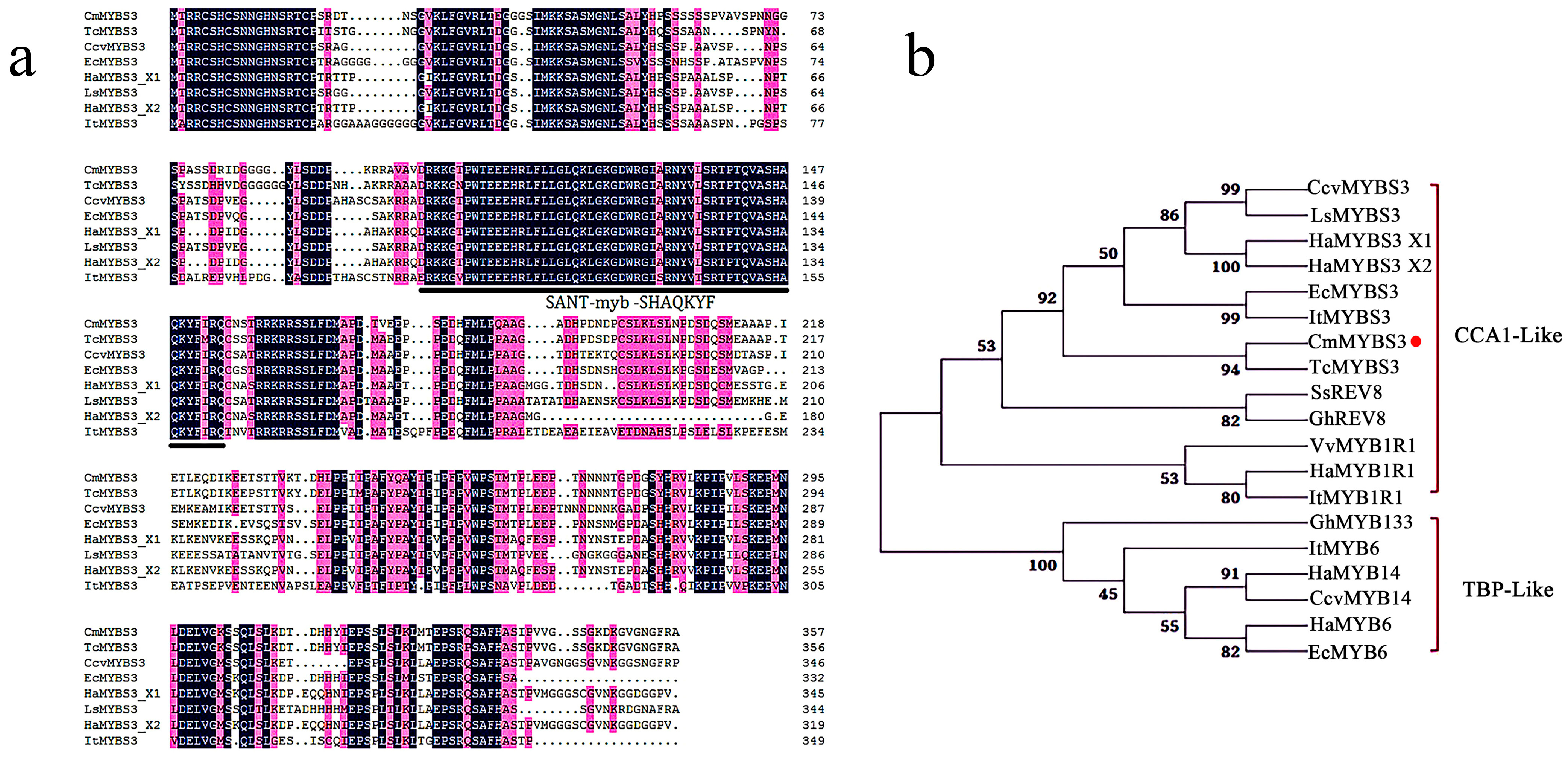
CmMYBS3 is a gene with a length of 1151 bp, containing an open reading frame (ORF) that encodes a protein consisting of 358 amino acids. The relative molecular weight of CmMYBS3 protein was predicted to be 38992.64 Da, the isoelectric point was 7.72, the instability index was 52.27, the grand average hydrophilicity was −0.660, and the aliphatic index was 65.39 according to the ExPASy website (Table S2). The functional domain of CmMYBS3 protein was predicted using the NCBI CD-search tool, and it was identified as containing the SANT-MYB-SHAQKYE functional domain (Figure 1a). Phylogenetic analysis of MYB proteins revealed that CmMYBS3 exhibits the highest degree of homology with TcMYBS3 and is classified as a member of the MYB CCA1-like family (Figure 1b).

3.2. Analysis of the Expression Level of CmMYBS3

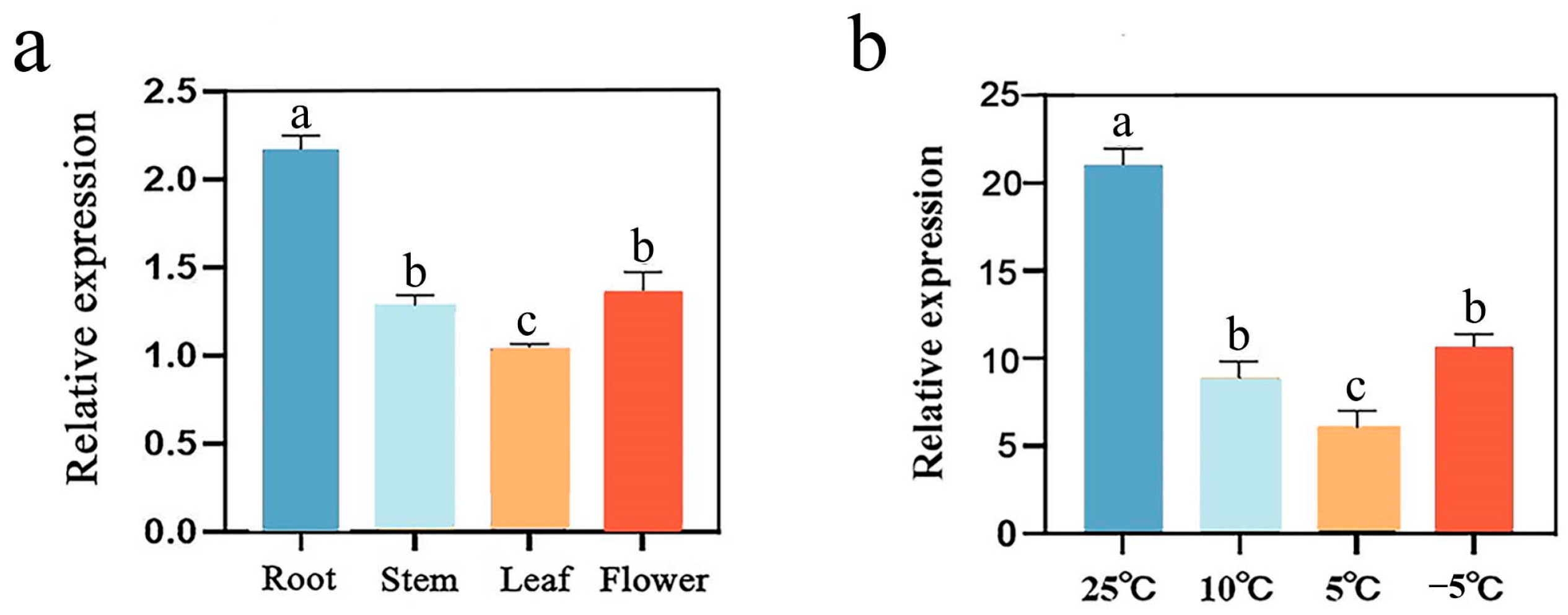
The CmMYBS3 gene is expressed in various organ of the ‘Yingjie’, including the roots, stems, flowers, and leaves. Notably, the expression level CmMYBS3 is highest in the roots (2.15), followed by flowers and stems (Figure 2a). To investigate the expression characteristics of the CmMYBS3 gene under low temperature stress, the ‘Yingjie’ plants were subjected to low-temperature treatment. The results indicated that the expression level of CmMYBS3 initially decreased and subsequently increased. At 5 °C, the expression level of CmMYBS3 was at its lowest. At −5 °C, the expression level of CmMYBS3 increased slightly (Figure 2b). These results suggest that low temperature significantly affects the expression of CmMYBS3 gene and plays an important role in the cold stress response of ‘Yingjie’.

3.3. Analysis of Subcellular Localization and Transcriptional Activation Activity of CmMYBS3

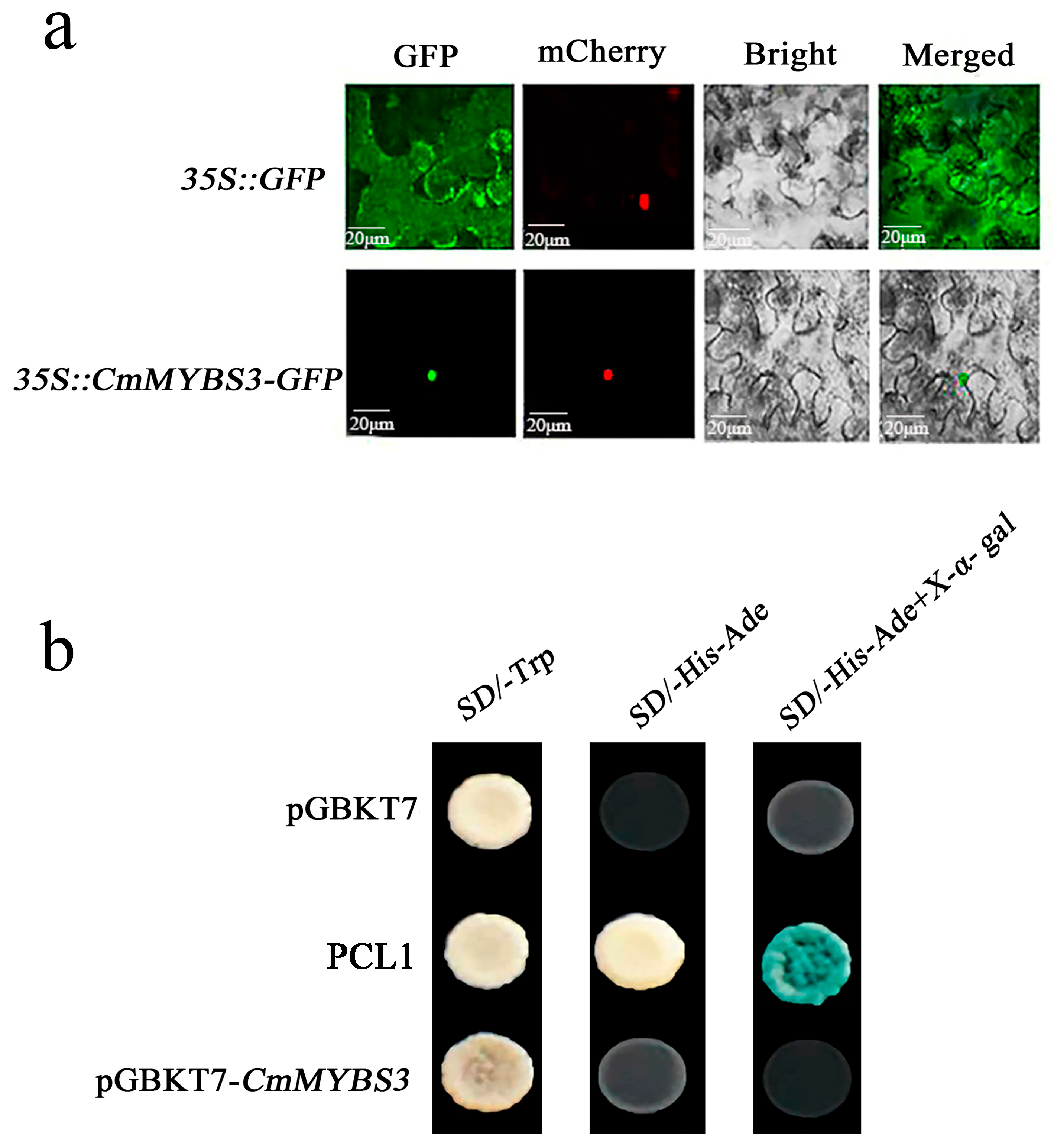
To analyze the subcellular localization of CmMYBS3 protein, the Agrobacterium strain harboring the 35S::CmMYBS3-GFP fusion protein was infiltrated into tobacco leaves. The results demonstrated that 35S::CmMYBS3-GFP emitted a strong green fluorescence signal exclusively in the cell nucleus, whereas the positive control 35S::GFP exhibited uniformly distributed fluorescence throughout the entire cell (Figure 3a). These findings confirm that the CmMYBS3 protein is localized specifically in the cell nucleus. The transcriptional activation activity of CmMYBS3 was analyzed using yeast self-activation assay experiments. As shown in Figure 3b, all yeast cells grew robustly on the SD/-Trp medium, suggesting that the pGBKT7-CmMYBS3 plasmid had been successfully transformed into the yeast strain. The transformed bacterial solution was plated onto the SD/-His-Ade+X-α-gal medium. It was observed that the pGBKT7-CmMYBS3 colonies failed to grow and did not exhibit a blue coloration. Conversely, the positive control PCL1 formed colonies that grew successfully and displayed a blue color, suggesting that the transcription factor CmMYBS3 lacks transcriptional activation activity.

3.4. Screening and Identification of CmMYBS3 Overexpression Lines

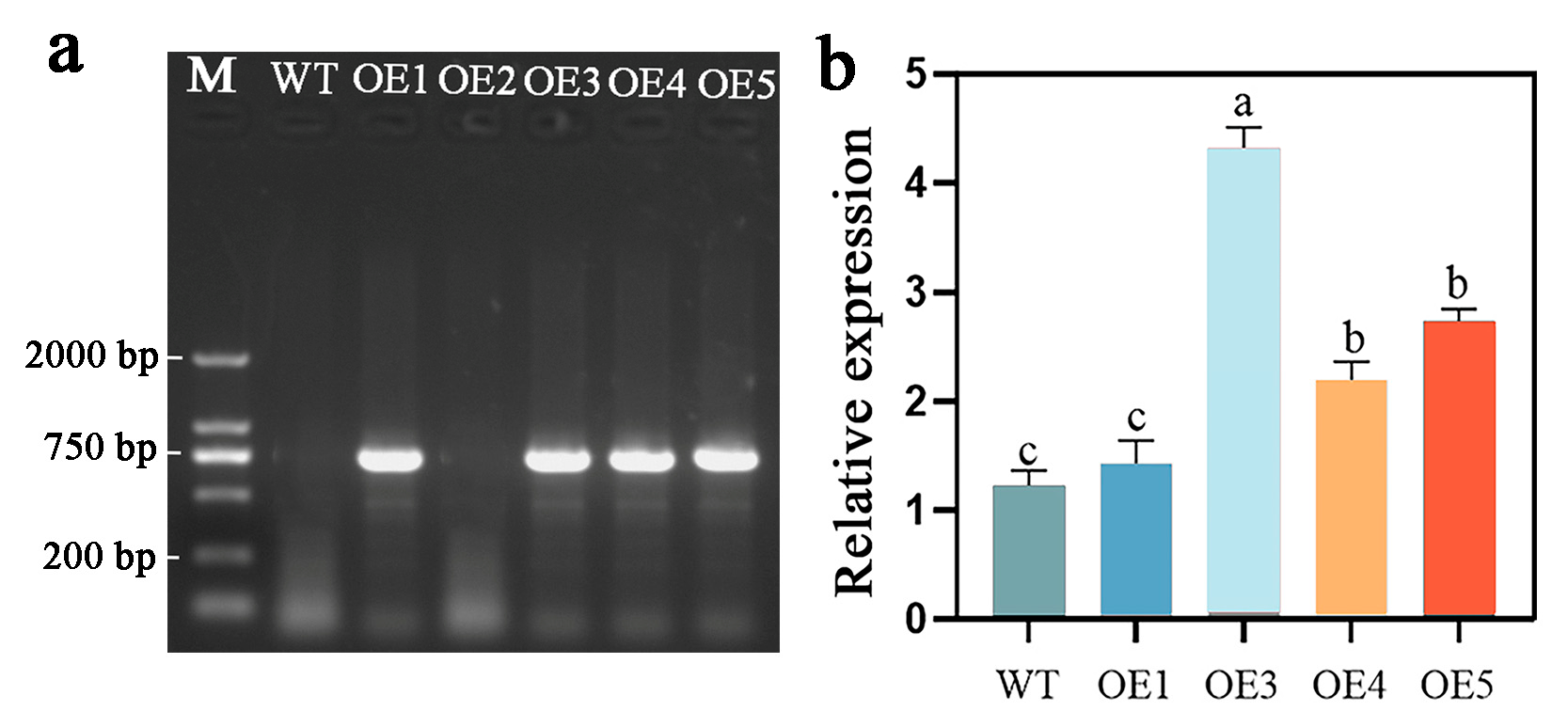
An overexpression vector was constructed and Agrobacterium-mediated transformation was performed. Consequently, five independent transgenic seedlings (designated as OE1, OE2, OE3, OE4, and OE5) were successfully obtained. DNA was extracted independently from each seedling. PCR analysis revealed the presence of specific bands in the OE1, OE3, OE4, and OE5 lines, whereas no bands were detected in OE2 and the WT lines (Figure 4a). At the same time, we analyzed the expression levels of CmMYBS3 in each seedling. Our results showed that the expression levels of CmMYBS3 in the OE3, OE4, and OE5 lines were significantly higher than those in the WT. Notably, the relative expression level of CmMYBS3 in the OE3 line was 4.20 times higher than that in the WT (Figure 4b). These findings further confirm that the OE3, OE4, and OE5 lines are overexpression lines.

3.5. Changes in ROS Accumulation and Antioxidant Enzyme Activities in the CmMYBS3 Overexpressing Line Under Low-Temperature Stress

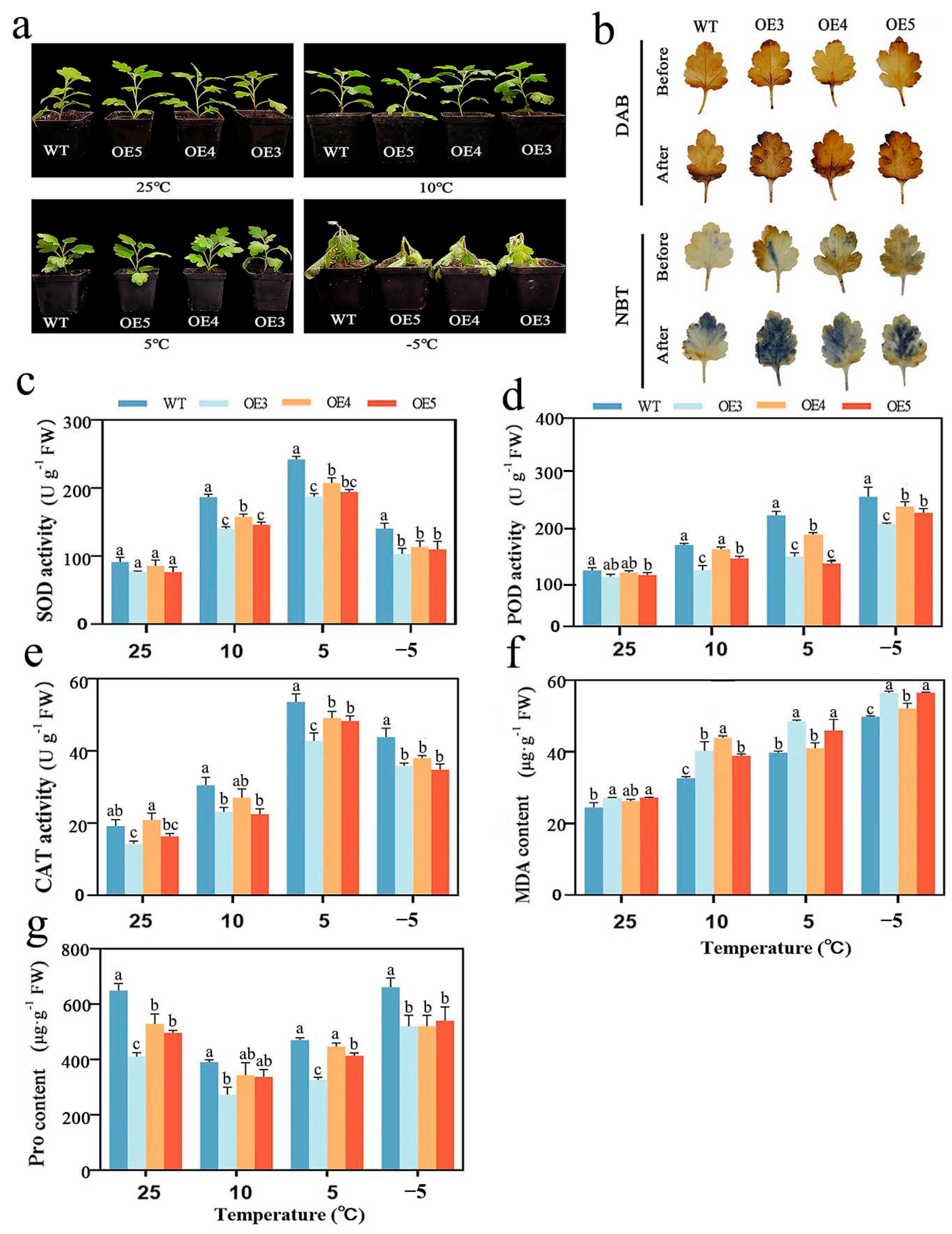
As the temperature decreased, the degree of injury in both the overexpression lines and the WT plants was significantly increased. At 5 °C, the leaves of the overexpression lines became markedly softer and drooped, with an increased angle at the leaf axil compared to the WT plants. When the temperature dropped to −5 °C, the CmMYBS3 overexpression lines displayed severe wilting (Figure 5a). Following low-temperature stress treatment and histochemical staining with NBT and DAB, it was observed that the CmMYBS3 overexpression lines exhibited a more intense blue color after NBT staining, indicating a higher accumulation of O2 compared to the WT plants. DAB staining revealed that the leaves of the CmMYBS3 overexpression lines exhibited a dark brown coloration, indicating a significantly higher H2O2 content compared to the WT (Figure 5b). To further investigate the cold resistance of the CmMYBS3 overexpression lines, we analyzed the activities of antioxidant enzymes. At low temperatures (10 °C~−5 °C), the activities of SOD, POD, and CAT in the CmMYBS3 overexpression lines were significantly lower than those in the WT. At 5 °C, the enzymatic activities of SOD, POD, and CAT in the wild-type plants were 1.23-, 1.28-, and 1.37-fold higher than those in the overexpression line OE3, respectively (Figure 5c–e). At the same time, we also measured and analyzed the contents of MDA and Pro in the CmMYBS3 overexpression lines. The MDA content exhibited a gradual increase as the temperature decreased. At −5 °C, the MDA content in the CmMYBS3 overexpression lines was significantly higher than that in the WT. Specifically, the MDA content of OE3 was 57 μg.g−1 FW, which was 1.16 times higher than that of the WT. The proline content first decreased and then increased. At −5 °C, the proline contents in the overexpression lines OE3, OE4, and OE5 were 520.57, 521.35, and 543.25 μg·g−1 FW, respectively, all of which were lower than that in the WT line (Figure 5g). These results suggest that the CmMYBS3 overexpression line exhibits lower cold tolerance compared to the WT.

3.6. Transcriptome Analysis of CmMYBS3 Overexpressing Lines Under Cold Stress

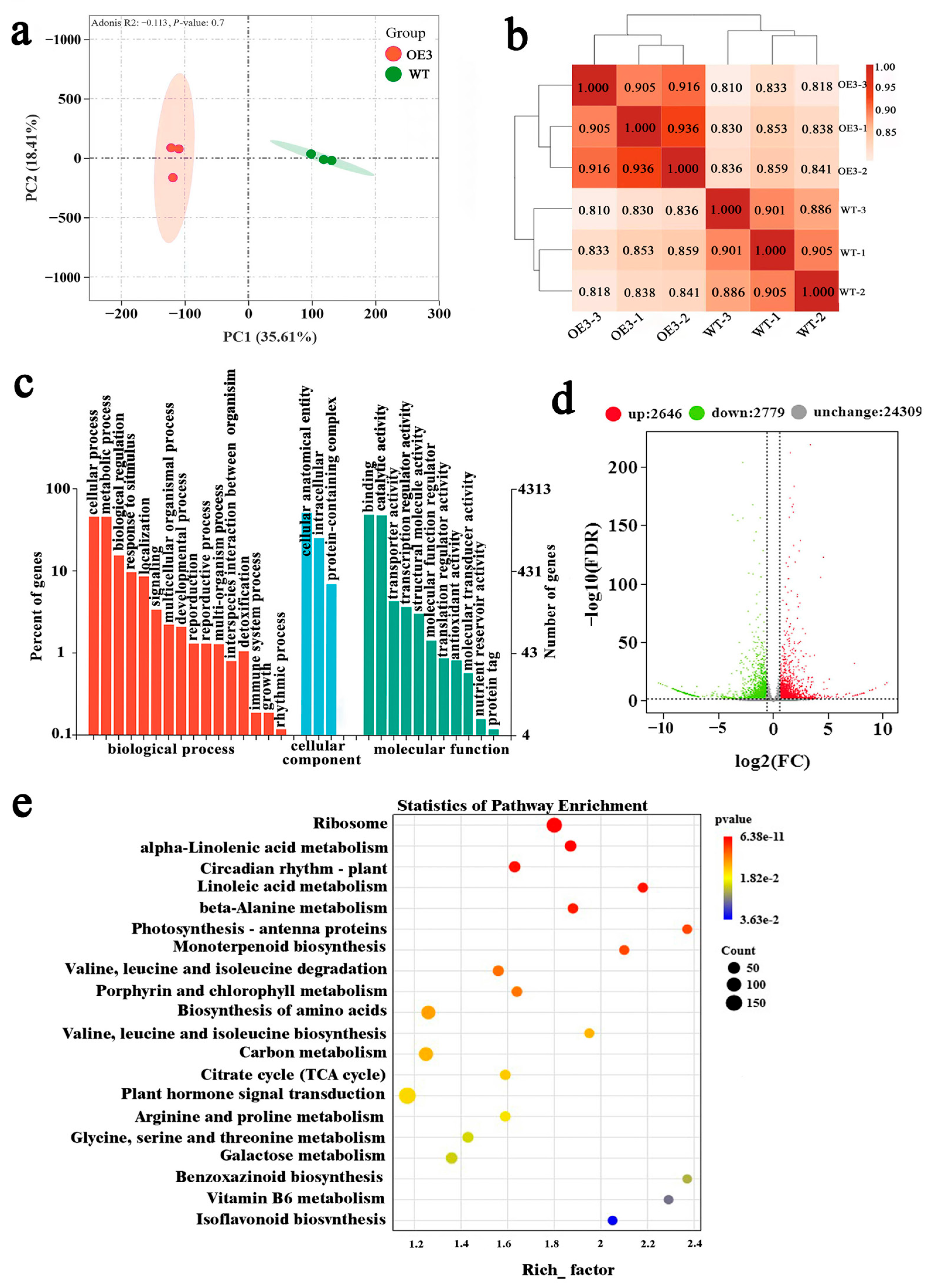
The molecular mechanism of CmMYBS3-mediated cold tolerance regulation was investigated via comprehensive transcriptome profiling of CmMYBS3 overexpression lines and wild-type plants following cold stress treatment. A total of 36.29 Gb of clean data was obtained, with an average of 5.79 Gb per sample and a Q30 value of at least 97.38%. The alignment rate of reads to the reference genome varied between 60.17% and 66.12% across samples (Table S3). Principal Component Analysis (PCA) was conducted to evaluate the similarity among the six samples. The first principal component (PC1) explained 35.61% of the total variance, whereas the second principal component (PC2) accounted for 18.41% of the variance (Figure 6a). The Pearson correlation coefficient was employed to perform the correlation analysis on the samples. The correlations between the three replicates were all higher than 0.810, which demonstrates the high reliability of the data (Figure 6b). A total of 5425 differentially expressed genes (DEGs) were identified between CmMYBS3 overexpression lines and WT plants. Specifically, 2646 genes were upregulated and 2779 genes were downregulated (Figure 6d). GO enrichment analysis revealed that the DEGs were significantly enriched and annotated into three main categories: “biological process”, “cellular component”, and “molecular function”. Specifically, 1920 DEGs were enriched in “biological process”, 2776 DEGs were enriched in “cellular component”, and 3468 DEGs were enriched in “molecular function” (Table S4). Notably, the DEGs were predominantly enriched in the cellular anatomical entity within the cellular component category, cellular processes within the biological process category, and binding functions within the molecular function category (Figure 6c). KEGG enrichment analysis revealed significant alterations in pathways associated with plant development and stress response, including “plant hormone signal transduction”, “circadian rhythm—plant”, “beta-Alanine metabolism”, “alpha-Linolenic acid metabolism”, “biosynthesis of amino acids”, “carbon metabolism”, and “arginine and proline metabolism”, as well as “monoterpenoid biosynthesis” (Figure 6e). These findings suggest that under low-temperature stress, CmMYBS3 is involved in multiple metabolic pathway reactions.

3.7. Validation of Transcriptome Data

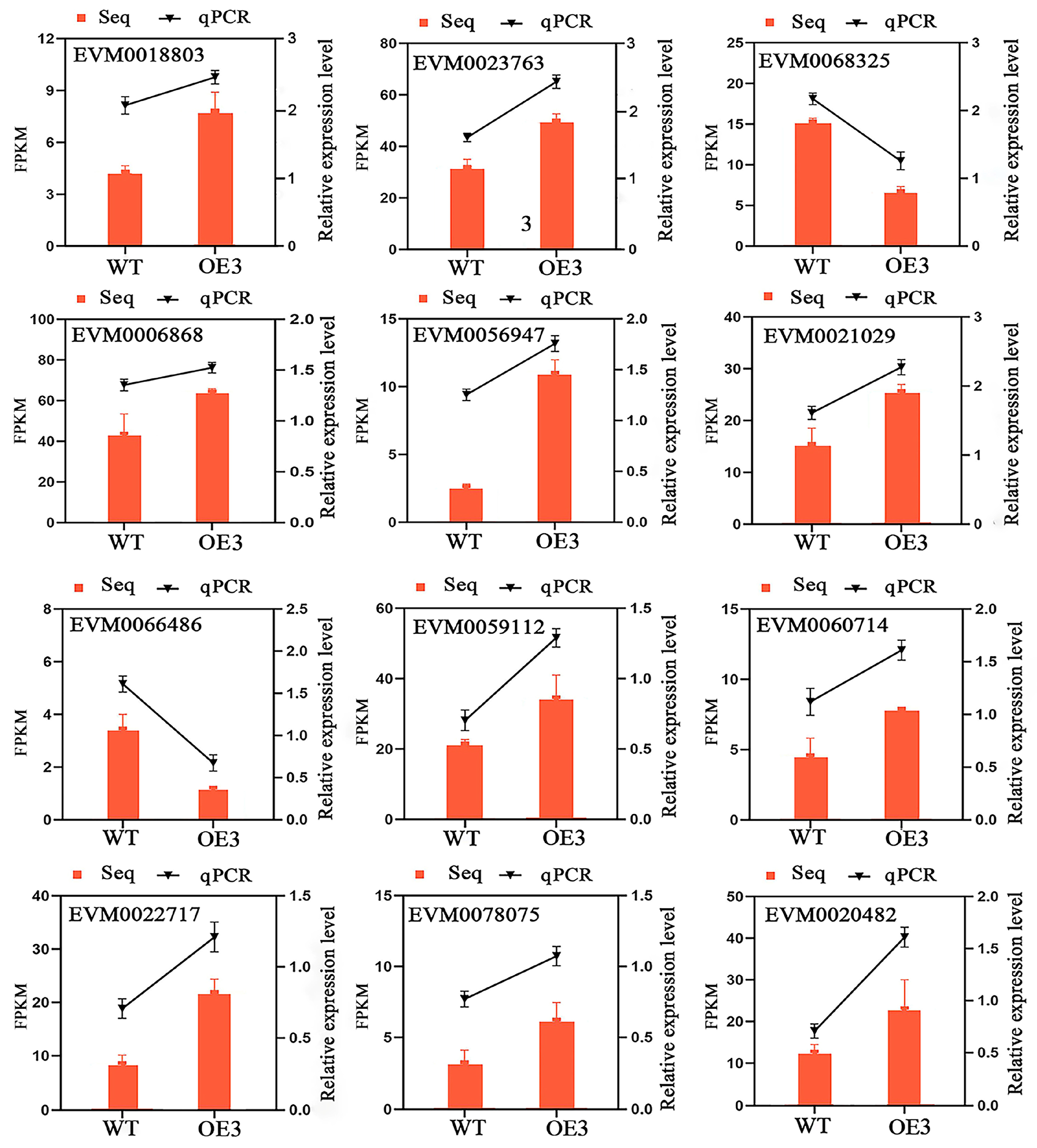
Twelve genes including members of the CmbHLH, CmMYB, and CmWRKY transcription factor families were randomly selected for qRT-PCR validation (Table S1). At 4 °C, the qRT-PCR results demonstrated that the expression levels of the EVM0068325 and EVM0066486 genes in the CmMYBS3 overexpression lines were reduced compared to those in the WT. In contrast, the expression levels of the EVM0018803, EVM0023763, EVM0006868, EVM0056947, EVM0021029, EVM0059112, EVM0060714, EVM0022717, EVM0078075, and EVM0020482 genes were increased (Figure 7). These findings are consistent with the trends observed in the FPKM data from the transcriptome analysis, thereby reinforcing the reliability of the results.

4. Discussion

Low-temperature stress is a critical abiotic stress factor that significantly affects plant growth and development [25,26]. Under low-temperature conditions, the stability of the plant cell membrane system is initially impaired. The phase transition of membrane lipids induces structural damage to the membranes, which in turn results in cellular substance leakage. Meanwhile, low temperatures disrupt the normal metabolic processes in plants, leading to an imbalance in the electron transport chain and a substantial accumulation of ROS. The excessive production of ROS intensifies oxidative stress, causing damage to biological macromolecules such as proteins, nucleic acids, and lipids. This subsequently impairs cellular structures and functions, and if prolonged or severe, may ultimately result in plant mortality [27]. However, over the course of prolonged evolution, plants have developed a series of complex and sophisticated adaptive survival mechanisms to withstand harsh environmental conditions. For instance, they alleviate the toxic effects of ROS, facilitate the accumulation of osmoregulatory substances, and synthesize antifreeze proteins [28,29,30]. At the molecular regulatory level, transcription factors (TFs) serve as pivotal hubs in modulating plant cold tolerance. The TFs specifically recognize and bind to the cis-acting elements of downstream target genes, thereby activating or repressing the expression of associated genes and collectively regulating the aforementioned physiological and biochemical processes [31,32]. The transcription factors involved in plant cold stress responses include MYB, bHLH, ICE, and others. Among these, the MYB family has garnered significant attention owing to its frequent appearance in studies exploring cold resistance mechanisms [33]. The study by Liao et al. [34] revealed that soybean plants overexpressing the GmMYB76 and GmMYB177 genes exhibited significantly elevated proline contents following exposure to low temperature, accompanied by a marked improvement in survival rates. These findings suggest that the GmMYB76 and GmMYB177 genes are critical regulators in the soybean’s response to low temperature stress. The study by Lee and Seo [35] demonstrated that in the myb96 mutant, the expression levels of CBF and its downstream COR genes were markedly decreased. Further investigation revealed that the interaction between MYB96 and the HHP protein suppresses the expression of downstream CBF genes [35]. When ROS accumulate in large quantities within plants, they trigger the plant’s oxidative stress defense mechanisms, activating antioxidant enzymes such as POD, SOD and CAT. These enzymes work together synergistically to form a comprehensive ROS scavenging network. The DgMYB1 and DgMYB2 genes were successfully cloned from chrysanthemum. Compared with the wild type, the DgMYB1/2 overexpression lines exhibited significantly reduced REL and MDA content, along with markedly enhanced activities of antioxidant enzymes, including SOD, POD, and CAT. Additionally, the accumulation contents of osmotic adjustment substances, such as soluble sugar, soluble protein, and Pro, were also significantly increased. These physiological alterations collectively contributed to the enhanced cold tolerance of chrysanthemum [36,37].
In this study, the Agrobacterium-mediated transformation method was utilized to successfully generate the CmMYBS3-overexpression ‘Yingjie’. Following exposure to low-temperature stress, phenotypic analysis demonstrated that, compared with the WT, the angle between the leaf axils of the CmMYBS3 overexpression significantly increased, resulting in a drooping leaf posture (Figure 5a), suggesting its heightened sensitivity to low-temperature conditions. Quan et al. [19] demonstrated that the expression level of CmMYBS3 progressively declined in cold-tolerant chrysanthemum cultivars as the temperature decreased, further supporting its role as a negative regulator of cold tolerance in chrysanthemum. The activities of SOD, POD, and CAT in the CmMYBS3 overexpression lines were significantly lower compared to those in the WT. Furthermore, the relative expression analysis of CmSOD, CmPOD, and CmCAT revealed that their transcriptional levels in the CmMYBS3 overexpression lines were also significantly reduced relative to those in the WT (Figure S1). Based on these findings, it can be inferred that the CmMYBS3 overexpression line suppresses the antioxidant capacity, thereby exacerbating membrane lipid peroxidation damage and reducing the plant’s tolerance to low-temperature stress.
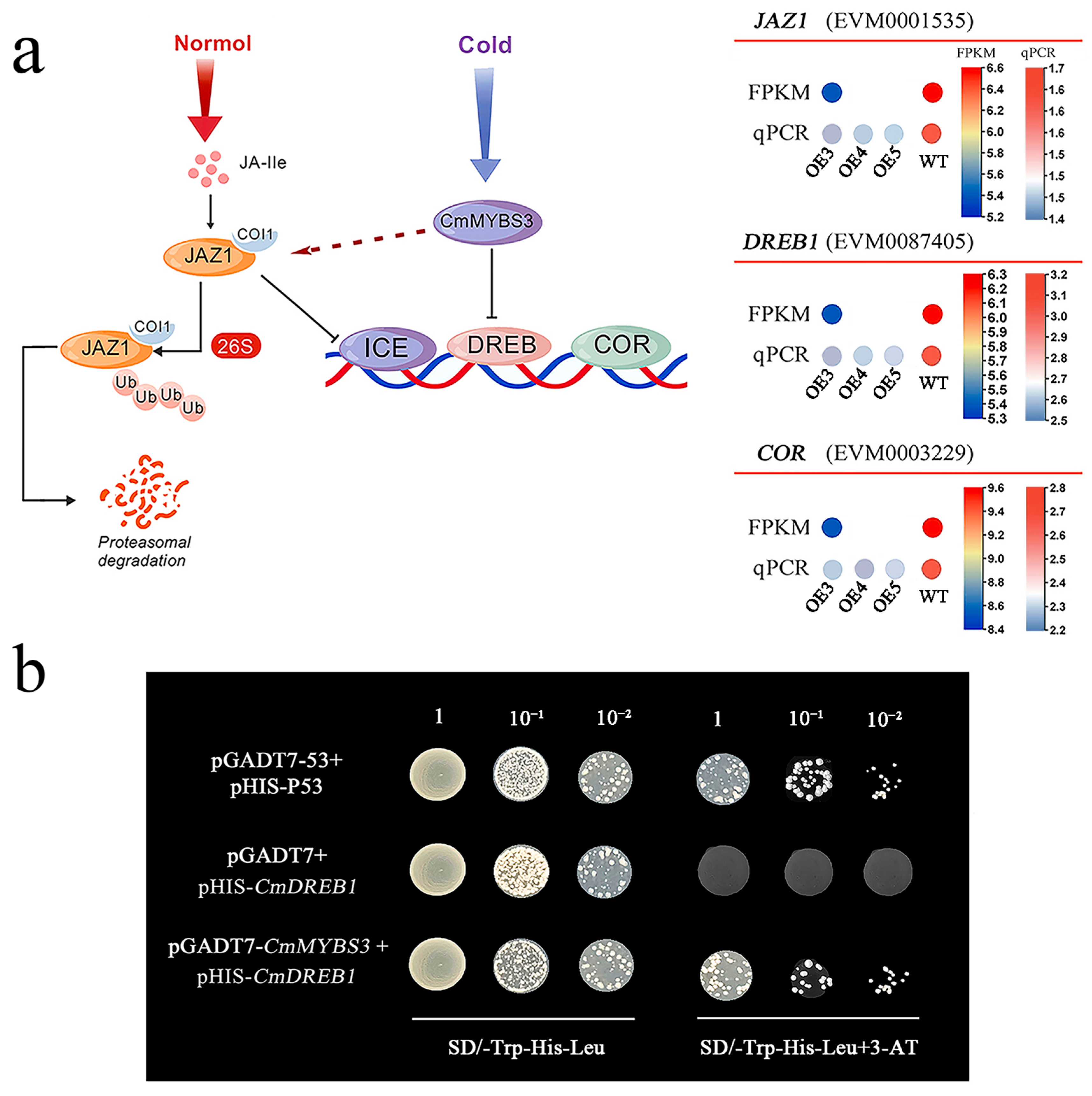
The ICE-CBF/DREB-COR signaling pathway is widely recognized as one of the most extensively studied and well-documented regulatory pathways in the field of cold tolerance. This pathway utilizes the inducible transcription factor ICE (Inducer of CBF Expression) as an upstream activation element. Upon perception of low-temperature signals, ICE activates the expression of CBF (C-repeat binding factor) or DREB (dehydration responsive element binding) transcription factors. The activated CBF/DREB then binds to the CRT/DRE cis-acting element located in the promoter region of downstream COR (cold-responsive) genes, thereby promoting the expression of COR genes and enhancing plant cold tolerance [38]. In Arabidopsis thaliana, DREB/CBF proteins are classified into six subgroups according to their binding domains. Among these, the three genes, DREB1B/CBF1, DREB1A/CBF3, and DREB1C/CBF2, are capable of responding to low-temperature signals. Studies have demonstrated that under cold stress conditions, transgenic Arabidopsis plants overexpressing the DREB1B/CBF1 or DREB1C/CBF2 genes exhibit significantly higher survival rates compared to wild-type plants [39]. Ectopic overexpression of ScZAT1 in Arabidopsis markedly weakened plant freezing resistance. Functional studies demonstrated that ScZAT1 directly binds to the promoter of AtCBF1 and represses its transcription. Furthermore, the upstream transcription factor ScMYB11L specifically interacts with the ScZAT1 promoter to negatively regulate its expression, thereby ultimately enhancing plant cold tolerance [40]. Under the induction of exogenous methy jasmonic acid, the expression level of the COR gene in wheat was significantly upregulated. Further investigation demonstrated that under low-temperature stress conditions, the antioxidant enzyme including CAT, SOD, and POD in COR overexpressing wheat plants exhibited markedly enhanced activity compared to those in WT plants [41]. In the low-temperature regulation network, jasmonic acid (JA) has a significant impact on the ICE-CBF/DREB-COR pathway. When plants do not perceive the JA signal, the (JASMONATE ZIM-DOMAIN 1) JAZ1 protein is highly expressed. It can interact with the ICE1 of the cold signal pathway, thereby inhibiting the transcriptional activation activity of ICE1 on downstream CBF genes [42,43]. Under low-temperature stress conditions, the biosynthesis pathway of JA in plants is rapidly activated, catalyzing the synthesis of the key signaling molecule jasmonoyl-isoleucine (JA-Ile). JA-Ile functions as a specific ligand that efficiently binds to the F-box protein CORONATINE INSENSITIVE 1 (COI1), inducing a conformational change in COI1 [44]. The altered COI1 subsequently forms a stable co-receptor complex with JAZ1 proteins. This complex triggers the degradation of JAZ1 proteins via the 26S proteasome-mediated ubiquitination process [45]. The degradation of JAZ1 proteins effectively alleviates their inhibitory effect on ICE transcription factors, thereby initiating the expression of downstream cold-responsive genes and enabling plants to acquire cold tolerance (Figure 8). Hu et al. [46] demonstrated that the overexpression of JAZ1 and JAZ4 significantly downregulated the expression levels of CBF genes by inhibiting ICE, thereby reducing the cold stress tolerance of Arabidopsis thaliana. This study revealed that the expression levels of CmDREB1 and CmCOR were reduced in the CmMYBS3 overexpression lines. It is possible that the expression of CmMYBS3 suppresses the expression of CmDREB1, consequently inhibiting the expression of downstream CmCOR genes. We performed a yeast single-hybrid experiment with CmMYBS3 as the prey and the CmDREB1 promoter as the bait. All yeast cells exhibited robust growth on SD/-Trp/-His/-Leu medium. However, upon the addition of 3-AT to the medium, only the yeast cells harboring both the prey and the bait demonstrated normal growth (Figure 8b), indicating that CmMYBS3 may directly interact with the CmDREB1 promoter. These preliminary findings suggest that CmMYBS3 may decrease the cold tolerance of ground cover chrysanthemum by repressing the expression of CmDREB1. Nevertheless, whether CmMYBS3 directly binds to the CmDREB promoter and represses its transcription remains to be experimentally validated, including electrophoretic mobility shift assay (EMSA) and other functional validation tests.
At the same time, it was observed that the expression level of CmJZA1 was upregulated, suggesting that CmMYBS3 may positively regulate the expression of CmJAZ1. However, no significant changes were detected in the expression level of CmICE1 between the CmMYBS3 overexpression lines and the wild type. These results indicate that CmMYBS3 does not suppress the expression of CmCOR via the CmJZA1 pathway to reduce cold tolerance (Figure 8a). This finding offers critical insights into the regulatory mechanism of CmMYBS3 within the plant cold tolerance network.

5. Conclusions

In summary, the cold-related gene CmMYBS3 was isolated from the ground cover chrysanthemum ‘Yingjie’, and its overexpression resulted in increased sensitivity to cold stress in the ground cover chrysanthemum. Transcriptome and yeast one-hybrid data indicate that CmMYBS3 can bind to the CmDREB1 promoter and may potentially regulate its transcriptional level, thereby increasing sensitivity to low temperatures. We will further validate CmMYBS3 and continue to explore its relationship with the JA pathway. This will enhance our understanding of the role of the CmMYBS3 protein in cold stress responses. This finding expands the current understanding of the molecular regulatory network underlying chrysanthemum cold response. Moreover, it furnishes valuable genetic resources and a theoretical foundation for cold-tolerant germplasm development and molecular breeding in chrysanthemum.

Supplementary Materials

The following supporting information can be downloaded at https://www.mdpi.com/article/10.3390/horticulturae12060711/s1: Figure S1: Relative expression levels of genes related to ROS homeostasis in wild type and CmMYBS3 overexpressed lines (OE3, OE4, and OE5) under cold stress condition; Table S1: Primer names and sequences; Table S2: Physical and chemical characters of CmMYBS3; Table S3: Comprehensive overview of transcriptomic data; Table S4: Gene Ontology classification of DEGs.

Author Contributions

J.Z.: Investigation, Writing—original draft, Writing—review and editing, Methodology, Validation. X.M.: Validation, Writing—review and editing. Y.Q.: Investigation, Writing—review and editing. P.L.: Methodology, Writing—original draft, Writing—review and editing. X.L.: Investigation, Software, Writing—original draft. Y.W.: Software, Writing—original draft. Z.L.: Investigation, Methodology, Software, Writing—original draft. C.D. and H.L.: Investigation, Methodology, Software, Writing—original draft. R.G. and L.Z.: Conceptualization, Funding acquisition, Investigation, Resources, Writing—original draft, Writing—review and editing. All authors have read and agreed to the published version of the manuscript.

Funding

This work is supported by the Science and Technology Department of Jilin Province (YDZJ202501ZYTS556), (20260601065RC).

Institutional Review Board Statement

Not applicable.

Data Availability Statement

The raw transcriptome data used during this study has been deposited in NCBI SRA with the accession number PRJNA1293879. GenBank accession number for the nucleotide sequence of the CmMYBS3 gene: BankIt2984616 Seq1 PV982153 (The data will be released in August 2026).

Conflicts of Interest

The authors declare no conflict of interest.

References

  1. Doğru, A.; Çakirlar, H. Effects of leaf age on chlorophyll fluorescence and antioxidant enzymes activity in winter rapeseed leaves under cold acclimation conditions. Braz. J. Bot. 2020, 43, 11–20. [Google Scholar] [CrossRef]
  2. Zhou, L.; Ullah, F.; Zou, J.; Zeng, X. Molecular and physiological responses of plants that enhance cold tolerance. Int. J. Mol. Sci. 2025, 26, 1157. [Google Scholar] [CrossRef]
  3. Ihtisham, M.; Hasanuzzaman, M.; El-Sappah, A.H.; Zaman, F.; Khan, N.; Raza, A.; Sarraf, M.; Khan, S.; Abbas, M.; Hassan, M.J. Primary plant nutrients modulate the reactive oxygen species metabolism and mitigate the impact of cold stress in overseeded perennial ryegrass. Front. Plant Sci. 2023, 14, 1149832. [Google Scholar] [CrossRef]
  4. Ding, Y.; Shi, Y.; Yang, S. Advances and challenges in uncovering cold tolerance regulatory mechanisms in plants. New. Phytol. 2019, 222, 1690–1704. [Google Scholar] [CrossRef]
  5. Liang, X.; Li, Y.; Yao, A.; Liu, W.; Yang, T.; Zhao, M.; Zhang, B.; Han, D. Overexpression of MxbHLH18 increased iron and high salinity stress tolerance in Arabidopsis thaliana. Int. J. Mol. Sci. 2022, 23, 8007. [Google Scholar] [CrossRef]
  6. El Caid, M.B.; Lachheb, M.; Lagram, K.; Wang, X.; Serghini, M.A. Ecotypic variation and environmental influence on saffron (Crocus sativus L.) vegetative growth: A multivariate performance analysis. J. Appl. Res. Med. Aromat. Plants 2024, 43, 100601. [Google Scholar] [CrossRef]
  7. Shi, Y.; Huang, J.; Sun, T.; Wang, X.; Zhu, C.; Ai, Y.; Gu, H. The precise regulation of different COR genes by individual CBF transcription factors in Arabidopsis thaliana. J. Integr. Plant Biol. 2017, 59, 118–133. [Google Scholar] [CrossRef]
  8. Dubos, C.; Stracke, R.; Grotewold, E.; Weisshaar, B.; Martin, C.; Lepiniec, L. MYB transcription factors in Arabidopsis. Trends Plant Sci. 2010, 15, 573–581. [Google Scholar] [CrossRef] [PubMed]
  9. Feng, K.; Hou, X.L.; Xing, G.M.; Liu, J.X.; Duan, A.Q.; Xu, Z.S.; Li, M.Y.; Zhuang, J.; Xiong, A.S. Advances in AP2/ERF super-family transcription factors in plant. Crit. Rev. Biotechnol. 2020, 40, 750–776. [Google Scholar] [CrossRef] [PubMed]
  10. Ma, F.; Zhou, H.; Yang, H.; Huang, D.; Xing, W.; Wu, B.; Li, H.; Hu, W.; Song, S.; Xu, Y. WRKY transcription factors in passion fruit analysis reveals key PeWRKYs involved in abiotic stress and flavonoid biosynthesis. Int. J. Biol. Macromol. 2024, 256, 128063. [Google Scholar] [CrossRef] [PubMed]
  11. Song, C.; Wu, M.; Zhou, Y.; Gong, Z.; Yu, W.; Zhang, Y.; Yang, Z. NAC-mediated membrane lipid remodeling negatively regulates fruit cold tolerance. Hortic. Res. 2022, 9, uhac039. [Google Scholar] [CrossRef]
  12. Zhang, H.; Guo, J.; Chen, X.; Zhou, Y.; Pei, Y.; Chen, L.; Haq, S.; Zhang, M.; Gong, H.; Chen, R. Transcription factor CabHLH035 promotes cold resistance and homeostasis of reactive oxygen species in pepper. Hortic. Plant J. 2024, 10, 823–836. [Google Scholar] [CrossRef]
  13. Li, J.; Han, G.; Sun, C.; Sui, N. Research advances of MYB transcription factors in plant stress resistance and breeding. Plant Signal. Behav. 2019, 14, 1613131. [Google Scholar] [CrossRef]
  14. Li, W.; Zhong, J.; Zhang, L.; Wang, Y.; Song, P.; Liu, W.; Li, X.; Han, D. Overexpression of a Fragaria vesca MYB transcription factor gene (FvMYB82) increases salt and cold tolerance in Arabidopsis thaliana. Int. J. Mol. Sci. 2022, 23, 10538. [Google Scholar] [CrossRef]
  15. Li, C.; Ng, C.K.Y.; Fan, L.M. MYB transcription factors, active players in abiotic stress signaling. Environ. Exp. Bot. 2015, 114, 80–91. [Google Scholar] [CrossRef]
  16. Su, C.F.; Wang, Y.C.; Hsieh, T.H.; Lu, C.A.; Tseng, T.H.; Yu, S.M. A novel MYBS3-dependent pathway confers cold tolerance in rice. Plant Physiol. 2010, 153, 145–158. [Google Scholar] [CrossRef]
  17. Ma, Q.; Dai, X.; Xu, Y.; Guo, J.; Liu, Y.; Chen, N.; Xiao, J.; Zhang, D.; Xu, Z.; Zhang, X. Enhanced tolerance to chilling stress in OsMYB3R-2 transgenic rice is mediated by alteration in cell cycle and ectopic expression of stress genes. Plant Physiol. 2009, 150, 244–256. [Google Scholar] [CrossRef]
  18. Liu, X.; Zhang, S.; Sun, M.; Guo, Y.; Zhao, S.; Zhou, X.; Bai, X.; Dai, K.; Li, H.; Yuan, X. SiMYBS3, encoding a Setaria italica heterosis-related MYB transcription factor, confers drought tolerance in Arabidopsis. Int. J. Mol. Sci. 2023, 24, 5418. [Google Scholar] [CrossRef] [PubMed]
  19. Quan, Y.; He, Z.; Zhao, L.; Ren, M.; Yang, W.; Zhang, J.; Zhang, F.; Yin, M.; Wang, Y.; Lian, M. RNA-Seq analysis of ground-cover chrysanthemum provides insights into the basis of natural low-temperature stress. Biol. Plant. 2023, 67, 224–233. [Google Scholar] [CrossRef]
  20. Wang, X.; Wang, Y.; Jiang, Y.; Wang, H.; Zhou, L.; Li, F.; Wang, L.; Jiang, J.; Chen, F.; Chen, S. Transcription factor CmHSFA4–CmMYBS3 complex enhances salt tolerance in chrysanthemum by repressing CmMYB121 expression. Plant Physiol. 2024, 195, 3119–3135. [Google Scholar] [CrossRef] [PubMed]
  21. Wang, Y.; Zeng, Q.; Tian, Y.; Deng, Q.; Xiao, R.; Luo, X.; Zeng, T.; Zhang, F.; Zhang, L.; Jiang, B. The histone deacetylase SRT2 enhances the tolerance of chrysanthemum to low temperatures through the ROS scavenging system. Plant Physiol. Biochem. 2024, 207, 321–341. [Google Scholar] [CrossRef] [PubMed]
  22. Gao, R.; Yan, Y.; Yang, X.; Wang, Y.; Fang, W.; Chen, S.; Jiang, J.; Wang, H.; Chen, F. Cle2f1 overexpression enhances plant growth in Chrysanthemum lavandulifolium (Fisch. ex Trautv.) makino. Plant Mol. Biol. Rep. 2018, 36, 341–349. [Google Scholar] [CrossRef]
  23. Guo, W.; Chen, R.; Gong, Z.; Yin, Y.; Ahmed, S.; He, Y. Exogenous abscisic acid increases antioxidant enzymes and related gene expression in pepper (Capsicum annuum) leaves subjected to chilling stress. Genet. Mol. Res. 2012, 11, 4063–4080. [Google Scholar] [CrossRef] [PubMed]
  24. Tingting, W.; Jie, Z.; Yuqing, H.; Yanchao, X.; Khan, A.; Pu, L.; Yuhong, W.; Kunbo, W.; Fang, L.; Xiaoyan, C. GhGTG1 enhances cold stress tolerance by improving sensitivity to ABA in cotton and Arabidopsis. Environ. Exp. Bot. 2023, 208, 105256. [Google Scholar] [CrossRef]
  25. Choudhury, F.K.; Rivero, R.M.; Blumwald, E.; Mittler, R. Reactive oxygen species, abiotic stress and stress combination. Plant J. 2017, 90, 856–867. [Google Scholar] [CrossRef]
  26. Mehrotra, S.; Verma, S.; Kumar, S.; Kumari, S.; Mishra, B.N. Transcriptional regulation and signalling of cold stress response in plants: An overview of current understanding. Environ. Exp. Bot. 2020, 180, 104243. [Google Scholar] [CrossRef]
  27. Xu, L.; Xiang, G.; Sun, Q.; Ni, Y.; Jin, Z.; Gao, S.; Yao, Y. Melatonin enhances salt tolerance by promoting MYB108A-mediated ethylene biosynthesis in grapevines. Hortic. Res. 2019, 6, 114. [Google Scholar] [CrossRef]
  28. Zulfiqar, F.; Akram, N.A.; Ashraf, M. Osmoprotection in plants under abiotic stresses: New insights into a classical phenomenon. Planta 2020, 251, 3. [Google Scholar] [CrossRef]
  29. Luo, H.; Liang, X.F.; Li, J.; Zhang, Y.; Xiao, Q.; Peng, B.; Zhang, Z. Effect of long-chain saturated and unsaturated fatty acids on hypothalamic fatty acid sensing in Chinese perch (Siniperca chuatsi). Comp. Biochem. Physiol. B 2020, 241, 110395. [Google Scholar] [CrossRef] [PubMed]
  30. Kyu, S.Y.; Naing, A.H.; Pe, P.P.W.; Park, K.I.; Kim, C.K. Tomato seeds pretreated with antifreeze protein type I (AFP I) promotes the germination under cold stress by regulating the genes involved in germination process. Plant Signal. Behav. 2019, 14, 1682796. [Google Scholar] [CrossRef]
  31. Liu, X.; Bulley, S.M.; Varkonyi-Gasic, E.; Zhong, C.; Li, D. Kiwifruit bZIP transcription factor AcePosF21 elicits ascorbic acid biosynthesis during cold stress. Plant Physiol. 2023, 192, 982–999. [Google Scholar] [CrossRef]
  32. Han, D.; Du, M.; Zhou, Z.; Wang, S.; Li, T.; Han, J.; Xu, T.; Yang, G. An NAC transcription factor gene from Malus baccata, MbNAC29, increases cold and high salinity tolerance in Arabidopsis. In Vitro Cell. Dev. Biol.-Plant 2020, 56, 588–599. [Google Scholar] [CrossRef]
  33. Wang, Z.; Peng, Z.; Khan, S.; Qayyum, A.; Rehman, A.; Du, X. Unveiling the power of MYB transcription factors: Master regulators of multi-stress responses and development in cotton. Int. J. Biol. Macromol. 2024, 276, 133885. [Google Scholar] [CrossRef]
  34. Liao, Y.; Zou, H.F.; Wang, H.W.; Zhang, W.K.; Ma, B.; Zhang, J.S.; Chen, S.Y. Soybean GmMYB76, GmMYB92, and GmMYB177 genes confer stress tolerance in transgenic Arabidopsis plants. Cell Res. 2008, 18, 1047–1060. [Google Scholar] [CrossRef]
  35. Lee, H.G.; Seo, P.J. The MYB 96–HHP module integrates cold and abscisic acid signaling to activate the CBF–COR pathway in Arabidopsis. Plant J. 2015, 82, 962–977. [Google Scholar] [CrossRef]
  36. Chen, Q.; Gao, K.; Xu, Y.; Sun, Y.; Pan, B.; Chen, D.; Luo, C.; Cheng, X.; Liu, H.; Huang, C. Research advance on cold tolerance in chrysanthemum. Front. Plant Sci. 2023, 14, 1259229. [Google Scholar] [CrossRef]
  37. Yang, X.; Luo, Y.; Bai, H.; Li, X.; Tang, S.; Liao, X.; Zhang, L.; Liu, Q. DgMYB2 improves cold resistance in chrysanthemum by directly targeting DgGPX1. Hortic. Res. 2022, 9, uhab028. [Google Scholar] [CrossRef] [PubMed]
  38. Akhtar, M.; Jaiswal, A.; Taj, G.; Jaiswal, J.; Qureshi, M.; Singh, N. DREB1/CBF transcription factors: Their structure, function and role in abiotic stress tolerance in plants. J. Genet. 2012, 91, 385–395. [Google Scholar] [CrossRef] [PubMed]
  39. Medina, J.; Catalá, R.; Salinas, J. The CBFs: Three Arabidopsis transcription factors to cold acclimate. Plant Sci. 2011, 180, 3–11. [Google Scholar] [CrossRef]
  40. Feng, M.; Liu, W.; Chen, X.; Huang, L.; Peng, X.; Li, Y.; Gao, S.; Lin, Z.; Xu, L.; Guo, J. A hierarchical ScMYB11L–ScZAT1–ScDREB1A module defines a derepression pathway for cold-response regulation in sugarcane. Plant Stress 2026, 21, 101340. [Google Scholar] [CrossRef]
  41. Repkina, N.; Ignatenko, A.; Holoptseva, E.; MiszalskI, Z.; Kaszycki, P.; Talanova, V. Exogenous methyl jasmonate improves cold tolerance with parallel induction of two cold-regulated (COR) genes expression in Triticum aestivum L. Plants 2021, 10, 1421. [Google Scholar] [CrossRef]
  42. An, J.P.; Wang, X.F.; Zhang, X.W.; You, C.X.; Hao, Y.J. Apple B-box protein BBX37 regulates jasmonic acid mediated cold tolerance through the JAZ-BBX37-ICE1-CBF pathway and undergoes MIEL1-mediated ubiquitination and degradation. New Phytol. 2021, 229, 2707–2729. [Google Scholar] [CrossRef] [PubMed]
  43. Hu, Y.; Jiang, L.; Wang, F.; Yu, D. Jasmonate regulates the inducer of CBF /DRE binding factor1 cascade and freezing tolerance in Arabidopsis. Plant Cell 2013, 25, 2907–2924. [Google Scholar] [CrossRef]
  44. Fonseca, S.; Chini, A.; Hamberg, M.; Adie, B.; Porzel, A.; Kramell, R.; Miersch, O.; Wasternack, C.; Solano, R. (+)-7-iso-Jasmonoyl-L-isoleucine is the endogenous bioactive jasmonate. Nat. Chem. Biol. 2009, 5, 344–350. [Google Scholar] [CrossRef] [PubMed]
  45. Yan, J.; Zhang, C.; Gu, M.; Bai, Z.; Zhang, W.; Qi, T.; Cheng, Z.; Peng, W.; Luo, H.; Nan, F. The Arabidopsis CORONATINE INSENSITIVE1 protein is a jasmonate receptor. Plant Cell 2009, 21, 2220–2236. [Google Scholar] [CrossRef] [PubMed]
  46. Hu, Y.; Jiang, Y.; Han, X.; Wang, H.; Pan, J.; Yu, D. Jasmonate regulates leaf senescence and tolerance to cold stress: Crosstalk with other phytohormones. J. Exp. Bot. 2017, 68, 1361–1369. [Google Scholar] [CrossRef]
Figure 1. Sequence analysis of CmMYBS3. (a): Sequence comparison of CmMYBS3 and MYB homologous proteins from other plant species. Purple indicates no difference, and pink denotes significant differences. (b): Phylogenetic tree analysis of CmMYBS3. (TcMYBS3 ID: GEZ75247.1; CcMYBS3 ID: XP_024970566.1; EcMYBS3 ID: XP_043615384.1; HaMYBS3 ID: XP_021984471.1; LaMYBS3 ID: XP_023729377.1; ItMYBS3 ID: XP_031104989.1; VvMYB1R1 ID:NC_012022.3; HaMYB1R1 ID:NC_035449.2; ItMYB1R1 ID:NC_044923.1;SsREV8 ID:TKY45616.1; GhREV8 ID:XP_016671119.1; GhMYB133 ID: NC_053437.1;ItMYB6 ID: NC_044925.1; EcMYB6 ID: NC_057767.1; HaMYB6 ID: NC_035433.2; HaMYB14 ID: NC_035435.2; CcvMYB14 ID: NC_037529.1). Red dot indicates CmMYBS3; Square bracket indicate clustered groups.
Horticulturae 12 00711 g001
Figure 2. Expression level of CmMYBS3. (a): Expression patterns of CmMYBS3 in different organs. (b): Expression patterns of CmMYBS3 in different temperature treatments. Different letters represent significant difference at p < 0.05 by Tukey–Kramer multiple range test.
Horticulturae 12 00711 g002
Figure 3. Subcellular localization and transcriptional activation activity of CmMYBS3. (a): Subcellular localization of CmMYBS3 in tobacco leaves. (35S::GFP: negative control; DAPI: excitation light at 480 nm; GFP: excitation light at 465 nm (DAPI); Bright: bright field; Merged: GFP with Bright superimposed on the field; scale bar = 20 μm). (b): Transcriptional activation assay of CmMYBS3. PCL1 is a positive control and pGBKT7 is a negative control.
Horticulturae 12 00711 g003
Figure 4. Screening and identification of CmMYBS3 overexpression lines. (a): Detection of DNA levels. OE1, OE2, OE3, OE4, OE5 represents the CmMYBS3 overexpressed lines. WT represents the wild type. (b): Relative expression levels of CmMYBS3. Different lowercase letters in the graphs indicate significant differences (p < 0.05).
Horticulturae 12 00711 g004
Figure 5. Morphology and physiological changes in CmMYBS3 overexpression under low-temperature stress. (a) Morphology of CmMYBS3 overexpression following exposure to low temperature. (b) NBT and DAB staining of CmMYBS3 overexpression after cold stress. (cg) Activity of SOD, POD, and CAT, as well as the content of MDA and Pro in CmMYBS3-overexpressing plants after 2 h of treatment at various temperatures. OE3, OE4, OE5 represents the CmMYBS3-overexpressed lines. Different lowercase letters in the graphs indicate significant differences (p < 0.05).
Horticulturae 12 00711 g005
Figure 6. Analysis of DEGs in CmMYBS3 overexpressed plants under cold stress. (a): PCA plots of WT and CmMYBS3 overexpressed lines. (b): Correlation analysis of sample gene expression levels. (c): GO enrichment analysis of DEGs between wild-type and CmMYBS3 overexpressed plants. The Y and X axes correspond to GO terms and the number of DEGs. (d): Volcano plot of the DEGs between wild-type and CmMYBS3 overexpressed plants. Green and red colors represent downregulated and upregulated genes, respectively. (e): KEGG enrichment of DEGs between wild-type and CmMYBS3 overexpressed plants. The Y axis corresponds to the KEGG pathway, and the X axis shows the enrichment ratio between the number of DEGs enriched in a particular pathway. The color of the dot represents the p value, and the size of the dot represents the number of DEGs mapped to the reference pathway.
Horticulturae 12 00711 g006
Figure 7. Validation of transcriptome data. Relative expression levels of genes in the CmMYBS3 overexpressed lines (OE3). MYB74 (EVM0018803), MYB111 (EVM0023763), MYB306 (EVM006832), MYB15 (EVM0006868, EVM0056947), bHLH148 (EVM0021029), bHLH157 (EVM0066486), WRKY6 (EVM0059112), WRKY24 (EVM0060714), WRKY2 (EVM0020482), ZAT10 (EVM0022717).
Horticulturae 12 00711 g007
Figure 8. (a): Model of the regulatory network of CmMYBS3 in response to cold stress. (b): Yeast one-hybrid assay. CmMYBS3 represses CmDREB1 by directly binding to its promoter. Yeast cell solutions containing different plasmids were diluted at different ratios.
Horticulturae 12 00711 g008
Disclaimer/Publisher’s Note: The statements, opinions and data contained in all publications are solely those of the individual author(s) and contributor(s) and not of MDPI and/or the editor(s). MDPI and/or the editor(s) disclaim responsibility for any injury to people or property resulting from any ideas, methods, instructions or products referred to in the content.