Article

Genetic Diversity and Population Structure of Autochthonous Macedonian Sweet Cherry (Prunus avium L.) Revealed by Whole-Genome Sequencing


by
Goran Barać
1,*,
Viktor Gjamovski
2,*,
Katerina Bandjo Oreshkovikj
2,
Biljana Drvoshanova
2,
Dushko Nedelkovski
2 and
Nikola Saraginovski
3
1
Faculty of Agriculture, University of Novi Sad, Trg Dositeja Obradovića 8, 21000 Novi Sad, Serbia
2
Institute of Agriculture, Ss. Cyril and Methodius University in Skopje, 16ta Makedonska Brigada 3A, 1000 Skopje, North Macedonia
3
Faculty of Agricultural Sciences and Food, Ss. Cyril and Methodius University in Skopje, 16ta Makedonska Brigada 3, 1000 Skopje, North Macedonia
*
Authors to whom correspondence should be addressed.
Horticulturae 2026, 12(6), 681; https://doi.org/10.3390/horticulturae12060681
Submission received: 3 April 2026 / Revised: 25 May 2026 / Accepted: 25 May 2026 / Published: 30 May 2026
(This article belongs to the Section Genetics, Genomics, Breeding, and Biotechnology (G2B2))

Abstract

Sweet cherry (Prunus avium L.) is an economically important fruit species with considerable genetic variability, particularly among autochthonous cultivars. This study aimed to evaluate the genetic diversity and population structure of six indigenous sweet cherry cultivars from the Ohrid region in North Macedonia using whole-genome resequencing. A total of approximately 2.27 million single-nucleotide polymorphisms (SNPs) and 263 thousand insertions and deletions (InDels) were identified, indicating high genomic variability. Population structure and phylogenetic analyses revealed two distinct genetic clusters among the studied cultivars. The Ohridska bela cultivar showed the highest level of genetic differentiation, highlighting its importance as a valuable genetic resource. Functional annotation of genetic variants demonstrated significant variability in genes associated with flowering time, dormancy, and stress response, suggesting adaptation to local environmental conditions, while genes related to fruit ripening were highly conserved. Additionally, the rapid linkage disequilibrium decay confirmed the high genetic diversity within the population. These findings emphasize the importance of Macedonian autochthonous sweet cherry germplasm for breeding programs, conservation efforts, and future adaptation to changing environmental conditions.

1. Introduction

Globally, sweet cherry is recognized as an important fresh fruit, appreciated for its taste, color, and nutritional composition. This non-climacteric fruit, which belongs to the Prunus genus, is primarily cultivated across temperate zones [1]. The worldwide production of sweet cherries is experiencing continuous expansion, increasing from 2.62 million tons in the year 2000 to 3.10 million tons in 2024. In terms of volume, the market is led by Turkey, Chile, and the USA, which together are responsible for generating almost 50% of the entire global production [2].
According to data from FAO/FAOSTAT, sweet cherry production in Macedonia over the past decade has ranged between 5000 and 6000 tons annually, with moderate fluctuations driven by climatic conditions, and approximately 5768 tons were recorded in 2023. Cherry production is characterized by a strong presence of the autochthonous genetic pool of Prunus avium, which represents an important resource due to its adaptation to local pedoclimatic conditions and its relative tolerance to biotic and abiotic stresses; however, this local assortment remains insufficiently integrated into modern production systems. Historically, production was limited to small orchards and individual solitary trees of low economic relevance, dominated by vigorous trees grafted onto Prunus mahaleb and Prunus avium rootstocks [3]. However, in recent years, there has been a growing interest in modern intensive orchards established on low-vigor rootstocks and the use of high-quality introduced cultivars, indicating a gradual modernization of the sector.
Landraces and indigenous varieties represent a valuable pool of great genetic diversity [4]. Despite yielding less than modern cultivars, landraces are important as reservoirs of genetic diversity. This can be exploited in breeding programs for the production of new commercial cultivars with enhanced traits, particularly for the introgression of genes related to stress tolerance and pathogen resistance. This potential extends to nutritional improvement, as landraces offer a direct means to enrich crops with beneficial compounds such as antioxidants, carotenoids, and minerals [5,6].
The autochthonous sweet cherry cultivars from the Ohrid region are characterized by significant phenological and morphological variability. They differ in flowering time and ripening period, indicating good adaptation to local climatic conditions [7]. The fruits vary in size and shape, ranging from heart-shaped to elliptical or round, with different shades of red skin and flesh colors ranging from light cream to medium red. The leaves are medium to large, with variable shapes and margins, while the flowers vary in size, with petal shapes ranging from circular to medium ovate, arranged either freely or partially overlapping. These morphological traits confirm the richness of the genetic pool, which is important for the Ohrid region because it provides locally adapted cultivars, enables sustainable production, preserves traditional practices, and supports the development of regionally distinctive products. Additionally, these cultivars are characterized by high nutritional quality as they contain an abundance of vitamins, minerals, and natural antioxidants. This makes them suitable not only as part of healthy diets but also for the production of functional foods and locally processed products. Some autochthonous cherry varieties exhibit superior nutritional properties compared to the standard variety. In particular, the local varieties Dolga Shishka and Dalbazlija have higher vitamin C contents than the standard cultivar. Moreover, higher total phenolic compound levels were also found in local varieties, indicating their greater antioxidant potential relative to standard varieties [8].
Knowledge of existing biodiversity levels is a crucial factor for the efficient preservation, management, and utilization of plant genetic resources [9]. While earlier methods relied on morphological and biochemical profiles, modern assessment is dominated by DNA (molecular) marker analysis. Over the past two decades, Simple Sequence Repeats (SSRs) were the markers of choice for analyzing diversity and genetic structure in sweet cherry [10,11,12,13,14,15,16,17,18,19,20]. However, the emergence of Next-Generation Sequencing (NGS) has fundamentally transformed plant genotyping, establishing single-nucleotide polymorphism (SNP) markers—which provide the highest resolution for diversity studies—as the leading strategy [20,21]. The integration of high-throughput sequencing with several recently published sweet cherry reference genomes [22,23,24] has enabled the utilization of comprehensive SNP discovery strategies for assessing genetic diversity, performing Genome-Wide Association Studies (GWASs), and detecting Quantitative Trait Loci (QTLs) within the sweet cherry genome [25,26,27,28,29,30,31].
While global resequencing efforts have established a broad genomic framework for Prunus avium, many localized, autochthonous populations remain underrepresented in these datasets. Our study addresses this gap by providing the first high-resolution whole-genome characterization of traditional Macedonian landraces. These accessions represent an isolated genetic reservoir, shaped by centuries of local environmental pressures and traditional cultivation practices in the Balkan region. By documenting the standing genetic variation within this specific group, we provide essential genomic resources for the conservation of Macedonian cherry germplasm and identify unique alleles that constitute a valuable foundation for future genomic research and crop improvement strategies.

2. Materials and Methods

2.1. Plant Material

Six autochthonous sweet cherry cultivars (Ohridska rana, Ohridska crna, Ohridska bela, Dolga siska, Krcka, and Dalbazlija) were selected for the whole-genome sequencing study due to their unique pomological and phenological characteristics, which have been previously described in detail by Gjamovski et al. (2016) [7], representing a wide range of fruit maturity dates, skin colors, and fruit sizes (Table 1). All cultivars are maintained in a private collection, with three trees per cultivar and a tree age exceeding 20 years, located in the village of Trebenishta in the Ohrid region, which were grafted onto Prunus avium rootstock. These cultivars are long-term adapted to the local pedoclimatic conditions, which is reflected in their stability and regular yield. The site is situated at an altitude of approximately 700 m above sea level and is characterized by a temperate continental climate influenced by Lake Ohrid. The average daily temperature is around 11–12 °C, with mild winters and moderately warm summers, while annual precipitation ranges from approximately 700 to 800 mm, which is evenly distributed throughout the year, providing favorable conditions for sweet cherry cultivation.

2.2. DNA Extraction, Library Construction and Sequencing

Healthy, young leaves were collected from a single tree for each cultivar. All samples were packed on dry ice and shipped to Macrogen (Macrogen Inc., Seoul, Republic of Korea) for DNA extraction, library construction, and sequencing. Genomic DNA was isolated using a DNeasy Plant Kit (QIAGEN, Aarhus, Denmark). Genomic libraries were constructed using a TruSeq Nano 350 (Illumina Inc., San Diego, CA, USA) with an insert size of 350 bp and paired-end read length of 150 bp. All libraries were sequenced using the Illumina NovaSeqX platform (Illumina Inc., San Diego, CA, USA).

2.3. Read Mapping, SNP Calling and Annotation

The raw sequencing data were filtered for adapter contamination using Cutadapt v5.2 [32], while low-quality bases (Phred score < 30) and short reads (<50 bp) were removed using Trimmomatic (version 0.39) [33]. To ensure data integrity, we only retained polymorphic sites with a 100% call rate, meaning that no missing data were permitted across the six sequenced accessions. Furthermore, a Minor Allele Frequency (MAF) filter of 0.05 was applied. The qualified high-quality paired-end reads from each genotype were aligned against the P. avium pseudomolecule reference genome, version 1.0.a1 [22] (https://www.rosaceae.org/species/prunus_avium/genome_v1.0.a1 (accessed on 12 November 2025.)), using minimap2 (version 2.30) [34]. The obtained Binary Alignment Map (BAM) files were filtered and sorted using SAMtools v1.21 [35]. Then, bcftools (version 1.22) [36] was employed to call SNPs and InDels as well as filter out positions with missing data. SNPs and InDels were annotated based on P. avium reference genome annotations (version 1.0.a1) using the SNPeff software v5.4 and further categorized as occurring in intergenic upstream or downstream regions within a 1000 bp window, introns, or exons. SNPs in coding exons were further classified as synonymous or non-synonymous.

2.4. Genetic Diversity and Population Structure

To evaluate genetic diversity, PGDSpider software (Version 3.0.0.0) [37] was used to convert the VCF file into the MEGA file format. This file was then imported into MEGA 12 software (Version 12.1.1) [38] to construct a Maximum Likelihood phylogenetic tree. The evolutionary history was inferred using the Kimura 2-parameter model [39], and branch support was evaluated using adaptive bootstrapping.
Principal Component Analysis was performed using a VCF file containing both all high-quality biallelic and multiallelic SNPs in TASSEL (version 5.2.96) [40]. The results for the first two principal components (PC1 and PC2), which accounted for the largest proportion of the total genetic variance, were plotted using the ggplot2 software (version 4.0.0) [41].
The genetic structure of the six Macedonian cultivars was analyzed using the model-based approach in ADMIXTURE v1.23 [42] for K = 1 to K = 6. The optimal value of K was determined using StructureSelector (https://lmme.ac.cn/StructureSelector/# (accessed on 21 January 2026.)) [43], focusing on the four different metrics (MedMed K, MedMean K, MaxMed K, and MaxMean K), which provide a robust estimation of population clusters.

2.5. Linkage Disequilibrium (LD) Analysis

Linkage disequilibrium (LD) was calculated using the PLINK v1.9 software with the following settings: MAF greater than 0.05, --ld-window of 99,999, and --ld-window-kb of 200. The LD decay was calculated based on the squared correlation coefficient (r2) values between two SNPs and the physical distance between them [44]. The r2 results were plotted against the marker physical distance in kB using ggplot2 (version 4.0.0) [41].

2.6. Genetic Variation Within Genes Related to the Traits of Interest

Candidate genes associated with pathogenesis, disease resistance, flowering time, and dormancy were prioritized for diversity analysis following the framework of Xanthopoulou et al. (2020) [26]. To provide a more comprehensive profile of fruit development and quality, we also incorporated genes linked to maturity date [30] and fruit cracking [28]. Genetic variability within these target genes was explored across all accessions, and the functional effects of each identified SNP and InDel were determined using snpEff v5.4.

3. Results and Discussion

3.1. Genome Sequencing and Variation Calling

Genome sequencing of six autochthonous sweet cherry cultivars from North Macedonia yielded a total of 33.4 Gb of clean, high-quality data with an average sequencing depth of 37.91×. The sequencing run yielded high-quality data with an average Q30 of 93.88% and GC content of 38.6–39.4% (Supplementary Table S1). These results indicate high-quality sequencing data with high coverage of the genome and sequence and mapping depths similar to those of other studies [26,45].

3.2. Genome-Wide Distribution and Functional Annotation of Variants

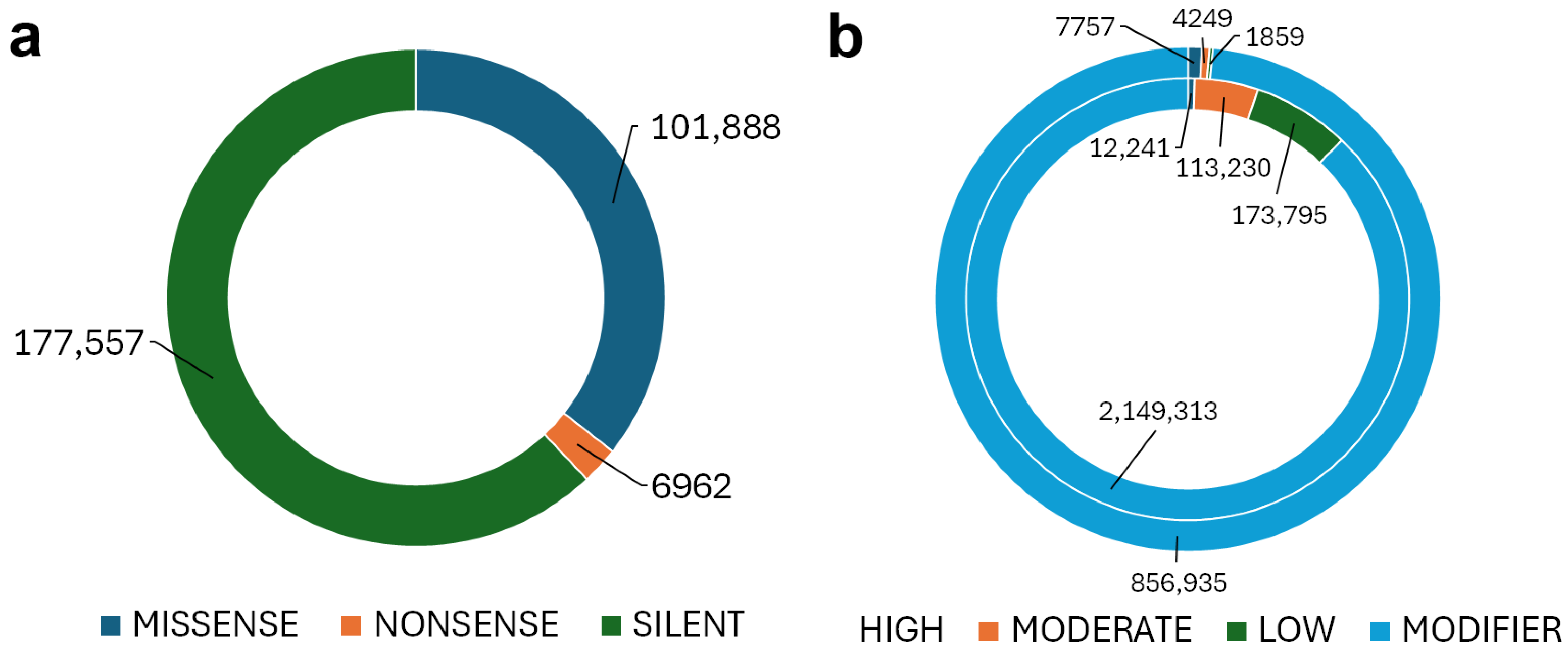
The mapping of the paired-end sequencing reads to the Prunus avium cv. Satonishiki reference genome [22] resulted in an average depth of 26.09× and an average coverage of 82.36%. The 17.64% of the reference genome that showed no coverage was predominantly localized to Chr 0 (unplaced scaffolds) and internal assembly gaps within the Prunus avium r1.0 reference genome (Supplementary Table S2). A total of 2,270,912 SNPs and 263,218 InDels were identified across the genomes of all six accessions and used in the subsequent analysis. Approximately 65.62% of the SNPs were located in the intergenic regions and 11,64% were in the coding region (Table 2). The SNPs in genic regions included 6962 nonsense, 177,557 missense, and 101,888 silent mutations (Figure 1a). The non-synonymous to synonymous substitution ratio (dN/dS) for the SNPs in coding regions was 1.74. This ratio is almost identical to the result obtained by Xanthopoulou et al. (2020) [26], who found a genome-wide dN/dS ratio of 1.78 across 21 genotypes. Notably, this value is much higher than values reported for other species in the Rosaceae family, such as apricot (1.1) [46], Pyrus spp. (1.044) [47], Chinese plum (1.32) [45], and apple (1.092) [48]. A dN/dS ratio greater than 1 signifies positive selection, whereas a ratio below 1 indicates negative selection. A value of 1 represents neutral evolution, where non-synonymous and synonymous mutations occur at equal rates [46]. This high ratio is attributed to a combination of strong artificial and natural selection [49], which is especially pronounced in autochthonous sweet cherry cultivars (selection for specific traits that are preferred by the local population), combined with vegetative propagation by grafting. However, while these findings are consistent with those of other studies, we interpret this high ratio as a descriptive measure of the standing genetic variation in our samples, rather than definitive evidence of widespread positive selection across the genome.
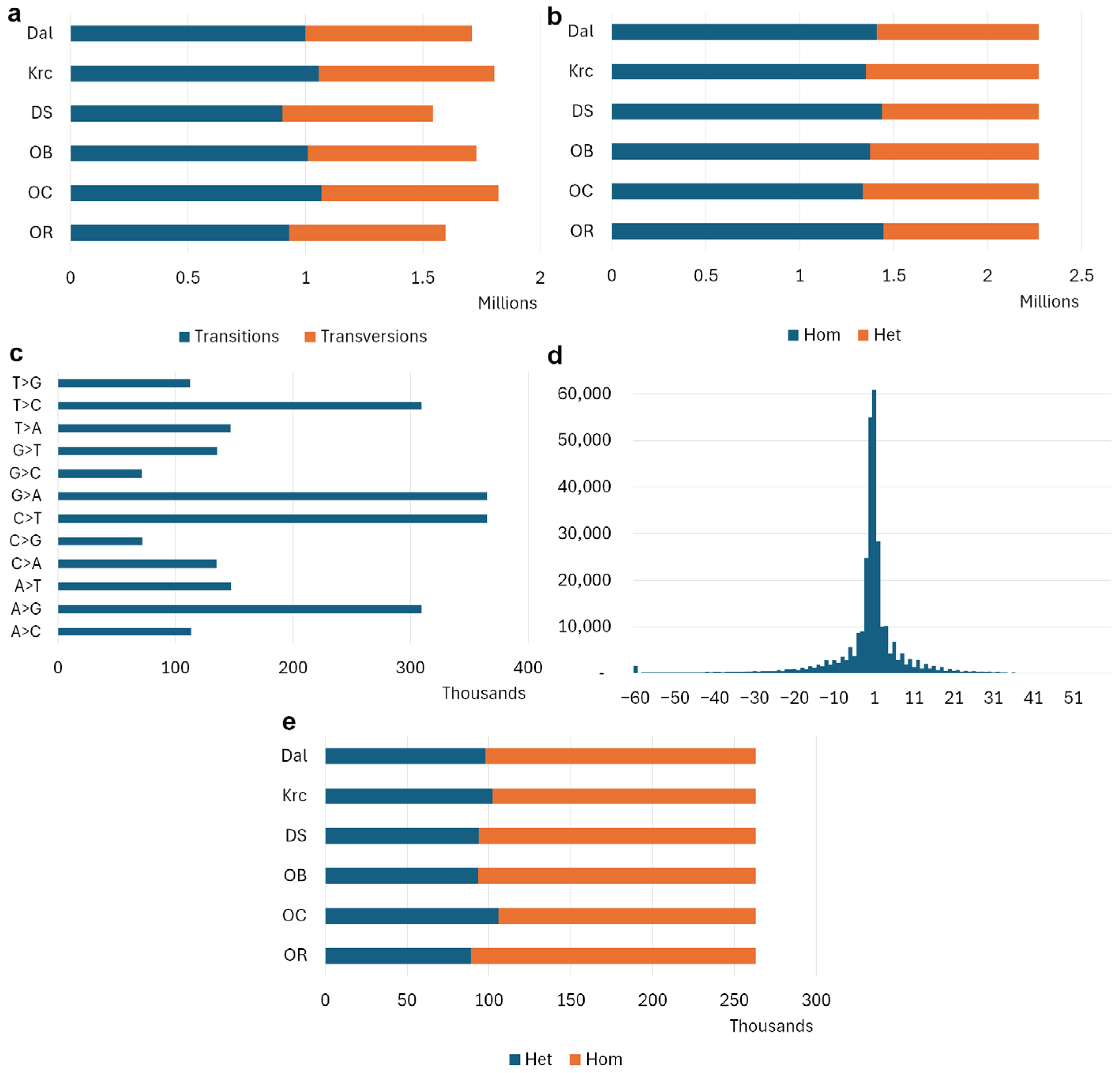
Functional annotation of the identified SNPs revealed that 0.5% were categorized as having a high impact, including frameshift and gain-of-premature-stop-codon mutations. A further 7.098% were classified as moderate-impact variants, such as non-synonymous substitutions and non-disruptive frameshifts, while 4.62% were identified as low-impact changes, primarily consisting of synonymous mutations and start/stop-codon-retained variations (Figure 1b, Supplementary Table S3). Among the high-impact SNPs, 30,437 were heterozygous and 42,787 were homozygous across the six cultivars. For moderate-impact SNPs, a total of 425,763 heterozygous and 610,047 homozygous states were identified. This high number of homozygous high-impact variants suggests significant genomic divergence from the reference genome, highlighting the unique genetic identity of these autochthonous Macedonian cultivars. The distribution of functional impacts in our study reveals a higher concentration of potentially trait-altering variants compared to previous reports in Rosaceae. Specifically, high- and moderate-impact SNPs show a notable enrichment when compared with the results of Bae et al. (2025) [50] in peach, who reported significantly lower frequencies of high- (0.07%) and moderate-impact (2.23%) variants. Similarly, our data show a higher moderate-impact rate than that observed in different pear species [47], where moderate-impact variants accounted for only 0.15% of the total, despite a higher baseline of high-impact changes (1.53%) in that study. Although we prioritized high- and moderate-impact variants to identify major functional disruptions, missense mutations and synonymous substitutions are also known to contribute to the phenotypic landscape of these cultivars, particularly for complex quantitative traits. The transition/transversion (Ts/Tv) ratio values ranged from 1.403 to 1.417 (Figure 2a), while the heterozygosity rate across all accessions varied between 36.34% and 41.23%, with an average of 38.68% (Figure 2b). Our Ts/Tv ratio results indicate that the SNP variants were dominated by transitions between nucleotides of the same chemical type (Figure 2c). These values are highly consistent with those previously reported in sweet cherry (1.4675) [26] and Chinese plum (1.47) [45]. Notably, our observed ratios were lower than those found in apricot, where the Ts/Tv ratio ranges from 1.77 to 1.88 [46], suggesting a different pattern of mutational bias or selection pressure in our plant material. It should be noted that direct cross-comparison of all these metrics across all referenced species is constrained by the fact that many studies only reported a subset of these statistics. Nevertheless, the consistency of our results with closely related species validates the quality of our variant calling and suggests a similar evolutionary landscape for these species.
A total of 263,218 InDel sites were identified, comprising 153,897 insertions and 147,193 deletion variants. Functional annotation using snpEff revealed a total of 829,282 predicted effects. When categorized by impact, the majority of these effects were classified as modifiers (98.408%). Notably, 0.891% (7757) of the InDel effects were predicted to have a high functional impact, which is nearly double the frequency of moderate-impact variants (0.488% or 4249) and is consistent with the biological nature of InDel mutations as they often induce frameshift effects. The InDel zygosity revealed a distinct pattern compared to SNPs. Among the high-impact InDels, 26,495 were heterozygous and 16,645 were homozygous. Similarly, for the moderate-impact InDels, 15,539 were identified in a heterozygous state compared to 9055 that showed homozygous states. Low-impact variants accounted for the remaining 0.213% (1859) (Figure 1b, Supplementary Table S3). Regarding length distribution, the majority of the identified insertions and deletions (38.44%) consisted of single-nucleotide variants. Di-nucleotide and tri-nucleotide InDels accounted for 17.64% and 6.33% of the total, respectively (Figure 2d). This distribution follows a typical decaying pattern where InDel frequency decreases as the length of the variant increases. Analysis of insertion and deletion (InDel) diversity revealed substantial heterozygosity across the individual accessions, ranging from 51.14% to 69.70% with an overall average of 59.26% (Figure 2e). These findings, alongside the observed SNP heterozygosity, are consistent with the high levels of genomic variation typically found in the Rosaceae family. Such diversity is primarily maintained through mechanisms such as self-incompatibility and further supported by widespread vegetative propagation [51].

3.3. Linkage Disequilibrium (LD) Analysis

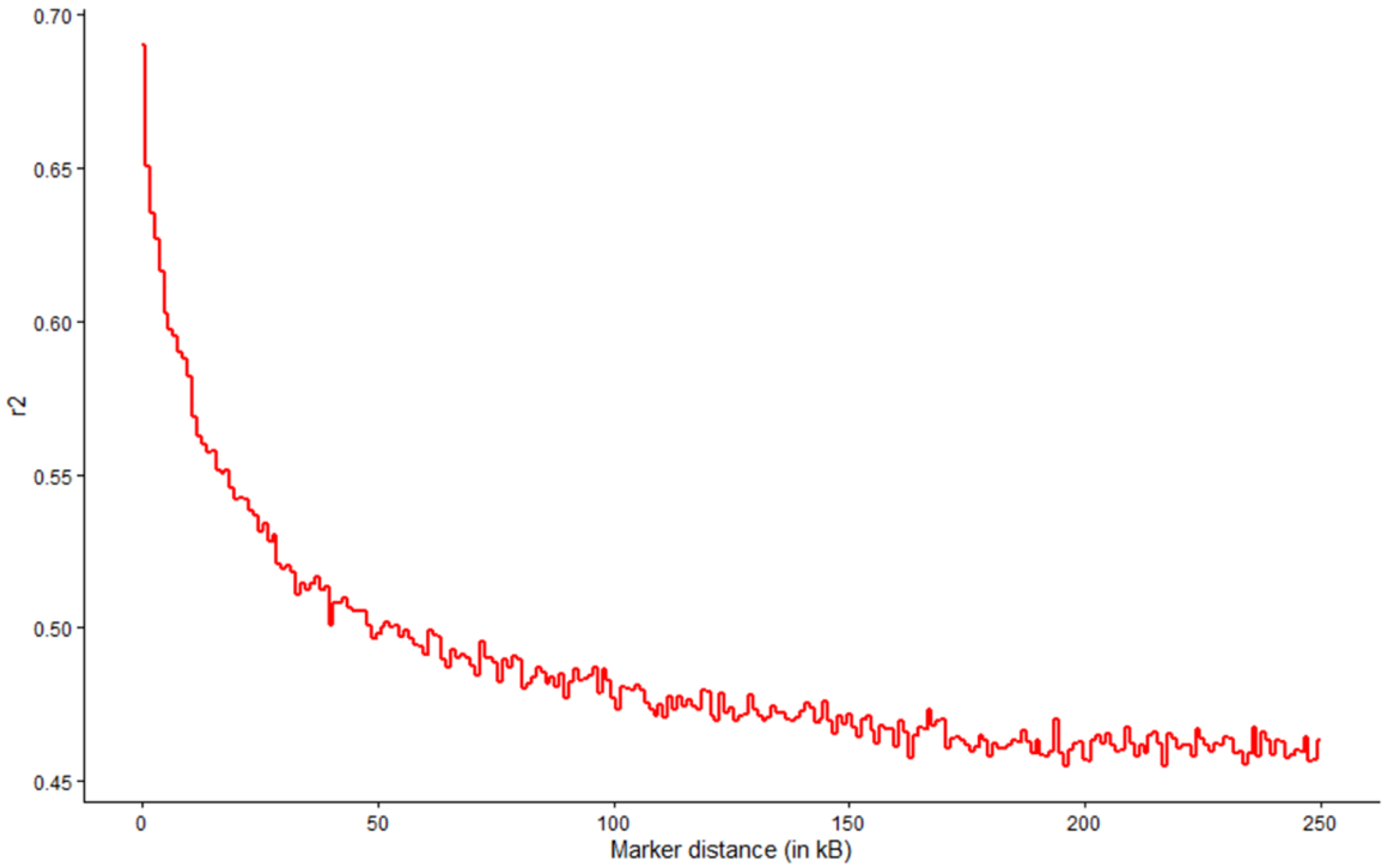
In the genus Prunus, LD decay varies more than in almost any other fruit tree genus. This variation is driven by the species’ mating systems (self-fertile vs. outcrossing) and the intensity of their domestication bottlenecks. The linkage disequilibrium (LD) analysis revealed a rapid decay across the genome (Figure 3), with the squared correlation coefficient (r2) dropping significantly within the first 50 kb. Similarly, analysis of 21 Greek sweet cherry cultivars revealed a rapid LD decay to 50% of its maximum value at only 5 kb, reaching background levels at around 55 kb [26]. This rapid decay is characteristic of highly diverse, outcrossing species and suggests that a high density of markers is required for effective association mapping in this population. In contrast to these findings, LD decay in peach is slower [52], which can be explained by the self-pollinating nature of peach and a bottleneck that occurred at the beginning of modern breeding practices.

3.4. Genetic Relationship Among the Accessions and Population Structure

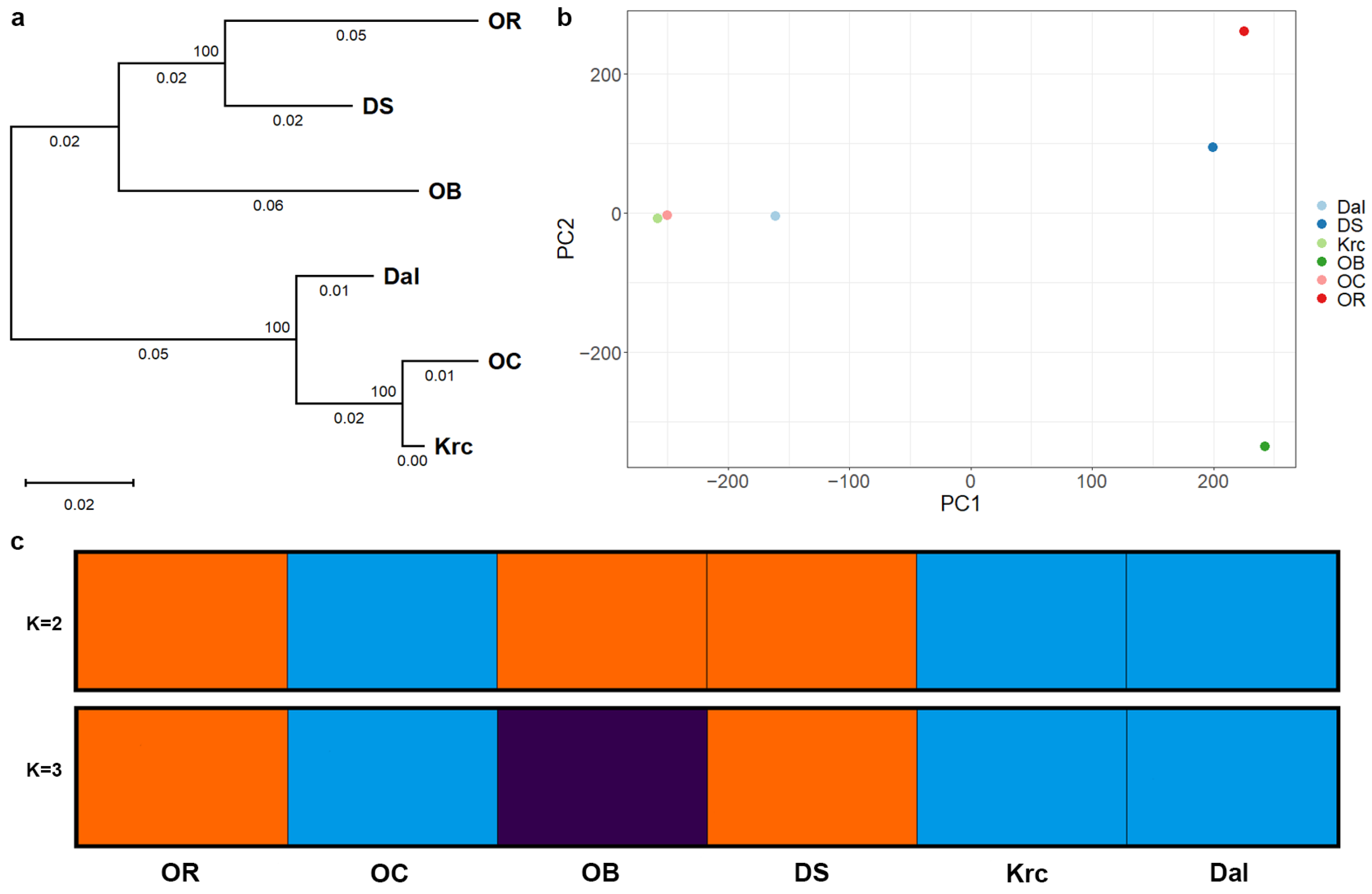
Phylogenetic analysis grouped the six cherry cultivars into two distinct primary clusters with high bootstrap support (100%). The first cluster consists of Dalbazlija, Krcka, and Ohridska crna, while the second comprises Ohridska rana, Dolga siska, and Ohridska bela. These results indicate a clear genetic divergence among the autochthonous cultivars. Cultivars such as Ohridska bela showed the greatest individual branch length within its cluster (0.06), whereas the close clustering of Krcka and Ohridska crna (branch lengths of 0.00 and 0.01, respectively) suggests a highly recent common ancestry or significant genetic overlap within that specific lineage (Figure 4a).
Principal Component Analysis (PCA) further supported these findings, showing a tight grouping of Krcka, Ohridska crna, and Dalbazlija on the left of the plot, suggesting high genetic similarity within these accessions. In contrast, Ohridska rana, Dolga siska, and Ohridska bela in particular are widely dispersed along PC1 and PC2, indicating significant genetic divergence (Figure 4b). This is further supported by the structure analysis (K = 2), which assigned Ohridska crna, Krcka, and Dalbazlija to a single ancestral component (blue), while Ohridska rana, Ohridska bela, and Dolga siska share a secondary component (orange). At K = 3, Ohridska bela emerged as a genetically unique lineage (purple), further highlighting its distinctiveness within the germplasm. Collectively, these results suggest that strong positive selection, indicated by the high dN/dS ratio (1.74), has driven significant diversification within these autochthonous sweet cherry cultivars (Figure 4c).
The observed pomological variability is consistent with the genomic patterns identified in this study. Fruit size, shape, and coloration are complex traits controlled by multiple genetic loci, and the detected genome-wide variation likely contributes to the observed phenotypic differences. Cultivars that cluster together genetically, such as Krcka and Dalbazlija, exhibit partially similar phenotypic characteristics, particularly in terms of skin and flash coloration, suggesting that shared ancestral variants may underlie these traits. In contrast, Dolga siska, which produces the largest fruits, represents a clear phenotypic outlier, indicating potential cultivar-specific genetic factors influencing fruit size. Similarly, the distinct pigmentation of Ohridska crna compared to the light-colored Ohridska bela reflects divergence in pathways related to anthocyanin accumulation. The relatively narrow range of stone weight compared to fruit weight suggests that structural traits may be more conserved, possibly due to stabilizing selection, while fruit size and color remain more variable and responsive to selection pressures.
Although no formal genotype–phenotype association analysis was conducted, the concordance between genomic clustering and pomological variability supports the biological relevance of the identified genetic variation.

3.5. Variation Within Genes Involved in Defense Reactions Against Pathogens

To investigate the functional consequences of the observed high substitution rate, we analyzed variants in genes potentially associated with defense reactions against pathogens that were described in Xanthopoulou et al. (2020) [26]. We identified 44 high-impact variants, including gain-of-stop-codon, loss-of-start-codon, and splice-site mutation variants, which represent a clear example of the non-synonymous mutations contributing to the high genome-wide dN/dS ratio. These high-impact mutations were unevenly distributed across the germplasm; for instance, Krcka and Dalbazlija carried the highest number of high-impact mutant alleles (36 and 32, respectively), while Ohridska bela exhibited the highest number of unique high-impact variants, including Pav_sc0000387.1_g020.1.br p.Glu682* (gain of a stop codon), Pav_sc0003261.1_g170.1.br p.Glu120* (gain of a stop codon), and Pav_sc0000095.1_g1050.1.mk p.Tyr853* (gain of a stop codon) (Supplementary Table S4). Among the genes potentially associated with resistance, Pav_sc0000387.1_g020.1.br and Pav_sc0000095.1_g1050.1.mk were annotated as RPM1-like proteins, while Pav_sc0003261.1_g170.1.br was annotated as an RGA2-like protein. These loci belong to the nucleotide-binding leucine-rich repeat (NB-LRR) gene family, which serves as a crucial component of the plant innate immune system that is involved in pathogen recognition and defense response signaling [53,54].
The analysis of InDels within genes potentially associated with resistance revealed a high prevalence of frameshift mutations, which constitute 85% of the total high-impact InDel events. These are particularly destructive to gene function because they shift the reading frame of the genetic code, typically resulting in the production of completely different amino acids and leading to a premature stop codon downstream [55]. This suggests that several resistance genes across all cultivars may be non-functional pseudogenes. Ohridska bela and Ohridska rana are the only cultivars carrying unique high-impact InDels that are not present in any other cultivars. Ohridska bela carries three unique high-impact InDels, including a homozygous frameshift in the gene Pav_sc0000387.1_g020.1.br. A homozygous mutation is a critical finding because it means that both copies of the gene are disrupted, effectively knocking out that specific resistance gene in this cultivar (Supplementary Table S5). Searching the P. avium genome annotations revealed 39 copies of the RPM1-like disease resistance gene. Given this high copy number, the disruption of a single gene copy (Pav_sc0000387.1_g020.1.br) does not necessarily imply a complete loss of disease resistance, as functional redundancy may be provided by the other paralogs. Furthermore, as no pathogen-response phenotypes were evaluated in this study, the biological relevance of this mutation remains uncertain. Consequently, this variant should be considered a candidate locus for future functional studies rather than a variant definitively linked to altered disease resistance or local adaptation.
In contrast to resistance-related genes, pathogenesis-related genes were found to be much more conserved. High-impact variants were entirely absent in the SNP and InDel dataset. Variability within these genes was limited to moderate-impact missense SNP substitutions (Supplementary Tables S6 and S7). The lack of disruptive mutations in these loci suggests that they are subject to purifying selection, which maintains their protein function across the germplasm [56].

3.6. Variation Within Genes Involved in Flowering Time and Dormancy

The genes potentially associated with the regulation of flowering time and dormancy exhibit high variability in this population. Of the 5511 SNPs identified within these pathways, 939 were categorized as high-to-moderate-impact variants, including 59 high-impact mutations such as stop-gains and splice disruptions (Supplementary Table S8). Alterations in splice-site sequences can cause the cell to ignore these boundaries. Specifically, donor site mutations often lead to the retention of introns as the splicing machinery skips the mutated site and fails to remove the non-coding sequence from the mRNA transcript [57]. This suggests that phenological adaptation, alongside disease resistance, has been a primary driver of genetic divergence in these autochthonous lineages.
Ohridska bela displayed a particularly unique profile, harboring 96 cultivar-specific variants within flowering time and dormancy pathways. Xanthopoulou et al. (2020) [26] previously identified a specific gain-of-stop-codon mutation in the dormancy-associated MADS-box gene (DAM6; Pav_sc0000257.1), which was only observed in one wild accession. The same mutation was identified in our research in Ohridska bela (p.Gln152* in Pav_sc0000257.1_g1330.1.br). The accumulation of these high-impact variants provides a reservoir of genetic diversity that likely facilitated the adaptation of these landraces to the specific microclimate of their growing region.
Additionally, the DAM6 gene (Pav_sc0000257.1_g1350.1.mk) harbors a high-impact mutation shared between both datasets: a loss-of-stop-codon and splice region variant (p.Ter157Leuext*). DAM genes function as key molecular markers for dormancy status; they are activated during the cessation of vegetative growth and inhibited by cold temperatures. This inverse relationship between cold exposure and DAM gene expression is essential for the maintenance and eventual release of endodormancy [58].
Among the SNPs identified in genes potentially related to flowering and dormancy, unique high-impact mutations—specifically gain-of-stop-codon and a loss-of-start-codon mutations—were identified in the FAR-RED IMPAIRED RESPONSE 1 (FAR1) ortholog (Pav_sc0002264.1_g140.1.mk). These mutations occurred in a homozygous state exclusively in the cultivar Dalbazlija, while all other cultivars carried the reference allele or were heterozygous. In Arabidopsis, FAR1 has been described as a negative regulator of seasonal growth and flowering time, where its loss of function results in early flowering [59]. Consequently, the discovery of these homozygous disruptions in the FAR1 gene provides a robust molecular explanation for the distinct phenology of Dalbazlija, which is documented as the earliest flowering cultivar in the Ohrid region, reaching full bloom around April 10 [7]. This correlation demonstrates that the high-impact variants prioritized in our mutation analysis likely drive the key adaptive phenological differences observed among Macedonian landraces.
In addition to DAM6 and FAR1, several other key flowering- and dormancy-related genes were found to harbor high-impact mutations across the studied cultivars. These include genes involved in epigenetic regulation, such as histone-lysine N-methyltransferase (Pav_sc0000071.1_g380.1.br), and floral transition initiators such as FRIGIDA-like protein 5 (Pav_sc0000700.1_g1140.1.br) and MADS-box protein SOC1-like (Pav_sc0006825.1_g010.1.br). Furthermore, disruptions were identified in cold-signaling and circadian clock components, including the E3 ubiquitin-protein ligase HOS1 (Pav_sc0001263.1_g070.1.br), EARLY FLOWERING 3 (ELF3) (Pav_sc0004290.1_g210.1.mk), the transcription factor VIP1-like (Pav_sc0001341.1_g040.1.mk), and the flowering time control protein FY-like (Pav_sc0001883.1_g130.1.br). The presence of high-impact variants in such a diverse array of regulatory nodes underscores the complex genetic architecture governing the adaptation of Macedonian sweet cherry landraces to their local environment.
Functional annotation of genes related to flowering time and dormancy revealed a total of 861 InDels, 40 of which are categorized as high impact; among these, frameshift variants were the most prevalent (30 events) (Supplementary Table S9). When integrating both SNPs and InDels, Ohridska bela stands out with the highest number of unique mutations (12 high-impact and 94 moderate-impact), significantly surpassing all other accessions. Furthermore, the molecular basis of the ‘blue cluster’ identified in the population structure analysis (Ohridska crna, Krcka, and Dalbazlija) is supported by 66 shared variants that are exclusively present in this lineage. These results suggest that the phenotypic diversity in flowering and dormancy among the analyzed Macedonian sweet cherries accessions may be influenced by both ancestral shared mutations and highly specific, lineage-unique functional disruptions.

3.7. Variation Within Genes Involved in Fruit Cracking and Maturity Date

Analysis of the genes potentially related to fruit cracking described by Donkpegan et al. (2023) [28] revealed a high-impact gain-of-stop-codon and splice-region variant (p.Gln141* at PAV_r1.0chr4:4,381,620) that is shared by all six studied cultivars. This variant is located just 36 bp upstream of the SNP at Chr4:4,381,656, which was identified as a significant GWAS marker by Donkpegan et al. (2023) [28], which accounted for the largest portion of phenotypic variance (30.9%) for stem-end cracking. In our research, the position corresponding to that GWAS marker (4,381,656) was found to harbor an intron variant (G > A) (Supplementary Table S10). These notable, high-impact variants were identified in the AGAMOUS-like isoform X1 gene (Pav_sc0001289.1_g020.1.mk), a MADS-box transcription factor involved in developmental regulation. Given that MADS-box genes modulate key processes in fruit development [60], this variant is a good candidate for further investigation regarding fruit cracking susceptibility among these landraces.
Additionally, a cluster of three further mutations was identified within a 100 bp window upstream of this significant GWAS marker: a missense variant (p.Leu122Gln), a synonymous variant (p.Ala130Ala), and a second missense variant (p.Arg134Ser). While the latter two are shared across the germplasm, the p.Leu122Gln variant is unique to Ohridska rana, suggesting a potential cultivar-specific modification of the fruit-cracking response. The presence of the high-impact truncation p.Gln141* in all six cultivars suggests a shared regional selective sweep or a common ancestral origin for this functional modification within the Balkan germplasm.
In addition to the gain-of-stop-codon SNP p.Gln141*, the gene Pav_sc0001289.1_g020.1.mk contains a high-impact splice donor and intron variant at position 4,381,993 (Supplementary Table S11). This mutation is present in a heterozygous state in all studied cultivars with the exception of Dalbazlija. As the only cultivar homozygous for the reference allele at this position, Dalbazlija alone maintains a fully functional splice site at this locus.
While genes potentially related to resistance and flowering time exhibited high levels of diversification, maturity-related pathways showed remarkable genetic conservation across the analyzed germplasm. Functional annotation of maturity-related loci identified a high-impact gain-of-stop-codon mutation (p.Gly349*) in the gene Pav_sc0000029.1_g070.1.mk, which is homozygously fixed in all six cultivars (Supplementary Table S12). The locus Pav_sc0000029.1_g070.1.mk encodes the NAC transcription factor NAC5. NAC transcription factors constitute a large gene family in the Prunus genome—with at least 130 PaNAC genes identified in P. avium—and are widely recognized as key regulators of plant growth, development, and stress responses [61]. The absence of any unique high- or moderate-impact variants in individual accessions suggests that these ripening-related disruptions are ancestral and were likely fixed early in the local evolutionary history or through targeted selection for specific maturity windows.
The investigation of maturity-related InDels revealed zero high- or moderate-impact structural variants. The only variant identified was a modifier of 3′ UTR variant in the gene Pav_sc0000029.1_g090.1.mk, which is shared by all cultivars (Supplementary Table S13). This total lack of disruptive InDels, combined with the earlier finding of a homozygously fixed gain-of-stop-codon SNP across all six cultivars, suggests that while flowering time is a trait of high adaptive flexibility, maturity has been subject to strong stabilizing selection or a common regional bottleneck.

3.8. Limitations of the Study

While this study provides a high-resolution genomic characterization of important autochthonous sweet cherry cultivars, several limitations should be noted. First, the experimental design utilized a single representative individual per cultivar to prioritize the depth of coverage for whole-genome resequencing. While clonal propagation generally ensures genetic consistency within a cultivar, the inclusion of biological replicates in future studies would be necessary to assess potential somatic mutations or clonal fidelity within the collection. Furthermore, the population structure and linkage disequilibrium (LD) analyses were performed using six accessions. Although these findings offer valuable descriptive insights into the genetic architecture of these specific landraces, the limited sample size necessitates caution when extrapolating these trends to the broader P. avium population. These results should be considered preliminary and serve as a foundation for future studies involving larger cohorts to validate these genetic patterns.

4. Conclusions

This study provides the first comprehensive genomic characterization of the autochthonous sweet cherry genetic pool in Macedonia, revealing a complex landscape of genetic diversity and selection across key phenological and quality traits. Our analysis identified a stratified mutational profile where different functional pathways exhibit varying degrees of evolutionary flexibility. While flowering and dormancy pathways showed high levels of diversification—most notably in Ohridska bela—traits related to fruit development were significantly more conserved. The identification of a fixed gain-of-stop-codon mutation in a maturity gene across all cultivars suggests that the regional ripening profile is likely an ancestral trait that was fixed through early selection. In contrast, the fruit-cracking response appears to be driven by targeted disruptions, where Dalbazlija emerged as a genetically distinct outlier by maintaining a functional splice site. These findings highlight the value of the Macedonian autochthonous sweet cherry germplasm as a reservoir of unique alleles that can be utilized in breeding programs aimed at enhancing climate resilience and fruit quality. Ultimately, these results provide a critical foundation for the conservation and integration of these local varieties into the modern global cherry industry.

Supplementary Materials

The following supporting information can be downloaded at https://www.mdpi.com/article/10.3390/horticulturae12060681/s1: Table S1: Summary of sequencing data and quality statistics for the analyzed samples; Table S2: Mapping and coverage statistics for individual cultivars across reference chromosomes; Table S3: Functional annotation and distribution of SNPs and Indels across genome; Table S4: Summary of SNPs identified in candidate genes involved in resistance; Table S5: Summary of InDels identified in candidate genes involved in resistance; Table S6: Summary of SNPs identified in candidate genes involved in pathogenesis; Table S7: Summary of InDels identified in candidate genes involved in pathogenesis; Table S8: Summary of SNPs identified in candidate genes involved in flowering time and dormancy; Table S9: Summary of InDels identified in candidate genes involved in flowering time and dormancy; Table S10: Summary of SNPs identified in candidate genes involved in fruit cracking; Table S11: Summary of InDels identified in candidate genes involved in fruit cracking; Table S12: Summary of SNPs identified in candidate genes involved in maturity date; Table S13: Summary of InDels identified in candidate genes involved in maturity date.

Author Contributions

Conceptualization, G.B. and V.G.; methodology, G.B. and V.G.; software, G.B., K.B.O. and B.D.; sampling V.G., K.B.O., B.D. and N.S.; formal analysis, G.B.; investigation, G.B., V.G., K.B.O., B.D. and N.S.; resources, V.G., K.B.O., B.D. and N.S.; writing—original draft preparation, G.B., V.G., K.B.O. and B.D.; writing—review and editing, G.B., V.G., K.B.O., D.N. and B.D.; visualization, G.B.; project administration, V.G., K.B.O., B.D. and D.N.; funding acquisition, V.G., K.B.O., D.N. and B.D. All authors have read and agreed to the published version of the manuscript.

Funding

This research was funded by the Research and Science Fund of Ss. Cyril and Methodius University in Skopje (UKIM), under the project “Molecular and pomological characterization of autochthonous cherry varieties from the Ohrid region” (Acronym: AUTOCHERRY-OHR), grant number 09-987/1.

Data Availability Statement

All of the raw reads of the sweet cherry accessions generated in this study have been deposited in the public database of National Center of Biotechnology Information under BioProject PRJNA1471543.

Conflicts of Interest

The authors declare no conflicts of interest.

References

  1. Gonçalves, B.; Aires, A.; Oliveira, I.; Afonso, S.; Morais, M.C.; Correia, S.; Martins, S.; Silva, A.P. Sweet Cherry. In Temperate Fruits; Mandal, D., Wermund, U., Phavaphutanon, L., Cronje, R., Eds.; Series statement: Innovations in horticultural science; Apple Academic Press: Cambridge, MA, USA, 2021; pp. 333–416. [Google Scholar]
  2. Barać, G.; Ognjanov, V.; Bošnjaković, D.; Ljubojević, M.; Obreht, D.; Gasic, K. Population Genetic Analysis of European Ground Cherry (Prunus fruticosa Pall.) Using SSR Markers. Acta Hortic. 2017, 1161, 61–66. [Google Scholar] [CrossRef]
  3. Gjamovski, V.; Kiprijanovski, M.; Arsov, T. Evaluation of Some Cherry Varieties Grafted on Gisela 5 Rootstock. Turk. J. Agric. For. 2016, 40, 737–745. [Google Scholar] [CrossRef]
  4. Petropoulos, S.A.; Barros, L.; Ferreira, I.C.F.R. Editorial: Rediscovering Local Landraces: Shaping Horticulture for the Future. Front. Plant Sci. 2019, 10, 126. [Google Scholar] [CrossRef]
  5. Lazaridi, E.; Kapazoglou, A.; Gerakari, M.; Kleftogianni, K.; Passa, K.; Sarri, E.; Papasotiropoulos, V.; Tani, E.; Bebeli, P.J. Crop Landraces and Indigenous Varieties: A Valuable Source of Genes for Plant Breeding. Plants 2024, 13, 758. [Google Scholar] [CrossRef]
  6. Dias, W.K.N.S.; Anuruddi, H.I.G.K.; Fonseka, D.L.C.K. Development of Improved Landraces in Agriculture for Rural Development. In Plant Mutagenesis; Springer: Cham, Switzerland, 2024; pp. 207–217. [Google Scholar]
  7. Gjamovski, V.; Kiprijanovski, M.; Arsov, T. Morphological and Pomological Characteristics of Some Autochthonous Sweet Cherry Cultivars in the Republic of Macedonia. Acta Hortic. 2016, 1139, 147–152. [Google Scholar] [CrossRef]
  8. Selamovska, A.; Gjamovski, V.; Taseska-Gjorgjijevski, M.; Nedelkovski, D.; Bandjo Oreshkovikj, K.; Korunoska, B.; Djoljevska-Milenkovska, R. Comparative Studies of the Content of Antioxidants in Fruits of Some Autochthonous Cherry Varieties. J. Agric. Plant Sci. 2022, 20, 33–40. [Google Scholar] [CrossRef]
  9. Mondini, L.; Noorani, A.; Pagnotta, M.A. Assessing Plant Genetic Diversity by Molecular Tools. Diversity 2009, 1, 19–35. [Google Scholar] [CrossRef]
  10. Wünsch, A.; Hormaza, J.I. Molecular Characterisation of Sweet Cherry (Prunus avium L.) Genotypes Using Peach [Prunus persica (L.) Batsch] SSR Sequences. Heredity 2002, 89, 56–63. [Google Scholar] [CrossRef] [PubMed]
  11. Barreneche, T.; de la Concepción, M.C.; Blouin-Delmas, M.; Ordidge, M.; Nybom, H.; Lacis, G.; Feldmane, D.; Sedlak, J.; Meland, M.; Kaldmäe, H.; et al. Ssr-Based Analysis of Genetic Diversity and Structure of Sweet Cherry (Prunus avium L.) from 19 Countries in Europe. Plants 2021, 10, 1983. [Google Scholar] [CrossRef] [PubMed]
  12. Schüller, E.; Fernández, F.F.; Antanaviciute, L.; Anhalt-brüderl, U.; Spornberger, A.; Forneck, A. Autochthonous Austrian Varieties of Prunus avium L. Represent a Regional Gene Pool, Assessed Using SSR and AFLP Markers. Genes 2021, 12, 322. [Google Scholar] [CrossRef] [PubMed]
  13. Lacis, G.; Rashal, I.; Ruisa, S.; Trajkovski, V.; Iezzoni, A.F. Assessment of Genetic Diversity of Latvian and Swedish Sweet Cherry (Prunus avium L.) Genetic Resources Collections by Using SSR (Microsatellite) Markers. Sci. Hortic. 2009, 121, 451–457. [Google Scholar] [CrossRef]
  14. Stanys, V.; Baniulis, D.; Morkunaite-Haimi, S.; Siksnianiene, J.B.; Frercks, B.; Gelvonauskiene, D.; Stepulaitiene, I.; Staniene, G.; Siksnianas, T. Characterising the Genetic Diversity of Lithuanian Sweet Cherry (Prunus avium L.) Cultivars Using SSR Markers. Sci. Hortic. 2012, 142, 136–142. [Google Scholar] [CrossRef]
  15. Ercisli, S.; Agar, G.; Yildirim, N.; Duralija, B.; Vokurka, A.; Karlidag, H. Genetic Diversity in Wild Sweet Cherries (Prunus avium) in Turkey Revealed by SSR Markers. Genet. Mol. Res. 2011, 10, 1211–1219. [Google Scholar] [CrossRef] [PubMed]
  16. Uzan Eken, B.; Kirdök, E.; Velioğlu, E.; Özden Çiftçi, Y. Assessment of Genetic Variation of Natural Populations of Wild Cherry (Prunus avium L.) via SSR Markers. Turk. J. Bot. 2022, 46, 14–25. [Google Scholar] [CrossRef]
  17. Krmpot, T.; Radoš, L.; Vokurka, A. Genetic Characterisation of Autochthonous Sweet Cherry Genotypes (Prunus avium L.) Using SSR Markers. Genetika 2020, 52, 43–53. [Google Scholar] [CrossRef]
  18. Ganopoulos, I.V.; Avramidou, E.; Fasoula, D.A.; Diamantidis, G.; Aravanopoulos, F.A. Assessing Inter- and Intra-Cultivar Variation in Greek Prunus Avium by SSR Markers. Plant Genet. Resour. 2010, 8, 242–248. [Google Scholar] [CrossRef]
  19. Ivanovych, Y.; Volkov, R. Genetic Relatedness of Sweet Cherry (Prunus avium L.) Cultivars from Ukraine Determined by Microsatellite Markers. J. Hortic. Sci. Biotechnol. 2018, 93, 64–72. [Google Scholar] [CrossRef]
  20. Tripodi, P. The Evolution of Molecular Genotyping in Plant Breeding. Agronomy 2023, 13, 2569. [Google Scholar] [CrossRef]
  21. Govindaraj, M.; Vetriventhan, M.; Srinivasan, M. Importance of Genetic Diversity Assessment in Crop Plants and Its Recent Advances: An Overview of Its Analytical Perspectives. Genet. Res. Int. 2015, 2015, 431487. [Google Scholar] [CrossRef]
  22. Shirasawa, K.; Isuzugawa, K.; Ikenaga, M.; Saito, Y.; Yamamoto, T.; Hirakawa, H.; Isobe, S. The Genome Sequence of Sweet Cherry (Prunus avium) for Use in Genomics-Assisted Breeding. DNA Res. 2017, 24, 499–508. [Google Scholar] [CrossRef] [PubMed]
  23. Loick, L.D.; Nabil, G.; Gouzy, J.; Sallet, E.; Carrère, S.; Fouché, M.; Quero-Garcia, J.; Dirlewanger, E. An Improved Assembly of the Diploid ‘Regina’ Sweet Cherry Genome. In Proceedings of the International Plant & Animal Genome XXVII, San Diego, CA, USA, 12–16 January 2019; p. 37387. [Google Scholar]
  24. Wang, J.; Liu, W.; Zhu, D.; Hong, P.; Zhang, S.; Xiao, S.; Tan, Y.; Chen, X.; Xu, L.; Zong, X.; et al. Chromosome-Scale Genome Assembly of Sweet Cherry (Prunus avium L.) Cv. Tieton Obtained Using Long-Read and Hi-C Sequencing. Hortic. Res. 2020, 7, 122. [Google Scholar] [CrossRef]
  25. Fernandez i Marti, A.; Athanson, B.; Koepke, T.; Font i Forcada, C.; Dhingra, A.; Oraguzie, N. Genetic Diversity and Relatedness of Sweet Cherry (Prunus avium L.) Cultivars Based on Single Nucleotide Polymorphic Markers. Front. Plant Sci. 2012, 3, 28159. [Google Scholar] [CrossRef]
  26. Xanthopoulou, A.; Manioudaki, M.; Bazakos, C.; Kissoudis, C.; Farsakoglou, A.M.; Karagiannis, E.; Michailidis, M.; Polychroniadou, C.; Zambounis, A.; Kazantzis, K.; et al. Whole Genome Re-Sequencing of Sweet Cherry (Prunus avium L.) Yields Insights into Genomic Diversity of a Fruit Species. Hortic. Res. 2020, 7, 60. [Google Scholar] [CrossRef]
  27. Campoy, J.A.; Lerigoleur-Balsemin, E.; Christmann, H.; Beauvieux, R.; Girollet, N.; Quero-García, J.; Dirlewanger, E.; Barreneche, T. Genetic Diversity, Linkage Disequilibrium, Population Structure and Construction of a Core Collection of Prunus avium L. Landraces and Bred Cultivars. BMC Plant Biol. 2016, 16, 49. [Google Scholar] [CrossRef]
  28. Donkpegan, A.S.L.; Bernard, A.; Barreneche, T.; Quero-García, J.; Bonnet, H.; Fouche, M.; Le Dantec, L.; Wenden, B.; Dirlewanger, E. Genome-Wide Association Mapping in a Sweet Cherry Germplasm Collection (Prunus avium L.) Reveals Candidate Genes for Fruit Quality Traits. Hortic. Res. 2023, 10, uhad191. [Google Scholar] [CrossRef] [PubMed]
  29. Guajardo, V.; Solís, S.; Almada, R.; Saski, C.; Gasic, K.; Moreno, M.Á. Genome-Wide SNP Identification in Prunus Rootstocks Germplasm Collections Using Genotyping-by-Sequencing: Phylogenetic Analysis, Distribution of SNPs and Prediction of Their Effect on Gene Function. Sci. Rep. 2020, 10, 1467. [Google Scholar] [CrossRef] [PubMed]
  30. Isuzugawa, K.; Shirasawa, K.; Kurosaka, S.; Takahashi, Y.; Saito, Y.; Adachi, E.; Ikenaga, M.; Yamamoto, T. QTL Analysis and Candidate Gene SNP for Harvest Day in Sweet Cherry (Prunus avium L.). Acta Hortic. 2019, 1235, 33–40. [Google Scholar] [CrossRef]
  31. Holušová, K.; Čmejlová, J.; Suran, P.; Čmejla, R.; Sedlák, J.; Zelený, L.; Bartoš, J. High-Resolution Genome-Wide Association Study of a Large Czech Collection of Sweet Cherry (Prunus avium L.) on Fruit Maturity and Quality Traits. Hortic. Res. 2023, 10, uhac233. [Google Scholar] [CrossRef] [PubMed]
  32. Martin, M. Cutadapt Removes Adapter Sequences from High-Throughput Sequencing Reads. EMBnet J. 2011, 17, 10–12. [Google Scholar] [CrossRef]
  33. Bolger, A.M.; Lohse, M.; Usadel, B. Trimmomatic: A Flexible Trimmer for Illumina Sequence Data. Bioinformatics 2014, 30, 2114–2120. [Google Scholar] [CrossRef]
  34. Li, H. Minimap2: Pairwise Alignment for Nucleotide Sequences. Bioinformatics 2018, 34, 3094–3100. [Google Scholar] [CrossRef] [PubMed]
  35. Li, H. Improving SNP Discovery by Base Alignment Quality. Bioinformatics 2011, 27, 1157–1158. [Google Scholar] [CrossRef] [PubMed]
  36. Li, H.; Handsaker, B.; Wysoker, A.; Fennell, T.; Ruan, J.; Homer, N.; Marth, G.; Abecasis, G.; Durbin, R. The Sequence Alignment/Map Format and SAMtools. Bioinformatics 2009, 25, 2078–2079. [Google Scholar] [CrossRef] [PubMed]
  37. Lischer, H.E.L.; Excoffier, L. PGDSpider: An Automated Data Conversion Tool for Connecting Population Genetics and Genomics Programs. Bioinformatics 2012, 28, 298–299. [Google Scholar] [CrossRef]
  38. Stecher, G.; Suleski, M.; Tao, Q.; Tamura, K.; Kumar, S. MEGA 12.1: Cross-Platform Release for MacOS and Linux Operating Systems. J. Mol. Evol. 2025, 94, 14–18. [Google Scholar] [CrossRef]
  39. Kimura, M. A Simple Method for Estimating Evolutionary Rates of Base Substitutions through Comparative Studies of Nucleotide Sequences. J. Mol. Evol. 1980, 16, 111–120. [Google Scholar] [CrossRef]
  40. Bradbury, P.J.; Zhang, Z.; Kroon, D.E.; Casstevens, T.M.; Ramdoss, Y.; Buckler, E.S. TASSEL: Software for Association Mapping of Complex Traits in Diverse Samples. Bioinformatics 2007, 23, 2633–2635. [Google Scholar] [CrossRef]
  41. Wickham, H. Ggplot2; Springer: New York, NY, USA, 2009. [Google Scholar]
  42. Alexander, D.H.; Novembre, J.; Lange, K. Fast Model-Based Estimation of Ancestry in Unrelated Individuals. Genome Res. 2009, 19, 1655–1664. [Google Scholar] [CrossRef]
  43. Li, Y.L.; Liu, J.X. StructureSelector: A Web-Based Software to Select and Visualize the Optimal Number of Clusters Using Multiple Methods. Mol. Ecol. Resour. 2018, 18, 176–177. [Google Scholar] [CrossRef]
  44. Chang, C.C.; Chow, C.C.; Tellier, L.C.A.M.; Vattikuti, S.; Purcell, S.M.; Lee, J.J. Second-Generation PLINK: Rising to the Challenge of Larger and Richer Datasets. Gigascience 2015, 4, 7. [Google Scholar] [CrossRef]
  45. Wei, X.; Shen, F.; Zhang, Q.; Liu, N.; Zhang, Y.; Xu, M.; Liu, S.; Zhang, Y.; Ma, X.; Liu, W. Genetic Diversity Analysis of Chinese Plum (Prunus salicina L.) Based on Whole-Genome Resequencing. Tree Genet. Genomes 2021, 17, 26. [Google Scholar] [CrossRef]
  46. Xin, Q.; Qing, J.; He, Y. Analysis of Kinship and Population Genetic Structure of 53 Apricot Resources Based on Whole Genome Resequencing. Curr. Issues Mol. Biol. 2024, 46, 14106–14118. [Google Scholar] [CrossRef]
  47. Li, Y.; Zhang, J.; Wang, S.; Zhang, Y.; Yang, M. The Distribution and Origins of Pyrus Hopeiensis-“Wild Plant with Tiny Population” Using Whole Genome Resequencing. Front. Plant Sci. 2021, 12, 668796. [Google Scholar] [CrossRef]
  48. Zhang, S.; Chen, W.; Xin, L.; Gao, Z.; Hou, Y.; Yu, X.; Zhang, Z.; Qu, S. Genomic Variants of Genes Associated with Three Horticultural Traits in Apple Revealed by Genome Re-Sequencing. Hortic. Res. 2014, 1, 14045. [Google Scholar] [CrossRef]
  49. Aflitos, S.; Schijlen, E.; De Jong, H.; De Ridder, D.; Smit, S.; Finkers, R.; Wang, J.; Zhang, G.; Li, N.; Mao, L.; et al. Exploring Genetic Variation in the Tomato (Solanum section Lycopersicon) Clade by Whole-Genome Sequencing. Plant J. 2014, 80, 136–148. [Google Scholar] [CrossRef] [PubMed]
  50. Bae, S.H.; Jeong, N.; Kwon, J.H.; Lee, J.H.; Hwang, K.; Hur, Y.Y.; Lee, S.J. Whole-Genome Sequencing Reveals Genetic Diversity, Population Structure, and Core Collection Construction in Korean Peach (Prunus persica) Germplasm. Front. Plant Sci. 2025, 16, 1702527. [Google Scholar] [CrossRef]
  51. Tang, Y.; Yang, S.; Liang, G.; He, Q.; Jing, D.; Guo, Q.; Dang, J. Genomic Variation Analysis and Discovery of Stable Heterozygous Loci in Loquat (Eriobotrya japonica Lindl.). BMC Plant Biol. 2026, 26, 532. [Google Scholar] [CrossRef]
  52. Mas-Gómez, J.; Cantín, C.M.; Moreno, M.Á.; Martínez-García, P.J. Genetic Diversity and Genome-Wide Association Study of Morphological and Quality Traits in Peach Using Two Spanish Peach Germplasm Collections. Front. Plant Sci. 2022, 13, 854770. [Google Scholar] [CrossRef] [PubMed]
  53. Gao, Z.; Chung, E.H.; Eitas, T.K.; Dangl, J.L. Plant Intracellular Innate Immune Receptor Resistance to Pseudomonas syringae pv. maculicola 1 (RPM1) Is Activated at, and Functions on, the Plasma Membrane. Proc. Natl. Acad. Sci. USA 2011, 108, 7619–7624. [Google Scholar] [CrossRef] [PubMed]
  54. Sekhwal, M.K.; Li, P.; Lam, I.; Wang, X.; Cloutier, S.; You, F.M. Disease Resistance Gene Analogs (RGAs) in Plants. Int. J. Mol. Sci. 2015, 16, 19248–19290. [Google Scholar] [CrossRef]
  55. Shen, C.-H. Nucleic Acid-Based Cellular Activities. In Diagnostic Molecular Biology; Elsevier: Amsterdam, The Netherlands, 2019; pp. 27–57. [Google Scholar]
  56. Su, Z.; Han, C.; Qiao, Q.; Li, C.; Dong, H.; Wang, X.; Qi, K.; Xie, Z.; Huang, X.; Zhang, S. Genome-Wide Analysis of the Family 10 Plant Pathogenesis-Related Proteins in Pyrus Bretschneideri and Functional Analysis of PbrMLP for Colletotrichum Fructicola Resistance. Hortic. Adv. 2024, 2, 21. [Google Scholar] [CrossRef]
  57. Richards, J.E.; Hawley, R.S. We Are All Mutants. In The Human Genome; Elsevier: Amsterdam, The Netherlands, 2011; pp. 143–195. [Google Scholar]
  58. Calle, A.; Grimplet, J.; Le Dantec, L.; Wünsch, A. Identification and Characterization of DAMs Mutations Associated With Early Blooming in Sweet Cherry, and Validation of DNA-Based Markers for Selection. Front. Plant Sci. 2021, 12, 621491. [Google Scholar] [CrossRef] [PubMed]
  59. Ritter, A.; Iñigo, S.; Fernández-Calvo, P.; Heyndrickx, K.S.; Dhondt, S.; Shi, H.; De Milde, L.; Bossche, R.V.; De Clercq, R.; Eeckhout, D.; et al. The Transcriptional Repressor Complex FRS7-FRS12 Regulates Flowering Time and Growth in Arabidopsis. Nat. Commun. 2017, 8, 15235. [Google Scholar] [CrossRef]
  60. Ortuño-Hernández, G.; Sandoval-Belmar, P.; Ruiz, D.; Martínez-Gómez, P.; Meneses, C.; Salazar, J.A. Insights into the Molecular Basis of Fruit Development in Prunus Species. Plant Mol. Biol. Rep. 2025, 43, 1397–1413. [Google Scholar] [CrossRef]
  61. An, F.; Yin, X.; Jueraiti, K.; Yang, Y.; Yan, Z.; Li, J.; Shan, D. Genome-Wide Identification, Characterization, and Expression Analysis of the NAC Transcription Factor Family in Sweet Cherry (Prunus avium L.). Plants 2025, 14, 1201. [Google Scholar] [CrossRef]
Figure 1. Classification of genetic variants identified in autochthonous Macedonian sweet cherry cultivars: (a) Classification of SNP variants by functional impact. (b) Classification of SNP (inner circle) and InDel (outer circle) variants by predicted severity.
Horticulturae 12 00681 g001
Figure 2. Summary of genomic variations of SNPs and InDels: (a) ratio of transitions vs. transversions across different samples; (b) ratio of homozygous (Hom) and heterozygous (Het) SNPs across the sample set; (c) frequency of specific nucleotide substitution types; (d) distribution of InDels by length; (e) ratio of homozygous (Hom) to heterozygous (Het) InDels across the sample set. OR—Ohridska rana, OC—Ohridska crna, OB—Ohridska bela, DS—Dolga siska, Krc—Krcka, Dal—Dalbazlija.
Horticulturae 12 00681 g002
Figure 3. The decay of linkage disequilibrium (LD) measured as the squared correlation coefficient (r2) by pairwise physical distance. The red line indicates the LD decay trend.
Horticulturae 12 00681 g003
Figure 4. Genetic diversity and population structure of Macedonian autochthonous sweet cherry cultivars: (a) neighbor-joining phylogenetic tree showing the evolutionary divergence between the six accessions (b) Principal Component Analysis (PCA) scatter plot showing the clustering of individuals/taxa based on the first two principal components (PC1 and PC2) (c) Bayesian model-based clustering of the six analyzed accessions at K = 2 and K = 3. OR—Ohridska rana, OC—Ohridska crna, OB—Ohridska bela, DS—Dolga siska, Krc—Krcka, Dal—Dalbazlija.
Horticulturae 12 00681 g004
Table 1. Main pomological and phenological characteristics of the six investigated autochthonous Macedonian sweet cherry cultivars (based on Gjamovski et al., 2016 [7]).
CultivarFlowering PeriodRipening PeriodFruit Weight
(g)
Fruit Shape 1Fruit Pistil End 2Skin Color 3Flesh Color 4Stone Weight
(g)
Length of Stalk
(mm)
DalbazlijaEarly (10 April)Mid-June5.21 ± 0.7142320.46 ± 0.04935.48 ± 3.43
KrckaLate AprilMid-July6.94 ± 0.7152320.55 ± 0.03839.06 ± 3.38
Dolga siskaLate AprilEarly July10.73 ± 1.3812740.49 ± 0.03847.09 ± 4.68
Ohridska belaMid-AprilEarly July7.65 ± 0.7612110.49 ± 0.04141.86 ± 5.24
Ohridska crnaLate (24 April)Late (9 July)7.76 ± 0.8922850.47 ± 0.05635.78 ± 4.17
Ohridska ranaMid-AprilMid-June5.7 ± 0.7313640.46 ± 0.03540.55 ± 4.04
1 Fruit shape: 1 = cordate; 2 = reniform; 3 = oblate; 4 = circular; 5 = elliptic. 2 Fruit pistil end: 1 = pointed; 2 = flat; 3 = depressed. 3 Skin color: 1 = yellow; 2 = yellow with blush; 3 = orange red; 4 = light red; 5 = red; 6 = brown red; 7 = dark red; 8 = blackish. 4 Flesh color: 1 = cream; 2 = yellow; 3 = pink; 4 = medium red; 5 = dark red.
Table 2. Genome-wide variation across Macedonian autochthonous sweet cherry cultivars.
TypeSNPsInDels
CountPercentCountPercent
Exon284,88011.64%11,4561.32%
Intron340,45713.90%162,43118.65%
Intergenic1,606,62665.62%643,30773.88%
Splice site acceptor8570.04%1830.02%
Splice site donor7490.03%3770.04%
Splice site region10,4090.43%18590.21%
Downstream80,1963.28%25,4212.92%
Upstream78,9393.22%14,7241.69%
3 prime UTR26,2891.07%48670.56%
5 prime UTR19,1770.78%59100.68%
Gene0060.00%
Transcript002590.03%
Disclaimer/Publisher’s Note: The statements, opinions and data contained in all publications are solely those of the individual author(s) and contributor(s) and not of MDPI and/or the editor(s). MDPI and/or the editor(s) disclaim responsibility for any injury to people or property resulting from any ideas, methods, instructions or products referred to in the content.