Article

Associations Between Mineral Element Profiles, Biochemical Composition and Flavor Characteristics of Tieguanyin Oolong Tea Cultivated at Varied Altitudes

1
Tea Research Institute, Chinese Academy of Agricultural Sciences, 9 South Meiling Road, Hangzhou 310008, China
2
Shandong Provincial University Laboratory for Protected Horticulture, Weifang University of Science and Technology, Shouguang 262700, China
3
College of Horticulture Science and Engineering, Shandong Agriculture University, Taian 271018, China
*
Author to whom correspondence should be addressed.
Horticulturae 2026, 12(5), 576; https://doi.org/10.3390/horticulturae12050576
Submission received: 8 April 2026 / Revised: 6 May 2026 / Accepted: 6 May 2026 / Published: 8 May 2026

Abstract

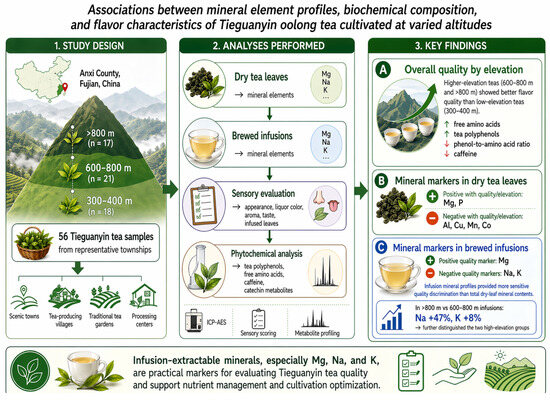
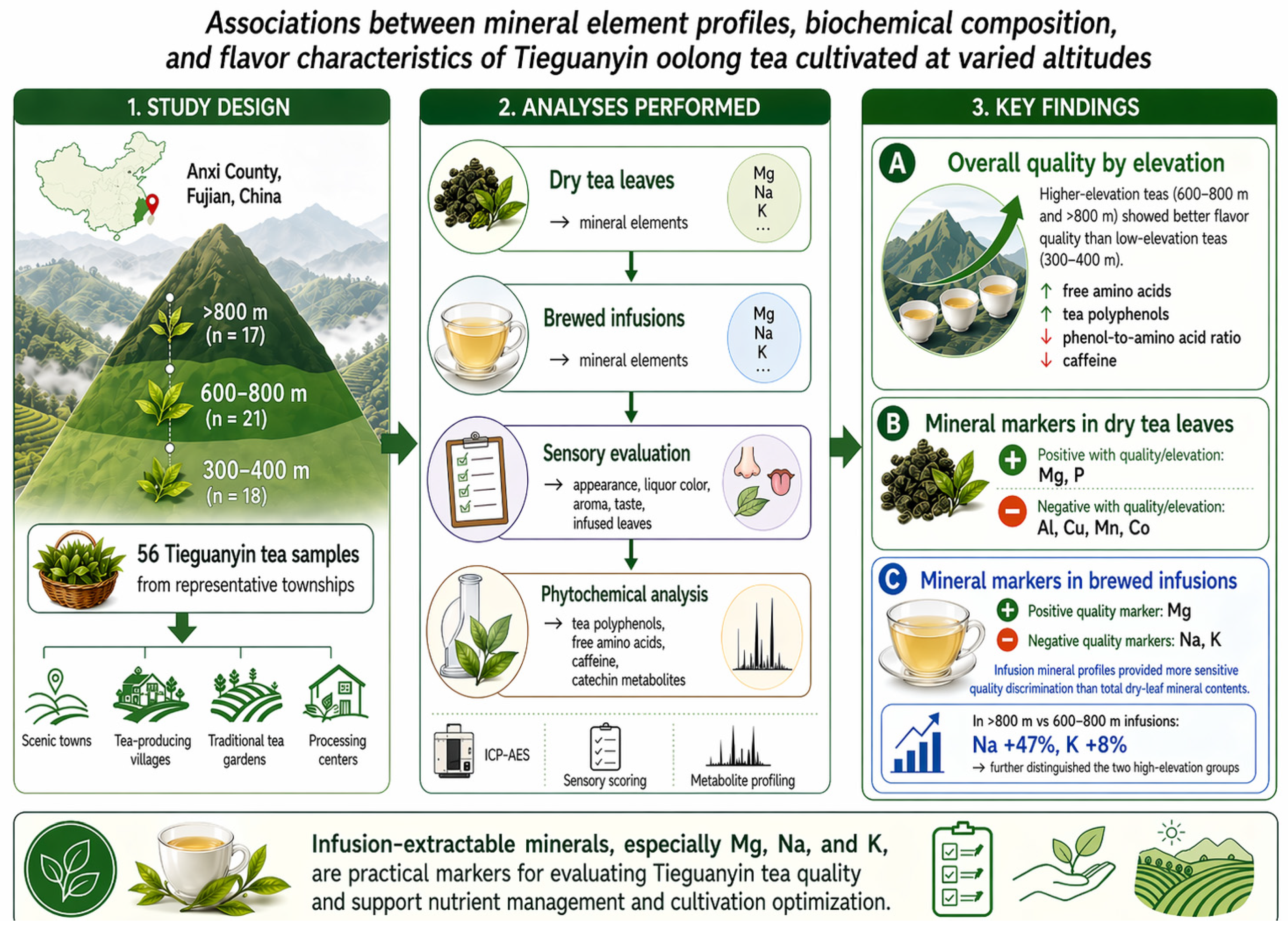
Mineral elements are components of metabolites in tea plants and directly contribute to taste formation in brewed tea infusions. Like quality-related compounds such as tea polyphenols and free amino acids, their accumulation and leachability are strongly influenced by growing conditions. To investigate the relationships between mineral elements and flavor quality, 56 Tieguanyin tea samples collected across different elevation gradients were analyzed. Unlike previous altitude-related studies that mainly focused on conventional metabolites, this study simultaneously examined mineral element contents in both dry tea leaves and brewed infusions, together with sensory evaluation and the quantification of tea polyphenols, free amino acids, caffeine, and catechin metabolites. Compared with low-elevation teas (300–400 m), high-elevation teas (600–800 m and above 800 m) exhibited superior flavor quality, with higher free amino acids and tea polyphenols, and lower phenol-to-amino acid ratios and caffeine contents, whereas catechin metabolites showed only a weak association with elevation. In dry tea leaves, analysis of total mineral elements indicated that higher magnesium (Mg) and phosphorus, together with lower aluminum, copper, manganese, and cobalt, were positively associated with both elevation and tea quality. In brewed tea infusions, Mg was positively correlated with quality, whereas sodium (Na) and potassium (K) were negatively associated. Notably, Na was 47% higher and K was 8% higher in teas from above 800 m than in those from 600–800 m, enabling further separation of the two high-elevation groups. These findings provide a scientific basis for improving Oolong tea quality through optimized cultivation practices and nutrient regulation.

Graphical Abstract

1. Introduction

Tieguanyin, a distinguished Chinese oolong tea, is esteemed for its unique aroma and flavor and is associated with various health benefits, including antioxidant activity, lipid and blood pressure reduction, digestive promotion, and detoxification. The biochemical constituents of tea plants—such as polyphenols, amino acids, and caffeine—constitute the material foundation of tea quality [1]. Amino acids, as key nitrogenous compounds, influence the freshness, briskness, and aroma of tea infusions. Tea polyphenols, predominantly catechins (~70%), affect infusion color and impart astringency. The phenol-to-ammonia ratio (polyphenols to free amino acids) serves as a direct indicator of taste quality, with lower ratios signifying enhanced freshness and superior quality. Caffeine contributes primarily to bitterness; balanced astringency and bitterness enrich flavor complexity. These quality components are modulated by factors including soil nutrient content, fertilization practices [2], and elevation [3].
Elevation is a critical environmental determinant affecting tea plant growth, development, and flavor quality [4]. High-altitude environments typically feature lower temperatures, greater diurnal temperature variation, abundant sunlight, and good ventilation, which collectively influence tea plant metabolism and promote accumulation of beneficial compounds such as amino acids and polyphenols [5], while suppressing caffeine synthesis, thereby enhancing tea quality [6].
Tea leaves contain mineral elements essential for physiological processes, growth, and nutritional quality [7]. These minerals participate directly in the biosynthesis and metabolism of flavor compounds, significantly impacting sensory attributes (appearance, liquor color, aroma, taste, infused leaves) and biochemical quality [8]. Maintaining mineral element concentrations within optimal ranges is crucial for producing high-quality tea [9].
Tea consumption primarily occurs via infusion, wherein the solubilized compounds and elements determine flavor [10]. Elemental intake by consumers is predominantly through infusion rather than direct leaf ingestion [11]. Elemental composition in infusions reflects not only nutrient uptake by shoots but also element solubility and extraction efficiency, which are influenced by brewing conditions [12]. Investigating element leaching under realistic brewing conditions is therefore vital for assessing tea quality, health benefits, and flavor formation.
Previous studies have shown that elevation affects tea flavor quality and the accumulation of conventional metabolites such as amino acids and polyphenols [13]. However, compared with these traditional quality-related compounds, the role of mineral elements in altitude-associated quality variation remains insufficiently understood. Existing studies have largely focused on total mineral accumulation in dry tea leaves, with much less attention paid to the infusion-extractable fraction that is actually released during brewing and directly contributes to tea flavor. Because tea is consumed as an infusion rather than as dry leaves, evaluating mineral effects based only on total leaf content may not accurately reflect their contribution to drinking quality [10,14]. Therefore, whether mineral profiles in brewed infusions or total mineral contents in dry tea leaves better discriminate flavor quality has not been systematically evaluated in Tieguanyin tea.
This study analyzed mineral element contents in both dry tea leaves and brewed infusions of Tieguanyin samples collected across different elevation gradients in Anxi County, together with sensory quality and major biochemical components, to clarify their relationships with flavor quality and to compare the associations of dry-leaf and infusion mineral profiles with tea quality, thereby providing a reference for cultivation and quality improvement of Tieguanyin tea.

2. Materials and Methods

2.1. Sample Collection

A total of 56 Tieguanyin tea samples were collected by field sampling from representative townships across Anxi County, Fujian Province, including Xianghua, Lantian, Futian, Taozhou, Hushang, Hutou, Jingu, Penglai, Xiping, Jiandou, Gande, and Bailai. Sampling covered elevations from 300 to 1200 m: 18 samples at 300–400 m, 21 at 600–800 m, and 17 above 800. Each tea sample was an independent biological replicate from an independently processed batch and was collected during the spring harvest of 2025, with all samples originating from the same harvest season. Traditional oolong processing methods (shaking, killing, rolling, drying) were employed (Table S1).

2.2. Sensory Evaluation

Sensory attributes, including appearance, liquor color, aroma, taste, and infused leaves, were evaluated blindly according to the standardized procedure described in GB/T 23776-2018 [15] by a tasting panel comprising three officially certified professional tasters from Zhejiang University, the Tea Research Institute of the Chinese Academy of Agricultural Sciences, and the Center for Tea Quality Supervision and Inspection of the Ministry of Agriculture of China. The tasters had 10–32 years of experience in sensory evaluation, and each had evaluated more than 2000 tea samples annually in recent years. For appearance evaluation, 100 g of tea sample was assessed. For infusion assessment, 3 g of tea was brewed in 150 mL of freshly boiled water for 5 min. The score for infused leaves was mainly determined based on the proportion of buds and leaves. The total sensory score of each sample was calculated as the weighted sum of the scores for dry tea appearance, taste, aroma, liquor color, and infused leaves, with weighting factors of 0.25, 0.30, 0.25, 0.10, and 0.10, respectively.

2.3. Chemical Analyses

Free amino acids, tea polyphenols, and caffeine contents were determined in triplicate according to Chinese national standards GB/T 8314-2013 [16], GB/T 8313-2018 [17], and GB/T 8312-2013 [18], respectively [19].
Mineral elements in dry tea leaves were quantified by ICP-AES (Optima 8000, PerkinElmer, Waltham, MA, USA) after nitric acid microwave digestion, using external calibration with multi-element standard solutions. Calibration curves were established prior to analysis, and both instrumental blanks and samples were analyzed in triplicate. Tea infusions were prepared by extracting tea leaves with water (1:20 g/g) at 100 °C for 5 min.
Non-targeted metabolomics analysis was performed on extracts obtained by adding 500 μL of extraction solvent [70% methanol aqueous solution containing 0.1% (v/v) hydrochloric acid] to each sample, followed by UHPLC-Q Exactive-MS analysis using a Zorbax Eclipse Plus C18 column (150 × 3.0 mm, 1.8 μm, Agilent Technologies, Little Falls, DE, USA). The column temperature was maintained at 40 °C, and the flow rate was 0.4 mL/min. The mobile phase consisted of deionized water containing 0.1% (v/v) formic acid (A) and methanol (B). For quality control, pooled QC samples and blank samples were included during analysis to monitor instrument stability and background interference. Raw data were subjected to peak extraction, alignment, and normalization before multivariate analysis. Identification criteria: retention time, exact mass (<5 ppm), and MS/MS match with standards or libraries. LOD/LOQ (S/N = 3/10) and reproducibility (RSD < 30% from QCs) were assessed.

2.4. Data Analysis

Statistical analyses were performed using SPSS 25.0 (IBM, Armonk, NY, USA), including descriptive statistics, correlation analysis, and one-way ANOVA followed by Tukey’s post hoc test. PCA and PLS-DA were conducted using SIMCA 14.1 (Umetrics, Umea, Sweden). Heatmaps and figures were generated using GraphPad Prism 10.6 (GraphPad Software, Boston, MA, USA), and final figure refinement was performed in Adobe Illustrator 2019 (Adobe Systems, San Jose, CA, USA). Statistical significance was set at p < 0.05.

3. Results

3.1. Sensory Quality and Primary Components

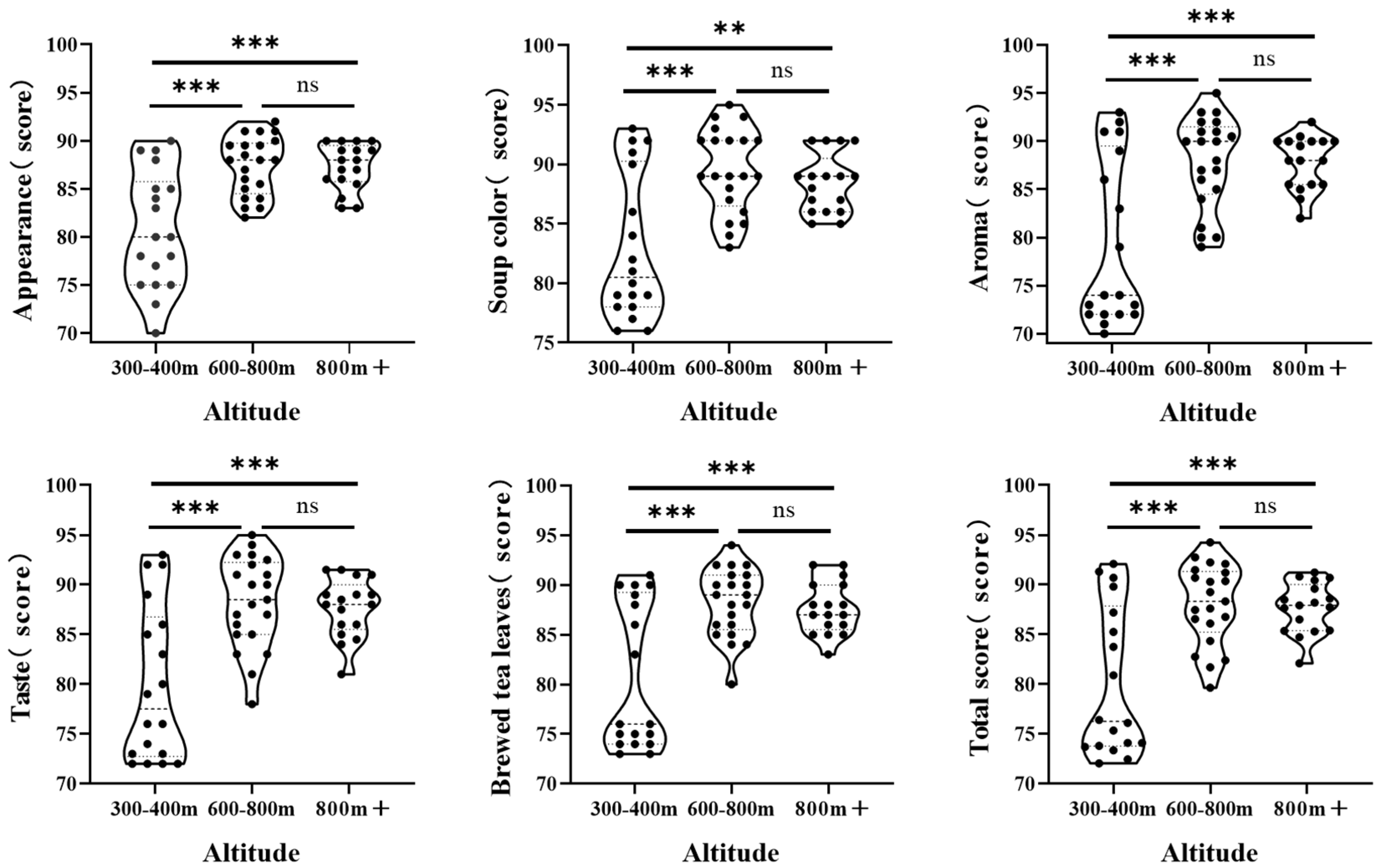
Tieguanyin teas from elevations of 600–800 m and above 800 m exhibited significantly (p < 0.001) higher sensory scores (appearance, liquor color, aroma, taste, infused leaves, total score) compared to those from 300–400 m, with no significant (p > 0.05) difference between the two higher elevation groups (Figure 1).
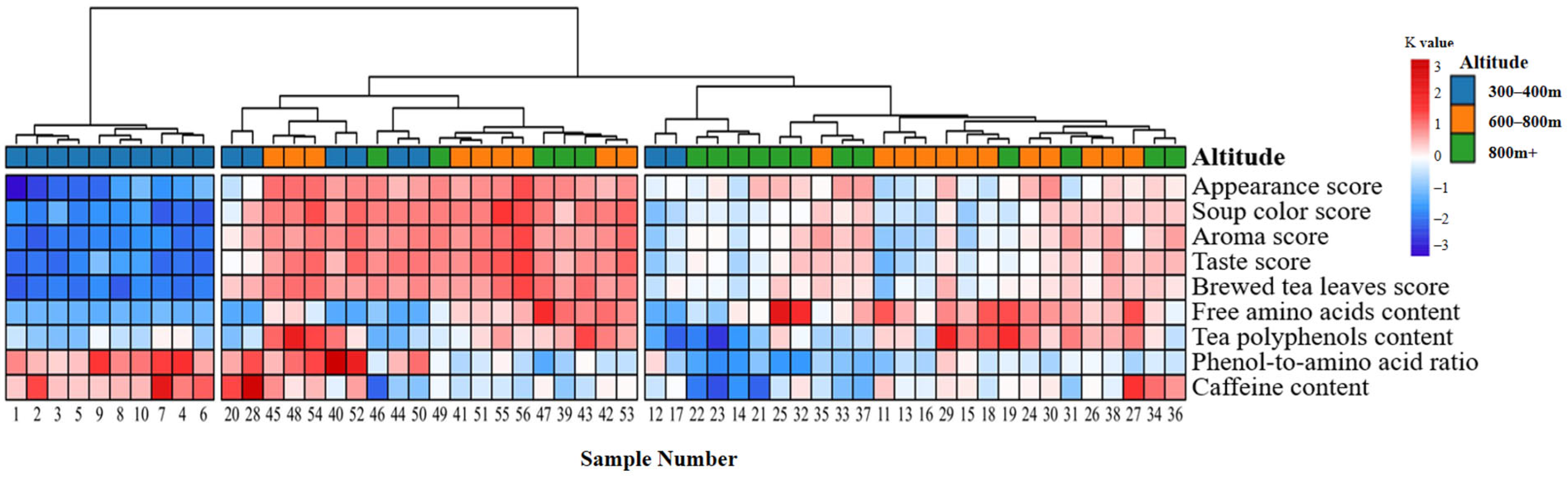
High-elevation (600–800 m and above 800 m) teas contained elevated amino acid and polyphenol levels and lower phenol-to-amino acid ratios and caffeine content. Conversely, the phenol-to-amino acid ratios and caffeine content of high-elevation Tieguanyin were generally lower than those of low-elevation Tieguanyin. Cluster analysis was conducted on appearance, liquor color, aroma, taste, infused leaves, amino acid content, tea polyphenol content, phenol-to-amino acid ratios, and caffeine content across 56 tea samples (Figure 2). The resulting cluster heatmap classified the 56 Tieguanyin samples into three grades: Low, High, and Premium. All samples ranked 1–10 in the Low grade originated from the low elevation range (300–400 m). Tea samples in the Premium and High grades were distributed across all three elevation ranges, with the majority coming from the high elevation ranges (600–800 m and above 800 m).
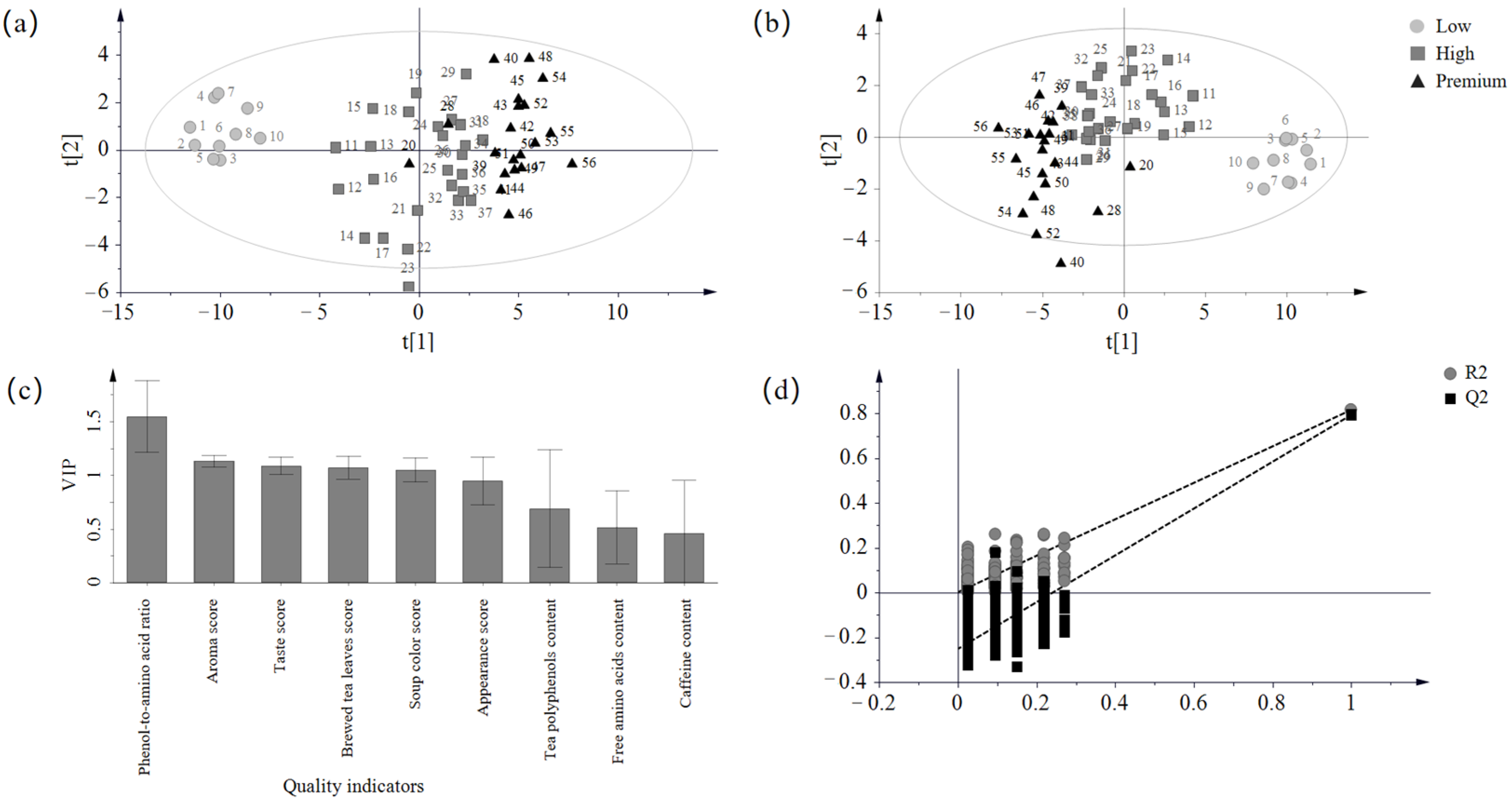
The constructed PCA model exhibited R2X(cum) = 90.1% and Q2(cum) = 75.1%. The score plot showed that low-grade sample points were primarily distributed in the negative region of PC1, premium-grade sample points were mainly located in the positive region of PC1, and high-grade sample points occupied an intermediate transitional position, indicating a clear separation trend among the different grades (Figure 3a). The constructed PLS-DA model demonstrated R2X(cum) = 95.5%, R2Y(cum) = 63.9%, and Q2(cum) = 59.8%. This plot clearly illustrated strong separation among the premium, high, and low-grade sample points (Figure 3b). VIP analysis identified five indicators with VIP > 1, with the phenol-to-amino acid ratios contributing the most (Figure 3c). A permutation test with 200 iterations yielded a Q2 intercept on the y-axis of −0.233, indicating no overfitting in the model (Figure 3d). Multivariate analysis based on SIMCA, combined with rigorous validation, revealed significant differences in sensory and biochemical quality among the premium, high, and low grades, with the phenol-to-amino acid ratios serving as a key quality indicator.

3.2. Flavonoid Metabolites

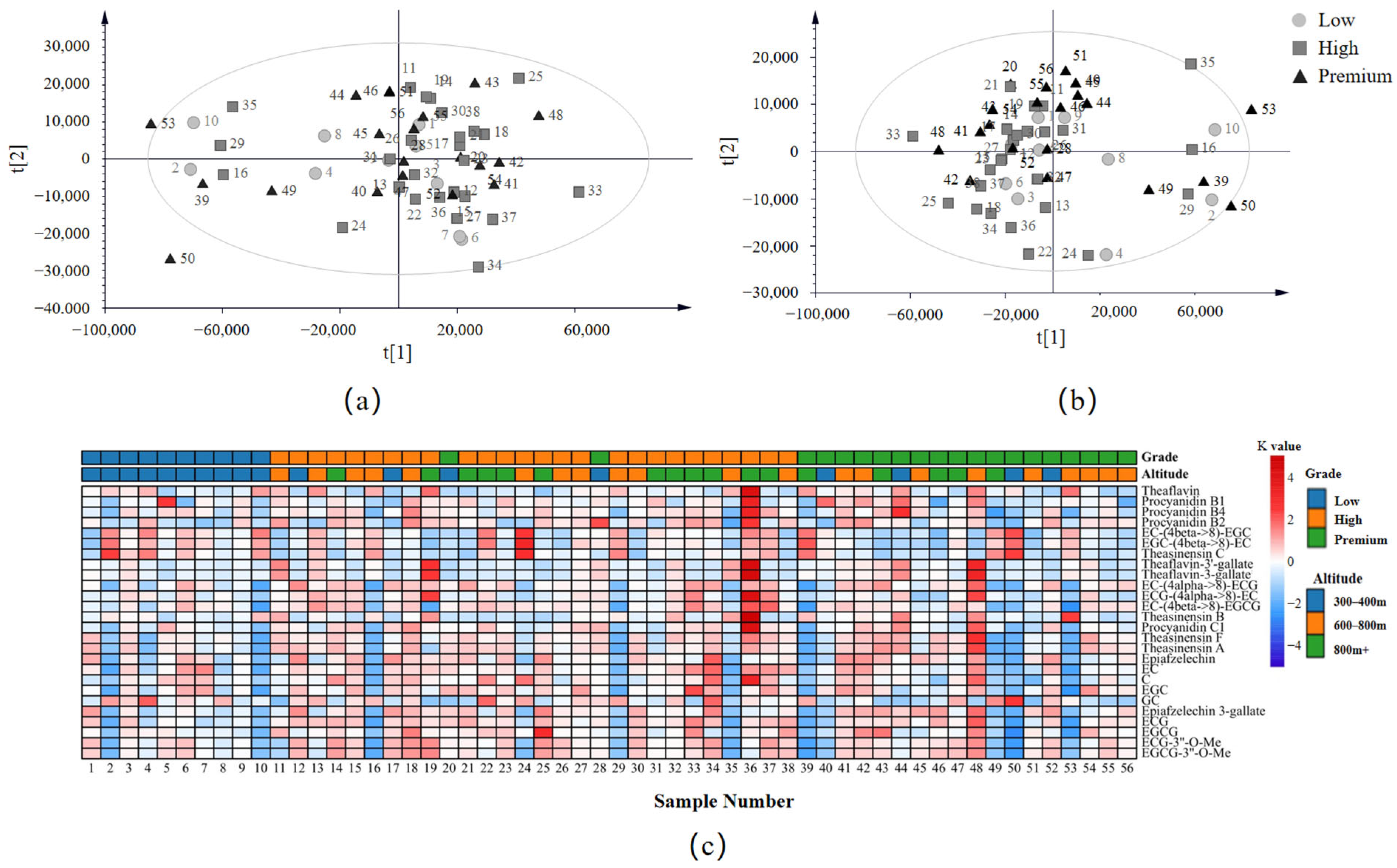
The constructed PCA model for flavonoid metabolites exhibited R2X(cum) = 83.4% and Q2(cum) = 61.5% (Figure 4a). The constructed PLS-DA model showed R2X(cum) = 80.5%, R2Y(cum) = 9.17%, and Q2(cum) = −7.24%. This plot indicated weak separation among the Premium, High, and Low-grade sample points (Figure 4b). VIP analysis identified six indicators with VIP scores greater than 1, with GC contributing the most. Cluster analysis of flavonoid compounds revealed some variation associated with tea quality, although their association with elevation appeared limited (Figure 4c).

3.3. Mineral Element Content in Tea Leaves and Tea Infusions

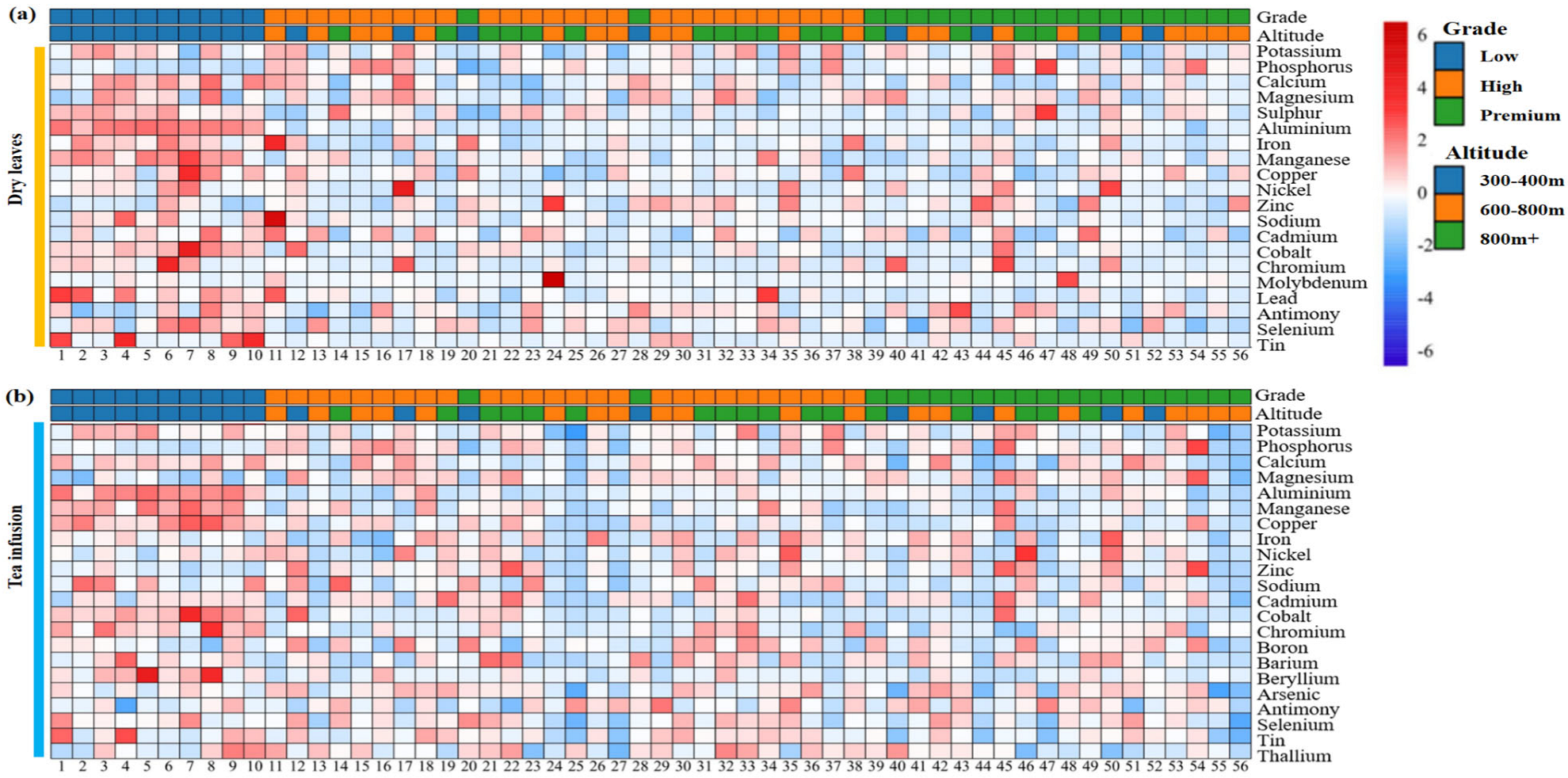
Except for P and zinc (Zn), the mineral content in Low-grade Tieguanyin tea (grown at 300–400 m elevation) was generally higher than that in premium and high-grade teas (grown at 600–800 m and above 800 m elevation, respectively) (Figure 5). Similarly, in the tea infusion, except for P, Mg, Zn, and antimony (Sb), the mineral content in Low-grade Tieguanyin infusion was generally higher than that in Premium and High-grade infusions (Figure 5).

3.4. Correlation Between Mineral Elements and Tea Quality

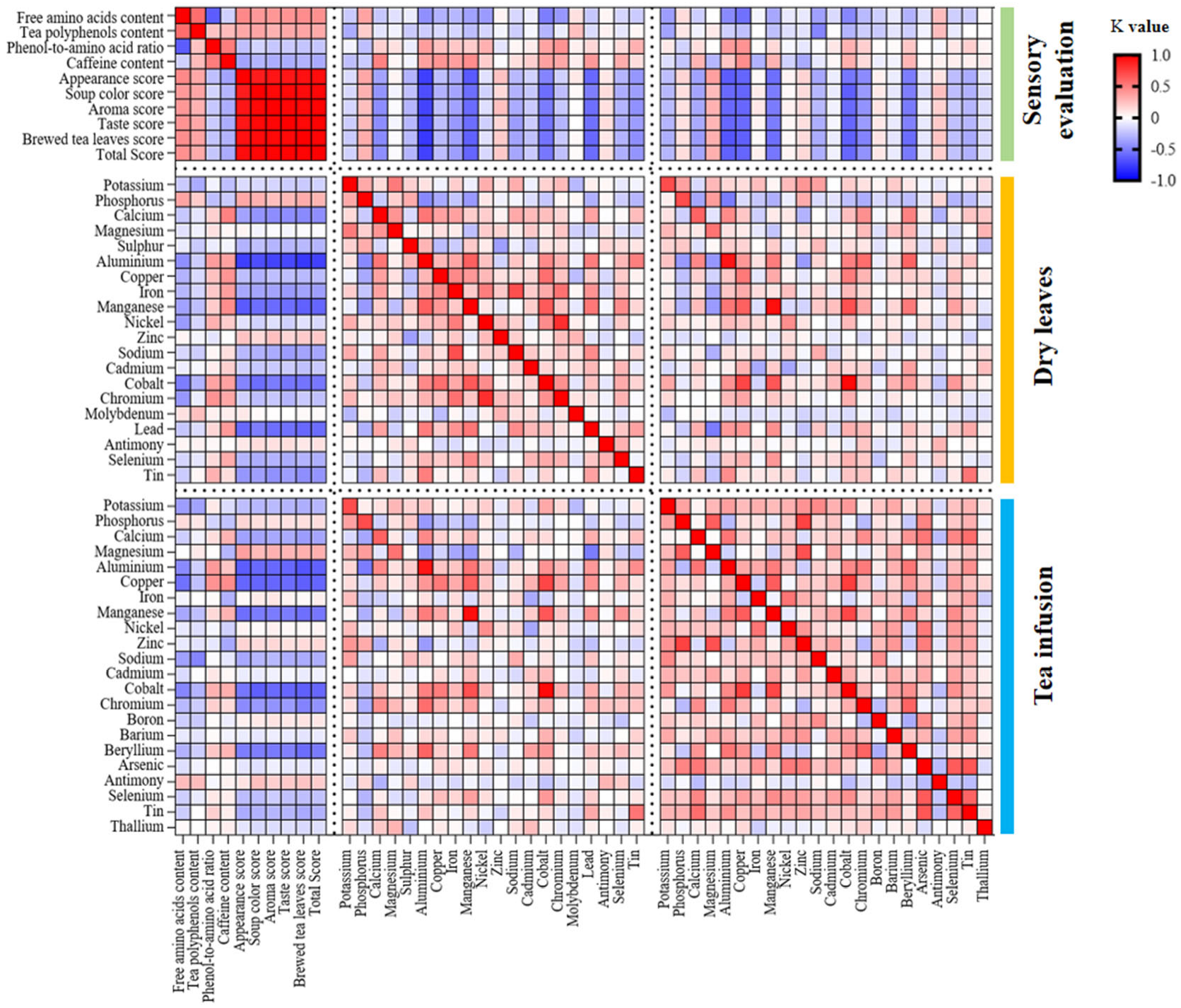
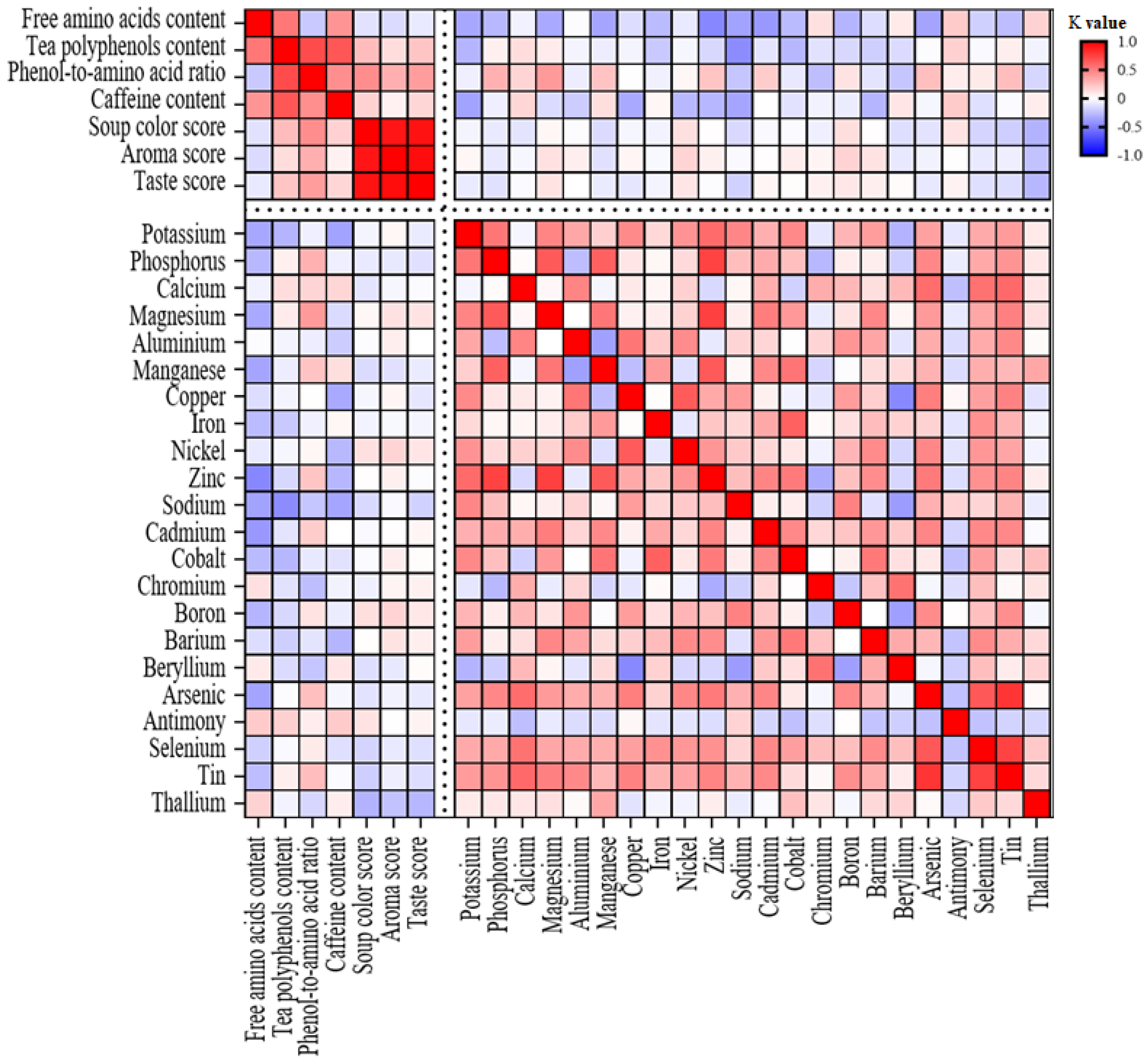
In dry leaves, most elements (e.g., Al, Mn) exhibited significant negative correlations with liquor color, aroma, taste, amino acid content, and tea polyphenol levels. Conversely, elements such as calcium (Ca), Al, and Cu showed significant positive correlations with the phenol-to-amino acid ratios and caffeine content (Figure 6), influencing the infusion’s astringency and bitterness and thereby diminishing sensory and biochemical quality. Notably, only P demonstrated significant positive correlations with amino acids, liquor color, and taste.
Figure 6. Correlation heatmap between Tieguanyin quality components and mineral element contents. n = 56. Colors represent normalized values, with red and blue indicating higher and lower values, respectively. Side bars indicate sensory evaluation, dry-leaf, and tea-infusion variables. Although many elements in both dry tea and tea infusion exhibited negative correlations with tea quality indicators, the correlation between element content in the tea infusion and quality was stronger than that observed for total accumulation in dry tea, particularly between the 600–800 m and 800 m+ producer groups (Figure 7). This suggests that leachable elements in the tea infusion serve as potential indicators for distinguishing tea quality in high-elevation production areas. Specifically, Na and K are important negative indicators for differentiating quality between these two elevation ranges, while Mg is a key positive indicator associated with high-quality Tieguanyin (Tables S4 and S5).
Horticulturae 12 00576 g006
In infusions, most elements (Al, Cu, Ca, etc.) exhibited negative correlations with liquor color, aroma, taste, amino acid content, and tea polyphenol levels. Only Mg showed significant positive correlations with the infusion’s liquor color, aroma, and taste. Elements such as Al, Ca, Co, and beryllium (Be) demonstrated positive correlations with the phenol-to-amino acid ratios and caffeine content, whereas Zn, Mg, and iron (Fe) exhibited negative correlations with caffeine content (Figure 6).
Most nutrient elements in both tea leaves and tea infusions exhibited negative correlations with quality indicators such as liquor color, aroma, taste, amino acids, and tea polyphenols. Conversely, they showed positive correlations with the phenol-to-amino acid ratios and caffeine content. Notably, only P in tea leaves and Mg in the tea infusion had significant positive effects on quality (Figure 6, Tables S2 and S3).
Notably, the K element in the tea infusion exhibited significant negative correlations with sensory scores and highly significant negative correlations with tea polyphenols (r = −0.366) and amino acids (r = −0.385). In the total content, K showed only a significant negative correlation with tea polyphenols. The Na element in the tea infusion demonstrated highly significant negative correlations with tea polyphenols (r = −0.481) and amino acids (r = −0.373), whereas in the total content, it showed no significant correlations with other biochemical quality indicators. The selenium (Se) element in the total content exhibited significant negative correlations with liquor color, aroma, and taste, as well as a significant positive correlation with caffeine; no significant associations were observed in the tea infusion. The Fe element in the total content showed highly significant negative correlations with amino acids, liquor color, aroma, and taste, along with a highly significant positive correlation with caffeine. In the tea infusion, Fe only showed a significant negative correlation with caffeine, indicating a minor impact on infusion quality.

4. Discussion

4.1. Elevation Effects on Tieguanyin Quality

This study found that the amino acid content, tea polyphenol content, aroma, and taste of high-elevation Tieguanyin tea (600–800 m and above 800 m) were significantly higher than those of low-elevation Tieguanyin (300–400 m). In contrast, the phenol-to-amino acid ratios and caffeine content of high-elevation Tieguanyin were significantly lower. Elevations above 600 m are suitable for producing high-quality Anxi Tieguanyin, consistent with previous studies suggesting that higher elevations favor the development of superior tea quality. This may be attributed to the environmental conditions of high-elevation tea-growing areas, which feature large diurnal temperature variations, abundant cloud cover and fog, and strong ultraviolet radiation. These factors promote the accumulation of secondary metabolites in tea plants, particularly tea polyphenols and amino acids, thereby enhancing the tea’s aroma and taste [20]. Han et al. [13] found that increasing cultivation altitude decreased total tea polyphenols but increased amino acid concentration, resulting in a significantly lower phenol-to-amino acid ratios and relatively better tea quality. It is worth noting that the changes in flavonoid compounds in Tie Guan Yin tea from different altitude producing areas are not completely the same pattern. Huang et al. [21] reported that catechin components varied with elevation: EGCG, ECG, and EC decreased as elevation increased, while EGC and GCG increased, resulting in minimal change in total catechins. This study found no significant differences in some catechins content, such as EGCG, among Tieguanyin teas from different elevations. Similarly, Yu [22] observed no clear pattern in catechin content across different tea grades at high elevations, consistent with the findings of this study. This interpretation is also consistent with the weak predictive performance of the flavonoid PLS-DA model’s negative Q2 value (−7.24%) in the present study, suggesting that flavonoid-related metabolites alone were insufficient to robustly discriminate the elevation groups (Figure 4). The negative Q2 likely arises from high intra-group variability and minimal inter-group differences in flavonoid profiles among tea samples, leading to overfitting in the PLS-DA model under cross-validation. Considering that flavonoid compounds contain numerous components such as flavonols, catechins, anthocyanins, etc., and the accumulation of these substances is related to environmental changes, their response to altitude changes may be influenced by multiple factors [23]. These elevation-related differences may not only reflect changes in conventional quality components, but also differences in plant growth dynamics and metabolic allocation under contrasting environments. Lower temperatures and greater diurnal temperature variation at higher elevations may reduce respiratory consumption and favor the retention of amino acids, while altered light conditions and UV exposure may modulate secondary metabolism, thereby influencing polyphenol accumulation and flavor balance. In addition, slower shoot development at higher elevations may contribute to differences in leaf maturity, which in turn affects the accumulation of caffeine and other quality-related compounds.

4.2. Mineral Elements and Tea Quality

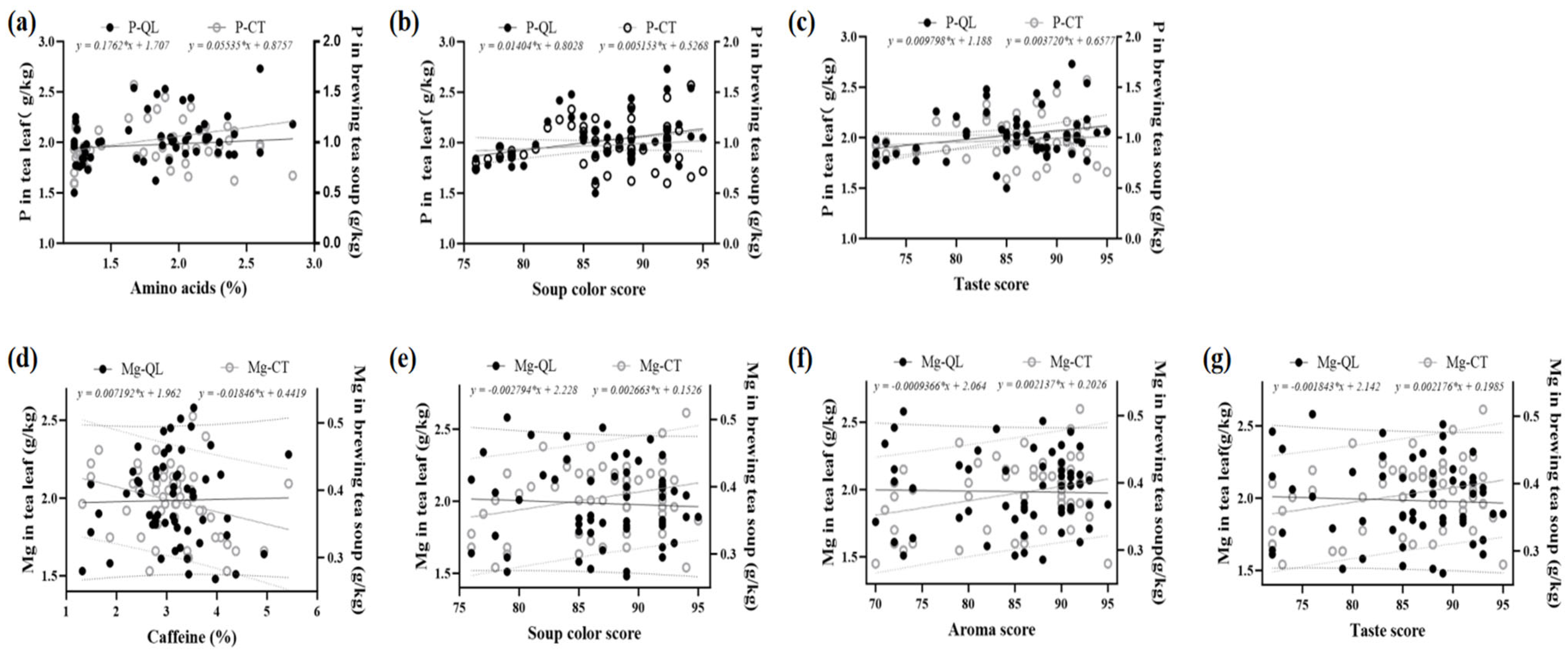
Phosphorus (P) in dry tea leaves showed significant positive correlations with amino acids, liquor color, and taste (Figure 8a), indicating a positive association with desirable flavor traits. This may be related to the role of P in energy transfer and carbon–nitrogen metabolism, which are closely linked to the synthesis of amino acids and other quality-related compounds. In contrast, P showed no significant correlation with tea polyphenols or caffeine, suggesting that its contribution is more closely associated with freshness and liquor quality than with bitterness or astringency. This is consistent with previous studies showing that appropriate phosphorus accumulation improves tea flavor [24]. The lack of a significant association between P in tea infusions and quality may reflect differences in chemical form and extraction behavior during brewing [25].
Magnesium (Mg) in tea infusions showed significant positive correlations with liquor color, aroma, and taste (r ≈ 0.30) (Figure 8b), suggesting that extractable Mg is beneficial to infusion quality. Mg is a key nutrient involved in chlorophyll formation and enzyme activation and is closely related to primary and secondary metabolism in tea plants [26]. Appropriate Mg supply has been reported to promote the accumulation of amino acids, tea polyphenols, catechins, and caffeine [27]. In the present study, however, Mg showed no significant correlation with quality when total dry-leaf content was considered. This difference likely reflects the distinction between total accumulation and extractable availability. Total leaf Mg includes structurally bound and stored fractions, whereas infusion Mg represents the soluble fraction that actually enters the beverage. Thus, infusion Mg may better reflect its relevance to flavor quality than total leaf Mg content.
Several elements, including Al, Mn, Co, and Pb in dry tea leaves, and Cu and Be in tea infusions, were negatively associated with sensory quality and amino acid content, but positively associated with caffeine. These patterns suggest that excessive accumulation of these elements is generally unfavorable to tea quality. This agrees with previous reports showing that aluminum stress impairs secondary metabolism and tea quality [28], that excessive Mn suppresses tea polyphenol and amino acid accumulation [29,30], and that lower Co and Cu contents are associated with better tea quality [31,32]. Such negative relationships may reflect both direct physiological stress and indirect effects related to shoot maturity. Element accumulation often increases with leaf development [33,34], whereas tender shoots are more closely associated with high-quality tea [35]. Excessive elemental concentrations may also disturb metabolic balance and reduce the formation of desirable flavor compounds [36].
Compared with total mineral contents in dry tea leaves, mineral profiles in brewed infusions more directly reflect the fraction released during brewing and thus are more relevant to drinking quality. In this study, the same element sometimes showed different associations depending on whether dry-leaf content or infusion content was considered. For example, Mg was positively associated with sensory quality only in infusions, whereas the negative effects of Na and K were more evident in the infusion than in total leaf content. These differences are likely related to extraction efficiency and the chemical state of the elements in plant tissues, since free forms are generally more readily extracted than bound forms [37]. The negative associations of Na and K in infusions may also reflect an unfavorable ionic environment in the brewed liquor, potentially affecting extraction balance and flavor harmony. Although the detailed mechanisms require further study, the more sensitive correlations exhibited by mineral elements in tea infusions suggest that certain elements, particularly Mg, Na, and K, may serve as potential markers for assessing Tieguanyin tea quality.

4.3. Elemental Markers in Infusion Differentiating High-Elevation Tea Quality

Previous studies have shown that the altitude of tea-producing areas is not simply linearly correlated with tea quality [38]. Consistent with this view, our results showed that the taste and flavor of Tieguanyin from elevations above 800 m were not significantly different from those from the 600–800 m range, and most conventional metabolites also failed to clearly separate these two high-elevation groups. This suggests that once tea is grown under generally favorable high-altitude conditions, traditional quality indicators may become less sensitive for further discrimination. In this context, the elemental composition of the brewed infusion may provide an additional and more sensitive layer of information, because flavor is ultimately expressed in the liquor rather than in the dry leaves.
Our study showed that Na in tea infusions was the most significant elemental indicator differentiating quality between the 600–800 m and above 800 m groups. The mean Na content in the 600–800 m infusion was 7.30 mg/kg, whereas that in the above 800 m infusion was 10.73 mg/kg, approximately 47% higher in the above 800 m samples (Figure 7). Sodium in tea infusions showed negative correlations with amino acids, tea polyphenols, caffeine, and taste (−0.366*, −0.455**, −0.357*, −0.182, respectively). Similarly, the mean K content in the 600–800 m infusion was 10.83 g/kg, compared with 11.66 g/kg in the above 800 m infusion, about 8% higher in the above 800 m samples. Potassium showed significant negative correlations with amino acids and caffeine (−0.347*, −0.367*), suggesting that excessive K accumulation in the infusion may be unfavorable to flavor quality. These results imply that, under high-elevation conditions where conventional sensory and metabolic indicators become less discriminative, subtle differences in infusion ionic composition may better capture quality variation. One possible explanation is that Na and K are highly soluble and readily released during brewing, making their profiles in the infusion particularly sensitive to differences in tissue chemical state, nutrient balance, and extraction dynamics. Their negative associations with major flavor-related compounds further suggest that they may not simply be passive markers, but may also reflect a less favorable balance of soluble constituents in the brewed tea.
By contrast, Mg behaved differently from Na and K. The Mg content in tea infusions showed positive associations with liquor color, aroma, and taste in the broader dataset, but the mean Mg contents of the two high-elevation groups were very similar (0.39 and 0.40 g/kg, respectively), indicating that its role was more closely related to overall high quality than to the fine separation between these two high-altitude groups. This distinction suggests that different mineral elements may contribute to tea quality at different levels: some may function as general positive or negative indicators of overall quality, whereas others may be more useful for fine-scale discrimination within already favorable production zones. In this study, Na and K appear to belong to the latter category.
It should also be noted that not all studies have reported consistent relationships between altitude, flavor compounds, and tea quality. Such inconsistencies may arise from differences in cultivar, harvest season, leaf maturity, soil conditions, and fertilization practices, indicating that altitude acts together with multiple ecological and agronomic factors rather than as an isolated driver. The same caution applies to elemental markers: although Na and K showed clear discriminatory value in the present study, their mechanistic roles may vary among tea types and production environments. Nevertheless, our results demonstrate that elemental profiles in tea infusions can provide additional discriminatory power beyond conventional metabolites, especially within high-elevation production areas where quality differences are relatively subtle. Overall, sodium and potassium in infusions served as significant negative indicators distinguishing teas from the 600–800 m and above 800 m elevations, whereas magnesium functioned as a positive quality marker in the broader quality evaluation framework. These findings highlight the value of infusion-based mineral profiles as practical indicators for fine-scale assessment of Tieguanyin tea quality.

5. Conclusions

This study clarifies the relationships between mineral elements and quality attributes of Anxi Tieguanyin tea across altitudinal gradients, and highlights the importance of distinguishing between total mineral contents in dry tea leaves and infusion-extractable mineral profiles. Tieguanyin teas from higher elevations generally showed superior flavor quality, while mineral profiles in brewed infusions provided more sensitive quality information than total dry-leaf mineral contents. Phosphorus in dry tea leaves and magnesium in tea infusions were positively associated with quality, whereas sodium and potassium in tea infusions acted as negative indicators, especially for distinguishing the two high-elevation groups. These results identify infusion-extractable minerals as practical quality markers and provide a basis for nutrient management and quality evaluation of Tieguanyin tea. Future studies integrating soil properties and molecular mechanisms are needed to further clarify the role of mineral elements in tea quality formation.

Supplementary Materials

The following supporting information can be downloaded at: https://www.mdpi.com/article/10.3390/horticulturae12050576/s1, Table S1. Information of 56 Tieguanyin Samples. Table S2. Correlation Coefficients of Total Nutrient Elements and Quality Related Components in Tieguanyin Tea. Table S3. Correlation Coefficients of Nutrient Elements and Quality Related Components in Tea Infusion. Table S4. Correlation Coefficients of Total Nutrient Elements and Quality Related Components in Tieguanyin Tea (Excluding Elevation 300–400 m). Table S5. Correlation Coefficients of Nutrient Elements and Quality Related Components in Tea Infusion (Excluding Elevation 300–400 m).

Author Contributions

Conceptualization, J.M., K.Z., D.Y., M.L. and Q.Z.; Methodology, J.M., M.L. and X.H.; Software, J.M. and M.L.; Validation, J.M., K.Z., D.Y., M.L. and X.H.; Formal analysis, J.M., K.Z. and X.H.; Investigation, J.M., K.Z. and Q.Z.; Resources, J.M., K.Z., D.Y. and X.H.; Data curation, J.M., D.Y. and X.H.; Writing—original draft, J.M., M.L. and Q.Z.; Writing—review & editing, M.L. and Q.Z.; Visualization, J.M.; Supervision, Q.Z.; Project administration, Q.Z.; Funding acquisition, Q.Z. All authors have read and agreed to the published version of the manuscript.

Funding

This work was financially supported by The National Key Research and Development Program of China (2022YFF0606802).

Data Availability Statement

The original contributions presented in this study are included in the article/Supplementary Material. Further inquiries can be directed to the corresponding author.

Conflicts of Interest

The authors declare no conflict of interest.

References

  1. Raza, A.; Chaoqun, C.; Luo, L.; Asghar, M.A.; Li, L.; Shoaib, N.; Yin, C. Combined application of organic and chemical fertilizers improved the catechins and flavonoids biosynthesis involved in tea quality. Sci. Hortic. 2024, 337, 113518. [Google Scholar] [CrossRef]
  2. Qiu, Z.; Liao, J.; Chen, J.; Li, A.; Lin, M.; Liu, H.; Huang, W.; Sun, B.; Liu, J.; Liu, S.; et al. Comprehensive analysis of fresh tea (Camellia sinensis cv. Lingtou Dancong) leaf quality under different nitrogen fertilization regimes. Food Chem. 2024, 430, 138127. [Google Scholar] [CrossRef]
  3. Wu, Q.J.; Chen, Y.; Peng, L.Q.; Zhou, M.S. The effect of altitude on the metabolism of fresh tea leaves and the quality components of tea leaves. J. Fujian Open Univ. 2021, 6, 31–35. [Google Scholar]
  4. Wang, T.T.; Jin, X.Y. Analysis of the Impact of Ecological Conditions on Tea Quality. Tea Sci. Technol. 2014, 3, 6–12. [Google Scholar] [CrossRef]
  5. Liu, X.C.; Cao, F.R. A Review of the Impact of Altitude on the Quality and Flavor of Phoenix Dancong Tea. Guangdong Tea Ind. 2020, 5, 2–5. [Google Scholar]
  6. Ren, X.; Lin, M.; Liu, J.; Khan, W.; Zhao, H.; Sun, B.; Liu, S.; Zheng, P. Effects of Altitude on Tea Composition: Dual Regulation by Soil Physicochemical Properties and Microbial Communities. Plants 2025, 14, 1642. [Google Scholar] [CrossRef]
  7. Yang, Y.Q.; Tu, Y.Y. Research Progress on the Characteristics of Trace Elements in Tea Plants and Their Relationship with Tea Quality. Tea Commun. 2023, 50, 153–158. [Google Scholar]
  8. Gu, J.R.; Zhang, L.; Liu, T.F.; Yang, D.F.; Deng, J.H.; Lu, H.Q.; Qian, H.; Dong, M.H. Analysis of Mineral Elements and Effective Components such as Tea Polyphenols in Dongting Biluochun Tea under Different Tea-Fruit Intercropping Systems. Jiangsu Agric. Sci. 2015, 43, 339–342. [Google Scholar]
  9. Zhang, H.; Li, C.; Wei, K.; Liu, M.; Shi, Y.; Yang, X.; Fang, L.; Ruan, J.; Zhang, Q. The reduction of tea quality caused by irrational phosphate application is associated with anthocyanin metabolism. Beverage Plant Res. 2023, 3, 10. [Google Scholar] [CrossRef]
  10. Bai, F.Q.; Chen, G.J.; Niu, H.L.; Zhu, H.; Huang, Y.; Zhao, M.; Hou, R.; Peng, C.; Li, H.; Wan, X.; et al. The types of brewing water affect tea infusion flavor by changing the tea mineral dissolution. Food Chem. X 2023, 18, 100681. [Google Scholar] [CrossRef]
  11. Yun, F.; Ye, H.M.; Huang, H. Characteristics of contamination by nine elements and health risk assessment in commercially available Kuding tea and Zhagu tea and their infusions in Hainan Province. Pract. Prev. Med. 2021, 28, 1054–1058. [Google Scholar] [CrossRef]
  12. Guo, G.R.; Ren, R.T. Study on the chemical form and extraction rate of Cr, Cu, Fe, Mn, Ni and Zn in tea. J. Hyg. Res. 2000, 29, 231–233. [Google Scholar]
  13. Han, W.Y.; Huang, J.G.; Li, X.; Li, Z.X.; Ahammed, G.J.; Yan, P.; Stepp, J.R. Altitudinal effects on the quality of green tea in east China: A climate change perspective. Eur. Food Res. Technol. 2017, 243, 323–330. [Google Scholar] [CrossRef]
  14. Gallaher, R.N.; Gallaher, K.; Marshall, A.J.; Marshall, A.C. Mineral analysis of ten types of commercially available tea. J. Food Compos. Anal. 2006, 19, S53–S57. [Google Scholar] [CrossRef]
  15. GB/T 23776-2018; Methodology for Sensory Evaluation of Tea. Standards Press of China: Beijing, China, 2018.
  16. GB/T 8314-2013; Tea—Determination of Free Amino Acids Content. Standards Press of China: Beijing, China, 2013.
  17. GB/T 8313-2018; Tea—Determination of Tea Polyphenols and Catechins Content. Standards Press of China: Beijing, China, 2018.
  18. GB/T 8312-2013; Tea—Determination of Caffeine Content. Standards Press of China: Beijing, China, 2013.
  19. Mao, Y.; Li, H.; Wang, Y.; Fan, K.; Song, Y.; Han, X.; Zhang, J.; Ding, S.; Song, D.; Wang, H.; et al. Prediction of Tea Polyphenols, Free Amino Acids and Caffeine Content in Tea Using Hyperspectral Imaging. Foods 2022, 11, 2537. [Google Scholar] [CrossRef]
  20. Chen, D.Q.; Jiang, W.B.; Daniel, G.; Zou, C.; Yin, J.F.; Chen, J.X.; Wang, F.; Xu, Y.Q. Effects of dynamic extraction conditions on the chemical composition and sensory quality traits of green tea. LWT 2022, 169, 113972. [Google Scholar] [CrossRef]
  21. Huang, J.G.; Han, W.Y. The Impact of Altitude on the Quality of Lushan Cloud and Mist Tea. China Tea 2019, 41, 19–21. [Google Scholar]
  22. Yu, C.Q. The Effects of Altitude on the Quality of Alpine Green Tea and the Characteristics of Oxidative Damage Repair. Master’s Thesis, Zhejiang A&F University, Hangzhou, China, 2022. [Google Scholar] [CrossRef]
  23. Gao, Y.; Jahan, T.; Hao, L.; Shi, Y.; Ma, C.; Huda, N.; Chen, H.; Li, W.; Fernie, A.R.; He, Y.; et al. UV-B Responsive Flavonoid Synthesis Contributes to Tartary Buckwheat High-Altitude Adaption. Plant Biotechnol. J. 2025, 23, 5211–5228. [Google Scholar] [CrossRef]
  24. Lin, Z.; Qi, Y.; Chen, R.; Zhang, F.; Chen, L. Effects of phosphorus supply on the quality of green tea. Food Chem. 2012, 130, 908–914. [Google Scholar] [CrossRef]
  25. Li, J.; Xia, J.G. A Review of the Relationship Between Nitrogen, Phosphorus, Potassium and Tea Quality. Chin. Agric. Sci. Bull. 2005, 21, 62–66. [Google Scholar]
  26. Zhang, Y.; Zhang, Q.; Wang, Y.; Lin, S.; Chen, M.; Cheng, P.; Du, M.; Jia, X.; Ye, J.; Wang, H. Study on the effect of magnesium on leaf metabolites, growth and quality of tea tree. Front. Plant Sci. 2023, 14, 1192151. [Google Scholar] [CrossRef]
  27. Ruan, J.Y.; Ma, L.F.; Yang, Y.J. Magnesium nutrition on accumulation and transport of amino acids in tea plants. J. Sci. Food Agric. 2012, 92, 1375–1383. [Google Scholar] [CrossRef]
  28. Peng, A.; Yu, K.; Yu, S.; Li, Y.; Zuo, H.; Li, P.; Li, J.; Huang, J.; Liu, Z.; Zhao, J. Aluminum and Fluoride Stresses Altered Organic Acid and Secondary Metabolism in Tea (Camellia sinensis) Plants: Influences on Plant Tolerance, Tea Quality and Safety. Int. J. Mol. Sci. 2023, 24, 4640. [Google Scholar] [CrossRef]
  29. He, X.; Xia, J.G.; Zhao, W.F.; Wang, W.Y. Effects under combined treatment of manganese and EDTA-Fe on qualities of Mengshan tea in western Sichuan. Chin. Agric. Sci. Bull. 2009, 25, 90–94. [Google Scholar] [CrossRef]
  30. Yan, Q.X.; Wang, D.P.; Li, X.Y.; Li, C.Y.; Hu, E.M.; Zhang, Q.H. Analysis of Mineral Elements and Biochemical Quality Characteristics of Tea Leaves in Northern Guizhou. Food Res. Dev. 2022, 43, 39–46. [Google Scholar]
  31. Ye, J.H.; Zhang, Q.; Liu, D.F.; Liu, Y.; Jia, X.L.; Li, Q.S.; Xu, B.; Ji, X.H.; Zhang, B. Analysis of Quality Differences in Wuyi Rougui Tea and Its Relationship with Mineral Elements. Tea Commun. 2021, 48, 105–113. [Google Scholar] [CrossRef]
  32. Liu, X.W.; Gao, X.Y.; He, Y.Q.; Gao, X.; Xiao, C.; Wu, G.X.; Zhou, H.J.; Yuan, W.X. Effects of Several Trace Elements on Tea Plant Physiology and Tea Quality. Guangdong Agric. Sci. 2010, 37, 162–165. [Google Scholar] [CrossRef]
  33. Souri, M.K.; Hatamian, M.; Tesfamariam, T. Plant growth stage influences heavy metal accumulation in leafy vegetables of garden cress and sweet basil. Chem. Biol. Technol. Agric. 2019, 6, 25. [Google Scholar] [CrossRef]
  34. Liu, J.W.; Zhang, Q.F.; Liu, M.Y.; Ma, L.; Shi, Y.; Ruan, J. Metabolomic Analyses Reveal Distinct Change of Metabolites and Quality of Green Tea during the Short Duration of a Single Spring Season. J. Agric. Food Chem. 2016, 64, 3302–3309. [Google Scholar] [CrossRef]
  35. Yu, P.; Huang, H.; Zhao, X.; Zhong, N.; Zheng, H.; Gong, Y. Distinct variation in taste quality of Congou black tea during a single spring season. Food Sci. Nutr. 2020, 8, 1848–1856. [Google Scholar] [CrossRef]
  36. Huang, Y.; Duan, X.H.; Hu, X.F.; Deng, Z.Y.; Chen, F.S. Effects of simulated acid rain and aluminum regulation on the main chemical quality and aluminum accumulation in tea leaves. J. Trop. Subtrop. Bot. 2011, 19, 254–259. [Google Scholar]
  37. Chen, X.X.; Hu, N.; Yang, X.H. Determination of aluminum content and leaching characteristics in tea leaves and tea infusion. China Test. 2017, 43, 37–41. [Google Scholar]
  38. Li, C.; Jiang, X.F.; Zhang, J.E.; Tong, Z.F.; Niu, Y.L.; Jiang, H.Y.; Shi, X.P. Study on the variation of quality components of Lushan tea tree resources distributed at different altitudes. J. Food Saf. Qual. Insp. 2022, 13, 2886–2891. [Google Scholar]
Figure 1. Sensory quality of Tieguanyin samples from three different elevation ranges. n = 18, 21, and 17 for the 300–400 m, 600–800 m, and >800 m groups, respectively. Dots represent individual samples, and the violin plots indicate the distribution density of the data. *** indicates a highly statistically significant difference (p < 0.001), ** indicates a statistically significant difference (p < 0.01), and ‘ns’ indicates no statistically significant difference between the groups (p > 0.05).
Horticulturae 12 00576 g001
Figure 2. Cluster heatmap illustrating the sensory and biochemical quality of 56 Tieguanyin samples. n = 56. Colors represent normalized values, with red and blue indicating higher and lower levels, respectively. The color bar above the heatmap denotes the elevation groups: 300–400 m, 600–800 m, and above 800 m.
Horticulturae 12 00576 g002
Figure 3. Multivariate statistical analysis of the sensory quality of 56 Tieguanyin tea samples. n = 56. (a) PCA score plot. (b) PLS-DA score plot (c) VIP plot (d) Permutation test plot. In (a,b), different colors and shapes indicate different quality grades of tea samples groups: Low, High, and Premium. In (d), the dashed lines represent the regression lines of R2 and Q2 values in the permutation test.
Horticulturae 12 00576 g003
Figure 4. Multivariate analysis of catechin metabolites in 56 Tieguanyin tea samples. n = 56. (a) PCA score plot. (b) PLS-DA score plot. (c) Heatmap of metabolite contents. Different colors and shapes indicate different tea quality groups (Low, High, and Premium), and the blue, orange, and green bars in (c) denote the tea quality groups and elevation groups (300–400 m, 600–800 m, and >800 m). Colors represent normalized values, with red indicating higher levels and blue indicating lower levels.
Horticulturae 12 00576 g004
Figure 5. Mineral element profiles in dry tea leaves and tea infusions of 56 Tieguanyin samples. n = 56 (a) Dry tea leaves. (b) Tea infusions. Colors in the heatmap represent normalized values, with red and blue indicating higher and lower levels, respectively. In the annotation bar, blue, orange, and green denote the tea quality groups (Low, High, and Premium) and the elevation groups (300–400 m, 600–800 m, and >800 m).
Horticulturae 12 00576 g005
Figure 7. Correlation heatmap between quality components and mineral element contents in tea infusions for the two high-elevation Tieguanyin groups (600–800 m and above 800). n = 38; n = 21 and 17 for the 600–800 m and above 800 m groups, respectively. Colors represent normalized values, with red and blue indicating higher and lower values, respectively.
Horticulturae 12 00576 g007
Figure 8. Linear correlations of phosphorus and magnesium contents in tea leaves and tea infusion with quality-related components. n = 56 (ac) Phosphorus; (dg) Magnesium. P-QL, phosphorus content in tea leaves; P-CT, phosphorus content in tea infusion; Mg-QL, magnesium content in tea leaves; and Mg-CT, magnesium content in tea infusion.
Horticulturae 12 00576 g008
Disclaimer/Publisher’s Note: The statements, opinions and data contained in all publications are solely those of the individual author(s) and contributor(s) and not of MDPI and/or the editor(s). MDPI and/or the editor(s) disclaim responsibility for any injury to people or property resulting from any ideas, methods, instructions or products referred to in the content.