Review

Integrated Strategies for Enhancing Anthocyanin Accumulation in Grapes: Implications for Fruit Quality and Functional Food Value

1
College of Horticulture, Fujian Agriculture and Forestry University, Fuzhou 350002, China
2
State Key Laboratory of Ecological Pest Control for Fujian and Taiwan Crops, College of Plant Protection, Fujian Agriculture and Forestry University, Fuzhou 350002, China
*
Author to whom correspondence should be addressed.
Horticulturae 2026, 12(5), 519; https://doi.org/10.3390/horticulturae12050519
Submission received: 25 March 2026 / Revised: 16 April 2026 / Accepted: 21 April 2026 / Published: 23 April 2026
(This article belongs to the Section Viticulture)

Abstract

Fruit anthocyanins are primary determinants of color, sensory quality, and nutritional value in grapes; however, their endogenous biosynthesis is governed by complex interactions among genetic, environmental, agronomic, and postharvest factors. This review elaborates recent advances in physiology and molecular biology to clarify the biosynthetic mechanisms in grapes, including the coordinated action of structural enzymes, MYB–bHLH–WD40 regulatory complexes, hormone-mediated signaling pathways, and vacuolar transport processes. Key environmental factors, such as temperature fluctuations, light exposure, water availability, and soil properties, regulate these networks, contributing to significant variation in pigmentation profiles across cultivars and growing regions. Strategic agronomic practices, including canopy management, regulated deficit irrigation, balanced nutrient management, and temperature-mitigation techniques, further influence pigmentation by modifying the microclimate of the fruit zone during development. Based on these mechanistic insights, this review evaluates targeted strategies for enhancing anthocyanin accumulation, highlighting recent progress in genetic improvement through CRISPR/Cas genome editing, transgenic approaches, and marker-assisted selection (MAS), which enable precise modulation of biosynthetic and regulatory genes. Complementary postharvest interventions, such as optimized cold storage, modified-atmosphere packaging, hormonal elicitors, and controlled oxidative technologies, provide additional opportunities to maintain or enhance pigment stability after harvest. Collectively, these advances establish a comprehensive framework linking molecular regulation with practical vineyard, breeding, and postharvest strategies, offering an integrated pathway to improve anthocyanin consistency, berry quality, and the phenolic characteristics of grape-derived products.

1. Introduction

Grape (Vitis spp.) is one of the most economically important plant species, widely cultivated for its use in the production of wine, grape juice, and other food products [1]. It is cultivated in all continents in temperate regions, where sufficient rainfall, warm and dry summers, as well as relatively mild winters are normal climatic patterns [2]. The qualities of grape products are characterized by their metabolic compositions. Among these, anthocyanins, a class of water-soluble pigments in the flavonoid family, are particularly important as they are responsible for the vibrant red, purple, and blue colors found in grape berries, directly influencing the appearance and sensory characteristics of grape products like wine and juice [3]. These pigments are mainly concentrated in the skin of grapes, where they play a critical role in shaping the fruit’s visual characteristics and overall quality [4]. In products derived from grapes, such as wine, juice, and raisins, anthocyanins contribute not only to color but also to flavor and texture [5]. The principal anthocyanins in grapes include malvidin, cyanidin, delphinidin, and their derivatives, which vary in concentration across different grape varieties [6].
Beyond their contribution to the aesthetics of grapes, anthocyanins are recognized for their potent health benefits. Anthocyanins offer a range of health benefits, including free radical scavenging and antioxidant activity, antimicrobial and antiviral properties, prevention of cardiovascular disease, protection against hepatic damage and disease, as well as anticancer and antimutagenic effects [7,8]. As powerful antioxidants, they help neutralize free radicals, reducing oxidative stress, which is linked to chronic diseases such as cardiovascular disease, cancer, and neurodegenerative conditions [9]. Their anti-inflammatory properties further add to their potential for disease prevention [10]. Additionally, recent studies suggest that anthocyanins may play a role in cognitive health, particularly in aging populations [11]. These beneficial properties, coupled with their commercial significance, underscore the importance of anthocyanins in both the food and agricultural industries.
Understanding the factors that influence anthocyanin accumulation in grapes is essential for enhancing both grape quality and the health benefits of grape-derived products. Maximizing anthocyanin content not only improves the quality and appeal of grape products but also enhances their health-promoting potential. Despite considerable research on the health benefits and commercial value of anthocyanins, a comprehensive review is needed to explore the genetic, environmental, and agronomic factors affecting their accumulation. These factors include grape variety, temperature, light exposure, soil composition, and agronomic practices such as irrigation, pruning, and harvest timing. In addition, strategies to optimize anthocyanin levels, such as agricultural practices, genetic approaches, and post-harvest management, are crucial for improving grape quality and maximizing health benefits [12,13]. By optimizing these factors, the wine and fruit industries can meet the growing consumer demand for functional foods while enhancing the health benefits of grape-based products. This review aims to address these gaps by synthesizing the current knowledge on the factors that affect anthocyanin accumulation in grapes and exploring the mechanisms underlying their biosynthesis. This review synthesizes literature spanning from 1996 to 2026, encompassing both foundational studies and recent advances in anthocyanin research. Wherever possible, emphasis has been placed on studies published within the last 3–5 years to highlight recent advances and emerging trends in the field.
To provide a unified framework, this review integrates genetic, environmental, agronomic, and postharvest levels of analysis. Genetic factors determine biosynthetic potential, environmental conditions modulate gene expression, agronomic practices optimize genotype–environment interactions, and postharvest strategies preserve pigment stability. Together, these levels form an integrated continuum from vine to final product. By focusing on genetic, environmental, agronomic, and postharvest factors, this review aims to provide valuable guidance for grape producers, winemakers, and researchers aiming to optimize anthocyanin levels and maximize the functional food value of anthocyanin-rich grape products.

2. Materials and Methods

2.1. Literature Search Strategy

This review was conducted through a comprehensive survey of peer-reviewed literature related to anthocyanin biosynthesis and accumulation in grapevine (Vitis vinifera). Relevant studies were obtained from major scientific databases, including Web of Science, Scopus, PubMed, and Google Scholar. Keywords such as anthocyanin biosynthesis, grape pigmentation, flavonoid pathway, CRISPR/Cas9, marker-assisted selection, anthocyanin accumulation, environmental regulation, secondary metabolism, and postharvest regulation were used to identify relevant publications. Initially, 300 articles were identified using the search strategy as mentioned above. After applying the inclusion and exclusion criteria, 163 articles were excluded. The reasons for exclusion included studies that were not directly related to anthocyanin biosynthesis in grapes, non-English articles, articles that were not peer-reviewed, or those focusing on species other than Vitis vinifera. Following this process, 137 articles were selected for detailed analysis in this review. These selected articles offer a comprehensive overview of the genetic, environmental, and agronomic factors that influence anthocyanin accumulation in grapes.
To ensure both relevance and scientific rigor, priority was given to recent studies, while foundational and highly cited earlier works were also included to provide a comprehensive perspective. In addition, studies focusing on molecular regulation, environmental influences, and agronomic interventions were carefully selected to ensure balanced coverage of the topic. Duplicate records and studies with limited relevance were excluded during the screening process to maintain the overall quality and focus of the review.

2.2. Literature Selection and Synthesis

Only articles published in English and directly related to grape anthocyanin metabolism, genetic regulation, environmental influences, agronomic practices, and postharvest factors were considered. Selected studies were critically evaluated and organized thematically to provide an integrated and coherent overview of current knowledge. Relevant references were also identified from the bibliographies of selected articles to ensure comprehensive coverage of the topic. In addition, preference was given to studies providing clear experimental evidence and mechanistic insights to enhance the scientific reliability of the review. The selected literature was carefully synthesized to highlight key trends, knowledge gaps, and emerging research directions in the field.

2.3. Figure Design and Data Integration

Figures included in this review were designed to visually represent key concepts related to anthocyanin biosynthesis, regulatory networks, and the influence of environmental and agronomic factors. The information presented in these figures was synthesized from multiple peer-reviewed studies to ensure accuracy and consistency. Conceptual diagrams were developed to simplify complex biological processes and to highlight the interactions among genetic, biochemical, and environmental components. Figures were created using BioRender (Version 2024.11, BioRender Inc., Toronto, ON, Canada) and further refined using Microsoft PowerPoint (Version 2412, Microsoft Corporation, Redmond, WA, USA) to enhance clarity, structural organization, and visual quality. In addition, tables were compiled to summarize key findings, including gene functions, regulatory mechanisms, and biotechnological approaches associated with anthocyanin accumulation. The tabulated data were systematically organized to enable concise comparisons and facilitate clear interpretation of complex information, thereby improving the overall readability and scientific presentation of the review.

3. Factors Affecting Anthocyanin Accumulation in Grapes

Anthocyanin accumulation in grapes represents a highly regulated and multifactorial process influenced by genetic, environmental, and agronomic determinants. The quantity and composition of these pigments depend not only on the grapevine’s inherent genetic potential but also on its ability to respond to external stimuli, such as light intensity, temperature fluctuations, soil nutrient status, and water availability [14]. These factors collectively modulate the expression of key biosynthetic and regulatory genes, particularly during veraison, the pivotal stage of berry ripening characterized by rapid color development and metabolic shifts [15,16]. At the molecular level, anthocyanin biosynthesis is governed by the coordinated action of structural genes encoding enzymes within the flavonoid pathway and transcription factors—notably those of the MYB, bHLH, and WD40 families—that form a regulatory complex controlling pigment production [17,18].
Beyond the vine’s inherent genetic potential, viticultural practices such as pruning, irrigation management, and canopy regulation further shape the microclimatic environment surrounding grape clusters, thereby modifying pigment accumulation and composition [19]. Environmental conditions such as elevated temperature or excessive shading can suppress anthocyanin biosynthesis, whereas moderate light exposure and mild water stress often enhance pigment formation through secondary metabolic activation [20,21]. Hence, anthocyanin accumulation emerges from a synergistic interaction between genotype and environment, where each factor can either amplify or constrain pigment production depending on vineyard conditions and management strategies [22]. Understanding the underlying biological basis of these interactions is crucial for both researchers and viticulturists seeking to optimize grape color and quality amid climate variability and shifting consumer preferences. The following sections provide an in-depth examination of the genetic, environmental, and agronomic influences that dictate anthocyanin content and profile in grape berries, with particular emphasis on their molecular mechanisms and practical applications in modern viticulture.

3.1. Genetic Factors

The genetic makeup of grapevines plays a pivotal role in determining the capacity and efficiency of anthocyanin biosynthesis. Several genetic aspects collectively influence pigment development, stability, and accumulation within grape berry skins. These include varietal and genetic variation, which governs the inherent anthocyanin potential among cultivars; the biosynthetic and regulatory gene networks, which orchestrate the enzymatic and transcriptional control of anthocyanin formation; the temporal and molecular control mechanisms that regulate gene expression dynamics during berry development; and the basic genetic determinants of pigment formation, which define the molecular basis for anthocyanin synthesis and storage. Together, these genetic components establish the fundamental blueprint for anthocyanin accumulation in grapes, setting the potential ceiling upon which environmental and agronomic factors subsequently act to modulate pigment content and composition.
Varietal and genetic variation plays a pivotal role in determining both the qualitative and quantitative aspects of anthocyanin accumulation. Each grape variety possesses a distinct anthocyanin profile that defines its characteristic color expression, pigment concentration, and stability [4,23]. These biochemical and genetic distinctions across major cultivar categories are summarized in Table 1. For instance, Red grape cultivars such as Cabernet Sauvignon, Syrah, and Merlot typically exhibit high levels of malvidin-3-glucoside, whereas lighter-colored varieties like Pinot Noir, Grenache, and Nebbiolo contain lower anthocyanin concentrations dominated by cyanidin and peonidin derivatives [24]. In contrast, white grape varieties, such as Chardonnay and Sauvignon Blanc, largely lack anthocyanins due to mutations or deletions in the VvMYBA1 and VvMYBA2 genes located on chromosome 2, which silence the expression of UDP-glucose: flavonoid 3-O-glucosyltransferase (UFGT)—the key enzyme catalyzing anthocyanin biosynthesis [25]. These genetic mutations mark the molecular boundary between red- and white-skinned cultivars, illustrating how small genomic variations can yield significant phenotypic differences in berry pigmentation [26]. Furthermore, interspecific hybrids developed from Vitis vinifera and wild American species often display unique anthocyanin profiles, characterized by a higher degree of acylation and methylation, which enhance pigment stability and color intensity in processed products such as wine and juice [27].
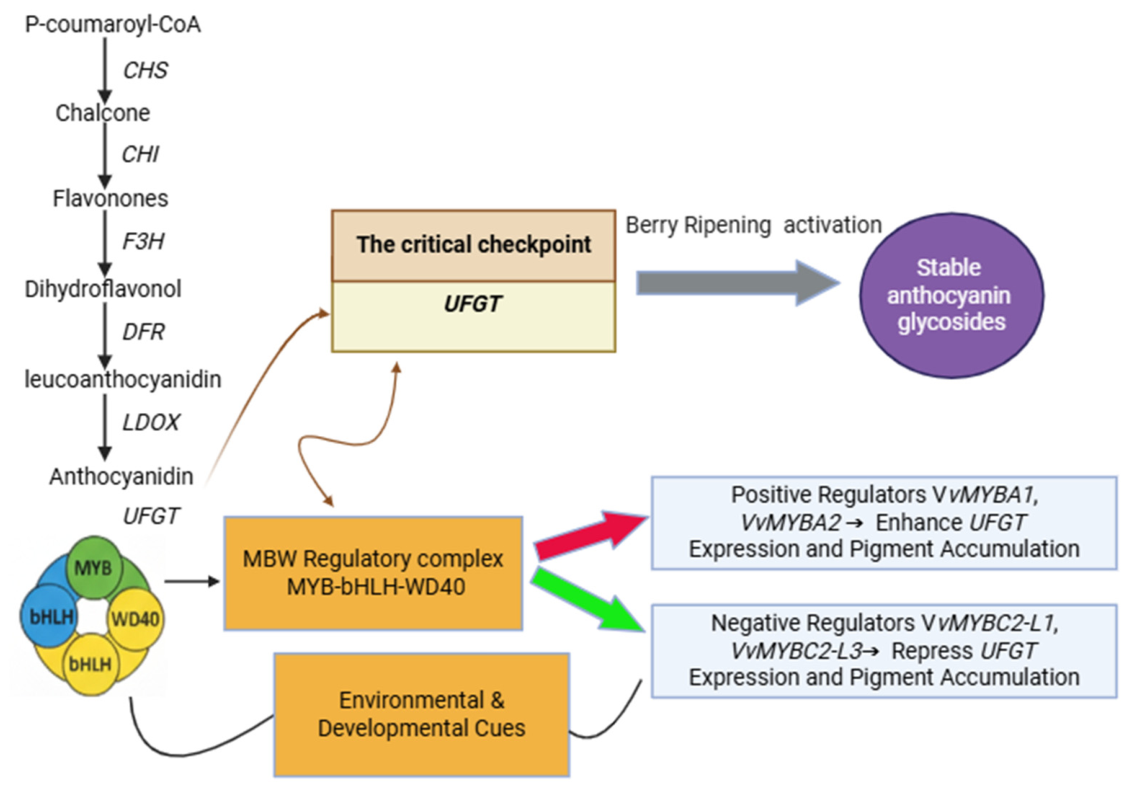
The biosynthesis of anthocyanins is also governed by intricate biosynthetic and regulatory gene networks that precisely coordinate pigment formation and accumulation in grape berries [28]. Structural genes encode a cascade of enzymes, including chalcone synthase (CHS), chalcone isomerase (CHI), flavanone 3-hydroxylase (F3H), dihydroflavonol 4-reductase (DFR), leucoanthocyanidin dioxygenase (LDOX), and UDP-glucose:flavonoid 3-O-glucosyltransferase (UFGT), which catalyze sequential reactions within the flavonoid biosynthetic pathway, ultimately yielding stable anthocyanin glycosides [29,30]. Among these enzymes, UFGT represents a critical regulatory checkpoint, as its activation during berry ripening marks the shift from colorless precursors to visibly pigmented anthocyanins [15,18].
The expression of these structural genes is further modulated by a hierarchy of transcription factors belonging to the MYB, basic helix–loop–helix (bHLH), and WD40 families, which assemble to form the MYB–bHLH–WD40 (MBW) regulatory complex [17,31,32]. This trimeric complex operates as a molecular switch that integrates developmental and environmental cues, dynamically activating or repressing anthocyanin biosynthesis in response to physiological needs. Positive regulators such as VvMYBA1 and VvMYBA2 enhance UFGT transcription and pigment accumulation, whereas repressors including VvMYBC2-L1 and VvMYBC2-L3 sustain metabolic equilibrium by limiting excessive pathway activation [15,33,34,35]. A schematic representation of the anthocyanin biosynthetic pathway and its transcriptional regulation is shown in Figure 1. The coordinated interaction between these structural enzymes and transcriptional regulators ensures fine-tuned control over anthocyanin production, ultimately shaping the pigment composition, intensity, and stability characteristic of mature grape berries.
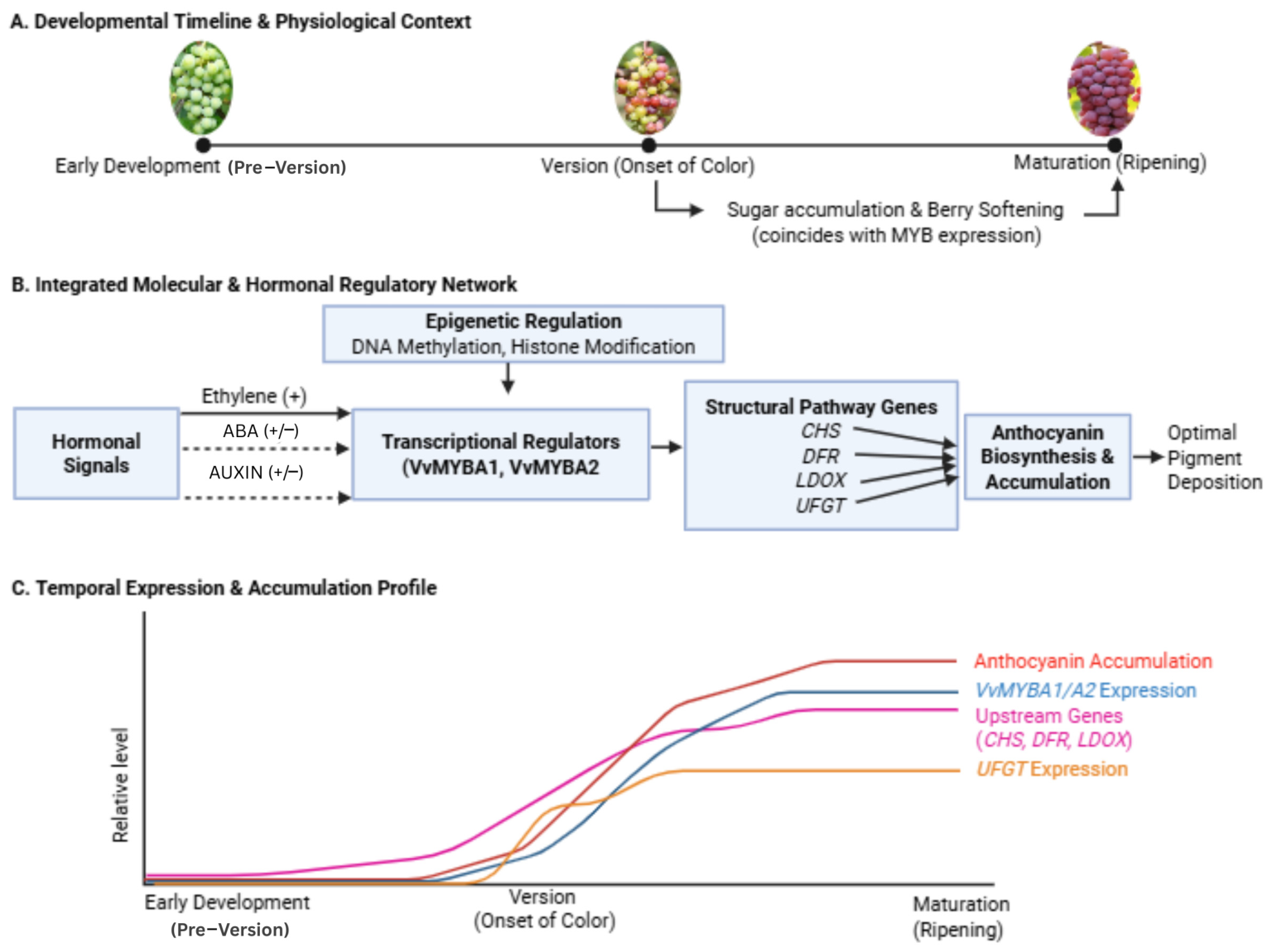
The regulation of anthocyanin biosynthesis is further influenced by temporal and molecular control mechanisms that coordinate gene activity with the developmental stages of grape berries [36]. Gene expression within the flavonoid pathway remains relatively low during early berry development but increases dramatically at the onset of veraison, when color accumulation begins [37,38]. This transcriptional induction is primarily driven by the activation of UFGT and its upstream regulators, particularly VvMYBA1 and VvMYBA2, whose expression coincides with sugar accumulation and softening of the berry skin [39,40]. In parallel, genes encoding upstream enzymes such as CHS, DFR, and LDOX exhibit dynamic expression shifts that mirror pigment accumulation trends [15,41,42]. In addition to transcriptional control, hormonal signaling contributes significantly to these developmental shifts [43]. Ethylene acts as a key ripening signal enhancing MYB gene expression, whereas abscisic acid (ABA) and auxins exert more complex, stage-dependent influences on pigment biosynthesis [44,45]. Additionally, epigenetic regulation, including DNA methylation and histone modifications near VvMYBA promoters, has been shown to influence the timing and amplitude of anthocyanin gene expression [46,47]. Collectively, these processes ensure that anthocyanin accumulation is precisely synchronized with berry maturation, allowing optimal pigment deposition and protection of developing tissues against oxidative and photochemical stress. However, anthocyanin accumulation during ripening can also exhibit variability across vintages. Some studies report an increase in anthocyanin levels during the ripening process, while others show a decrease in levels just before harvest. This variability may be linked to grape cell wall composition, including porosity and depectination levels, which can affect anthocyanin stability and accumulation [48]. These coordinated developmental and molecular regulatory processes are summarized in Figure 2.
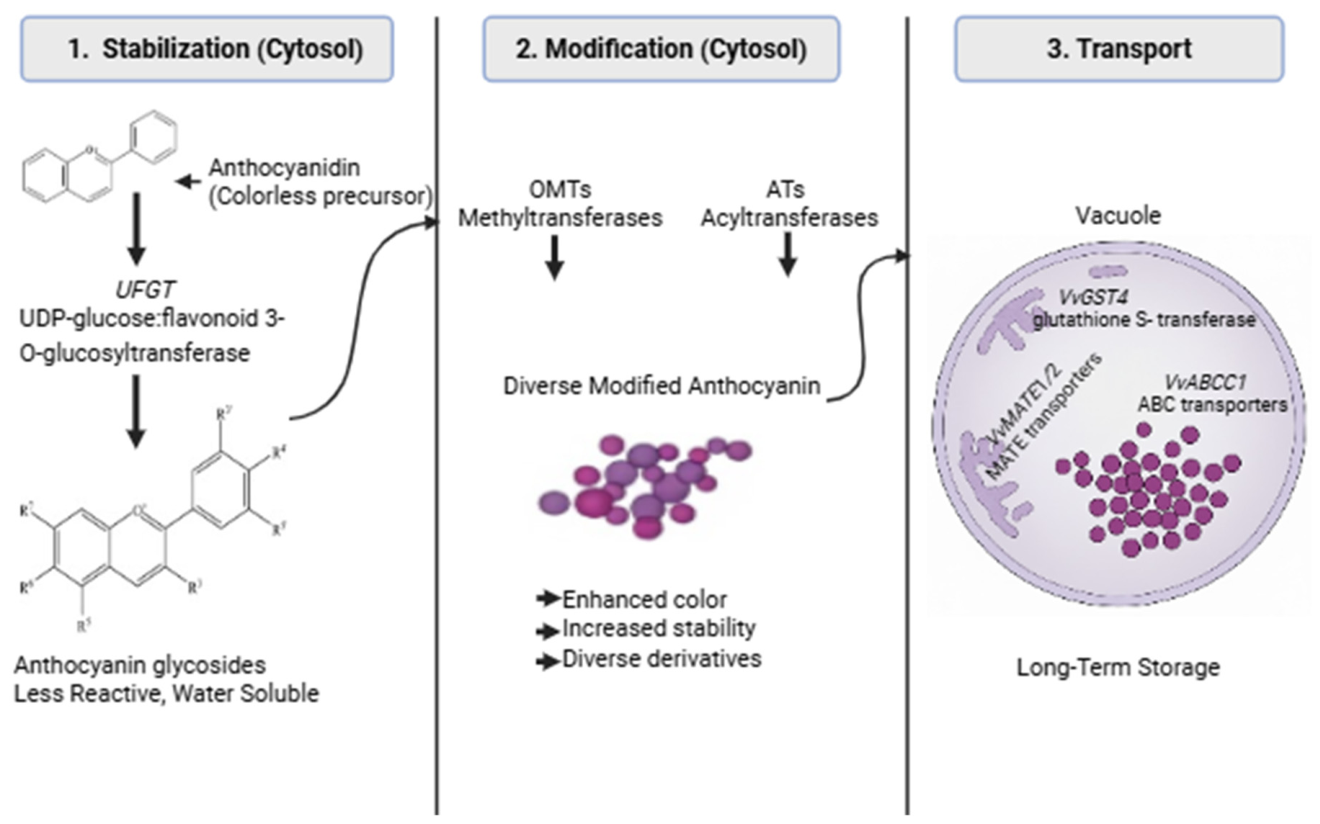
Anthocyanin production in grape berries is also determined by basic genetic factors that control pigment modification, stabilization, and transport within the cell. The fundamental genetic determinants of pigment formation in grape berries involve genes responsible for the modification, stabilization, and transport of anthocyanins within plant cells [4]. Following biosynthesis in the cytosol, anthocyanidins are glycosylated by UDP–glucose–flavonoid 3-O-glucosyltransferase (UFGT) to form stable anthocyanin glycosides, which are less reactive and more water-soluble [18,29,49]. These molecules subsequently undergo methylation and acylation, catalyzed by O-methyltransferases (OMTs) and acyltransferases (ATs), generating diverse anthocyanin derivatives that differ in color, stability, and resistance to oxidation [39,50]. For instance, methylation of cyanidin derivatives to produce malvidin-based pigments enhances both color intensity and stability in many grape varieties [51]. Efficient accumulation of these pigments within vacuoles is mediated by transport-related genes, including glutathione S-transferase (VvGST4), multidrug and toxic compound extrusion transporters (VvMATE1, VvMATE2), and the ATP-binding cassette transporter VvABCC1, which facilitates anthocyanin sequestration into vacuoles for long-term storage [52,53]. A detailed illustration of the modification, stabilization, and transport of anthocyanins is presented in Figure 3. Together, these enzymatic and transport processes define the final pigment profile, intensity, and stability observed in mature grape berries, establishing the biochemical foundation for color expression and varietal distinctiveness.

3.2. Environmental Factors

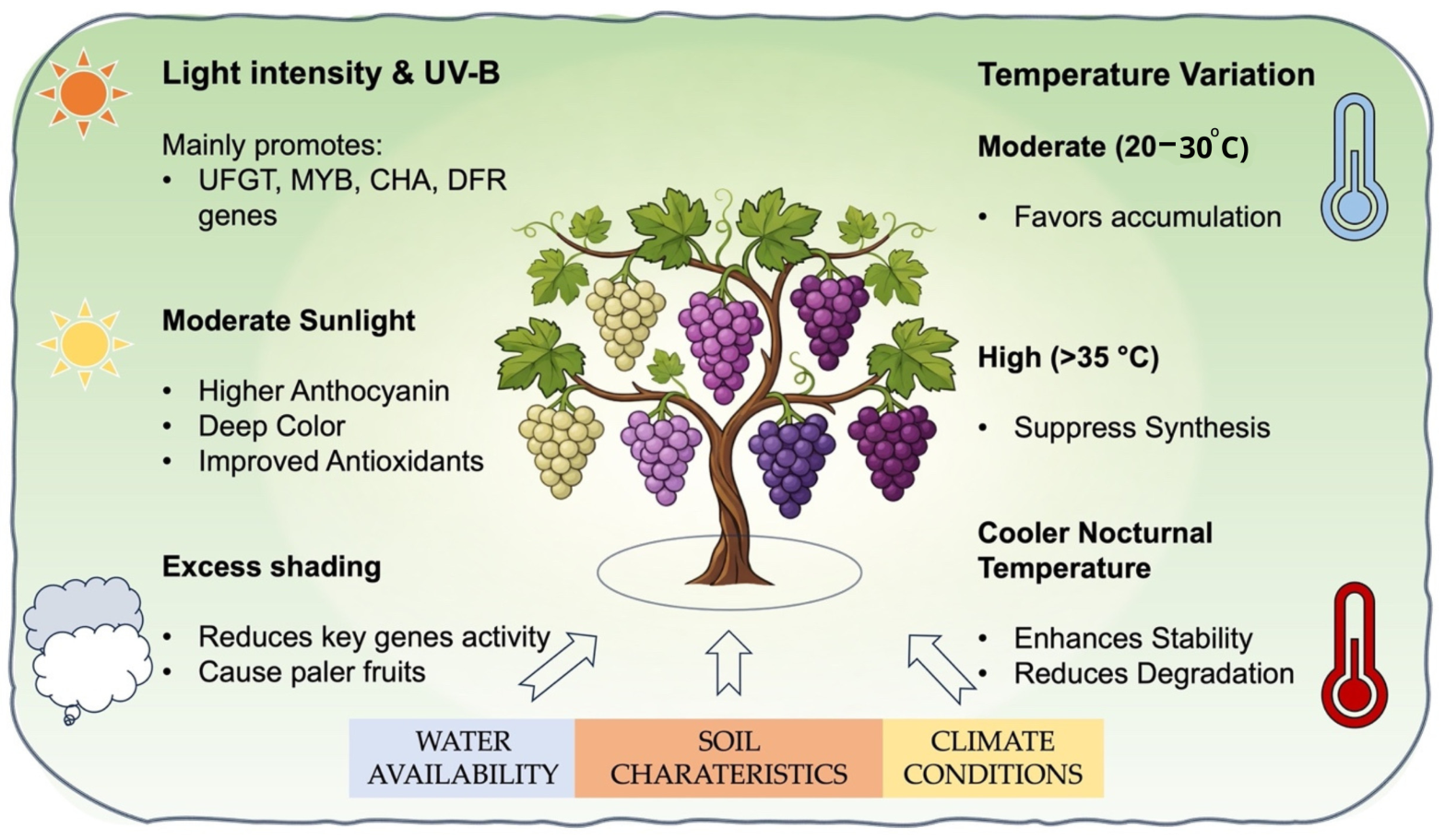
Although the genetic framework of grapevines determines their inherent capacity to produce anthocyanins, the extent to which this potential is realized is strongly influenced by environmental factors. Environmental variables serve as active external modulators that shape both the quantitative levels and qualitative attributes of pigment accumulation during berry development. Among these factors, light intensity, temperature variation, water availability, soil characteristics, and overall climatic conditions play vital roles in regulating the biosynthetic and transcriptional networks responsible for anthocyanin production [54]. In addition, the “vintage effect” plays a significant role in grape and wine quality. It refers to year-to-year variability in grape quality due to fluctuations in seasonal weather patterns, particularly temperature and rainfall. This variability directly impacts grape ripening and pigmentation, making it a crucial factor in evaluating grapevine performance over multiple growing seasons [55]. Furthermore, other environmental elements such as humidity, wind exposure, and altitude can also play important roles in influencing anthocyanin levels and pigment stability in grapevines [56]. The integrated influence of these environmental variables on anthocyanin accumulation in grape berries is illustrated in Figure 4. These environmental stimuli can promote or inhibit pigment accumulation by affecting enzyme activity, transcriptional regulation, and metabolite transport within grape berry tissues [16]. For instance, appropriate light intensity and moderate temperature generally stimulate anthocyanin biosynthesis through activation of UFGT and MYB transcription factors, whereas excessive heat, shading, or nutrient imbalance may inhibit pigment development [19,21]. Consequently, anthocyanin accumulation represents a finely tuned physiological response to environmental conditions, in which genotype–environment interactions ultimately determine fruit color intensity, stability, and nutritional quality. Understanding these environmental influences is therefore essential for optimizing vineyard management and mitigating climate-related effects on grape quality.
Among these environmental determinants, light plays a crucial role in modulating molecular and physiological responses that govern anthocyanin accumulation in grape skins. Light intensity is one of the most decisive environmental cues influencing anthocyanin biosynthesis in grape berries [57]. Studies consistently show that sunlight exposure upregulates key structural genes in the anthocyanin biosynthesis pathway, such as chalcone synthase (CHS), dihydroflavonol 4-reductase (DFR), and UDP–glucose–flavonoid 3-O-glucosyltransferase (UFGT), promoting pigment formation in grape skins [58,59]. However, while moderate sunlight typically enhances anthocyanin accumulation, the relationship between light intensity and pigment production is more complex. For instance, excessive sunlight exposure can lead to photooxidative damage, negatively affecting pigment stability and overall fruit color. UV-B radiation, a key environmental factor, stimulates MYB transcription factors, promoting flavonoid biosynthesis, but prolonged exposure to high UV levels can cause oxidative stress and degrade anthocyanins [60]. Grapes grown under moderate sunlight typically exhibit higher anthocyanin accumulation and deeper berry coloration [61]. Additionally, studies indicate that shading—either from dense canopies or artificial covers—reduces light penetration, downregulating key biosynthetic genes and resulting in paler fruit [62]. However, inconsistent findings exist regarding the degree of shading effects; some studies report dramatic reductions in anthocyanins, while others show only minor changes depending on cultivar and shading timing. Light effects on anthocyanin accumulation also differ across cultivation systems. Open field vineyards with adequate cluster exposure generally promote pigmentation, whereas protected systems (greenhouses, high tunnels) reduce light quality and UV transmission, potentially limiting anthocyanin biosynthesis [63]. Shade netting presents a trade-off by reducing light intensity while lowering berry temperature, which can benefit anthocyanin accumulation in warm climates [64]. These system-specific responses require tailored light management strategies. Besides modifying light exposure, canopy management and vine training systems also influence nutrient availability, vine growth, and yield, which in turn affect anthocyanin accumulation. These systems help regulate the balance between vegetative growth and fruit ripening, ultimately impacting pigment formation and color development [65]. Light quality also plays a significant role in anthocyanin biosynthesis, with red and blue wavelengths promoting pigment formation more effectively than green or far-red light [66,67]. Nevertheless, results across studies are not fully consistent; some research suggests that blue light is more effective, while others report red light as superior, indicating wavelength effects may be cultivar-dependent. Yet, the interaction between light intensity, light quality, and grapevine cultivar remains underexplored. Understanding how light intensity and quality interact with other environmental variables, such as temperature and water availability, could provide valuable insights into optimizing vineyard management strategies.
While light acts as a major cue regulating pigment biosynthesis, temperature also governs metabolic and transcriptional responses controlling anthocyanin accumulation. Temperature variation strongly influences anthocyanin biosynthesis during berry ripening. Moderate daytime temperatures between 20 and 30 °C favor anthocyanin accumulation, whereas temperatures above 35 °C significantly suppress pigment synthesis [21,68]. However, the precise temperature thresholds vary among studies, and grape cultivars differ considerably in heat tolerance. Some studies have even shown that slight heat stress within the optimal range may enhance anthocyanin production by activating compensatory mechanisms, particularly in heat-tolerant grape cultivars [69]. Notably, these contrasting findings highlight inconsistencies in the literature, which may be attributed to differences in cultivar heat tolerance, experimental conditions (controlled vs. field), and the duration of heat exposure. This contrast in findings underscores the need for further research into the interaction between temperature and other environmental stressors, such as light intensity and soil water content, to fully understand how temperature influences anthocyanin accumulation. Temperature also modulates the expression of key biosynthetic genes, such as UFGT, DFR, and ANS, as well as MYB-related transcription factors responsible for activating the flavonoid pathway [70]. At the molecular level, high temperatures suppress anthocyanin biosynthesis via the COP1-HY5 signaling module. HY5 is a transcription factor that activates anthocyanin biosynthetic genes (CHS, DFR, UFGT), while COP1 is an E3 ubiquitin ligase that targets HY5 for degradation. Elevated temperatures promote COP1-dependent HY5 degradation, reducing anthocyanin production [71]. Cooler night temperatures have been shown to enhance anthocyanin stability by promoting glycosylation, which reduces enzymatic degradation of pigments [68]. This suggests that not only daytime temperature but also the temperature difference between day and night plays a role in determining anthocyanin content. Conversely, elevated temperatures suppress anthocyanin biosynthesis by disrupting phenylpropanoid metabolism and limiting precursor availability [72]. Maintaining a favorable diurnal temperature variation is therefore crucial for optimizing berry color and phenolic quality. However, current research does not adequately address the long-term impact of temperature fluctuations on anthocyanin biosynthesis under real-world vineyard conditions. Future studies should focus on how fluctuating temperature patterns, especially during key stages of berry ripening, interact with other environmental variables to modulate anthocyanin production.
Water availability is another critical environmental factor influencing anthocyanin accumulation in grape berries. A moderate water deficit during ripening promotes anthocyanin biosynthesis through stress-responsive signaling pathways regulating secondary metabolism [73,74]. Under mild drought conditions, grapevines increase the production of abscisic acid (ABA), which enhances the expression of anthocyanin biosynthetic genes, including CHS, DFR, and UFGT [75]. This hormonal regulation promotes pigment accumulation by activating MYB transcription factors and enhancing sugar translocation to the berry skins [15]. In contrast, severe water stress disrupts photosynthesis and carbon metabolism, reducing precursor availability for the phenylpropanoid pathway and reducing anthocyanin biosynthesis [76]. Proper irrigation management, therefore, helps maintain a balance between vine vigor and fruit quality. Grapevines exposed to mild water deficits often produce berries with deeper coloration and higher phenolic content compared with fully irrigated vines [77]. Studies show that drought stress can lead to an increase in anthocyanin content, with the regulation of key genes involved in the flavonoid biosynthesis pathway being influenced by water scarcity. Notably, recurring drought induces changes in the expression of genes such as CHS2, DFR, and UFGT, enhancing pigment accumulation while maintaining photosynthetic and water relation stability during successive growing seasons [78].
Soil characteristics and broader climatic conditions also influence anthocyanin accumulation by affecting vine nutrient status, water availability, and microclimatic exposure. Soil nutrient availability, particularly nitrogen, potassium, and magnesium levels, strongly affects the balance between vegetative growth and secondary metabolism; excessive nitrogen promotes canopy vigor at the expense of flavonoid biosynthesis, whereas moderate nutrient availability supports carbon allocation toward anthocyanin production [79,80]. Soil pH and texture influence root access to nutrients and water, thereby affecting pigment biosynthesis through changes in stress signaling and carbohydrate distribution [81,82]. In addition to soil factors, macroclimatic variables—including altitude, solar radiation, humidity, and seasonal temperature patterns—shape the microenvironment surrounding the fruit and influence anthocyanin metabolism. Grapevines grown at higher elevations or in regions with pronounced diurnal temperature variation often exhibit stronger pigmentation due to cooler nights and enhanced UV exposure [83]. Conversely, warm and humid climates may suppress anthocyanin accumulation by promoting metabolic dilution, increasing oxidative stress, and accelerating pigment breakdown [72]. Overall, the combined influence of soil characteristics and regional climate determines the capacity of grape berries to produce and maintain anthocyanins, highlighting the importance of site selection and terroir-based vineyard management in optimizing berry color and phenolic composition.

3.3. Agronomic Practices

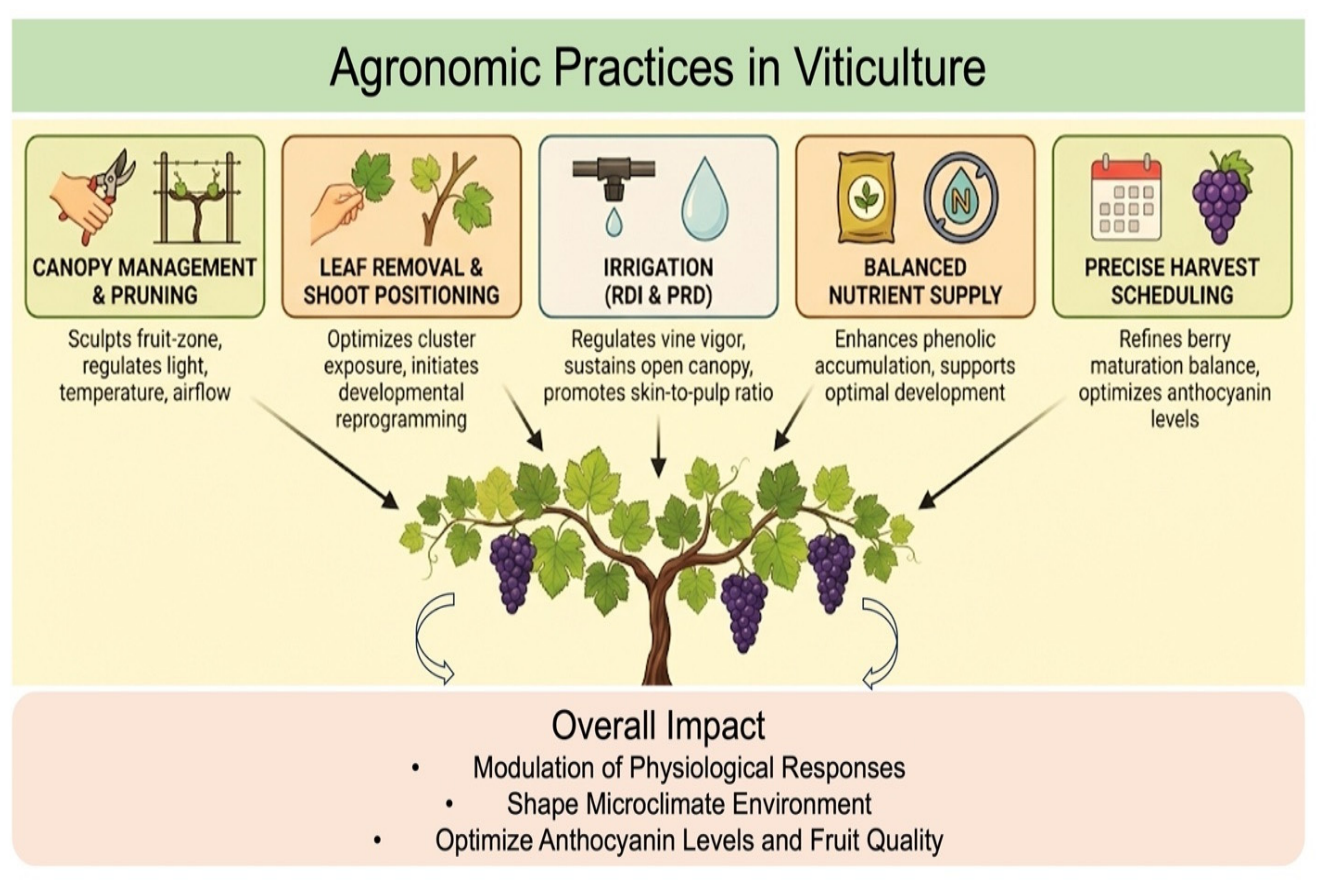
Agronomic practices represent a crucial external regulatory layer that influences the physiological and biochemical processes governing anthocyanin biosynthesis in grape berries. While genetic determinants define the inherent biosynthetic capacity for pigment production and environmental conditions modulate physiological responses, vineyard management interventions actively shape the microclimatic environment surrounding developing clusters and influence pigment biosynthesis during berry development. Through practices such as canopy management, pruning intensity, regulated water application, balanced nutrient supply, and precise harvest scheduling, growers can optimize cluster exposure, regulate vine vigor, and promote conditions favorable for anthocyanin accumulation without altering the underlying genotype [19] (Figure 5). These interventions influence berry maturation, balance vegetative growth with reproductive development, and enhance phenolic accumulation by modifying source–sink relationships and canopy microclimate [84]. Consequently, agronomic management serves as a flexible tool for improving grape quality, particularly under variable climatic conditions.
As a primary point of intervention, pruning and canopy management allow growers to shape the fruit-zone environment in ways that enhance anthocyanin accumulation. These practices regulate the light microclimate, temperature, and airflow surrounding grape clusters—factors that strongly influence anthocyanin biosynthesis. By adjusting shoot density, leaf area distribution, and canopy porosity, they control the quantity and quality of solar radiation reaching berry surfaces, thereby affecting the activation of key flavonoid biosynthetic genes such as CHS, DFR, and UFGT through light-responsive MYB transcription factors [58,70]. Moderate fruit-zone exposure enhances anthocyanin synthesis by providing optimal light conditions and reducing localized humidity, whereas excessive shading diminishes photosynthetically active radiation and suppresses pigment formation [85,86]. Conversely, excessive exposure may increase berry temperature and promote oxidative degradation of anthocyanins, highlighting the need for balanced canopy architecture [87]. Research has shown that leaf removal and strategic shoot positioning prior to veraison are particularly effective, as early-season exposure initiates developmental changes in berry skin that enhance anthocyanin biosynthesis during ripening. However, some studies report variability in the effectiveness of early-season exposure depending on grapevine cultivar and climate conditions, suggesting the need for more cultivar-specific research [88,89]. In addition, pruning intensity regulates vine vigor and source–sink balance, with moderate pruning maintaining an optimal leaf area-to-fruit ratio that supports flavonoid biosynthesis while preventing excessive vegetative growth [90]. Likewise, vine vigor can influence anthocyanin content. Low vigor vineyards will lead to more pigmented polymers, as reduced vegetative growth improves light penetration into the fruit zone, enhances carbon allocation toward secondary metabolism, and minimizes shading-induced downregulation of flavonoid biosynthetic genes [91].
In addition to canopy management, irrigation, fertilization, and harvest timing represent integrated agronomic strategies that regulate vine balance and fruit composition. Targeted irrigation approaches such as regulated deficit irrigation (RDI) and partial root-zone drying (PRD) are widely used to control vegetative vigor and maintain open canopy architecture, thereby improving cluster exposure and increasing skin-to-pulp ratios that favor pigment concentration [92,93]. Studies indicate that moderate water deficits between fruit set and veraison can reduce berry enlargement and enhance anthocyanin concentration [73]. The timing of water application is also important, as pre- and post-veraison water constraints can alter anthocyanin composition through stage-specific regulation of biosynthetic genes [94]. Fertilization practices further complement irrigation management by regulating nutrient availability and guiding vine growth toward a balanced source–sink relationship. Controlled nitrogen application limits excessive vegetative vigor and shading, thereby supporting phenolic accumulation, while adequate potassium supply contributes to proper ripening and pigment stability [80,95]. Reduced nitrogen fertilization has been shown to enhance anthocyanin accumulation in grape skins by improving light penetration into the fruiting zone [79], whereas excessive nitrogen suppresses pigmentation by stimulating excessive vegetative growth [80]. Harvest timing represents the final management factor influencing pigment accumulation, as anthocyanin levels typically increase from veraison through late ripening [96]. Allowing fruit to reach phenolic maturity—characterized by high anthocyanin concentration and improved skin structure—generally results in deeper berry coloration and superior wine quality [97]. Comparable findings in aronia and the Plavac Mali grape cultivar show that anthocyanin levels rise during mid-ripening but decline with excessively delayed harvest, highlighting the importance of optimal picking time for maximizing pigment accumulation [98,99]. Collectively, these findings demonstrate that coordinated management of canopy structure, irrigation, nutrient supply, and harvest timing is essential for achieving consistent anthocyanin accumulation and maintaining high-quality fruit under diverse viticultural conditions.

4. Strategies to Control and Optimize Anthocyanin Levels in Grapes

Improving anthocyanin accumulation in grapes requires not only understanding the factors that influence pigment biosynthesis but also implementing targeted strategies that actively enhance these pathways. Recent studies emphasize that anthocyanin levels can be improved through coordinated vineyard practices, strategic genetic interventions, and post-harvest handling, each contributing at different stages of berry development and maturation. Several field trials indicated that modifications in canopy design, precise water management, and nutrient scheduling can enhance skin pigmentation, while experimental breeding and gene-editing approaches have demonstrated the potential to upregulate key genes involved in anthocyanin biosynthesis. Post-harvest studies similarly highlight the importance of storage conditions and processing techniques for the retention of anthocyanin stability. Overall, the evidence highlights the need for an integrated approach that combines agronomic, genetic, and post-harvest strategies to achieve consistent anthocyanin enhancement under diverse viticultural conditions. In the following sections, we examine these optimization strategies in detail, focusing on the agronomic, genetic, and post-harvest methods that have been shown to improve anthocyanin content and quality in grapes.

4.1. Agricultural Practices for Anthocyanin Optimization

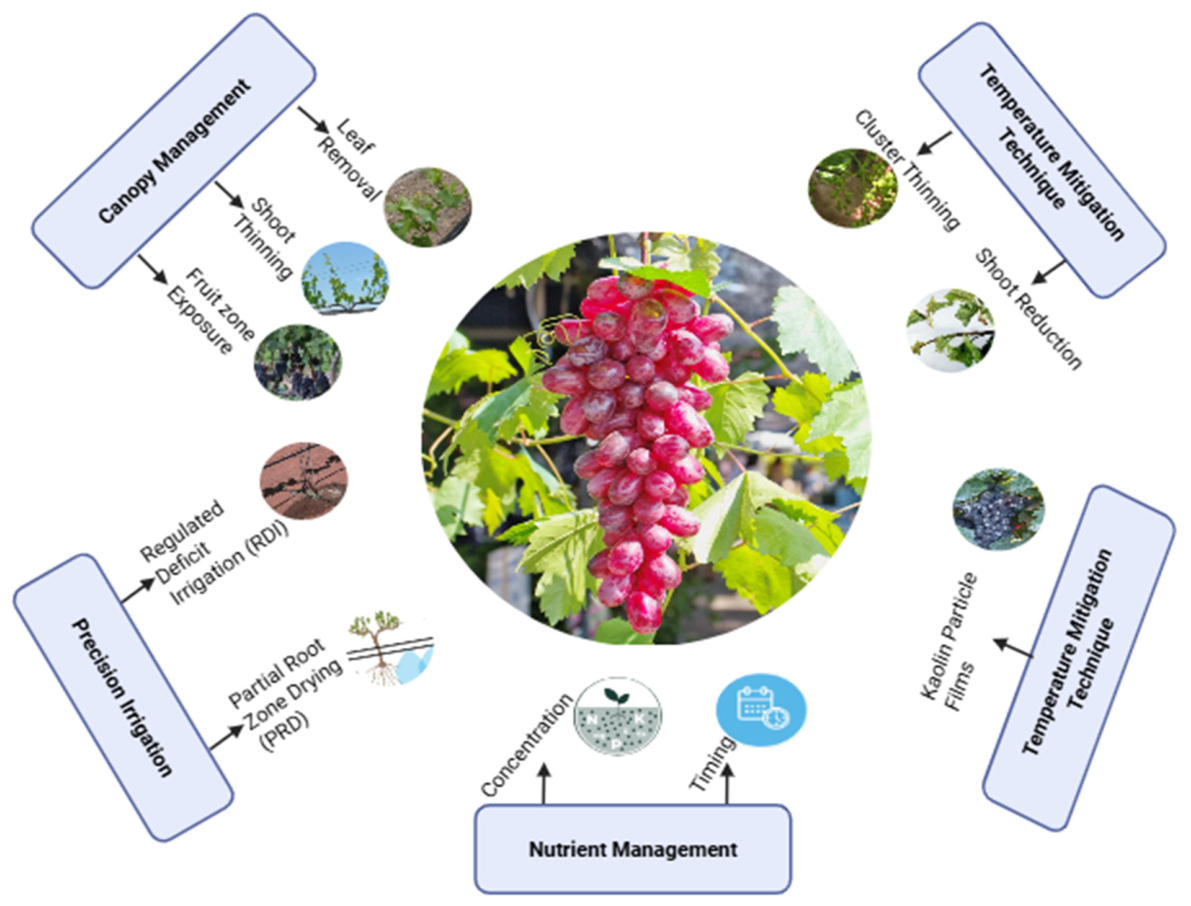
Enhancing anthocyanin accumulation in grapes depends on vineyard practices that fine-tune the fruit’s microenvironment to favor pigment developmental conditions throughout the growing season. Specific canopy-management practices such as early leaf removal, lateral shoot thinning, and increased fruit-zone exposure have consistently been shown to increase anthocyanin levels [100,101]. These practices are widely adopted in vineyards across many regions to enhance pigmentation and grape quality. However, their effectiveness may vary depending on grapevine cultivar and climatic conditions, suggesting that a one-size-fits-all approach may not be universally effective. More research is needed to explore cultivar-specific responses to these canopy management techniques. Research in several cultivars, including Pinot Noir, shows that removing leaves before veraison can markedly improve both the amount and profile of berry anthocyanins [102]. However, excessive leaf removal can lead to increased sunburn risk and dehydration in some cultivars. Therefore, careful consideration of timing and the extent of leaf removal is required for optimal results. Precision irrigation further strengthens improved pigment development, as carefully timed, regulated deficit irrigation (RDI) and partial root-zone drying (PRD) have been shown to increase skin-to-pulp ratio and stimulate key anthocyanin biosynthetic genes during veraison [103]. The adoption of these techniques in the industry is increasing, particularly in areas with water scarcity concerns. However, the timing of irrigation practices must be optimized to avoid overstressing the vines, which could reduce anthocyanin levels. Micronutrient timing and balanced fertilization also contribute to this optimization, with evidence indicating that well-calibrated nutrient inputs can support flavonoid pathway activity without inducing excessive vegetative shading [80]. Temperature-mitigation techniques are critically important in warm climate regions. The application of kaolin particle films has been shown to reduce berry surface temperatures and enhance the activity of phenylpropanoid-related enzymes, ultimately leading to higher anthocyanin accumulation across multiple growing seasons [104]. Kaolin films are now widely used in warm-climate viticulture, but their effectiveness can depend on factors like vine canopy density and application methods. In addition, kaolin-treated vines exhibited elevated anthocyanin levels due to stimulation of key biosynthetic genes such as PAL and UFGT, further demonstrating the compound’s effectiveness in supporting pigment development under heat stress [104]. However, the long-term effects of kaolin applications on vine health and fruit yield need further investigation. Crop-load regulation through practices such as cluster thinning or shoot reduction offers another effective means of enhancing berry pigmentation, as moderate crop levels improve carbohydrate availability for each cluster and thereby promote more intense anthocyanin development compared to over-cropped vines [16]. Combined practices such as cluster thinning and girdling have been shown to boost both sugar and anthocyanin accumulation by reinforcing source–sink balance in the vine [105]. A visual summary of these key agricultural practices and their roles in enhancing anthocyanin accumulation is presented in Figure 6. Collectively, these coordinated agricultural strategies provide practical and adaptable tools for maximizing anthocyanin accumulation and achieving consistent color quality across diverse viticultural environments.

4.2. Genetic Approaches for Enhancing Anthocyanin Accumulation

Genetic approaches provide highly targeted and increasingly precise strategies for enhancing anthocyanin accumulation in grape berries, complementing vineyard-level interventions by enabling direct modification of key biosynthetic and regulatory pathways. Advances in molecular genetics have enabled the identification of key biosynthetic and regulatory genes associated with berry pigmentation, allowing breeders and biotechnologists to target these loci directly for improvement. Marker-assisted selection (MAS) accelerates the development of high-pigment cultivars by enabling early and reliable identification of favorable alleles, particularly those within the VvMYBA cluster that governs color expression [106,107]. Meanwhile, genome-editing technologies such as CRISPR/Cas9 provide opportunities to fine-tune anthocyanin biosynthesis through targeted modification of structural genes or transcription factors, with recent studies demonstrating that knockout of negative regulators like VvbZIP36 can substantially elevate pigment accumulation in grape tissues [108]. Transgenic approaches further expand the toolbox, allowing for strategic enhancement of pathway flux and stress-responsive pigmentation, though these remain constrained by regulatory challenges and consumer acceptance. Collectively, these genetic strategies represent a forward-looking framework for reliably improving berry coloration, supporting both varietal development and adaptation to changing environmental conditions.

4.2.1. CRISPR and Genome Editing for Enhancing Anthocyanin Accumulation

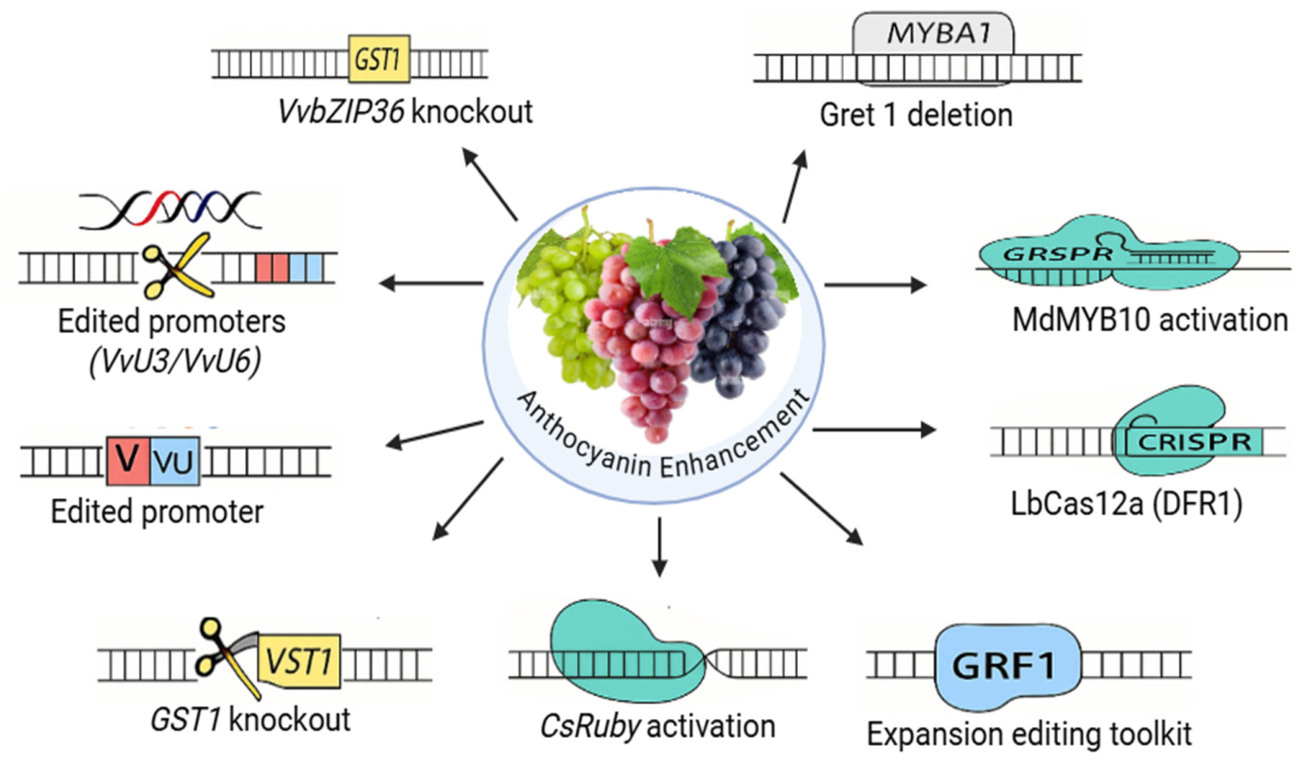
Genome editing through CRISPR/Cas systems has rapidly emerged as one of the most effective strategies for directly improving anthocyanin accumulation in grapes by enabling precise modification of genes that control pigment biosynthesis. The feasibility of genome editing in grape was first established in 2016, when CRISPR/Cas9-mediated mutagenesis was successfully demonstrated in Vitis vinifera, marking a major breakthrough that allowed genetic improvement to proceed with far greater efficiency than conventional breeding approaches [109,110]. Since then, editing efforts have expanded toward manipulating regulatory nodes within the flavonoid pathway. An overview of CRISPR/Cas-based genome editing strategies used to enhance anthocyanin accumulation is presented in Figure 7. Currently, CRISPR/Cas9 genome editing is still largely experimental, and its practical application in grapevines has not yet reached commercial use. However, it has been shown to work effectively in controlled research settings and has the potential to be widely adopted in industry. One of the clearest demonstrations of its potential comes from the knockout of VvbZIP36, a transcriptional repressor of the anthocyanin pathway, where CRISPR/Cas9-edited grape calli accumulated significantly higher anthocyanin concentrations and showed strong upregulation of VvDFR, VvANS, and VvUFGT compared with wild-type tissues [108].
Similarly, CRISPR/Cas9 editing has been successfully used to delete the Gret1 retrotransposon from the promoter of VvMYBA1 in Shine Muscat, restoring the gene’s function and enabling recovery of red pigmentation—demonstrating that genome editing can reverse natural mutations associated with loss of color [111]. Optimization experiments further show that the use of grape-specific promoters (VvU3 and VvU6) and ubiquitin-driven Cas9 constructs significantly increases editing efficiency in Vitis vinifera, improving the feasibility of editing pigment-related genes in elite cultivars [112]. Further technical progress has been achieved with a DNA-free CRISPR/Cas9 system, in which Cas9–sgRNA ribonucleoprotein complexes were directly transfected into grapevine protoplasts, enabling knockout of a GFP reporter gene and regeneration of fully edited, transgene-free plants—representing a major step toward efficient and regulation-friendly genome editing in grapevine [113]. While these systems hold great promise for simplifying regulatory approval, more studies are needed to ensure long-term viability in commercial applications. Although not yet applied directly to grape berries, studies in related fruit crops provide compelling evidence that CRISPR activation or overexpression of MYB anthocyanin regulators can greatly intensify pigmentation; for example, CRISPR-based activation of MdMYB10 in apple produced strong red coloration throughout the flesh [114]. Further evidence from Japanese gentian shows that CRISPR/Cas9 knockout of the GST1 transporter sharply reduces anthocyanin accumulation, producing pale or white flowers and highlighting the essential role of GST-mediated vacuolar transport in pigmentation [115]. Similar editing of CsRuby induced stable red pigmentation in citrus varieties [116]. These results collectively show that genome-editing approaches can enhance anthocyanin biosynthesis by removing repressors, restoring nonfunctional alleles, increasing expression of positive regulators, and fine-tuning pathway flux—positioning CRISPR as a highly promising tool for next-generation grape breeding aimed at improving berry color and nutritional quality.

4.2.2. Transgenic Approaches for Enhancing Anthocyanin Accumulation

Transgenic approaches offer a direct means to enhance anthocyanin accumulation in grapevine by manipulating key regulatory, structural, and transport genes in the flavonoid pathway. Early transgenic studies in grapevine showed that redirecting metabolic flux away from competing pathways can significantly enhance anthocyanin formation. When key tannin-biosynthetic enzymes—anthocyanidin reductase (ANR) and leucoanthocyanidin reductase (LAR)-were downregulated, the engineered vines displayed clear shifts in both berry and wine flavonoid profiles. This reduction in tannin synthesis effectively freed more anthocyanidin precursors for anthocyanin production, resulting in a metabolic rebalancing that supported deeper pigmentation and improved color development [117]. These transgenic approaches have shown promise in enhancing anthocyanin levels in grapes. However, their adoption in the industry is still limited due to regulatory concerns and the cost of development. Complementary transgenic studies in grapevine showed that adjusting the activity of flavonoid 3′-hydroxylase (F3′H) and 3′,5′-hydroxylase (F3′5′H) can precisely shift the balance between cyanidin- and delphinidin-based anthocyanins. By reducing expression of these enzymes, researchers were able to alter berry and wine color in predictable ways, demonstrating how targeted modification of structural genes can fine-tune both pigment color and stability [118]. These modifications are still under research, with commercial application facing obstacles due to the complexity of regulatory approval for genetically modified organisms (GMOs), especially in regions like the European Union, where the approval process is stringent.
More recent work highlights transcription factors as powerful tools for boosting grape pigmentation. Early evidence showed that overexpressing the grape MYB activator VlMYBA2 in tobacco and Arabidopsis generated strong anthocyanin accumulation, underscoring the high regulatory strength of grape-derived MYB genes in activating the pigment pathway [119]. In grapevine itself, overexpressing the NAC regulator VviNAC17 greatly increased anthocyanin and flavonoid levels by activating multiple pathway genes, while enhancing VvMYB24 within the VvHY5–VvMYB24–VvMYBA1 cascade strongly stimulated VvDFR and VvUFGT expression, showing how multi-TF networks can dramatically amplify pigment production [120]. Parallel work on vacuolar sequestration has identified glutathione S-transferase (GST) proteins and MATE-type transporters as critical components of anthocyanin transport in grape; functional characterization of VviGSTs and anthoMATE transporters indicates that enhancing these transporters could be combined with biosynthetic and regulatory transgenes to improve pigment stability and accumulation in engineered lines [121]. While these findings are promising, the use of transgenic approaches for enhancing pigment stability and transport is still limited in practical applications, with regulatory frameworks for GMO crops influencing widespread industry adoption. Overall, these transgenic studies demonstrate that targeted modification of key structural genes, transcription factors, and transport mechanisms provides an effective framework for enhancing anthocyanin content and optimizing color expression in grape berries under diverse viticultural conditions. A brief summary of these transgenic interventions—including their target genes, functional roles, and phenotypic outcomes—is presented in Table 2.

4.2.3. Marker-Assisted Selection (MAS) for Enhancing Anthocyanin Accumulation

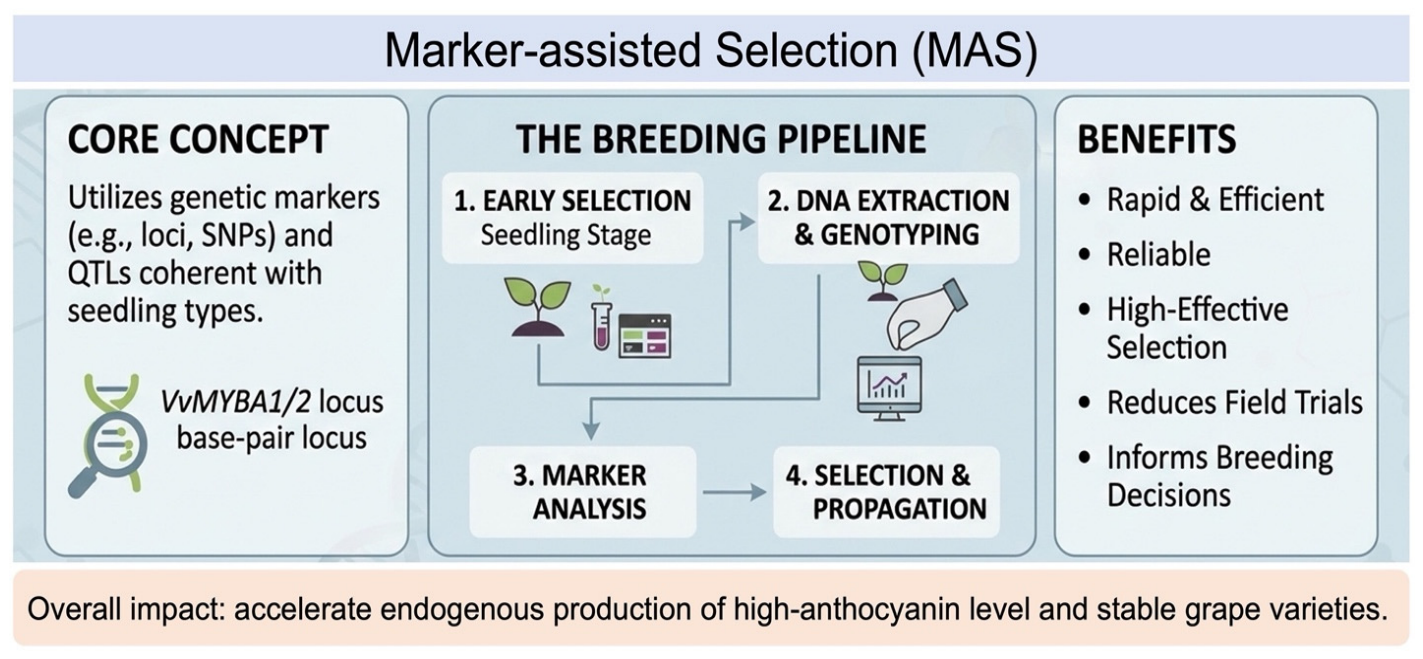
Marker-assisted selection (MAS) provides an effective non-transgenic strategy for improving anthocyanin accumulation in grapevine by enabling breeders to identify favorable color-regulating alleles early in the breeding cycle. A schematic overview of the MAS breeding process and its advantages in selecting high-anthocyanin genotypes is illustrated in Figure 8. Central to MAS-driven pigment improvement is the VvMYBA locus on chromosome 2, where allelic variation and retrotransposon insertions determine whether a cultivar produces colored or white berries, making this genomic region a reliable target for selecting high-anthocyanin genotypes [122]. Early genetic analyses showed that white grapes originated from independent loss-of-function mutations in the adjacent regulatory genes VvMYBA1 and VvMYBA2, emphasizing the central role of this locus in determining berry pigmentation [123]. Beyond this major locus, several quantitative trait loci (QTLs) affecting total anthocyanin content, proportion of delphinidin- versus cyanidin-derived pigments, and overall skin coloration have been identified using high-density SNP maps, demonstrating that MAS can also capture polygenic sources of variation relevant to pigment intensity and stability [124]. Similar interspecific-hybrid studies (e.g., V. labruscana × V. vinifera) have located additional QTLs on linkage groups 8 and 14, suggesting that novel loci outside the canonical MYBA haplotype can contribute to anthocyanin levels in diverse genetic backgrounds [125]. Recent genome-wide association studies (GWAS) across diverse germplasm further validated the strong association between SNPs near VvMYBA1/2 and berry color, reinforcing the value of MAS for reliably selecting high-pigment alleles across different genetic backgrounds [126]. To facilitate rapid, cost-effective genotyping of pigmentation traits, a recent study developed a high-resolution melting (HRM) assay targeting polymorphic regions on chromosome 2, enabling accurate discrimination between red-berry and white-berry genotypes at early seedling stages. This MAS tool markedly reduces breeding time, greenhouse space, and cost compared with traditional phenotype-based selection [106]. Complementing these targeted approaches, expression-QTL (eQTL) mapping in grapevine populations has identified regulatory variation affecting flavonoid-pathway gene expression (including VvMYBA isogenes) as a major source of variation in anthocyanin content, demonstrating that MAS can exploit not just structural alleles but also expression-level polymorphisms to optimize pigment accumulation [127]. Together, these advances show that MAS—through a combination of major-locus screening, QTL mapping, high-throughput SNP/HRM markers, and eQTL analysis—provides a robust, scalable, and regulatory-friendly strategy for enhancing anthocyanin accumulation and controlling berry skin pigmentation. By selecting seedlings that carry favorable combinations of pigmentation alleles (both major and minor), breeders can more efficiently develop high-pigment grape cultivars adapted to diverse environmental conditions, before committing resources to field trials or long-term propagation.
Despite the promise of these genetic approaches—including CRISPR/Cas9 editing, transgenic engineering, and marker-assisted selection—several limitations cannot be ignored. GMO regulations vary from country to country; the EU has strict approval processes, while other regions are more relaxed. Even CRISPR-edited plants with no foreign DNA may still face GMO restrictions depending on local laws. Consumer acceptance is also a challenge, particularly in Europe, where public skepticism toward genetically modified foods remains high. MAS avoids most of these regulatory and social hurdles, but it is limited by marker availability and the time required for mapping. These factors can delay or prevent the commercial deployment of genetically improved grapevines, regardless of their technical success.

4.3. Postharvest Strategies for Preserving and Enhancing Anthocyanin Stability

Postharvest handling represents a crucial final stage in determining the fate of anthocyanins, as these pigments remain highly sensitive to environmental and physiological stresses after harvest. A summary of postharvest strategies for preserving and enhancing anthocyanin stability is presented in Table 3. Once detached from the vine, grape berries rapidly undergo metabolic and structural changes, making careful postharvest management essential for preserving or even enhancing the anthocyanin content accumulated during ripening. Cold storage is the foundation of most postharvest protocols, as low temperatures slow respiration and enzymatic oxidation, thereby limiting pigment degradation. Studies consistently show that berries stored at 0–1 °C retain significantly higher levels of anthocyanins and antioxidant capacity than those stored at warmer temperatures, while also exhibiting reduced softening and water loss [128]. Cold storage remains the most widely used method in the industry to preserve anthocyanin levels, although it comes with challenges such as storage duration and temperature fluctuations, which can affect overall quality. Future studies should examine the impact of temperature cycling during storage to better understand its effect on pigment retention and overall grape quality. At the same time, storage atmosphere exerts a complementary influence: modified-atmosphere packaging (MAP) systems with reduced O2 and elevated CO2 have been shown to stabilize anthocyanin pigments, preserve antioxidant properties, and delay senescence in multiple red table grape cultivars, with optimized MAP films enabling effective long-term storage at 0–5 °C [129]. However, the effectiveness of MAP systems can vary based on cultivar-specific responses, and further research is needed to optimize the packaging conditions for different grape varieties. Because excessive transpiration accelerates senescence, careful control of relative humidity is equally critical. Packaging systems that simultaneously regulate humidity and gas composition help minimize berry shrivel and rachis browning while maintaining phenolic and anthocyanin levels, underscoring the importance of moisture-retentive films in achieving optimal postharvest color stability [130]. While humidity regulation is commonly used, the long-term impact of this strategy on anthocyanin stability across various postharvest treatments remains an underexplored area and needs further investigation.
Beyond temperature, humidity, and atmosphere, several physical and biochemical elicitors have emerged as promising tools to actively stimulate or protect berry pigments after harvest. Postharvest light and UV treatments are particularly effective: supplemental white, blue, or UV-C irradiation can induce anthocyanin biosynthesis in red- and purple-skinned cultivars, with UV-C exposure not only enhancing berry pigmentation during storage but even improving the anthocyanin profile and sensory color of wines produced from treated fruit [131,132]. UV-C treatment is already used in some commercial grape handling, but its effectiveness may depend on treatment duration and grape variety. Chemical signals offer additional leverage. Among these, abscisic acid (ABA) is the most widely studied, with postharvest S-ABA applications accelerating color development and promoting transcriptional activation of anthocyanin pathway genes, effects that persist during storage [133]. Other signal-like treatments—including methyl jasmonate vapor and melatonin immersion—have shown similar benefits: melatonin-treated berries maintain higher phenolic and anthocyanin levels and exhibit improved shelf life and reduced decay compared to controls [134,135]. Controlled oxidative elicitation using ozone represents another valuable strategy; when carefully dosed, ozone fumigation or ozonated water treatments can increase or preserve anthocyanin content while simultaneously reducing microbial spoilage, although excessive exposure risks pigment degradation [136,137]. The optimal ozone dosage and exposure duration must be carefully balanced to avoid degradation, which remains an area for further study. Together, these postharvest strategies—optimized temperature and humidity, MAP, targeted light/UV exposure, hormone and signaling molecule treatments, and carefully dosed ozone—offer complementary tools to stabilize or even enhance anthocyanin content after harvest, thereby extending the impact of preharvest and genetic interventions on final grape and wine color quality. A concise summary of these postharvest interventions and their effects on anthocyanin stability is presented in Table 3. However, there is still a need for more studies on the interaction between these postharvest strategies and their combined effect on anthocyanin stability across different grape cultivars. Advancements in precision agriculture and smart packaging systems could provide the next generation of tools for ensuring grape and wine quality, allowing for real-time monitoring of environmental conditions during storage.
Table 3. Postharvest strategies used to preserve or enhance anthocyanin stability in grape berries.
Postharvest StrategyPrimary MechanismEffect on Anthocyanins/Berry QualityReference
Cold Storage (0–1 °C)Slows respiration and enzymatic oxidationHigher anthocyanin retention; reduced softening and water loss[128]
Modified Atmosphere Packaging (MAP)Reduced O2 and elevated CO2 slow senescence and oxidationPreserves pigment stability and antioxidant capacity[129]
Humidity Control/Moisture-Retentive FilmsPrevents excessive water loss and berry shrivelMaintains phenolics and anthocyanins; reduces rachis browning[130]
UV/Light Treatments (white, blue, UV-C)Induces anthocyanin biosynthesis via stress-response pathwaysEnhances berry pigmentation and color attributes[132]
ABA Applications (S-ABA)Activates anthocyanin biosynthetic genesAccelerates color development during storage[133]
Melatonin/Jasmonate TreatmentsSignal-like antioxidant effects enhance pigment stabilityImproves anthocyanin retention and reduces decay[134,135]
Ozone Fumigation/Ozonated WaterMild oxidative elicitation; antimicrobial actionIncreases or preserves anthocyanins while reducing spoilage[136,137]

5. Conclusions

Anthocyanin accumulation in grapes is governed by a complex interplay of genetic, environmental, agronomic, and postharvest factors, and understanding these interactions is essential for optimizing both fruit quality and the functional value of grape-derived products. This review highlights that anthocyanin biosynthesis is tightly regulated at the molecular level through structural and regulatory genes, while environmental conditions such as light, temperature, and water availability profoundly shape pigment formation during berry development. Vineyard practices—including canopy management, regulated deficit irrigation, crop-load adjustment, and temperature-mitigation techniques—serve as practical tools to manipulate the fruit microclimate and consistently enhance skin pigmentation across diverse viticultural regions. At the molecular level, advances in CRISPR/Cas genome editing, transgenic engineering, and marker-assisted selection now offer precise tools to modulate anthocyanin biosynthesis and develop cultivars with improved coloration and resilience to environmental stress. Postharvest innovations, including controlled cold storage, modified-atmosphere packaging, targeted UV/light treatments, hormone applications, and carefully managed oxidative elicitation, further support pigment retention and quality preservation after harvest. Collectively, these findings demonstrate that achieving high and stable anthocyanin levels requires an integrated, multi-stage approach that links field management, genetic improvement, and postharvest handling into a coordinated system. As climate variability intensifies and consumer demand for health-promoting, naturally pigmented foods continues to rise, future efforts should focus on combining sustainable viticulture practices with advanced breeding and molecular tools to support reliable pigment accumulation across diverse environments. Continued research into the regulatory networks underlying anthocyanin biosynthesis, as well as their environmental sensitivity, will be essential for designing next-generation strategies that enhance grape quality, improve wine and juice coloration, and strengthen the nutritional value of grape-based products.

6. Future Research Directions

Future work on anthocyanin regulation in grapes should prioritize a deeper understanding of the molecular networks governing pigment biosynthesis, transport, and stabilization. Although major structural and regulatory genes have been identified, integrated multi-omics approaches are needed to reveal additional regulatory nodes and cultivar-specific mechanisms that influence pigment accumulation.
Advances in genome editing offer precise tools to modify anthocyanin-related genes, but further work is needed on multiplex CRISPR systems, transcription factor editing, and targeted manipulation of transport mechanisms. Developing transgene-free edited cultivars and confirming their pigment performance across production systems will be crucial for practical use. Likewise, marker-assisted selection and genomic prediction should be strengthened by identifying additional QTLs and eQTLs linked to anthocyanin biosynthesis to accelerate breeding of high-pigment cultivars.
On the viticultural side, future studies should explore how combinations of canopy strategies, irrigation regimes, and nutrient scheduling interact to modulate anthocyanin dynamics, moving beyond single-factor experiments to systems-level field trials. Precision viticulture tools such as remote sensing, hyperspectral imaging, and automated canopy sensors offer promising avenues for real-time monitoring of berry pigmentation and could support more dynamic, data-driven vineyard management.
Postharvest research should continue to refine novel technologies that protect anthocyanins after harvest, including smart packaging films, controlled-humidity systems, nonthermal light treatments, and natural elicitors such as melatonin, jasmonates, and ABA derivatives. Comparative studies across cultivars and storage environments will help identify the most reliable treatments for maintaining pigment stability, particularly for table grape supply chains and juice-processing industries.
Furthermore, future research should explore how winemaking strategies can be optimized to maximize anthocyanin extraction and stability in wine. Factors such as maceration duration, fermentation temperature, pressing conditions, and the use of sulfur dioxide significantly influence anthocyanin composition in the final product. Additionally, the potential of grape anthocyanin extracts as natural colorants and functional ingredients in other food products, including juices, dairy products, baked goods, and dietary supplements, requires further investigation. Such applications could provide clean-label alternatives to synthetic dyes while delivering antioxidant health benefits. Addressing these areas will help translate grape anthocyanin research into tangible industrial applications.
Collectively, progress in these areas will contribute to an integrated framework that links molecular genetics, vineyard technology, and postharvest handling into coordinated strategies for achieving consistently high anthocyanin levels in grapes. A deeper understanding of regulatory mechanisms, combined with next-generation breeding tools and advanced management practices, will be essential for developing grape cultivars and production systems that reliably express superior pigmentation and phenolic quality.

Author Contributions

Conceptualization, J.I. and D.Q.; methodology, J.I.; software, J.I. and A.B.; validation, A.B., C.L., R.L., Y.L., and S.L.; formal analysis, J.I.; investigation, J.I. and D.Q.; resources, D.Q.; data curation, J.I.; writing—original draft preparation, J.I.; writing—review and editing, J.I. and A.B.; visualization, J.I.; supervision, D.Q.; project administration, D.Q. All authors have read and agreed to the published version of the manuscript.

Funding

This research received no external funding.

Data Availability Statement

No new data were generated or analyzed during this study.

Acknowledgments

We sincerely thank all participants who generously dedicated their time to this study. We also acknowledge the use of artificial intelligence (AI) to assist with language editing and manuscript preparation. However, the research, ideas, and conclusions remain solely those of the authors.

Conflicts of Interest

The authors declare no conflicts of interest. The funders had no role in the design of the study; in the collection, analyses, or interpretation of data; in the writing of the manuscript; or in the decision to publish the results.

References

  1. Ali, K.; Maltese, F.; Choi, Y.H.; Verpoorte, R. Metabolic constituents of grapevine and grape-derived products. Phytochem. Rev. 2010, 9, 357–378. [Google Scholar] [CrossRef]
  2. Vivier, M.A.; Pretorius, I.S. Genetic improvement of grapevine: Tailoring grape varieties for the third millennium—A review. S. Afr. J. Enol. Vitic. 2000, 21, 5–26. [Google Scholar] [CrossRef]
  3. Gull, A.; Sheikh, M.A.; Kour, J.; Zehra, B.; Zargar, I.A.; Wani, A.A.; Bhatia, S.; Lone, M.A. Anthocyanins and Health Care; Elsevier: Amsterdam, The Netherlands, 2022; pp. 317–329. [Google Scholar]
  4. Owens, C.L. Pigments in grape. In Pigments in Fruits and Vegetables: Genomics and Dietetics; Springer: New York, NY, USA, 2015; pp. 189–204. [Google Scholar]
  5. Hussein, H.S.; Abdullah, S.A.; Aslan, Y.; Karaoğul, E. Evaluation of raisin juice quality characteristics—A review. Int. J. Curr. Nat. Sci. Adv. Phytochem. 2023, 3, 11–20. [Google Scholar]
  6. Mazza, G.; Francis, F.J. Anthocyanins in grapes and grape products. Crit. Rev. Food Sci. Nutr. 1995, 35, 341–371. [Google Scholar] [CrossRef]
  7. Bitsch, R.; Netzel, M.; Strass, G.; Bitsch, I.; Frank, T. Bioavailability and biokinetics of anthocyanins from red grape juice and red wine. BioMed Res. Int. 2004, 2004, 293–298. [Google Scholar] [CrossRef]
  8. de Gaulejac, N.S.-C.; Glories, Y.; Vivas, N. Free radical scavenging effect of anthocyanins in red wines. Food Res. Int. 1999, 32, 327–333. [Google Scholar] [CrossRef]
  9. Georgiev, V.; Ananga, A.; Tsolova, V. Recent advances and uses of grape flavonoids as nutraceuticals. Nutrients 2014, 6, 391–415. [Google Scholar] [CrossRef]
  10. Tedesco, I.; Russo, G.L.; Nazzaro, F.; Russo, M.; Palumbo, R. Antioxidant effect of red wine anthocyanins in normal and catalase-inactive human erythrocytes. J. Nutr. Biochem. 2001, 12, 505–511. [Google Scholar] [CrossRef]
  11. Mattioli, R.; Francioso, A.; Mosca, L.; Silva, P. Anthocyanins: A comprehensive review of their chemical properties and health effects on cardiovascular and neurodegenerative diseases. Molecules 2020, 25, 3809. [Google Scholar] [CrossRef]
  12. Gonçalves, E.M.; Ganhão, R.; Pinheiro, J. Pre-and Postharvest Determinants, Technological Innovations and By-Product Valorization in Berry Crops: A Comprehensive and Critical Review. Horticulturae 2026, 12, 19. [Google Scholar] [CrossRef]
  13. Lalpekhlua, K.; Tirkey, A.; Saranya, S.; Babu, P.J. Post-harvest management strategies for quality preservation in crops. Int. J. Veg. Sci. 2024, 30, 587–635. [Google Scholar] [CrossRef]
  14. Douglas, D.; Cliff, M.A.; Reynolds, A.G. Canadian terroir: Characterization of Riesling wines from the Niagara Peninsula. Food Res. Int. 2001, 34, 559–563. [Google Scholar] [CrossRef]
  15. Castellarin, S.D.; Pfeiffer, A.; Sivilotti, P.; Degan, M.; Peterlunger, E.; Di Gaspero, G. Transcriptional regulation of anthocyanin biosynthesis in ripening fruits of grapevine under seasonal water deficit. Plant Cell Environ. 2007, 30, 1381–1399. [Google Scholar] [CrossRef]
  16. Keller, M. The Science of Grapevines; Academic Press: Cambridge, MA, USA, 2020. [Google Scholar]
  17. Hichri, I.; Barrieu, F.; Bogs, J.; Kappel, C.; Delrot, S.; Lauvergeat, V. Recent advances in the transcriptional regulation of the flavonoid biosynthetic pathway. J. Exp. Bot. 2011, 62, 2465–2483. [Google Scholar] [CrossRef]
  18. Li, J.-X.; Luo, M.-M.; Tong, C.-L.; Zhang, D.-J.; Zha, Q. Advances in fruit coloring research in grapevine: An overview. Plant Growth Regul. 2024, 103, 51–63. [Google Scholar] [CrossRef]
  19. Downey, M.O.; Dokoozlian, N.K.; Krstic, M.P. Cultural practices and environmental impacts on the flavonoid composition of grapes and wine: A review of recent research. Am. J. Enol. Vitic. 2006, 57, 257–268. [Google Scholar] [CrossRef]
  20. Tarara, J.M.; Lee, J.; Spayad, S.E. Berry temperature and solar radiation alter acylation, proportion, and concentration of anthocyanin in Merlot grapes. Am. J. Enol. Vitic. 2008, 59, 235–247. [Google Scholar] [CrossRef]
  21. Yamane, T.; Jaong, S.T.; Yamamoto, N.G. Effects of temperature on anthocyanin biosynthesis in grape berry skins. Am. J. Enol. Vitic. 2006, 57, 54–59. [Google Scholar] [CrossRef]
  22. Keller, M. Managing grapevines to optimise fruit development in a challenging environment: A climate change primer for viticulturists. Aust. J. Grape Wine Res. 2010, 16, 56–69. [Google Scholar] [CrossRef]
  23. Esteban, M.A.; Villanueva, M.J.; Lissarrague, J.R. Effect of irrigation on changes in the anthocyanin composition of the skin of cv Tempranillo (Vitis vinifera L.) grape berries during ripening. J. Sci. Food Agric. 2001, 81, 409–420. [Google Scholar] [CrossRef]
  24. Dimitrovska, M.; Bocevska, M.; Dimitrovski, D.; Murkovic, M. Anthocyanin composition of Vranec, Cabernet Sauvignon, Merlot and Pinot Noir grapes as an indicator of their varietal differentiation. Eur. Food Res. Technol. 2011, 232, 591–600. [Google Scholar] [CrossRef]
  25. Ferreira, V.; Matus, J.T.; Pinto-Carnide, O.; Carrasco, D.; Arroyo-García, R.; Castro, I. Genetic analysis of a white-to-red berry skin color reversion and its transcriptomic and metabolic consequences in grapevine (Vitis vinifera cv. ‘Moscatel Galego’). BMC Genom. 2019, 20, 952. [Google Scholar] [CrossRef]
  26. Reynard, J.-S.; Brodard, J.; Roquis, D.; Droz, E.; Avia, K.; Verdenal, T.; Zufferey, V.; Lacombe, T. A divergent haplotype with a large deletion at the berry color locus causes a white-skinned phenotype in grapevine. Hortic. Res. 2025, 12, uhaf069. [Google Scholar] [CrossRef]
  27. Narduzzi, L.; Stanstrup, J.; Mattivi, F. Comparing wild American grapes with Vitis vinifera: A metabolomics study of grape composition. J. Agric. Food Chem. 2015, 63, 6823–6834. [Google Scholar] [CrossRef]
  28. Jaakola, L. New insights into the regulation of anthocyanin biosynthesis in fruits. Trends Plant Sci. 2013, 18, 477–483. [Google Scholar] [CrossRef] [PubMed]
  29. Boss, P.K.; Davies, C.; Robinson, S.P. Expression of anthocyanin biosynthesis pathway genes in red and white grapes. Plant Mol. Biol. 1996, 32, 565–569. [Google Scholar] [CrossRef]
  30. Liu, W.; Feng, Y.; Yu, S.; Fan, Z.; Li, X.; Li, J.; Yin, H. The flavonoid biosynthesis network in plants. Int. J. Mol. Sci. 2021, 22, 12824. [Google Scholar] [CrossRef] [PubMed]
  31. Li, M.; Zhang, H.; Li, X.; Wang, Y.; Zhang, X.; Zhao, Y.; Li, J. Genome-wide characterization and analysis of bHLH transcription factors related to anthocyanin biosynthesis in spine grapes (Vitis davidii). Sci. Rep. 2021, 11, 6863. [Google Scholar] [CrossRef]
  32. Ramsay, N.A.; Glover, B.J. MYB–bHLH–WD40 protein complex and the evolution of cellular diversity. Trends Plant Sci. 2005, 10, 63–70. [Google Scholar] [CrossRef]
  33. Kobayashi, S.; Goto-Yamamoto, N.; Hirochika, H. Retrotransposon-induced mutations in grape skin color. Science 2004, 304, 982. [Google Scholar] [CrossRef] [PubMed]
  34. Rock, C.D. Trans-acting small interfering RNA4: Key to nutraceutical synthesis in grape development? Trends Plant Sci. 2013, 18, 601–610. [Google Scholar] [CrossRef]
  35. Yoshida, K.; Ma, D.; Constabel, C.P. The MYB182 protein down-regulates proanthocyanidin and anthocyanin biosynthesis in poplar by repressing both structural and regulatory flavonoid genes. Plant Physiol. 2015, 167, 693–710. [Google Scholar] [CrossRef]
  36. Fasoli, M.; Richter, C.L.; Zenoni, S.; Bertini, E.; Vitulo, N.; Dal Santo, S.; Dokoozlian, N.; Pezzotti, M. Timing and order of the molecular events marking the onset of berry ripening in grapevine. Plant Physiol. 2018, 178, 1187–1206. [Google Scholar] [CrossRef]
  37. Ali, M.B.; Howard, S.; Chen, S.; Wang, Y.; Yu, O.; Kovacs, L.G.; Qiu, W. Berry skin development in Norton grape: Distinct patterns of transcriptional regulation and flavonoid biosynthesis. BMC Plant Biol. 2011, 11, 7. [Google Scholar] [CrossRef] [PubMed]
  38. Gouot, J.C.; Smith, J.P.; Holzapfel, B.P.; Walker, A.R.; Barril, C. Grape berry flavonoids: A review of their biochemical responses to high and extreme high temperatures. J. Exp. Bot. 2019, 70, 397–423. [Google Scholar] [CrossRef] [PubMed]
  39. Rinaldo, A.R.; Cavallini, E.; Jia, Y.; Moss, S.M.A.; McDavid, D.A.J.; Hooper, L.C.; Robinson, S.P.; Tornielli, G.B.; Zenoni, S.; Ford, C.M.; et al. A grapevine anthocyanin acyltransferase, transcriptionally regulated by VvMYBA, can produce most acylated anthocyanins present in grape skins. Plant Physiol. 2015, 169, 1897–1916. [Google Scholar] [CrossRef] [PubMed]
  40. Sun, T. VvVHP1; 2 is transcriptionally activated by VvMYBA1 and promotes anthocyanin accumulation of grape berry skins via glucose signal. Front. Plant Sci. 2017, 8, 1811. [Google Scholar] [CrossRef]
  41. Goto-Yamamoto, N.; Wan, G.H.; Masaki, K.; Kobayashi, S. Structure and transcription of three chalcone synthase genes of grapevine (Vitis vinifera). Plant Sci. 2002, 162, 867–872. [Google Scholar] [CrossRef]
  42. Sparvoli, F.; Martin, C.; Scienza, A.; Gavazzi, G.; Tonelli, C. Cloning and molecular analysis of structural genes involved in flavonoid and stilbene biosynthesis in grape (Vitis vinifera L.). Plant Mol. Biol. 1994, 24, 743–755. [Google Scholar] [CrossRef]
  43. Boss, P.K.; Davies, C.; Robinson, S.P. Analysis of the expression of anthocyanin pathway genes in developing Vitis vinifera L. cv. Shiraz grape berries and the implications for pathway regulation. Plant Physiol. 1996, 111, 1059–1066. [Google Scholar] [CrossRef]
  44. An, J.-P.; Wang, X.F.; Li, Y.Y.; Song, L.Q.; Zhao, L.L. EIN3-LIKE1, MYB1, and ETHYLENE RESPONSE FACTOR3 act in a regulatory loop that synergistically modulates ethylene biosynthesis and anthocyanin accumulation. Plant Physiol. 2018, 178, 808–823. [Google Scholar] [CrossRef]
  45. Jia, H.; Xie, Z.; Wang, C.; Shangguan, L.; Qian, N. Abscisic acid, sucrose, and auxin coordinately regulate berry ripening process of the Fujiminori grape. Funct. Integr. Genom. 2017, 17, 441–457. [Google Scholar] [CrossRef] [PubMed]
  46. Khan, R.A.; Abbas, N. Role of epigenetic and post-translational modifications in anthocyanin biosynthesis: A review. Gene 2023, 887, 147694. [Google Scholar] [CrossRef]
  47. Li, X.; Wang, X.; Zhang, Y.; Zhang, A.; You, C.X. Regulation of fleshy fruit ripening: From transcription factors to epigenetic modifications. Hortic. Res. 2022, 9, uhac013. [Google Scholar] [CrossRef]
  48. Garrido-Bañuelos, G.; Buica, A.; du Toit, W. Relationship between anthocyanins, proanthocyanidins, and cell wall polysaccharides in grapes and red wines. A current state-of-art review. Crit. Rev. Food Sci. Nutr. 2022, 62, 7743–7759. [Google Scholar] [CrossRef]
  49. Sun, W.; Meng, X.; Liang, L.; Li, Y.; Zhou, T.; Cai, X.; Wang, L.; Gao, X. Overexpression of a Freesia hybrida flavonoid 3-O-glycosyltransferase gene, Fh3GT1, enhances transcription of key anthocyanin genes and accumulation of anthocyanin and flavonol in transgenic petunia (Petunia hybrida). Vitr. Cell. Dev. Biol.—Plant 2017, 53, 478–488. [Google Scholar] [CrossRef]
  50. Fournier-Level, A.; Hugueney, P.; Verriès, C.; This, P.; Ageorges, A. Genetic mechanisms underlying the methylation level of anthocyanins in grape (Vitis vinifera L.). BMC Plant Biol. 2011, 11, 179. [Google Scholar] [CrossRef] [PubMed]
  51. Zhang, Y.; Chu, G.; Hu, Z.; Gao, Q.; Cui, B.; Tian, S.; Wang, B. Genetically engineered anthocyanin pathway for high health-promoting pigment production in eggplant. Mol. Breed. 2016, 36, 54. [Google Scholar] [CrossRef]
  52. Yazaki, K. Transporters of secondary metabolites. Curr. Opin. Plant Biol. 2005, 8, 301–307. [Google Scholar] [CrossRef] [PubMed]
  53. Pucker, B.; Selmar, D. Biochemistry and molecular basis of intracellular flavonoid transport in plants. Plants 2022, 11, 963. [Google Scholar] [CrossRef]
  54. Xing, R.-R.; He, F.; Xiao, H.-L.; Duan, C.-Q. Accumulation pattern of flavonoids in Cabernet Sauvignon grapes grown in a low-latitude and high-altitude region. S. Afr. J. Enol. Vitic. 2015, 36, 32–43. [Google Scholar] [CrossRef][Green Version]
  55. Van Leeuwen, C.; Darriet, P. The impact of climate change on viticulture and wine quality. J. Wine Econ. 2016, 11, 150–167. [Google Scholar] [CrossRef]
  56. Daskalakis, I.; Stavrakaki, M.; Vardaka, K.; Nikolaou, S.; Koukoufiki, S.; Giannakou, T.; Bouza, D.; Biniari, K. How altitude affects the phenolic potential of the grapes of cv.‘Fokiano’ (Vitis vinifera L.) on Ikaria Island. Environments 2025, 12, 320. [Google Scholar] [CrossRef]
  57. Koyama, K.; Ikeda, H.; Poudel, P.R.; Goto-Yamamoto, N. Light quality affects flavonoid biosynthesis in young berries of Cabernet Sauvignon grape. Phytochemistry 2012, 78, 54–64. [Google Scholar] [CrossRef]
  58. Matus, J.T.; Loyola, R.; Vega, A.; Peña-Neira, Á.; Bordeu, E.; Arce-Johnson, P.; Alcalde, J.A. Post-veraison sunlight exposure induces MYB-mediated transcriptional regulation of anthocyanin and flavonol synthesis in berry skins of Vitis vinifera. J. Exp. Bot. 2009, 60, 853–867. [Google Scholar] [CrossRef]
  59. Koyama, K.; Goto-Yamamoto, N. Bunch shading during different developmental stages affects the phenolic biosynthesis in berry skins of ‘Cabernet Sauvignon’ grapes. J. Am. Soc. Hortic. Sci. 2008, 133, 743–753. [Google Scholar] [CrossRef]
  60. Loyola, R.; Herrera, D.; Mas, A.; Wong, D.C.J.; Höll, J.; Cavallini, E.; Amato, A.; Azuma, A.; Ziegler, T.; Pekker, I.; et al. The photomorphogenic factors UV-B RECEPTOR 1, ELONGATED HYPOCOTYL 5, and HY5 HOMOLOGUE are part of the UV-B signalling pathway in grapevine and mediate flavonol accumulation in response to the environment. J. Exp. Bot. 2016, 67, 5429–5445. [Google Scholar] [CrossRef]
  61. Sun, R.-Z.; Cheng, G.; Li, Q.; He, Y.; Wang, Y.; Lan, Y.; Li, S.; Liang, Z. Light-induced variation in phenolic compounds in Cabernet Sauvignon grapes (Vitis vinifera L.) involves extensive transcriptome reprogramming of biosynthetic enzymes, transcription factors, and phytohormonal regulators. Front. Plant Sci. 2017, 8, 547. [Google Scholar] [CrossRef]
  62. Chorti, E.; Guidoni, S.; Ferrandino, A.; Novello, V. Effect of different cluster sunlight exposure levels on ripening and anthocyanin accumulation in Nebbiolo grapes. Am. J. Enol. Vitic. 2010, 61, 23–30. [Google Scholar] [CrossRef]
  63. Zhang, J.; Li, W.; Zhang, P.; Zhang, X.; Wang, J.; Wang, L.; Chen, K.; Fang, Y.; Zhang, K. Effect of Supplementary Light with Different Wavelengths on Anthocyanin Composition, Sugar Accumulation and Volatile Compound Profiles of Grapes. Foods 2023, 12, 4165. [Google Scholar] [CrossRef]
  64. Martínez-Lüscher, J.; Chen, C.C.L.; Brillante, L.; Kurtural, S.K. Partial Solar Radiation Exclusion with Color Shade Nets Reduces the Degradation of Organic Acids and Flavonoids of Grape Berry (Vitis vinifera L.). J. Agric. Food Chem. 2017, 65, 10693–10702. [Google Scholar] [CrossRef]
  65. Lan, H. The role of canopy management in optimizing grapevine yield and quality. Int. J. Hortic. 2025, 15, 133–142. [Google Scholar] [CrossRef]
  66. Zhang, P.; Lu, S.; Liu, Z.; Zheng, T.; Dong, T.; Jin, H.; Jia, H.; Fang, J. Transcriptomic and metabolomic profiling reveals the effect of LED light quality on fruit ripening and anthocyanin accumulation in Cabernet Sauvignon grape. Front. Nutr. 2021, 8, 790697. [Google Scholar] [CrossRef]
  67. Zhang, Y.; Jiang, L.; Li, Y.; Chen, Q.; Ye, Y.; Zhang, Y.; Luo, Y.; Sun, B.; Wang, X.; Tang, H. Effect of red and blue light on anthocyanin accumulation and differential gene expression in strawberry (Fragaria × ananassa). Molecules 2018, 23, 820. [Google Scholar] [CrossRef]
  68. Mori, K.; Sugaya, S.; Gemma, H. Decreased anthocyanin biosynthesis in grape berries grown under elevated night temperature conditions. Sci. Hortic. 2005, 105, 319–330. [Google Scholar] [CrossRef]
  69. Bernardo, S.; Dinis, L.-T.; Machado, N.; Moutinho-Pereira, J. Grapevine abiotic stress assessment and search for sustainable adaptation strategies in Mediterranean-like climates. A review. Agron. Sustain. Dev. 2018, 38, 66. [Google Scholar] [CrossRef]
  70. Azuma, A.; Yakushiji, H.; Koshita, Y.; Kobayashi, S. Flavonoid biosynthesis-related genes in grape skin are differentially regulated by temperature and light conditions. Planta 2012, 236, 1067–1080. [Google Scholar] [CrossRef]
  71. Kim, S.; Hwang, G.; Lee, S.; Zhu, J.-Y.; Paik, I.; Nguyen, T.T.; Kim, J.; Oh, E. High Ambient Temperature Represses Anthocyanin Biosynthesis through Degradation of HY5. Front. Plant Sci. 2017, 8, 01787. [Google Scholar] [CrossRef]
  72. Dou, F.; Phillip, F.O.; Liu, H. Combined metabolome and transcriptome analysis revealed the accumulation of anthocyanins in grape berry (Vitis vinifera L.) under high-temperature stress. Plants 2024, 13, 2394. [Google Scholar] [CrossRef]
  73. Castellarin, S.D.; Matthews, M.A.; Di Gaspero, G.; Gambetta, G.A. Water deficits accelerate ripening and induce changes in gene expression regulating flavonoid biosynthesis in grape berries. Planta 2007, 227, 101–112. [Google Scholar] [CrossRef]
  74. Roby, G.; Harbertson, J.F.; Adams, D.A.; Matthews, M.A. Berry size and vine water deficits as factors in winegrape composition: Anthocyanins and tannins. Aust. J. Grape Wine Res. 2004, 10, 100–107. [Google Scholar] [CrossRef]
  75. Deluc, L.G.; Quilici, D.R.; Decendit, A.; Grimplet, J.; Wheatley, M.D.; Schlauch, K.A.; Mérillon, J.M.; Cushman, J.C.; Cramer, G.R. Water deficit alters differentially metabolic pathways affecting important flavor and quality traits in grape berries of Cabernet Sauvignon and Chardonnay. BMC Genom. 2009, 10, 212. [Google Scholar] [CrossRef]
  76. Ojeda, H.; Andary, C.; Kraeva, E.; Carbonneau, A.; Deloire, A. Influence of pre-and postveraison water deficit on synthesis and concentration of skin phenolic compounds during berry growth of Vitis vinifera cv. Shiraz. Am. J. Enol. Vitic. 2002, 53, 261–267. [Google Scholar]
  77. Romero, P.; Gil-Munoz, R.; del Amor, F.M.; Valdés, E.; Fernández, J.I.; Martinez-Cutillas, A. Regulated deficit irrigation based upon optimum water status improves phenolic composition in Monastrell grapes and wines. Agric. Water Manag. 2013, 121, 85–101. [Google Scholar] [CrossRef]
  78. Antoniou, C.; Panagi, E.; Georgiadou, E.C.; Gohari, G.; Panahirad, S.; Theodorou, N.; Manganaris, G.A.; Koundouras, S.; Fotopoulos, V. The effect of recurring drought conditions on anthocyanins biosynthesis of ‘Syrah’ grapes: A physiological, biochemical, and molecular approach. S. Afr. J. Bot. 2025, 182, 226–235. [Google Scholar] [CrossRef]
  79. Hilbert, G.; Soyer, J.; Molot, C.; Giraudon, J.; Milin, S.; Gaudillere, J. Effects of Nitrogen Supply on Must Quality and Anthocyanin Accumulation in Berries of cv. Merlot. Vitis 2003, 42, 69–76. [Google Scholar]
  80. Verdenal, T.; Dienes-Nagy, Á.; Spangenberg, J.; Zufferey, V.; Spring, J.-L.; Viret, O.; Marin-Carbonne, J.; Van Leeuwen, C. Understanding and managing nitrogen nutrition in grapevine: A review. OENO One 2021, 55. [Google Scholar] [CrossRef]
  81. Lanyon, D.M.; Hansen, D.; Cass, A. The Effect of Soil Properties on Vine Performance; CSIRO Land and Water Australia: Canberra, Australia, 2004. [Google Scholar]
  82. Keller, M. Deficit irrigation and vine mineral nutrition. Am. J. Enol. Vitic. 2005, 56, 267–283. [Google Scholar] [CrossRef]
  83. Arias, L.A.; Berli, F.; Fontana, A.; Bottini, R.; Piccoli, P. Climate change effects on grapevine physiology and biochemistry: Benefits and challenges of high altitude as an adaptation strategy. Front. Plant Sci. 2022, 13, 835425. [Google Scholar] [CrossRef]
  84. Jackson, D.I.; Lombard, P. Environmental and management practices affecting grape composition and wine quality—A review. Am. J. Enol. Vitic. 1993, 44, 409–430. [Google Scholar] [CrossRef]
  85. Fogarty, F. The Effect of Shading on the Flavonoid Pathway During Grape Berry Ripening in Three Aglianico Biotypes. Ph.D. Thesis, Università degli Studi di Milano, Milano, Italy, 2010. [Google Scholar]
  86. Crouchett-Rojas, R.; Araya-Alman, M.; Verdugo-Vásquez, N.; Fourment, M.; Gutiérrez-Gamboa, G. Shading Nets: A Current Viticultural Strategy to Mitigate the Negative Impacts of Global Warming on Grape and Wine Quality. Aust. J. Grape Wine Res. 2025, 2025, 9729885. [Google Scholar] [CrossRef]
  87. Gambetta, J.M.; Holzapfel, B.P.; Stoll, M.; Friedel, M. Sunburn in grapes: A review. Front. Plant Sci. 2021, 11, 604691. [Google Scholar] [CrossRef]
  88. Kemp, B. The Effect of the Timing of Leaf Removal on Berry Ripening, Flavour and Aroma Compounds in Pinot Noir Wine. Doctoral Dissertation, Lincoln University, Lincoln, New Zealand, 2010. [Google Scholar]
  89. Zhu, M. Impact of Shoot Trimming and Lateral Removal on Grape Ripening, Wine Composition and Varietal Aromas of Riesling. Master’s Thesis, Lincoln University, Lincoln, New Zealand, 2020. [Google Scholar]
  90. Kliewer, W.M.; Dokoozlian, N.K. Leaf area/crop weight ratios of grapevines: Influence on fruit composition and wine quality. Am. J. Enol. Vitic. 2005, 56, 170–181. [Google Scholar] [CrossRef]
  91. Cortell, J.M.; Halbleib, M.; Gallagher, A.V.; Righetti, T.L.; Kennedy, J.A. Influence of vine vigor on grape (Vitis vinifera L. Cv. Pinot Noir) and wine proanthocyanidins. J. Agric. Food Chem. 2005, 53, 5798–5808. [Google Scholar] [CrossRef] [PubMed]
  92. McCarthy, M.; Loveys, B.; Dry, P.; Stoll, M. Regulated deficit irrigation and partial rootzone drying as irrigation management techniques for grapevines. In Deficit Irrigation Practices; FAO Water Reports; FAO: Rome, Italy, 2002; Volume 22, pp. 79–87. [Google Scholar]
  93. Dos Santos, T.P.; Lopes, C.M.; Rodrigues, M.L.; De Souza, C.R.; Maroco, J.P.; Pereira, J.S.; Silva, J.R.; Chaves, M.M. Partial rootzone drying: Effects on growth and fruit quality of field-grown grapevines (Vitis vinifera). Funct. Plant Biol. 2003, 30, 663–671. [Google Scholar] [CrossRef]
  94. Ollé, D.; Guiraud, J.-L.; Souquet, J.M.; Terrier, N.; Ageorges, A.; Cheynier, V.; Verries, C. Effect of pre-and post-veraison water deficit on proanthocyanidin and anthocyanin accumulation during Shiraz berry development. Aust. J. Grape Wine Res. 2011, 17, 90–100. [Google Scholar] [CrossRef]
  95. Mpelasoka, B.S.; Schachtman, D.P.; Treeby, M.T.; Thomas, M.R. A review of potassium nutrition in grapevines with special emphasis on berry accumulation. Aust. J. Grape Wine Res. 2003, 9, 154–168. [Google Scholar] [CrossRef]
  96. Kapoor, L.; Simkin, A.J.; George Priya Doss, C.; Siva, R. Fruit ripening: Dynamics and integrated analysis of carotenoids and anthocyanins. BMC Plant Biol. 2022, 22, 27. [Google Scholar] [CrossRef] [PubMed]
  97. Bindon, K.; Varela, C.; Kennedy, J.; Holt, H.; Herderich, M. Relationships between harvest time and wine composition in Vitis vinifera L. cv. Cabernet Sauvignon 1. Grape and wine chemistry. Food Chem. 2013, 138, 1696–1705. [Google Scholar] [CrossRef]
  98. Engin, S.P.; Mert, C. The effects of harvesting time on the physicochemical components of aronia berry. Turk. J. Agric. For. 2020, 44, 361–370. [Google Scholar] [CrossRef]
  99. Mucalo, A.; Maletić, E.; Zdunić, G. Extended harvest date alter flavonoid composition and chromatic characteristics of Plavac Mali (Vitis vinifera L.) grape berries. Foods 2020, 9, 1155. [Google Scholar] [CrossRef]
  100. Jogaiah, S.; Striegler, K.R.; Bergmeier, E.; Harris, J. Influence of canopy management practices on canopy characteristics, yield, and fruit composition of ‘Norton’grapes (Vitis aestivalis Michx). Int. J. Fruit Sci. 2013, 13, 441–458. [Google Scholar] [CrossRef]
  101. Petrie, P.R.; Clingeleffer, P.R. Crop thinning (hand versus mechanical), grape maturity and anthocyanin concentration: Outcomes from irrigated Cabernet Sauvignon (Vitis vinifera L.) in a warm climate. Aust. J. Grape Wine Res. 2006, 12, 21–29. [Google Scholar] [CrossRef]
  102. Lee, J.; Skinkis, P.A. Oregon ‘Pinot noir’grape anthocyanin enhancement by early leaf removal. Food Chem. 2013, 139, 893–901. [Google Scholar] [CrossRef]
  103. Afifi, M.; Obenland, D.; El-Kereamy, A. The complexity of modulating anthocyanin biosynthesis pathway by deficit irrigation in table grapes. Front. Plant Sci. 2021, 12, 713277. [Google Scholar] [CrossRef] [PubMed]
  104. Conde, A.; Pimentel, D.; Neves, A.; Dinis, L.-T.; Bernardo, S.; Correia, C.M.; Gerós, H.; Moutinho-Pereira, J. Kaolin foliar application has a stimulatory effect on phenylpropanoid and flavonoid pathways in grape berries. Front. Plant Sci. 2016, 7, 1150. [Google Scholar] [CrossRef]
  105. Xi, X.; Zha, Q.; Yin, X.; Jiang, A. Changes in sugar, anthocyanin, and aba accumulation in response to cluster thinning and girdling in Jumeigui grape. Am. J. Enol. Vitic. 2023, 74, 0740006. [Google Scholar] [CrossRef]
  106. Luca, L.P.; Di Guardo, M.; Bennici, S.; Ferlito, F.; Nicolosi, E.; La Malfa, S.; Gentile, A.; Distefano, G. Development of an efficient molecular-marker assisted selection strategy for berry color in grapevine. Sci. Hortic. 2024, 337, 113522. [Google Scholar] [CrossRef]
  107. Piarulli, L.; Pirolo, C.; Roseti, V.; Bellin, D.; Mascio, I.; La Notte, P.; Montemurro, C.; Miazzi, M.M. Breeding new seedless table grapevines for a more sustainable viticulture in Mediterranean climate. Front. Plant Sci. 2024, 15, 1379642. [Google Scholar] [CrossRef]
  108. Tu, M.; Fang, J.; Zhao, R.; Liu, X.; Yin, W.; Wang, Y.; Wang, X.; Wang, X.; Fang, Y. CRISPR/Cas9-mediated mutagenesis of VvbZIP36 promotes anthocyanin accumulation in grapevine (Vitis vinifera). Hortic. Res. 2022, 9, uhac022. [Google Scholar] [CrossRef]
  109. Malnoy, M.; Viola, R.; Jung, M.-H.; Koo, O.-J.; Kim, S.; Kim, J.-S.; Velasco, R.; Nagamangala Kanchiswamy, C. DNA-free genetically edited grapevine and apple protoplast using CRISPR/Cas9 ribonucleoproteins. Front. Plant Sci. 2016, 7, 1904. [Google Scholar] [CrossRef]
  110. Ren, F.; Ren, C.; Zhang, Z.; Duan, W.; Lecourieux, D.; Li, S.; Liang, Z. Efficiency optimization of CRISPR/Cas9-mediated targeted mutagenesis in grape. Front. Plant Sci. 2019, 10, 612. [Google Scholar] [CrossRef]
  111. Nakajima, I.; Kawahigashi, H.; Nishitani, C.; Azuma, A.; Haji, T.; Toki, S.; Endo, M. Targeted deletion of grape retrotransposon associated with fruit skin color via CRISPR/Cas9 in Vitis labrascana ‘Shine Muscat’. PLoS ONE 2023, 18, e0286698. [Google Scholar] [CrossRef]
  112. Ren, C.; Liu, Y.; Guo, Y.; Duan, W.; Fan, P.; Li, S.; Liang, Z. Optimizing the CRISPR/Cas9 system for genome editing in grape by using grape promoters. Hortic. Res. 2021, 8, 52. [Google Scholar] [CrossRef] [PubMed]
  113. Najafi, S.; Bertini, E.; D’Incà, E.; Fasoli, M.; Zenoni, S. DNA-free genome editing in grapevine using CRISPR/Cas9 ribonucleoprotein complexes followed by protoplast regeneration. Hortic. Res. 2023, 10, uhac240. [Google Scholar] [CrossRef]
  114. Espley, R.V.; Hellens, R.P.; Putterill, J.; Stevenson, D.E.; Kutty-Amma, S.; Allan, A.C. Red colouration in apple fruit is due to the activity of the MYB transcription factor, MdMYB10. Plant J. 2007, 49, 414–427. [Google Scholar] [CrossRef]
  115. Tasaki, K.; Yoshida, M.; Nakajima, M.; Higuchi, A.; Watanabe, A.; Nishihara, M. Molecular characterization of an anthocyanin-related glutathione S-transferase gene in Japanese gentian with the CRISPR/Cas9 system. BMC Plant Biol. 2020, 20, 370. [Google Scholar] [CrossRef] [PubMed]
  116. Huang, D.; Tang, Z.; Fu, J.; Yuan, Y.; Deng, X.; Xu, Q. CsMYB3 and CsRuby1 form an ‘activator-and-repressor’loop for the regulation of anthocyanin biosynthesis in citrus. Plant Cell Physiol. 2020, 61, 318–330. [Google Scholar] [CrossRef] [PubMed]
  117. Robinson, S.; Bogs, J.; McDavid, D.; Hooper, L.; Speirs, J.; Walker, A. Transgenic grapevines with decreased expression of tannin synthesis genes have altered grape and wine flavonoid composition. Aust. J. Grape Wine Res. 2021, 27, 106–117. [Google Scholar] [CrossRef]
  118. Robinson, S.P.; Pezhmanmehr, M.; Speirs, J.; McDavid, D.; Hooper, L.; Rinaldo, A.; Bogs, J.; Ebadi, A.; Walker, A. Grape and wine flavonoid composition in transgenic grapevines with altered expression of flavonoid hydroxylase genes. Aust. J. Grape Wine Res. 2019, 25, 293–306. [Google Scholar] [CrossRef]
  119. Geekiyanage, S.; Takase, T.; Ogura, Y.; Kiyosue, T. Anthocyanin production by over-expression of grape transcription factor gene VlmybA2 in transgenic tobacco and Arabidopsis. Plant Biotechnol. Rep. 2007, 1, 11–18. [Google Scholar] [CrossRef]
  120. Badim, H.; Vale, M.; Coelho, M.; Granell, A.; Gerós, H.; Conde, A. Constitutive expression of VviNAC17 transcription factor significantly induces the synthesis of flavonoids and other phenolics in transgenic grape berry cells. Front. Plant Sci. 2022, 13, 964621. [Google Scholar] [CrossRef] [PubMed]
  121. Pérez-Dıaz, R.; Madrid-Espinoza, J.; Salinas-Cornejo, J.; González-Villanueva, E.; Ruiz-Lara, S. Differential roles for VviGST1, VviGST3, and VviGST4 in proanthocyanidin and anthocyanin transport in Vitis vinifera. Front. Plant Sci. 2016, 7, 1166. [Google Scholar] [CrossRef]
  122. This, P.; Lacombe, T.; Cadle-Davidson, M.; Owens, C.L. Wine grape (Vitis vinifera L.) color associates with allelic variation in the domestication gene VvmybA1. Theor. Appl. Genet. 2007, 114, 723–730. [Google Scholar] [CrossRef] [PubMed]
  123. Walker, A.R.; Lee, E.; Bogs, J.; McDavid, D.A.; Thomas, M.R.; Robinson, S.P. White grapes arose through the mutation of two similar and adjacent regulatory genes. Plant J. 2007, 49, 772–785. [Google Scholar] [CrossRef]
  124. Sun, L.; Li, S.; Jiang, J.; Tang, X.; Fan, X.; Zhang, Y.; Liu, J.; Liu, C. New quantitative trait locus (QTLs) and candidate genes associated with the grape berry color trait identified based on a high-density genetic map. BMC Plant Biol. 2020, 20, 302. [Google Scholar] [CrossRef]
  125. Ban, Y.; Mitani, N.; Hayashi, T.; Sato, A.; Azuma, A.; Kono, A.; Kobayashi, S. Exploring quantitative trait loci for anthocyanin content in interspecific hybrid grape (Vitis labruscana × Vitis vinifera). Euphytica 2014, 198, 101–114. [Google Scholar] [CrossRef]
  126. Guo, D.-L.; Zhao, H.-L.; Li, Q.; Zhang, G.-H.; Jiang, J.-F.; Liu, C.-H.; Yu, Y.-H. Genome-wide association study of berry-related traits in grape [Vitis vinifera L.] based on genotyping-by-sequencing markers. Hortic. Res. 2019, 6, 11. [Google Scholar] [CrossRef]
  127. Huang, Y.-F.; Bertrand, Y.; Guiraud, J.-L.; Vialet, S.; Launay, A.; Cheynier, V.; Terrier, N.; This, P. Expression QTL mapping in grapevine—Revisiting the genetic determinism of grape skin colour. Plant Sci. 2013, 207, 18–24. [Google Scholar] [CrossRef]
  128. Moradi, S.; Koushesh Saba, M.; Sadeghi, S.; Inglese, P.; Liguori, G. Changes in biochemical and bioactive compounds in two red grape cultivars during ripening and cold storage. Agronomy 2024, 14, 487. [Google Scholar] [CrossRef]
  129. Matera, A.; Altieri, G.; Genovese, F.; Scarano, L.; Genovese, G.; Pinto, P.; Rashvand, M.; Elshafie, H.S.; Ippolito, A.; Mincuzzi, A. Impact of the pre-harvest biocontrol agent and post-harvest massive modified atmosphere packaging application on organic table grape (cv.‘Allison’) quality during storage. Appl. Sci. 2024, 14, 2871. [Google Scholar] [CrossRef]
  130. Cui, H.; Abdel-Samie, M.A.S.; Lin, L. Novel packaging systems in grape storage—A review. J. Food Process Eng. 2019, 42, e13162. [Google Scholar] [CrossRef]
  131. Xu, F.; Cao, S.; Shi, L.; Chen, W.; Su, X.; Yang, Z. Blue light irradiation affects anthocyanin content and enzyme activities involved in postharvest strawberry fruit. J. Agric. Food Chem. 2014, 62, 4778–4783. [Google Scholar] [CrossRef]
  132. Nassarawa, S.S.; Luo, Z. Effect of light irradiation on sugar, phenolics, and GABA metabolism on postharvest grape (Vitis vinifera L.) during storage. Food Bioprocess Technol. 2022, 15, 2789–2802. [Google Scholar] [CrossRef]
  133. Ferrara, G.; Mazzeo, A.; Matarrese, A.M.S.; Pacucci, C.; Pacifico, A.; Gambacorta, G.; Faccia, M.; Trani, A.; Gallo, V.; Cafagna, I. Application of abscisic acid (S-ABA) to ‘Crimson Seedless’ grape berries in a Mediterranean climate: Effects on color, chemical characteristics, metabolic profile, and S-ABA concentration. J. Plant Growth Regul. 2013, 32, 491–505. [Google Scholar] [CrossRef]
  134. Sun, Y.-D.; Guo, D.-L.; Yang, S.-D.; Zhang, H.-C.; Wang, L.-L.; Li, M.; Yu, Y.-H. Melatonin treatment improves the shelf-life and postharvest quality of table grape (Vitis labrusca L. cv.‘Fengzao’). J. Berry Res. 2020, 10, 665–676. [Google Scholar] [CrossRef]
  135. Flores, G.; Blanch, G.P.; del Castillo, M.L.R. Postharvest treatment with (−) and (+)-methyl jasmonate stimulates anthocyanin accumulation in grapes. LWT-Food Sci. Technol. 2015, 62, 807–812. [Google Scholar] [CrossRef]
  136. Bellincontro, A.; Catelli, C.; Cotarella, R.; Mencarelli, F. Postharvest ozone fumigation of Petit Verdot grapes to prevent the use of sulfites and to increase anthocyanin in wine. Aust. J. Grape Wine Res. 2017, 23, 200–206. [Google Scholar] [CrossRef]
  137. Barth, M.M.; Zhou, C.; Mercier, J.; Payne, F.A. Ozone storage effects on anthocyanin content and fungal growth in blackberries. J. Food Sci. 1995, 60, 1286–1288. [Google Scholar] [CrossRef]
Figure 1. Overview of the anthocyanin biosynthetic pathway and its transcriptional regulation in grape berries. Structural enzymes (CHS, CHI, F3H, DFR, LDOX, UFGT) drive sequential pigment formation, while the MBW complex integrates environmental cues to activate or repress UFGT through positive regulators (VvMYBA1/2) and negative regulators (VvMYBC2-L1/L3).
Horticulturae 12 00519 g001
Figure 2. Regulation of anthocyanin biosynthesis in grape berries across developmental stages. Anthocyanin production increases sharply at veraison as structural genes (CHS, DFR, LDOX, UFGT) and their regulators (VvMYBA1/2) become highly expressed. Hormonal signals—ethylene, ABA, and auxins—and epigenetic modifications further modulate this transcriptional activation. Together, these coordinated regulatory mechanisms drive the rapid accumulation of anthocyanins during ripening.
Horticulturae 12 00519 g002
Figure 3. Post-biosynthetic processes governing anthocyanin modification, stabilization, and vacuolar transport in grape berry cells. This schematic illustrates the final enzymatic and transport steps that determine the stability, diversity, and cellular storage of anthocyanins in grape skin cells.
Horticulturae 12 00519 g003
Figure 4. Major environmental factors influencing anthocyanin biosynthesis and accumulation in grape berries.
Horticulturae 12 00519 g004
Figure 5. Schematic representation of key viticultural practices and their physiological impacts on grapevine growth, berry development, and anthocyanin accumulation.
Horticulturae 12 00519 g005
Figure 6. Overview of key agricultural practices used to enhance anthocyanin accumulation in grape berries. The diagram highlights major vineyard interventions that influence pigment development.
Horticulturae 12 00519 g006
Figure 7. CRISPR/Cas9-mediated genome editing strategies for enhancing anthocyanin accumulation in grapes and related fruit crops. The schematic highlights targeted modifications of genes involved in the anthocyanin biosynthetic pathway, including knockout of VvbZIP36 (a transcriptional repressor), deletion of the Gret1 retrotransposon in the promoter of VvMYBA1 to restore pigmentation, and disruption of GST1, which is involved in vacuolar transport of anthocyanins. In addition, CRISPR-based activation of positive regulators such as MdMYB10 and CsRuby demonstrates the potential of genome editing to enhance pigmentation in fruit crops.
Horticulturae 12 00519 g007
Figure 8. Integrated framework of marker-assisted selection (MAS) for accelerating anthocyanin accumulation in grapevine varieties.
Horticulturae 12 00519 g008
Table 1. Comparative analysis of anthocyanin profiles and genetic regulatory mechanisms across diverse Vitis genotypes. The table highlights the correlation between specific transcription factor activity (VvMYBA1/2), enzymatic silencing (UFGT), and the resulting phenotypic color expression in red, light red, white, and hybrid cultivars.
Cultivar CategoryRepresentative ExamplesPrimary Anthocyanin ProfileGenetic/Chemical Characteristics
Deep Red (High Pigment)Cabernet Sauvignon, Syrah, MerlotHigh Malvidin-3-glucoside concentrationIntact VvMYBA1/A2 genes; functional UFGT expression.
Lighter Red (Moderate)Pinot Noir, Grenache, NebbioloLower concentration; dominated by Cyanidin and Peonidin derivativesCommon allelic variation; often lacks acylated pigments
White (Achromatic)Sauvignon Blanc, Chardonnay, Ribolla GiallaNegligible to noneMutations/deletions in VvMYBA1 and VvMYBA2 silencing the UFGT gene.
Interspecific HybridsV. vinifera × Wild SpeciesUnique profiles; high degree of acylation and methylationNovel gene combinations; presence of 3, 5-diglucosides enhancing stability.
Table 2. Summary of transgenic strategies used to enhance anthocyanin accumulation in grapevine.
Strategy TypeTarget Gene(s)Role in PathwayTransgenic ModificationEffect on Anthocyanins/Berry ColorReference
Flux Redirection (Suppress competing pathways)ANR, LARDivert precursors to tanninsDownregulationMore anthocyanidin available; increased pigmentation[117]
Structural Gene Engineering (Hydroxylation control)F3′H, F3′5′HControl cyanidin/delphinidin ratioReduced expressionPredictable shifts in anthocyanin type and berry color[118]
TF Overexpression (MYB activator)VlMYBA2Activates the anthocyanin pathwayOverexpressionStrong induction of anthocyanin production[119]
TF Overexpression (Grapevine regulator)VviNAC17Activates flavonoid genesOverexpressionIncreased anthocyanin and flavonoid levels[120]
TF Cascade EnhancementVvMYB24, VvHY5, VvMYBA1Coordinate anthocyanin regulationOverexpression of VvMYB24Higher VvDFR and VvUFGT expression; enhanced pigmentation[120]
Transporter EngineeringVviGSTs, anthoMATEsVacuolar anthocyanin transportEnhanced functionImproved pigment transport and stability[121]
Disclaimer/Publisher’s Note: The statements, opinions and data contained in all publications are solely those of the individual author(s) and contributor(s) and not of MDPI and/or the editor(s). MDPI and/or the editor(s) disclaim responsibility for any injury to people or property resulting from any ideas, methods, instructions or products referred to in the content.