Article

Screening Biostimulants to Enhance Early Growth of Tomato (Solanum lycopersicum L.) Under Water-Limited Conditions


by
Claudia Garrido-Ruiz
,
James Frisby
,
Amita Kaundal
,
Youping Sun
and
Milena Maria Tomaz de Oliveira
*,†
Department of Plants, Soils & Climate, Utah State University, Logan, UT 84322, USA
*
Author to whom correspondence should be addressed.
These authors contributed equally to this work.
Horticulturae 2026, 12(4), 432; https://doi.org/10.3390/horticulturae12040432
Submission received: 22 January 2026 / Revised: 6 March 2026 / Accepted: 11 March 2026 / Published: 2 April 2026
(This article belongs to the Section Biotic and Abiotic Stress)

Abstract

Biostimulants offer a sustainable strategy to improve plant growth and stress resilience, particularly under limited water availability. We evaluated seven biostimulant treatments, including beneficial bacteria, mycorrhizal fungi, seaweed extract with humic acid, and their combinations, on early growth and physiological responses of tomato (Solanum lycopersicum L.) under well–watered and drought-stressed conditions. Plants were assessed before and after a seven-day controlled drought period using a range of morphological and physiological traits, including height, effective quantum yield of PSII (ΦPSII), stomatal conductance (gs), and leaf pigment profile. Results showed that microbial treatments that included Bacteria + Mycorrhizae (B + M) maintained ΦPSII above 0.60 and preserved height gain relative to the control, while seaweed-based formulations with humic acid (S + H) exhibited significant reductions in height of up to 35% compared with full irrigation. In addition, the bacterial treatment (B) significantly increased the root/shoot ratio under drought, indicating enhanced carbon allocation to roots. These findings demonstrate that specific microbial-based biostimulant combinations can better maintain physiological performance and growth under water limitation, supporting their potential use in sustainable tomato production systems.

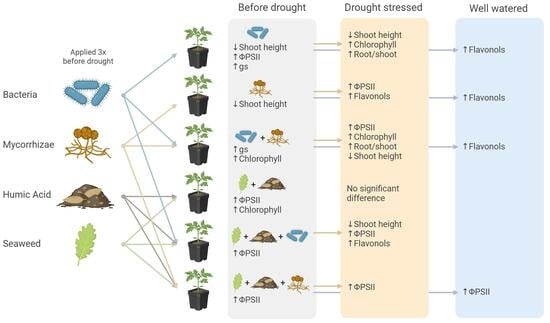
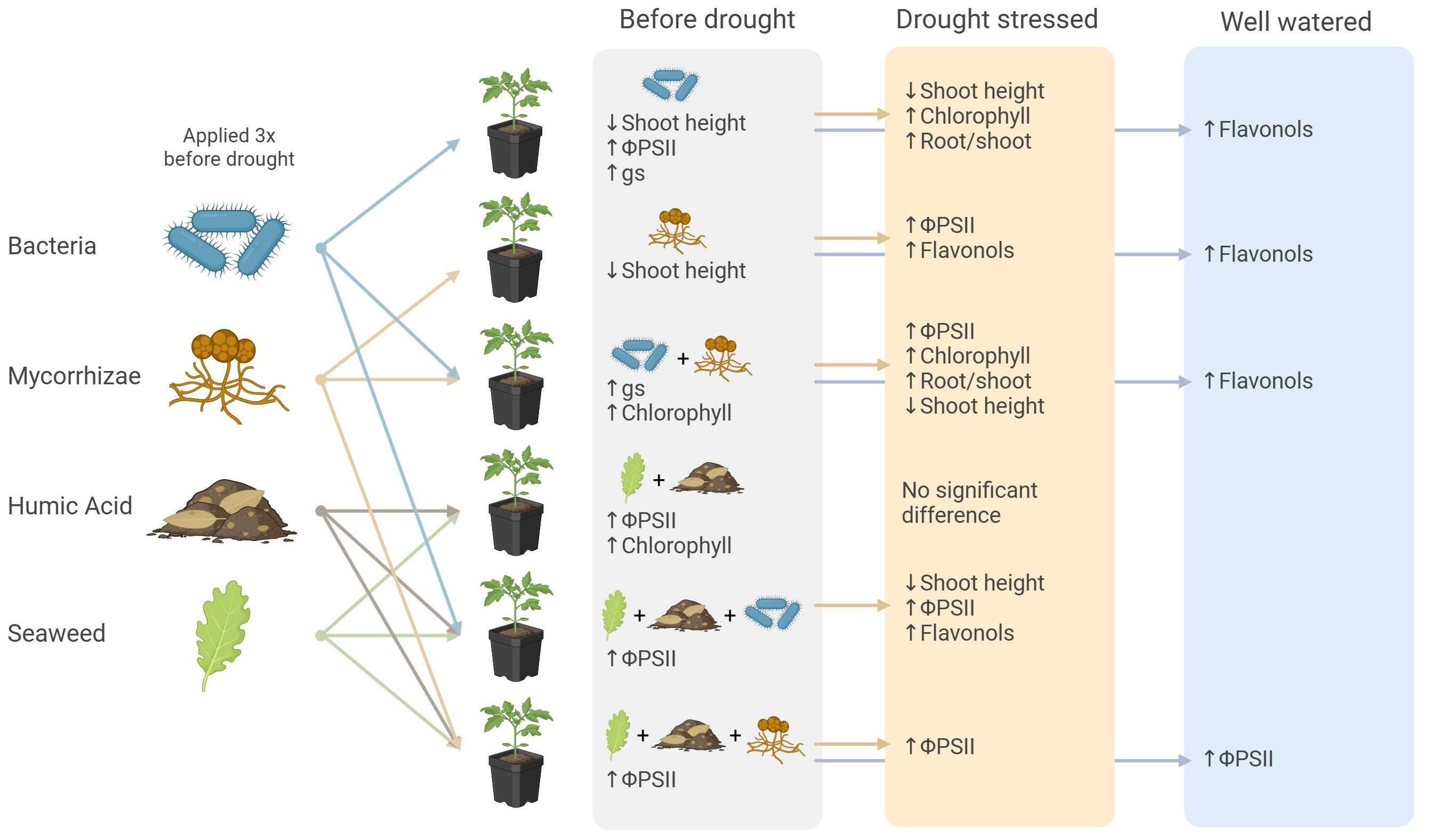
Graphical Abstract

1. Introduction

Tomato (Solanum lycopersicum L.) is one of the most widely cultivated and economically significant horticultural crops worldwide, but it is also highly sensitive to water deficit [1,2]. In the context of increasing environmental concerns, there is a growing need to adopt sustainable agricultural practices that promote high crop yields and quality while ensuring the efficient use of water [3,4].
One promising and sustainable agronomic strategy is the use of biostimulants, which have gained increasing attention. Biostimulants are natural or synthetic substances that, when applied in small quantities, can enhance plant growth, optimize nutrient uptake, boost crop productivity and quality, and ultimately improve tolerance to abiotic stress, through diverse physiological mechanisms [4,5,6,7]. Biostimulants are typically classified into several major groups: (i) seaweed-derived extracts (e.g., Ascophyllum nodosum) [8], (ii) humic and fulvic acids, (iii) beneficial fungi such as mycorrhizal fungi (Glomeromycotina, Trichoderma spp.), (iv) beneficial bacteria (e.g., Arthrobacter, Azotobacter, Bacillus, Pseudomonas, Serratia), (v) protein hydrolysates and amino acids, and (vi) plant extracts rich in secondary metabolites (e.g., Moringa oleifera) [9,10].
Despite the rapid expansion of biostimulants in agriculture, the evidence from controlled environment studies suggests that there is significant potential for synergistic interaction in the application of combined biostimulant products rather than the use of a single formulation [6,11]. However, this approach has seldom been explored, presenting a valuable opportunity for further investigation into the development of next-generation biostimulant formulations that leverage synergistic interactions to enhance crop performance.
Thus, the use of biostimulants in major crops has become popular, as greenhouse- and high-tunnel-based studies have reported positive effects on growth and yield, especially under abiotic stress conditions, where plants showed increased resilience [3,12,13]. For instance, seaweed applications have been shown to mitigate the adverse effects of water deficit, improve water-use efficiency, and support tomato production under drought-prone conditions [12,14,15]. Similarly, microbial communities such as arbuscular mycorrhizal fungi and different bacteria have been shown to enhance root water uptake and improve drought resilience in tomato [13,16]. In addition, humic acids have also demonstrated positive effects in alleviating drought stress in tomato plants [13,17].
Drought is one of the most critical environmental stresses limiting the productivity of numerous crops, particularly vegetables [18,19]. Under abiotic stress conditions, plants experience physiological, biochemical, and molecular disruptions that impair growth, yield, and overall performance [20,21,22]. Drought stress leads to increased production of reactive oxygen species (ROS) in mitochondria and chloroplasts, causing cellular damage and impairing plant function [23,24]. In this context, traits such as plant height and biomass carbon allocation are widely used as reliable indicators of plant growth and vigor, as they are particularly responsive to changes in plant water status [1,12,25]. In addition, the quantification of photosynthetic pigments such as chlorophyll, along with secondary metabolites like flavonoids, provides insight into the integrity of the photosynthetic apparatus and the plant’s metabolic status. Chlorophyll content reflects the functional state of chloroplasts and can serve as a sensitive indicator of stress-induced metabolic imbalance [12,26], whereas flavonoids, including flavonols and anthocyanins, are secondary metabolites that serve as indicators of plant defense activation, particularly under oxidative stress. Their accumulation reflects the plant’s capacity to mitigate ROS and can be used as a proxy for stress resilience and antioxidant response [16,17,27]. Furthermore, chlorophyll a fluorescence parameters, particularly those related to photosystem II (PSII) efficiency, along with gs, offer a non-invasive tool to detect early physiological responses to drought. These indicators have been used to evaluate photosynthetic performance and stress tolerance under water-limited conditions [25,26]. However, although these biochemical and physiological markers are well established, their integrated use to compare single and combined biostimulant formulations under controlled drought conditions remains limited.
In this study, we evaluated the effects of seven biostimulant treatments, including formulations based on beneficial bacteria, mycorrhizal fungi, seaweed extract combined with humic acid, and their respective combinations, on early tomato development under controlled conditions. We assessed their influence on plant performance, biomass accumulation, photosynthetic capacity, and non-invasive assessment of oxidative stress. Measurements were taken both before and after the imposition of drought stress, to establish growth and physiological baselines and assess treatment-specific responses under stress. The primary objective was to identify the most effective biostimulant treatments for maintaining plant growth and physiological performance under both drought and well-irrigated conditions. We hypothesize that biostimulant treatments, particularly when combined, can improve early tomato development and physiological performance, enhancing plant growth, carbon allocation, and resilience, especially under water-limited conditions.

2. Materials and Methods

2.1. Plant Materials and Growth Conditions

Tomato (Solanum lycopersicum L.; Sunbrite F1, Harris Seeds, Rochester, New York, NY, USA), a mid-season determinate fresh-market hybrid with a compact vine architecture, was used in this study. Seeds were sown in plastic trays (Ladmark 128-cell seed trays, Model P-128, Akron, OH, USA) filled with Sunshine® Mix #4 Professional Growing Mix (Sun Gro Horticulture, Agawam, MA, USA). After germination, seedlings were transplanted into 140 pots (8.5 × 8.5 × 8 cm; Johnny’s Selected Seeds, Winslow, ME, USA), each containing 300 g of calcined clay (PrimeraTM, Rancho Santa Margarit, CA, USA). The substrate was supplemented with 933 mg of a slow-release fertilizer (18-6-8 N–P2O5–K2O; Nutricote®, Florikan ESA LLC, Sarasota, FA, USA) and 311 mg of a micronutrient blend (MicroMax® Micronutrient, The Andersons Inc., Maumee, OH, USA).
The experiment was conducted in the Research Greenhouse at Utah State University (Logan, UT, USA) from 18 December 2024 to 21 February 2025. Seeds were sown on 18 December 2024 and transplanted on 26 January 2025. The harvest was conducted on 21 February 2025. Plants were grown under a 16 h light/8 h dark photoperiod. Air temperature was maintained at 24 ± 1 °C, and relative humidity ranged between 40 and 50%. Photosynthetic photon flux density (PPFD) varied throughout the photoperiod due to the interaction of natural solar radiation and supplemental LED lighting. During daily hours, PPFD ranged between 400 and 600 µmol m−2 s−1. Following sunset (approximately 17:00 to 22:00 h) and during one hour (6:00 to 7:00 h) prior to sunrise, plants received supplemental LED lighting only at approximately 200 µmol m−2 d−1. To maintain a 16 h photoperiod, the lights stayed on until approximately 22:00 h. These conditions resulted in an estimated daily light integral (DLI) of approximately 20 mol m−2 s−1.
Irrigation was applied every other day during the first week following transplanting, and then daily for the subsequent two weeks, with a fixed volume of 100 mL per pot per day to compensate for evapotranspiration losses. To ensure consistent soil moisture across all experimental units, all pots were weighed once per week. These periodic measurements confirmed that moisture levels remained uniform among treatments and informed adjustments to the irrigation protocol when necessary.

2.2. Biostimulant Treatments

Four commercial biostimulant products and their combinations were evaluated in this study (Table 1). Two products were single-formulation biostimulants: Spectrum DS™ (BFMS® Biological Farm Management System™; Tainio Biologicals, Inc., Spokane, WA, USA), containing 18 species of live beneficial soil bacteria, and Mighty Mycorrhizae (Wildroot Organic Inc., Horseshoe Bay, TX, USA), composed of nine endomycorrhizal and seven ectomycorrhizal species. Two additional products consisted of multi-component formulations: Spectrum + Myco™ (BFMS®; Tainio Biologicals, Inc.), a blended product containing 18 bacterial species and four live mycorrhizal fungi, and Cytogreen (BFMSR; Tainio Biologicals, Inc., Spokane, WA, USA), a seaweed-based formulation containing Ascophyllum nodosum extract, 14% soluble potash, 1% calcium, and 1% humic acid. More details on biostimulant formulations, type, amount applied per pot, and estimated microbial concentrations (bacterial CFU/mL and Mycorrhizae spores/mL) are provided in Table S1 in the Supporting Information. Combination treatments were evaluated by supplementing the single-formulation bacterial or mycorrhizal products with Cytogreen, resulting in bacteria + seaweed + humic acid (B + S + H) and mycorrhizae + seaweed + humic acid (M + S + H) treatments. The bacteria + mycorrhizae (B + M) treatment was applied using the commercially available Spectrum + Myco double-formulation product (BFMS®; Tainio Biologicals, Inc.) rather than by mixing single products.
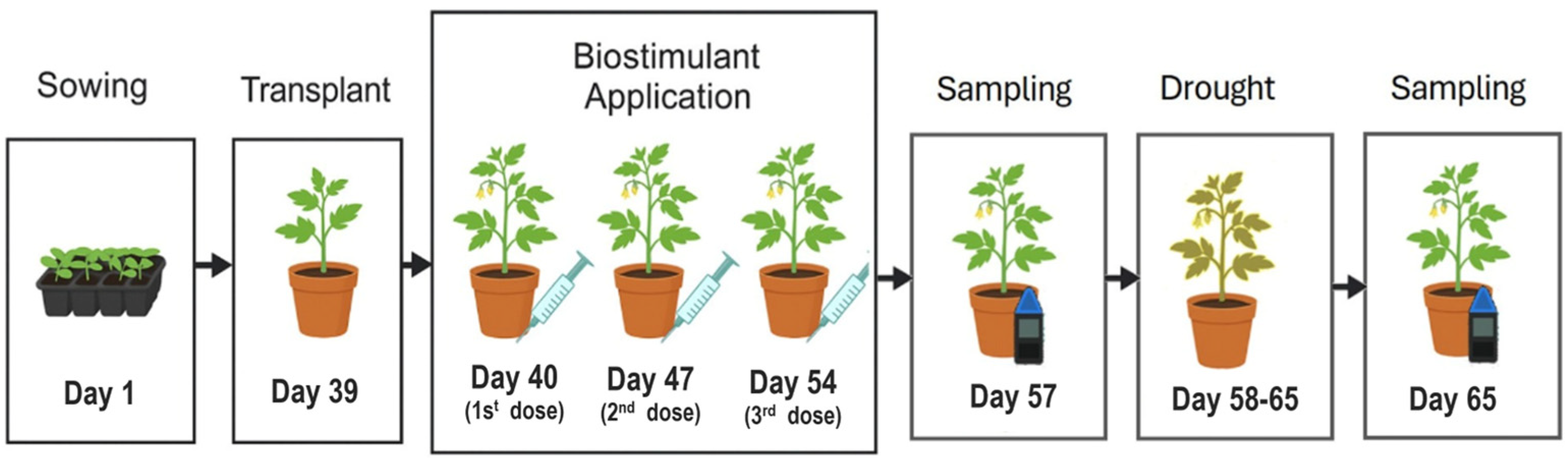
Biostimulants were applied in three doses: the initial application one day after transplanting, with two subsequent applications administered at one-week intervals (27 January, 3 February, and 10 February) [6,13,19] (Figure 1). Drought was imposed on Day 58 (14 February); therefore, plants experienced 19 days of post-transplant growth in the experimental pots prior to the onset of water stress.
Biostimulants were applied as aqueous solutions, each diluted in 50 mL of water and delivered directly to the root zone of each plant. For combined treatments, both components were mixed in 50 mL of water and applied to the root zone of each plant. Control plants received only water, ensuring that all treatments received the same volume of liquid to maintain uniform soil moisture conditions.

2.3. Experimental Design

The experiment was conducted under controlled greenhouse conditions using a randomized complete block design with treatments arranged in a factorial structure to evaluate the effects of biostimulant application and water regime on early tomato growth. The study included seven biostimulant treatments (individual and combined formulations, plus a non-treated control) and two irrigation regimes: well–water treatment (Full) and drought treatment (Deficit).
The experimental layout consisted of five blocks, with each block containing four replicate plants per biostimulant treatment (28 plants per block). At 19 days after transplanting (Day 58 after sowing; 14 February), plants within each biostimulant treatment were divided into two irrigation regimes, resulting in two replicate plants per irrigation regime per block. This resulted in 10 replicates per biostimulant × irrigation combination (2 plants × 5 blocks) and a total of 140 experimental units (7 biostimulants × 2 irrigation regimes × 10 replicates).
Treatments were randomly assigned within each block. To minimize positional effects within the greenhouse, pots were periodically rotated throughout the experiment. All plants were maintained under identical greenhouse environmental conditions to ensure uniform growth across treatments.
Under the irrigation treatments, full irrigation plants received a daily volume of water equivalent to the previous day’s weight loss, ensuring full replenishment of evapotranspiration water, whereas drought-stressed plants received 50% less water than their well–watered counterparts for seven consecutive days [13].

2.4. Sampling and Measurements

Before and after drought induction, morphological and non-destructive physiological measurements were taken on the plants. Plant height was measured from the cotyledon insertion point to the junction (“V”) formed by the two most recently expanded leaves, excluding the apical meristem, both before and after the drought stress period, to evaluate growth changes under stress. Height increase (ΔH) was calculated as follows: ΔH = H2 − H1, where H2 is plant height after drought and H1 is plant height before drought. Gas exchange traits, including light-adapted effective quantum yield (ΦPSII) and stomatal conductance (gs), were measured using a portable porometer (LI-600, LI-COR Biosciences, Lincoln, NE, USA). In addition, a non-invasive assessment of oxidative stress was conducted using leaf pigment-related indices, including chlorophyll, flavonols, and anthocyanins, measured with a Dualex leaf-clip optical sensor (Force-A, Orsay, France), which provides relative absorbance indices rather than absolute concentrations. At the end of the experiment, shoot and root dry mass were determined by drying shoots and thoroughly washed roots in a forced-air oven at 60 °C for 48 h.

2.5. Statistical Analysis

Statistical analyses were performed in Python 3.13.1. Normality of response variables was evaluated through quantile–quantile (Q–Q) plots and the Shapiro–Wilk test, and homogeneity of variances was evaluated using Levene’s test. For measurements collected prior to the imposition of drought stress, a one-way analysis of variance (ANOVA) was performed with biostimulants treatment as the fixed effect and block included as a random effect. For measurements collected after the drought treatment period, a two-way ANOVA was conducted using biostimulants treatment and irrigation regime (control and drought treatments) as fixed effects, with block included as a random effect. When significant main effects or interactions were detected (p ≤ 0.05), mean separation was performed using Fisher’s Least Significant Difference (LSD). To evaluate relationships between morphological (i.e., plant height), physiological (i.e., ΦPSII, stomatal conductance, chlorophyll, flavonols, and anthocyanin index), and carbon allocation traits (i.e., root and shoot dry weight), Pearson correlation analyses were conducted separately for each irrigation regime. ANOVA models fitted using the statsmodels package, correlation analyses conducted using scipy, and data handling and visualization carried out using pandas, numpy, and matplotlib.

3. Results

3.1. Effect of Biostimulants on Early Tomato Growth and Development

Prior to the imposition of drought stress, biostimulant treatments significantly affected plant morphology and several physiological traits, except for the flavonols and anthocyanins (Table 2).

3.1.1. Plant Height

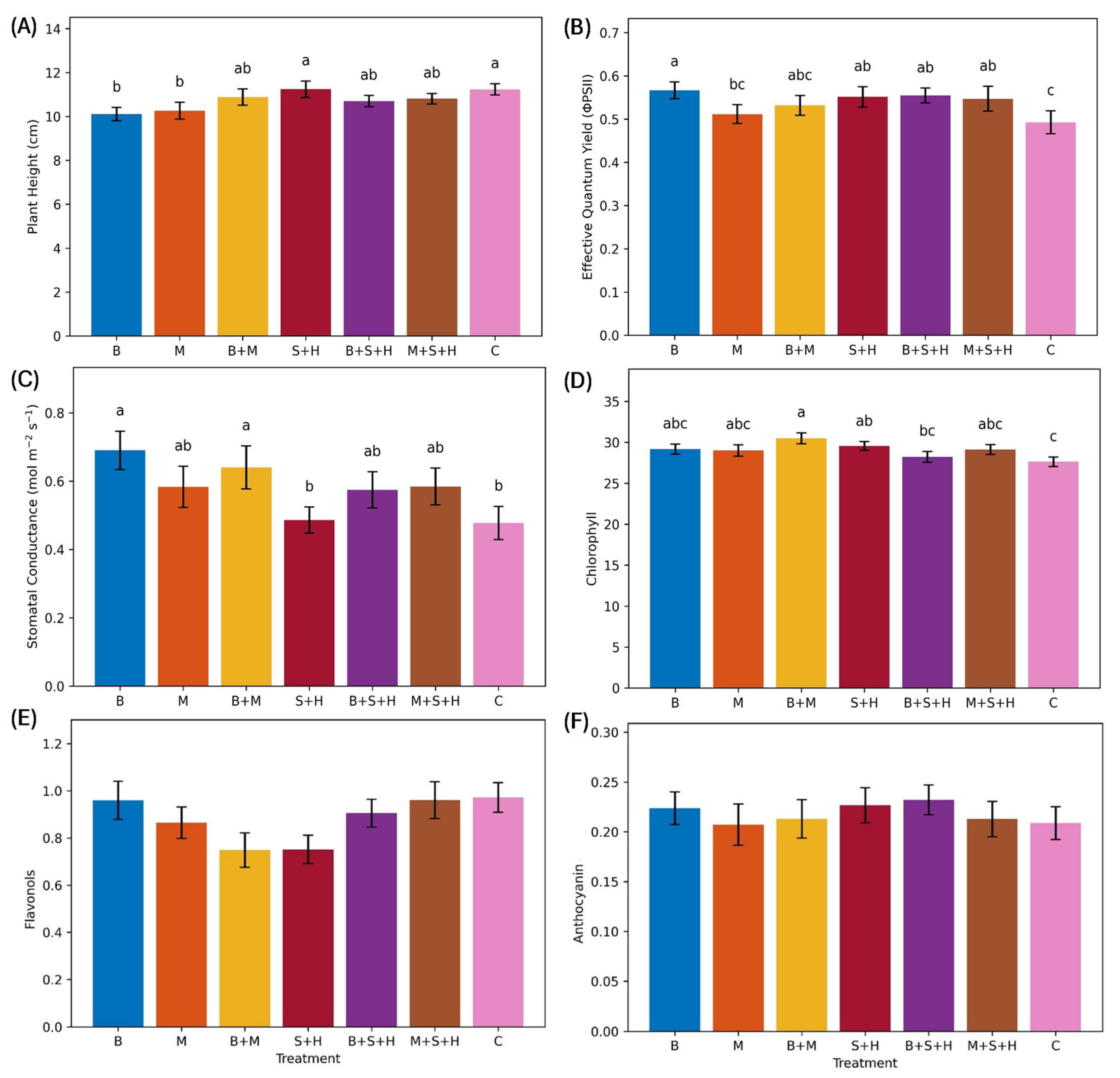
Plant height was significantly affected by biostimulant treatments (p ≤ 0.05). Plants receiving single-formulation microbial treatments (B and M) were consistently the shortest, with mean heights of 10.11 ± 1.30 cm (B) and 10.26 ± 1.68 cm (M). In contrast, the S + H and C treatments resulted in the tallest plants, reaching 11.24 ± 1.64 cm and 11.24 ± 1.12 cm, respectively. The remaining combined treatments (B + M, B + S + H, and M + S + H) exhibited intermediate plant heights of 10.89 ± 1.60 cm, 10.70 ± 1.12 cm, and 10.81 ± 1.04 cm (Figure 2A). Overall, plant height ranged from 10.11 ± 1.30 cm to 11.24 ± 1.64 cm across treatments, representing a maximum difference of approximately 1.1 cm.

3.1.2. ΦPSII

Significant differences in ΦPSII were observed among treatments (p ≤ 0.05). Plants treated with biostimulants generally exhibited higher ΦPSII values than the control. ΦPSII ranged from 0.49 ± 0.12 in the control to 0.57 ± 0.09 in treatment B. The highest value was observed in the single-formulation bacterial treatment (B; 0.57 ± 0.09), followed by B + S + H (0.55 ± 0.07), S + H (0.55 ± 0.10), and M + S + H (0.55 ± 0.13) (Figure 2B). Overall, the maximum difference among treatments was approximately 0.07 units.

3.1.3. gs

gs differed significantly among treatments (p ≤ 0.05). The highest gs was observed in the single-formulation bacterial treatment (B; 0.69 ± 0.24 mol m−2 s−1), followed by B + M (0.64 ± 0.27 mol m−2 s−1), whereas the lowest values were recorded in S + H (0.49 ± 0.17 mol m−2 s−1) and the control (C; 0.48 ± 0.21 mol m−2 s−1) (Figure 2C). Overall, gs ranged from 0.48 to 0.69 mol m−2 s−1 across treatments, representing a maximum difference of approximately 0.21 mol m−2 s−1.

3.1.4. Chlorophyll Index

The highest value was observed in B + M (30.48 ± 2.96), followed by S + H (29.55 ± 2.32), whereas the lowest chlorophyll index was recorded in the control (C; 27.63 ± 2.56) (Figure 2D). Overall, the chlorophyll index ranged from 27.63 to 30.48 across treatments, representing a maximum difference of approximately 2.85 units.

3.2. Effect of Biostimulants on Tomato Responses to Drought Stress

Following drought imposition, tomato plants exhibited differential growth, physiological, and carbon allocation responses among biostimulant treatments and irrigation regimes, indicating variation in drought tolerance (Table 3; Figure 3, Figure 4, Figure 5 and Figure 6).

3.2.1. Plant Height

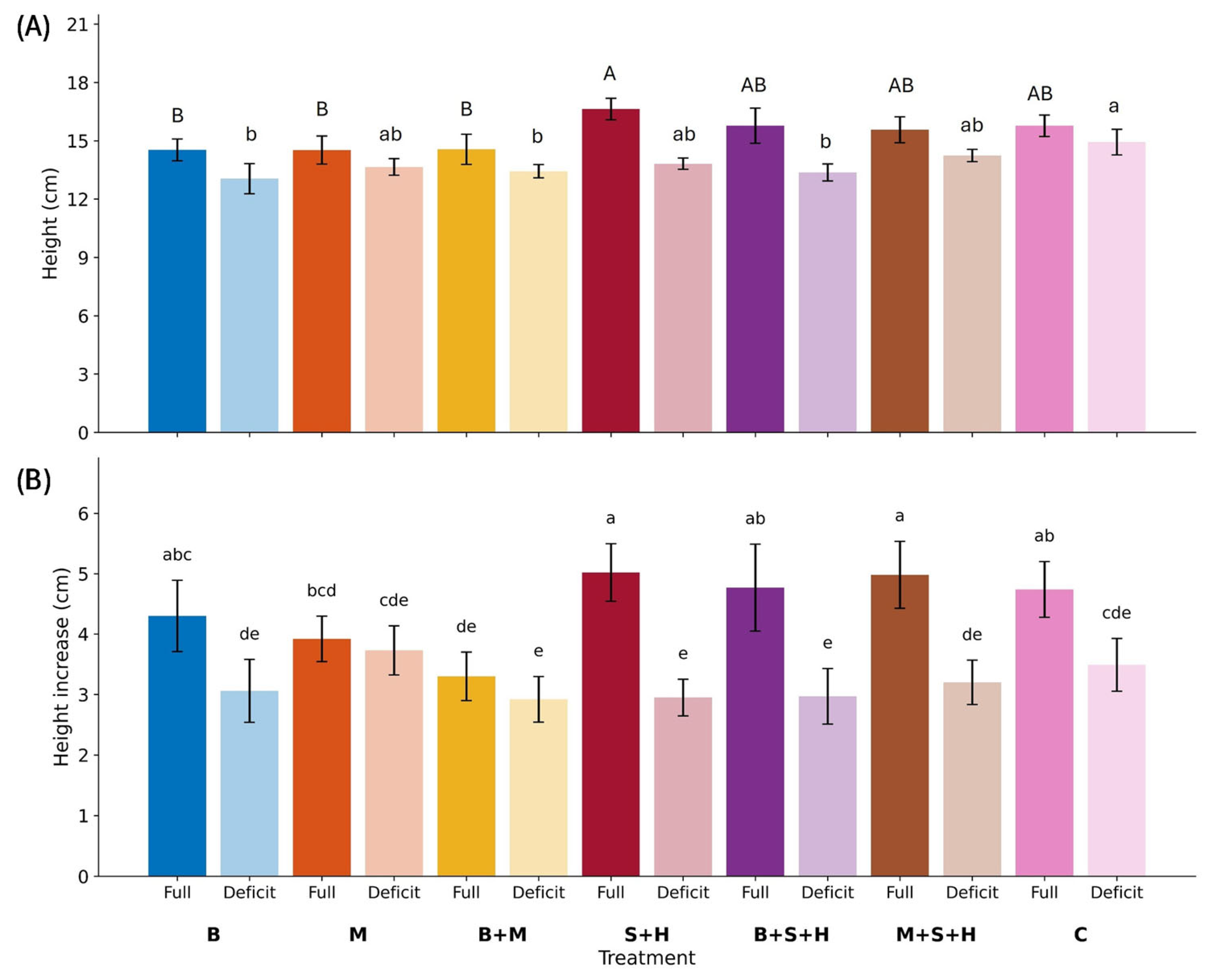
Plant height was affected by both factors, biostimulants and drought treatment, but not by their interaction (Table 3), while height increase was affected by both factors and the interaction (Table 3). Under full irrigation, treatments containing seaweed extract (S + H, B + S + H, and M + S + H) produced the tallest plants, reaching 16.63 ± 1.65 cm (S + H), 15.77 ± 2.71 cm (B + S + H), and 15.56 ± 2.00 cm (M + S + H), respectively (Figure 3A). However, after a 7-day drought period, the same treatments exhibited notable reductions in final height. For example, the S + H treatment decreased from 16.63 ± 1.65 cm under full irrigation to 13.82 ± 0.87 cm under deficit conditions (a reduction of approximately 2.81 cm), while the B + S + H treatment decreased from 15.77 ± 2.71 cm to 13.37 ± 1.32 cm (2.40 cm reduction).
In contrast, treatments containing microbial components, particularly those including mycorrhizae (M and B + M), showed smaller differences in plant height between irrigation regimes. For instance, plants under the M treatment decreased from 14.52 ± 2.17 cm (full) to 13.65 ± 1.27 cm (deficit), and B + M decreased from 14.56 ± 2.33 cm to 13.43 ± 1.02 cm. Importantly, under drought conditions, no statistically significant differences in final plant height were detected among biostimulant treatments, whereas differences were observed under full irrigation (Figure 3A).
Height increase was significantly affected by treatment, irrigation regime, and their interaction (p ≤ 0.05; Figure 3B). Under full irrigation, treatments containing seaweed extract exhibited the greatest growth, reaching 5.02 ± 1.43 cm (S + H), 4.98 ± 1.66 cm (M + S + H), and 4.77 ± 2.16 cm (B + S + H), compared to 4.74 ± 1.39 cm in the control. Under deficit conditions, growth was reduced across treatments, ranging from 2.92 ± 1.13 cm (B + M) to 3.73 ± 1.22 cm (M).

3.2.2. ΦPSII

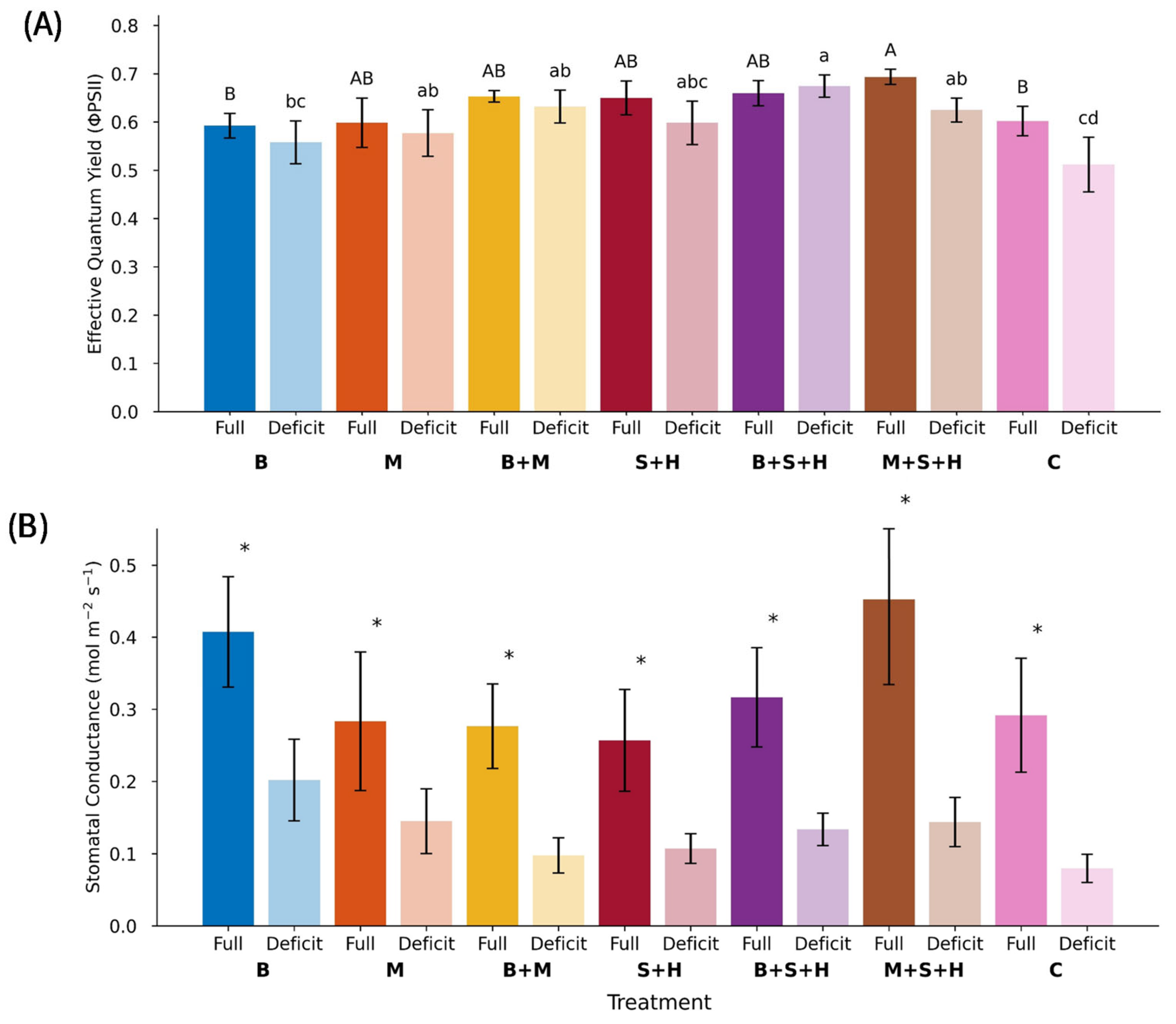
The ΦPSII was affected by both factors, biostimulants and drought treatment, but not by their interaction (Table 3). Across treatments, ΦPSII values ranged from 0.51 ± 0.16 in the control under deficit conditions to 0.69 ± 0.04 in M + S + H under full irrigation (Figure 4A). Drought stress reduced ΦPSII across treatments, with the largest reductions observed in the control (from 0.60 ± 0.09 to 0.51 ± 0.17) and M + S + H (from 0.69 ± 0.05 to 0.62 ± 0.07 (Figure 4A). Despite these reductions, ΦPSII remained above 0.50 in all treatments under deficit conditions, indicating maintenance of photochemical activity during short-term water limitation.

3.2.3. gs

gs was affected by the irrigation regime only (Table 3). Under full irrigation, gs values ranged from 0.26 ± 0.20 mol m−2 s−1 in S + H to 0.45 ± 0.29 mol m−2 s−1 in M + S + H (Figure 4B). However, gs declined substantially following drought stress across all treatments, with values ranging from 0.20 ± 0.14 mol m−2 s−1 in treatment B to 0.08 ± 0.05 mol m−2 s−1 in treatment C.
For example, gs in M + S + H decreased from 0.45 ± 0.29 to 0.14 ± 0.10 mol m−2 s−1, representing a reduction of 0.31 mol m−2 s−1. Similarly, B declined from 0.41 ± 0.23 to 0.20 ± 0.15 mol m−2 s−1, corresponding to a reduction of 0.21 mol m−2 s−1. Despite variation in absolute values, the consistent decrease across all treatments confirms that drought was the dominant factor regulating stomatal conductance.

3.2.4. Leaf Pigments

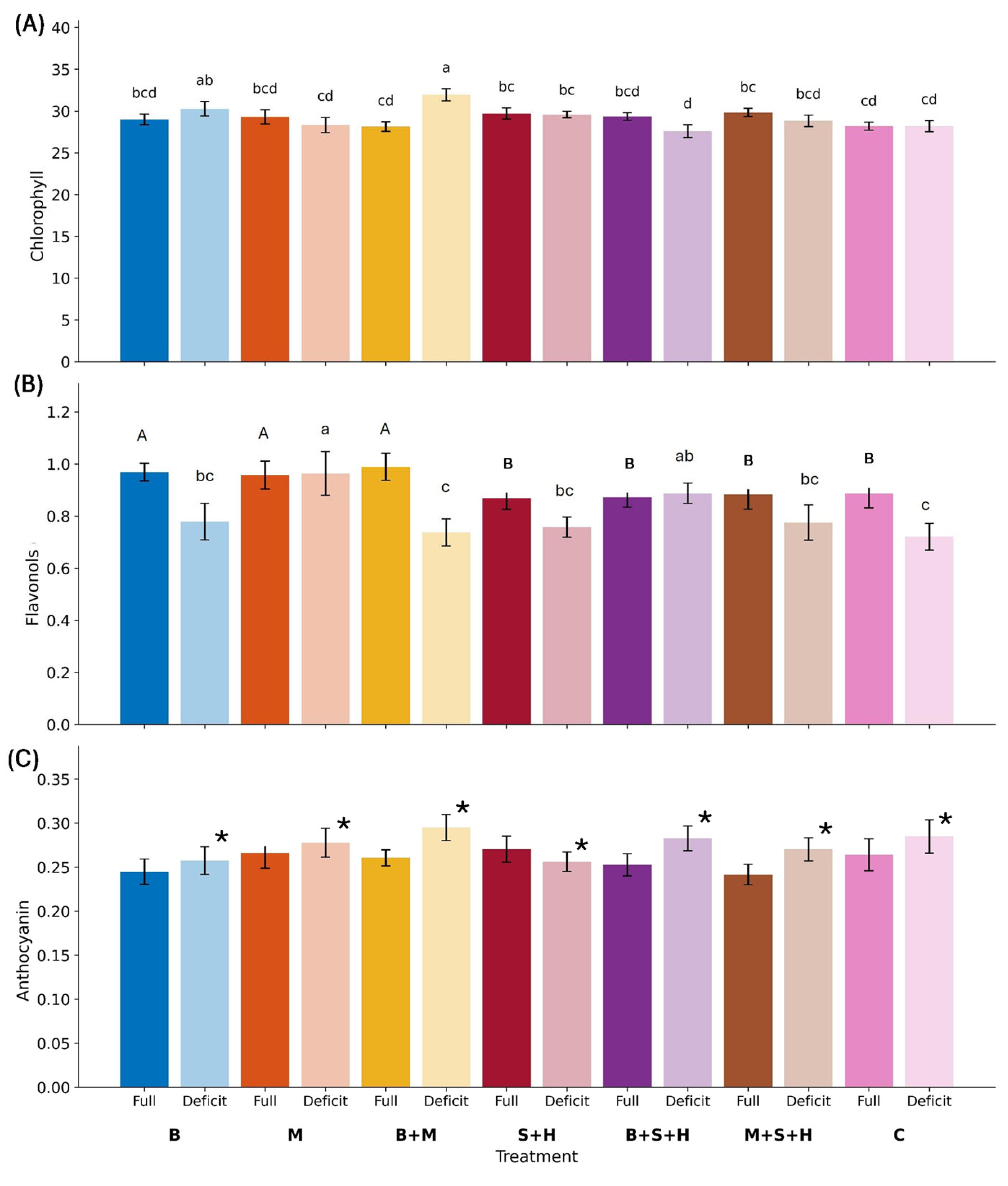
Chlorophyll index was not affected by either factor, biostimulants and drought treatment, independently, but it was affected by their interaction (Table 3). Treatment B + M exhibited a significantly higher chlorophyll index under deficit irrigation (31.94 ± 2.15) compared with full irrigation (28.13 ± 1.70) (Figure 5A). In contrast, B + S + H decreased from 29.35 ± 1.37 (full) to 27.59 ± 2.31 (deficit), while the control (C) remained unchanged between irrigation regimes (28.19 ± 1.46–1.99).
The flavonol index was affected by both factors, biostimulants and drought treatment, but not by their interaction (Table 3). Under full irrigation the highest flavonol values were observed in B + M (0.99 ± 0.16), B (0.97 ± 0.10), and M (0.96 ± 0.16); these were significantly higher than the control (0.89 ± 0.17), whereas the remaining treatments did not differ from the control. Under deficit irrigation, only B + S + H (0.89 ± 0.12) and M (0.96 ± 0.25) maintained flavonol values significantly greater than the control (0.72 ± 0.15) (Figure 5B). The anthocyanin index was affected by drought treatment only (Table 3). Anthocyanin index values were slightly higher under drought for most treatments (Figure 5C). Across treatments, anthocyanin values were slightly higher under deficit conditions compared to full irrigation. For example, in B + M, anthocyanin increased from 0.26 ± 0.03 under full irrigation to 0.30 ± 0.04 under deficit conditions. Similarly, the control increased from 0.26 ± 0.05 to 0.28 ± 0.06, and M increased from 0.27 ± 0.05 to 0.28 ± 0.05. Across treatments, anthocyanin values ranged from 0.24 ± 0.04 to 0.30 ± 0.04, indicating a modest but consistent increase under drought.

3.2.5. Biomass Carbon Allocation

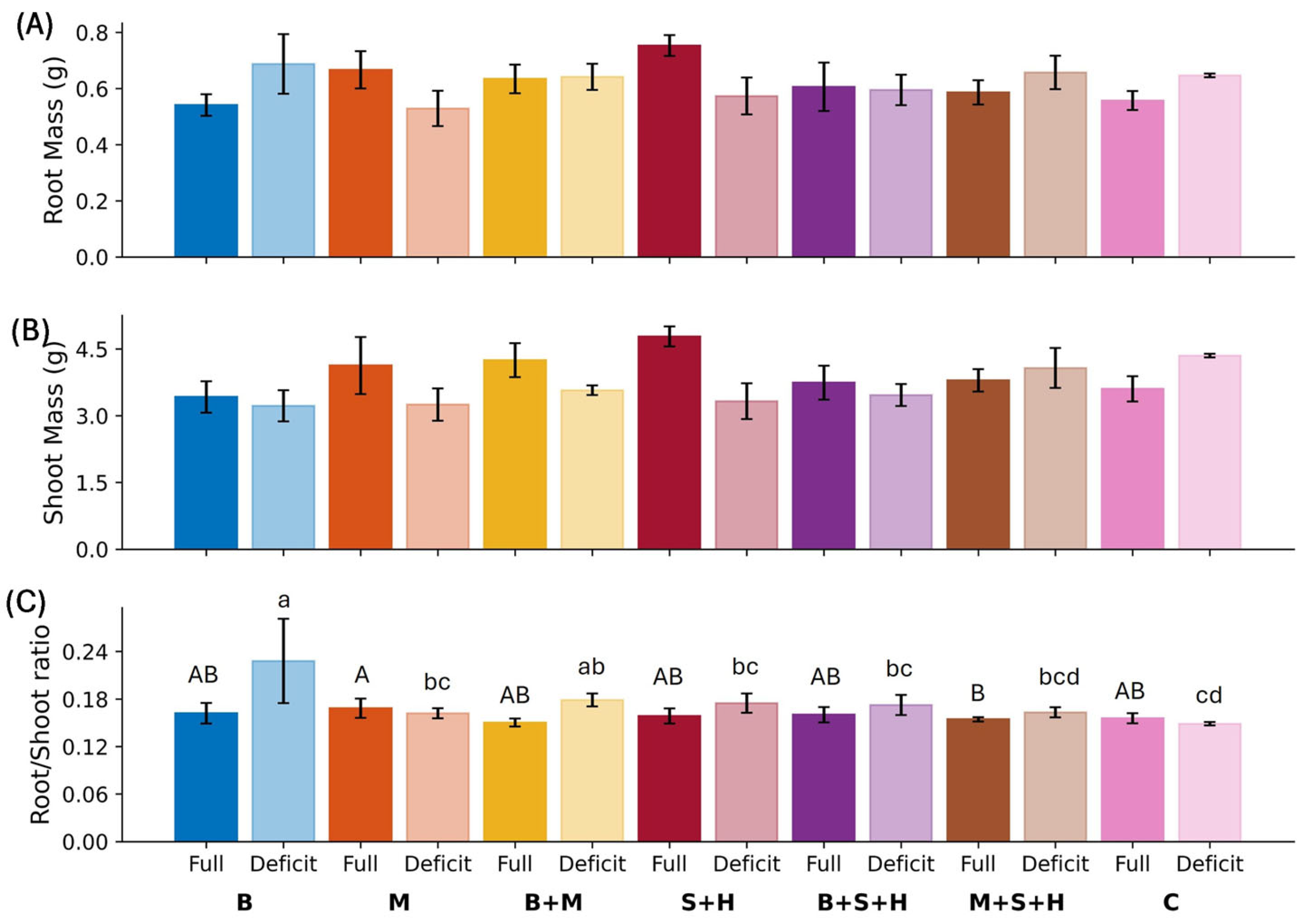
Root/shoot ratio was affected by both biostimulant and drought treatments, but not by their interaction, while root and shoot biomass were not affected by either factor or their interaction (Table 3). Under full irrigation conditions, root/shoot ratio ranged from 0.14 ± 0.05 in M + S + H to 0.17 ± 0.02 in M. The M treatment exhibited the highest ratio (0.17 ± 0.02), which was significantly greater than most other treatments, while B (0.16 ± 0.02), B + M (0.16 ± 0.03), S + H (0.16 ± 0.03), B + S + H (0.16 ± 0.02), and the control (0.16 ± 0.02) showed intermediate values. Under drought conditions, the root/shoot ratio generally increased relative to full irrigation in several treatments. For example, B increased from 0.16 ± 0.02 to 0.20 ± 0.08, and B + M increased from 0.16 ± 0.03 to 0.18 ± 0.02. Across treatments, root/shoot ratio ranged from 0.15 to 0.20 under deficit irrigation (Figure 6C).

3.3. Interrelationships Among Stress-Related Parameters

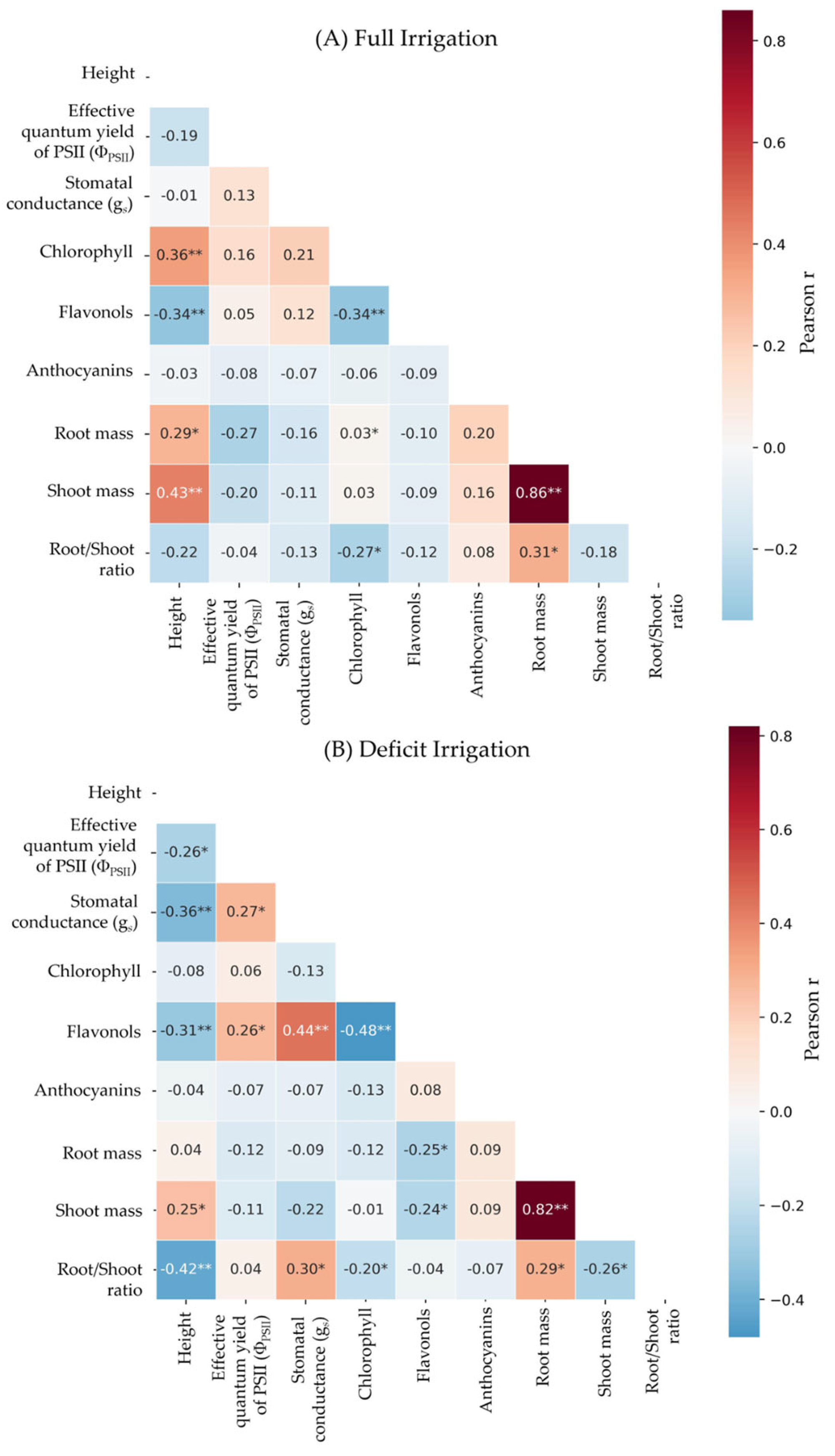
Correlation analyses revealed distinct relationships among growth, physiological, and pigment-related traits under full and deficit irrigation (Figure 7).
Under full irrigation, plant height was positively correlated with chlorophyll index (r = 0.36, p < 0.01), root dry mass (r = 0.29, p < 0.05), and shoot dry mass (r = 0.43, p < 0.01). Plant height was negatively correlated with the flavonol index (r = −0.34, p < 0.01). Shoot dry mass showed a strong positive correlation with root dry mass (r = 0.86, p < 0.01). The root/shoot ratio was negatively correlated with chlorophyll index (r = −0.27, p < 0.05) and positively correlated with root dry mass (r = 0.31, p < 0.05). No significant correlations were observed between height and ΦPSII or gs under full irrigation.
Under deficit irrigation, plant height was positively correlated with shoot dry mass (r = 0.25, p < 0.05) and negatively correlated with ΦPSII (r = −0.26, p < 0.05), gs (r = −0.36, p < 0.01), flavonols index (r = −0.31, p < 0.01), and root/shoot ratio (r = −0.42, p < 0.01). Flavonols index was positively correlated with ΦPSII (r = 0.26, p < 0.05) and gs (r = 0.44, p < 0.01) and negatively correlated with chlorophyll index (r = −0.48, p < 0.01), shoot dry mass (r = −0.24, p < 0.05), and root dry mass (r = −0.25, p < 0.05).
Across both irrigation regimes, shoot dry mass remained strongly correlated with root dry mass (full irrigation: r = 0.86, p < 0.01; deficit irrigation: r = 0.82, p < 0.01). Anthocyanin index showed no significant correlations with growth or physiological variables under either irrigation treatment.

4. Discussion

4.1. Baseline Physiological Responses to Biostimulants Prior to Drought Stress

Baseline measurements under well–watered conditions revealed distinct morphological and physiological responses to biostimulant application, highlighting differences in plant resource allocation strategies prior to drought imposition.
Plant height responses indicated contrasting growth strategies among treatments. The reduced plant height observed in treatments B and M, coupled with favorable physiological performance, may reflect a temporary shift in carbon allocation toward root development or the establishment of beneficial microbial or mycorrhizal associations rather than shoot elongation [28]. Such allocation patterns may be advantageous under subsequent drought conditions.
It is important to interpret these structural differences within the experimental context. Seedlings were transplanted at 39 days after sowing, resulting in a relatively short post-transplant vegetative growth period (19 days) prior to drought imposition. In addition, plants were grown in a restricted root-zone volume (500 mL), which likely constrained vertical elongation. Height was measured conservatively from the cotyledon insertion point to the junction of the most recently expanded leaves, excluding the apical meristem. Under these controlled conditions, early physiological modulation may precede pronounced structural divergence, and modest differences in plant height can represent meaningful shifts in growth strategy rather than final biomass potential.
An inverse relationship between plant height and stomatal conductance was evident, whereby taller plants (S + H and C) exhibited lower gs, while shorter plants (B and M) showed higher gs and ΦPSII. This pattern suggests that increased shoot elongation may have occurred at the expense of physiological efficiency. Taller plants may have experienced early mild water limitation due to restricted root-zone volume, potentially triggering abscisic acid–mediated regulation of stomatal aperture [29].
Stomatal conductance varied among treatments, reflecting differences in gas exchange capacity and water-use strategy. The higher gs values observed in treatments B and B + M suggest enhanced stomatal openness and greater potential for carbon assimilation under well–watered conditions. In contrast, lower gs in treatments S + H and C indicates a more conservative water-use strategy, potentially associated with early stomatal regulation. Despite these differences, gs values across all treatments remained within ranges considered optimal for maintaining efficient photosynthesis. This indicates that none of the treatments experienced severe physiological limitations at this stage [30].
Regardless of the treatments, under single or double combination, plants treated with biostimulants showed increased ΦPSII compared to the control, suggesting enhanced photochemical efficiency under well–watered conditions. This enhanced PSII performance is consistent with previous studies reporting improved photosynthetic efficiency following biostimulant application [25]. Although S + H showed lower gs, it maintained relatively high ΦPSII, implying that non-stomatal factors may have contributed to sustained photochemical efficiency. On the contrary, treatment C exhibited both low gs and low ΦPSII, indicating a comparatively poorer physiological status even before drought imposition.
Chlorophyll index responses further complemented the observed physiological patterns. Across all treatments, chlorophyll index values remained below 35, indicating a baseline level of mild stress prior to drought onset, potentially associated with pot size limitations that restricted root growth and water retention [31]. This effect was most pronounced in control (C), which exhibited lower chlorophyll index values despite greater plant height, suggesting reduced photosynthetic investment relative to biomass accumulation. In contrast, the combined biostimulant treatments B + M and S + H consistently maintained higher chlorophyll index values, reflecting improved nitrogen assimilation and sustained photosynthetic capacity under early stress conditions compared with the control [32,33,34].
Flavonol and anthocyanin indexes, which play a critical role in protecting plant tissues from oxidative damage caused by abiotic stress [35], remained within normal ranges across all treatments, indicating that leaf tissues were not under apparent stress [31]. Although flavonols did not differ significantly among treatments, plants treated with biostimulants, for example, the M + S + H combination, showed a relatively high flavonol index, suggesting early detection of mild stress and potentially greater capacity for future resilience. In contrast, the anthocyanin index did not differ significantly across treatments, indicating a uniform stress baseline for this pigment. While anthocyanins are known for their role in ROS scavenging and light protection, their stability across treatments implies that environmental cues at this stage were not sufficient to trigger differential expression [36,37,38,39]. This finding suggests that flavonols respond more readily than anthocyanins to mild or early stress, emphasizing the importance of non-destructive assessment of secondary metabolites for identifying stress responses before visible symptoms develop.
Overall, baseline physiological responses to biostimulants prior to drought stress revealed that combined biostimulant treatments exhibited physiological responses more consistent with enhanced drought preparedness than single-formulation applications, which in part agrees with our main hypothesis. While treatment B alone showed indicators of early stress acclimation, characterized by reduced shoot elongation coupled with relatively high gs and ΦPSII, this response was less balanced than that observed in combination treatments. In particular, S + H plants achieved greater height while maintaining higher ΦPSII and chlorophyll index values alongside lower gs compared with the control, suggesting improved photosynthetic efficiency and potentially greater intrinsic water-use efficiency. Similarly, B + M displayed coordinated physiological responses that exceeded those of B or M applied individually. In contrast, the control consistently exhibited lower physiological performance despite greater plant height, indicating less effective carbon gain relative to water use. These baseline differences likely shaped plant resilience during subsequent drought stress and underscore the importance of early physiological conditioning through biostimulant combinations rather than single formulations.

4.2. Biostimulant-Mediated Modulation of Tomato Drought Responses

Height gain over the 7-day drought period highlighted treatment-specific responses to water limitation. Seaweed-based treatments (S + H, B + S + H, M + S + H) showed strong reductions in height gain under deficit irrigation, indicating that their growth-promoting effects are most effective under optimal water availability. Treatments M and B + M exhibited stable height gains, supporting the role of microbial biostimulants in maintaining growth under drought via improved water uptake, stress hormone modulation, antioxidant defenses, and osmotic balance [13,16,28,40].
ΦPSII remained largely stable across treatments and irrigation regimes, indicating that the drought imposed was not severe enough to impair PSII photochemistry. Values exceeded those typical for light-adapted, non-stressed leaves, 0.4–0.6 [41], suggesting effective photoprotection. Combined biostimulant treatments maintained high ΦPSII despite reduced gs, indicating activation of non-stomatal protective mechanisms such as antioxidant activity or photoprotection [25,42].
The pronounced decline in gs following drought reflects a typical stomatal response to water limitation, aimed at reducing water loss. Treatment C exhibited both reduced gs and ΦPSII, reflecting poor stomatal regulation and compromised physiological performance under drought [43].
Severe chlorophyll loss is often associated with oxidative stress or impaired nitrogen assimilation [32], which was not evident in our study. Chlorophyll index remained generally stable across treatments, indicating that the drought imposed was moderate and insufficient to trigger chlorophyll degradation. The relative increase in chlorophyll index in B + M under deficit irrigation compared with full irrigation may indicate chlorophyll stability and delayed senescence by maintaining chlorophyll levels and photosynthetic activity longer under the stress. This fact can be associated with functional stay-green, a characteristic that is closely associated with delayed loss in photosynthetic function and further increase in crop yield [44].
Flavonol responses were variable. Some treatments (B, B + M, C) showed declines under drought, contrary to the expected increase under oxidative stress [45], aligning with reports of delayed or suppressed flavonol synthesis under moderate or early-stage drought [45,46]. The M and B + S + H treatments maintained stable flavonols, suggesting treatment-specific modulation of secondary metabolism. We also found that anthocyanins showed a slight, non-significant tendency to increase under drought, consistent with their photoprotective and antioxidant roles [37].
Under drought conditions, plants typically shift biomass toward roots to improve water uptake [16,25]. In our study, treatment B showed the highest root/shoot ratio under drought, suggesting it most strongly encouraged root growth when water was limited [12,13]. This pattern aligns with known drought responses and evidence that some biostimulants or microbial treatments can enhance root development and stress tolerance [13,28]. However, not all biostimulant combinations outperformed the control, indicating that complex mixtures may not always provide additive benefits. Under full irrigation, treatments had less effect on biomass allocation, suggesting that the benefits of biostimulants are more pronounced under stress.
Overall, while certain treatments show promise for improving drought responses based on morphological and physiological traits, further long-term field research is needed to better understand plants’ responses to biostimulants, especially under stress conditions.
A correlation analysis showed that under both full and deficit irrigation, shoot dry mass was positively correlated with plant height, suggesting a consistent relationship between aerial biomass and elongation growth. Additionally, plant height was negatively correlated with the flavonol index across both irrigation regimes, potentially reflecting an inverse relationship between growth and stress-related pigment accumulation. This might partially explain the lower flavonol index in the second measurement, as plants were bigger.
Under deficit irrigation, plant height also showed significant negative correlations with ΦPSII and gs, indicating a physiological coordination between photochemical efficiency, gas exchange, and growth under water stress. In contrast, under full irrigation, plant height was positively associated with chlorophyll index and root mass, reflecting enhanced photosynthetic capacity and belowground development in optimal conditions.
Flavonol levels under deficit irrigation were not only associated with height, but also showed significant positive correlations with ΦPSII and negative correlations with gs and the chlorophyll index. The negative correlation between flavonols and chlorophyll was consistent across both irrigation regimes.

5. Conclusions

This study demonstrated that biostimulant treatments differentially affect early growth and physiological responses of tomato plants under well–watered and drought-stressed conditions. Among the microbial-based treatments, the combination of bacteria and mycorrhizae (B + M) consistently promoted stable growth and enhanced photosynthetic efficiency under water-limited conditions, indicating a synergistic activation of drought resilience mechanisms. In contrast, seaweed-based products (S + H) were effective in stimulating vegetative growth under optimal irrigation, but their benefits diminished under drought. Key physiological parameters, including ΦPSII, gs, chlorophyll index, flavonols, and anthocyanins, proved valuable in differentiating biostimulant performance across irrigation regimes. Correlation analysis further revealed coordinated relationships among physiological traits and biomass accumulation. Under drought, flavonols showed significant associations with ΦPSII and gs, suggesting their role in modulating stress responses. Overall, these findings support the strategic use of integrated biostimulant formulations to enhance tomato performance under varying water availability; however, their effectiveness depends on formulation type and composition. Further field-based research is needed to optimize application timing, formulation synergy, and long-term agronomic outcomes, especially under challenging conditions such as dryland regions.

Supplementary Materials

The following supporting information can be downloaded at: https://www.mdpi.com/article/10.3390/horticulturae12040432/s1, Table S1: Biostimulant formulations, type, and amount applied per pot and estimated microbial concentrations (bacterial Colony Forming Units (CFU)/mL and Mycorrhizae spores/mL), per application.

Author Contributions

Conceptualization, C.G.-R., M.M.T.d.O. and J.F.; methodology, C.G.-R., M.M.T.d.O. and J.F.; validation, C.G.-R. and M.M.T.d.O.; formal analysis, C.G.-R.; investigation, C.G.-R., M.M.T.d.O. and J.F.; resources, M.M.T.d.O., A.K. and Y.S.; data curation, C.G.-R.; writing—original draft preparation, C.G.-R.; writing—review and editing, C.G.-R., M.M.T.d.O., A.K. and Y.S.; visualization, C.G.-R. and M.M.T.d.O.; supervision, M.M.T.d.O.; project administration, M.M.T.d.O.; funding acquisition, M.M.T.d.O., A.K. and Y.S. All authors have read and agreed to the published version of the manuscript.

Funding

This project was partially funded by the USDA Agricultural Marketing Service Specialty Crop Multi-State Program through an agreement with the Texas Department of Agriculture (TDA) and Texas A&M University. The agreement number between USDA and TDA is AM21SCMPTX1003, and the agreement number between TDA and Texas A&M University is TX-SCM-21-05. This project was also partially funded by Dr. Milena Oliveira’s startup funding from the Department of Plants, Soils & Climate, Utah State University.

Data Availability Statement

The data presented in this study are available on request from the corresponding author to protect unpublished data and intellectual property.

Conflicts of Interest

The authors declare no conflicts of interest.

Abbreviations

The following abbreviations are used in this manuscript:
ΦPSIIPhotosynthetic efficiency
gsStomatal conductance
BBacteria
MMycorrhiza
S + HSeaweed+ humic acid
ROSReactive oxygen species
ANOVAAnalysis of variance
LSDLeast significant difference
SEStandard error

References

  1. Domingo, G.; Marsoni, M.; Álvarez-Viñas, M.; Torres, M.D.; Domínguez, H.; Vannini, C. The Role of Protein-Rich Extracts from Chondrus Crispus as Biostimulant and in Enhancing Tolerance to Drought Stress in Tomato Plants. Plants 2023, 12, 845. [Google Scholar] [CrossRef]
  2. Solankey, S.S.; Singh, R.K.; Baranwal, D.K.; Singh, D.K. Genetic Expression of Tomato for Heat and Drought Stress Tolerance: An Overview. Int. J. Veg. Sci. 2015, 21, 496–515. [Google Scholar] [CrossRef]
  3. Fernandes, Â.; Chaski, C.; Pereira, C.; Kostić, M.; Rouphael, Y.; Soković, M.; Barros, L.; Petropoulos, S.A. Water Stress Alleviation Effects of Biostimulants on Greenhouse-Grown Tomato Fruit. Horticulturae 2022, 8, 645. [Google Scholar] [CrossRef]
  4. Povero, G.; Mejia, J.F.; Di Tommaso, D.; Piaggesi, A.; Warrior, P. A Systematic Approach to Discover and Characterize Natural Plant Biostimulants. Front. Plant Sci. 2016, 7, 00435. [Google Scholar] [CrossRef] [PubMed]
  5. Bulgari, R.; Franzoni, G.; Ferrante, A. Biostimulants Application in Horticultural Crops under Abiotic Stress Conditions. Agronomy 2019, 9, 306. [Google Scholar] [CrossRef]
  6. Gedeon, S.; Ioannou, A.; Balestrini, R.; Fotopoulos, V.; Antoniou, C. Application of Biostimulants in Tomato Plants (Solanum lycopersicum) to Enhance Plant Growth and Salt Stress Tolerance. Plants 2022, 11, 3082. [Google Scholar] [CrossRef]
  7. Kocira, S.; Szparaga, A.; Hara, P.; Treder, K.; Findura, P.; Bartoš, P.; Filip, M. Biochemical and Economical Effect of Application Biostimulants Containing Seaweed Extracts and Amino Acids as an Element of Agroecological Management of Bean Cultivation. Sci. Rep. 2020, 10, 17759. [Google Scholar] [CrossRef]
  8. Fanai, A.; Bohia, B.; Lalremruati, F.; Lalhriatpuii, N.; Lalrokimi; Lalmuanpuii, R.; Singh, P.K. Zothanpuia Plant Growth Promoting Bacteria (PGPB)-Induced Plant Adaptations to Stresses: An Updated Review. PeerJ 2024, 12, e17882. [Google Scholar] [CrossRef]
  9. Boutahiri, S.; Benrkia, R.; Tembeni, B.; Idowu, O.E.; Olatunji, O.J. Effect of Biostimulants on the Chemical Profile of Food Crops under Normal and Abiotic Stress Conditions. Curr. Plant Biol. 2024, 40, 100410. [Google Scholar] [CrossRef]
  10. du Jardin, P. Plant Biostimulants: Definition, Concept, Main Categories and Regulation. Sci. Hortic. 2015, 196, 3–14. [Google Scholar] [CrossRef]
  11. Benito, P.; Ligorio, D.; Bellón, J.; Yenush, L.; Mulet, J.M. A Fast Method to Evaluate in a Combinatorial Manner the Synergistic Effect of Different Biostimulants for Promoting Growth or Tolerance against Abiotic Stress. Plant Methods 2022, 18, 111. [Google Scholar] [CrossRef] [PubMed]
  12. Goñi, O.; Quille, P.; O’Connell, S. Ascophyllum Nodosum Extract Biostimulants and Their Role in Enhancing Tolerance to Drought Stress in Tomato Plants. Plant Physiol. Biochem. 2018, 126, 63–73. [Google Scholar] [CrossRef] [PubMed]
  13. Turan, M.; Ekinci, M.; Argin, S.; Brinza, M.; Yildirim, E. Drought Stress Amelioration in Tomato (Solanum lycopersicum L.) Seedlings by Biostimulant as Regenerative Agent. Front. Plant Sci. 2023, 14, 1211210. [Google Scholar] [CrossRef] [PubMed]
  14. Peripolli, M.; Dornelles, S.H.B.; Lopes, S.J.; Tabaldi, L.A.; Trivisiol, V.S.; Rubert, J. Application of Biostimulants in Tomato Subjected to Water Deficit: Physiological, Enzymatic and Production Responses. Rev. Bras. Eng. Agríc. Ambient. 2021, 25, 90–95. [Google Scholar] [CrossRef]
  15. Top, S.; Vandoorne, B.; Pauwels, E.; Perneel, M.; Van Labeke, M.-C.; Steppe, K. Plant Sensors Untangle the Water-Use and Growth Effects of Selected Seaweed-Derived Biostimulants on Drought-Stressed Tomato Plants (Solanum lycopersicum). J. Plant Growth Regul. 2023, 42, 5615–5627. [Google Scholar] [CrossRef]
  16. Soussani, F.E.; Boutasknit, A.; Ben-Laouane, R.; Benkirane, R.; Baslam, M.; Meddich, A. Arbuscular Mycorrhizal Fungi and Compost-Based Biostimulants Enhance Fitness, Physiological Responses, Yield, and Quality Traits of Drought-Stressed Tomato Plants. Plants 2023, 12, 1856. [Google Scholar] [CrossRef]
  17. Gil-Ortiz, R.; Naranjo, M.Á.; Atares, S.; Vicente, O. Antioxidant Responses of Water-Stressed Cherry Tomato Plants to Natural Biostimulants. Agronomy 2023, 13, 2314. [Google Scholar] [CrossRef]
  18. Zhou, R.; Yu, X.; Ottosen, C.-O.; Rosenqvist, E.; Zhao, L.; Wang, Y.; Yu, W.; Zhao, T.; Wu, Z. Drought Stress Had a Predominant Effect over Heat Stress on Three Tomato Cultivars Subjected to Combined Stress. BMC Plant Biol. 2017, 17, 24. [Google Scholar] [CrossRef]
  19. Christensen, E. Watermelon Production in Utah: Exploring Biostimulants to Reduce Water and Fertilizer Use. Master’s Thesis, Utah State University, Logan, UT, USA, 2025. [Google Scholar] [CrossRef]
  20. Tomaz de Oliveira, M.M.; Shuhua, L.; Kumbha, D.S.; Zurgil, U.; Raveh, E.; Tel-Zur, N. Performance of Hylocereus (Cactaceae) Species and Interspecific Hybrids under High-Temperature Stress. Plant Physiol. Biochem. 2020, 153, 30–39. [Google Scholar] [CrossRef]
  21. de Oliveira, M.M.T.; Albano-Machado, F.G.; Penha, D.M.; Pinho, M.M.; Natale, W.; de Miranda, M.R.A.; Moura, C.F.H.; Alves, R.E.; de Medeiros Corrêa, M.C. Shade Improves Growth, Photosynthetic Performance, Production and Postharvest Quality in Red Pitahaya (Hylocereus costaricensis). Sci. Hortic. 2021, 286, 110217. [Google Scholar] [CrossRef]
  22. Ko, A.N.; Verma, S.; de Oliveira, M.M.T.; Falik, O.; Rachmilevitch, S. Family Ties and Acclimation to Salinity in Solanaceae. Plant Sci. 2025, 359, 112583. [Google Scholar] [CrossRef]
  23. Saberi Riseh, R.; Ebrahimi-Zarandi, M.; Gholizadeh Vazvani, M.; Skorik, Y.A. Reducing Drought Stress in Plants by Encapsulating Plant Growth-Promoting Bacteria with Polysaccharides. Int. J. Mol. Sci. 2021, 22, 12979. [Google Scholar] [CrossRef]
  24. Suzuki, N.; Rivero, R.M.; Shulaev, V.; Blumwald, E.; Mittler, R. Abiotic and Biotic Stress Combinations. New Phytol. 2014, 203, 32–43. [Google Scholar] [CrossRef] [PubMed]
  25. Sudiro, C.; Guglielmi, F.; Hochart, M.; Senizza, B.; Zhang, L.; Lucini, L.; Altissimo, A. A Phenomics and Metabolomics Investigation on the Modulation of Drought Stress by a Biostimulant Plant Extract in Tomato (Solanum lycopersicum). Agronomy 2022, 12, 764. [Google Scholar] [CrossRef]
  26. Hamedeh, H.; Antoni, S.; Cocciaglia, L.; Ciccolini, V. Molecular and Physiological Effects of Magnesium–Polyphenolic Compound as Biostimulant in Drought Stress Mitigation in Tomato. Plants 2022, 11, 586. [Google Scholar] [CrossRef] [PubMed]
  27. Liava, V.; Chaski, C.; Añibarro-Ortega, M.; Pereira, A.; Pinela, J.; Barros, L.; Petropoulos, S.A. The Effect of Biostimulants on Fruit Quality of Processing Tomato Grown under Deficit Irrigation. Horticulturae 2023, 9, 1184. [Google Scholar] [CrossRef]
  28. Rouphael, Y.; Colla, G. Editorial: Biostimulants in Agriculture. Front. Plant Sci. 2020, 11, 40. [Google Scholar] [CrossRef]
  29. Song, L.; Ding, R.; Du, T.; Kang, S.; Tong, L.; Xue, F.; Wei, Z. Stomatal Conductance Parameters of Tomatoes Are Regulated by Reducing Osmotic Potential and Pre-Dawn Leaf Water Potential via Increasing ABA under Salt Stress. Environ. Exp. Bot. 2023, 206, 105176. [Google Scholar] [CrossRef]
  30. Kaiser, E.; Morales, A.; Harbinson, J.; Heuvelink, E.; Marcelis, L.F.M. High Stomatal Conductance in the Tomato Flacca Mutant Allows for Faster Photosynthetic Induction. Front. Plant Sci. 2020, 11, 01317. [Google Scholar] [CrossRef]
  31. Dualex Quickstart Guide 2024; Pessl Instruments GmbH: Werksweg, Austria, 2024; p. 10.
  32. Ashraf, M.; Harris, P.J.C. Photosynthesis under Stressful Environments: An Overview. Photosynthetica 2013, 51, 163–190. [Google Scholar] [CrossRef]
  33. Dong, R.; Miao, Y.; Wang, X.; Chen, Z.; Yuan, F. Improving Maize Nitrogen Nutrition Index Prediction Using Leaf Fluorescence Sensor Combined with Environmental and Management Variables. Field Crops Res. 2021, 269, 108180. [Google Scholar] [CrossRef]
  34. Farooq, M.; Wahid, A.; Kobayashi, N.; Fujita, D.; Basra, S.M.A. Plant Drought Stress: Effects, Mechanisms and Management. Agron. Sustain. Dev. 2009, 29, 185–212. [Google Scholar] [CrossRef]
  35. Daryanavard, H.; Postiglione, A.E.; Mühlemann, J.K.; Muday, G.K. Flavonols Modulate Plant Development, Signaling, and Stress Responses. Curr. Opin. Plant Biol. 2023, 72, 102350. [Google Scholar] [CrossRef] [PubMed]
  36. Körner, T.; Zinkernagel, J.; Röhlen-Schmittgen, S. Plant Growth and Metabolic Responses of Tomato Varieties to Salinity Stress After Thermopriming. Stresses 2025, 5, 27. [Google Scholar] [CrossRef]
  37. Cirillo, V.; D’Amelia, V.; Esposito, M.; Amitrano, C.; Carillo, P.; Carputo, D.; Maggio, A. Anthocyanins Are Key Regulators of Drought Stress Tolerance in Tobacco. Biology 2021, 10, 139. [Google Scholar] [CrossRef]
  38. Dabravolski, S.A.; Isayenkov, S.V. The Role of Anthocyanins in Plant Tolerance to Drought and Salt Stresses. Plants 2023, 12, 2558. [Google Scholar] [CrossRef]
  39. Li, Z.; Ahammed, G.J. Plant Stress Response and Adaptation via Anthocyanins: A Review. Plant Stress 2023, 10, 100230. [Google Scholar] [CrossRef]
  40. Begum, N.; Qin, C.; Ahanger, M.A.; Raza, S.; Khan, M.I.; Ashraf, M.; Ahmed, N.; Zhang, L. Role of Arbuscular Mycorrhizal Fungi in Plant Growth Regulation: Implications in Abiotic Stress Tolerance. Front. Plant Sci. 2019, 10, 1068. [Google Scholar] [CrossRef]
  41. Maxwell, K.; Johnson, G.N. Chlorophyll Fluorescence—A Practical Guide. J. Exp. Bot. 2000, 51, 659–668. [Google Scholar] [CrossRef]
  42. Wang, W.; Zheng, W.; Lv, H.; Liang, B.; Jin, S.; Li, J.; Zhou, W. Animal-Derived Plant Biostimulant Alleviates Drought Stress by Regulating Photosynthesis, Osmotic Adjustment, and Antioxidant Systems in Tomato Plants. Sci. Hortic. 2022, 305, 111365. [Google Scholar] [CrossRef]
  43. Hu, F.; Zhang, Y.; Guo, J. Effects of Drought Stress on Photosynthetic Physiological Characteristics, Leaf Microstructure, and Related Gene Expression of Yellow Horn. Plant Signal. Behav. 2023, 18, 2215025. [Google Scholar] [CrossRef]
  44. Jin, X.-J.; Yan, X.; Guo, F.; Wang, L.; Lu, J.; Tang, X.-S.; Hao, H.-F.; Islam, M.A.; Li, N.; Yang, J.-W.; et al. Identification of Stay-Green Candidate Gene TaTRNH1-3B and Development of Molecular Markers Related to Chlorophyll Content and Yield in Wheat (Triticum aestivum L.). Plant Physiol. Biochem. 2025, 222, 109787. [Google Scholar] [CrossRef]
  45. Agati, G.; Azzarello, E.; Pollastri, S.; Tattini, M. Flavonoids as Antioxidants in Plants: Location and Functional Significance. Plant Sci. 2012, 196, 67–76. [Google Scholar] [CrossRef]
  46. Sánchez-Rodríguez, E.; Moreno, D.A.; Ferreres, F.; Rubio-Wilhelmi, M.d.M.; Ruiz, J.M. Differential Responses of Five Cherry Tomato Varieties to Water Stress: Changes on Phenolic Metabolites and Related Enzymes. Phytochemistry 2011, 72, 723–729. [Google Scholar] [CrossRef]
Figure 1. Timeline of the experimental design evaluating the effects of biostimulant treatments on well–watered and water–stressed tomato plants.
Horticulturae 12 00432 g001
Figure 2. Effect of biostimulant on plant height (A), effective quantum yield (ΦPSII) (B), stomatal conductance (gs) (C), chlorophyll index (D), flavonols (E), and anthocyanin (F) index in tomato plants, prior to drought stress imposition. Treatments include single or combined formulations containing bacteria (B), mycorrhizae (M), seaweed extract (S), humic acid (H), and a non-treated control (C). Bars represent mean values ± SE (n = 20). Different letters above the bars indicate statistically significant differences among treatments based on Fisher’s LSD test (p ≤ 0.05). For anthocyanin and flavonols, the analysis of variance indicated no significant differences among treatments (p > 0.05). Therefore, data for both traits are presented as mean ± SE without post hoc significance letters.
Horticulturae 12 00432 g002
Figure 3. Effect of biostimulant treatments on final plant height (A) and height increase (B) of tomato plants following drought stress. Treatments included single or combined formulations containing bacteria (B), mycorrhizae (M), seaweed extract (S), humic acid (H), and a non-treated control (C), evaluated under full and deficit irrigation. Bars represent mean values ± SE (n = 10). For final plant height, the biostimulant × irrigation interaction was not significant (two-way ANOVA, p > 0.05); therefore, statistical comparisons reflect main effects only, with uppercase letters indicating differences among biostimulant treatments under full irrigation and lowercase letters under deficit irrigation. For height increase, the biostimulant × irrigation interaction was significant (p ≤ 0.05), and different letters denote statistically significant differences among treatment combinations based on Fisher’s LSD test (p ≤ 0.05).
Horticulturae 12 00432 g003
Figure 4. Effect of biostimulant treatments on ΦPSII (A) and gs (B) of tomato plants following drought stress. Treatments included single or combined formulations containing bacteria (B), mycorrhizae (M), seaweed extract (S), humic acid (H), and a non-treated control (C), evaluated under full and deficit irrigation. Bars represent mean values ± SE (n = 10). For the effective quantum yield of PSII (ΦPSII) (A), the biostimulant × irrigation interaction was not significant (two-way ANOVA, p > 0.05); therefore, treatment combinations were not statistically compared. Uppercase letters indicate significant differences among biostimulant treatments under full irrigation, and lowercase letters indicate significant differences among biostimulant treatments under deficit irrigation, based on Fisher’s LSD test (p ≤ 0.05). For stomatal conductance (gs) (B), biostimulant effects and biostimulant × irrigation interactions were not significant (p > 0.05); asterisks (*) indicate significant differences between irrigation regimes (full vs. deficit) within treatments, reflecting a main effect of drought only (Fisher’s LSD, p ≤ 0.05).
Horticulturae 12 00432 g004
Figure 5. Effect of biostimulant treatments on leaf pigment indices—chlorophyll (A), flavonols (B), and anthocyanins (C)—of tomato plants following drought stress. Treatments included single or combined formulations containing bacteria (B), mycorrhizae (M), seaweed extract (S), humic acid (H), and a non-treated control (C), evaluated under full and deficit irrigation. Bars represent mean values ± SE (n = 10). For chlorophyll, the biostimulant × irrigation interaction was significant; therefore, different letters indicate differences among treatment combinations (Fisher’s LSD, p ≤ 0.05). For flavonols, biostimulant and irrigation main effects were significant with no interaction; uppercase and lowercase letters denote differences among biostimulants under full and deficit irrigation, respectively (Fisher’s LSD, p ≤ 0.05). For anthocyanins, only the irrigation main effect was significant; asterisks (*) indicate differences between full and deficit irrigation (Fisher’s LSD, p ≤ 0.05).
Horticulturae 12 00432 g005
Figure 6. Effect of biostimulant treatments on root dry mass (A), shoot dry mass (B), and root/shoot ratio (C) of tomato plants following drought stress. Treatments included single or combined formulations containing bacteria (B), mycorrhizae (M), seaweed extract (S), humic acid (H), and a non-treated control (C), evaluated under full and deficit irrigation. Bars represent mean values ± SE (n = 10). For root and shoot dry mass, neither biostimulant, irrigation, nor their interaction had significant effects (two-way ANOVA, p > 0.05); therefore, no post hoc comparisons are shown. For the root/shoot ratio, significant main effects of biostimulant and irrigation were detected with no interaction; uppercase letters indicate differences among biostimulant treatments under full irrigation, and lowercase letters indicate differences among biostimulant treatments under deficit irrigation, based on Fisher’s LSD test (p ≤ 0.05).
Horticulturae 12 00432 g006
Figure 7. Pearson correlation matrix of physiological and growth-related variables under different irrigation regimes. Color intensity represents the strength and direction of the Pearson r correlation coefficient, ranging from negative (blue) to positive (red). Asterisks denote statistical significance (* = p ≤ 0.05; ** = p < 0.01). Correlations were calculated across all seven biostimulant treatments pooled within each irrigation regime: (A) full irrigation, and (B) deficit irrigation.
Horticulturae 12 00432 g007
Table 1. Biostimulant type utilized.
TreatmentBiostimulant Type
1Bacteria (B)
2Mycorrhizae (M)
3Bacteria + mycorrhizae (B + M)
4Seaweed extract + humic acid (S + H)
5Bacteria + seaweed extract + humic acid (B + S + H)
6Mycorrhizae + seaweed extract + humic acid (M + S + H)
7Control (C)
Table 2. ANOVA results from analyzing the effect of the factor biostimulants (categorical variable, 7 levels: bacteria; mycorrhizae; bacteria + mycorrhizae; seaweed extract + humic acid; bacteria + seaweed extract + humic acid; mycorrhizae + seaweed extract + humic acid, and control) on the studied attributes, i.e., plant height, effective quantum yield (ΦPSII), stomatal conductance (gs), and oxidative stress leaf pigment-related indices (chlorophyll, flavonols, and anthocyanins). Significant at p ≤ 0.05. Statistically significant effects are in bold. * Significant at the 0.05 level; ns, no significant difference.
Biostimulants
TraitsFp Value
Plant height2.300.0397 *
ΦPSII2.600.0217 *
gs1.550.0450 *
Chlorophyll2.210.0474 *
Flavonols2.170.0525 ns
Anthocyanins0.270.9487 ns
Table 3. ANOVA results for the effects of the factors: biostimulants (categorical variable, 7 levels: bacteria; mycorrhizae; bacteria + mycorrhizae; seaweed extract + humic acid; bacteria + seaweed extract + humic acid; mycorrhizae + seaweed extract + humic acid and control), treatment (categorical variable, 2 levels—control and drought), and their interaction on the studied attributes: plant height, effective quantum yield (ΦPSII), stomatal conductance (gs), and oxidative stress leaf pigment-related indices (chlorophyll, flavonols, and anthocyanins). Significant at p ≤ 0.05. Statistically significant effects are in bold. *, **, *** Significant at the 0.05, 0.01, and 0.001 levels, respectively; ns, no significant difference.
Source of VariationFp-Value
Height
Biostimulants3.610.0035 **
Irrigation39.29<0.0001 ***
Interaction1.370.2401 ns
Height increase
Biostimulants2.270.0466 *
Irrigation51.73<0.0001 ***
Interaction2.490.0035 **
ΦPSII
Biostimulants5.070.0002 ***
Irrigation7.230.0090 **
Interaction0.810.5673 ns
gs
Biostimulants1.480.1926 ns
Irrigation36.72<0.0001 ***
Interaction0.400.8754 ns
Chlorophyll
Biostimulants2.070.0679 ns
Irrigation0.210.6496 ns
Interaction3.860.0022 **
Flavonols
Biostimulants2.270.0468 *
Irrigation18.440.0001 ***
Interaction1.940.0863 ns
Anthocyanins
Biostimulants1.130.3541 ns
Irrigation6.460.0133 *
Interaction0.800.5701 ns
Shoot mass
Biostimulants1.090.3770 ns
Irrigation3.520.0659 ns
Interaction2.190.0575 ns
Root mass
Biostimulants0.330.9191 ns
Irrigation0.0470.9453 ns
Interaction2.060.0732 ns
Root/Shoot
Biostimulants2.480.0453 *
Irrigation5.470.0222 *
Interaction1.290.2730 ns
Disclaimer/Publisher’s Note: The statements, opinions and data contained in all publications are solely those of the individual author(s) and contributor(s) and not of MDPI and/or the editor(s). MDPI and/or the editor(s) disclaim responsibility for any injury to people or property resulting from any ideas, methods, instructions or products referred to in the content.