Article

Effects of Supplementary Microbial Inoculant and Bio-Organic Fertilizer Application on Fruit Quality of ‘Puyu’ Kiwifruit

1
College of Horticulture, Northwest A&F University, Yangling 712100, China
2
Shaanxi Bairui Kiwifruit Research Institute Co., Ltd., Xi’an 710077, China
*
Authors to whom correspondence should be addressed.
Horticulturae 2026, 12(4), 431; https://doi.org/10.3390/horticulturae12040431
Submission received: 5 February 2026 / Revised: 19 March 2026 / Accepted: 27 March 2026 / Published: 1 April 2026

Abstract

It is widely recognized that microbial inoculants (MI) and bio-organic fertilizers (BOFs) containing beneficial microorganisms can play an important role in improving orchard soil properties and enhancing fruit quality. However, insufficient data regarding the relevant fruit quality effects hindered the supplementary MI and BOFs in kiwifruit cultivation. Using conventional fertilization management as the control, this study investigated the impacts of supplementary applications of MI and BOFs at two gradient dosages on the harvest-time quality and cold storage characteristics of ‘Puyu’ yellow-fleshed kiwifruit. Regarding leaf physiological indices and soil pH, MI-3.0 and BOF-20 treatments significantly elevated total chlorophyll content at 60 days after flowering (DAF) (the fruit expansion stage). Leaf nitrogen (N), phosphorus (P) and potassium (K) contents declined gradually during fruit development, while MI-2.0 and BOF-10 treatments markedly promoted leaf P accumulation at 20–100 DAF. Additionally, the MI-2.0 treatment significantly reduced 20–40 cm subsoil pH, which is favorable for kiwifruit plants that prefer acidic and slightly acidic conditions. On the other hand, appropriate doses of MI and BOF treatments exerted a significant effect on improving the quality of kiwifruit at the ripening stage. These effects were mainly manifested in the increased single fruit weight, firmness, dry matter content and total soluble solids (TSSs) of kiwifruit following MI-3.0 and BOF-20 treatments. Furthermore, MI-3.0 and BOF-10 notably elevated the fructose and glucose contents in both flesh and core, as well as sucrose and ascorbic acid (AsA) contents in the flesh; MI-2.0 and BOF treatments significantly increased citric and malic acids in the core and quinic acid in the flesh. During cold storage, the BOF-20 treatment not only delayed the occurrence of the ethylene peak by 20 d and significantly reduced its peak value, but also alleviated the decline in total acid content at the middle storage stage (20–40 d). Additionally, MI-2.0 and BOF-20 treatments effectively delayed kiwifruit softening at the early storage stage (0–10 d), and MI treatments maintained a high AsA content in the core during 10–20 d of cold storage. MI and BOF fertilization treatments had little effect on the dynamic change trends of sucrose synthase (SuS), sucrose phosphate synthase (SPS) and acid invertase (AI) in kiwifruit during cold storage, only exerting significant effects at specific time points. In conclusion, supplementary applications of MI and BOFs could improve kiwifruit quality at the harvest stage by positively regulating the accumulation of dry matter, soluble sugars and organic acid contents, and also have the potential to enhance the storage performance of kiwifruit. These findings provide a scientific basis for establishing an effective fertilization regime for kiwifruit.

1. Introduction

Kiwifruit, known for its distinct flavor and excellent taste, is one of the most favored and valuable fruits in the world today. It is rich in dietary fiber, vitamin C, and various other minerals, and possesses multiple health-promoting properties [1]. ‘Puyu’ (Actinidia chinensis) is a newly bred yellow-fleshed kiwifruit cultivar, which was bred by crossing ‘Huayou’ (Actinidia chinensis) as the female parent with ‘K56’ (Actinidia deliciosa) as the male parent [2]. ‘Puyu’ is mainly planted in Shaanxi province, China, and displays excellent agronomic characteristics, including high yield, disease resistance, and high nutritional value [3]. This cultivar also features an attractive aroma, moderate sour–sweet taste, and tender flesh texture [4]. According to our preliminary experimental results, ‘Puyu’ kiwifruit requires about 15 days at room temperature to reach edible maturity after harvest, and can be stored for up to 6 months under low-temperature conditions, thereby effectively extending the market supply period.
The content and composition of soluble sugars in edible flesh are critical indicators of fruit sweetness. Sweetness is not only a major determinant of fruit quality, but also functions as an essential index for evaluating consumer acceptance and improving economic benefits for producers [5,6]. Three key metabolic pathways are involved in fruit sugar metabolism—sorbitol metabolism, sucrose metabolism, and hexose metabolism [7]—each mediated by specific metabolic enzymes. Sugar accumulation patterns are highly variable, differing significantly not only among species but also among fruits of the same plant. Studies have identified distinct sugar accumulation strategies in tomato fruits: most cultivars accumulate mainly hexoses, while a small number of varieties primarily accumulate sucrose [8]. Unlike tomato fruits, which mainly synthesize and accumulate soluble sugars during development, kiwifruit display a unique strategy characterized by massive starch accumulation [9]. This starch is gradually degraded and converted into soluble sugars during fruit ripening.
Numerous studies have demonstrated a close correlation between fruit starch accumulation, sugar metabolism, and related enzyme activities. Kiwifruits are strong sink organs that efficiently accumulate photosynthates from canopy tissues, primarily in the form of sucrose [10]. The key enzymes regulating sucrose metabolism in fruits include four major types: sucrose phosphate synthase (SPS), sucrose synthase (SuS) and invertase, mainly acid invertase (AI), and neutral invertase (NI) [11]. Furthermore, it is well documented that substantial interspecific differences exist in the regulatory mechanisms of key enzymes and sugar accumulation among diverse plant species. For instance, the activities of SuS and SPS play vital roles in sugar accumulation in peach fruit [12]. During the development of ‘Hayward’ kiwifruit, SuS acts as the primary enzyme responsible for sucrose cleavage before ripening [13]. Despite increasing research on sugar metabolism during kiwifruit growth and ripening, remarkable intervarietal differences in sugar metabolic pathways and dynamics have been reported. In recent years, the number of new kiwifruit cultivars independently bred in China has gradually increased. However, the fruit quality traits of these new cultivars remain largely unclear and warrant in-depth investigation.
Fertilization is a critical factor that directly affects crop yield and quality. Previously, nutrient management for fruit tree cultivation has mainly focused on the application of nitrogen (N), phosphorus (P), and potassium (K) compound fertilizers [14,15,16]. In recent years, by contrast, the application of microbial inoculants and bio-organic fertilizers has attracted increasing attention. Studies have demonstrated that such bio-fertilizers are environmentally benign and exert beneficial impacts on soil fertility and crop productivity [17,18]. Specifically, as bio-organic fertilizers consist of compost and targeted functional microorganisms, their application can promote root development, regulate crop metabolic processes, and modify soil microbial community composition [17,19]. Accordingly, these effects can also significantly influence fruit quality formation. Therefore, the main objective of this study was to explore the effect of microbial inoculant and bio-organic fertilizer on sugar metabolism and postharvest quality traits of ‘Puyu’ kiwifruit. The findings of this study will not only deepen the understanding of the key role of bio-fertilizers in improving kiwifruit quality but also provide a theoretical basis for the establishment of sustainable high-quality cultivation practices.

2. Materials and Methods

2.1. Plant Material and Treatments

‘Puyu’ kiwifruit were harvested from the Kiwifruit Experimental Station of Wugong County (34°13′54″ N, 108°12′37″ E), Shaanxi Province, China. The region has a temperate, semi-humid climate with a mean annual temperature of 12.9 °C and annual precipitation of 552.60~663.9 mm. The soil type is Lou soil (Eum-Orthic Anthrosol, Udic Haplustalf in the USDA system), and the soil texture is silty clay loam. The soil pH values of this Experimental Station in the 0–20 cm and 20–40 cm layers were 7.29 and 7.33, respectively. This was determined in April of 2023, before the fertilizer treatment. The experiment was arranged in a randomized complete block design with three replications. There were three trees for each replication. Two fertilizers (microbial inoculant and bio-organic fertilizer) were applied under four treatments (Table 1) with one control (CK). The CK group represented conventional water and fertilizer management, which entailed autumn application of 20 kg/plant organic fertilizer (decomposed sheep manure), 0.4 kg/plant compound fertilizer (N-P2O5-K2O:15-15-15), and 0.2 kg/plant trace element fertilizer. All four fertilization treatments were implemented on the basis of the CK regime. Microbial inoculants were applied four times in April, May, July, and August of 2023, while bio-organic fertilizer was applied once in April of 2023. Fertilizer amounts for four treatments were determined according to the kiwifruit growth demand and the recommended application range. The fertilization method involved broadcasting fertilizer adjacent to the plants (20–30 cm away from the main stem), followed by a 5 cm soil covering. All other orchard management practices followed standard protocols. At harvest, 60 fruits were collected per replicate with three replicates to determine the single fruit weight, longitudinal diameter and transverse diameter. At 120 days after flowering (DAF), as well as after 0, 10, 20, 40, 60, and 90 days of storage, six fruits per replicate with three replicates were randomly sampled for other analysis. Flesh and core tissues were excised from peeled fruits, cut into small pieces, frozen in liquid nitrogen, and stored at −80 °C for subsequent determination of sugar content and related enzyme activities.

2.2. Determination of Soil pH

After kiwifruit harvesting in October, soil samples were collected at 0–20 cm and 20–40 cm in depth from each plot. A five-point sampling method was used for soil collection. Within each plot, five soil cores were collected from the fertilization area 20–30 cm away from the tree at different soil depths, and soil samples of the same depth were mixed thoroughly. Soil samples were air-dried, ground, passed through a 1 mm sieve, and mixed thoroughly. For each sample, 10.0 g of soil was weighed into a 50 mL beaker. Then, 25 mL of CO2-free distilled water was added, and the mixture was stirred for 1 min to fully disperse the soil. The suspension was allowed to stand for 1 h to clarify, with exposure to ammonia or volatile acids in the air avoided. The pH composite glass electrode was inserted into the supernatant and gently shaken to remove the water film on the glass surface until the electrode potential stabilized. Soil pH was then measured with a pH meter (PB-10, Sartorius, Göttingen, Germany). After each measurement, soil particles adhering to the electrode surface or salt bridge were gently rinsed off with a wash bottle. Calibrate the instrument with pH standard buffer solutions after every 10 samples.

2.3. Determination of Chlorophyll Content

Leaf samples were collected at 20, 60, and 100 days after full bloom. Samples were collected from fruiting branches in the middle canopy on different sides of the tree. The second or third well-developed, healthy, fully mature leaf from the base of each fruiting branch was selected. Ten leaves were collected per replicate, with three replications. Leaves were transported to the laboratory on the same day for chlorophyll content analysis. The determination was performed according to the method of Ramesh et al. [20] with some modifications. Fresh leaves were cut into 2 mm wide strips. A 0.2 g sample was accurately weighed into a test tube, and 20 mL of a 1:1 (v/v) mixture of 80% acetone and 95% ethanol was added as the extraction solution. Extraction was performed three times in the dark at room temperature with gentle shaking between extractions. After complete leaf decolorization, the extracts were combined and diluted to a final volume of 25 mL. Using the mixed extraction solution as the blank control, the absorbance of the extract was measured at 645 nm and 663 nm, respectively, for the calculation of chlorophyll a and chlorophyll b.

2.4. Determination of Single Fruit Weight, Fruit Shape Index and Dry Matter Content

The single fruit weight was measured using an electronic balance. For the fruit shape index, both longitudinal length and transverse diameter were measured using a digital vernier caliper, and the fruit shape index was calculated as the ratio of longitudinal length to transverse diameter. For dry matter content analysis, two 3 mm thick slices were collected from the equatorial region of each fruit. The fresh weight of these slices was recorded immediately, and the dry weight was determined after oven-drying at 65 °C to a constant weight.

2.5. Determination of Firmness, Total Soluble Solid (TSS), Total Acid (TA), Respiratory Rate and Ethylene Production Rate

Fruit firmness was measured by a firmness meter (GY-4) equipped with a 7.9 mm plunger. Measurements were carried out at two equidistant points of each fruit, with the skin removed from the measured area. TSS and TA were determined using a digital meter (PAL-BX/ACID8, ATGAO, Tokyo, Japan) following the instrument instructions. For TSS determination, apply 0.3 mL of kiwifruit juice to the detection zone of the instrument and press “Start” to record the reading. For TA analysis, weigh 1.00 g of kiwifruit juice into a small beaker, add purified water to a total mass of 50.00 g (1:50 dilution), and mix thoroughly. Transfer 0.3 mL of the diluted sample to the instrument’s detection zone and press “Start” to obtain the result.
Respiratory rate was measured with an infrared CO2 analyzer (Telaire 7001, Onset Computer Corporation, Bourne, MA, USA). Ten kiwifruits per replicate were placed in a 9.6 L glass jar equipped with the CO analyzer and sealed for 1 h. For ethylene production rate determination, a 5 mL gas sample was extracted from the sealed glass jar and stored in a 10 mL airtight vial for subsequent analysis. The gas sample was then injected into a gas chromatograph (GC-14, Shimadzu, Kyoto, Japan) equipped with a flame ionization detector for ethylene quantification. The analytical procedure was consistent with that described by Hou et al. [21].

2.6. Determination of Starch, Soluble Sugar, Organic Acid and Ascorbic Acid

The total starch content was determined by iodine colorimetry according to Xu et al. [22].
Soluble sugar and organic acid contents were measured using a gas chromatography-mass spectrometry (GC-MS) system. A total of 100 mg frozen samples were homogenized in centrifuge tubes with 1.4 mL ice-cold 75% methanol (−20 °C), and 4 mg mL−1 ribitol was added as an internal standard. The mixture was ultrasonically extracted at 70 °C for 30 min, then centrifuged at 11,000 rpm for 10 min at 25 °C. Subsequently, 700 μL of the supernatant was transferred to 2 mL centrifuge tubes, and 375 μL of chloroform (−20 °C) and 700 μL of double-distilled water were added; the mixture was further centrifuged at 2200 rpm for 15 min at 25 °C. Thereafter, 5 μL of the resulting supernatant was transferred into 1.5 mL centrifuge tubes and dried under vacuum for 4 h. The dried samples were derivatized with 40 μL of 5 mg mL−1 methoxyamine hydrochloride, followed by ultrasonic homogenization at 37 °C for 2 h. Finally, 60 μL of MSTFA was added, and the mixture was ultrasonically incubated at 37 °C for 30 min. The supernatant was collected and filtered using a 0.22 μm organic filter (Anpel, Shanghai, China). The samples were then analyzed using a GC-MS system (QP-2010, Shimadzu, Kyoto, Japan). Chromatographic separation was performed using an Agilent DB-5MS column (30 m, 0.25 mm, 0.25 μm). The column temperature was maintained at 70 °C, with a run time of 30 min per sample. A standard curve was established using ribitol as the internal standard.
Ascorbic acid (AsA) analysis: 1 g sample ground in liquid nitrogen was accurately weighed, 3 mL of 1.0% oxalic acid solution was added, and then the mixture was homogenized and subjected to ultrasonic extraction for 20 min. Subsequently, the mixture was centrifuged at 6000 r/min at 4 °C for 10 min, and the supernatant was collected. The above extraction procedure was repeated once, and the supernatants from the two extractions were combined and mixed thoroughly. Finally, the combined supernatant was centrifuged at 12,000 r/min at 4 °C for 10 min, then filtered through a 0.22 μm aqueous-phase filter membrane, and stored at −20 °C for subsequent AsA analysis. AsA content was determined by high-performance liquid chromatography (HPLC), using a LAEQ-462572 Athena C18-WP column (4.6 × 250 mm, 5 um) at 40 °C, with a mobile phase of methanol and 0.1% oxalic acid (5:95, v/v) at 0.8 mL/min flow rate. The determination was performed with an ultraviolet detector at 254 nm wavelength.

2.7. Determination of Amylase Activity and Sucrose Metabolism-Related Enzyme Activities in Fruits

Amylase activity was determined according to Liu et al. [23]: A 5.0 g tissue sample was homogenized in 5 mL of distilled water and extracted for 20 min at 20 °C with intermittent shaking. The homogenate was centrifuged at 8000 rpm for 20 min. The supernatant was collected, transferred into a 25 mL volumetric flask, and adjusted to volume with distilled water. Absorbance was measured at 540 nm using the same procedure as for standard curve construction.
The crude enzyme extracts of SuS, SPS, NI, and AI were prepared according to Moscatello et al. [13]. The SuS and SPS activities were determined by measuring absorbance at 480 nm using a microplate reader, while NI and AI activities were assayed at 540 nm via the same instrument. All determinations were performed in triplicate, and the corresponding data were recorded for subsequent analysis.

2.8. Statistical Analysis

Data were analyzed via one-way analysis of variance (ANOVA) using IBM SPSS Statistics 26, and graphs were generated using OriginPro 2019b (9.6.5.169).

3. Results

3.1. Effects of Fertilization Treatments on Physiological Indices of Leaf and Soil pH

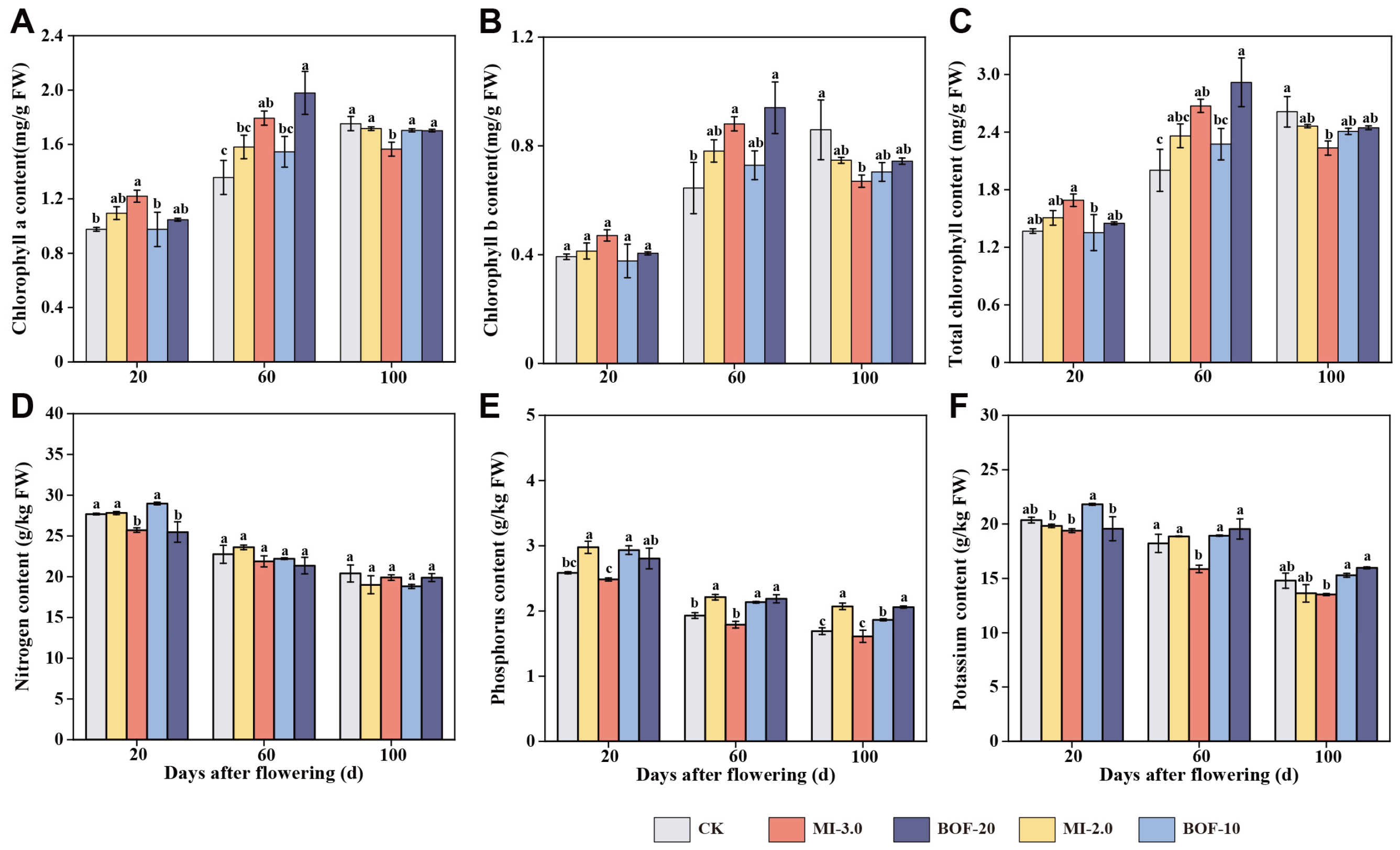
From 0 to 100 DAF, contents of chlorophyll a, chlorophyll b, and total chlorophyll in leaves of control exhibited a gradual increasing trend (Figure 1A–C). Meanwhile, these indices in several fertilization treatments displayed a pattern of initial increase followed by subsequent decrease, mainly due to the elevated values observed at 60 DAF. Notably, at 60 DAF (fruit expansion stage), the BOF-20 and MI-3.0 treatments significantly increased total chlorophyll content (Figure 1C), mainly due to the simultaneous enhancement of both chlorophyll a and chlorophyll b levels (Figure 1A,B). At this stage, the total leaf chlorophyll contents under these two treatments were 1.46-fold and 1.34-fold that of the control, respectively. In addition, at 20 DAF (young fruit expansion stage), MI-3.0 significantly increased chlorophyll a content (Figure 1A), but had no significant effect on chlorophyll b and total chlorophyll contents (Figure 1B,C).
The contents of nitrogen, phosphorus and potassium in leaves showed a gradual decreasing trend from 0 to 100 DAF. Among them, the contents of nitrogen and potassium were significantly higher than those of phosphorus. Fertilizer treatments significantly increased leaf phosphorus content. In particular, MI-2.0 and BOF-10 treatments significantly elevated phosphorus content at all three sampling points; furthermore, BOF-20 treatment showed a similar enhancing effect at 60 DAF and 100 DAF. Most fertilizer treatments had no significant effects on N and K contents, except that the MI-3.0 treatment decreased leaf N content at 20 DAF and K content at 60 DAF.
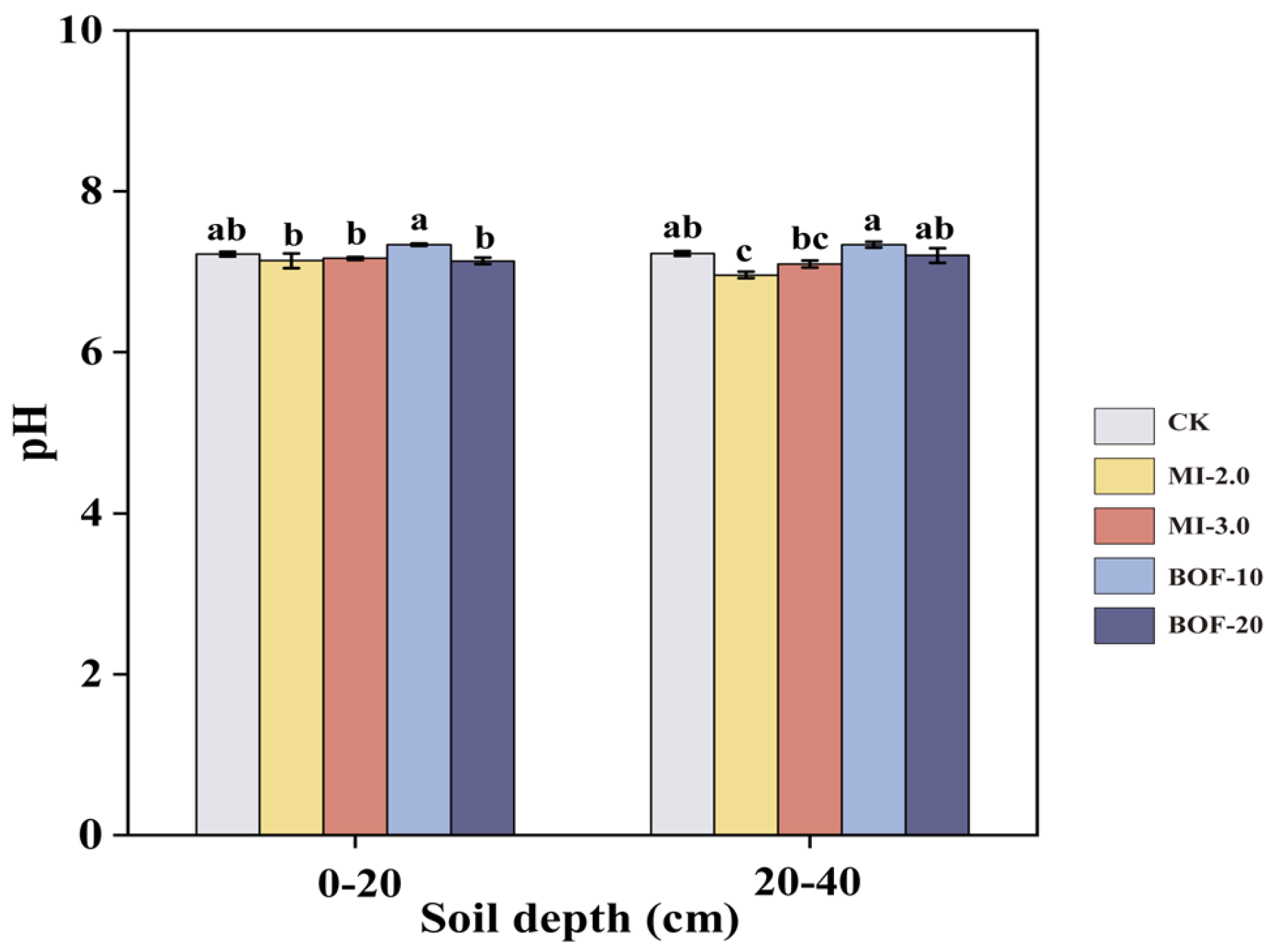
Soil pH at a depth of 0–20 cm and 20–40 cm was determined after fertilization. Fertilizer treatments had no significant effect on soil pH in the 0–20 cm layer, whereas MI-2.0 significantly decreased soil pH in the 20–40 cm layer (Figure A1). Increased soil acidity is beneficial to kiwifruit plants, which prefer acidic and slightly acidic conditions.

3.2. Effect of Fertilizer Treatments on the Basic Physiological Indicators of Kiwifruit

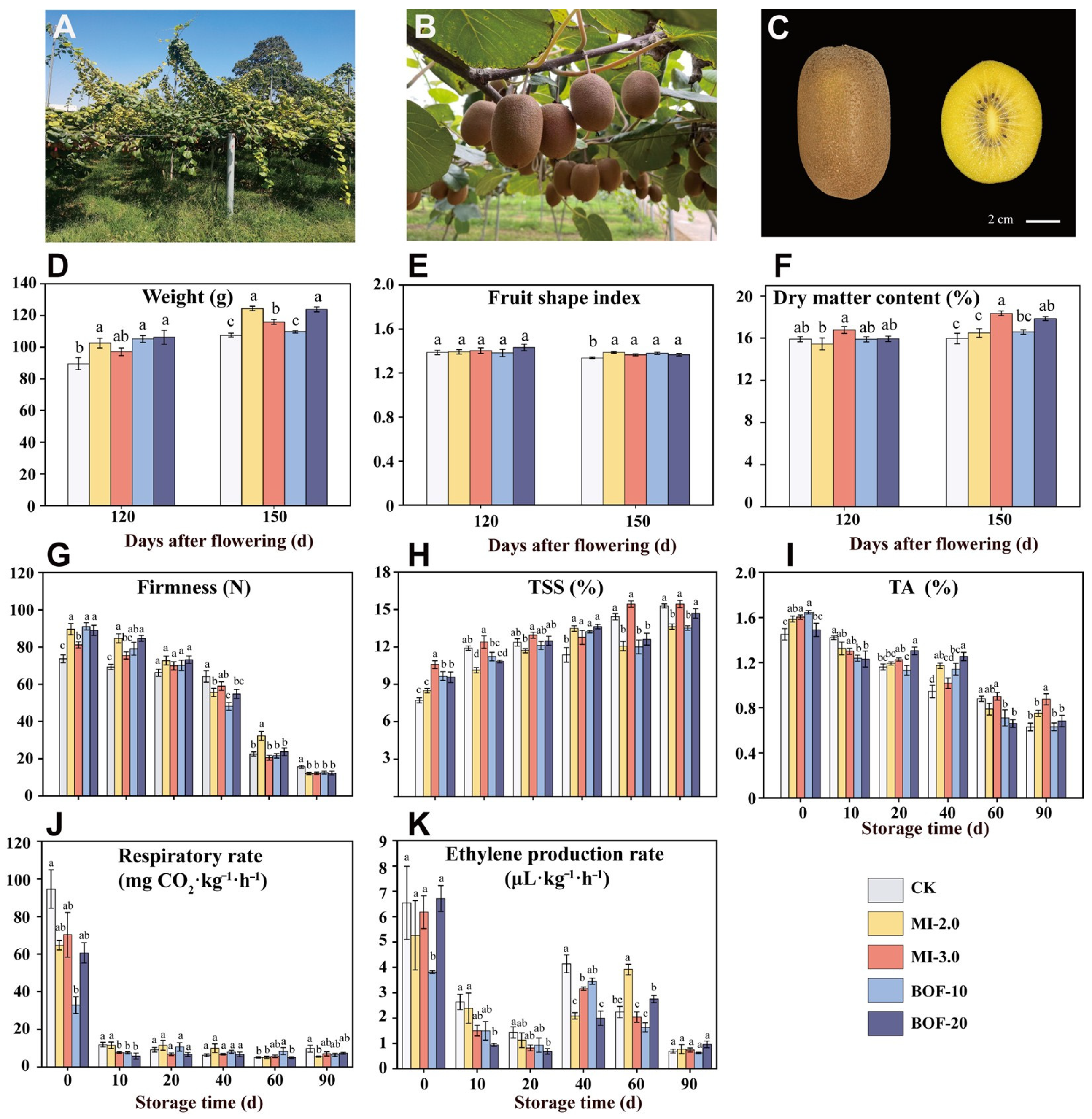
Figure 2A–C visually illustrate the orchard cultivation pattern and fruit phenotype of ‘Puyu’ kiwifruit. Specifically, Figure 2A showed the in situ orchard cultivation scene under a high-wire training system; Figure 2B displayed the dense fruiting status in the orchard, indicating excellent fruiting performance and high yield potential. Figure 2C presents the oval fruit with a yellow–brown, trichome-dense peel as well as the fruit cross-section, which was characterized by pale yellow pulp and a distinct core structure.
At 120 DAF, no significant difference in fruit shape index was detected among all treatments, whereas the fruit shape index of the fertilization groups was significantly higher than that of the control group at 150 DAF. This suggests that fertilization treatments exert a potential effect in promoting fruit elongation (Figure 2E). During fruit development, both single fruit weight and dry matter content exhibited a continuous increasing trend (Figure 2D,F). At 120 DAF, the single fruit weight under MI-2.0 and BOF treatments was significantly higher than that of the control. By 150 DAF (the mature stage), single fruit weight in the MI-2.0 and BOF-20 treatments increased significantly by 15.6% and 15.1%, respectively, compared with the control (Figure 2D). Significant differences in dry matter content were only observed among different treatments at 150 DAF. Specifically, compared with the control, the MI-3.0 treatment significantly enhanced fruit dry matter accumulation, raising the dry matter content by 15.0% (from 15.97% to 18.36%) (Figure 2F).
During cold storage, the fruit firmness exhibited a sharp decline after 40 days of storage (Figure 2G). The MI-2.0 and BOF-20 treatments maintained significantly higher firmness than the control during 0 to 10 d of storage, whereas the MI-2.0 treatment also retained higher fruit firmness at 60 d of storage, representing a 43% increase relative to the control. Overall, MI-2.0 and BOF-20 treatment effectively delayed fruit softening at the very early storage stage. During cold storage, TSS showed an increasing trend, while TA exhibited a decreasing trend (Figure 2H,I). At 0 d of storage, TSS and TA levels were higher under the MI-3.0 and BOF-10 treatments than those of the control. Additionally, the BOF-20 treatment maintained higher TA than the control during the middle storage stage, with relative increases of 12.2% at 20 d and 32.8% at 40 d of storage (Figure 2I).
Respiration rate and ethylene production rate were determined at ambient temperature at 0 d of storage, and BOF-10 treatment significantly reduced both indices (Figure 2J,K). During cold storage, both respiratory rate and ethylene production rate were inhibited by low temperature compared with those at 0 d of storage. Furthermore, the respiratory rate remained consistently low throughout storage, with no distinct peak observed. For the ethylene production rate, a peak appeared at 40 d of cold storage in fruits from the control, MI-3.0, and BOF-10 treatments. In contrast, fruits under the MI-2.0 and BOF-20 treatments exhibited the ethylene peak only at 60 d of cold storage. Moreover, both the MI-3.0 and BOF-20 treatments significantly reduced the peak value of ethylene production rate (Figure 2K).

3.3. Effect of Different Fertilization Treatments on Starch Content and Soluble Sugar Contents of Fruit Flesh and Core

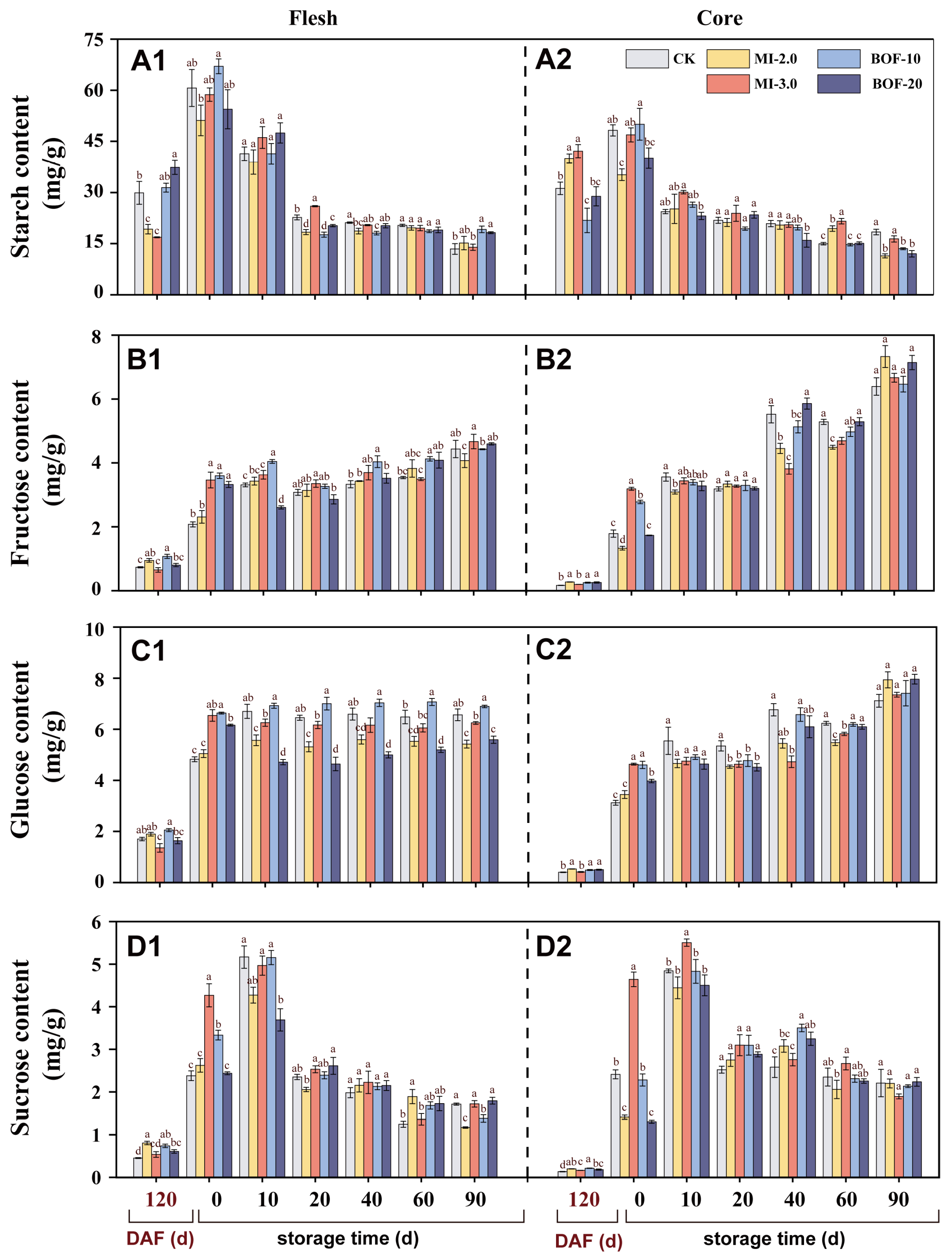
Kiwifruit is a typical starch-accumulating fruit. The results showed that from 120 DAF to harvest, starch content in flesh and core increased sharply to a peak, and then gradually decreased during cold storage (Figure 3A1,A2). Furthermore, among all fertilization treatments and the control, starch content in the flesh was significantly higher than that in the core at the harvest stage (0 d of storage). At 120 DAF, the BOF-20 treatment significantly elevated starch content in flesh, while the MI treatment markedly increased that in the core. At the harvest stage (0 d of storage), no significant differences in flesh starch content were observed between fertilization treatments and the control, whereas the MI-2.0 treatment significantly decreased the starch content in the core. Flesh starch content declined rapidly during 0–20 d of cold storage and then remained relatively stable, whereas that in the core decreased rapidly within the first 10 d of cold storage, followed by a gradual reduction. At 90 d of storage, flesh starch content in fruits under the BOF treatment was significantly higher than that in the control, while core starch content was significantly lower.
Fructose, glucose, and sucrose were identified as dominant soluble sugars in both flesh and core of ‘Puyu’ kiwifruit (Figure 3B–D). From 120 DAF to harvest, the contents of these three sugars exhibited a marked increase. During cold storage, fructose content displayed a gradual upward trend in both flesh and core, whereas sucrose content increased initially and then declined (Figure 3B1,B2). In addition, glucose content remained relatively stable in the flesh, while exhibiting a gradual increasing trend in the core (Figure 3C1,C2). At the harvest stage (0 d of storage), glucose content was significantly higher in the flesh than in the core. Furthermore, at this stage, flesh fructose and glucose contents were enhanced by MI-3.0 and BOF treatments, and flesh sucrose content was elevated by MI-3.0 and BOF-10 treatments; in the core, fructose and glucose contents were increased by MI-3.0 and BOF-10 treatments, whereas sucrose content was only increased by the MI-3.0 treatment. At 90 d of storage, fructose content reached its maximum levels in both flesh and core, with the content in the core being significantly higher than that in the flesh; all fertilization treatments exerted no significant effects, except MI-2.0, which decreased flesh fructose content. With respect to glucose, the MI-2.0 and BOF-20 treatments significantly decreased its content in the flesh but exerted no such effect in the core throughout cold storage. During the entire cold storage period, the impacts of fertilization treatments on sucrose content in the flesh and core were generally insignificant (Figure 3D1,D2). An exception occurred at 90 d of storage, when the MI-2.0 and BOF-20 treatments significantly reduced sucrose content in the flesh.

3.4. Effect of Different Fertilization Treatments on Organic Acid and Ascorbic Acid (AsA) Content of Fruit Flesh and Core

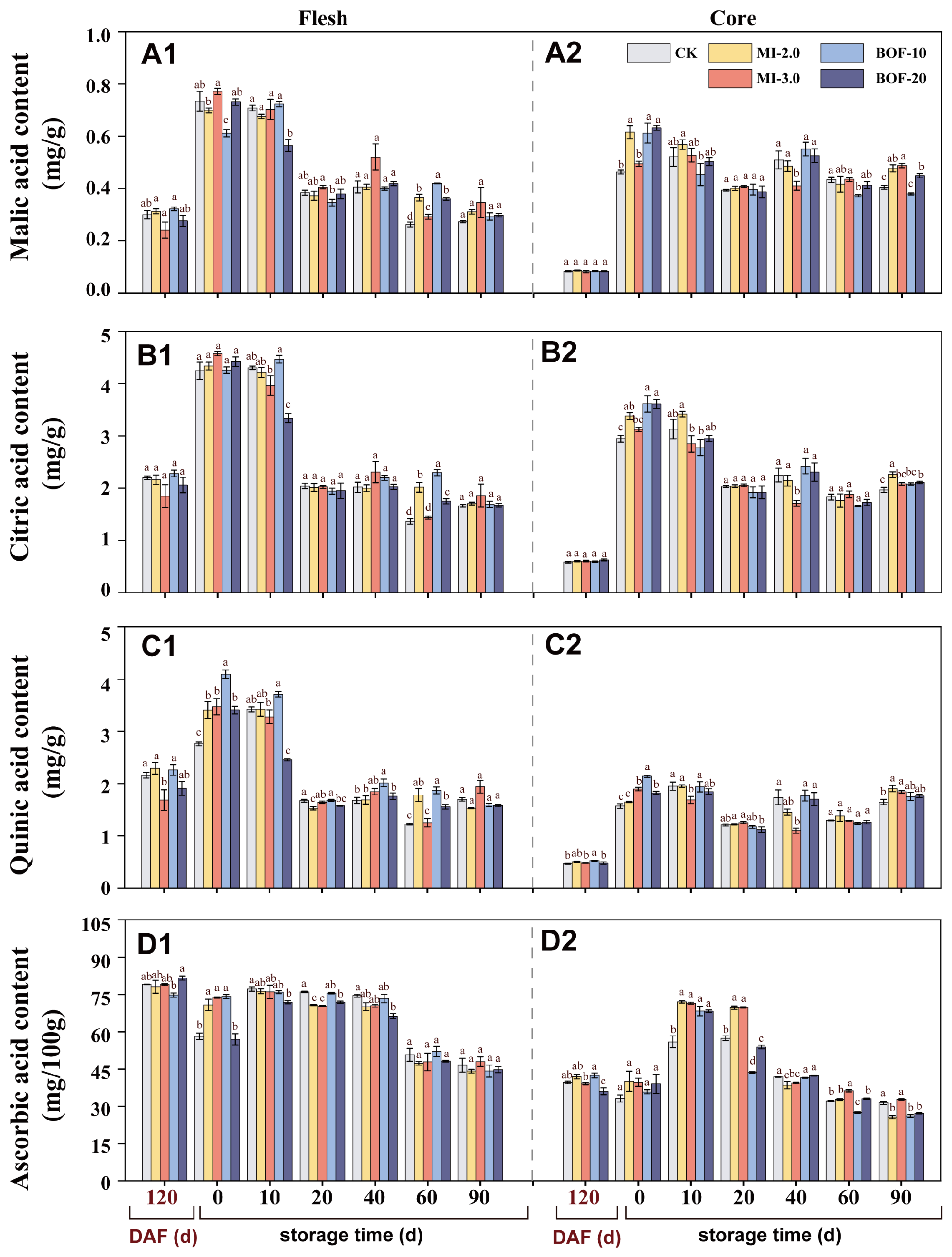
Organic acids act as key determinants to kiwifruit flavor, imparting a characteristic tartness that interacts with sugars to produce the typical sweet–sour taste. The primary organic acids in the flesh and core of ‘Puyu’ kiwifruit were citric acid, quinic acid, and malic acid, with the former two accounting for more than 90% of the total (90.6% in flesh and 90.8% in core) (Figure 4A–C). From 120 DAF to fruit harvest, the contents of all three organic acids increased sharply in both the flesh and core. During cold storage, all three acids remained at high levels in both tissues within the first 10 d, after which they declined rapidly in the flesh but exhibited a fluctuating decrease in the core.
Specifically, at the harvest stage (0 d of storage), the contents of all three acids in the flesh of control fruits were significantly higher than those in the core. Furthermore, MI and BOF treatments significantly increased quinic acid content in both flesh and core. In addition, MI-2.0 and BOF treatments also significantly elevated citric and malic acid contents in the core but not in the flesh, except for BOF-10, which reduced flesh malic acid content. At 90 d of storage, the contents of citric acid and malic acid in the core of control fruits were significantly higher than those in the flesh. At this stage, MI treatment significantly increased quinic and malic acid contents in the core compared with the control, and a similar trend was also observed for citric acid in the core of fruits treated with MI-2.0, whereas all treatments exerted no significant effect on flesh organic acid contents.
Although AsA content in the flesh and core of ‘Puyu’ kiwifruit showed a similar dynamic trend, marked disparities in AsA accumulation and responses to fertilization treatments were detected between these two tissues (Figure 4D1,D2). In control fruits, AsA content was high at 120 DAF, declined slightly by harvest, and then displayed an initial increase followed by a decrease during postharvest cold storage. Notably, the maximum AsA content (79.09 mg/100 g) in the flesh was recorded at 120 DAF, whereas the peak value in the core (57.39 mg/100 g) appeared at 20 d of cold storage. Moreover, from 120 DAF to the end of storage, AsA content in the flesh was constantly higher than that in the core. At harvest (0 d of storage), MI and BOF-10 treatments significantly elevated AsA content in the flesh, but no significant differences were found in the core at this stage. At 10 d of cold storage, AsA content in the core was markedly enhanced by all fertilization treatments, with increment rates ranging from 23.0% to 28.7%. However, at 20 d of cold storage, only the MI treatments exerted a significant positive effect on core AsA content, with increases of 21.5% to 21.7%. Notably, during the 10–20 d cold storage period, most fertilization treatments had no significant influence on flesh AsA content, and several treatments even caused a reduction in AsA level. At 90 d of cold storage, AsA contents in the flesh and core of control fruits dropped by 39.7% and 45.3%, respectively, relative to their individual peak values during cold storage. At this stage, MI-2.0 and BOF treatments significantly reduced AsA content in the core, whereas fertilization treatments exerted no significant effects on flesh AsA content.

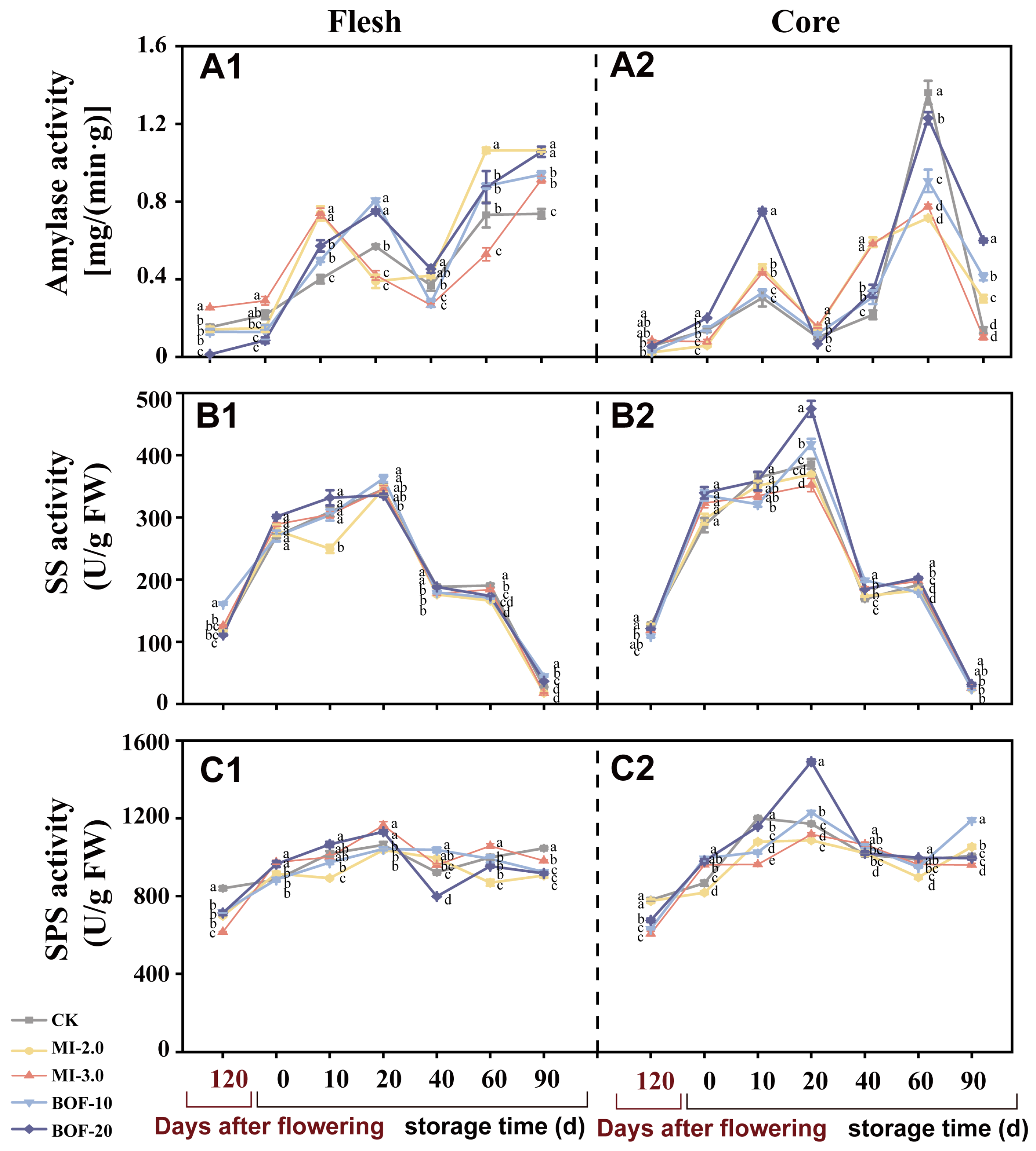
3.5. Effects of Fertilization Treatments on Amylase, SuS and SPS Activities in Fruit Flesh and Core

Amylase acts as a pivotal enzyme that mediates starch catabolism in fruits. Amylase activity in both the flesh and core of control kiwifruits remained at low levels and displayed a gradual upward trend from 120 DAF to harvest. During postharvest cold storage, amylase activity fluctuated and increased from 0 to 60 d, with the maximum activity detected at 60 d of storage; notably, the peak activity in the core was 1.9 times that in the flesh. After this peak, amylase activity remained relatively stable in the flesh from 60 d to 90 d, whereas it declined sharply in the core (Figure 5A1,A2). At harvest (0 d of storage), BOF treatments significantly suppressed amylase activity in the flesh, whereas BOF-20 markedly enhanced the enzyme activity in the core. At 10 d of storage, both MI and BOF treatments significantly increased amylase activity in the flesh and core, with the exception that BOF-10 treatment exerted no significant effect on core amylase activity. Moreover, the effects of BOF treatments on flesh amylase activity and MI treatments on core amylase activity followed an identical trend at 20 d of storage. When core amylase activity peaked at 60 d of storage, all fertilization treatments significantly reduced the peak enzyme activity, ranging from 9.7% (BOF-20) to 47.4% (MI-2.0). At 90 d of storage, amylase activity in the flesh was significantly higher than that in the core; at this time point, all fertilization treatments significantly increased the enzyme activity in the flesh, whereas only the BOF treatment enhanced that in the core.
From 120 DAF to the harvest stage, SuS activity in both flesh and core of control kiwifruit showed a rapid increase, with a 1.3-fold enhancement observed in both tissues. During postharvest cold storage, SuS activity in these two tissues displayed a pattern of gradual increase in the initial phase (0–20 d) followed by a progressive sharp decline (Figure 5B1,B2). When SuS activity peaked at 20 d of storage, the activity in the core of control fruits was significantly higher than that in the flesh; however, no significant difference was detected between flesh and core in control fruits at 90 d of storage. At 0 d of storage, all fertilization treatments exerted no significant effects on SuS activity in either flesh or core. However, when the SuS activity reached its peak at 20 d of storage, BOF treatments significantly increased the peak SuS activity in the core, and similar effects were also observed in the core at 40 d of storage. When storage was extended to 90 d, BOF treatments significantly elevated SuS activity in the fruit flesh, whereas the MI treatments caused a significant reduction in this enzyme activity.
From 120 DAF to the harvest stage, SPS activity in both flesh and core of control kiwifruits showed a gradual upward trend. In addition, during cold storage, SPS activity exhibited an initial increase followed by fluctuating changes (Figure 5C1,C2). For SPS activity in the flesh, MI-3.0 and BOF-20 treatments significantly enhanced the activity at 0 d and 20 d of storage, and MI-3.0 treatment also significantly increased the activity at 60 d of storage. Furthermore, all fertilization treatments significantly reduced SPS activity at 90 d of storage (Figure 5C1). In the fruit core, BOF treatments significantly increased SPS activity at 0 and 20 d of storage; however, all fertilization treatments caused a significant reduction in the SPS activity peak at 10 d of storage. In addition, the BOF-10 treatment increased SPS activity by 18.4% at 90 d of storage (Figure 5C2).

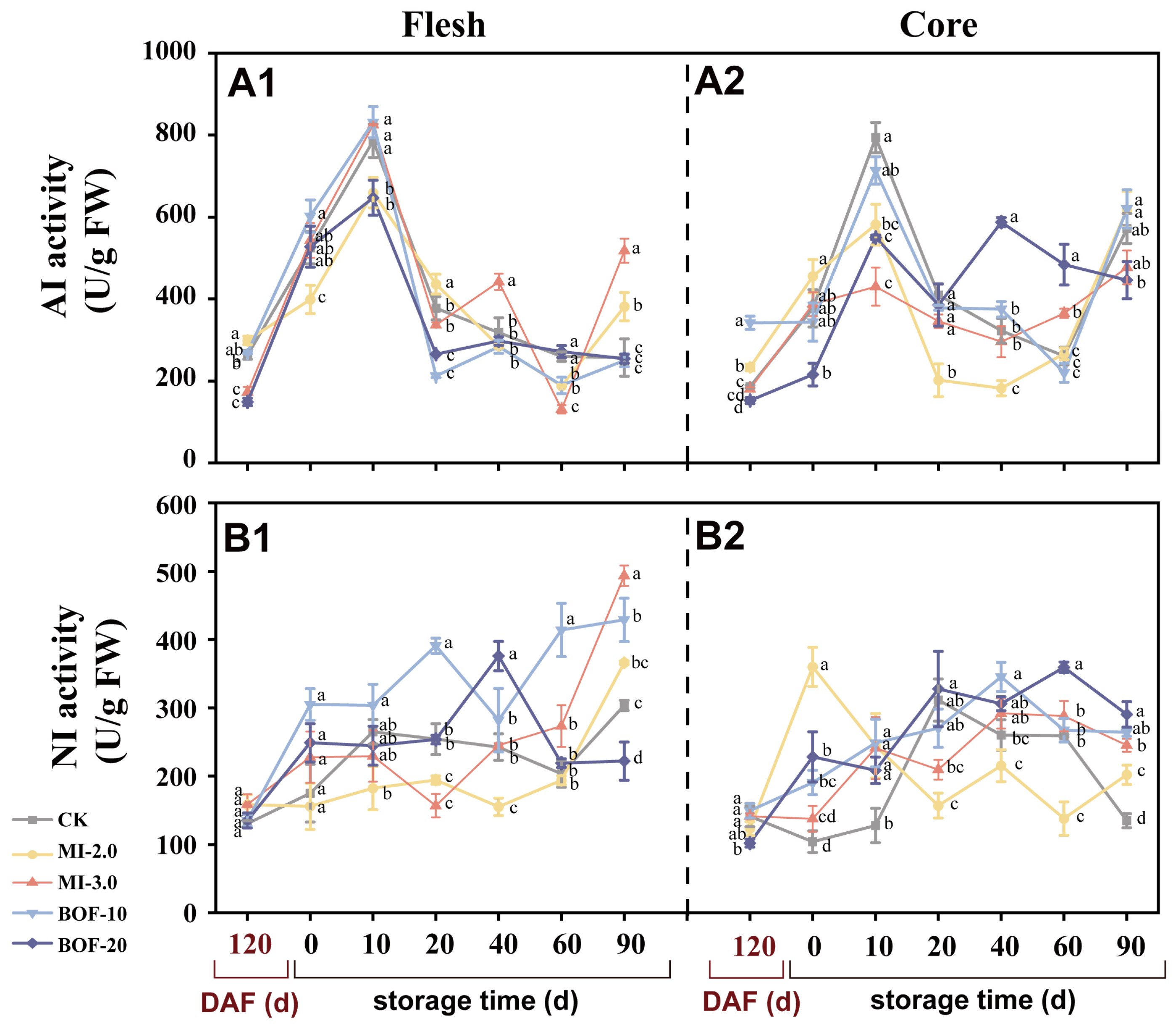
3.6. Effects of Fertilization Treatments on AI and NI Activities in Fruit Flesh and Core

From 120 DAF to 10 d of storage, AI activity in the flesh and core of control kiwifruits showed a rapid increase, rising by 2.0- and 3.3-fold, respectively. Thereafter, AI activity in both tissues displayed a fluctuating decline, with a pronounced surge in the core occurring between 60 d and 90 d of storage (Figure 6A1,A2). At harvest (0 d of storage), AI activity in the flesh was significantly higher than that in the core. In contrast, the opposite trend was observed at 90 d of storage, whereas no significant difference was detected between these two tissues at the activity peak (10 d of storage).
At 120 DAF, the MI-2.0 treatment significantly enhanced AI activity in both flesh and core, whereas the BOF-10 treatment exerted a similar effect specifically in the core tissue. All fertilization treatments exerted no significant effects on AI activity in either tissue at harvest (0 d of storage). Notably, MI-2.0 and BOF-20 treatments significantly reduced the AI activity peak in both tissues at 10 d of storage. Furthermore, at 40 and 60 d of storage, the BOF-20 treatment significantly enhanced AI activity in the fruit core, with increases of 82.2% and 85.4%, respectively. At 90 d of storage, MI-2.0 and MI-3.0 treatments significantly elevated AI activity in the flesh by 48.3% and 101.3%, respectively; in contrast, none of the fertilization treatments exerted a significant effect on AI activity in the core.
From 120 DAF to the end of storage, NI activity in the flesh of control kiwifruit showed a fluctuating upward trend (Figure 6B1). In contrast, NI activity in the core of control fruits exhibited a gradual decline from 120 DAF to harvest, followed by an initial increase and subsequent decline during the storage period (Figure 6B2). Several fertilization treatments modified the dynamic change patterns of NI activity in both flesh and core tissues.
For NI activity in the flesh, fertilization treatments exerted no significant effect from 120 DAF to harvest (Figure 6B1). Specifically, BOF-20 treatment induced a NI activity peak in the flesh at 40 d of storage, whereas the control and other treatments exhibited their activity peaks at 90 d of storage. Furthermore, the MI-3.0 and BOF-10 treatments significantly enhanced flesh NI activity by 62.6% and 41.2%, respectively, at 90 d of storage (Figure 6B1).
Compared with the control, in which the NI activity peak in fruit core appeared at 20 days of storage, fertilization treatments modified the timing of activity peaks but exerted no significant effect on the peak values (Figure 6B2). Specifically, the MI-2.0 treatment advanced the NI activity peak to harvest time, while the MI-3.0 treatment delayed it to 40 days of storage. In addition, the BOF-10 and BOF-20 treatments also postponed the NI activity peaks to 40 and 60 d of storage, respectively. These effects resulted in significantly increased NI activity in the MI-2.0 and BOF treatments at harvest. A similar trend was also observed in all fertilization treatments at 90 days of storage; notably, at this stage, core NI activity in the BOF-10 and BOF-20 treatments was increased by 96% and 115.5%, respectively, compared with the control.

4. Discussion

4.1. Fertilization Treatments Affect the Basic Physiological Quality and Storage Characteristics of Kiwifruit

Postharvest kiwifruit undergoes a series of quality changes during the ripening process to attain the optimal edible state. Fertilization management during the growth period plays a crucial role in regulating the development of fruit physiological quality at maturity, which in turn affects its storage stability and ultimate edible flavor and quality attributes. Previous studies have reported that the application of various fertilizer formulations affects kiwifruit quality [14,24]. In this study, at the mature stage of the new cultivar ‘Puyu’ kiwifruit, MI and BOF-20 application provoked significant increases in single fruit weight and firmness; moreover, the dry matter content was also enhanced by MI-3.0 and BOF-20 application. In addition, the TSS and TA were significantly increased by MI-3.0 and BOF-10 for mature kiwifruit. The present study also verified that MI-2.0 fertilization moderately ameliorated soil pH. A study on ‘Qinmei’ kiwifruit also found that microbial fertilizers containing Bacillus subtilis C3 and Bacillus cereus YL6 reduced soil pH by 0.34 and 0.29 units, respectively, during fruit ripening [25]. The optimal soil pH for kiwifruit growth ranges from 5.5 to 6.5, but many soils in the major kiwifruit cultivation areas of Shaanxi Province (China) are slightly alkaline. Therefore, the application of appropriate microbial inoculants represents a viable strategy for acidifying alkaline soils, thereby enhancing kiwifruit tree vigor and improving fruit quality. Meanwhile, appropriate doses of MI and BOF treatments elevated total leaf chlorophyll content during kiwifruit expansion and leaf P content from the young fruit to the expansion stages. This indicates that these fertilization regimes enhance leaf photosynthetic efficiency by promoting chlorophyll and phosphorus accumulation, facilitating photosynthate translocation to fruits, and thereby improving kiwifruit quality at the ripening stage. It has been verified in Zespri ‘Zesy002’ kiwifruit that leaf phosphorus content during fruit development was significantly positively correlated with photosynthetic pigment biosynthesis and photosynthetic efficiency, which in turn facilitates the translocation of sugars and other photosynthates toward the fruits [26]. From the perspective of the soil environment, both MI and BOF are rich in functionally active bacteria, which can targetedly regulate the structure, enhance soil microbial stability, establish a healthy and stable rhizosphere microecology, and lay a robust foundation for fruit growth and development [27,28]. Meanwhile, via their own metabolism and symbiotic interactions with plants, these functional bacteria can alleviate soil nutrient limitations and provide sufficient, balanced nutritional support for fruit quality formation. Studies on organic fertilizer substitution for chemical fertilizers have demonstrated that soil physicochemical properties, carbon fractions, enzyme activities, and bacterial communities exert positive effects on fruit quality in Newhall navel orange [29]. In recent years, the application of BOFs containing plant growth-promoting rhizobacteria (PGPR) has exhibited outstanding eco-friendly characteristics and exerted beneficial impacts on soil fertility and crop productivity [18,30]. Research on tomatoes has verified that BOF application not only increases yield but also enhances soil catalase activity [31]. A banana study demonstrated that appropriate BOFs combined with chemical fertilizers not only improved soil properties and reshaped soil bacterial and fungal communities, but also boosted banana yield and quality [30]. Furthermore, the BOF application coupled with reduced inorganic nitrogen remarkably improved apple yield and quality, increasing the sugar–acid ratio, soluble protein and soluble sugar content, while optimizing peel quality [32].
Postharvest storage quality of kiwifruit is directly correlated with the postharvest loss rate, market terminal price, and producer brand awareness, representing a determinant of cultivation economic benefits. In the present study, MI-3.0 and BOF increased fruit TSS and moderately facilitated total acid accumulation at harvest. Specifically, BOF delayed acid degradation during 20–40 d of storage, while MI-3.0 exerted a similar effect in the late storage stage (60–90 d), thereby favorably maintaining kiwifruit storage quality. Different MI dosages regulated ethylene biosynthesis by either postponing or lowering the ethylene production peak. Furthermore, the BOF-20 treatment exhibited a superior dual regulatory effect, delaying the ethylene peak by 20 days and reducing its amplitude by 33.6%. Combined with the aforementioned effects on soluble solids retention, total acid maintenance, and postharvest quality preservation, these findings reveal the distinct regulatory mechanisms of MI and BOF treatments on kiwifruit postharvest physiology. However, current studies assessing the effects of organic fertilizer or BOF on fruit quality (e.g., oranges, pears, jujubes) mainly focus on harvest-stage quality, with scarce investigations into quality dynamics throughout postharvest storage [29,33,34]. From a practical production perspective, this study applied MI and BOF in combination with conventional fertilizer regimes, yet the optimized compound application strategy for field production requires further exploration.

4.2. Fertilization Treatments Affect the Sugar and Acid Metabolism of Kiwifruit

Starch and soluble sugars are key determinants of kiwifruit quality, and their accumulation during fruit development and transformation during ripening are closely associated with fruit flavor formation. In this study, starch and soluble sugar contents, their dynamic changes, and responses to fertilization treatments differed significantly between the flesh and core of kiwifruit from 120 DAF to harvest and throughout postharvest storage. At harvest, flesh exhibited higher starch and glucose contents than the core; notably, only fructose content was higher than in flesh at the end of storage. Such tissue-specific disparities in starch and sugar metabolism have also been verified in ‘Xuxiang’ kiwifruit [35]. Conversely, ‘Xuxiang’ kiwifruit displayed higher starch content in the core than in the outer pericarp at harvest and during postharvest storage (23 ± 1 °C); furthermore, fruits at edible firmness had higher glucose and lower sucrose contents in the flesh than in the core. This indicates that sugar accumulation and metabolism pathways in kiwifruit also vary considerably across different species and cultivars. In this study, compared with the control, MI-3.0 and BOF-10 significantly elevated fructose and glucose contents in both flesh and core of ‘Puyu’ kiwifruit at harvest, while only MI-3.0 enhanced sucrose content in these two tissues. After 90 d of cold storage, fructose and glucose in the core, as well as fructose in the flesh, all reached their peak levels, and most fertilization treatments exerted no significant effects on the contents of these sugars at this stage. Notably, a previous study in pear fruit demonstrated that both BOF and organic fertilizer treatments significantly increased sucrose content and sugar–acid ratio, but markedly reduced fructose and glucose accumulation [33]. Such contrasting responses observed between kiwifruit and pear highlight the presence of distinct regulatory mechanisms governing sugar metabolism in response to different fertilizer regimes across fruit species. Furthermore, sustained promotion of fructose and glucose accumulation using MI and BOF observed in this study contributed to a more balanced sweet taste, which is critical for desirable sensory quality in kiwifruit. Taken together, these findings suggest that the application of microbial inoculants and bio-organic fertilizers exerts positive regulatory effects on sugar metabolism during postharvest storage, thereby exhibiting great potential to improve the flavor quality of ‘Puyu’ kiwifruit.
Sugar metabolism exerts a pivotal regulatory role in determining core fruit quality traits, including sugar–acid balance and starch accumulation–degradation dynamics. The sucrose cycle serves as the central regulatory node of sugar metabolism in sink cells, which is dominated by the enzymatic activities of SPS, SuS and invertase [36]. Specifically, SPS primarily catalyzes sucrose synthesis, whereas SuS mediates the reversible cleavage of hydrolyzed sucrose into UDP-glucose (UDPG) and fructose; invertases (comprising AI and NI) irreversibly hydrolyze sucrose into glucose and fructose [37,38]. In this study, fertilization treatments did not alter the overall dynamic patterns of SuS, SPS and AI in kiwifruit during cold storage, but instead imposed significant regulatory effects at discrete storage time points. Sucrose, fructose and glucose in kiwifruit increased rapidly from 120 DAF to harvest, in parallel with the elevated activities of SPS, SuS and AI. Consistent with previous studies in horticultural crops, we hypothesize that these three enzymes function synergistically in kiwifruit: SPS acts as the key driver of sucrose accumulation, while SuS and AI facilitate sucrose degradation and promote the accumulation of fructose and glucose. Through spatiotemporally specific fluctuations in enzymatic activities, SPS, SuS and invertases co-modulate sugar metabolic flux, thereby shaping the unique sugar profile characteristic of kiwifruit. A previous study on ‘Ruixianghong’ apple has demonstrated that moderate fertilizer and water regimes markedly enhanced SuS and AI activities, ultimately boosting sucrose and glucose accumulation in the fruit [39]. Similarly, MI and BOF treatments in the present study exerted targeted regulatory effects on the activities of SPS, SuS and AI. In this study, the soluble sugars determined were mainly those stored in the fruit vacuoles, which represent the final partitioning of carbohydrates after import, export, and metabolism between leaves and fruits. During this process, the activities of the above-mentioned sugar metabolism-related enzymes exert crucial regulatory functions. Moreover, this process is also closely associated with sugar transport and the physiological and molecular regulation mediated by plant hormones [40,41]. Nevertheless, owing to the intricate nature of the sucrose metabolic network, long-term and multi-location fertilization field trials are warranted to systematically decipher the underlying molecular and physiological regulatory mechanisms of these fertilizer-induced effects.
Fruit flavor is primarily governed by the contents, compositions and ratios of sugar and organic acid. Sugar and organic acid metabolism are highly interconnected via the TCA cycle. Organic acid accumulation represents the net outcome of its integrated processes of synthesis, degradation, utilization and compartmentalization [42]. Organic acids also play a vital role in prolonging postharvest fruit shelf life by maintaining firmness and suppressing decay incidence [43]. In this study, citric and quinic acids were identified as the predominant organic acids in ‘Puyu’ kiwifruit, whereas malic acid accumulated at a relatively low level. At harvest, MI-2.0 and BOF significantly increased citric and malic acid contents in the core, as well as quinic acid in the flesh; simultaneously, MI and BOF-10 treatments significantly enhanced AsA accumulation in the flesh. Furthermore, MI treatments sustained high AsA levels in the core during 10–20 d of cold storage. At 90 d cold storage, MI treatments also elevated quinic and malic acid contents in the core. Collectively, these findings indicated that MI and BOF treatments exerted tissue-specific and time-dependent regulatory effects on organic acid and AsA metabolism in kiwifruit. Microbial fertilizers containing Bacillus subtilis C3 and Bacillus cereus YL6 have been verified to exert beneficial effects by increasing the contents of AsA, soluble sugar and soluble protein in kiwifruit [25]. According to the same study, these positive effects were mainly achieved by improving and balancing soil microbial community structure, regulating soil enzyme activities, and enhancing soil fertility as well as nutrient use efficiency. Previous studies have also validated that organic fertilizer exerted significant beneficial effects on the AsA content, while decreasing titratable acidity in orange, jujube and peach [29,34,44]. In ‘Chuxialv’ pear, malic acid was the most abundant organic acid, followed by citric acid and succinic acid. Organic fertilizer notably increased malic and succinic acid contents in ripe pear, thereby leading to a pronounced rise in total organic acid content; conversely, BOF treatments significantly reduced citric acid and total acid content [33]. In contrast, MI and BOF treatments in this study exerted positive regulatory effects on total acid accumulation in kiwifruit at harvest. These discrepant results suggest that the regulatory effects of diverse fertilization regimens on fruit acidity are highly species-dependent among horticultural crops.

5. Conclusions

Appropriate supplementary application of microbial inoculant and bio-organic fertilizer can effectively improve the kiwifruit quality. The remarkable beneficial effects were mainly reflected in the enhanced total chlorophyll and phosphorus content in leaves, as well as higher single fruit weight, fruit firmness, dry matter content and total soluble solids during the ripening period of kiwifruit. Furthermore, suitable dosages of microbial inoculant and bio-organic fertilizer can increase the contents of fructose, glucose and ascorbic acid, and delay the softening process of kiwifruit during the early stage of cold storage. However, the specific regulatory mechanisms underlying these effects need to be further explored, and the optimal combination ratio of microbial inoculants, bio-organic fertilizers and conventional fertilizers for practical production remains to be further optimized in future research.

Author Contributions

Conceptualization, Y.L. (Yanrong Lv), C.W. and W.Z.; methodology, C.W. and W.Z.; software, C.W., T.Y. and Y.Z. (Yuting Zhang); validation, W.Z., T.Y., S.Y. and Y.L. (Yuhong Liu); investigation, C.W., Y.W. and Y.Z. (Yuting Zhang); data curation, W.Z., Y.Z. (Ying Zeng) and Y.L. (Yuhong Liu); writing—original draft preparation, C.W. and W.Z.; writing—review and editing, Y.D. and Y.L. (Yanrong Lv); visualization, C.W., W.Z., T.Y., S.Y. and Y.Z. (Ying Zeng); supervision, Y.D. and Y.L. (Yanrong Lv); project administration, Y.L. (Yanrong Lv); funding acquisition, Y.L. (Yanrong Lv). All authors have read and agreed to the published version of the manuscript.

Funding

This research was funded by the Natural Science Basic Research Program of Shaanxi (Program No. 2024JC-YBMS-175); the Key Research and Development Project of Shaanxi Province (2024NC-GJHX-16); and the Agricultural Science and Technology Innovation and Key Core Technology Breakthrough Project in 2025: Research, Development, and Integrated Promotion of “Ready-to-Eat” Kiwifruit Technology in Meixian County.

Data Availability Statement

The original contributions presented in this study are included in the article. Further inquiries can be directed to the corresponding authors.

Acknowledgments

We thank the Horticulture Science Research Center at the College of Horticulture, Northwest A&F University, for their technical support in this work.

Conflicts of Interest

Author Yaguo Wang was employed by the Shaanxi Bairui Kiwifruit Research Institute Co., Ltd. The remaining authors declare that the research was conducted in the absence of any commercial or financial relationships that could be construed as a potential conflict of interest.

Abbreviations

The following abbreviations are used in this manuscript:
AsAAscorbic acid
AIAcid invertase
BOFBio-organic fertilizers
DAFDays after flowering
KPotassium
MIMicrobial inoculant
NINeutral invertase
NNitrogen
PPhosphorus
SPSSucrose phosphate synthase
SuSSucrose synthase
TSSTotal soluble solid

Appendix A

Figure A1. Effects of different fertilization treatments on soil pH after fruit harvesting. Different letters (a/b/c) indicate significant difference between different treatments within the same collection date at p < 0.05 by LSD test.
Horticulturae 12 00431 g0a1

References

  1. Richardson, D.P.; Ansell, J.; Drummond, L.N. The nutritional and health attributes of kiwifruit: A review. Eur. J. Nutr. 2018, 57, 2659–2676. [Google Scholar] [CrossRef]
  2. Lei, Y.S.; Wang, X.R.; Li, Y.W.; Xu, M.; Lei, J. A New Yellow Kiwifruit Cultivar ‘Puyu’. Acta Hortic. Sin. 2018, 45, 2727–2728. [Google Scholar] [CrossRef]
  3. Lan, T.; Bao, S.H.; Li, X.Y.; Zhang, M.; Wen, P.; Mukesh, K.A.; Sun, X.Y.; Ding, T.M. Pigment and transcriptome profiling of flesh yellowing during post-ripening of ‘Puyu’ kiwifruit. Postharvest Biol. Technol. 2026, 234, 114109. [Google Scholar] [CrossRef]
  4. Zhang, H.; Zhao, Q.; Lan, T.; Geng, T.; Gao, C.; Yuan, Q.; Zhang, Q.; Xu, P.; Sun, X.; Liu, X.; et al. Comparative Analysis of Physicochemical Characteristics, Nutritional and Functional Components and Antioxidant Capacity of Fifteen Kiwifruit (Actinidia) Cultivars—Comparative Analysis of Fifteen Kiwifruit (Actinidia) Cultivars. Foods 2020, 9, 1267. [Google Scholar] [CrossRef] [PubMed]
  5. Harker, F.R.; Carr, B.T.; Lenjo, M.; Macrae, E.A.; Wismer, W.V.; Marsh, K.B.; Williams, M.; White, A.; Lund, C.M.; Gunson, F.A.; et al. Consumer liking for kiwifruit flavour: A meta-analysis of five studies on fruit quality. Food. Qual. Prefer. 2009, 20, 30–41. [Google Scholar] [CrossRef]
  6. Nardozza, S.; Boldingh, H.L.; Richardson, A.C.; Costa, G.; MacRae, E.A.; Clearwater, M.J. Genotypic control of carbon accumulation in Actinidia deliciosa genotypes. Acta Hortic. 2011, 913, 295–301. [Google Scholar] [CrossRef]
  7. Du, M.; Zhu, Y.; Nan, H.; Zhou, Y.; Pan, X. Regulation of sugar metabolism in fruits. Sci. Hortic. 2024, 326, 112712. [Google Scholar] [CrossRef]
  8. Sun, L.; Wang, J.; Lian, L.; Song, J.; Du, X.; Liu, W.; Zhao, W.; Yang, L.; Li, C.; Qin, Y.; et al. Systematic analysis of the sugar accumulation mechanism in sucrose- and hexose-accumulating cherry tomato fruits. BMC Plant Biol. 2022, 22, 303. [Google Scholar] [CrossRef]
  9. Simona, N.; Boldingh, H.L.; Sonia, O.; Höhne, M.; Mark, W.; Gleave, A.P.; MacRae, E.A.; Richardson, A.C.; Atkinson, R.G.; Sulpice, R.; et al. Metabolic analysis of kiwifruit (Actinidia deliciosa) berries from extreme genotypes reveals hallmarks for fruit starch metabolism. J. Exp. Bot. 2013, 64, 5049–5063. [Google Scholar] [CrossRef]
  10. Vizzotto, G.; Falchi, R. Genetics of Sugar and Starch Metabolism. In The Kiwifruit Genome; Testolin, R., Huang, H.W., Ferguson, A.R., Eds.; Springer Nature: Cham, Switzerland, 2016; pp. 189–197. [Google Scholar] [CrossRef]
  11. Duran-Soria, S.; Pott, D.M.; Osorio, S.; Vallarino, J.G. Sugar signaling during fruit ripening. Front. Plant Sci. 2020, 11, 564917. [Google Scholar] [CrossRef]
  12. Lombardo, V.A.; Osorio, S.; Borsani, J.; Lauxmann, M.A.; Bustamante, C.A.; Budde, C.O.; Andreo, C.S.; Lara, M.V.; Fernie, A.R.; Drincovich, M.F. Metabolic profiling during peach fruit development and ripening reveals the metabolic networks that underpin each developmental stage. Plant Physiol. 2011, 157, 1696–1710. [Google Scholar] [CrossRef] [PubMed]
  13. Moscatello, S.; Famiani, F.; Proietti, S.; Farinelli, D.; Battistelli, A. Sucrose synthase dominates carbohydrate metabolism and relative growth rate in growing kiwifruit (Actinidia deliciosa, cv Hayward). Sci. Hortic. 2011, 128, 197–205. [Google Scholar] [CrossRef]
  14. Zhao, Z.P.; Duan, M.; Yan, S.; Liu, Z.F.; Wang, Q.; Fu, J.; Tong, Y.A. Effects of different fertilizations on fruit quality, yield and soil fertility infield-grown kiwifruit orchard. Int. J. Agric. Biol. Eng. 2017, 10, 162–171. [Google Scholar] [CrossRef]
  15. Wang, N.; He, H.; Lacroix, C.; Morris, C.; Liu, Z.; Ma, F. Soil fertility, leaf nutrients and their relationship in kiwifruit orchards of China’s central Shaanxi province. Soil Sci. Plant Nutr. 2019, 65, 369–376. [Google Scholar] [CrossRef]
  16. Zhang, X.; Li, S.; An, X.; Song, Z.; Zhu, Y.; Tan, Y.; Guo, X.; Wang, D. Effects of nitrogen, phosphorus and potassium formula fertilization on the yield and berry quality of blueberry. PLoS ONE 2023, 18, e0283137. [Google Scholar] [CrossRef]
  17. Li, Z.; Jiao, Y.; Yin, J.; Li, D.; Wang, B.; Zhang, K.; Zheng, X.; Hong, H.; Zhang, H.; Xie, C.; et al. Productivity and quality of banana in response to chemical fertilizer reduction with bio-organic fertilizer: Insight into soil properties and microbial ecology. Agric. Ecosyst. Environ. 2021, 322, 107659. [Google Scholar] [CrossRef]
  18. Nogales, A.; Rottier, E.; Campos, C.; Victorino, G.; Costa, J.M.; Coito, J.L.; Pereira, H.S.; Viegas, W.; Lopes, C. The effects of field inoculation of arbuscular mycorrhizal fungi through rye donor plants on grapevine performance and soil properties. Agric. Ecosyst. Environ. 2021, 313, 107369. [Google Scholar] [CrossRef]
  19. Zhao, Y.; Mao, X.; Zhang, M.; Yang, W.; Di, H.J.; Ma, L.; Liu, W.; Li, B. The application of Bacillus Megaterium alters soil microbial community composition, bioavailability of soil phosphorus and potassium, and cucumber growth in the plastic shed system of North China. Agric. Ecosyst. Environ. 2021, 307, 107236. [Google Scholar] [CrossRef]
  20. Manolopoulou, E.; Varzakas, T.; Petsalaki, A. Chlorophyll Determination in Green Pepper Using two Different Extraction Methods. Curr. Res. Nutr. Food Sci. 2016, 4, 174–178. [Google Scholar] [CrossRef]
  21. Hou, Y.; Meng, K.; Han, Y.; Ban, Q.; Wang, B.; Suo, J.; Lv, J.; Rao, J. The persimmon 9-lipoxygenase gene DkLOX3 plays positive roles in both promoting senescence and enhancing tolerance to abiotic stress. Front. Plant Sci. 2015, 6, 1073. [Google Scholar] [CrossRef]
  22. Xu, C.; Chen, W.; Chen, K.; Zhang, S. A simple method for determining the content of starch-iodine colorimety. Biotechnology 1998, 8, 41–43. [Google Scholar] [CrossRef]
  23. Zhu, X.; Zhang, C.; Wu, W.; Li, X.; Zhang, C.; Fang, J. Enzyme activities and gene expression of starch metabolism provide insights into grape berry development. Hortic. Res. 2017, 4, 17018. [Google Scholar] [CrossRef] [PubMed][Green Version]
  24. Ding, Y.; Shang, C.; Zhao, L.; Jin, S.; Li, C.; Yin, S.; Ahammed, G.J. Effects of irrigation and fertilization management on kiwifruit yield, water use efficiency and quality in China: A meta-analysis. Front. Plant Sci. 2025, 16, 1534702. [Google Scholar] [CrossRef] [PubMed]
  25. Ku, Y.; Xu, G.; Zhao, H.; Dong, T.; Cao, C. Effects of microbial fertilizer on soil improvement and fruit quality of kiwifruit in old orchard. Chin. J. Appl. Ecol. 2018, 29, 2532–2540. [Google Scholar] [CrossRef]
  26. Baldi, E.; Quartieri, M.; Sorrenti, G.; Mastroleo, M.; Xylogiannis, E.; Toselli, M. Seasonal Uptake and Partitioning of Macro- and Micronutrients in Yellow-Fleshed Kiwifruit (Actinidia chinensis var. chinensis). Horticulturae 2025, 11, 1003. [Google Scholar] [CrossRef]
  27. Liu, Z.; Guo, Q.; Feng, Z.; Liu, Z.; Li, H.; Sun, Y. Long-term organic fertilization improves the productivity of kiwifruit (Actinidia chinensis planch.) through increasing rhizosphere microbial diversity and network complexity. Appl. Soil Ecol. 2020, 147, 103426. [Google Scholar] [CrossRef]
  28. Tong, Y.; Zheng, X.; Liu, H.; Zhang, H.; Deng, Y.; Chen, M. Bio-organic fertilizer enhances soil mineral solubilization, microbial community stability, and fruit quality in an 8-year watermelon continuous cropping system. Biol. Fertil. Soils 2025, 61, 747–760. [Google Scholar] [CrossRef]
  29. Yang, Z.; Yan, M.; Xiao, Y.; Yao, F.; Lai, J.; Xu, L.; Zhuang, X.; Zhang, Y.; Ouyang, T. Organic fertilizer substitution synergistically improves the fruit-soil-bacteria system in Newhall navel orange under long-term management. Sci. Hortic. 2025, 350, 114326. [Google Scholar] [CrossRef]
  30. Zhang, J.; Bei, S.; Li, B.; Zhang, J.; Christie, P.; Li, X. Organic fertilizer, but not heavy liming, enhances banana biomass, increases soil organic carbon and modifies soil microbiota. Appl. Soil Ecol. 2019, 136, 67–79. [Google Scholar] [CrossRef]
  31. Fan, H.; Zhang, Y.; Li, J.; Jiang, J.; Waheed, A.; Wang, S.; Rasheed, S.M.; Zhang, L.; Zhang, R. Effects of Organic Fertilizer Supply on Soil Properties, Tomato Yield, and Fruit Quality: A Global Meta-Analysis. Sustainability 2023, 15, 2556. [Google Scholar] [CrossRef]
  32. Yao, R.; Bai, R.; Yu, Q.; Bao, Y.; Yang, W. The Effect of Nitrogen Reduction and Applying Bio-Organic Fertilisers on Soil Nutrients and Apple Fruit Quality and Yield. Agronomy 2024, 14, 345. [Google Scholar] [CrossRef]
  33. Wang, Z.; Yang, H.; Ma, Y.; Jiang, G.; Mei, X.; Li, X.; Yang, Q.; Kan, J.; Xu, Y.; Yang, T.; et al. WGCNA analysis revealing molecular mechanism that bio-organic fertilizer improves pear fruit quality by increasing sucrose accumulation and reducing citric acid metabolism. Front. Plant Sci. 2022, 13, 1039671. [Google Scholar] [CrossRef] [PubMed]
  34. Ye, S.; Peng, B.; Liu, T. Effects of organic fertilizers on growth characteristics and fruit quality in Pear-jujube in the Loess Plateau. Sci. Rep. 2022, 12, 13372. [Google Scholar] [CrossRef] [PubMed]
  35. Chai, J.; Li, J.; Liu, Q.; Chen, Z.; Liu, Z. Differential changes in respiratory metabolism and energy status in the outer pericarp and core tissues affect the ripening of ‘Xuxiang’ kiwifruit. Postharvest Biol. Technol. 2024, 212, 112876. [Google Scholar] [CrossRef]
  36. Su, J.; Zhu, L.; Liu, X.; Peng, Y.; Ma, B.; Ma, F.; Li, M. Research progress on sugar metabolism and concentration regulation in fruit. J. Fruit. Sci. 2022, 39, 266–279. Available online: https://link.cnki.net/doi/10.13925/.cnki.gsxb.20210369 (accessed on 24 March 2026).
  37. Ruan, Y.; Jin, Y.; Yang, Y.; Li, G.; Boyer, J.S. Sugar input, metabolism, and signaling mediated by invertase: Roles in development, yield potential, and response to drought and heat. Mol. Plant 2010, 3, 942–955. [Google Scholar] [CrossRef]
  38. Ruan, Y.L. Sucrose metabolism: Gateway to diverse carbon use and sugar signaling. Annu. Rev. Plant Biol. 2014, 65, 33–67. [Google Scholar] [CrossRef]
  39. Hu, Y.; Wang, Y.J.; He, Y.; Feng, Y.C.; Jia, R.J.; Ning, R.Y.; Shi, T. Effects of different fertilizer and water treatments on sugar metabolism and quality of ‘Ruixianghong’ apple fruits. Agric. Res. Arid. Areas 2024, 42, 107–117. [Google Scholar] [CrossRef]
  40. Ren, Y.; Liao, S.; Xu, Y. An update on sugar allocation and accumulation in fruits. Plant Physiol. 2023, 193, 888–899. [Google Scholar] [CrossRef]
  41. Zheng, Y.; Yang, Z.; Luo, J.; Zhang, Y.; Jiang, N.; Khattak, W.A. Transcriptome analysis of sugar and acid metabolism in young tomato fruits under high temperature and nitrogen fertilizer influence. Front. Plant Sci. 2023, 14, 1197553. [Google Scholar] [CrossRef]
  42. Li, N.; Wang, J.; Wang, B.; Huang, S.; Hu, J.; Yang, T.; Asmutola, P.; Lan, H.; Qinghui, Y. Identification of the Carbohydrate and Organic Acid Metabolism Genes Responsible for Brix in Tomato Fruit by Transcriptome and Metabolome Analysis. Front. Genet. 2021, 12, 714942. [Google Scholar] [CrossRef]
  43. Yang, C.; Chen, T.; Shen, B.; Sun, S.; Song, H.; Chen, D.; Xi, W. Citric acid treatment reduces decay and maintains the postharvest quality of peach (Prunus persica L.) fruit. Food Sci. Nutr. 2019, 7, 3635–3643. [Google Scholar] [CrossRef]
  44. Luo, H.; Li, M.; Hu, G.; Song, R.; Hao, J.; Zhang, Z. Effects of organic fertilization on fruit yield and quality of Feicheng peach. Plant Nutr. Fert. Sci. 2012, 18, 955–964. [Google Scholar] [CrossRef]
Figure 1. Effects of different fertilization treatments on chlorophyll and mineral nutrient contents in kiwifruit leaves. (A) Chlorophyll a content; (B) chlorophyll b content; (C) total chlorophyll content; (D) nitrogen content; (E) phosphorus content; (F) potassium content. Different letters (a/b/c) indicate significant difference between different treatments within the same collection date at p < 0.05 by LSD test.
Horticulturae 12 00431 g001
Figure 2. The growth conditions, appearance and cross-section of kiwifruit, as well as the effects of fertilization treatments on fruit physiological indices during development and cold storage. (A) Orchard cultivation scene; (B) fruiting status in the orchard; (C) appearance and cross-section of fruit; (D) fruit weight; (E) fruit shape index; (F) dry matter content; (G) fruit firmness; (H) TSS; (I) TA; (J) fruit respiration intensity; (K) ethylene release rate during storage. Different letters (a/b/c/d) indicate significant difference between different treatments within the same collection date at p < 0.05 by LSD test.
Horticulturae 12 00431 g002
Figure 3. Effects of fertilization treatments on starch and soluble sugar contents in kiwifruits during late fruit development and cold storage. (A1) Starch content in flesh; (A2) starch content in core; (B1) fructose content in flesh; (B2) fructose content in core; (C1) glucose content in flesh; (C2) glucose content in core; (D1) sucrose content in flesh; (D2) sucrose content in core. Different letters (a/b/c/d) indicate significant difference between different treatments within the same collection date at p < 0.05 by LSD test.
Horticulturae 12 00431 g003
Figure 4. Effects of fertilization treatments on organic acids and ascorbic acid contents in kiwifruit during late fruit development and cold storage. (A1) Malic acid content in flesh; (A2) Malic acid content in core; (B1) citric acid content in flesh; (B2) citric acid content in core; (C1) quinic acid content in flesh; (C2) quinic acid content in core; (D1) ascorbic acid (AsA) content in flesh; (D2) ascorbic acid (AsA) content in core. Different letters (a/b/c/d) indicate significant difference between different treatments within the same collection date at p < 0.05 by LSD test.
Horticulturae 12 00431 g004
Figure 5. Effects of fertilization treatments on the activities of amylase, SuS and SPS in kiwifruit during late fruit development and cold storage. (A1) Amylase activity of flesh; (A2) Amylase activity of core; (B1) SuS activity of flesh; (B2) SuS activity of core; (C1) SPS activity of flesh; (C2) SPS activity of core. Different letters (a/b/c/d) indicate significant difference between different treatments within the same collection date at p < 0.05 by LSD test.
Horticulturae 12 00431 g005
Figure 6. Effects of fertilization treatments on AI and NI activities in kiwifruit during late fruit development and cold storage. (A1) AI activity of flesh; (A2) AI activity of core; (B1) NI activity of flesh; (B2) NI activity of core. Different letters (a/b/c/d) indicate significant difference between different treatments within the same collection date at p < 0.05 by LSD test.
Horticulturae 12 00431 g006
Table 1. Four fertilization treatment schemes.
TreatmentsFertilizer TypeAmount (Kg/Plant)Active IngredientsTime
MI-2.0Microbial Inoculant2.0 (0.5 kg per time)Bacillus licheniformis, Bacillus amyloliquefaciens, Bacillus subtilis, and Paenibacillus mucilaginosus; the effective viable bacteria ≥ 200 million/g; total nitrogen ≥ 8%, Calcium Oxide (CaO) & Magnesium Oxide (MgO) ≥ 25%, mineral-source humic acid ≥ 5%,Application in 4 times: April (budding stage), May (flowering stage), July and August (fruit expanding stage)
MI-3.0Microbial Inoculant3.0 (0.75 kg per time)
BOF-10Bio-organic Fertilizer10.0effective viable bacteria ≥ 0.2 billion/g, organic matter ≥ 40%One-time application: April (budding stage)
BOF-20Bio-organic Fertilizer20.0
Disclaimer/Publisher’s Note: The statements, opinions and data contained in all publications are solely those of the individual author(s) and contributor(s) and not of MDPI and/or the editor(s). MDPI and/or the editor(s) disclaim responsibility for any injury to people or property resulting from any ideas, methods, instructions or products referred to in the content.