


Abstract
Yellow pitahaya (Selenicereus megalanthus Haw.) is increasing in popularity and is considered to be an exotic fruit with great potential for consumption due to its content of both nutritive and bioactive compounds with health-related properties. Pitahaya plants, grown in Ecuador, were treated with two elicitors: methyl jasmonate (MeJA) and methyl salicylate (MeSA), both at a 0.1 mM concentration. After harvesting, the fruits were transported to Spain and stored at two temperatures, 2 and 10 °C, for 55 days. The analytical determinations were physiological parameters (ethylene and respiration rates), organoleptic traits [firmness, color, total soluble solids (TSSs) and total acidity (TA)], and phytonutrients (total phenolics, carotenoids and total antioxidant activity). The results show that all the parameters evolved more rapidly at 10 °C than at 2 °C, which is due to storage temperature effects on fruit metabolism. For TSSs, reductions were observed at the two temperatures, while, for TA, a major reduction was obtained at 2 °C. Regarding storage, the respiration rates increased, especially at 2 °C. At the end of storage, total phenolics were higher in treated pitahayas. Moreover, fruits developed chilling injury (CI) at 2 °C based on the highest respiration rate and accelerated softening. Collectively, all the data suggest that both MeJA and MeSA could modulate yellow pitahaya ripening without detrimental effects on quality during postharvest storage.
1. Introduction
Yellow pitahaya (Selenicereus megalanthus Haw.) forms part of the Cactaceae family and is categorized as an exotic fruit, although it has been re-classified as Hylocereus megalanthus. In recent years, the worldwide demand for yellow pitaya cultivation has increased, mainly due to its excellent nutritive and organoleptic qualities and especially because of its rich mineral composition and bioactive compounds, such as phenolics and carotenoids. Furthermore, the pulp is considered to be a functional food with beneficial properties for human health [1,2]. After the conquest of South America by the Spaniards, they discovered this fruit and named it pitahaya, which means scaly fruit. Among the South American countries, Ecuador is both the main producer and exporter, with more than 50,000 kg per hectare annually [3]. The edible part of pitahaya (flesh) is white, sweet, soft and slightly fibrous, containing many small digestible black seeds [4].
In modern horticulture, research is focusing on finding postharvest treatments with elicitors, which are naturally occurring compounds that are generally recognized as safe (GRAS), playing a role during postharvest storage in several fruits and vegetables [5,6,7,8,9]. Some of these elicitors include methyl jasmonate (MeJA) and methyl salicylate (MeSA). These elicitors play important roles in plant development, fruit growth and ripening, mainly as inducers of defense mechanisms against pathogens and abiotic stresses. Particularly in yellow pitahaya, preharvest application of MeSA and MeJA increased crop yield (higher fruit size and weight) and the content of total soluble solids (TSSs), total acidity (TA) and firmness at harvest [10]. During postharvest storage, MeJA and MeSA applied to the plants enhanced the content of total phenolic compounds and carotenoids [11].
Pre-storage application of either MeJA or MeSA has been reported in several fruits [7,9]. Accordingly, MeJA treatment affected the postharvest quality of jujube fruit by reducing weight loss and respiration rate and maintaining color, TSSs, TA, firmness and total phenolic compounds [8]. In papaya, MeJA treatment reduced the incidence of chilling injury (CI), weight loss and decay by suppressing malondialdehyde (MDA) and hydrogen peroxide (H2O2). In addition, MeJA increased TA, total phenolics, ascorbic acid and total antioxidant activity [12]. In blueberry, postharvest MeJA treatment modulated fruit ripening while stimulating the activity of antioxidant enzymes, antioxidant activity, total phenolics and anthocyanins [13]. In two plum cultivars, MeJA application reduced CI and maintained higher flesh firmness, TSSs, and ripening index (TSS/TA ratio) without affecting TA [14].
Related to postharvest MeSA treatment, in blood oranges, MeSA applied alone or combined with glycine betanin alleviated CI by enhancing antioxidant enzyme activity and maintained sugars and organic acids, total anthocyanins, total phenolics and total antioxidant activity by enhancing phenylalanine ammonia-lyase (PAL) activity and inhibiting polyphenol oxidase (PPO) activity [15]. In sweet cherry, postharvest MeSA application inhibited the respiration rate and improved fruit firmness and maintained TSSs and aroma compounds [16]. In mango, MeJA and MeSA inhibited the respiration and ethylene production rates, which was attributed to enhancement of both jasmonic acid (JA) and salicylic acid (SA), and they in turn alleviated CI by lowering MDA and maintained color and visual appearance [17]. Similarly, control blood orange fruits showed decreased values for firmness, TA, total antioxidant activity and ascorbic acid. These declines were slowed in postharvest MeJA- and MeSA-treated fruit [18]. As far as we know, there is no research on the use of postharvest MeJA and MeSA during storage of yellow pitahaya. Thus, the aim of this study was to evaluate the effects of the application of MeJA and MeSA, both at a 0.1 mM concentration, on physiological and quality traits during storage of yellow pitahaya at two temperatures, 2 °C (chilling temperature) and 10 °C (non-chilling temperature).
2. Materials and Methods
2.1. Plant Material, Treatments and Experimental Design
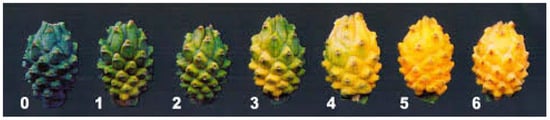
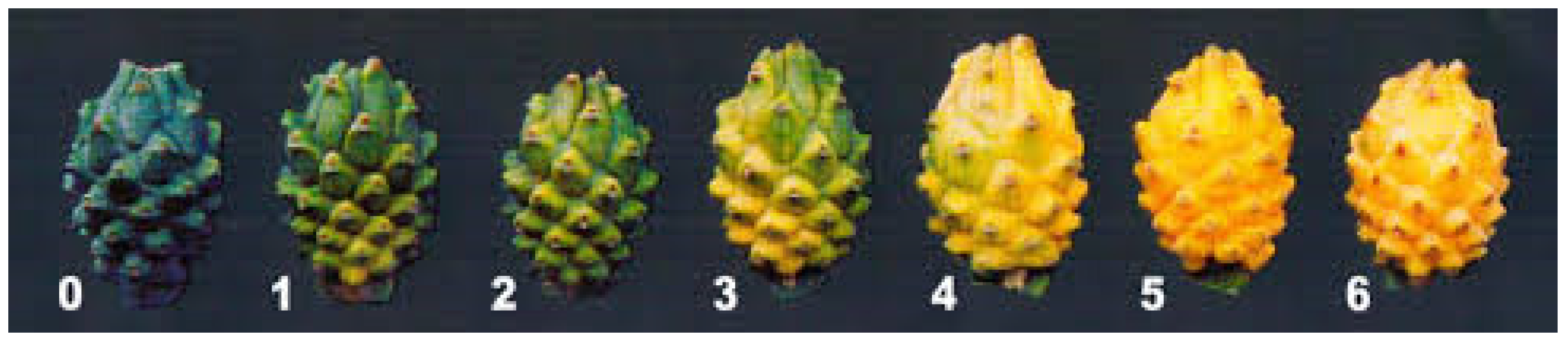
Yellow pitahaya (Selenicereus megalanthus Haw.) fruits, cv. ‘Palora’, were harvested in July 2024 (at maturity stage 3, according to Figure 1) from a commercial pitahaya plantation under greenhouse conditions. The ‘Finca Algro’ farm was located in Palora Canton, Morona Santiago Province, Ecuador (geographic coordinates 1°41′00″ South Latitude, 77°58′56.8″ West Longitude), at an altitude of 839 m. The climate was tropical humid, with relative humidity (RH) above 80% and temperatures fluctuating between 18 and 23 °C.
Figure 1.
Maturity levels of yellow pitahaya according to the Colombian Technical Standard (NTC-3554).
At harvest, a total of 255 fruits, homogeneous in size and without visual defects, were selected. Of these, 15 fruits were selected and used to measure properties at harvest (weight and color parameters). In the postharvest area of Finca Algro, the 240 fruits were divided into 4 batches of 60 fruits per treatment and condition of temperature (2 and 10 °C). MeJA and MeSA at 0.1 mM (purchased from Sigma, Sigma-Aldrich, Madrid, Spain, and sent by air to Ecuador) containing 0.5% Tween 20 as a surfactant were used. These concentrations are based on previous preharvest experiments with MeJA and MeSA [10]. The treatments were carried out by immersion for 8 min, and the control fruits were immersed in distilled water plus Tween 20 at 0.5%. The treatment was applied immediately after harvest (day 0) in 3 replicates (n = 3) of 40 fruits taken at random (120 fruits in total per treatment). The treated and untreated fruits were air-dried and packed in cardboard boxes for subsequent shipment to the airport located in Quito, Ecuador. After 12 days of logistics by air and ground transport under refrigerated conditions at 10 °C, the fruits arrived at the Postharvest Laboratory at the Miguel Hernández University (UMH).
Evaluations were conducted after a 12-day shipping period at 10 °C, followed by storage at 2 °C for 0 d (12 days total), 11 d (23 days total), and 28 d (40 days total). In the 10 °C experiment, evaluations were performed after 12, 23, 40, and 55 days, which include the initial 12-day shipping period. Relative humidity was 90%. The parameters evaluated were firmness, TSSs, TA, and the TSS/TA ratio (maturity index). In addition, the content of total phenolics and the total antioxidant activity were measured in the juice, while the content of total carotenoids was determined in the peel tissue.
2.2. Measurement of Quality Traits
Fruit firmness was measured individually in each of the 5 fruits from each replicate (n = 3) using a TX-XT2i Texture Analyzer (Stable Mycrosystems, Godalming, UK), which applied force to achieve 3% deformation of the fruit diameter. The results were expressed as the relation between the applied force and the travelled distance (N mm−1) and are reported as the mean ± standard error (SE). Thereafter, the peel and flesh of the 5 fruits of each replicate (n = 3) were mixed to obtain homogeneous samples in which the following parameters were measured. The flesh was squeezed using an electric juicer (Braun Tribute Collection CJ 5050 BK) and filtered to obtain a pitahaya juice for TSS and TA quantification. For TSSs, a digital refractometer (KemTM model RA-620, Instrumentación Analítica S.A. Madrid, Spain) was used, and the results were expressed as the mean ± SE of g 100 g−1. For TA, 1 mL of juice sample was diluted with 25 mL of distilled water and then titrated using an automatic titrator with 0.1 N NaOH to a final point of pH 8.1 at 20 °C (785 DMP Titrino, Metrohm, Metrohm Hispania, Madrid, Spain), and the results were expressed as the mean ± SE of g 100 g−1. The maturity index was calculated as the ratio of TSSs/TA.
2.3. Physiological Parameters
The protocol described by Medina-Santamarina et al. [19] was used for the determination of respiration rate and ethylene production. In brief, each individual pitahaya fruit was placed in a hermetic 1 L glass jar for 1 h. Then, airtight syringes were taken from headspace atmosphere. For respiration rate, a gas chromatograph GC Shimadzu 14B (Shimadzu Europa GmbH, Duisburg, Germany) was used to measure the CO2 concentration, and the results (mean ± SE) are expressed as mg of CO2 kg−1 h−1. For ethylene production, a Shimadzu GC-2010 gas chromatograph (Shimadzu Europa GmbH, Duisburg, Germany) was employed, and the results (mean ± SE) are expressed as nL of ethylene g−1 h−1.
2.4. Bioactive Compounds and Antioxidant Activity
To extract phenolic compounds, 5 g of flesh tissue was homogenized with 10 mL of water: methanol (2:8, v/v) containing 2 mM NaF using a homogenizer (Ultraturrax, T18 basic, IKA, Berlin, Germany) for 30 s. The extracts were centrifuged at 10,000× g for 10 min at 4 °C, and the supernatant was used to quantify total phenolics (in duplicate in each extract) using the Folin–Ciocalteu reagent, as previously described by Sayyari et al. [20], and the results are expressed as mg gallic acid equivalents 100 g−1.
For total carotenoids, the protocol described by Habibi et al. [21] was used. Briefly, 5 g of peel tissue was homogenized with 10 mL of ethyl acetate and then centrifuged at 10,000× g for 10 min at 4 °C. The supernatant was saponified with 10% KOH in MeOH solvent followed by an extraction with diethyl ether and finally drying and dissolving in acetone. The total carotenoids of the peel were quantified in duplicate by reading the absorbance at 450 nm in a spectrophotometer (UNICAM Helios-α spectrophotometer, Sci-Tek Instruments Ltd., Olney, UK) and expressed as mg β-carotene equivalent 100 g−1.
For total antioxidant activity, the supernatant of the phenolic extract was used, and measurements were performed in duplicate through a reaction mixture containing 2,20-azino-bis-(3-ethylbenzothiazoline-6-sulfonic acid) diammonium salt (ABTS), horseradish peroxidase enzyme, and its oxidant substrate (hydrogen peroxide), in which ABTS+ radicals are generated and monitored at 730 nm. The decrease in absorbance after adding the yellow pitahaya extract was proportional to antioxidant activity. A calibration curve was prepared with Trolox [(R)-(+)-6-hydroxy-2, 5, 7, 8-tetramethyl-croman-2-carboxylic acid] (0–20 nmol) from Sigma Aldrich (Madrid, Spain), and the results are expressed as mg of Trolox Equivalent (TE) 100 g−1 and represent the mean ± SE of three replicates (n = 3).
2.5. Statistical Analysis
The results are expressed as the mean ± SE of three replicates (n = 3). The data were subjected to a factorial ANOVA or repeated-measures analysis. Means were compared using a multiple range test (Tukey’s test) to find significant differences (p < 0.05) between treatments for each sampling date and temperature condition tested. Lowercase letters were used when there was significance. All the analyses were performed using SPSS version 22, and SigmaPlot 11.0 was used for generating the graphics.
3. Results
3.1. Fruit Quality Traits
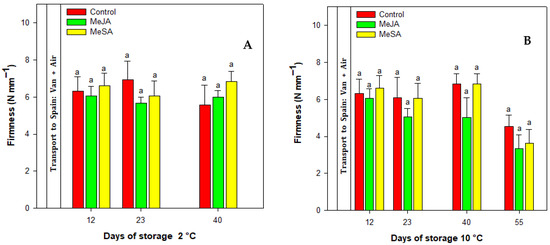
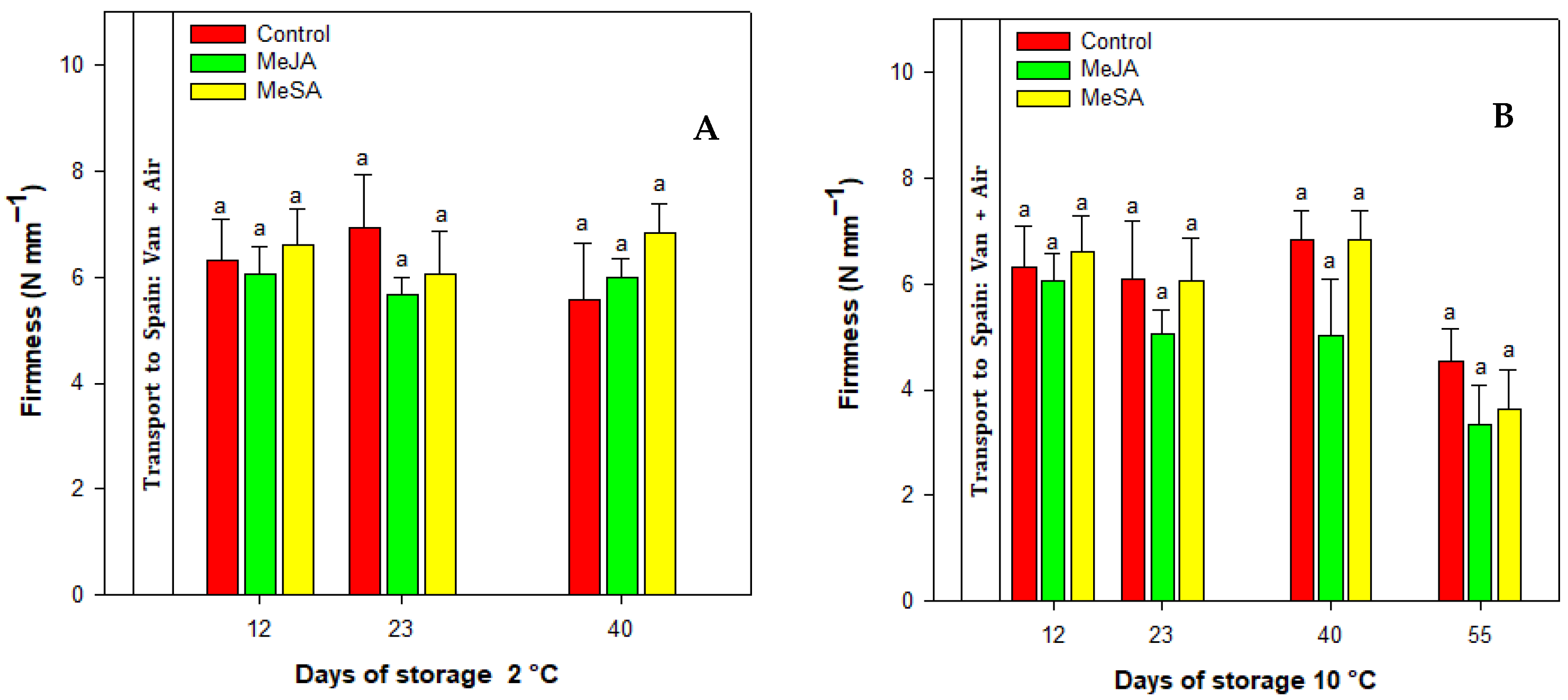
Fruit firmness, TSSs and TA were determined as organoleptic quality traits of yellow pitahaya. With respect to firmness (Figure 2), the levels were higher at 2 °C than at 10 °C.
Figure 2.
Effect of postharvest treatments with MeJA and MeSA at 0.1 mM on the evolution of firmness (N mm−1) at 2 °C (A) and 10 °C (B) of storage. Data are the mean ± SE (n = 3). Bars with different lowercase letters denote significant differences at p < 0.05 between treatments for each day of storage after the Tukey test.
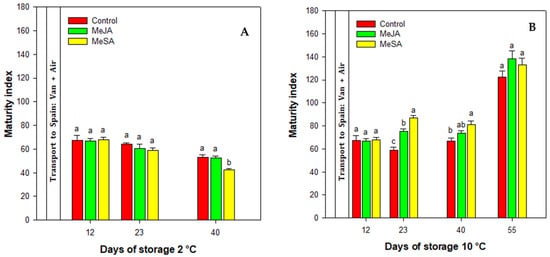
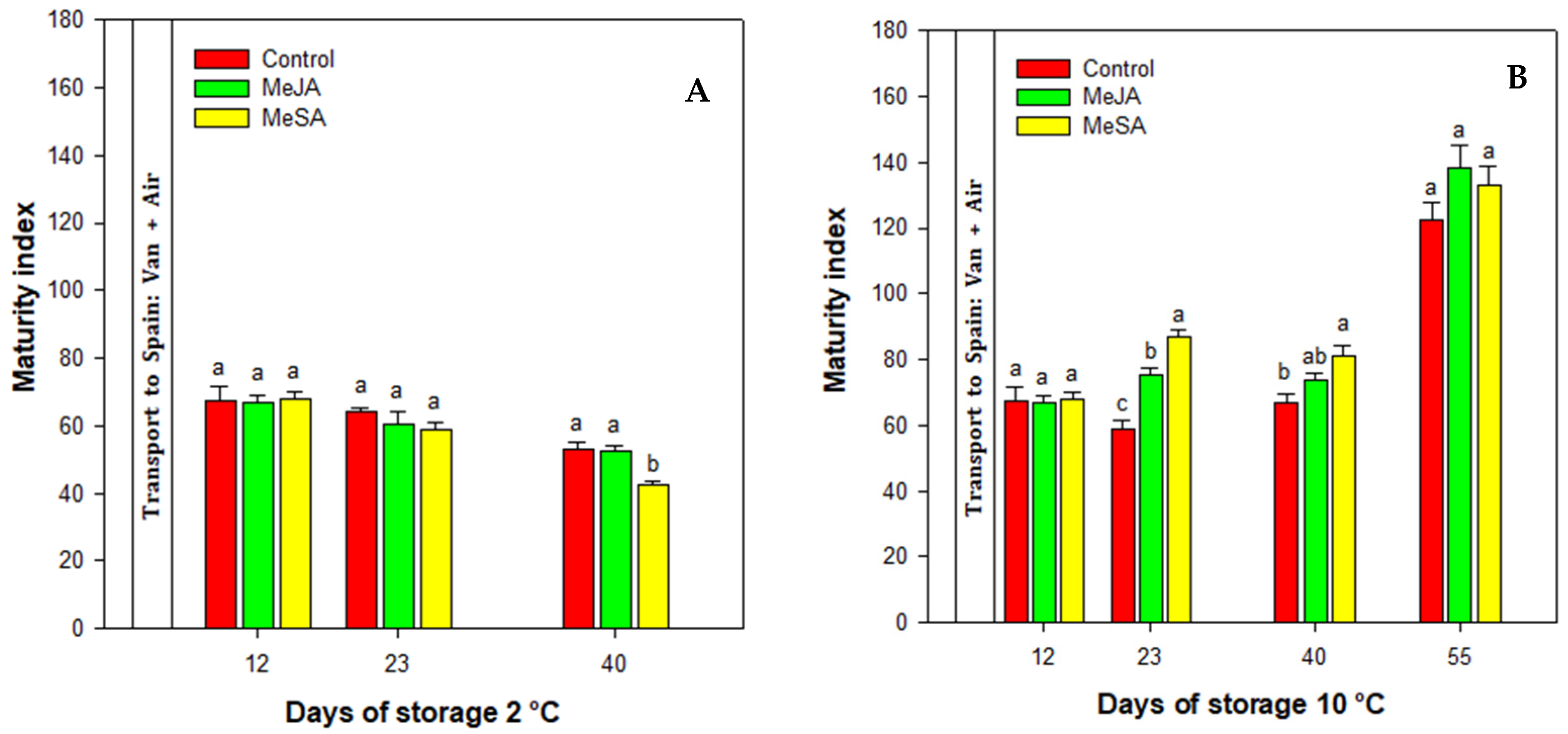
During storage, the softening process was more delayed at 2 °C than at 10 °C. The lowest fruit firmness was found at the last sampling date, although the differences were not significant in terms of either treatment or storage time. It is interesting to point out that, at 2 °C, the experiment was stopped after 40 days of storage due to the occurrence of CI, fruit shriveling and decay (Supplementary Figure S4), while, at 10 °C, the storage duration was extended to 55 days (Figure 2). In relation to TSSs (Supplementary Figure S1), decreases during storage at both temperatures (2 and 10 °C) and for all the treatments were observed. At 2 °C (Supplementary Figure S1A), the control fruits showed a significant reduction from 19.40 ± 0.05 to 16.98 ± 0.26 g 100 g−1 after 40 days. Comparing the treatments, the levels of TSSs in MeSA were higher than in the MeJA and control fruits. Under storage at 10 °C (Supplementary Figure S1B), the trend was similar, with the levels of TSSs for the MeSA-treated fruits being higher than for the MeJA and control fruits for most sampling dates. For TA (Supplementary Figure S2), an increasing trend was observed during storage at 2 °C, and the values were higher for the MeSA-treated fruits compared to the MeJA-treated fruits and the controls at the last sampling dates (Supplementary Figure S2A). However, at 10 °C (Supplementary Figure S2B), TA progressively decreased during storage for both the controls and treated pitahayas. The ratio of TSSs/TA, or the maturity index, is shown in Figure 3.
Figure 3.
Effect of postharvest treatments with MeJA and MeSA at 0.1 mM on the evolution of maturity index (TSS/TA ratio) at 2 °C (A) and 10 °C (B) of storage. Data are the mean ± SE (n = 3). Bars with different lowercase letters denote significant differences at p < 0.05 between treatments for each day of storage after the Tukey test.
The RI experienced very low changes during storage at 2 °C, and no significant differences between the treatments were observed (Figure 3A), except for the MeSA-treated fruits, which showed, significantly, the lowest maturity index at day 40 of storage. At 10 °C (Figure 3B), a sharp increase in maturity index was observed after 40 days of storage in all the fruits, without significant differences between the controls and MeJA- and MeSA-treated pitahayas at the last sampling date.
3.2. Physiological Parameters
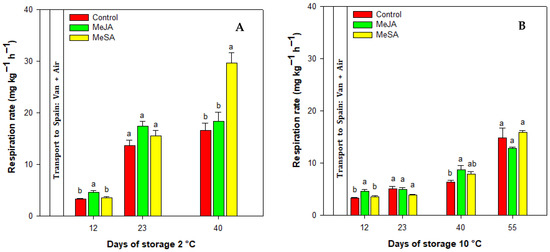
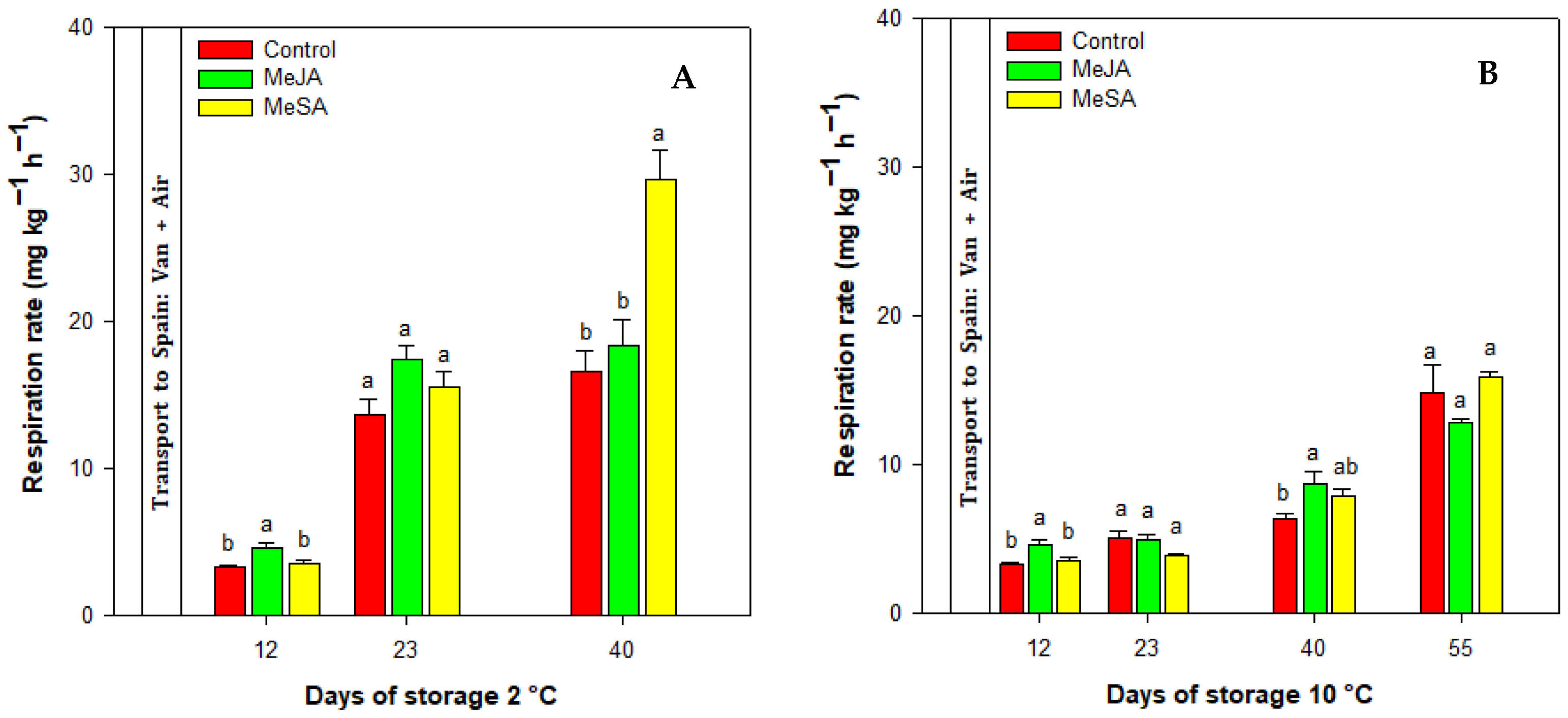
The measurements of respiration rate and ethylene production as physiological parameters were determined. For respiration rate (Figure 4), the levels were higher at 2 °C than at 10 °C, although, at both temperatures, a progressive increase in respiration rate during storage was shown.
Figure 4.
Effect of postharvest treatments with MeJA and MeSA at 0.1 mM on the evolution of respiration rate (mg kg−1 h−1) for each of the samples at 2 °C (A) and 10 °C (B) of storage. Data are the mean ± SE (n = 3). Bars with different lowercase letters denote significant differences at p < 0.05 between treatments for each day of storage after the Tukey test.
At 2 °C (Figure 4A), the MeSA-treated pitahayas at day 40 of storage showed the highest respiration rate (29.68 ± 2.03 mg kg−1 h−1) compared to the controls and MeJA-treated fruits, with values of 18.36 ± 1.82 mg kg−1 h−1 and 16.65 ± 1.34 mg kg−1 h−1, respectively. At 10 °C (Figure 4B), the MeJA-treated pitahayas, at day 55 of storage, showed the lowest respiration rate (12.90 ± 0.19 mg kg−1 h−1), followed by the controls (14.88 ± 1.84 mg kg−1 h−1) and MeSA-treated fruits (15.89 ± 0.39 mg kg−1 h−1), although the differences were not significant. Regarding ethylene production (Supplementary Figure S3), the non-climacteric nature of yellow pitahaya was confirmed, with very low values for all the treatments. In general, no significant differences were found between the controls and treated fruits except on day 55 at 10 °C, when the fruits treated with MeSA showed a significantly higher value of 0.13 ± 0.01 nL g−1 h−1.
3.3. Bioactive Compounds and Antioxidant Activity
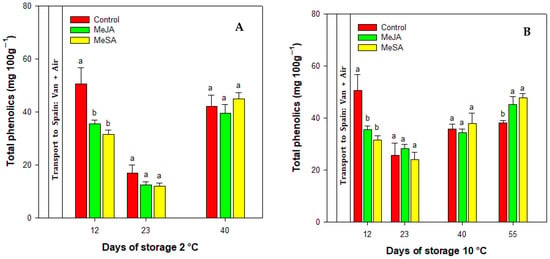
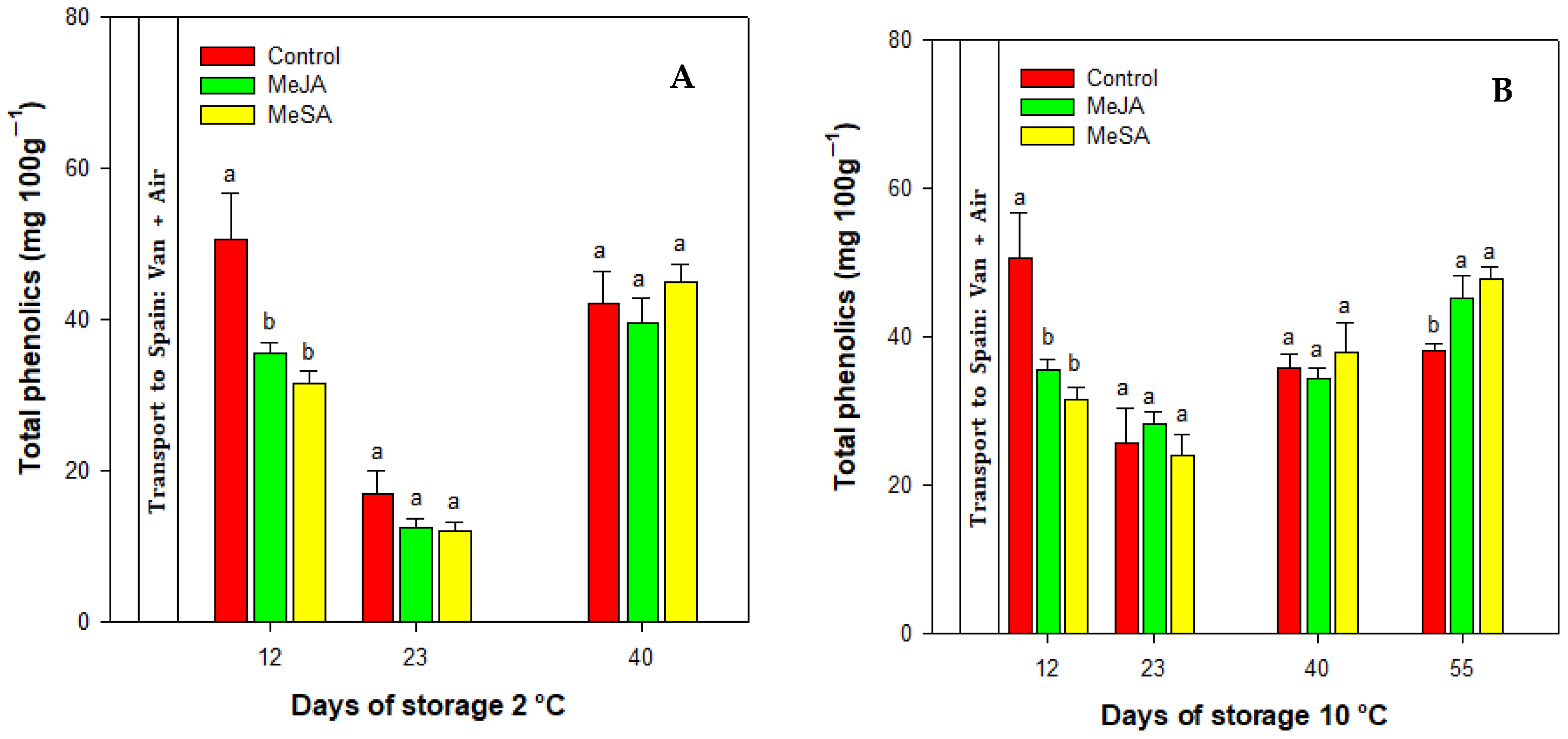
Total phenolics (Figure 5) first decreased between days 12 and 23 and then increased at both temperatures, although the levels were lower at 2 °C than at 10 °C. The treatments with MeJA and MeSA accelerated this initial decline and showed lower values than the controls on day 12 at 2 °C (Figure 5A). At 10 °C (Figure 5B), the concentration of phenolics also increased between days 40 and 55, especially in the treated fruits. Under this condition, the MeSA-treated pitahayas had higher content of total phenolics (47.82 ± 1.65 mg 100 g−1) than the control fruits (35.19 ± 0.96 mg 100 g−1).
Figure 5.
Effect of postharvest treatments with MeJA and MeSA at 0.1 mM on the evolution of total phenolics (mg 100 g−1) for each of the samples at 2 °C (A) and 10 °C (B) of storage. Data are the mean ± SE (n = 3). Bars with different lowercase letters denote significant differences at p < 0.05 between treatments for each day of storage after the Tukey test.
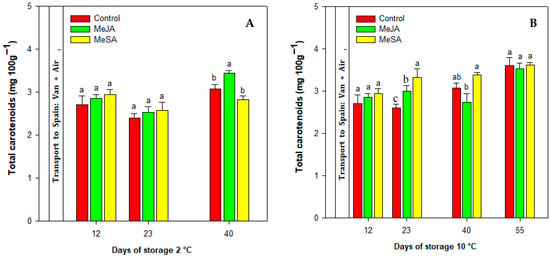
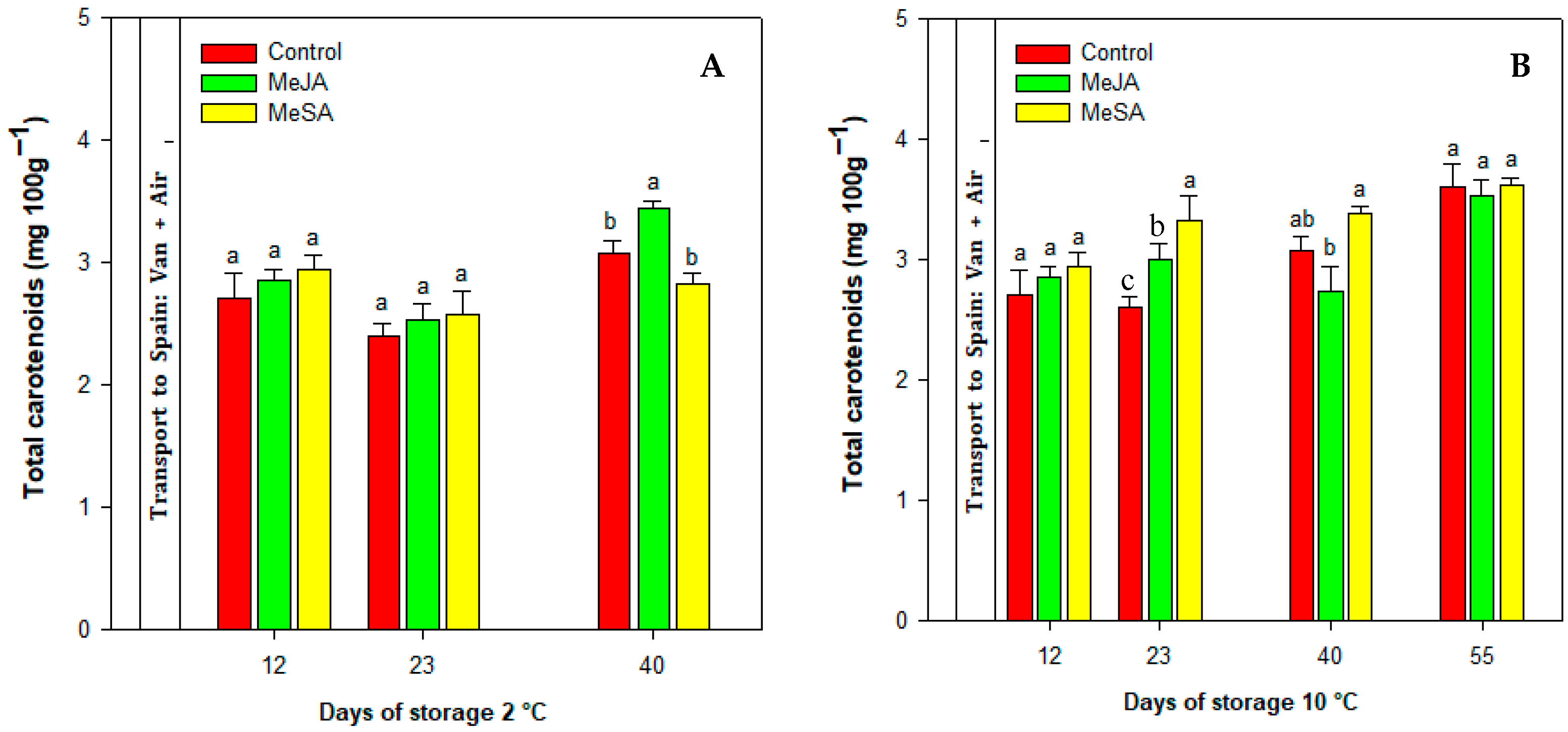
Regarding the total carotenoids of the peel (Figure 6), the concentrations were lower at 2 °C than at 10 °C. At 2 °C (Figure 6A), the total carotenoids first decreased at day 23, and, at day 40, they reached similar levels to those obtained at day 0, although no significant differences were shown either among the treatments or regarding storage time except for MeJA at day 40, which had the highest value. On the contrary, at 10 °C, a slight progressive increase in total carotenoids was obtained, although, at the end of the experiment (day 55), no significant differences were shown between the controls and treated pitahayas.
Figure 6.
Effect of postharvest treatments with MeJA and MeSA at 0.1 mM on the evolution of total carotenoids (mg 100 g−1) for each of the samples at 2 °C (A) and 10 °C (B) of storage. Data are the mean ± SE (n = 3). Bars with different lowercase letters denote significant differences at p < 0.05 between treatments for each day of storage after the Tukey test.
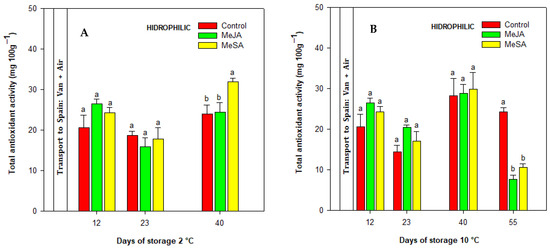
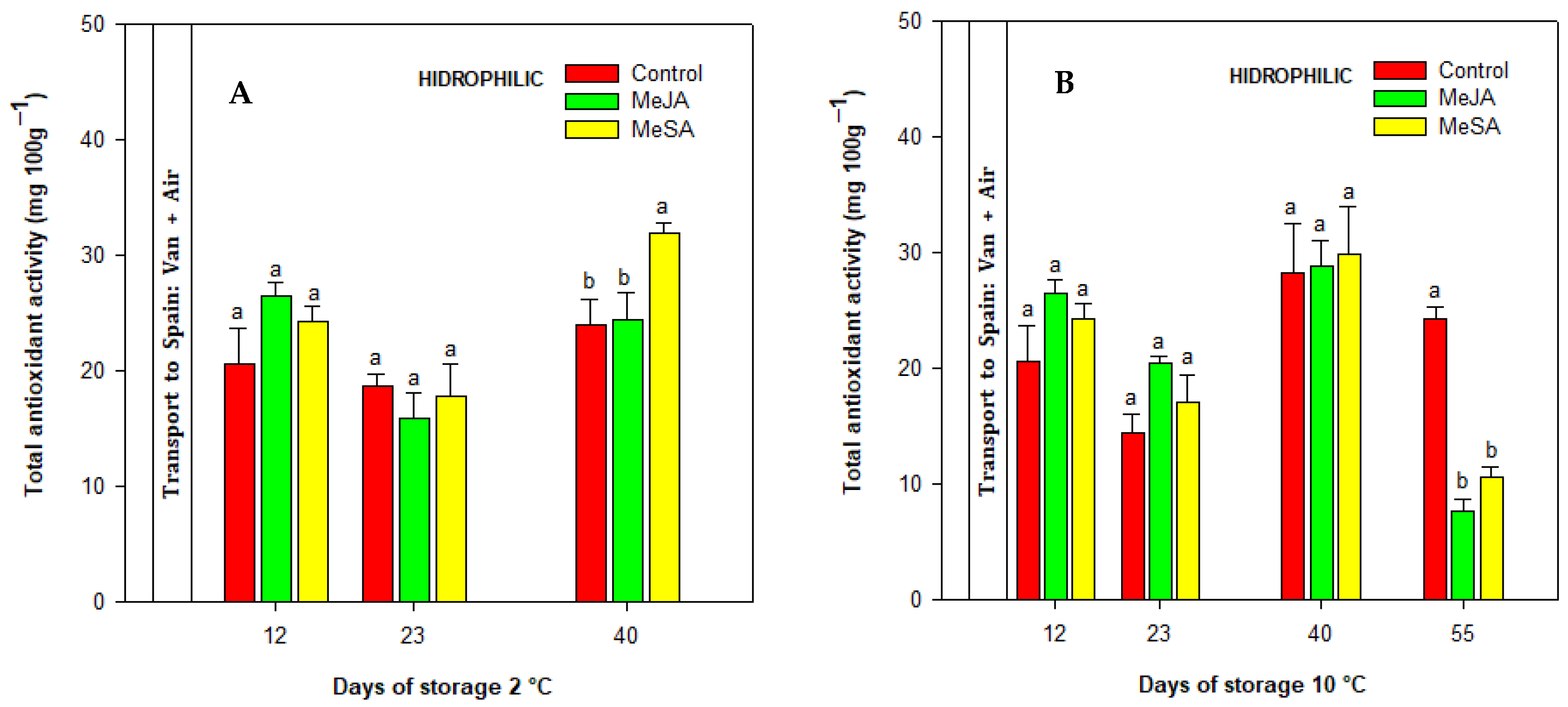
Total antioxidant activity (Figure 7) initially decreased between days 12 and 23 and then increased at both temperatures. At 2 °C (Figure 7A), the total antioxidant activity showed the highest values at the last sampling date in the MeSA-treated pitahayas (31.92 ± 0.92 mg 100 g−1) compared to the controls (24.08 ± 2.08 mg 100 g−1) and MeJA-treated fruits (24.41 ± 2.43 mg 100 g−1). At 10 °C, the most significant changes were obtained at day 55 of storage, in which the control fruits had significantly higher values (24.34 ± 1.06 mg 100 g−1) compared to MeJA (7.66 ± 1.11 mg 100 g−1) and MeSA (10.61 ± 0.83 mg 100 g−1).
Figure 7.
Effect of postharvest treatments with MeJA and MeSA at 0.1 mM on the evolution of total hydrophilic antioxidant activity (mg 100 g−1) for each of the samples at 2 °C (A) and 10 °C (B) of storage. Data are the mean ± SE (n = 3). Bars with different lowercase letters denote significant differences at p < 0.05 between treatments for each day of storage after the Tukey test.
4. Discussion
In this experiment, data about the use of postharvest MeJA and MeSA treatments at 0.1 mM on yellow pitahaya during storage at two temperatures (2 and 10 °C) are presented for the first time. This concentration was chosen based on previous experiments in which preharvest application of these elicitors at 1, 5 and 10 mM led to fruits with enhanced TSSs, TA and firmness [10,11], although, for postharvest treatment, we decided to use 0.1 mM due to the direct absorption of the elicitors. During storage at 2 °C, the experiment lasted only 40 days due to the occurrence of CI, with most control fruits exhibiting shriveling at day 40 (Supplementary Figure S4). Fruit decay was not detected in either the treated fruits or the control ones at 10 °C. It is well known that many tropical and subtropical fruits, such as avocado, kiwifruit, mango and papaya, are very sensitive to developing CI when stored at low temperatures above the freezing point [22,23]. Particularly in yellow pitahaya, storage at 2 and 4 °C limited the storability to up to 13 days, mainly due to CI development manifested by peel splitting and bract wilting [24]. In another study, harvested fruits at three maturity stages (green, semi-ripe and ripe) were stored at 16 °C to avoid CI incidence, although weight loss was exacerbated for 20 days, especially for the green samples [25]. In red pitahaya (Hylocereus polyrhizus) stored at a range of temperatures (2, 4, 6, 8 and 10 °C) for 27 days, it was confirmed that CI occurred at 2, 4, and 6 °C, manifested as brown peel specks, browning and shriveling, and abnormal ripening, while no CI was observed at 8 and 10 °C [26].
The postharvest application of MeJA and MeSA at 0.1 mM to yellow pitahaya led to prolonged storability up to 40 days at 2 °C (chilling temperature), although the experiment was cancelled thereafter due to CI symptoms, accelerated softening and increased respiration rates, especially for MeSA-treated fruits. On the contrary, at 10 °C, no CI was detected, and storability could be prolonged until 55 days. The greatly perishable nature of tropical fruits is attributed to different factors, including susceptibility to physiological disorders, especially CI, and an acceleration of the physiological processes related to respiration rate, accelerated softening and ethylene production, resulting in reduced shelf-life due to senescence [12,27]. In recent years, postharvest applications of exogenous plant hormones have been reported as a promising strategy for preserving postharvest quality and extending shelf-life during storage. This strategy is considered to be natural and environmentally friendly as an alternative to the classical use of synthetic chemicals, which are being abandoned due to serious concerns in terms of human health and the environment. Among phytohormones, MeJA and MeSA have emerged as good candidates due to their pivotal role in modulating physiological activities, increasing plant responses to abiotic stress, and improving fruit growth and development when applied as preharvest treatments [8,9]. As postharvest treatments, their efficacy is attributed to increases in bioactive compounds, in addition to prolonging shelf-life by delaying postharvest ripening and senescence and alleviating several physiological disorders, especially CI.
The most important JA derivative is MeJA, which is preferred for postharvest applications, typically applied by dipping at concentrations between 0.01 and 0.4 mM [28]. In apples, MeJA treatment at 0.5 mM activated the genes involved in ethylene production and signaling during storage at ambient temperature, which was accompanied by enhanced respiration rates and led to accelerated softening [29]. On the other hand, in pineapple, a non-climacteric fruit, MeJA at 1 mM and storage at 10 °C for 20 days alleviated CI symptoms by reducing internal browning and lowering electrolyte leakage (EL), which is an indicator of membrane stability [30]. In red pitahaya (Hylocereus polyrhizus), MeJA at different concentrations (0.01, 0.1, 0.2 and 0.5 mM) and storage for 21 days at 6 °C reduced TA, expressed as percentage of citric acid, and TSSs [31]. Accordingly, in yellow pitahaya treated with MeJA and MeSA at 0.1 mM, TSSs (Supplementary Figure S1) were reduced at both 10 °C and 2 °C. Also, TA (Supplementary Figure S2) showed a reduction at both temperatures, the decrease being higher at 2 °C, although no differences existed that were attributable to the treatments.
Mustafa et al. [31] reported that, for total phenolics, after an initial decline, enhancement began at the end of storage as a major increase was observed in MeJA-treated fruit with 0.1 mM, in line with the results of yellow pitahaya in the present experiment. In tangelo fruit, MeJA at 50 μM reduced CI (browning and pitting) during storage at 3 °C for 90 days by lowering MDA and maintaining higher levels of phenolic and flavonoid compounds, total antioxidant activity and the activity of antioxidant enzymes [32]. In mandarin, the postharvest application of MeJA at 0.1, 0.3, 0.5 and 0.7 mM, followed by storage at 2 °C and 10 °C for 40 days, maintained optimum quality, especially at 0.5 mM, in terms of firmness, higher TSSs, total phenolics, total antioxidant activity and lower TA, with no symptoms of CI observed throughout the storage period [33]. With respect to the mechanism of action by which MeJA treatment alleviates CI, there is a consensus that it is due to a reduction in lipoxygenase (LOX) activity, the enzyme responsible for generating reactive oxygen species (ROS) that affect fatty acid composition by an imbalanced unsaturated/saturated ratio through membrane saturation. In addition, MeJA induced the activity of the antioxidant enzymes that scavenge ROS, such as superoxide dismutase (SOD), catalase (CAT) and ascorbate peroxidase (APX), in a wide range of fruit species, including loquat, blood orange, pomegranate, strawberries, jujube, pineapple and kiwifruit, among others [27,34,35,36].
It is well known that MeSA is converted spontaneously or by the action of MeSA esterase to SA, and, on many occasions, the effects attributed to MeSA are via SA physiological action [37]. During storage of yellow pitahaya at 2 °C, TA showed the highest value among MeSA-treated fruit, while TSSs remained unchanged, leading to the lowest maturity index at 40 days of storage, but, at the same time, the respiration rate exhibited the highest values. Accordingly, in blood oranges stored for 60 days at 2 °C, postharvest MeSA at 100 μM reduced CI symptoms, lowering EL and MDA but increasing the citric acid concentration (the major organic acid that contributes to TA), while sucrose remained unchanged [15]. In another study with this fruit and the same MeSA concentration, the TSSs were not affected by treatment but enhanced TA, leading to a lower maturity index [20], which agrees with the present study on yellow pitahaya. In avocado, MeSA at 10 or 100 μM reduced CI manifested by internal browning and maintained various individual phenolic compounds, such as pyrogallol, protocatechuic acid, caffeic acid, hydroxybenzoic acid, p-coumaric acid and ferulic acid [38]. Storage at 10 °C (non-chilling temperature) resulted in increases in both ethylene production and respiration rate, suggesting that MeSA-treated fruits advanced the postharvest ripening process of yellow pitahaya, which agrees with previous reports in tomato treated with MeSA at 100 μM, for which respiration rate and ethylene production were also enhanced [39]. In papaya, application of SA at 0.5, 1 and 1.5 mM and storage for 28 days at 12 °C resulted in reduced decay and weight loss and maintained firmness, TSSs, and TA, with SA at a 1.5 mM concentration being the most effective [40]. In mango, treatments with 100 μM MeSA, 10 μM MeJA or a combination of both mitigated CI and reduced membrane injury by diminishing the levels of MDA, the effect being attributed to increases in endogenous JA and SA concentrations [17]. The combination of postharvest application of MeJA + MeSA at 1 mM in tomato stored for 20 days at 2 °C alleviated CI and enhanced fruit firmness, total phenolics and TA, which was attributed to improved membrane integrity by lowering EL and MDA levels, suggesting that the combined MeSA + MeJA treatment exerted a synergistic effect, thereby providing a higher tolerance to CI and extending the postharvest shelf-life [41]. Overall, postharvest treatments with jasmonates and salicylates have the ability to reduce CI by increasing fruit resistance to low storage temperatures and improving the supply chain and extending commercialization to more distant markets [42,43].
Carotenoids, among natural pigments, are the only ones with lipophilic properties, and they are the most vital in nature, accounting for red, yellow and orange colors in a wide range of fruits and vegetables, including yellow pitahaya [1]. The fruit of yellow pitahaya is composed primarily of the peel, which accounts for 35–45% of the total mass [12]. Dragon fruit peels are byproducts of juice production that are usually discarded, but they are rich in polyphenols and carotenoids [44]. Valorization of fruit wastes and their byproducts, such as peels, could meet the necessity for natural pigments as an alternative to synthetic pigment production, which has been reported to have negative effects on human health, while natural pigments may have positive effects [45]. In this work, postharvest MeJA and MeSA at 0.1 mM induced accumulation of total carotenoids, with concentrations ranging between 3 and 4 mg 100 g−1. There are no reports studying carotenoid content in the peel of yellow pitahaya, although there is some evidence in other red pitahayas. The total carotenoid content in red pitahaya peel at commercial ripening was ≈ 2 mg 100 g−1 [46]. In a comparative study with the peels of three pitahaya cultivars, the content of total carotenoids was found to be in the range of 18–24 μg 100 g−1, the main individual compounds being xanthophyll and β-carotene [47]. Red pitahaya is rich in red pigments (betalains and anthocyanins) [44], while the peel of yellow pitahaya is rich in carotenoids and should be studied in depth to be determined as a potential source of carotenoids. Thus, the peel of yellow pitahaya as a byproduct could be used as a source of lipophilic compounds for enriching the functional properties of food products.
5. Conclusions
Postharvest treatments with MeJA or MeSA could be an innovative and promising tool for extending the storability of yellow pitahayas. Of the two temperatures tested (2 and 10 °C), 10 °C was found to be the most effective in maintaining quality attributes and extending storability as the experiment was stopped after 40 days at 2 °C, whereas yellow pitahaya could be stored for 55 days at 10 °C. There were no negative effects on fruit quality in terms of firmness, TSSs and TA after postharvest treatments with MeJA or MeSA. The results regarding respiration rate, ethylene production, losses of firmness and acidity, and a higher maturity index (TSS/TA ratio at 10 °C) suggest that MeSA accelerates the postharvest ripening process of yellow pitahayas.
Supplementary Materials
The following supporting information can be downloaded at: https://www.mdpi.com/article/10.3390/horticulturae12040398/s1, Figure S1: Effect of postharvest treatments with MeJA and MeSA at 0.1 mM on the evolution of total soluble solids (TSSs, g 100 g−1) for each of the samples at 2 °C (A) and 10 °C (B) of storage. Data are the mean ± SE (n = 3). Bars with different lowercase letters denote significant differences at p < 0.05 between treatments for each day of storage after the Tukey test. Figure S2: Effect of postharvest treatments with MeJA and MeSA at 0.1 mM on the evolution of total acidity (TA, g 100 g−1) for each of the samples at 2 °C (A) and 10 °C (B) of storage. Data are the mean ± SE (n = 3). Bars with different lowercase letters denote significant differences at p < 0.05 between treatments for each day of storage after the Tukey test. Figure S3: Effect of postharvest treatments with MeJA and MeSA at 0.1 mM on the evolution of ethylene production (nL g-1 h−1) for each of the samples at 2 °C (A) and 10 °C (B) of storage. Data are the mean ± SE (n = 3). Bars with different lowercase letters denote significant differences at p < 0.05 between treatments for each day of storage after the Tukey test. Figure S4: Aspects of the fruits at day 0 (left) and at day 40 (right) with the occurrence of CI and decay.
Author Contributions
Methodology, formal analysis, investigation, A.E.-L.; formal analysis, data curation, B.A.O.-B.; formal analysis, investigation, P.A.P.-G.; formal analysis, investigation, V.A.; methodology, formal analysis, investigation, writing—review and editing, M.E.G.-P.; supervision, writing—review and editing, M.S.; conceptualization, writing—original draft preparation, supervision, funding acquisition, D.V. All authors have read and agreed to the published version of the manuscript.
Funding
This research received no external funding.
Data Availability Statement
The original contributions presented in this study are included in the article/Supplementary Material. Further inquiries can be directed to the corresponding authors.
Acknowledgments
The authors extend their appreciation to Alfonso Sánchez from ‘Algro Farm’ for providing the experimental plants and technical advice.
Conflicts of Interest
The authors declare no conflicts of interest.
Abbreviations
The following abbreviations are used in this manuscript:
| ABTS | 2,20-Azino-bis-(3-ethylbenzothiazoline-6-sulfonic acid) diammonium salt |
| APX | Ascorbate peroxidase |
| CI | Chilling injury |
| CAT | Catalase |
| LOX | Lipoxygenase |
| MDA | Malondialdehyde |
| MeJA | Methyl jasmonate |
| MeSA | Methyl salicylate |
| PAL | Phenylalanine ammonia-lyase |
| POD | Peroxidase |
| PPO | Polyphenol oxidase |
| RI | Ripening index |
| ROS | Reactive oxygen species |
| SA | Salicylic acid |
| SOD | Superoxide dismutase |
| TA | Total acidity |
| TSSs | Total soluble solids |
References
- Valero, D.; Erazo-Lara, A.; García-Pastor, M.E.; Padilla-González, P.A.; Agulló, V.; El-Hiali, F.B.; Serrano, M. Yellow Pitahaya (Selenicereus megalanthus Haw.): The Less Known of the Pitahayas. Foods 2025, 14, 202. [Google Scholar] [CrossRef] [Scilit]
- Sanín, A.; Navia, D.P.; Serna-Jiménez, J.A. Functional foods from crops on the Northern Region of the South American Andes: The importance of blackberry, yacon, açai, yellow pitahaya and the application of its biocompounds. Int. J. Fruit Sci. 2020, 20, S1784–S1804. [Google Scholar] [CrossRef] [Scilit]
- Mogollón-Alvarado, I.; Viteri-Rade, L. Análisis de la cadena de distribución que determinan la variación de precios de la pitahaya en Ecuador y su efecto en la competitividad internacional. 593 Digit. Publ. CEIT 2025, 10, 946–966. [Google Scholar] [CrossRef] [Scilit]
- Kumar, S.; Issac, R.; Prabha, M. Functional and health-promoting bioactivities of dragon fruit. Drug Invent. Today 2018, 10, 3307–3310. [Google Scholar]
- Rachappanavar, V.; Padiyal, A.; Sharma, J.K.; Gupta, S.K. Plant hormone-mediated stress regulation responses in fruit crops—A review. Sci. Hortic. 2022, 304, 111302. [Google Scholar] [CrossRef] [Scilit]
- Gasperini, D.; Howe, G.A. Phytohormones in a universe of regulatory metabolites: Lessons from jasmonate. Plant Physiol. 2024, 195, 135–154. [Google Scholar] [CrossRef] [Scilit] [PubMed]
- Wang, S.Y.; Shi, X.C.; Liu, F.Q.; Laborda, P. Effects of exogenous methyl jasmonate on quality and preservation of postharvest fruits: A review. Food Chem. 2021, 353, 129482. [Google Scholar] [CrossRef] [Scilit]
- Ozturk, B.; Karakaya, O.; Aglar, E.; Hancı, M.U.; Ozturk, A.; Asghari, M. Impacts of methyl jasmonate treatments on quality properties and bioactive compounds of jujube fruit (Ziziphus jujuba) during cold storage. BMC Plant Biol. 2025, 25, 1064. [Google Scholar] [CrossRef] [Scilit]
- Chen, C.; Sun, C.; Wang, Y.; Gong, H.; Zhang, A.; Yang, Y.; Guo, F.; Cui, K.; Fan, X.; Li, X. The Preharvest and Postharvest Application of Salicylic Acid and its Derivatives on Storage of Fruit and Vegetables: A Review. Sci. Hortic. 2023, 312, 111858. [Google Scholar] [CrossRef] [Scilit]
- Erazo-Lara, A.E.; García-Pastor, M.E.; Padilla-González, P.A.; Serrano, M.; Valero, D. Yellow Pitahaya (Selenicereus megalanthus Haw.) Growth and Ripening as Affected by Preharvest Elicitors (Salicylic Acid, Methyl Salicylate, Methyl Jasmonate, and Oxalic Acid): Enhancement of Yield, and Quality at Harvest. Horticulturae 2024, 10, 493. [Google Scholar] [CrossRef] [Scilit]
- Erazo-Lara, A.; García-Pastor, M.E.; Padilla-González, P.A.; Valero, D.; Serrano, M. Preharvest elicitors as a tool to enhance bioactive compounds and quality of both peel and pulp of yellow pitahaya (Selenicereus megalanthus Haw.) at harvest and during postharvest storage. Int. J. Mol. Sci. 2024, 25, 5435. [Google Scholar] [CrossRef] [Scilit]
- Li, J.; Azam, M.; Noreen, A.; Umer, M.A.; Ilahy, R.; Akram, M.T.; Qadri, R.; Khan, M.A.; Rehman, S.u.; Hussain, I.; et al. Application of Methyl Jasmonate to Papaya Fruit Stored at Lower Temperature Attenuates Chilling Injury and Enhances the Antioxidant System to Maintain Quality. Foods 2023, 12, 2743. [Google Scholar] [CrossRef] [Scilit]
- Vasquez-Rojas, C.; Muñoz-Vera, M.; Flores, S.; Betancourt, M.; Castro, R.I.; Ramos, P.; Laporte, D.; Parra-Palma, C.; Morales-Quintana, L. Impact of methyl Jasmonate on blueberry ripening fruits: Assessment of cell wall thermal stability, nutritional parameters and antioxidant enzymatic activity. Front. Plant Sci. 2025, 6, 155013. [Google Scholar] [CrossRef] [Scilit]
- Hasan, M.U.; Singh, Z.; Buckham, L.; Afrifa-Yamoah, E.; Petracek, P.D.; McArtney, S. Postharvest jasmonic acid and methyl jasmonate dip treatments alleviate chilling injury and maintain quality of cold-stored ‘Black Amber’ and ‘Tegan Blue’ Japanese plums (Prunus salicina Lindell). J. Sci. Food Agric. 2025, 105, 5583–5591. [Google Scholar] [CrossRef] [Scilit]
- Habibi, F.; Sarkhosh, A.; Guillén, F.; Serrano, M.; Valero, D. Postharvest treatments with methyl salicylate and glycine betaine synergistically enhanced chilling tolerance and maintained bioactive compounds of blood orange fruit subjected to cold quarantine storage. LWT 2023, 185, 115141. [Google Scholar] [CrossRef] [Scilit]
- Mei, J.; Li, X.; You, Y.; Fan, X.; Sun, C.; Guo, F.; Shan, M.; Zhang, J. Methyl salicylate affects fruit quality and aroma compounds of cherry during cold storage. Sci. Hortic. 2024, 333, 113291. [Google Scholar] [CrossRef] [Scilit]
- Nguyen, N.X.; Saithong, T.; Boonyaritthongchai, P.; Buanong, M.; Kalapanulak, S.; Wongs-Aree, C. Methyl salicylate induces endogenous jasmonic acid and salicylic acid in’Nam Dok Mai’mango to maintain postharvest ripening and quality. J. Plant Physiol. 2024, 303, 154356. [Google Scholar] [CrossRef] [Scilit]
- Habibi, F.; Ramezanian, A.; Guillén, F.; Serrano, M.; Valero, D. Blood oranges maintain bioactive compounds and nutritional quality by postharvest treatments with γ-aminobutyric acid, methyl jasmonate or methyl salicylate during cold storage. Food Chem. 2020, 306, 125634. [Google Scholar] [CrossRef] [Scilit] [PubMed]
- Medina-Santamarina, J.; Zapata, P.J.; Valverde, J.M.; Valero, D.; Serrano, M.; Guillén, F. Melatonin Treatment of Apricot Trees Leads to Maintenance of Fruit Quality Attributes during Storage at Chilling and Non-Chilling Temperatures. Agronomy 2021, 11, 917. [Google Scholar] [CrossRef] [Scilit]
- Sayyari, M.; Babalar, M.; Kalantari, S.; Martinez-Romero, D.; Guillen, F.; Serrano, M.; Valero, D. Vapour treatments with methyl salicylate or methyl jasmonate alleviated chilling injury and enhanced antioxidant potential during postharvest storage of pomegranates. Food Chem. 2011, 124, 964–970. [Google Scholar] [CrossRef] [Scilit]
- Habibi, F.; Sarkhosh, A.; Guillén, F.; Serrano, M.; Valero, D. Changes in Physicochemical Characteristics, Peel Color, and Juice Attributes of ‘Moro’ Blood Orange Fruit Treated with Glycine Betaine and Methyl Salicylate during Cold Quarantine Storage. Horticulturae 2023, 9, 1103. [Google Scholar] [CrossRef] [Scilit]
- Biswas, P.; Brummel, D.A. Chilling Injury. In Postharvest Physiological Disorders in Fruits and Vegetables; de Freitas, S.T., Peek, S., Eds.; CRC Press Taylor & Francis Group: Boca Raton, FL, USA, 2019; pp. 61–87. [Google Scholar]
- Mandal, D.; Wermund, U.; Phavaphutanon, L.; Cronje, R. Tropical and Subtropical Fruit Crops Production: Processing, and Marketing; Apple Academic Press Inc.: Palm Bay, FL, USA, 2023. [Google Scholar]
- Pesantes-Gallardo, M.G.; Reyna-Gonzales, K.; Huamán-Grandez, E.O.; Valdivia-Culqui, J.E.; Paredes-Tarrillo, F.A.; Raymundo-Vasquez, P.A.; Medina-Mendoza, M.; Cayo-Colca, I.S.; Castro-Alayo, E.M.; Balcázar-Zumaeta, C.R. Changes in the physicochemical properties of yellow pitahaya (Hylocereus megalanthus) during storage. Food Res. 2024, 8, 18–27. [Google Scholar] [CrossRef] [Scilit] [PubMed]
- Yoplac, I.; Canicoba-Rubio, C.L.; Chávez-Santos, R.; Mestanza, M.; Maicelo-Quintana, J.L.; Hidalgo, A. Influence of Maturity Stage and Storage Time on Physicochemical and Bioactive Properties of Yellow Pitahaya (Hylocereus megalanthus). J. Food. Processs. Preserv. 2025, 2025, 2494113. [Google Scholar] [CrossRef] [Scilit]
- Sheng, K.; Wei, S.; Mei, J.; Xie, J. Chilling Injury, Physicochemical Properties, and Antioxidant Enzyme Activities of Red Pitahaya (Hylocereus polyrhizus) Fruits under Cold Storage Stress. Phyton-Int. J. Exp. Bot. 2021, 90, 291–305. [Google Scholar] [CrossRef] [Scilit]
- Mwelase, S.; Adeyemi, J.O.; Fawole, O.A. Recent Advances in Postharvest Application of Exogenous Phytohormones for Quality Preservation of Fruits and Vegetables. Plants 2024, 13, 3255. [Google Scholar] [CrossRef] [Scilit]
- Aghdam, M.S.; Bodbodak, S. Physiological and biochemical mechanisms regulating chilling tolerance in fruits and vegetables under postharvest salicylates and jasmonates treatments. Sci. Hortic. 2013, 156, 73–85. [Google Scholar] [CrossRef] [Scilit]
- Lv, J.; Zhang, M.; Zhang, J.; Ge, Y.; Li, C.; Meng, K.; Li, J. Effects of methyl jasmonate on expression of genes involved in ethylene biosynthesis and signaling pathway during postharvest ripening of apple fruit. Sci. Hortic. 2018, 229, 157–166. [Google Scholar] [CrossRef] [Scilit]
- Boonyaritthongchai, P.; Supapvanich, S. Effects of methyl jasmonate on physicochemical qualities and internal browning of ‘queen’ pineapple fruit during cold storage. Hortic. Environ. Biotechnol. 2017, 58, 479–487. [Google Scholar] [CrossRef] [Scilit]
- Mustafa, M.A.; Ali, A.; Seymour, G.; Tucker, G. Treatment of dragonfruit (Hylocereus polyrhizus) with salicylic acid and methyl jasmonate improves postharvest physico-chemical properties and antioxidant activity during cold storage. Sci. Hortic. 2018, 231, 89–96. [Google Scholar] [CrossRef] [Scilit]
- Dargiri, S.A.; Rastegar, S.; Mohammadi, M. Potential application of methyl jasmonate and γ-aminobutyric acid to preserve fruit quality and alleviate postharvest chilling in Orlando tangelo. Food Meas. 2024, 18, 871–882. [Google Scholar] [CrossRef] [Scilit]
- Dhami, K.S.; Asrey, R.; Vinod, B.R.; Meene, N.K. Postharvest Methyl Jasmonate Alleviates Chilling Injury and Maintains Quality of ‘Kinnow’ (Citrus Nobilis Lour x C. deliciosa Tenora) Fruits Under Differential Storage Temperature. Erwerbs-Obstbau 2023, 65, 1667–1674. [Google Scholar] [CrossRef] [Scilit]
- Cao, S.; Cai, Y.; Yang, Z.; Zheng, Y. MeJA induces chilling tolerance in loquat fruit by regulating proline and γ-aminobutyric acid contents. Food Chem. 2012, 133, 1466–1470. [Google Scholar]
- García-Pastor, M.E.; Serrano, M.; Guillén, F.; Zapata, P.J.; Valero, D. Preharvest or a combination of preharvest and postharvest treatments with methyl jasmonate reduced chilling injury, by maintaining higher unsaturated fatty acids, and increased aril colour and phenolics content in pomegranate. Postharvest Biol. Technol. 2020, 167, 111226. [Google Scholar] [CrossRef] [Scilit]
- Habibi, F.; García-Pastor, M.E.; Guillén, F.; Serrano, M.; Valero, D. Fatty acid composition in relation to chilling susceptibility of blood orange cultivars at different storage temperatures. Plant Physiol. Biochem. 2021, 166, 770–776. [Google Scholar] [CrossRef] [Scilit]
- Hayat, Q.; Hayat, S.; Irfan, M.; Ahmad, A. Effect of exogenous salicylic acid under changing environment: A review. Environ. Exp. Bot. 2010, 68, 14–25. [Google Scholar] [CrossRef] [Scilit]
- Glowacz, M.; Bill, M.; Tinyane, P.P.; Sivakumar, D. Maintaining postharvest quality of cold stored ‘Hass’ avocados by altering the fatty acids content and composition with the use of natural volatile compounds—Methyl jasmonate and methyl salicylate. J. Sci. Food Agric. 2017, 97, 5186–5193. [Google Scholar]
- Ding, C.-K.; Wang, C.Y. The dual effects of methyl salicylate on ripening and expression of ethylene biosynthetic genes in tomato fruit. Plant Sci. 2003, 164, 589–596. [Google Scholar] [CrossRef] [Scilit]
- Hanif, A.; Ahmad, S.; Shahzad, S.; Liaquat, M.; Anwar, R. Postharvest application of salicylic acid reduced decay and enhanced storage life of papaya fruit during cold storage. J. Food Meas. Charact. 2020, 14, 3078–3088. [Google Scholar] [CrossRef] [Scilit]
- Padilla-González, P.A.; Ilea, M.I.M.; Guillén, F.; Valero, D.; Serrano, M.; García-Pastor, M.E.; Díaz-Mula, H.M. Synergistic Postharvest Efficacy of Methyl Salicylate, Methyl Jasmonate, and Sodium Nitroprusside in Enhancing Chilling Tolerance of Tomato Fruit. Horticulturae 2026, 12, 52. [Google Scholar]
- Glowacz, M.; Rees, D. Using jasmonates and salicylates to reduce losses within the fruit supply chain. Eur. Food Res. Technol. 2016, 242, 143–156. [Google Scholar] [CrossRef] [Scilit]
- Xiang, W.; Wang, H.W.; Sun, D.W. Phytohormones in postharvest storage of fruit and vegetables: Mechanisms and applications. Crit. Rev. Food Sci. Nutr. 2020, 61, 2969–2983. [Google Scholar] [CrossRef] [Scilit]
- Jamilah, B.; Shu, C.E.; Kharidah, M.; Dzulkifly, M.A.; Noranizan, A. Physico-chemical characteristics of red pitaya (Hylocereus polyrhizus) peel. Int. Food Res. J. 2011, 18, 279–286. [Google Scholar]
- Sharma, M.; Usmani, Z.; Gupta, S.K.; Bhat, R. Valorization of fruits and vegetable wastes and by-products to produce natural pigments. Crit. Rev. Biotechnol. 2021, 41, 535–563. [Google Scholar] [CrossRef] [Scilit] [PubMed]
- de Faria, R.C.; Morgado, C.M.A.; Vespucci, I.L.; de Campos, A.J. UV-C radiation in the post-harvest quality of red pitaia. Comun. Sci. 2022, 13, e3857. [Google Scholar]
- Abirami, K.; Swain, S.; Baskaran, V.; Venkatesan, K.; Sakthivel, K.; Bommayasamy, N. Distinguishing three Dragon fruit (Hylocereus spp.) species grown in Andaman and Nicobar Islands of India using morphological, biochemical and molecular traits. Sci. Rep. 2021, 11, 2894. [Google Scholar] [CrossRef] [Scilit] [PubMed]
Disclaimer/Publisher’s Note: The statements, opinions and data contained in all publications are solely those of the individual author(s) and contributor(s) and not of MDPI and/or the editor(s). MDPI and/or the editor(s) disclaim responsibility for any injury to people or property resulting from any ideas, methods, instructions or products referred to in the content. |
© 2026 by the authors. Licensee MDPI, Basel, Switzerland. This article is an open access article distributed under the terms and conditions of the Creative Commons Attribution (CC BY) license.